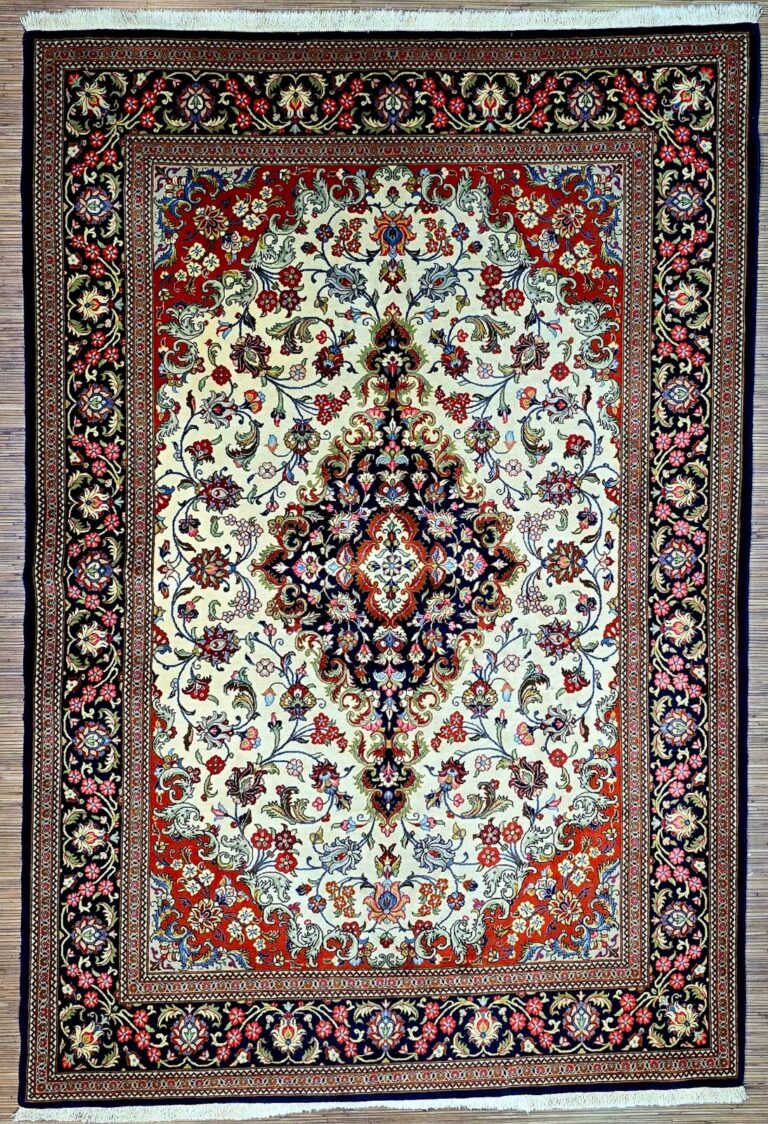
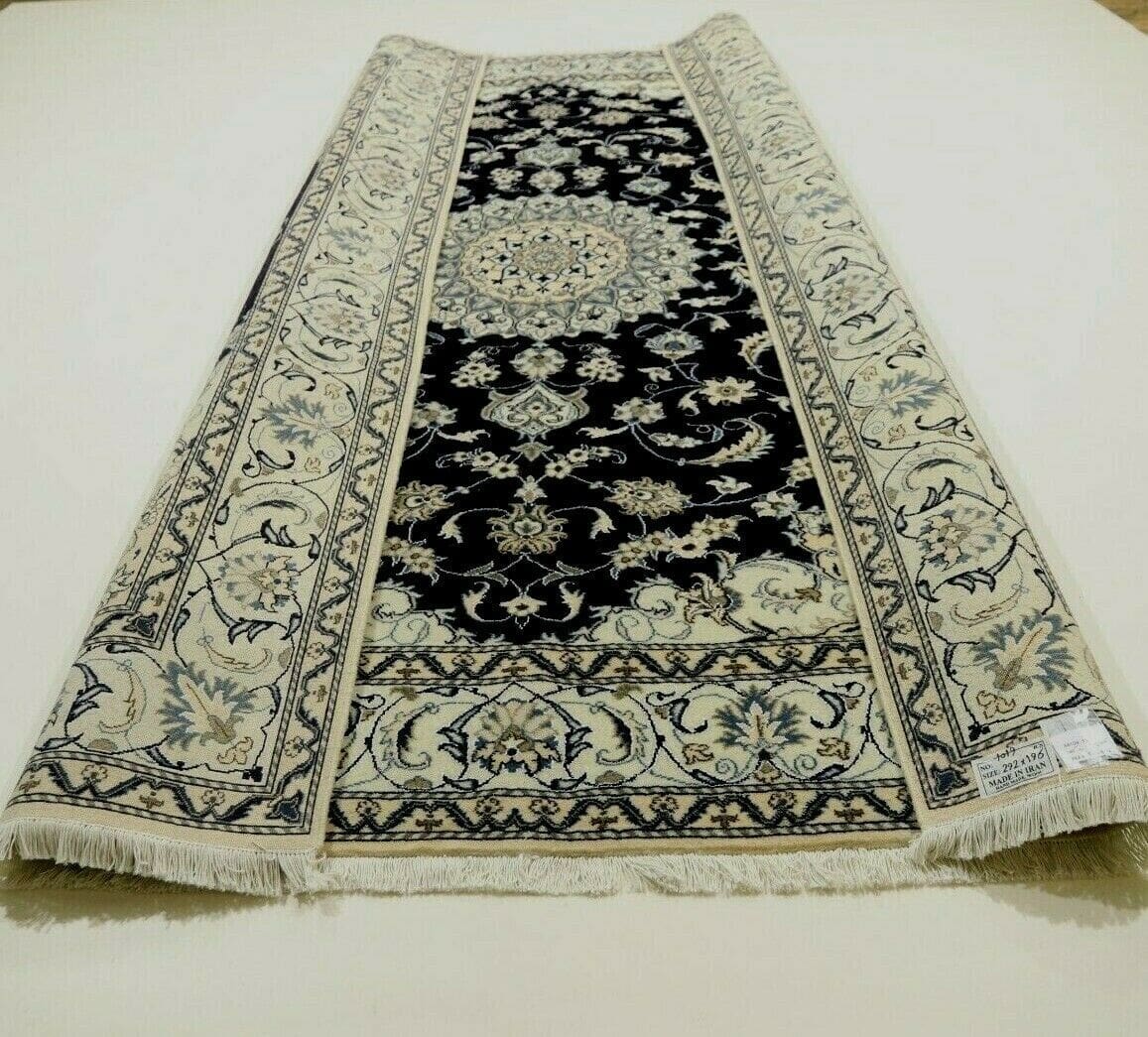
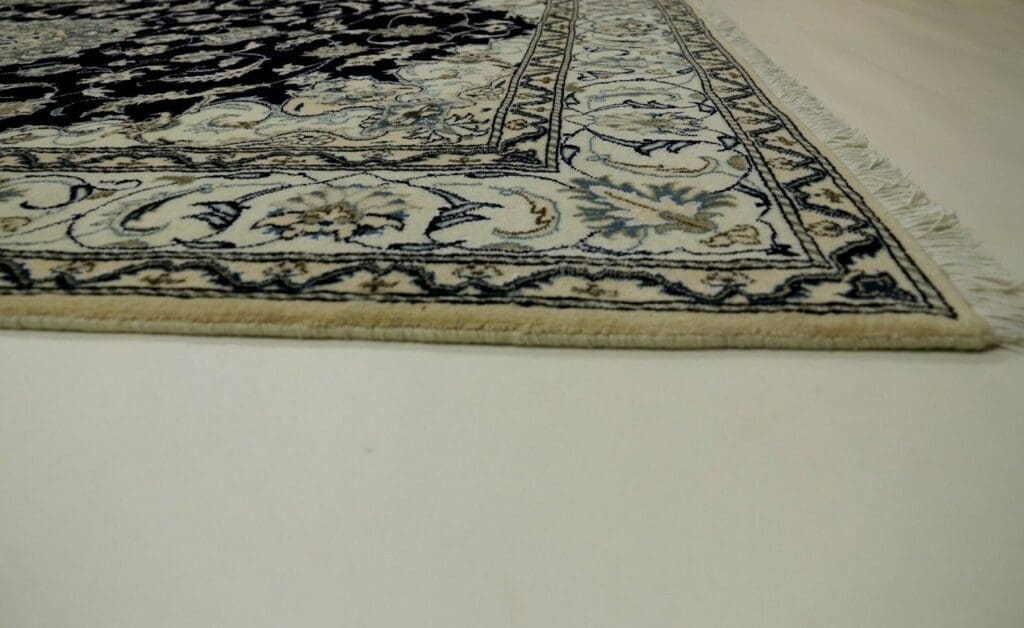
This hand-knotted Persian rug has a pile made from 90% new wool and 10% silk. The wool provides the more robust and hard-wearing part of the surface, while the silk contributes a fine sheen and nuanced colour depth. Cotton is used for the warp. Together, these materials create a construction in which a resilient pile is combined with a more finely reflective surface.
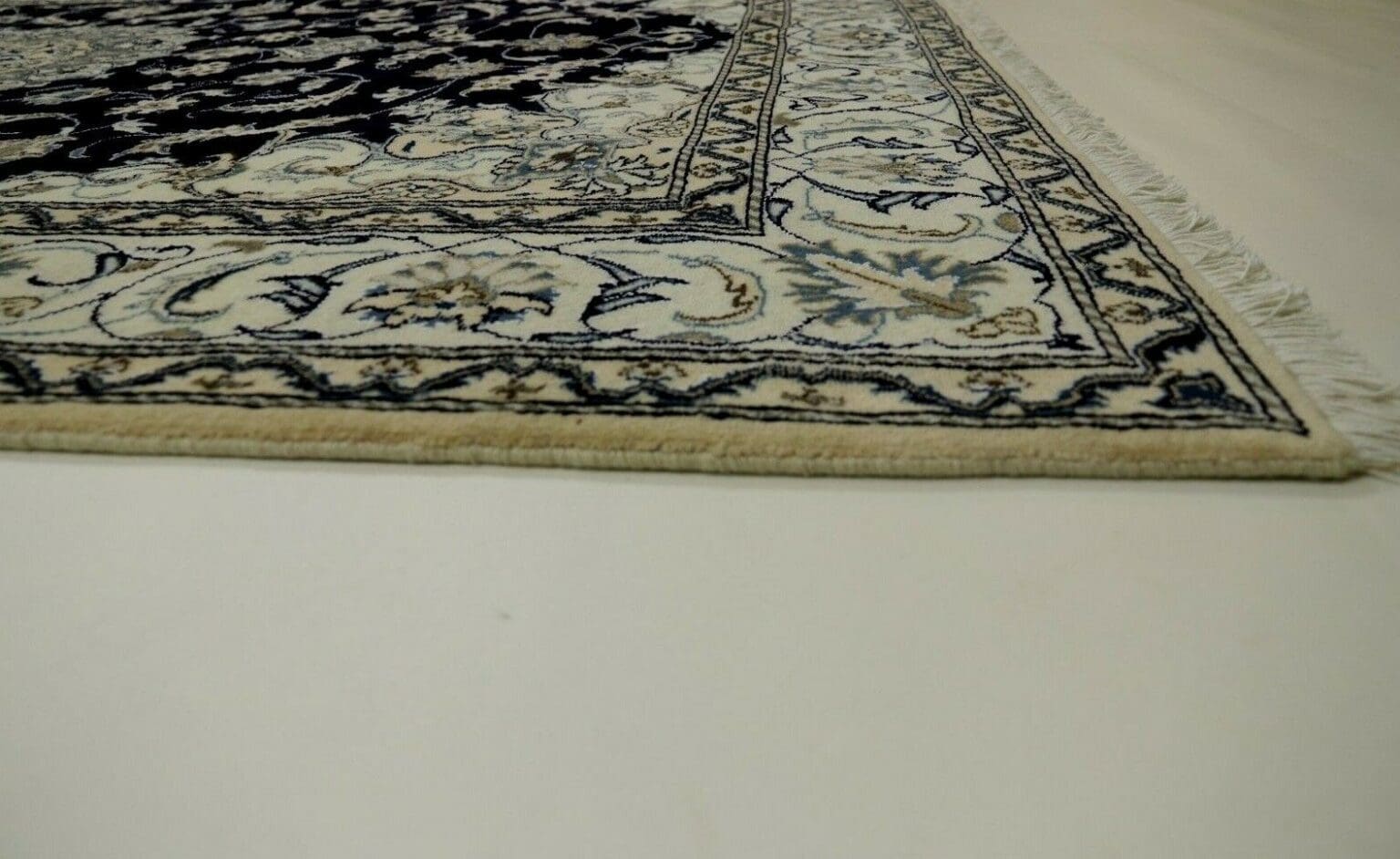
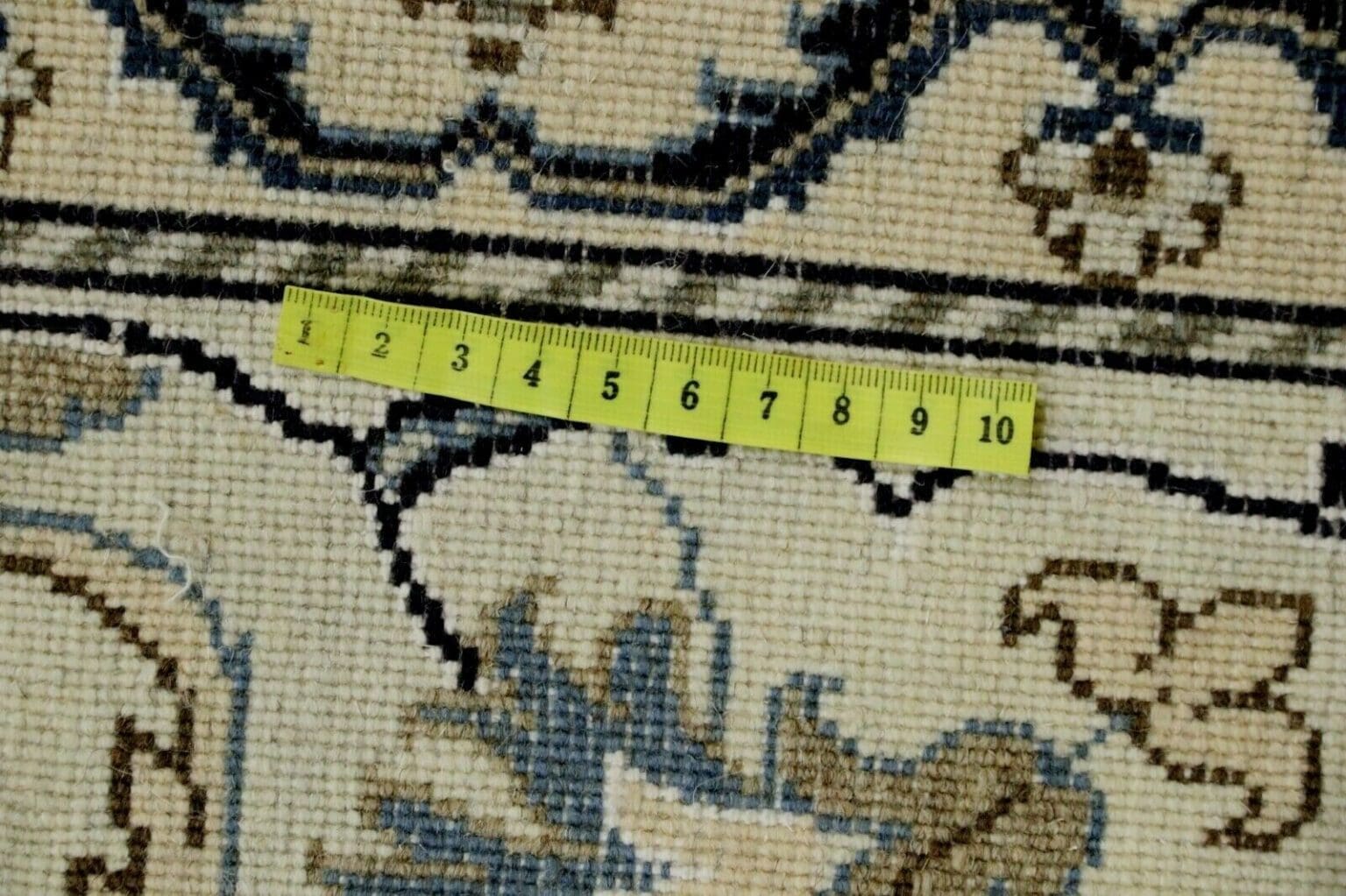
The rug is made by hand rather than by machine. In hand-knotting, individual knots are placed into the prepared warp and worked into the developing pile row by row. This process does not produce a perfectly uniform, mechanically repeated surface. Instead, it creates the individual structure associated with a hand-knotted one-off. The workmanship remains visible in the knot arrangement, the drawing of the pile and the character of the surface.
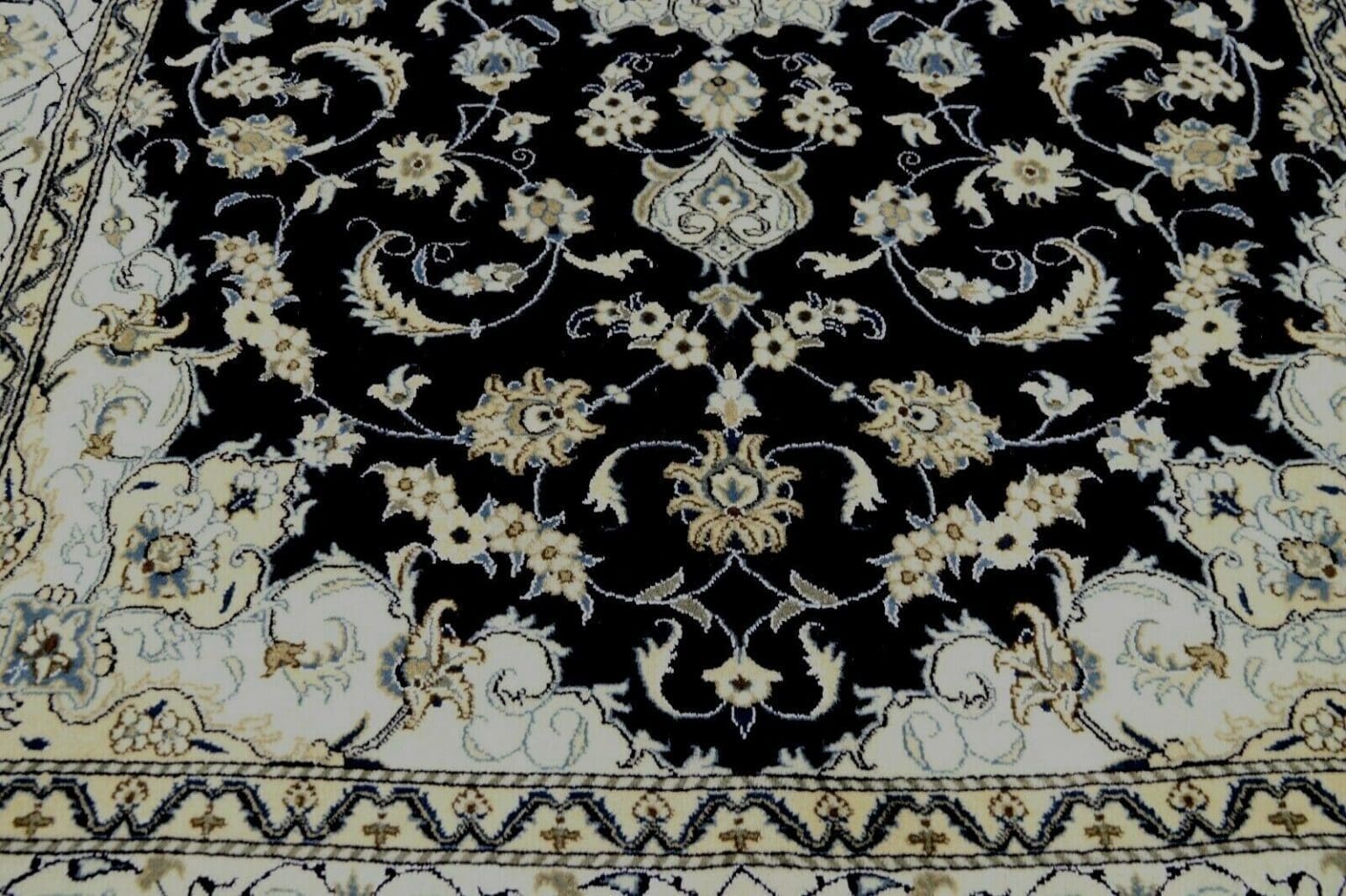
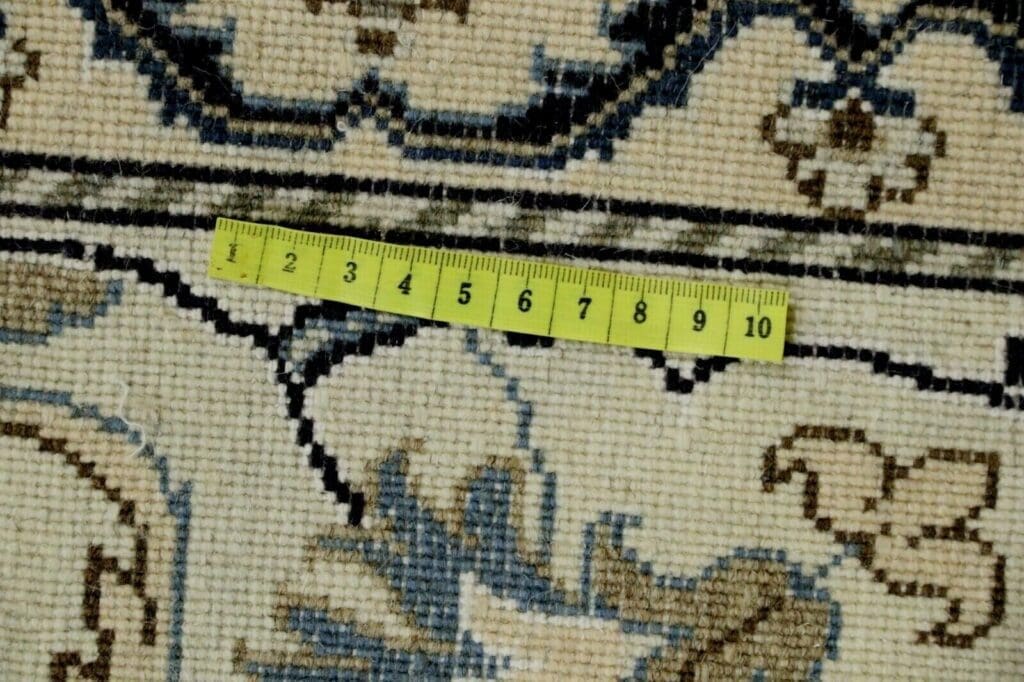
A knot density of approximately 300,000 knots per square metre allows lines, outlines and small ornamental elements to be rendered with considerable definition. At the same time, the wool content gives the pile a durable foundation, while the silk can make selected areas respond differently to light. The rug therefore brings together a traditional knotting method and a material combination intended to balance practical use with a more refined surface effect.
Hand-knotting consists of a succession of careful stages. The warp is prepared first, then knots are inserted and compacted in rows before the pile is finished and evened. The final treatment reveals the intended pattern. Because each stage affects the next, the process demands concentration and experience; even small changes can be visible in the texture or in the definition of the design. A high knot density supports especially detailed work within this traditional process.
Wool and silk fulfil different functions in the pile. Wool has long been used for knotted rugs because of its resilience and pleasant handle. Silk is finer and reflects light more strongly. When the two are used together, differences in lustre, texture and colour perception can appear across the surface. The cotton warp provides the foundation to which the knots are attached. This construction brings several textile qualities together within a traditional handmade technique.
Origin and Tradition
This rug comes from the Nain region of Iran. Nain is an established centre of Persian rug production with a weaving tradition that has developed over centuries. Rugs from the region are associated with careful execution, fine knotting and clearly organised designs. Nain therefore refers not only to a place of origin, but also to a distinctive regional expression within Persian rug making.
Nain lies in the central Iranian highlands. The setting of the region has shaped its craft culture and helped foster a tradition in which precise drawing and controlled colour relationships are important. Knowledge is passed between generations. It includes the preparation of the warp, the selection and handling of yarns, the use of colour and the translation of a design into a hand-knotted pile.
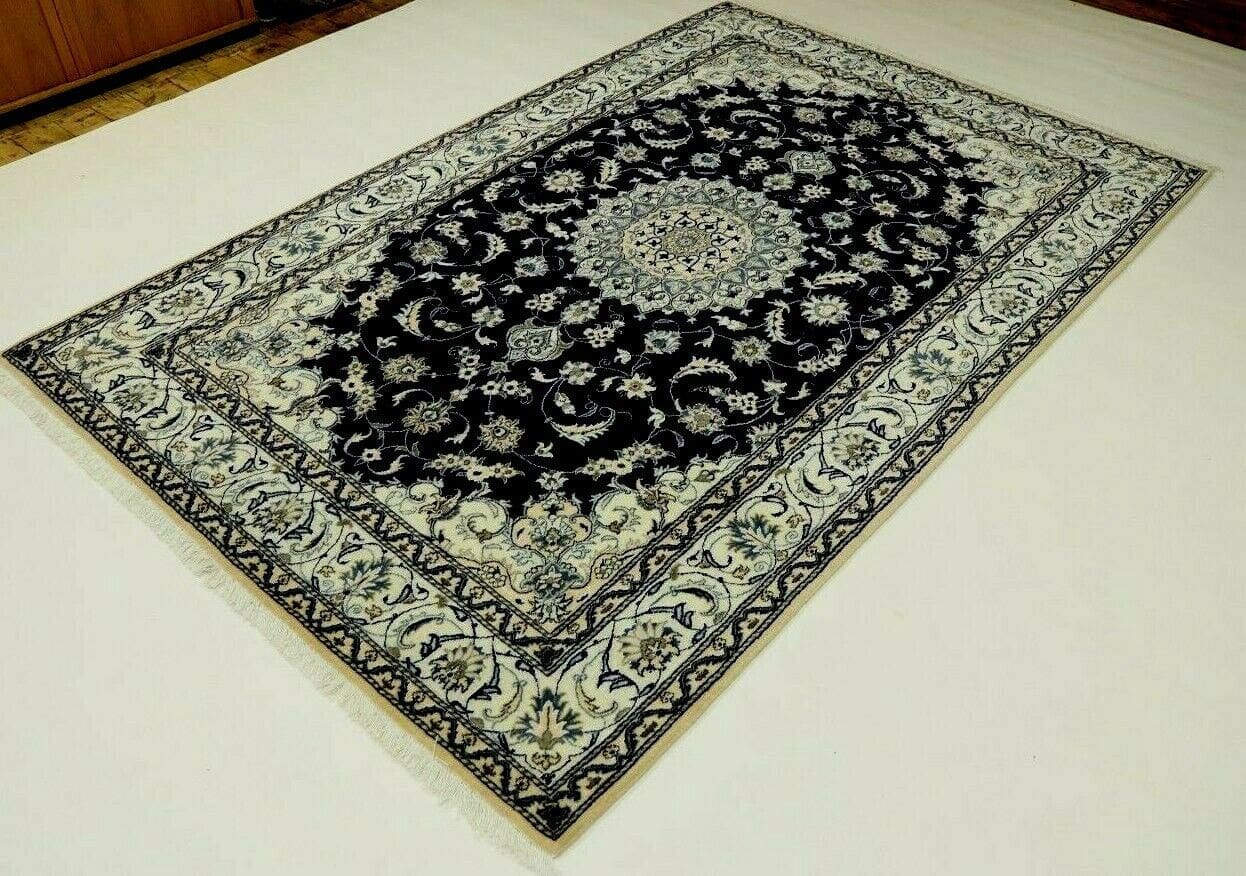
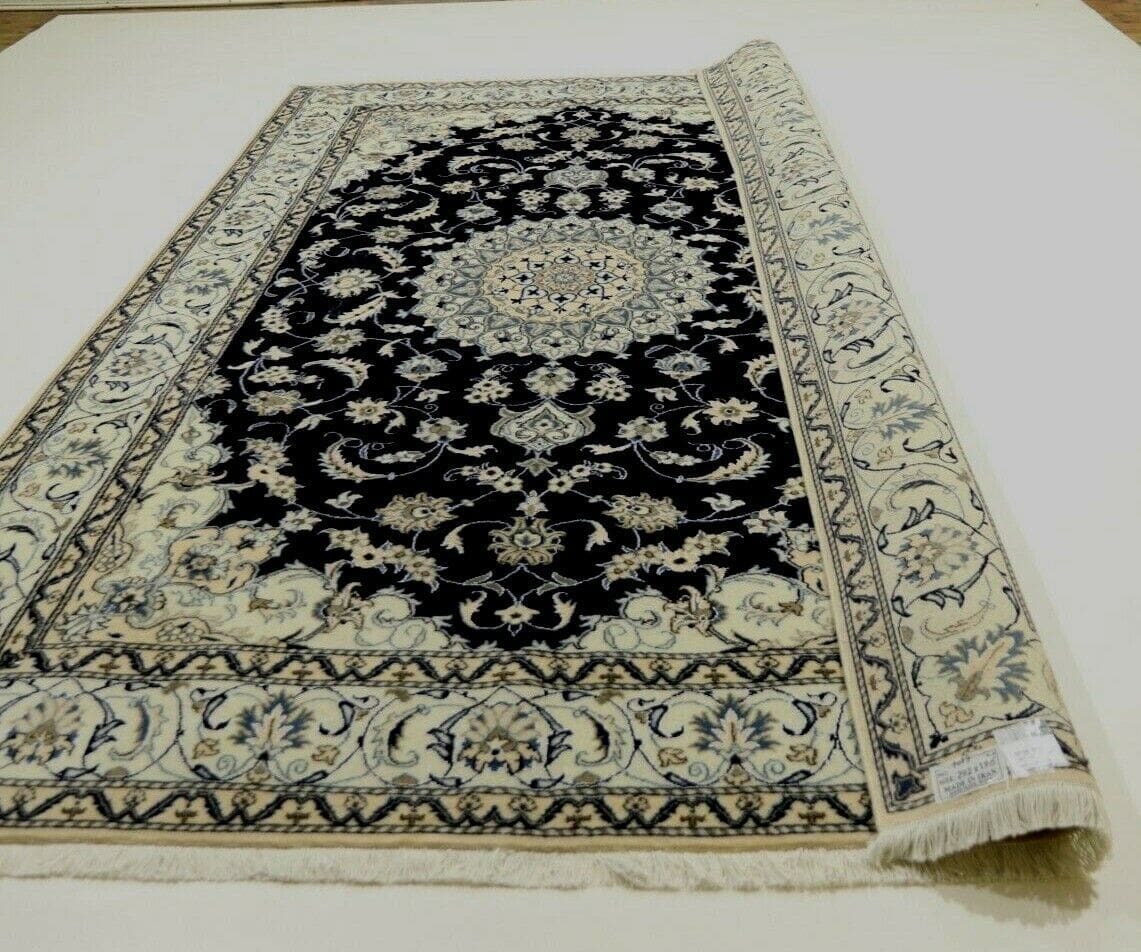
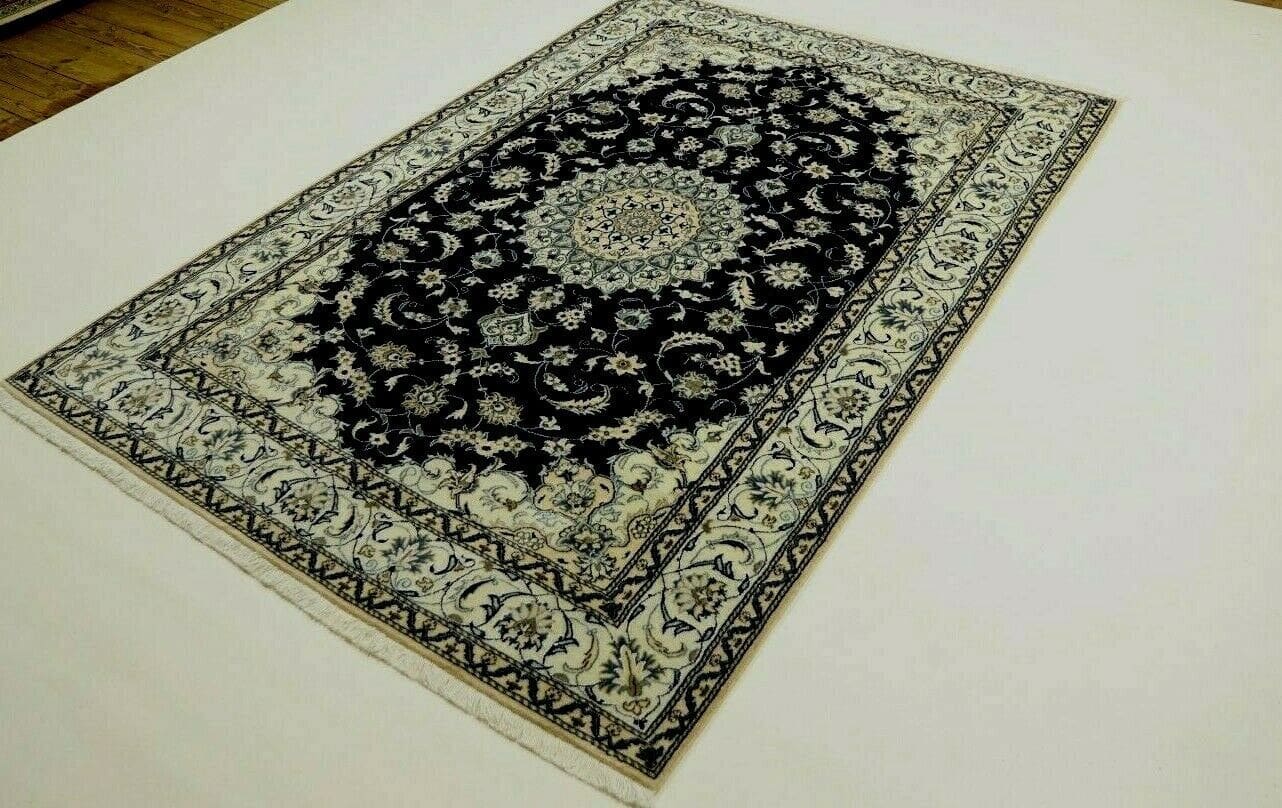
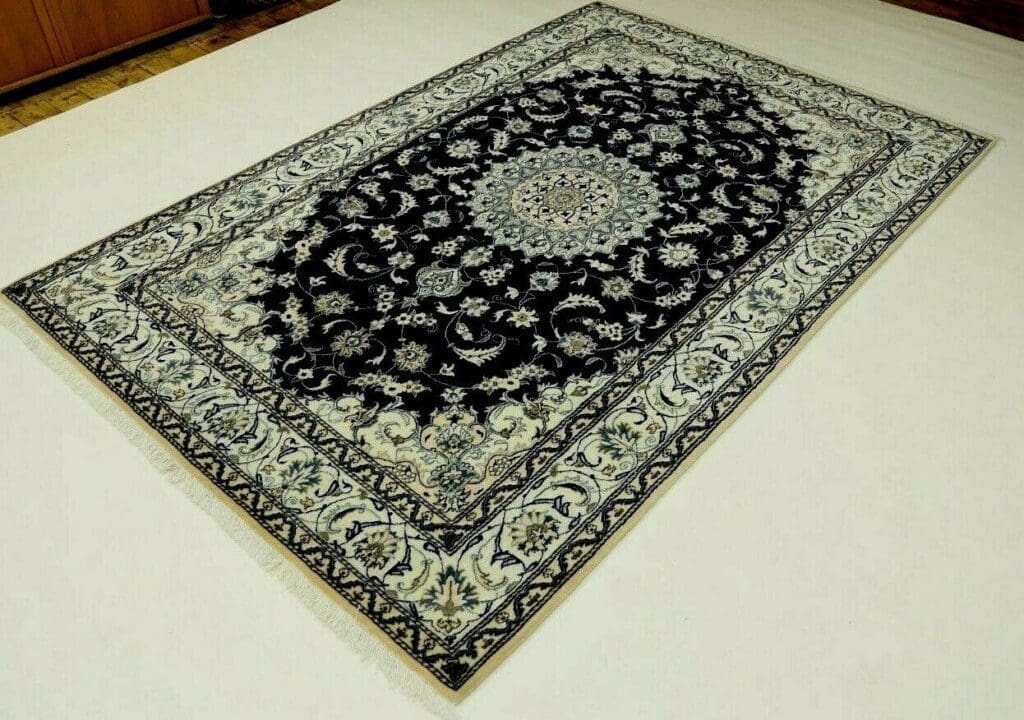
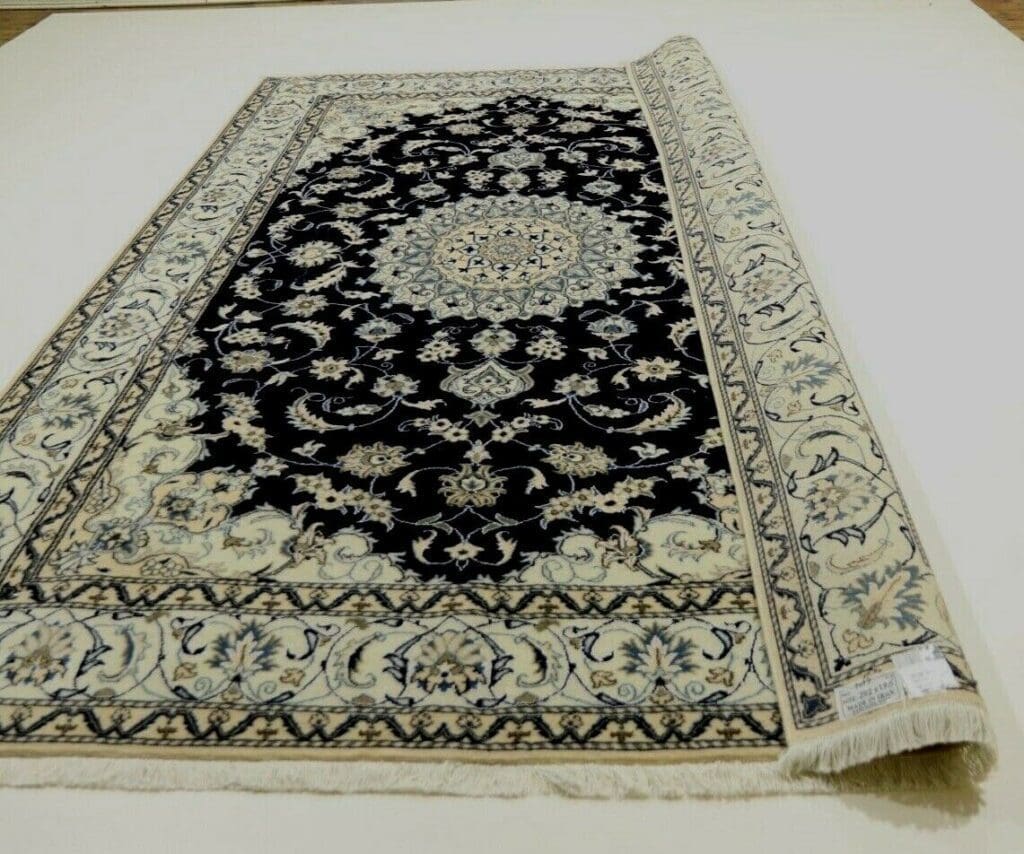
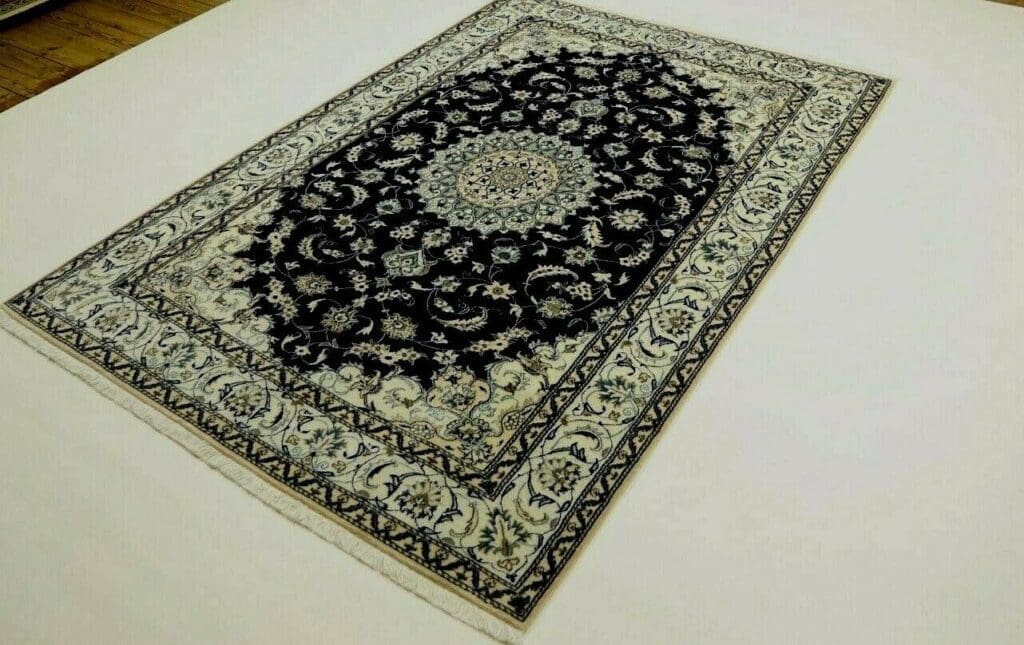
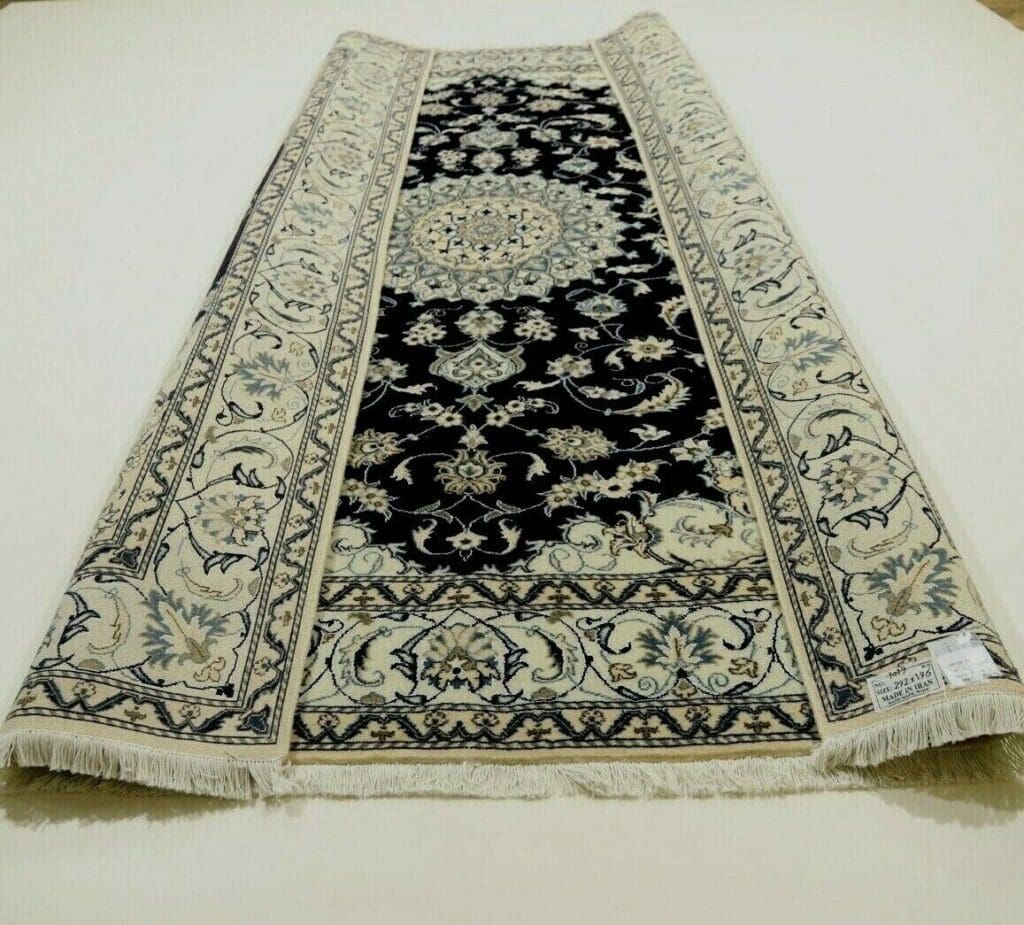
Nain rugs are known for balanced compositions and finely arranged floral decoration. A clearly defined central field is often accompanied by one or more borders. Designs may combine flowers, leaves, vines and geometric details. This approach creates a relationship between the decorative quality of the rug and a carefully planned division of the surface.
The Nain tradition grew from the wider history of Persian rug art while developing a recognisable regional character. Weavers work with established forms, but the designs are executed by hand and consequently retain the qualities of an individual piece. The tradition is maintained not only through patterns, but also through practical knowledge of knotting, design transfer, yarn preparation and pile finishing.
Within Persian culture, a rug can be both a functional furnishing and an expression of textile craftsmanship. A Nain rug represents this connection between considered materials, precise knot work and an ordered ornamental language. This Super Nain combines that regional identity with a hand-knotted construction and a pile of new wool and silk. Its origin places it within the established craft tradition of Nain.
The history of Persian rug making is marked by regional specialisation. Different weaving centres developed their own approaches to colour, ornament, knotting and the division of the field. Nain became associated with a finely controlled style and carefully executed compositions. Regional identity is formed through the interaction of inherited designs, workshop experience and the materials used by individual makers.
Design and Pattern
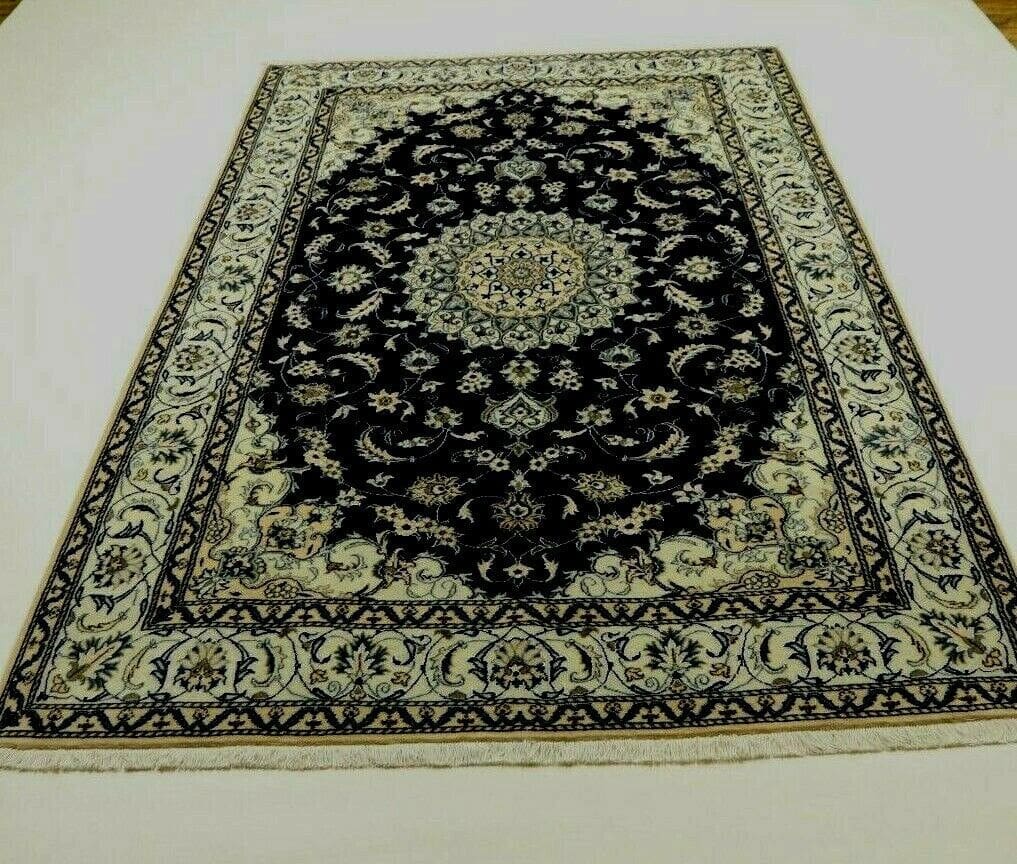
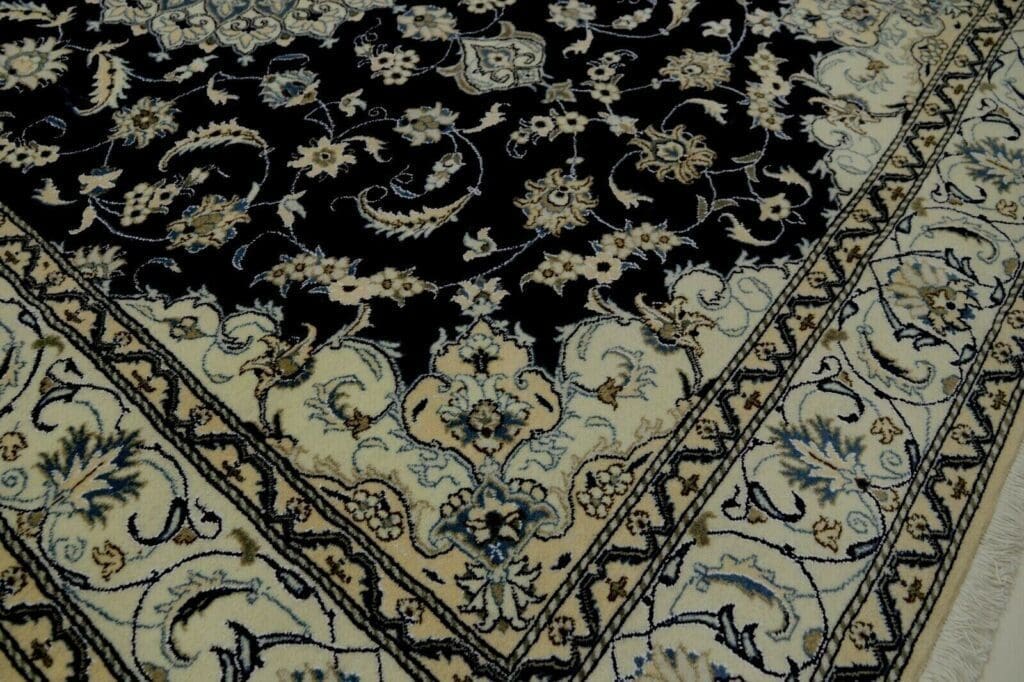
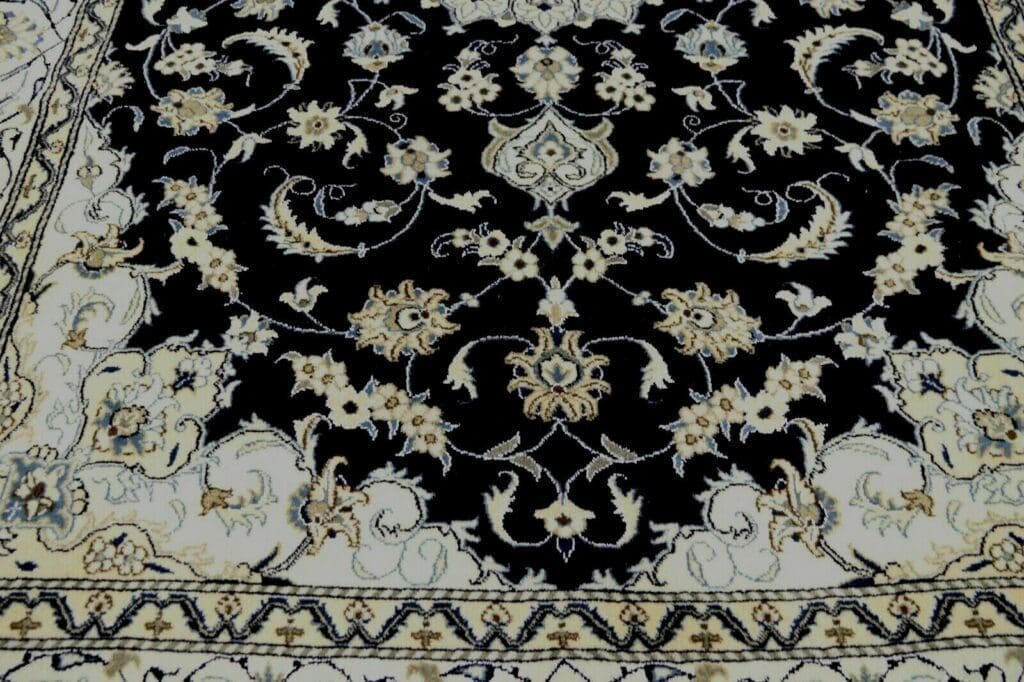
The pattern of this rug is described as Oriental. Nain designs frequently use stylised floral motifs together with geometrically framed forms. Vines, blossoms and leaves may be linked into a continuous composition, while borders and linear elements organise the field. Such designs depend on a measured relationship between the centre, the surrounding areas and the repeated ornaments.
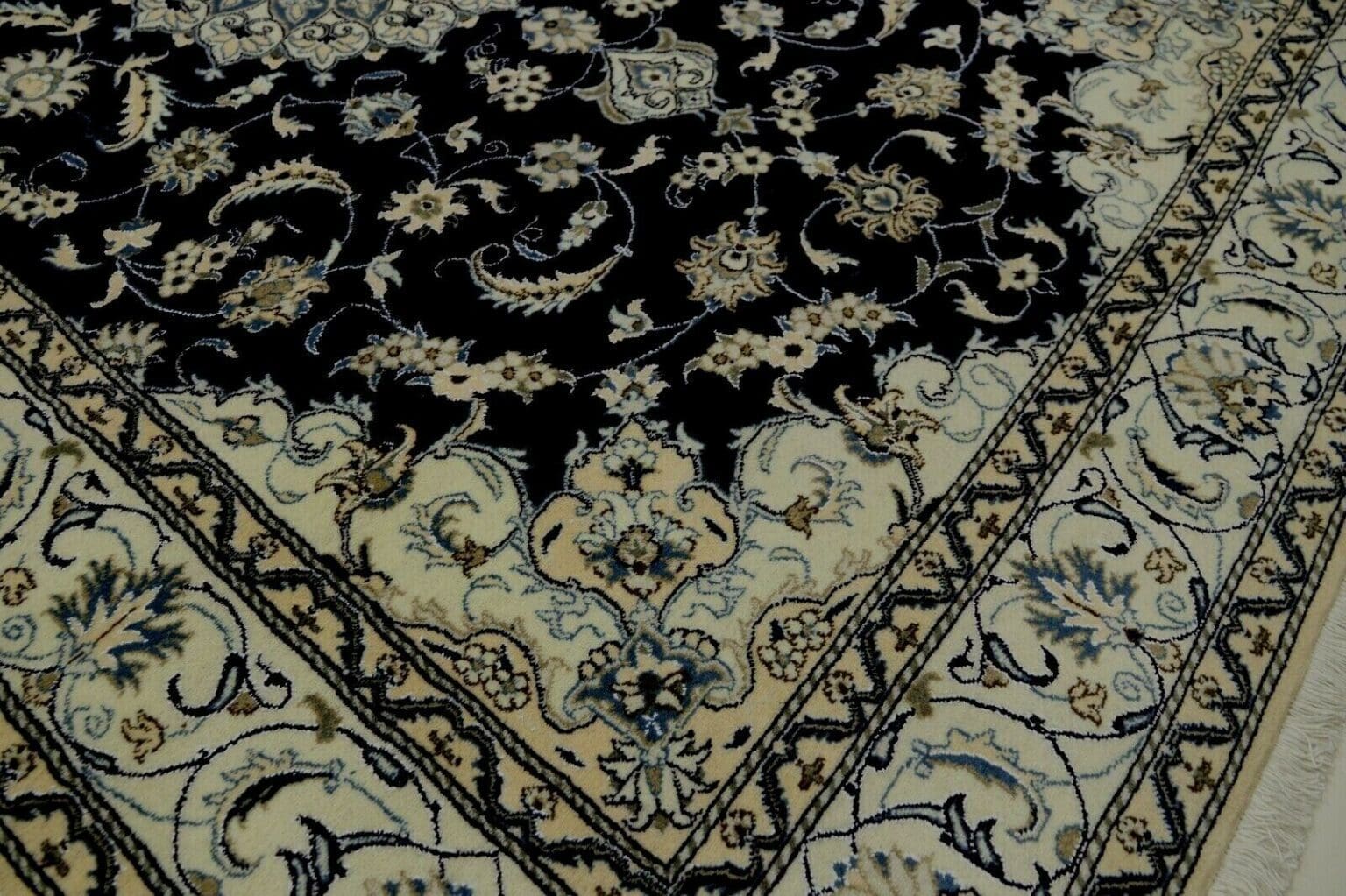
Light colour tones are characteristic of many Nain designs, together with a clear and finely controlled drawing. Pale areas can receive and reflect available light, while silk elements may accentuate parts of the pattern through their different lustre. The appearance of the pile can therefore change with the direction of the light and the viewer’s position. Here, the Oriental pattern description is combined with the finely worked surface associated with the Super Nain designation.
Floral and geometric elements in Persian rug design are not usually separate visual units. Vines create transitions, flowers provide accents and geometric frames give the composition structure. Repetition produces rhythm without requiring a mechanically rigid appearance. A dense knotting structure supports the detailed rendering of small outlines and the relationship between closely arranged ornamental forms.
Nain decoration is also connected with Persian ornament and with influences from Islamic art and architecture. Symmetry, rhythmic repetition and clear framing are important principles. The resulting design can appear ordered while still retaining movement through its curved lines and recurring motifs. The surface is organised into related zones rather than being filled at random, allowing the eye to move through the composition.
Floral motifs have a long history in Persian rug art. Their forms are stylised and arranged so that they function as parts of a complete composition. Geometric elements can contain the flowing lines of vines or structure the transition between the central field and the border. Dense knotting allows differences in line width, contour and ornament size to be rendered with clarity.
The Super Nain is classified as traditionally Oriental and Persian in style. It belongs to a design language in which floral forms, fine lines and light colour impressions are often brought together. Its pattern is identified as Oriental, while the hand-knotted construction makes it possible to express such details through a densely worked pile. The individual appearance results from the interaction of pattern, material and handmade surface structure.
Special Features
This rug is a one-off and is new and unused. Its distinctive features are its Nain-region origin, its hand-knotted construction and its pile made from 90% new wool and 10% silk. The 100% cotton warp is part of the structure. The fine surface texture and knot density of approximately 300,000 knots per square metre are among the characteristics that define its execution.
The combination of materials brings together different qualities. Wool supplies a durable basis for the pile, while silk adds lustre and a particular response to light. Careful workmanship makes the structure of the rug apparent. Regular vacuuming without a brush attachment and occasional brushing are recommended for maintenance. For heavier soiling, professional rug cleaning can be considered.
FAQ
How should I care for this Nain Persian rug?
Regular vacuuming without a brush attachment removes loose dirt while treating the pile gently. Occasional brushing can help lift particles that remain on the surface. If the rug is heavily soiled, professional cleaning should be considered. Appropriate care helps preserve the colours, the material character and the structure created by the hand-knotting process. The recommended method avoids using a rotating brush directly on the pile.
Why are hand-knotted rugs distinctive?
In a hand-knotted rug, each knot is placed by hand. The work requires experience and precision because the knots together determine the density, surface and drawing of the pile. Unlike a machine-made rug, the result is an individually executed one-off. Hand craftsmanship therefore combines a distinctive appearance with a construction intended for lasting use. The knotting method also permits detailed designs and makes the making process part of the rug’s character.
Where can this Nain Persian rug be used?
The rug can be used in living or dining areas, in an office or as a feature in a hallway. Its Oriental drawing and light, finely worked appearance can be incorporated into different interior arrangements. Depending on its placement, it can define an area, accompany a seating group or serve as a decorative centre. The chosen location should allow for the hand-knotted surface to be treated carefully and maintained regularly.
To provide the best experiences, we use technologies like cookies to store and/or access device information. Consenting to these technologies will allow us to process data such as browsing behavior or unique IDs on this site. Not consenting or withdrawing consent, may adversely affect certain features and functions.
Functional Always active
The technical storage or access is strictly necessary for the legitimate purpose of enabling the use of a specific service explicitly requested by the subscriber or user, or for the sole purpose of carrying out the transmission of a communication over an electronic communications network.
Preferences
The technical storage or access is necessary for the legitimate purpose of storing preferences that are not requested by the subscriber or user.
Statistics
The technical storage or access that is used exclusively for statistical purposes.The technical storage or access that is used exclusively for anonymous statistical purposes. Without a subpoena, voluntary compliance on the part of your Internet Service Provider, or additional records from a third party, information stored or retrieved for this purpose alone cannot usually be used to identify you.
Marketing
The technical storage or access is required to create user profiles to send advertising, or to track the user on a website or across several websites for similar marketing purposes.

 SECURE PAYMENT
 SHIPPING PARTNERS