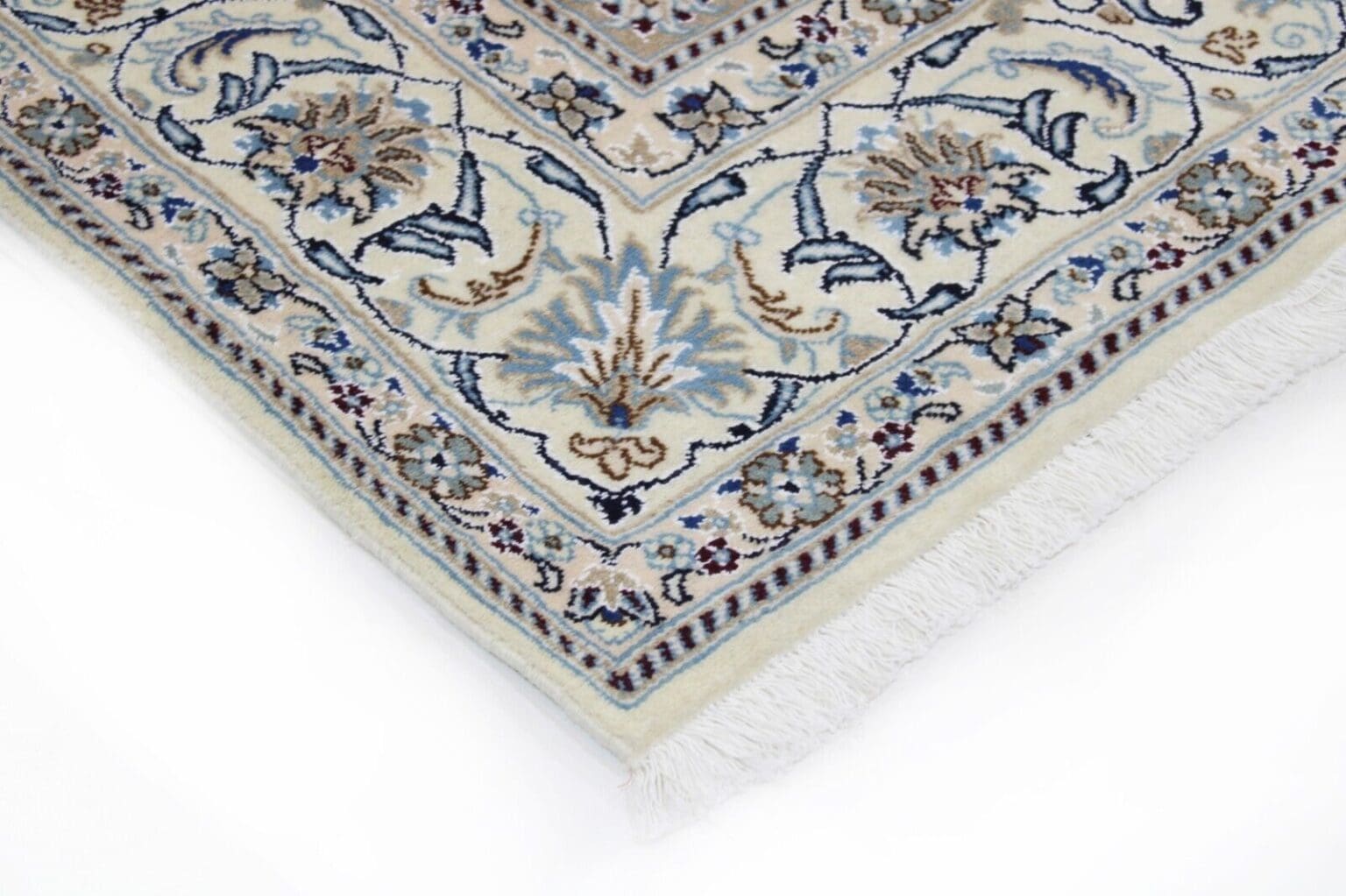
This Nain Kashmari rug is hand-knotted from wool. Wool gives a rug a soft surface and provides a resilient material for everyday use. Its natural structure makes it pleasant to touch while also supporting the durability associated with traditionally made oriental rugs. The pile material is an important part of the character of a hand-knotted rug because each individual knot contributes to the density, surface and definition of the finished textile.
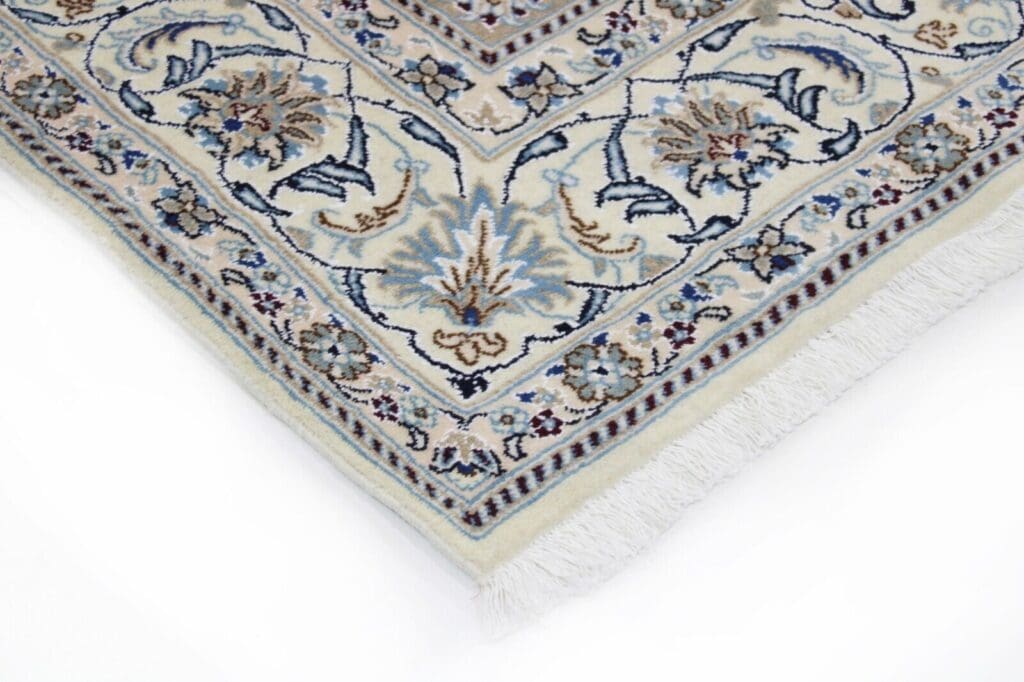
The rug has a high knot density. A dense knot structure allows motifs to be worked with greater precision and gives small elements of a design a clearly defined appearance. Floral details, geometric lines, rosettes and balanced arrangements can be represented in a controlled way when the weaving is carried out with close attention to the placement of the knots. The high density therefore relates directly to the detailed appearance of the pattern described for this rug.
Hand-knotting is a method in which the pile is built knot by knot rather than produced as a printed or mechanically tufted surface. This process requires repeated, careful work throughout the piece. The weaver creates the design as the rug develops, and the completed surface records the regularity and care of that work. It also explains why hand-knotted rugs are associated with craftsmanship, long use and a distinctive textile character.
Wool is traditionally valued in rug making because it combines a soft handle with practical resistance. It can hold colour well and forms a substantial pile surface. Regular care helps preserve its appearance. The combination of wool, a hand-knotted construction and a high knot density gives this Nain Kashmari rug its stated material and technical profile without requiring any additional treatment or embellishment.
Origin and Tradition
Nain Kashmari is associated with Nain, a city in Iran’s Isfahan Province. Nain has established a long-standing reputation as a centre of Persian rug production. Rugs from this region are known for careful workmanship, fine materials and composed designs. The name Nain therefore refers to a recognised weaving tradition rooted in a particular Iranian place, rather than simply describing a colour or decorative theme.
The rug-making tradition of Nain reaches back to the nineteenth century. Over time, weaving in the region developed into an important form of cultural and artistic production. The work links household skill, local knowledge and the continued use of established design principles. A Nain rug reflects this background through the relationship between its ordered composition, its detailed surface and the discipline required to produce a hand-knotted textile.
Traditional weaving techniques in Nain have been passed from one generation to the next. Such transmission is central to many Persian rug-producing regions: knowledge is preserved not only through written instructions, but also through observation, practice and familiarity with the rhythm of the work. Decisions about the arrangement of motifs, the balance of colours and the execution of fine details are part of a practical tradition learned through making.
Natural dyes are generally used in Nain rug production. They provide a varied and lively palette while reflecting an approach connected with traditional materials. Colour in Persian rugs is not separate from structure and design; it helps distinguish the field from the surrounding elements, establishes visual balance and gives repeated motifs their presence. In this Nain tradition, colour is used together with careful knotting to create a coherent decorative surface.
The city of Nain lies within the cultural landscape of Isfahan Province, a region widely associated with Persian art, architecture and textile production. Its rug tradition developed its own visual identity while remaining part of the broader history of Iranian weaving. The Nain Kashmari name places this rug within that context of regional production and inherited craftsmanship. It is a Persian rug made in Iran, and its character is connected with the practices for which Nain is known.
The history of Nain weaving also shows how a regional craft can preserve identity through repeated forms. A design tradition can remain recognisable while individual rugs differ in their precise arrangement and execution. Hand-knotting ensures that the making of each piece involves sustained manual work. This connection between place, technique and decorative language is one reason Persian rugs are considered both useful textiles and expressions of cultural tradition.
For this rug, the stated origin is Nain in Iran, within Isfahan Province. That origin should be kept distinct from the pattern vocabulary itself. Floral elements, geometric structures and rosettes belong to the design language, while Nain identifies the regional tradition in which the rug is placed. Together, these elements describe a Persian textile shaped by the history and working methods of its Iranian weaving centre.
Design and Pattern
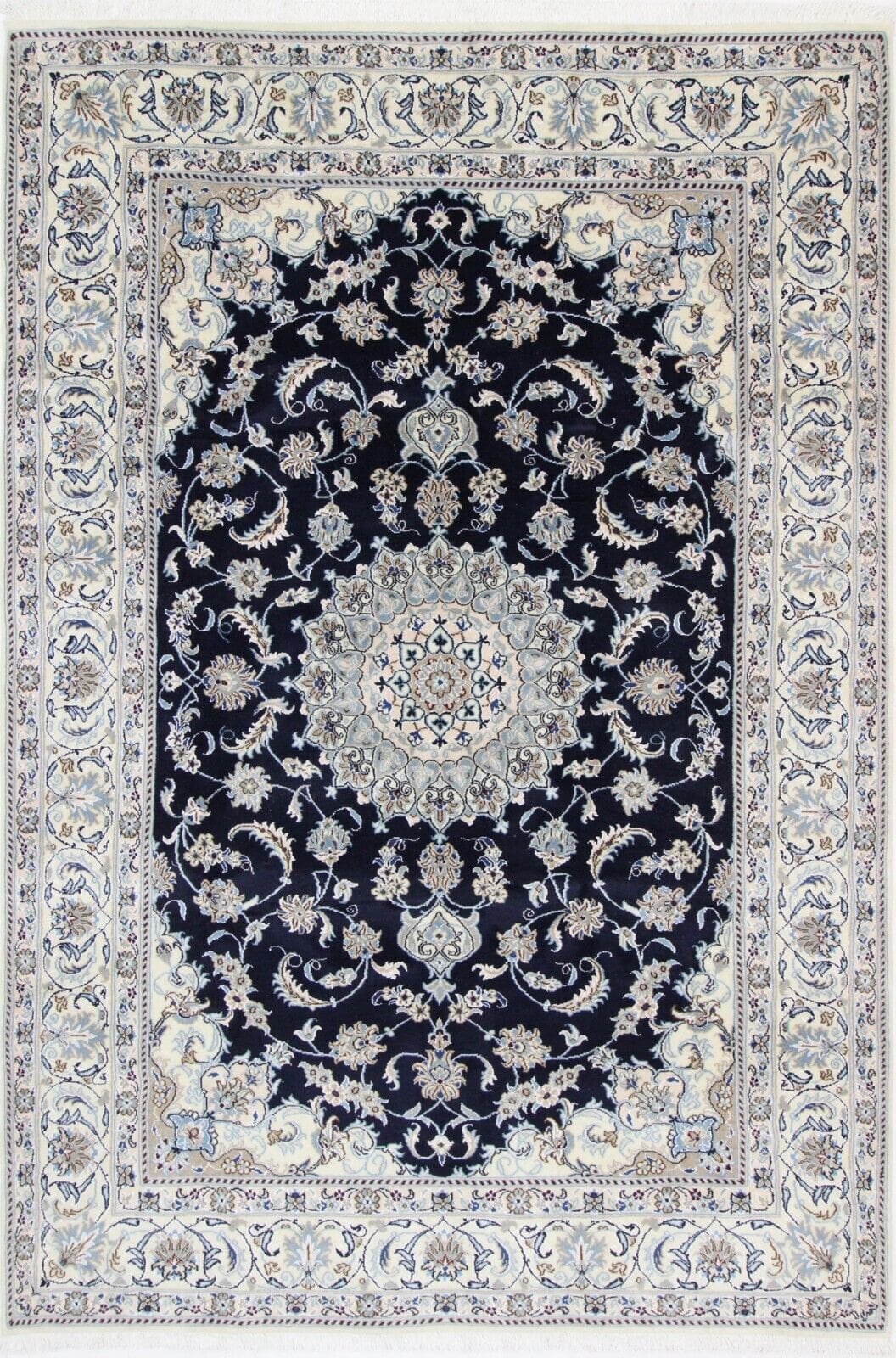
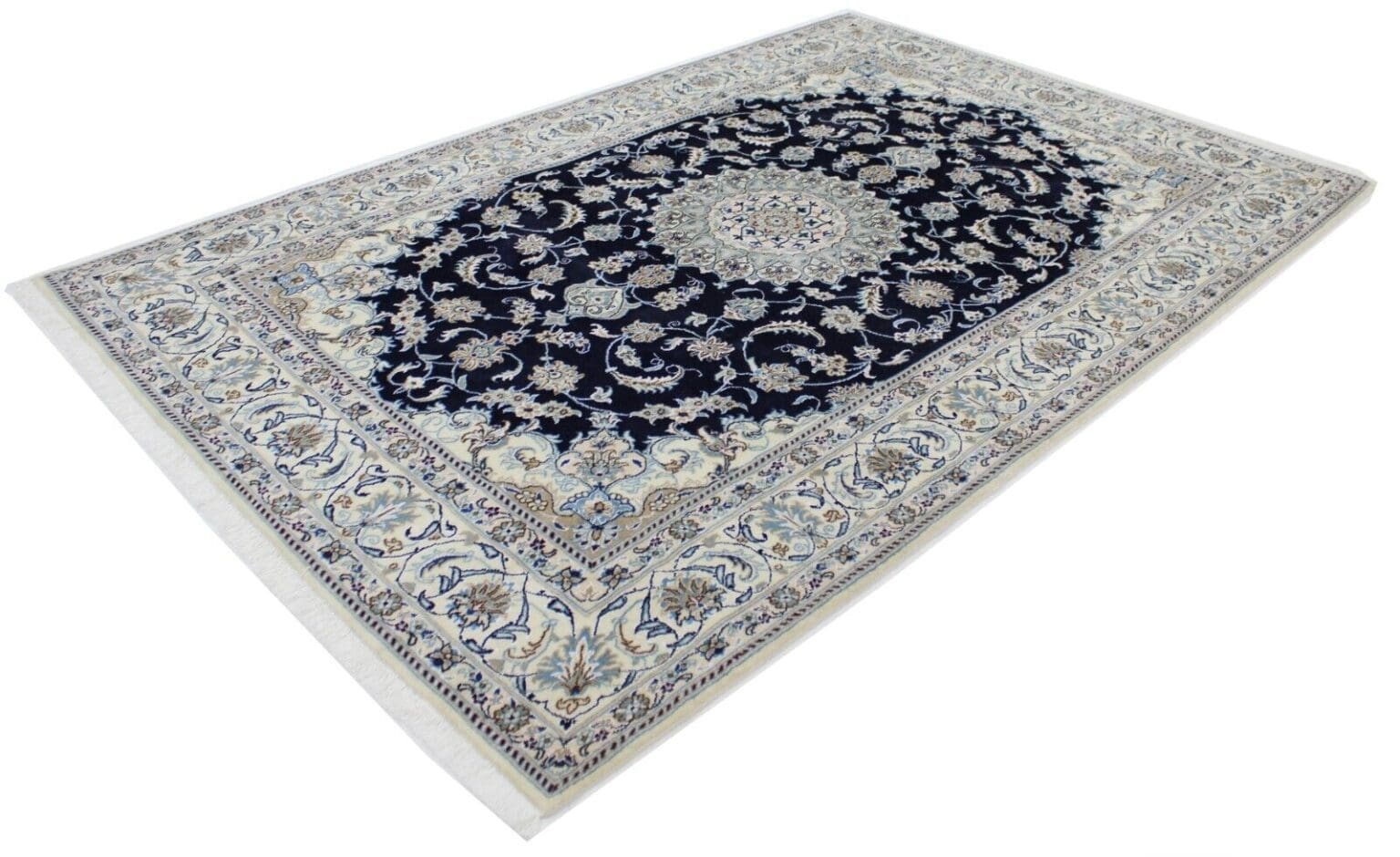
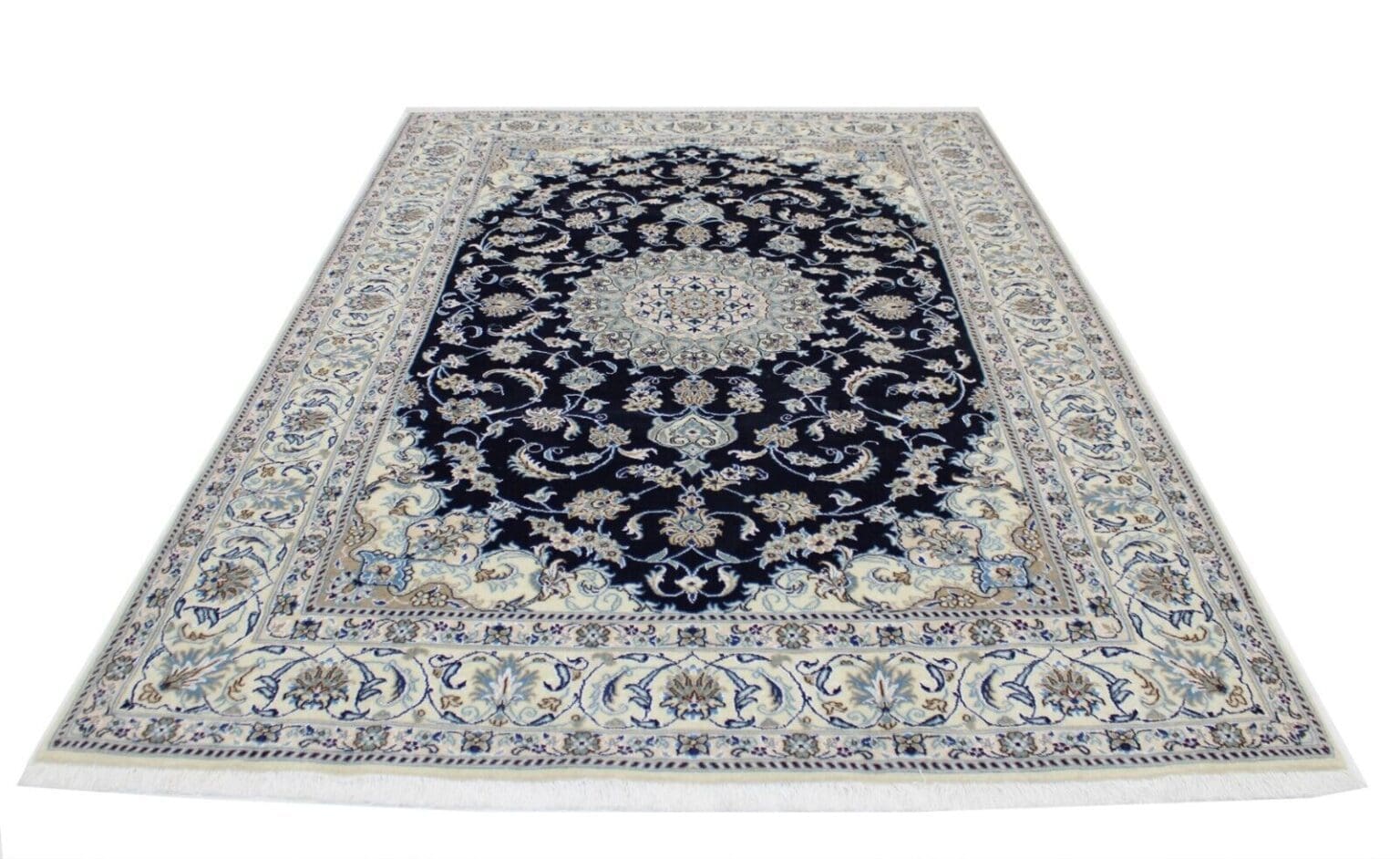
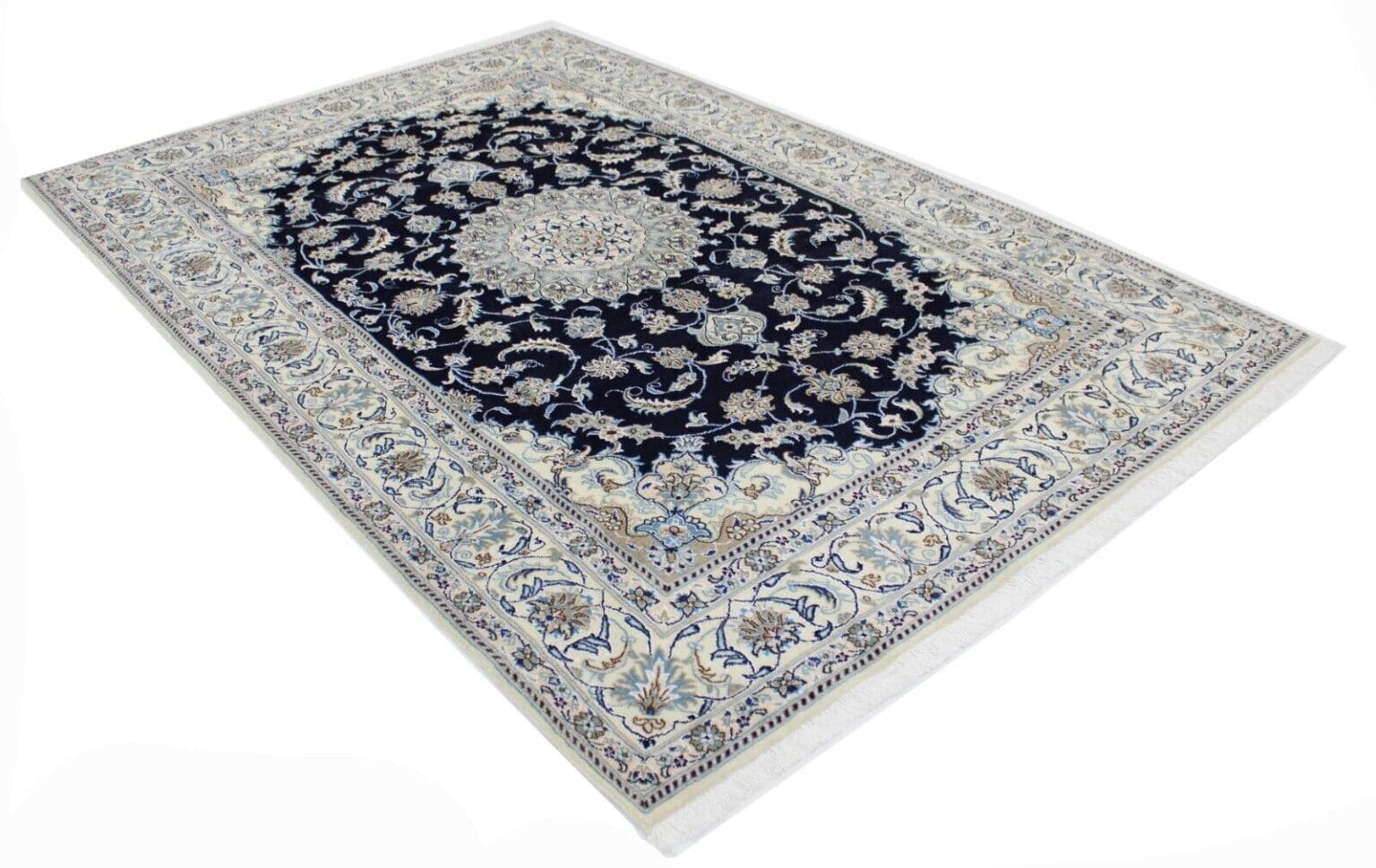
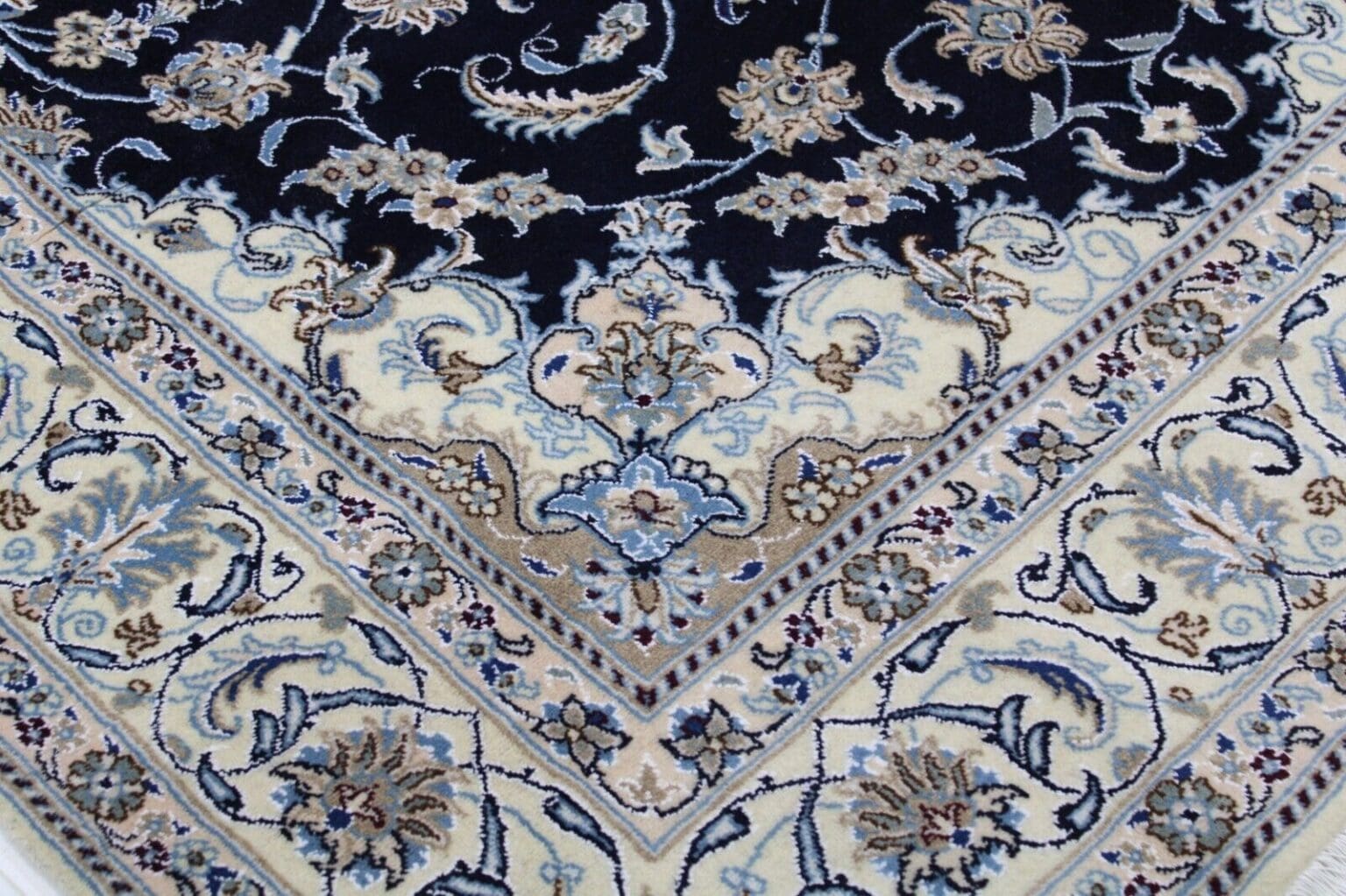
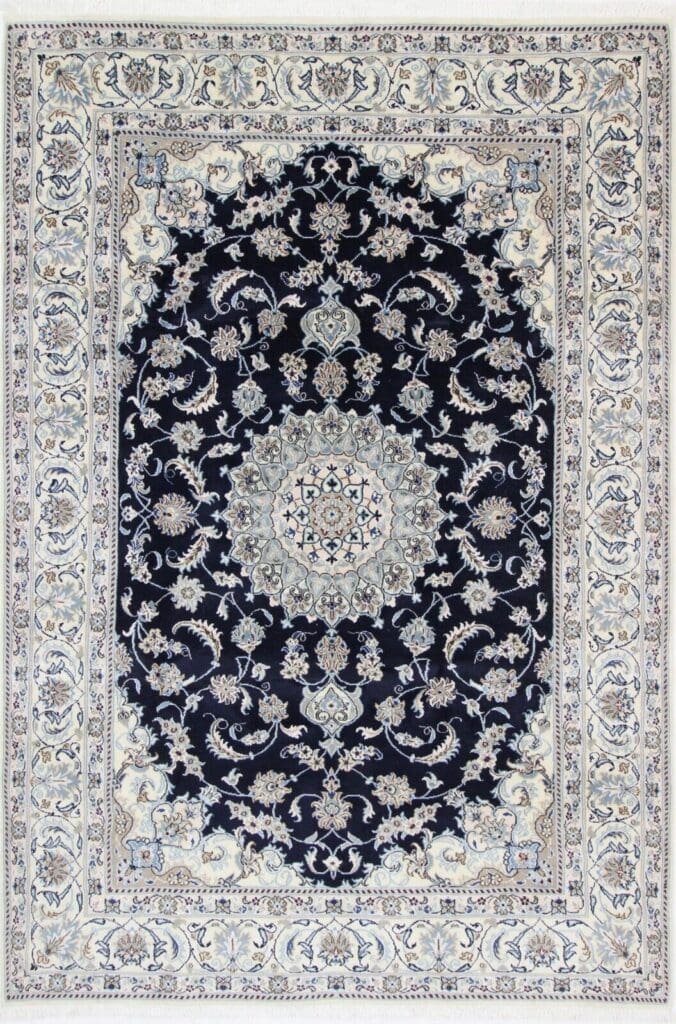
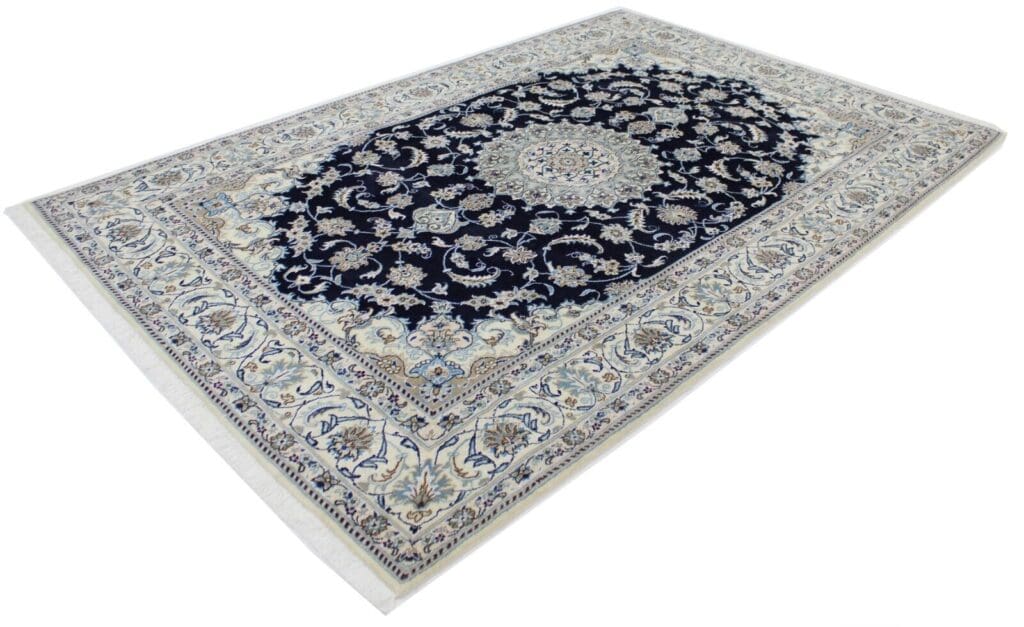
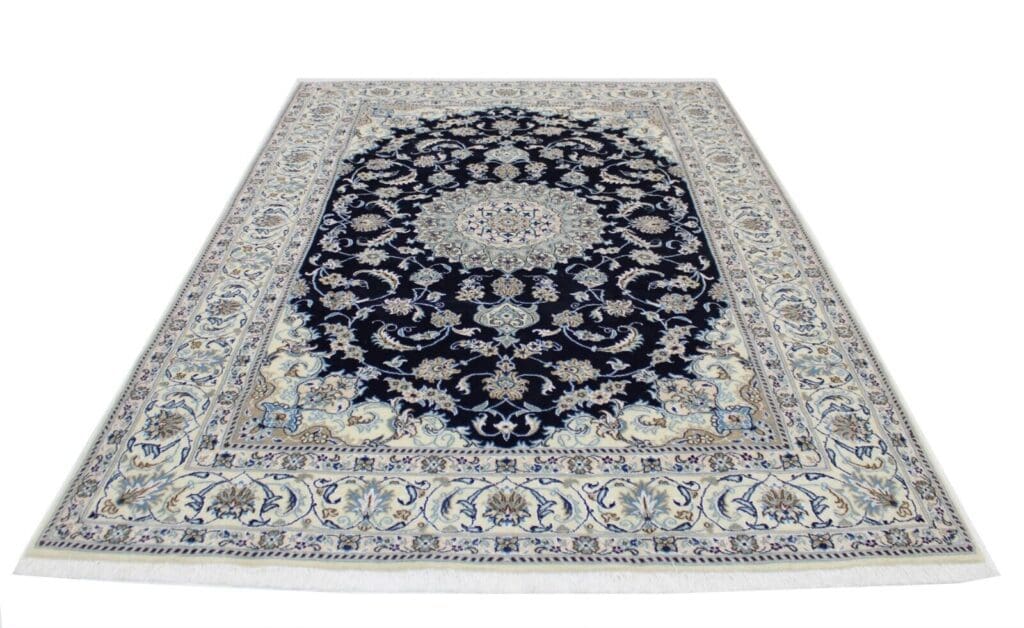
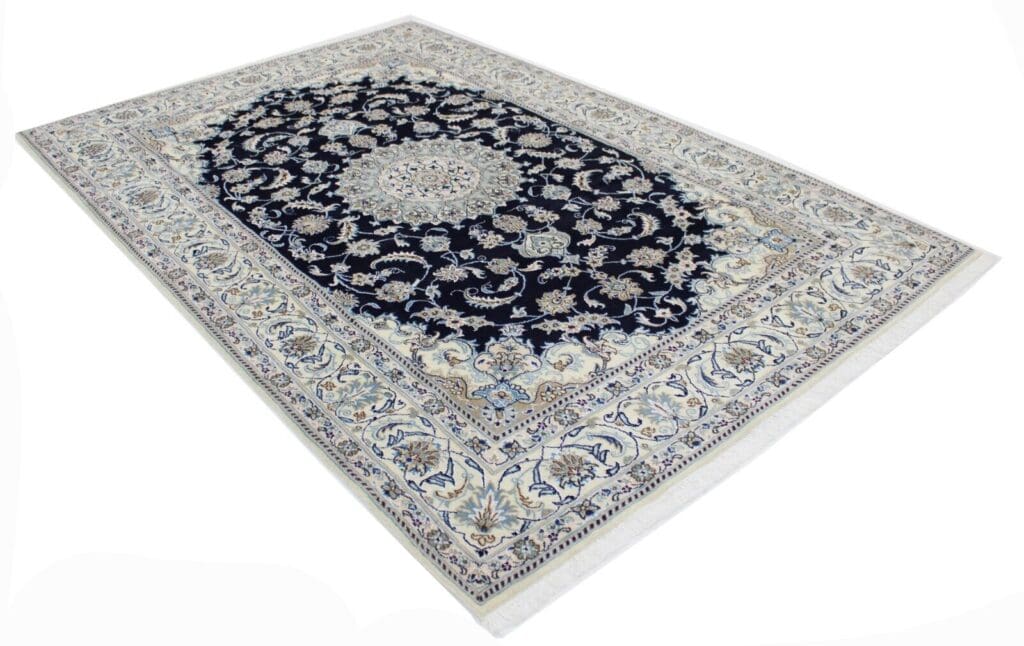
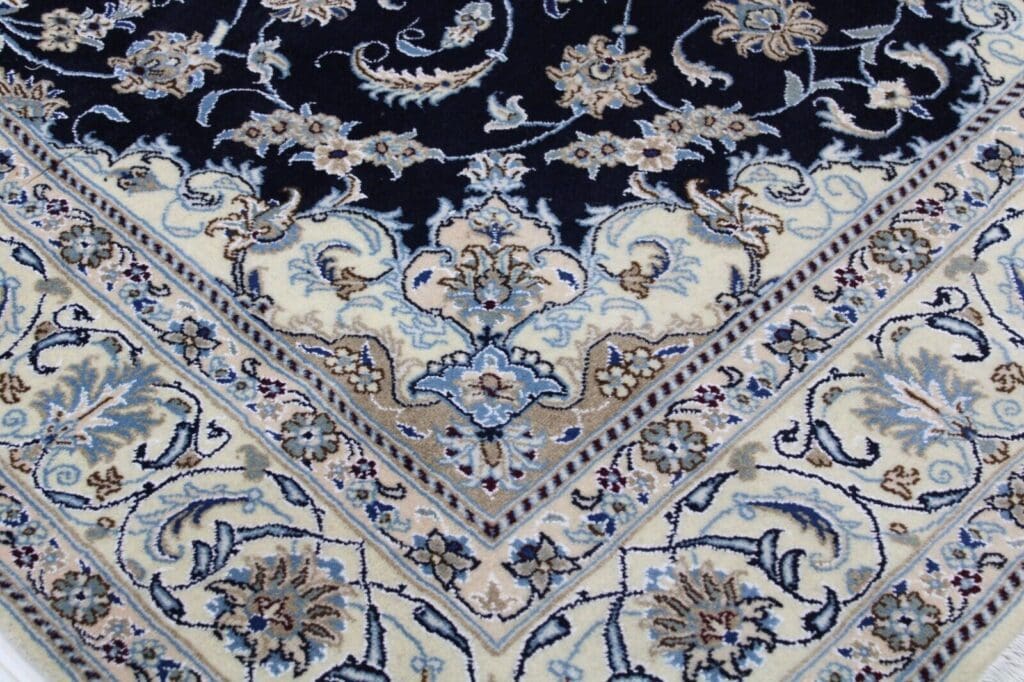
The design of the Nain Kashmari rug combines floral and geometric patterns. These two forms work together rather than appearing as unrelated decorations. Floral motifs introduce organic shapes and a sense of movement, while geometric arrangements provide order, rhythm and visual structure. Their combination is characteristic of a design approach in which detail is organised within a balanced overall composition.
Rosettes are especially characteristic of Nain rugs. A rosette is a stylised flower form arranged around a central point, often repeated or placed as a focal element within a larger pattern. In a hand-knotted rug, the clarity of such a motif depends on the careful positioning of many knots. The high knot density of this rug supports the precise presentation of the detailed elements described in its design.
Symmetrically arranged motifs are another important feature of the Nain design tradition. Symmetry gives the composition a measured quality and helps relate the centre, surrounding field and borders to one another. Repetition can create continuity across the surface, while variations in scale prevent the pattern from becoming visually uniform. The result is a decorative system in which the eye can follow both the larger structure and the smaller details.
The colour range described for this rug extends from soft cream tones to blue and deep red. Cream can provide a light foundation for a Persian rug design, allowing darker motifs to remain legible. Blue adds a contrasting and stable presence, while deep red gives selected elements greater visual weight. Used together, these colours create differentiation between areas of the pattern and help establish a composed palette.
Colour in Persian rug design often works in partnership with motif and structure. A repeated floral form may appear more prominent when set against a contrasting ground, while a geometric border can frame the central arrangement through changes in tone. The stated palette of cream, blue and deep red gives the Nain Kashmari design several levels of contrast without changing the underlying balance created by the floral and geometric vocabulary.
The motifs are described as telling stories from Persian mythology and tradition. In this context, pattern is more than surface decoration. Floral forms, rosettes and ordered arrangements belong to a long visual language in which nature, symmetry and inherited symbolism are brought together. The meaning of a particular motif can depend on its placement and combination with other forms, so the complete composition matters as much as any individual element.
Nain rugs are recognised for detailed rosettes and symmetrical patterns, and these features help distinguish the regional design tradition. The Nain Kashmari rug follows this stated visual direction through its combination of fine detail, balanced placement and a palette that includes cream, blue and deep red. Its hand-knotted construction makes the pattern part of the textile itself rather than an image applied after production.
Geometric and floral designs can also create a dialogue between precision and natural form. Straight lines, repeated shapes and measured spacing establish a framework, while leaves, flowers and rosettes soften that framework with curved contours. This interaction gives the pattern both clarity and variety. It is a common principle in Persian decorative arts, where a carefully controlled arrangement can still contain a rich range of visual detail.
Special Features
The stated special features of this rug are its Nain Kashmari identity, wool construction, hand-knotted technique and high knot density. Its design combines floral and geometric motifs with detailed rosettes and symmetrical arrangements. The colour palette includes soft cream tones, blue and deep red. These characteristics connect material, workmanship, regional tradition and appearance in one textile.
The rug is also presented as an object that combines traditional craft with cultural value. A hand-knotted Persian rug can remain part of an interior while also being suitable for an exhibition or a collection. The long-term character associated with wool and careful handwork is the reason this type of rug is described as retaining its appeal over the decades. That description concerns its role as both a usable textile and a piece of Persian weaving tradition.
FAQ
How should I care for my Nain Kashmari Persian rug?
Vacuum the rug regularly without using a brush attachment. Avoid direct sunlight, since prolonged exposure can cause colours to fade. If a stain occurs, respond promptly with a damp cloth and a mild cleaning product. Gentle handling is appropriate for a hand-knotted wool rug. For more serious or extensive marks, professional rug cleaning is a sensible way to protect the pile and the detailed pattern.
Where can I find authentic Nain Kashmari rugs?
Authentic Nain Kashmari rugs are primarily available from specialist oriental rug dealers and on specialised online platforms that focus on hand-knotted rugs. When assessing a rug, pay attention to certificates and to the documented history of its manufacture. Information about the making process can help distinguish a hand-knotted Persian rug from a product that only reproduces a Nain-inspired pattern. The regional name should refer to the rug’s Iranian origin and weaving tradition.
What makes a Nain Kashmari rug a good investment?
A Nain Kashmari rug represents handcraft and cultural tradition. Wool, hand-knotting and a high knot density provide the material and technical basis for a durable textile with a detailed surface. Its floral and geometric design, rosettes, symmetrical arrangement and Persian colour palette give it a lasting decorative identity. For these reasons, it can be regarded as a valuable object for use, display or collecting over the decades.
To provide the best experiences, we use technologies like cookies to store and/or access device information. Consenting to these technologies will allow us to process data such as browsing behavior or unique IDs on this site. Not consenting or withdrawing consent, may adversely affect certain features and functions.
Functional Always active
The technical storage or access is strictly necessary for the legitimate purpose of enabling the use of a specific service explicitly requested by the subscriber or user, or for the sole purpose of carrying out the transmission of a communication over an electronic communications network.
Preferences
The technical storage or access is necessary for the legitimate purpose of storing preferences that are not requested by the subscriber or user.
Statistics
The technical storage or access that is used exclusively for statistical purposes.The technical storage or access that is used exclusively for anonymous statistical purposes. Without a subpoena, voluntary compliance on the part of your Internet Service Provider, or additional records from a third party, information stored or retrieved for this purpose alone cannot usually be used to identify you.
Marketing
The technical storage or access is required to create user profiles to send advertising, or to track the user on a website or across several websites for similar marketing purposes.
 SECURE PAYMENT
 SHIPPING PARTNERS


