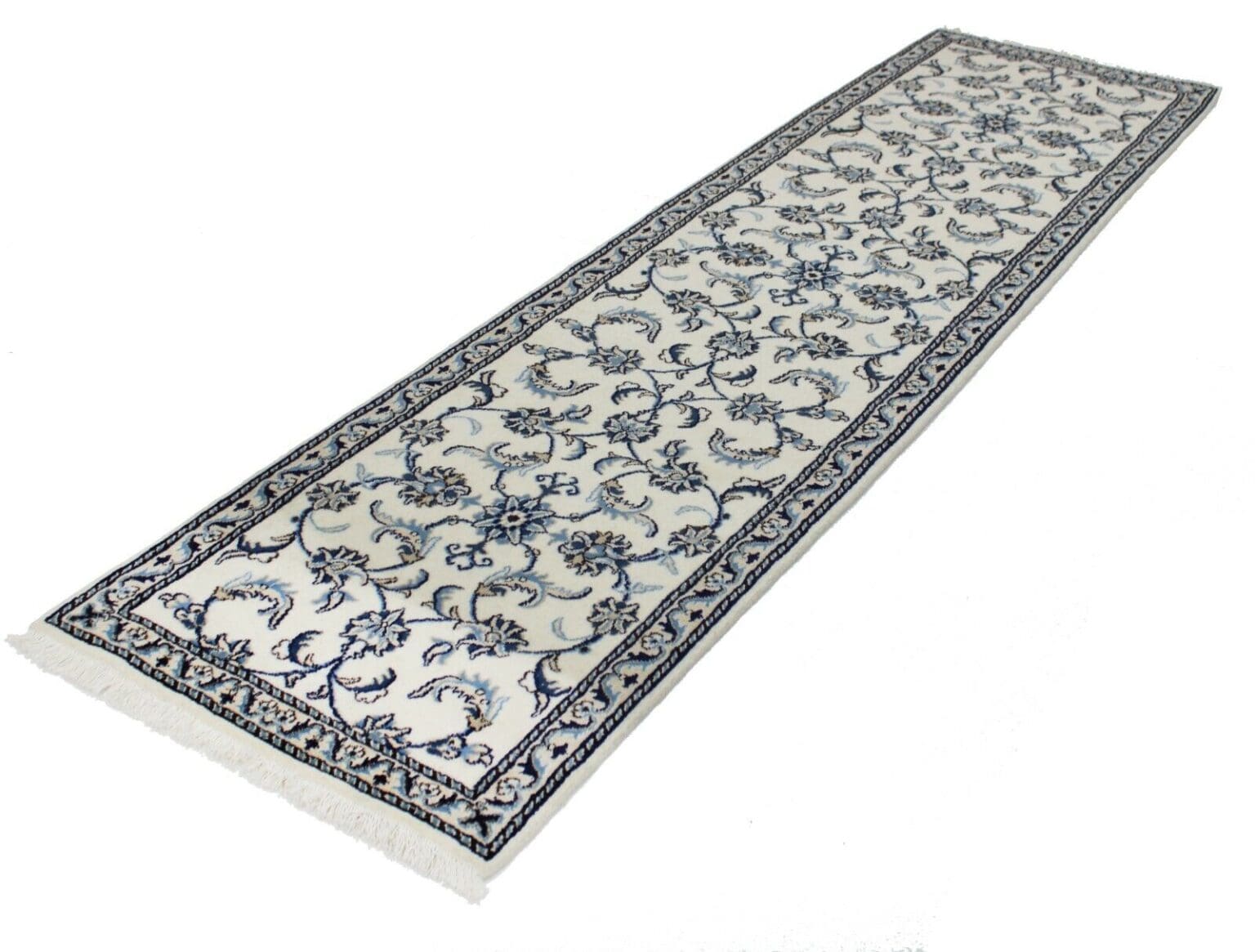
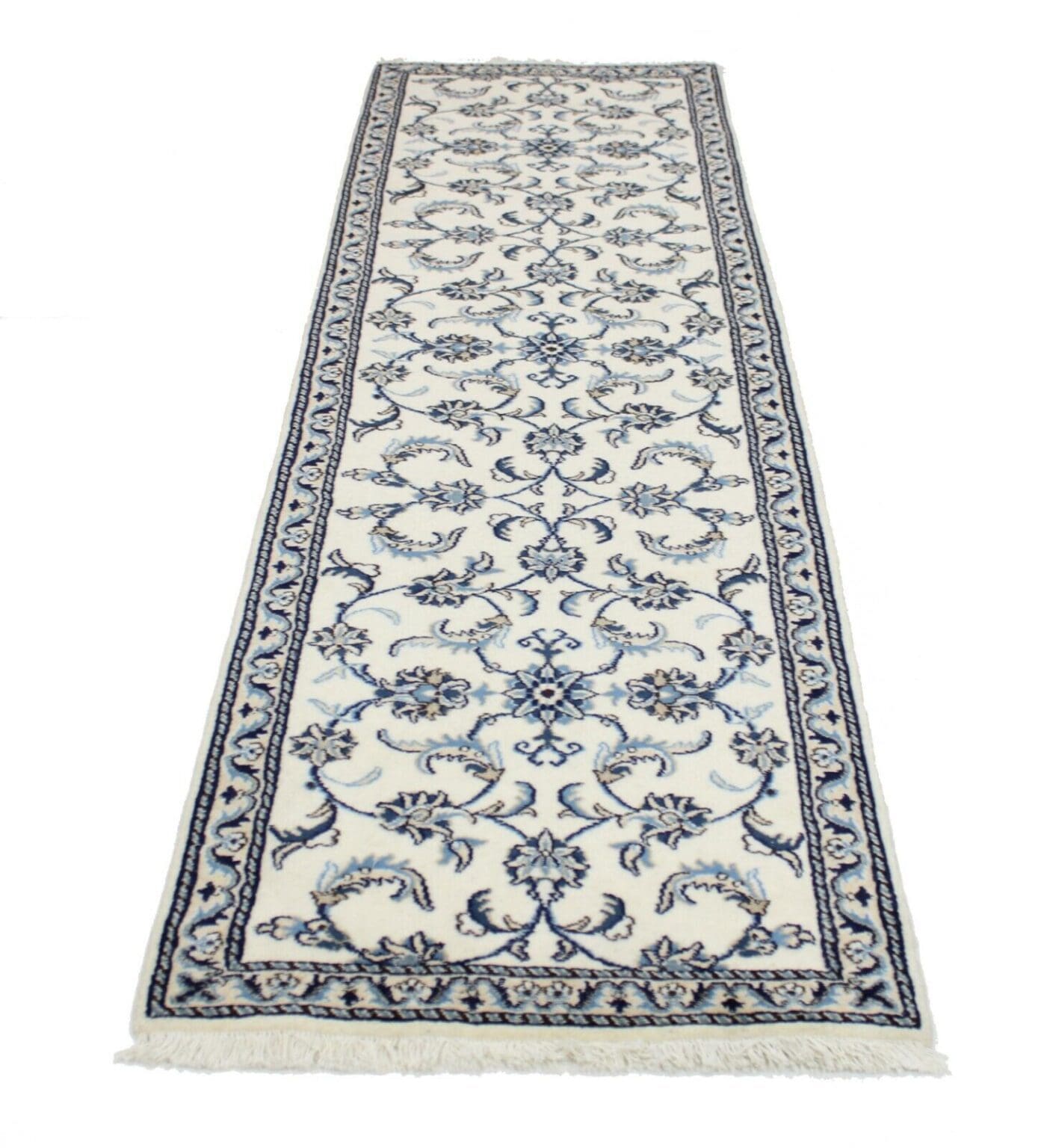
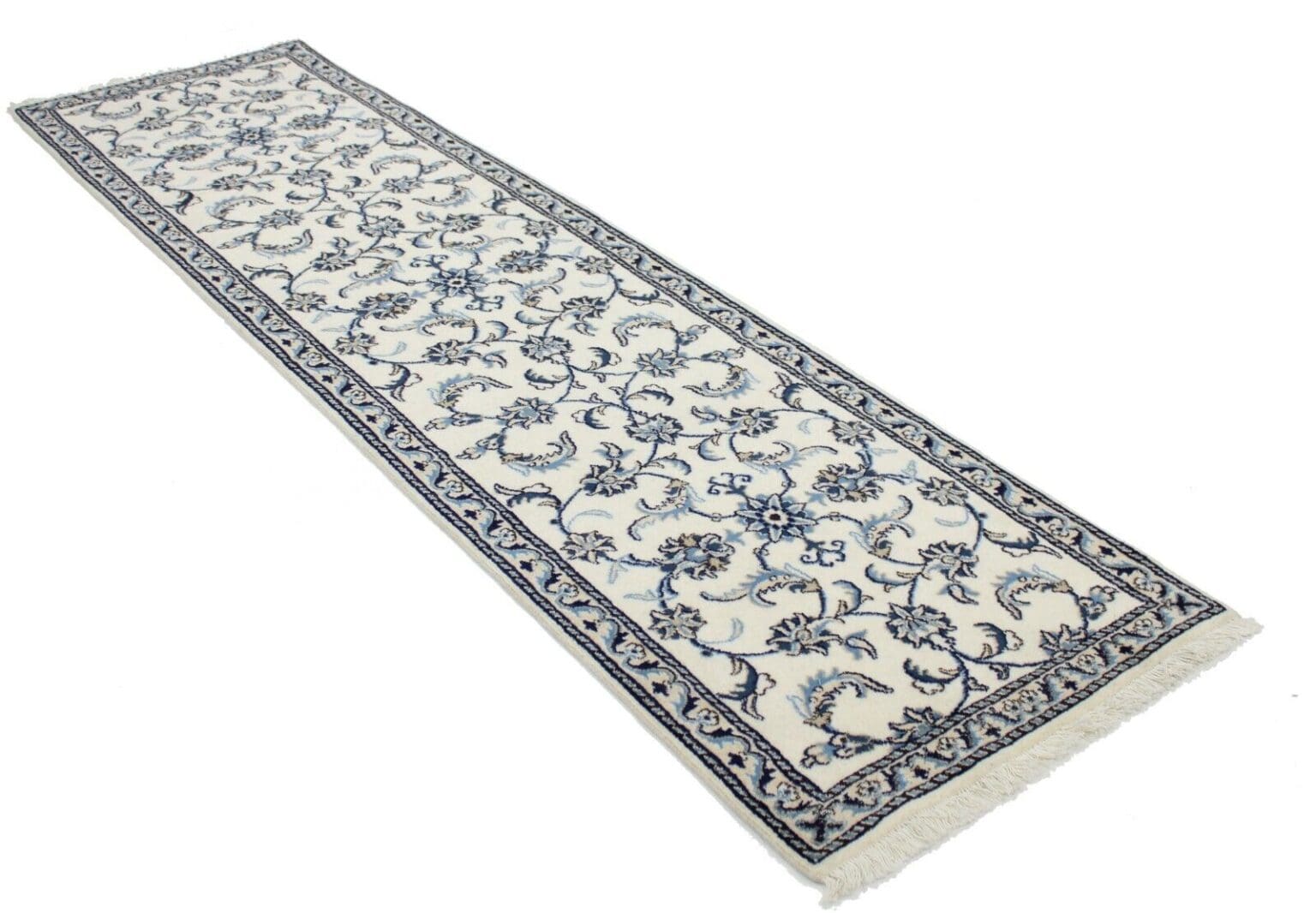
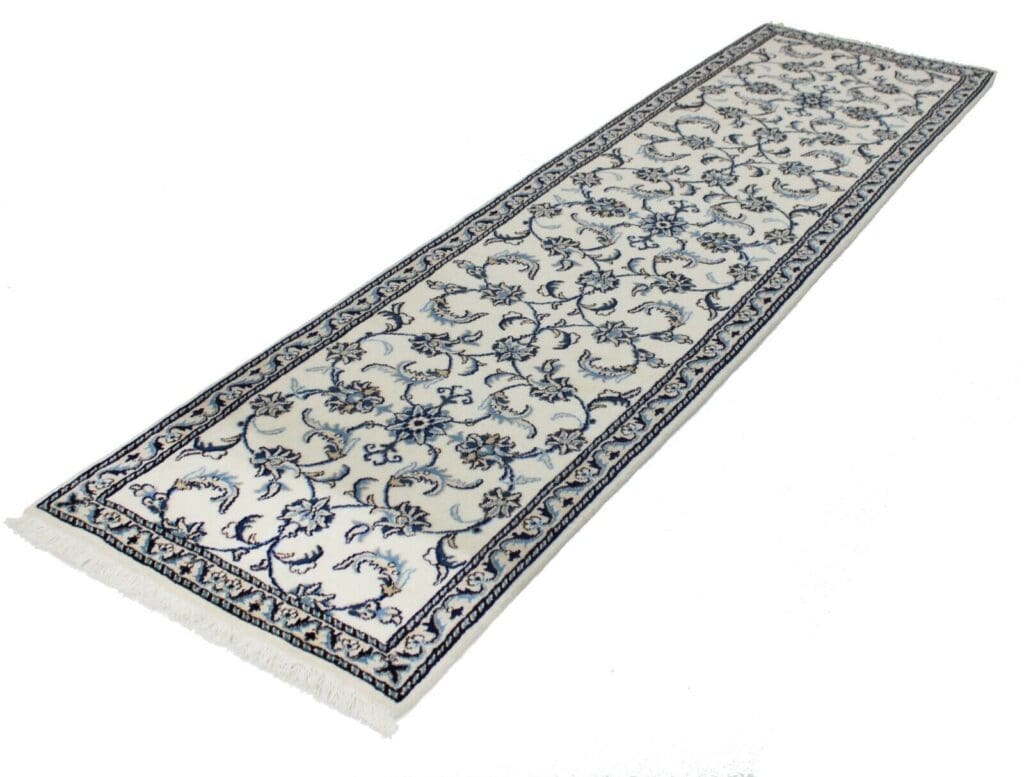
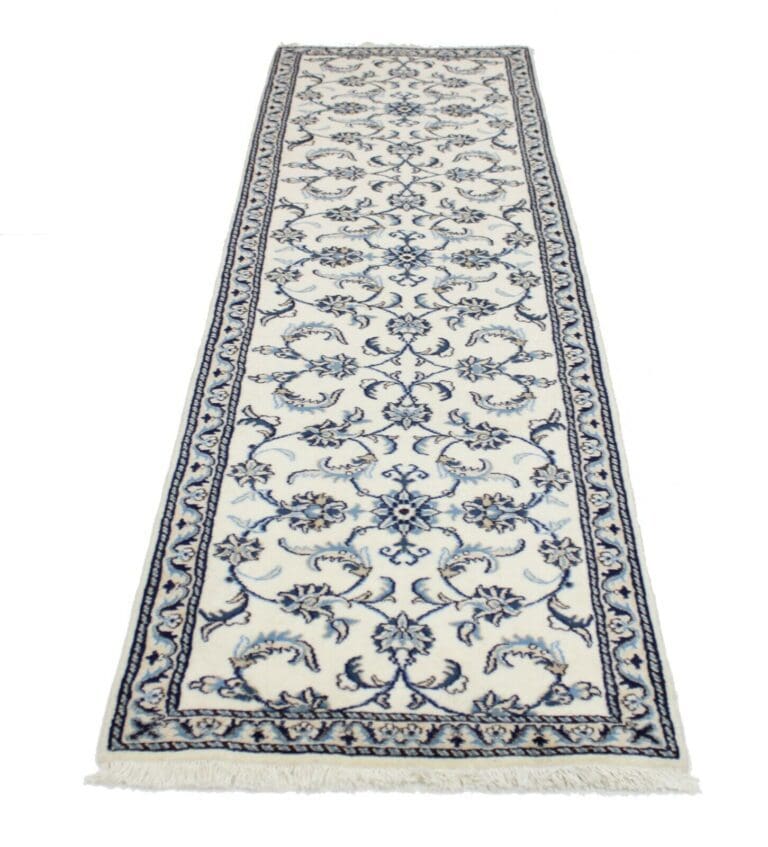
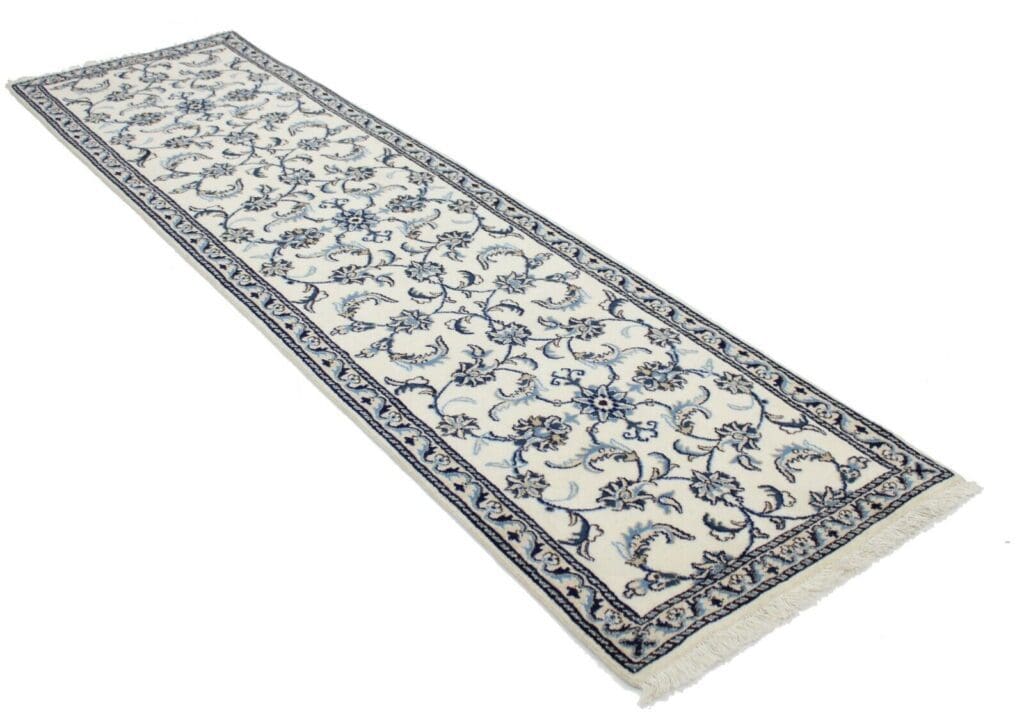
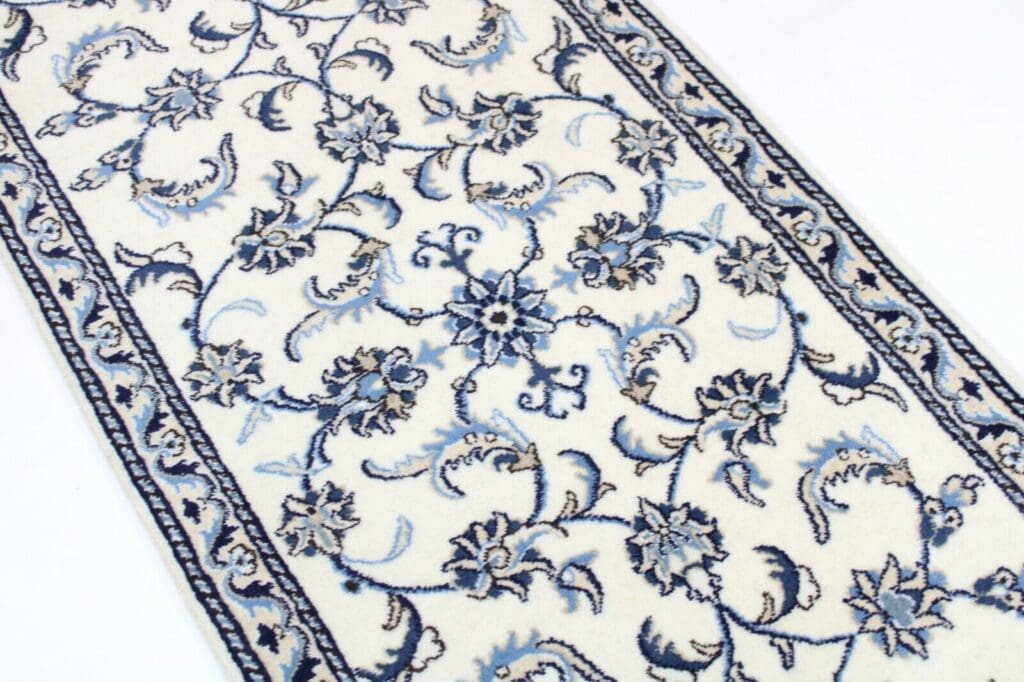
Hand-knotted Nain Persian Rug | Knot density: Hand-knotted | Material: Wool and cotton | Size: 290 cm x 78 cm | Pattern: Oriental with floral motifs | Condition: New without tag, top condition
This Nain Persian rug is hand-knotted and made from wool and cotton. Its construction is created knot by knot, so the design is formed through textile workmanship rather than by printing a pattern onto a finished surface. Wool is a traditional natural material in Persian rug making. It is valued for its resilient fibre, comfortable handle and ability to take colour evenly. Cotton is also a long-established textile material in rug production and can be used in different parts of a rug’s structure according to the construction.
In hand-knotting, each knot is inserted individually and then secured within the developing pile. The surface is built row by row. This process requires consistent tension and careful workmanship so that the outlines and colour areas remain coherent. It also explains why every hand-knotted rug is an individual textile object. Minor variations in execution are part of the character of handmade goods and distinguish them from machine-produced floor coverings.
The combination of wool and cotton brings together two materials that have long been familiar in Oriental rug making. Wool provides a substantial surface and natural warmth, while cotton is a versatile fibre with an established role in textile construction. No further information is given about the precise distribution of these materials within this particular rug. The stated features are its hand-knotted construction and the use of high-quality wool and cotton.
Hand-knotted rugs are traditionally made through a controlled and deliberate sequence of work. The weaver follows a design, places the different colour areas and develops the contours of the motifs step by step. The pattern therefore becomes part of the pile instead of remaining a separate printed layer. For care, the surface should be treated gently so that the fibres and colours can be preserved for as long as possible. This rug is also described as suitable for underfloor heating.
Origin and Tradition
This rug comes from Iran and is identified as a Nain Persian rug. Nain is one of the recognised rug-producing places in Iran. The town lies in central Iran, a region where a distinct tradition of rug making has developed over a long period. Persian rugs are made in many local centres, each with its own approaches to drawing, weaving and finishing. Isfahan, Tabriz and Kashan are among the centres commonly associated with Iranian rug culture. Nain belongs to this wider Persian tradition while retaining its own regional identity.
Iranian rug making combines practical furnishing with a highly developed ornamental language. Rugs were made for use in interiors and also served as textiles through which inherited forms could be preserved. Designs, borders and field arrangements have been passed on, adapted and reinterpreted within workshops and families. The tradition is therefore not limited to one fixed pattern. It is a broad vocabulary of forms whose treatment can vary by place and by maker. A Nain rug is understood within this cultural setting of Persian hand-knotting.
Nain rugs are generally associated with carefully organised designs and a close attention to detail. The regional tradition is often connected with orderly compositions, floral elements and a balanced relationship between the central field and its borders. These are general characteristics of the Nain style, not additional claims about every detail of this individual rug. The specific description for this piece is an Oriental pattern with floral motifs. Its Iranian origin and Nain designation are the relevant points for identifying its regional context.
The history of Persian rugs is closely linked to the transmission of knowledge through workshops and families. Skills such as preparing the foundation, placing knots, trimming the pile and finishing the edges are learned through practical instruction. Selecting and coordinating colours is also part of the craft. Natural materials such as wool and cotton form a traditional basis for this work. A regional name points to a place-based tradition, while the execution of each hand-knotted rug remains individual.
Persian rugs from Iran are produced in many formats, from narrow runners to broad room rugs. The term runner in the original title places this piece within the elongated rug format. Its use is not restricted to one interior style. Traditional Iranian rugs can work in classically furnished rooms as well as in a simpler contemporary setting. The relevant combination here is the Iranian origin, the Nain designation, the hand-knotted technique and the particular floral Oriental design.
Design and Pattern
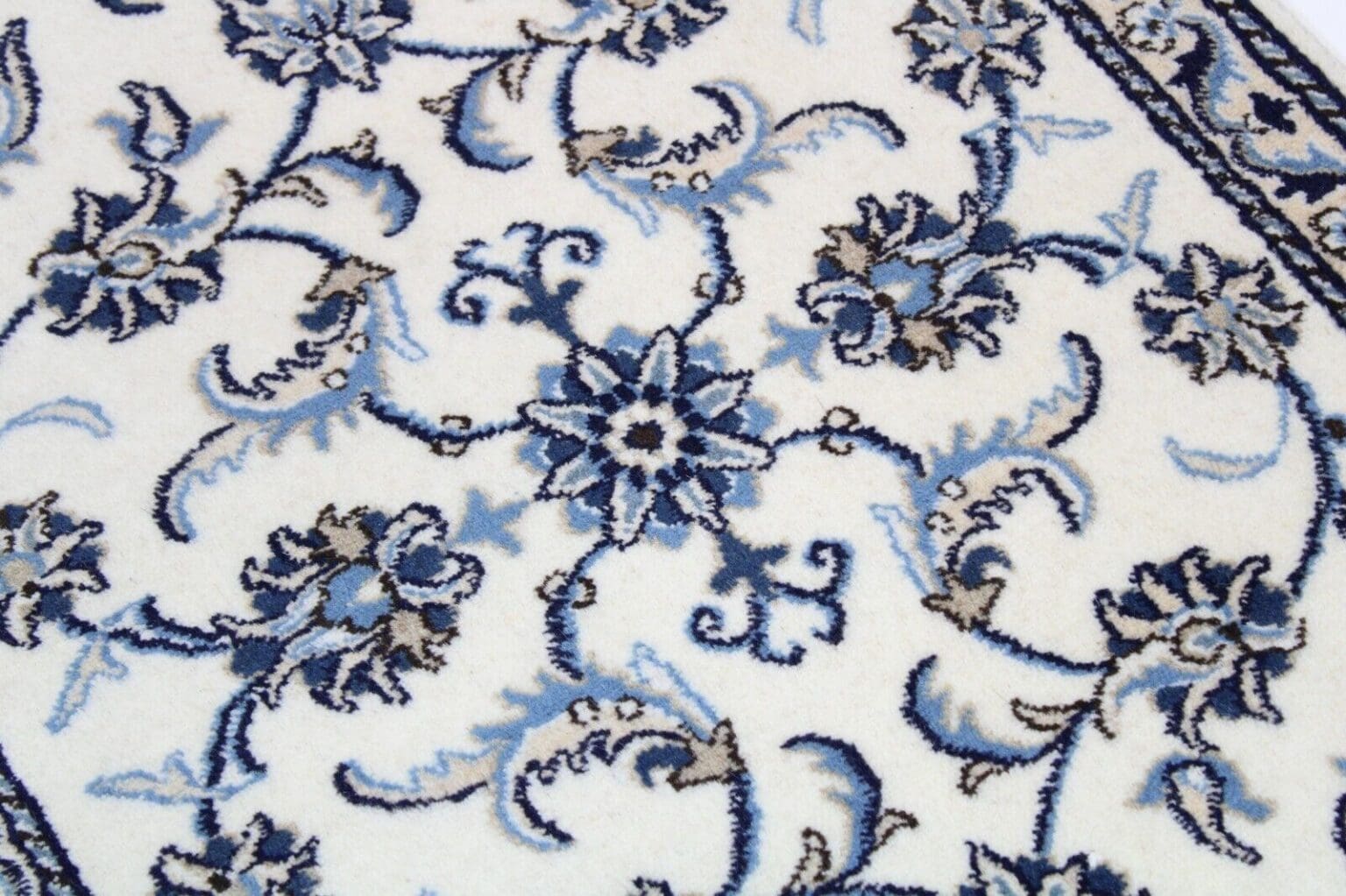
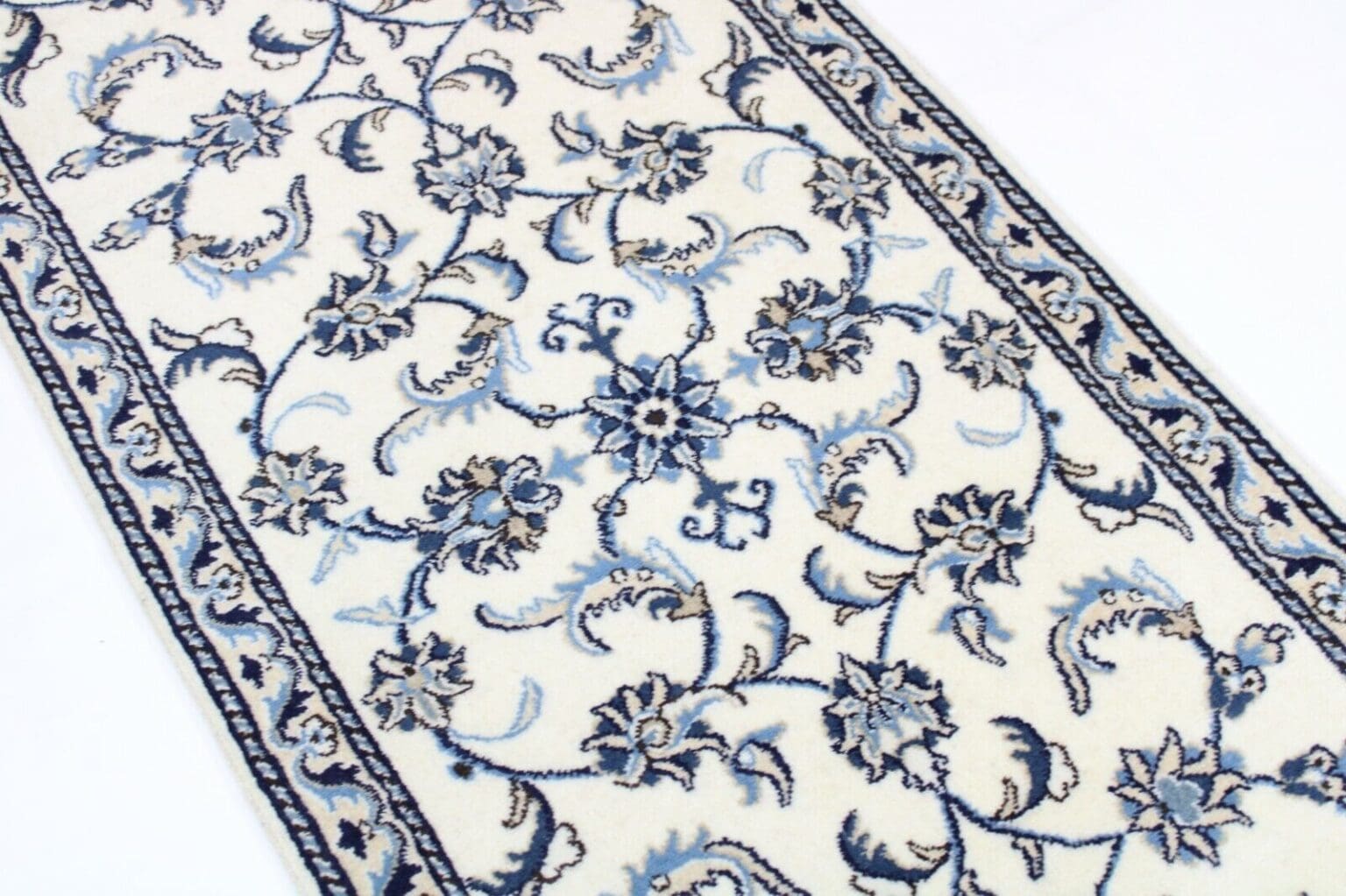
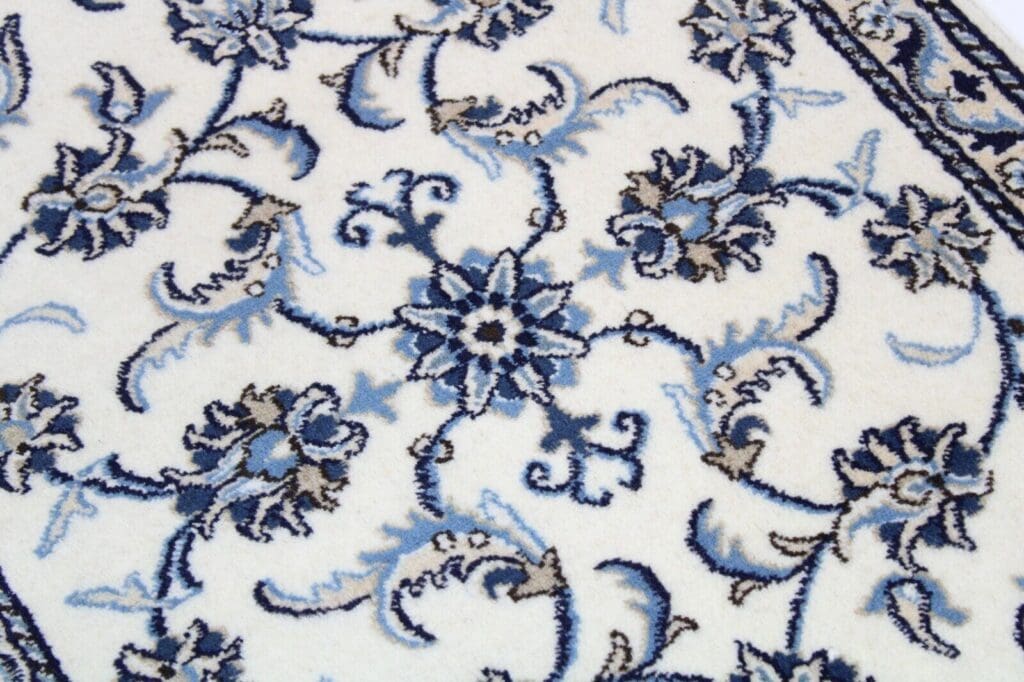
The pattern of this rug is described as Oriental with floral motifs. Floral ornament is one of the central design languages of Persian rug making. Leaves, blossoms, vines and stylised plant forms may appear as separate motifs, in repeated sequences or as a connected ornamental network. They are generally not intended as a fully naturalistic image of one particular plant. Instead, forms are simplified, rhythmically arranged and adapted to the proportions of a woven textile surface.
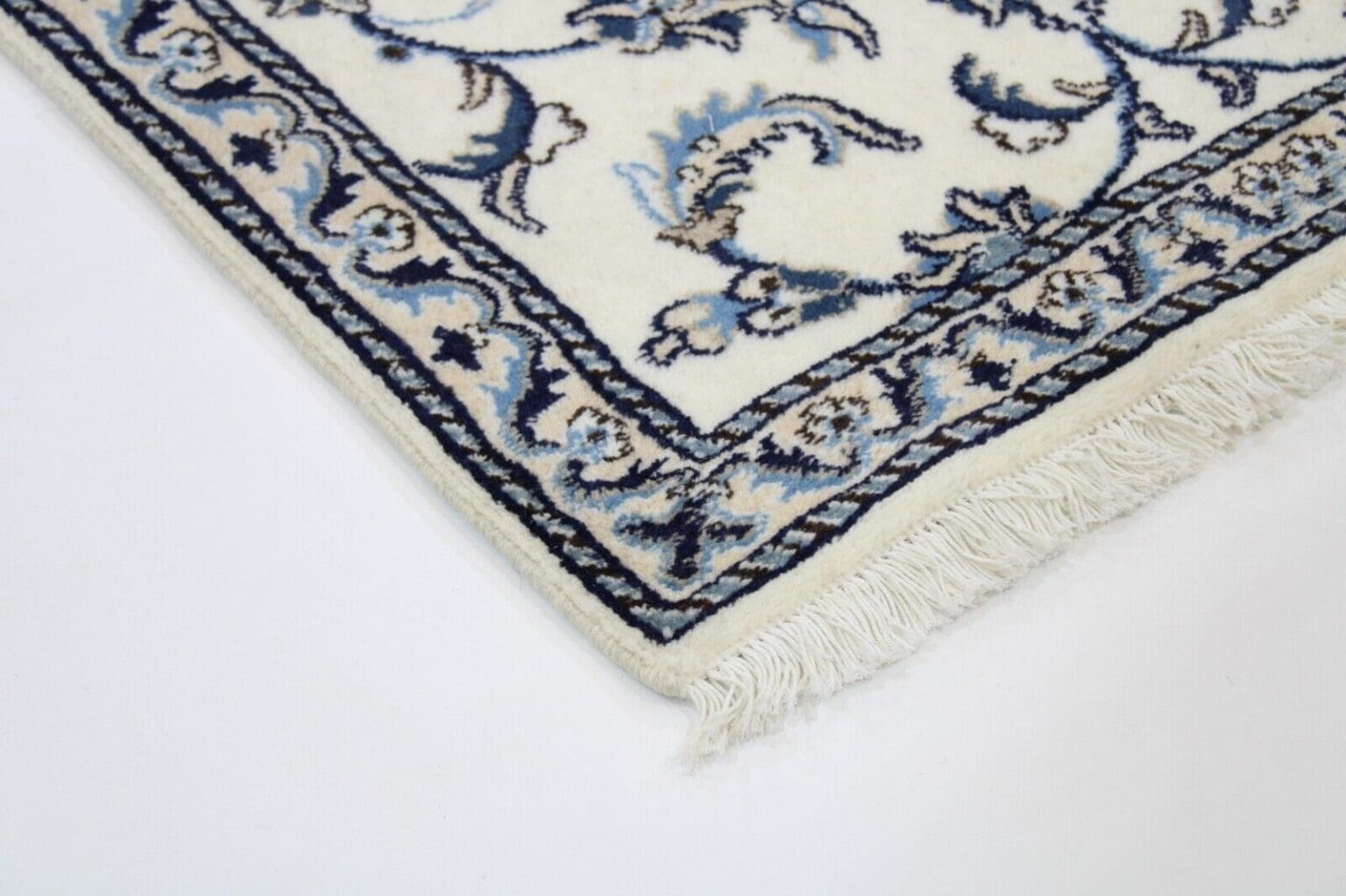
A floral rug composition often contains several connected levels of organisation. A central field establishes the main area, while one or more borders may frame it. The border creates a transition between the rug and the surrounding room and gives the design a visual boundary. Within the field, motifs may be arranged symmetrically or guided along scrolling stems. The exact presence of these elements is not specified for this rug; the confirmed description is an Oriental design with floral motifs.
Oriental patterns are commonly built through repetition, rhythm and variation. A motif can recur several times while changing in direction, spacing or colour emphasis. This order helps hold a large textile area together without making it appear entirely rigid. Floral forms may be associated in general with growth, nature and harmony, but the meaning of an individual symbol depends on region, design and tradition. General symbolism should therefore not be presented as a definite interpretation of every motif on this particular rug.
The Nain tradition is often associated with finely organised floral designs and a controlled overall composition. Many Nain rugs place decorative vines and blossoms in a measured relationship with a central field. The regional history nevertheless includes different interpretations and degrees of ornament. Colour balance, ornamental density and the relationship between field and border can vary from one rug to another. For this one-off piece, the reliable design description is limited to its Oriental floral pattern. No additional colour or detailed motif is asserted.
Floral motifs can be used in a variety of interiors because they may act both as a distinct textile drawing and as a connecting element within a room. A floral rug can provide a decorative counterpoint beside plain furniture or sit naturally among more traditional furnishings. This is a general observation about floral rug design. The individual piece remains defined by its Nain attribution, Iranian origin, hand-knotted construction and its own specific execution.
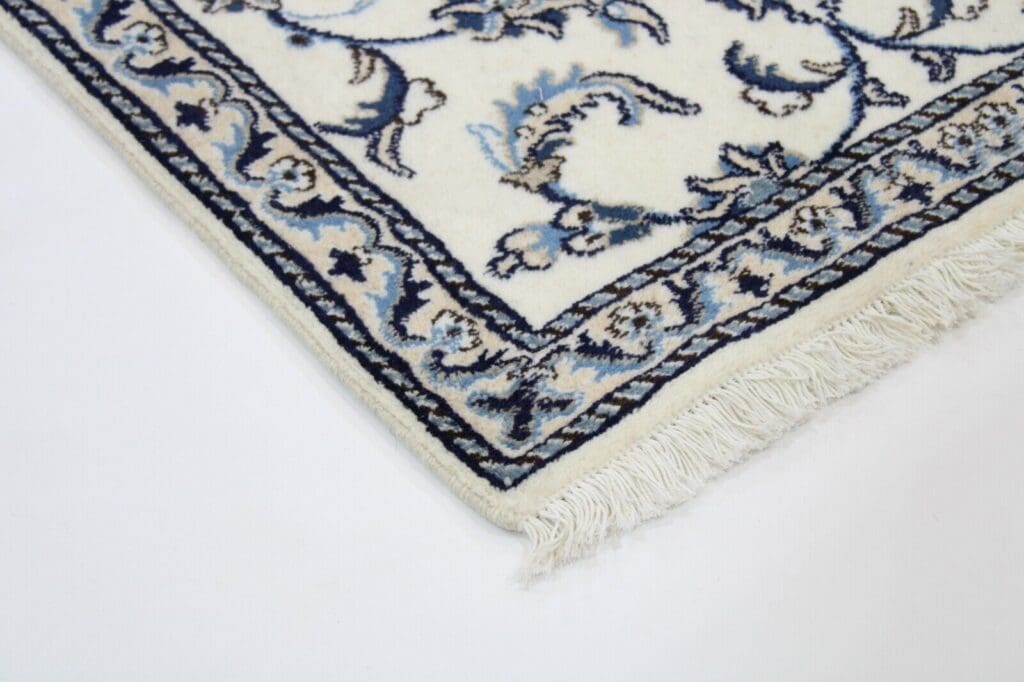
When viewing a hand-knotted pattern, the transitions between ornaments reveal the relationship between drawing and material. Unlike a printed design, the outlines are built from individual knots and from the way the pile is trimmed and directed. The pattern therefore has a textile structure as well as a visual outline. Motifs are not merely lines on a surface; they are part of a handmade pile. This connection between image and construction is a central feature of traditional Persian rug design.
Special Features
The rug is described as new without a tag and in top condition. This condition statement is one of the specific features of the item. No tag is present, while the rug itself is identified as new and in top condition. No further information about wear, repairs or alterations is provided, so no additional condition claims are made.
As a hand-knotted Nain Persian rug, this piece combines an Iranian place designation with a traditional method of manufacture. Its stated materials are high-quality wool and cotton. The pattern is described as Oriental with floral motifs. It is also suitable for underfloor heating. These details summarise the item’s specific features without adding technical or decorative information that has not been supplied.
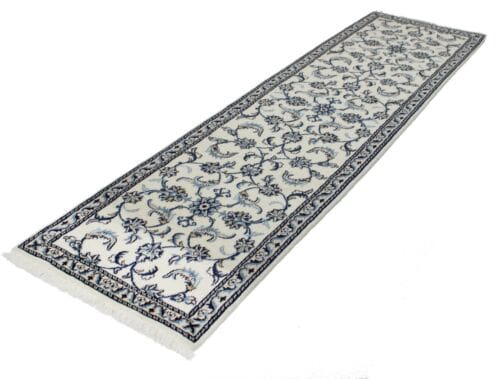
The elongated format identifies it as a runner. Its placement can be chosen according to the layout of the room. Long passage areas or narrow living zones may provide suitable settings, although the final position depends on the interior. Its suitability for underfloor heating broadens the possible installation conditions. As with any natural-fibre rug, gentle handling remains appropriate.
FAQ
What makes this Nain Persian rug distinctive?
Its distinctive features are its Iranian origin, its Nain designation and its hand-knotted construction. The rug is made from high-quality wool and cotton and has an Oriental pattern with floral motifs. It is described as new without a tag and in top condition. It is also suitable for underfloor heating. Together, these details describe the material, workmanship, design and practical characteristics of this individual rug.
How should a hand-knotted Persian rug be cared for?
For routine cleaning, use a vacuum cleaner without a brush attachment so that the pile is treated as gently as possible. Professional cleaning at suitable intervals can help maintain the textile surface. Strong direct sunlight should be avoided because prolonged exposure can cause colours to fade. Spilled liquids should be absorbed promptly and carefully. For deeper cleaning, a specialist familiar with hand-knotted rugs and natural fibres is the appropriate choice.
Can this rug be used in different rooms?
Yes. A Nain Persian rug with an Oriental floral pattern can be used in either a traditional or a modern interior. As a runner, it is particularly suited to elongated areas and transitions that benefit from a textile division. Living rooms, dining rooms and bedrooms can all be considered when the layout is appropriate. This rug is also specifically described as suitable for underfloor heating.
To provide the best experiences, we use technologies like cookies to store and/or access device information. Consenting to these technologies will allow us to process data such as browsing behavior or unique IDs on this site. Not consenting or withdrawing consent, may adversely affect certain features and functions.
Functional Always active
The technical storage or access is strictly necessary for the legitimate purpose of enabling the use of a specific service explicitly requested by the subscriber or user, or for the sole purpose of carrying out the transmission of a communication over an electronic communications network.
Preferences
The technical storage or access is necessary for the legitimate purpose of storing preferences that are not requested by the subscriber or user.
Statistics
The technical storage or access that is used exclusively for statistical purposes.The technical storage or access that is used exclusively for anonymous statistical purposes. Without a subpoena, voluntary compliance on the part of your Internet Service Provider, or additional records from a third party, information stored or retrieved for this purpose alone cannot usually be used to identify you.
Marketing
The technical storage or access is required to create user profiles to send advertising, or to track the user on a website or across several websites for similar marketing purposes.
 SECURE PAYMENT
 SHIPPING PARTNERS


