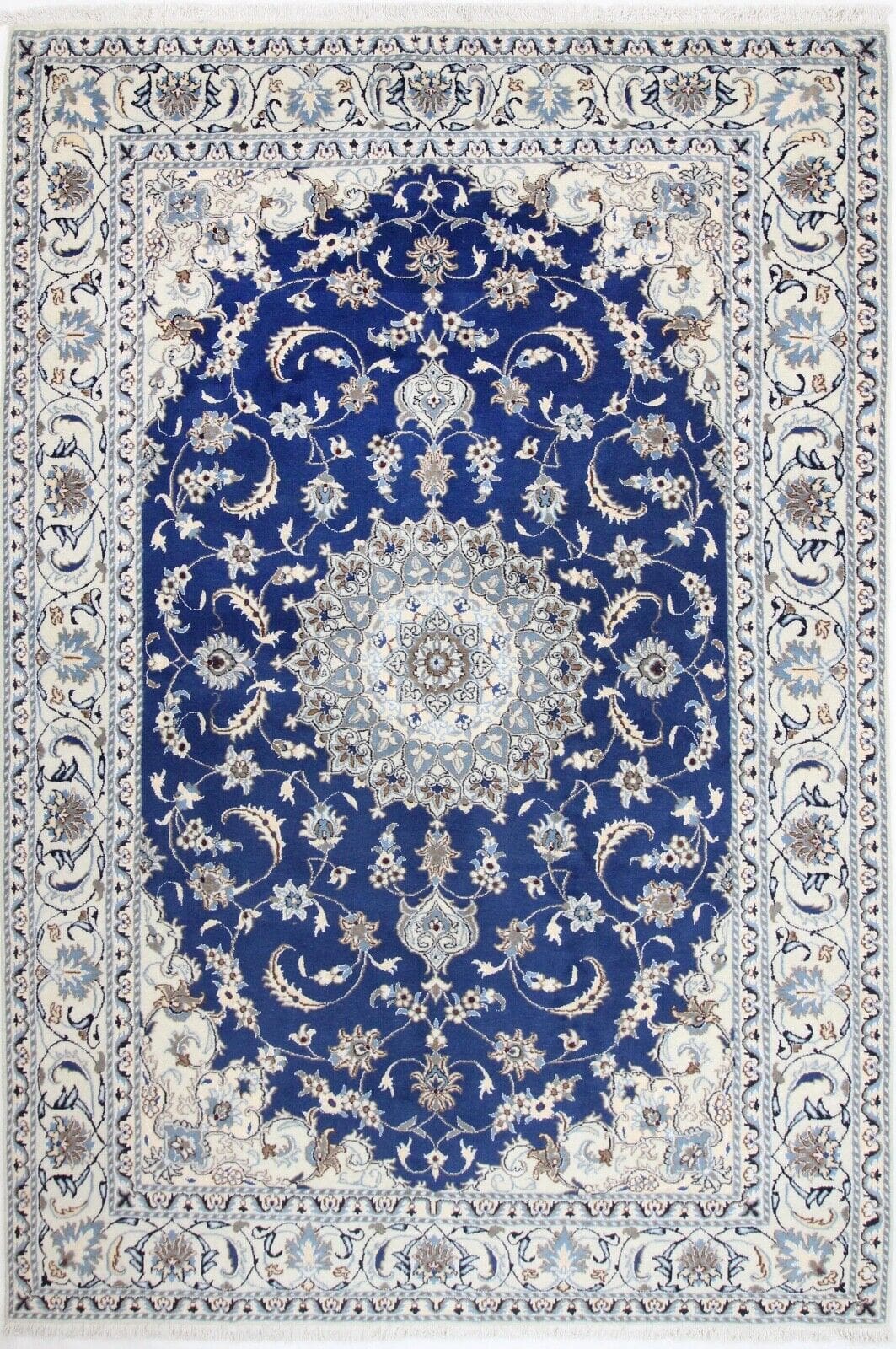
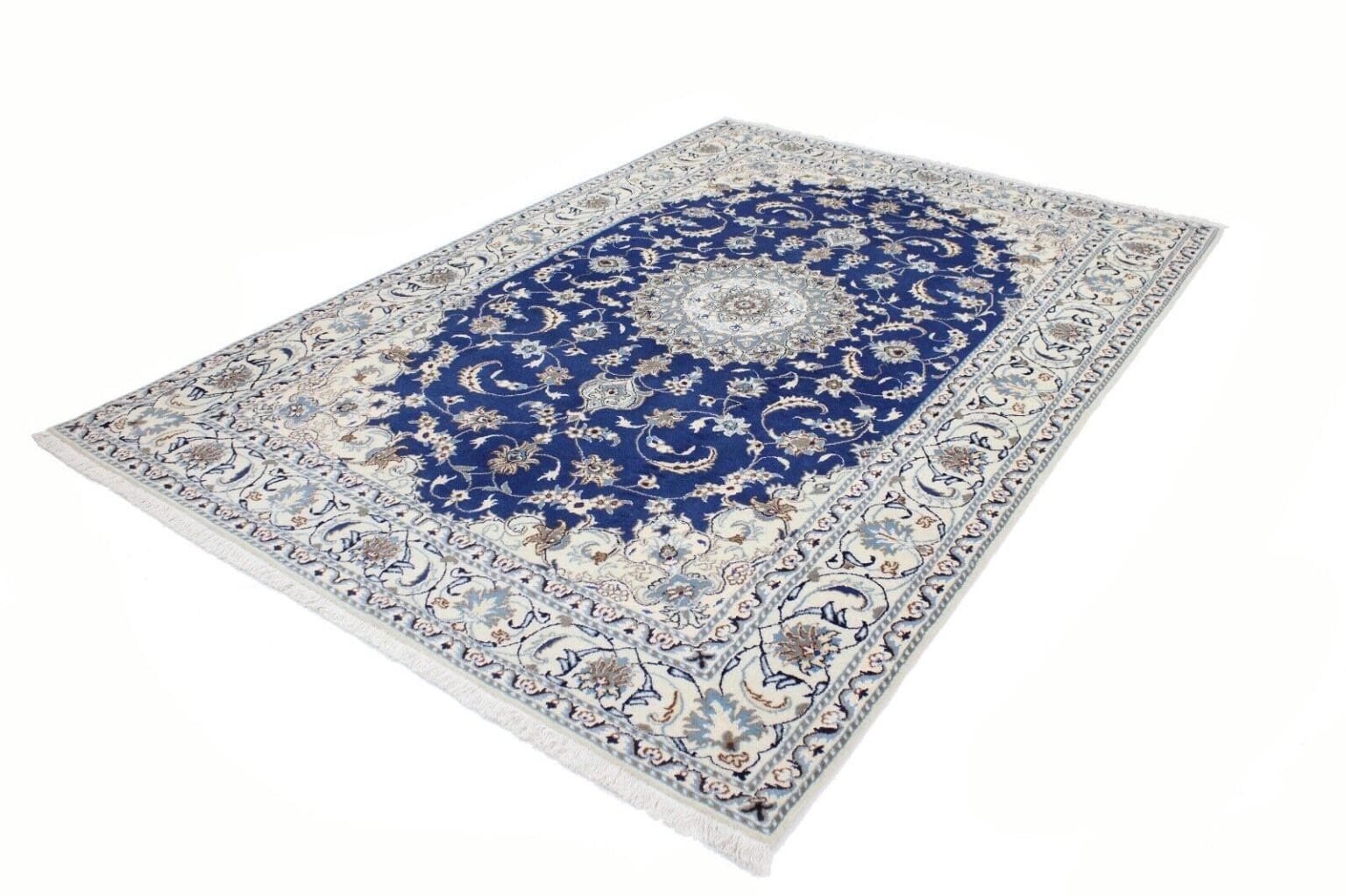
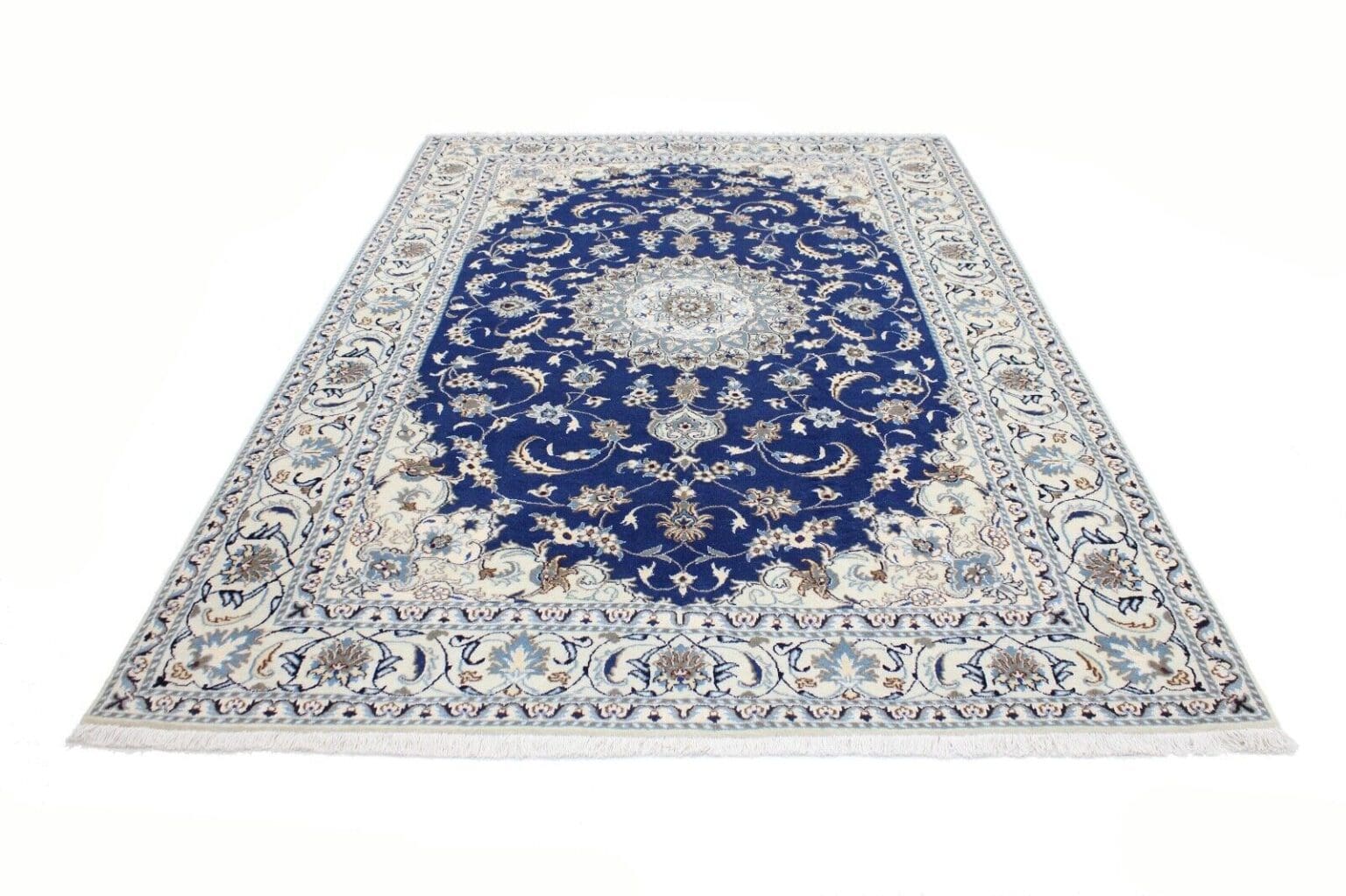
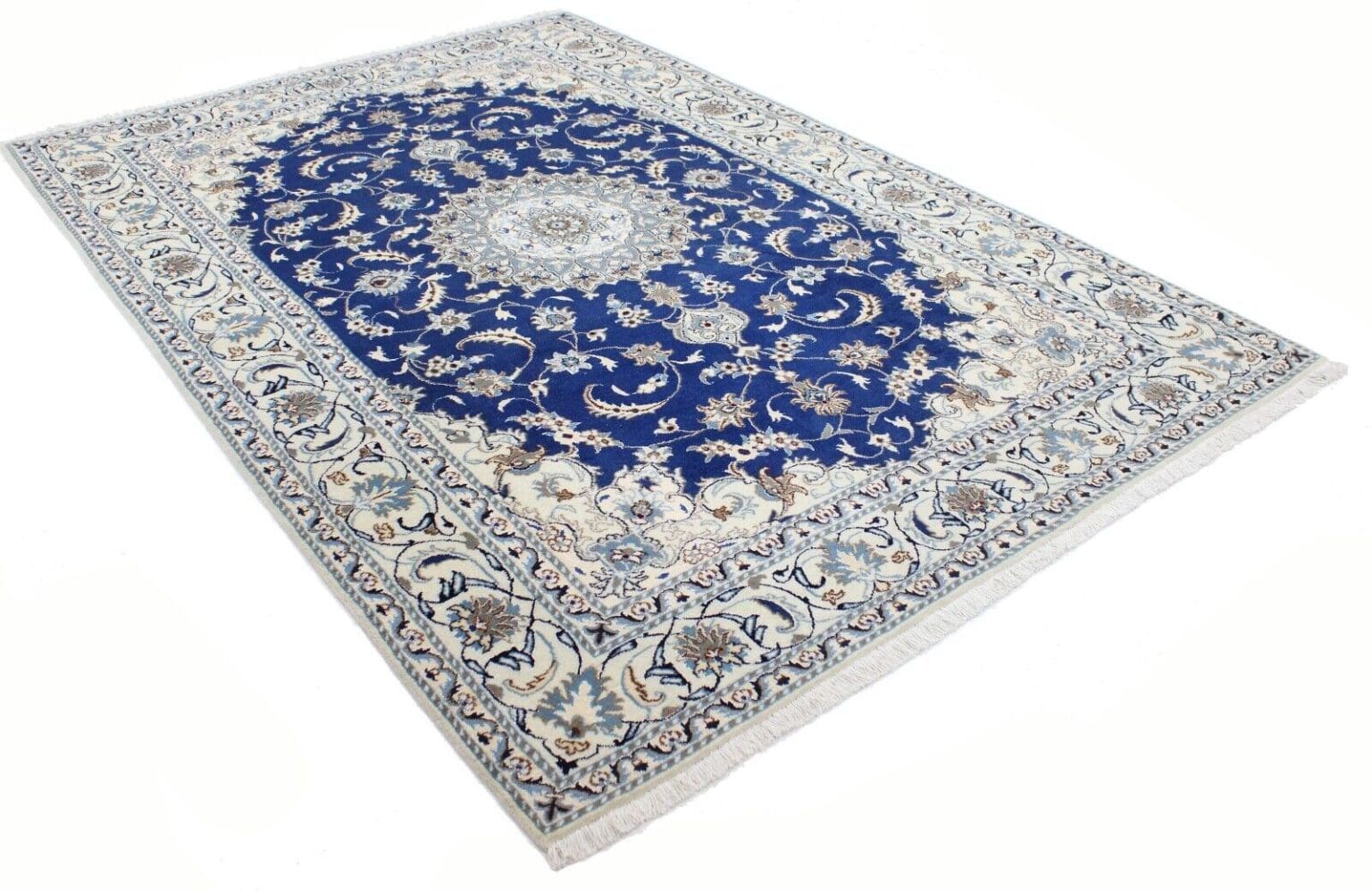
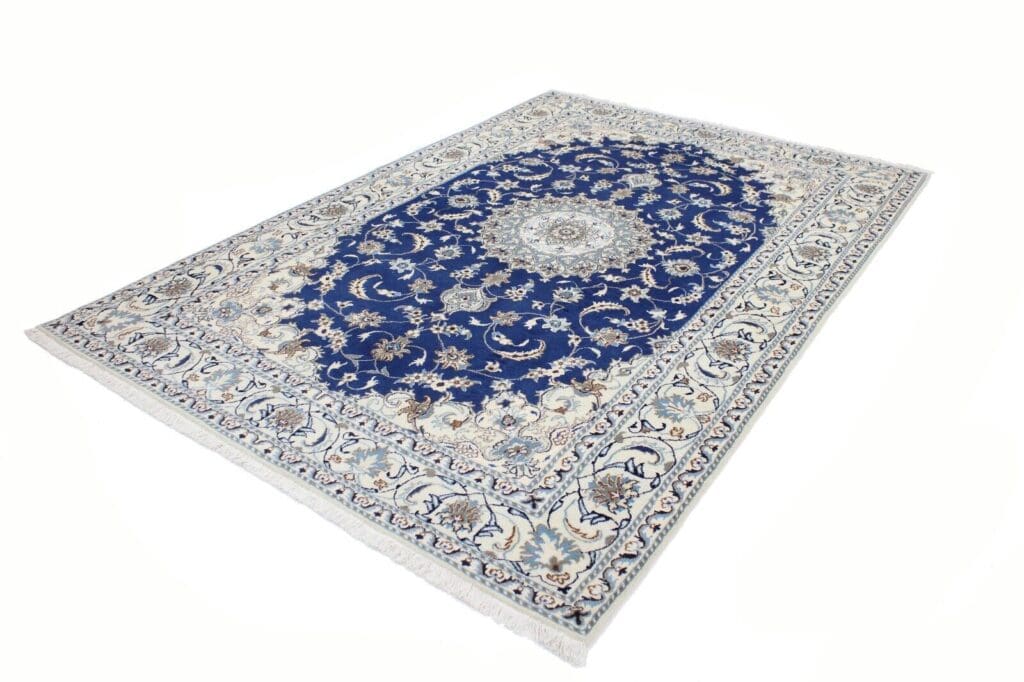
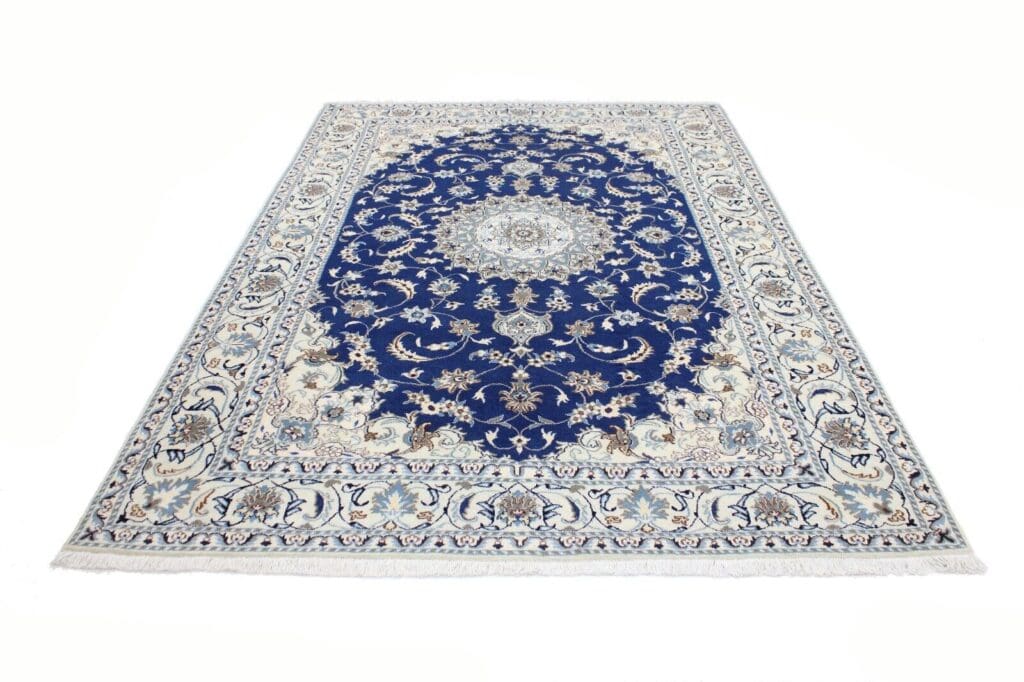
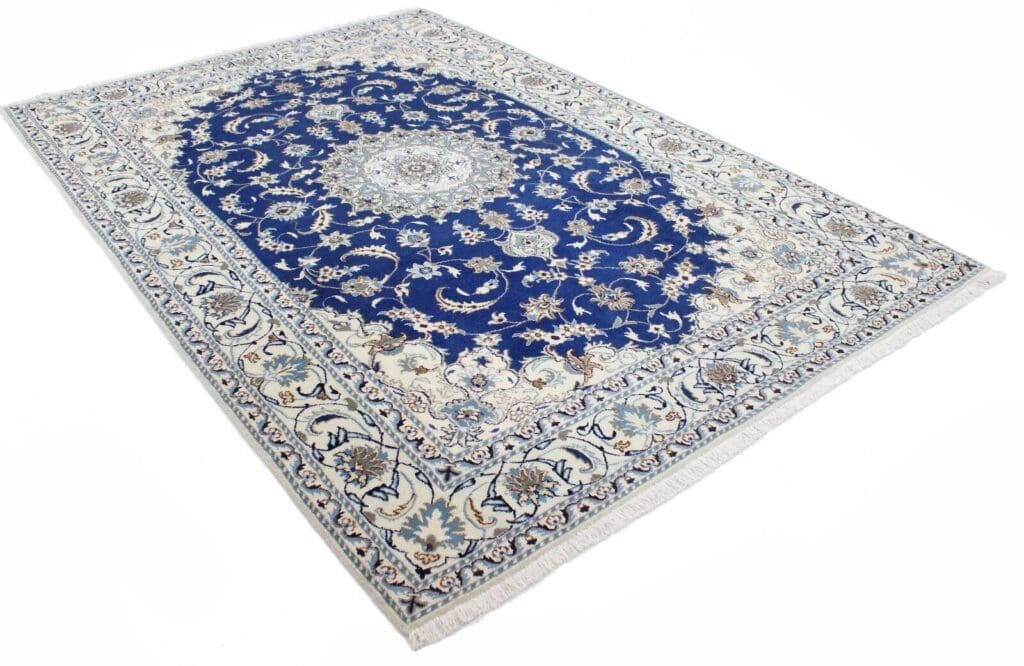
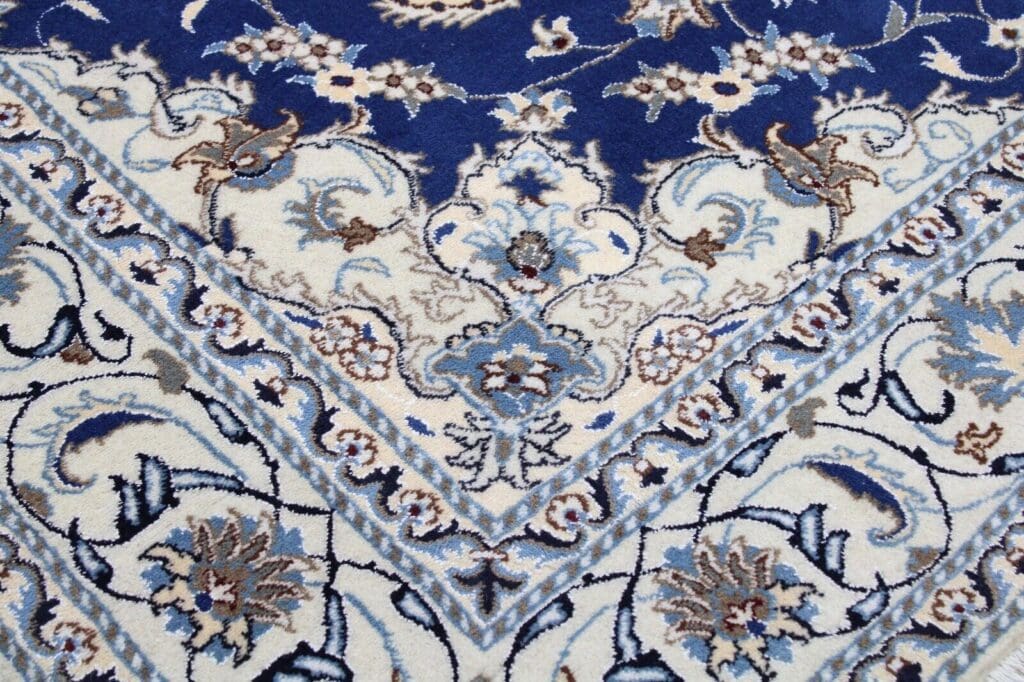
Hand-knotted Nain Persian Rug | Knot density: Hand-knotted | Material: wool and cotton | Size: 290 cm x 198 cm | Pattern: Oriental floral design | Condition: New without label, top condition
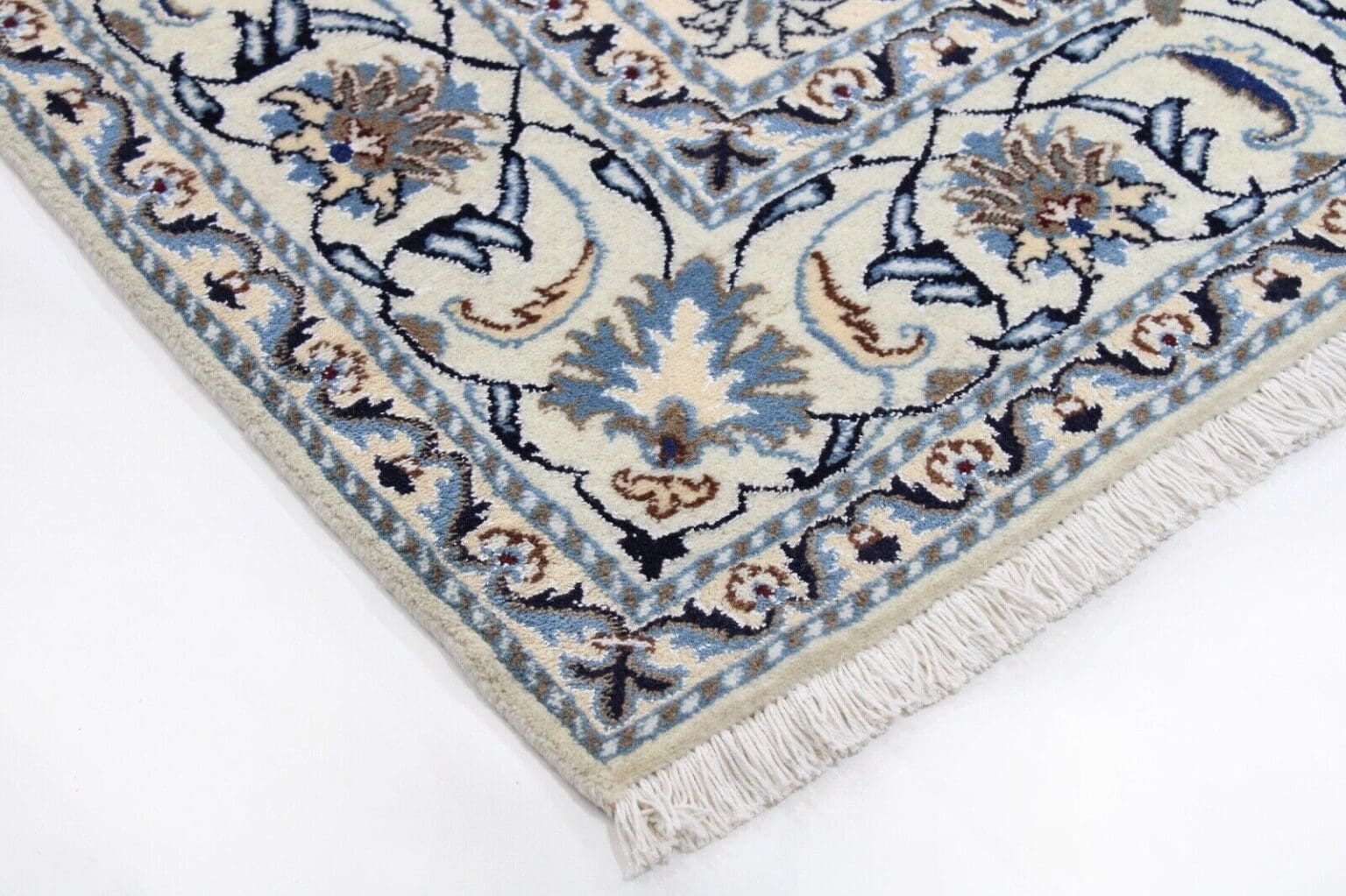
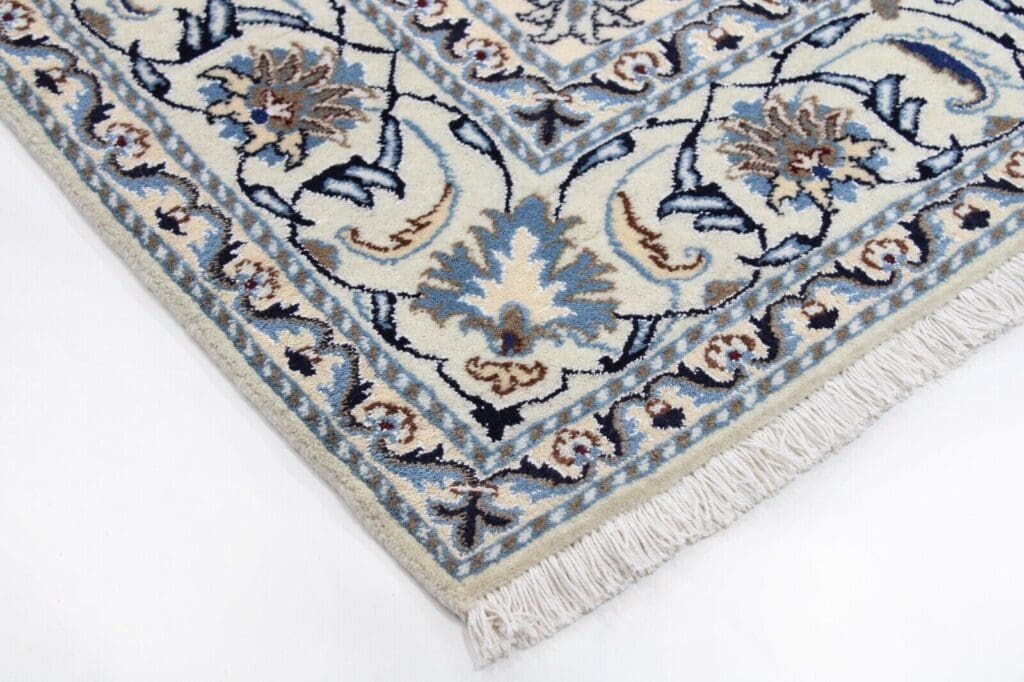
This Nain Persian rug is hand-knotted and made from high-quality wool and cotton. Its construction is created knot by knot rather than by an industrial production process. The handwork forms both the textile surface and the ornamental design through a sequence of individual knots. The pile is described as high pile, giving the rug a clearly textured surface. Together with its blue colour, this pile structure contributes to the way the rug appears and feels in a room.
Wool has long been used in Persian rug making because it is a natural textile fibre with a soft, substantial handle. Cotton is also part of the material description of this rug and is associated with the traditional construction of many Oriental rugs. In hand-knotting, the materials are worked into a structured textile surface over an extended period. The pattern is not printed onto a finished floor covering; it is formed as the rug is made.
The rug is suitable for underfloor heating. This makes its traditional hand-knotted construction compatible with a contemporary interior installation. Its high-pile finish remains an important part of its character and should be considered when caring for the surface. The combination of wool, cotton, hand-knotting and high pile gives the rug a clearly textile identity while retaining the decorative role associated with Persian rugs.
The condition is described as new without a label and in top condition. This is a specific description of the offered one-off piece. It is a blue, hand-knotted rug with a floral Oriental pattern, made from high-quality wool and cotton. No information is provided about restoration, repairs or previous use, so no additional condition details are added here.
Origin and Tradition
The rug comes from Iran and is identified as a Nain Persian rug. Nain is an established carpet-making centre in central Iran, with a distinctive place in the history of Persian weaving. The name refers not only to a location but also to a regional vocabulary of design and workmanship. Nain rugs are associated with carefully organised compositions and a refined interpretation of traditional Persian ornament.
Persian rug making developed over centuries in many regions of present-day Iran. Individual weaving centres formed their own preferences in colour, drawing, layout and execution. Nain belongs to this varied tradition rather than representing Persian carpets as a single uniform style. The hand-knotted technique connects this rug with the practical knowledge passed through generations of weavers. Each stage requires control, since the image develops gradually from the knots.
The Nain designation identifies the regional tradition of this rug. It should not be confused with other Iranian origins. Kashan, Isfahan, Tabriz and Kerman are also important names in Persian carpet history, but they are not the origin stated for this piece. This rug is offered as a Nain Persian rug from Iran. Mentioning other centres only places Nain within the wider diversity of Iranian weaving; it does not change the origin of this rug.
Persian carpets have traditionally combined practical use with decorative and cultural meaning. A woven or knotted floor covering could define a room while also displaying a carefully ordered visual language. Floral forms, geometric structures and repeated borders were developed in different regional contexts. The knowledge needed to translate these designs into rows of knots was part of the craft itself. Hand-knotting therefore represents both a method of production and a link to a long textile tradition.
The Nain tradition is often recognised for its controlled drawing and balanced ornamental arrangements. These qualities are part of the general regional background and do not add unlisted details to this individual rug. The specific information here is that the rug is from Iran, is identified as Nain, is hand-knotted, has a high pile, uses wool and cotton, and has a blue Oriental floral design. Those details place the piece within the broader history of Persian carpet weaving.
Regional rug traditions are not static. Weavers preserve familiar motifs while adapting colour relationships, line work and the scale of an arrangement. This allows a recognised regional style to remain connected to its history without making every rug identical. The one-off character of a hand-knotted rug comes from this manual process: the craft follows tradition, while the finished combination of materials, colour and pattern belongs to the individual piece.
Today, a Nain rug can serve as a traditional furnishing element in a wide range of interiors. Its Persian origin and hand-knotted manufacture provide historical context, while its suitability for underfloor heating relates it to present-day living. The rug’s place in that tradition is defined by Iran and Nain, not by a pattern name borrowed from another region.
Design and Pattern
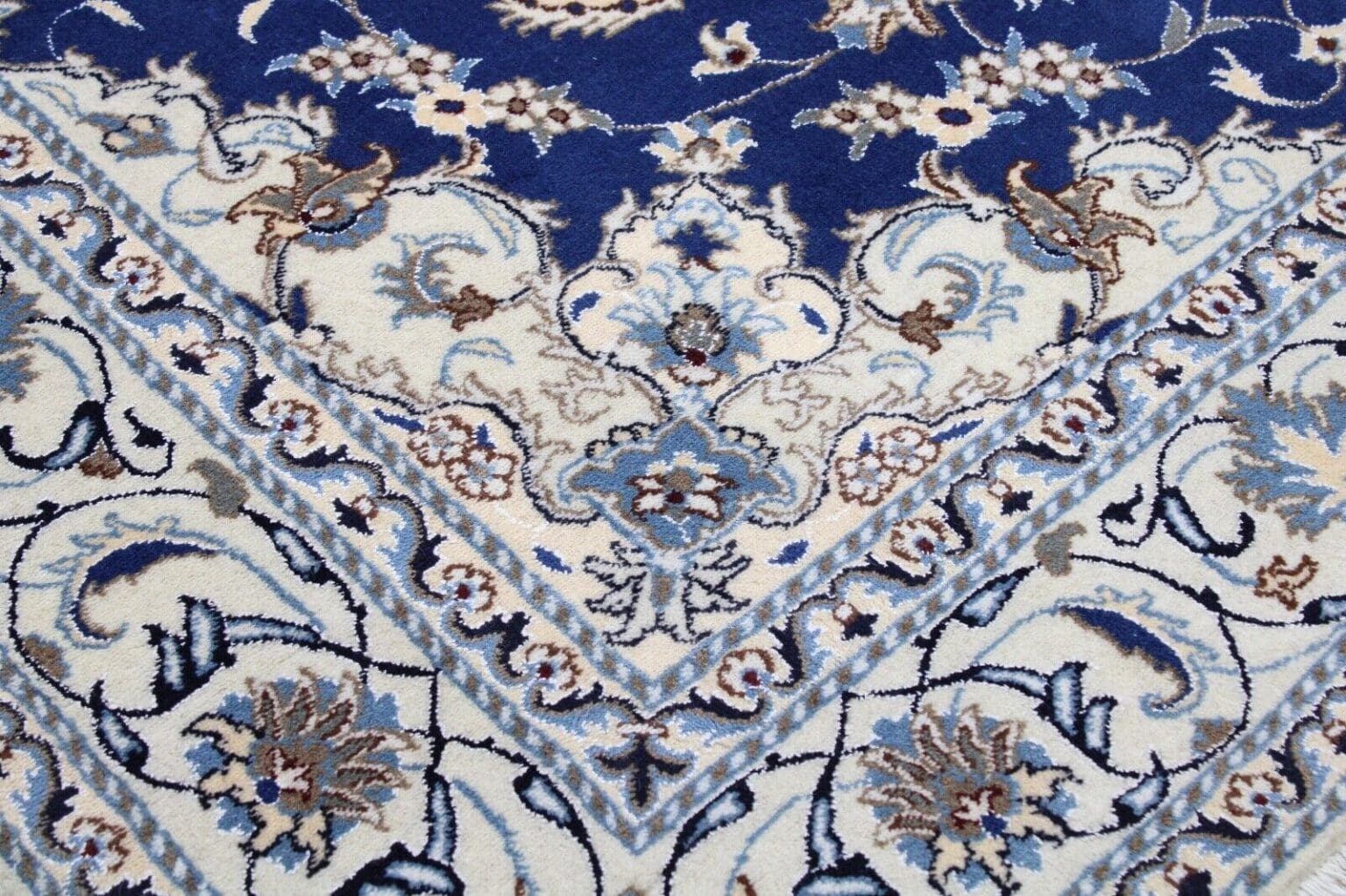
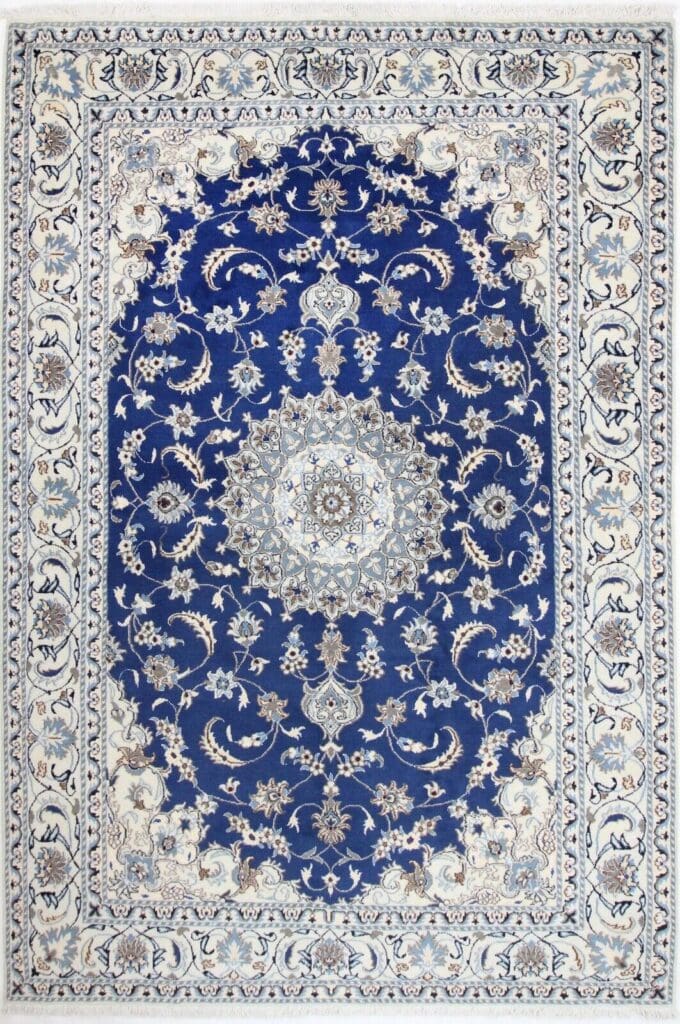
The pattern is described as Oriental with flowers. Floral ornament is one of the central design languages of Persian carpet art. Flowers, vines and stylised botanical forms can organise a field, establish rhythm and lead the eye through a composition. In a hand-knotted rug, these shapes are built from coloured knots and rows rather than applied as a surface print. The relationship between repeated motifs and the surrounding ground creates the visual structure.
Blue is the stated colour of this rug. Persian weavers have used blue in many different shades and combinations, where it can appear deep, calm or strongly contrasting depending on the surrounding colours and the light. Only blue is specified for this piece, so no further colours are attributed to it. The colour works together with the floral theme to give the rug its described Oriental character.
A floral rug may use a central arrangement, an all-over field or a combination of repeating botanical elements. Nain designs are generally associated with orderly compositions, fine drawing and carefully arranged floral detail. This regional background explains why the rug is identified as Nain, but it does not establish a particular medallion, border or secondary colour that is not included in the product information. The confirmed design features are its Oriental floral pattern and blue colour.
Traditional Persian ornament often balances repetition with variation. A flower may return in several parts of a composition while small changes in its outline prevent the surface from appearing mechanically uniform. Curving vines can connect separate motifs and help create continuity across the field. Translating such forms into knots requires a steady hand and a clear sense of proportion. This is one reason hand-knotting is closely associated with detailed Oriental pattern work.
The design is inseparable from the making process. A drawn idea must be converted into rows, colour changes and individual knots. Floral motifs require particular care because the shape of a petal, leaf or stem depends on small changes in the placement of the knots. Regional conventions provide a framework, but the finished drawing is still produced manually. Nain is part of this Persian tradition of controlled, ornamental design.
The high pile also affects the way a floral pattern is perceived. A raised textile surface can give the design visual depth as light moves across the fibres. This is a general effect of pile construction, not an additional pattern claim about the rug. In this piece, it accompanies the stated blue colour and Oriental floral design. The pile and the pattern therefore work together as material and visual aspects of the same hand-knotted object.
Floral Persian rugs are often used to bring a traditional decorative language into a living space without relying on a purely geometric composition. Their imagery reflects the long history of Persian textile design, while the particular balance of colour and ornament remains individual to each rug. Here, the decisive design elements are the Nain attribution, the blue ground or colour description, the floral Oriental pattern and the high-pile hand-knotted surface.
Special Features
The rug’s notable features are its hand-knotted construction, high-pile finish and use of high-quality wool and cotton. It is blue and carries an Oriental floral pattern. Its origin is Iran, and it is identified with Nain. The rug is also suitable for underfloor heating, which allows a traditional Persian textile to be considered for a modern heating system.
The condition is stated as new without a label and in top condition. This description belongs to this individual rug and is presented together with its material, construction, colour, pile and design information. No age, signature or additional provenance is provided. The rug can therefore be described precisely through the details that are given: Iranian origin, Nain designation, hand-knotting, wool and cotton, high pile, blue colour and floral Oriental pattern.
FAQ
How should a wool and cotton Persian rug be cared for?
Regular, careful vacuuming can remove dust and loose particles from the high pile. If something is spilled, it is better to blot the area gently with a damp cloth than to rub the stain into the fibres. For a full cleaning, a professional rug-cleaning specialist should be consulted. The natural textile structure of wool and cotton deserves gentle treatment. Strong detergents and excessive water should not be used without knowing how they may affect the fibres and colours. Suitable care helps preserve the appearance of a hand-knotted rug.
Are Persian rugs made from natural wool suitable for allergy sufferers?
Persian rugs made from natural wool are often described as suitable for allergy-sensitive households because the fibres can hold dust and allergens, which can then be removed through regular cleaning. This does not mean that every person reacts in exactly the same way to natural fibres. Consistent maintenance remains important. Wool is listed as a material for this rug, and cotton is also specified. Anyone with a particular sensitivity should consider their own reaction and the intended placement of the rug.
How can I identify a hand-knotted Persian rug?
The reverse of a hand-knotted rug often reveals the knot structure and makes the construction easier to distinguish from a machine-made floor covering. The arrangement of the knots, the character of the pattern and the way details are formed can all provide useful indications. This rug is described as a hand-knotted Nain Persian rug from Iran. A specialist appraisal can provide further guidance when a complete assessment of authenticity, workmanship or value is required.
To provide the best experiences, we use technologies like cookies to store and/or access device information. Consenting to these technologies will allow us to process data such as browsing behavior or unique IDs on this site. Not consenting or withdrawing consent, may adversely affect certain features and functions.
Functional Always active
The technical storage or access is strictly necessary for the legitimate purpose of enabling the use of a specific service explicitly requested by the subscriber or user, or for the sole purpose of carrying out the transmission of a communication over an electronic communications network.
Preferences
The technical storage or access is necessary for the legitimate purpose of storing preferences that are not requested by the subscriber or user.
Statistics
The technical storage or access that is used exclusively for statistical purposes.The technical storage or access that is used exclusively for anonymous statistical purposes. Without a subpoena, voluntary compliance on the part of your Internet Service Provider, or additional records from a third party, information stored or retrieved for this purpose alone cannot usually be used to identify you.
Marketing
The technical storage or access is required to create user profiles to send advertising, or to track the user on a website or across several websites for similar marketing purposes.
 SECURE PAYMENT
 SHIPPING PARTNERS


