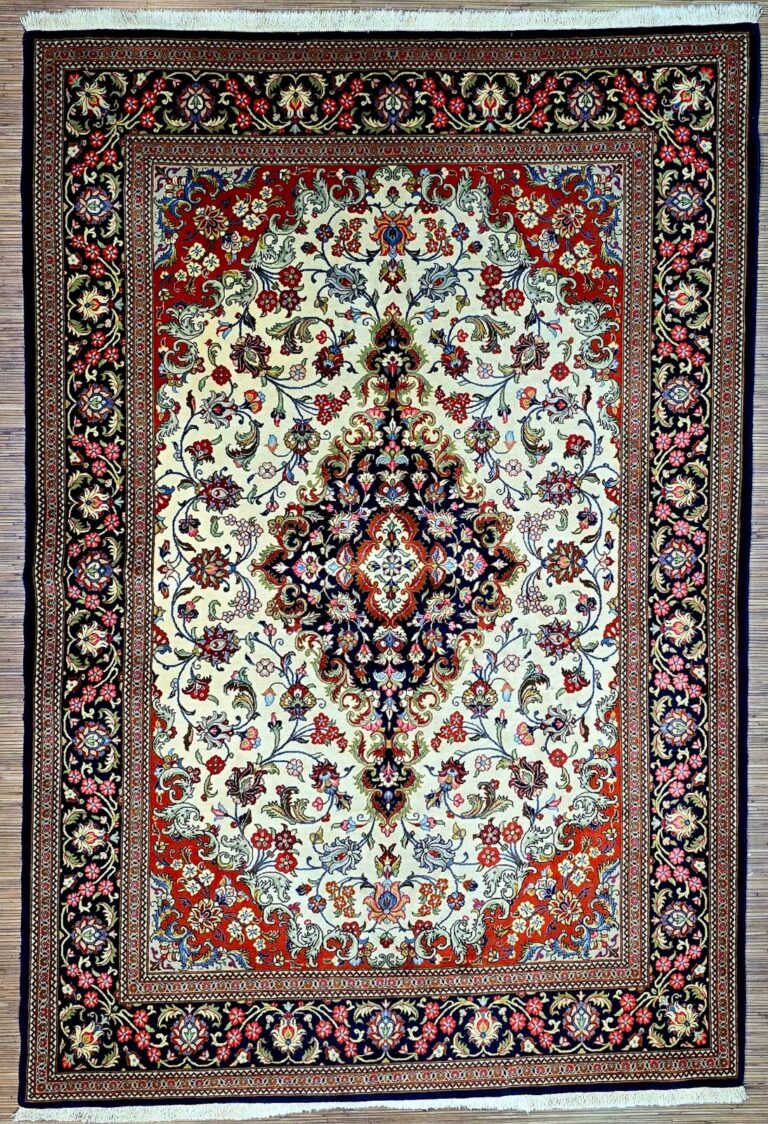
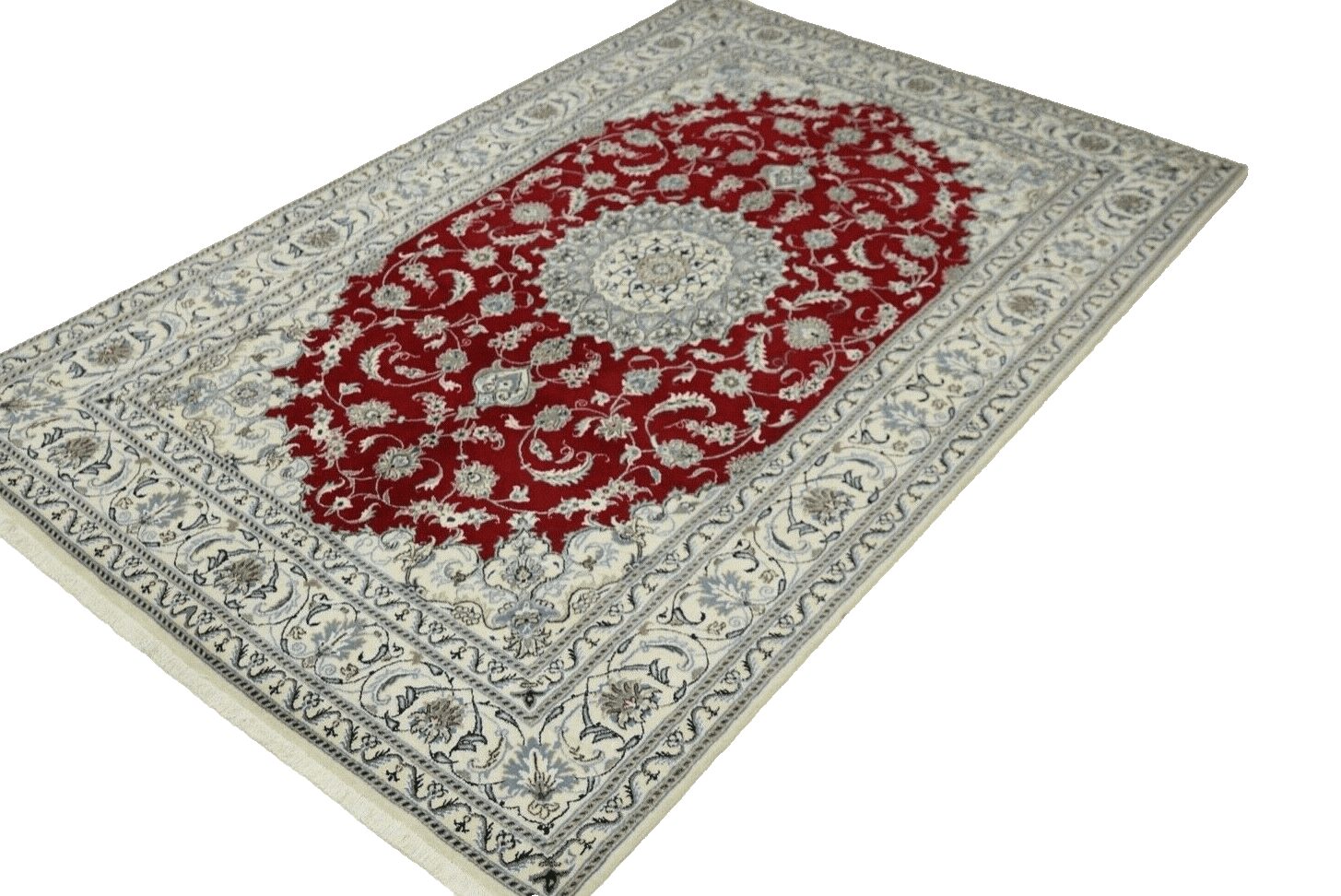
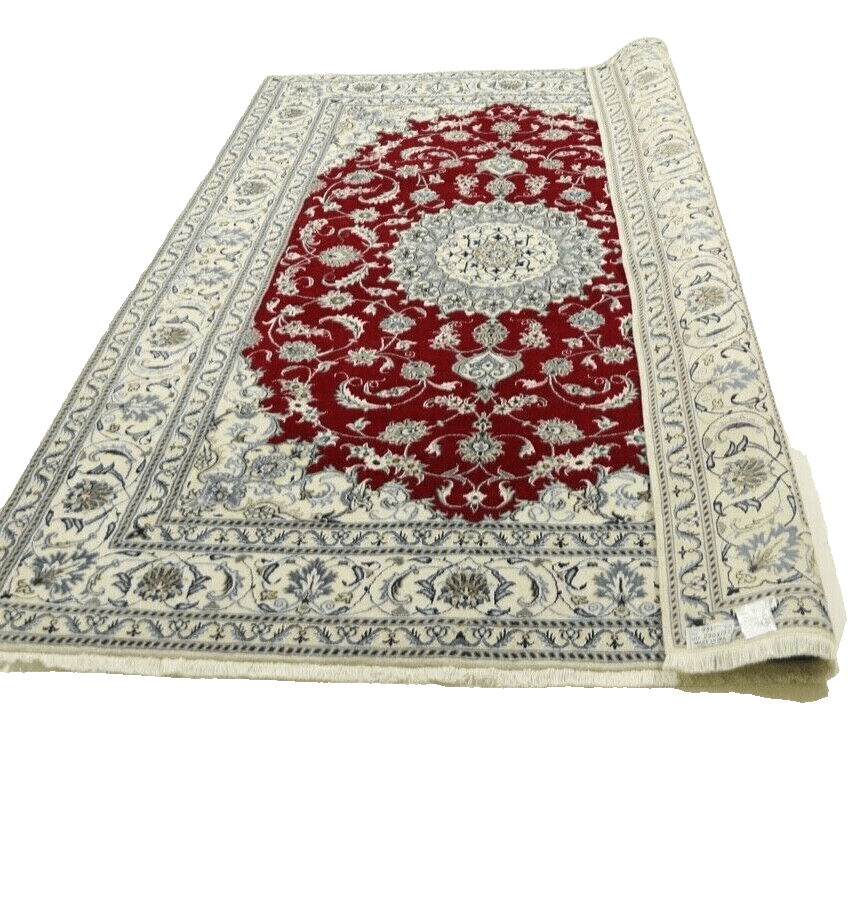
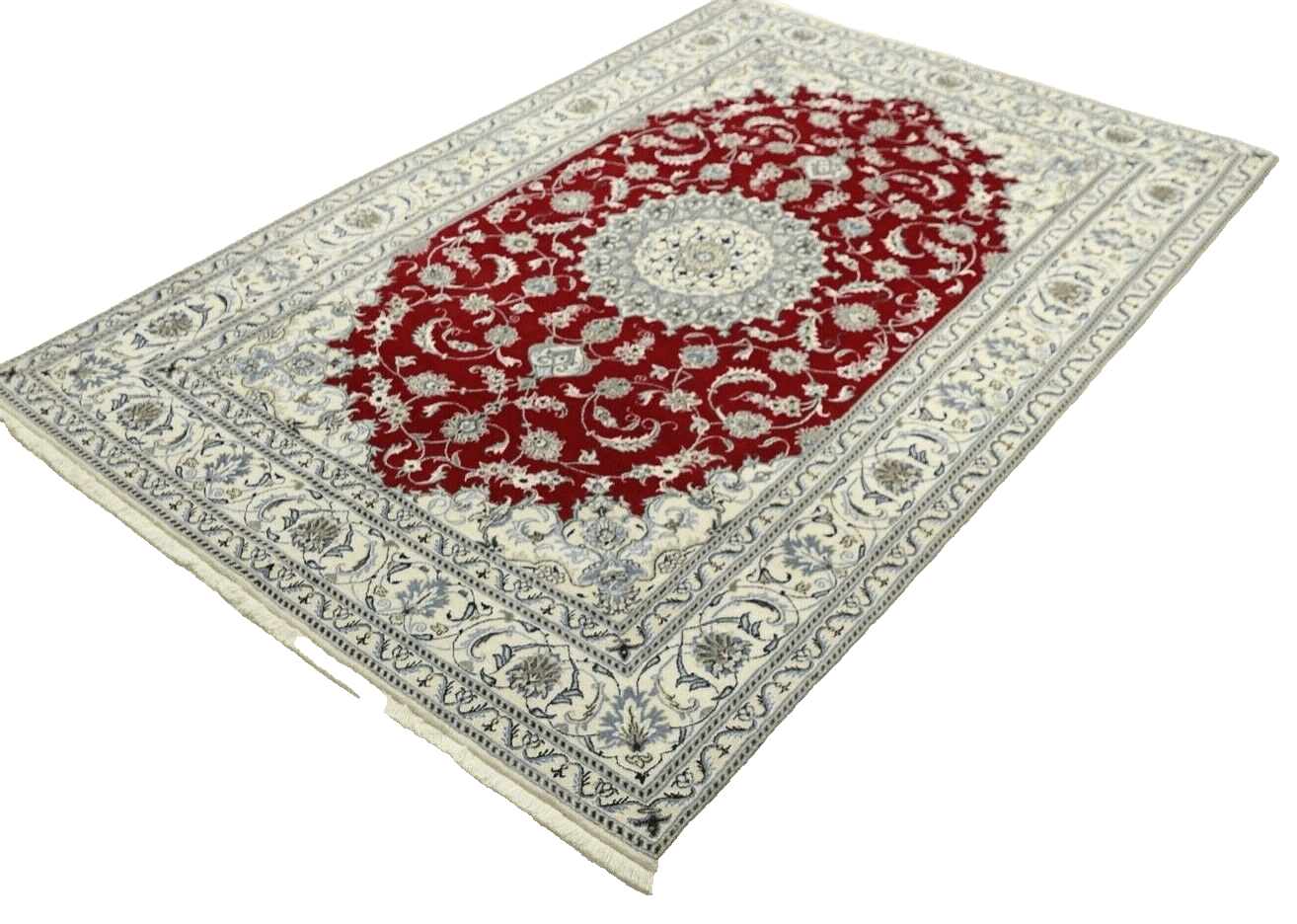
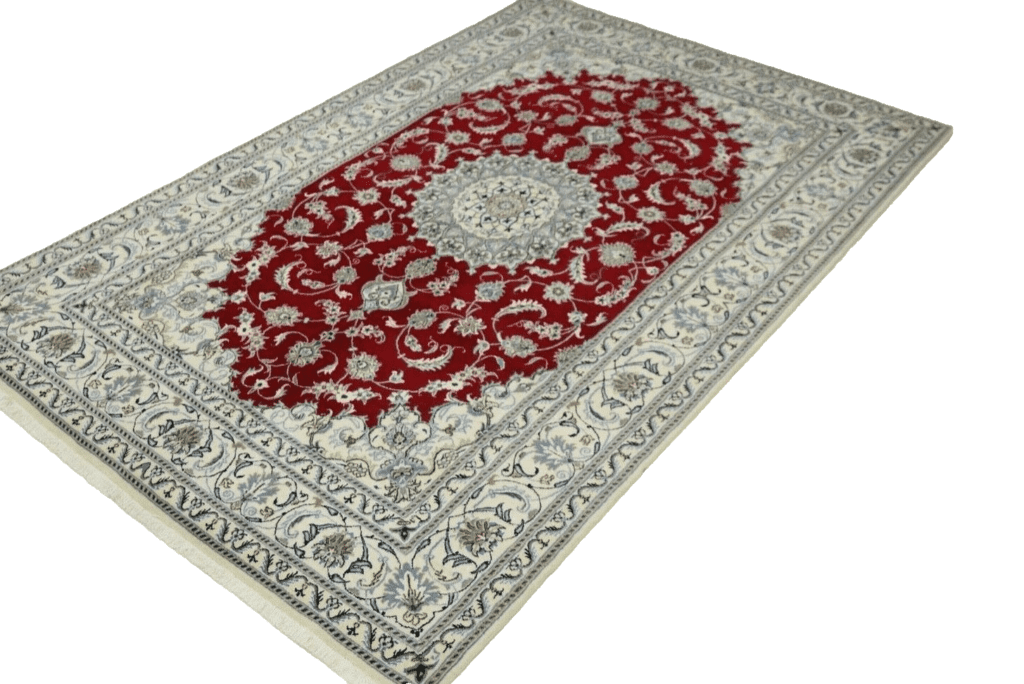
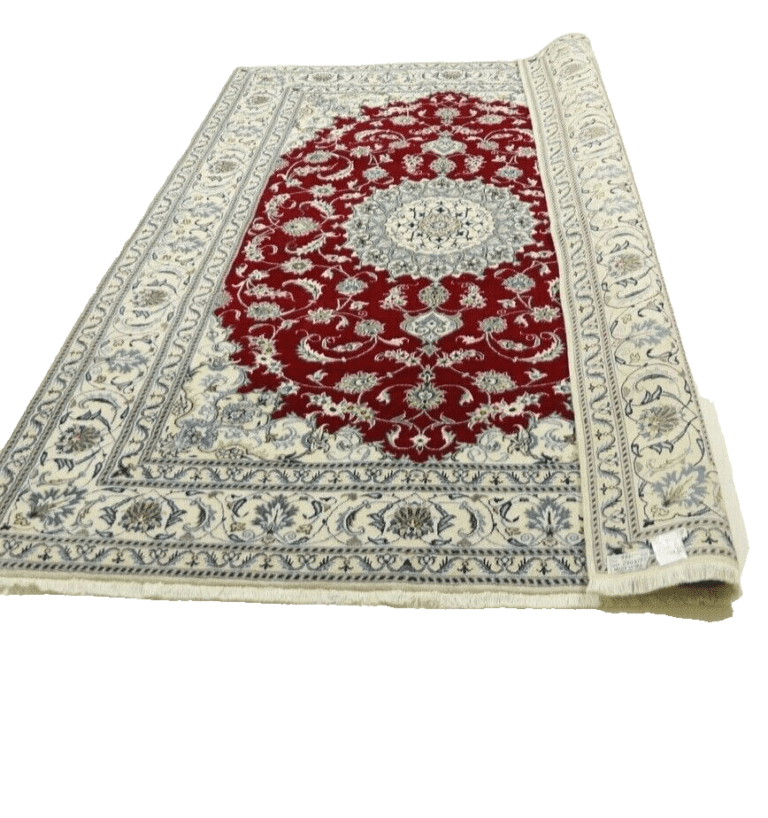
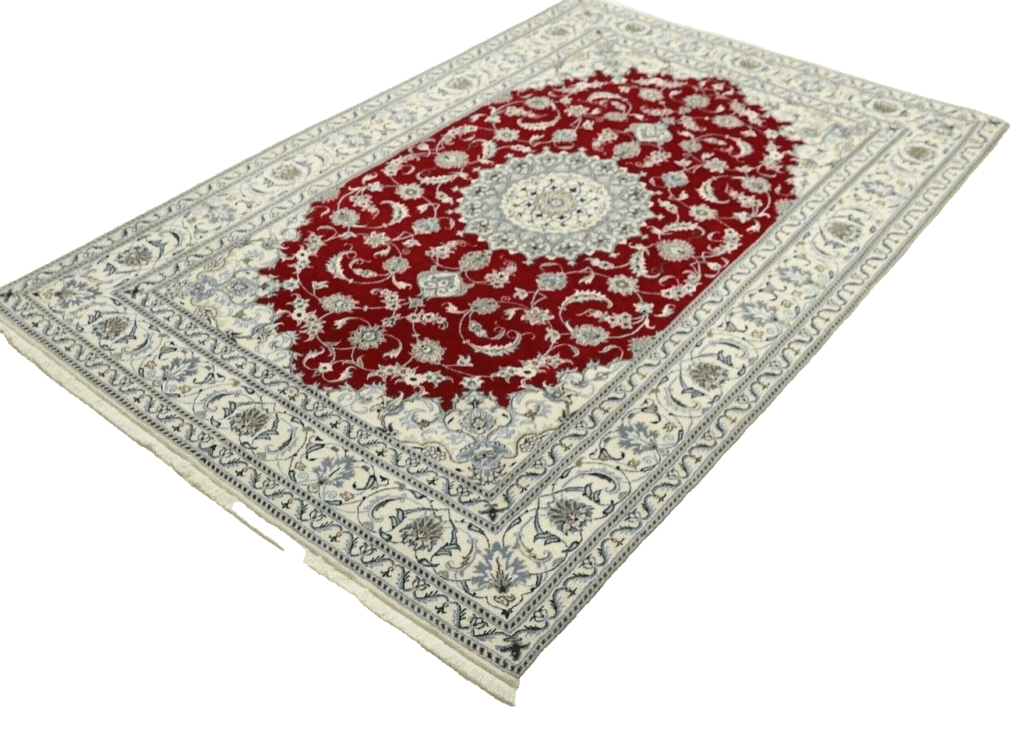
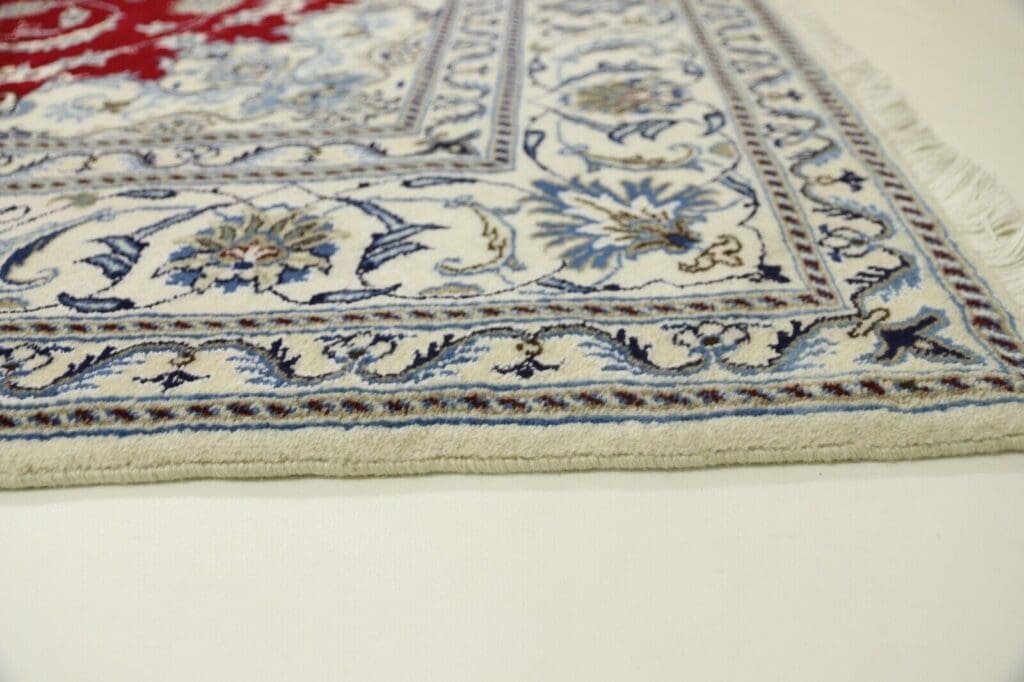
This Nain Persian rug is hand-knotted with a pile made from virgin wool and silk. Combining these fibres is part of the established vocabulary of Oriental rug making. Wool gives the surface a resilient, tactile character and can retain warmth within the textile structure. Silk contributes a smoother feel and subtle reflections when light reaches the pile. Used together, the two materials can distinguish areas of a design through changes in texture and sheen.
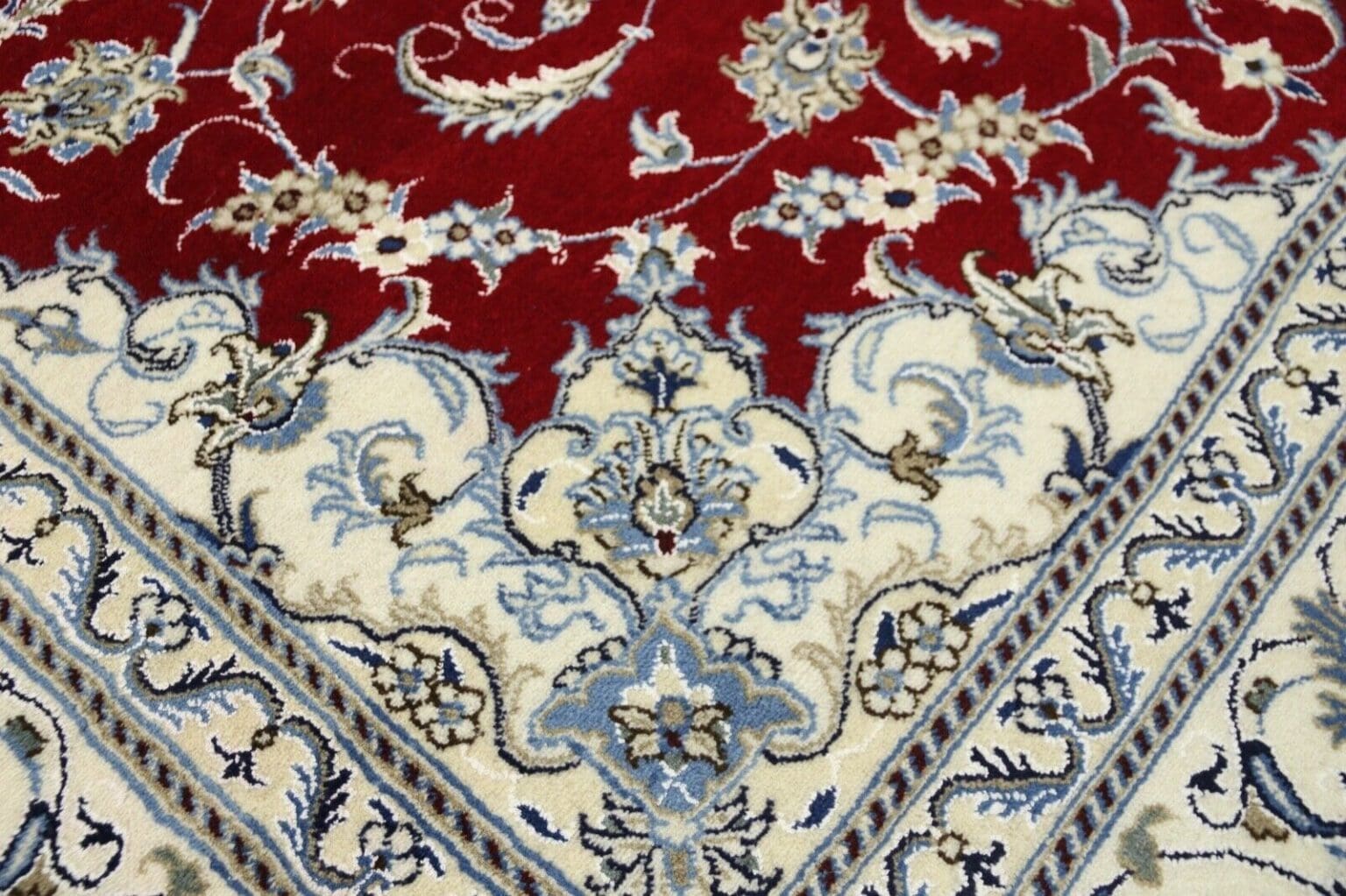
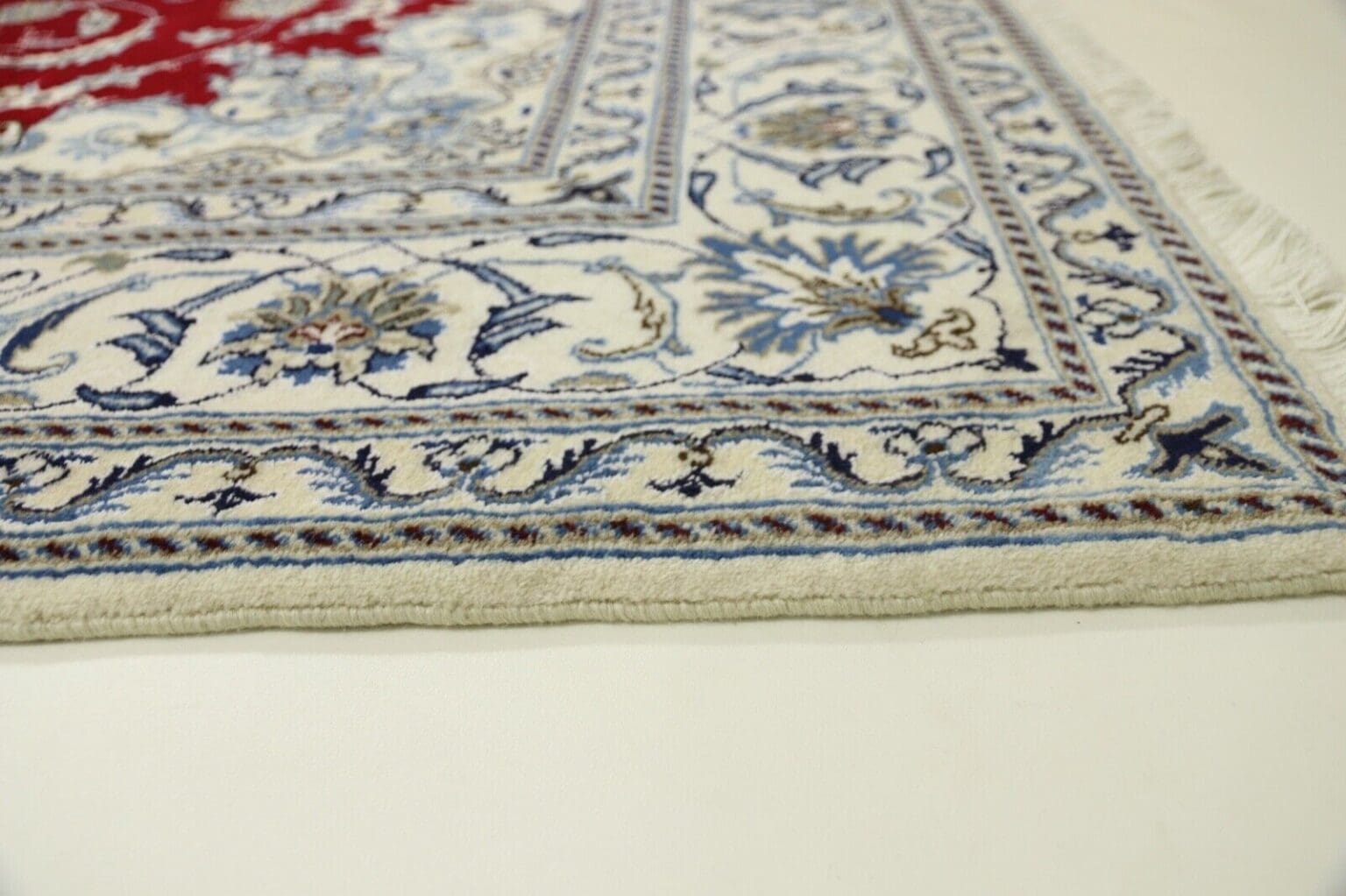
Hand-knotting means that individual knots are tied into the prepared warp by hand. Weft threads are then inserted and the rows are compacted as the work progresses. This is different from a machine-produced floor covering, where the structure is formed mechanically. Small variations in line, colour transition and surface relief are natural consequences of a hand-built textile. Here, the materials, the knotting process and the pattern are directly connected: the design is created through the physical construction of the rug rather than printed onto its surface.
The rug is new and is described as being in very good condition. Its wool and silk pile determines much of its tactile and visual character. Wool generally has a soft, full appearance, while silk can catch the light with finer highlights. The hand-knotted construction also records the work involved in making the piece, with the surface formed knot by knot and row by row. These are characteristics of its materials and technique, not a claim that a particular decorative detail is present where the description does not identify one.
Origin and Tradition
Nain is a city in Iran with a recognised tradition of rug weaving. Nain rugs belong to the Persian textile heritage and are associated with carefully organised compositions and refined drawing. The regional craft developed within a wider Iranian culture in which rugs serve both practical and decorative purposes. Knowledge of preparing the foundation, tying knots, selecting wool and coordinating colours is preserved through the practice of weaving and through the transmission of workshop skills.
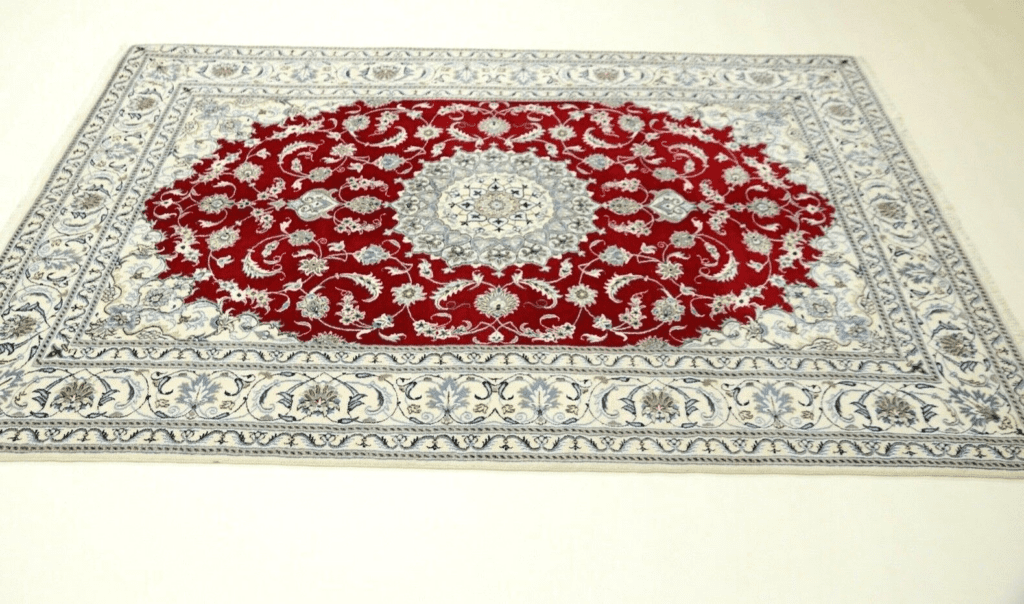
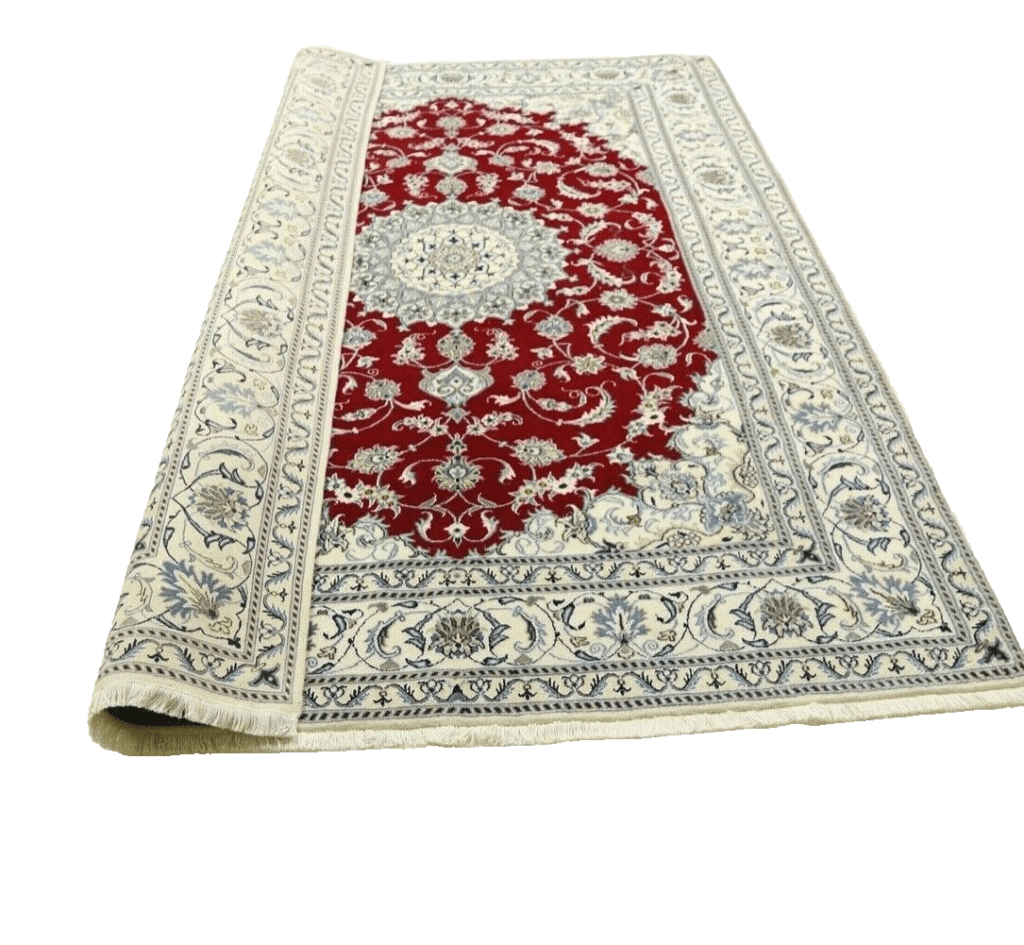
Persian rug design developed a distinct visual language over many generations. It often considers the relationship between a central field, enclosing borders and repeated ornaments. Nain compositions are frequently associated with finely articulated surfaces in which floral and geometric elements are arranged in a controlled manner. A pattern may be organised around a central device or distributed in a repeating field. In either case, the placement of each motif contributes to an ordered surface that can appear coherent from across a room while revealing more detail at closer range.
The weaving history of Nain is connected with the broader history of Persian workshops. Regional identity is formed by combining local preferences in drawing and colour with techniques shared across Iranian rug making. Nain therefore refers both to a specific place and to a recognised regional tradition within Persian carpets. The name is not simply a description of one isolated ornament. It places the rug within a cultural and technical context shaped by hand weaving, repeated pattern knowledge and the continued use of established design principles.
Nain rugs are often linked with a composed overall appearance and carefully balanced ornament. Traditional forms may be retained while the resulting rugs are used in contemporary interiors. The essential relationship is between drawing, knotting and colour: the pattern is constructed in the pile, and its character depends on how those elements are combined. On a hand-knotted rug, this connection can be seen in the way curves, floral forms and borders are built through successive rows rather than applied as a separate image.
The designation Persian also identifies the rug as Iranian rather than merely describing an Oriental style. Persian rug traditions include many regional vocabularies, and Nain is one of them. Regional names should be read together with the construction and design information available for the individual piece. In this case, the origin is Persia/Iran and the named tradition is Nain. That distinction keeps the geographical statement separate from general references to Oriental pattern language.
Design and Pattern
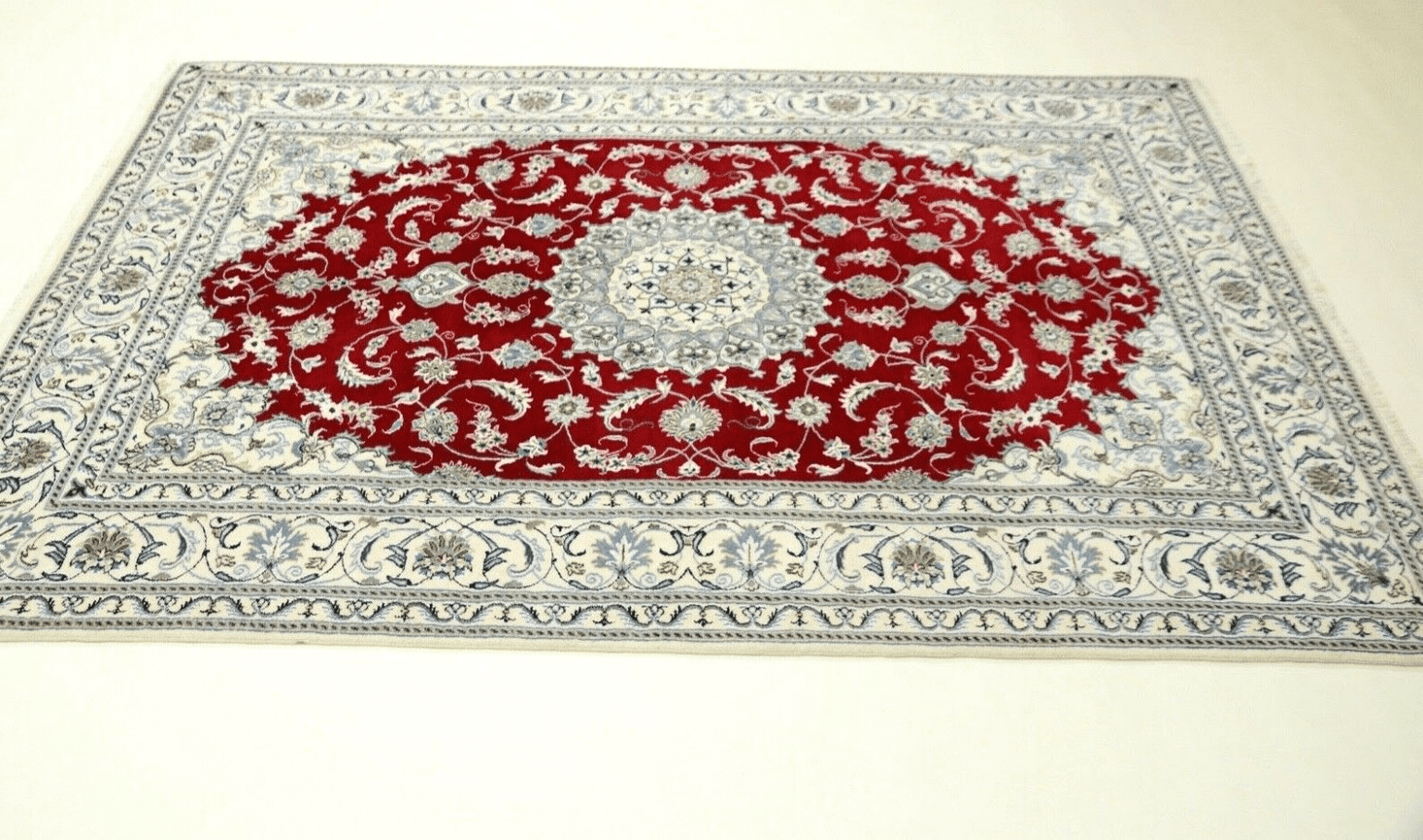
The rug is described as traditional Oriental in style. Nain design is commonly associated with fine drawing, floral ornament and geometric organisation. Vines, blossoms and leaves may be connected into a continuous repeat, while geometric outlines help structure the composition. In Persian pattern practice, these elements are usually related rather than scattered independently. Balance is created through the distribution of ornament, the relationship between filled and quieter areas, and the way the borders frame the field.
A familiar principle in Persian rug design is the distinction between a central field and surrounding borders. A central ornament can give the eye a point of focus, while an all-over arrangement spreads motifs more evenly across the surface. The precise design of this rug is not specified in the source. What is specified is its traditional Oriental style and its Nain designation. For that reason, no particular medallion, border formula or colour sequence is assigned to this individual piece. The relevant context is the wider Nain design tradition.
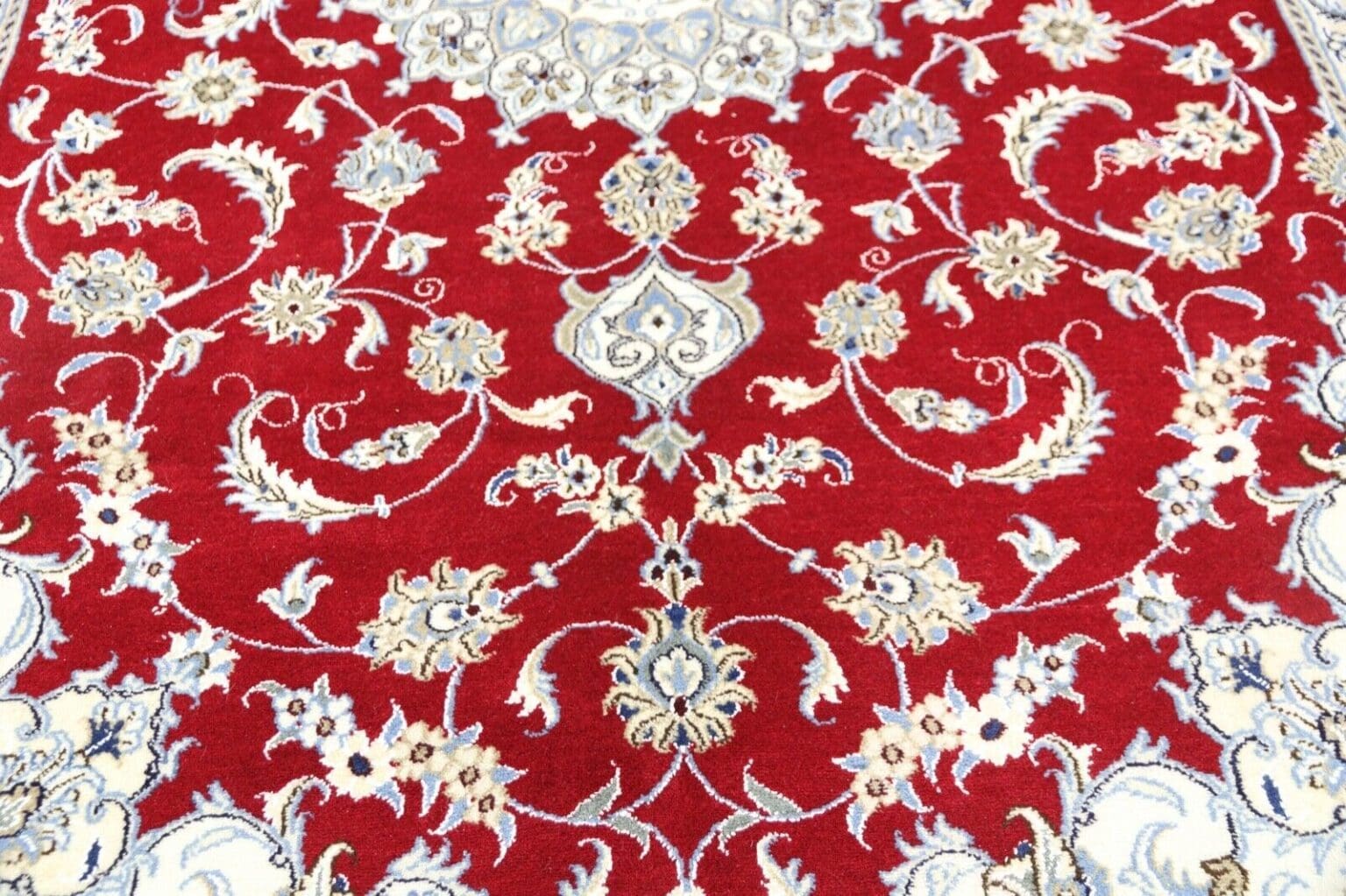
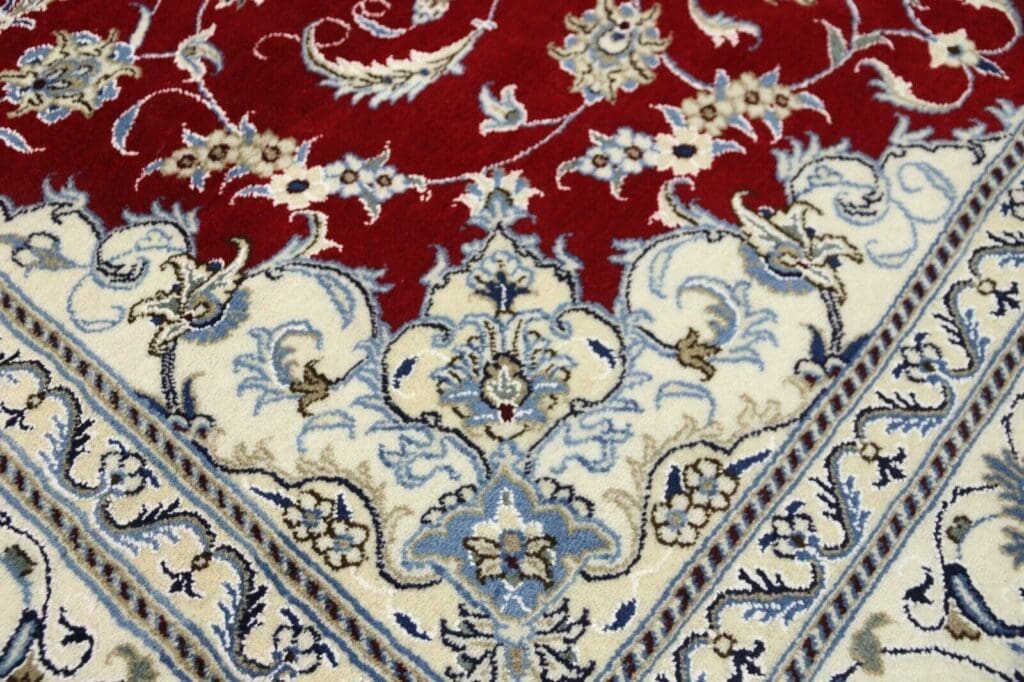
The wool and silk combination can affect how a design is seen. Wool tends to produce a softer, denser visual field, while silk can create finer accents where the light meets smoother fibres. Differences in surface reflection may help separate an outline from a ground or bring selected details forward. The appearance can change with viewing angle and illumination because the two fibres return light differently. This explains a general feature of mixed-material rug design without attributing an unstated palette or a specific placement of silk to this rug.
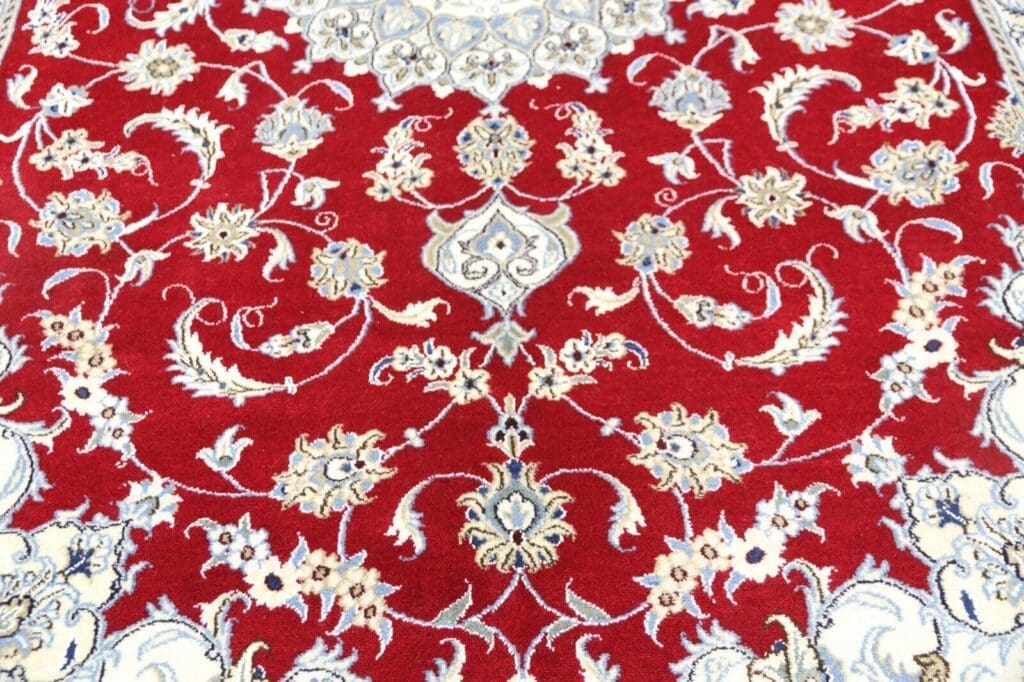
In a hand-knotted Nain rug, a curved vine, floral shape or geometric line is built from many individual knots. The drawing therefore develops through a sequence of small manual decisions. Technical refinement can support delicate forms, while the repeated structure keeps the composition legible. Traditional floral motifs are often stylised rather than botanical copies. Their role is to create rhythm, proportion and continuity across the field. The pattern tradition is consequently both decorative and technical: it depends on the visual idea and on the method used to construct it.
Oriental rug patterns are often read as arrangements of repeated forms rather than as a single illustration. Borders establish an edge, secondary motifs connect larger areas, and small details fill transitions between principal ornaments. This layered approach allows a design to remain structured without becoming visually uniform. Nain examples are discussed within this Persian tradition of ordered ornament. Since the individual pattern is not described in further detail, the rug should be understood through that named regional style rather than through an invented motif.
Special Features
The rug is new and in very good condition. It is described as suitable for rooms with underfloor heating and as pet-friendly. These features place a traditional hand-knotted Persian rug in the context of present-day domestic use. Suitability for underfloor heating does not remove the need for sensible care. A moderate temperature and a dry, stable floor help support careful use of a textile made from wool and silk.
Its traditional Oriental character can work with both established and contemporary interior schemes. Nain rugs may be placed in living rooms, bedrooms or hallways, depending on the surrounding furnishings and the way the pattern is intended to relate to the room. The hand-knotted construction and the wool-and-silk pile remain the defining properties of this piece regardless of the interior style. Regular attention to cleanliness and protection from strong direct sunlight are appropriate for preserving its appearance.
FAQ
How should I care for a Nain Persian rug?
Vacuum the rug regularly and gently to remove loose dirt from the pile. Prolonged, intense direct sunlight should be avoided because it can cause colours to fade. If deeper cleaning is needed, a professional rug cleaner is the appropriate choice. Cleaning products should not be applied to wool and silk without first checking their suitability. Excess moisture and harsh treatment can put unnecessary stress on a hand-knotted structure, so care should be adapted to the fibres and construction.
Is this Nain rug suitable for underfloor heating?
Yes. This rug is described as suitable for use with underfloor heating. Wool can provide textile insulation and retain warmth, while silk is a smooth, breathable fibre. The heating system should nevertheless not be set unnecessarily high. Even, moderate heat and a dry floor provide better conditions for careful use. Where the heating system or floor construction has special requirements, checking with the relevant installer is sensible before laying the rug.
How can I assess whether a Persian rug is genuine?
Knot density, materials, pattern drawing and construction can all provide useful indications. A hand-knotted rug may show slight irregularities in its pattern and small differences in colour because the knots are made individually. A certificate or provenance guarantee can provide additional support when assessing authenticity. For a reliable evaluation, several characteristics should be considered together, and an experienced specialist can examine the rug when a formal assessment is required.
To provide the best experiences, we use technologies like cookies to store and/or access device information. Consenting to these technologies will allow us to process data such as browsing behavior or unique IDs on this site. Not consenting or withdrawing consent, may adversely affect certain features and functions.
Functional Always active
The technical storage or access is strictly necessary for the legitimate purpose of enabling the use of a specific service explicitly requested by the subscriber or user, or for the sole purpose of carrying out the transmission of a communication over an electronic communications network.
Preferences
The technical storage or access is necessary for the legitimate purpose of storing preferences that are not requested by the subscriber or user.
Statistics
The technical storage or access that is used exclusively for statistical purposes.The technical storage or access that is used exclusively for anonymous statistical purposes. Without a subpoena, voluntary compliance on the part of your Internet Service Provider, or additional records from a third party, information stored or retrieved for this purpose alone cannot usually be used to identify you.
Marketing
The technical storage or access is required to create user profiles to send advertising, or to track the user on a website or across several websites for similar marketing purposes.

 SECURE PAYMENT
 SHIPPING PARTNERS