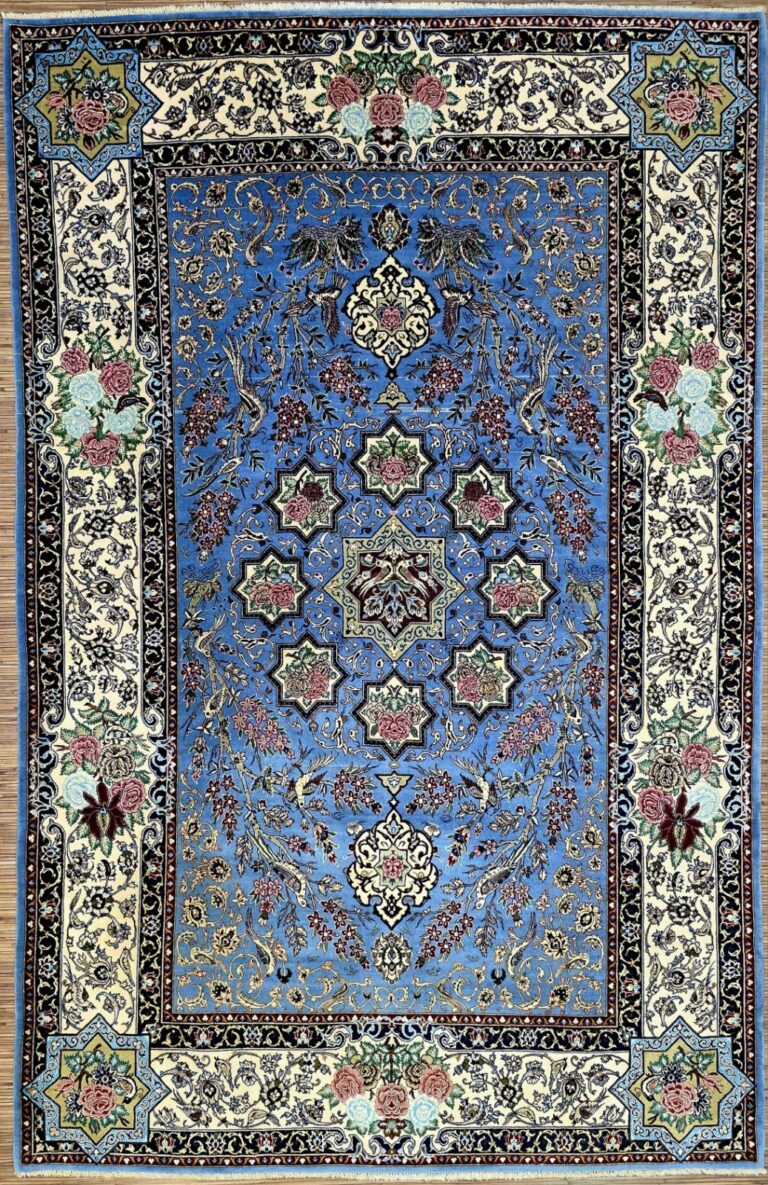
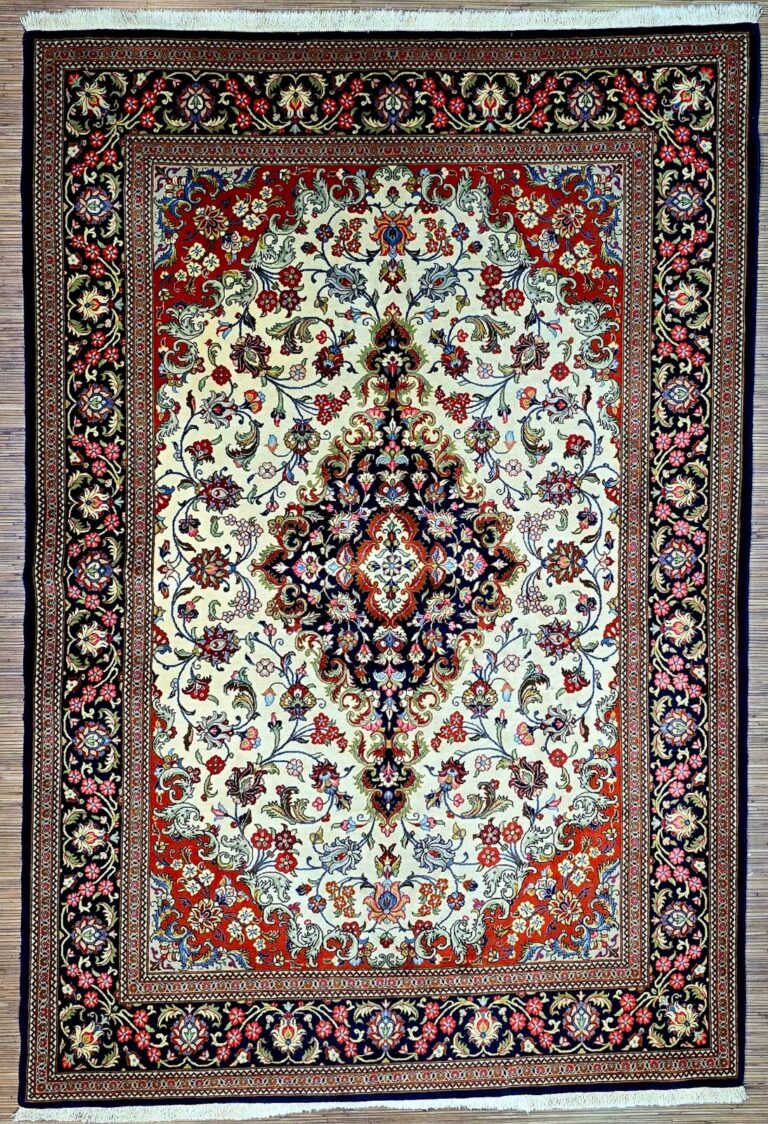
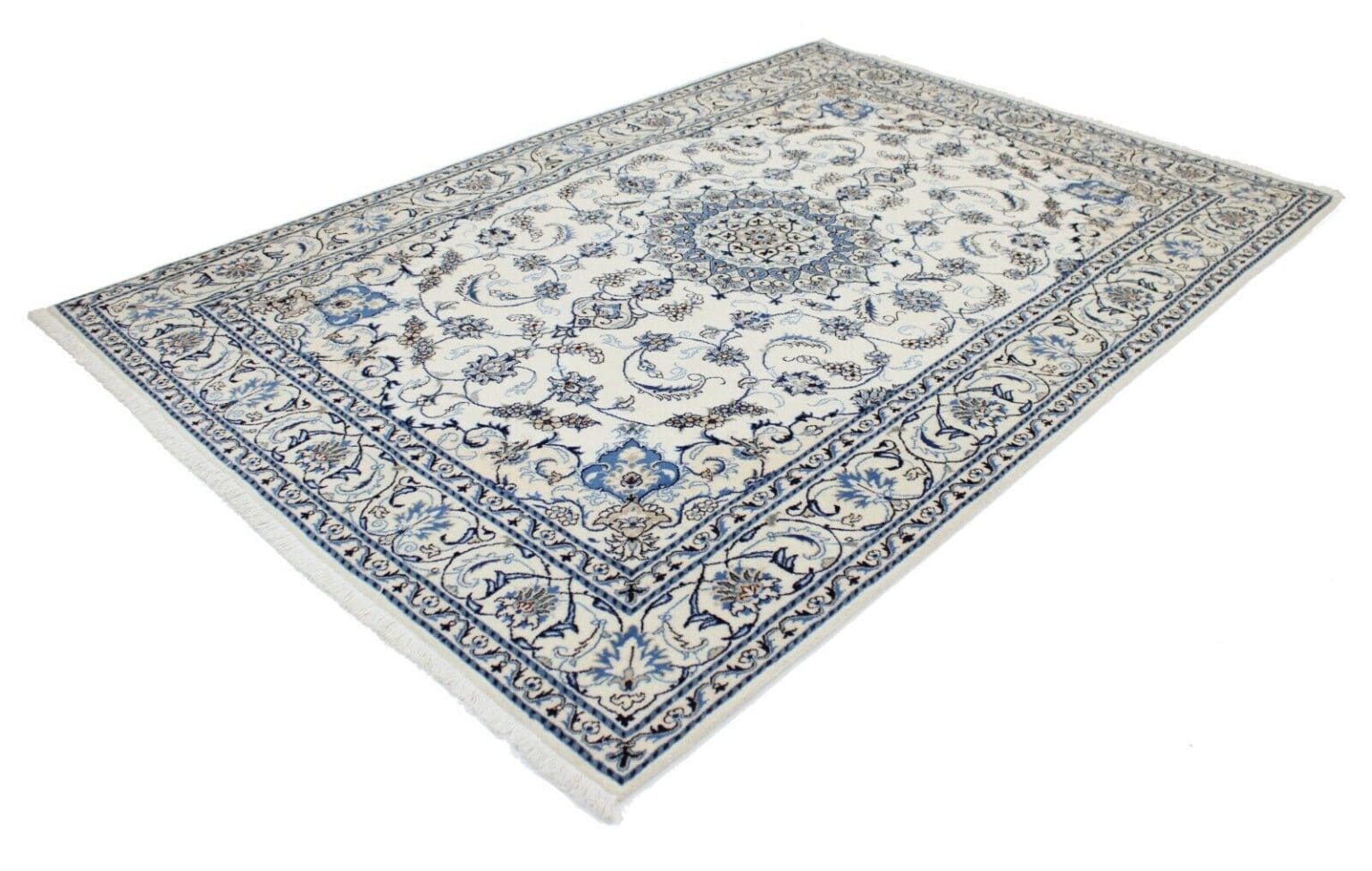
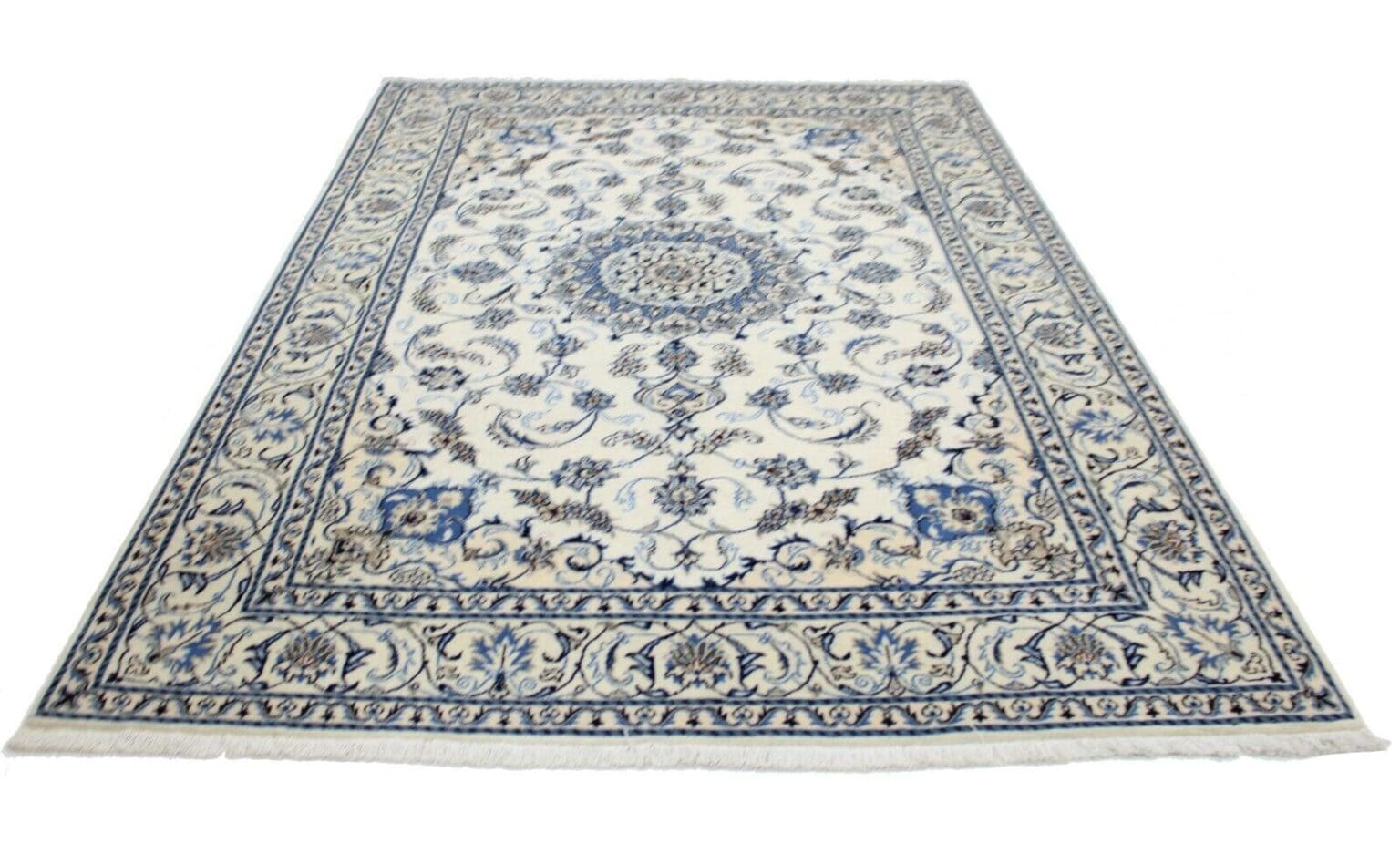
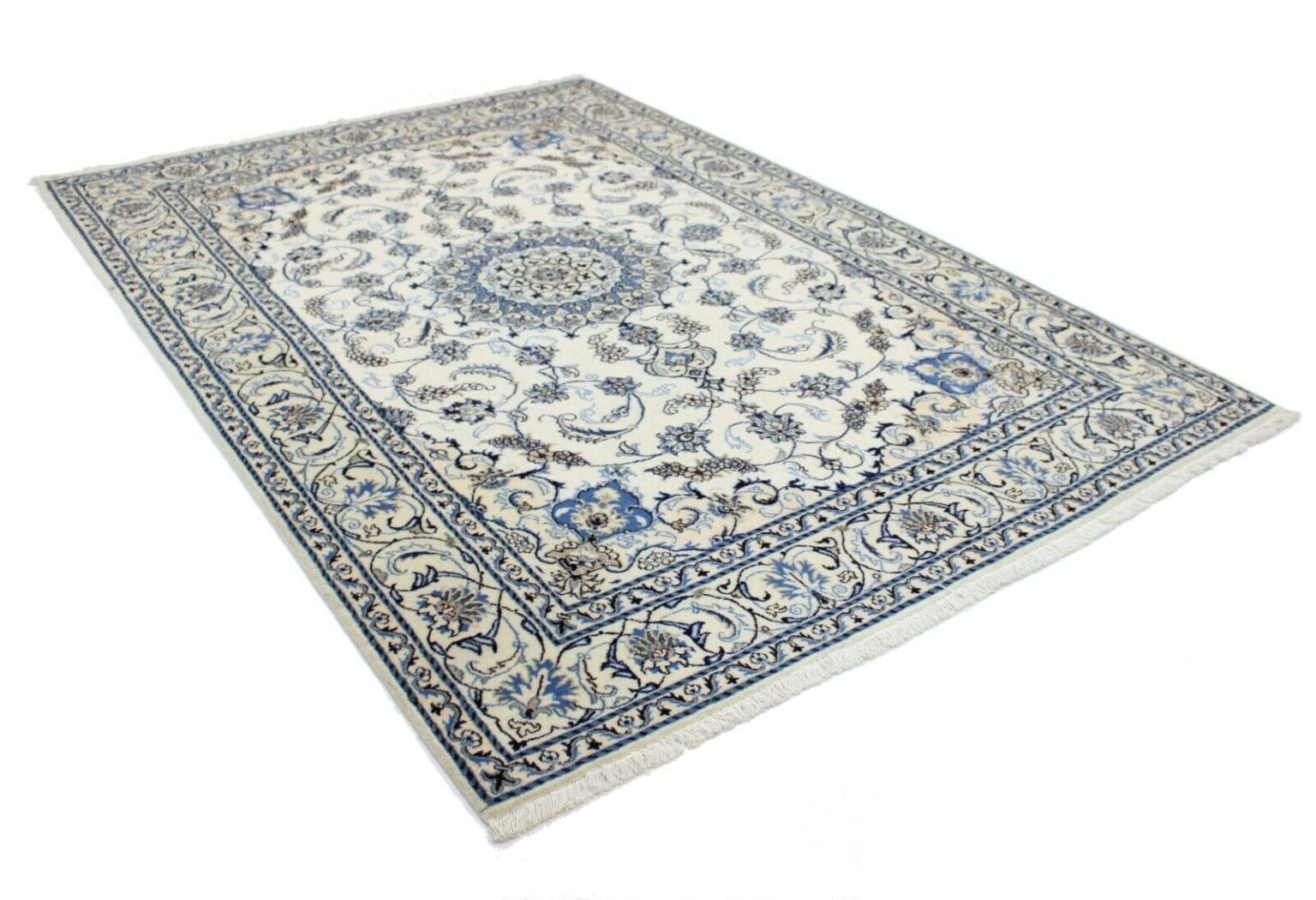
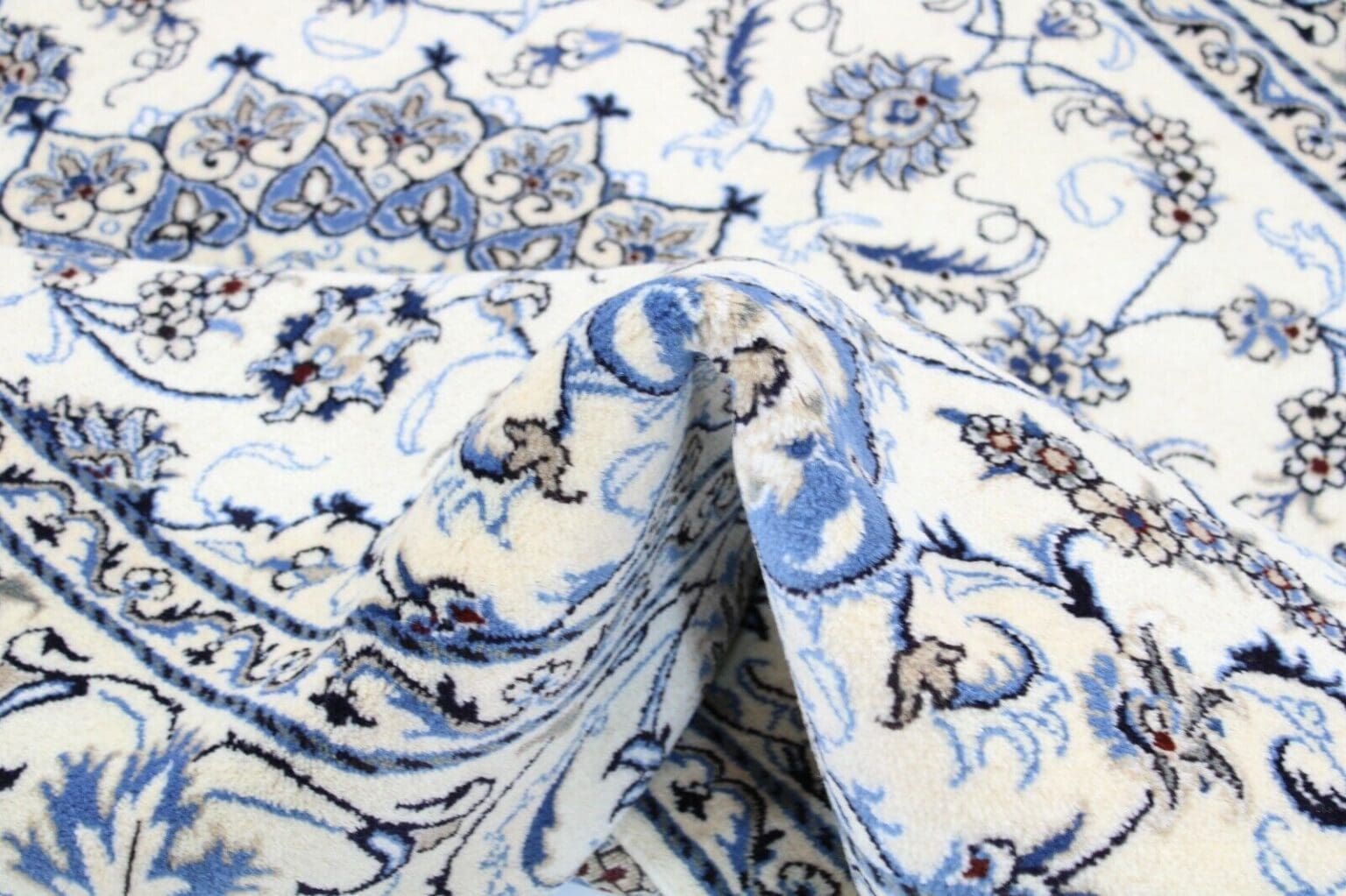
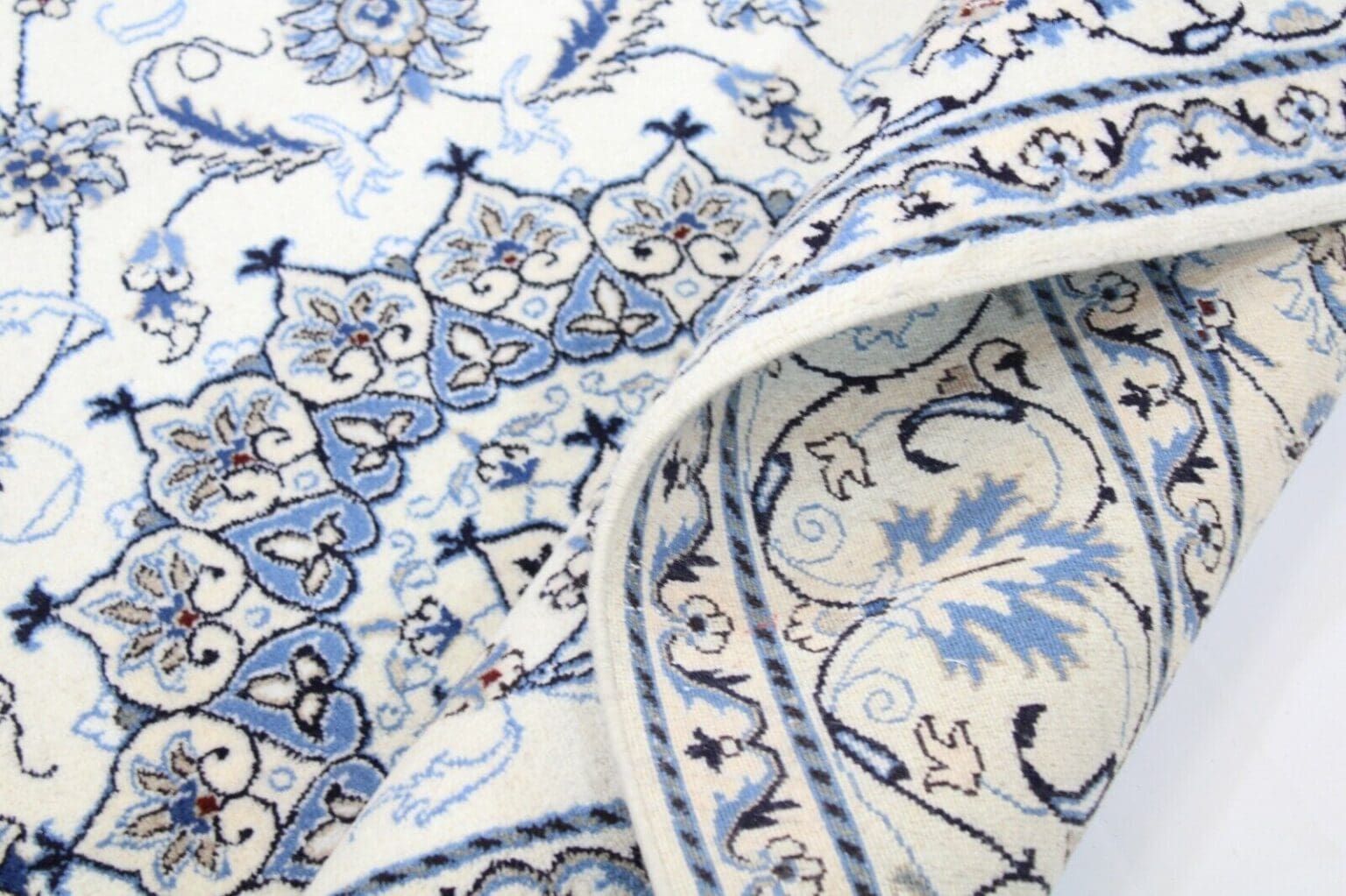
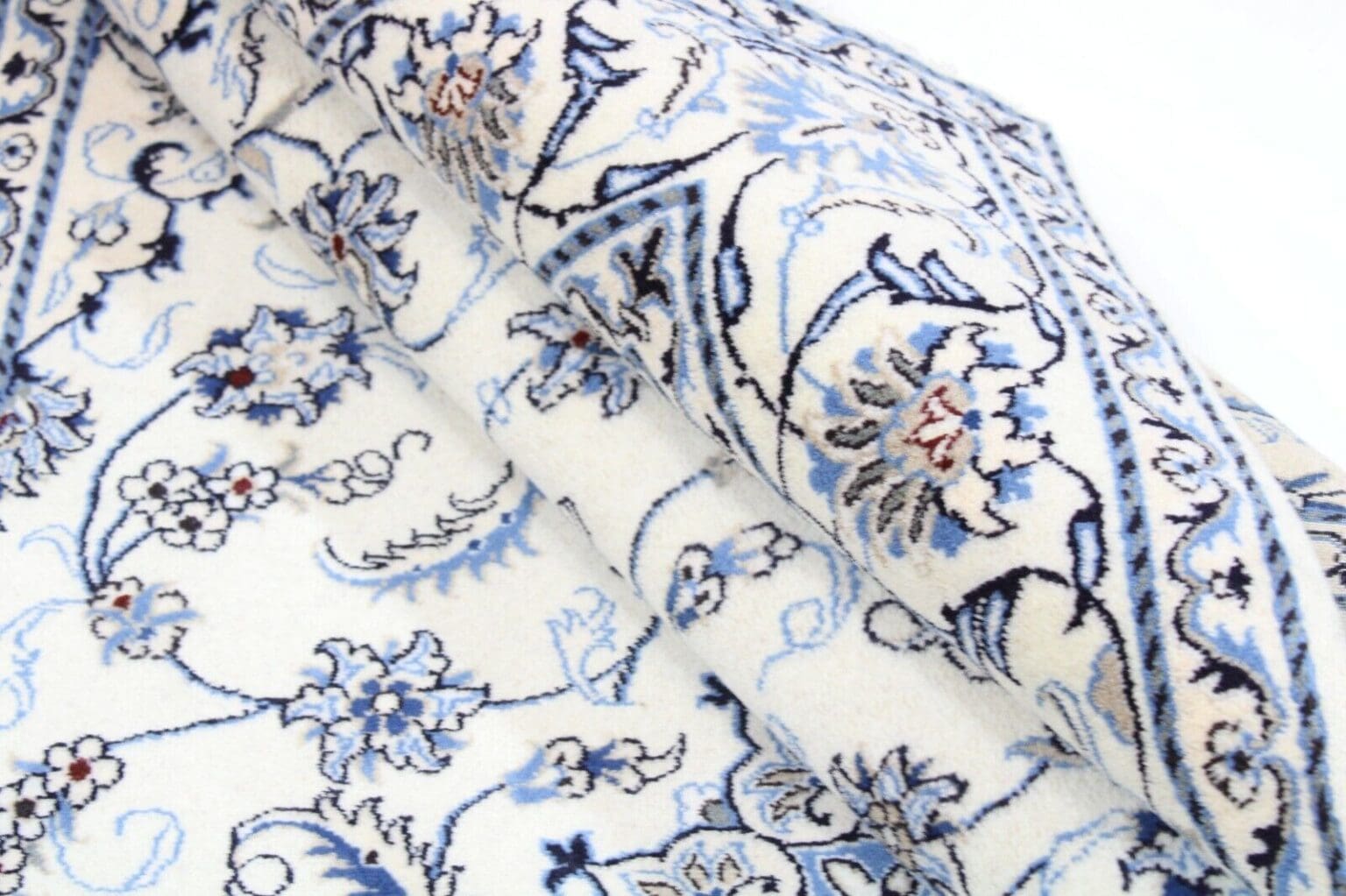
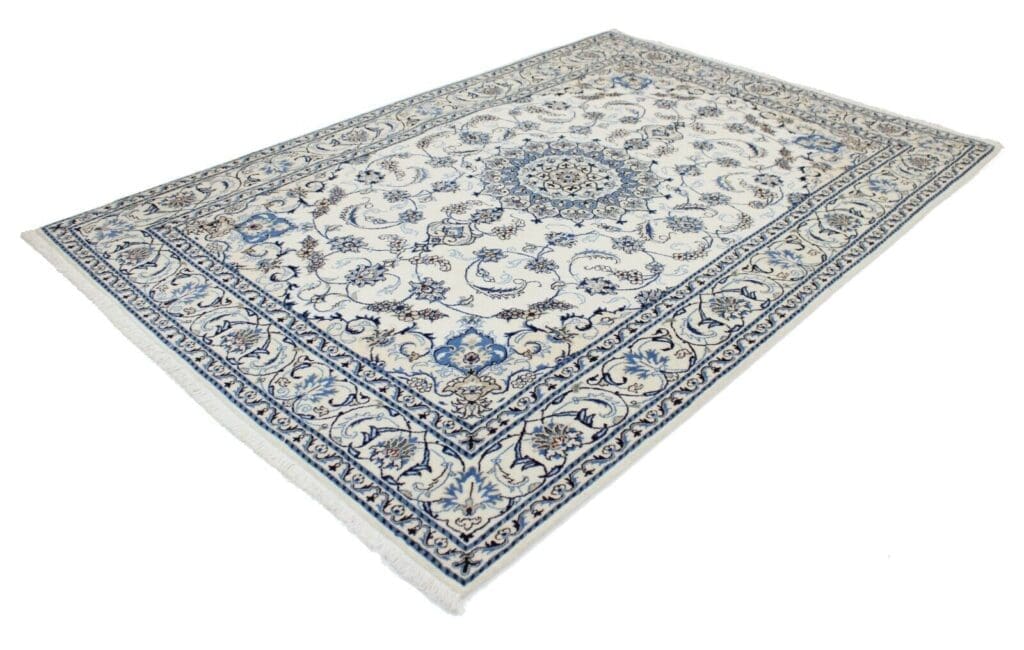
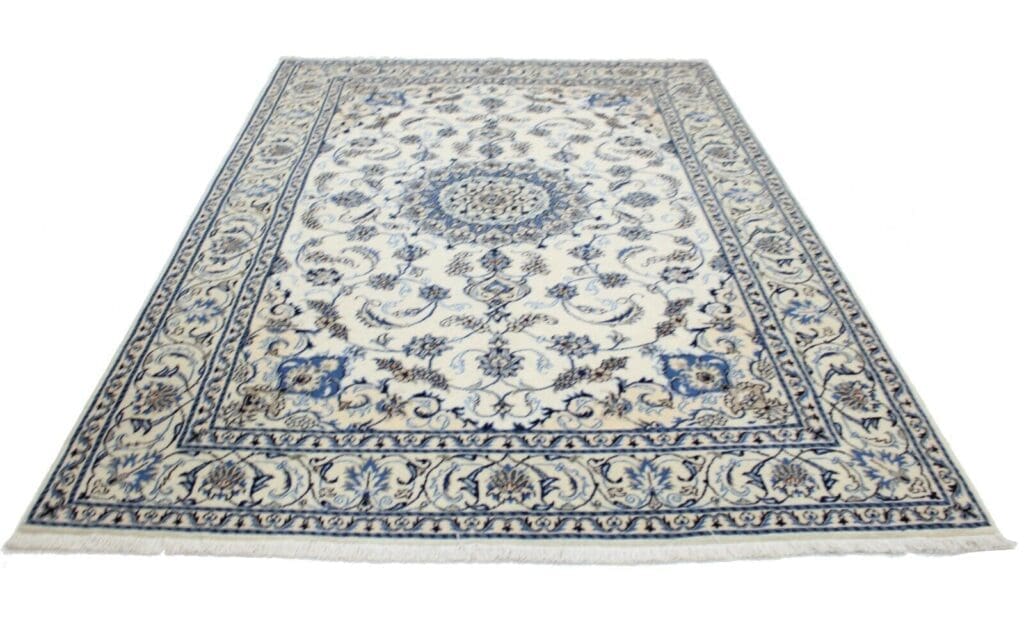
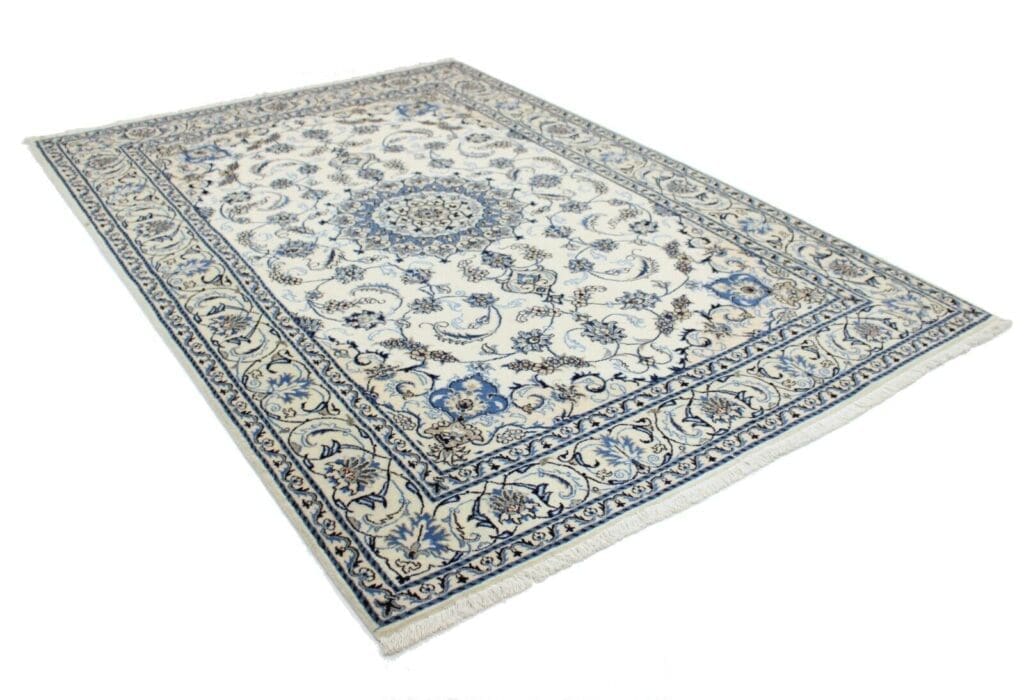
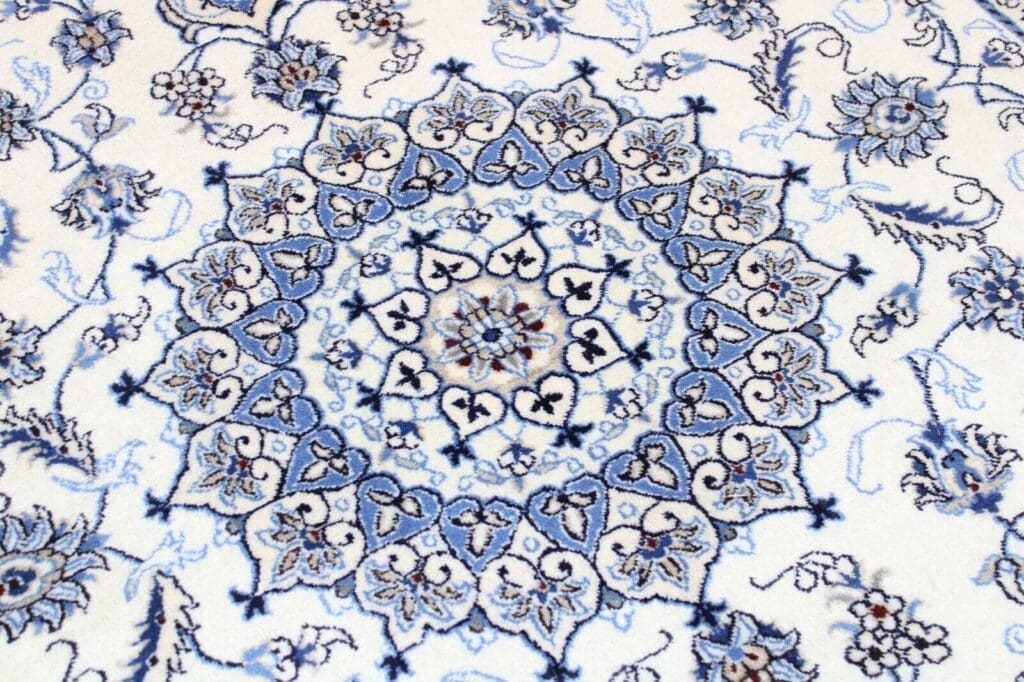
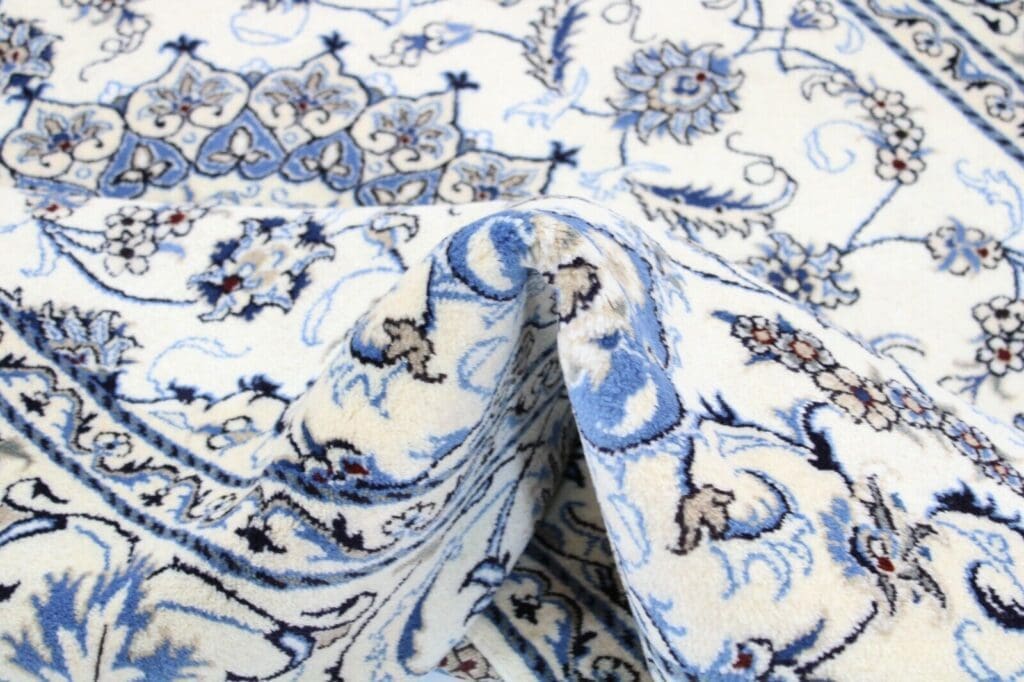
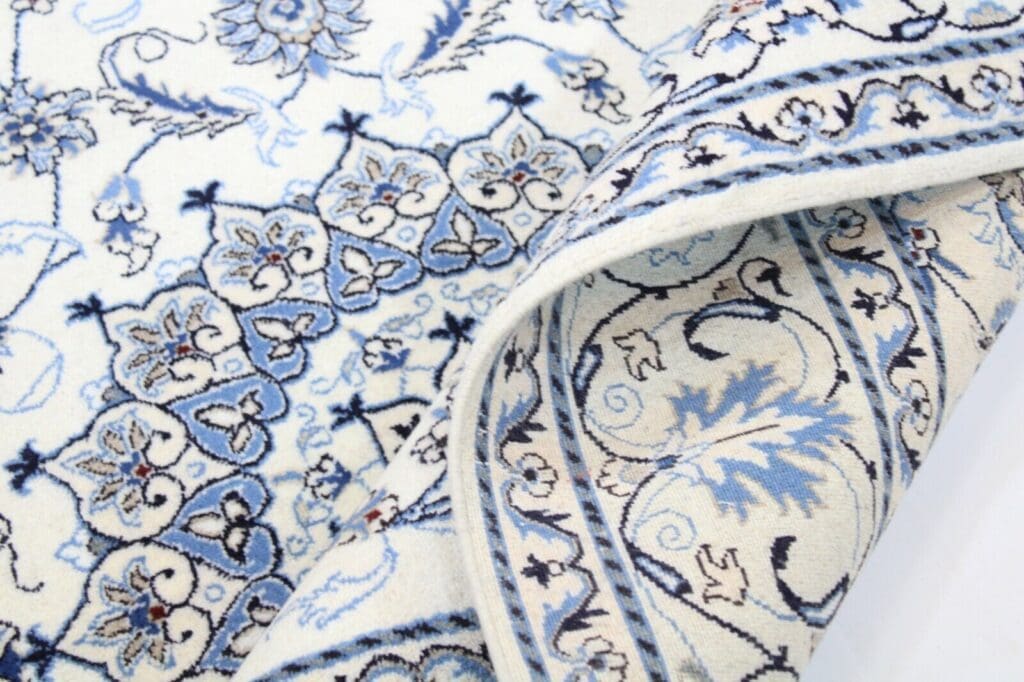
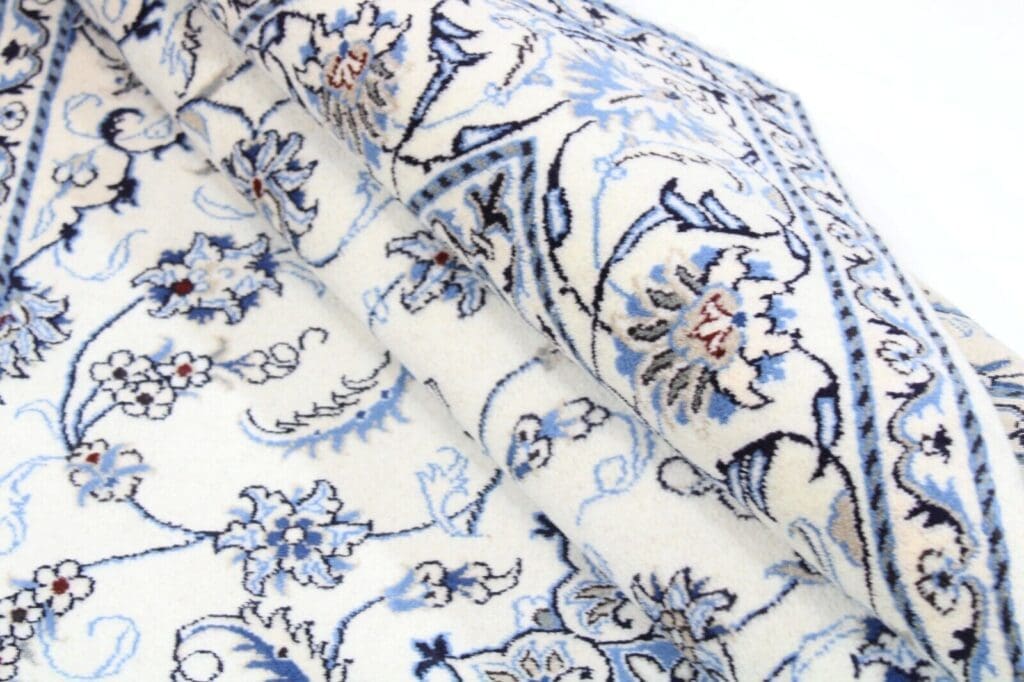
Hand-knotted Nain Persian rug | Knot density: high | Material: pile wool, warp cotton | Size: 288 cm x 198 cm | Pattern: floral and geometric motifs in soft natural tones | Condition: new stock without label, excellent, very clean
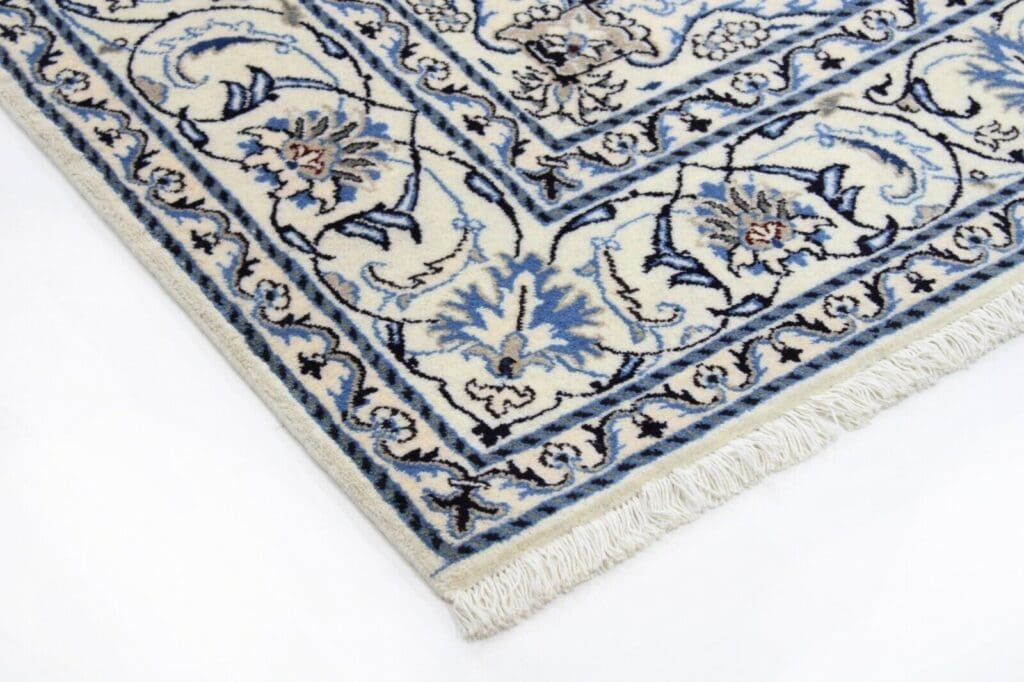
This Nain Persian rug is hand-knotted and made with genuine wool in the pile and cotton in the warp. Each knot is inserted individually into the prepared structure, so the rug is produced through manual work rather than by machine. This method gives hand-knotted rugs their individual character. The wool forms the visible surface, while the cotton warp provides the foundation into which the knots and wefts are worked. The relationship between these components determines both the construction and the appearance of the finished textile.
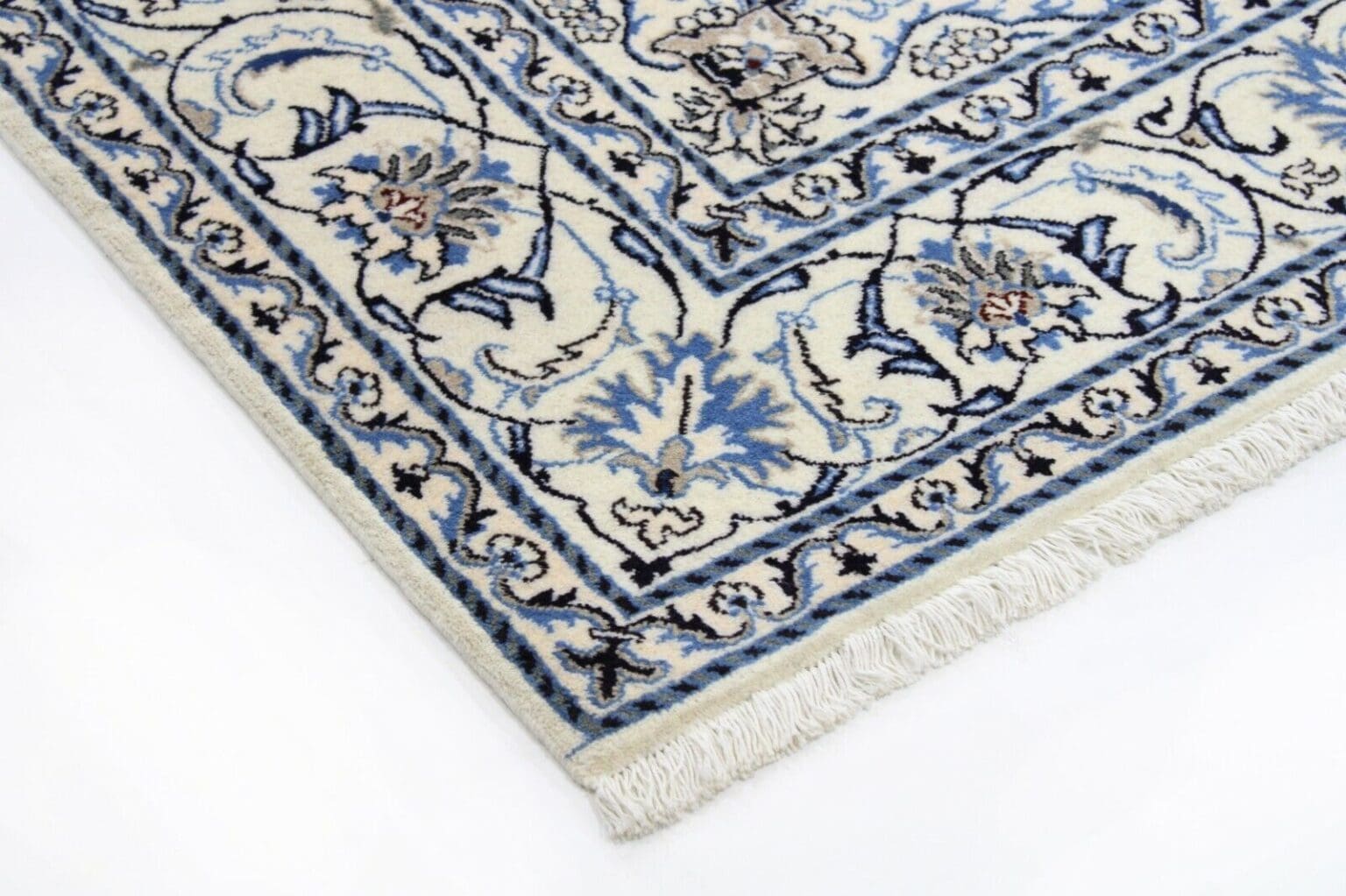
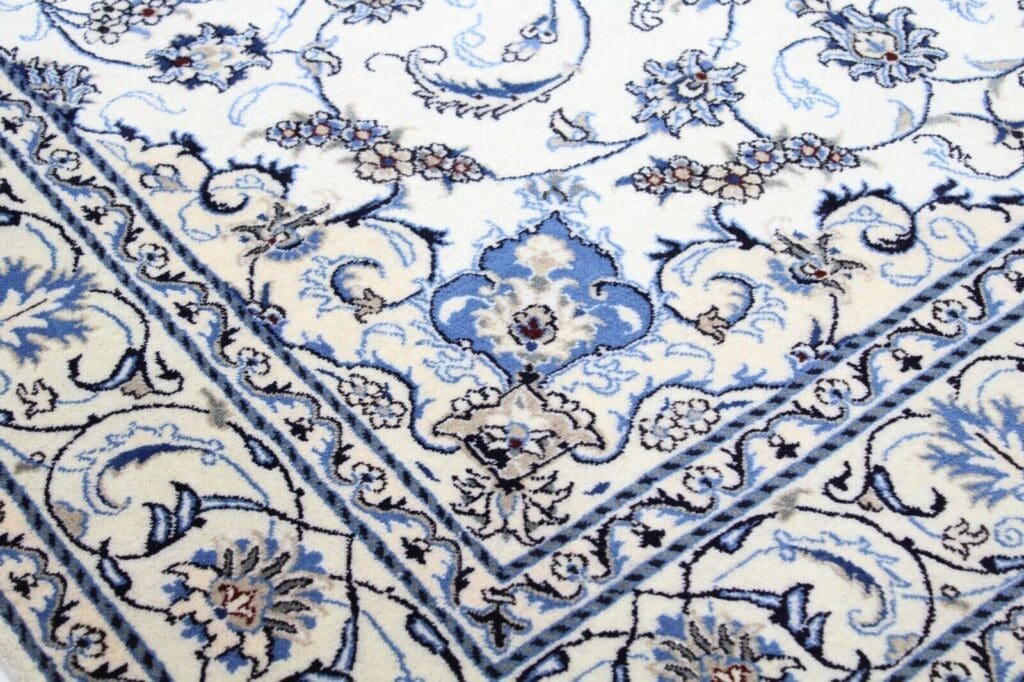
The knot density is described as high. A high knot density supports the precise rendering of fine outlines, small floral details and geometric elements. It allows the design to be divided into closely controlled areas and helps the pattern remain legible across the surface. In a hand-knotted rug, the design is not printed or applied afterwards. It is created during the knotting process through the placement of knots and the arrangement of coloured pile.
The warp forms the basic framework of the rug. Knots are tied into this framework and secured with additional weft work. The pile then creates the visible texture and carries the pattern. Wool in the pile and cotton in the warp are a traditional technical combination in hand-knotted oriental rugs. The materials serve different functions while working together in one woven structure.
Making a hand-knotted rug involves several stages. The loom is prepared, the warp threads are tensioned, and the knot sequence is followed according to the intended design. Weft threads are inserted between rows and compacted. The pile is then worked so that the surface is even and the drawing can be read clearly. This requires practical knowledge of tension, materials, colour placement and pattern proportions. Such techniques have been passed down through generations in regional weaving communities.
The rug is described as new stock without a label and is in excellent condition. It is also described as very clean and ready for immediate use. An authenticity certificate is available on request at no additional charge. These points concern the condition, presentation and documentation offered for this individual rug.
Origin and Tradition
Nain is in Iran and is known for rugs with fine and elegant designs. The region is one of the Iranian centres of rug making in which weaving and knotting traditions have developed over a long period. A Nain Persian rug therefore combines Iranian origin, manual craftsmanship and a clearly ordered decorative language. In this case, Nain identifies the regional origin and its associated craft tradition, not merely a pattern name.
Iranian rug making includes many regional forms, each with its own relationships between materials, construction, colour and ornament. Nain is associated with a refined approach in which fine drawing and balanced composition are especially important. Regional knowledge includes much more than tying knots. It covers the preparation of the loom, the arrangement of the field, the planning of borders and the finishing of the pile. These tasks work together to turn a design into a usable textile.
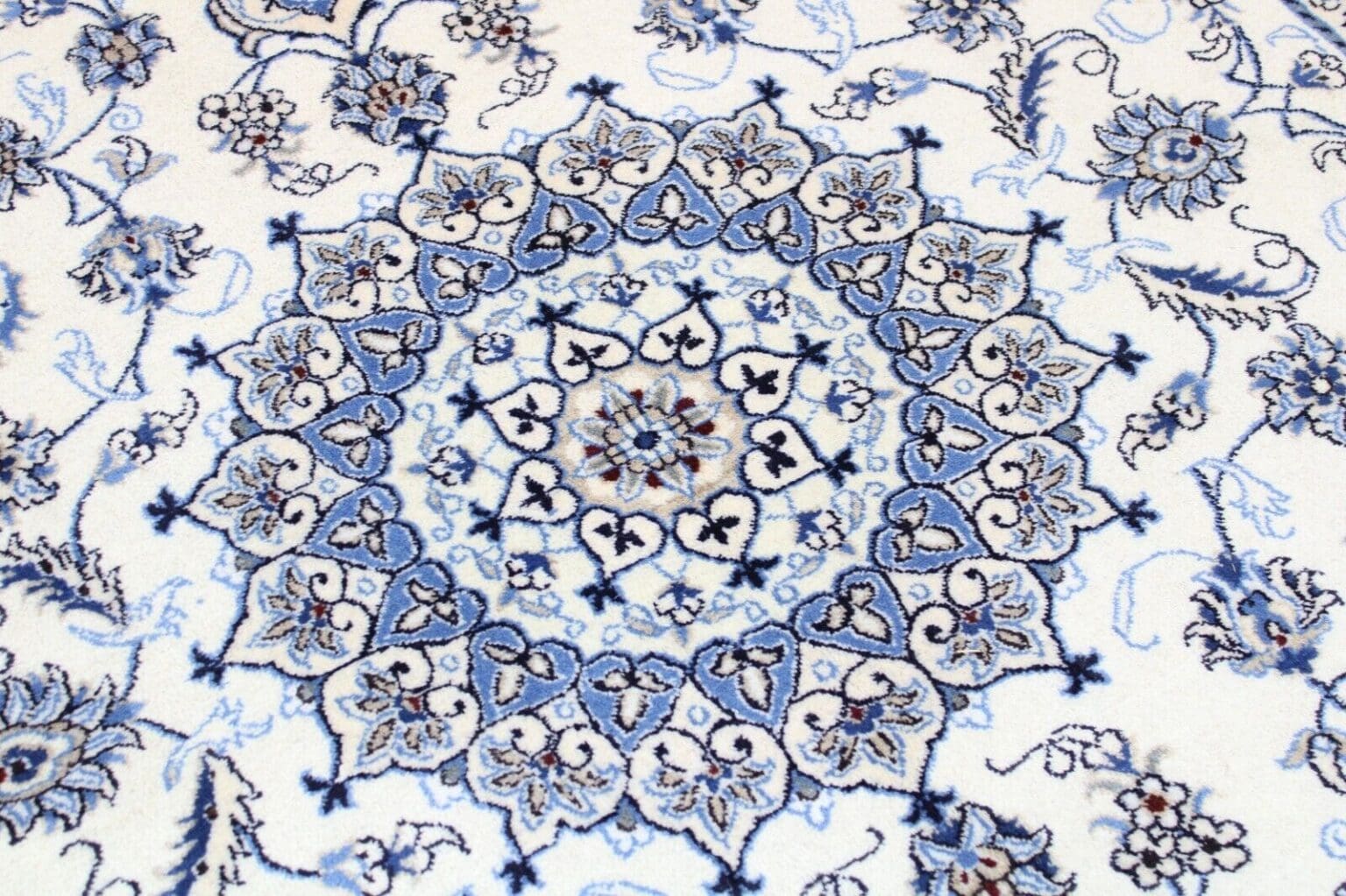
Nain designs are often based on a planned relationship between a central field, connecting vines, floral elements and surrounding borders. The separate areas are coordinated so that the complete surface reads as one composition. Symmetry and repetition give the eye a sense of direction, while curved floral forms create movement within the ordered structure. Handwork translates this plan knot by knot, meaning that the construction and the design are closely connected.
The transmission of knowledge from one generation to the next is a central feature of regional rug traditions. A skilled knotter must manage the tension of the warp, the character of the material and the sequence of colours at the same time. Pattern work therefore calls for concentration, patience and an understanding of proportion. A small change in spacing or direction can alter the appearance of a vine, flower or geometric axis. Craftsmanship combines technical control with the interpretation of an inherited design vocabulary.
Iranian rugs are practical textiles as well as expressions of regional culture. Their ornaments belong to a long history of decorative art in which floral forms, symmetry and geometry have been developed and adapted. A Nain rug is part of this history. Its design shows how a regional tradition can be expressed through the surface of a floor covering, while its hand-knotted construction preserves the physical evidence of the making process.
Nain is commonly associated with fine outlines and balanced divisions of the field. The design may contain considerable detail while retaining a clearly recognisable overall order. This balance helps explain why Nain rugs can be placed in both traditional rooms and more contemporary interiors. Their regional identity comes from the interaction of handwork, composition and ornament, rather than from one isolated motif.
The Iranian origin is also why this piece is described as a Persian rug. It comes from Iran and belongs to an Iranian regional weaving tradition. Iranian rug production has a long history with many workshops, methods and styles. Nain occupies a distinct place within that wider landscape. Its techniques and design principles connect local experience with a visual language that is known beyond the region where the rugs are made.
Tradition does not mean that every Nain rug has an identical appearance. It means that technical foundations and design principles are carried forward while the actual execution depends on the particular design and the manual work involved. A recognisable regional character can therefore coexist with individual variation. The hand-knotted construction makes this relationship between inherited method and individual execution visible in the finished textile.
Design and Pattern
The design of this Nain Persian rug is described as harmonious and aesthetic, with a fine and elegant character. Its colours are soft and natural. This palette allows the different pattern areas to work together in a calm manner and makes the rug compatible with a range of interior styles. The design is not tied exclusively to a historic furnishing scheme or to a single contemporary colour concept.
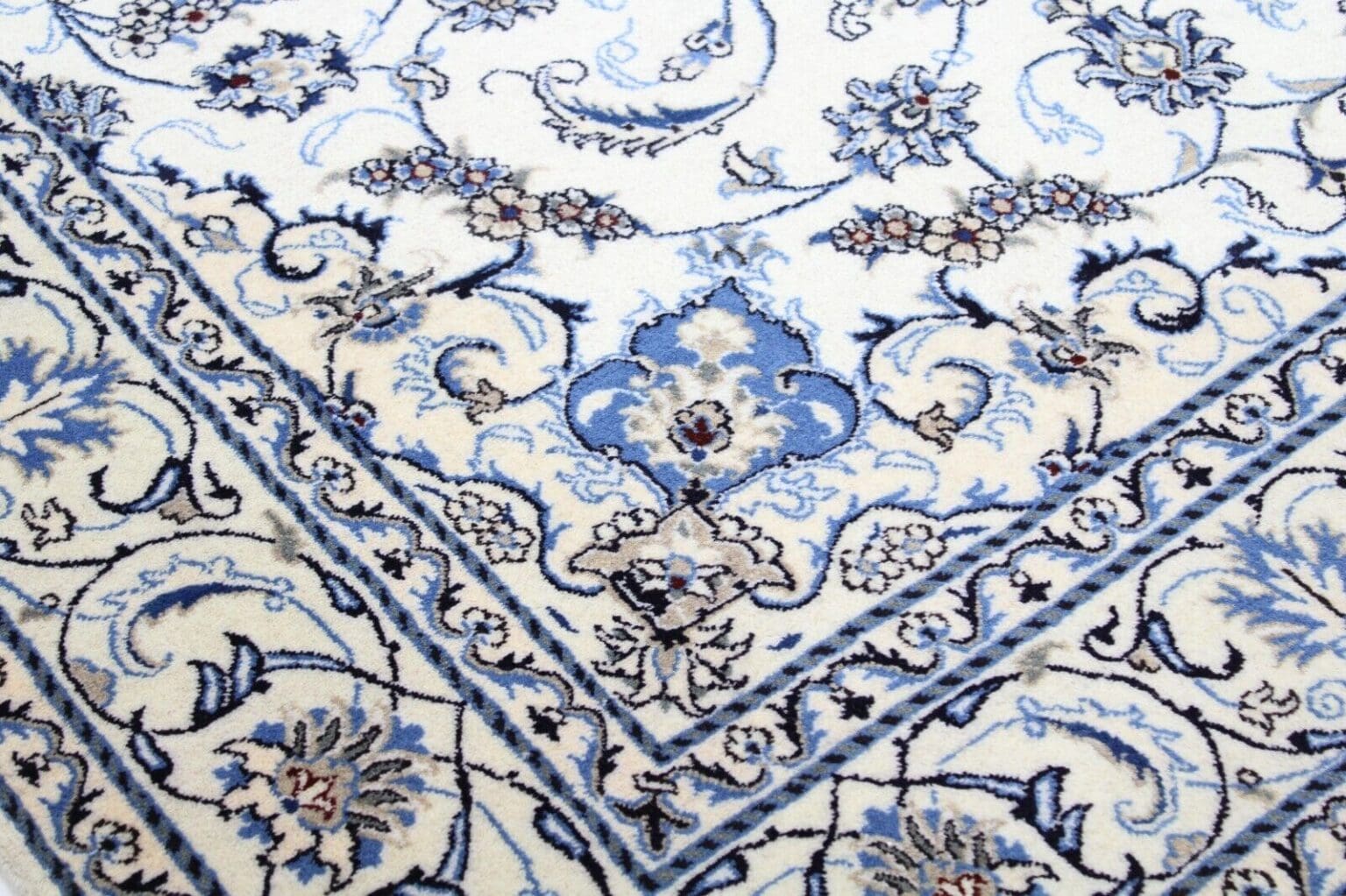
Nain rugs are typically associated with complex designs built from floral motifs. Blossoms, leaves and flowing vines introduce organic movement into the field. These forms are often combined with geometric structures influenced by Islamic design. The result is an integrated composition rather than a random collection of separate ornaments. Repeated shapes and connecting lines establish relationships between the central field, surrounding areas and borders.
Floral and geometric elements contribute different qualities. Floral forms bring a natural and flowing character, while geometry organises the composition and gives it visual stability. Their combination is an important feature of the Nain design tradition: the pattern can contain many details without losing its overall clarity. The high knot density supports the rendering of fine outlines and smaller elements within this arrangement.
Many Iranian rug compositions use a carefully planned centre together with an enclosing border system. Symmetry can provide balance and orientation. Vines and floral ornaments connect different parts of the pattern, allowing the field to be read as a unified design. Even when numerous small forms are used, the composition remains coherent when scale, axes and repetition are carefully coordinated. Hand-knotting converts this plan into a textile image in which every knot contributes to the drawing.
The Nain pattern tradition is related to the wider history of Iranian ornament. Islamic geometries often rely on repetition, proportion, axes and regular relationships. Floral motifs can be placed within these systems while retaining their organic appearance. This produces a design that is decorative and structured at the same time. The ornament does not narrate one literal story; instead, it refers to cultural influences and to the long development of Iranian decorative forms.
Soft colours and elegant drawing give the Nain design flexibility. It can be combined with classic furniture, natural materials and traditional decorative objects. It can also act as a structured textile element in a more modern setting. The rug does not need to dominate an entire room. Its floral and geometric details can connect furnishings, textiles and surrounding colours.
The pattern can be used in more than one part of a home or workplace. In a living room, the ordered field can help define a seating area. In a bedroom, the natural tones can provide a restrained textile basis for the room. In a stylish office, the clearly organised design can support a composed setting. This adaptability comes from the relationship between fine detail, gentle colours and regional design tradition.
The motifs can be understood as part of a visual language shaped by the cultural influences of Nain and Iranian carpet art. Their significance is not limited to decoration. Repeated floral elements, geometric order and balanced framing show how practical textiles can carry regional ideas about proportion and ornament. The design remains accessible because its structure is clear even when its individual details are numerous.
The combination of a refined drawing and natural colours allows the rug to relate to different furnishing concepts. Classic interiors can emphasise its connection with Iranian tradition, while modern rooms can use the pattern as a contrasting handcrafted element. In either setting, the composition remains grounded in the Nain vocabulary of floral detail, geometric order and controlled balance.
Special Features
The rug is offered as new stock without a label and is in excellent condition. It is also described as very clean and ready for immediate use. Its stated materials are genuine wool and cotton, and its construction is hand-knotted. An authenticity certificate is available on request at no additional charge. These are the specific presentation and service features associated with this piece.
The Nain Persian rug is suitable for underfloor heating. The temperature should not be set too high in order to protect the fibres. For care, regular vacuuming is recommended to remove dust and dirt. More intensive soiling should be handled by a professional rug-cleaning service. These instructions take account of the textile surface and the hand-knotted construction.
Delivery is stated as two to three working days to Germany and three to five working days within the European Union. Shipping to Germany is free with different delivery services. A one-hundred-percent satisfaction guarantee and a right of return are also offered.
FAQ
How should I care for my Nain Persian rug?
Regular vacuuming helps remove dust and everyday dirt from the pile. The rug should be cleaned gently so that its hand-knotted surface is not placed under unnecessary strain. If it becomes heavily soiled, professional rug cleaning is recommended. A specialist can select a method appropriate for the textile structure and the stated materials. Strong soiling should not be treated with unsuitable household products. Consistent, careful maintenance supports the clean and well-kept appearance described for the rug and is appropriate for a wool pile with a cotton warp.
Can I use the Nain Persian rug with underfloor heating?
Yes. This Nain Persian rug is suitable for use with underfloor heating. The temperature should not be set too high so that the fibres are protected during everyday use. A moderate setting helps limit unnecessary thermal stress on the material. The rug should lie evenly and flat on the floor. If a particular heating system has its own operating instructions, those instructions should also be observed. Suitability for underfloor heating is one of the stated practical properties of this rug.
Where is the Nain Persian rug best used?
The rug is suitable for living rooms and bedrooms as well as stylish offices. Its floral and geometric design can be combined with different interior concepts. In a living room, the ordered composition can help define a seating area. In a bedroom, it can provide a calm textile foundation. In an office, the elegant pattern can introduce a traditional, clearly structured element. The soft natural tones make it easier to coordinate the rug with different furnishings and room colours. Its use is therefore not limited to one specific type of interior.
To provide the best experiences, we use technologies like cookies to store and/or access device information. Consenting to these technologies will allow us to process data such as browsing behavior or unique IDs on this site. Not consenting or withdrawing consent, may adversely affect certain features and functions.
Functional Always active
The technical storage or access is strictly necessary for the legitimate purpose of enabling the use of a specific service explicitly requested by the subscriber or user, or for the sole purpose of carrying out the transmission of a communication over an electronic communications network.
Preferences
The technical storage or access is necessary for the legitimate purpose of storing preferences that are not requested by the subscriber or user.
Statistics
The technical storage or access that is used exclusively for statistical purposes.The technical storage or access that is used exclusively for anonymous statistical purposes. Without a subpoena, voluntary compliance on the part of your Internet Service Provider, or additional records from a third party, information stored or retrieved for this purpose alone cannot usually be used to identify you.
Marketing
The technical storage or access is required to create user profiles to send advertising, or to track the user on a website or across several websites for similar marketing purposes.

 SECURE PAYMENT
 SHIPPING PARTNERS