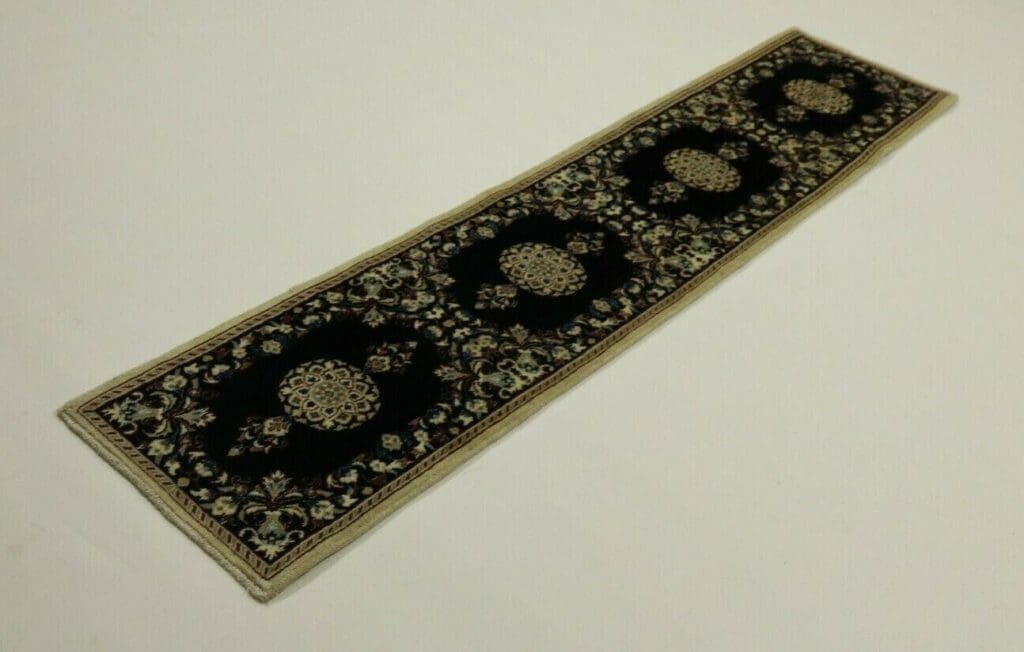
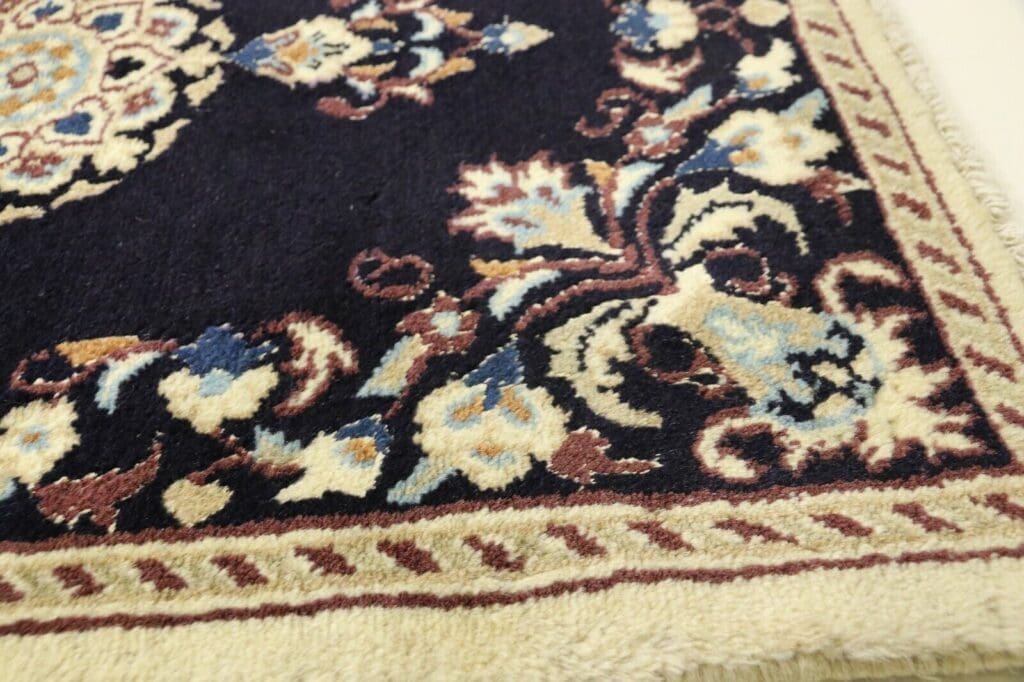
This Super Nain is hand-knotted, with a pile made from 90% new wool and 10% silk. The warp is made from 100% cotton. The combination gives the rug a resilient textile foundation together with a refined surface and a restrained sheen. Wool provides a pleasant handle and natural warmth, while silk catches the light and brings added depth to the colours and ornamental details.
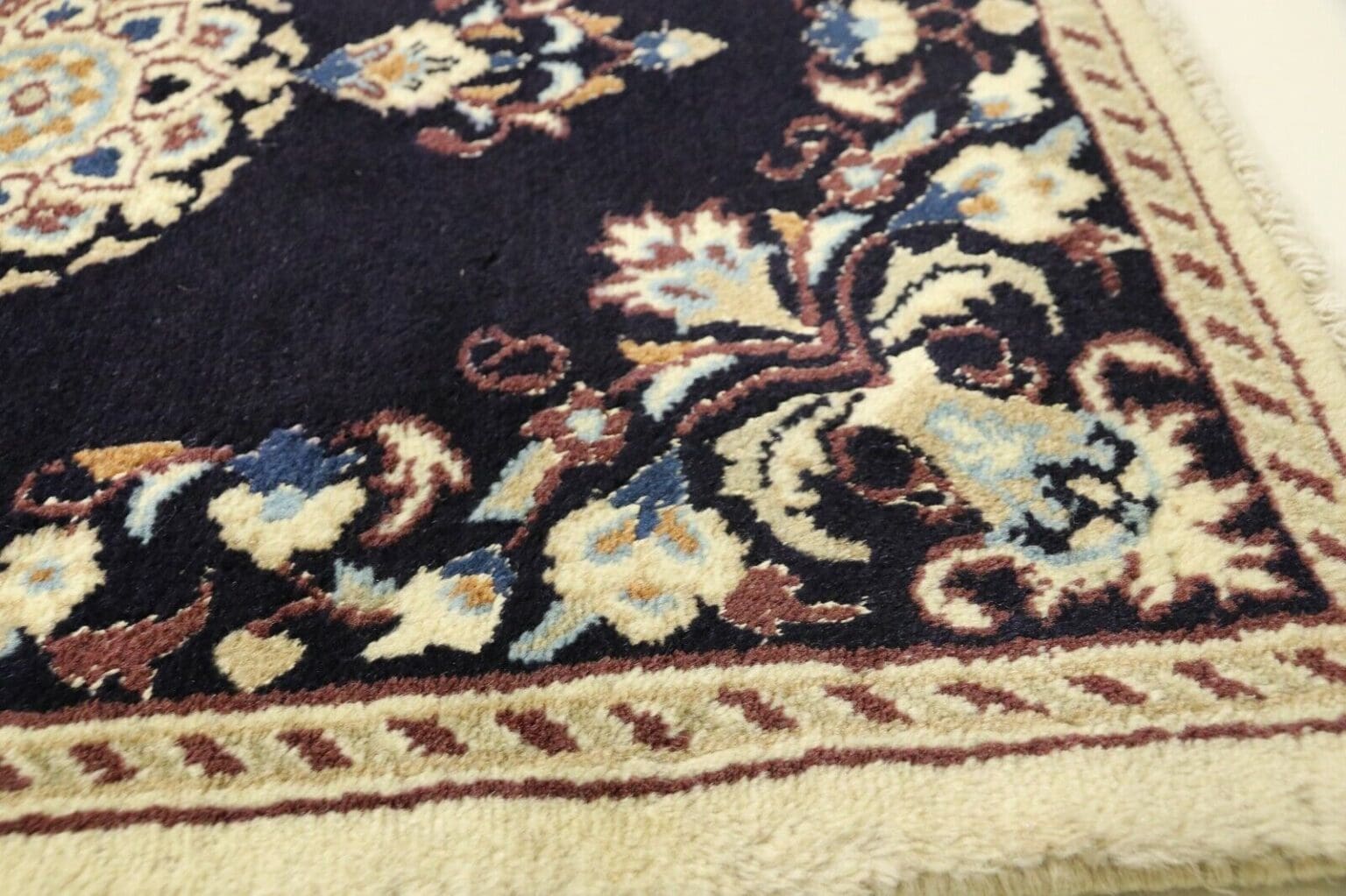
The knot density is approximately 400,000 knots per square metre. Such density allows a hand-knotted design to be worked out with a high degree of precision. In hand-knotting, each knot is tied individually around the prepared warp threads. The rows are then compacted and the pile is brought to an even surface. This process requires experience, patience and consistent control throughout the work.
The hand-knotted construction, the selected pile fibres and the high knot density are the rug’s defining technical characteristics. The rug is new and in perfect condition. It is suitable for use in rooms with underfloor heating. An authenticity certificate is included.
Origin and Tradition
This rug comes from Persia, present-day Iran, and is described as a Super Nain. Nain is an Iranian carpet-producing region associated with careful knotting and finely organised designs. Its tradition combines the established ornamental language of Persian carpet making with a calm and disciplined approach to composition. Hand skill and decorative structure are closely connected in this regional practice.
The Nain tradition is part of a wider Persian craft heritage in which knowledge is passed from one generation to the next. Understanding the warp, preparing the loom, placing the knots, distributing colour and maintaining a regular design all form part of the work. The preparation of the foundation is as important as the visible pattern, since the balance of the finished carpet depends on the relationship between its structure and its surface.
Persian rugs are distinguished by more than their fibres. Region, construction and design vocabulary all contribute to their identity. Within that tradition, Nain rugs are associated with controlled compositions, fine detail and a harmonious overall effect. The name Nain therefore identifies the rug’s regional type and origin; it is not merely the name of a decorative motif.
Iranian carpet making grew from the meeting of practical textile production and a rich ornamental culture. Floral forms, geometric divisions and symmetrical arrangements were refined through continued use and reinterpretation. In Nain work, these elements are often brought together in a measured and coherent manner. Contemporary pieces can remain connected to this heritage while being made for present-day interiors.
Hand-knotting gives the rug its individually worked character. Unlike a machine-made floor covering, it is formed knot by knot as the pattern develops. The craftsperson must follow the design, maintain tension and keep the rows sufficiently regular. This is a gradual process in which the image becomes visible through repeated manual work. The high knot density of this rug represents a detailed execution within the Nain tradition.
Design and Pattern
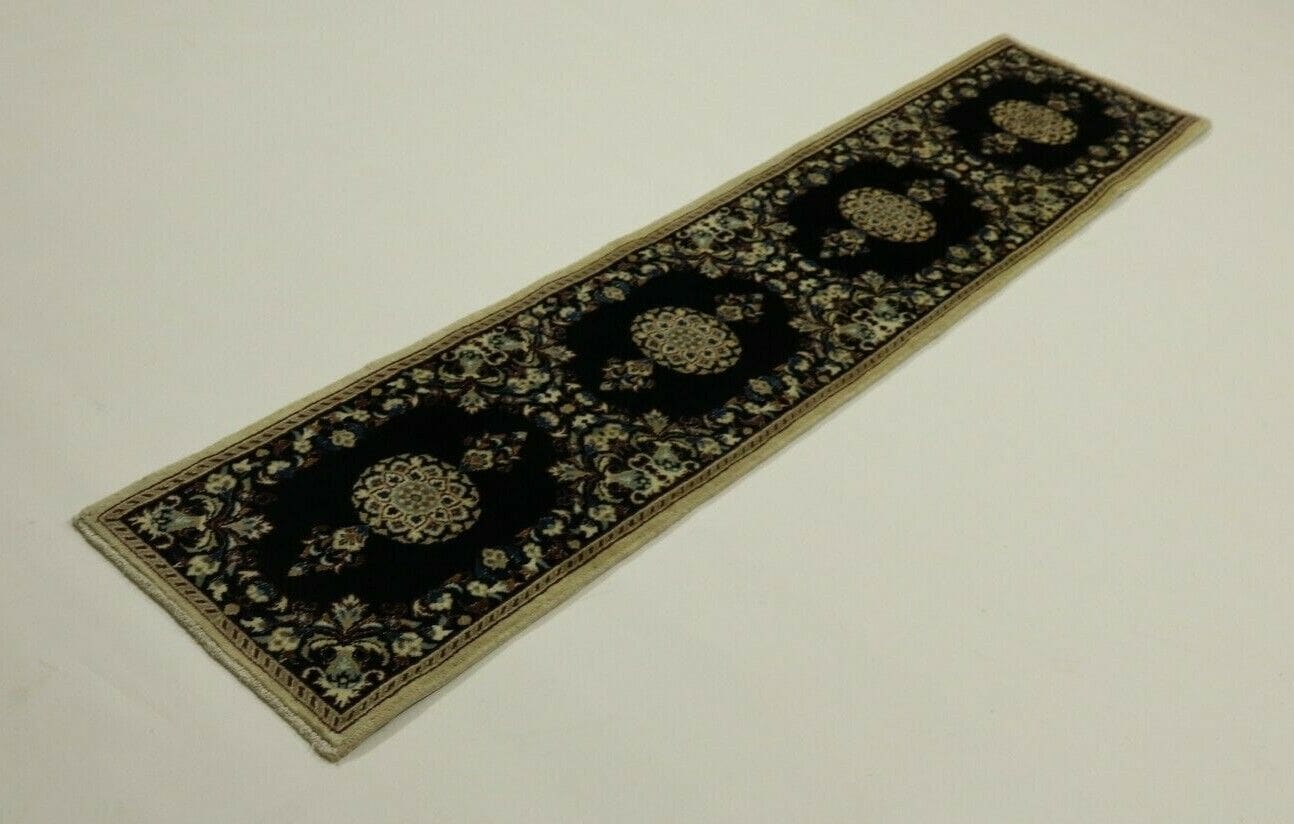
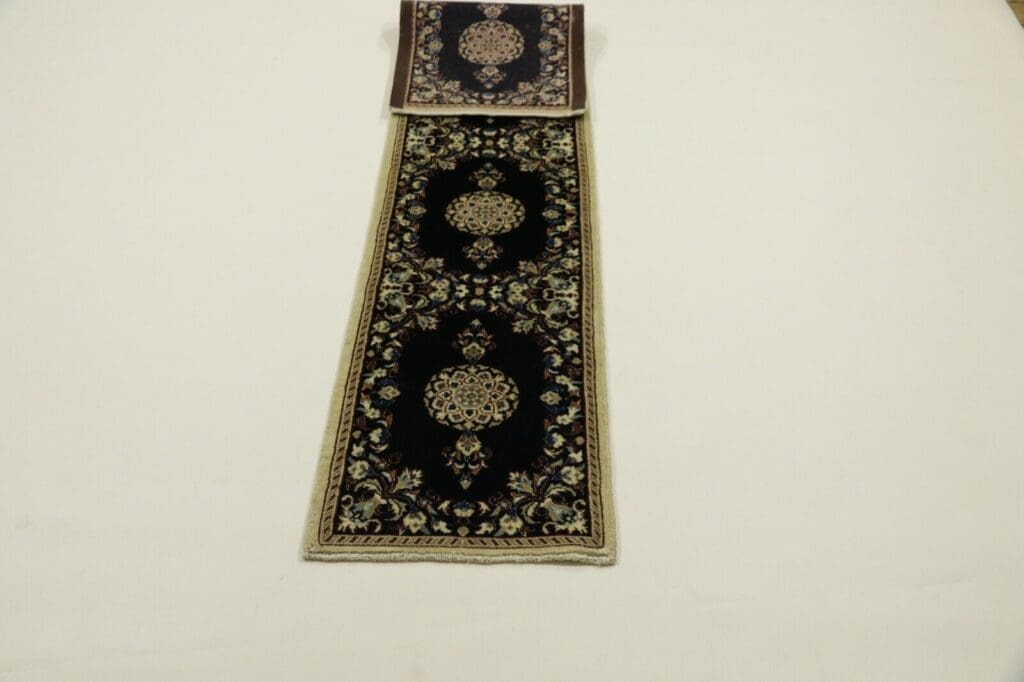
The pattern of this rug is described as Oriental. Its design is associated with the Nain vocabulary, where floral ornaments, stylised blossoms and flowing decorative lines are important elements. Such forms may be arranged as a repeating field or brought into a more centrally ordered composition. In either case, the relationship between individual ornaments and the complete structure determines the clarity of the design.
Floral decoration is one of the enduring forms of expression in Persian carpets. Leaves, flowers and vines may serve as starting points, but they are transformed into a textile language rather than copied literally from nature. Lines are repeated rhythmically, shapes are stylised and spaces are organised into a unified surface. Nain designs traditionally connect this floral vocabulary with a precise, finely articulated execution.
Geometric devices can provide an additional framework. Borders, axes, framed areas and repeated details guide the eye through the composition. They define transitions between sections and give the pattern a sense of order. Floral and geometric features do not have to be separate: a botanical line can be enclosed by a geometric border, while an ordered field can be softened by curved leaves and blossoms.
Nain rugs are traditionally associated with gentle, harmonious colour effects. This approach supports the legibility of delicate ornament and prevents the overall design from becoming visually disjointed. Silk in the pile can add a subtle variation in lustre as the light moves across the surface. Individual lines and areas may therefore appear differently at different angles, while the rug retains the character of a hand-worked textile.
In Persian ornament, floral and geometric signs are often connected with ideas of harmony, order and prosperity. These interpretations belong to the broader cultural language of carpet design and should not be read as an additional claim about every individual detail of this rug. The piece itself is offered with an Oriental pattern and presents that decorative language through the regional identity of a Nain rug.
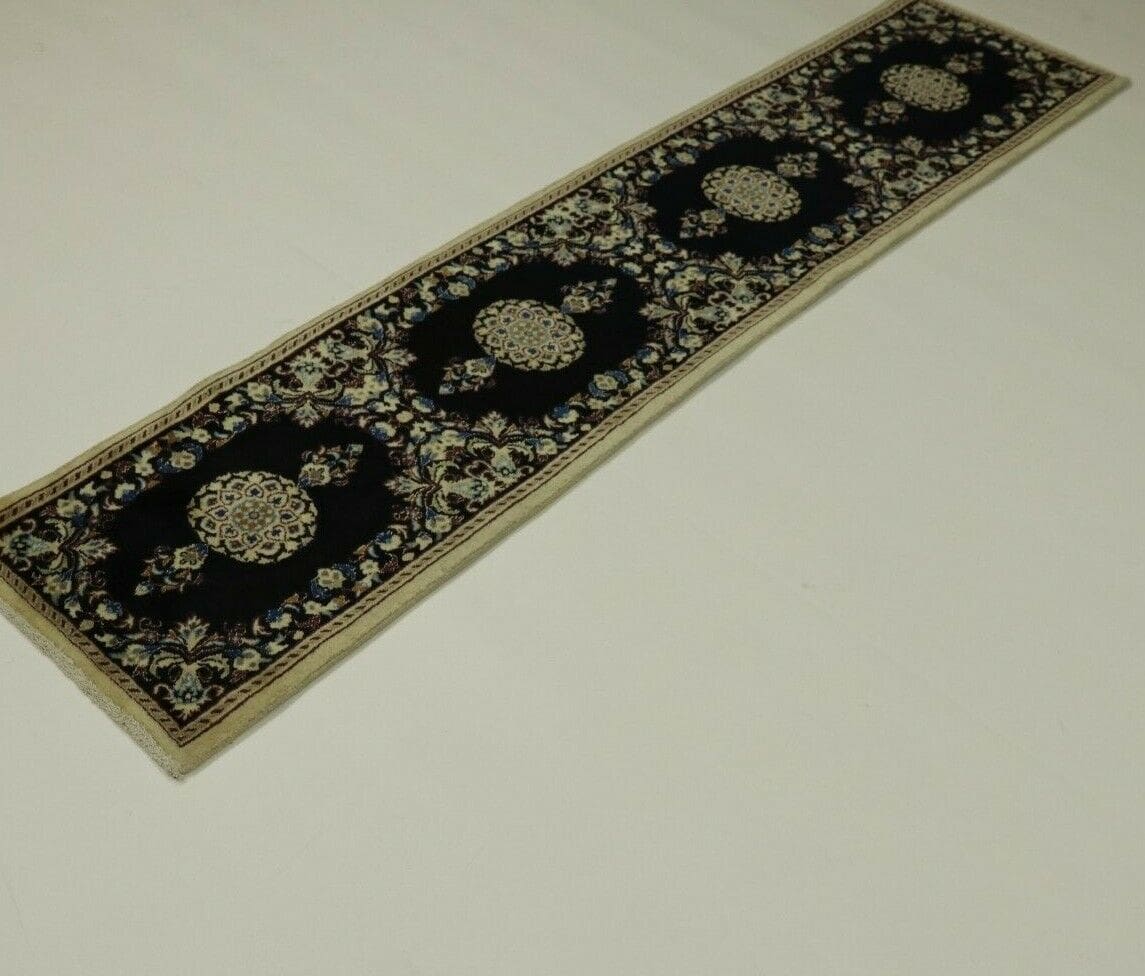
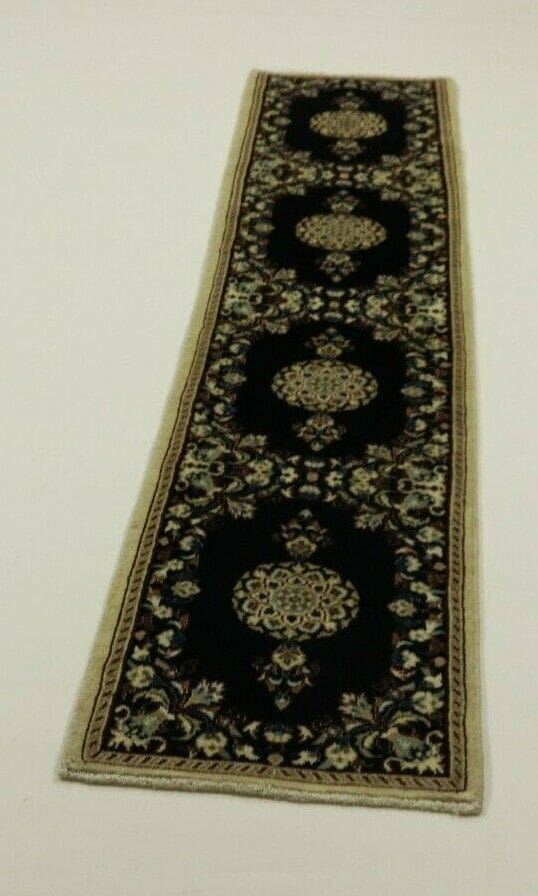
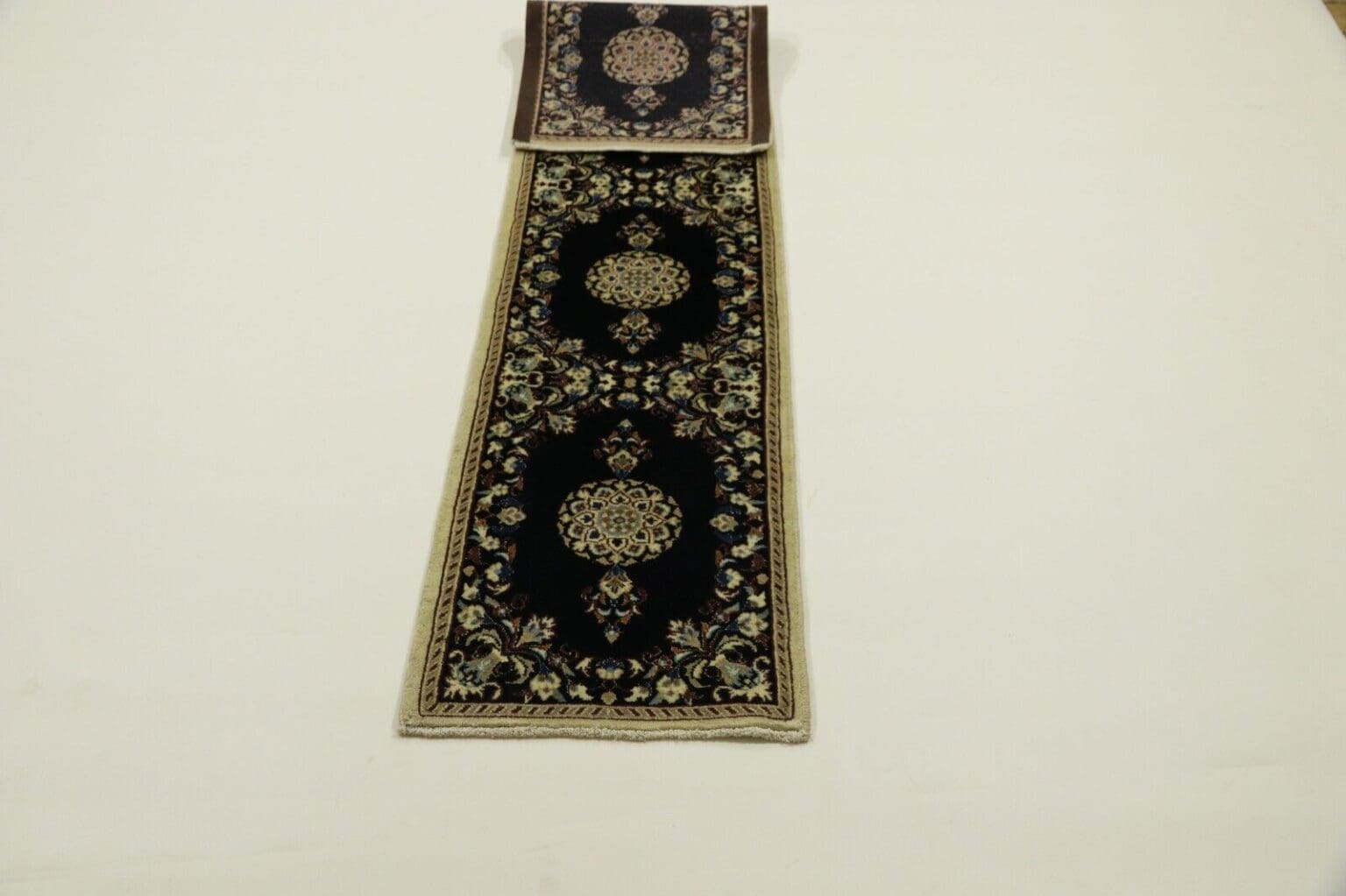
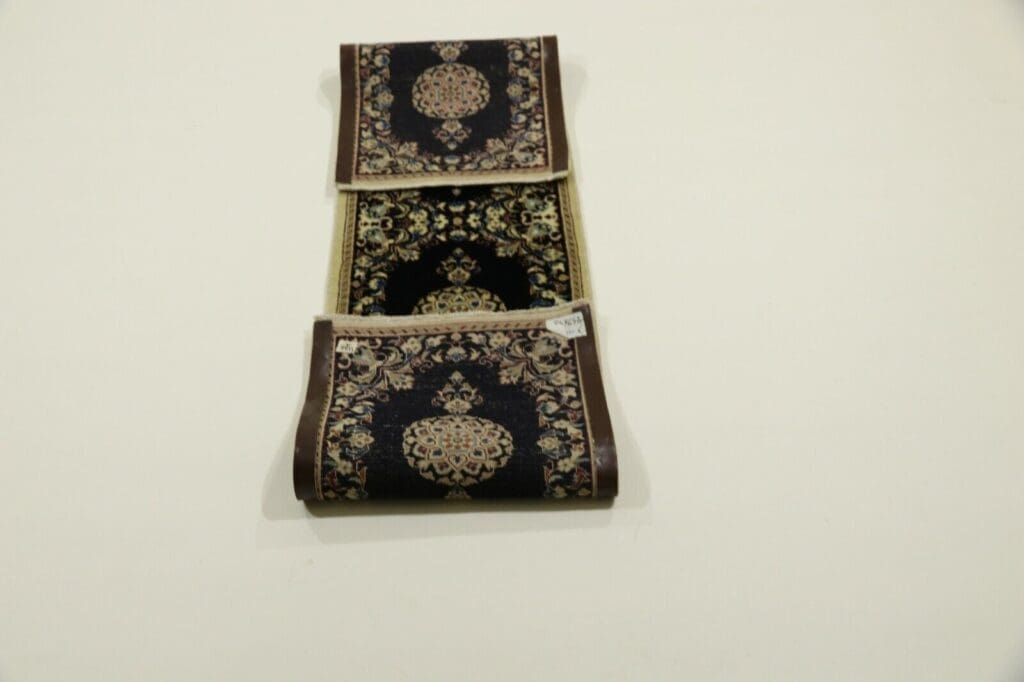
As a runner, the rug has a narrow, elongated format. This format encourages a lengthwise reading of repeated ornament and allows a design to organise a passage or other linear area. Nain-inspired motifs can function in hallways, entrance areas or elongated living spaces without depending on a very large floor surface. The pattern remains decorative while retaining a clear relationship with the rug’s proportions.
Special Features
The rug is new and in perfect condition. Its principal features are the hand-knotted construction, the blend of new wool and silk, and a knot density of approximately 400,000 knots per square metre. Its narrow runner format makes it suitable for hallways, entrances and elongated rooms. It can also be used as a decorative element in living rooms or bedrooms.
The natural character of wool is combined with the gentle lustre of silk. Wool contributes to a comfortable and durable pile, while silk provides a finer visual accent. The rug can be used in a room with underfloor heating. An authenticity certificate is included with the piece.
FAQ
How should I clean the Persian rug?
For routine care, vacuum the rug gently to remove dust and loose dirt. If a spill occurs, treat it promptly and carefully with a damp cloth and a mild cleaning product. For a deeper clean, use a professional rug cleaner so that the pile, silk and hand-knotted structure are handled appropriately and the surface is not damaged.
Can the rug be used over underfloor heating?
Yes. The Super Nain is suitable for rooms with underfloor heating. Wool helps moderate the feel of the floor and contributes to a comfortable room climate. Even so, the rug should not be exposed to strong direct heat for an extended period. Normal, even use and gentle care help preserve its surface.
Where is the runner best placed?
The narrow, elongated format works particularly well in corridors and entrance areas. The runner can also serve as a decorative feature in a living room or bedroom. In a smaller room it can be placed without covering the entire floor, adding a structured textile element while leaving the surrounding area open.
To provide the best experiences, we use technologies like cookies to store and/or access device information. Consenting to these technologies will allow us to process data such as browsing behavior or unique IDs on this site. Not consenting or withdrawing consent, may adversely affect certain features and functions.
Functional Always active
The technical storage or access is strictly necessary for the legitimate purpose of enabling the use of a specific service explicitly requested by the subscriber or user, or for the sole purpose of carrying out the transmission of a communication over an electronic communications network.
Preferences
The technical storage or access is necessary for the legitimate purpose of storing preferences that are not requested by the subscriber or user.
Statistics
The technical storage or access that is used exclusively for statistical purposes.The technical storage or access that is used exclusively for anonymous statistical purposes. Without a subpoena, voluntary compliance on the part of your Internet Service Provider, or additional records from a third party, information stored or retrieved for this purpose alone cannot usually be used to identify you.
Marketing
The technical storage or access is required to create user profiles to send advertising, or to track the user on a website or across several websites for similar marketing purposes.
 SECURE PAYMENT
 SHIPPING PARTNERS