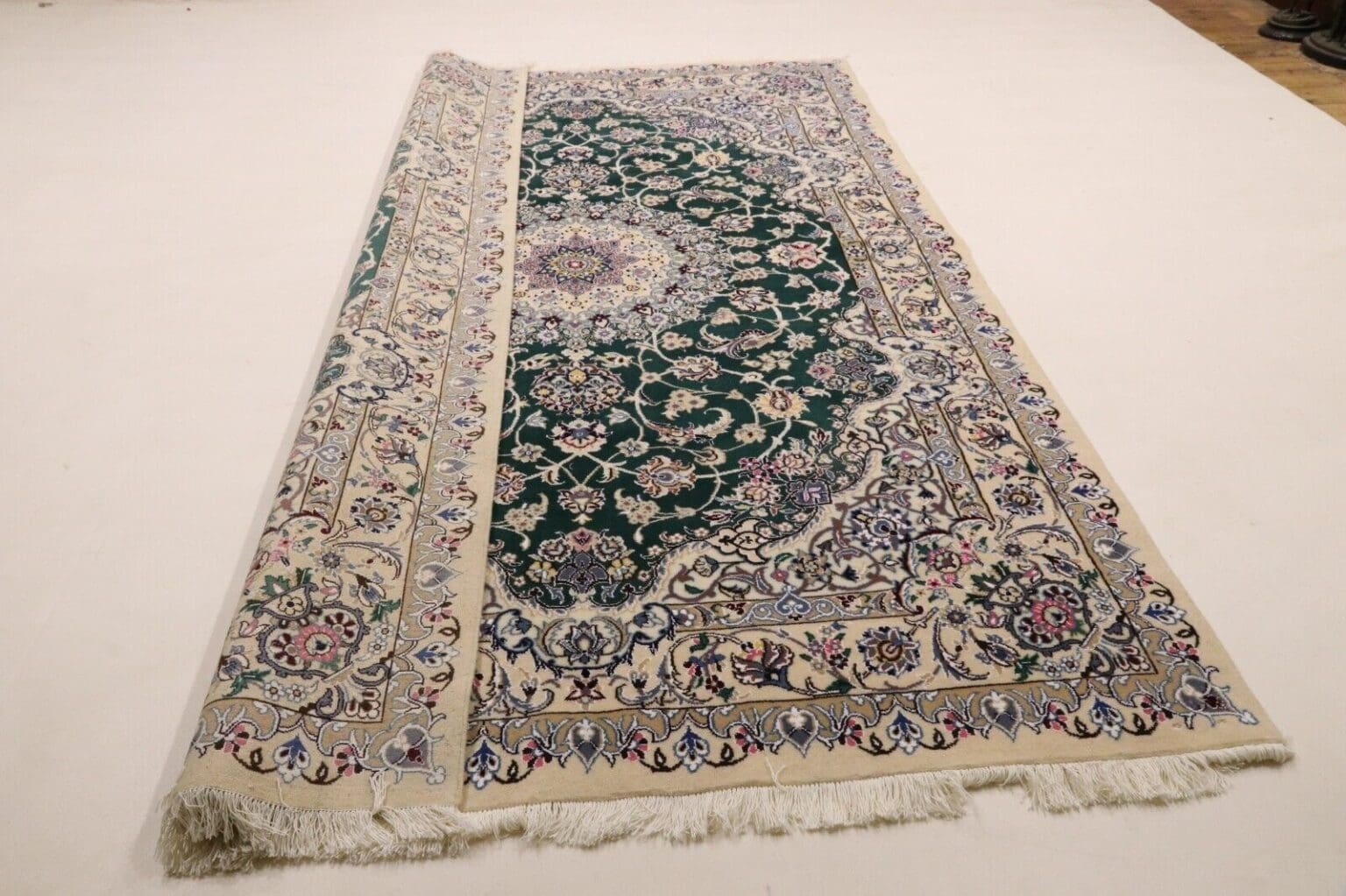
This Super Nain 9 La Persian rug is hand-knotted. The pile consists of 90% virgin wool and 10% silk, while the warp is made from 100% cotton. These fibres contribute different qualities to the finished textile. Virgin wool gives the surface a warm, soft handle and a resilient structure. Silk adds a finer character, a subtle sheen and a different response to light. The material combination therefore affects both touch and appearance.
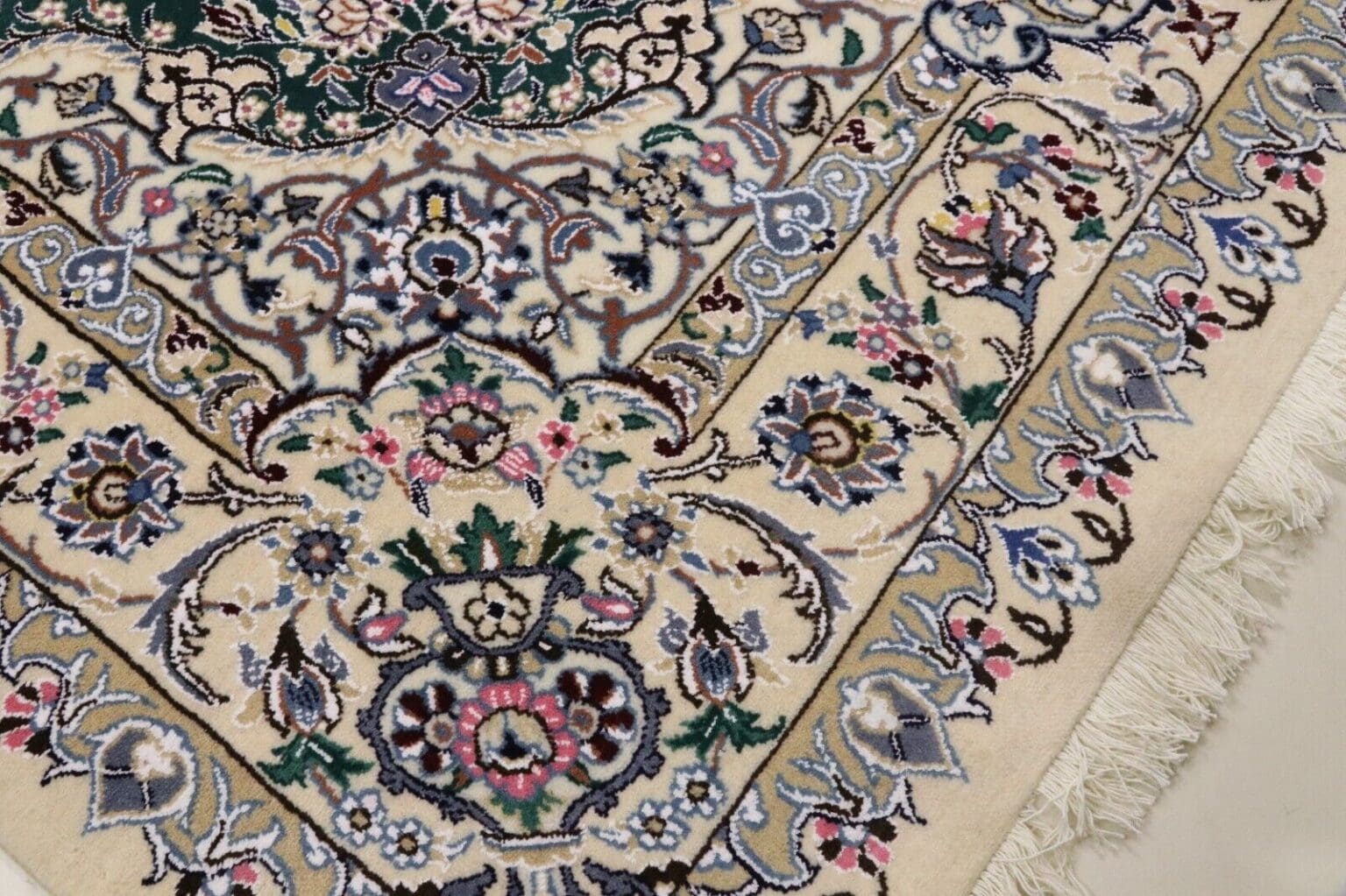
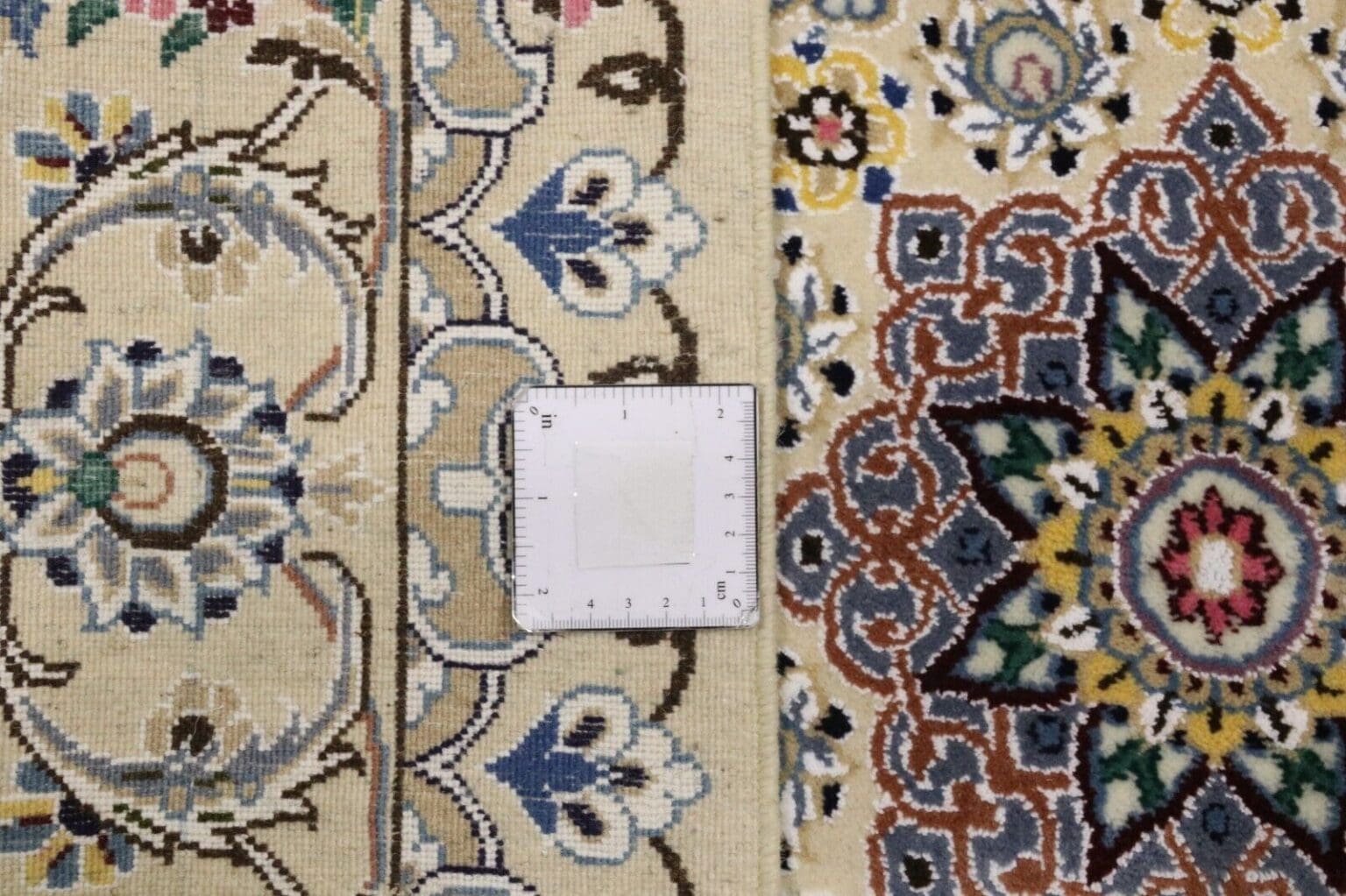
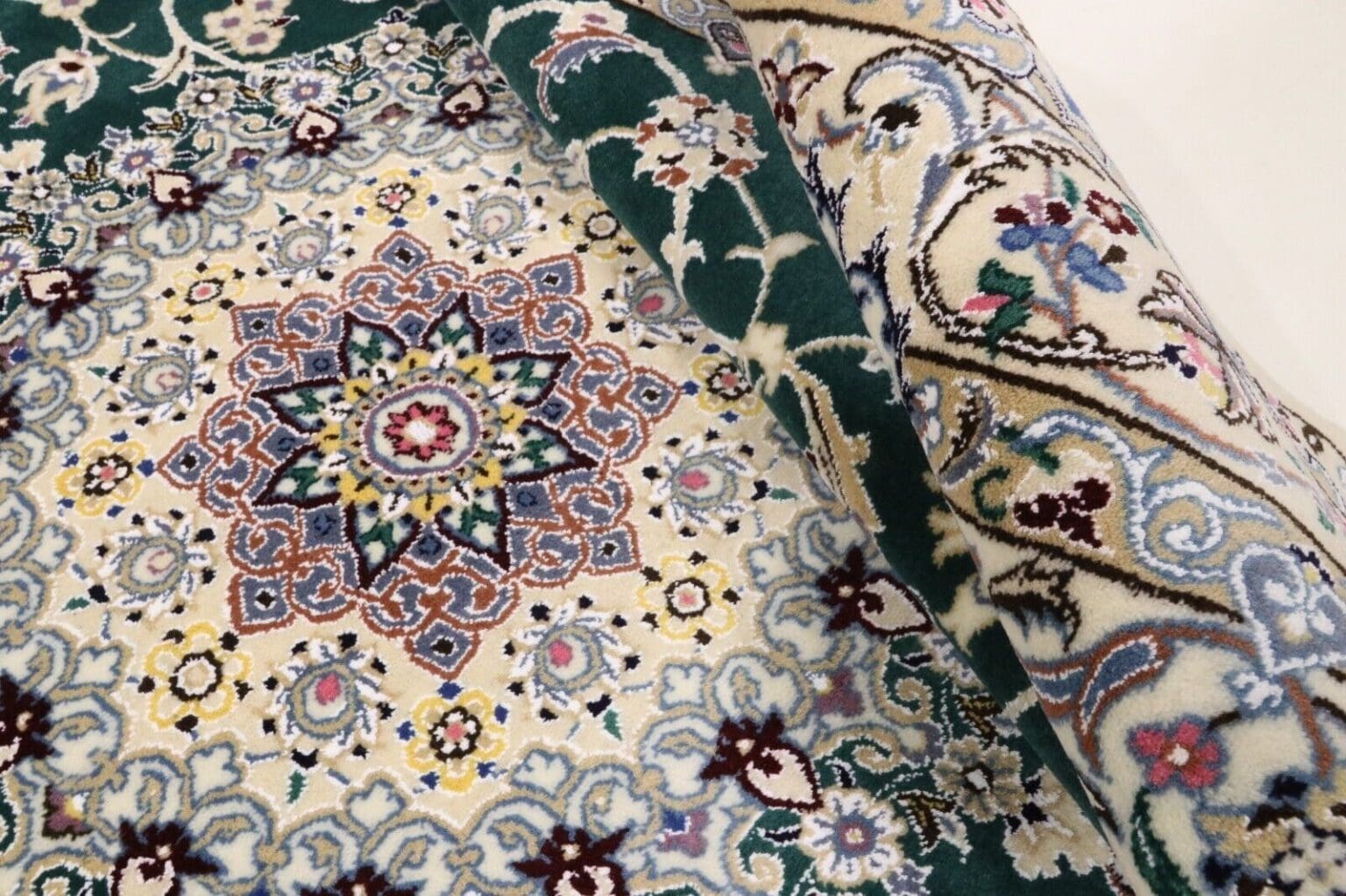
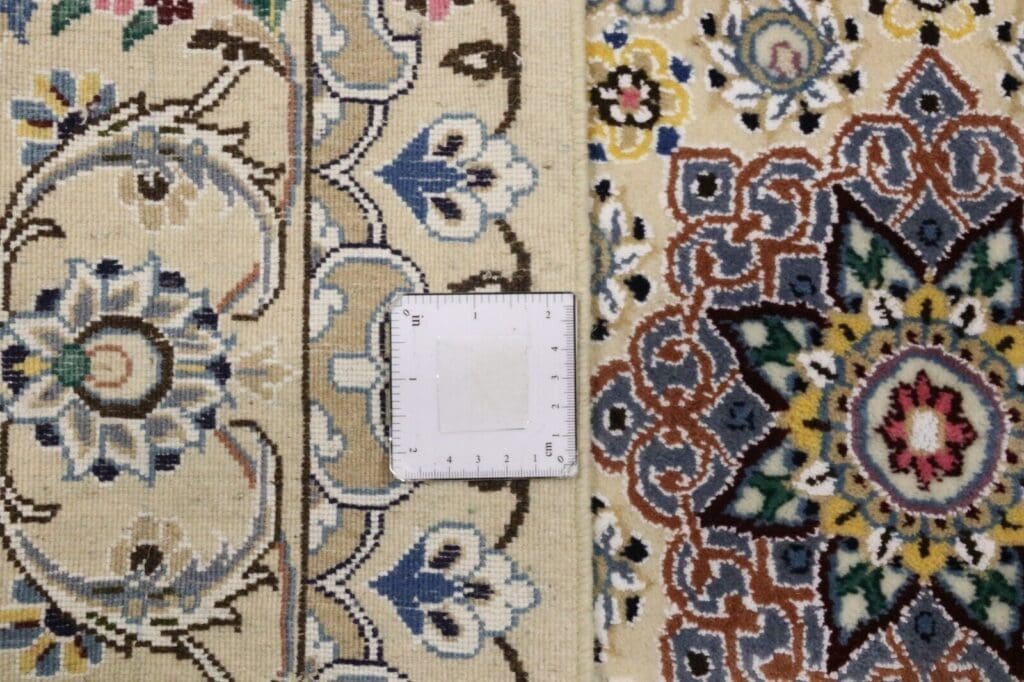
In hand-knotting, every knot is inserted individually into the foundation. The pile is built row by row, following the design as the field develops. This method allows small floral details and geometric outlines to be worked with close control. A density of approximately 500,000 knots per square metre indicates a finely constructed weave and supports detailed pattern definition. The cotton warp provides the supporting framework into which the pile is secured.
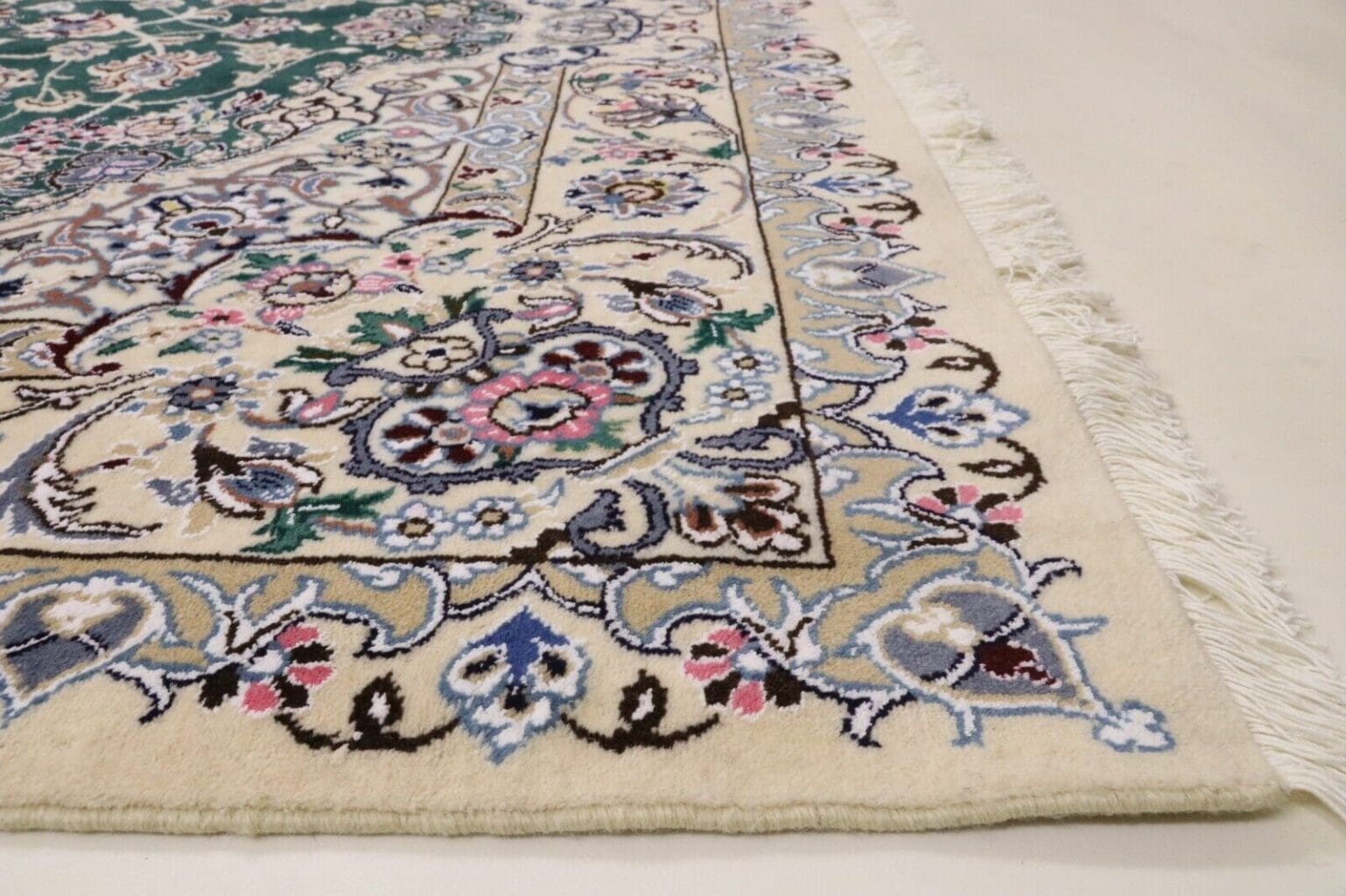
The foundation is an important part of a hand-knotted rug even though it is largely hidden once the pile is complete. Warp threads run through the structure and provide the basis for the rows of knots. Weft work helps hold those rows in place, while the pile creates the visible surface. The relationship between foundation, knotting and pile determines the stability and character of the textile. Here, cotton is specified for the warp and wool and silk for the pile.
A hand-knotted rug is not produced as a completely uniform industrial repeat. The weaver works from a design and checks the placement of colours, lines and ornaments throughout the process. Small variations can be part of individual handwork. Each rug is consequently made as its own textile piece. In this Super Nain 9 La, that traditional method is combined with a fine knot density and a pile dominated by virgin wool with silk added.
Wool supplies warmth and a soft surface, while silk can reflect light more distinctly and make selected passages appear finer. The two fibres therefore create a contrast within the pile without changing the stated composition. The rug is described as new and in very good condition. Its hand-knotted construction, material structure and high knot density define the production characteristics of this particular piece.
Origin and Tradition
The Super Nain 9 La comes from Nain, a city in Iran’s Isfahan Province. Nain is recognised as a carpet-weaving centre associated with fine materials, detailed drawing and careful knotting. Its tradition is based on practical knowledge developed in workshops and passed from one generation to the next. Preparing a design, selecting fibres, building the foundation and maintaining an even structure all form part of this knowledge.
Nain weaving belongs to the wider tradition of Iranian carpet making. Within that tradition, a rug is both a useful textile and a carefully composed surface. Its character is created through the interaction of fibre, foundation, colour and design. The warp establishes the basis, the knots create the pile, and the repeated placement of those knots makes the pattern visible. Each stage influences the final appearance and handling of the rug.
Fine knotting requires constant attention to the design plan. Curving vines, small leaves and geometric shapes must be positioned in relation to one another across the woven field. The weaver works with a regular sequence of rows and knots, maintaining the structure while following changes in the pattern. Experience is needed to keep the construction consistent and to preserve the clarity of the outlines. This technical discipline is part of the background associated with Nain rugs.
Nain rugs are commonly connected with the use of fine materials and an organised composition. Wool is valued in rug making for its warmth, durability and pleasant tactile quality. Silk can provide additional fineness and highlights in selected areas. The pile of this rug is specified as 90% virgin wool and 10% silk, with 100% cotton in the warp. These proportions describe the actual fibre structure of the piece and distinguish it from a rug made entirely from one pile material.
Super Nain 9 La is a designation within the Nain rug tradition. In the trade, names of this kind are used to identify a recognised stylistic and technical classification. They refer to an established type of design and workmanship, while the individual rug still has to be described through its own materials, construction and condition. This piece is identified as a Persian rug from Persia or Iran and is attributed to Nain in Isfahan.
Regional weaving traditions are not fixed production templates. Workshops preserve basic principles while making choices about spacing, line, colour and the treatment of individual ornaments. Hand production allows those choices to remain visible in the finished rug. Nain is therefore understood through the combination of a finely organised design, detailed knotting and the use of materials that give the surface substance and variation.
The history of Persian carpet making is closely connected with the transmission of knowledge about wool, silk, colour and weaving structures. Makers had to understand the behaviour of fibres, prepare the foundation and maintain suitable tension during knotting. They also needed knowledge of proportion, repetition and symmetry in order to translate a design into a textile. This technical history explains why a rug’s place of origin refers not only to geography but also to a specific craft culture.
Design and Pattern
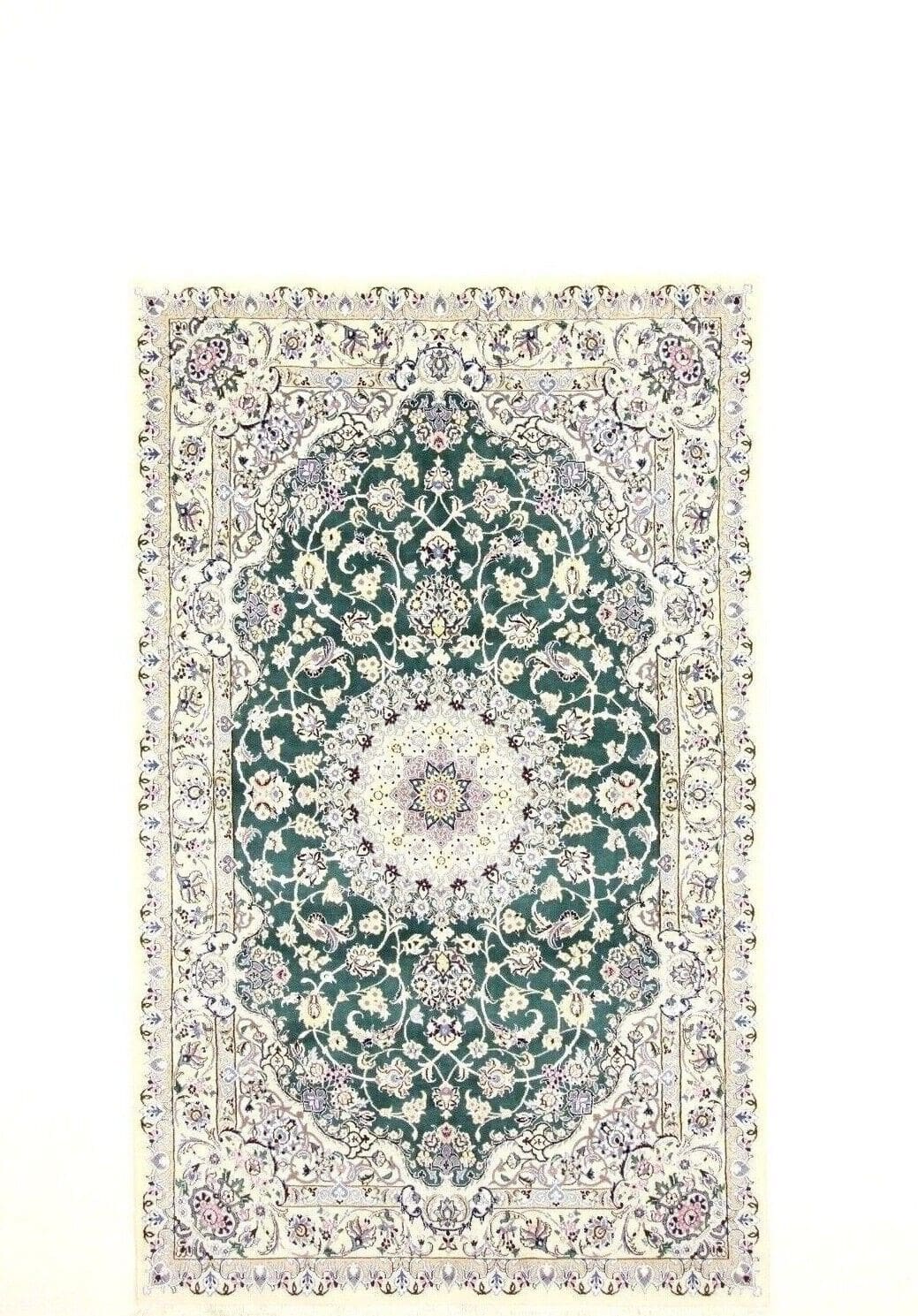
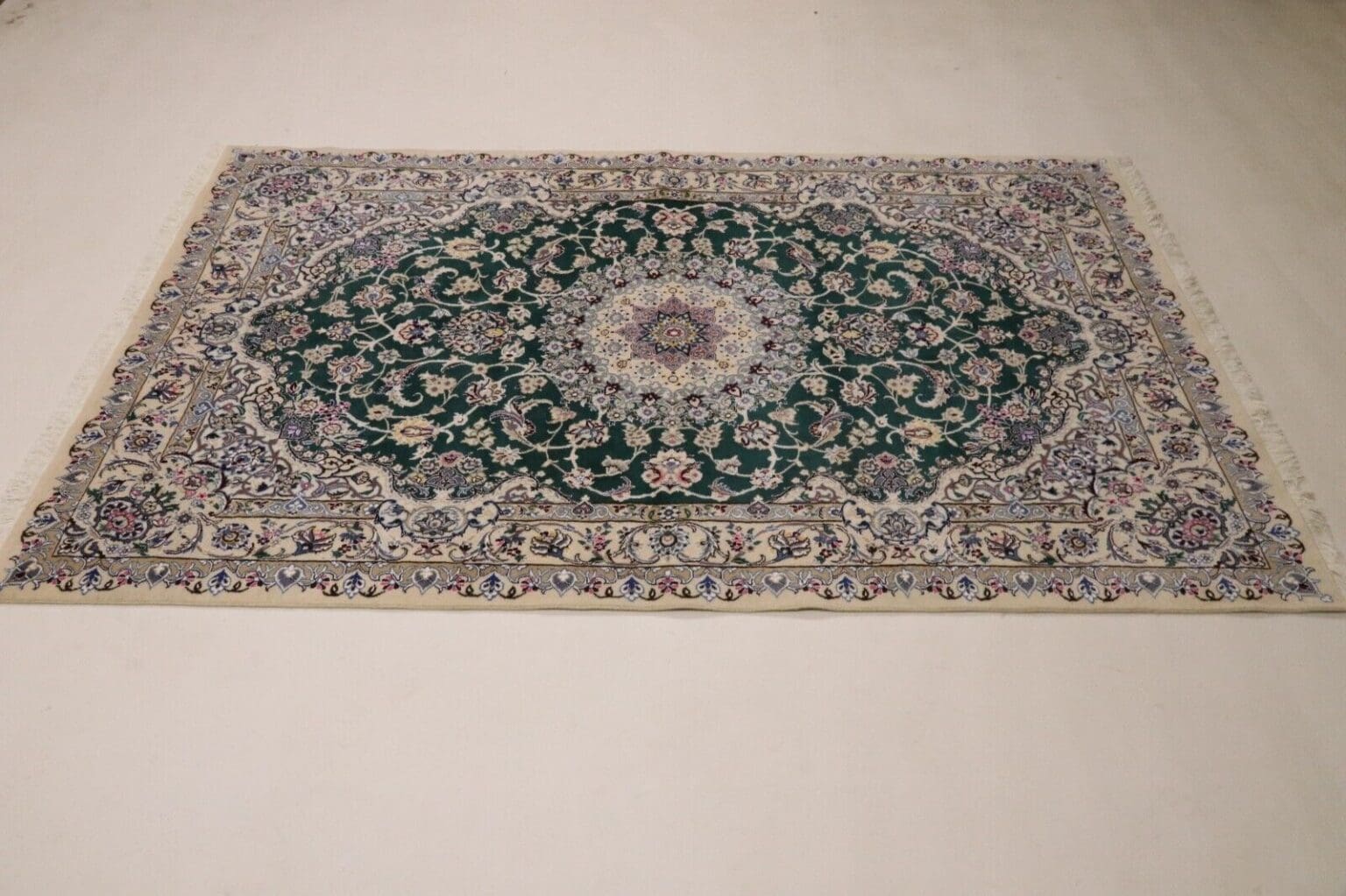
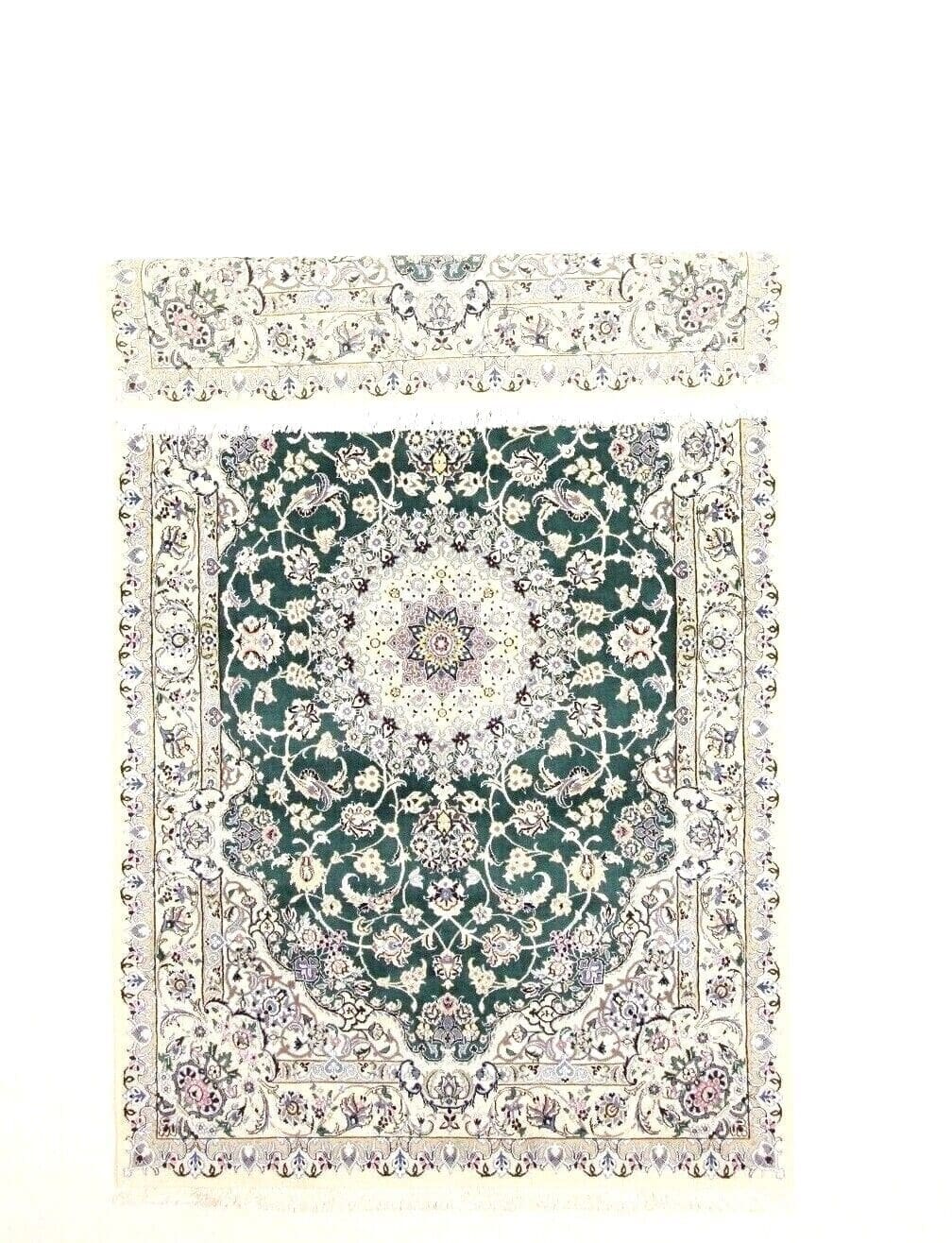
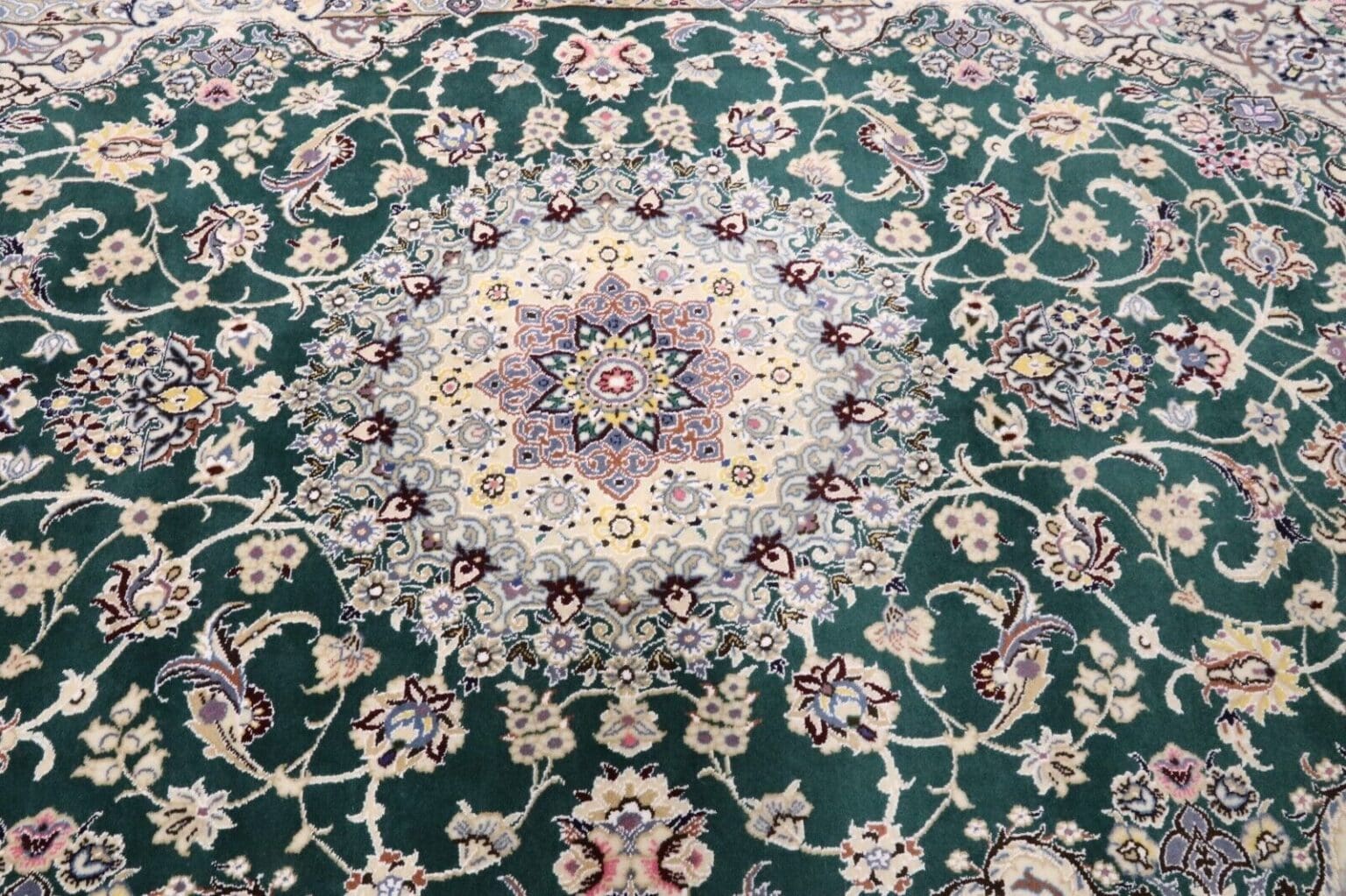
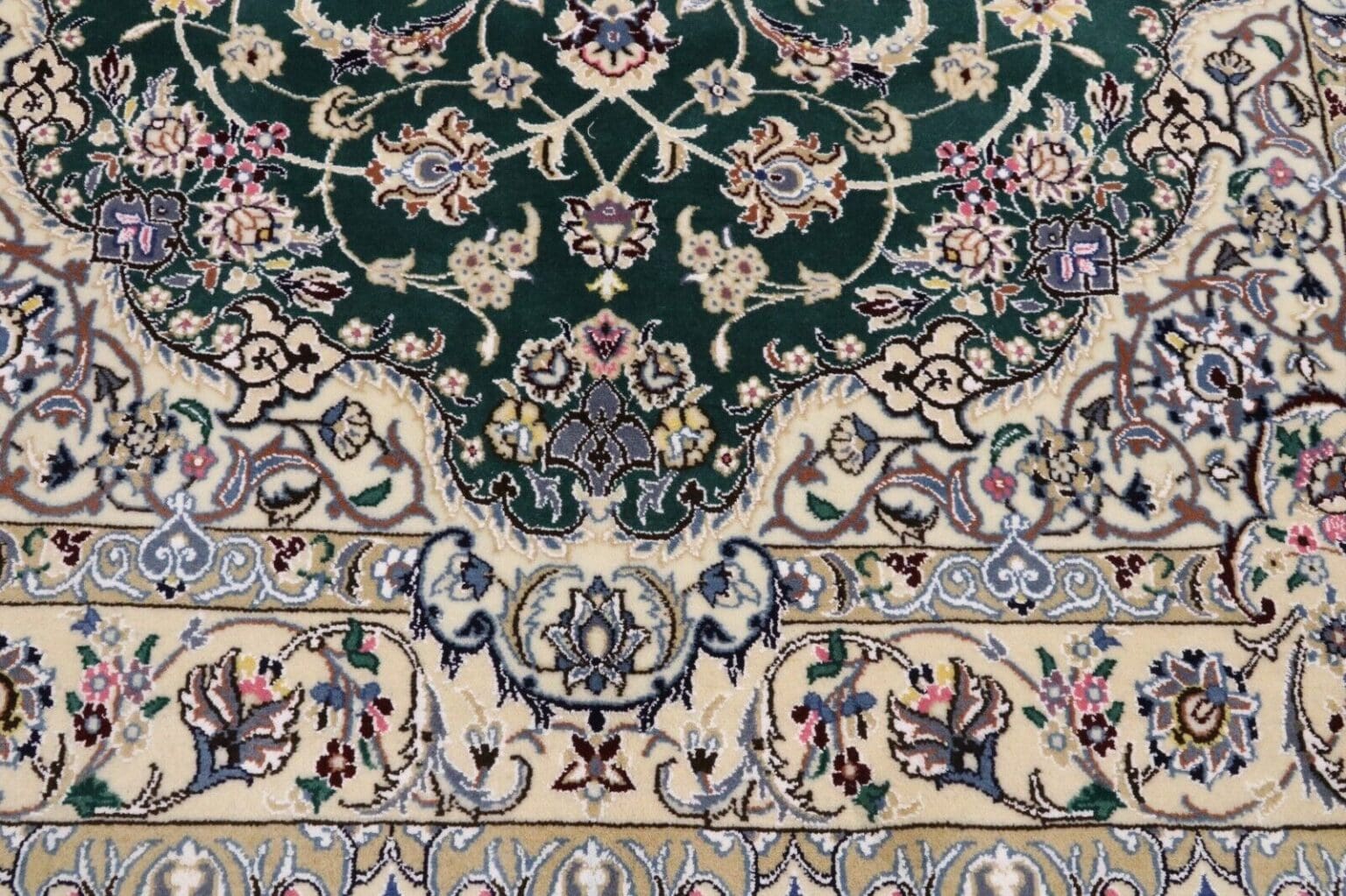
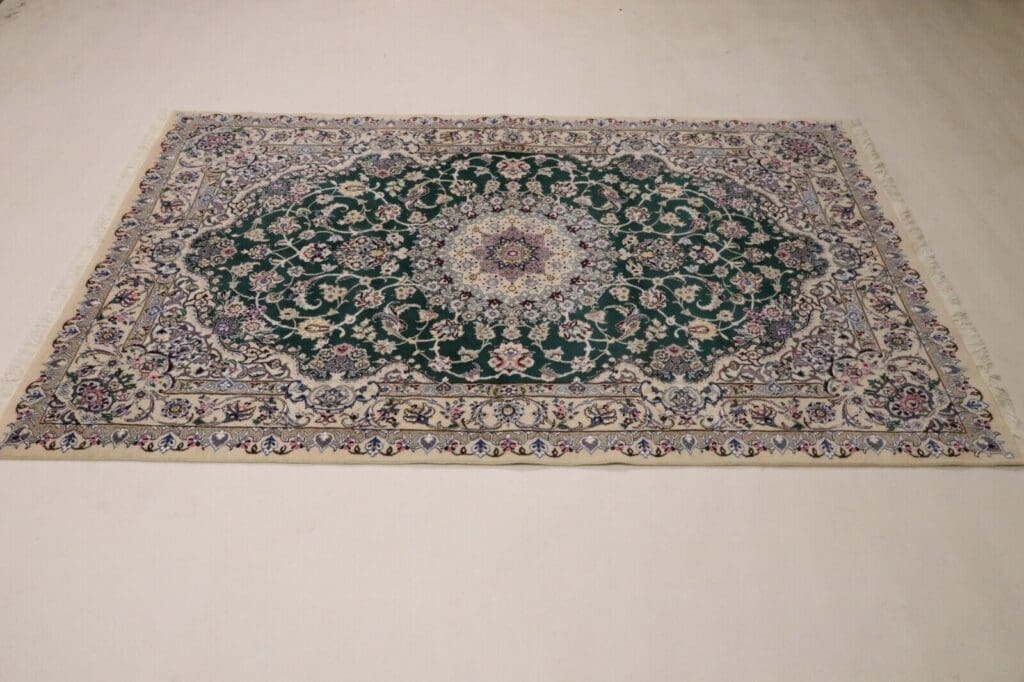
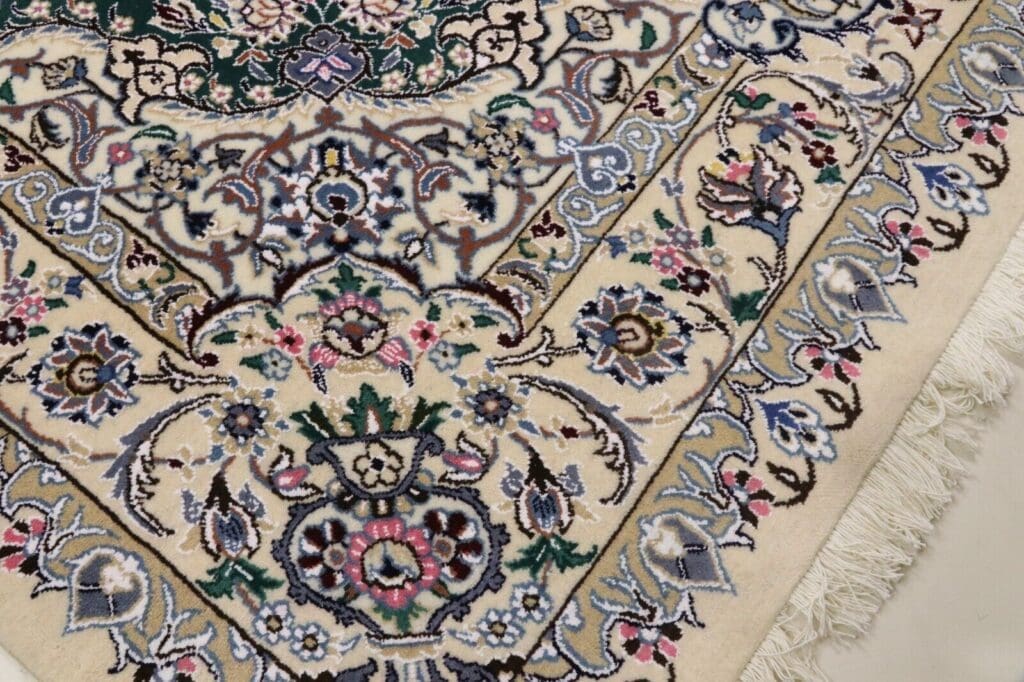
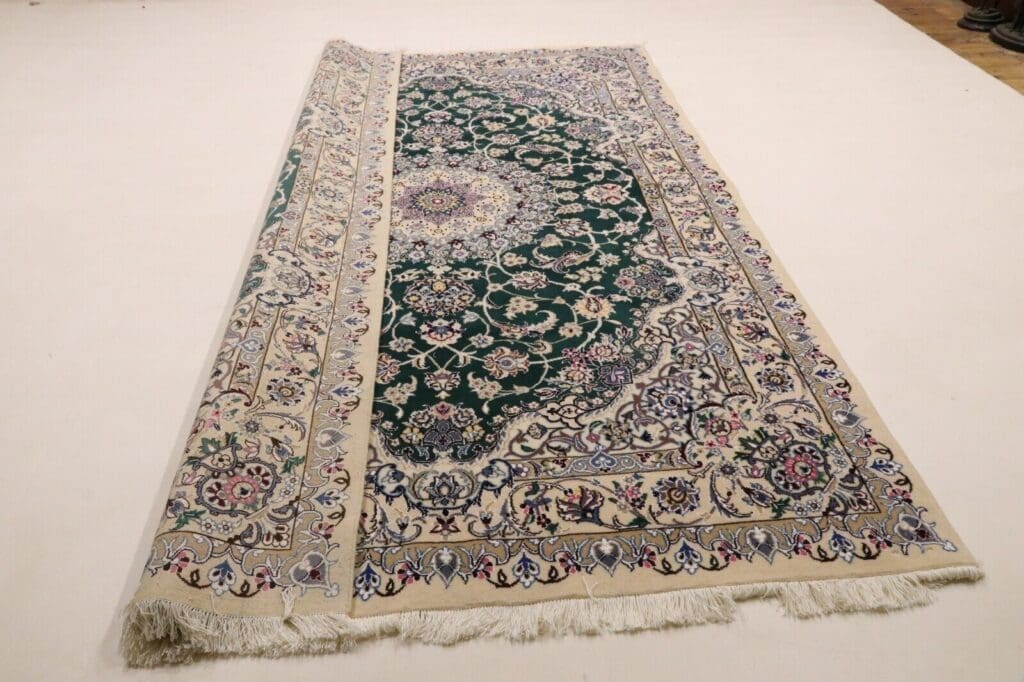
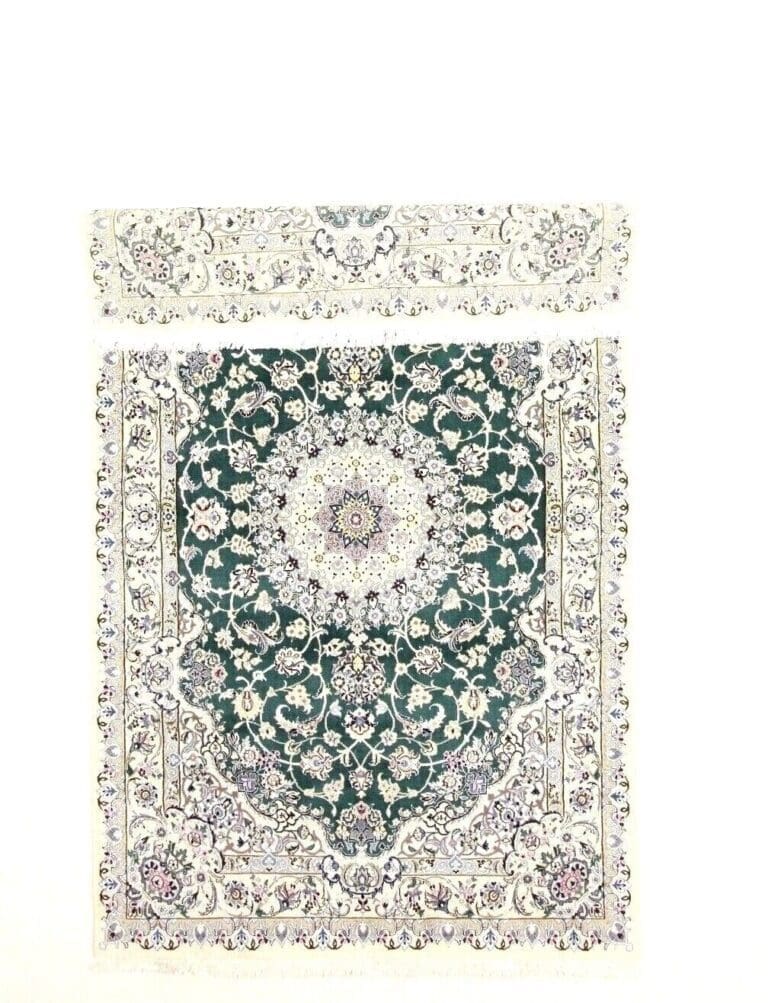
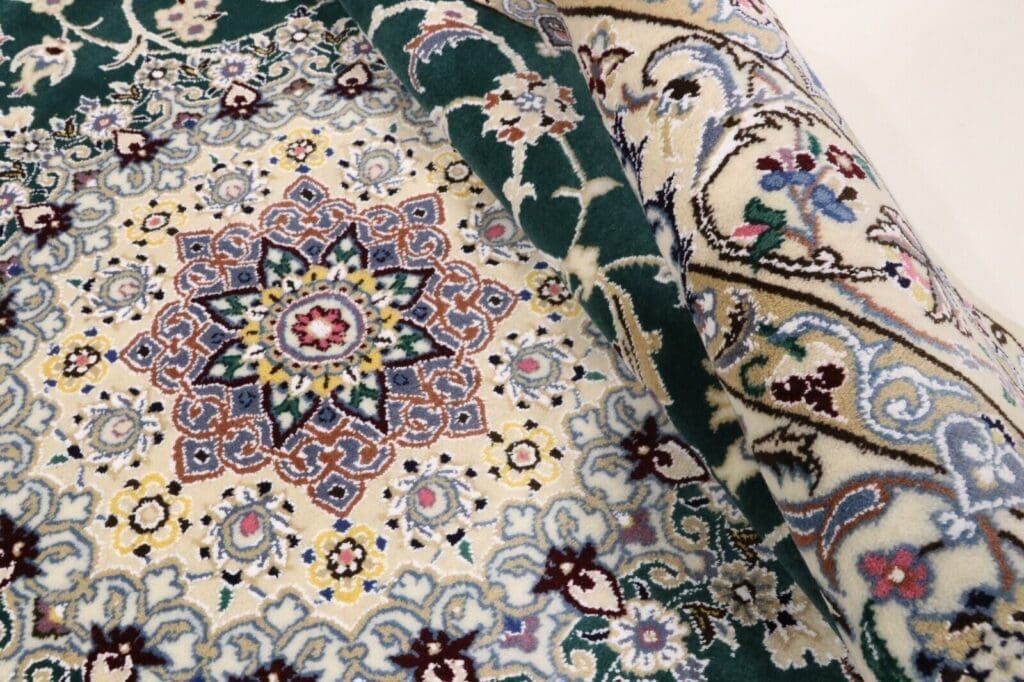
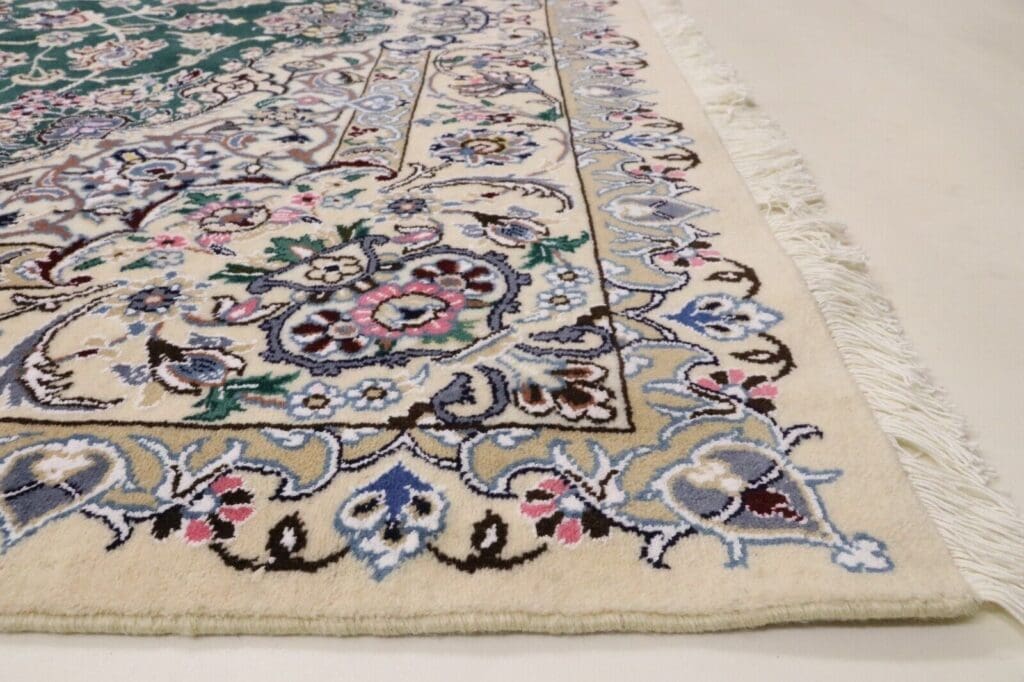
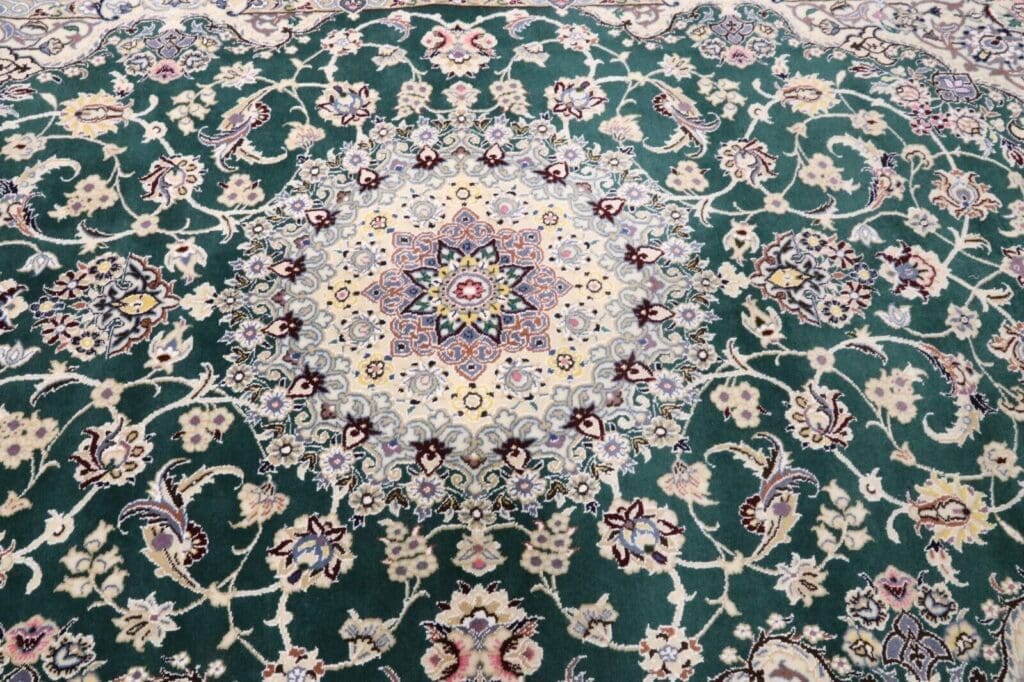
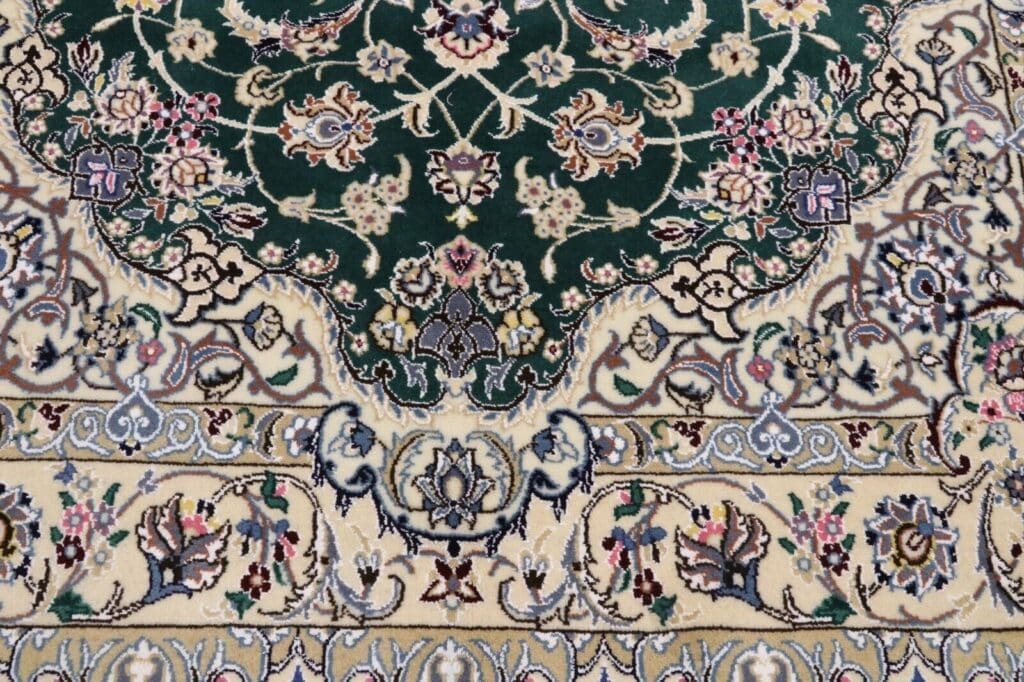
The pattern of this rug is described as Oriental. The source specifically highlights floral motifs and geometric forms. Both belong to the extensive vocabulary of Persian carpet design. Floral ornament may include blossoms, leaves, vines and branching stems. Geometric forms can establish axes, repeated units, borders and clear divisions between parts of the composition.
Floral arrangements often depend on rhythm and recurrence. A vine may guide the eye across the field, while leaves and blossoms provide repeated points of emphasis. Geometry gives these organic movements a measured framework and creates transitions between groups of ornaments. When the two approaches are brought together, the design can appear animated while retaining a clear internal order. The forms are read as parts of a planned composition rather than as isolated decoration.
Persian pattern traditions also have cultural associations beyond their decorative role. Flowers, leaves and vines are commonly linked with nature, growth, prosperity and fertility. These meanings belong to the broader symbolic language of Persian rugs and help explain the lasting presence of gardens, flowers and stylised vegetation in regional designs. On this rug, the floral references are combined with geometric forms within the stated Oriental pattern.
The colour description extends from soft earth tones to vivid floral colours. Earth tones can establish a calm visual ground, while brighter flower colours give selected ornaments greater definition. The overall impression depends on balance, repetition and placement rather than on isolated colours alone. A carefully distributed palette helps the drawing remain legible and allows different groups of motifs to relate to one another across the surface.
Wool and silk respond differently to illumination. Wool generally presents a softer, more even surface, while silk can reflect light more directly. This difference is a general feature of a wool-and-silk pile and may give certain details a finer visual accent. The perception of the pattern consequently depends on the relationship between line, colour, fibre and viewing angle. The materials become part of the way the design is read.
A high knot density supports the depiction of small pattern components and close line work. It allows neighbouring details to be distinguished and helps maintain controlled transitions between floral and geometric areas. Fine construction does not require a pattern to become crowded. Repetition, symmetry and separation between ornament groups preserve the structure of the field. The Nain association is expressed through this relationship between detailed execution, floral drawing and geometric discipline.
Oriental rug patterns belong to a long visual tradition in which designs are transmitted, adapted and reinterpreted. They preserve approaches to proportion, repetition and symbolic form while allowing individual workshops to make different choices. The Nain rug described here uses floral motifs, geometric shapes, earth tones and floral colours within that tradition. Its design can therefore be understood through both its Iranian regional context and its structured ornamental language.
Special Features
The rug is listed as suitable for underfloor heating and as pet-friendly. It can therefore be used in a room with a heated floor. Wool gives the pile a warm tactile quality, while the hand-knotted construction creates a structured textile surface. Pet-friendly describes a stated practical suitability, not freedom from maintenance or from the need to consider the conditions of the particular room.
Virgin wool has natural properties that can assist with everyday care because it can resist some surface dirt. Regular vacuuming is recommended for routine cleaning. If more intensive care is required, professional cleaning is appropriate. Direct sunlight should be avoided where possible to reduce the risk of colour fading. The condition of this rug is described as new and very good.
FAQ
How should I care for this Persian rug?
Vacuum the rug regularly and gently to remove loose dust from the pile. If heavier soiling occurs, professional rug cleaning is recommended instead of an unsuitable household treatment. Prolonged direct sunlight should be avoided because it can cause colour changes. Virgin wool naturally repels some dirt, but careful handling and maintenance suited to the way the rug is used remain important.
Can the rug be used over underfloor heating?
Yes. The rug is specified as suitable for use on a floor with underfloor heating. Wool gives the surface a warm handle, while the hand-knotted construction provides a durable textile structure. The heating system should be operated in accordance with its own instructions. Regular care and appropriate placement support continued use of the rug in this setting.
How can I identify an authentic Persian rug?
An authentic Persian rug is often hand-knotted, has a fine knot density and may show small irregularities in the design. Such variations can be consistent with individual handwork rather than a completely uniform machine-made repeat. A certificate or proof of origin may provide additional evidence of authenticity. For this rug, the origin is given as Persia or Iran, the regional attribution is Nain, and the construction is hand-knotted.
To provide the best experiences, we use technologies like cookies to store and/or access device information. Consenting to these technologies will allow us to process data such as browsing behavior or unique IDs on this site. Not consenting or withdrawing consent, may adversely affect certain features and functions.
Functional Always active
The technical storage or access is strictly necessary for the legitimate purpose of enabling the use of a specific service explicitly requested by the subscriber or user, or for the sole purpose of carrying out the transmission of a communication over an electronic communications network.
Preferences
The technical storage or access is necessary for the legitimate purpose of storing preferences that are not requested by the subscriber or user.
Statistics
The technical storage or access that is used exclusively for statistical purposes.The technical storage or access that is used exclusively for anonymous statistical purposes. Without a subpoena, voluntary compliance on the part of your Internet Service Provider, or additional records from a third party, information stored or retrieved for this purpose alone cannot usually be used to identify you.
Marketing
The technical storage or access is required to create user profiles to send advertising, or to track the user on a website or across several websites for similar marketing purposes.
 SECURE PAYMENT
 SHIPPING PARTNERS


