This Super Nain is hand-knotted from a blend of 80% cork wool and 20% natural silk. Cork wool provides the principal wool content of the pile, giving the surface a resilient textile structure and a comfortable feel underfoot. Natural silk adds a fine, smooth fibre with a distinct way of reflecting light. Both materials are specified as pile materials; the description does not provide a warp material.
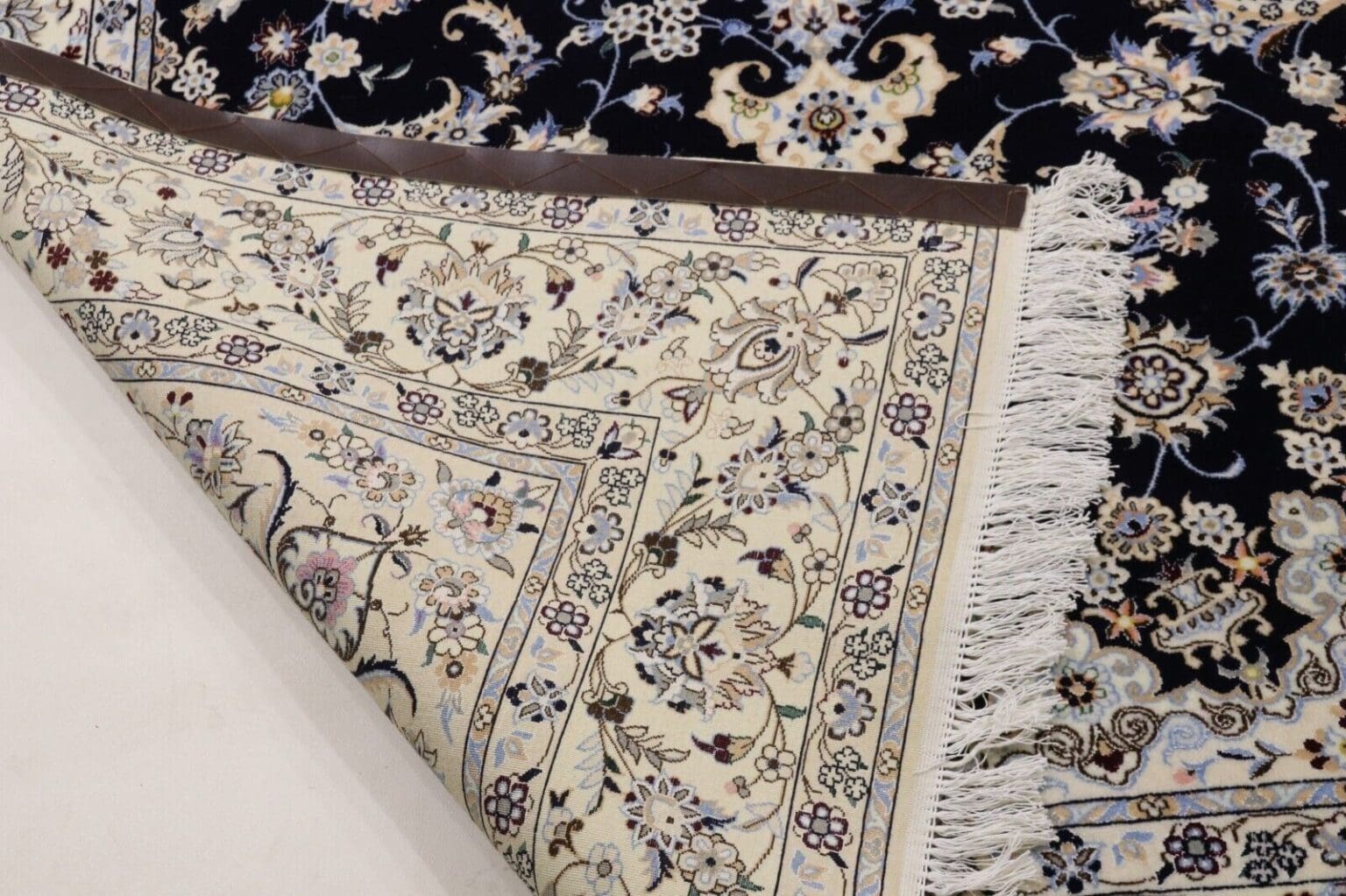
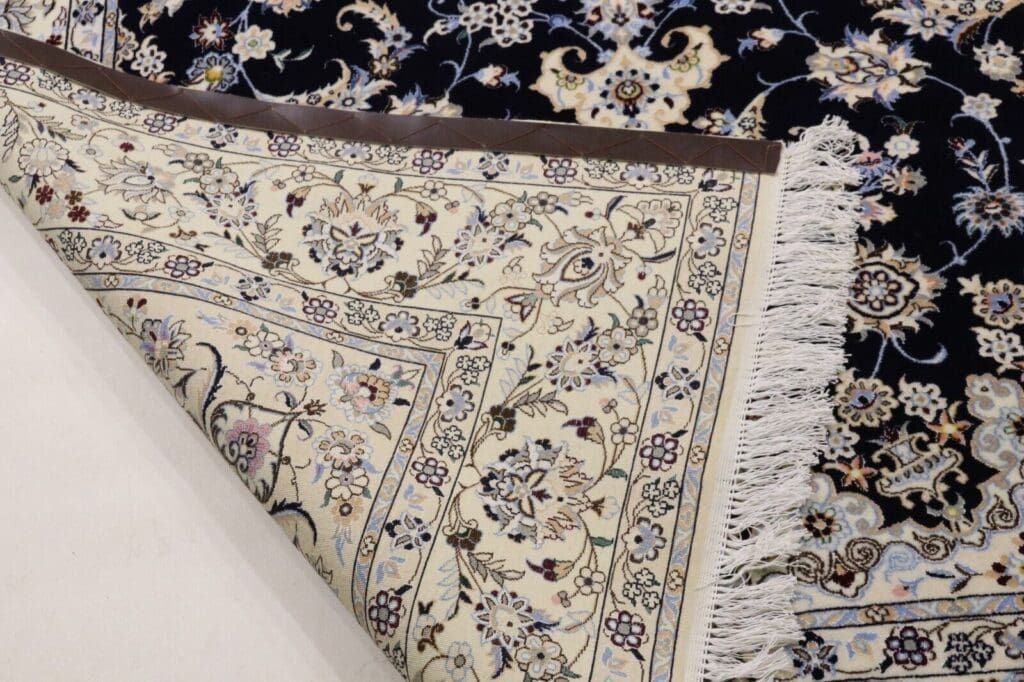
Hand knotting is a construction method in which individual knots are tied into the foundation one by one. Unlike machine production, the visible surface is built gradually at the loom. The stated density of 850.000 to 1.000.000 knots per square metre indicates a very closely worked structure. Such density allows contours, small ornaments and transitions within a design to be rendered with considerable definition.
During the process, pile yarn is secured row after row and then brought to an even surface. The combination of dense knotting, cork wool and natural silk accounts for the rug’s compact appearance and fine handle. Hand knotting requires time, practical experience and consistent work at the loom. Each knot contributes to both the surface and the image formed by the pattern.
The rug is described as new and perfect. Its stated material composition combines a pleasant tactile quality with a durable pile structure. The two fibres also interact differently with light: wool generally presents a softer, more subdued surface, while silk can create finer points of lustre. As a result, the appearance of the pile may change subtly as the viewing angle and light in the room change.
Origin and Tradition
This rug is identified as a Persian rug from Nain in Iran. Nain is a city in central Iran and one of the recognised centres of Persian carpet weaving. Its tradition is associated with precise drawing, fine execution and the use of high-quality wool with silk elements. Nain carpets are often discussed in connection with clearly organised ornaments and an elegant, light visual character.
The Nain weaving tradition belongs to a long history of Iranian textile craftsmanship. Carpets in this tradition are not merely utilitarian floor coverings; they also carry inherited ideas about line, colour, proportion and ornament. Knowledge of preparing the foundation, tying the knots, shearing the pile and finishing the edges is maintained within workshops and weaving communities. The work combines technical repetition with the ability to transfer a carefully planned design into a woven surface.
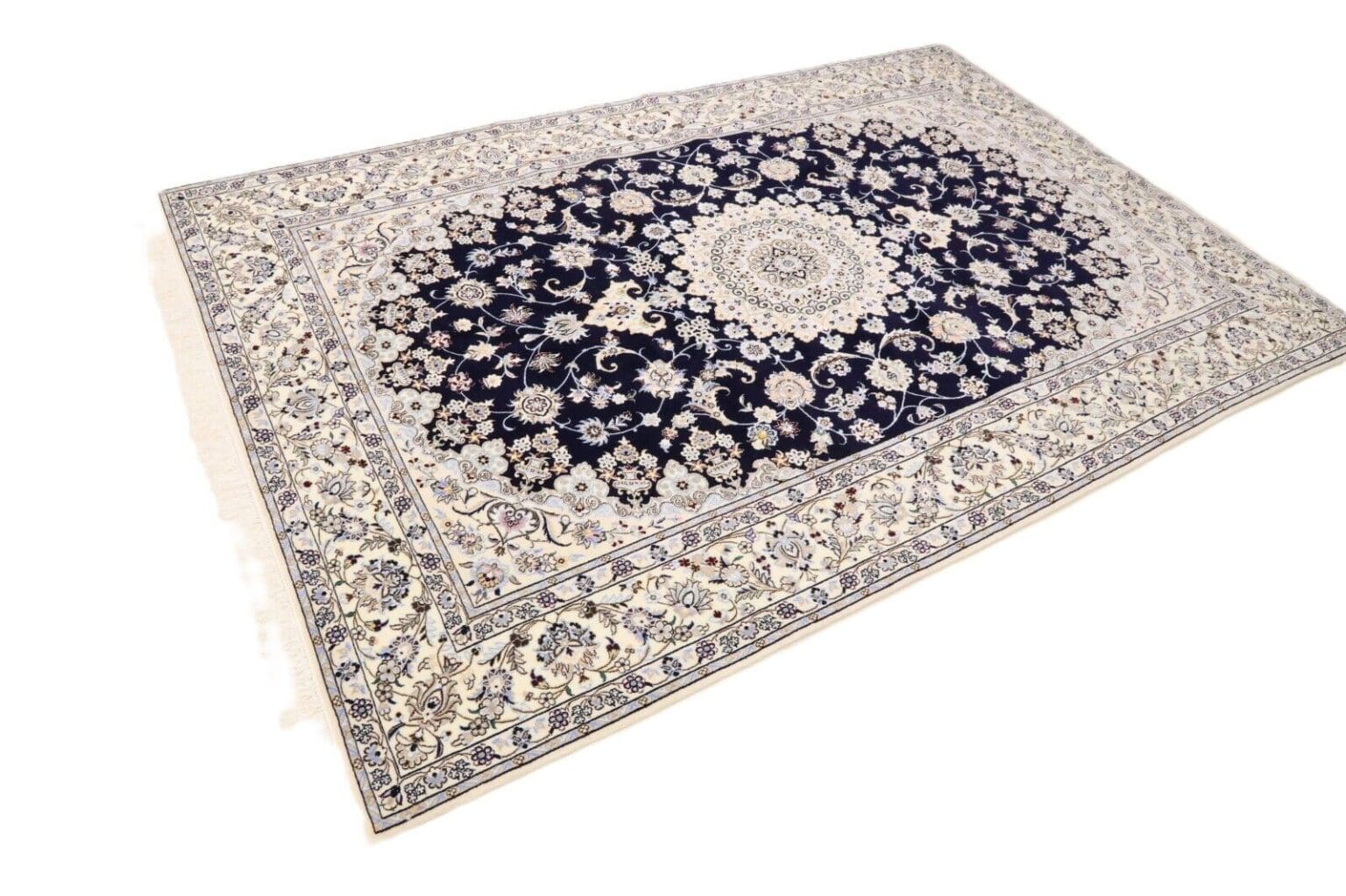
Nain designs frequently use a light and orderly palette. Floral forms often form the principal vocabulary, accompanied by scrolling vines, balanced lines and geometric framing. Medallions, floral fields and carefully arranged borders can be joined into a coherent composition. These are characteristics of the Nain tradition and do not claim that every traditional feature appears in identical form on this individual rug.
Persian carpet art developed a broad visual language over many centuries. Flowers, leaves, vines and stylised branches may suggest growth, continuity and the relationship between nature and built space. Geometric shapes provide rhythm, division and an architectural sense of order. In Nain work, such elements are often placed with particular clarity, allowing fine areas of ornament to remain legible as part of a balanced whole.
The Nain designation therefore refers both to a place and to a regional approach to design and manufacture. A Persian rug from this setting is shaped by the relationship between its drawing, materials and knotting technique. Nain lies in a part of Iran where textile skills have long had an important role. Its carpet tradition is associated with controlled proportions, detailed ornament and a refined interpretation of classical Persian forms.
A hand-knotted Iranian rug is not made in a single operation. Before knotting begins, the design, colour sequence and structure of the pattern must be established. The weaver then transfers the drawing into the pile, maintaining the intended spacing and alignment as the work progresses. After knotting, further stages such as shearing, washing and finishing prepare the surface. Knot density and fibre quality influence how accurately small design elements can be represented.
Design and Pattern
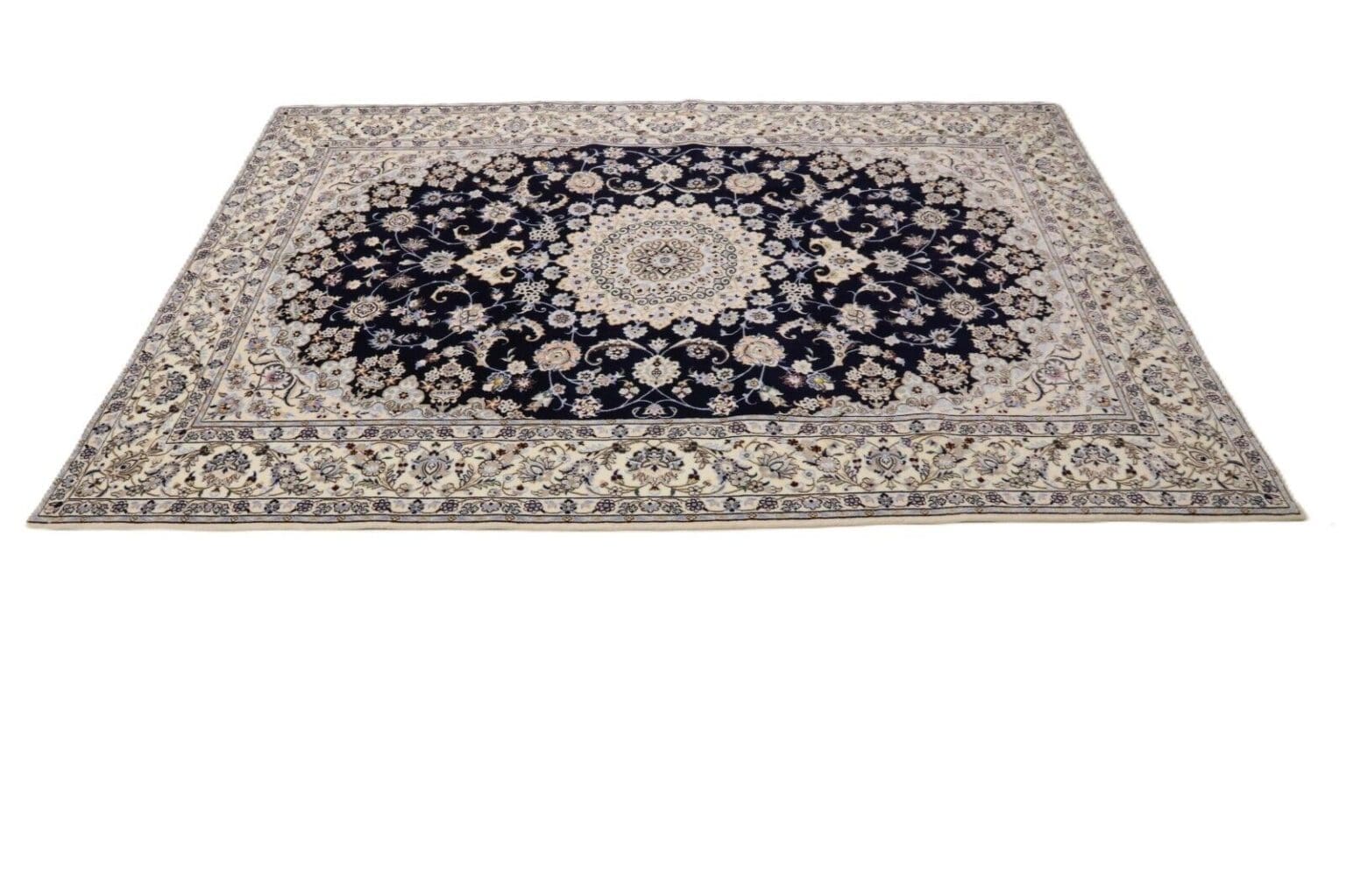
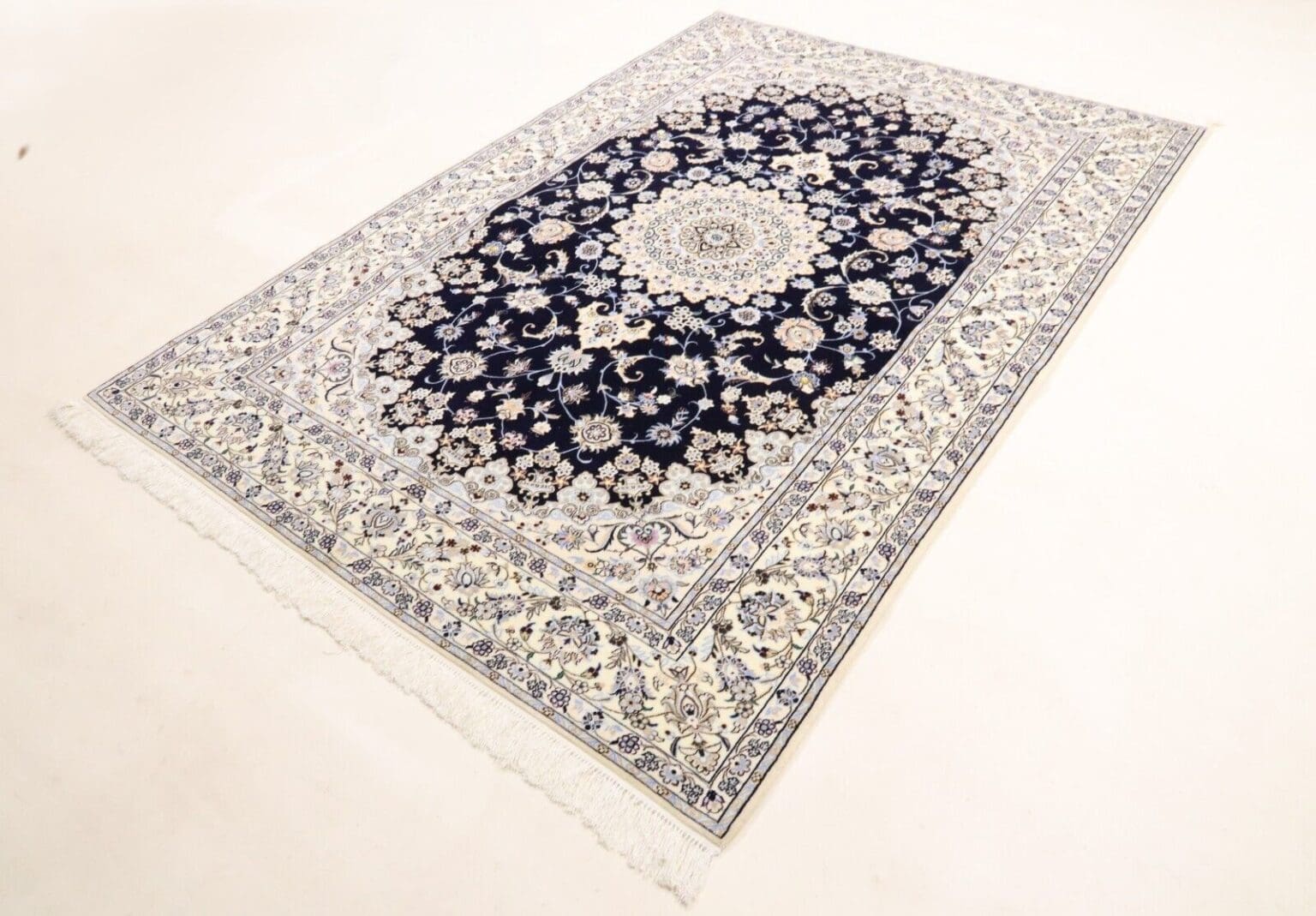
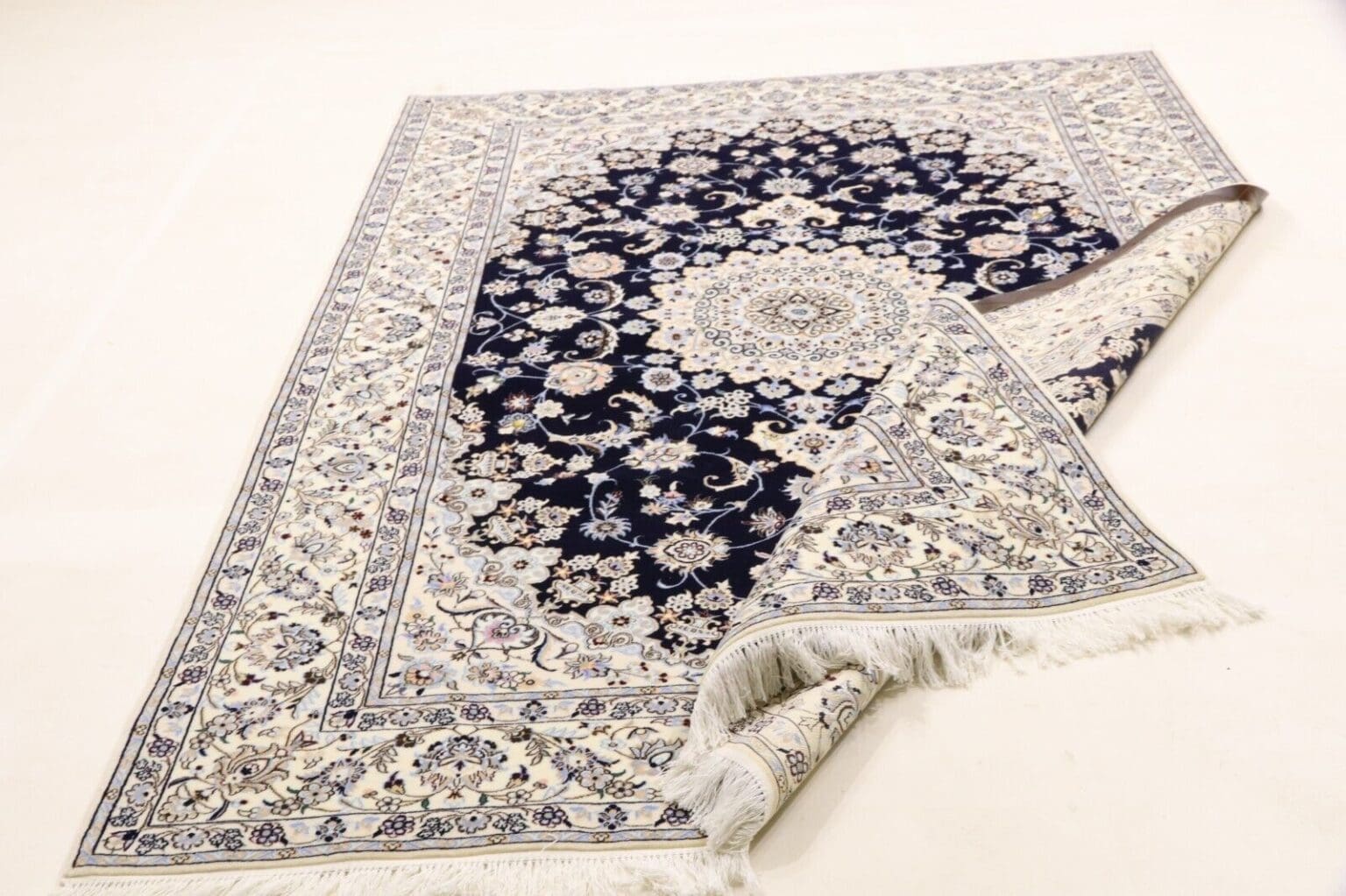
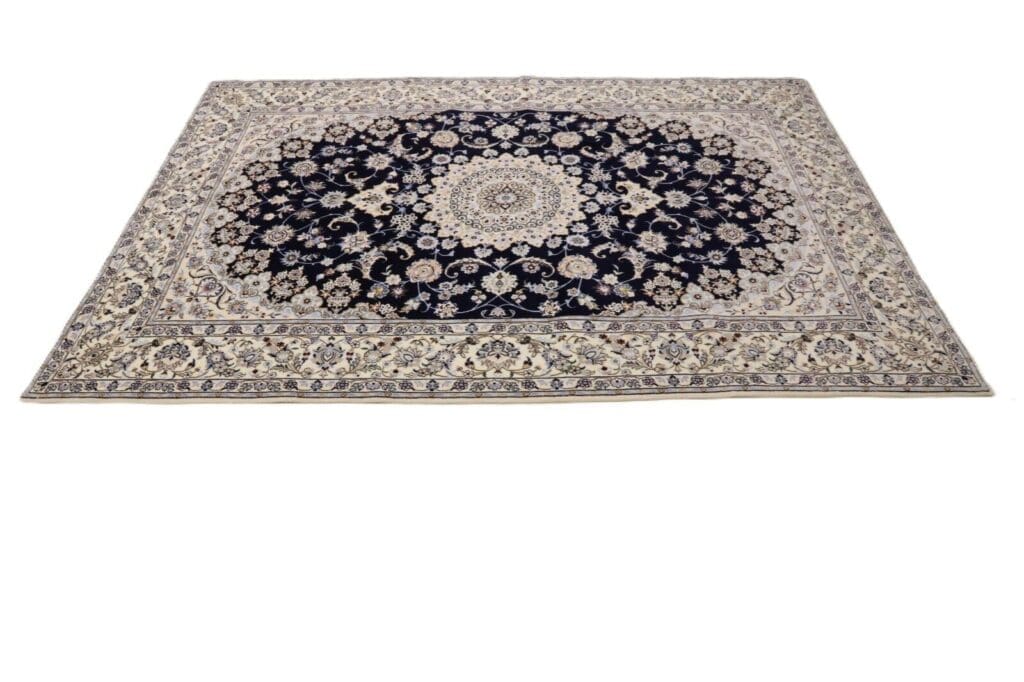
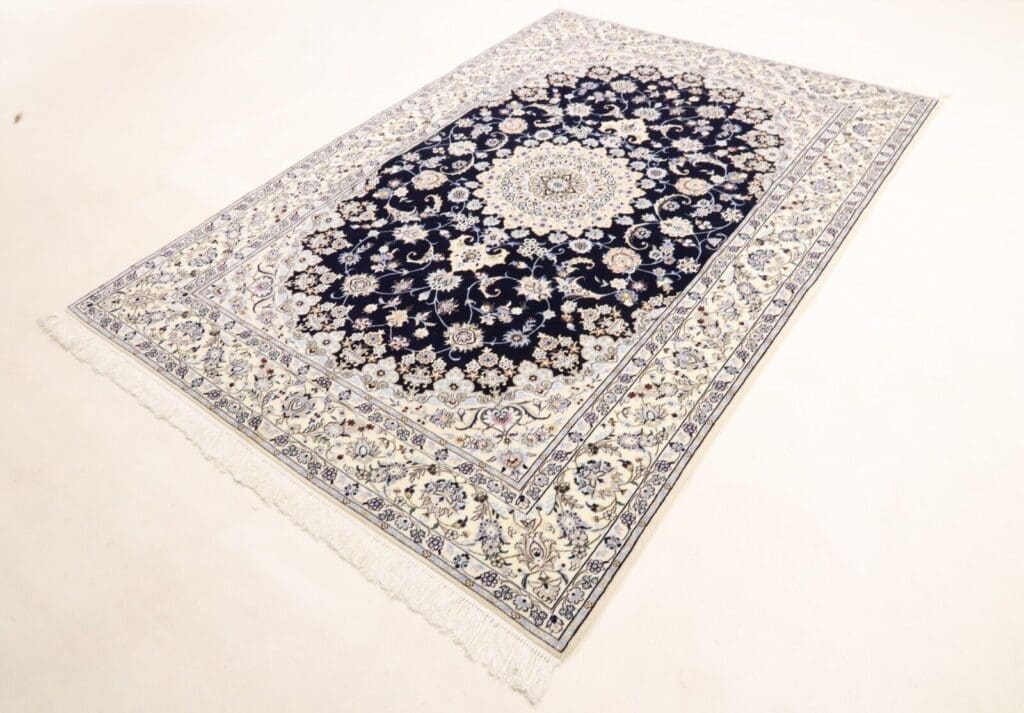
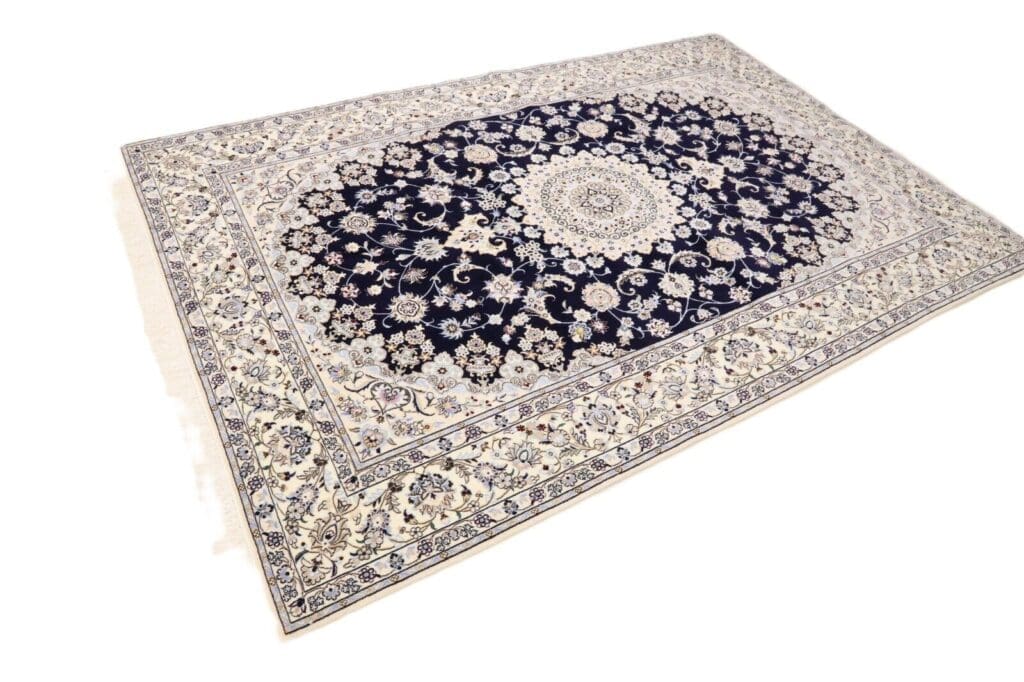
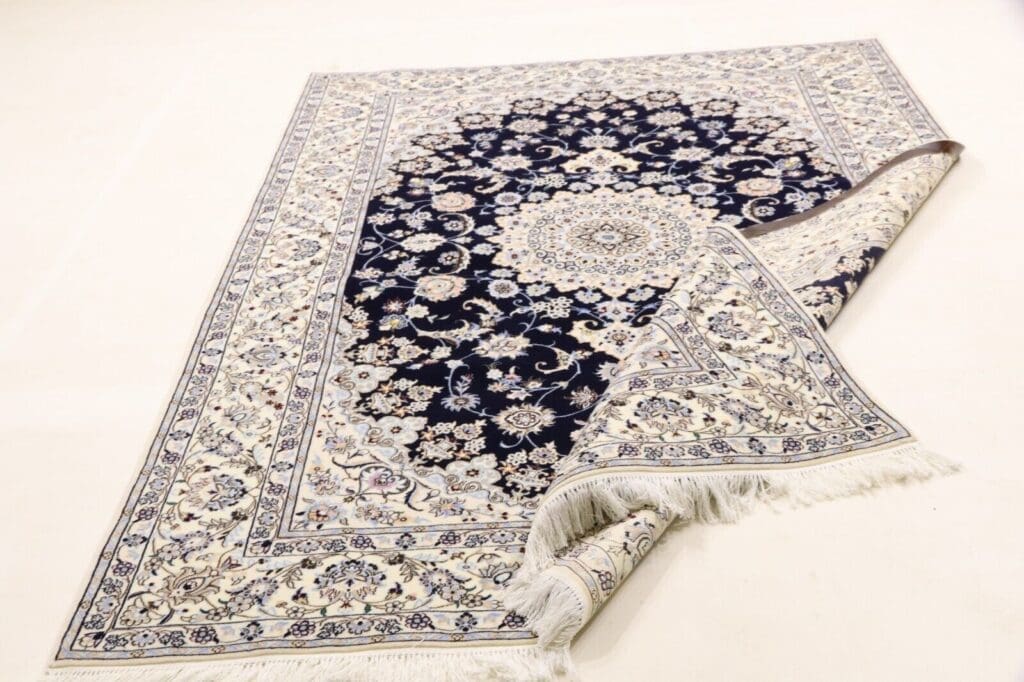
The Super Nain is assigned to a traditional oriental Persian style. Nain compositions often use a calm, controlled arrangement in which a central medallion or an all-over floral field is framed by carefully planned borders. Floral and geometric elements work together: blossoms and vines introduce organic forms, while lines and symmetrical frames provide structure and visual boundaries.
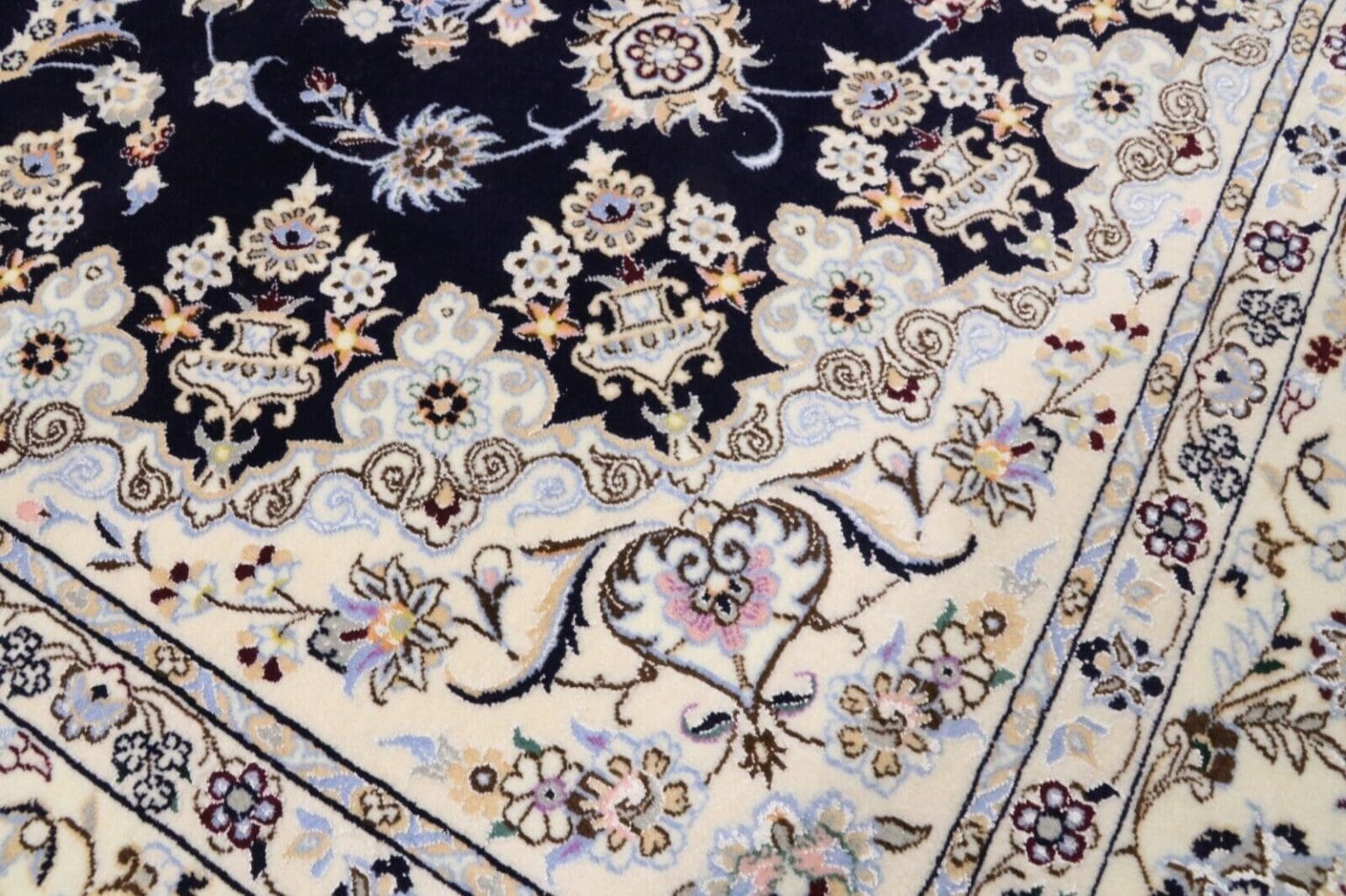
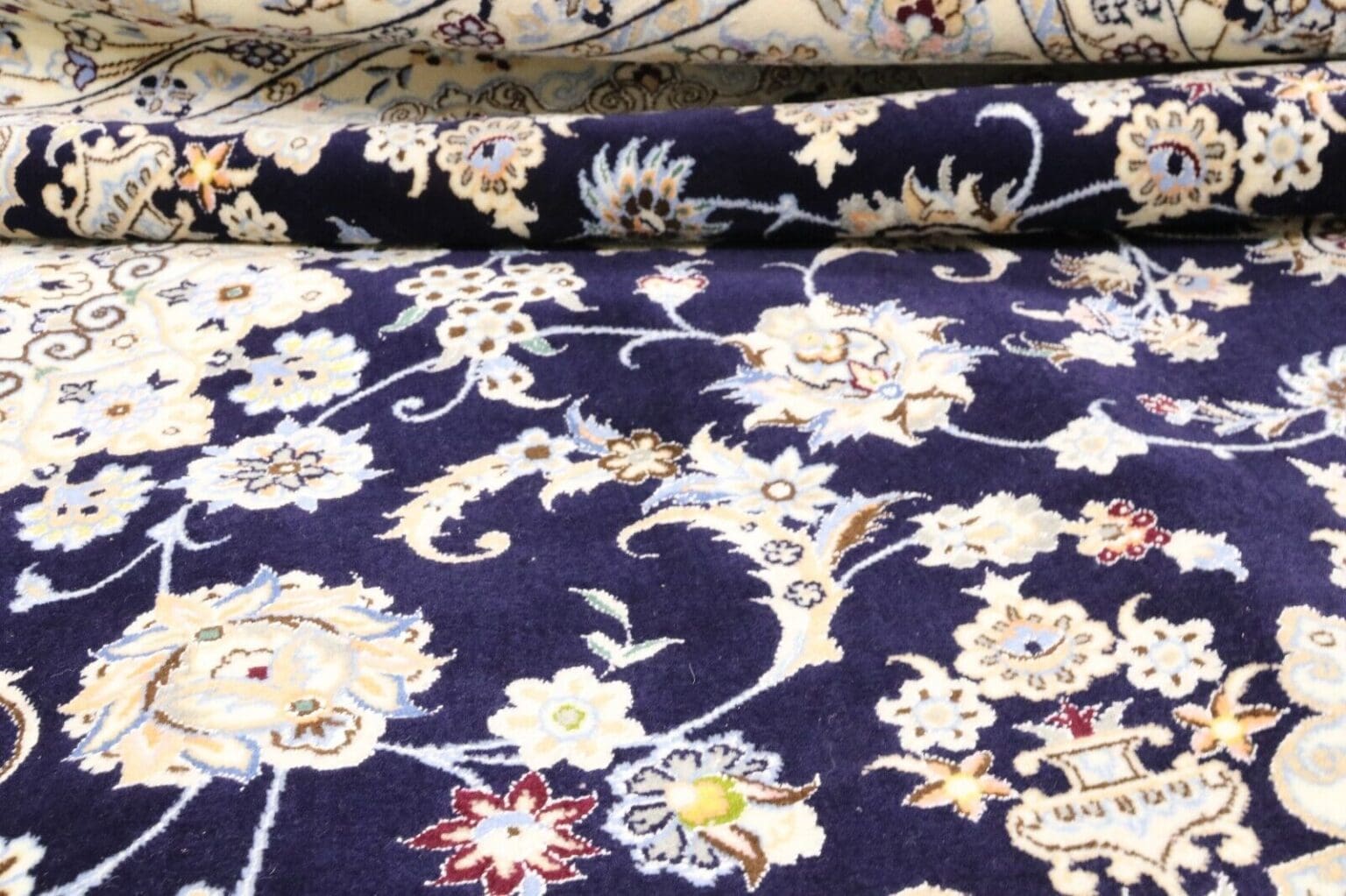
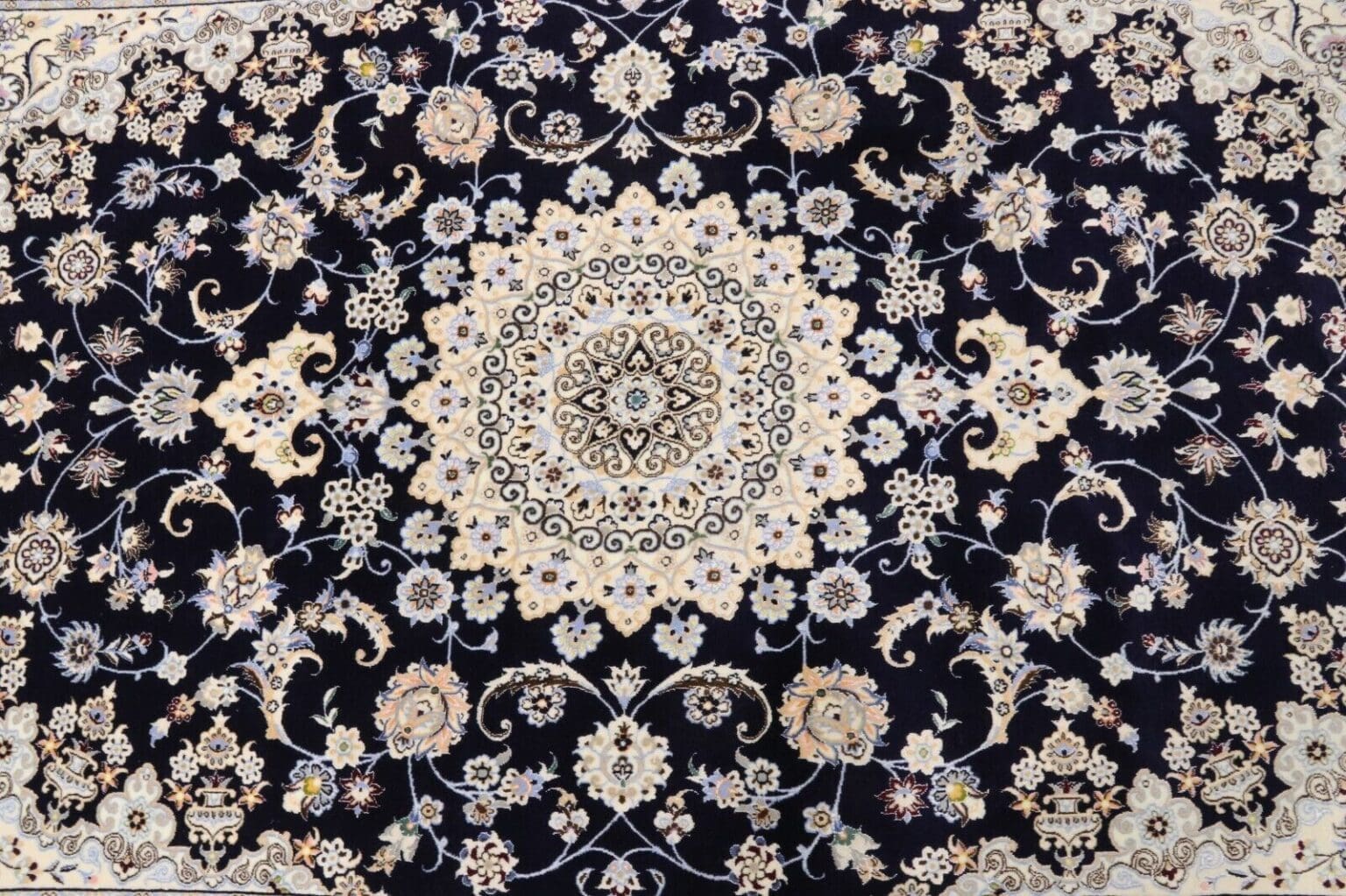
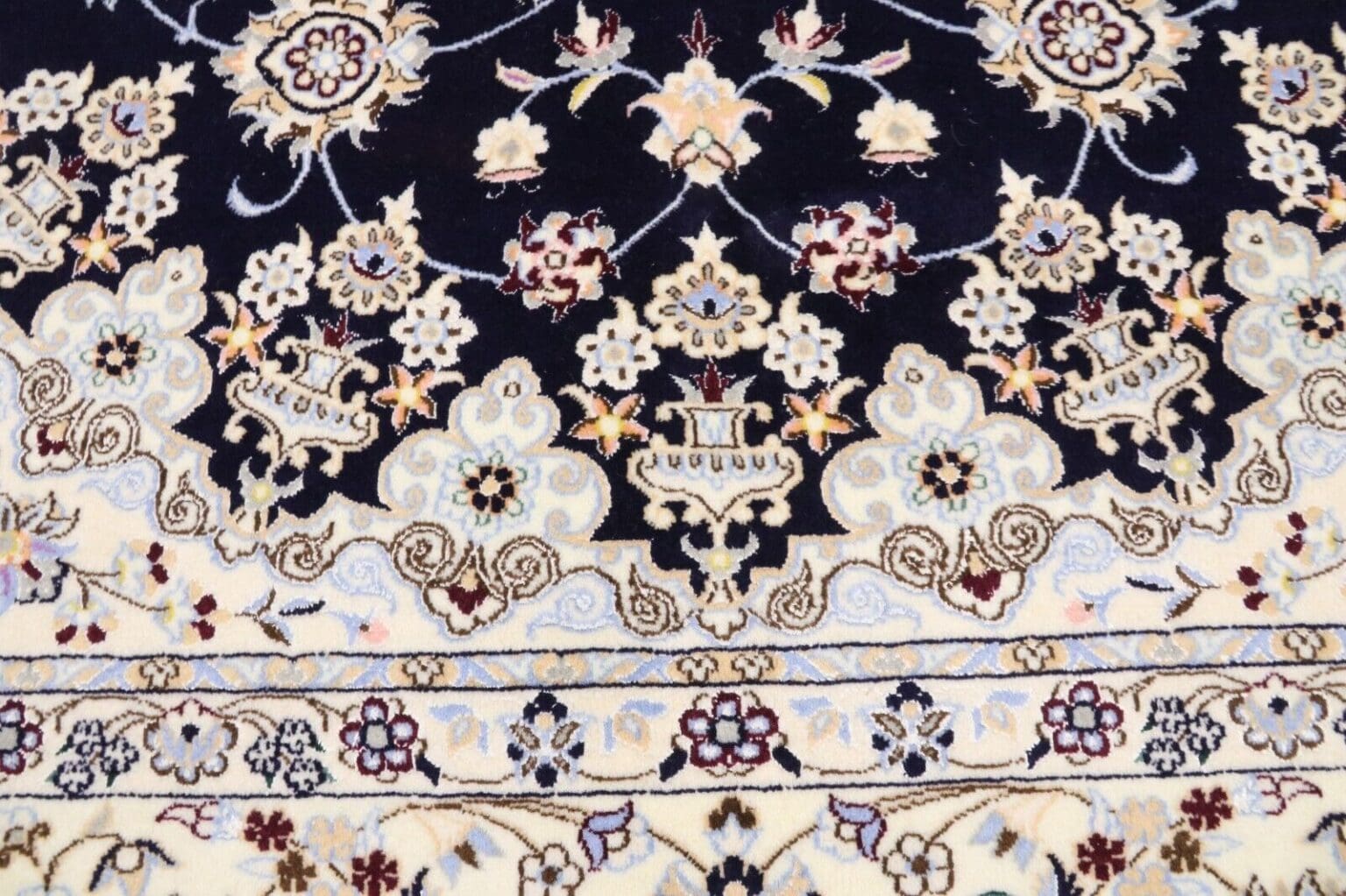
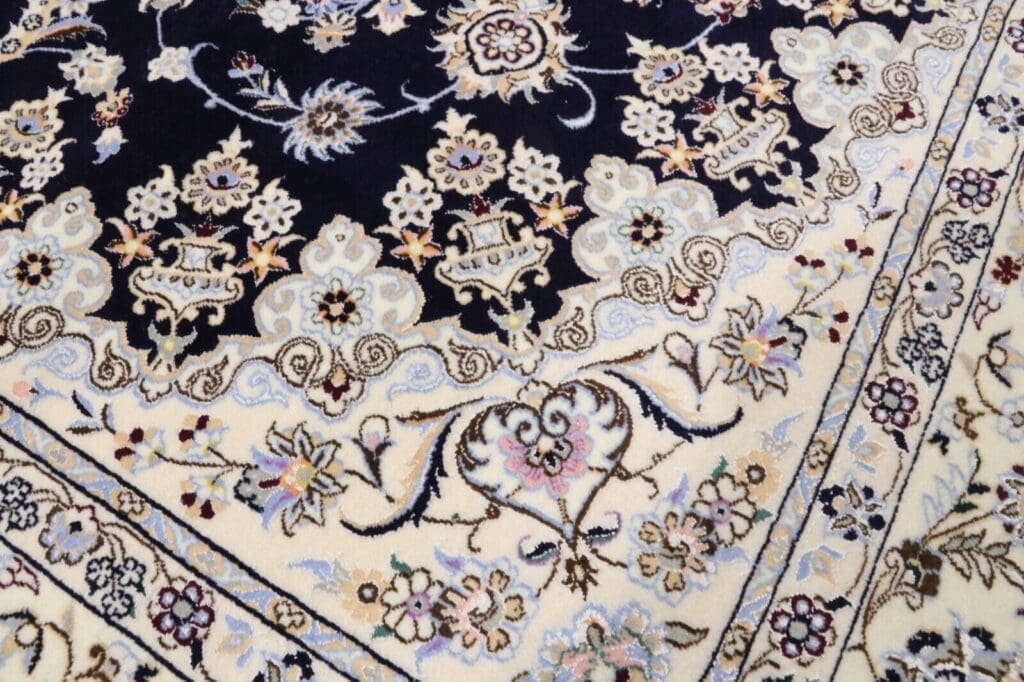
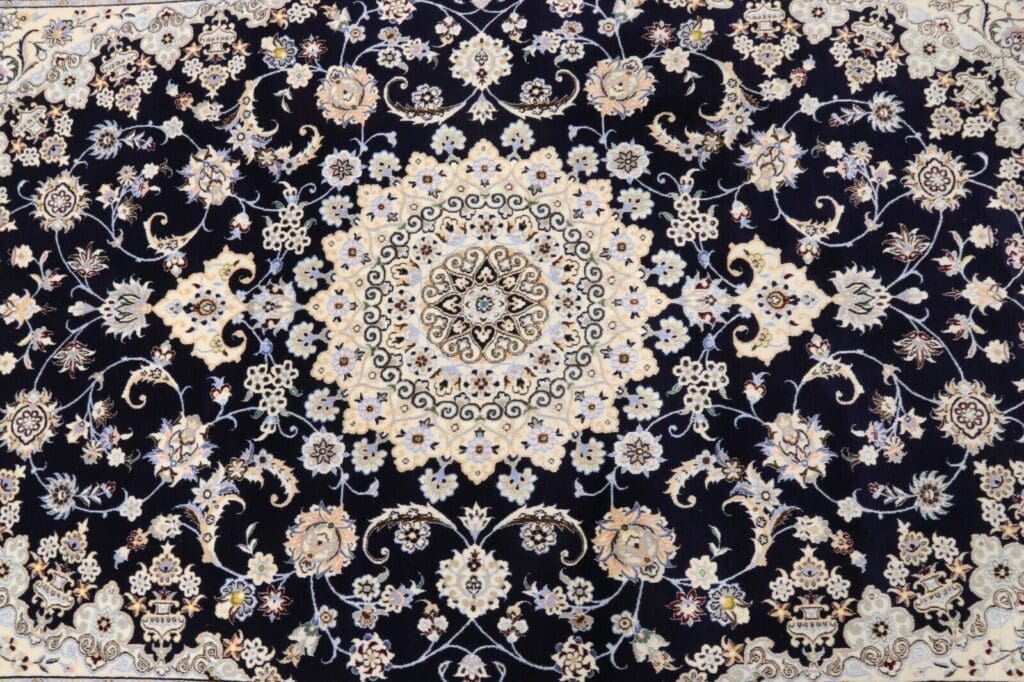
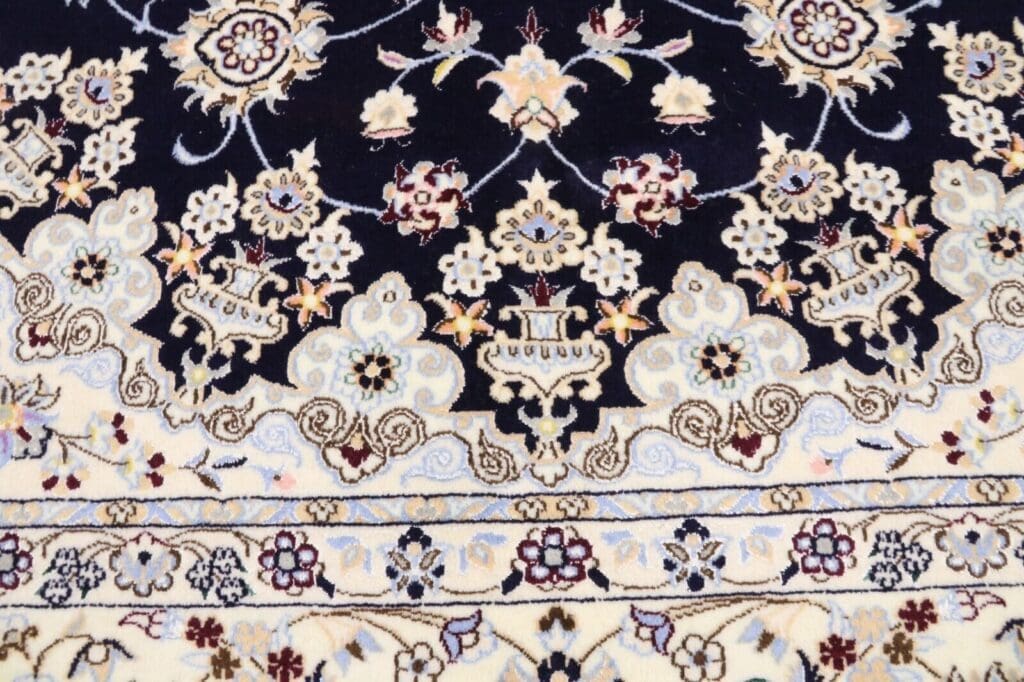
The close knotting supports a highly articulated drawing. Small leaves, narrow outlines and repeated ornaments can be laid out with greater definition in a dense surface than in a coarse construction. This gives the pattern a compact and detailed appearance. The handwork is visible not only in the motif but also in the regular succession of knots from which the motif is formed.
Nain rugs are often associated with a light, elegant colour treatment. A pale ground can provide a clear setting for floral lines and carefully detailed fields. Natural silk receives light differently from wool and may allow selected passages to appear brighter. This creates subtle changes in emphasis as the rug is viewed from different directions, while the underlying arrangement remains consistent.
Floral motifs are among the enduring elements of Persian carpet design. They are usually stylised rather than copied as botanical illustrations, so flowers and leaves become part of a repeating ornamental system. Vines can connect separate areas, blossoms can provide points of focus and leaf forms can direct the movement of the pattern. Geometric frames give the composition a defined edge and help organise the transition from field to border.
The border has both a visual and structural role. It encloses the main field, guides the eye around the design and repeats selected forms in an ordered rhythm. Several minor borders may accompany a wider principal border, depending on the composition. This system is common in Persian carpet design and makes it possible to combine many small motifs without losing the overall clarity of the rug.
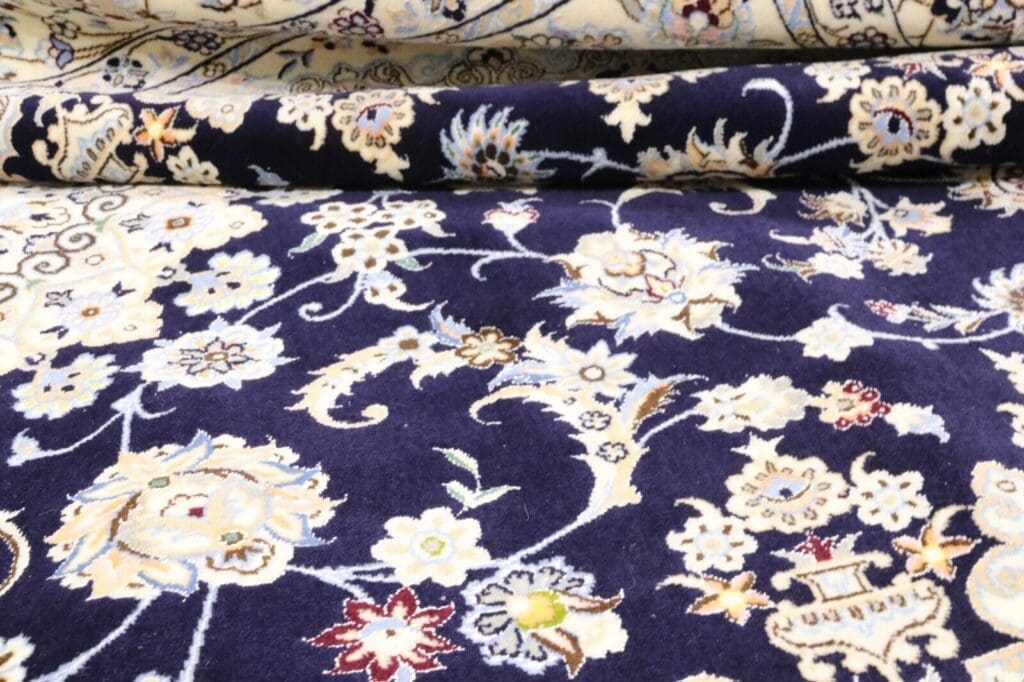
The cork wool and natural silk blend contributes to the pattern’s depth. Wool can give broad areas a softer, more restrained ground, while silk may make particular lines or passages respond more brightly to light. In a hand-knotted rug, the final impression is created by the interaction of colour, fibre, knot density and pile finishing. The design is not printed onto the surface; it is built into the pile through the placement of the knots.
An individual hand-knotted piece can have its own interpretation within an established regional style. The description identifies this rug as a unique piece and states that only one is available. It is therefore not presented as a series-produced item. Its Super Nain designation, traditional oriental Persian style and handmade construction provide the context in which its individual design is read.
Special Features
The rug is described as new and perfect. It is suitable for underfloor heating and is described as environmentally friendly and pet-friendly. The product information also presents it as robust and suitable for areas that receive frequent use. Routine care consists of vacuuming without a beater brush and occasional gentle beating. For a thorough cleaning, professional treatment by a specialist is recommended.
Dense knotting and the combination of cork wool with natural silk are defining properties of this piece. The description states that it retains its colours and shape over years, including with frequent use. Its listed thickness is approximately 5 mm. The rug is a one-off and is available only once.
FAQ
How should this Persian rug be cared for?
Regular vacuuming without a brush attachment is suitable for everyday maintenance. It removes loose dirt while avoiding unnecessary stress on the pile. A gentle beating can be used occasionally to refresh the rug. For a more intensive clean, a professional should handle the work and take the properties of cork wool and natural silk into account.
Where can the rug be used?
This hand-knotted Persian rug can be used in a range of living spaces. The description specifically names living rooms, bedrooms and hallways. Its traditional oriental Persian design can therefore function as an independent part of the interior scheme. It is also intended for use with underfloor heating. Before placement, the floor should be clean, dry and suitable for a rug.
Why do Persian rugs vary in price?
The price of a Persian rug depends on factors including size, knot density, material quality and origin. The amount of labour also matters because each knot is tied individually. In the case of this Super Nain, the stated fine construction, the cork wool and natural silk blend and the Nain origin are relevant characteristics. These factors explain why hand-knotted rugs are assessed differently from industrially manufactured floor coverings.
To provide the best experiences, we use technologies like cookies to store and/or access device information. Consenting to these technologies will allow us to process data such as browsing behavior or unique IDs on this site. Not consenting or withdrawing consent, may adversely affect certain features and functions.
Functional Always active
The technical storage or access is strictly necessary for the legitimate purpose of enabling the use of a specific service explicitly requested by the subscriber or user, or for the sole purpose of carrying out the transmission of a communication over an electronic communications network.
Preferences
The technical storage or access is necessary for the legitimate purpose of storing preferences that are not requested by the subscriber or user.
Statistics
The technical storage or access that is used exclusively for statistical purposes.The technical storage or access that is used exclusively for anonymous statistical purposes. Without a subpoena, voluntary compliance on the part of your Internet Service Provider, or additional records from a third party, information stored or retrieved for this purpose alone cannot usually be used to identify you.
Marketing
The technical storage or access is required to create user profiles to send advertising, or to track the user on a website or across several websites for similar marketing purposes.

 SECURE PAYMENT
 SHIPPING PARTNERS


