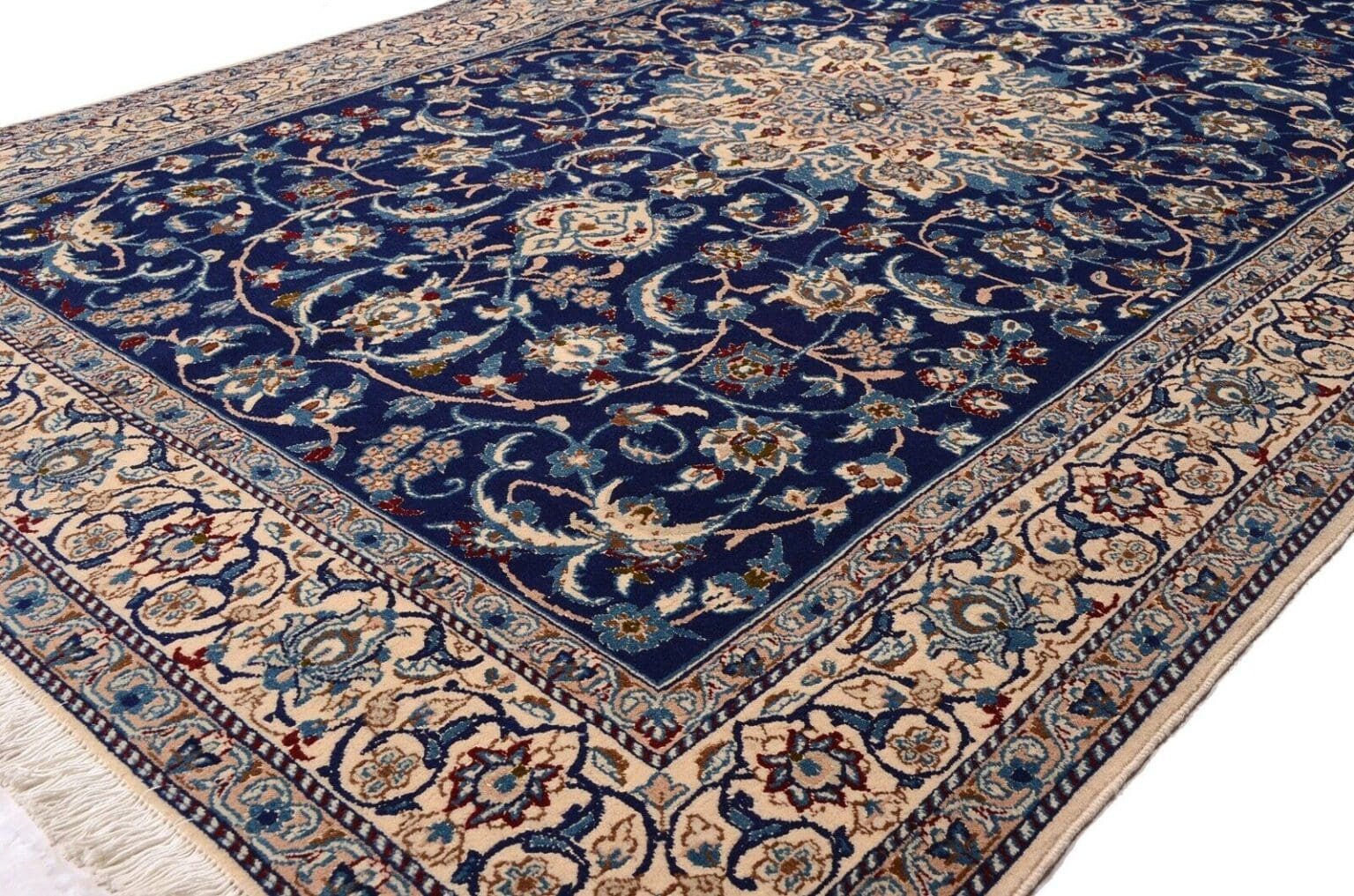
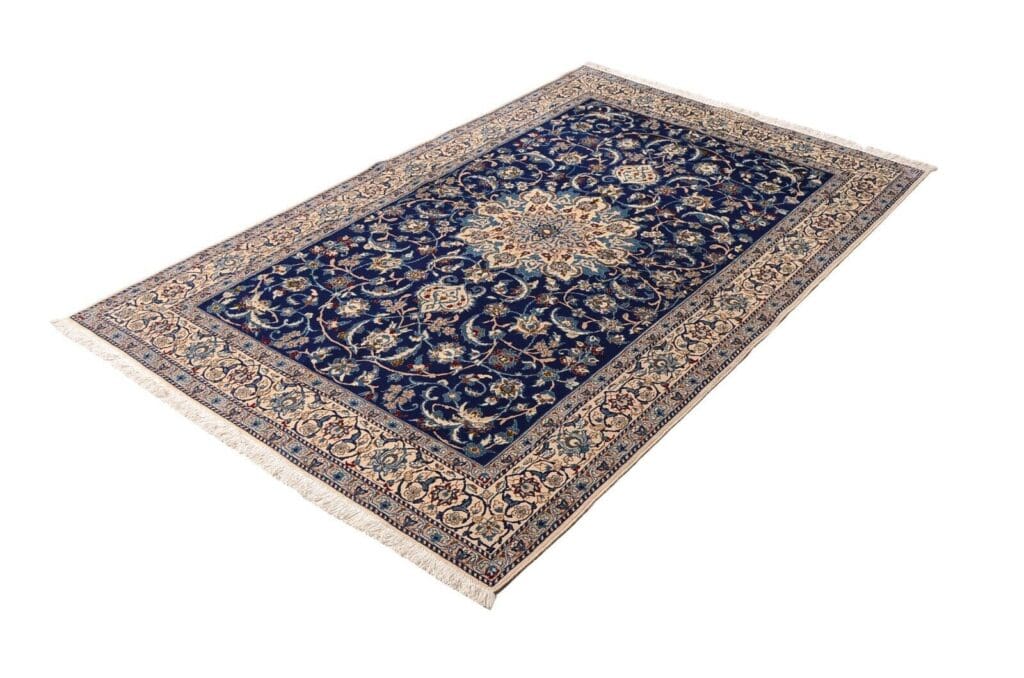
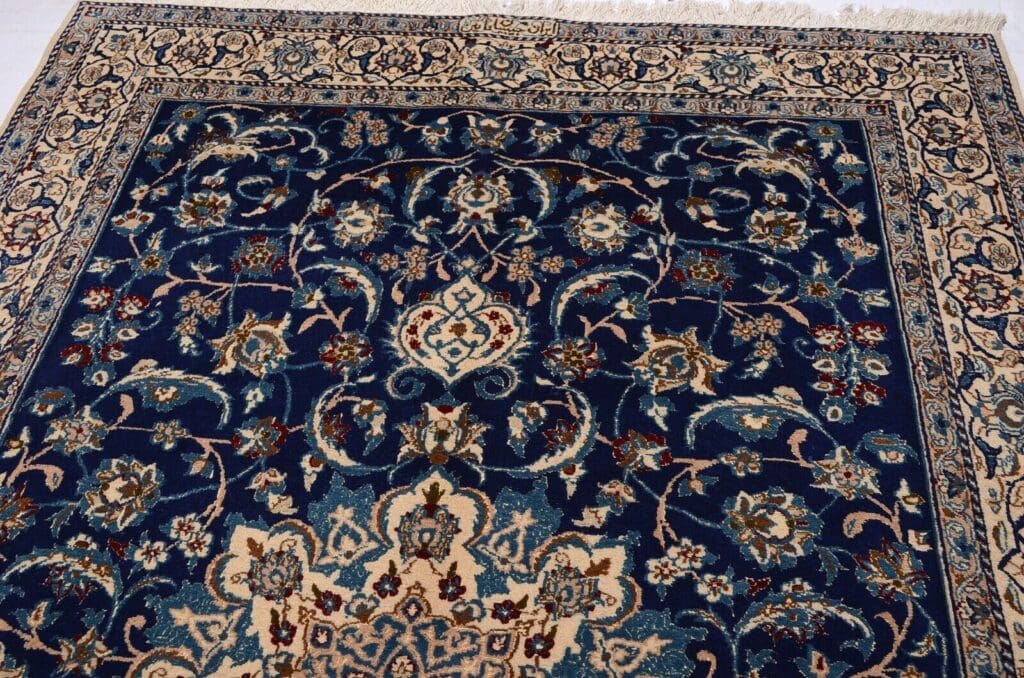
This Nain Persian Rug is hand-knotted from 95% virgin wool and 5% silk. The combination brings together the established qualities of wool with the fine visual character associated with silk. Virgin wool is traditionally used in oriental rugs for its resilient fibres, pleasant handle and capacity to take colour evenly. Silk may add a more delicate definition to selected areas of a design and can create subtle variation in the way the surface reflects light. Both materials have a long place in Persian rug making.
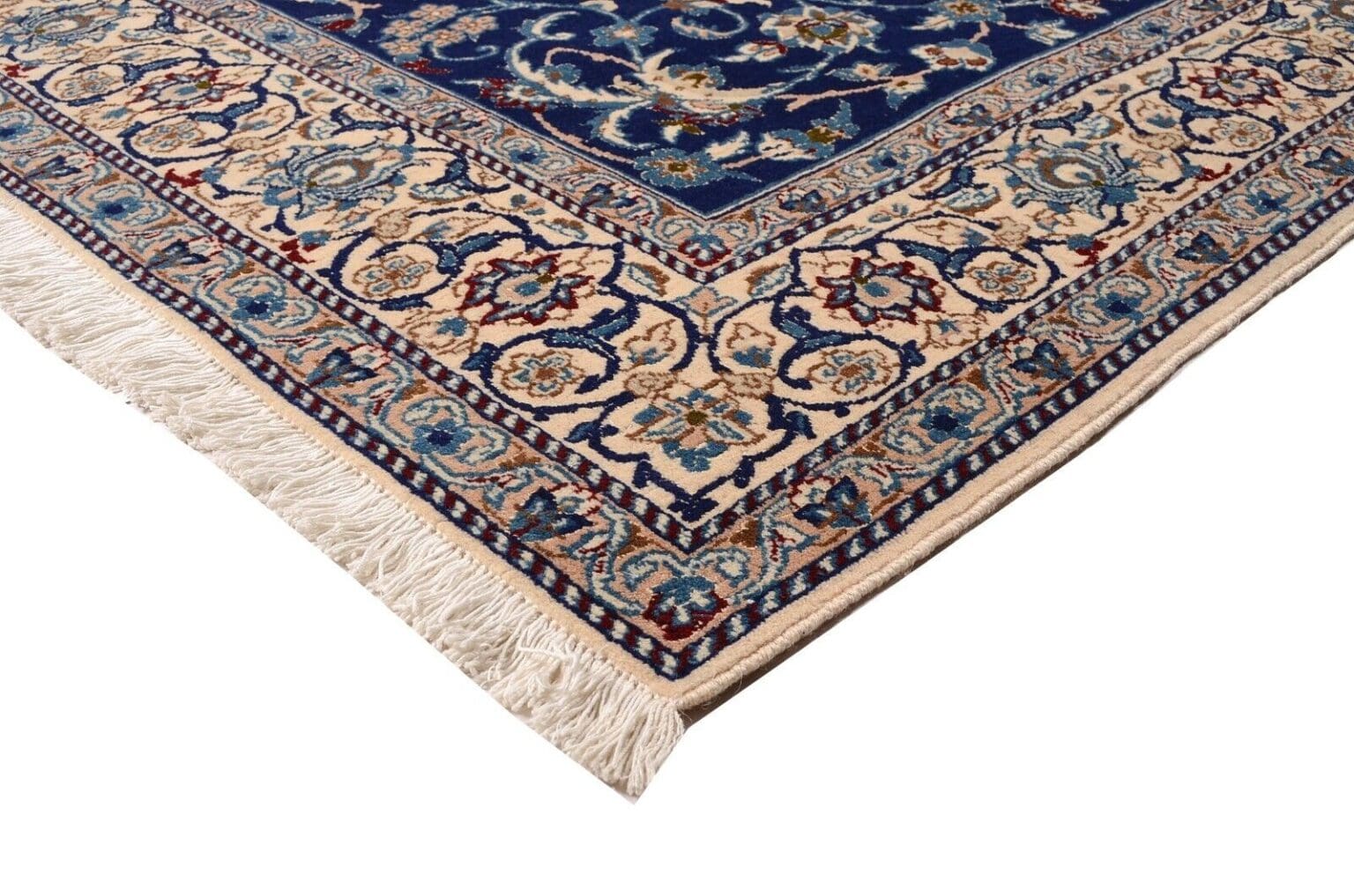
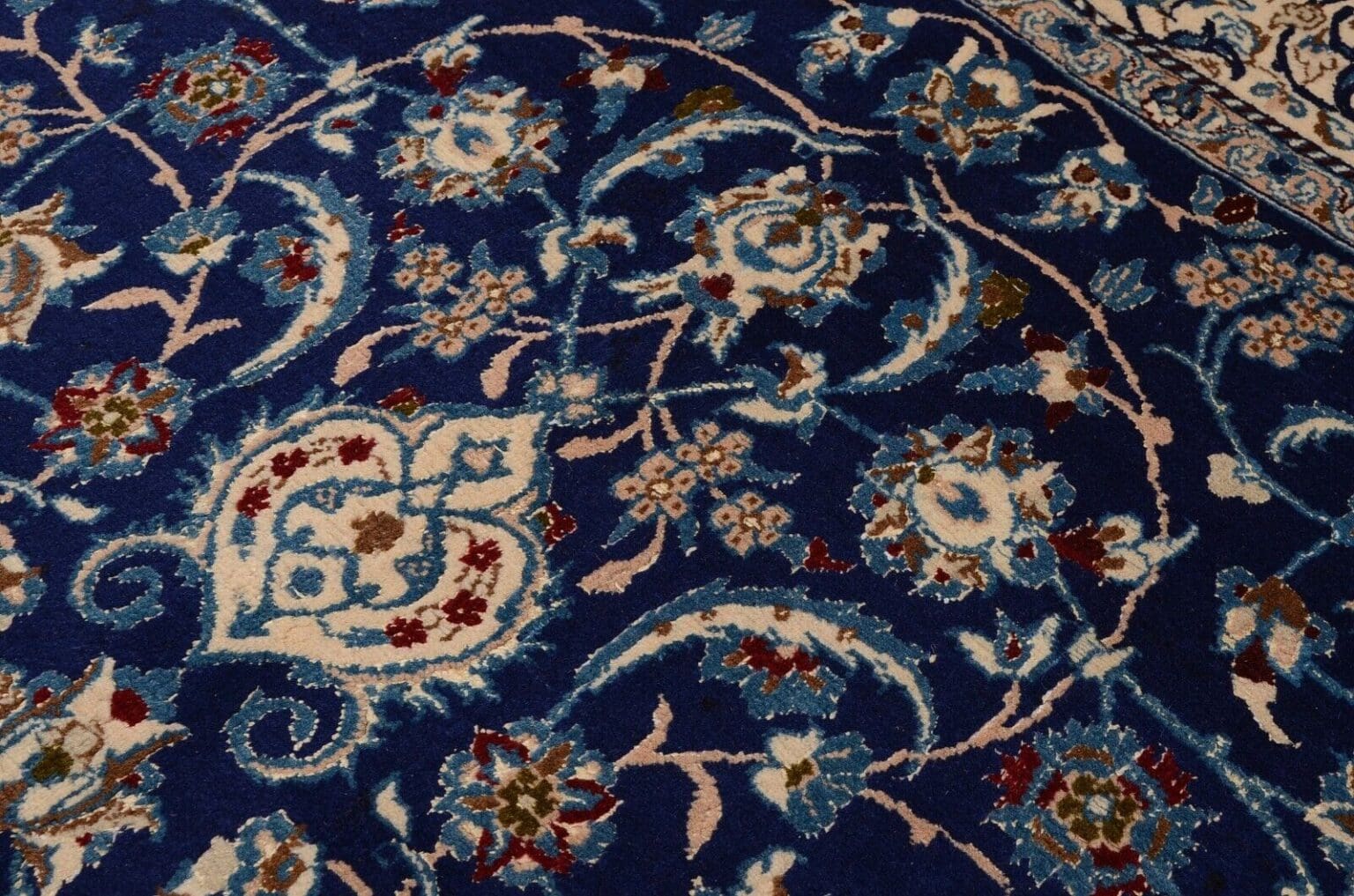
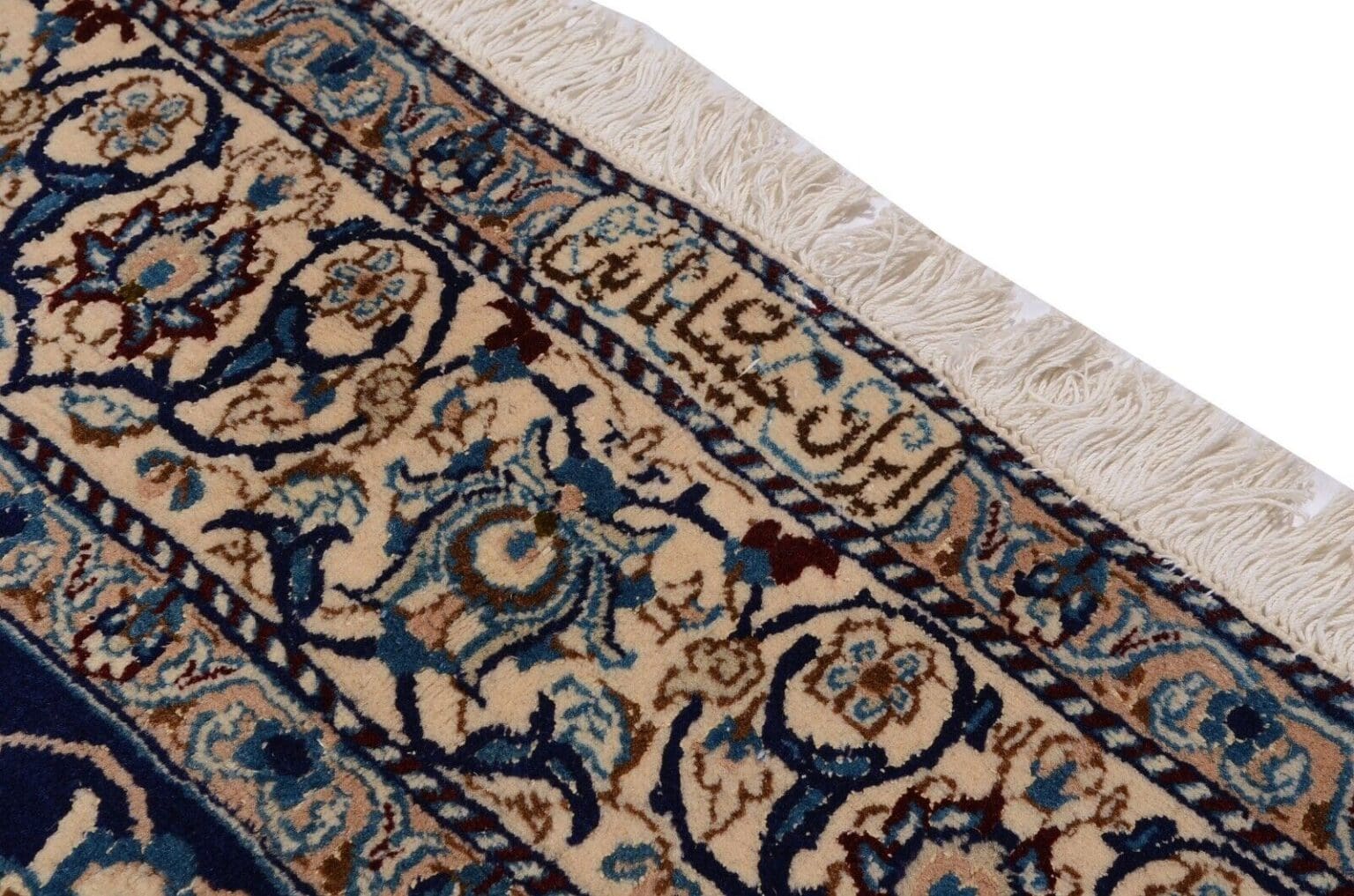
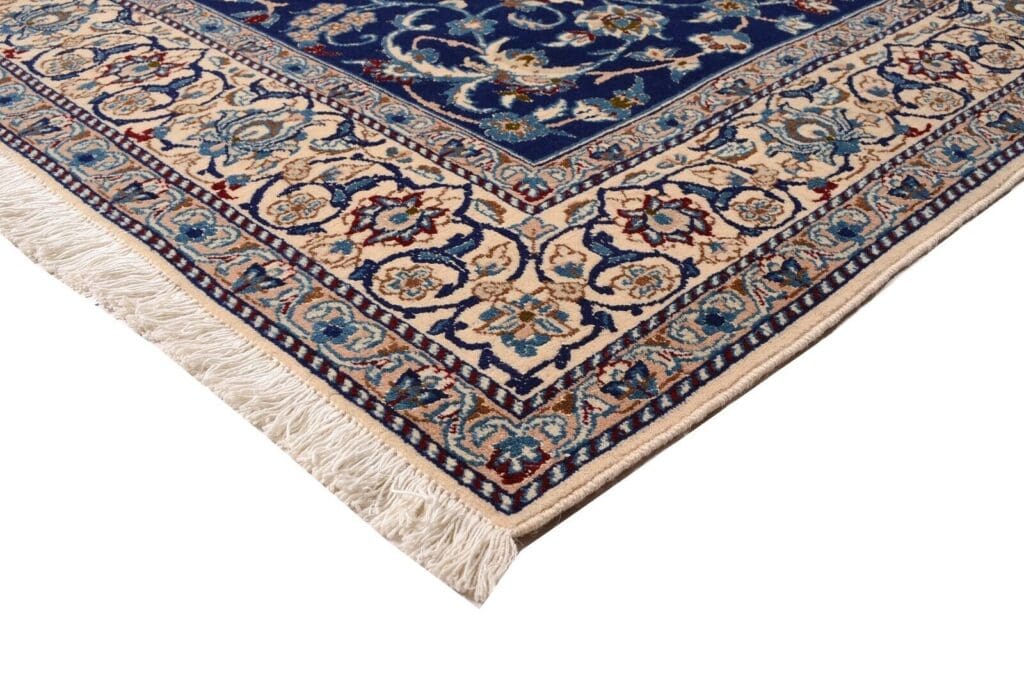
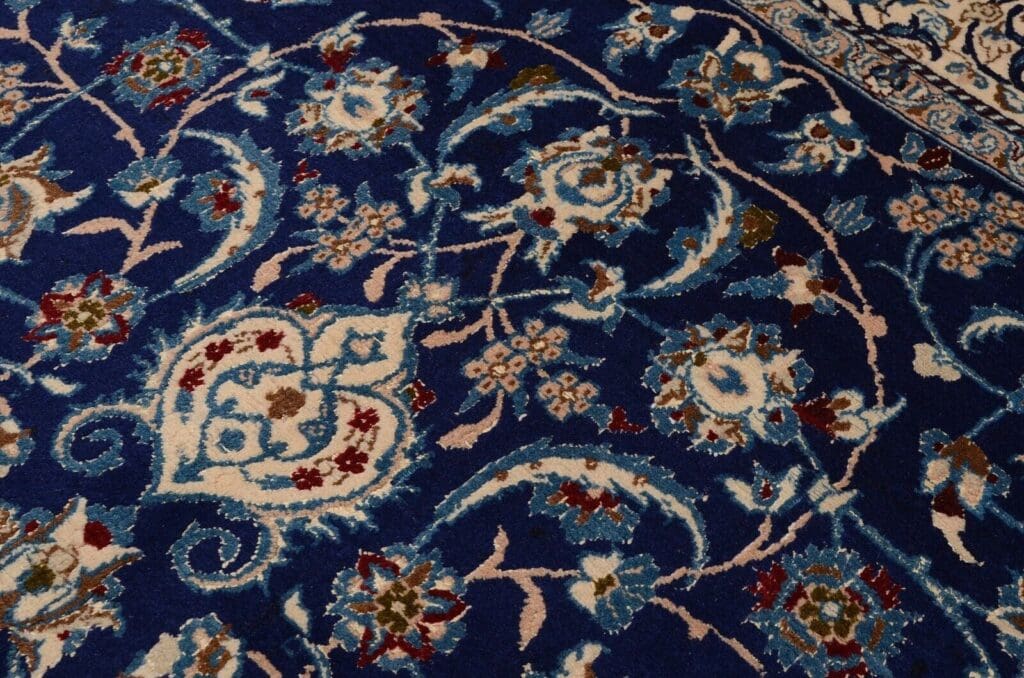
Hand-knotting builds the rug one knot at a time. The weaver follows a design plan and places individual knots in successive rows. The pile is then brought to an even finish so that the drawing can be read clearly across the surface. This method allows floral outlines and ornamental details to be rendered with precision. The rug has a knot density of 400,000 knots per square metre, indicating a finely executed construction.
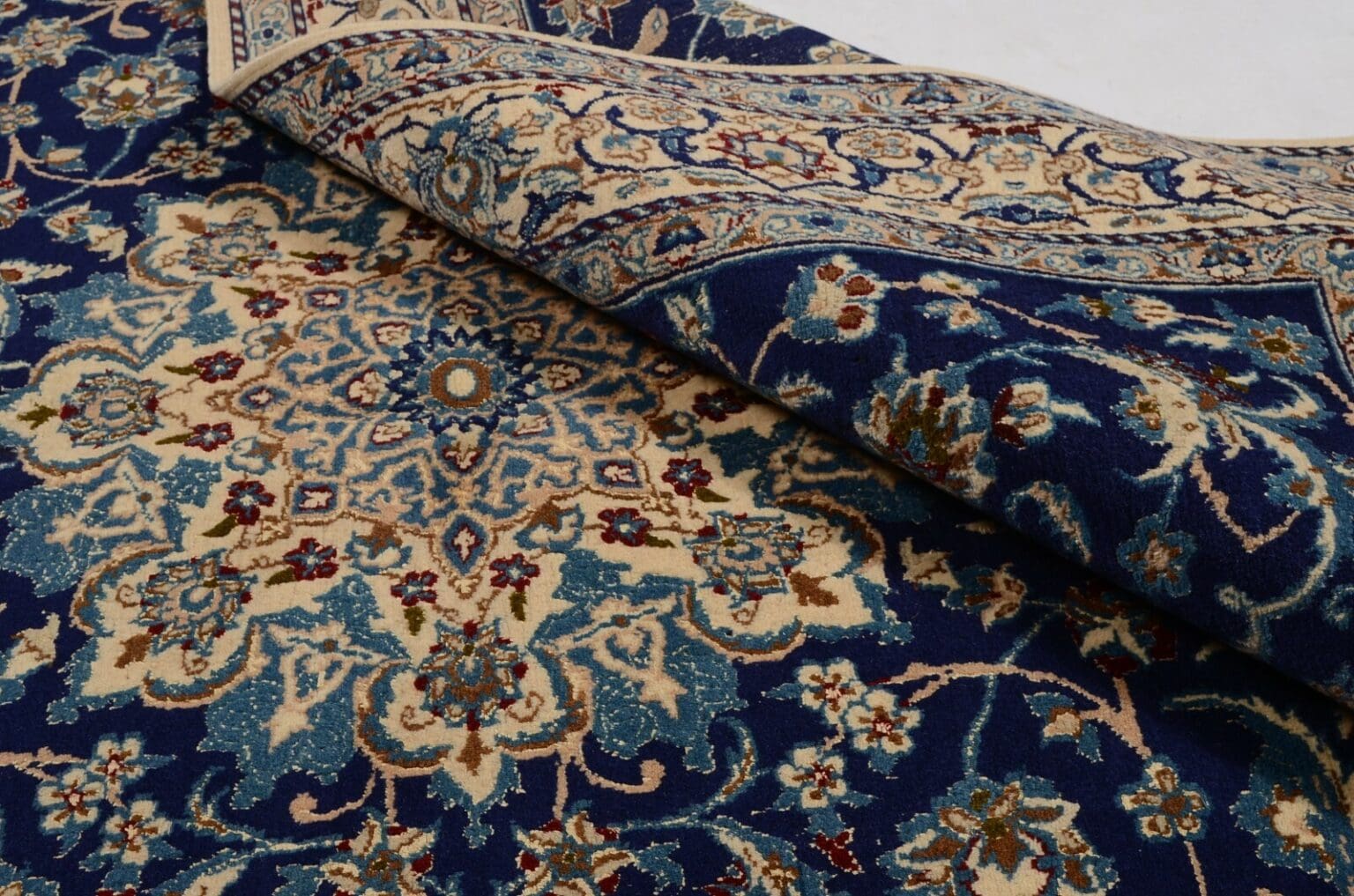
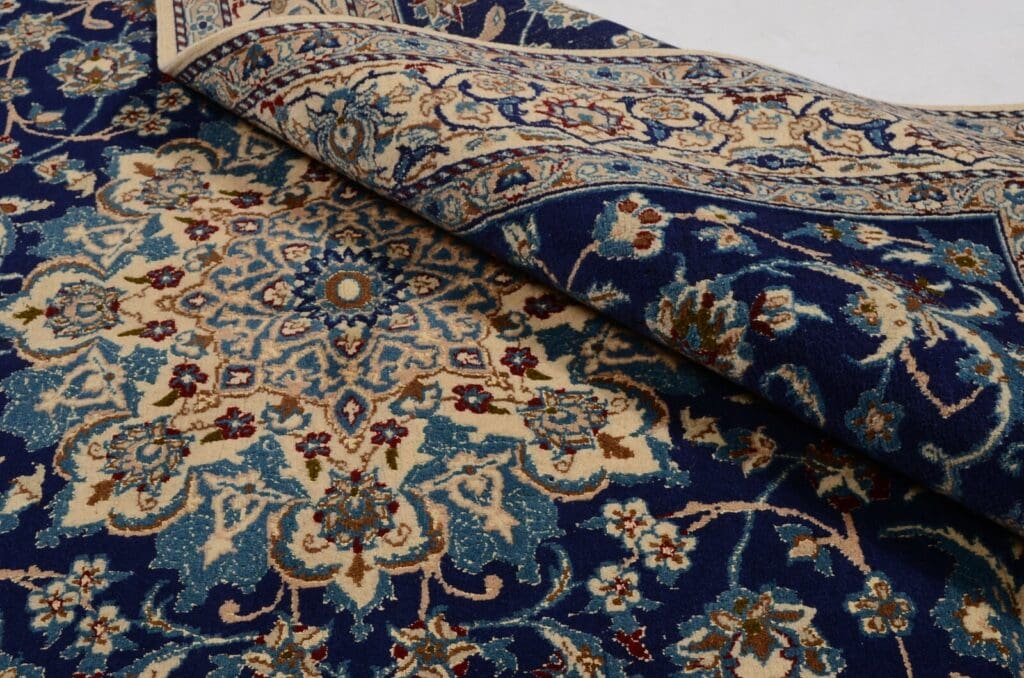
The pile height is approximately 10 mm. This gives the surface a recognisable pile while retaining a clear view of the pattern. Hand-knotted work is distinct from machine production because the visible structure is created through a long sequence of individual manual actions. Knot by knot, the design is transferred into the textile. This rug is new and unused.
Origin and Tradition
Nain is a city in Iran and also the name of a recognised Persian rug tradition. The city lies around 150 kilometres north-east of Isfahan. Rugs associated with Nain are known for careful execution and finely organised decoration. Their identity developed through the meeting of local workshop knowledge, inherited pattern vocabulary and a considered approach to materials. Nain therefore refers not only to a place, but also to a particular strand of Persian textile culture.
Rug making in Nain belongs to a wider Persian artistic context. Persian rugs bring together drawing, colour and craft in a single textile surface. Workshop knowledge includes the handling of yarn, the placing of knots, the treatment of the pile and the organisation of a pattern. These skills are learned over time and passed between generations. The completed rug is the result of many connected stages rather than one isolated manufacturing action.
Isfahan provides an important regional point of reference. The city has long been a major centre of Persian art and design. Within this broader cultural setting, floral ornament, geometric structure and architectural balance have been developed and refined over time. Nain rugs are often associated with restrained elegance and a carefully controlled visual order. Fine details, clearly arranged fields and coordinated colour relationships are characteristic aspects of this tradition.
Hand-knotting is inherently gradual. A design is prepared, the colours are selected and the pattern is built row by row. The weaver must keep the sequence of motifs and the proportions of the composition in view throughout the process. Nain tradition is therefore grounded in the relationship between technical knowledge and design discipline. Regional identity does not depend on every rug being identical; it is expressed through recurring methods, forms and ways of organising the surface.
Persian rugs frequently transform ideas from art and architecture into textile ornament. Floral elements may be arranged in balanced compositions, while geometric lines divide and support the visual field. The colour range described for Nain rugs extends from gentle blues to richer reds. Within an individual design, such colours are coordinated so that the drawing remains legible and the entire composition retains its internal connection.
The tradition also reflects the value placed on continuity. A pattern can preserve shapes that have been used and adapted over many generations, while the hand of the weaver gives the finished piece its own character. The importance of Nain lies in this combination of inherited visual language and manual construction. It connects the individual rug with the history of Persian weaving without replacing the specific details of the piece itself.
Design and Pattern
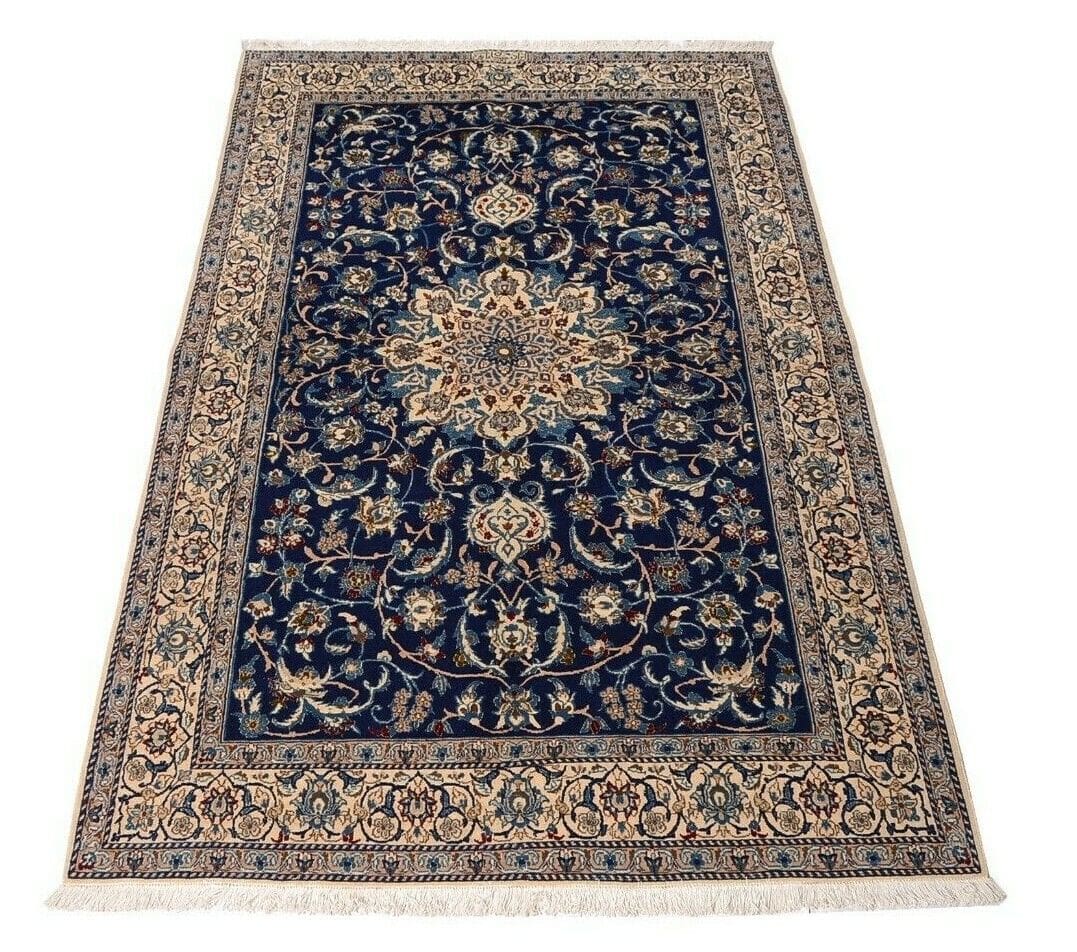
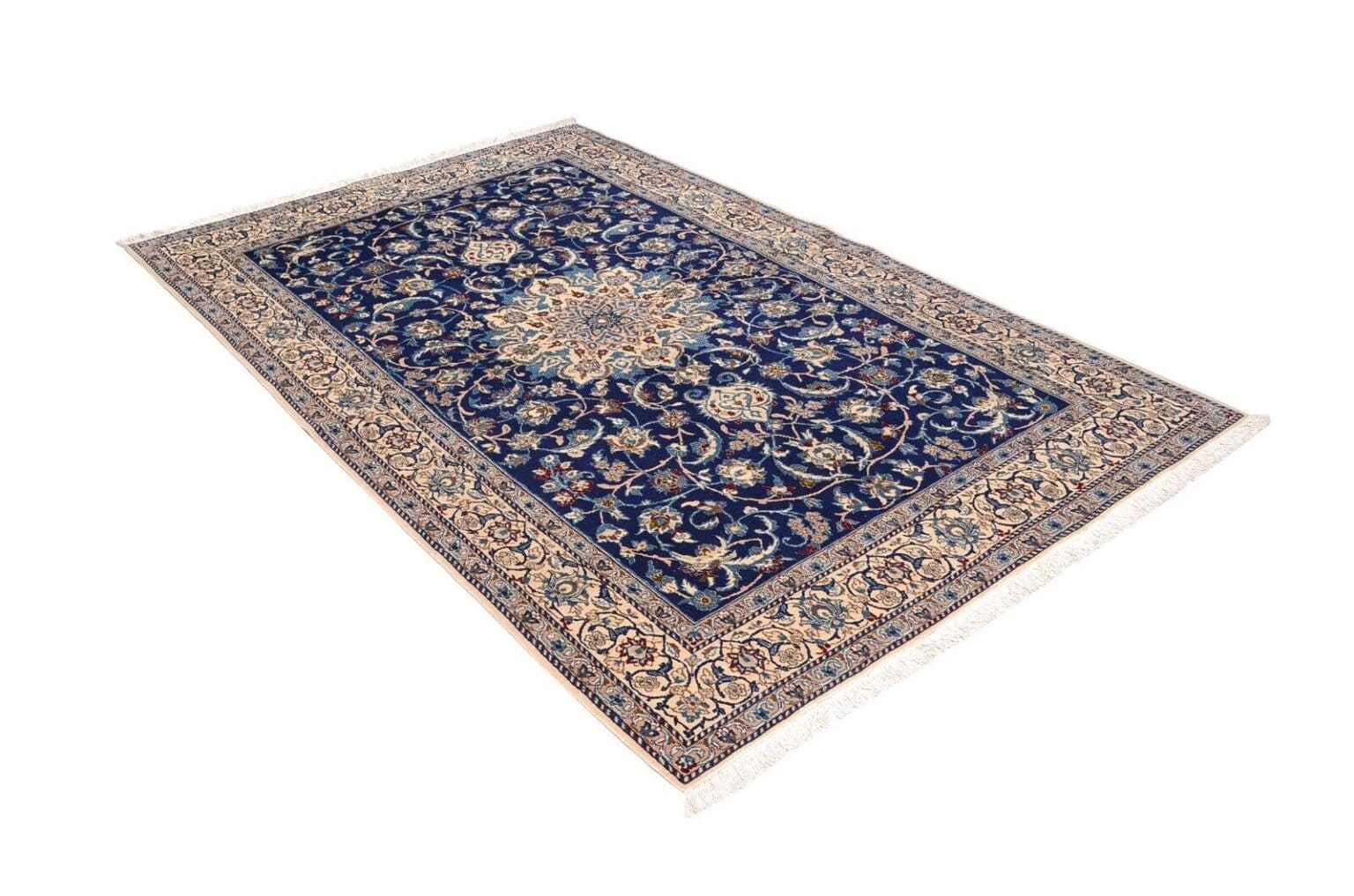
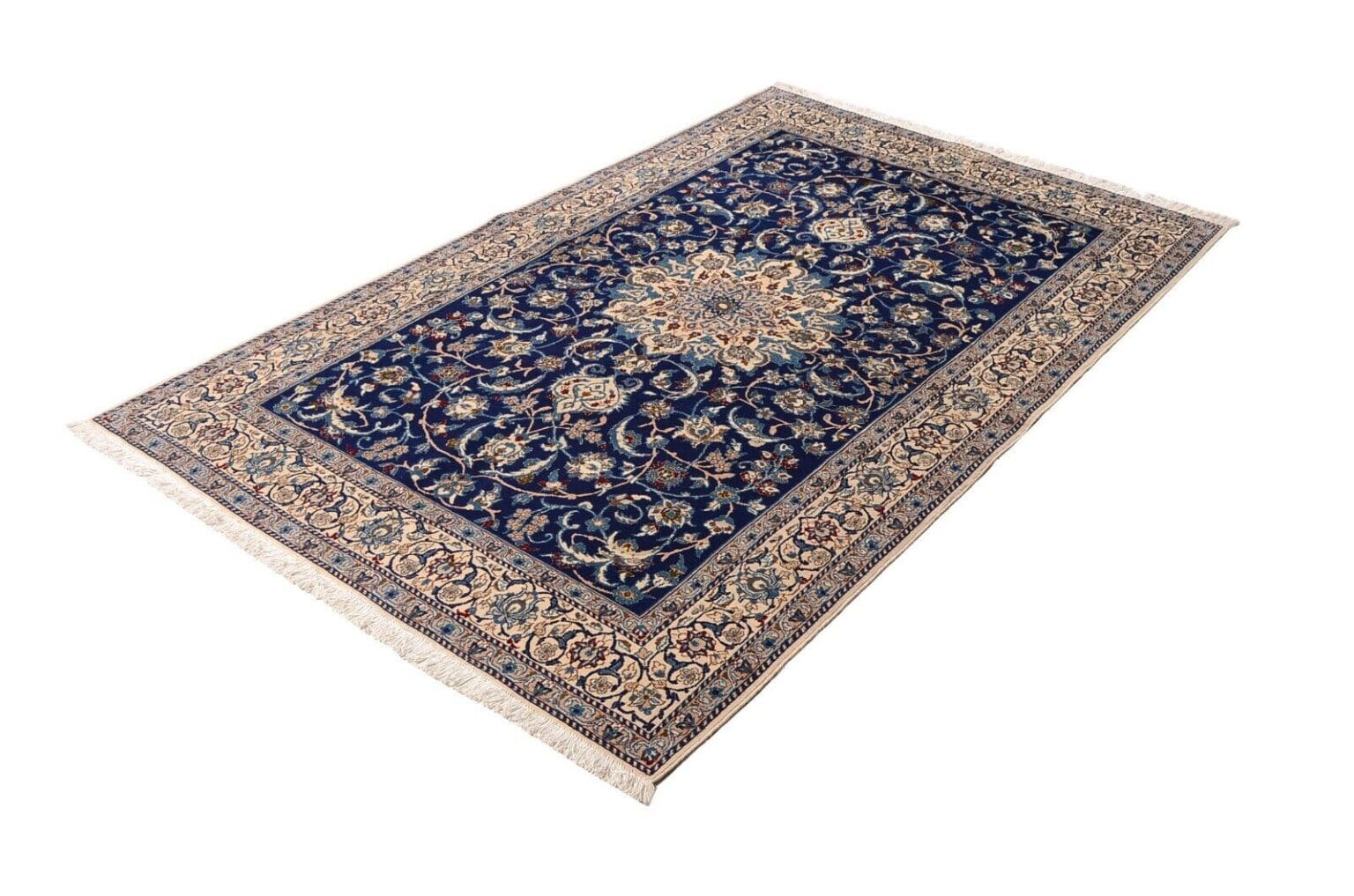
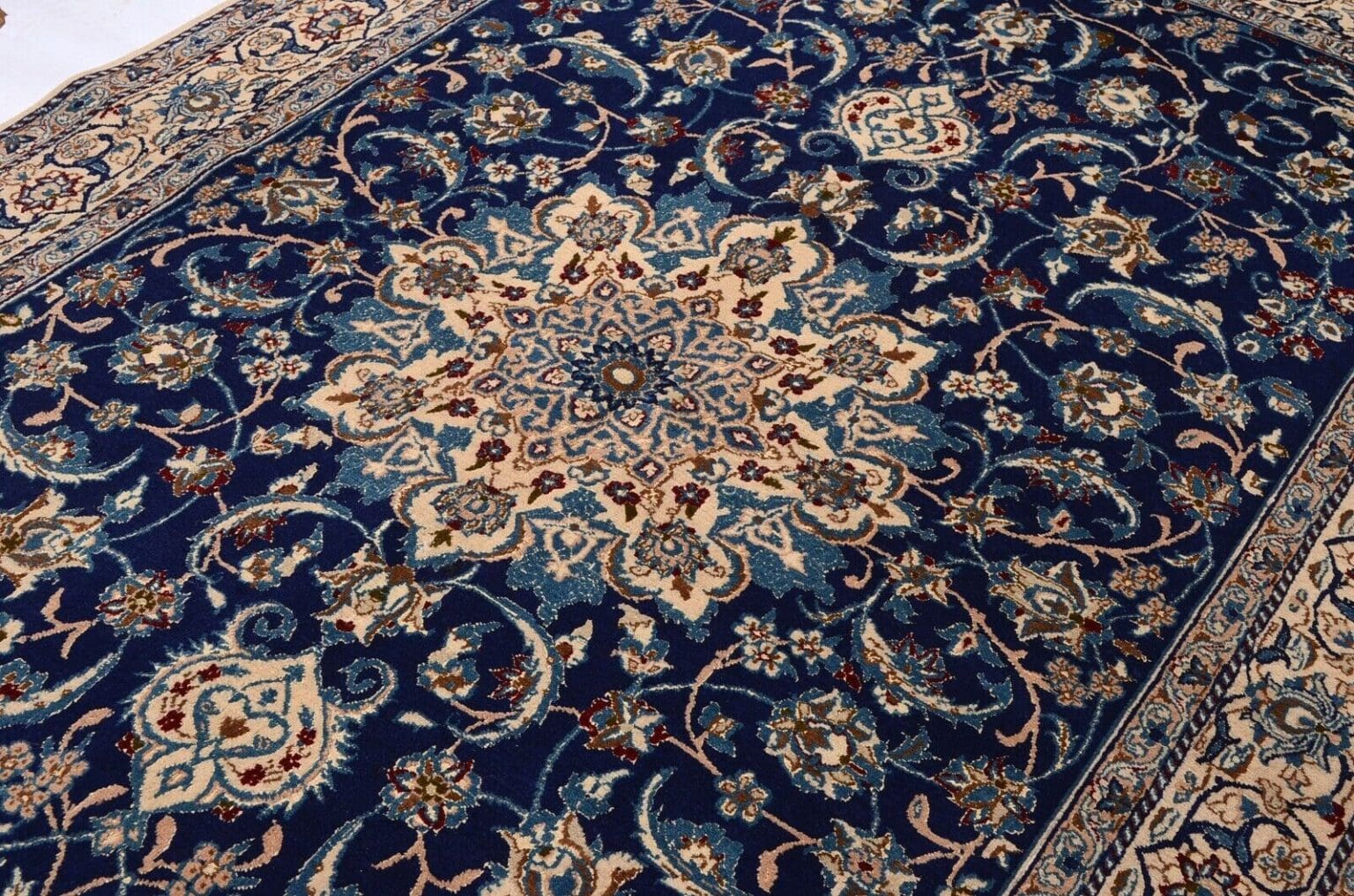
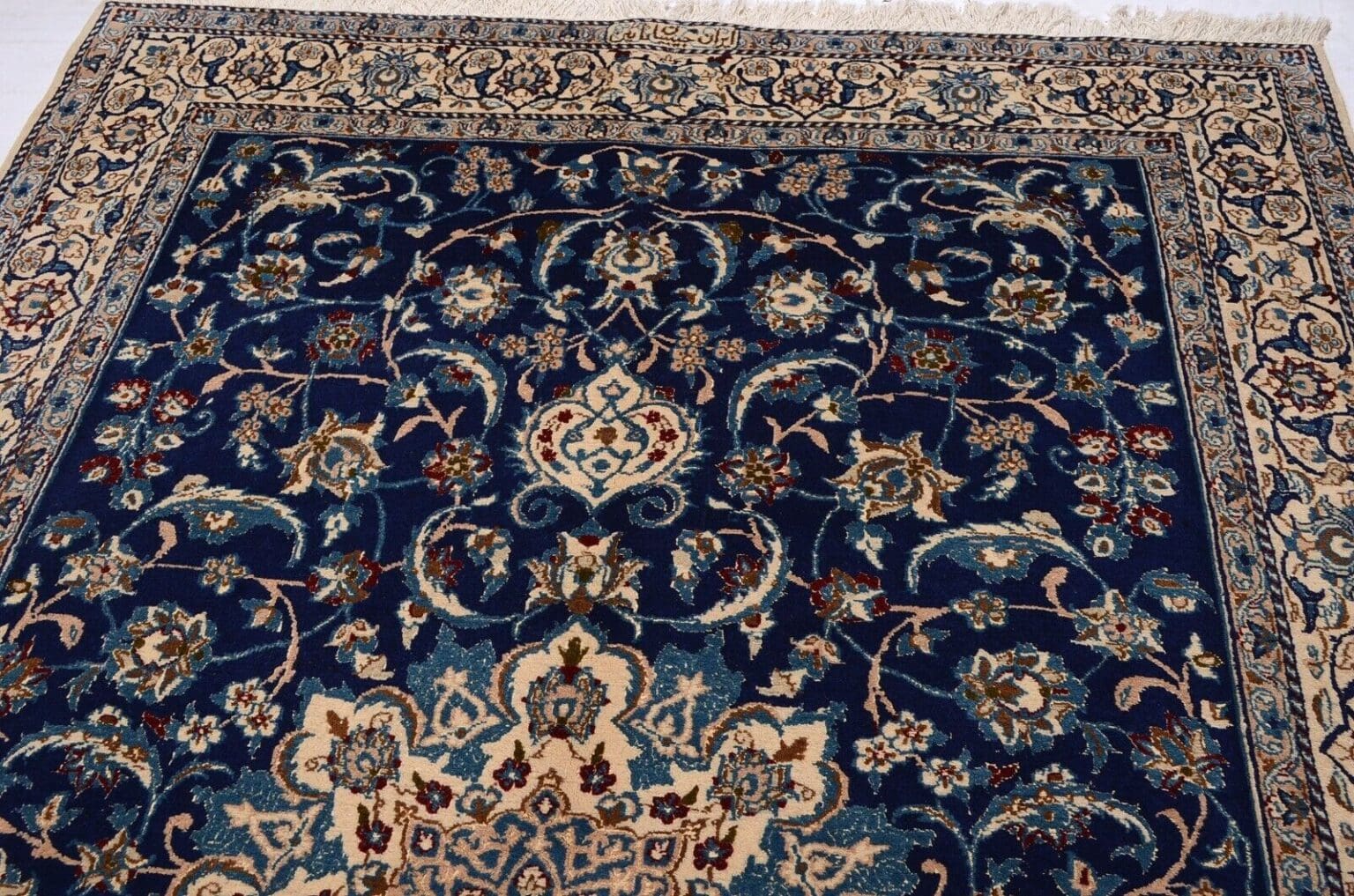
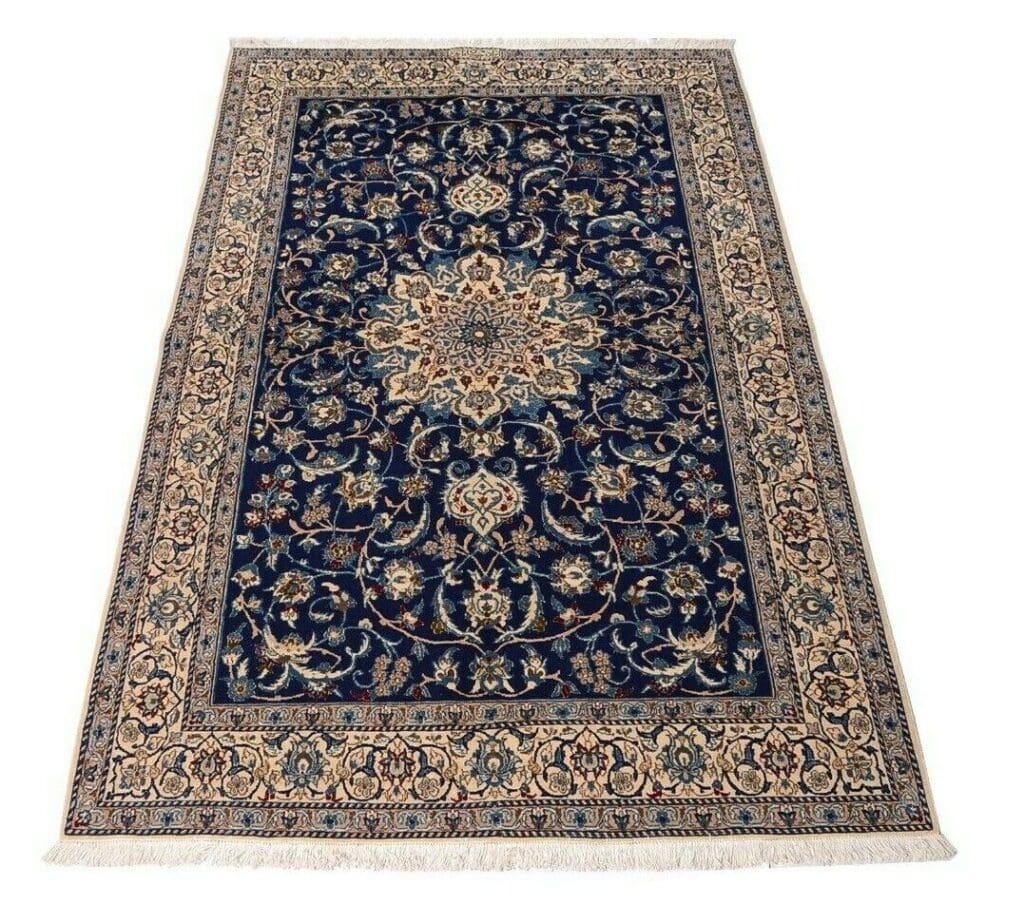
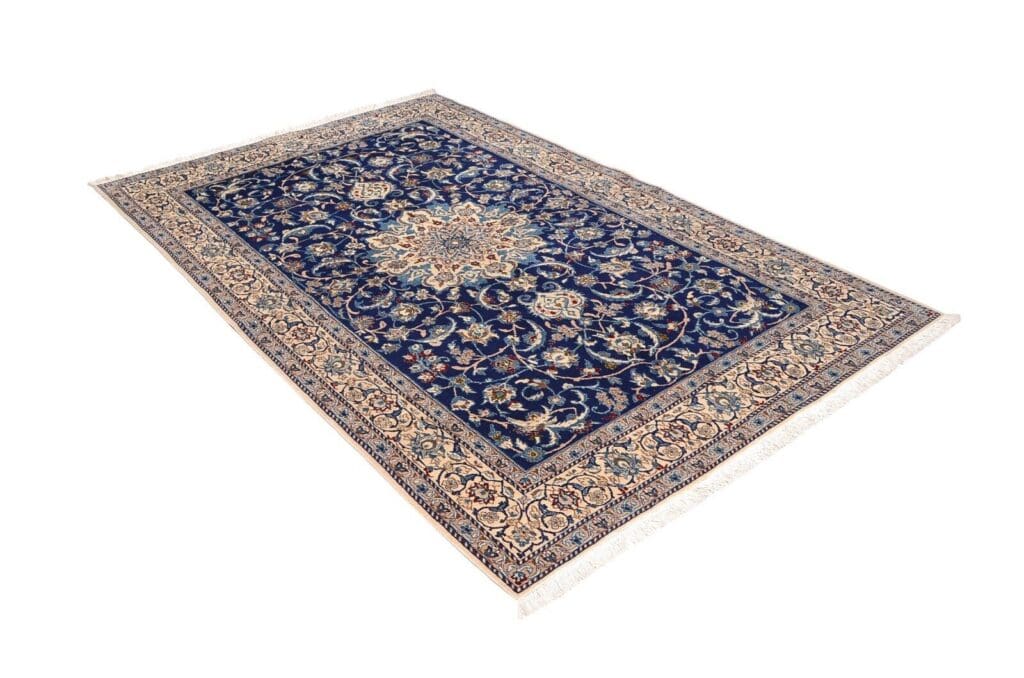
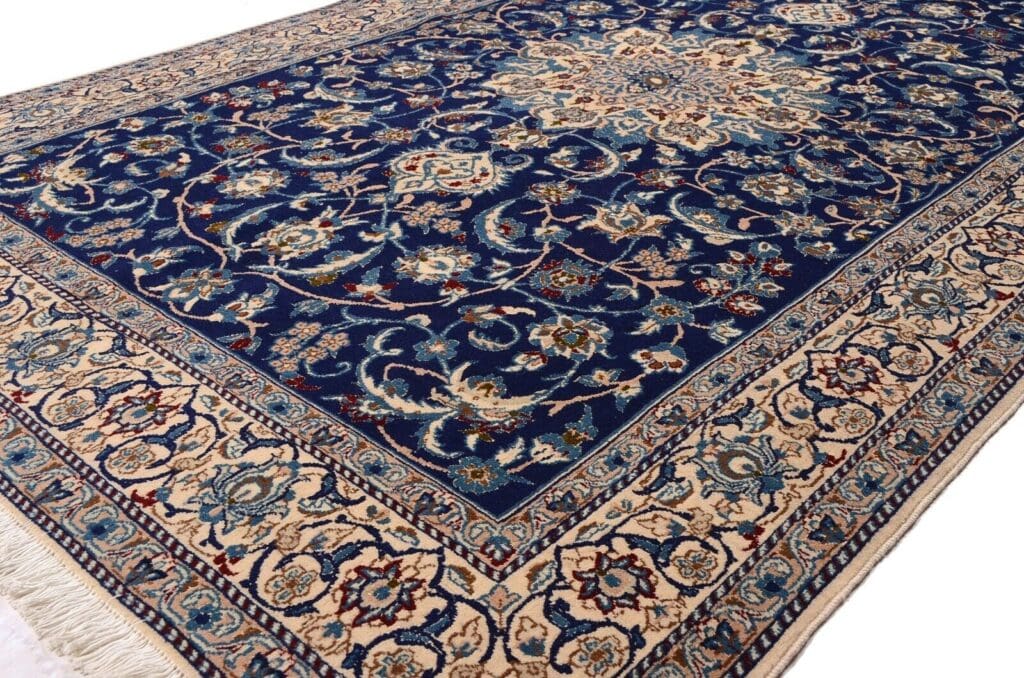
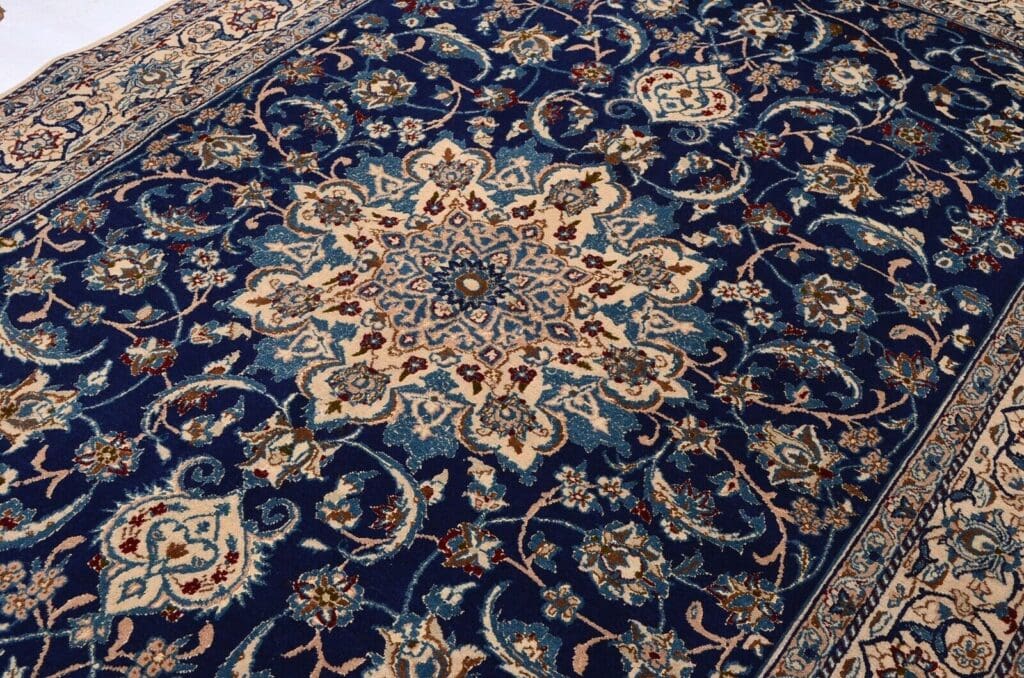
The design of this Nain Persian Rug is described as a signed design with floral motifs. Flowers and plant forms are among the recurring elements of oriental rug ornament. They may appear as individual blossoms, as parts of scrolling vines or as components within a symmetrical arrangement. Repetition establishes rhythm, while small changes in contour and spacing keep the surface from becoming a merely mechanical sequence.
Floral imagery has a long symbolic role in Persian and oriental ornament. Blossoms are often associated with fertility and beauty. This is general pattern language rather than an additional statement about the rug’s origin. Geometric forms can appear alongside the flowers and are commonly connected with stability and harmony. Lines, fields and repeated outlines help the viewer understand how the composition is divided and how its individual parts relate to one another.
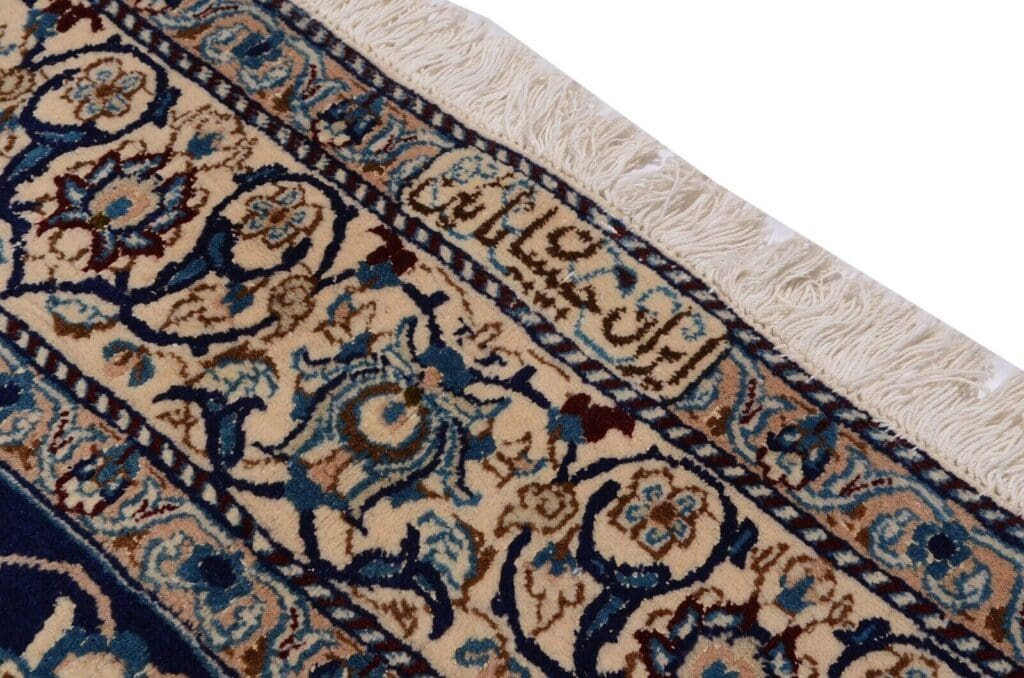
A rug’s design is shaped not only by its visible motifs. The spaces between ornaments, the relationship between central areas and borders, and the distribution of visual weight are equally important. In hand-knotting, this organisation is carried out one knot at a time. A high knot density makes it possible to describe small forms and narrow contours in a closely controlled sequence. The final pattern is therefore created through both the original design and its careful textile interpretation.
The described colour character is soft and harmonious, with a range that can include blue and red tones. Blue can provide a calm ground for floral drawing, while red can create stronger accents in a field or border. The effect depends on how the colours are balanced within the actual design. Colour is not separate from technique: the fineness of the knotting and the clarity of the pile influence how the chosen tones are seen together.
Nain patterns are often discussed in terms of clarity and elegance because their ornament is carefully ordered. Floral elements can enliven a field without removing its structure, and geometric details can provide a framework for the organic forms. This makes the design language adaptable to both traditional and contemporary interiors. That broader observation concerns the Nain tradition; the specific rug is identified by its signed floral design.
Oriental rug patterns do not usually communicate one literal story. Instead, they retain motifs, symbols and compositional principles that have been carried through generations. Flowers, scrolling forms, lines and colour relationships become a visual record of cultural practice. In Nain weaving, this vocabulary is associated with fine knotting and a measured arrangement of ornament. The result is a textile design that can be read through its structure as well as its decorative subject.
Special Features
The concrete features of this rug include hand-knotting, a knot density of 400,000 knots per square metre, a material composition of virgin wool and silk, and a pile height of approximately 10 mm. It also has a signed design with floral motifs. Its condition is new and unused. These details describe this individual rug, while the wider characteristics of Nain belong to the regional tradition in which it is placed.
The wool-and-silk composition combines a durable natural fibre with a finer material component. The high knot density supports detailed rendering, and the hand-knotted construction records the many individual knots from which the surface was made. Together, these features explain the rug’s technical character without requiring claims beyond the stated materials, construction and design.
This rug is suitable for use over underfloor heating. The temperature should not be set too high so that the materials are not unnecessarily stressed. Regular vacuuming is recommended, and direct sunlight should be avoided to help prevent colour fading. If a mark occurs, it should be treated promptly by dabbing with a damp cloth rather than rubbing the surface. Professional cleaning may be used when a more thorough treatment is required.
FAQ
How should a Nain Persian Rug be cared for?
Vacuum the rug regularly and handle the surface with care. Direct sunlight should be limited because prolonged exposure can cause colours to fade. If a spill or stain occurs, act promptly and dab the area with a damp cloth. A professional cleaning service can be considered when the rug needs a more extensive treatment. These recommendations are appropriate for a hand-knotted rug made from virgin wool and silk and help preserve its textile surface.
Can the rug be used over underfloor heating?
Yes. This Nain Persian Rug is suitable for use over underfloor heating. The heating temperature should not be set too high, as excessive heat can place unnecessary strain on the material. Moderate, even warmth combined with suitable care helps maintain the rug’s textile qualities. Compatibility with underfloor heating is a stated feature of this individual rug.
Where are Nain rugs commonly available?
Nain rugs can be found in specialist rug shops as well as through online retailers. When choosing a source, it is sensible to look for certificates relating to authenticity and origin. Such documentation can make the classification of a rug easier to understand. For this piece, the stated characteristics are its Nain identity, Persian origin, hand-knotted construction and signed floral design.
To provide the best experiences, we use technologies like cookies to store and/or access device information. Consenting to these technologies will allow us to process data such as browsing behavior or unique IDs on this site. Not consenting or withdrawing consent, may adversely affect certain features and functions.
Functional Always active
The technical storage or access is strictly necessary for the legitimate purpose of enabling the use of a specific service explicitly requested by the subscriber or user, or for the sole purpose of carrying out the transmission of a communication over an electronic communications network.
Preferences
The technical storage or access is necessary for the legitimate purpose of storing preferences that are not requested by the subscriber or user.
Statistics
The technical storage or access that is used exclusively for statistical purposes.The technical storage or access that is used exclusively for anonymous statistical purposes. Without a subpoena, voluntary compliance on the part of your Internet Service Provider, or additional records from a third party, information stored or retrieved for this purpose alone cannot usually be used to identify you.
Marketing
The technical storage or access is required to create user profiles to send advertising, or to track the user on a website or across several websites for similar marketing purposes.
 SECURE PAYMENT
 SHIPPING PARTNERS


