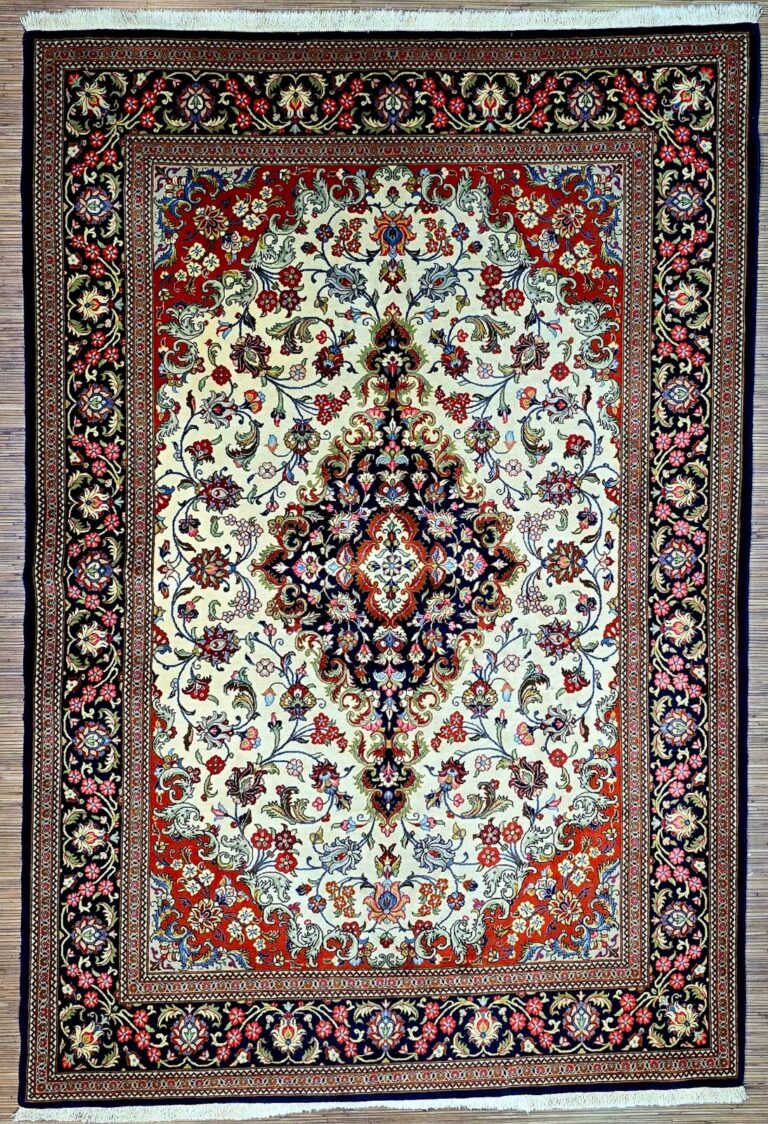
Persian Rug Nain 250×160 cm Wool Hand-knotted (Sold)
€ 1685
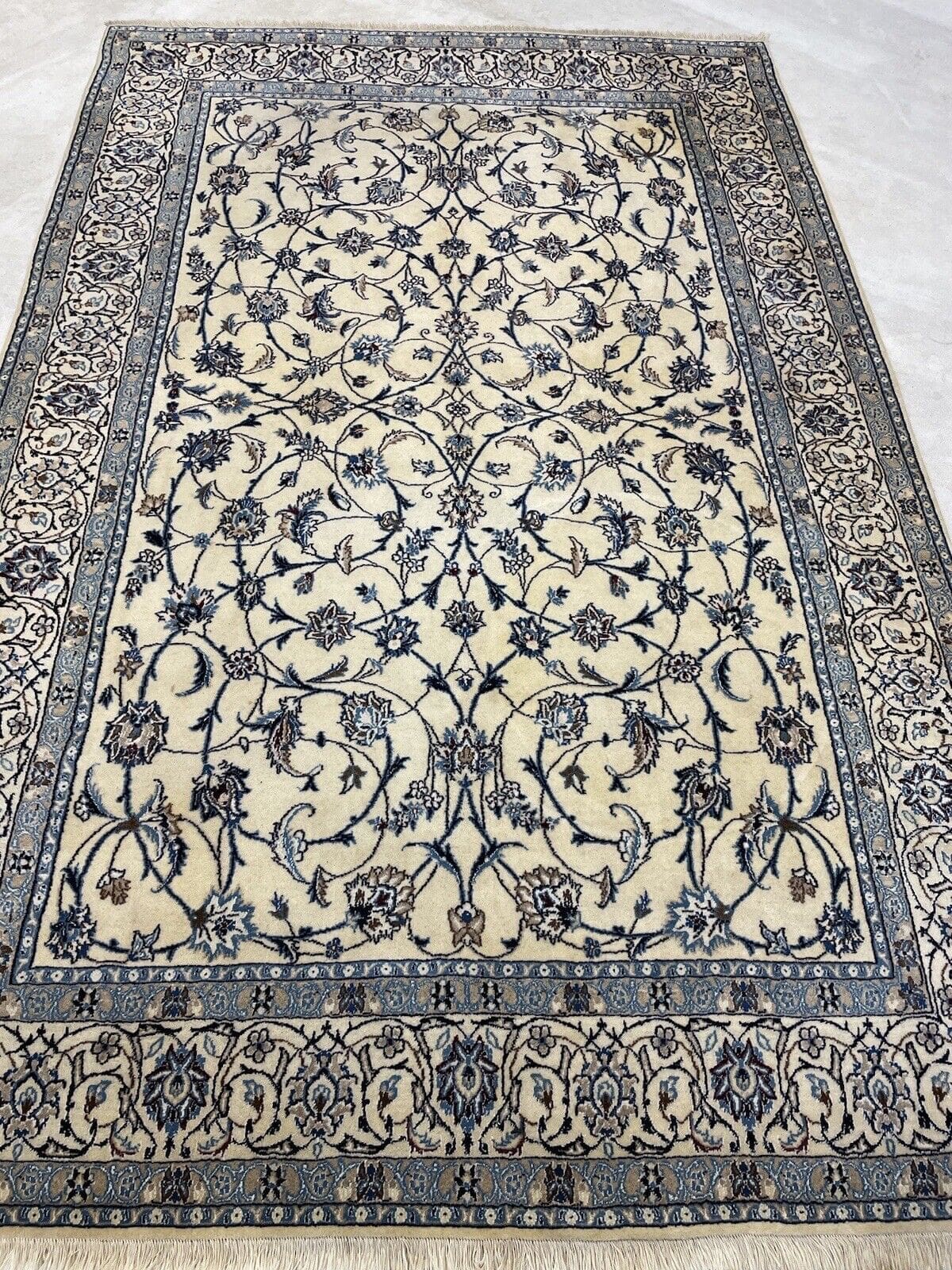
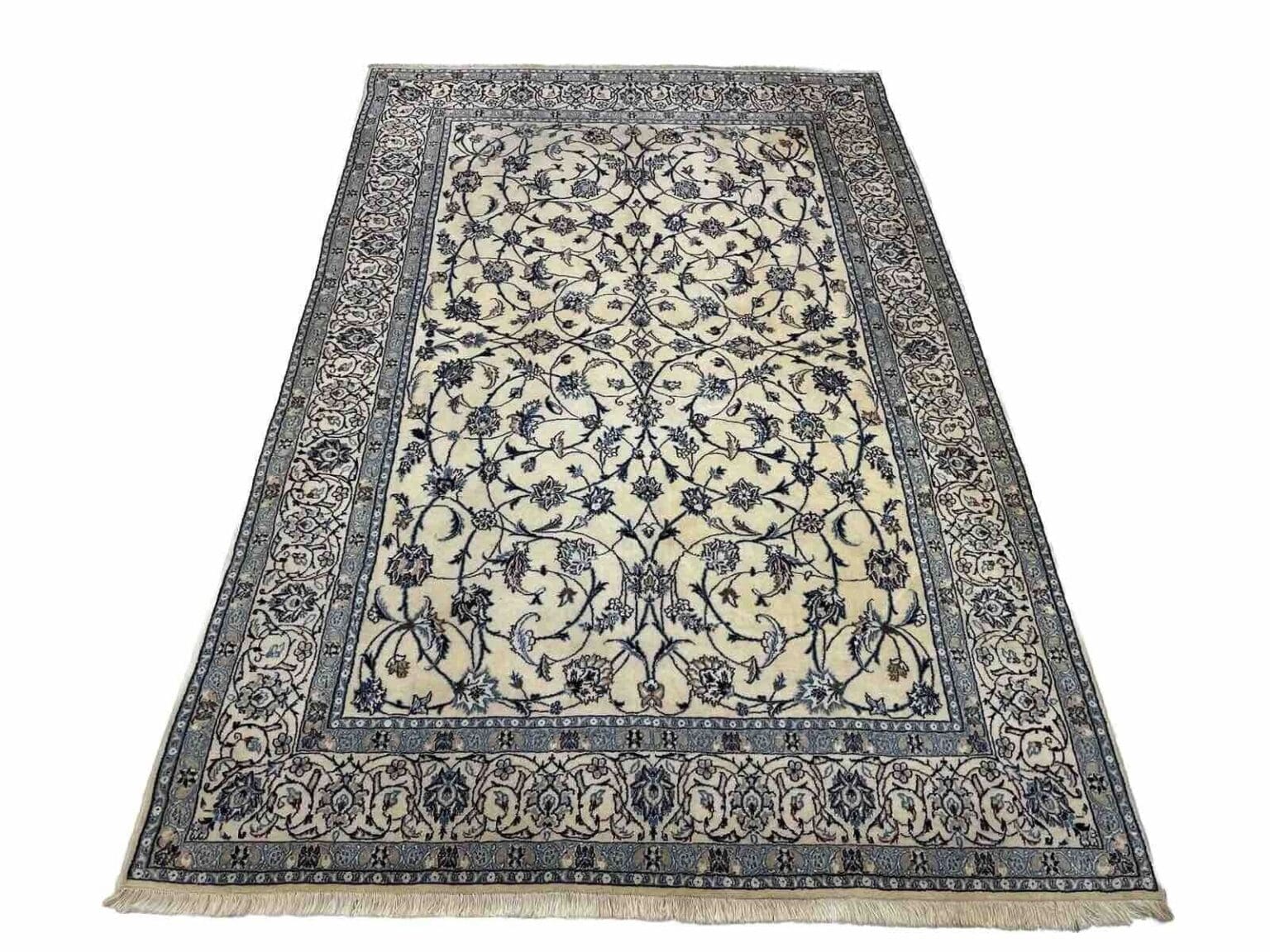
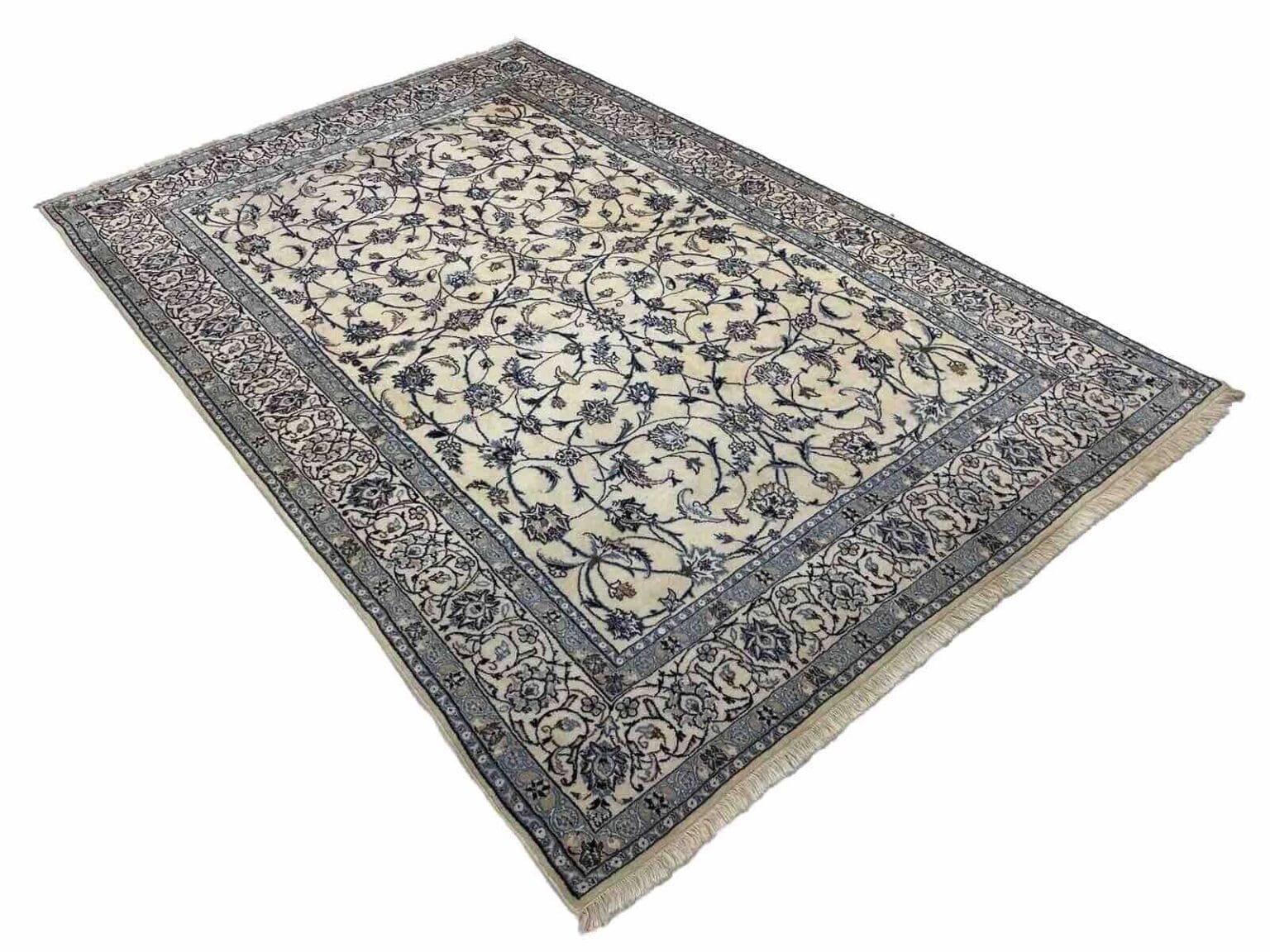
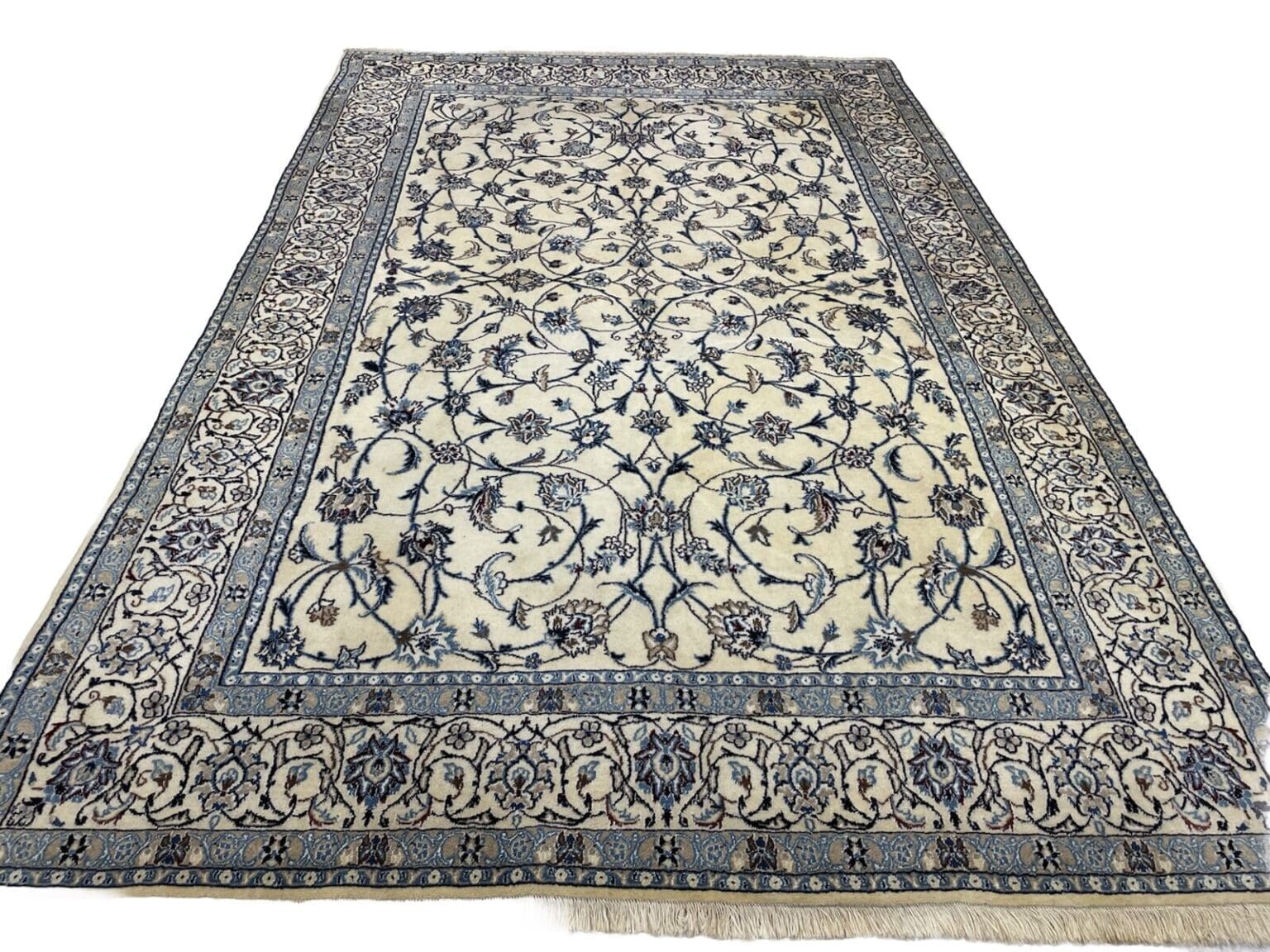
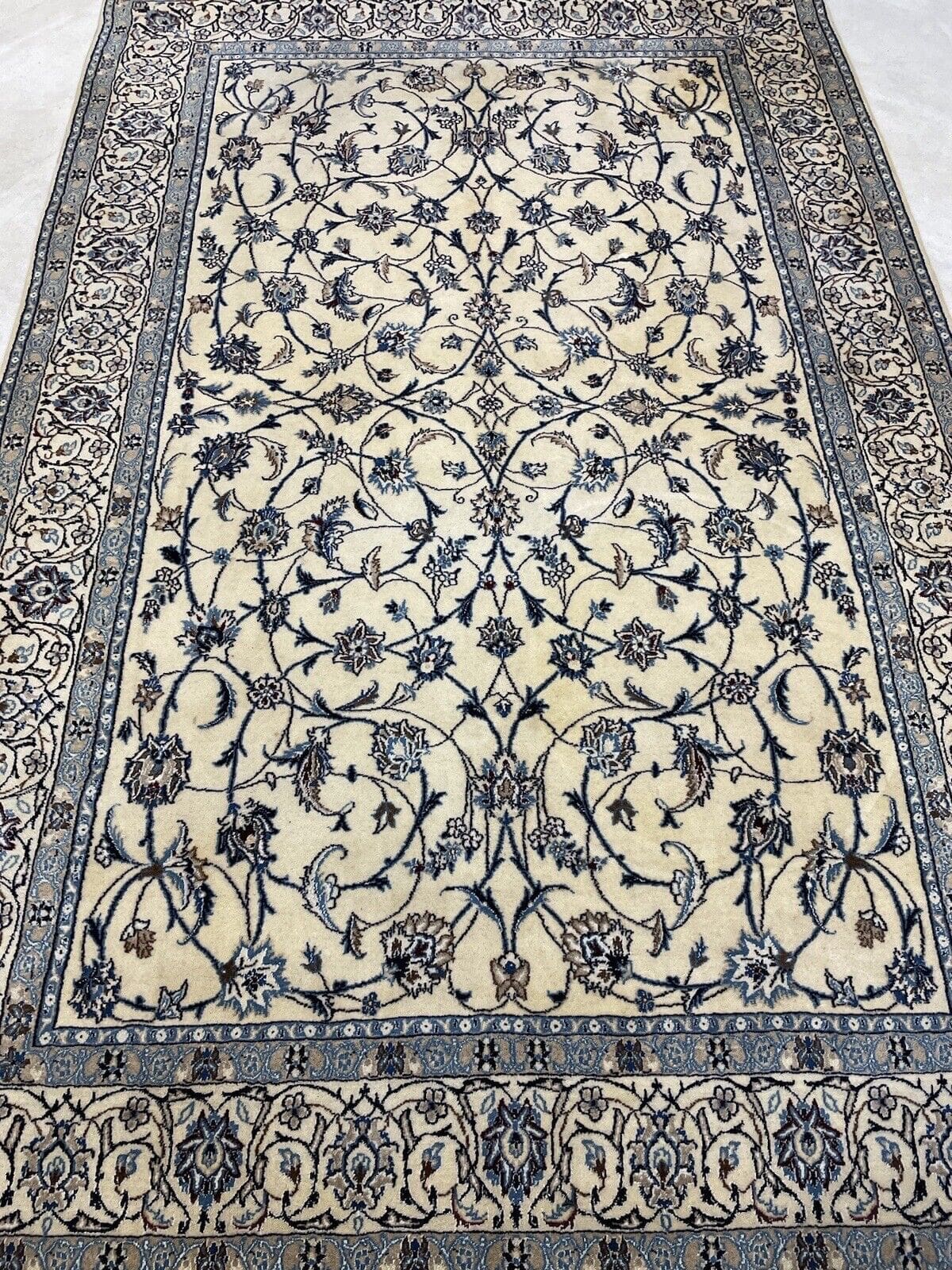
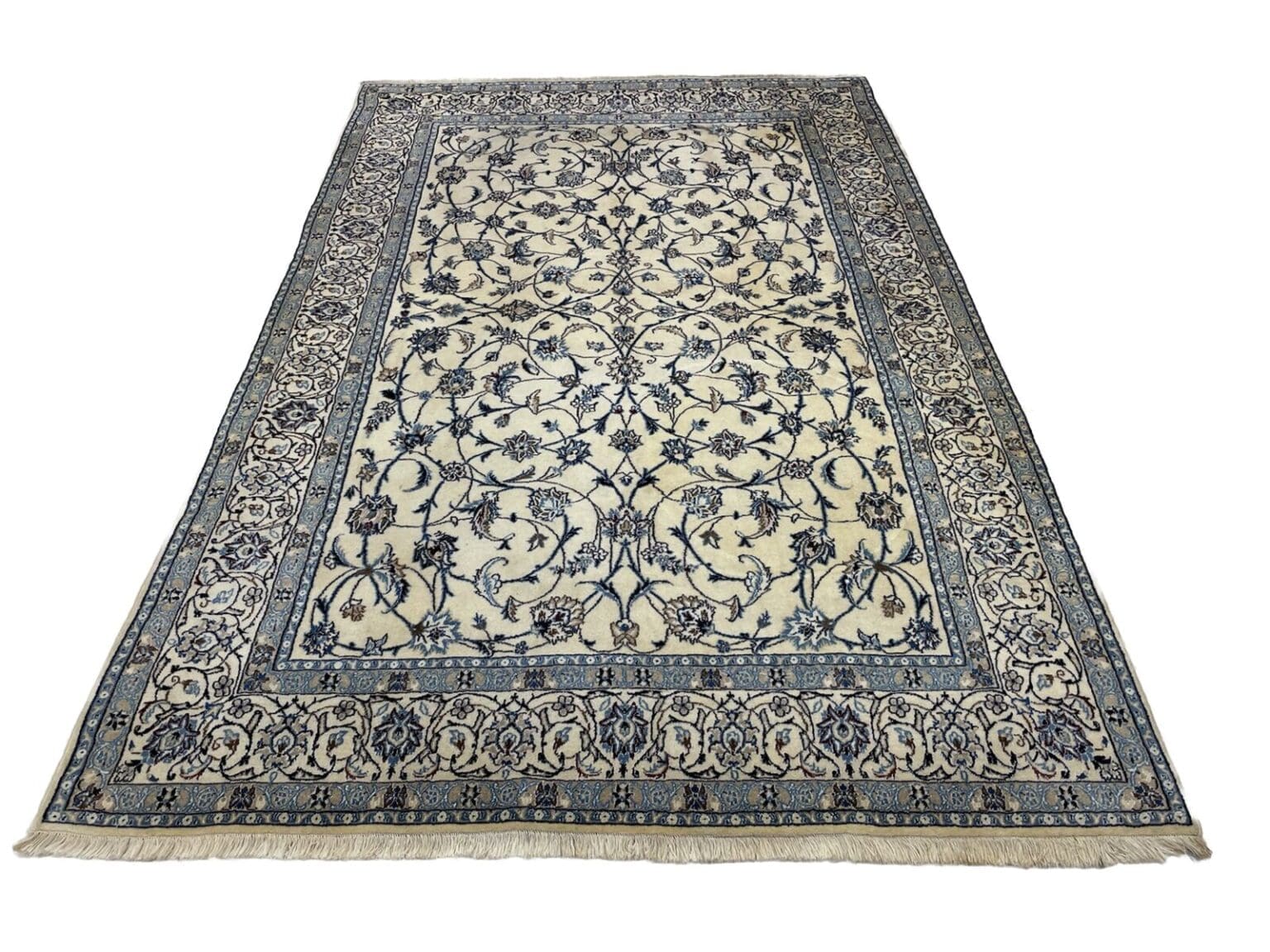
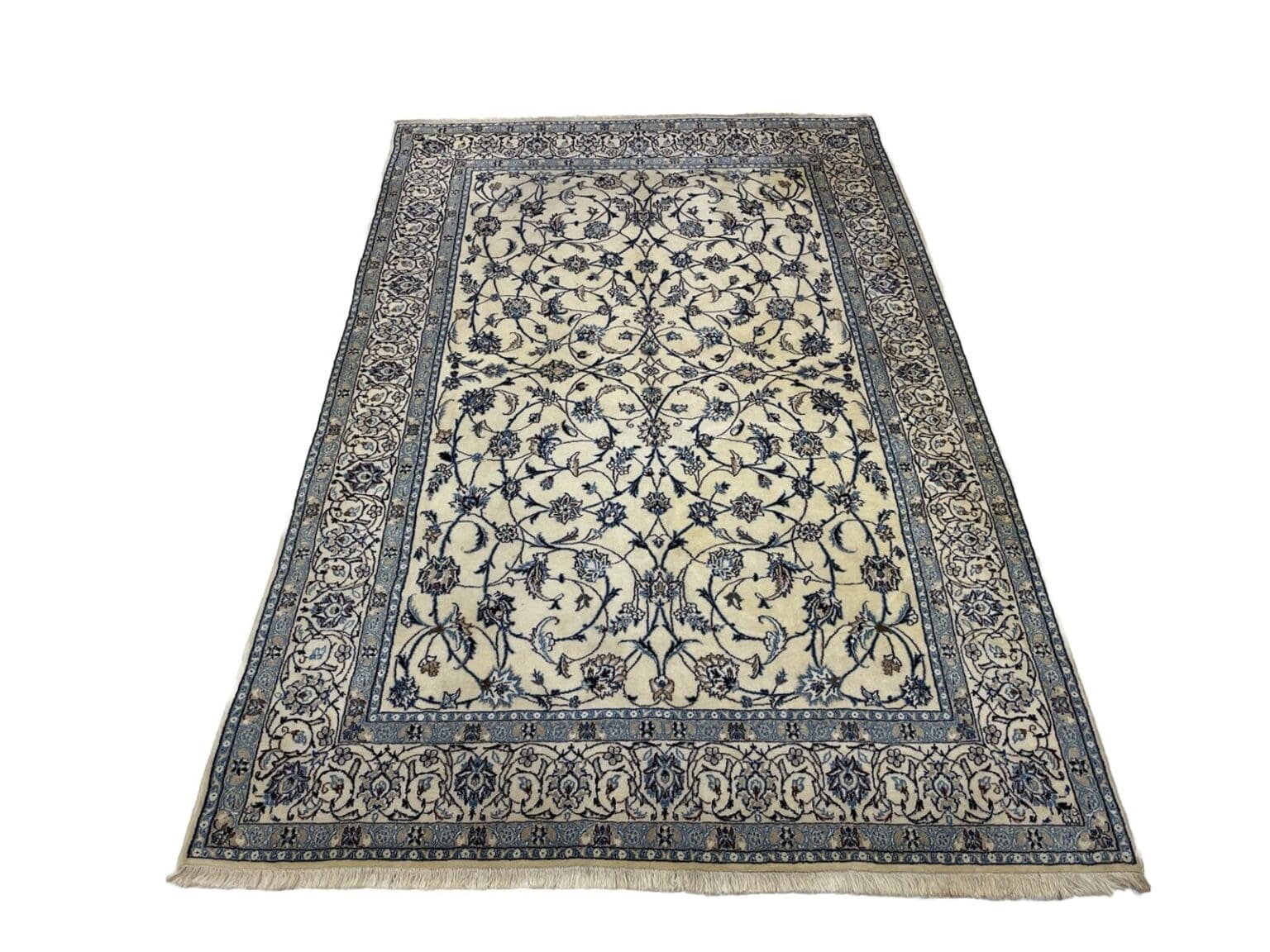
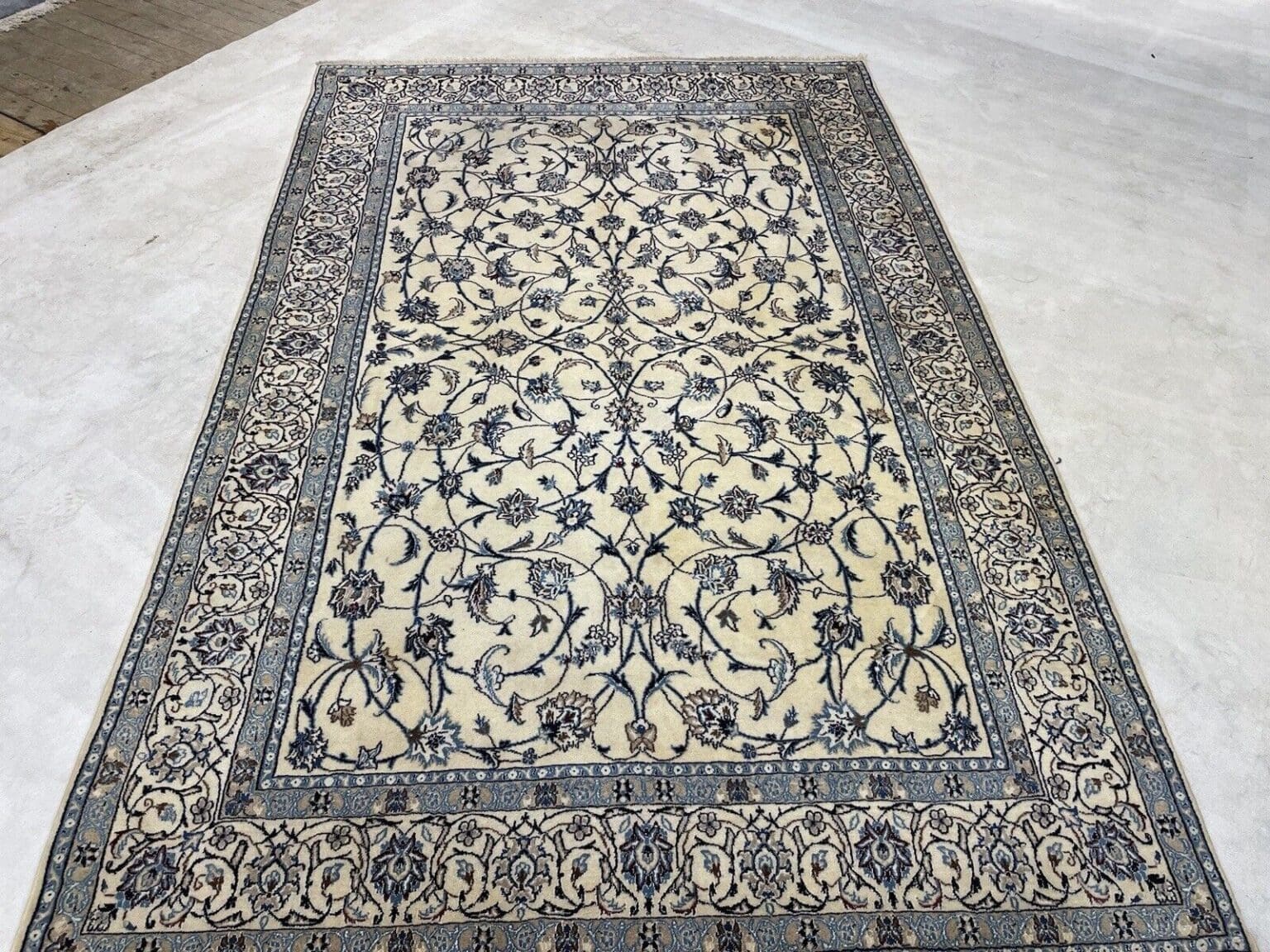
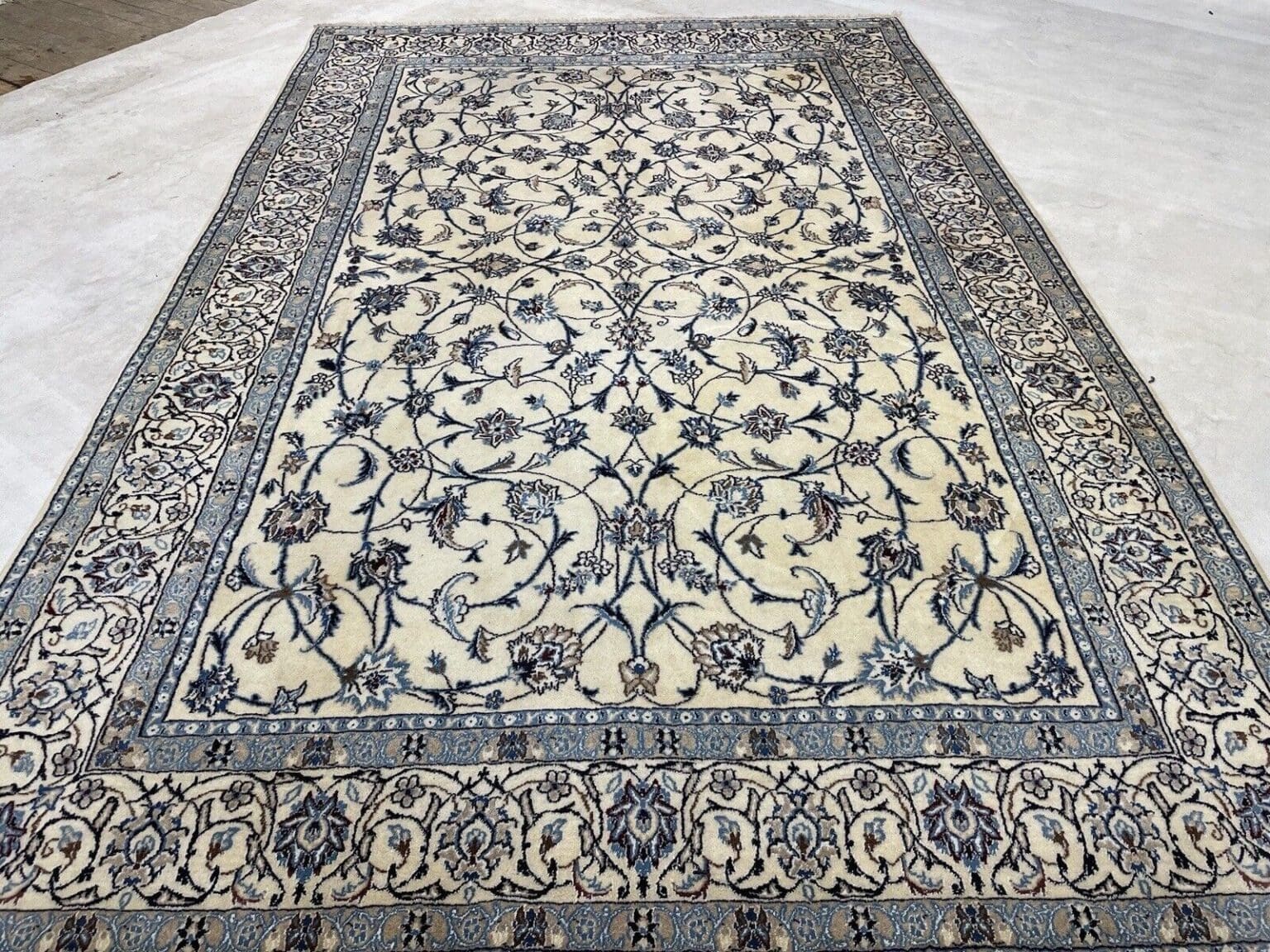
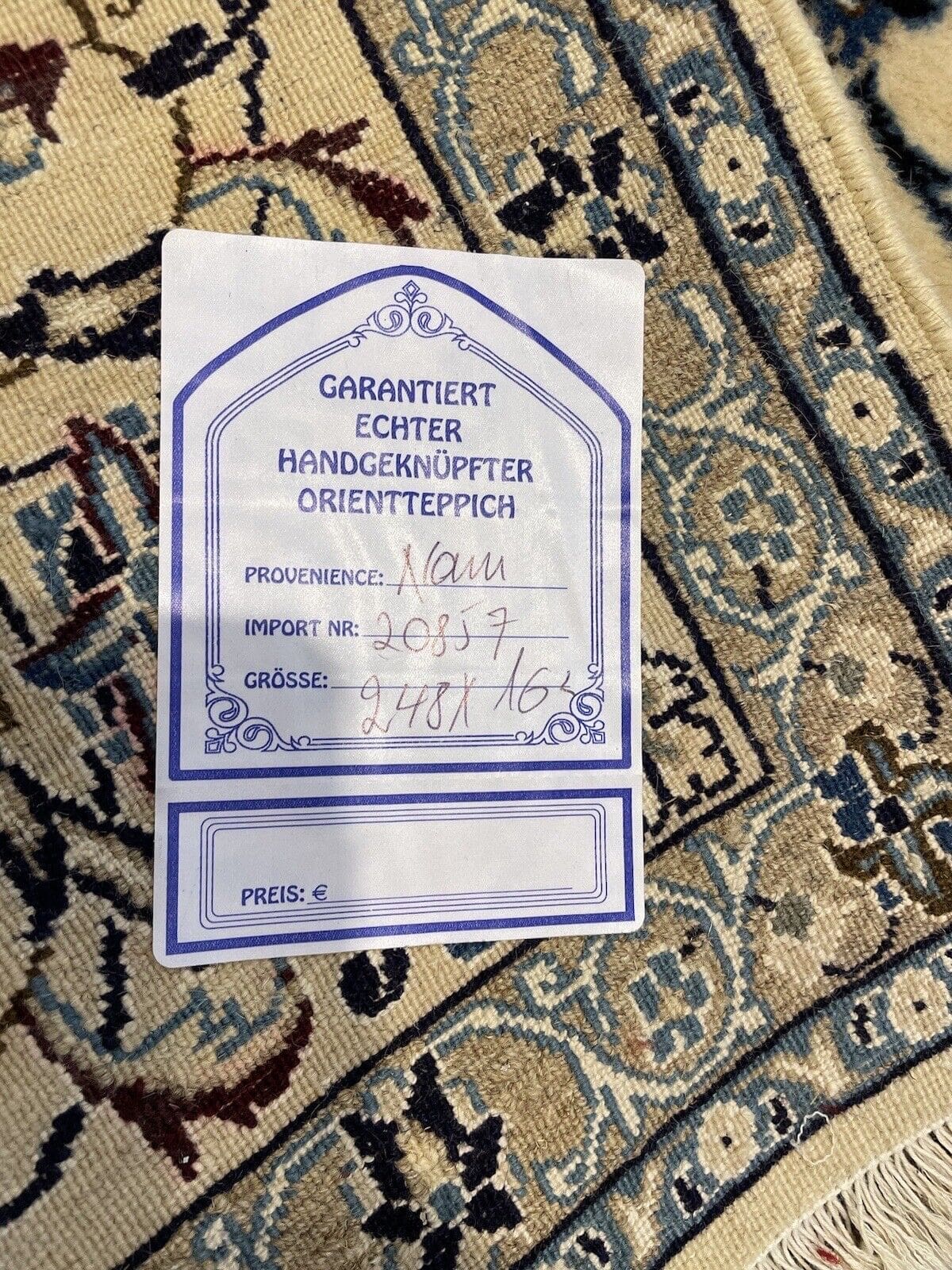
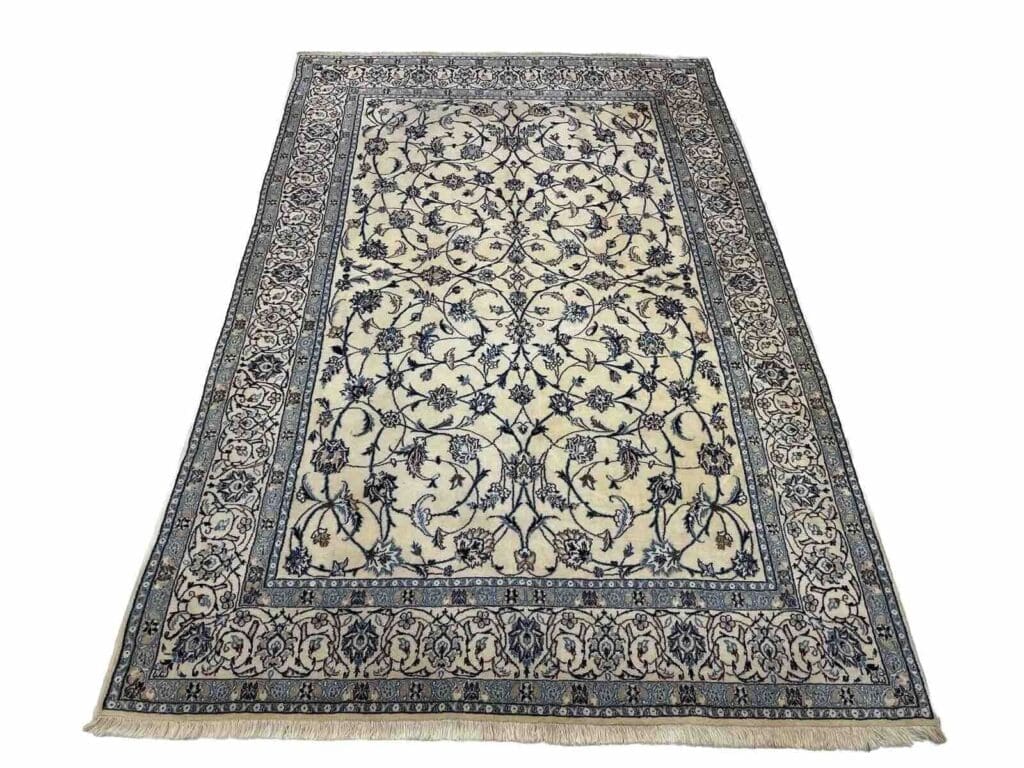
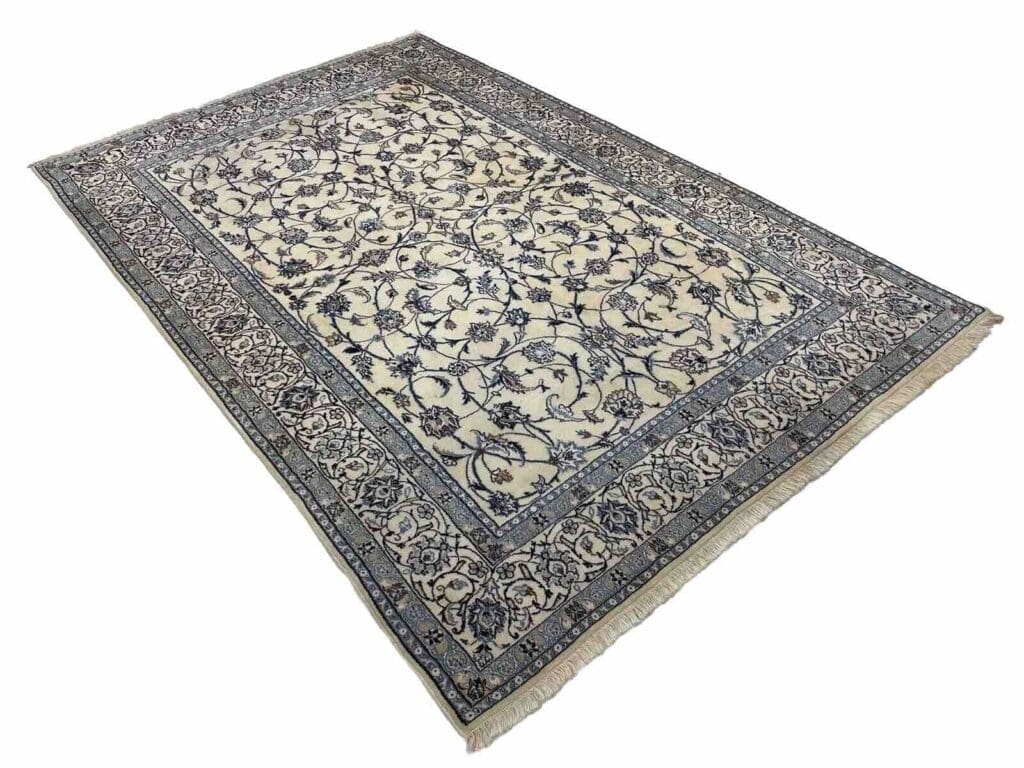
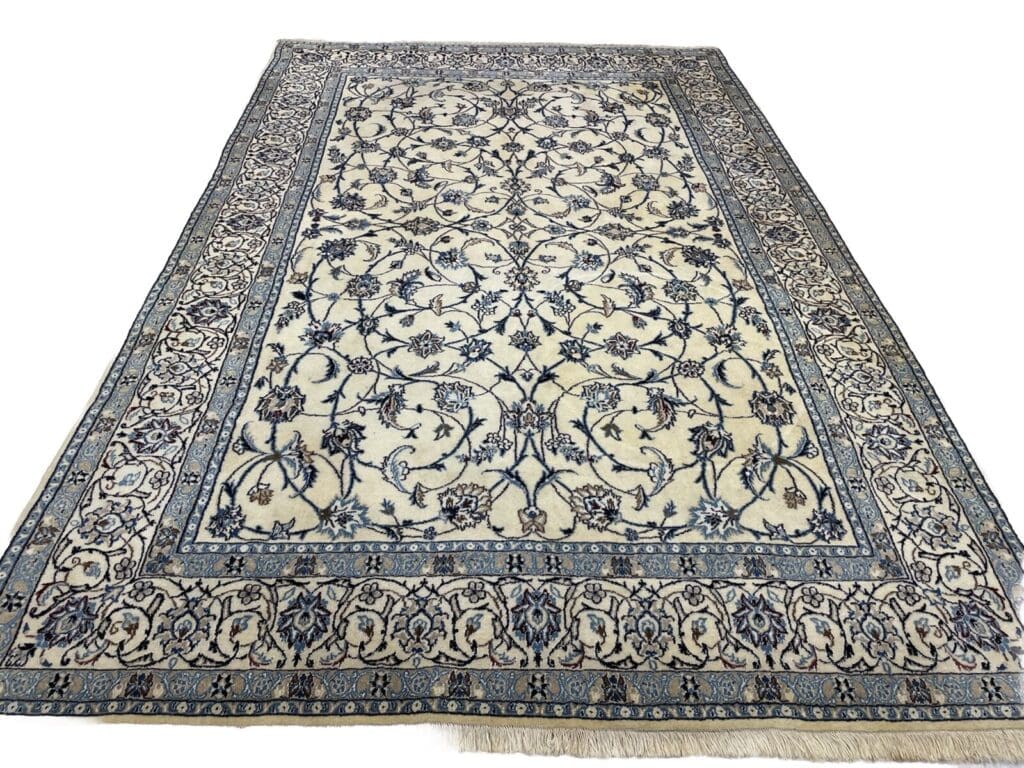
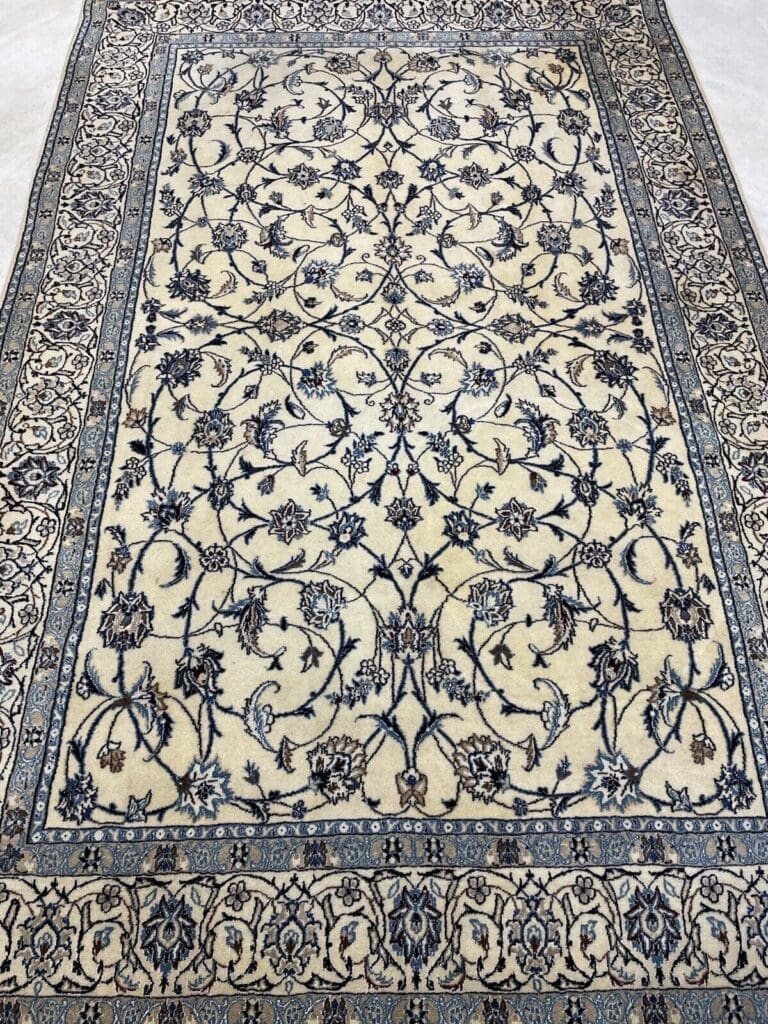
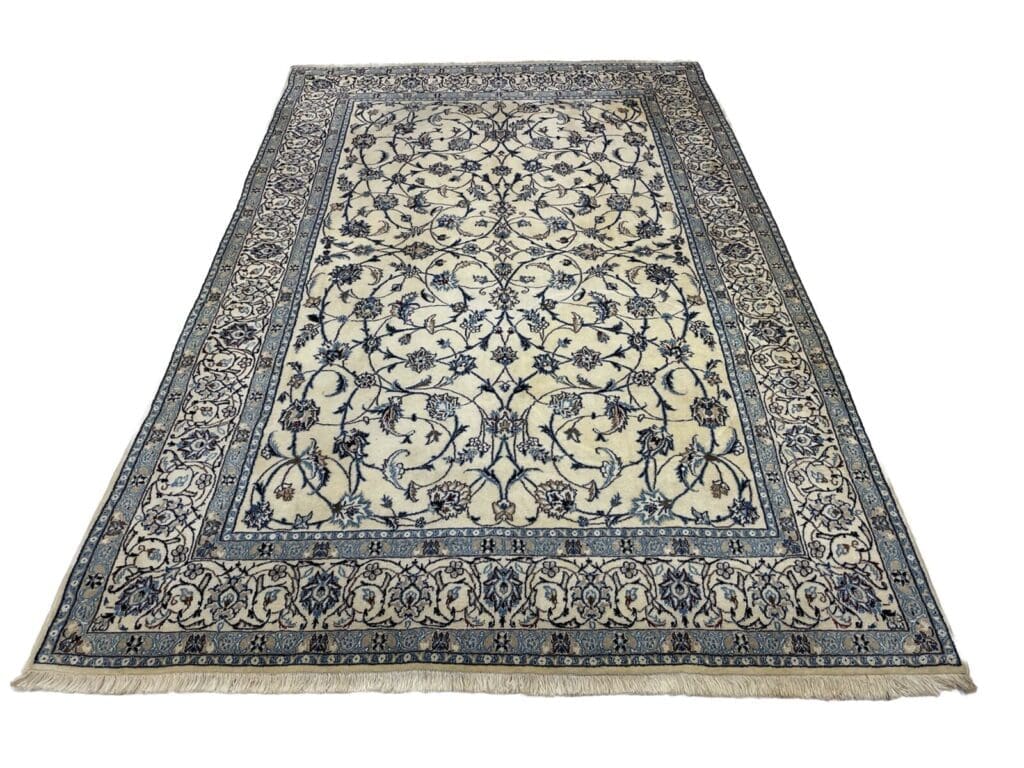
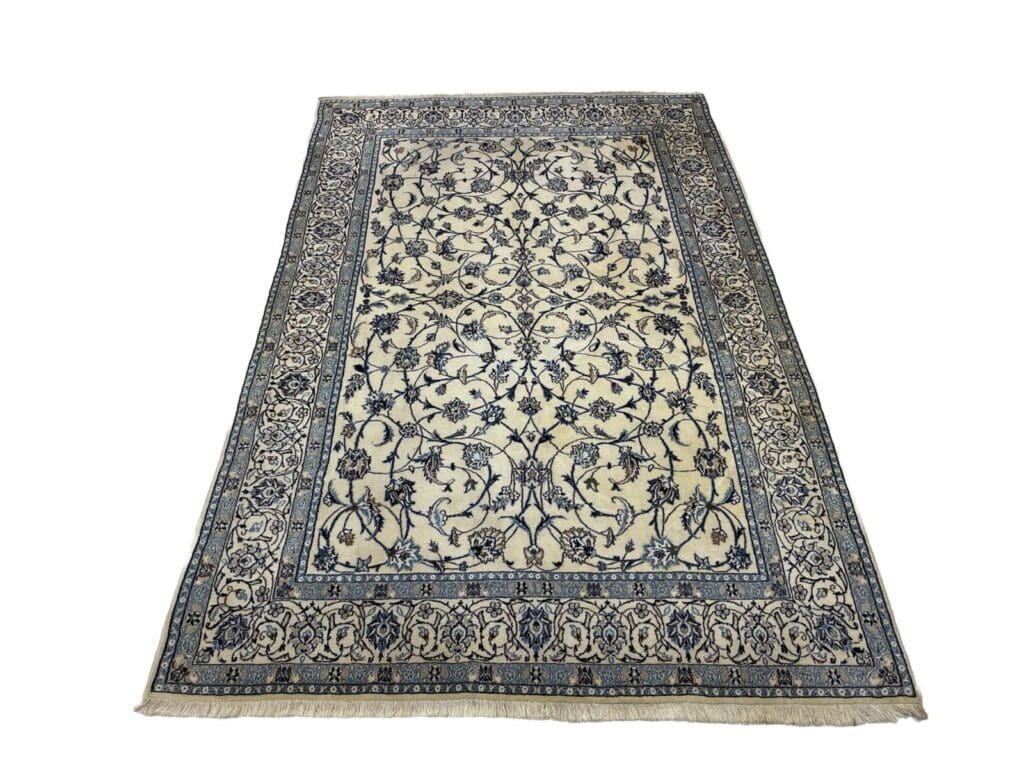
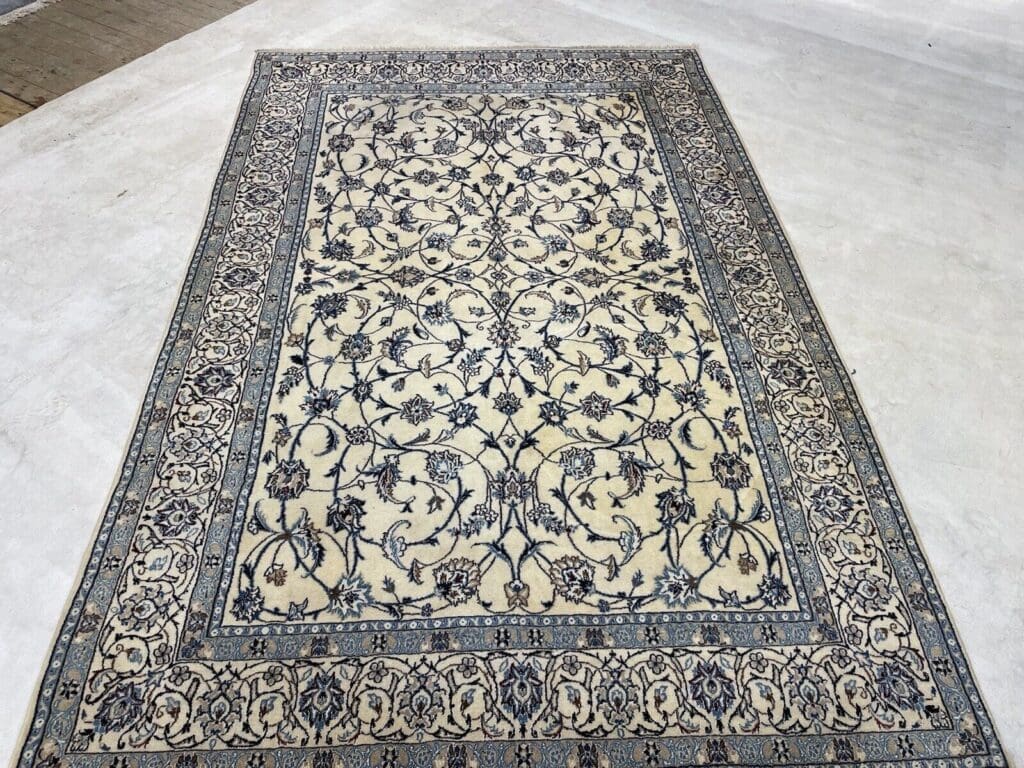
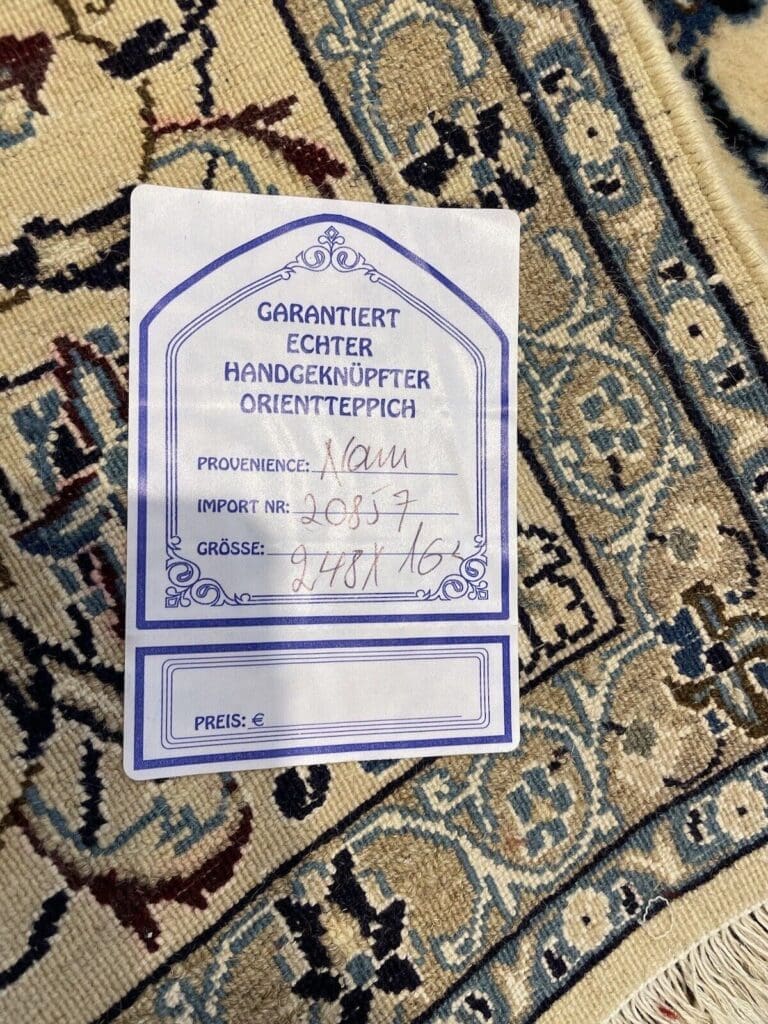
Hand-knotted Nain Persian rug | Material: high-quality wool and cotton | Size: 250×160 cm | Pile height: 1-3 cm | Pattern: Floral design with medallion, traditionally Persian Oriental | Condition: New with tag, suitable for underfloor heating
This Nain Persian rug is hand-knotted and is described as being made from high-quality wool and cotton. The combination of these two fibres is a familiar feature in Oriental rug descriptions, where different materials may serve different purposes within a textile. Wool has long been used for visible rug surfaces because it can be spun, dyed and formed into closely placed knots. Cotton is also widely used in rug making as a firm, even fibre. The description of this piece names wool and cotton without assigning each material to a specific structural component.
Hand-knotting means that individual knots are tied by hand into the foundation of the rug. The fabric is built row by row, with the pattern, pile and underlying structure developing together. This is distinct from machine production, in which the construction is completed by an industrial mechanism. Hand-knotting allows the maker to follow a drawn design while placing each colour area and outline through a succession of manual steps. Nain weaving is traditionally associated with careful control of line, ornament and overall balance.
The pile height of this rug is given as 1-3 cm. Pile is the visible surface created by the ends of the fibres secured through the knots. Its height affects the way a rug feels underfoot and the manner in which its design appears across the surface. The piece is described as new with tag. It is also identified as suitable for underfloor heating. This is a stated use characteristic for the rug in a residential setting.
Origin and Tradition
Nain is a well-known carpet town in Iran. It lies on the central Iranian plateau and has developed a recognised urban weaving tradition. Nain rugs are often associated with carefully ordered compositions in which a central medallion, scrolling foliage and floral details are arranged in a balanced field. The name Nain therefore identifies an Iranian place of origin and a regional tradition, rather than merely indicating a general colour or decorative idea.
The Nain tradition belongs to the long history of Persian carpet making. In Iranian workshops, designs are passed on, refined and adapted over generations. Elements connected with older court, city and workshop traditions may return in altered forms or in new combinations. There is no single compulsory Nain pattern. Instead, the tradition is understood through recurring principles such as a planned centre, symmetrical vegetal forms, controlled filling motifs and a clear relationship between the inner field and the surrounding border.
In hand-knotted production, design and making remain closely connected. A pattern is not printed onto a completed surface. It is constructed through numerous individual knots and repeated manual actions. The weaver follows a plan while translating lines, colours and ornaments into a textile surface. This gives the Nain tradition both a visual and a technical identity. The method of manufacture is part of what makes a hand-knotted Oriental rug different from a mechanically produced floor covering.
Persian city rugs have traditionally served both practical and decorative purposes. They are made for use on the floor, while their compositions are planned as independent textile designs. A rug can organise an interior through a central field and a surrounding frame without losing the internal logic of its ornament. In this context, Nain represents a disciplined floral vocabulary and a structured approach to the decoration of a rectangular surface. The rug described here is classified as traditionally Persian Oriental and is presented for a modern home.
The regional tradition also shows how urban workshops preserve established forms while allowing individual designs to vary. The relationship between the medallion, the floral drawing and the corners can be adjusted without abandoning the underlying Persian language of ornament. Such continuity does not require every Nain rug to look identical. It means that familiar principles of symmetry, rhythm and framing remain recognisable across different pieces and designs.
Design and Pattern
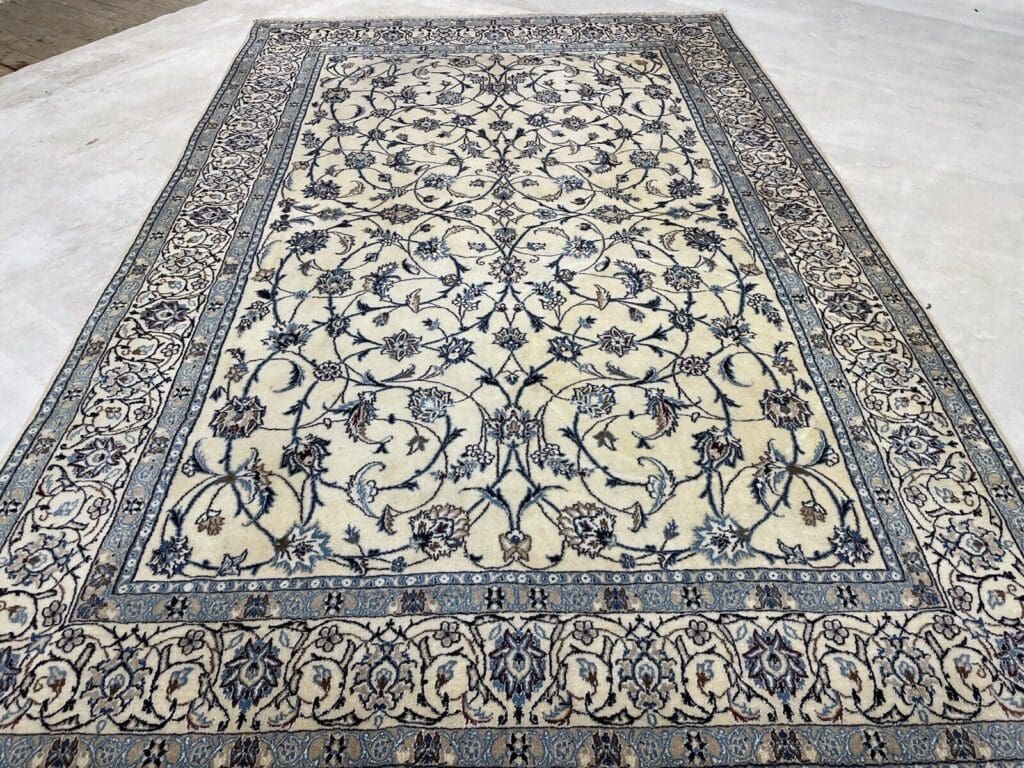
The pattern of this rug is described as a floral design with a medallion. A medallion is a distinct central ornament that acts as the visual focus of a rug. It may be circular, oval, diamond-shaped or made from several nested forms. In Persian city-rug design, the medallion is often accompanied by vines, blossoms and smaller symmetrical details. These supporting elements extend the central idea into the field and create a continuous relationship between the centre and the surrounding decoration.
Floral ornament is one of the principal visual languages of Persian carpet art. Flowers, leaves and vines are usually stylised rather than copied as botanical illustrations. They can be repeated, mirrored, reduced, enlarged or connected through scrolling stems. Stylisation makes it possible to distribute motifs across a field while maintaining rhythm and visual order. The floral design named for this rug belongs to that broader Persian tradition of turning plant forms into organised ornament.
A medallion composition is commonly understood through several areas: the central form, the field around it and the border that encloses the design. The source does not list every border element, but borders generally provide a frame and establish a transition between the inner design and the surrounding room. Repeated blossoms, leaves, vines or linear ornaments may be used for this purpose in Persian rugs. Their role is to contain the composition and reinforce its sense of balance.
The decorated corners mentioned in the product title support the transition from a central medallion to a rectangular field. Corner ornaments can be mirrored or related to the main shape so that the centre does not appear isolated. In traditional Persian compositions, they help distribute visual weight across the four corners and connect the inner field with the enclosing structure. Their importance lies in the relationship they create between centre, edge and frame, rather than in a literal representation of nature.
This type of arrangement can function in both traditional and contemporary interiors. The floral drawing and medallion communicate a Persian design vocabulary, while the organised layout gives the floor covering a clearly legible structure. The rug is presented as an original design for a modern home. That description places established ornamental ideas in a current domestic setting without changing the traditional Persian character of the pattern.
Special Features
The explicitly stated features are the hand-knotted construction, high-quality wool and cotton, the floral medallion design, decorated corners and the condition new with tag. The rug is also described as suitable for underfloor heating. Together, these details cover its material, technique, visual arrangement, condition and intended use. They accompany its identification as a Nain Persian rug with a traditionally Persian Oriental style.
The phrase new with tag describes the condition in which this one-off rug is offered. It should not be confused with a statement about historical age. No date of manufacture or age is given, and no signature is mentioned. The relevant identifying information is therefore the stated origin and type, the hand-knotting, the named materials, the floral medallion, the decorated corners, the new condition with tag and the suitability for underfloor heating.
FAQ
What is a Nain Persian rug?
A Nain Persian rug is an Iranian rug associated with the weaving tradition of Nain. Nain is known for hand-knotted city rugs with ordered layouts, floral scrollwork and frequent use of a central medallion. The name refers to both a place of origin and a regional design tradition within Persian carpet making. For this rug, the stated characteristics include hand-knotting, a floral medallion pattern and decorated corners.
What does hand-knotted mean?
Hand-knotted means that the knots are tied individually by hand into the rug foundation. The pile is formed through many manual steps rather than by printing a design onto a finished surface or producing the rug entirely by machine. This method allows the weaver to translate outlines, colour areas and floral ornaments into the textile one knot at a time. Hand-knotting is expressly identified as the construction method of this piece.
Is this rug suitable for underfloor heating?
Yes. The product description specifically states that the rug is suitable for underfloor heating. This identifies its intended use on heated floors in a home. The instructions for the particular heating system and appropriate rug care should always be followed during use. No further technical specification about thermal transmission or a particular heating system is provided.
To provide the best experiences, we use technologies like cookies to store and/or access device information. Consenting to these technologies will allow us to process data such as browsing behavior or unique IDs on this site. Not consenting or withdrawing consent, may adversely affect certain features and functions.
Functional Always active
The technical storage or access is strictly necessary for the legitimate purpose of enabling the use of a specific service explicitly requested by the subscriber or user, or for the sole purpose of carrying out the transmission of a communication over an electronic communications network.
Preferences
The technical storage or access is necessary for the legitimate purpose of storing preferences that are not requested by the subscriber or user.
Statistics
The technical storage or access that is used exclusively for statistical purposes.The technical storage or access that is used exclusively for anonymous statistical purposes. Without a subpoena, voluntary compliance on the part of your Internet Service Provider, or additional records from a third party, information stored or retrieved for this purpose alone cannot usually be used to identify you.
Marketing
The technical storage or access is required to create user profiles to send advertising, or to track the user on a website or across several websites for similar marketing purposes.
 SECURE PAYMENT
 SHIPPING PARTNERS