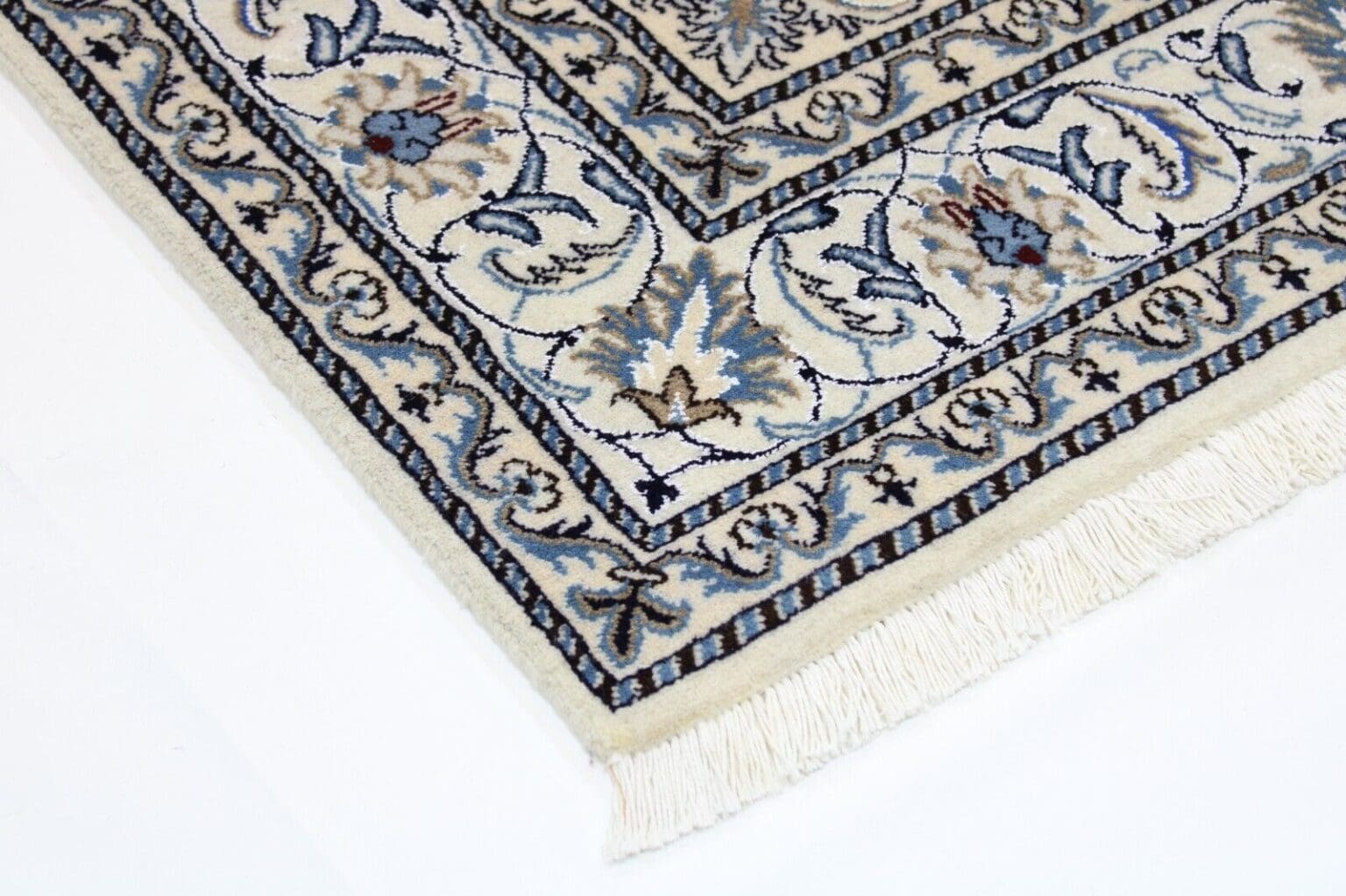
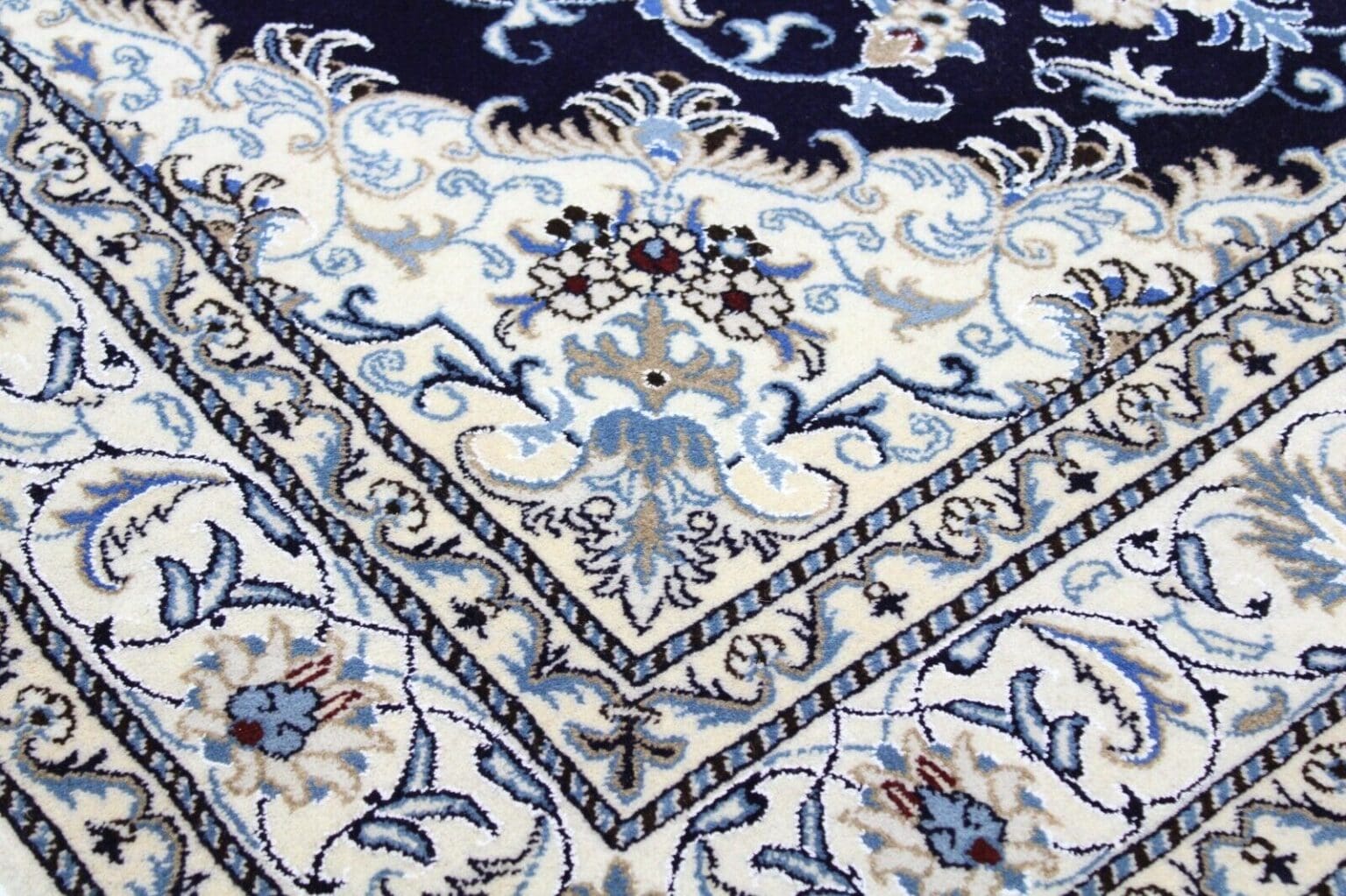
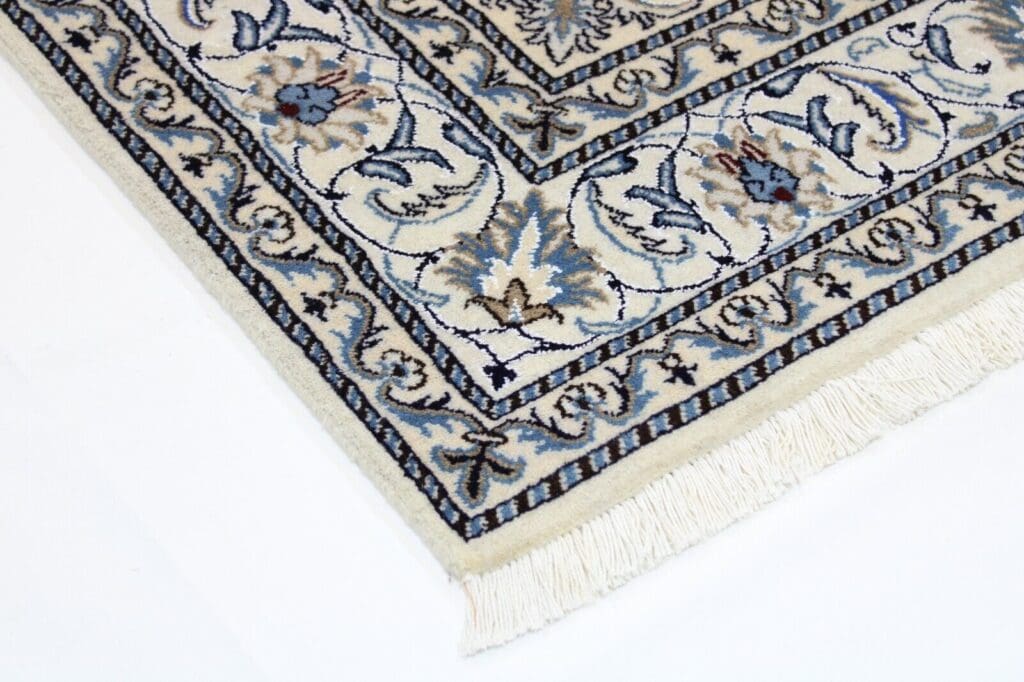
This Nain Persian rug is hand-knotted. The listed materials are high-quality wool and cotton. Wool forms the pile, while cotton is used for the warp. The pile is described as high-pile, giving the surface a clearly tactile textile structure. In a hand-knotted rug, the visible pile is created by attaching individual knots to the underlying warp and weft structure rather than by producing the surface through a machine-made process.
Hand knotting involves a sequence of careful operations. The warp is arranged on the loom, knots are tied row by row, and weft material is inserted to secure the rows. The pile is then trimmed so that the surface has a coherent height. A high pile leaves more wool visible above the foundation and gives the rug a fuller feel underfoot. The precise appearance depends on the knotting, trimming, tension of the foundation and execution of the design.
The division between wool pile and cotton warp is a familiar one in Persian rug making. Wool is used where a resilient, colour-receptive surface is required, while cotton provides a firm and regular foundation. Materials alone do not describe every aspect of a rug’s construction. Knot structure, finishing, trimming and the handling of the pattern are equally relevant when the workmanship is considered.
The product information identifies the technique as hand-knotted and the pile as high-pile. It does not give a numerical knot count. The knot-density entry is therefore stated as hand-knotted rather than supplemented with a number. This keeps the description limited to the construction details that are provided: high-quality wool and cotton, a wool pile, a cotton warp and hand knotting.
Origin and Tradition
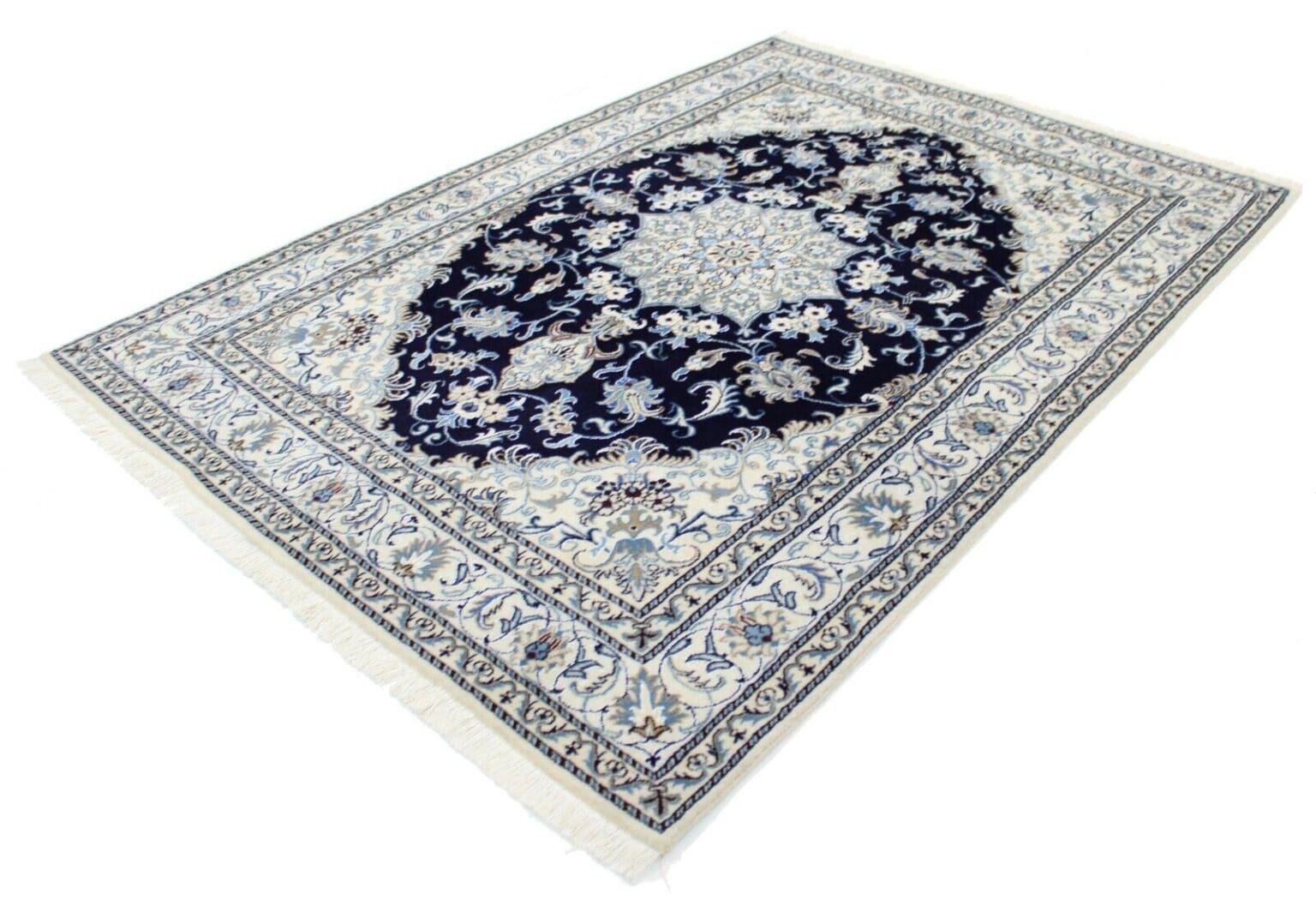
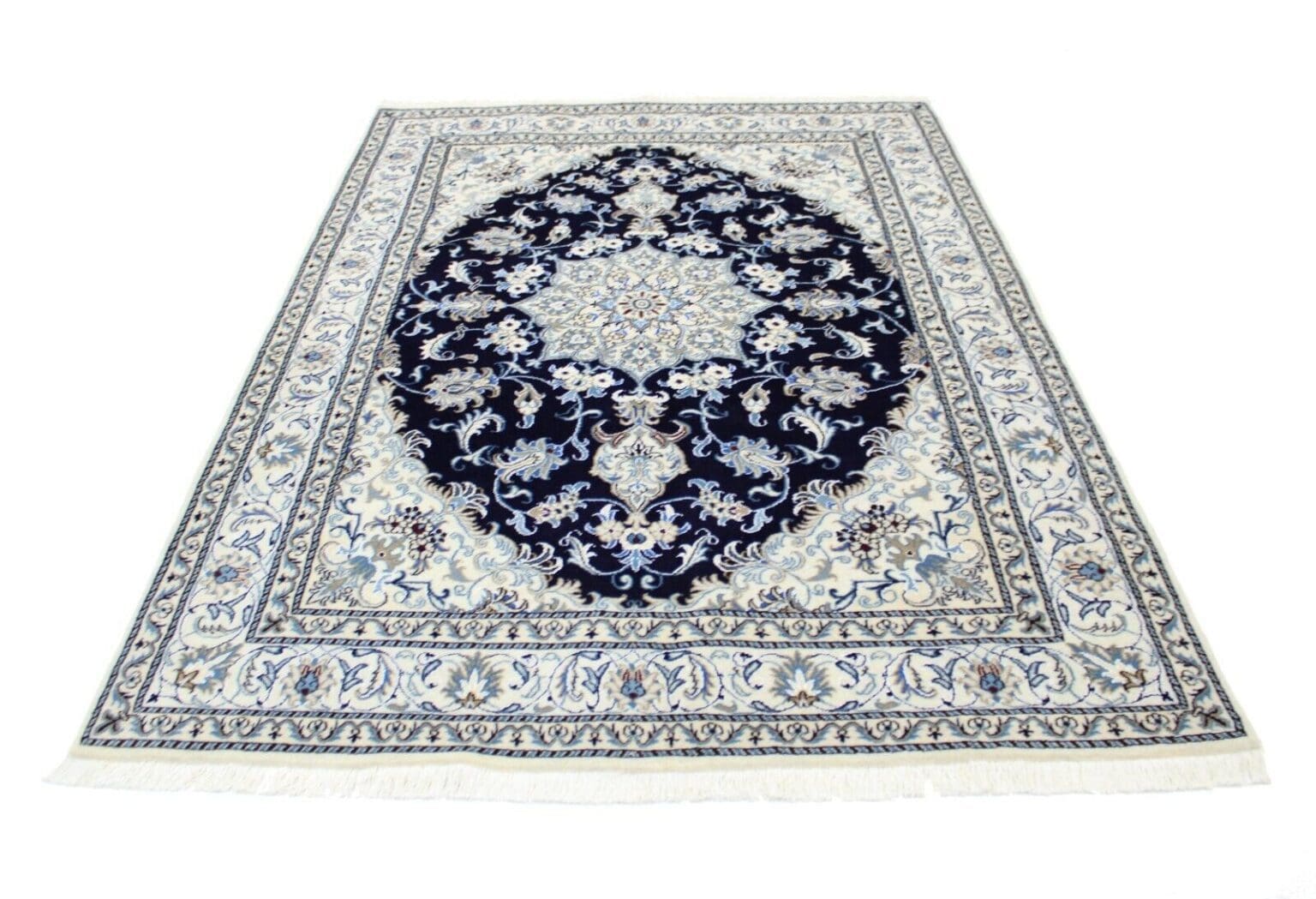
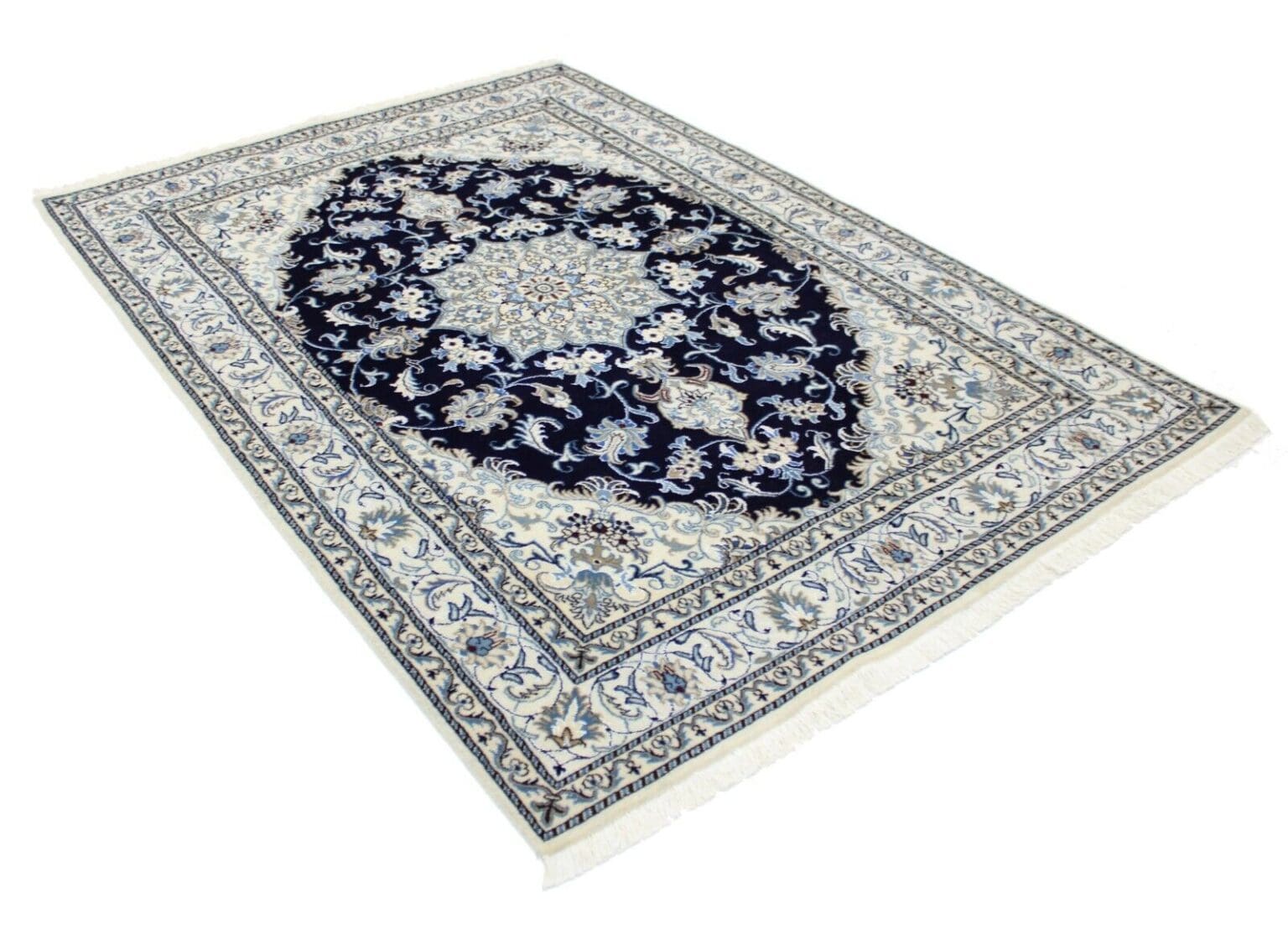
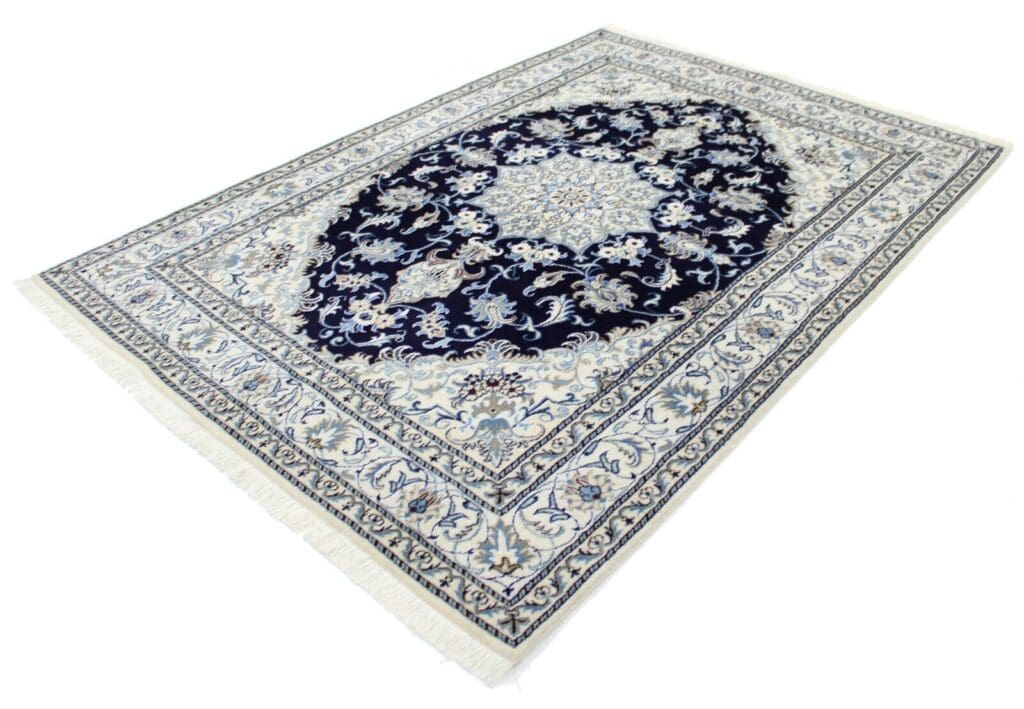
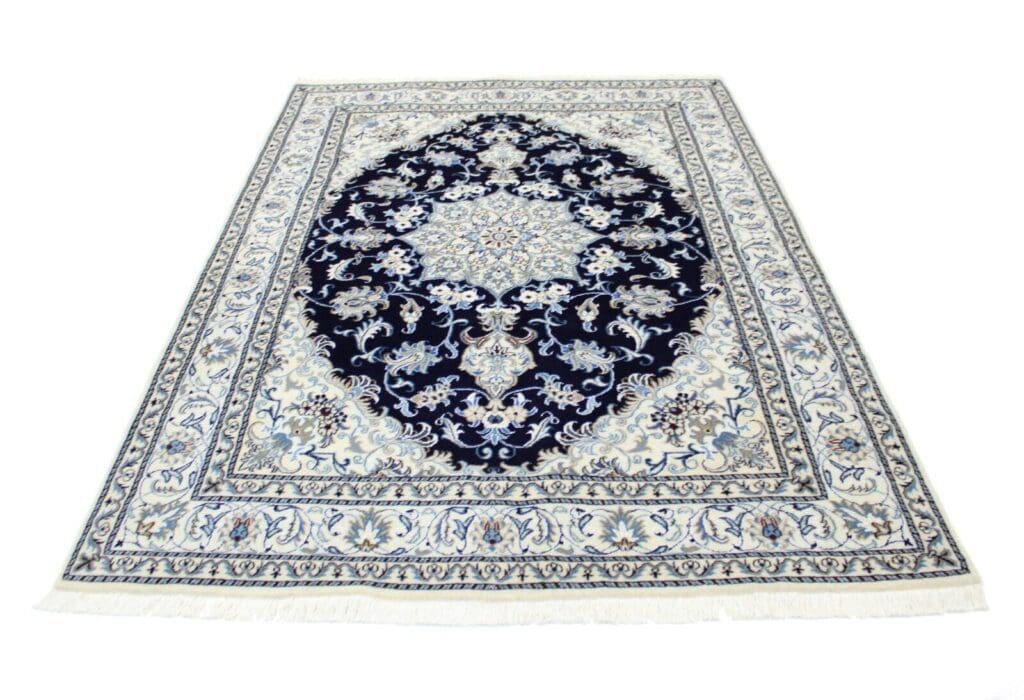
This rug comes from Iran and is identified as a Nain Persian rug. Nain is one of the recognised weaving centres of the country. The region is associated with carefully organised Persian compositions, floral drawing and a balanced relationship between central field and border. The name Nain therefore places the rug within a particular Iranian weaving tradition, while the stated floral oriental pattern identifies the decorative language recorded for this individual piece.
Iranian rug making includes urban workshop production, village weaving and traditions connected with mobile communities. Skills such as preparing yarn, setting the loom, tying knots, inserting wefts, trimming the pile and finishing the edges have been transmitted across generations. A hand-knotted Persian rug is consequently the result of many linked tasks rather than a single production step. Regional names reflect the places where such methods and design vocabularies became established.
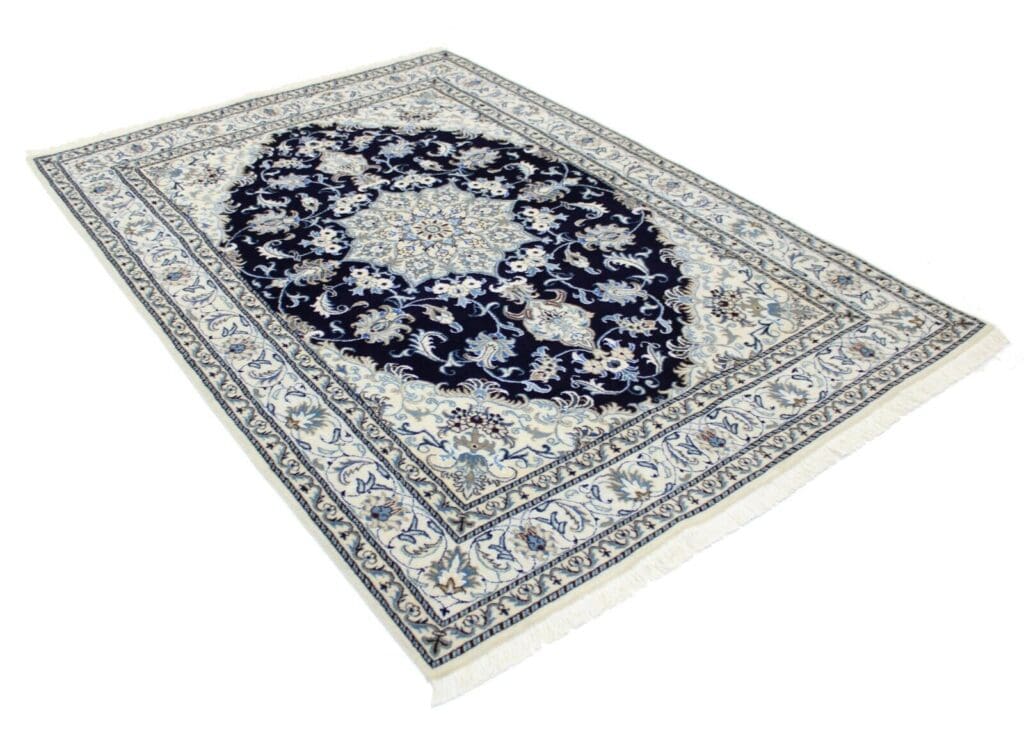
Nain designs are often associated with a controlled composition and a carefully articulated floral vocabulary. A central field may be framed by one or more borders, with smaller forms linking the different zones. These are general characteristics of the Nain tradition, not a claim that every possible detail appears on this rug. For this item, the documented pattern is floral and oriental, and the documented origin is Iran.
The history of Persian weaving is shaped by exchange between cities, workshops and neighbouring regions. This has allowed motifs to travel while retaining local ways of drawing, arranging and balancing them. Nain should not be confused with Isfahan, Tabriz or Kashan, even though these places are also known for Persian rugs. Each place has its own historical context and preferred design approaches. The origin of this rug remains Nain in Iran.
Origin and technique are related but not interchangeable terms. Iran identifies the country of production, Nain identifies the regional tradition used to describe the rug, and hand-knotted identifies the method of construction. The floral oriental pattern describes its decorative character. Keeping these categories separate gives a precise account of the rug without turning a general Persian motif into an unsupported claim about another province or workshop.
Design and Pattern
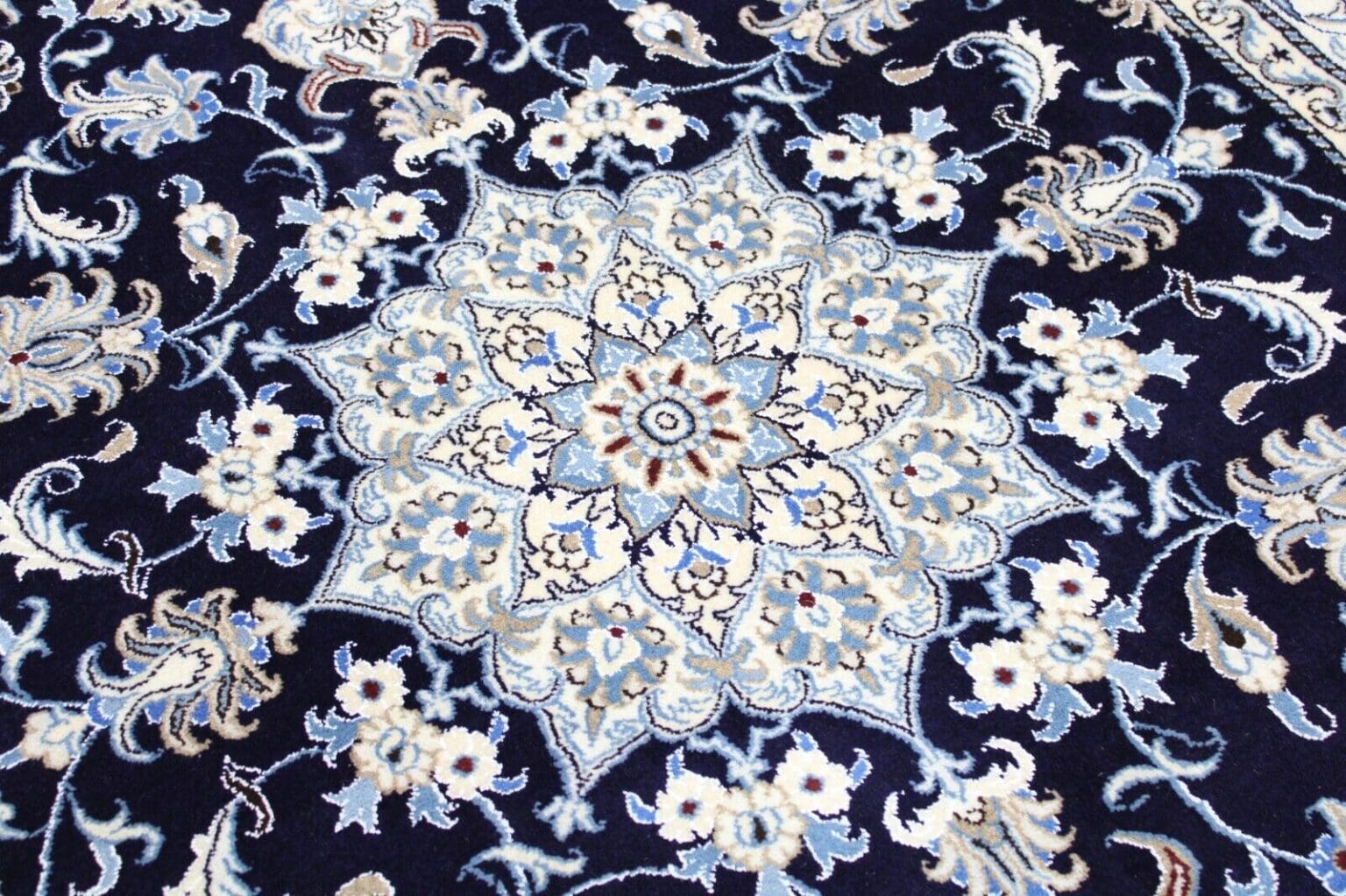
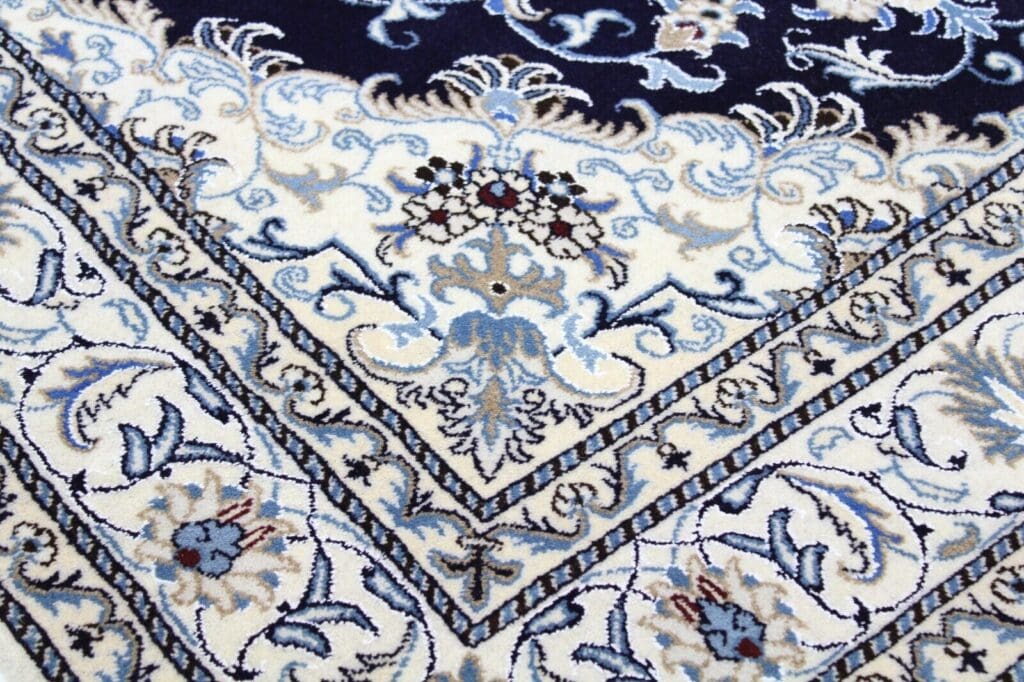
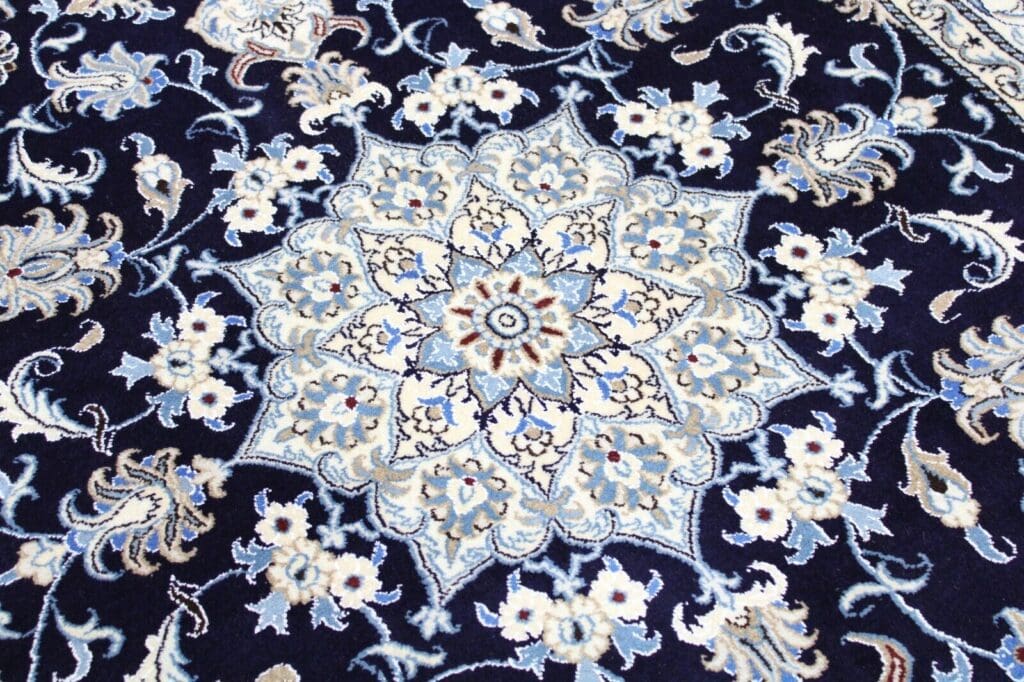
The recorded pattern consists of flowers and is described as oriental. Floral decoration is one of the broad and enduring languages of Persian rug design. Flowers, leaves, vines and stylised plant forms can be arranged across a field, repeated in a rhythm or used to connect the central composition with its border. Their purpose is not necessarily botanical accuracy; they also create movement, balance and a visual structure across the woven surface.
Persian floral motifs are commonly stylised into rosettes, blossoms, palmettes, leaves and curling stems. Through repetition, symmetry and measured spacing, individual forms become part of a larger composition. The phrase floral, oriental records the motif category supplied for this rug. It does not justify adding particular flowers, colours, medallions or border forms that are not stated in the source.
Nain’s design tradition is often discussed through the relationship between field, border and fine internal drawing. A central arrangement may provide the visual focus, while a surrounding border gives the composition an outer boundary. Smaller floral details can create transitions between these areas. On a hand-knotted rug, every part of such a design has to be translated into rows of individual knots, which makes the clarity of the drawing dependent on both the design and the execution.
Floral oriental patterns appear in many weaving regions, but their treatment differs from place to place. Nain is generally associated with orderly line work and a composed arrangement. That regional background explains why Nain rugs are often recognised through their balance and detail, but it does not make every Nain rug identical. Weavers and workshops can vary the scale, rhythm and distribution of floral forms while remaining within the wider tradition.
A floral rug can work with both traditional and more restrained interiors because the pattern establishes a structured surface rather than relying on a single isolated image. The visual effect is shaped by contrast, density, line direction and the relationship between the motifs and the surrounding ground. These observations describe how floral Persian design functions in general. The specific features established for this rug are its Nain designation, its floral oriental pattern and its Iranian origin.
Special Features
The rug is described as new without a label and in top condition. This is the stated condition of the piece. It is also listed as suitable for underfloor heating. That specification should be considered together with the operating instructions of the particular heating system and with normal care for a hand-knotted wool rug.
The high pile gives the surface a pronounced textile character. Regular gentle vacuuming can help remove loose dust, while vigorous rubbing and unsuitable cleaning products should be avoided. If deeper cleaning is required, professional rug cleaning is appropriate for protecting the wool surface and the structure beneath it. Limiting prolonged direct sunlight is also a sensible general precaution for textiles.
A suitable rug pad can help keep a hand-knotted rug stable on a smooth floor and reduce movement during use. Sharp pressure from furniture should not be concentrated on one area for long periods. These are general handling recommendations for wool rugs and do not add any unrecorded information about the condition or construction of this particular piece.
FAQ
What indicates quality in a Persian rug?
Quality is assessed through several elements rather than one figure alone. The regularity of the knots, the quality of the materials, the firmness of the foundation, the evenness of the pile and the accuracy of the design all matter. The finishing and the way the edges are secured are also relevant. This rug is described with high-quality wool and cotton, hand knotting and a high pile. No numerical knot density is supplied, so no number should be inferred.
Where do Persian rugs come from?
Persian rugs come from Iran, whose different weaving regions developed distinct traditions. Nain, Isfahan, Tabriz and Kashan are often discussed as important Iranian rug centres. Their differences may appear in composition, ornament, colour relationships and technical practice. This rug is identified specifically as a Nain Persian rug from Iran. Mentioning other centres is general background and does not change the stated origin of this piece.
How should a Persian rug be cared for?
Gentle regular vacuuming helps remove loose dust from the surface. Strong friction, harsh cleaning agents and prolonged direct sunlight should be avoided. When a spill occurs, it is better not to work it deeper into the wool; professional cleaning should be considered for marks that cannot be removed safely. A suitable pad can improve stability. The rug is listed as suitable for underfloor heating, but the instructions for the heating system should still be followed.
To provide the best experiences, we use technologies like cookies to store and/or access device information. Consenting to these technologies will allow us to process data such as browsing behavior or unique IDs on this site. Not consenting or withdrawing consent, may adversely affect certain features and functions.
Functional Always active
The technical storage or access is strictly necessary for the legitimate purpose of enabling the use of a specific service explicitly requested by the subscriber or user, or for the sole purpose of carrying out the transmission of a communication over an electronic communications network.
Preferences
The technical storage or access is necessary for the legitimate purpose of storing preferences that are not requested by the subscriber or user.
Statistics
The technical storage or access that is used exclusively for statistical purposes.The technical storage or access that is used exclusively for anonymous statistical purposes. Without a subpoena, voluntary compliance on the part of your Internet Service Provider, or additional records from a third party, information stored or retrieved for this purpose alone cannot usually be used to identify you.
Marketing
The technical storage or access is required to create user profiles to send advertising, or to track the user on a website or across several websites for similar marketing purposes.
 SECURE PAYMENT
 SHIPPING PARTNERS


