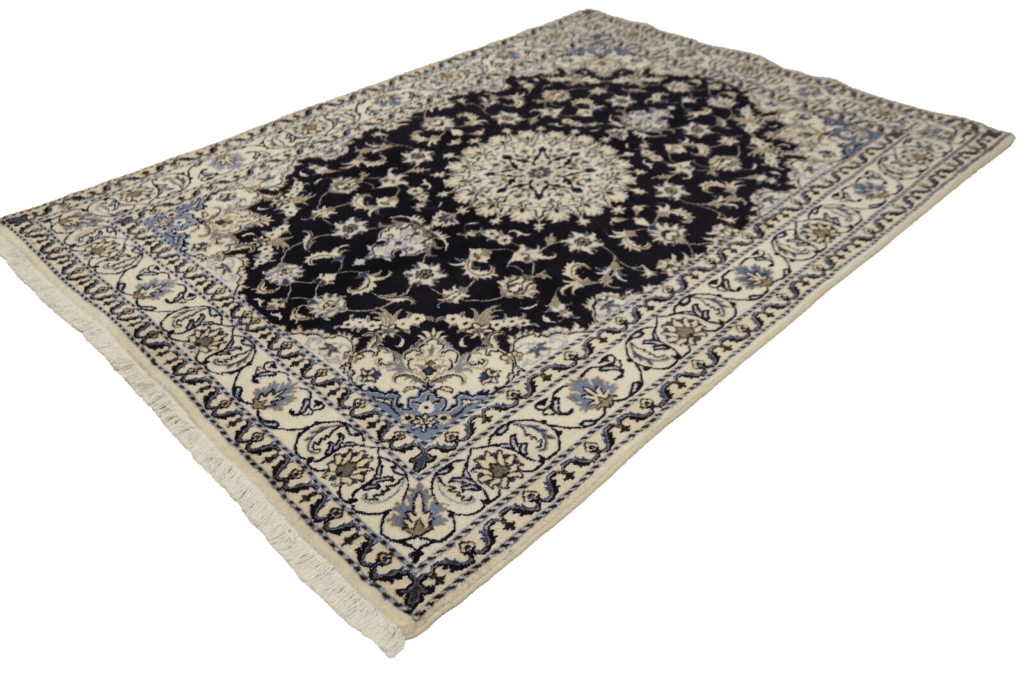
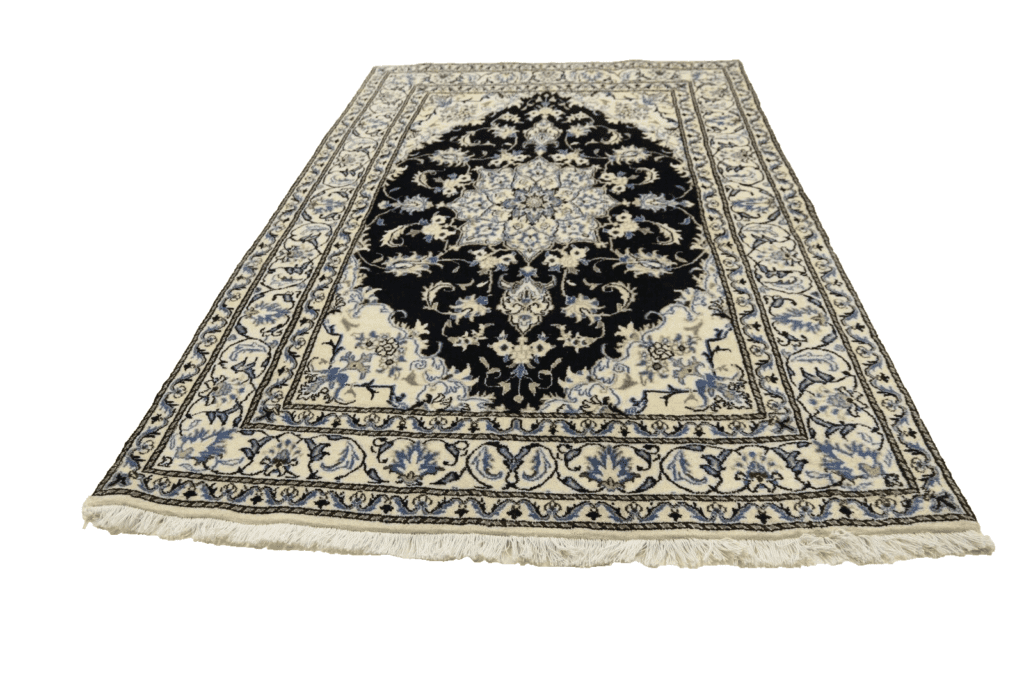
This Nain Persian rug is hand-knotted from a blend of 90% virgin wool and 10% silk. The two fibres contribute different qualities to the surface and work together in the structure of the pile. Virgin wool gives the rug a soft, supple feel and is valued for its warmth and natural resistance to soiling. Silk adds a fine sheen and a smooth visual presence. Together, these materials create a surface that feels substantial while retaining a refined appearance.
Hand-knotting is a detailed process in which individual knots are tied by hand and then secured within the foundation of the rug. The pile is built gradually row by row, allowing the weaver to render small floral elements and balanced outlines with precision. This method also means that the character of a hand-knotted rug is connected to the work of the person who made it. The combination of hand-knotting, virgin wool and silk is central to this rug’s construction.
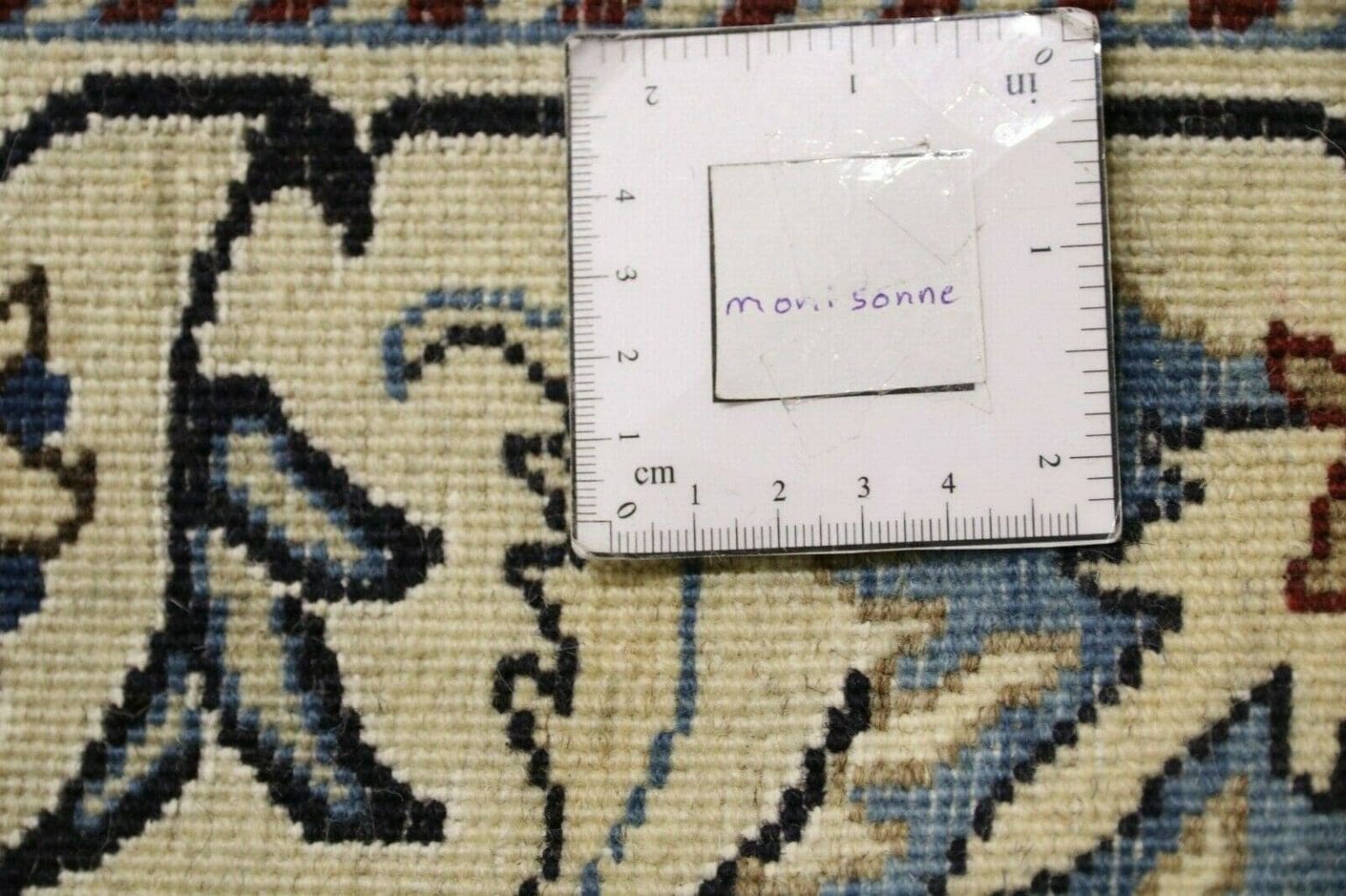
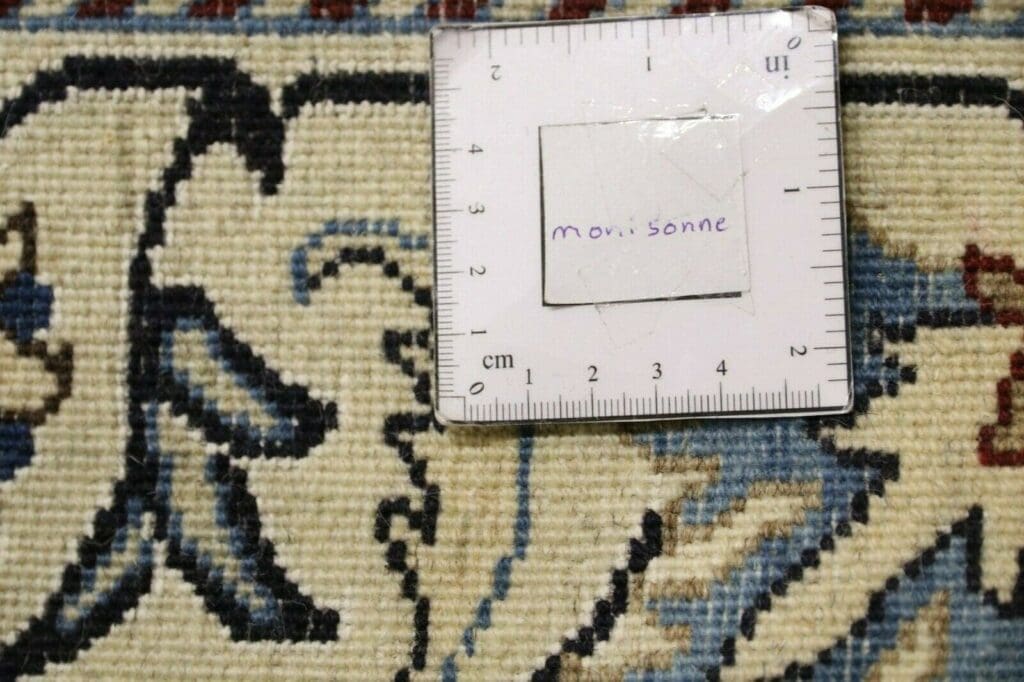
The rug has a knot density of approximately 300,000 knots per square metre. Knot density describes how closely the individual knots are placed and is one indication of the degree of detail that can be achieved in a design. It does not replace an assessment of the materials or workmanship, but it helps explain why fine floral forms and orderly arrangements can be represented with clarity. The wool and silk pile also responds to light in different ways, giving the surface a changing balance between softness and lustre.
Origin and Tradition
The rug comes from Nain, a renowned carpet-producing region in Iran. Nain is associated with Persian rugs whose appearance is shaped by careful drawing, fine knotting and a restrained approach to ornament. The town and its surrounding weaving tradition have become known well beyond Iran, while the work itself remains connected to local knowledge passed through generations of weavers.
Carpet weaving in Nain developed from a broader Persian culture of textile production and decorative design. Persian carpets are not defined by one single construction or pattern; different regions developed their own ways of arranging fields, borders, medallions and floral details. In Nain, the preference for precise compositions and delicate ornament became an important part of the region’s identity. Designs are often planned with a strong sense of balance, so that the central field and its surrounding borders work together rather than appearing as separate elements.
The Nain tradition is also linked with the continued transmission of technical skills. Drawing a carpet requires knowledge of proportion, repeat, colour relationship and the placement of individual motifs. Knotting requires the ability to follow that drawing consistently while maintaining the intended structure. These skills are learned and refined through practice, and the survival of regional designs depends on this continuity. A Nain rug therefore reflects both the individual making of one piece and a wider tradition of Persian carpet craftsmanship.
Iranian carpets have long been valued as useful textiles as well as works of decorative art. Their designs can preserve regional conventions while allowing variations in scale, colour and detail. Nain rugs belong to this living tradition: they are made for interiors, but their visual language comes from a history in which weaving, pattern design and cultural memory are closely connected. The designation Nain identifies the Iranian origin and the regional tradition associated with the rug; it does not mean that every Nain rug has exactly the same pattern or colour arrangement.
Design and Pattern
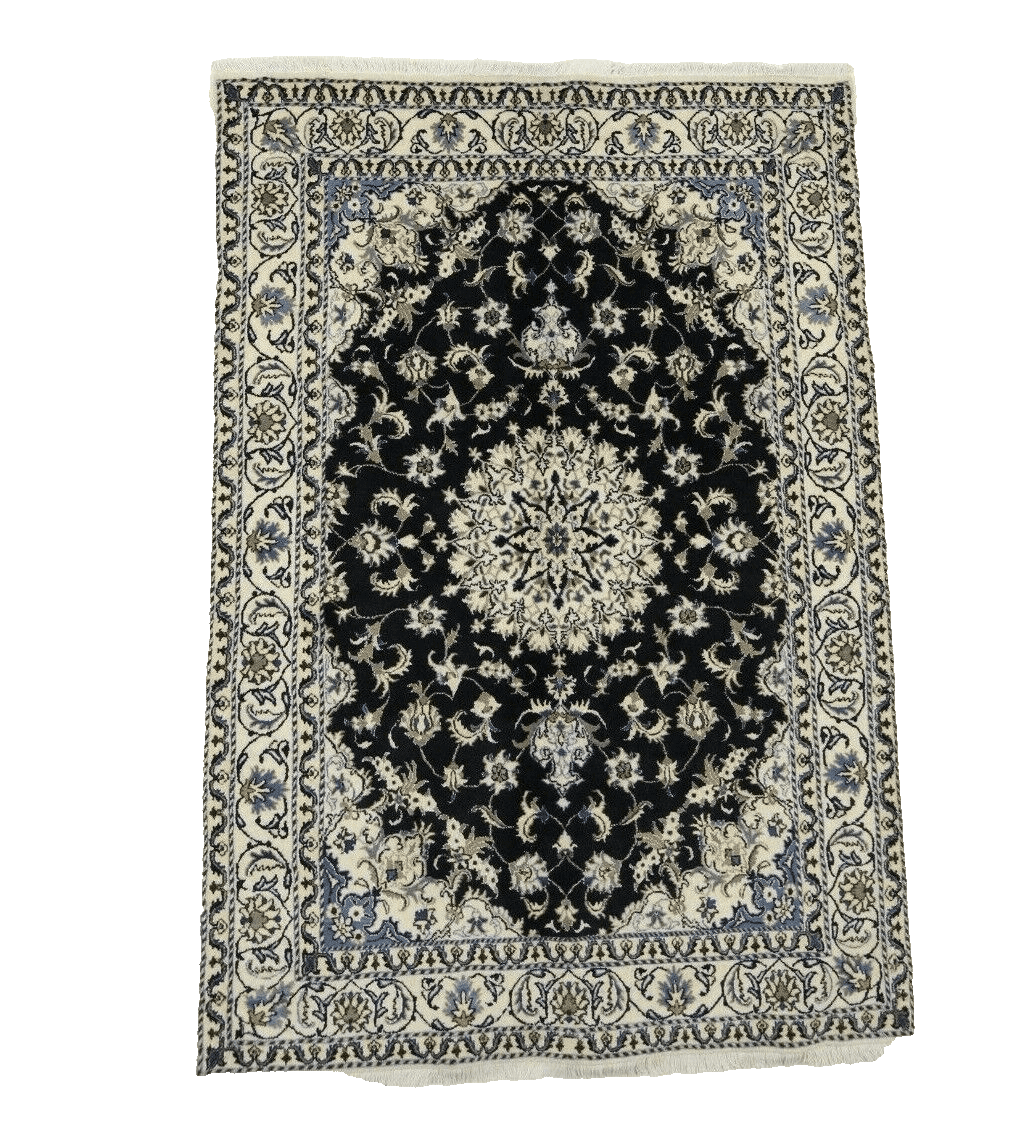
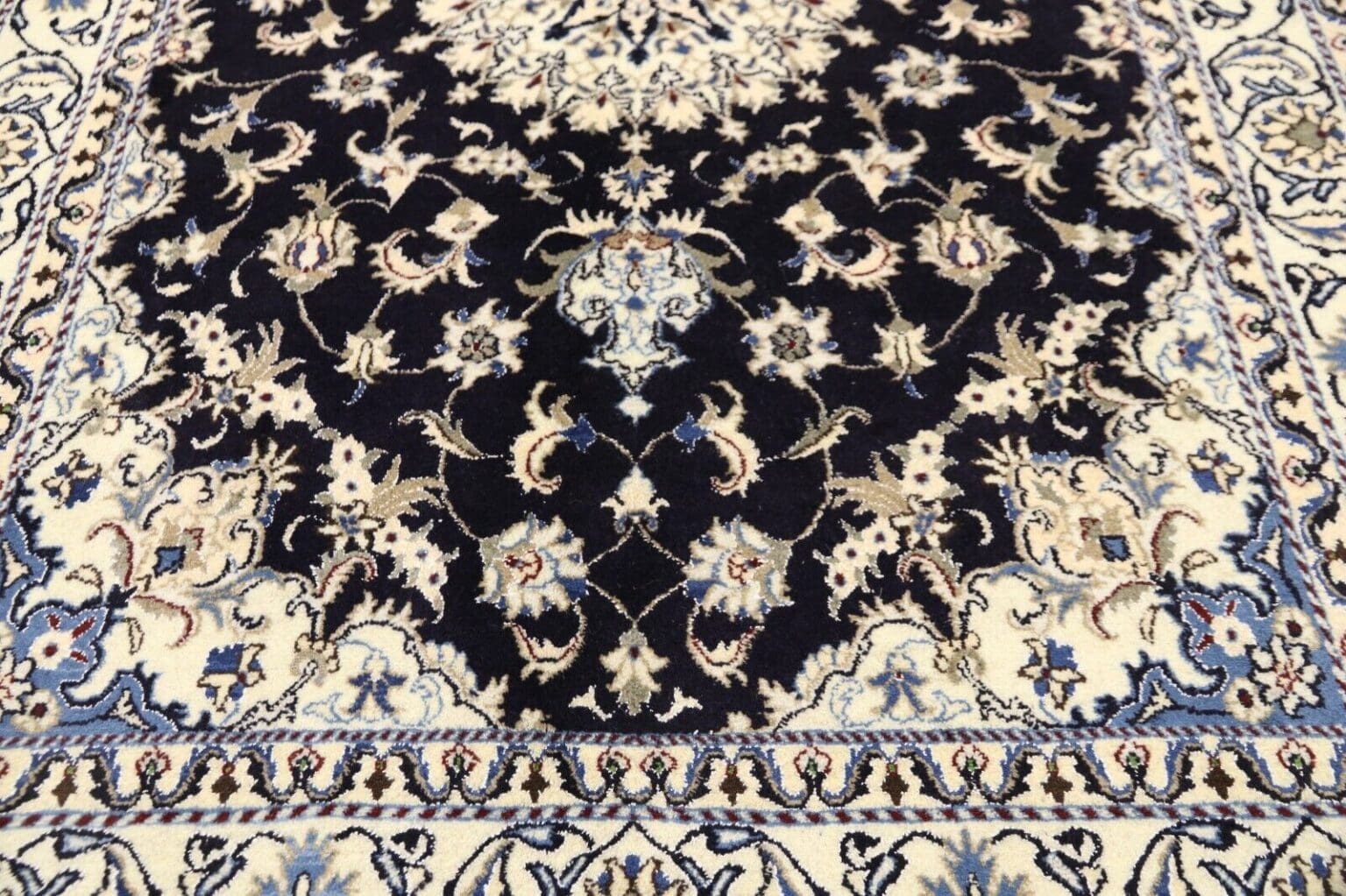
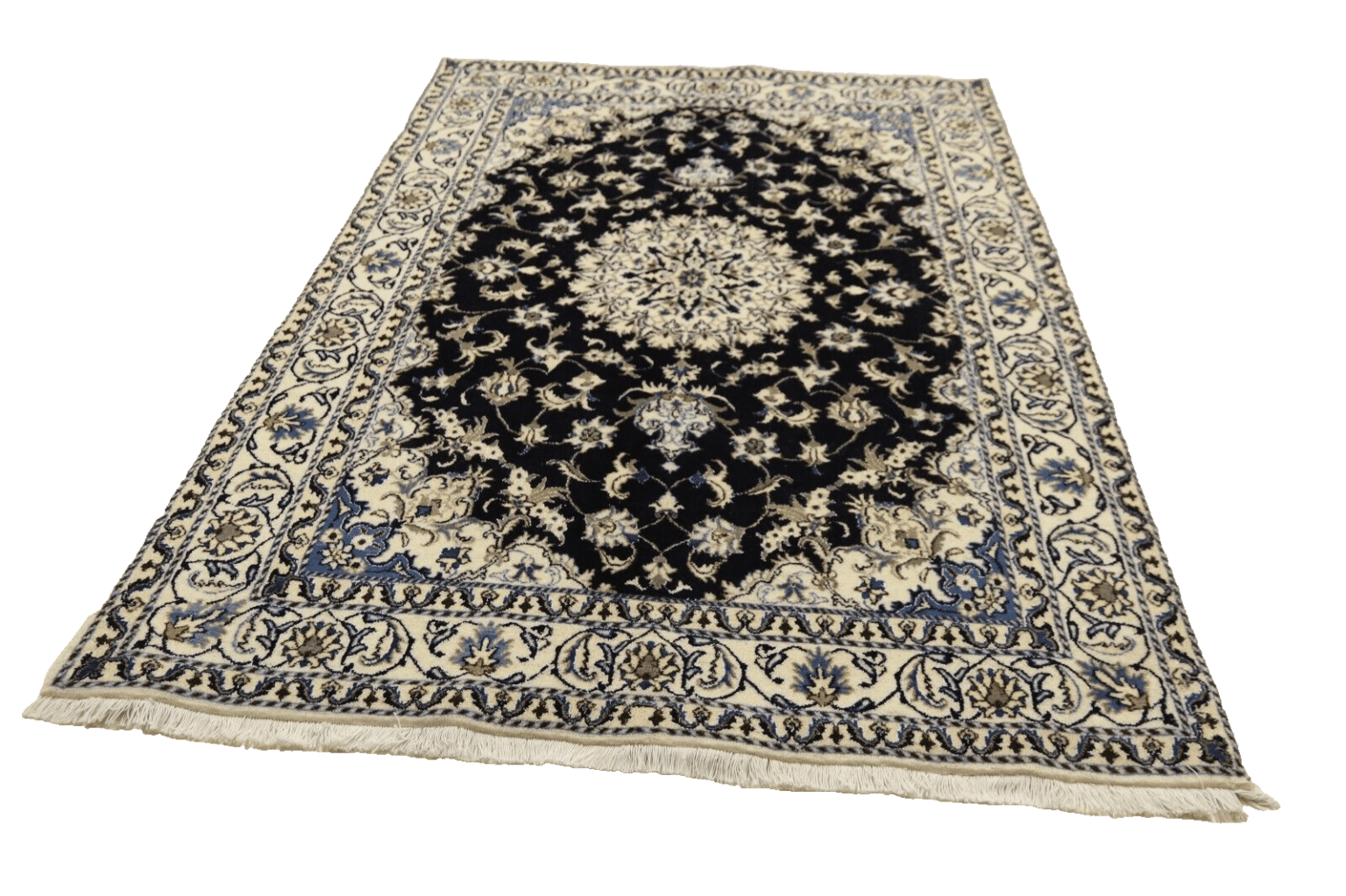
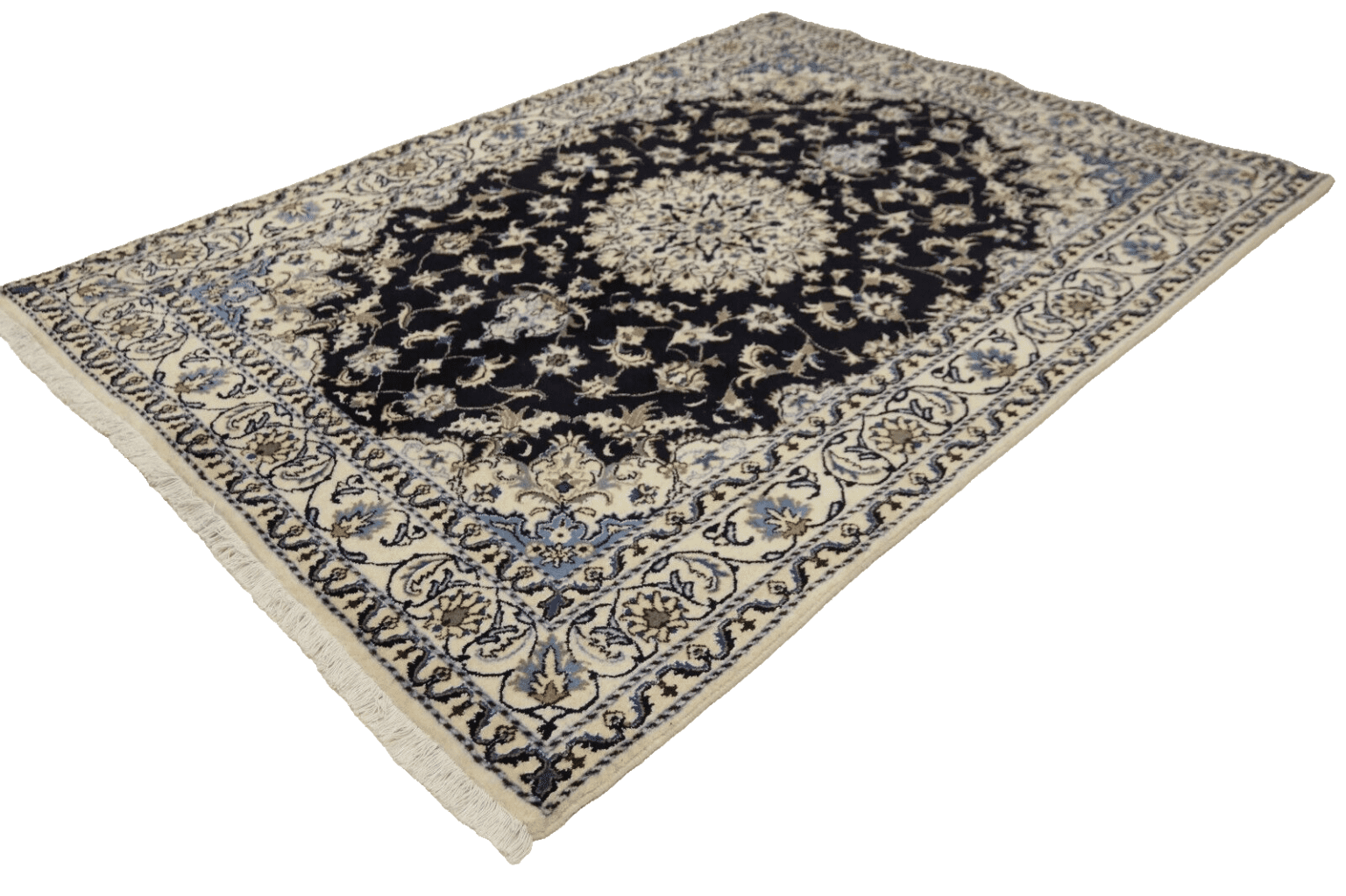
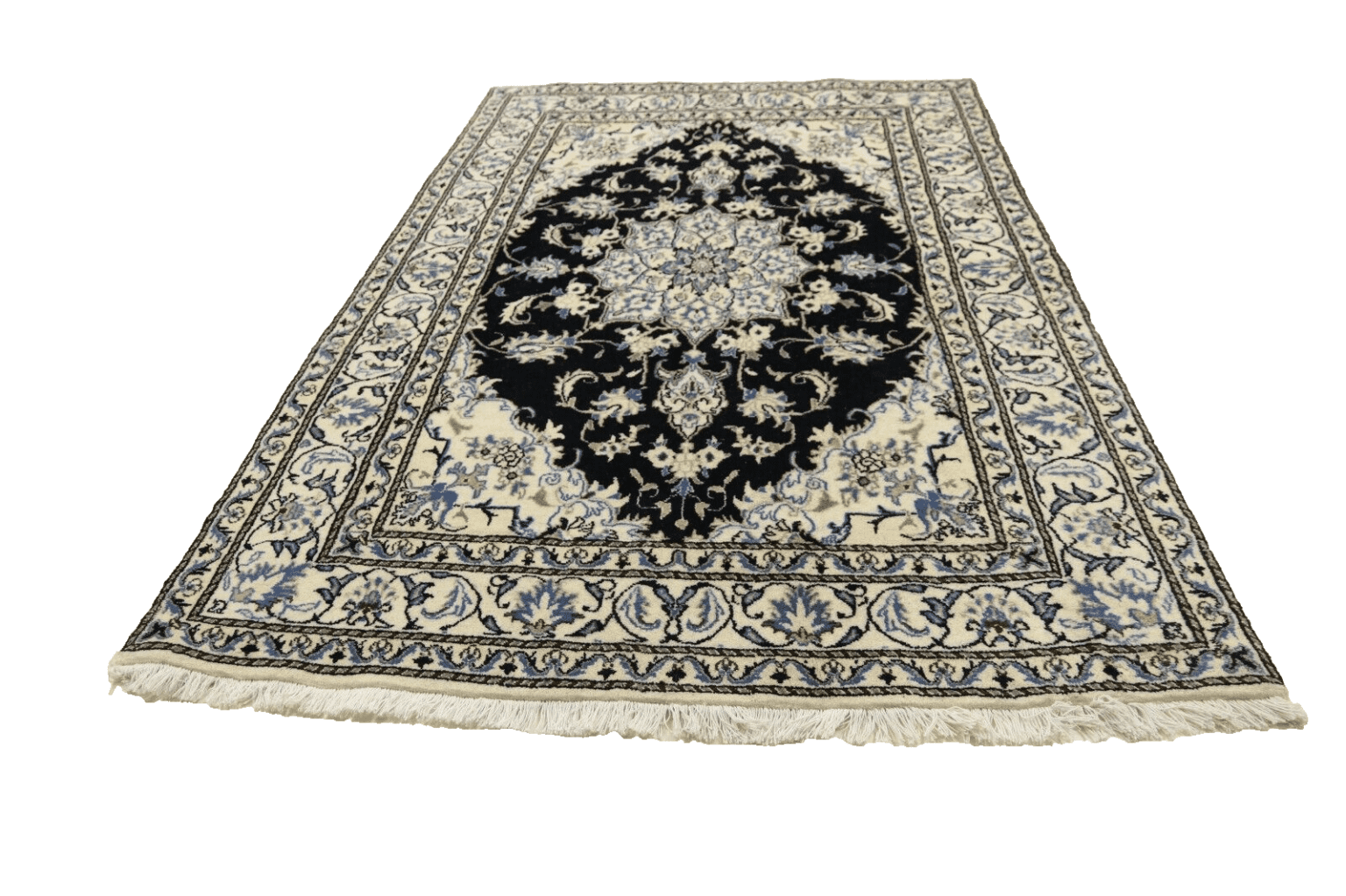
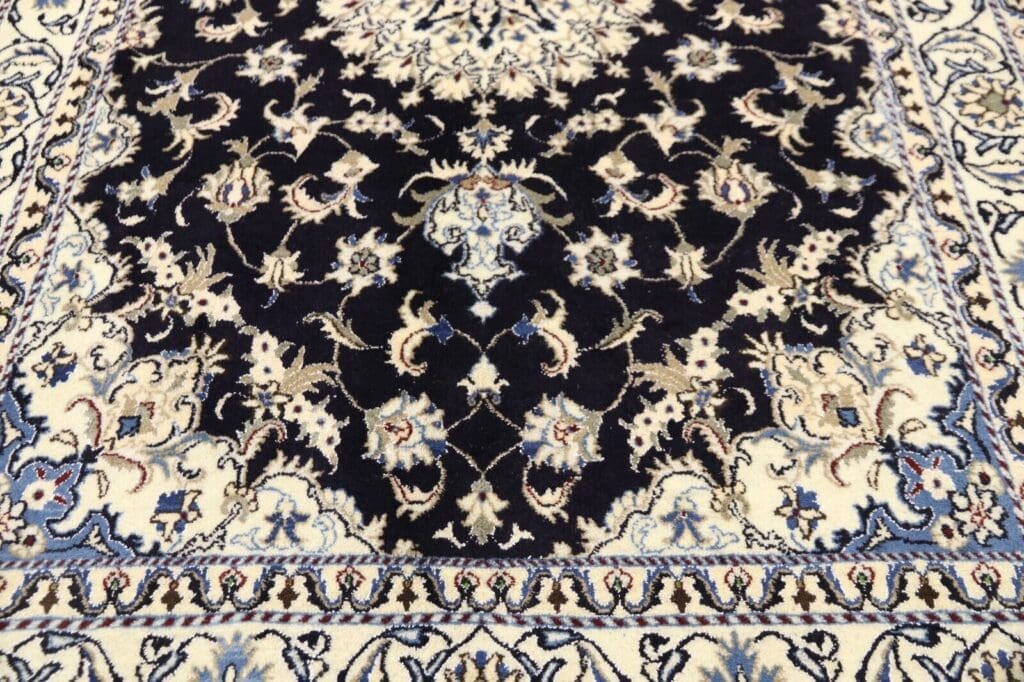
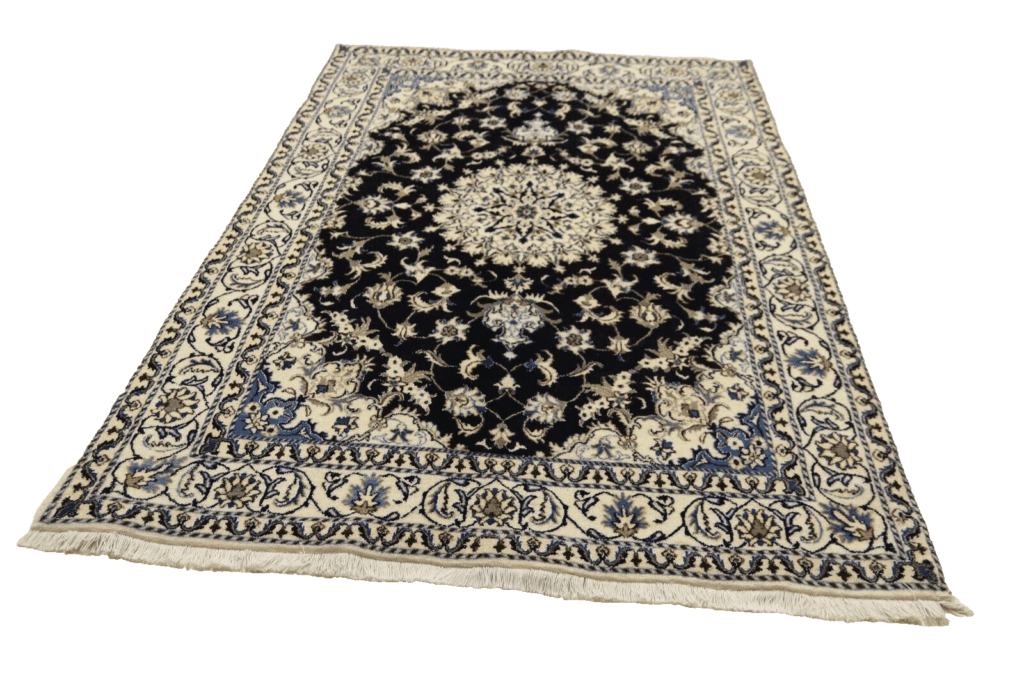
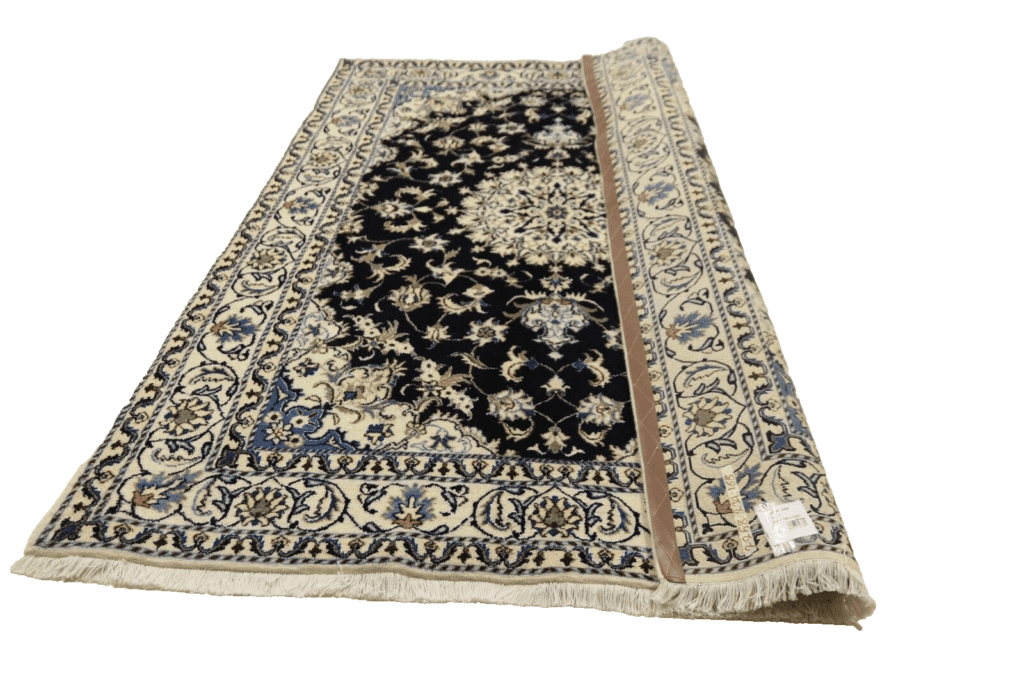
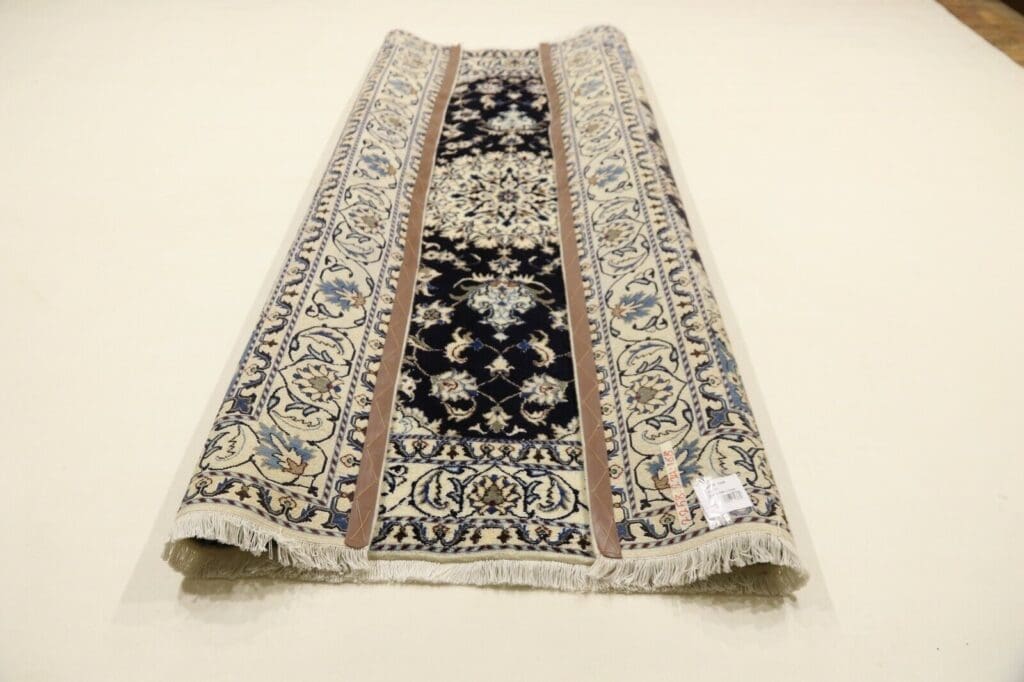
The design of this Super Nain rug is described through harmonious colours and elegant ornament. Delicate floral motifs are characteristic of Nain carpets and are frequently arranged in symmetrical compositions. Floral decoration in Persian weaving may refer to leaves, blossoms, curling stems and related botanical forms. These elements are commonly organised into repeat structures or balanced groupings, creating a design that can be read as a coherent whole.
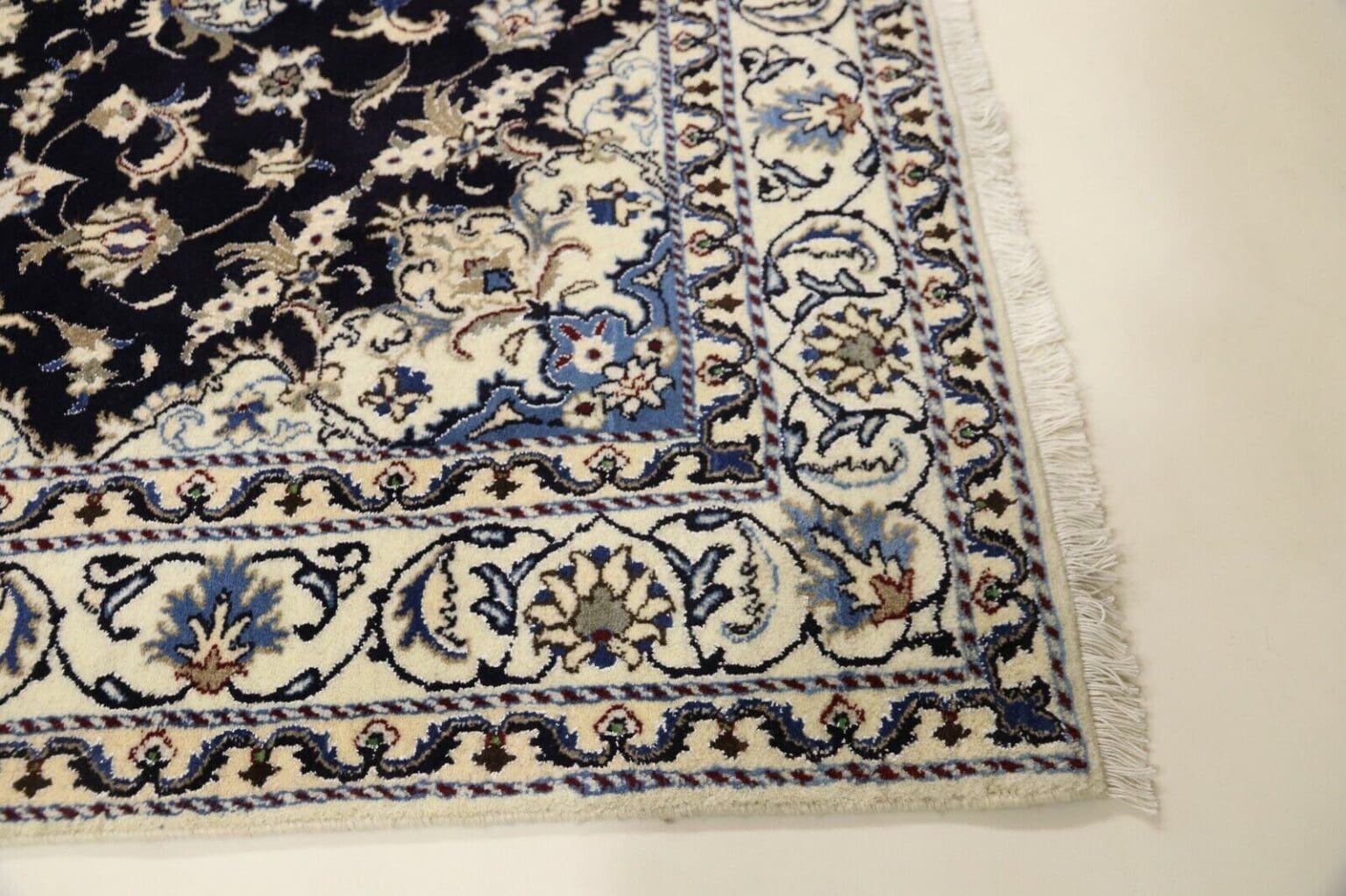
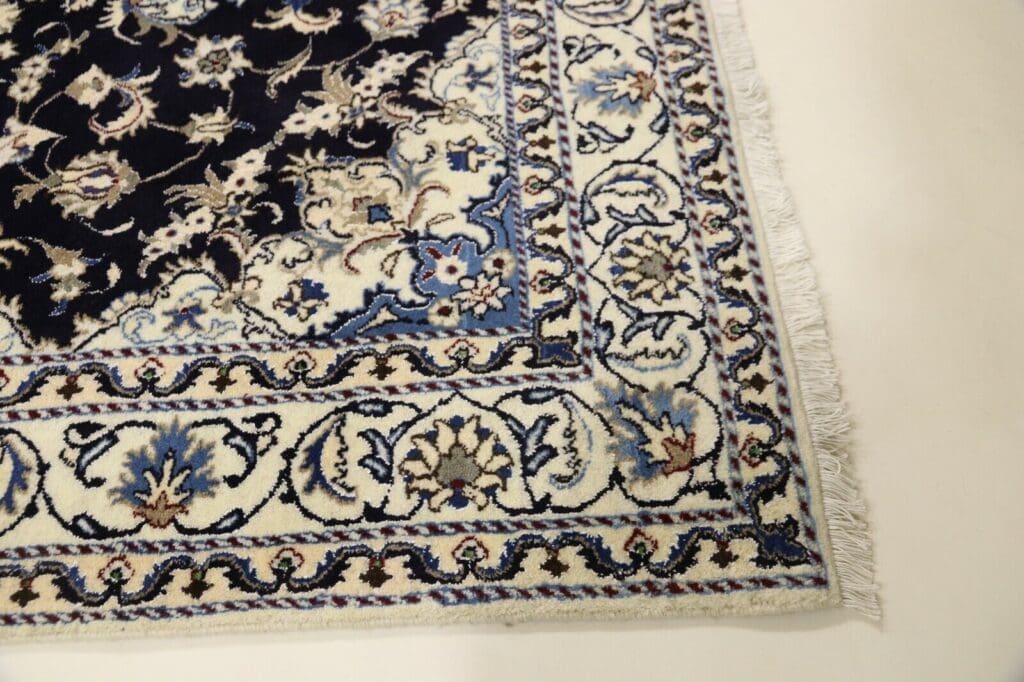
Symmetry gives the composition a clear order, while small variations in the drawing keep the surface from becoming mechanically uniform. A central arrangement may be supported by surrounding details, and borders help define the transition between the interior field and the edge of the rug. In Nain design traditions, the relationship between these parts is important: the border frames the field, the field carries the principal ornament, and the repeated floral vocabulary links the areas together.
The source describes a colour range extending from gentle natural tones to more intense, vivid colours. Such a range is part of the broader vocabulary of Persian carpet design, where colour is used to distinguish the field, highlight floral details and establish visual depth. Wool absorbs colour with a softer appearance, while silk can catch the light on selected details and make them appear more distinct. This interaction between fibre and colour contributes to the changing surface impression of a wool-and-silk rug.
Floral patterns in Persian carpets are often associated with nature, order and beauty, but their meaning should not be reduced to one fixed interpretation. The motifs also function as a formal design system. Stems guide the eye, leaves fill spaces, blossoms establish accents and repeated elements maintain rhythm across the field. This allows a floral composition to remain decorative without relying on a pictorial scene. The elegant, symmetrical character associated with Nain is therefore created through the combined use of drawing, repetition, proportion and colour.
The pattern can work with both traditional and more contemporary interiors because its structure is orderly and its ornament is finely drawn. That is a statement about the design language rather than a claim about a particular room. The rug’s floral vocabulary connects it to Persian tradition, while the balance of the composition allows it to be considered within different interior settings.
Special Features
A defining feature of this rug is the combination of virgin wool and silk. Wool provides the pile with softness, warmth and natural resistance to dirt, while silk contributes smoothness and sheen. The different fibres influence the way light is reflected across the surface, so the rug can appear subtly different as the viewing angle or illumination changes.
Its hand-knotted construction makes each piece individually made rather than produced as a uniform machine-made textile. The careful knotting supports the detailed floral design and gives the rug the character associated with traditional Persian workmanship. The Super Nain designation, the Nain origin, the wool-and-silk material and the hand-knotted technique together describe the principal features of this one-off rug.
FAQ
How should I care for a hand-knotted Persian rug?
Regular vacuuming helps remove loose dust and everyday particles before they work deeper into the pile. Vacuum gently and avoid treatments that could disturb the fibres. Moist cleaning products should be avoided unless the cleaning method has been assessed as suitable for the rug’s wool-and-silk construction. If dirt or a stain requires more than careful routine cleaning, contact a professional rug cleaner with experience in hand-knotted Persian rugs. The rug should also not be stored in a damp room, since persistent moisture can encourage mould. A dry, suitably ventilated storage environment is more appropriate for wool and silk textiles.
How can I tell whether a rug is hand-knotted?
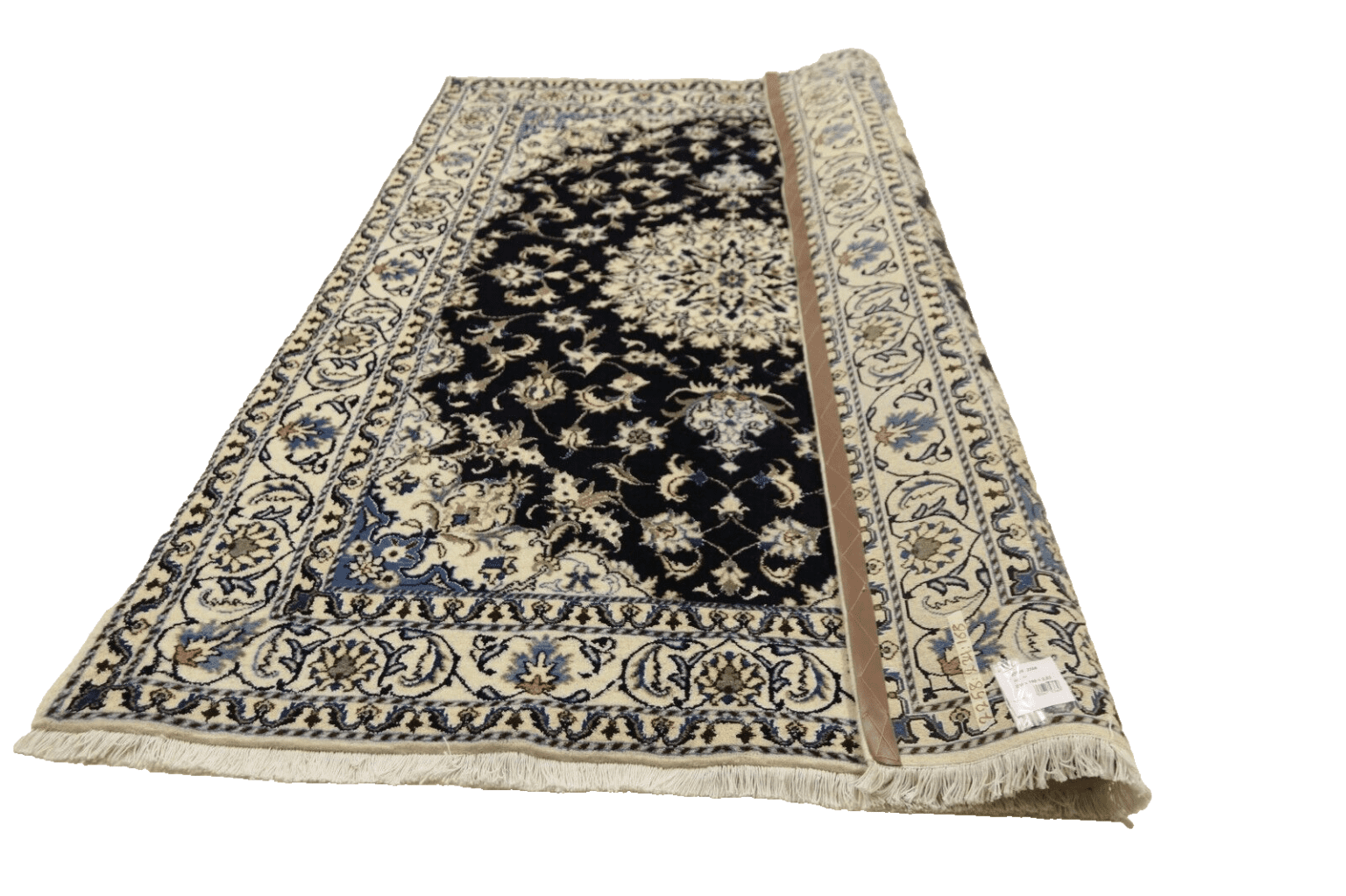
A hand-knotted rug may show slight irregularities in knot density, drawing and colour depth because it is made by hand rather than printed or assembled by a machine. These variations are considered signs of individual craftsmanship, although they should be assessed together rather than used as the only test. Looking at the reverse side is useful: on a hand-knotted rug, the foundation threads and the individual knot structure are visible, and the way the knots form the pattern can be recognised. A professional inspection can provide additional certainty when the construction is difficult to read.
How do different types of oriental rugs differ?
The principal distinctions concern how a rug is made, which materials are used and which regional design tradition it follows. Hand-knotted rugs are formed knot by knot and generally involve more detailed manual work than machine-made rugs. Hand-woven Kelim rugs are constructed differently: they have a flat woven structure rather than a knotted pile, which affects their surface, handle and patterning. Materials also influence appearance and use, with wool and silk responding differently to touch and light. Origin provides another point of comparison, because weaving regions are associated with particular approaches to colour, ornament, structure and technique. Nain identifies the Iranian regional tradition represented by this rug, while other named regions may have their own established design languages.
To provide the best experiences, we use technologies like cookies to store and/or access device information. Consenting to these technologies will allow us to process data such as browsing behavior or unique IDs on this site. Not consenting or withdrawing consent, may adversely affect certain features and functions.
Functional Always active
The technical storage or access is strictly necessary for the legitimate purpose of enabling the use of a specific service explicitly requested by the subscriber or user, or for the sole purpose of carrying out the transmission of a communication over an electronic communications network.
Preferences
The technical storage or access is necessary for the legitimate purpose of storing preferences that are not requested by the subscriber or user.
Statistics
The technical storage or access that is used exclusively for statistical purposes.The technical storage or access that is used exclusively for anonymous statistical purposes. Without a subpoena, voluntary compliance on the part of your Internet Service Provider, or additional records from a third party, information stored or retrieved for this purpose alone cannot usually be used to identify you.
Marketing
The technical storage or access is required to create user profiles to send advertising, or to track the user on a website or across several websites for similar marketing purposes.
 SECURE PAYMENT
 SHIPPING PARTNERS


