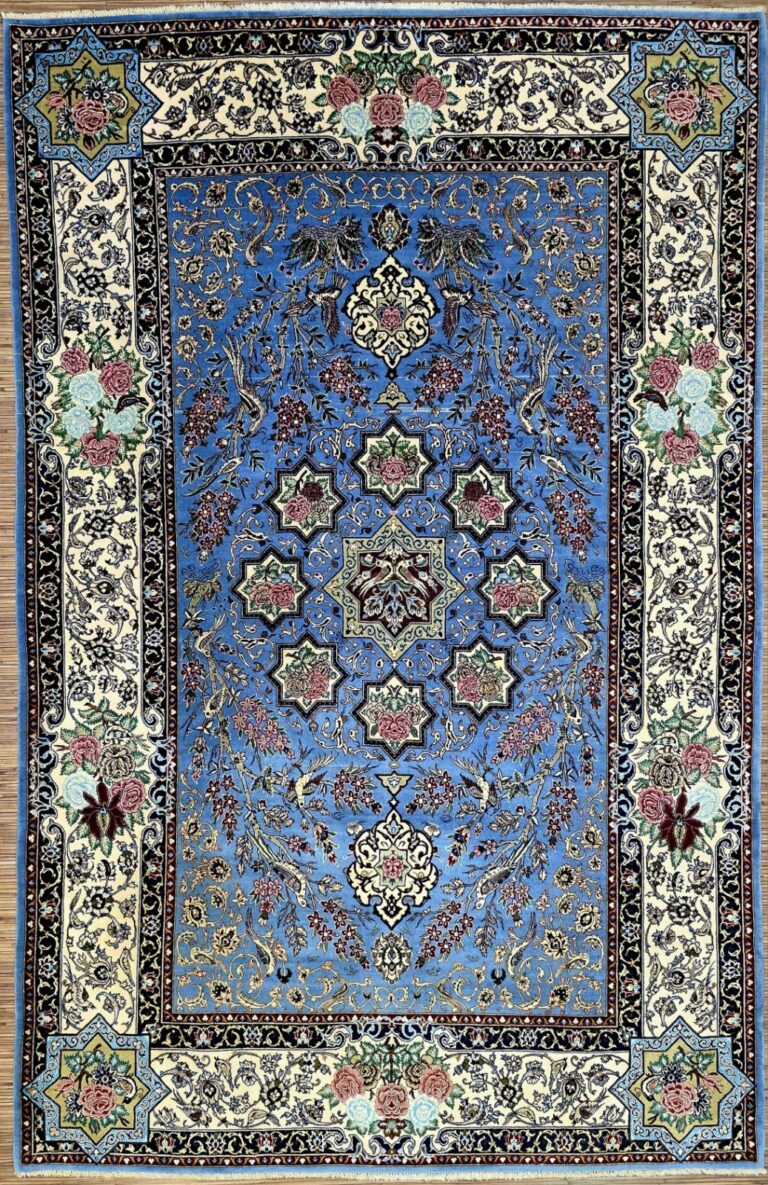
This hand-knotted Nain rug is made from 90% virgin wool and 10% silk. Wool forms the principal material and is known for its robust structure, durability and insulating qualities. It also takes colour well, allowing shades to appear clear and balanced across the pile. Silk is used as an additional material, creating finer accents and a contrasting surface effect within the design. The combination of wool and silk gives the rug a varied tactile character and a pleasant feel underfoot.
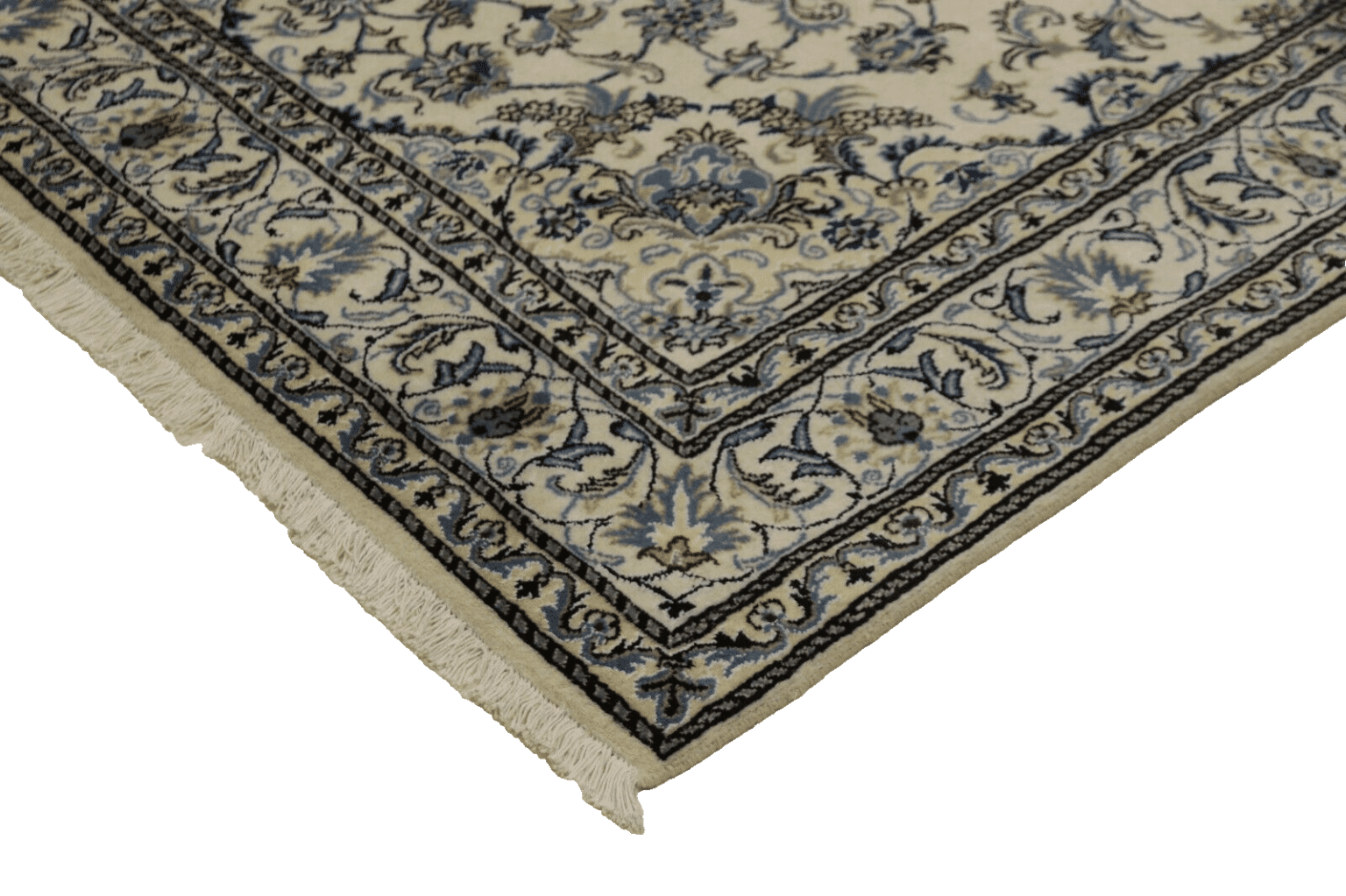
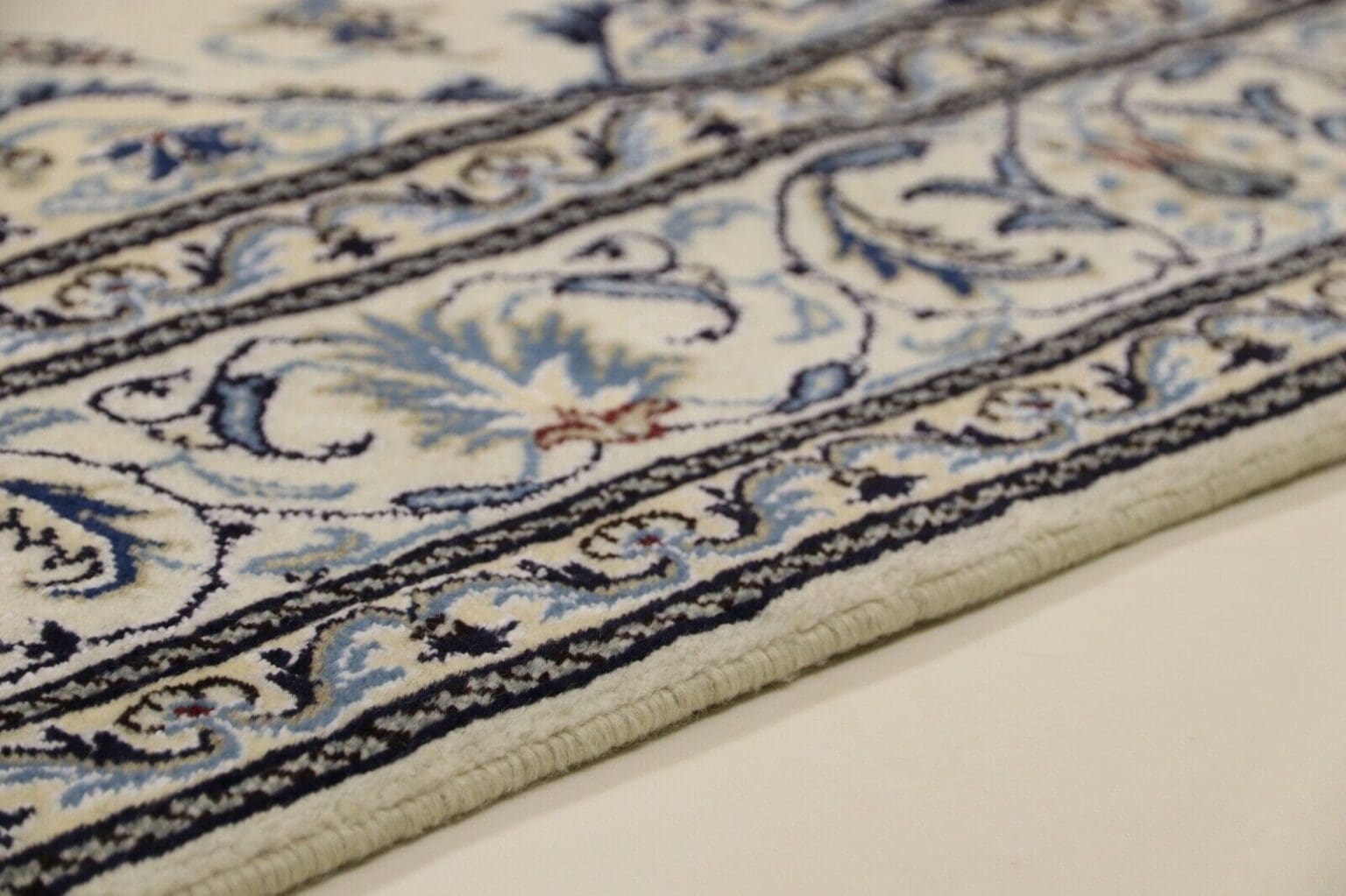
Hand-knotting is a traditional process in which individual knots are tied by hand around the warp. Rows of knots are built up gradually, with each section requiring close attention to tension, alignment and surface finish. Once the knotting is complete, the pile is trimmed and the rug is finished by hand. This method allows detailed motifs and fine transitions to be worked into the textile, while also giving the finished piece the character of a handmade object.
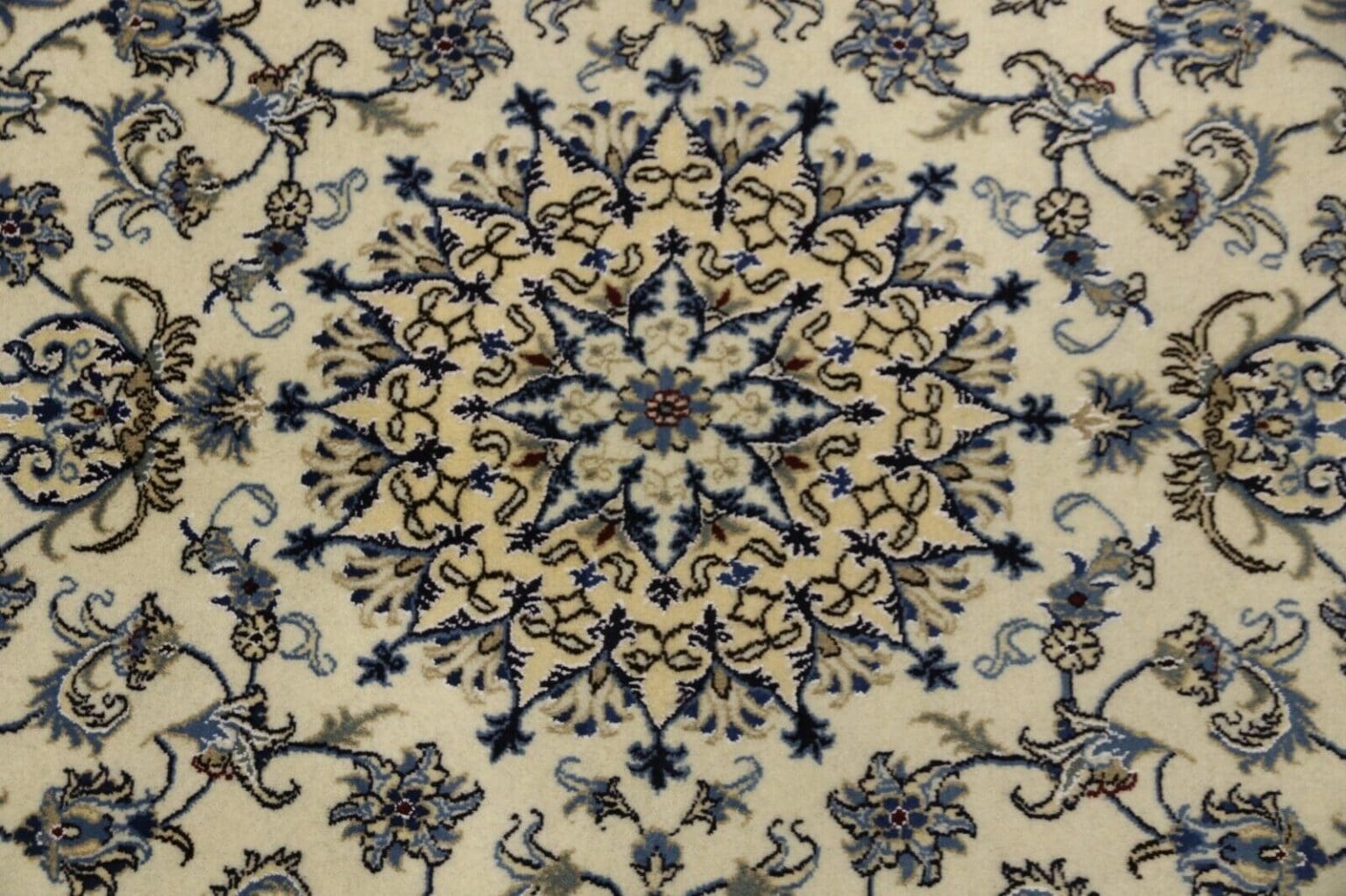
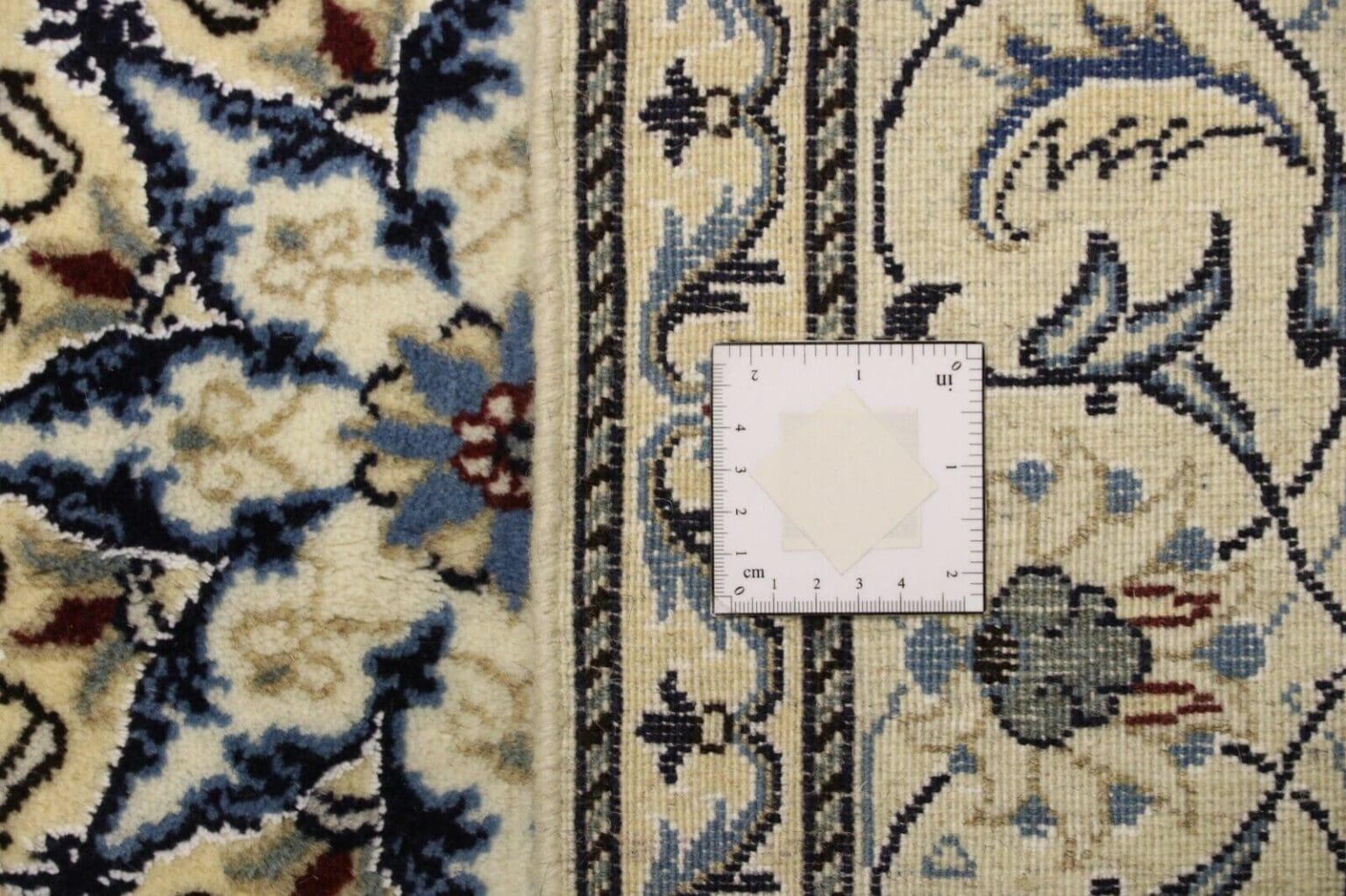
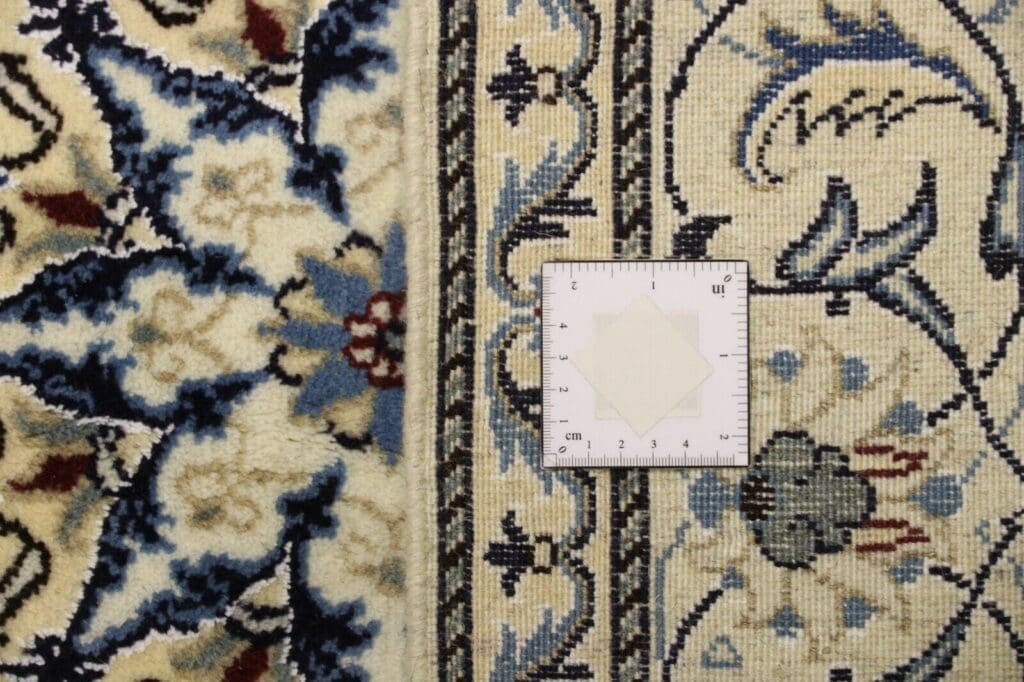
The rug has a knot density of approximately 300,000 knots per square metre. A fine knot structure supports the rendering of small decorative elements and carefully organised outlines. It also means that production requires considerable time and precise manual work. The wool provides the main body of the pile, while the silk contributes a more delicate appearance to selected areas and makes the colour contrasts more visible.
Origin and Tradition
Nain is a city in Isfahan Province and one of the best-known names in Persian carpet weaving. Nain rugs are associated with refined craftsmanship, carefully organised compositions and the use of selected materials. Their development belongs to the broader history of Iranian textile production, in which weaving knowledge was passed from one generation to the next. Workshops in and around Nain became recognised for carpets with a particularly neat structure and a restrained, elegant visual language.
The town lies in central Iran, in a region shaped by a dry climate, open landscapes and long-established trade routes. These surroundings are part of the cultural setting in which Nain weaving developed, although the identity of the rugs is defined above all by their workshop traditions. Weavers draw on established approaches to drawing, knotting, trimming and finishing. The result is a carpet tradition in which technical precision and visual order are closely connected.
Nain carpets are often distinguished by their fine knotting and by the combination of wool with silk details. The choice of materials serves both practical and decorative purposes. Wool gives the pile substance and resilience, while silk can be used to sharpen the definition of floral details, medallion lines or other accents. This relationship between a durable principal fibre and more delicate highlights is an important part of the appearance traditionally associated with Nain rugs.
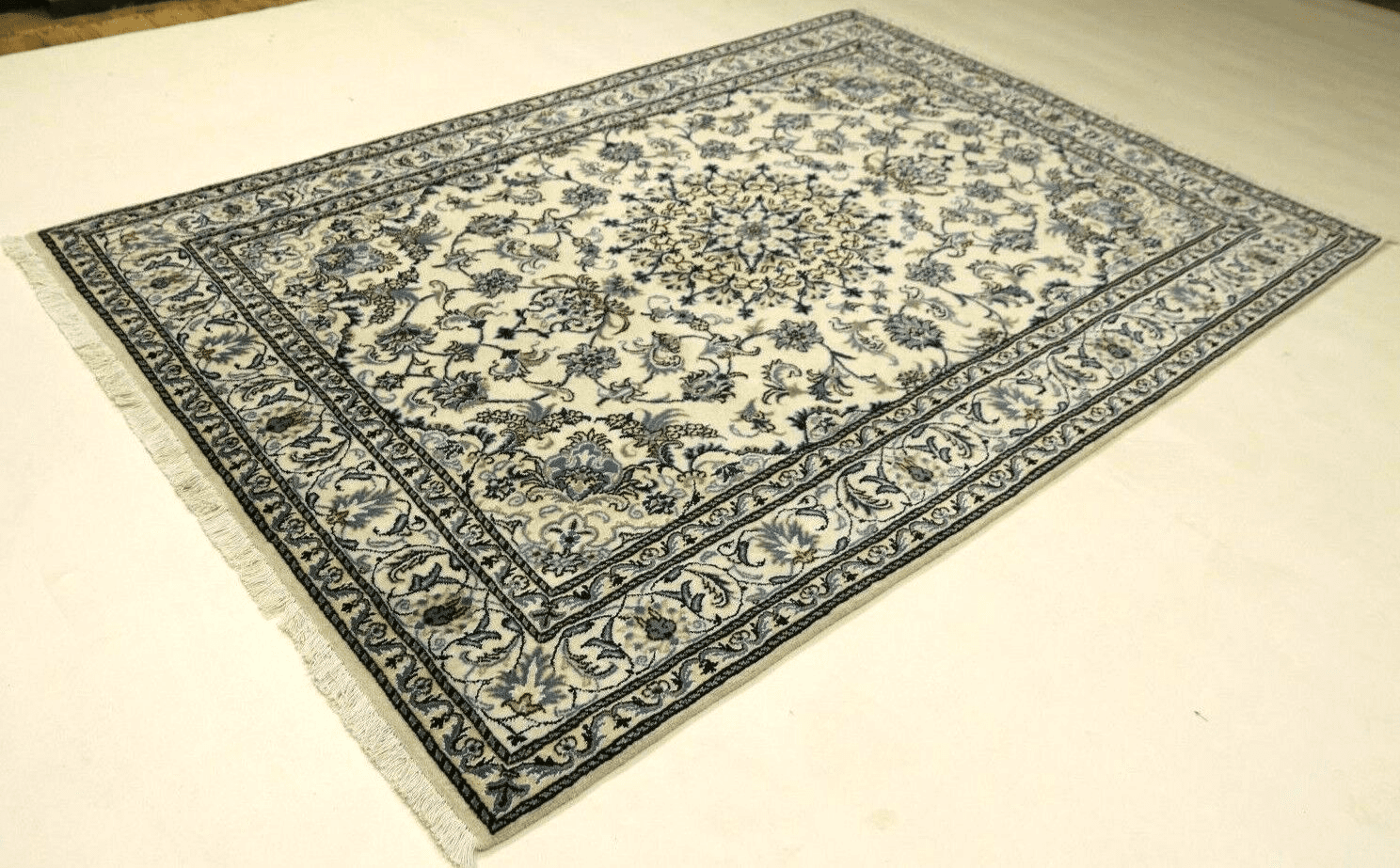
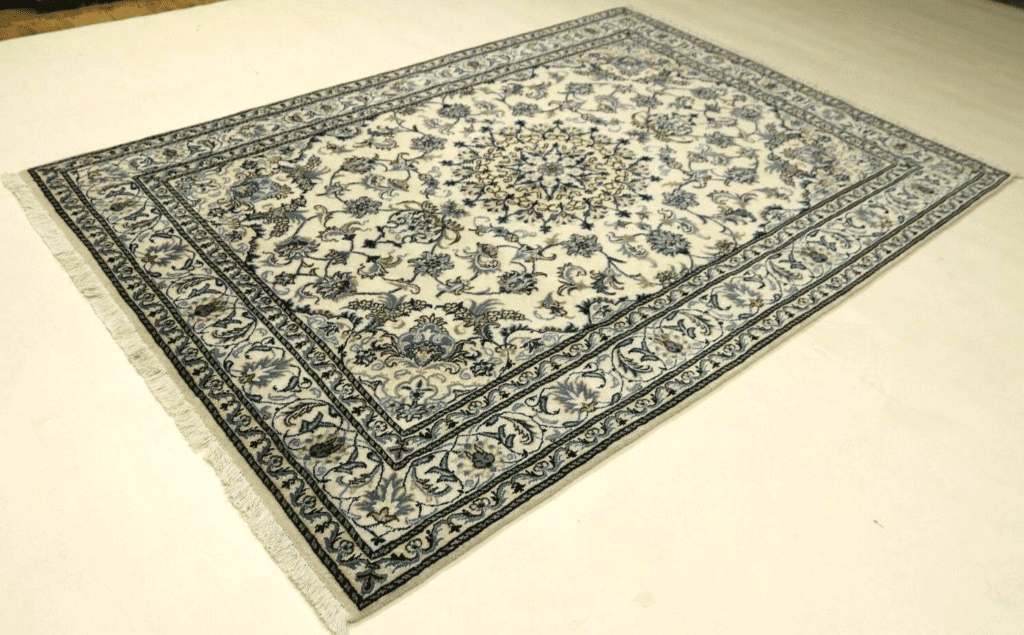
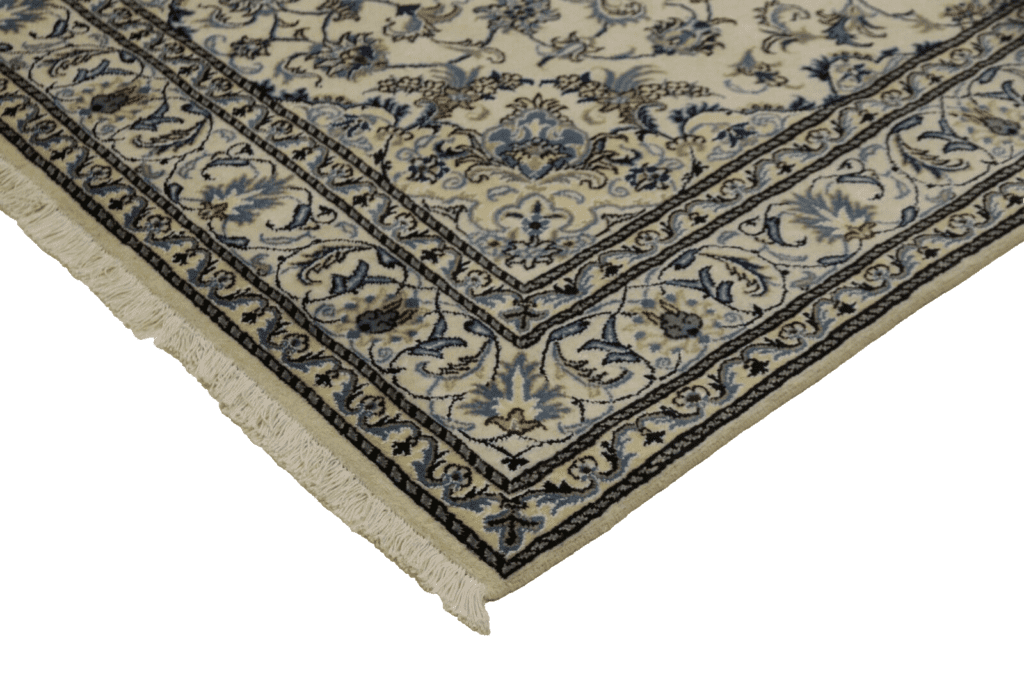
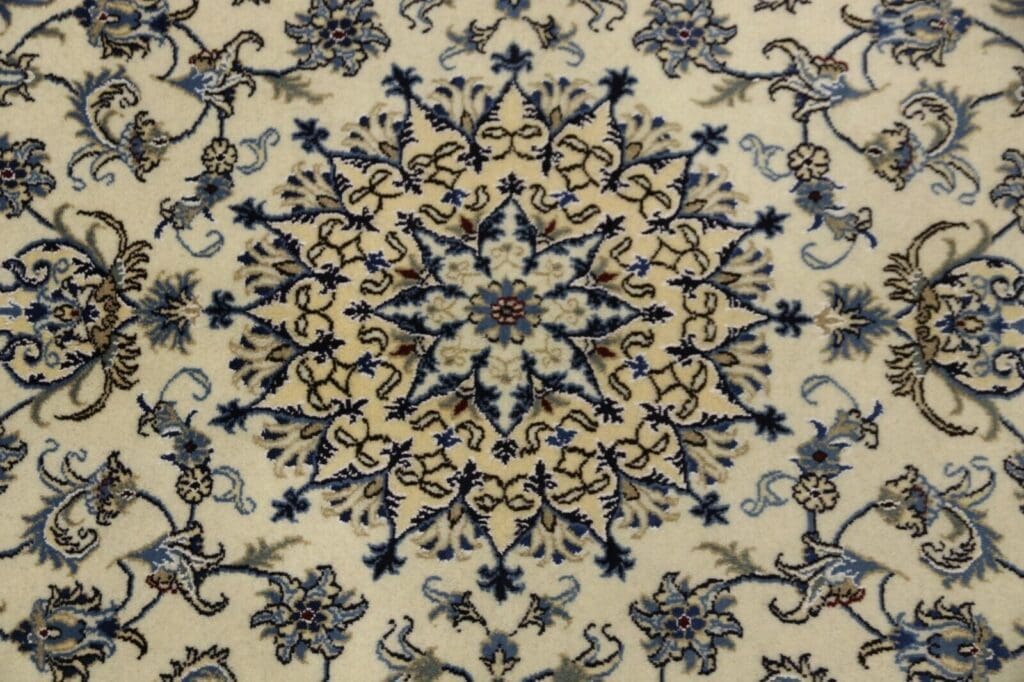
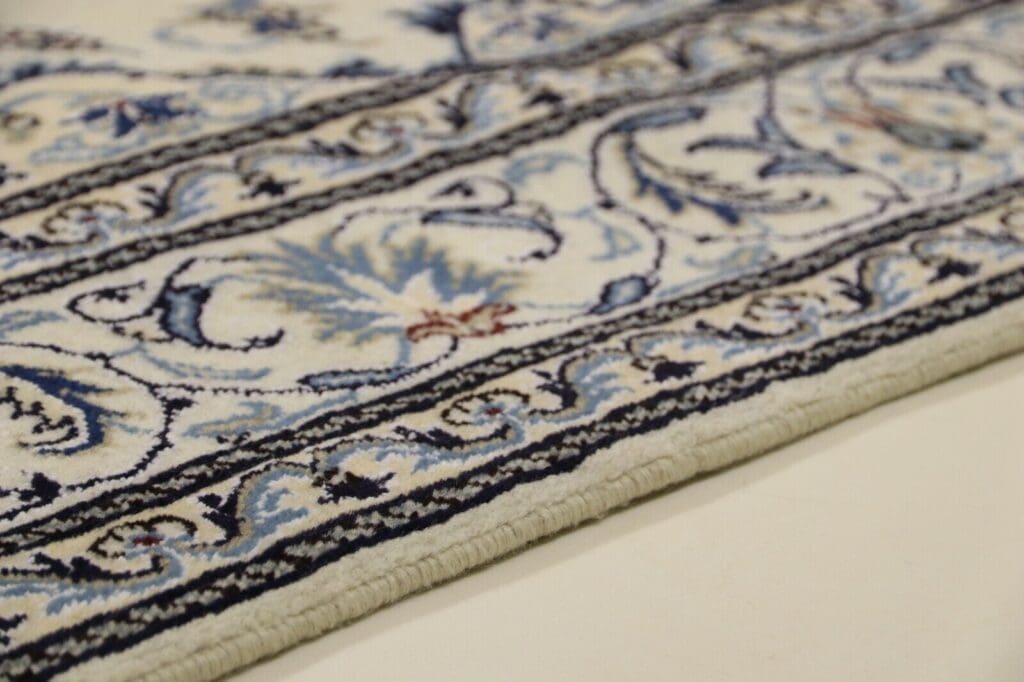
The patterns of Nain belong to the Persian vocabulary of floral ornament, balanced geometry and formal central organisation. Designs may include a central medallion, repeating corner elements, scrolling foliage, blossoms, palmettes and fine tendrils. Not every Nain rug uses all of these components, but the tradition is known for combining them in an orderly composition. Borders normally provide a visual frame, separating the central field from the surrounding space and helping the design retain its clarity.
Persian carpets also have a cultural role beyond floor covering. They are used in domestic interiors, reception rooms and places where hospitality is expressed through the arrangement of the room. A carefully made carpet can therefore connect everyday use with inherited artistic practice. Nain rugs are part of this tradition: they carry the methods and visual language of Iranian carpet making into contemporary interiors without losing their relationship to regional craftsmanship.
The term Super Nain is used in the trade for a particularly fine expression of the Nain style. It refers to a refined design language and a closely worked construction rather than to a separate province. Nain remains the regional reference, while the designation describes the fine character associated with the piece. The combination of detailed knotting, wool and silk, and an elegant Persian composition places this rug within that established tradition.
Design and Pattern
The design combines the formal discipline of Persian carpet composition with floral and geometric ornament. Scrolling floral motifs bring movement into the field, while geometric organisation gives the pattern structure. Curving stems, leaves and blossoms may be arranged around a central order, with repeated forms creating rhythm from one area to the next. Geometric lines help define the relationships between these elements and keep the overall design legible.
Floral motifs in Persian carpets are not simply naturalistic illustrations. They are stylised forms developed through generations of drawing and weaving. A flower may be reduced to a compact rosette, a leaf may become a repeated hooked shape, and a vine may connect separate parts of the composition. This transformation allows the design to be read both as an arrangement of individual details and as a continuous decorative system.
Geometric motifs provide another layer of meaning and visual control. Symmetry, repetition and measured spacing help establish balance. Angular forms can frame a floral element, define a border or divide the field into coordinated zones. In a hand-knotted carpet, these shapes are built knot by knot, so the apparent simplicity of a line depends on careful planning and consistent execution. Fine knotting makes it possible to articulate such relationships with greater detail.
Traditional Persian pattern language often gives decorative elements symbolic associations. Floral growth can suggest fertility and renewal, while orderly repetition may be connected with continuity and well-being. Motifs interpreted as signs of happiness, prosperity or abundance appear throughout Persian decorative arts. These meanings belong to the wider cultural vocabulary of the patterns; they do not turn the design into a literal narrative. Instead, they add a layer of cultural reference to the visual arrangement.
The colour treatment of Nain rugs is traditionally associated with a harmonious and relatively restrained palette. Such a palette supports the clarity of the drawing and allows small details to remain visible without making the composition feel unsettled. Wool absorbs colour with depth, while silk accents can catch light differently from the surrounding pile. This difference in surface response creates definition within the ornament and helps selected lines or motifs stand apart.
A balanced Persian design can work in both traditionally furnished and more contemporary rooms because its order does not depend on a single decorating period. In a classic setting, floral borders and formal geometry reinforce other historic furnishings. In a simpler interior, the same structure can provide pattern and visual focus without requiring a crowded arrangement. This adaptability is a characteristic of the design tradition rather than a claim about a particular room.
The combination of floral curves and geometric structure also gives the pattern a clear sense of movement. The eye can follow a stem through a group of blossoms, then return to the central organisation or outer border. Repetition prevents individual motifs from appearing isolated, while variation in scale keeps the field from becoming mechanically uniform. These principles are central to Persian carpet design and explain why finely drawn Nain patterns remain recognisable across different compositions.
Special Features
The rug is a unique one-off, created through handwork rather than industrial mass production. Its material composition combines the resilience and insulating qualities associated with wool with the finer visual accents of silk. The source description also identifies the rug as easy to care for, sound-reducing and heat-insulating. These properties allow it to serve as a functional furnishing as well as a textile connected to Persian craft tradition.
Wool helps moderate the feel of a room and provides a substantial pile, while silk contributes a smoother and more reflective effect in the design. Together they create a surface with both practical and decorative qualities. The hand-knotted construction further distinguishes the rug from machine-made floor coverings: the work is built manually and each finished piece has the character of an individual textile.
FAQ
How should I clean a Persian rug?
Regular vacuuming helps remove loose dust and everyday particles. The vacuum should be used without pressing a rotating brush or stiff bristles directly into the fibres, since this can place unnecessary stress on the pile. For a small spill or mark, a specialised carpet cleaner or a damp cloth with lukewarm water is recommended. Work carefully rather than rubbing aggressively, especially where silk details are present. Stronger soiling should be handled by a professional carpet-cleaning service. Professional treatment is also the safer choice when the extent of the stain is unclear or when the rug requires a more thorough cleaning.
How can I identify a high-quality rug?
Important points include knot density, the materials used and the construction technique. A higher knot density generally indicates that more time and precision were needed during production, particularly when the design contains small motifs and fine outlines. The quality of the fibres and the way they are worked into the pile also influence the character and durability of the carpet. Hand-knotting is distinct from machine production because the structure is created manually. Clear pattern definition and lively, well-balanced colours are additional signs to examine. In this case, the fine knot density, the combination of virgin wool and silk, and the hand-knotted construction are key characteristics of the rug.
Is this rug suitable for underfloor heating?
Yes, the rug is described as suitable for rooms with underfloor heating. Wool has insulating properties and can adapt well to changes in temperature, while its natural structure contributes to a comfortable surface. The hand-knotted construction does not prevent it from being used over a heated floor. Silk adds a smooth tactile quality to the material combination. As with any rug placed above underfloor heating, the room system should be operated according to its own specifications, and the floor covering should lie evenly so that heat can circulate appropriately.
To provide the best experiences, we use technologies like cookies to store and/or access device information. Consenting to these technologies will allow us to process data such as browsing behavior or unique IDs on this site. Not consenting or withdrawing consent, may adversely affect certain features and functions.
Functional Always active
The technical storage or access is strictly necessary for the legitimate purpose of enabling the use of a specific service explicitly requested by the subscriber or user, or for the sole purpose of carrying out the transmission of a communication over an electronic communications network.
Preferences
The technical storage or access is necessary for the legitimate purpose of storing preferences that are not requested by the subscriber or user.
Statistics
The technical storage or access that is used exclusively for statistical purposes.The technical storage or access that is used exclusively for anonymous statistical purposes. Without a subpoena, voluntary compliance on the part of your Internet Service Provider, or additional records from a third party, information stored or retrieved for this purpose alone cannot usually be used to identify you.
Marketing
The technical storage or access is required to create user profiles to send advertising, or to track the user on a website or across several websites for similar marketing purposes.

 SECURE PAYMENT
 SHIPPING PARTNERS