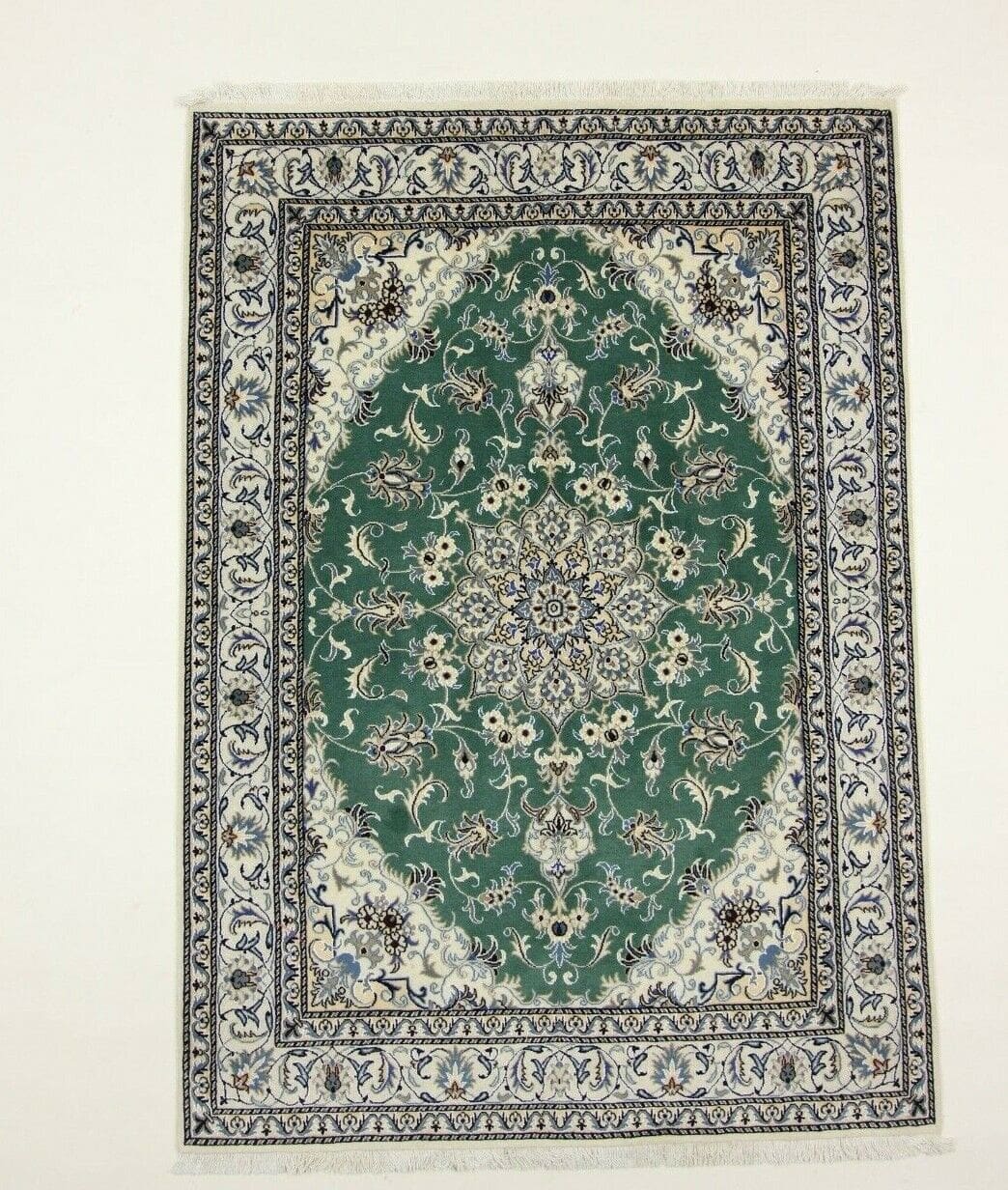
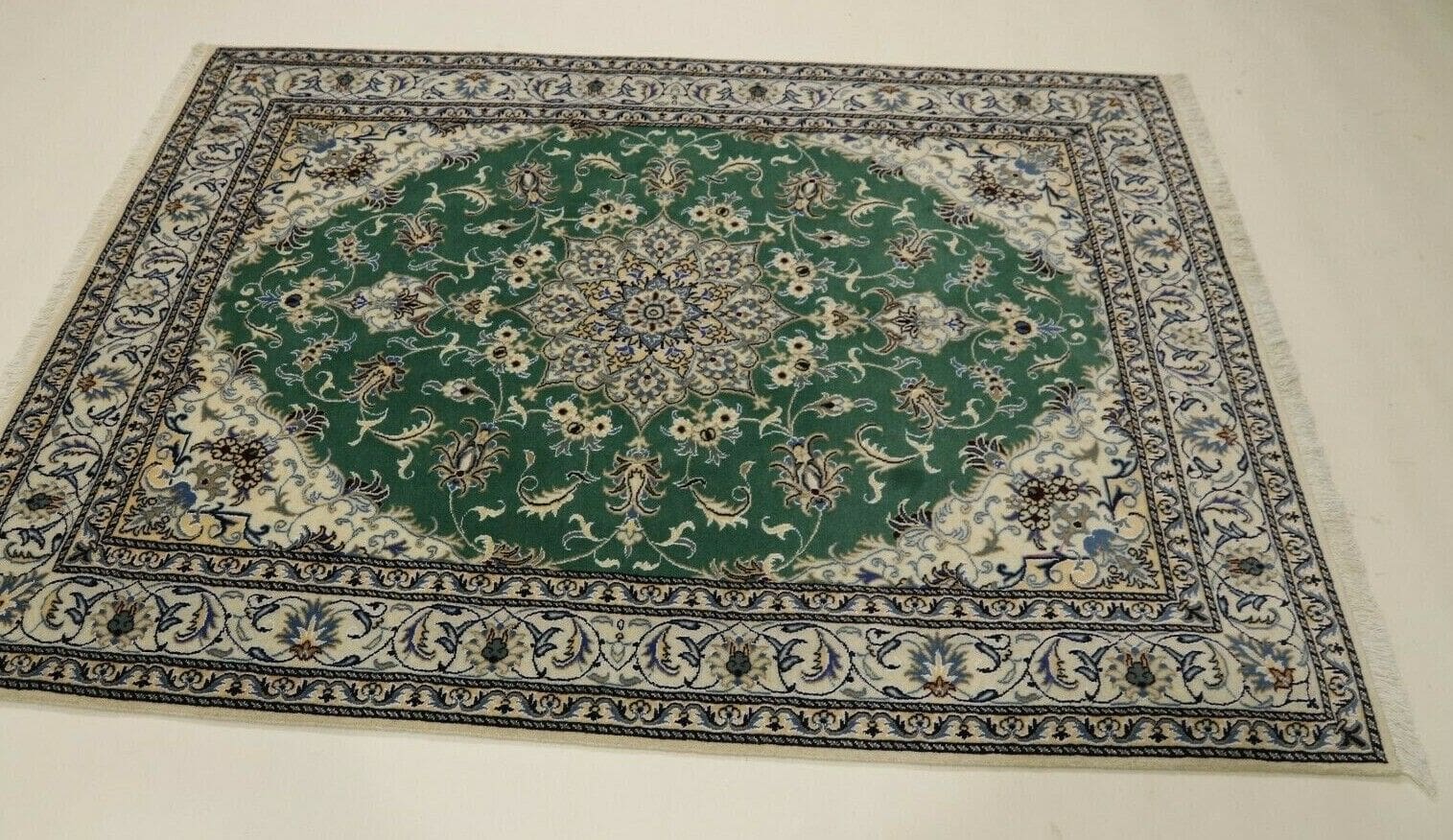
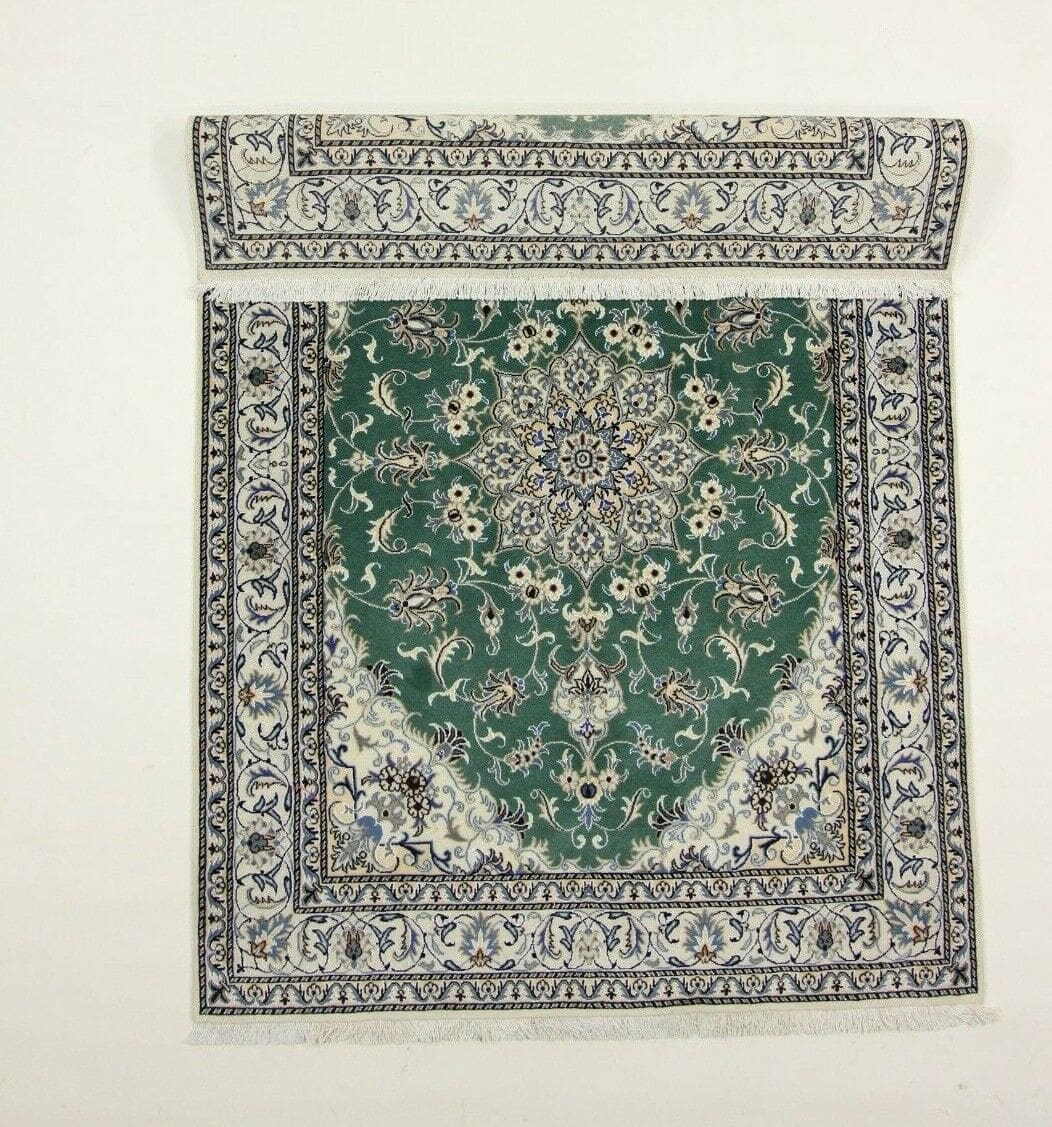
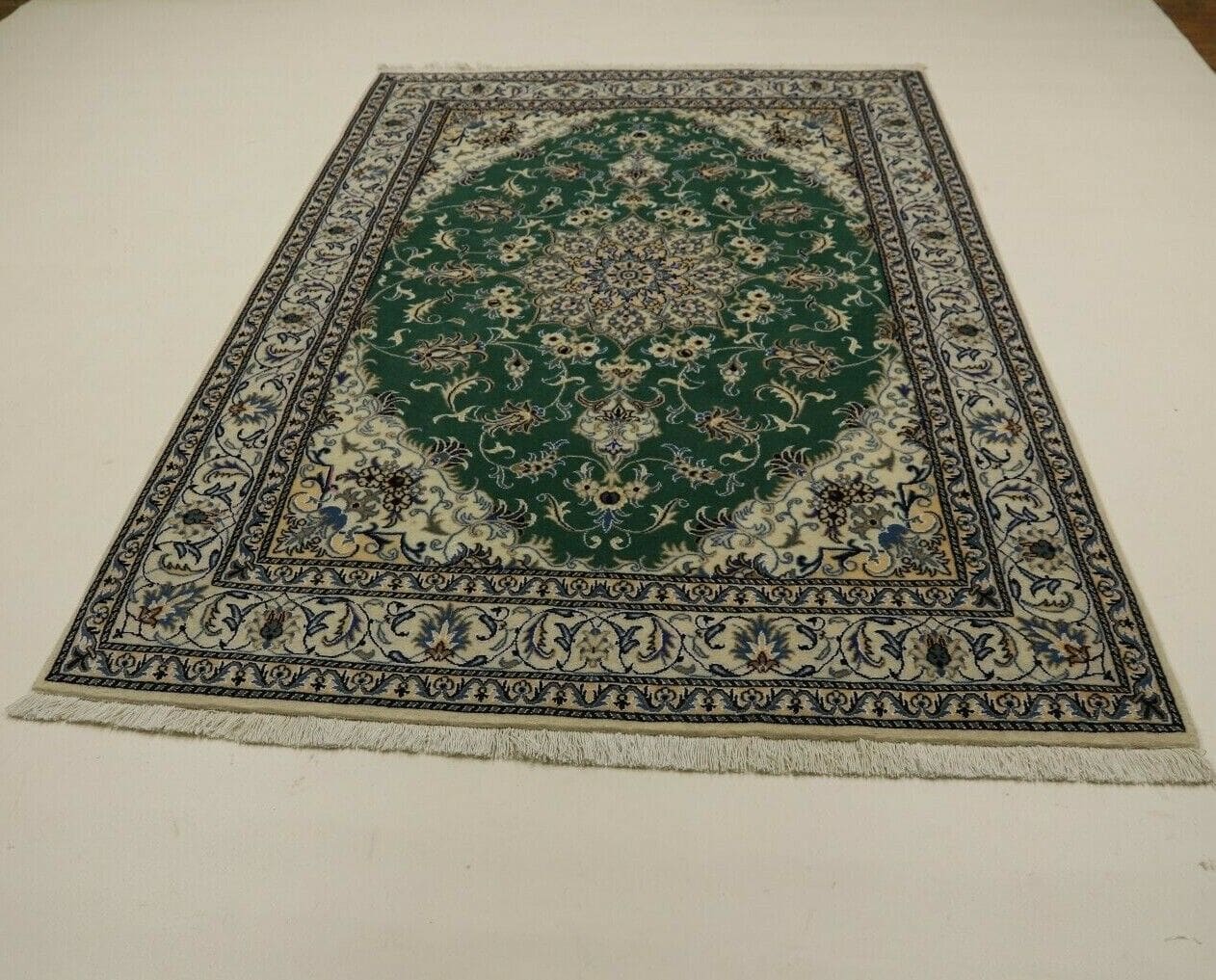
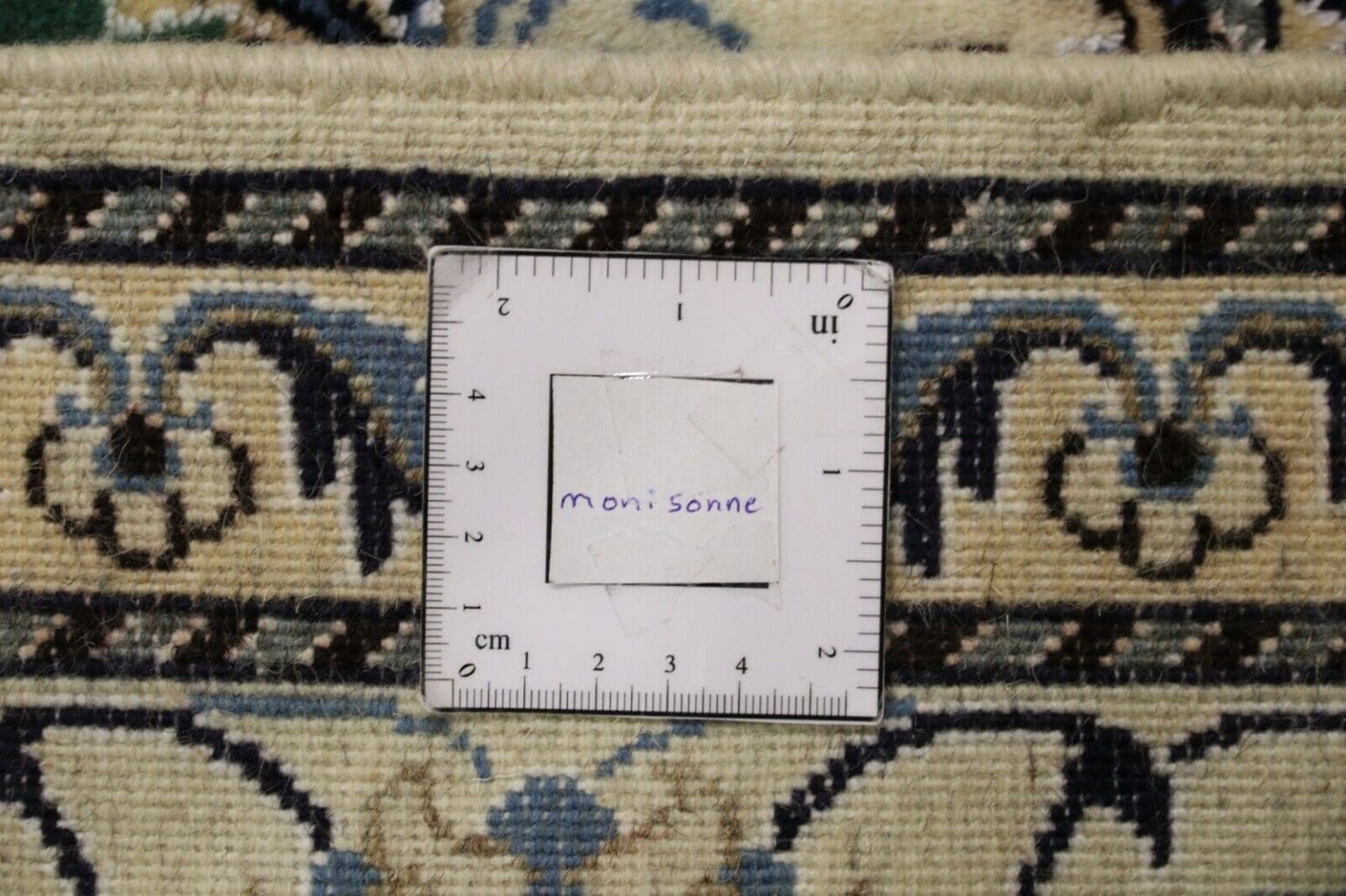
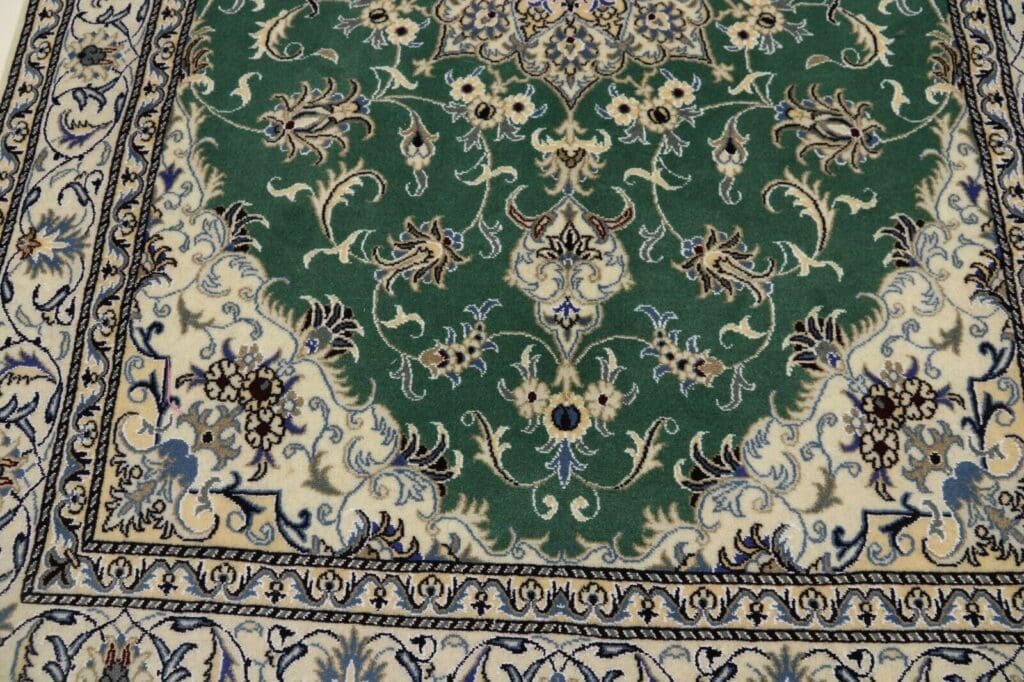
Hand-knotted Nain Persian Rug | Knot density: approx. 300,000 knots/m² | Material: pile 90% new wool, 10% silk | Size: 237 x 168 cm | Pattern: Traditional Oriental/Persian | Condition: New, very good
This Nain Persian rug is hand-knotted and made from new wool and silk. Its pile consists of 90% new wool and 10% silk. The blend brings together the practical qualities of wool and the distinctive appearance of silk. New wool is known for its resilience and straightforward care, while silk adds a fine sheen to the surface and helps the colours appear lively. These materials are traditionally valued for their different but complementary qualities in rug making.
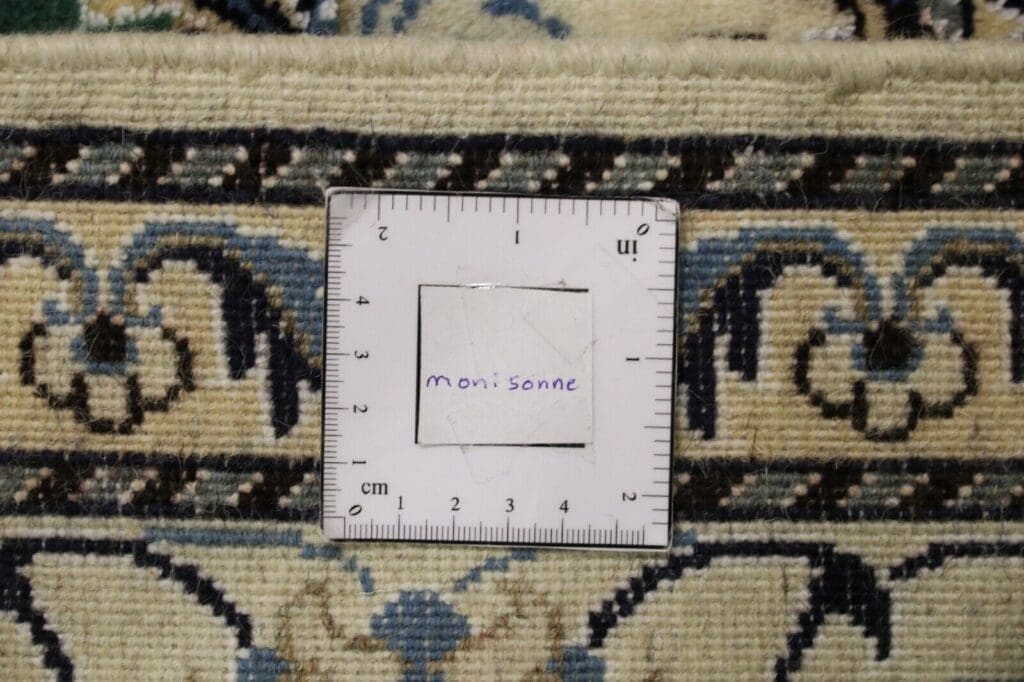
Hand-knotting means that each knot is inserted by hand into the prepared structure. The design is built gradually rather than printed or produced through an industrial weaving process. Careful execution allows floral and geometric forms to remain clearly defined. A hand-knotted rug is therefore an individual piece. The fine knotting supports detailed pattern work and is one of the technical characteristics associated with this Super Nain.
The mixture of new wool and silk influences both the feel and the visual character of the pile. Wool gives the surface substance and durability, while silk can make selected areas catch the light more distinctly. This creates a soft texture together with a visible sheen. The rug is new and described as being in very good condition. Its handmade construction combines the practical character of a wool rug with the refined accents provided by silk.
Origin and Tradition
This rug comes from Persia and is assigned to the Nain region of Iran. Nain is known for finely made Persian rugs and for a distinctive tradition of craftsmanship. The city’s rug-weaving tradition reaches back to the 19th century. Over time, this tradition developed a regional approach to fine drawing, balanced fields and careful knotting. The name Nain therefore identifies not only a place, but also an established Persian weaving tradition.
In Nain, rug making is traditionally understood as a manual process in which design, colour distribution, knotting and finishing must work together. The weaver transfers a design into the rug knot by knot. In finer qualities, this method permits nuanced drawing, small floral details and carefully controlled lines. In this offering, the designation Super Nain describes the fine execution of the Nain rug; it does not replace the stated Persian origin.
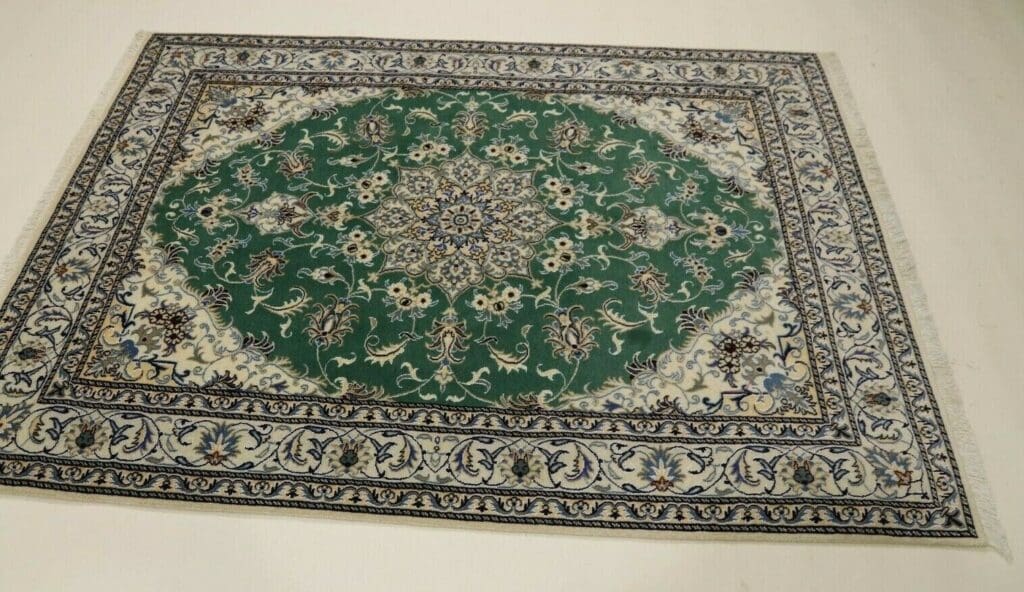
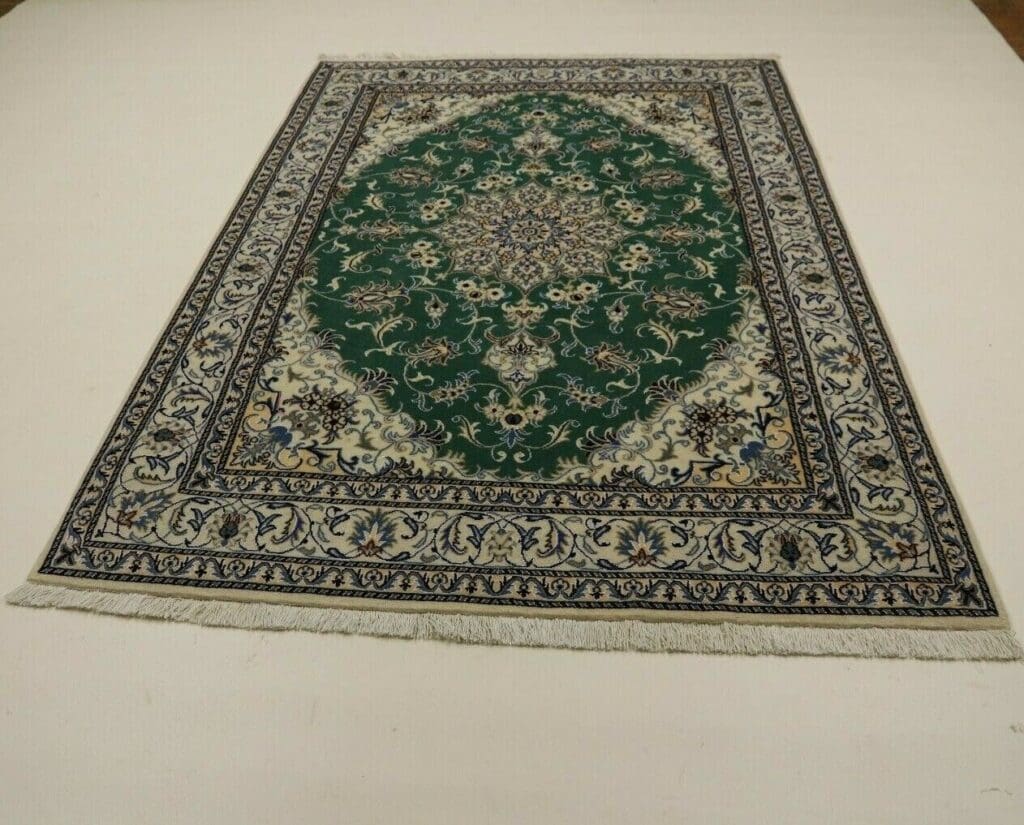
Persian rugs from Nain are commonly associated with light fields, gentle colour ranges and floral compositions. This tradition differs from designs built only around strong contrasts or strictly geometric structures, although geometric elements may be integrated into the composition. The relationship between central design, border and repeated ornaments is important. Handmade execution gives the arrangement a coherent overall character, while minor variations in workmanship belong to the nature of an individual rug.
The history of Persian rugs is closely connected with the transmission of designs, dyeing knowledge and knotting skills. Regional workshops develop their own preferences for line work, colour relationships and the distribution of ornament. Nain is particularly associated with floral motifs and soft, elegant shades. Special knotting techniques and colours are also part of the region’s inherited craft knowledge. This rug belongs to that tradition and combines it with a pile made from new wool and silk.
Design and Pattern
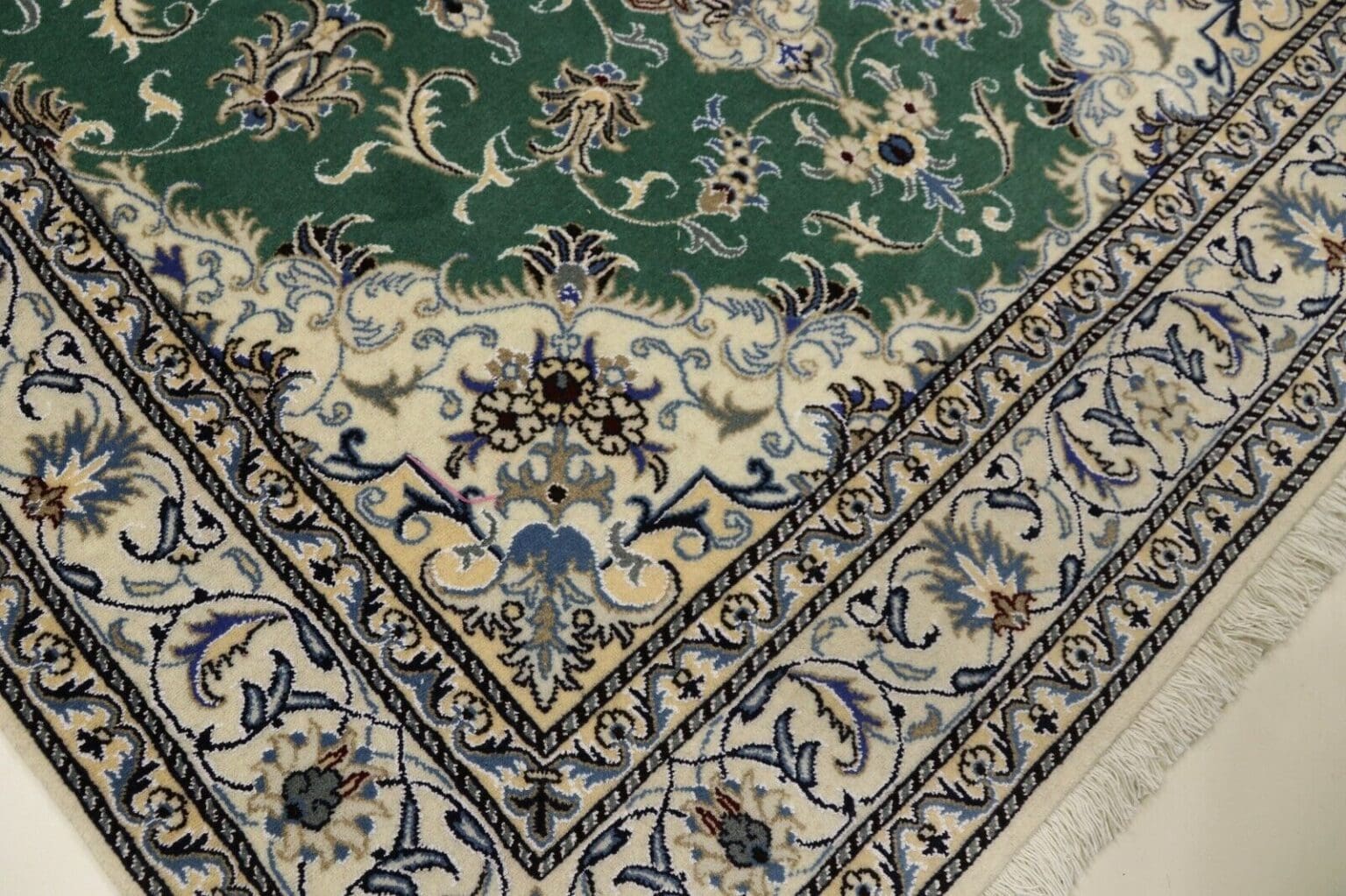
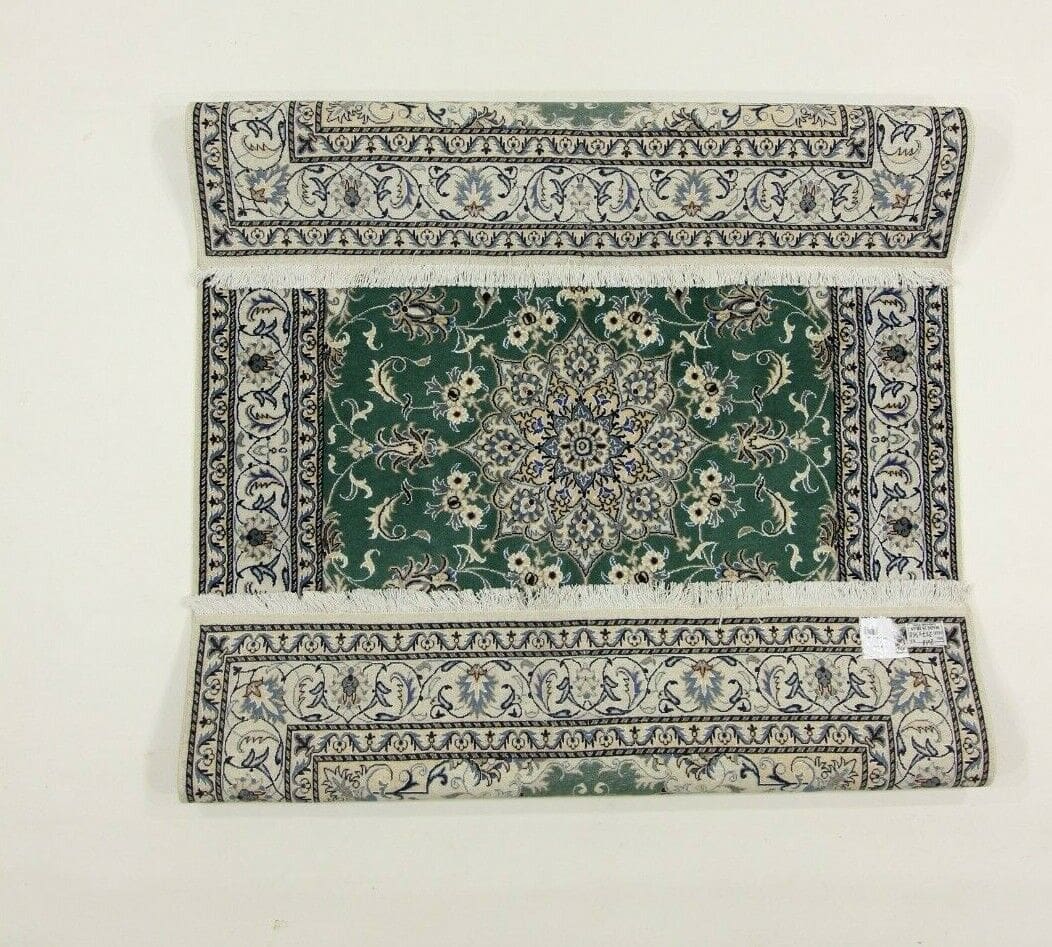
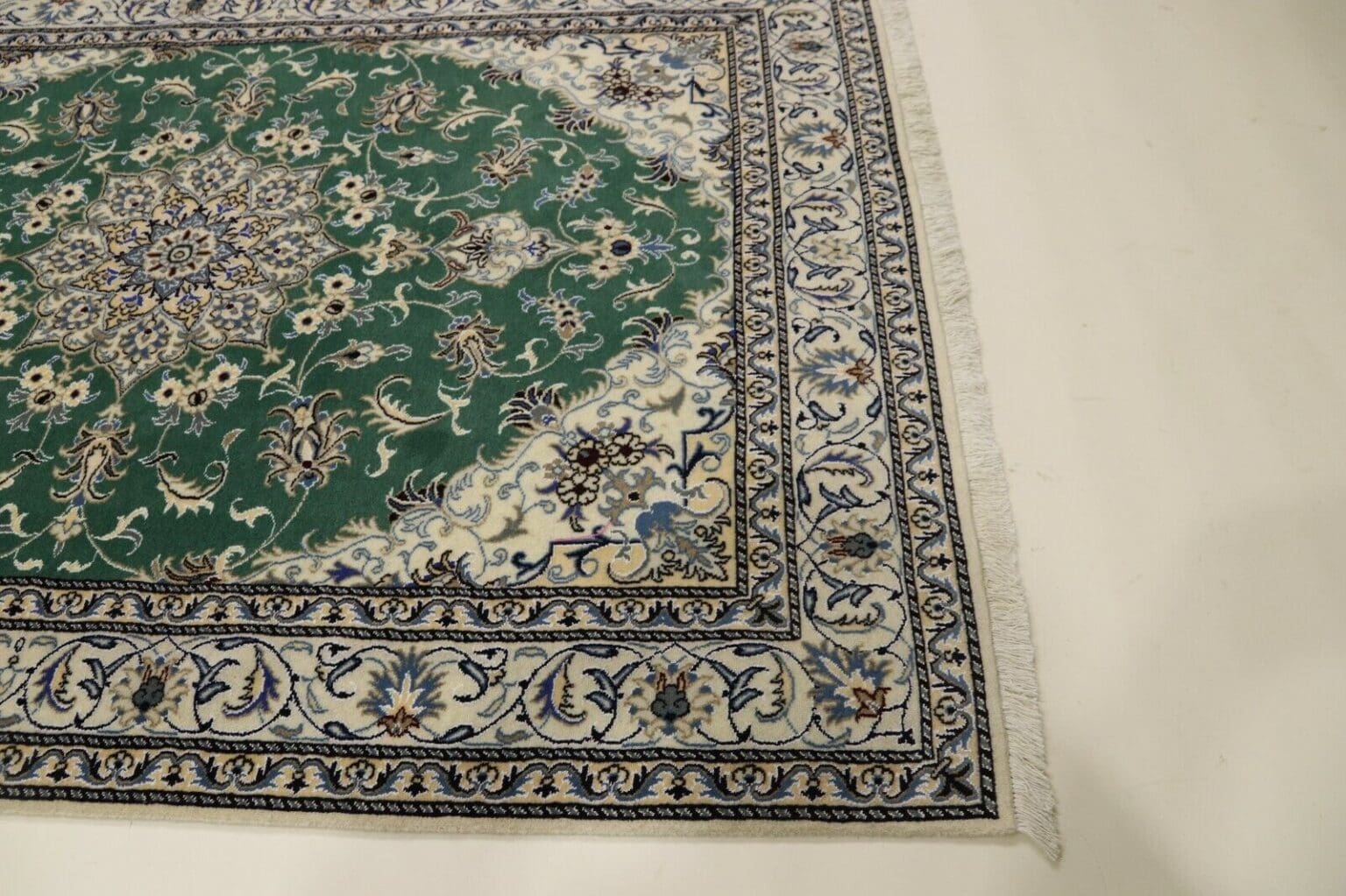
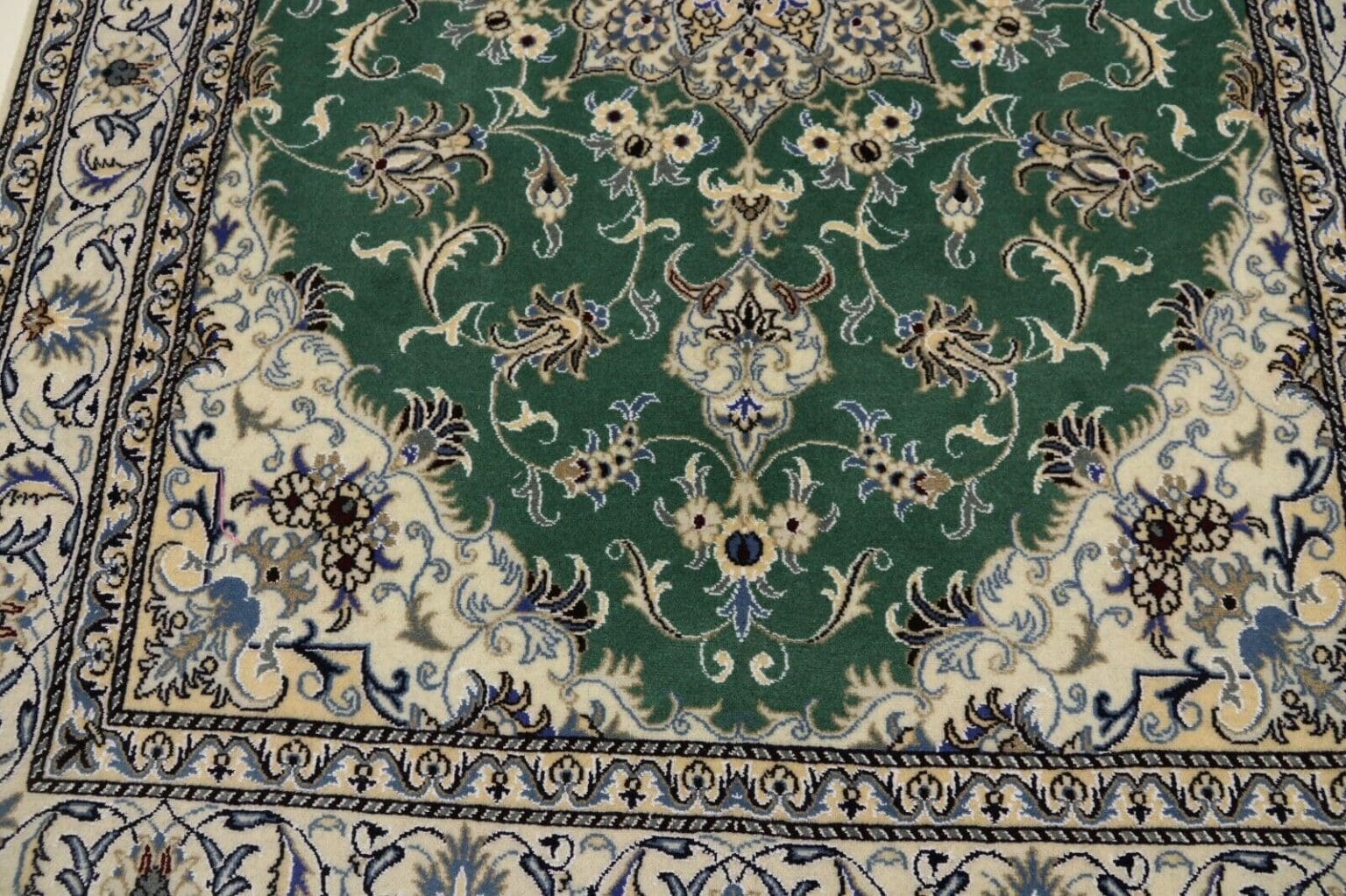
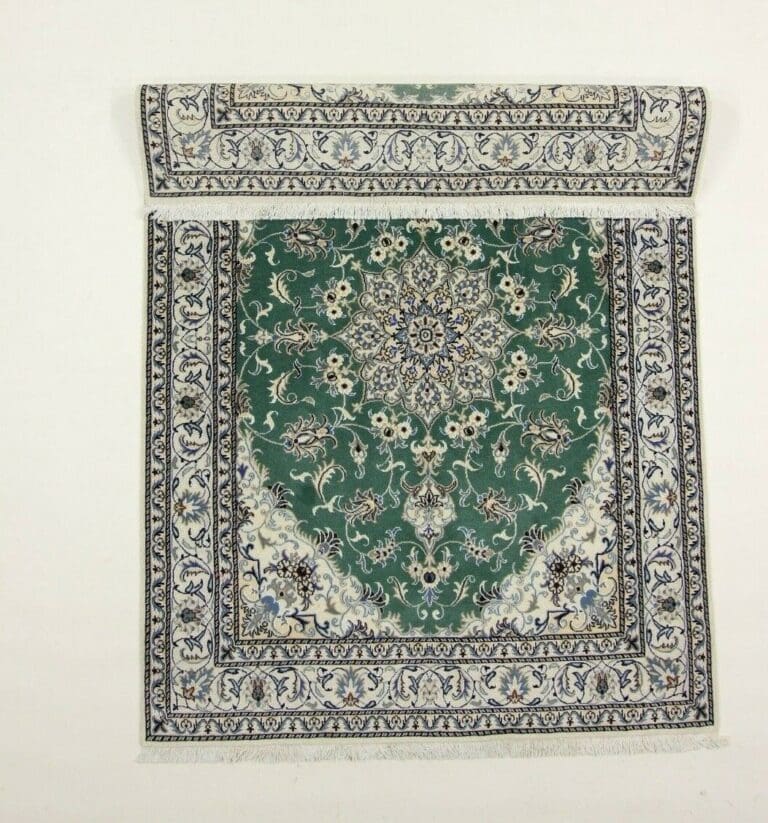
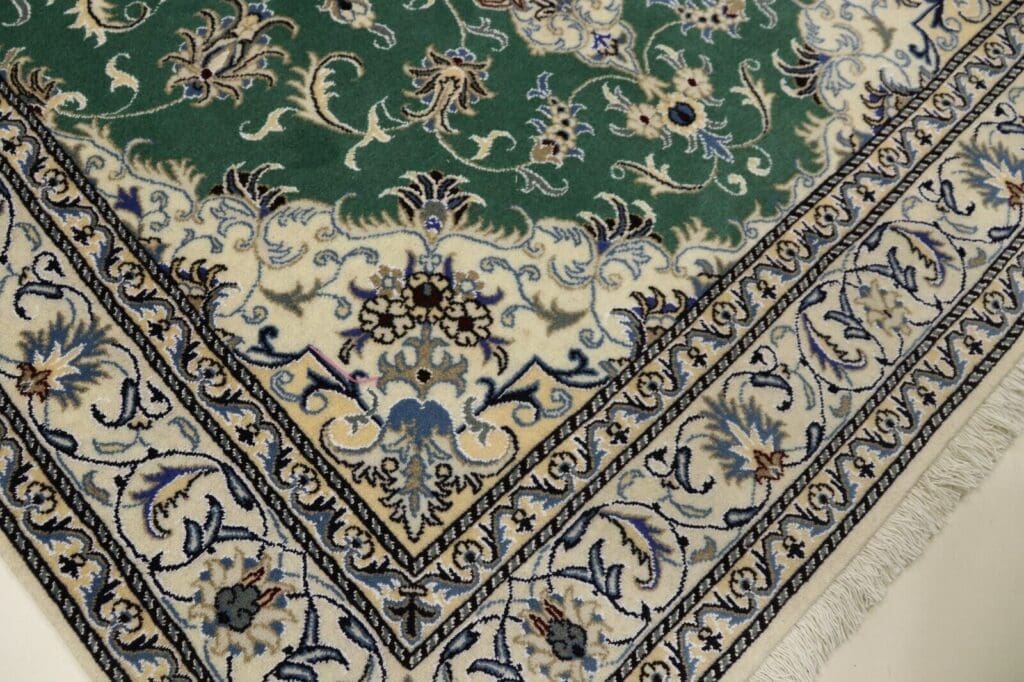
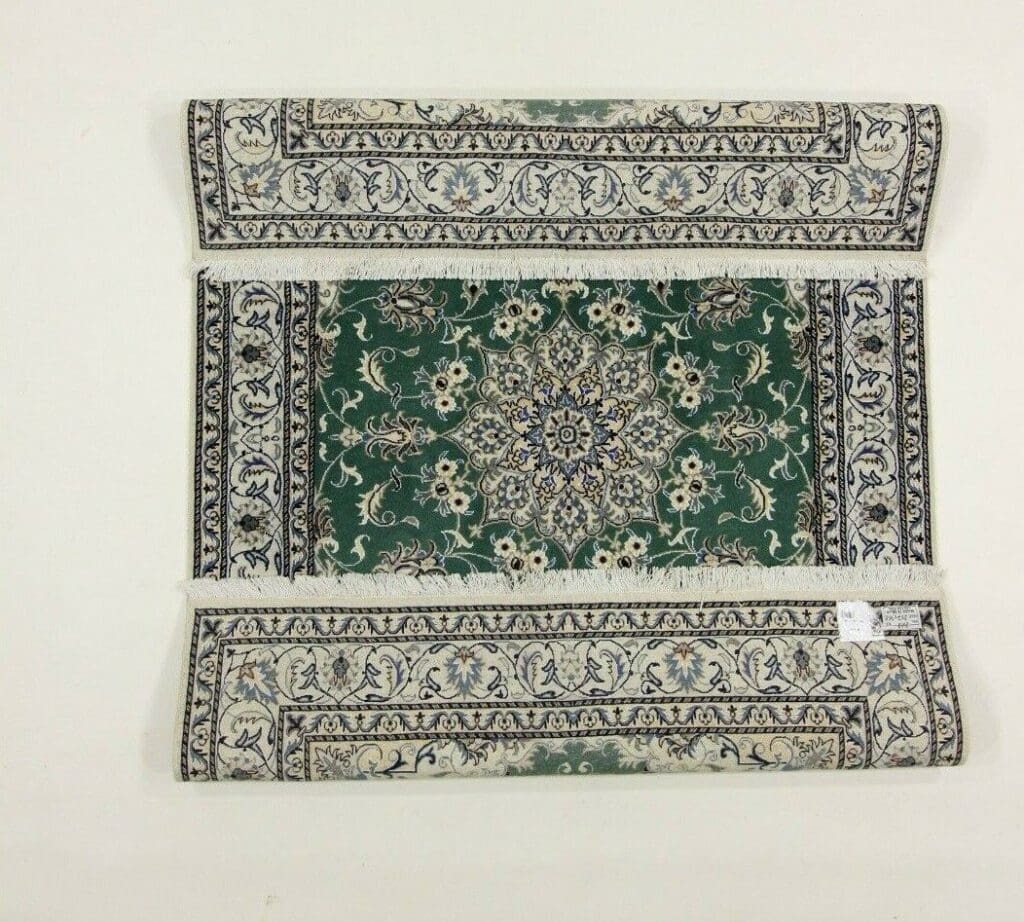
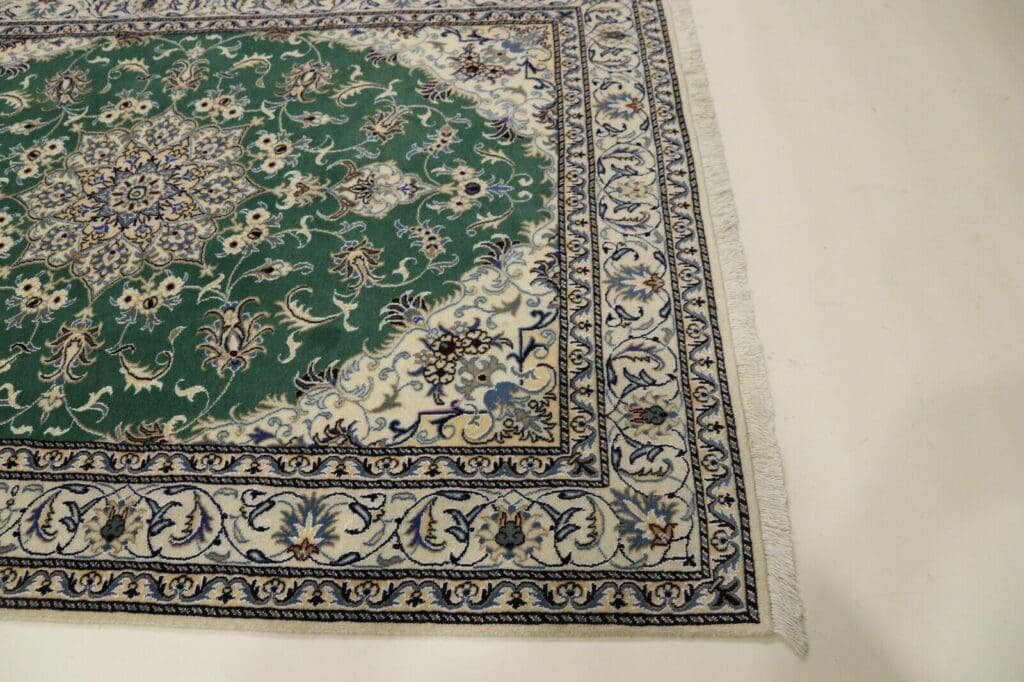
The design of this Super Nain is traditional Oriental and Persian in character. It combines floral elements with geometric patterns. Flowers, leaves and curling forms may appear as repeated ornaments, while geometric lines provide order and structure. These two visual languages are brought together rather than treated as separate systems. The result is a pattern that combines decorative movement with a clearly organised composition.
Floral rug designs are among the important forms of expression in Persian decoration. They can include stylised blossoms, vines and leaves distributed across the field or arranged around a central motif. Geometric details can frame the composition, emphasise axes or organise individual pattern areas. In Persian rug art, such ornaments are more than isolated decoration: they help balance the field, establish repetition and make the overall design readable.
The colour range is described as soft and natural. Cream, beige, blue and gentle red shades are combined harmoniously. Light ground tones can set off the floral drawing calmly, while blue and red provide considered accents within the composition. Beige and cream create transitions between the different areas. This balanced palette allows the rug to work with a variety of interiors while retaining its traditional Persian identity.
Material also contributes to the appearance of the pattern. New wool gives the surface a soft textile presence and accepts colour with a subdued character. Silk can make fine lines and details appear brighter through its sheen. In a hand-knotted rug, the design is formed by the arrangement of many individual knots. The fine knotting of this rug supports the differentiated representation of floral and geometric forms. The pattern is consequently part of the pile itself rather than an image applied to the surface.
A traditional Oriental pattern can be used in several living areas. This rug is suited to a living room, dining room or bedroom. In a living room, the floral composition can connect furniture and textiles. In a dining room, it can organise the area beneath a table, while in a bedroom it creates a calm textile layer. The gentle colours make it easier to combine with different interior styles without removing the rug from its Persian design tradition.
Special Features
Its notable features are the hand-knotted construction, the combination of new wool and silk, and the fine knot density. Dense knotting permits detailed pattern representation and supports the rug’s durability. New wool contributes resilience and ease of care, while silk adds sheen and a soft texture to the pile. Together, these characteristics form an individual textile piece with traditional Persian decoration.
The rug is new and described as being in very good condition. It is also suitable for rooms with underfloor heating. The wool contributes to a pleasant warmth, while the rug is thin enough not to interfere with heat transfer. For care, regular vacuuming without a beater or brush attachment is recommended. Spilled liquids should be immediately blotted with a dry cloth. Persistent stains should be entrusted to professional rug cleaning.
FAQ
How should I care for the Nain Persian rug?
Vacuum the rug regularly without using a brush attachment. This removes loose dirt while avoiding unnecessary strain on the pile. If liquid is spilled, blot it immediately with a dry cloth. Rubbing can put more stress on the affected area and work the spill further into the pile. For stubborn stains, professional rug cleaning is recommended so that the wool and silk can be treated appropriately.
Can the rug be used over underfloor heating?
Yes. The Nain Persian rug is suitable for use with underfloor heating. The wool contributes to a pleasant feeling of warmth. At the same time, the rug is thin enough not to interfere with the transfer of heat. It can therefore be used in a heated living room, dining room or bedroom, provided the floor area is suitable for a rug.
What colours does the rug contain?
The palette consists of soft, natural shades. The colours named are cream, beige, blue and gentle reds. They are combined harmoniously and can work with a range of interior styles. Light, restrained ground tones give the floral and geometric patterns room to develop, while blue and red provide accents. The overall effect is a traditional Persian colour scheme with a calm and balanced composition.
To provide the best experiences, we use technologies like cookies to store and/or access device information. Consenting to these technologies will allow us to process data such as browsing behavior or unique IDs on this site. Not consenting or withdrawing consent, may adversely affect certain features and functions.
Functional Always active
The technical storage or access is strictly necessary for the legitimate purpose of enabling the use of a specific service explicitly requested by the subscriber or user, or for the sole purpose of carrying out the transmission of a communication over an electronic communications network.
Preferences
The technical storage or access is necessary for the legitimate purpose of storing preferences that are not requested by the subscriber or user.
Statistics
The technical storage or access that is used exclusively for statistical purposes.The technical storage or access that is used exclusively for anonymous statistical purposes. Without a subpoena, voluntary compliance on the part of your Internet Service Provider, or additional records from a third party, information stored or retrieved for this purpose alone cannot usually be used to identify you.
Marketing
The technical storage or access is required to create user profiles to send advertising, or to track the user on a website or across several websites for similar marketing purposes.
 SECURE PAYMENT
 SHIPPING PARTNERS


