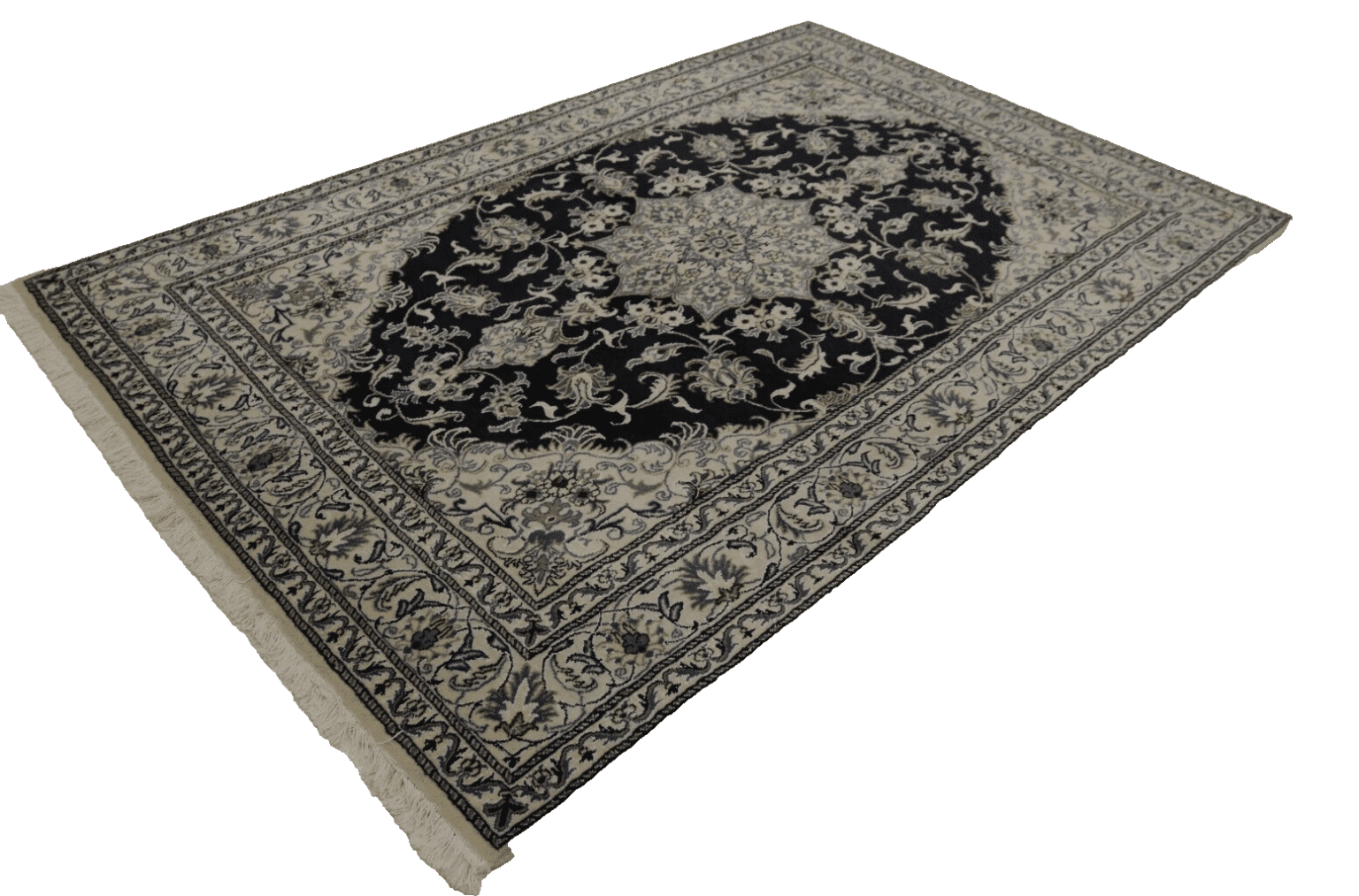
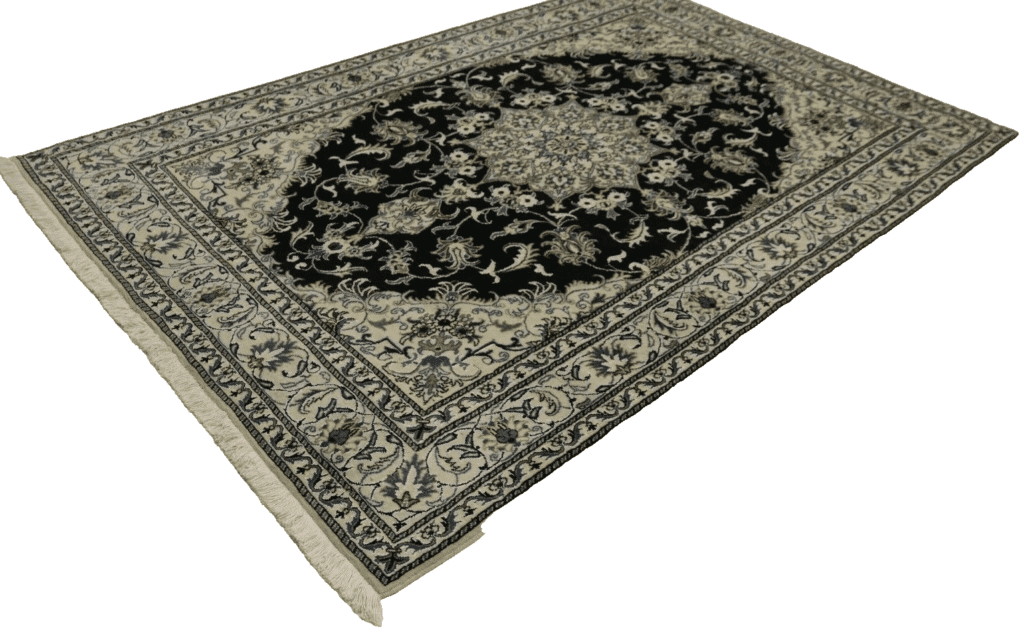
Hand-knotted Nain Persian rug | Knot density: approx. 300,000 knots/m² | Material: pile 90% virgin wool, 10% silk, warp 100% cotton | Size: 235 x 168 cm | Pattern: Oriental with floral and geometric elements | Condition: New, very good
This Super Nain is hand-knotted, with a pile made from 90% virgin wool and 10% silk and a warp made from 100% cotton. Wool forms the greater part of the pile and gives the surface the substantial textile character associated with natural wool. Silk adds a distinct material component with its own fine sheen. Together, the two fibres create the combination of tactile qualities described for this rug.
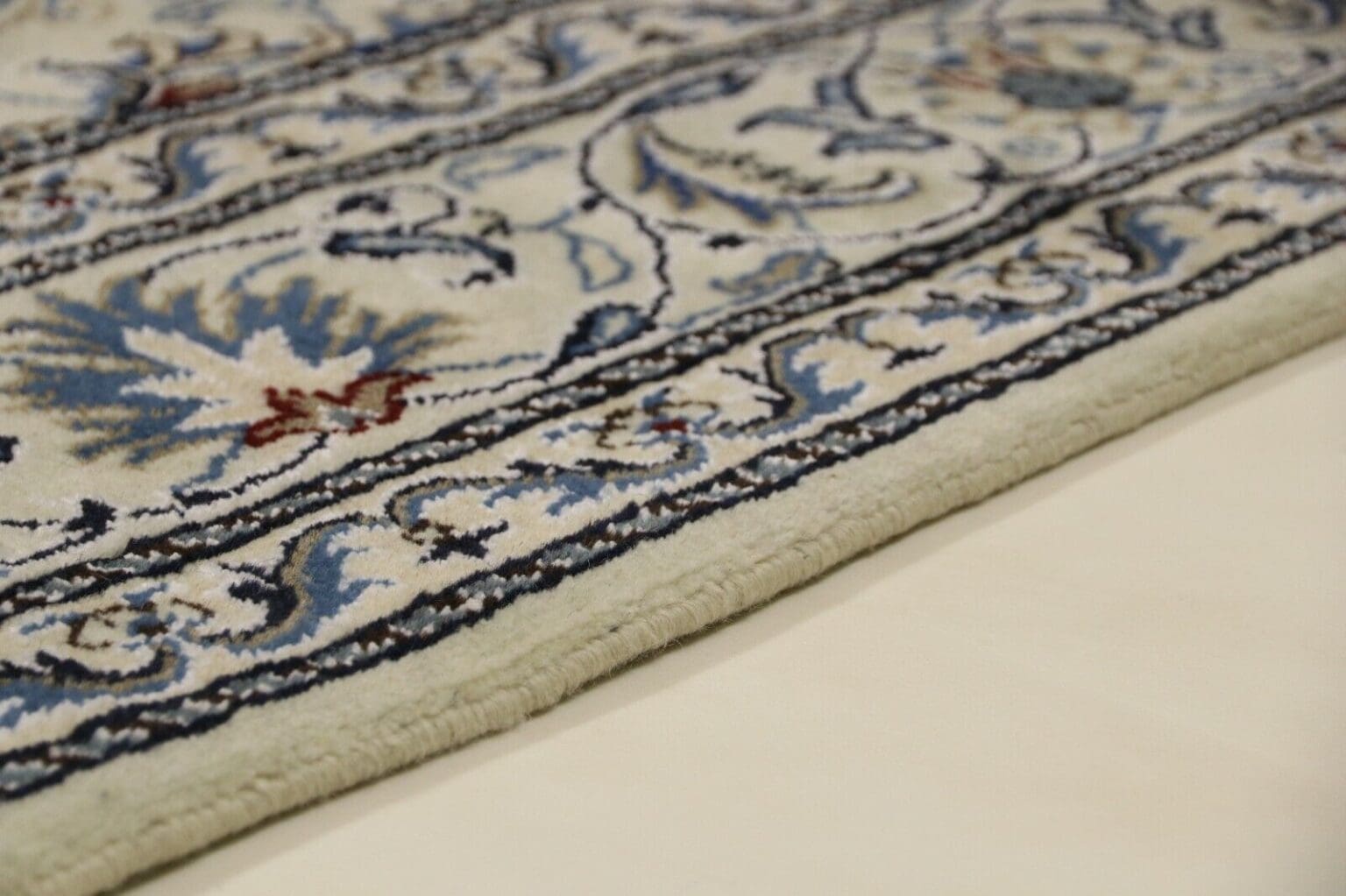
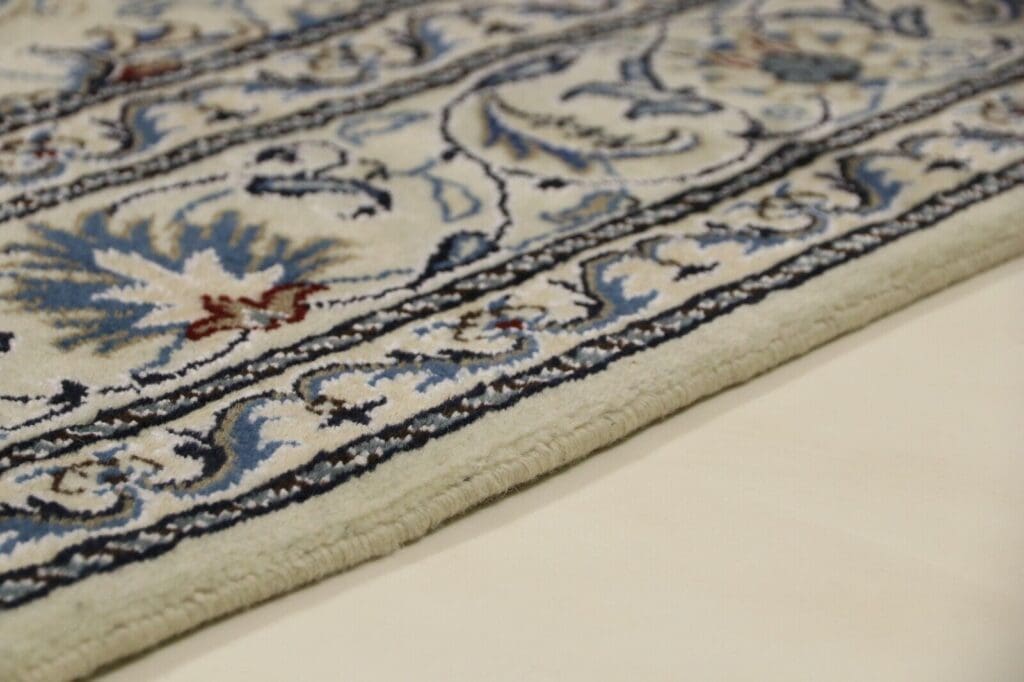
Hand-knotting is a construction method in which the pile is built into the foundation rather than printed onto a finished surface. Knots are placed row by row, and the pile is then worked so that the design becomes legible. The process requires the arrangement of colour areas, outlines and ornamental details during construction. It is therefore closely linked to the appearance of the finished pattern. This rug is described with a knot density of approximately 300,000 knots per square metre.
The cotton warp provides the structural basis to which the pile is attached. It supports the construction and contributes to the stability of the rug. The wool and silk pile remains the visible, tactile layer above that foundation. The hand-knotted technique, the cotton warp and the natural pile fibres therefore work together as parts of one textile structure rather than as separate decorative additions.
The listed thickness is approximately 8 mm. The rug is described as new and in very good condition. Its material and workmanship are consequently defined by an unused example, the stated blend of virgin wool and silk, the cotton warp and the hand-knotted construction. No repairs, previous wear or special surface treatment are stated for this piece.
Origin and Tradition
This rug is presented as a Persian rug from Persia and is identified as a Super Nain. Nain is a recognised name within Persian rug making and is associated with finely organised designs, careful knotting and the use of selected natural materials. The regional tradition is known for a controlled visual language in which the field, ornamental connections and borders are brought into a coherent relationship. The name Nain therefore identifies a particular Persian tradition rather than merely describing a colour or a decorative theme.
Persian rug production encompasses many regional approaches. Each tradition has developed its own balance between drawing, colour, structure and workshop practice. Nain designs are commonly discussed in connection with precise ornament and clearly ordered compositions. Motifs are placed within a planned field, while borders provide an outer framework. This sense of order allows floral lines and geometric divisions to coexist without making the overall design appear disconnected.
The craft is transmitted through practical knowledge: preparing the foundation, following a design plan, placing knots, managing the pile and finishing the surface. During the work, the maker must keep the relationship between individual motifs and the complete composition in view. The pattern is not simply added after production; it is formed through the placement of coloured pile. A denser construction can support more closely drawn contours and smaller decorative transitions, although the visual character also depends on the drawing and the skill of the workshop.
Nain is often associated with an elegant balance between floral ornament and geometry. Curving vines, stylised blossoms and leaves can be arranged within a measured framework of borders and fields. Geometric elements provide proportion and rhythm, while botanical forms bring continuity across the surface. This approach places Nain within the wider Persian design vocabulary while giving it a recognisable regional identity.
Kerman and Isfahan are other Persian rug traditions known for elaborate designs and accomplished workmanship. Ziegler and Kashan are also associated with distinctive production histories and the use of quality materials. These names are useful for understanding the broader context of Persian rugs, but they are not origin statements for this item. This particular rug is described as a Super Nain from Persia.
Persian rug traditions have preserved ornamental systems, colour relationships and hand skills while allowing individual workshops to interpret them in different ways. A rug can consequently be understood through both its physical construction and its regional design language. In this Super Nain, the stated Persian origin, the Nain designation, the hand-knotted technique and the wool-and-silk pile belong together as the defining traditional references.
Design and Pattern
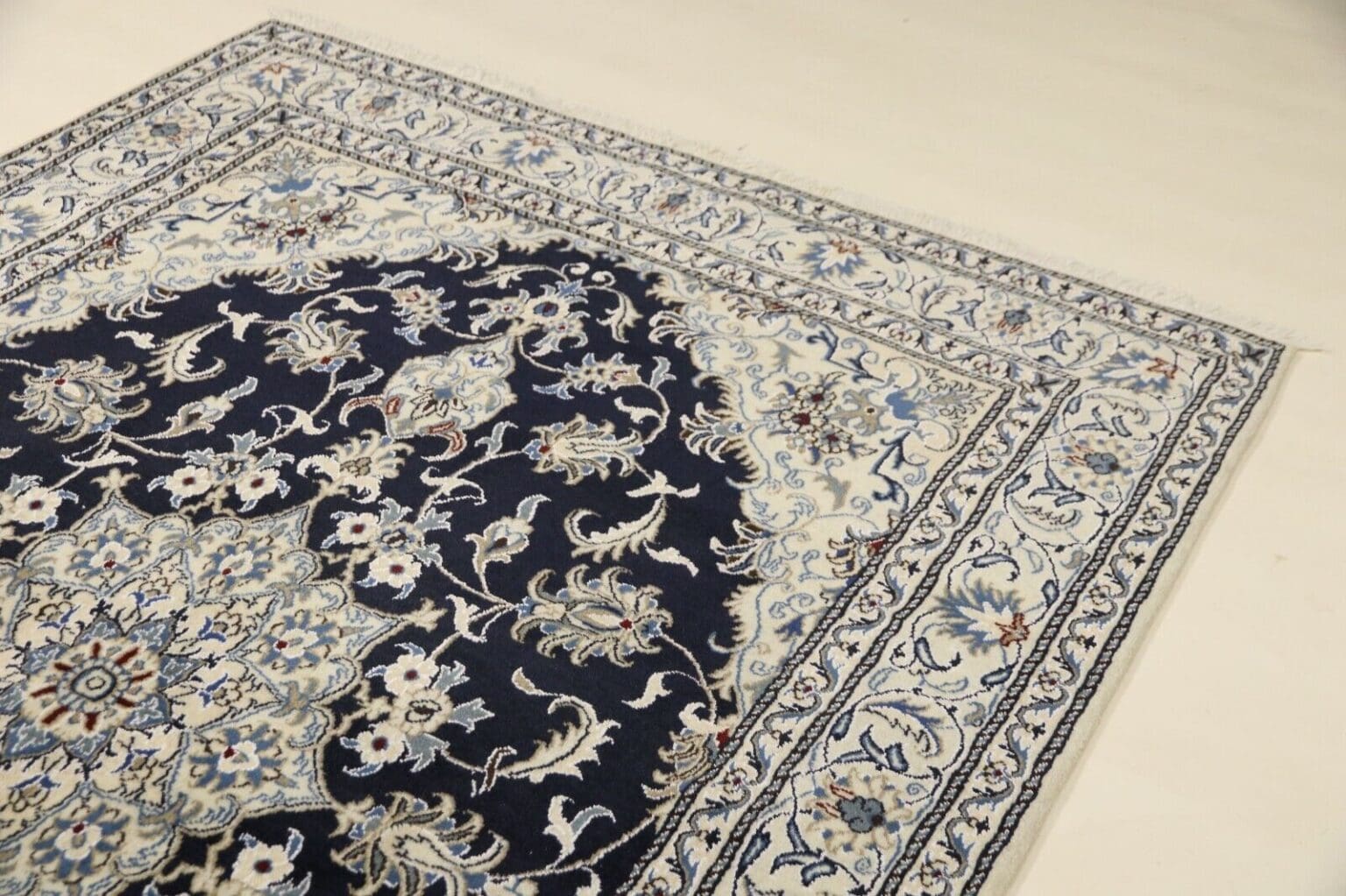
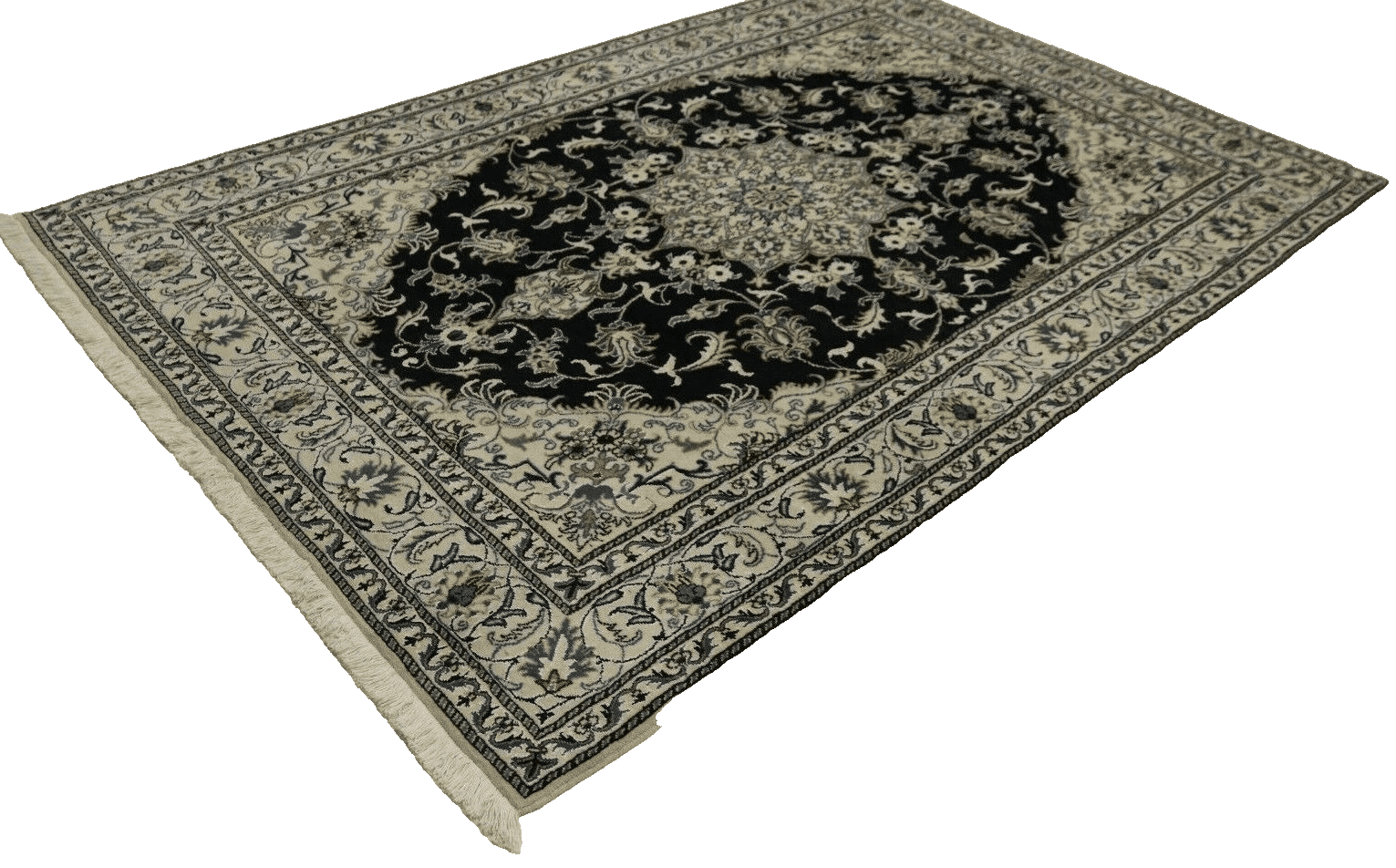
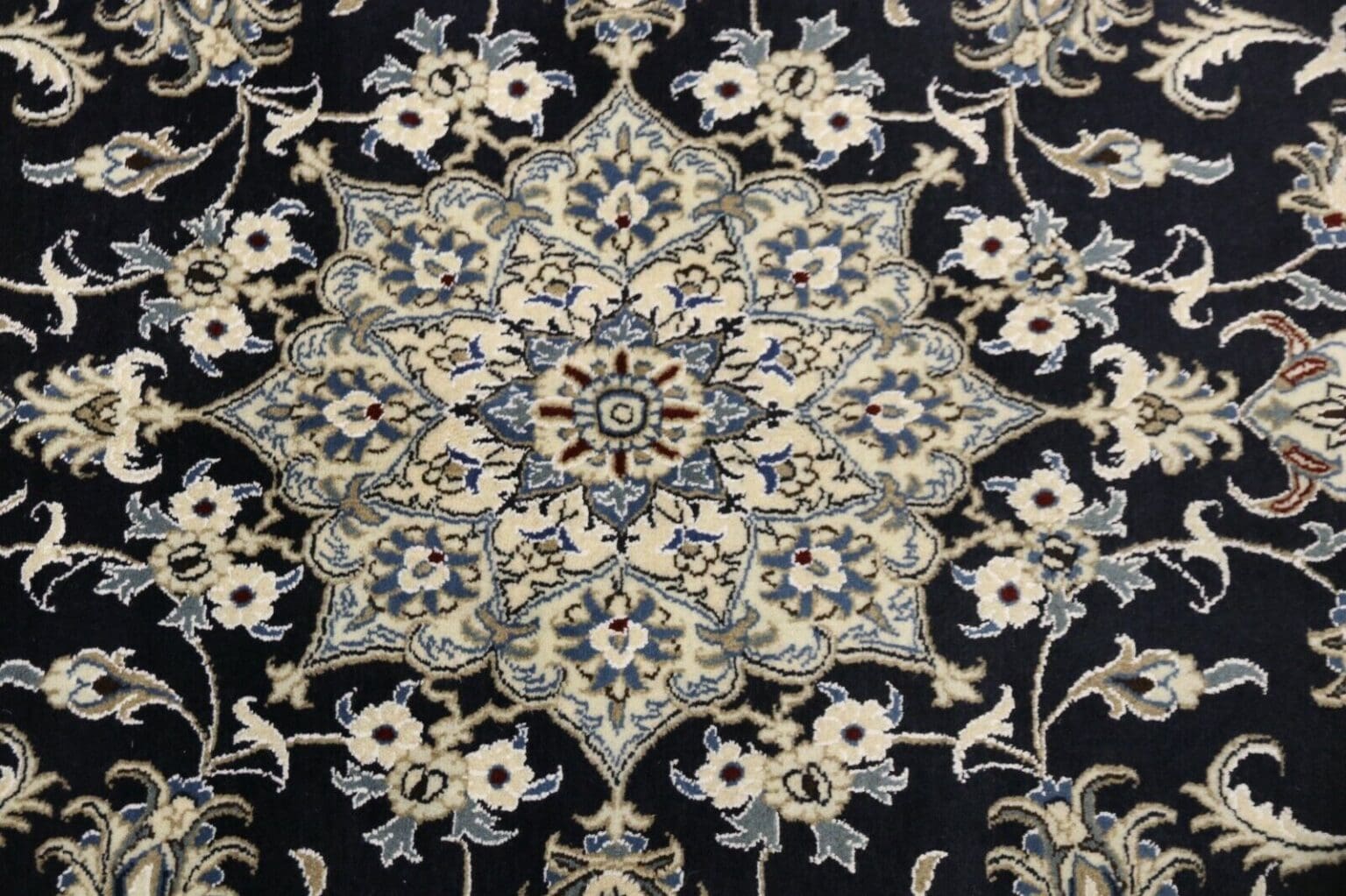
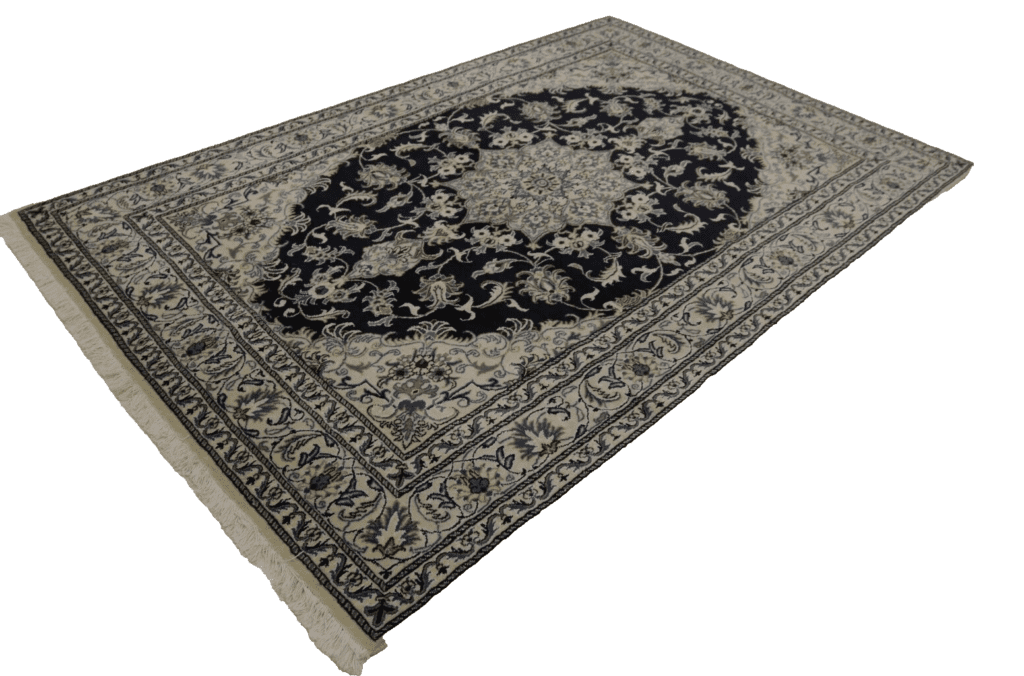
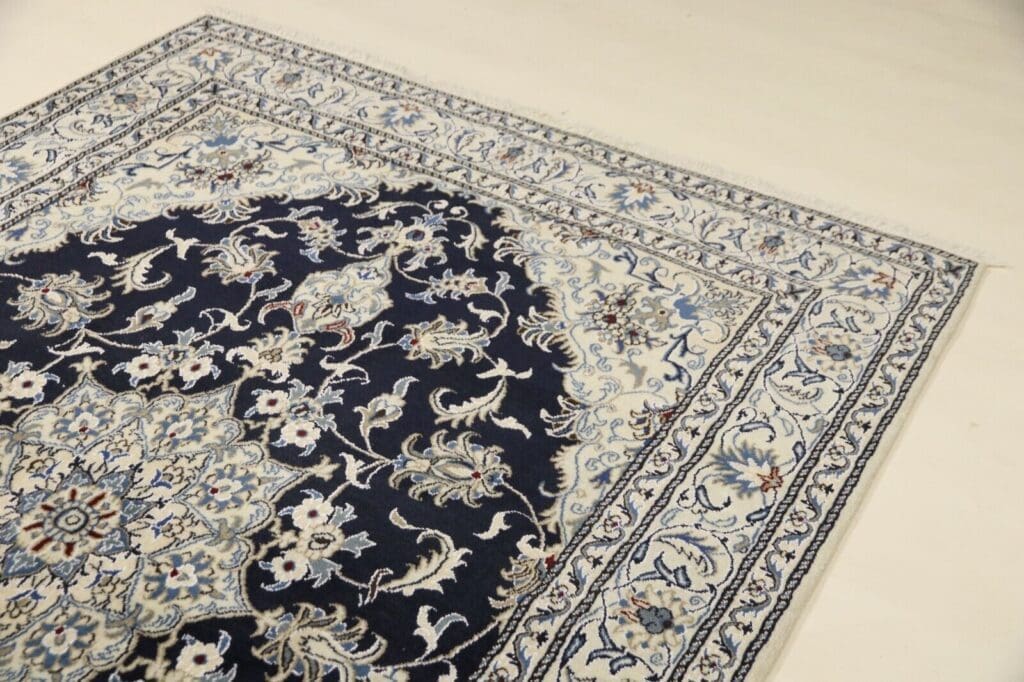
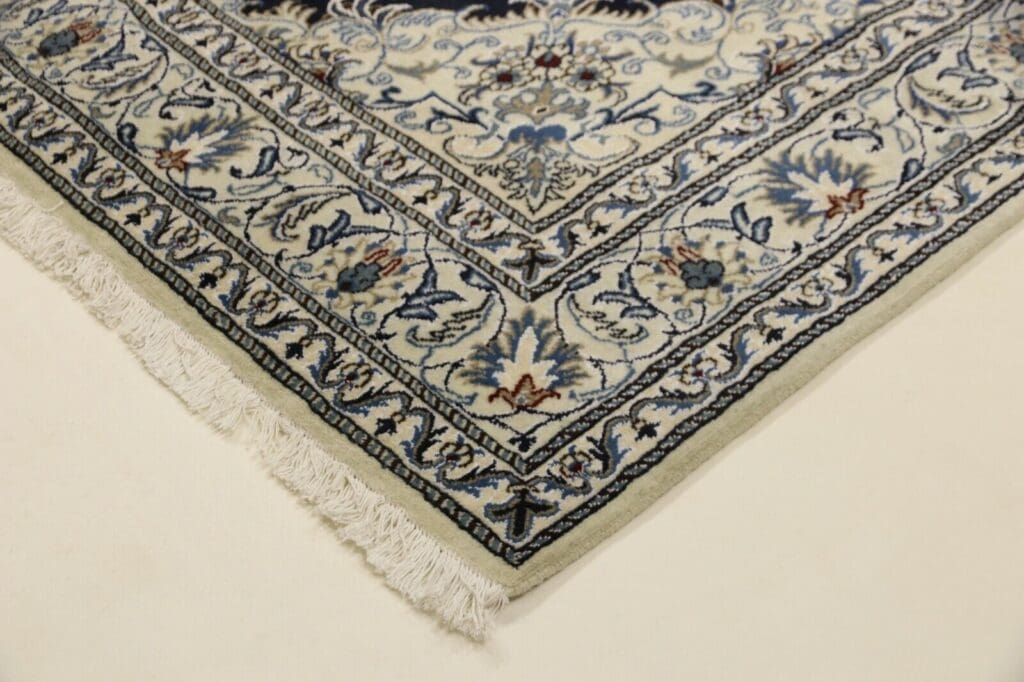
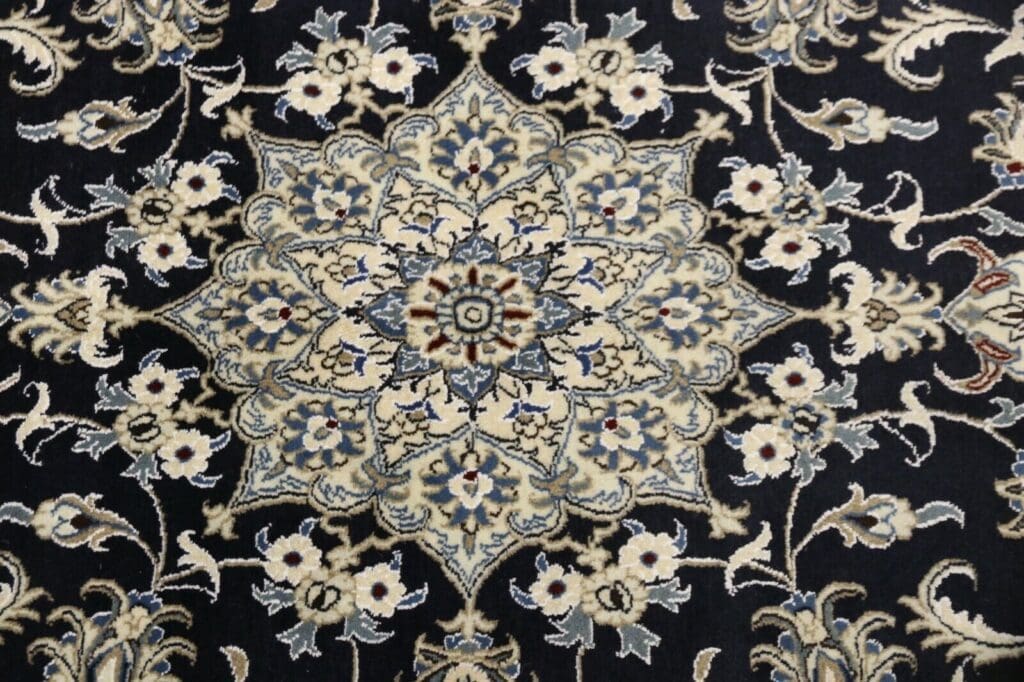
The pattern is described as Oriental, with the detailed description identifying a mixture of floral and geometric elements. Floral forms introduce vines, blossoms, leaves and flowing connections into the composition. Geometric forms establish boundaries, repetition and visual order. The two systems can be combined so that curved ornament moves through a clearly structured field rather than standing apart from it.
Floral motifs in Persian rugs are generally ornamental interpretations rather than literal botanical illustrations. A flower or leaf may be simplified, repeated or connected to a larger vine. The resulting forms are arranged to create continuity across the field. Repetition gives the design rhythm, while the outlines and changing directions of the motifs keep the surface visually articulated. In a hand-knotted rug, these elements are formed through the placement of coloured pile.
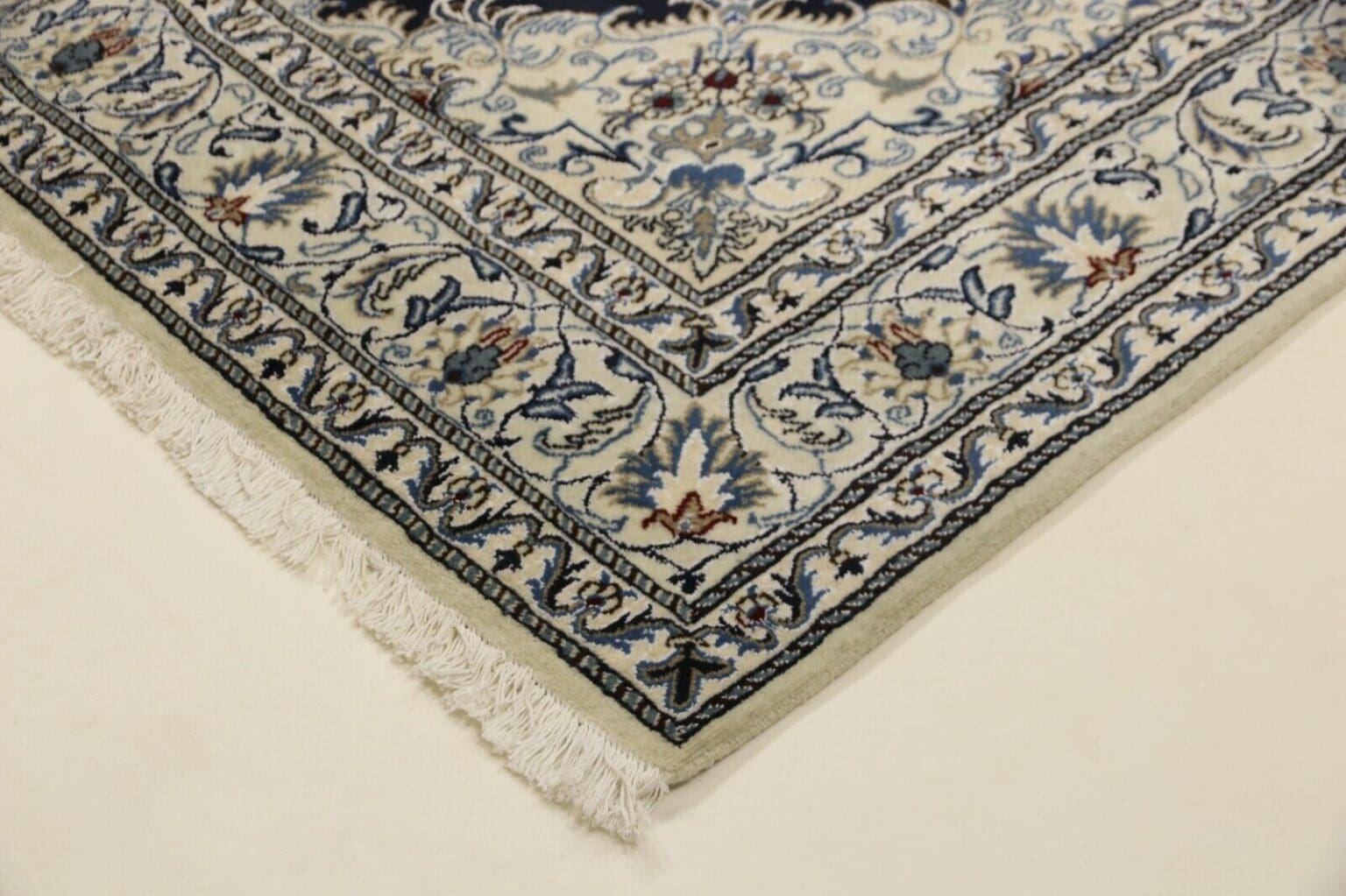
Geometric details may define a central arrangement, divide areas of the field or organise the border. They can be subtle framework lines or more visible shapes that guide the eye through the composition. When combined with floral drawing, they keep the ornament balanced. The design is neither solely botanical nor solely angular; its character comes from the interaction between flowing lines and measured structure.
The stated colours are white and dark blue. White creates a light ground impression, while dark blue provides contrast for outlines and ornamental areas. This relationship makes the floral and geometric details readable and gives the Oriental design a clear colour structure. The colour description belongs to this rug and is distinct from the wider historical range of colours used in Persian weaving.
In a hand-knotted construction, pattern and colour are integrated into the pile as the rug is made. The design is therefore connected to the foundation, the knot placement and the later work on the surface. A high knot density can help define small contours and detailed transitions. It does not replace the design itself: the visual result also depends on the drawing, the arrangement of motifs and the consistency of the craftsmanship.
The term Super Nain places this design within the Nain context and points to a refined interpretation of that tradition. It does not change the stated origin into another Persian region. For this rug, the relevant design information is the Oriental character, the floral-geometric combination, and the white and dark-blue palette. These elements give the piece its described visual identity without requiring a claim beyond the supplied details.
Special Features
The rug is described as new and in very good condition. Its stated material combination consists of 90% virgin wool and 10% silk in the pile, with a 100% cotton warp. Other listed features are the hand-knotted technique, a knot density of approximately 300,000 knots per square metre and a thickness of approximately 8 mm. The white and dark-blue palette makes the Oriental floral-geometric design clearly identifiable.
It is also specified as suitable for underfloor heating. This allows it to be used in rooms with heated floors. The product description connects this suitability with its low thickness and quality materials. The heating should not be set too high in order to protect the material. The rug is described as suitable for living rooms, dining rooms and studies, and it can be combined with both modern and classic interiors.
FAQ
How should I care for the Nain Persian rug?
Regular, gentle vacuuming is recommended for removing dust and loose dirt. The surface should not be subjected to unnecessary strain while it is being vacuumed, so the pile and the hand-knotted construction are treated carefully. If a spill occurs, it is best to respond immediately. A damp cloth and a mild cleaning product can be used cautiously on the affected area. Vigorous rubbing should be avoided because it can put stress on the pile and work the substance further into the fibres. The care advice is appropriate to the stated wool-and-silk pile and should be applied with restraint. If a mark cannot be removed through careful local treatment, professional rug cleaning is the suitable next step.
Is the rug suitable for underfloor heating?
Yes. The Super Nain is specified as suitable for use over underfloor heating. It can therefore be placed in a room with a heated floor. Its approximately 8 mm thickness and the quality materials are given as reasons for this suitability. The heating should not be set excessively high, as moderate operation helps protect the material. The rug should lie flat and evenly, and any additional underlay should be appropriate for heated floors so that it does not unnecessarily obstruct the transfer of warmth. These points support the intended use without changing the rug’s hand-knotted construction.
Where is the Super Nain best used?
The rug is described as versatile and suitable for almost any room. Living rooms and dining rooms are particularly appropriate, where the white and dark-blue palette and the Oriental pattern can serve as a central design element. It can also be used in a study to contribute to a neat and elegant room setting. The combination of floral and geometric forms allows it to be integrated into both modern and classic interiors. Placement should follow the existing furniture and the desired division of the room. The defining details remain its Persian origin, Nain designation, hand-knotted construction, virgin-wool-and-silk pile and new, very good condition.
To provide the best experiences, we use technologies like cookies to store and/or access device information. Consenting to these technologies will allow us to process data such as browsing behavior or unique IDs on this site. Not consenting or withdrawing consent, may adversely affect certain features and functions.
Functional Always active
The technical storage or access is strictly necessary for the legitimate purpose of enabling the use of a specific service explicitly requested by the subscriber or user, or for the sole purpose of carrying out the transmission of a communication over an electronic communications network.
Preferences
The technical storage or access is necessary for the legitimate purpose of storing preferences that are not requested by the subscriber or user.
Statistics
The technical storage or access that is used exclusively for statistical purposes.The technical storage or access that is used exclusively for anonymous statistical purposes. Without a subpoena, voluntary compliance on the part of your Internet Service Provider, or additional records from a third party, information stored or retrieved for this purpose alone cannot usually be used to identify you.
Marketing
The technical storage or access is required to create user profiles to send advertising, or to track the user on a website or across several websites for similar marketing purposes.

 SECURE PAYMENT
 SHIPPING PARTNERS


