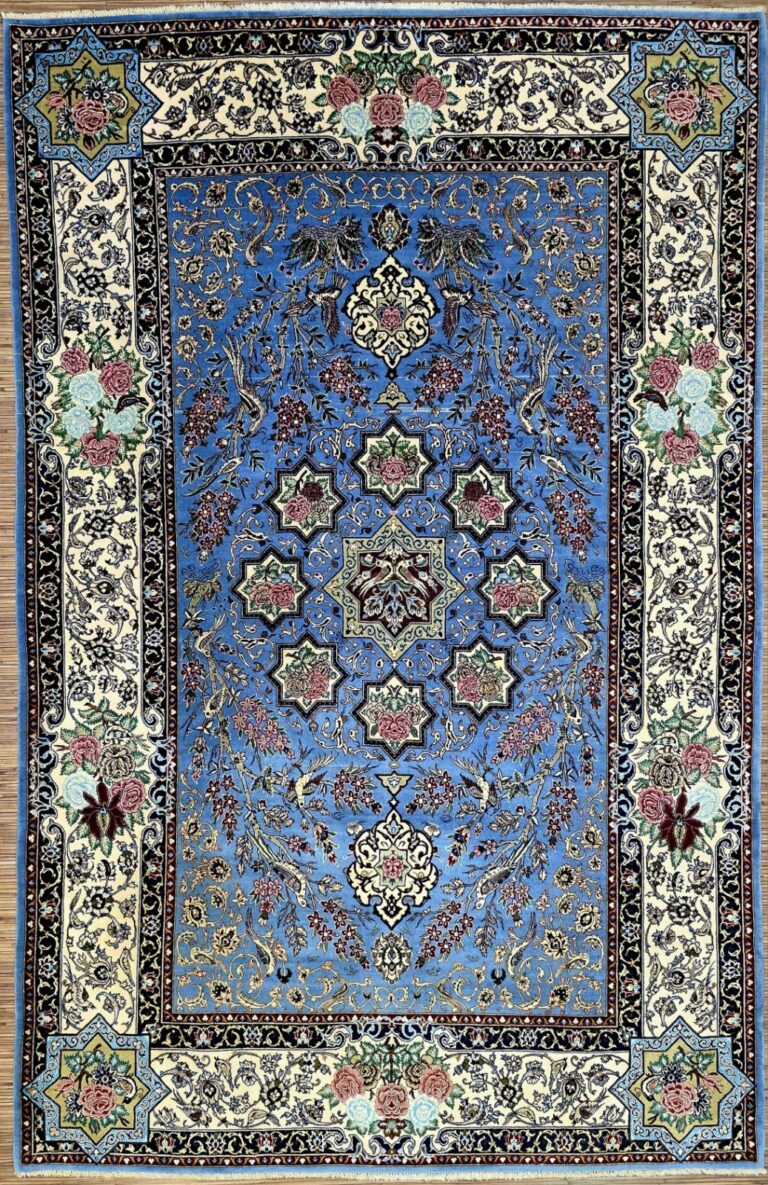
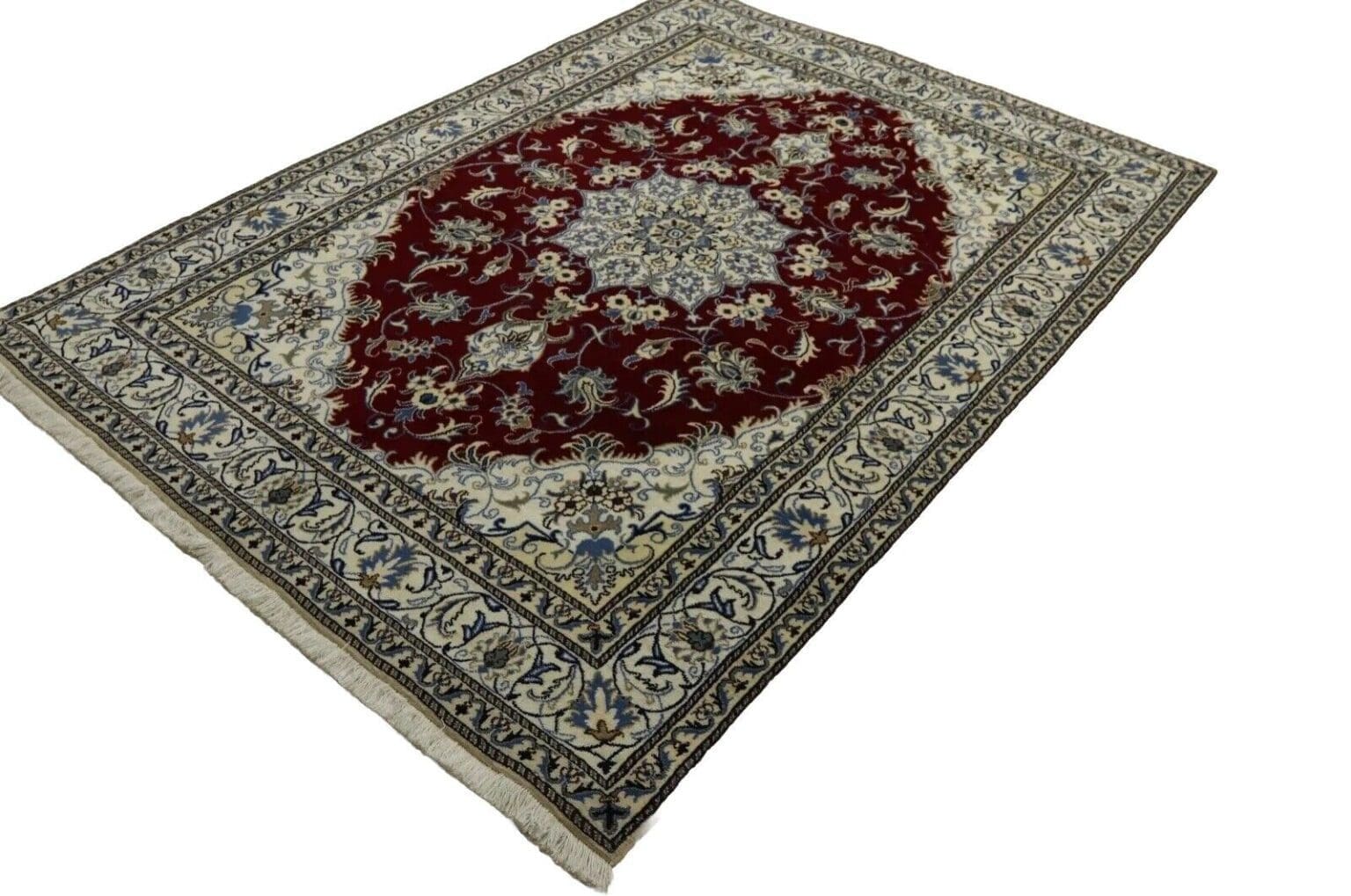
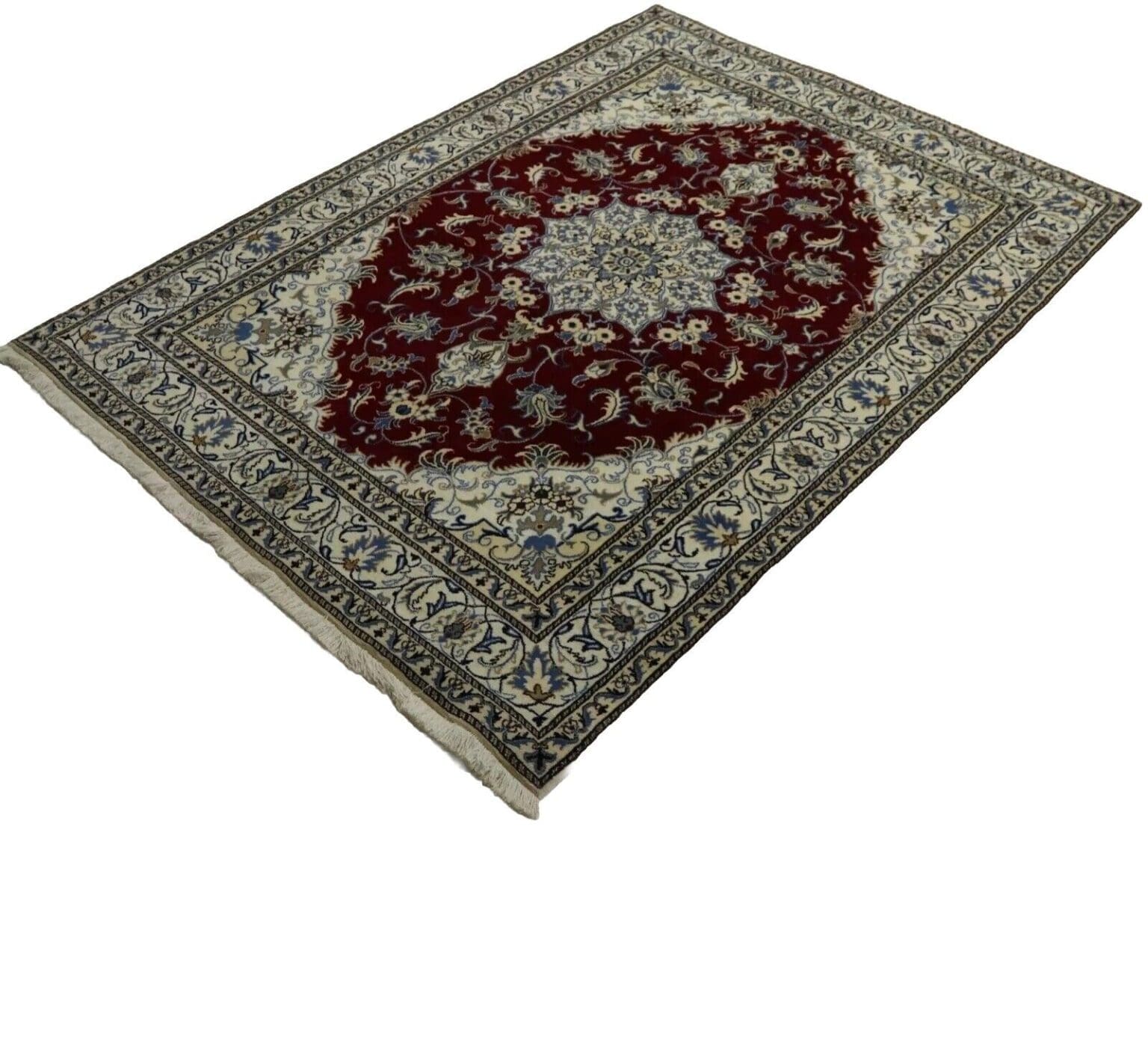
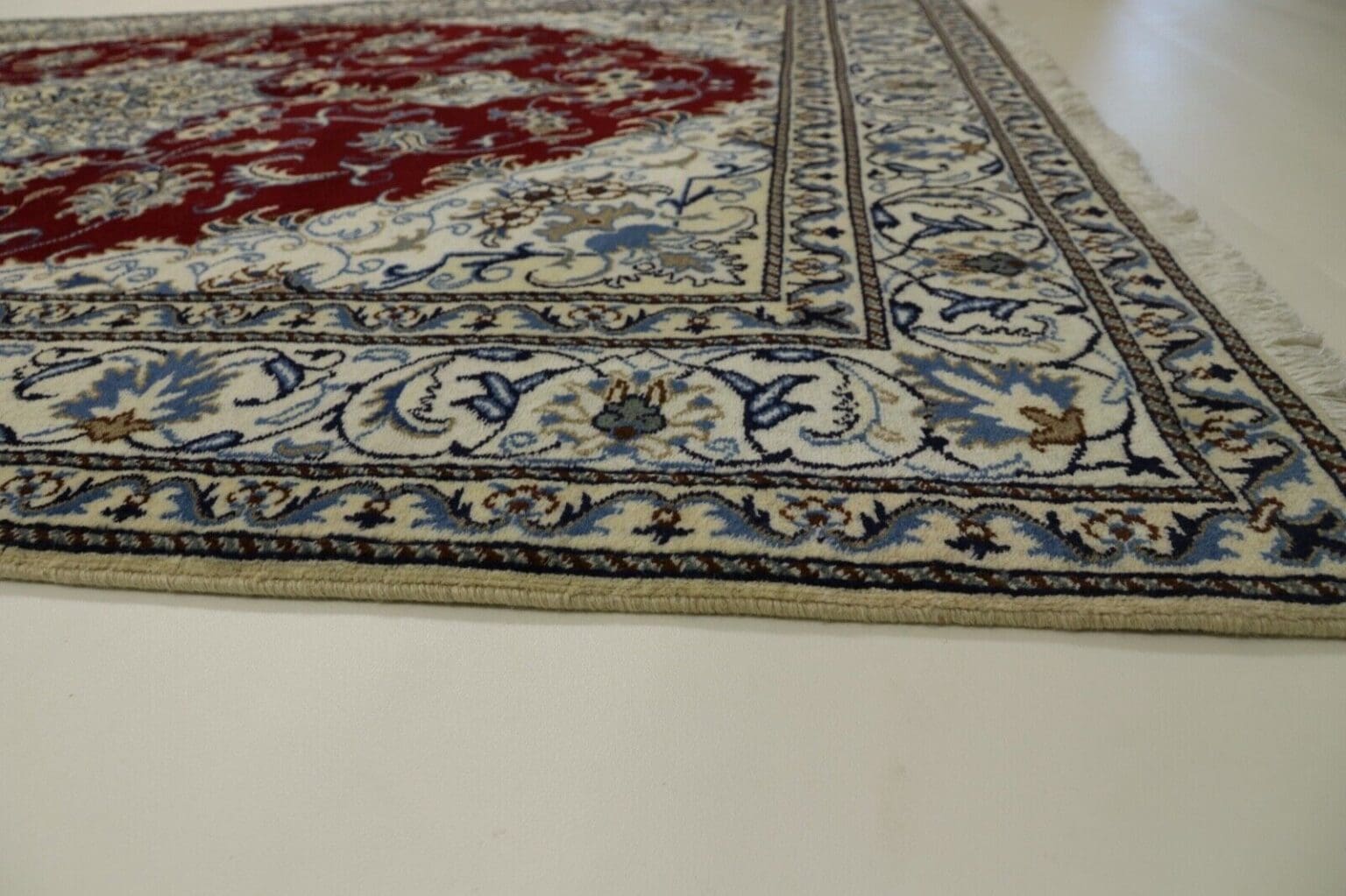
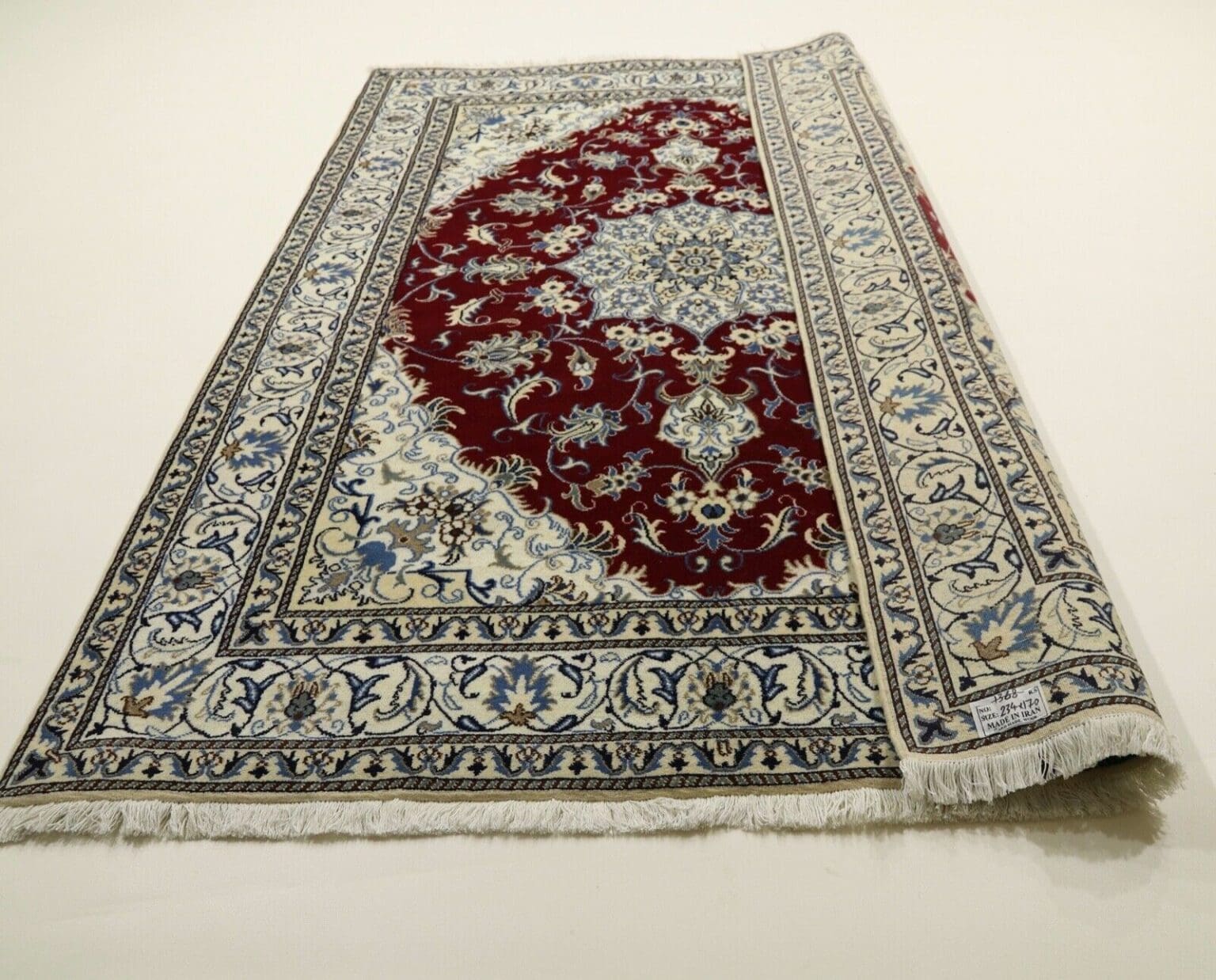
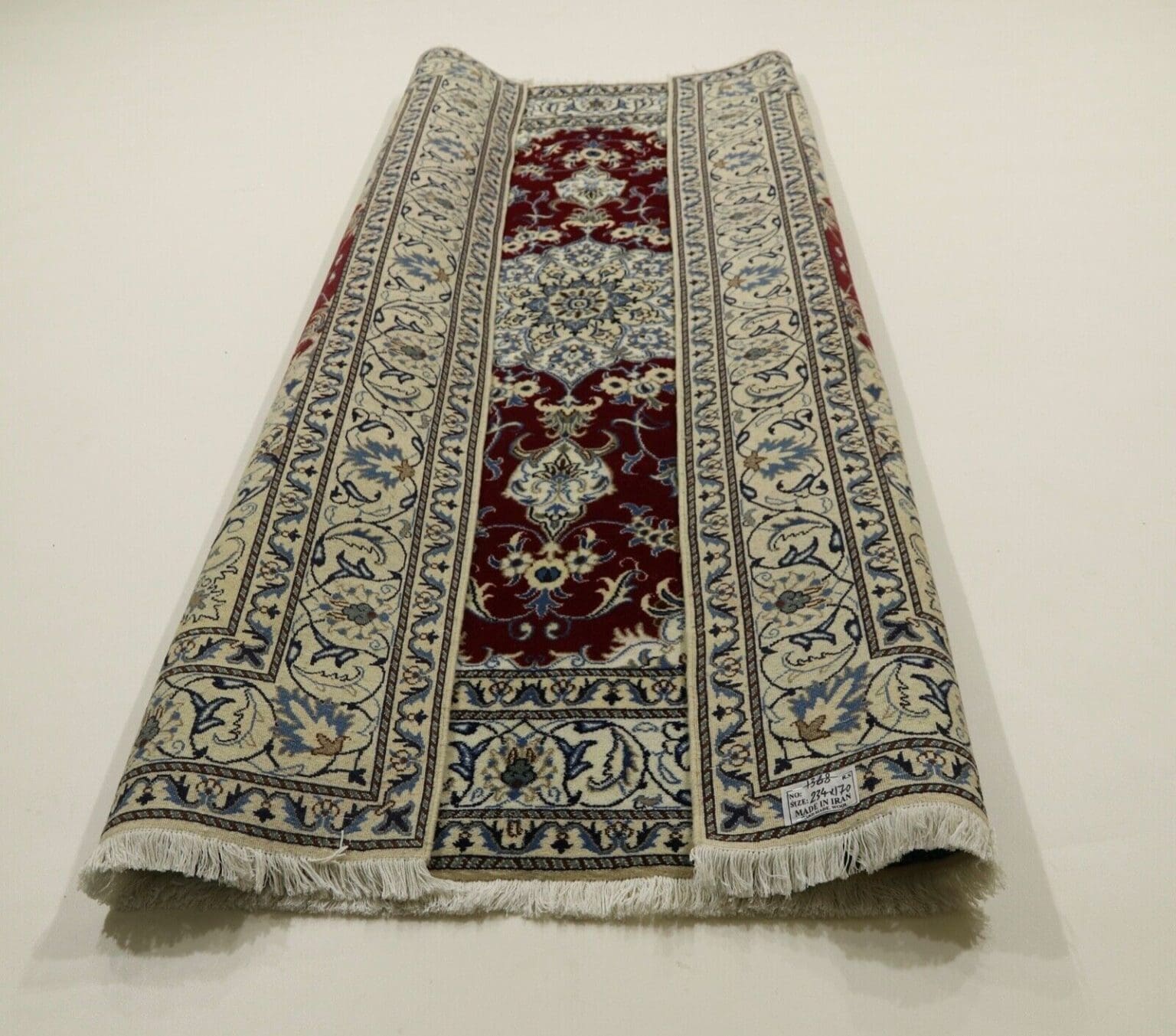
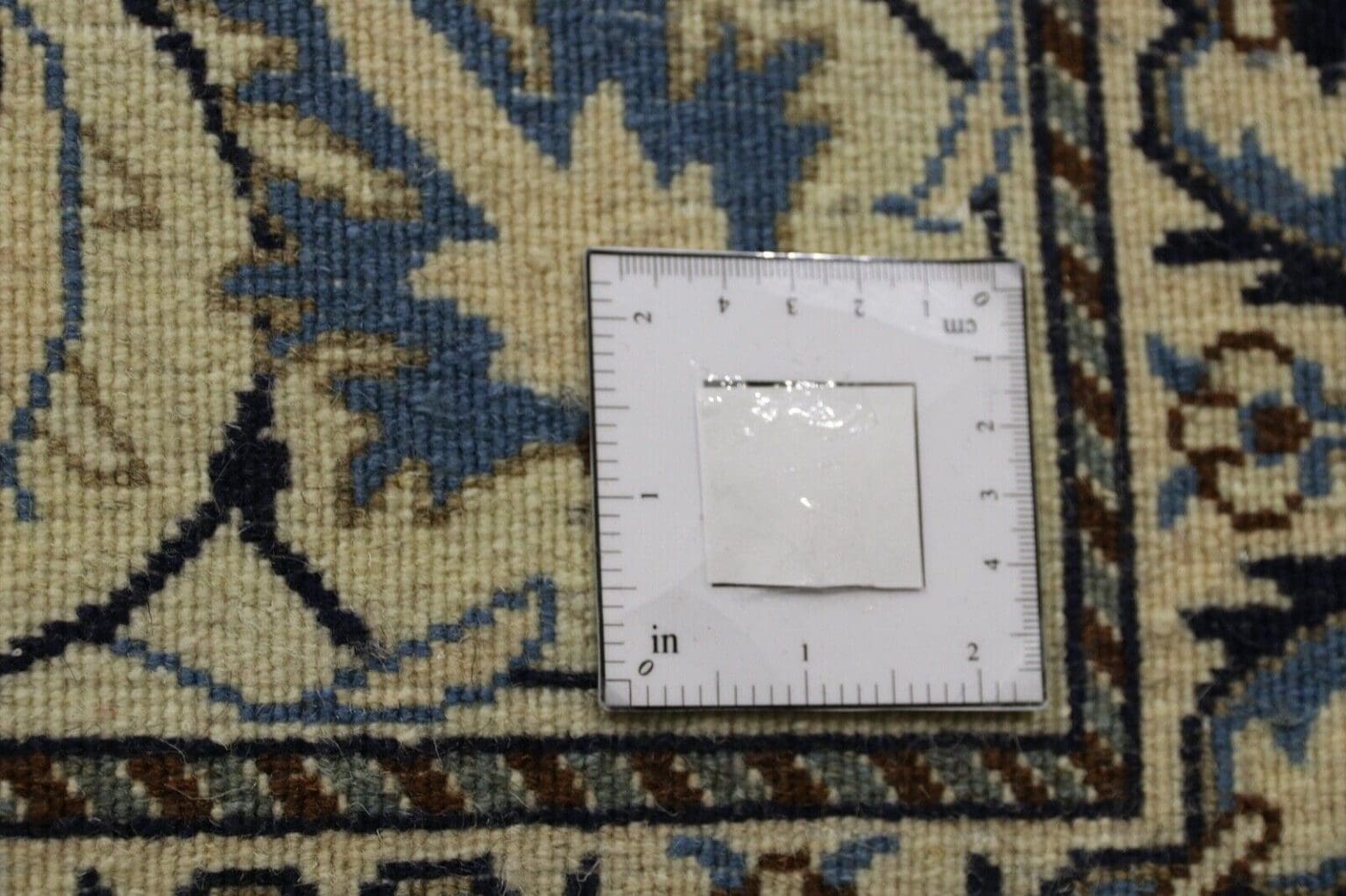
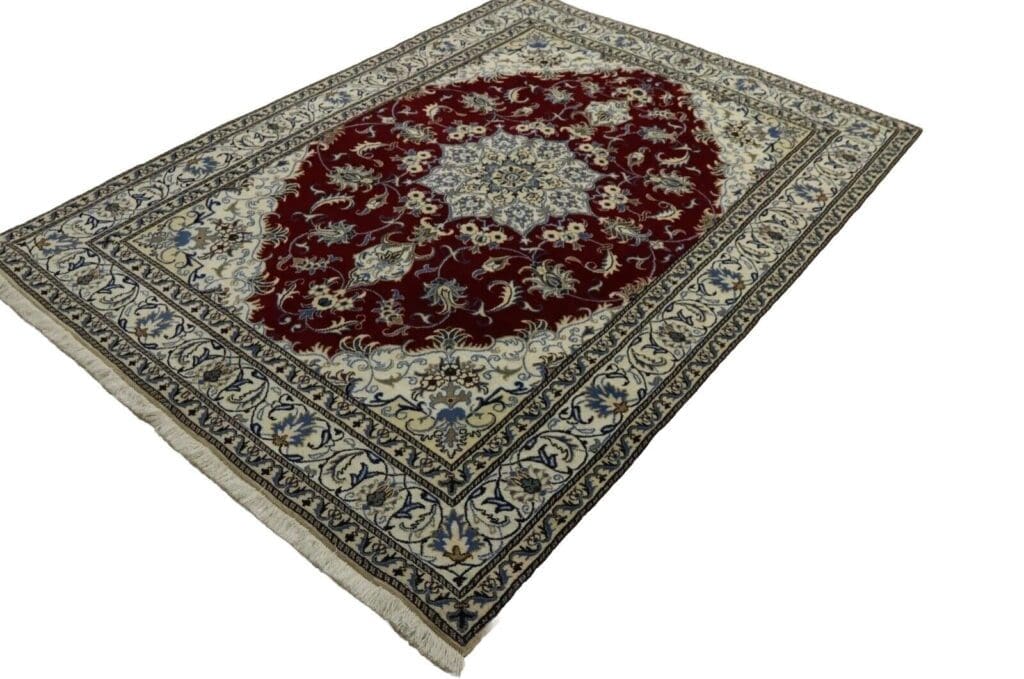
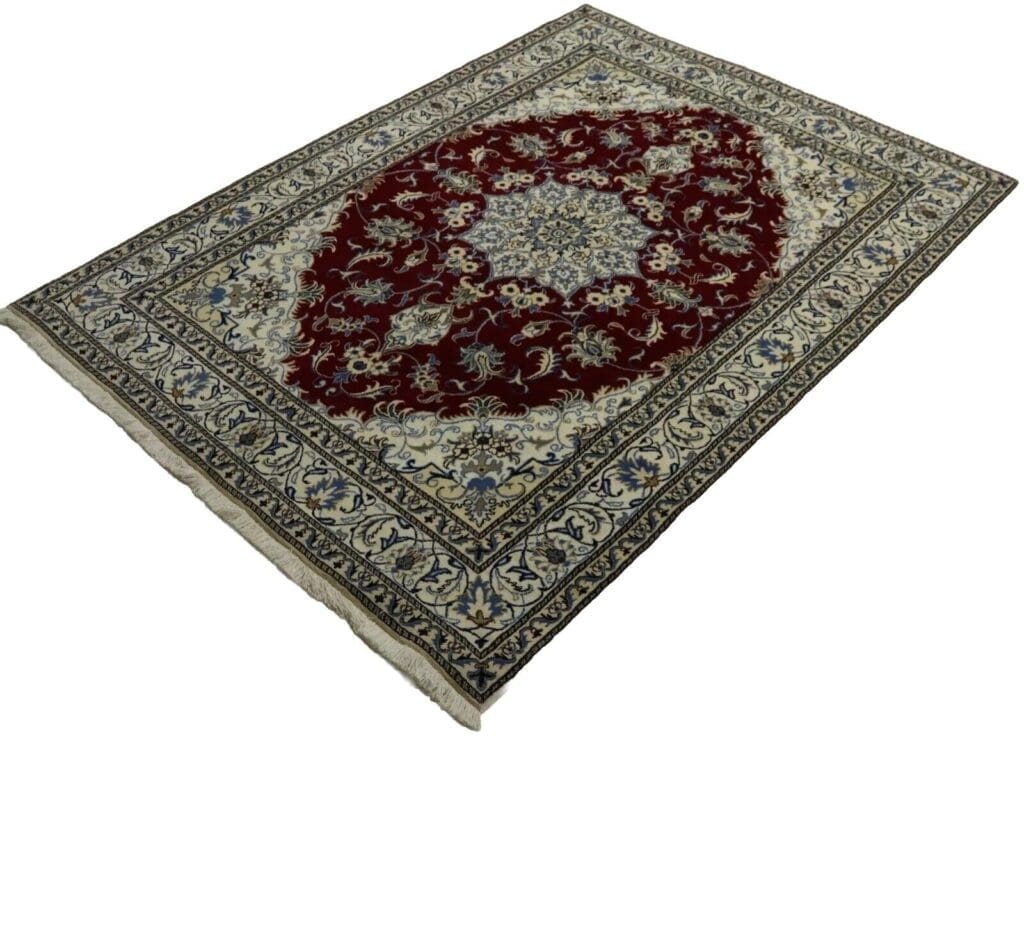
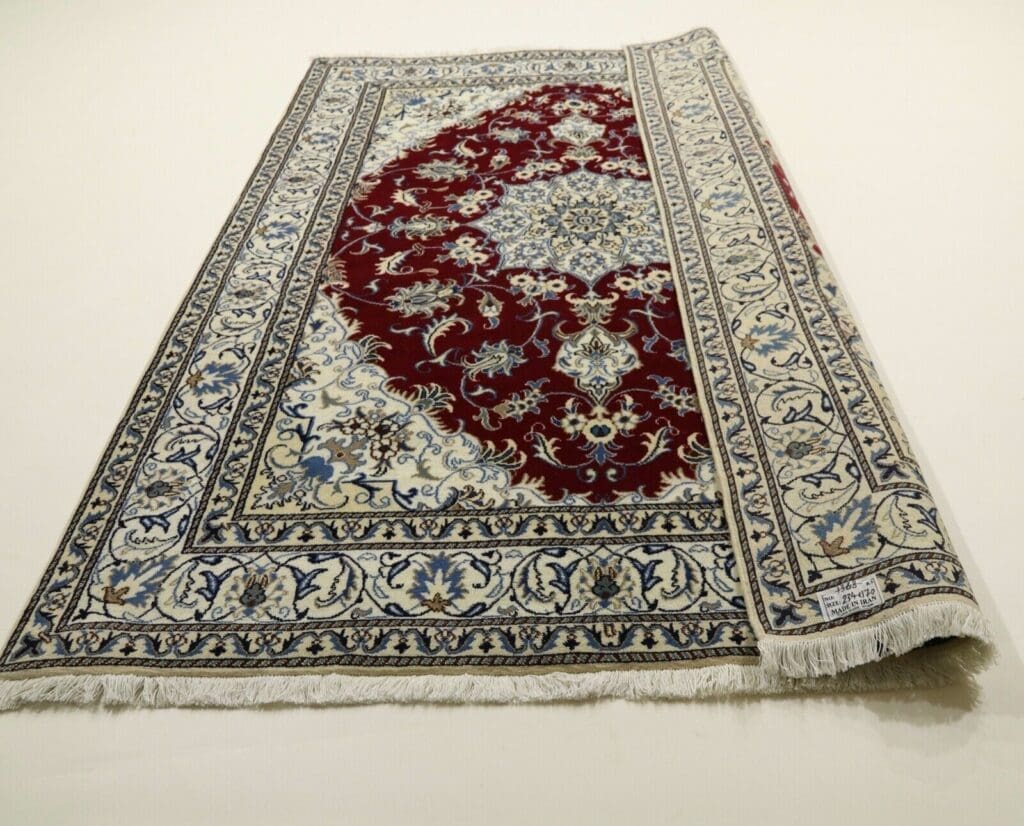
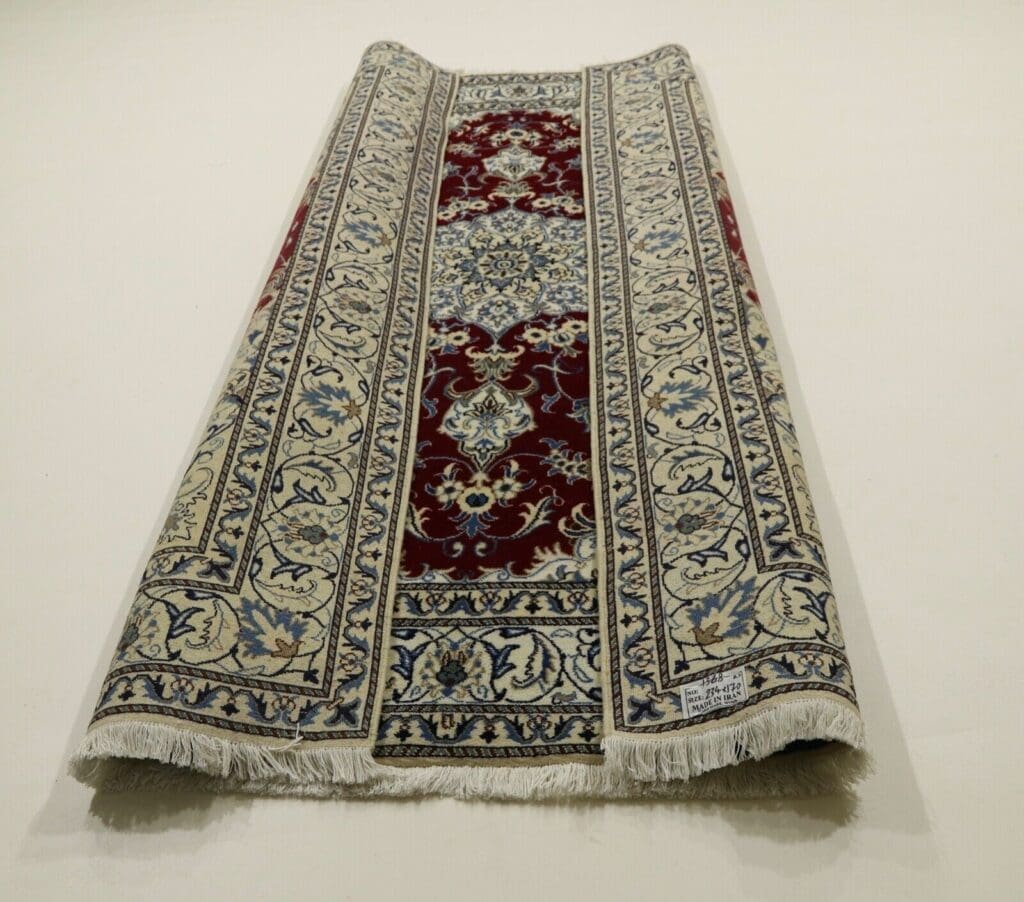
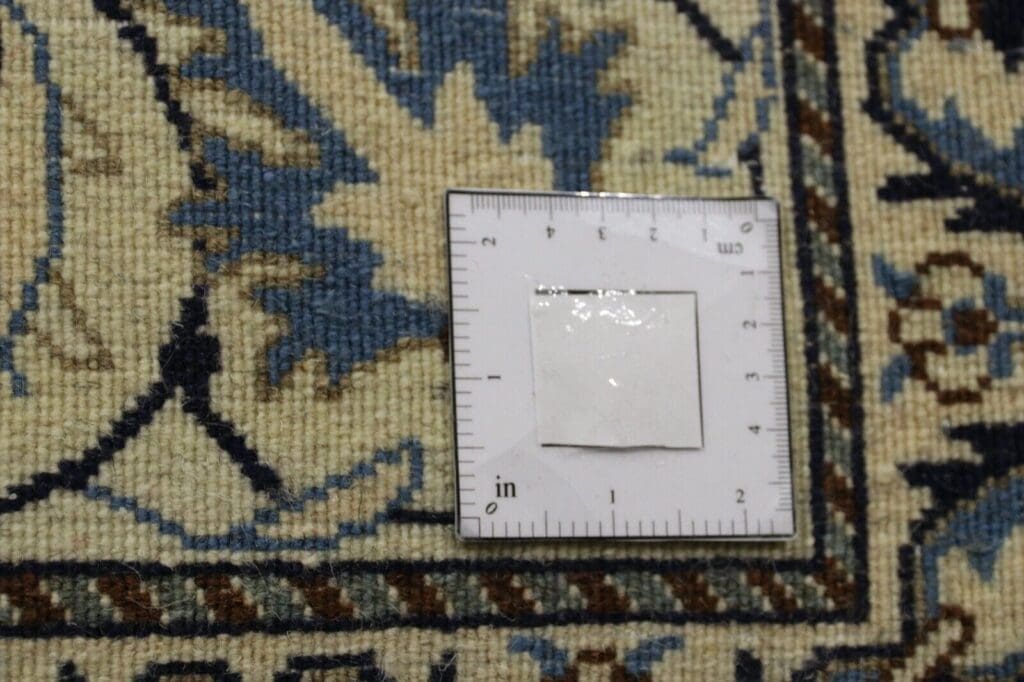
Hand-knotted Nain Persian rug | Knot density: approx. 300,000 knots/m² | Material: 90% new wool, 10% silk | Size: 234 x 172 cm | Pattern: traditional Oriental and Persian | Condition: New, very good
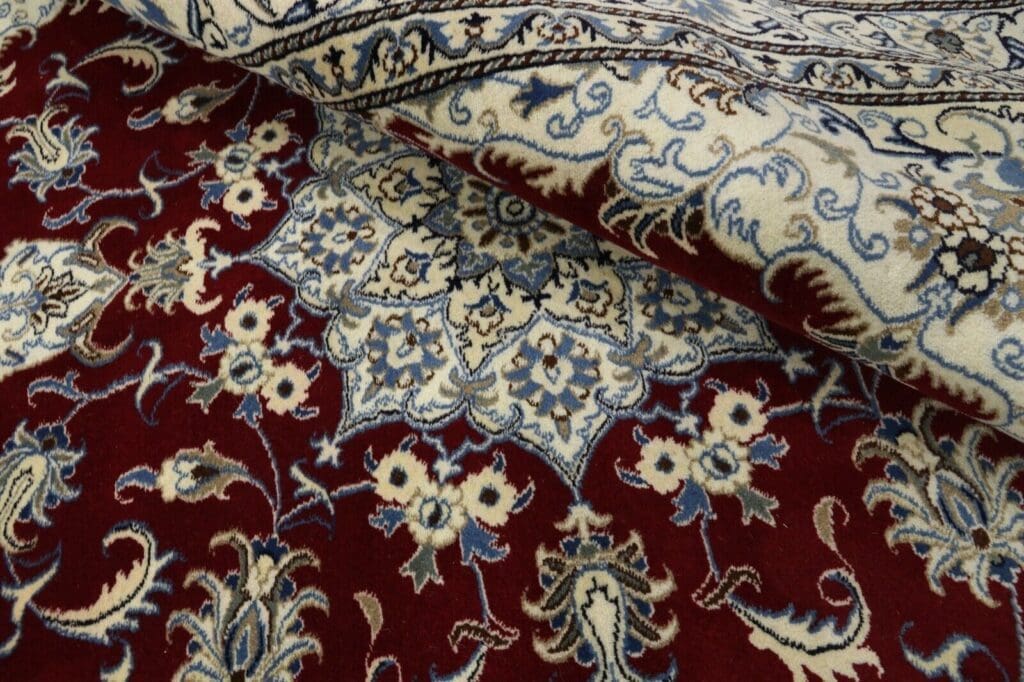
This Nain Persian rug is hand-knotted and made of 90% new wool and 10% silk. New wool provides the principal material content, with a soft handle and a resilient fibre structure. Silk complements the wool with a smoother surface and a subtle lustre. The two materials therefore contribute different qualities to the rug’s tactile and visual character. Silk can make selected lines and ornamented areas catch the light more distinctly, while wool gives the pile a warm and pleasant feel.
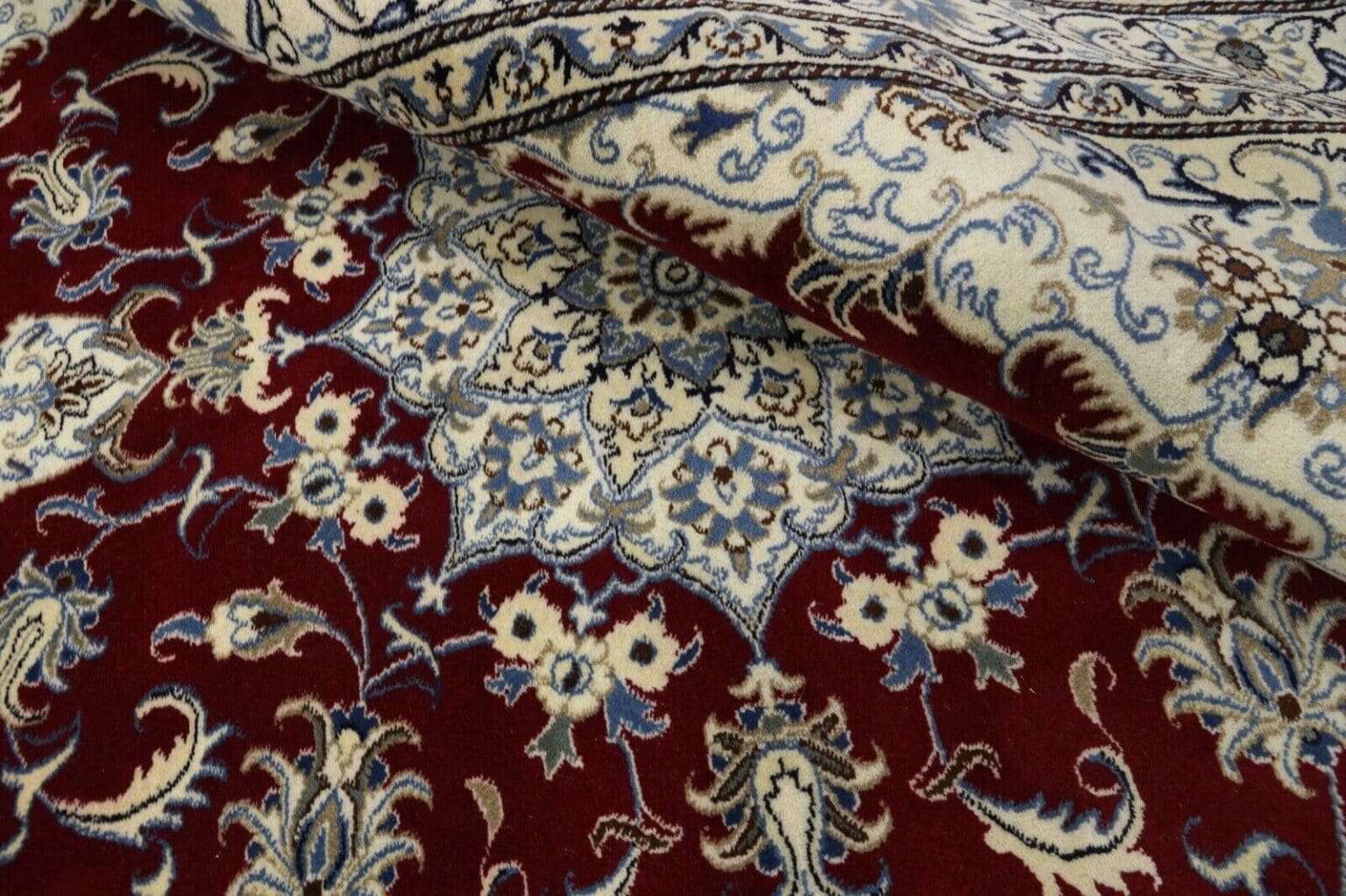
Hand-knotting means that each knot is inserted individually into the prepared rug structure. The process requires time, experience and consistent workmanship. Unlike an industrial floor covering, a hand-knotted rug is built through many successive working stages. The fine knotting recorded for this rug supports precise pattern definition and a detailed surface. The blend of wool and silk is part of that construction and gives the pile a combination of softness, substance and varied light reflection.
The rug is new and was made using traditional rug-knotting methods. In Persian carpet making, such methods unite the choice of fibre, the preparation of the foundation, the planned drawing and the repeated act of knotting. Wool has long been used for pile because its fibres are durable, resilient and comfortable underfoot. Silk is used as a complementary fibre when a smoother touch and a more pronounced response to light are wanted in parts of the design.
Origin and Tradition
Nain is a city in Iran and also the name of an important Persian carpet tradition. It lies in central Iran, an area historically shaped by an arid climate and by routes connecting different parts of the country. Nain rugs became known for careful execution, delicate drawing and balanced compositions. The provenance Nain places this rug within that Iranian weaving tradition.
The development of Nain carpet making is generally associated with the nineteenth century. During that period, workshops in Nain formed a recognisable approach that drew on older Persian ornamental traditions while developing a particularly fine and controlled line. Weavers adapted familiar motifs, borders and compositional principles to a local visual language. The result was a tradition in which floral ornament, ordered fields and precise detail could be combined within a coherent design.
Persian rugs are understood through more than their place name. Their identity also relates to their knotting method, materials, colour relationships and ornament. Nain compositions often bring together central medallions, structured borders and finely drawn vegetal forms. Floral details may be arranged within a symmetrical plan, while geometric organisation helps define the field and the surrounding frame. This relationship between botanical shapes and ordered structure is common to the tradition, although individual Nain rugs need not share one identical layout.
Iranian carpet making developed over generations in many different cities and regions. Each weaving centre cultivated preferences concerning knotting, fibre, colour and pattern. Within this broader Persian diversity, Nain is associated with a fine, disciplined ornament and with designs in which detailed drawing has an important role. Skills were passed from experienced makers to later generations. They include preparing the foundation, handling wool and silk, following a design plan and keeping the knots sufficiently even to express small forms.
A Nain rug consequently combines a practical textile function with a long-established craft tradition. Its surface is shaped not only by colour but also by pile direction, knot structure and the sequence of decorative forms. When viewed from different directions, the surface may respond differently to light. The combination of new wool and silk supports this nuanced appearance while preserving the rug’s classification as a Persian Nain rug.
Design and Pattern
The design of this rug is described as traditional Oriental and Persian. It contains harmoniously coordinated colours and fine details. The silk brings a distinct light response to smooth lines and selected decorative passages. As a result, the surface combines textile texture with a clearly articulated ornamental drawing, allowing the material and the pattern to be perceived together.
Nain designs often take inspiration from the plant world. Branches, blossoms and leaves may be joined into scrolling vines, placed symmetrically or enclosed within a medallion. In Persian ornament, such motifs are not intended as literal botanical illustrations. They are stylised, repeated and arranged within a larger system of balance. Repetition creates rhythm, while delicate variations in line and scale keep the pattern visually differentiated.
Geometric forms also have an important place in many Nain compositions. A medallion can establish the centre of the field, while corner pieces and borders organise the transition towards the edge. Vines, leaves and linear elements are distributed so that the entire surface reads as one connected composition. Geometry does not necessarily mean hard, straight lines; it can also appear as an underlying order within flowing floral forms. This allows symmetry and organic movement to work together.
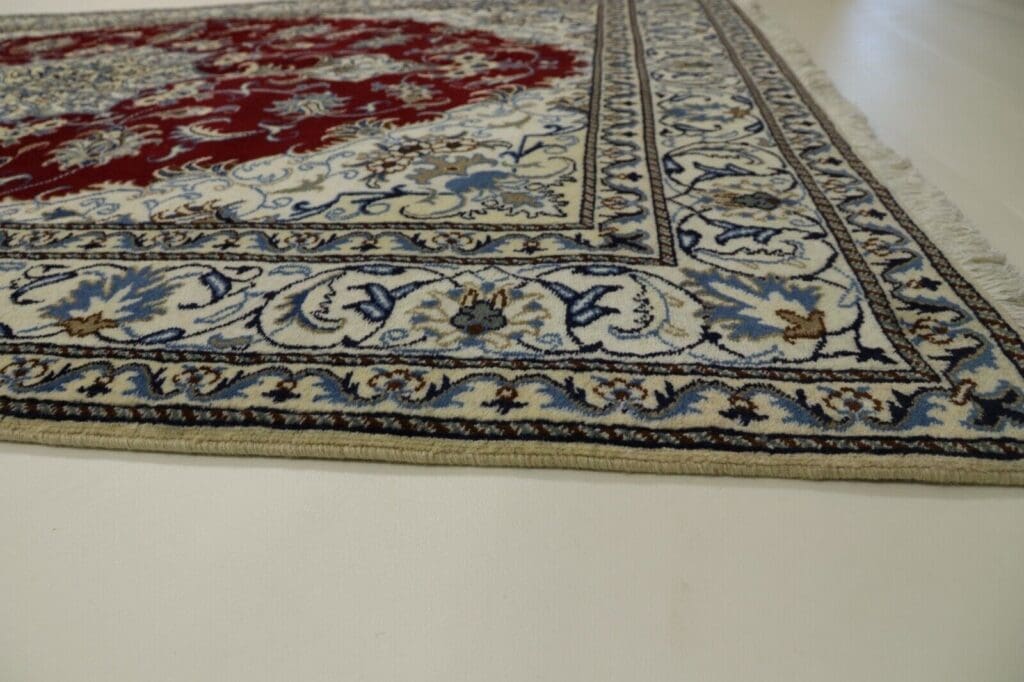
Many Persian rug designs are based on a relationship between centre, field and frame. The main field carries the principal drawing, while borders enclose the composition and give it visual structure. Narrow minor borders can mediate between the central field and a wider outer border. In the Nain tradition, this framework is often developed with fine ornament and controlled line work. The pattern can therefore remain legible from a distance while offering additional detail on closer inspection.
Colour harmony is a central part of an Oriental rug’s design. The colours of this rug are described as harmoniously coordinated. In Persian design, harmony does not necessarily depend on using only a small number of colours. More important is the relationship between ground, ornament and border. Silk may cause certain areas to appear lighter because its smooth fibres reflect incident light differently from wool. This creates variation across the surface without changing the underlying pattern.
Fine knotting helps the maker render small floral and geometric elements with clarity. Carefully planned lines and colour transitions allow the intended drawing to remain distinct across the field. At the same time, a hand-knotted rug remains a textile object shaped by fibre, pile direction and individual workmanship. The pattern is not printed onto the surface; it is formed through numerous knotted decisions involving colour, placement and line. That process gives the design its material presence.
Special Features
A defining feature of this rug is its combination of 90% new wool and 10% silk. Wool provides a soft and resilient textile foundation, while silk contributes a smoother feel and a fine sheen. The blend affects both the way the rug feels underfoot and the way its ornament is seen. Silk can accentuate delicate details and lines, while the wool content gives the pile a substantial and comfortable character.
The rug is new and in very good condition. Its hand-knotted construction and fine knotting support detailed pattern reproduction. It is a one-off, or unique individual piece, and is available only once. An authenticity certificate is also present. For everyday care, regular vacuuming on a low setting and prompt treatment of stains with a damp cloth and mild cleaning product are recommended. Professional cleaning is advised when a thorough treatment is required, as it can take the structure and colours of the hand-knotted rug into account.
FAQ
How should I care for the Nain Persian rug?
Vacuum the rug regularly on a low setting to remove dust and loose soil without placing unnecessary stress on the pile. Treat stains as soon as possible with a damp cloth and a mild cleaning product. Do not rub aggressively, as forceful rubbing can put strain on the fibres and the silk content. Professional cleaning is recommended for a thorough treatment. A specialist service can work with the structure and colours of a hand-knotted rug and help preserve its surface.
Can the rug be used over underfloor heating?
Yes, this Persian rug can be used over underfloor heating. The combination of wool and silk has good thermal conductivity and contributes to a comfortable feeling of warmth at floor level. The heating should not be set excessively high, however, so that the fibres are not exposed to unnecessary stress or damage. Moderate, even warmth is more suitable for the rug than intense or strongly fluctuating heat.
Is the rug suitable for allergy sufferers?
Yes, the rug is a suitable choice for allergy sufferers. Wool has natural antiallergic properties and can bind dust and certain allergens in the air. Regular cleaning remains important so that particles held by the fibres can be removed. Vacuum the surface gently and consistently. People with particular sensitivities should also consider a thorough professional cleaning to reduce accumulated allergens and maintain a clean textile surface.
To provide the best experiences, we use technologies like cookies to store and/or access device information. Consenting to these technologies will allow us to process data such as browsing behavior or unique IDs on this site. Not consenting or withdrawing consent, may adversely affect certain features and functions.
Functional Always active
The technical storage or access is strictly necessary for the legitimate purpose of enabling the use of a specific service explicitly requested by the subscriber or user, or for the sole purpose of carrying out the transmission of a communication over an electronic communications network.
Preferences
The technical storage or access is necessary for the legitimate purpose of storing preferences that are not requested by the subscriber or user.
Statistics
The technical storage or access that is used exclusively for statistical purposes.The technical storage or access that is used exclusively for anonymous statistical purposes. Without a subpoena, voluntary compliance on the part of your Internet Service Provider, or additional records from a third party, information stored or retrieved for this purpose alone cannot usually be used to identify you.
Marketing
The technical storage or access is required to create user profiles to send advertising, or to track the user on a website or across several websites for similar marketing purposes.

 SECURE PAYMENT
 SHIPPING PARTNERS