This Nain Persian rug is made with 90% virgin wool and 10% silk. Virgin wool makes up the greater part of the pile and gives the surface a durable, easy-care character. As a natural material, wool regulates warmth, repels dirt and supports strong colour expression. These qualities combine a pleasant feel underfoot with a construction suited to regular use.
The addition of 10% silk brings a fine sheen and a more refined surface appearance. Silk can emphasize the way light falls across the design and can make individual areas appear more distinct. The material composition is clearly defined: the pile contains virgin wool and silk, while the warp is made from 100% cotton. Each material therefore has a specific place in the structure of the rug.
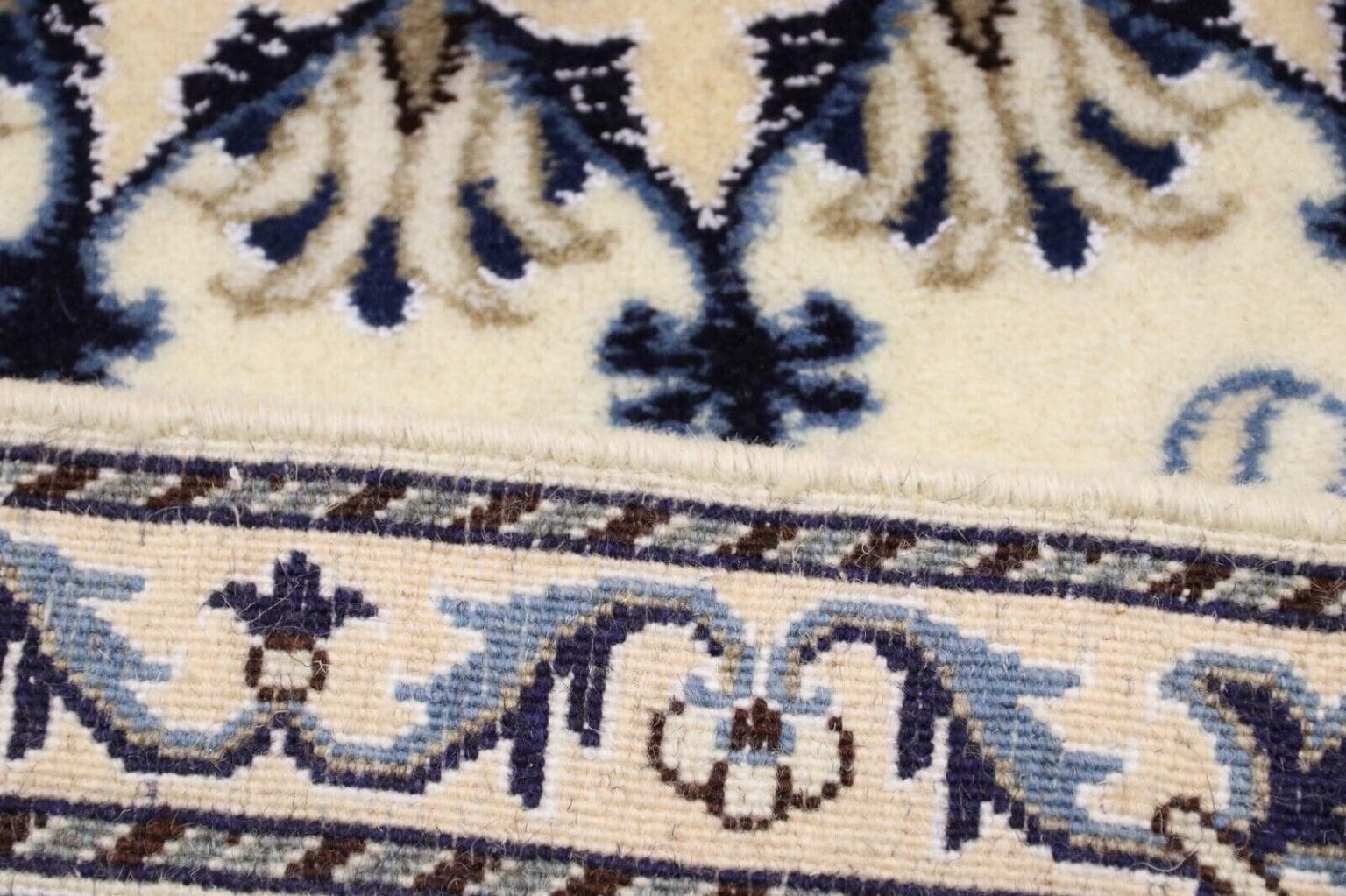
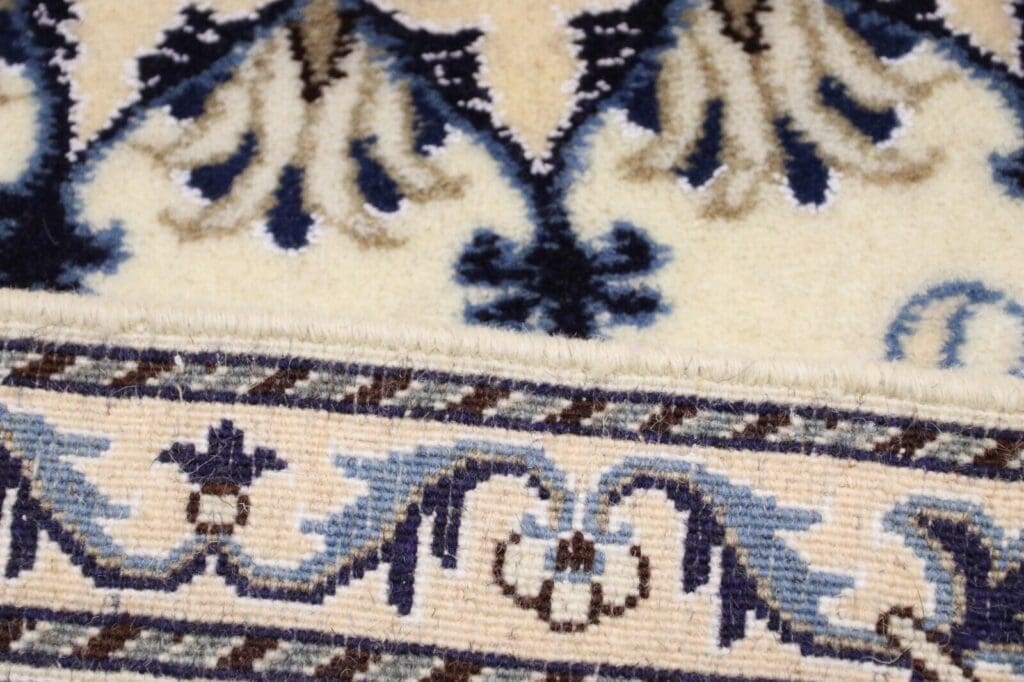
The rug is hand-knotted. In this method, individual knots are placed by hand into the foundation and worked into the developing surface. The process requires time and craft skill. Its dense construction supports the precise rendering of small ornamental details and floral lines. Hand-knotting also means that every rug is a one-off, with the direct character of the person who made it remaining part of the finished piece.
The combination of wool, silk and cotton creates a construction that joins a resilient main pile with a finer surface effect. The rug is also described as suitable for use over underfloor heating. Its hand-knotted manufacture and stated materials provide a direct account of how it is made, while preserving the traditional character associated with a Persian rug from Nain.
Wool is the principal pile material, and silk is used as a smaller component. This balance gives the rug its predominantly woollen handle while adding the visual refinement associated with silk. The cotton warp forms part of the foundation rather than the visible pile. Together, these details describe the rug’s construction without adding materials that are not specified.
Origin and Tradition
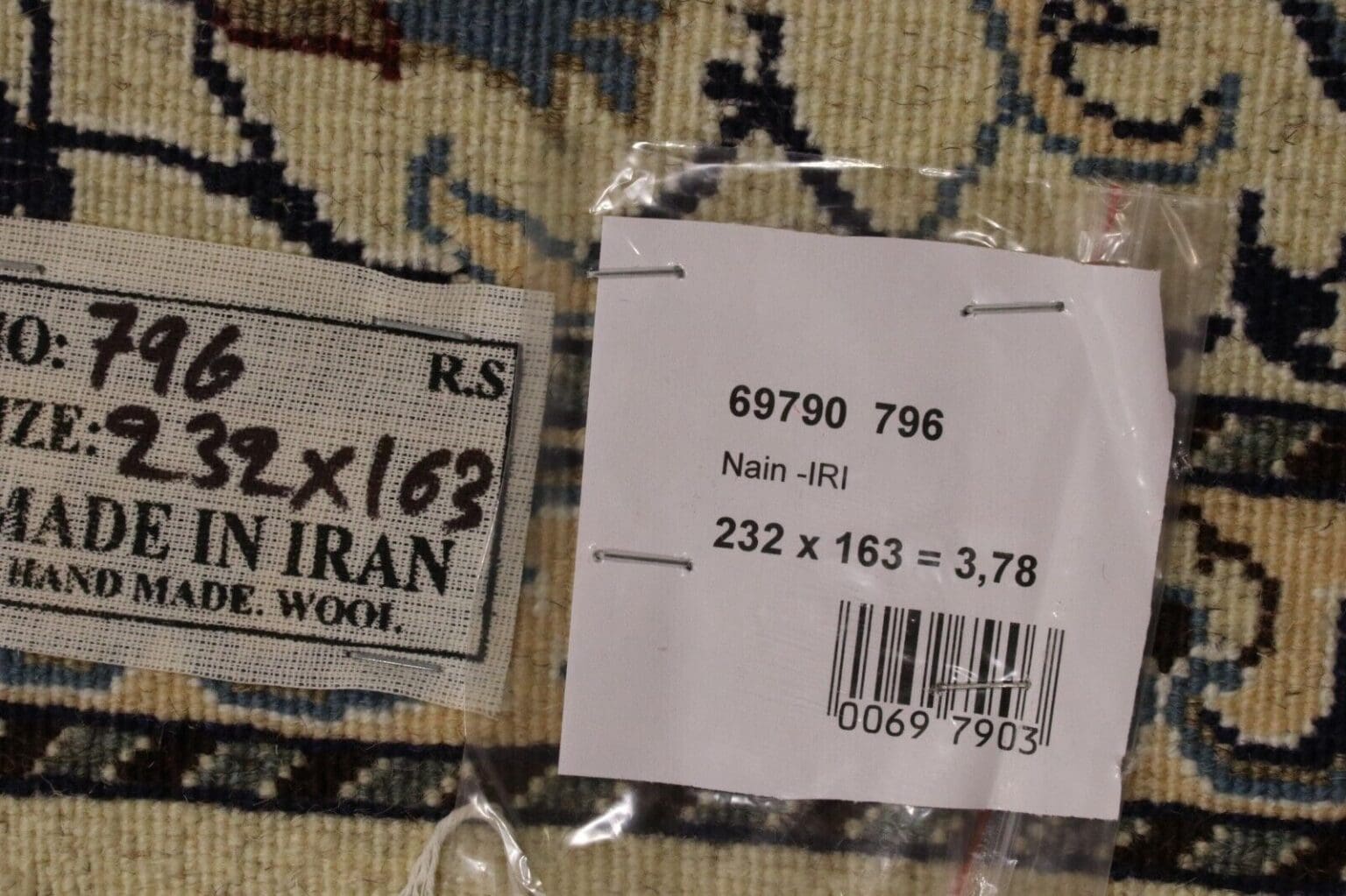
This rug comes from Persia and is identified as a Nain. Nain is a city in Iran and is recognised as one of the established centres of Persian carpet production. The city has a long weaving history reaching back to the sixteenth century. During that period, new designs and techniques helped carpet-making develop and contributed to the regional identity for which Nain is known.
Nain rugs are associated with fine execution and carefully resolved pattern work. Their character comes from the relationship between knotting technique, material and the organisation of the design. A dense knot structure allows delicate lines, floral elements and connected ornaments to be rendered with greater definition. Smaller parts of a composition can remain legible while the overall field retains a controlled and ordered appearance.
Persian carpet production brings together a series of skilled operations. The foundation is prepared, knots are inserted by hand and the surface is then worked into a coherent pile. Each part of the rug is consequently formed through direct manual labour. The name Nain refers not only to a place but also to a regional tradition that places particular emphasis on fineness, precision and balanced ornament.
Regional schools have always played an important role in Persian carpet history. Individual areas became known for particular approaches to drawing, colour, construction and finishing. Nain is commonly connected with fine knotting and clearly articulated ornament. This rug follows that regional designation: its origin is Persia, its place name is Nain and its production method is hand-knotting.
The origin should be kept distinct from the vocabulary of the pattern. Floral and ornamental motifs appear widely throughout Persian carpet art and may be developed in many regional settings. Here they belong to a Nain Persian rug from Persia. The combination of a recognised regional tradition and a carefully drawn pattern allows the rug to sit naturally in both traditionally furnished and contemporary interiors.
Hand-knotting preserves a direct link with established craft practice while allowing a highly differentiated drawing. The dense construction supports this level of detail, but origin is defined by the stated Persian provenance and Nain classification rather than by knot density alone. Material, technique, regional identity and pattern therefore form four connected but separate aspects of the rug’s description.
The tradition of Nain also demonstrates how a city’s carpet production can develop its own visual language over time. Motifs are not isolated decorations; they are arranged within an organised field and related to one another through repetition and proportion. The rug’s floral and ornamental character reflects this principle. Its construction presents the regional tradition through a hand-made object rather than through a printed or mechanically produced surface.
Design and Pattern
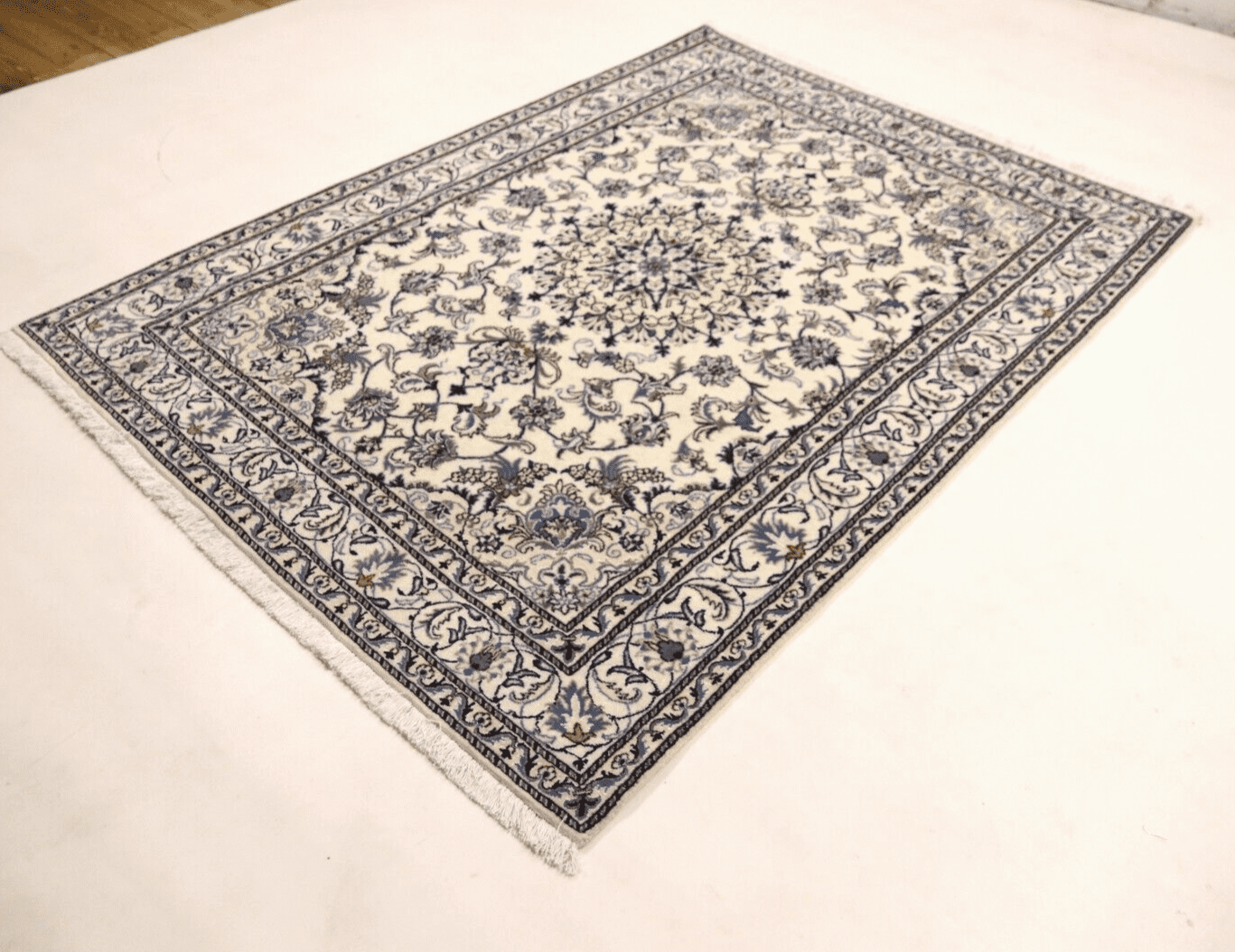
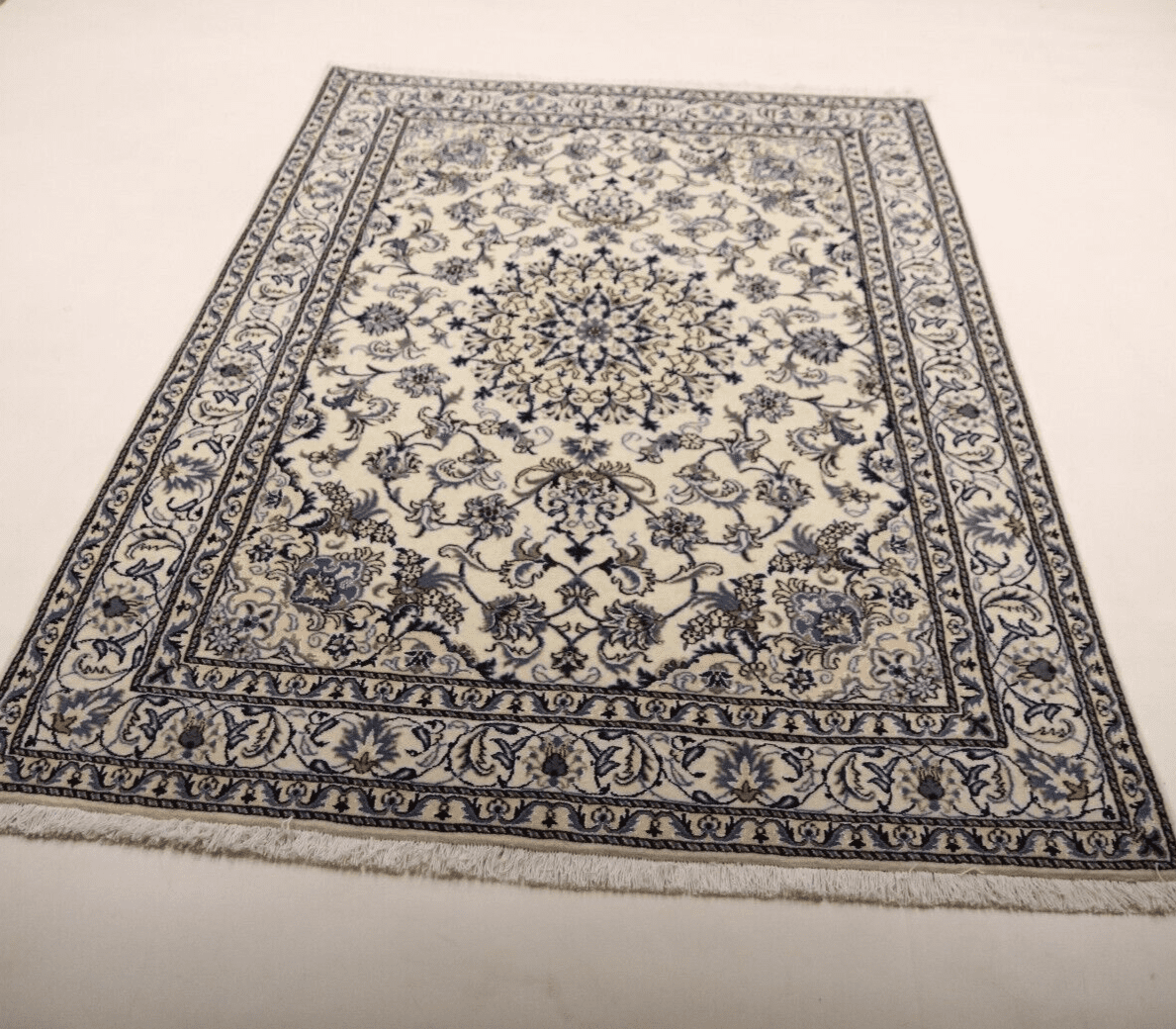
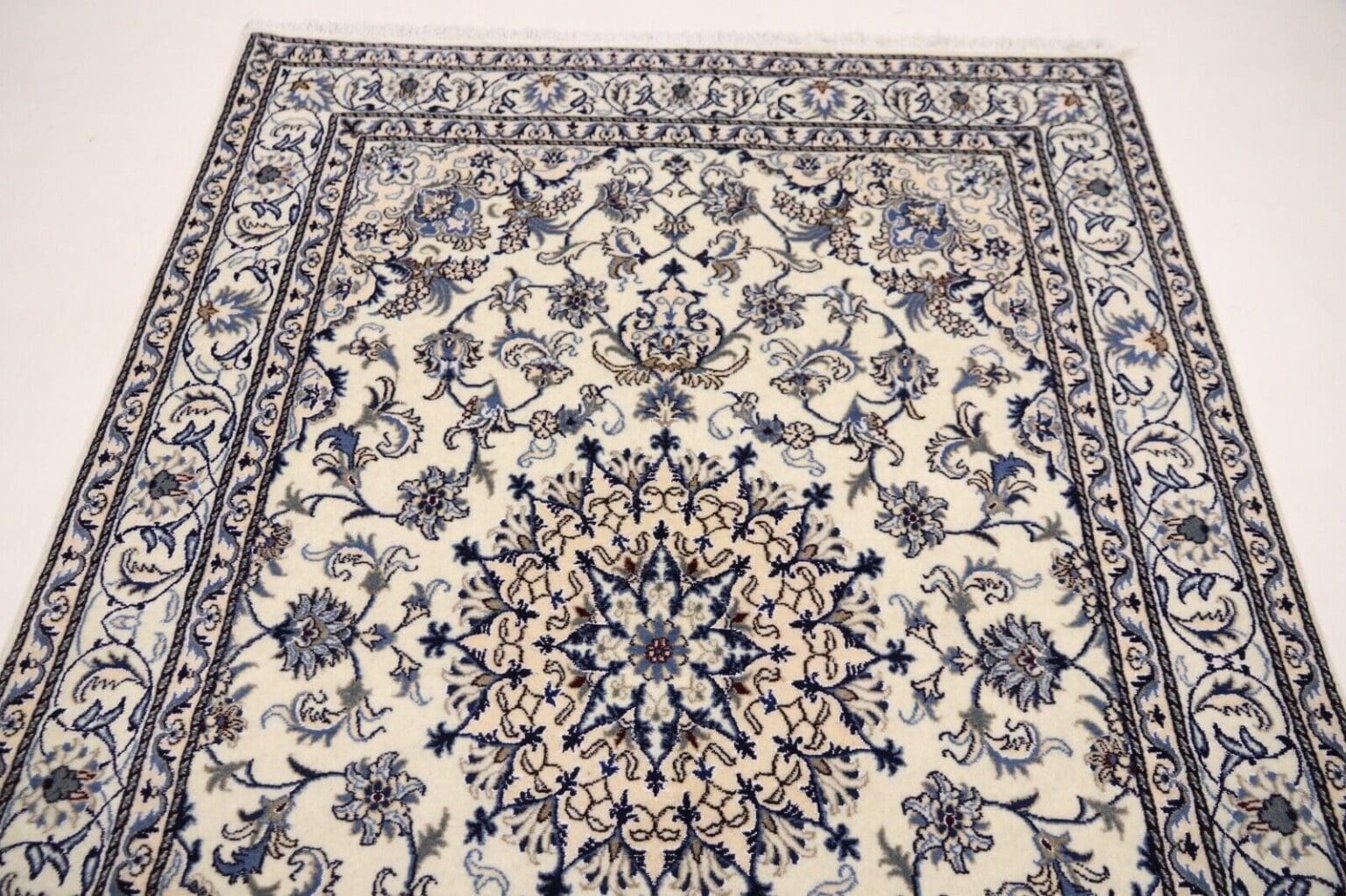
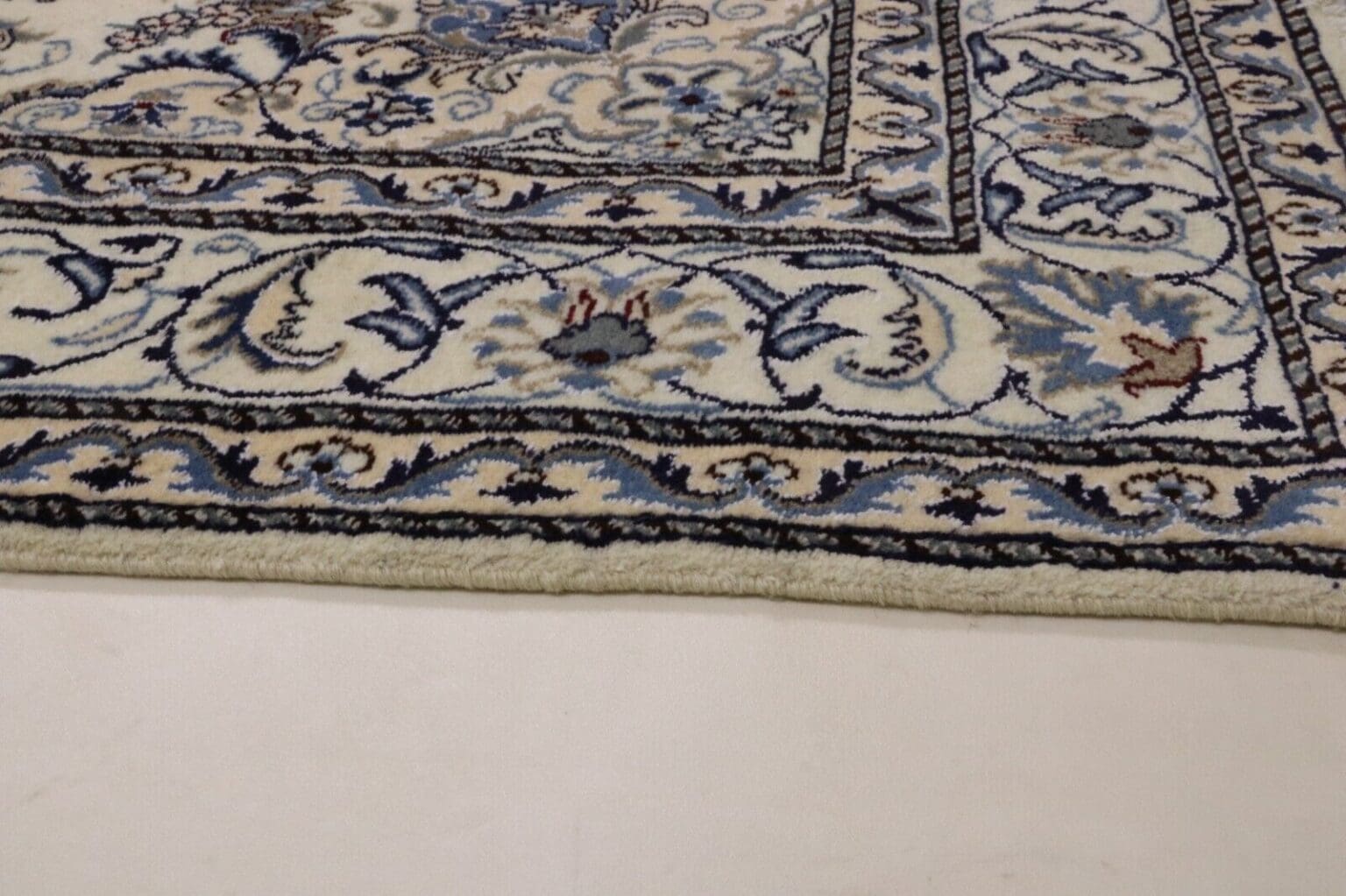
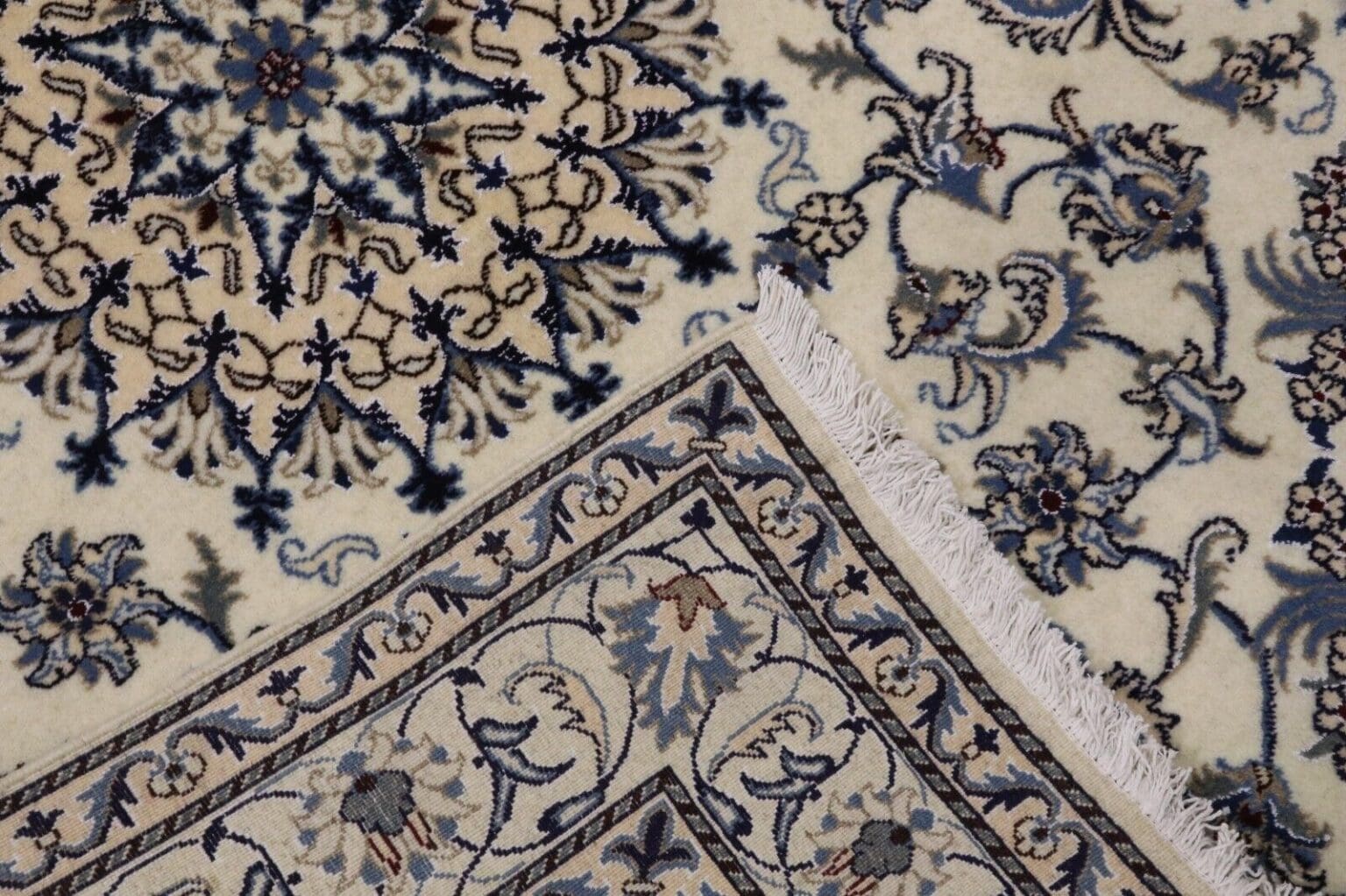
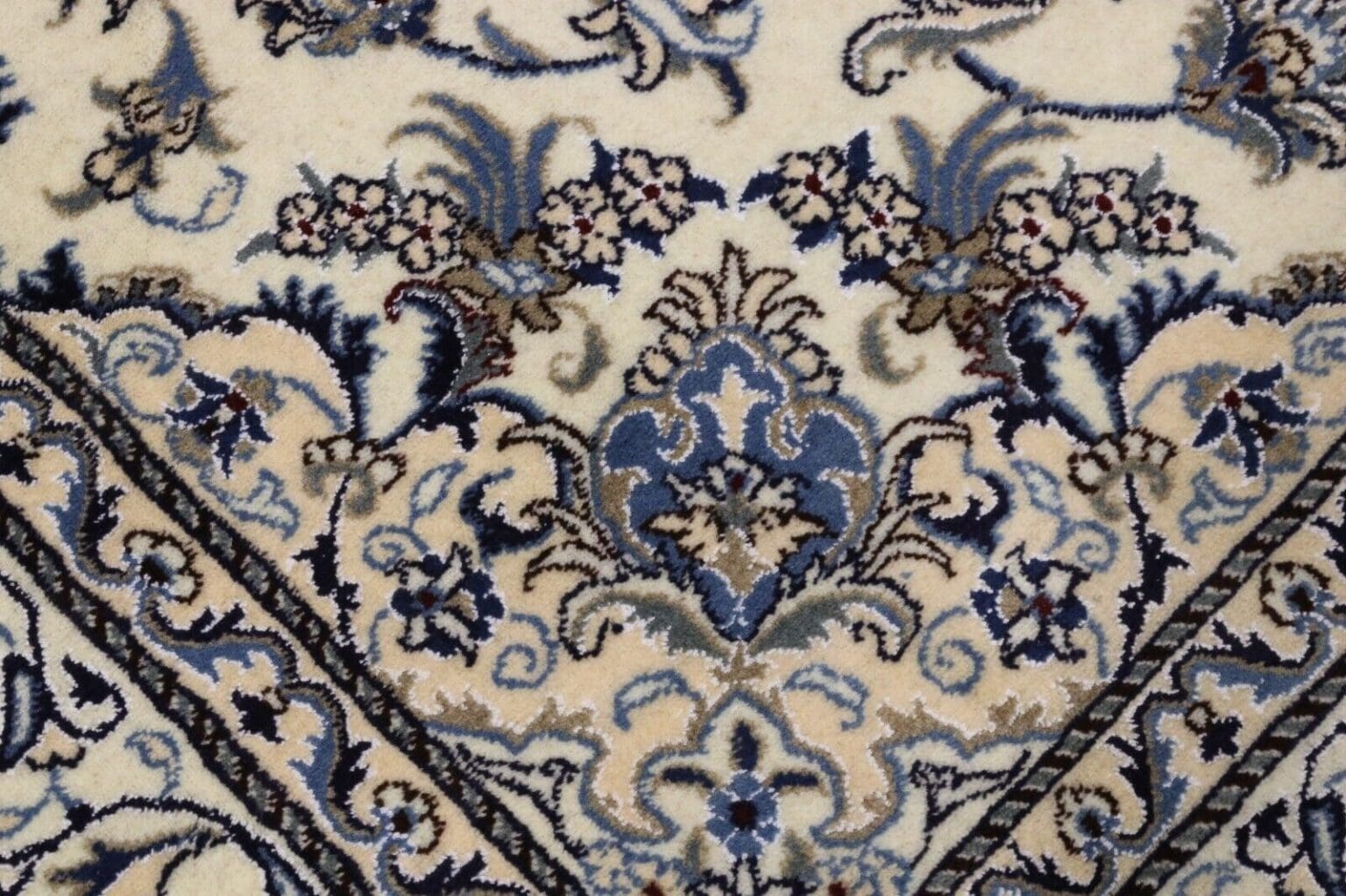
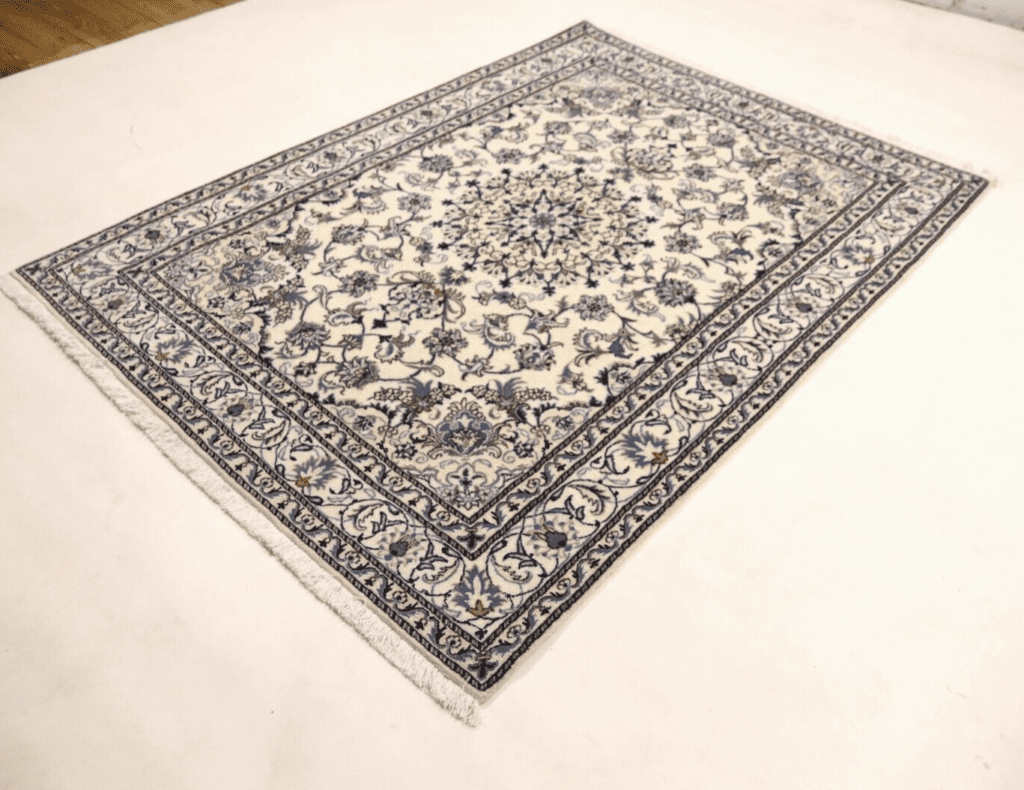
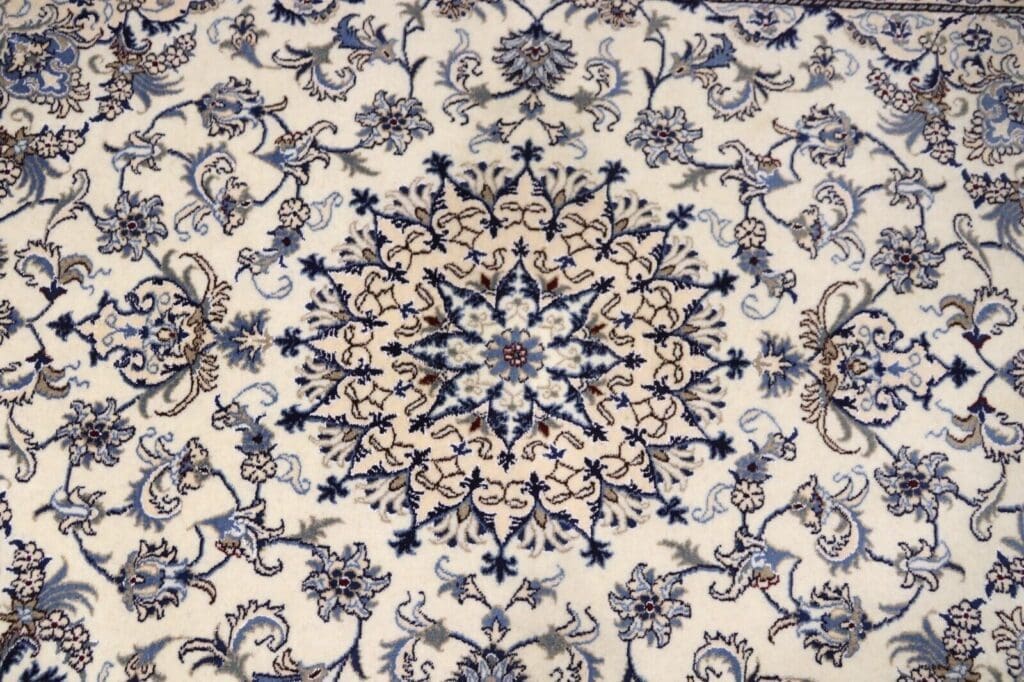
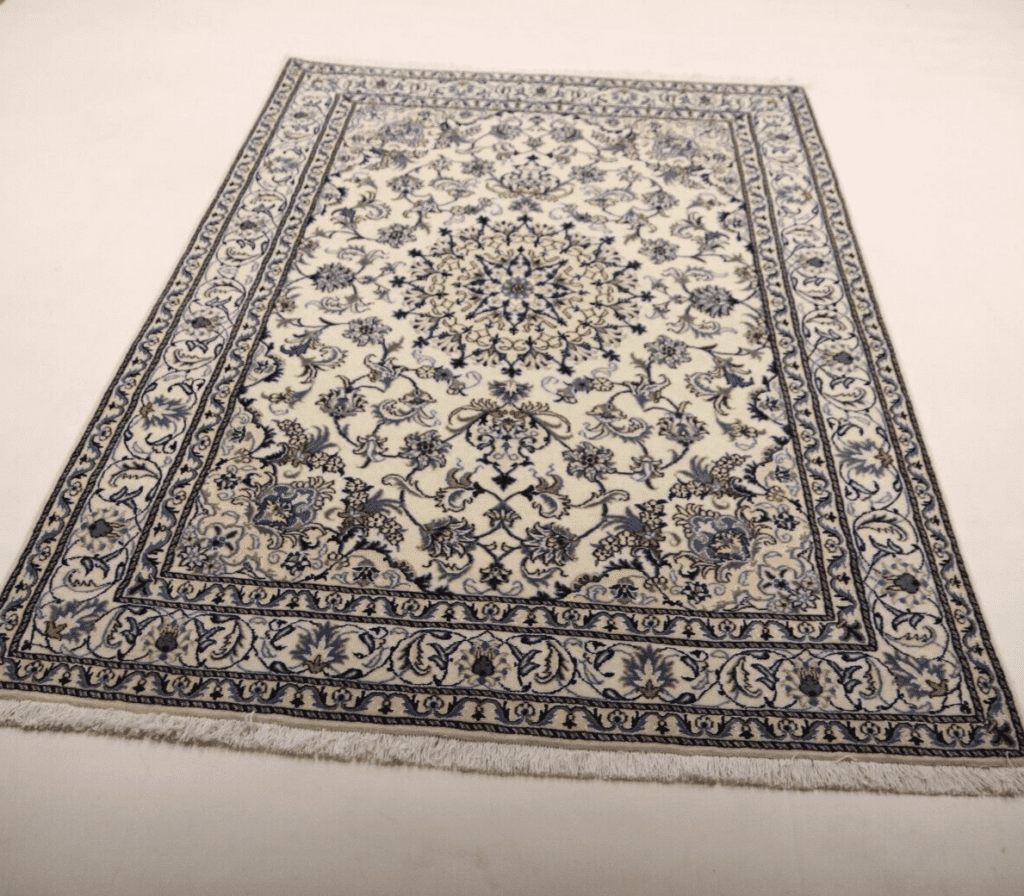
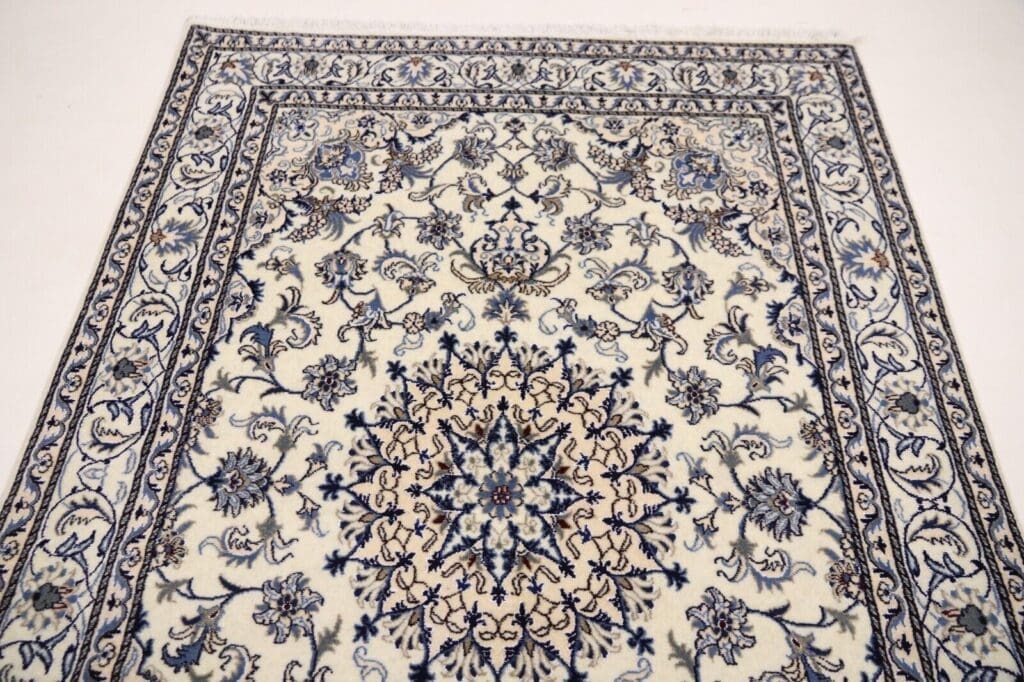
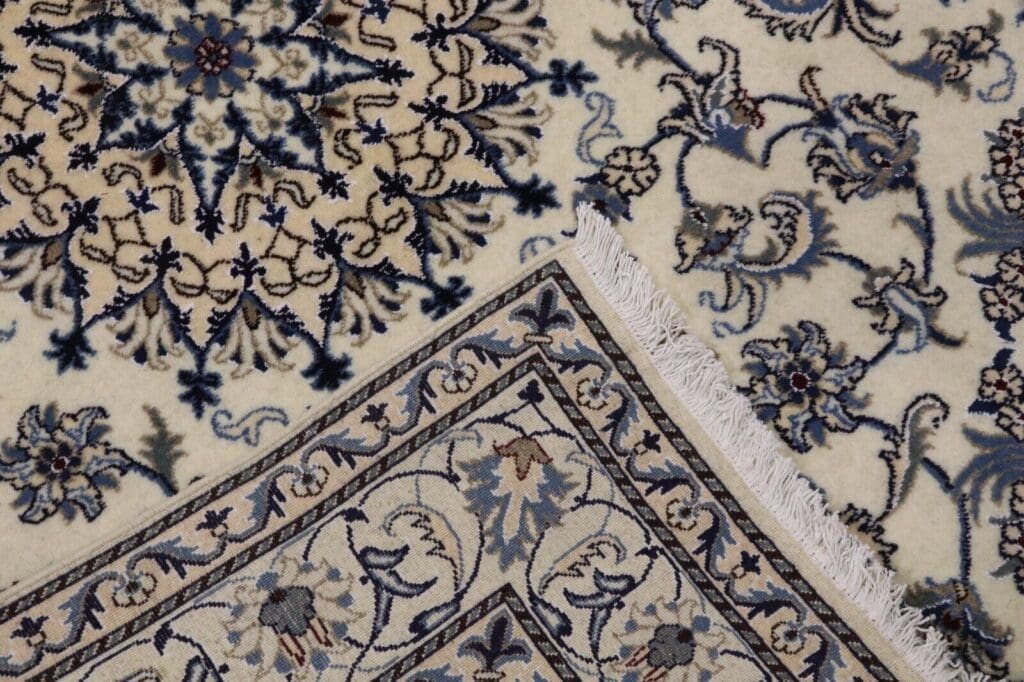
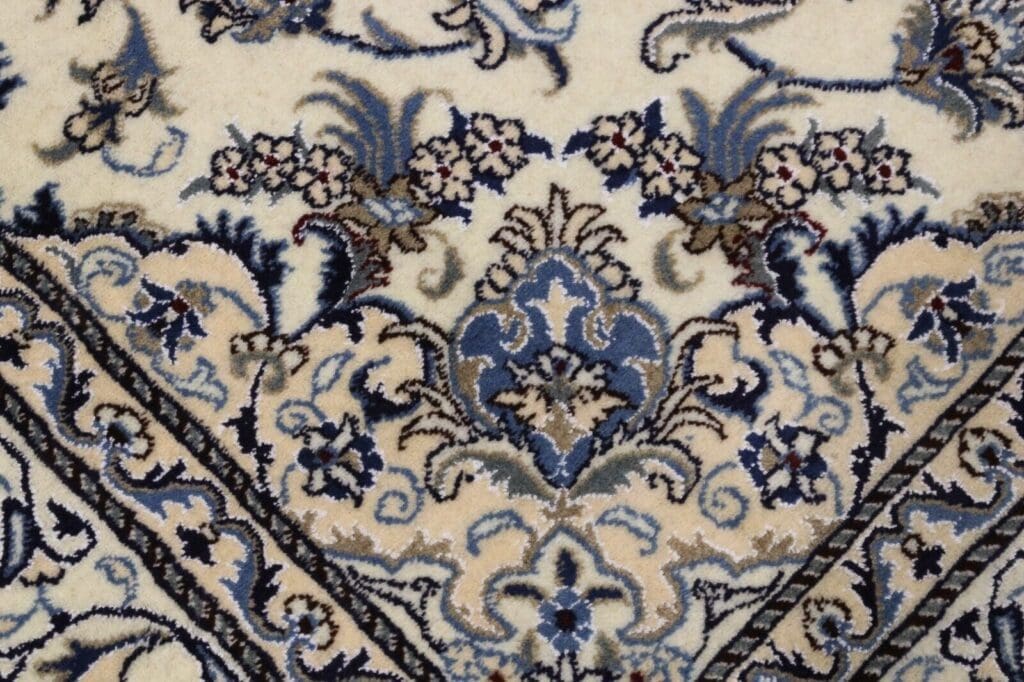
The pattern is floral and ornamental. Floral forms introduce references to plant life, while ornamental lines and repeated details organise the field. In Nain carpet design, these elements are often brought together in a balanced composition. The individual motifs can therefore be read as separate details while remaining part of a calm, coherent visual structure.
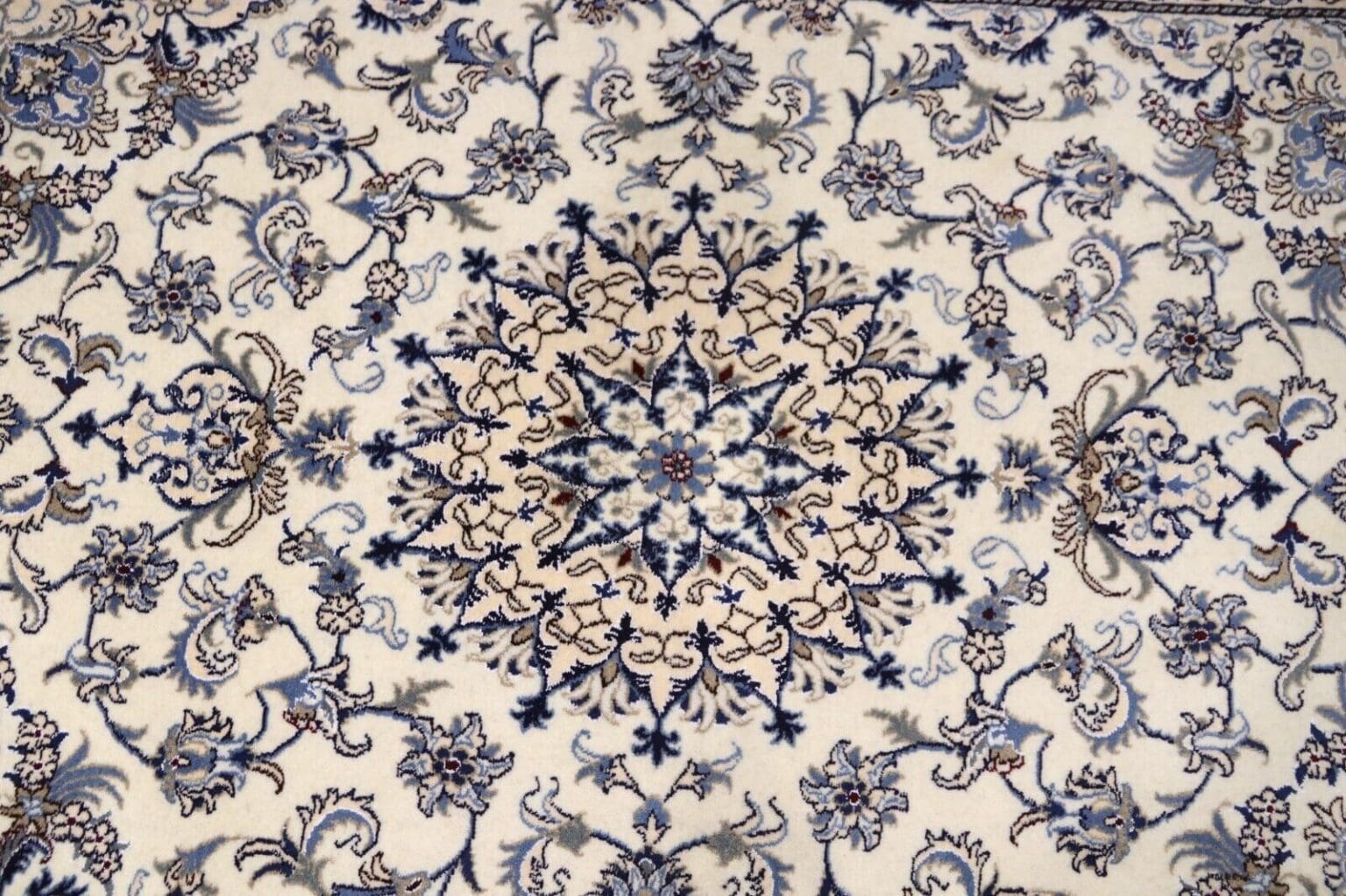
The fine knotting is well suited to designs made from numerous lines, small shapes and carefully linked ornaments. A dense field of knots can support cleaner contours and more controlled transitions. The source description connects this rug’s high knot density and hand-knotted construction with precise detail. The technical method is thus directly related to the way the floral and ornamental drawing appears on the surface.
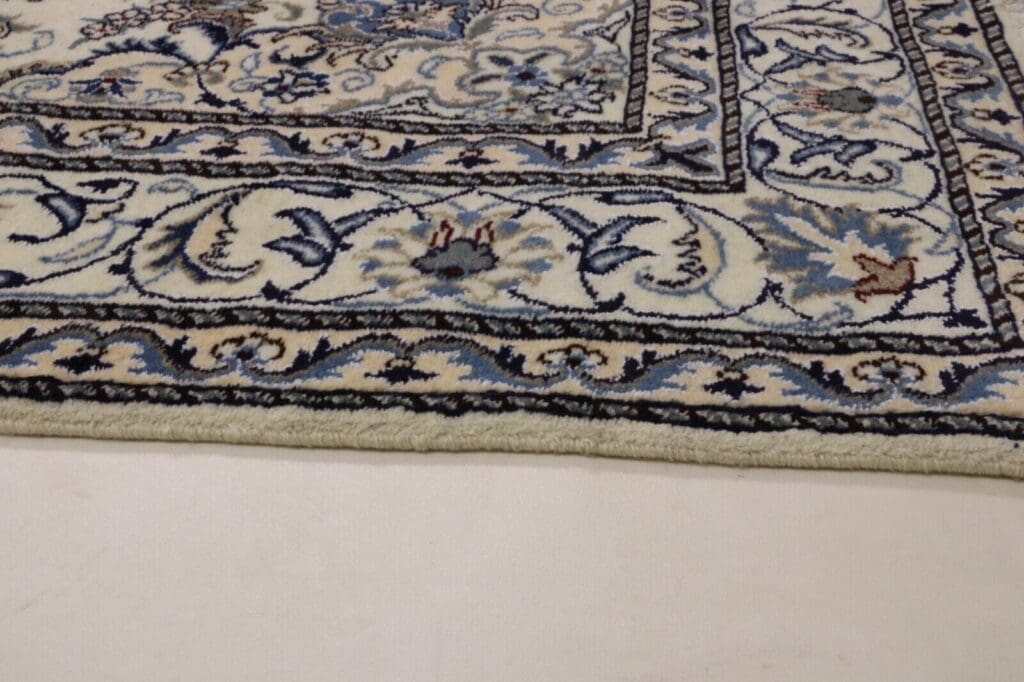
The colour range is described as harmonious, extending from soft pastel shades to earthy tones. Pastel colours can give the floral elements a lighter and quieter presence, while earth colours bring a more natural and grounded effect. Both directions remain within a balanced palette rather than relying on a single dominant colour statement. This makes the pattern compatible with a range of furnishing approaches.
The design is described as both timeless and modern. Its traditional floral vocabulary is arranged with enough restraint to work in present-day rooms. The rug can be used in a living room, bedroom or office because the pattern is not tied to one particular function. Its ornament provides a defined visual identity while the balanced composition allows it to be combined with different interior styles.
Silk may catch the light on the surface and draw attention to selected parts of the pattern. Virgin wool supplies most of the pile and gives the rug its principal tactile character. Together, the two fibres influence how floral contours and ornamental transitions are perceived. Changes in light can make parts of the drawing appear more or less pronounced, while the underlying pattern remains unchanged.
Nain design is linked with precision and disciplined ornament. The motifs are brought together in an ordered composition rather than scattered without structure. This gives the rug a clear visual rhythm. Its floral and ornamental design therefore reflects an established feature of Nain carpet art while retaining the material character created by the combination of wool and silk.
The fine drawing also allows the pattern to remain interesting at closer viewing distance. Smaller details contribute to the overall organisation instead of competing with it. This is one reason why knotting quality and design cannot be considered separately in a Nain rug. The floral subject matter supplies the vocabulary, the ornament supplies the structure and the hand-knotted technique makes the detailed execution possible.
Special Features
A defining feature of this rug is its high knot density of approximately 300,000 knots per square metre. This supports fine workmanship and the detailed rendering of the floral and ornamental design. Together with the hand-knotted construction, it allows the pattern to be drawn with considerable precision. The manual process also means that each example has its own individual character.
The rug is new and in very good condition. It is suitable for use over underfloor heating and is described as moth-resistant, pet-friendly and child-friendly. These practical details complement the stated materials and construction. The main pile remains a combination of virgin wool and silk, and the cotton warp remains part of the foundation.
Nain rugs are also regarded as collectible because of their craftsmanship and scarcity. The source description further notes that they often increase in value. This is part of the broader perception of Nain rugs and does not replace a factual description of the individual piece. Here, the essential characteristics are its Persian origin, Nain designation, hand-knotted technique, defined fibre composition and finely worked pattern.
The rug’s practical and traditional features are presented together. Its new condition and suitability for underfloor heating relate to everyday use, while its knot density, materials and regional identity describe its construction and cultural context. The statements about moth resistance and suitability for homes with pets and children add further information for placement. None of these details changes the central fact that the rug is a hand-knotted Persian Nain.
FAQ
How should I clean my Nain Persian rug?
For routine care, vacuum the rug evenly and regularly. It should not be immersed in water. If the surface needs a light refresh, it can be wiped with a damp cloth. Stains or more extensive cleaning are best handled by a professional carpet cleaner. Professional treatment can remove dirt and refresh the colours while reducing the risk of unnecessary stress to the hand-knotted pile. Gentle, consistent care is preferable to soaking the rug or treating only isolated areas aggressively.
What care does the Nain Persian rug require?
Regular vacuuming is the main routine-care recommendation. The rug should also be stood up as part of its care. Direct sunlight should be avoided because it can encourage the colours to fade. Professional cleaning can be arranged at suitable intervals when required. The rug’s stated suitability for underfloor heating, together with its moth-resistant, pet-friendly and child-friendly description, supports its use in a variety of living spaces. Care should still follow the character of its wool-and-silk pile and hand-knotted construction.
Where can I buy the Nain Persian rug?
This rug is available through selected specialist retailers of oriental carpets and through various online shops. Choose a reputable dealer who can provide transparent information about origin and quality. For this piece, the relevant details are its Persian origin, its Nain designation, its hand-knotted manufacture and its stated fibre composition. Checking that these points are presented consistently helps distinguish a clearly described offer from one that makes unsupported claims about the rug.
To provide the best experiences, we use technologies like cookies to store and/or access device information. Consenting to these technologies will allow us to process data such as browsing behavior or unique IDs on this site. Not consenting or withdrawing consent, may adversely affect certain features and functions.
Functional Always active
The technical storage or access is strictly necessary for the legitimate purpose of enabling the use of a specific service explicitly requested by the subscriber or user, or for the sole purpose of carrying out the transmission of a communication over an electronic communications network.
Preferences
The technical storage or access is necessary for the legitimate purpose of storing preferences that are not requested by the subscriber or user.
Statistics
The technical storage or access that is used exclusively for statistical purposes.The technical storage or access that is used exclusively for anonymous statistical purposes. Without a subpoena, voluntary compliance on the part of your Internet Service Provider, or additional records from a third party, information stored or retrieved for this purpose alone cannot usually be used to identify you.
Marketing
The technical storage or access is required to create user profiles to send advertising, or to track the user on a website or across several websites for similar marketing purposes.

 SECURE PAYMENT
 SHIPPING PARTNERS


