This Nain Persian Rug is hand-knotted, with wool in the pile and cotton as the other stated material. Wool and cotton are established materials in oriental rug making. Wool is traditionally used for the visible pile because it can be spun, dyed and formed into a resilient surface. Cotton is commonly used as a supporting foundation, providing an even base for the construction of the rug.
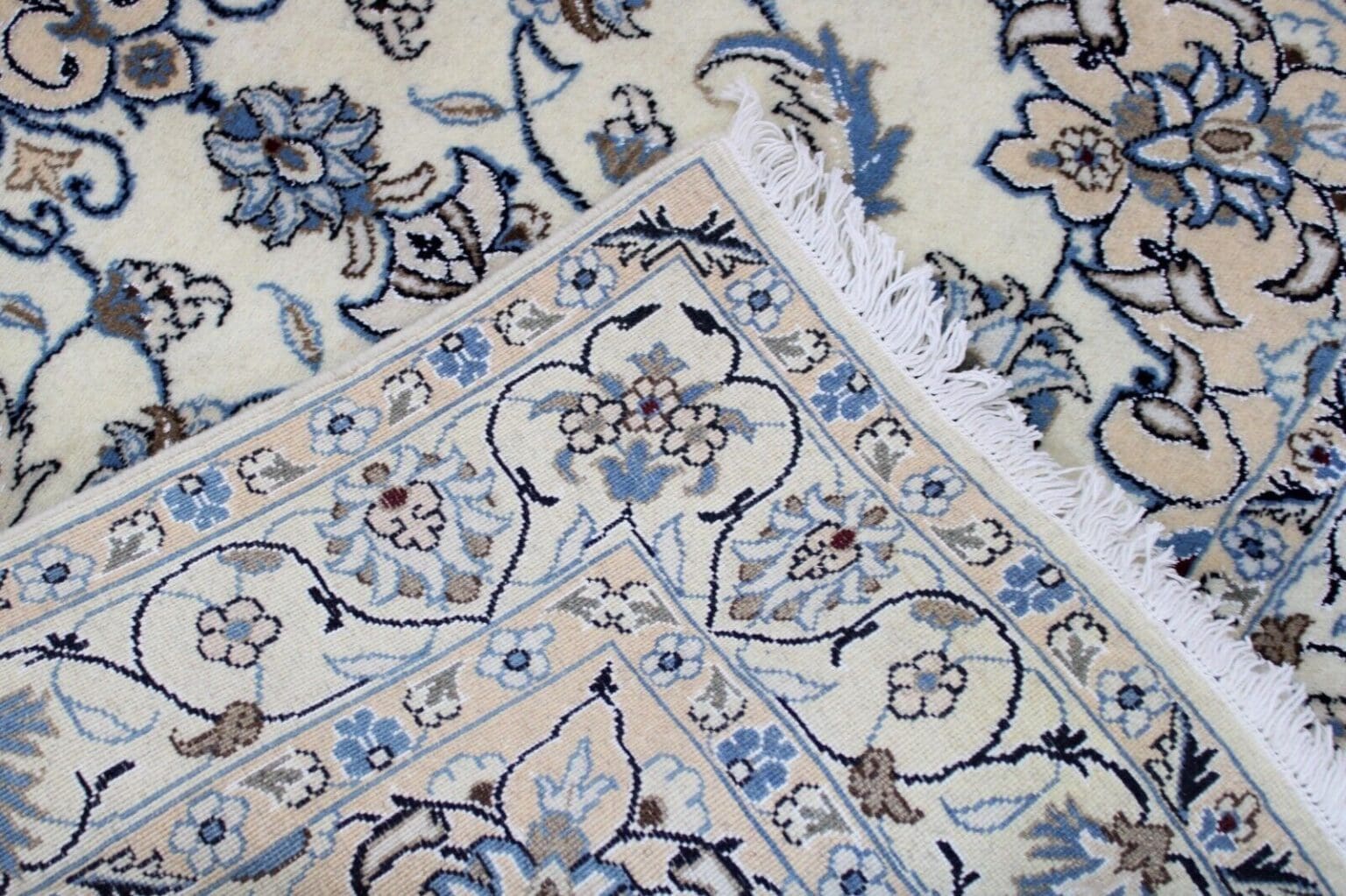
Hand-knotting is a gradual process in which individual knots are tied into the prepared foundation. The weaver works row by row, securing the pile before adding the next section of the structure. After the knots have been completed, the pile is trimmed and arranged to create the finished surface. This method distinguishes a hand-knotted rug from a machine-made floor covering. Minor variations are a normal consequence of manual work and belong to the character of a handmade textile.
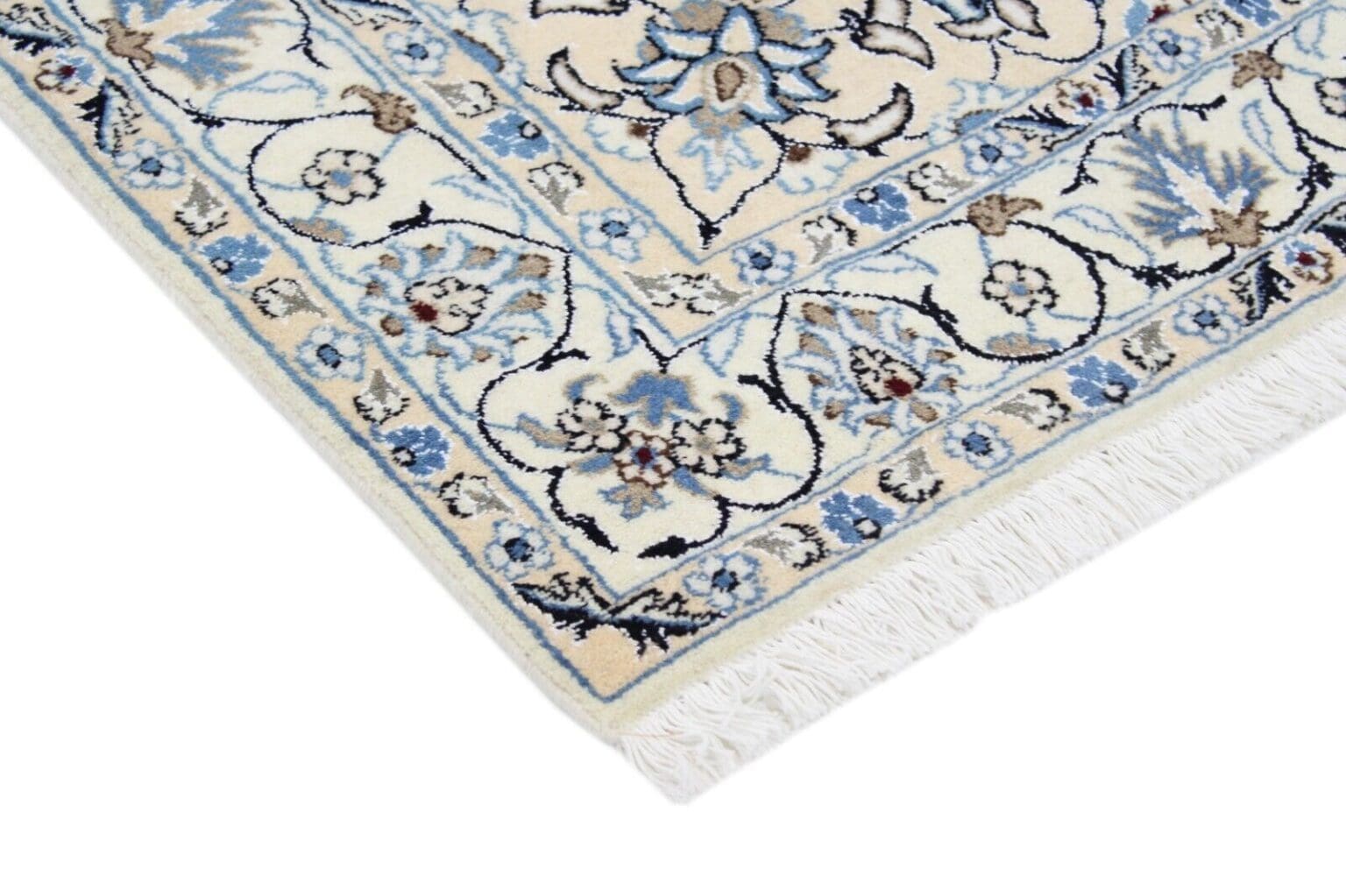
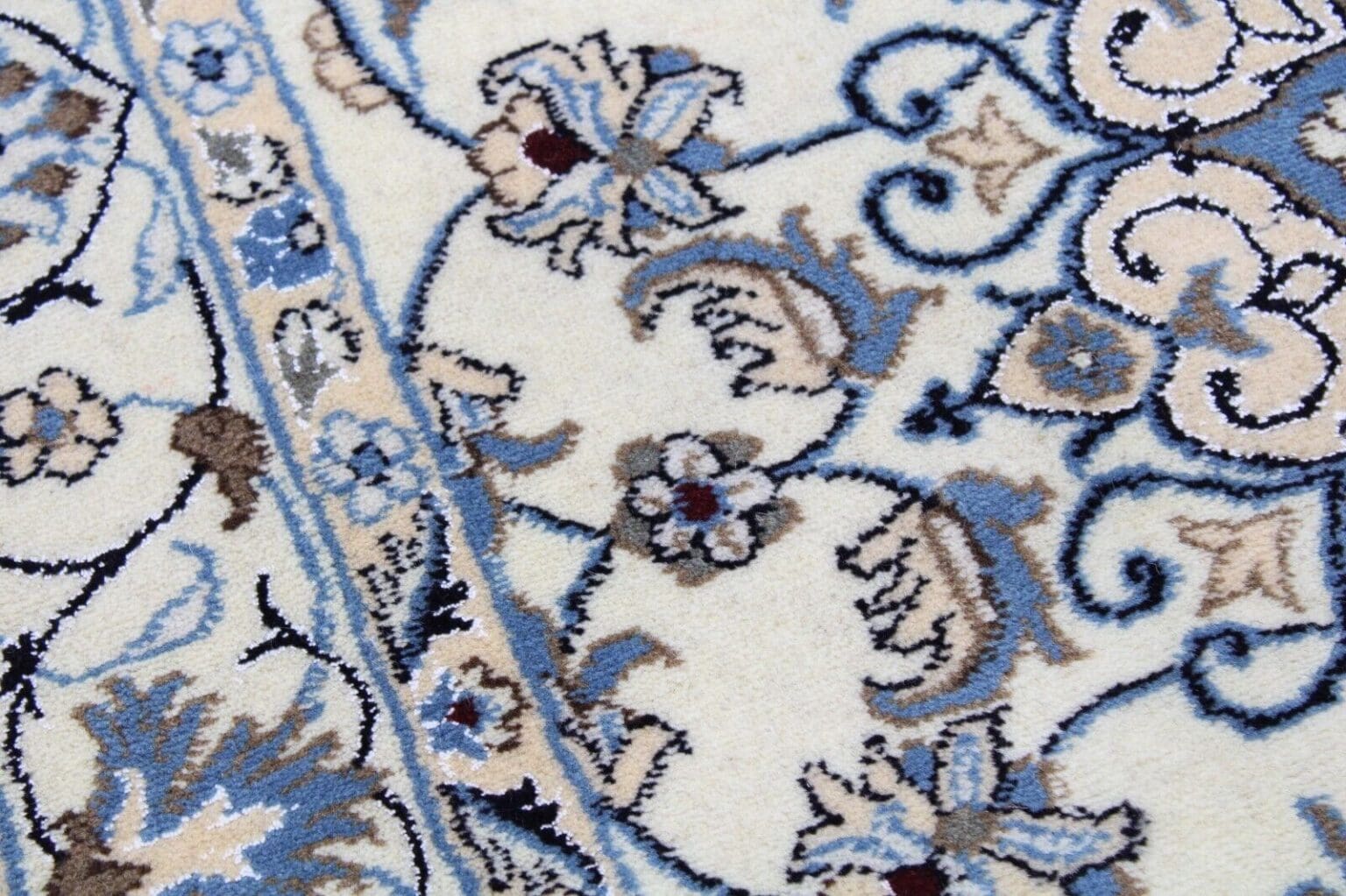
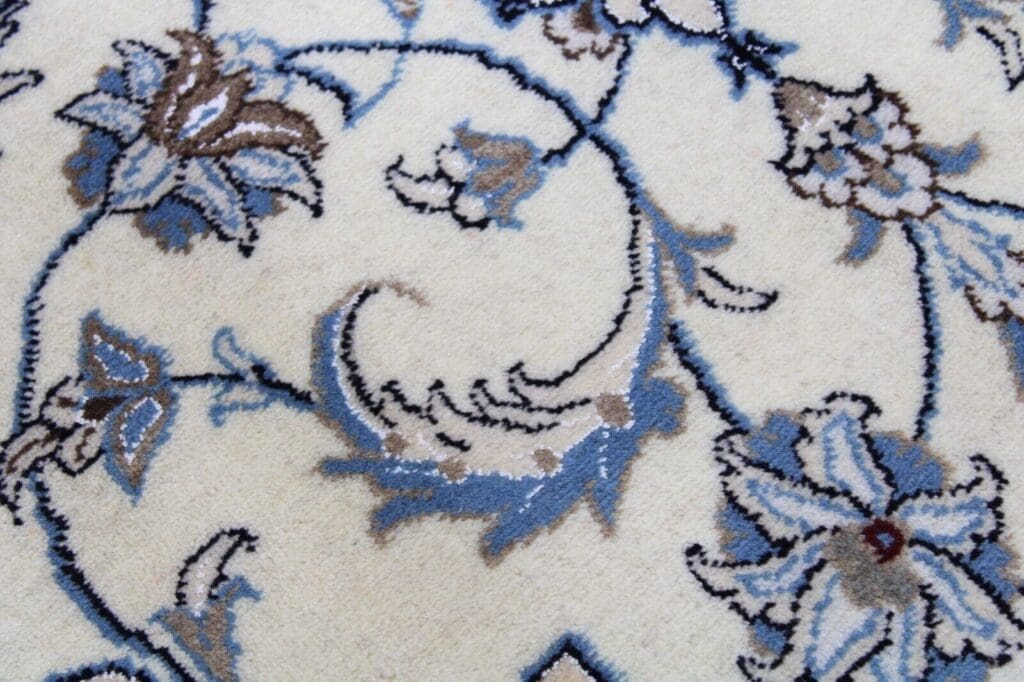
The rug has a high pile. This gives the surface a pronounced textile feel and affects the way light moves across the wool. Fibres can reflect light differently depending on their direction, so a high-pile rug may show subtle changes in appearance when viewed from different sides. The floral design therefore has a soft, tactile presence while retaining the structure created by the knots.
Producing a hand-knotted rug involves several coordinated stages. The foundation is prepared first, knots are inserted and secured, weft threads help hold the rows together, and the pile is finally cut and levelled. The stated combination of wool and cotton, the hand-knotted technique and the high-pile finish describe the material and workmanship of this piece. These elements also explain why hand-knotted rugs are treated as individual textiles rather than uniform industrial products.
Origin and Tradition
The rug comes from Nain in Iran. Nain is one of the recognised rug-producing centres of the country and is associated with a distinct regional weaving tradition. The city lies in Isfahan Province, a region with a long history of Persian art, architecture and craftsmanship. A Nain rug is therefore understood not only through its decorative appearance but also through its connection with the cultural environment in which the tradition developed.
Rug weaving in Nain belongs to a broader Iranian history of textile production. Knowledge of fibres, dyes, knotting methods and pattern planning has traditionally been passed through workshops and families. This knowledge includes more than the physical act of tying knots. It also covers the organisation of a complete composition, so that the field, border elements and ornamental details remain visually connected across the surface.
Iranian rug centres have developed individual preferences in drawing, colour relationships and construction. Nain is commonly associated with a precise and composed visual language in which floral ornament plays an important role. The place name identifies a regional tradition, not merely a decorative label. It places the rug within the history of Iranian weaving and indicates the cultural background of its design vocabulary.
For many centuries, rugs in Iran served practical, decorative and cultural purposes. They were used in interiors, traded between regions and valued as examples of textile skill. Their ornament draws on several artistic sources, including architecture, garden design, manuscript decoration and other forms of pattern making. Weavers adapted these influences to a knotted surface, where every contour had to be translated into rows of knots and colour changes.
The relationship between material and technique is an important part of this tradition. Wool is suitable for a tactile pile and can carry both broad colour areas and detailed ornament. Cotton can provide a stable basis for the structure. Hand-knotting brings these materials together through a laborious process in which the surface is built progressively. Regional identity is expressed not only by the final pattern but also by the knowledge required to make the pattern function as a durable textile.
Nain rugs are often linked with balanced layouts, controlled ornament and floral drawing. This does not mean that every rug from the region follows one identical design. Regional traditions contain variations in composition, colour, scale and degree of detail. What connects them is a shared relationship between ornament, field and border, together with an emphasis on an orderly overall impression. The present rug belongs to this Iranian context through its Nain origin and its oriental floral pattern.
The history of Nain weaving also illustrates how regional traditions can remain recognisable while allowing individual pieces to differ. A workshop may adapt a familiar floral vocabulary, alter the rhythm of the vines or arrange blossoms in a new relationship to the surrounding field. The result remains connected to Nain because the underlying principles of drawing and construction are preserved. This balance between continuity and variation is characteristic of many long-established rug centres.
Design and Pattern
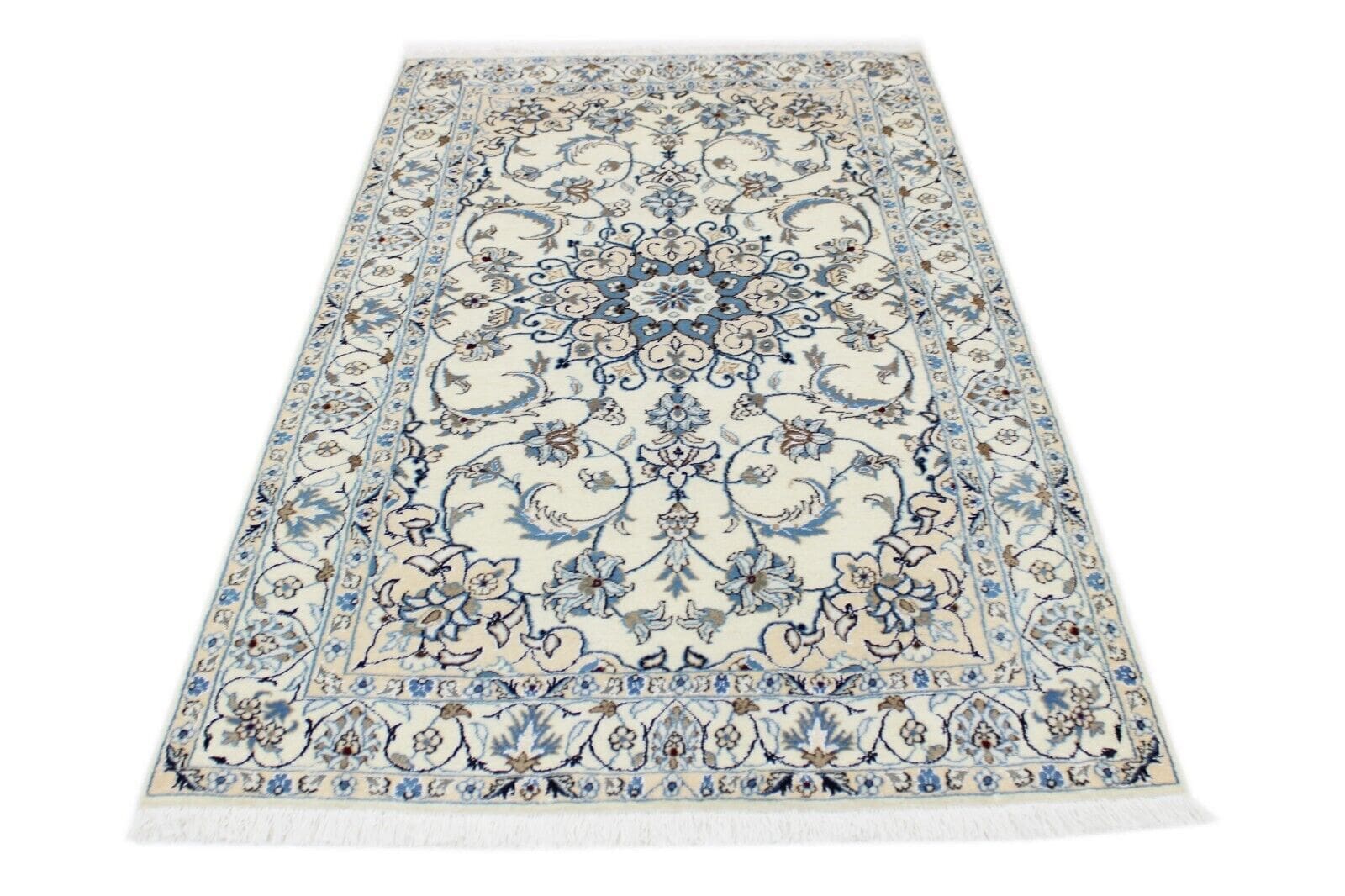
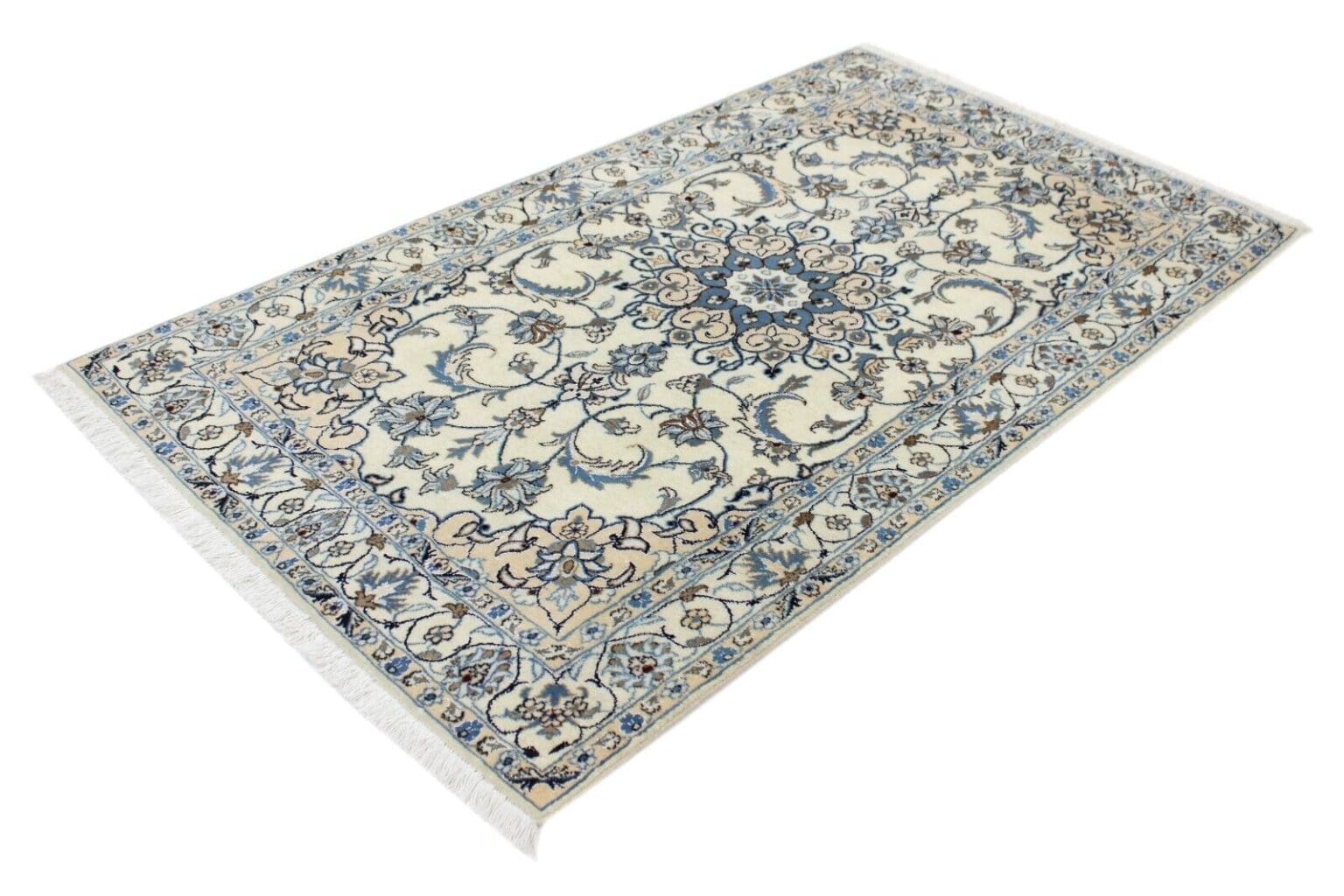
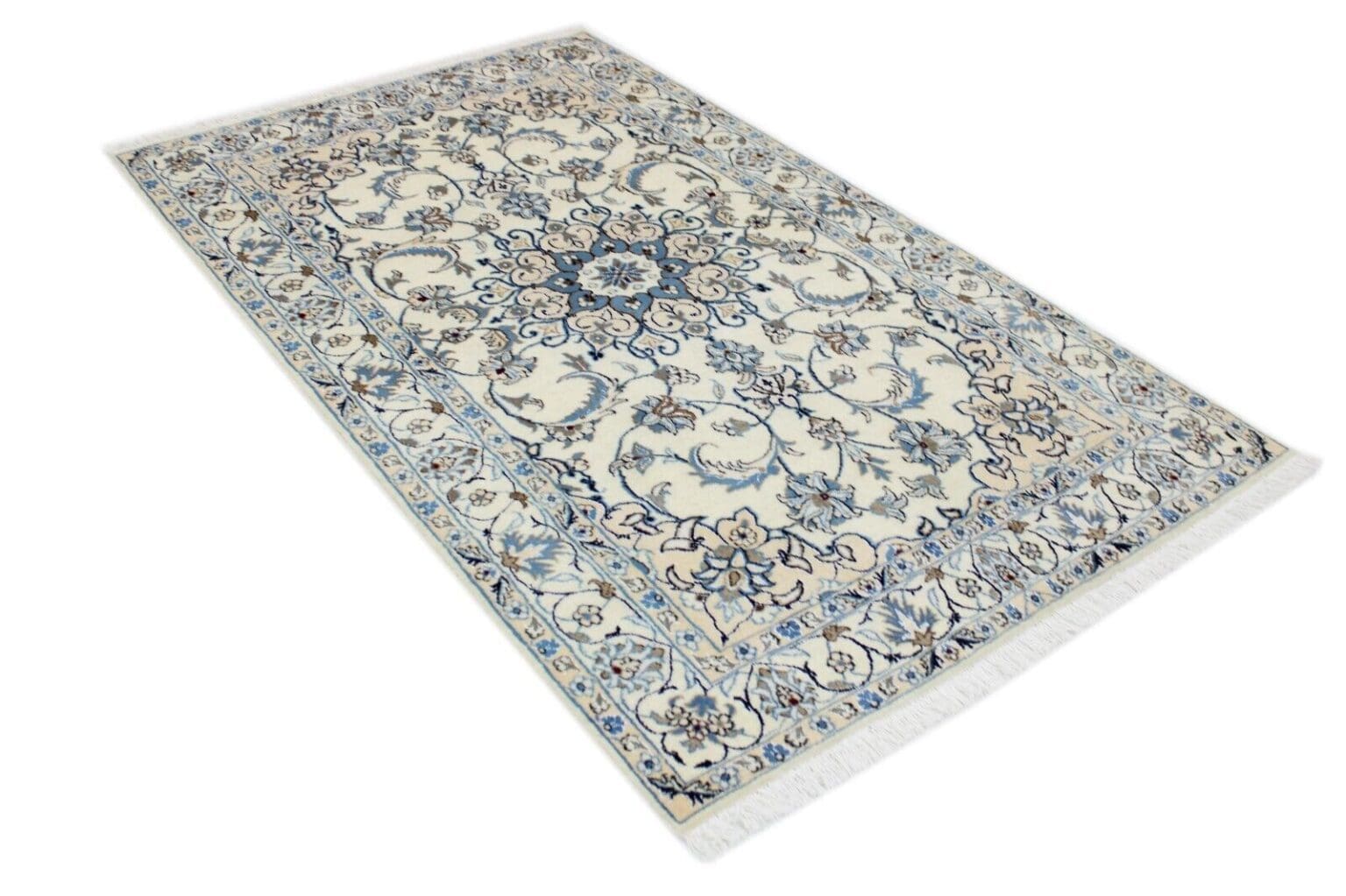
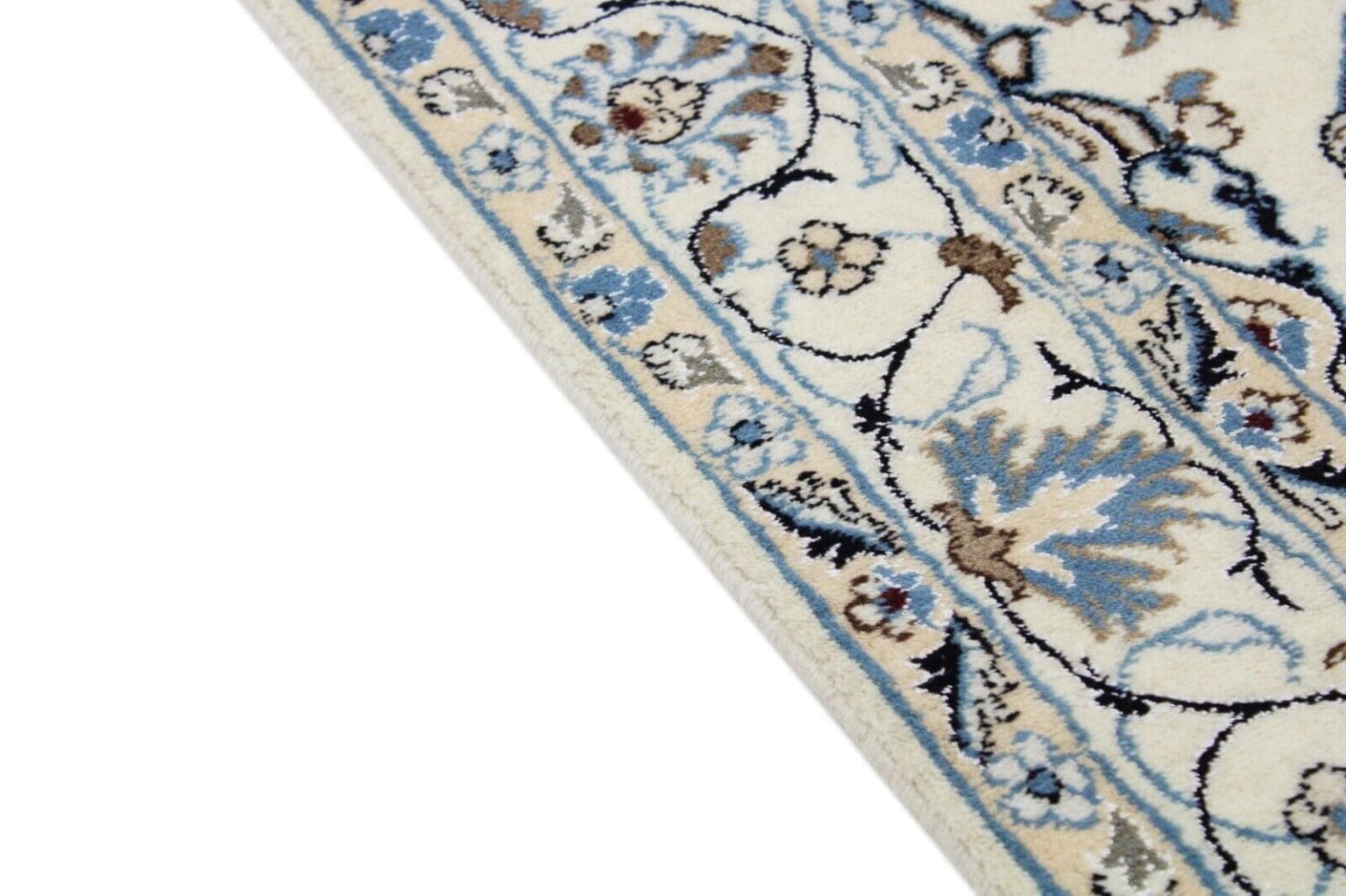
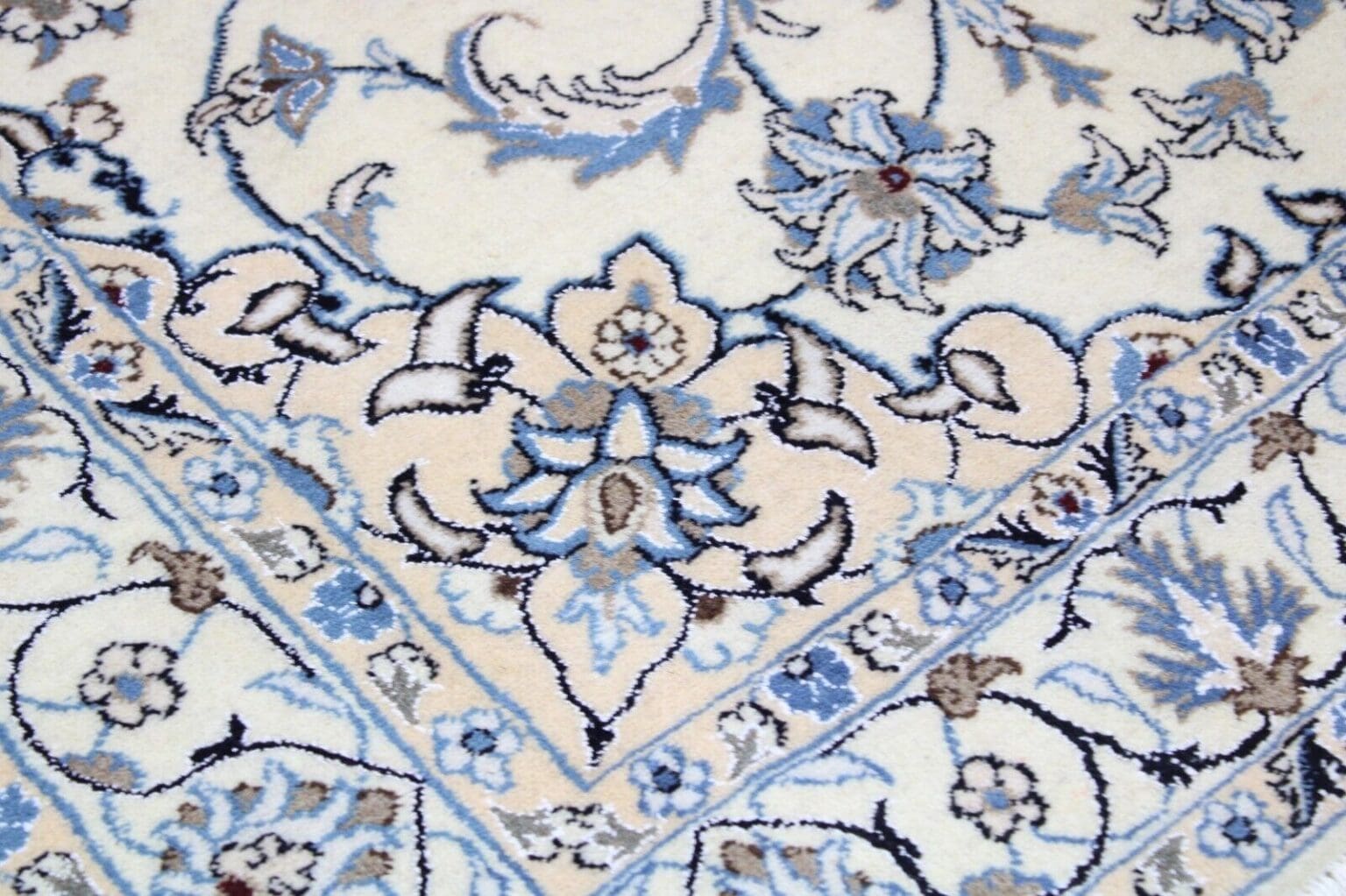
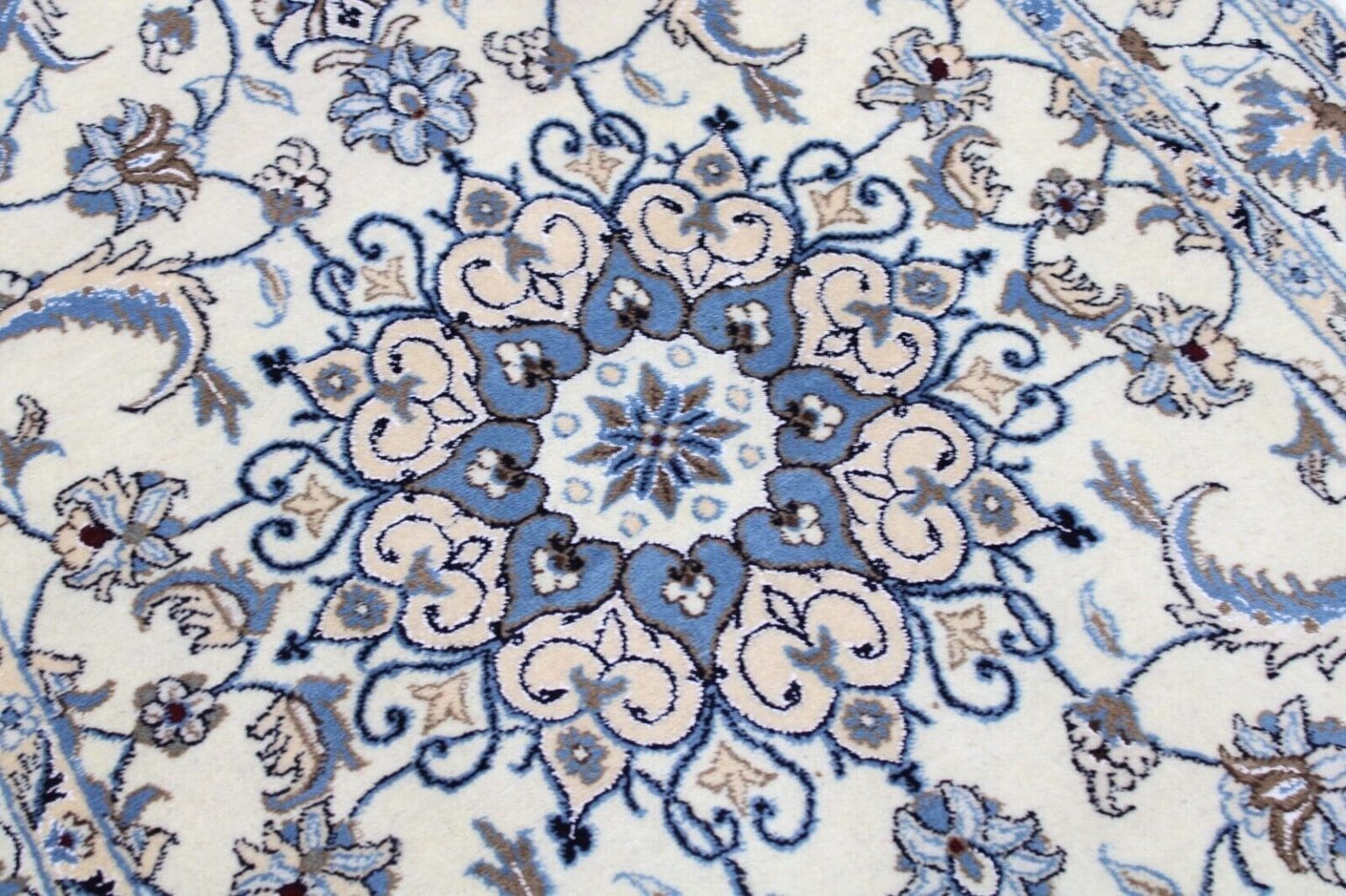
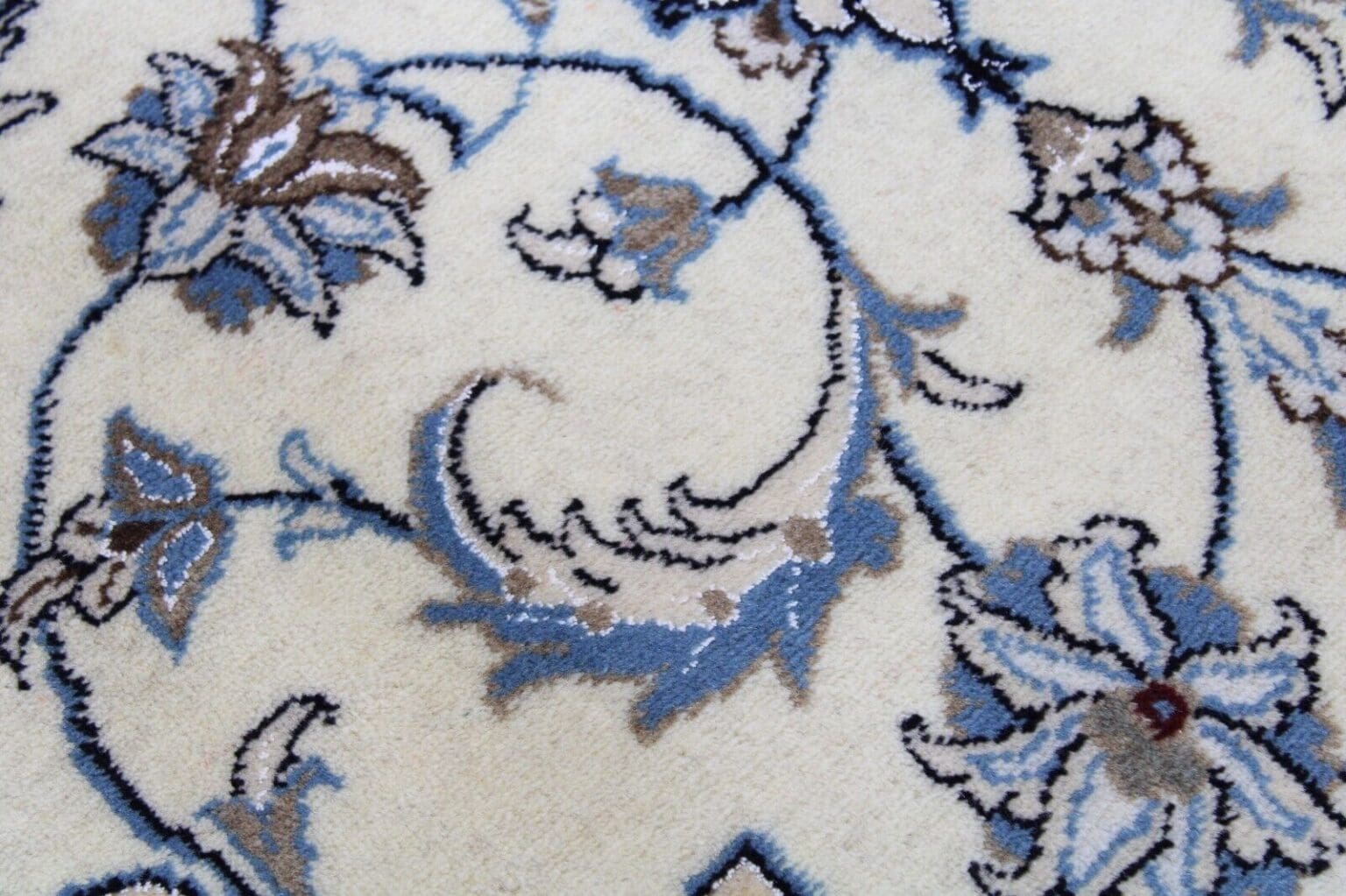
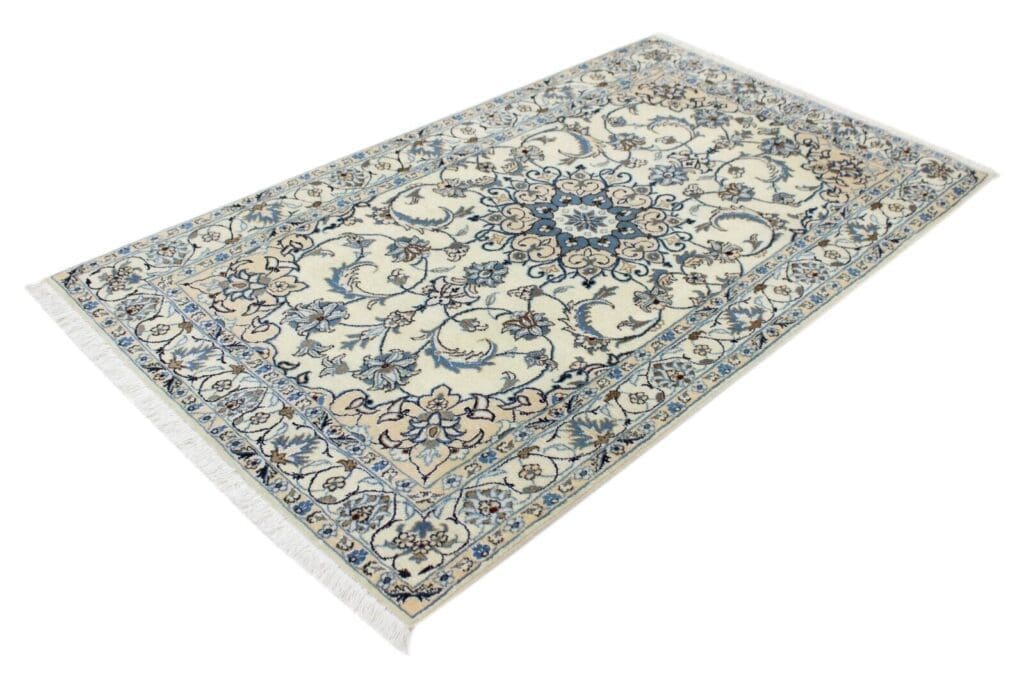
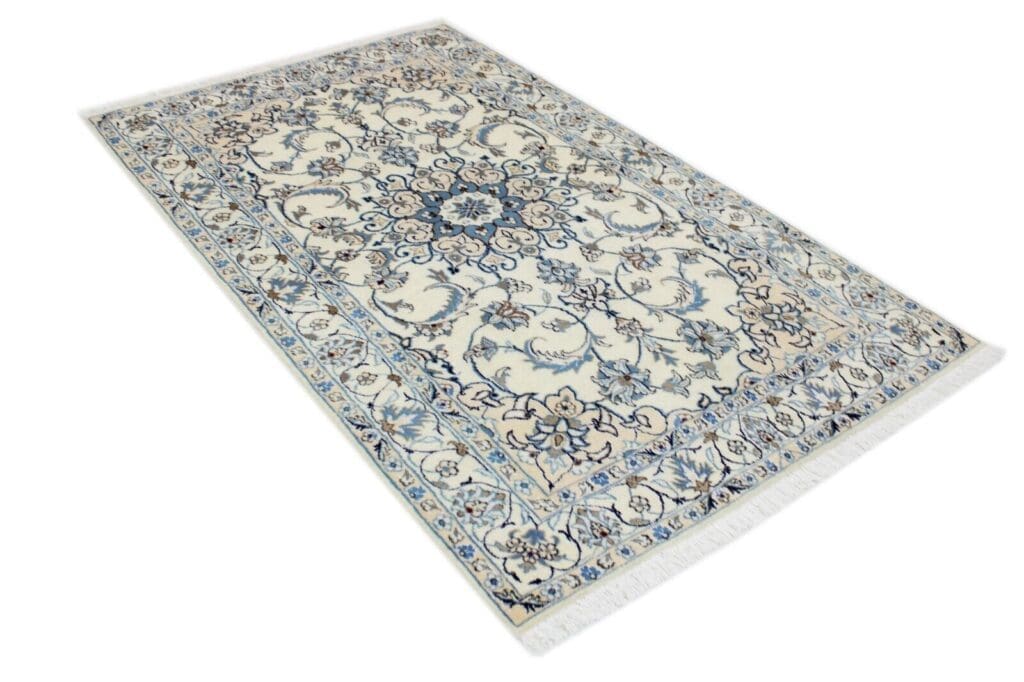
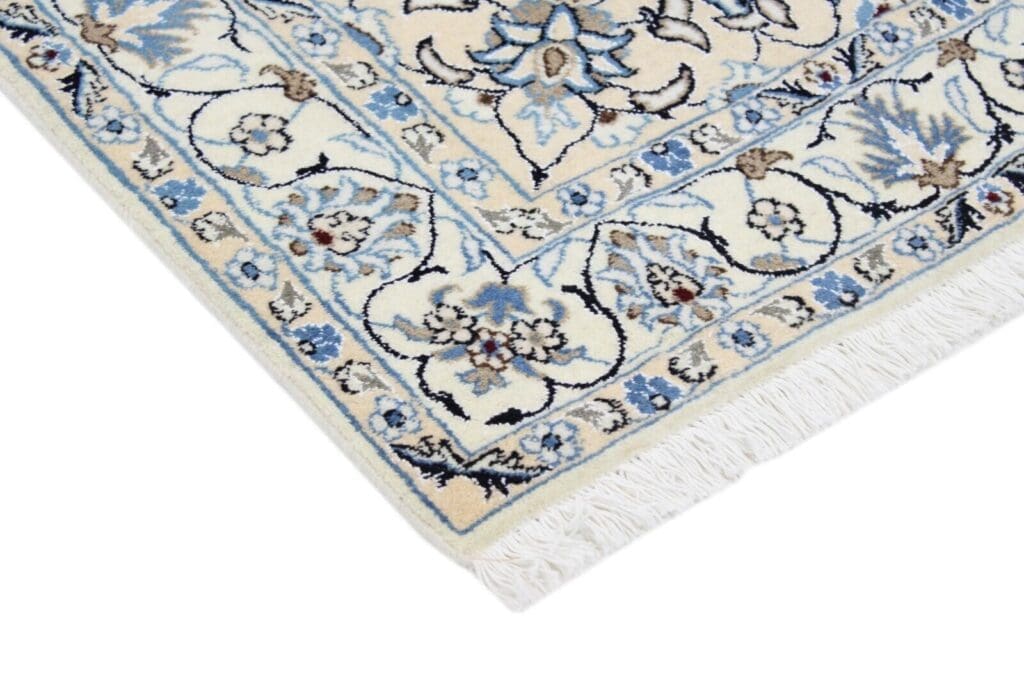
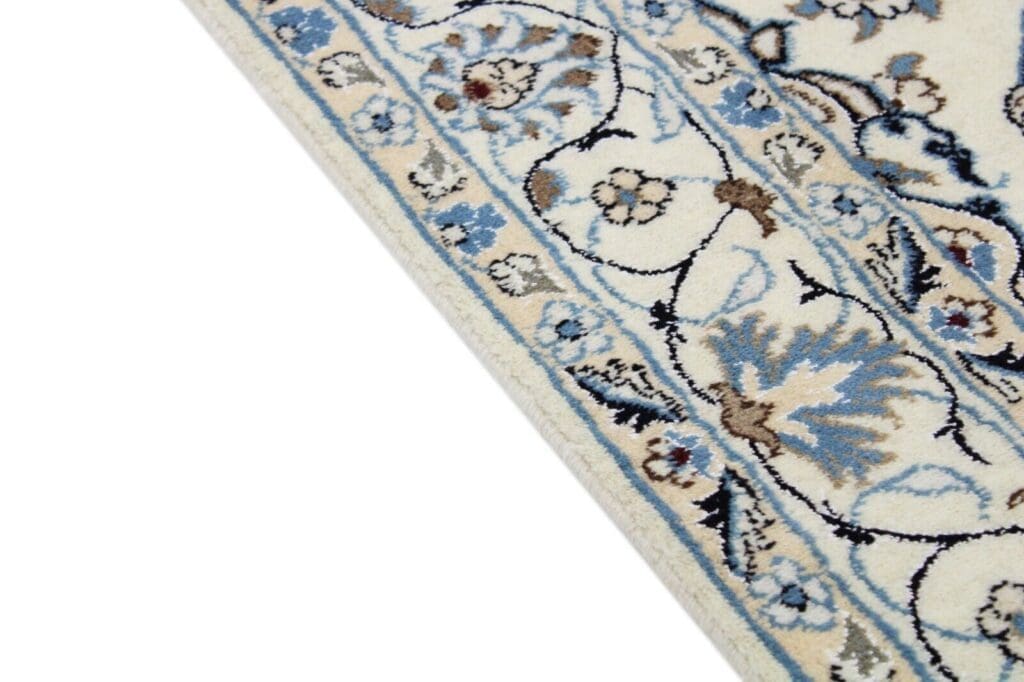
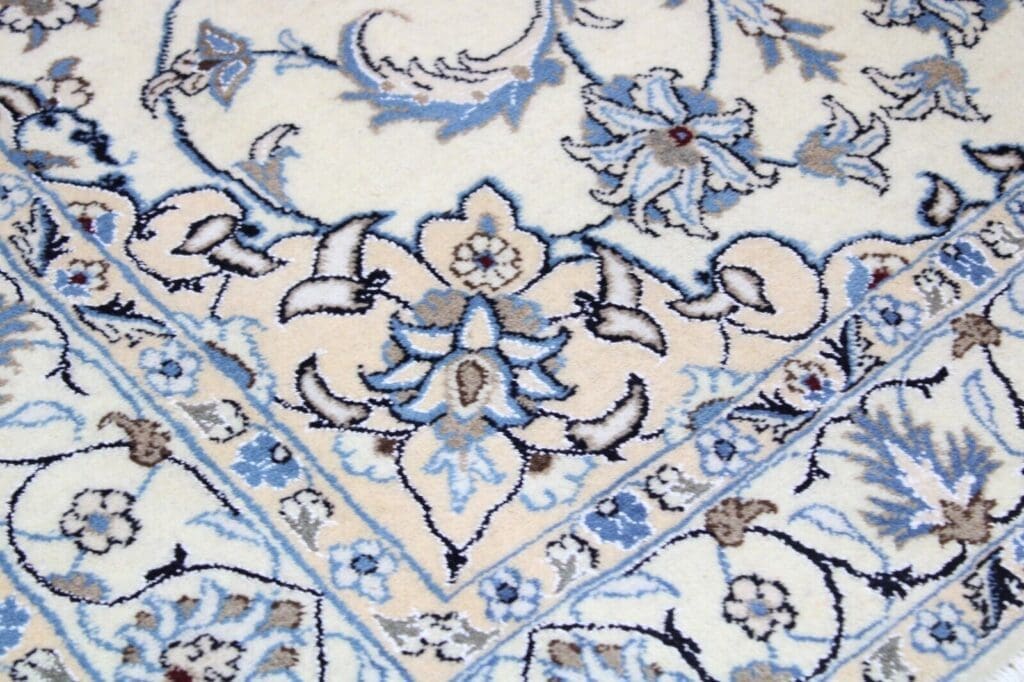
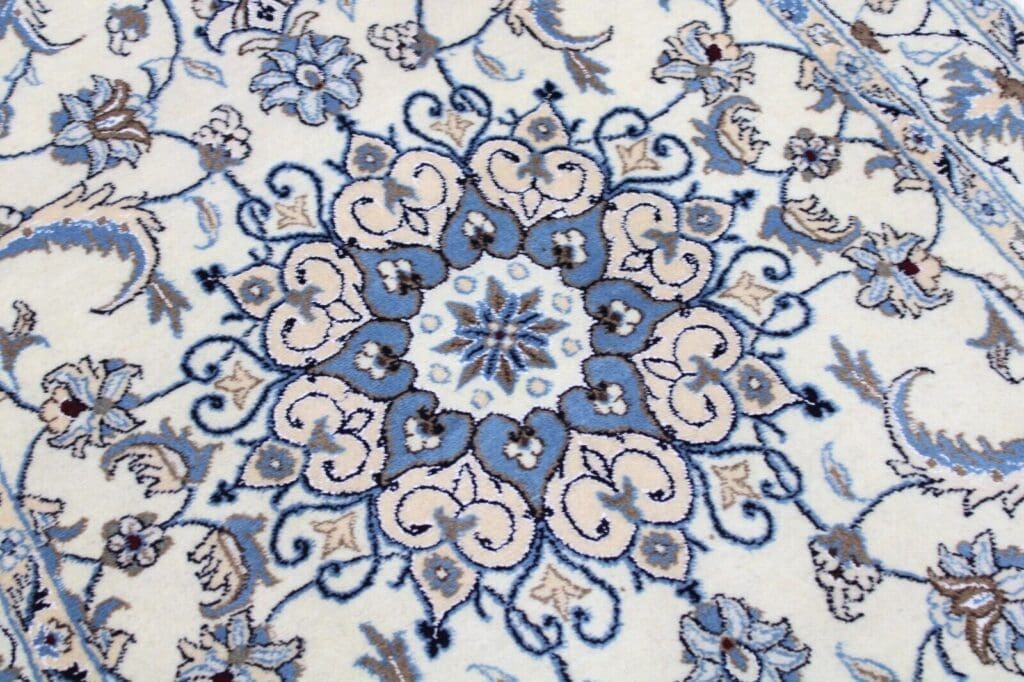
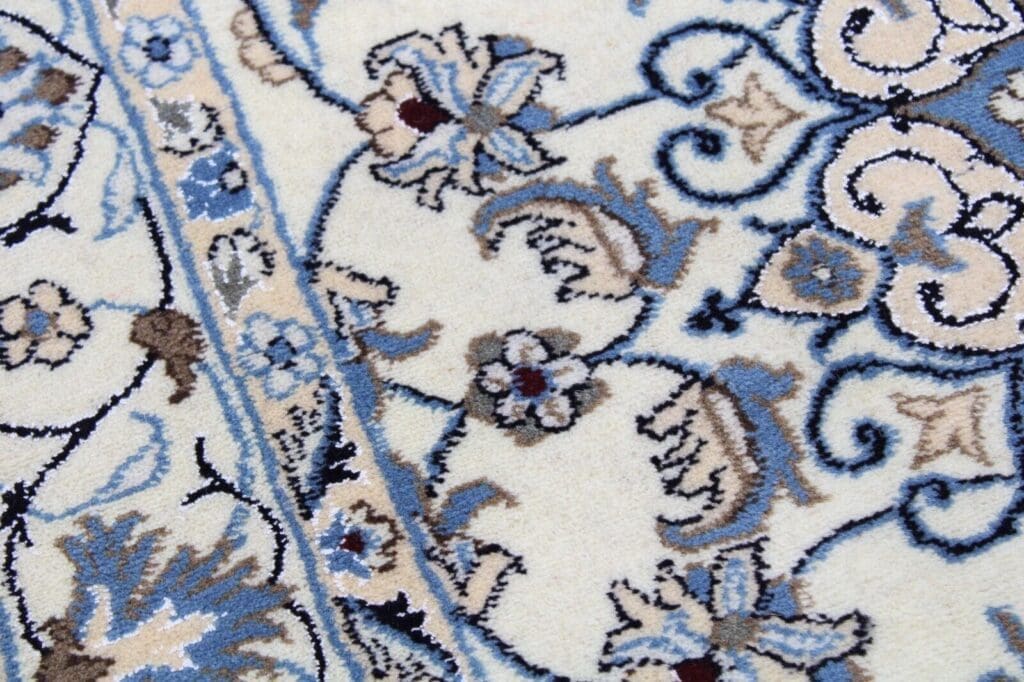
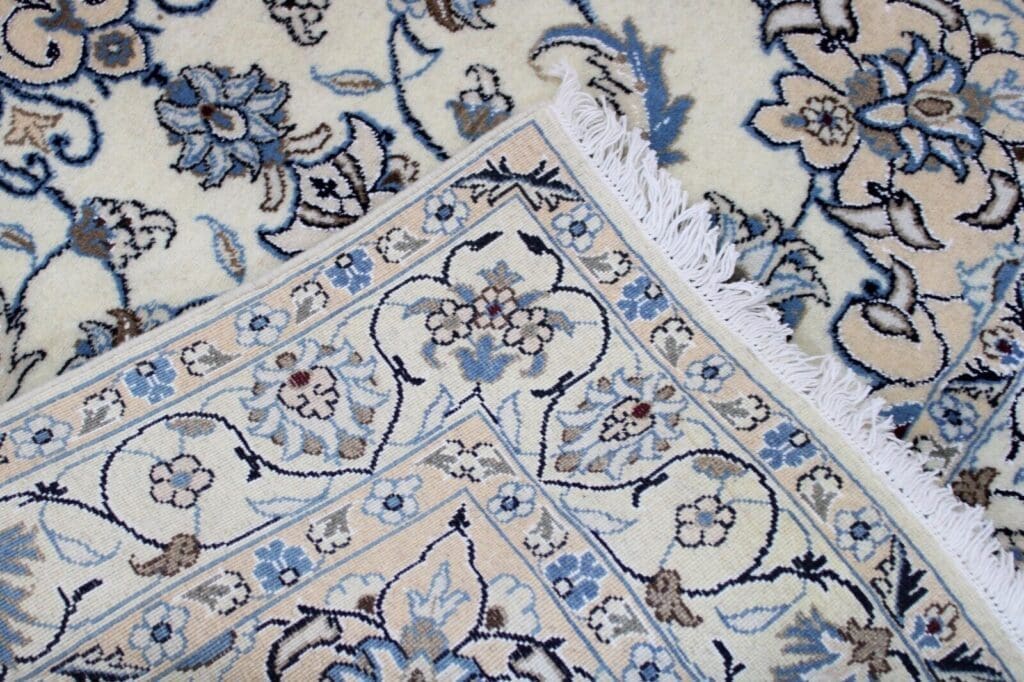
The pattern of this Persian Rug is described as oriental with floral motifs. Flowers and plant forms are among the central elements of Persian rug design. Blossoms, leaves, vines and stylised stems may be repeated across a field or arranged around a central organising point. In this tradition, nature is not usually copied as a literal botanical image. Instead, it is transformed into a decorative language of curves, symmetry, repetition and carefully connected shapes.
Floral Nain designs are generally valued for the way their parts relate to one another. A composition may be built around a medallion, a continuous field pattern or an all-over arrangement. The particular division of this rug is not further specified, but the description of an oriental floral pattern clearly identifies plant ornament as its defining visual theme. The motifs connect separate areas of the surface and allow the pattern to be read as a unified design.
Borders have an important structural role in traditional rug composition. They frame the central field, establish an outer boundary and create a transition between the rug and its surroundings. In floral patterns, smaller blossoms, scrolling vines or repeated ornamental units may echo the drawing of the interior. This relationship between field and border helps establish proportion and gives the composition a clear visual edge.
Line is essential to the character of a floral rug. Curving vines can guide the eye across the field, while balanced blossoms can provide a sense of order. Repetition creates rhythm, and variation in scale or direction keeps the design from becoming completely mechanical. These are general principles of oriental ornament and help explain why floral rugs can work in both traditional and more restrained contemporary interiors.
The high pile also affects the way the pattern is perceived. A raised wool surface softens the transitions between adjacent areas and gives the ornament a tactile quality. Light may catch the fibres differently as the viewing angle changes, making sections of the drawing appear more or less pronounced. This is an optical characteristic of a textile surface; it does not alter the underlying pattern created by the knotting.
Persian floral ornament has connections with many other forms of Iranian art. Plant motifs appear in tilework, manuscripts, metalwork and woven textiles. Rug designers adapted those motifs to a knotted format, simplifying or repeating forms so that they could be built across a horizontal and vertical grid. The design must remain coherent while the weaver translates its lines into coloured knots. The floral pattern of this Nain rug therefore belongs to a wider Iranian decorative tradition.
The overall effect is a traditional oriental pattern based on flowers and related plant forms. Such a design can sit beside classical furniture or provide a patterned foundation in a modern room. Its versatility comes from the balance of repetition, framing and flowing lines rather than from a single prescribed style of furnishing. The description establishes a floral oriental character without adding details about a specific medallion, border drawing or colour scheme that are not stated.
Floral patterns also provide a visual link between the individual parts of a rug. A blossom may be echoed by a smaller form in the border, while a vine can lead the eye from one ornament to the next. This internal dialogue gives the surface continuity. In regional Persian design, careful spacing is as important as the motifs themselves, because open areas allow the ornament to remain legible and prevent the composition from losing its balance.
Special Features
The rug is described as new with its label and is therefore offered in an unused condition. It also has a high pile, which determines the feel and visible texture of the surface. As a hand-knotted Persian Rug, it combines these stated characteristics with a traditional construction in wool and cotton.
This rug is suitable for use with underfloor heating. Even with that suitability, gentle and regular care remains useful. Dust and loose particles should be removed without putting unnecessary strain on the pile. More substantial soiling is best handled by a professional rug cleaner. Strong direct sunlight should be avoided where possible so that the colours remain even over time.
The stated origin in Iran, the Nain tradition, the oriental floral design and the hand-knotted construction form the defining features of this one-off rug. Its period is identified as the 21st century.
FAQ
How should I care for this Nain Persian Rug?
Regular vacuuming helps remove dust and loose dirt that can settle into a high pile. The surface should be treated gently so that the wool fibres are not unnecessarily stressed. Strong direct sunlight is best avoided because prolonged exposure can fade colours. For stains or heavier soiling, professional rug cleaning is recommended. A specialist can choose a process appropriate for wool, cotton and the hand-knotted structure, reducing the risk of damage to the pile and the colours. Care should focus on steady, careful maintenance rather than aggressive treatment.
Where does this Nain rug come from?
This Nain rug comes from Nain in Iran. Nain is a recognised rug-producing area in Isfahan Province and has a long tradition of handmade rug production. Its regional design language is associated with organised compositions and floral ornament. Rug makers in the region work within knowledge passed through workshops and generations, including the selection of materials, knotting methods, pattern planning and colour arrangement. The Nain origin therefore identifies the cultural and craft context of this Persian Rug.
Can I use the rug in a living room?
Yes, the Nain Persian Rug can be used in a living room. Its oriental pattern with floral motifs can be combined with traditional furniture as well as with a restrained modern interior. The wool pile and high-pile construction give the surface a distinct textile character. To support long-term use, the rug should be protected from strong direct sunlight and from very heavy traffic. It is suitable for underfloor heating. Gentle regular care helps preserve the colours, pile and structure in the living area.
To provide the best experiences, we use technologies like cookies to store and/or access device information. Consenting to these technologies will allow us to process data such as browsing behavior or unique IDs on this site. Not consenting or withdrawing consent, may adversely affect certain features and functions.
Functional Always active
The technical storage or access is strictly necessary for the legitimate purpose of enabling the use of a specific service explicitly requested by the subscriber or user, or for the sole purpose of carrying out the transmission of a communication over an electronic communications network.
Preferences
The technical storage or access is necessary for the legitimate purpose of storing preferences that are not requested by the subscriber or user.
Statistics
The technical storage or access that is used exclusively for statistical purposes.The technical storage or access that is used exclusively for anonymous statistical purposes. Without a subpoena, voluntary compliance on the part of your Internet Service Provider, or additional records from a third party, information stored or retrieved for this purpose alone cannot usually be used to identify you.
Marketing
The technical storage or access is required to create user profiles to send advertising, or to track the user on a website or across several websites for similar marketing purposes.
 SECURE PAYMENT
 SHIPPING PARTNERS


