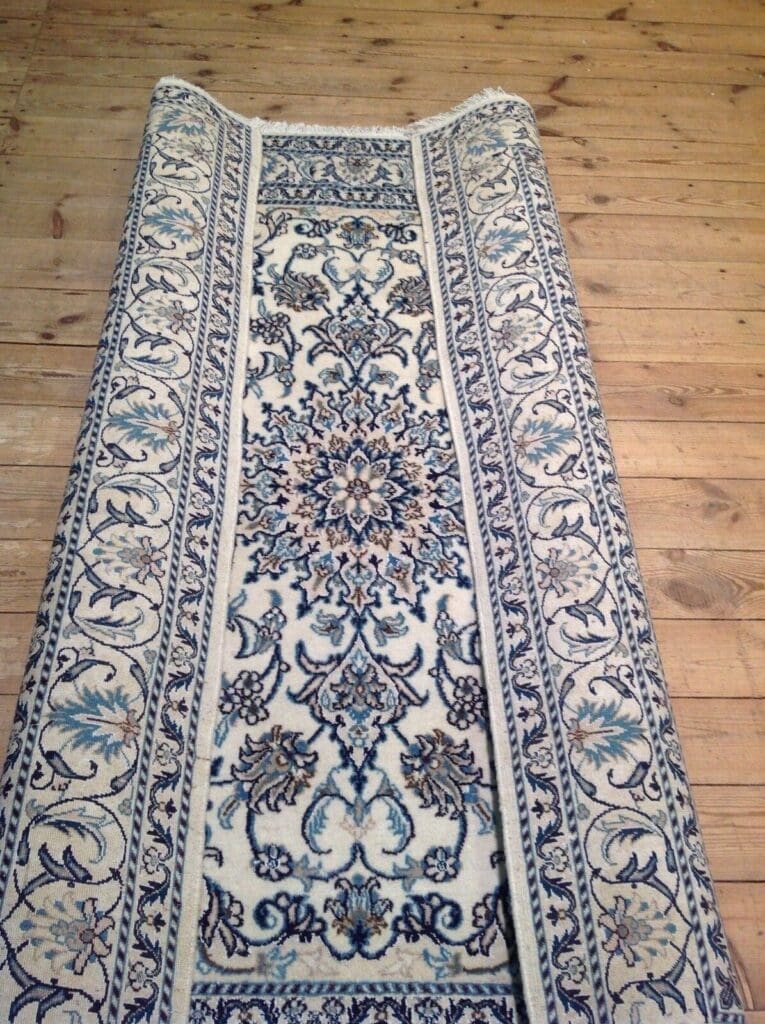
This Nain Persian rug is hand-knotted from a blend of 90% virgin wool and 10% silk. The combination brings together two materials with distinct properties. Virgin wool is known for its warm, resilient character and gives the pile a substantial yet pleasant feel. Silk contributes a fine sheen and adds visual depth to the surface. Together, the fibres create the restrained, refined appearance associated with this type of Persian rug.
The rug is made using traditional hand-knotting. Each knot is placed individually, and the process requires patience, precision, and consistent work across the entire surface. Hand-knotting allows the design to be built gradually through the arrangement of many separate knots. This method is also responsible for the individual character of every one-off rug, since the work of the weaver remains visible in the particular expression of the finished piece.
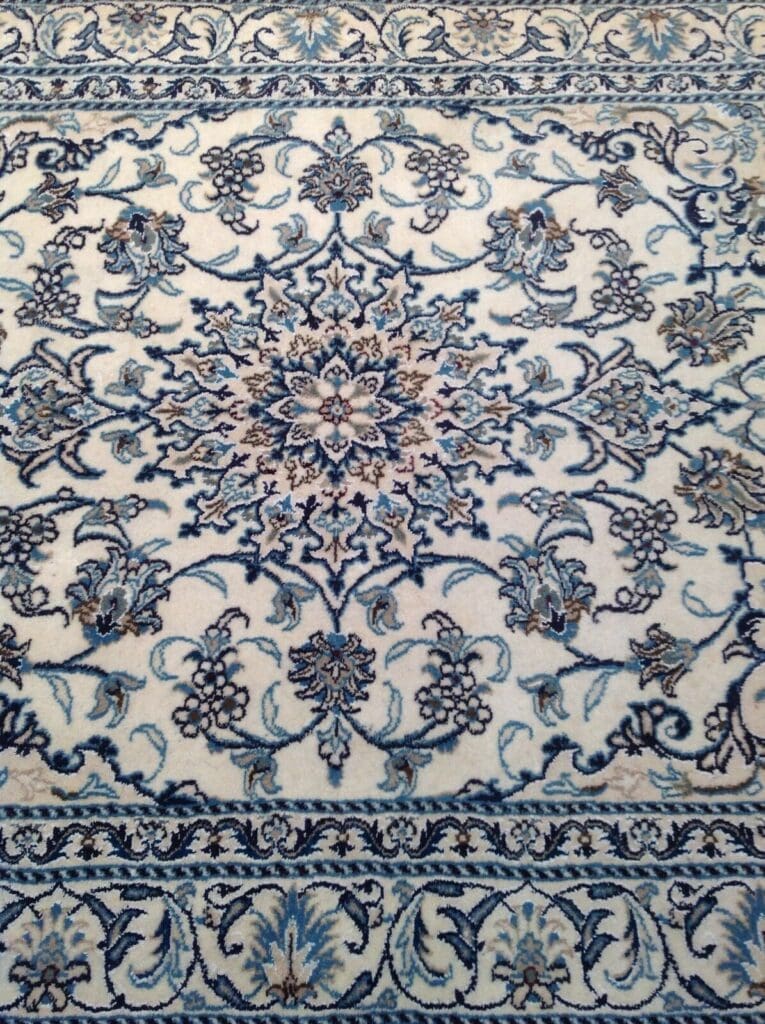
With a knot density of 300.000 knots per square metre, the rug permits a detailed interpretation of fine ornamental forms. A dense knot structure supports clearly defined contours and carefully composed transitions within a pattern. The wool pile contributes durability and warmth, while the silk content gives selected areas a subtle luminosity. The materials and construction therefore combine practical resilience with a polished surface quality.
Origin and Tradition
Nain is a city in Iran with a recognised tradition of carpet weaving. The town lies in Isfahan Province, one of the important centres of Persian carpet culture. Nain rugs are associated with finely worked designs, controlled ornament, and quiet colour harmonies. Their appearance is often more restrained than that of strongly contrasting tribal carpets, allowing the structure of the pattern to remain central.
The carpet tradition of the wider Isfahan region reaches back to the sixteenth century. Persian carpet production developed there through the interaction of courtly, urban, and workshop traditions. Weaving was not only a practical occupation but also a form of design knowledge transmitted through generations. Drawing, proportion, knotting technique, and the handling of wool and silk all formed part of this specialised craft culture.
Nain became particularly known for carpets with a fine and orderly appearance. Urban workshops commonly work from a carefully planned design rather than improvising the composition during the weaving process. A drawn pattern helps the weaver maintain the relationship between the central field, surrounding ornament, and border structure. This planning is one reason Nain carpets are often noted for their balanced layouts and precise decorative language.
The city’s position within the cultural sphere of Isfahan also connects Nain weaving with the broader history of Persian textile arts. Isfahan has long been associated with refined ornamental design, floral drawing, and sophisticated workshop production. Nain carpets interpret this urban tradition in their own manner, frequently favouring delicate detail and measured colour rather than dense visual agitation. Their identity comes from the combination of regional heritage, technical discipline, and a recognisable design approach.
A hand-knotted Nain rug is thus part of a continuing craft tradition rather than a product of a single industrial process. The knotting method, the preparation of the design, and the treatment of the materials all reflect skills developed within Persian weaving culture. The origin name refers to this established regional context, while the individual rug remains a one-off piece shaped by the hands that produced it.
Design and Pattern
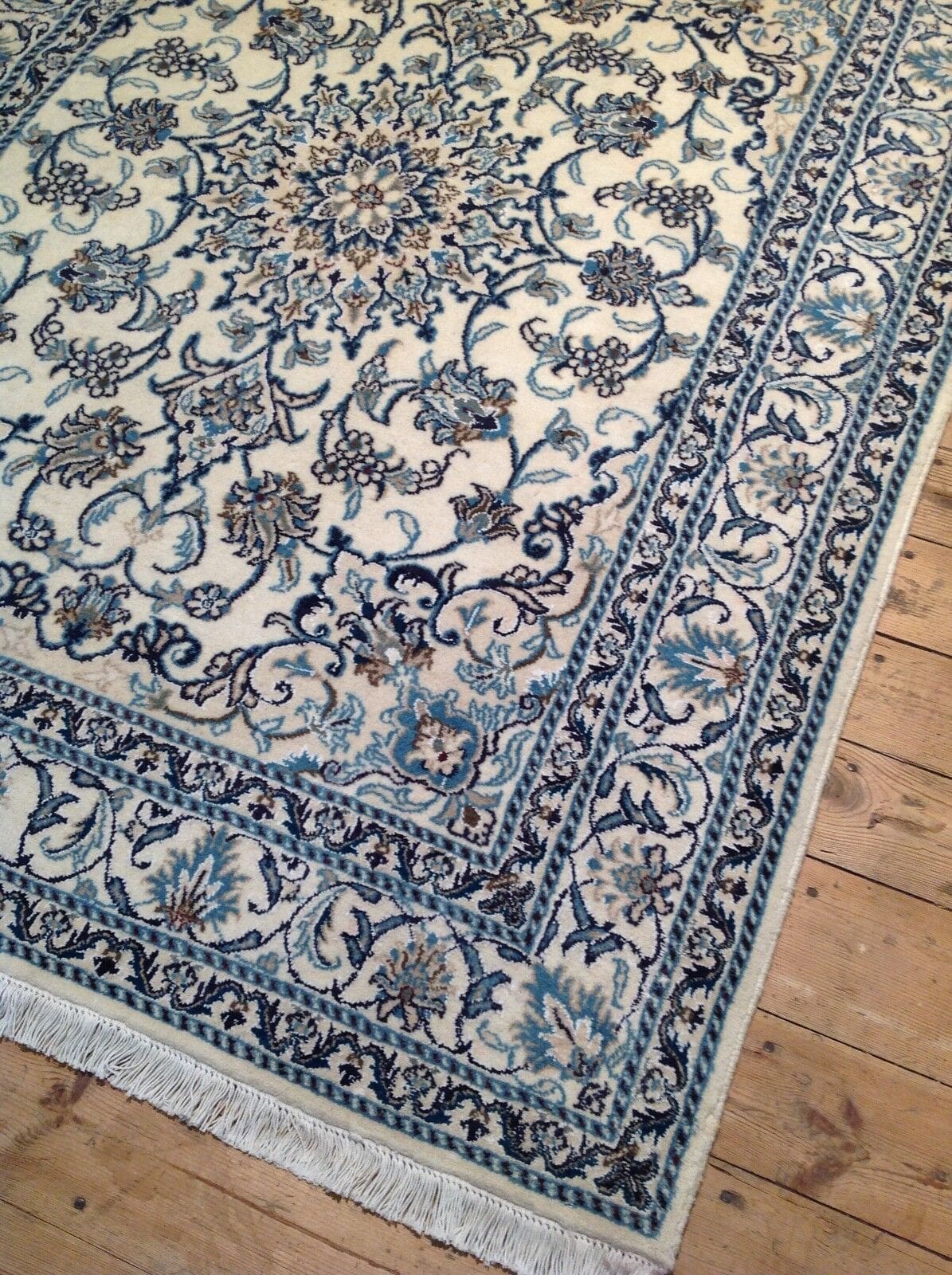
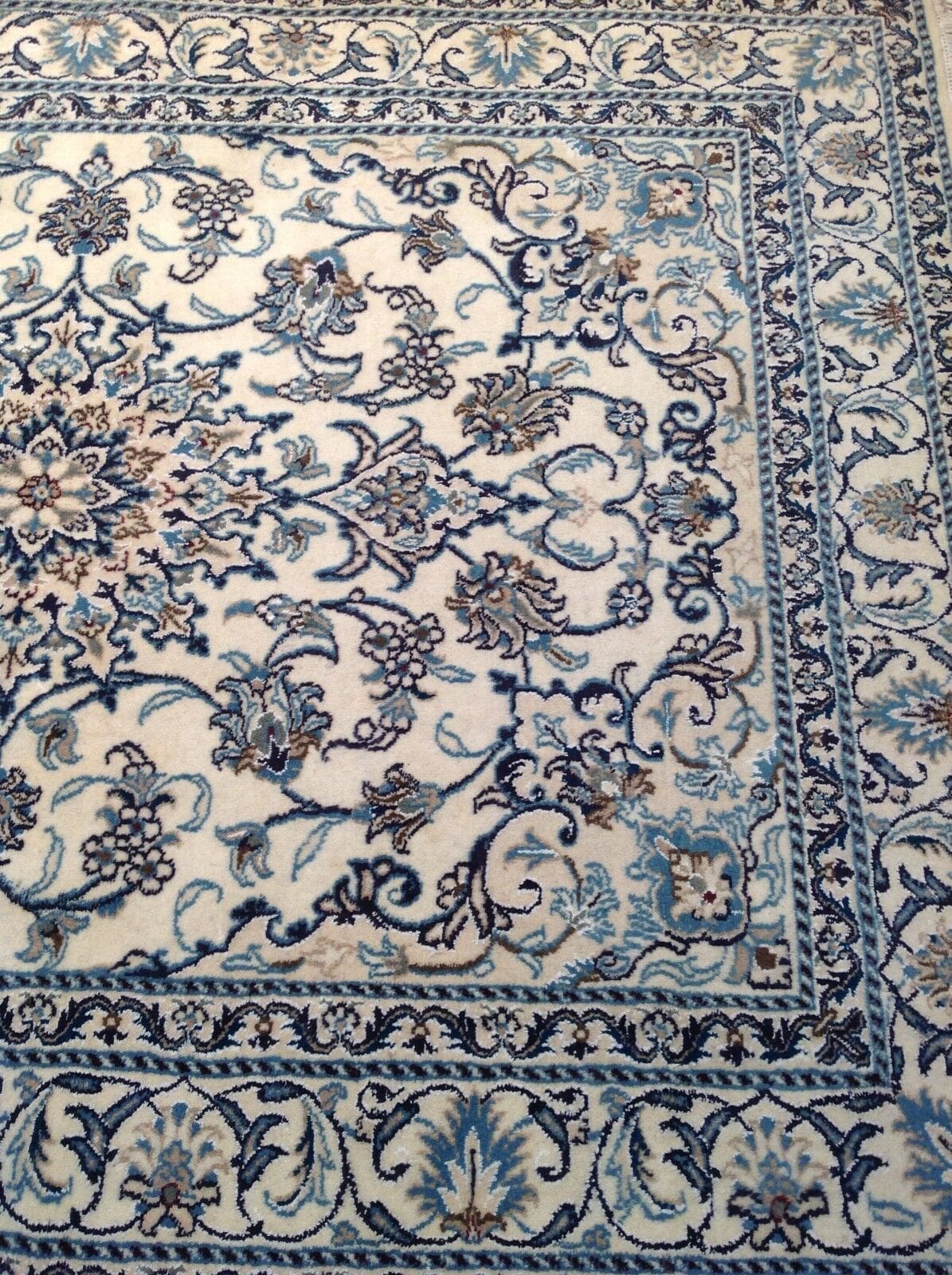
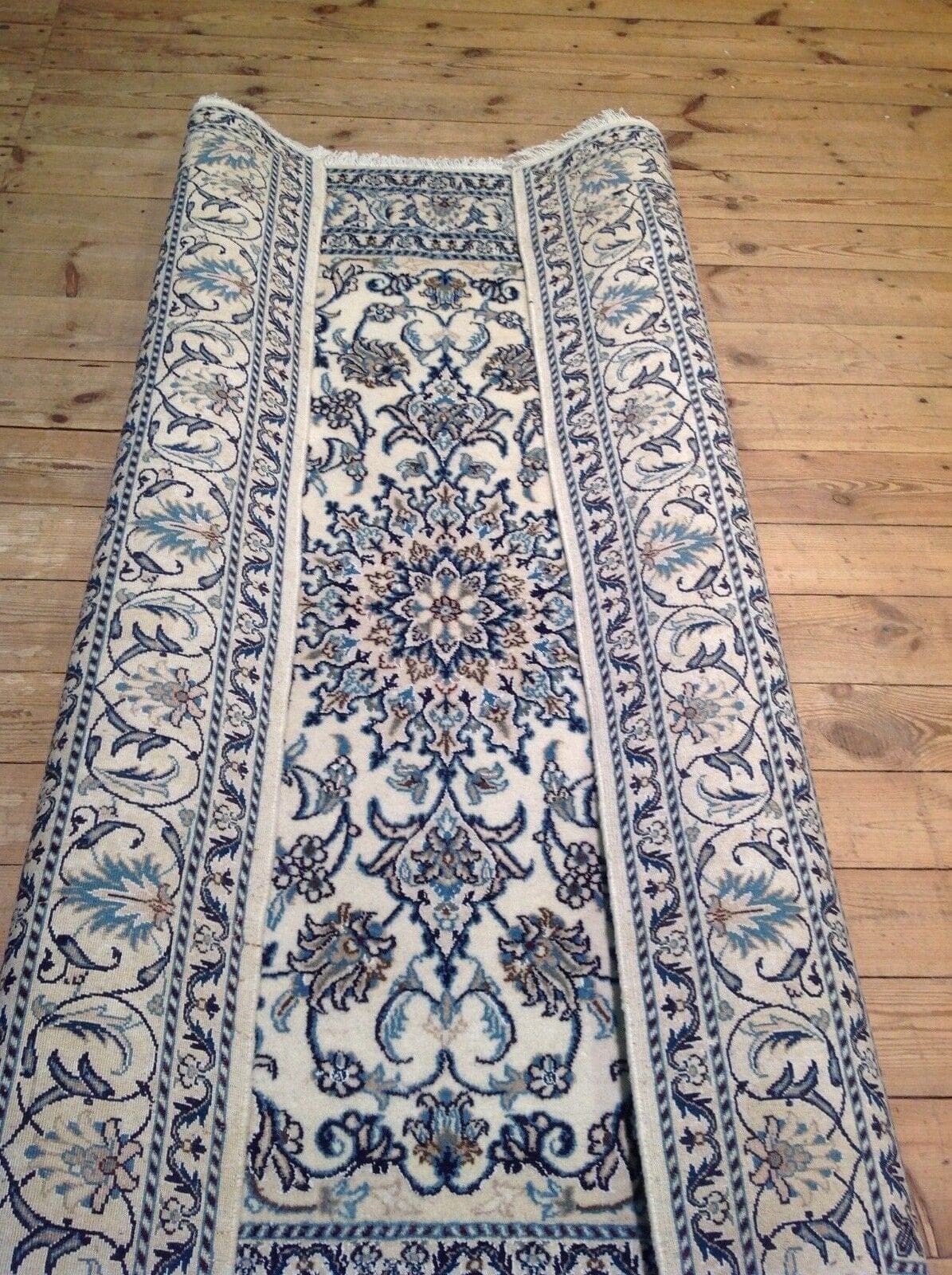
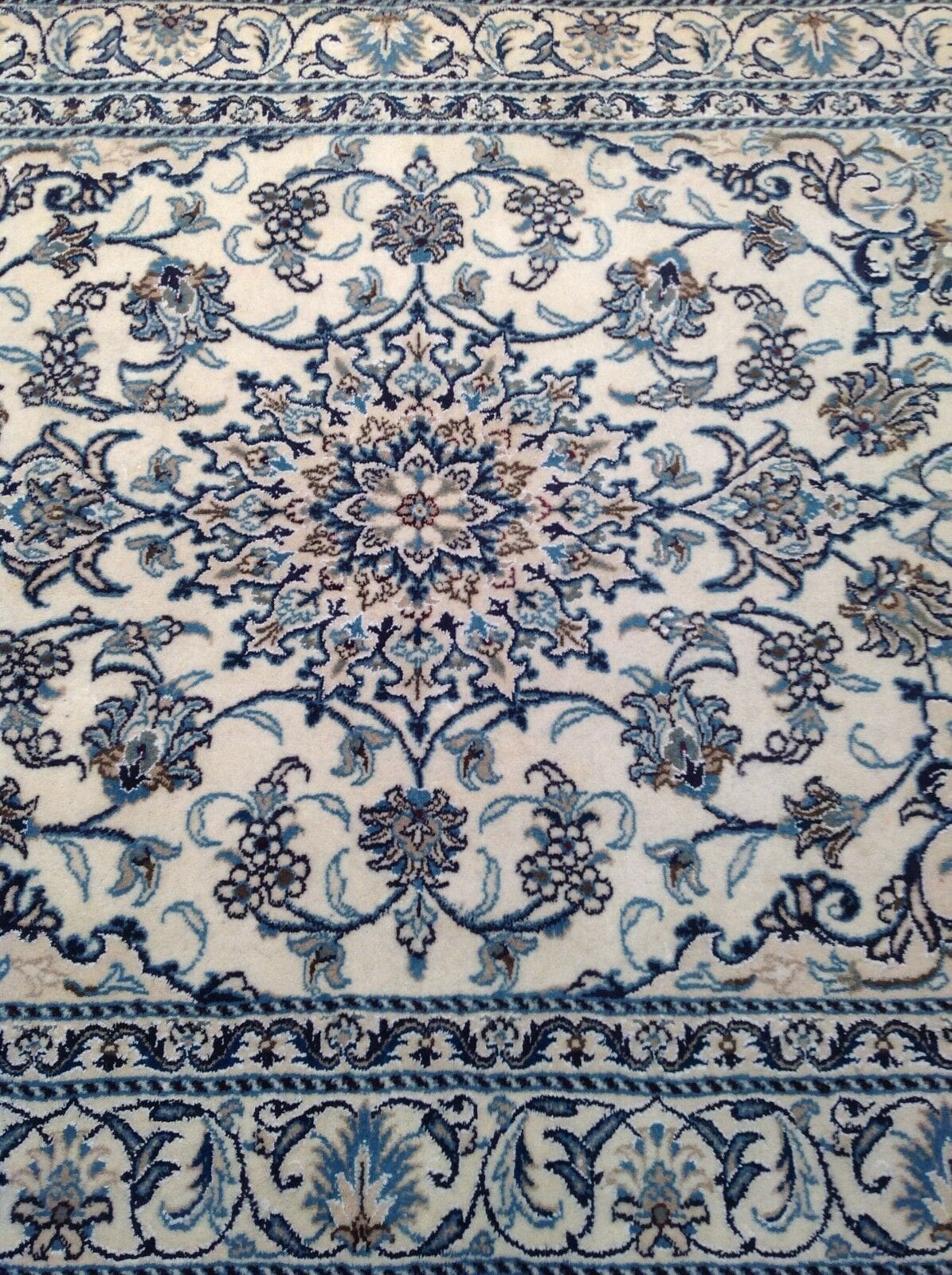
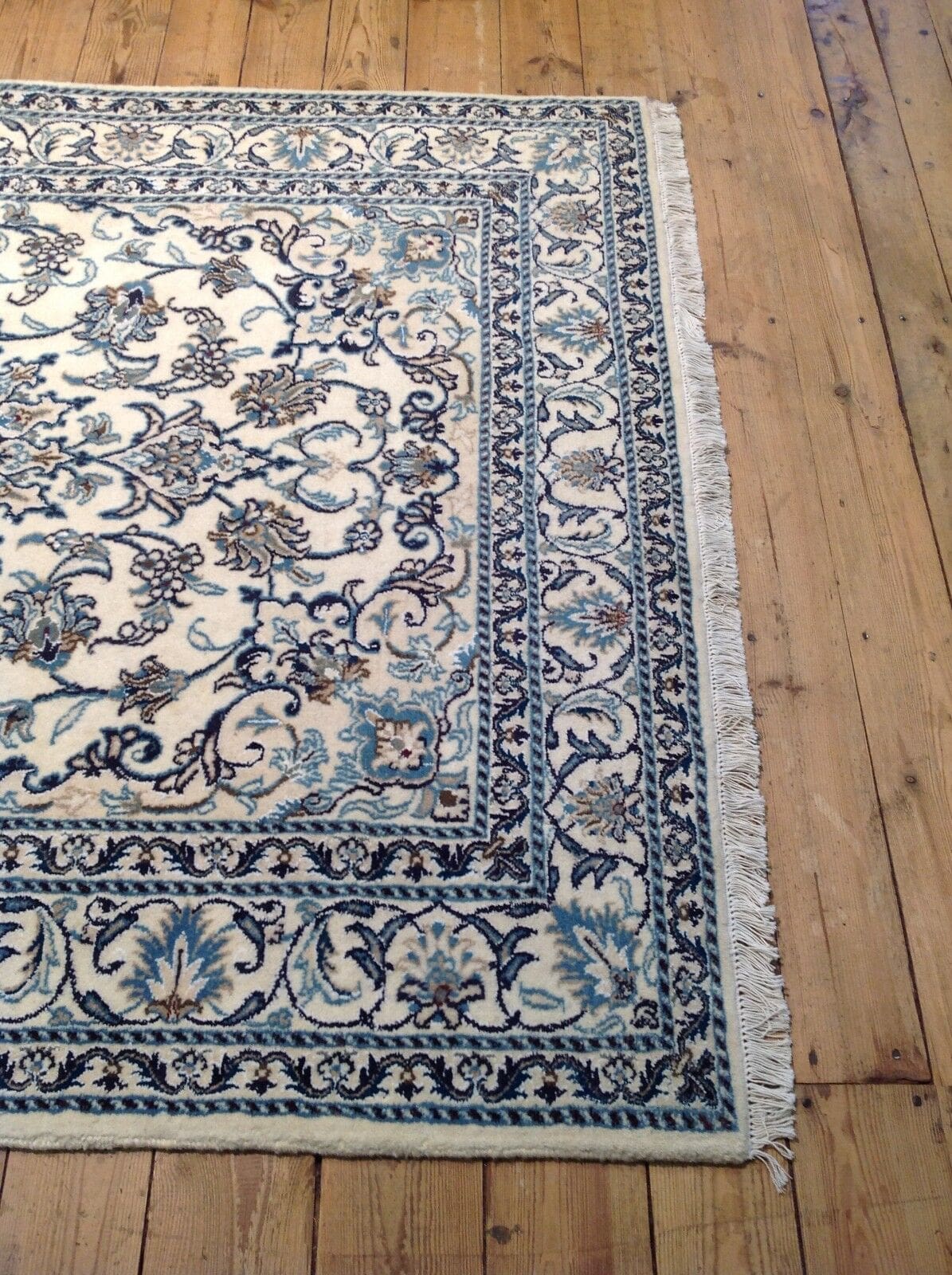
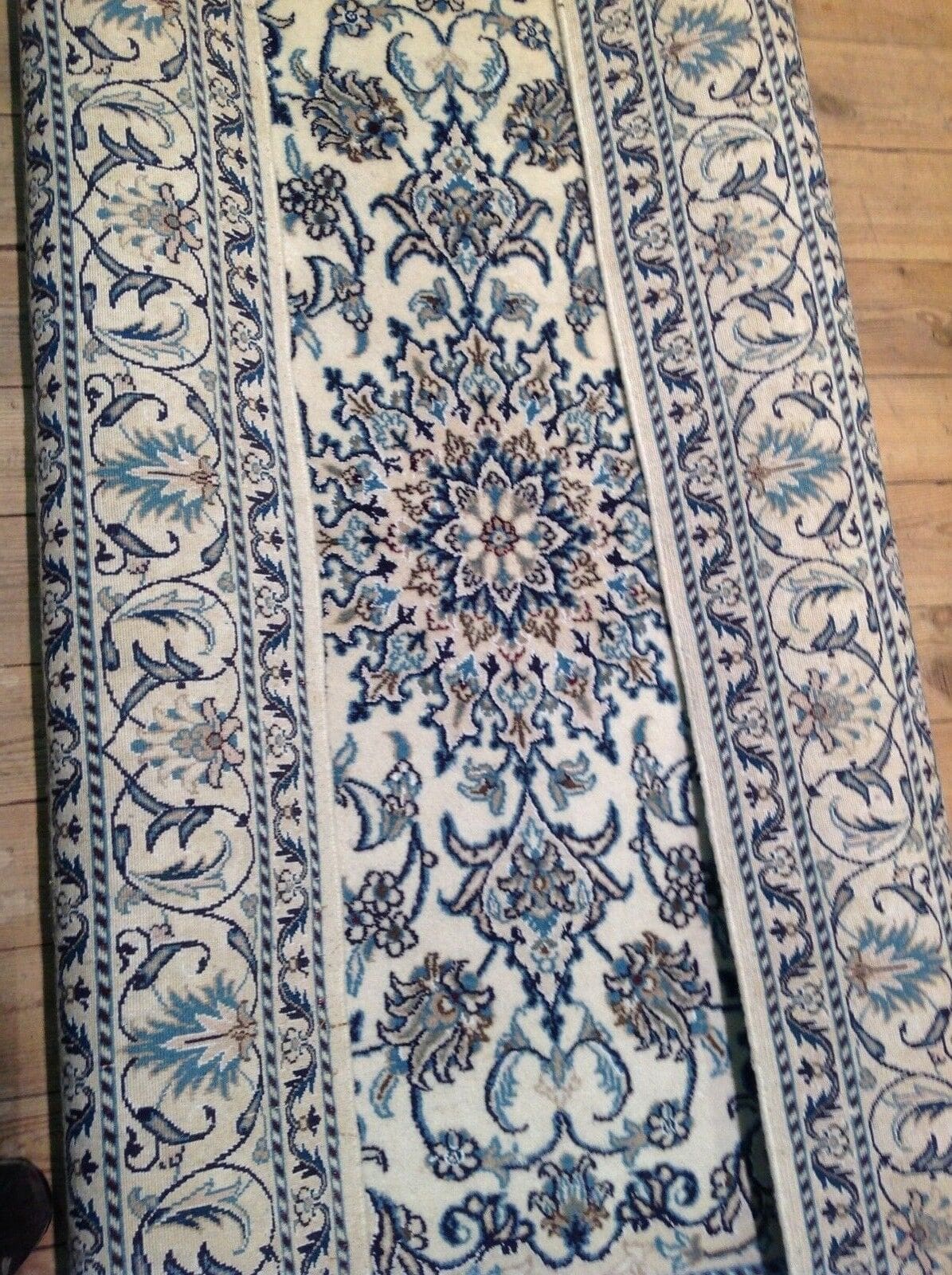
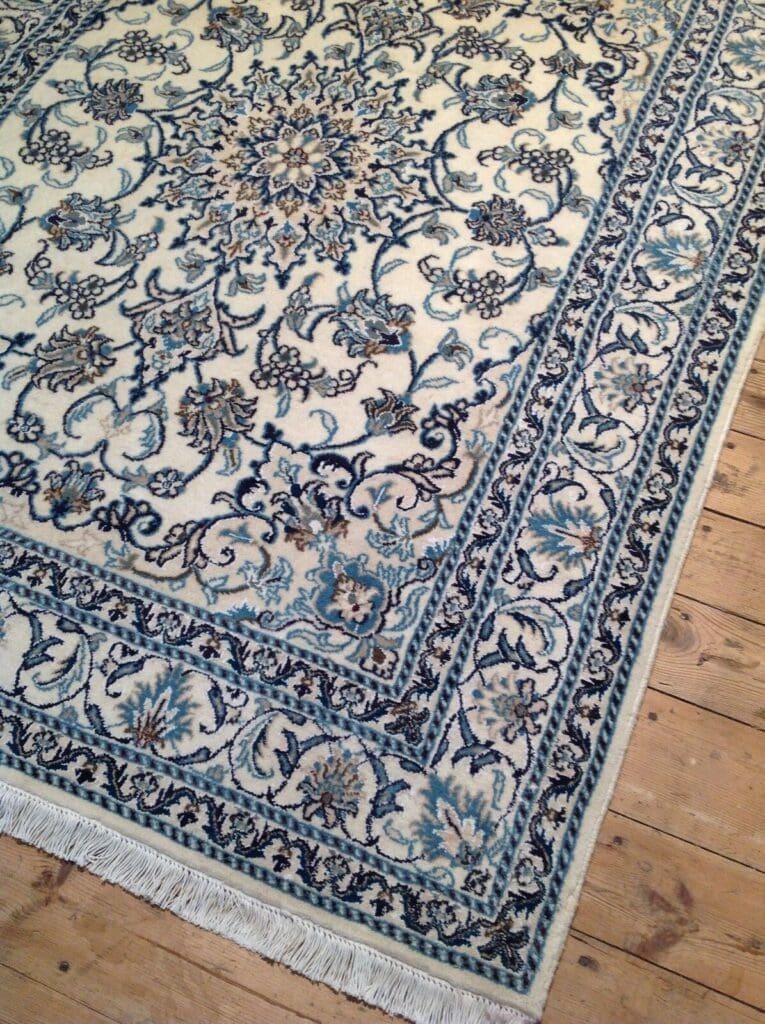
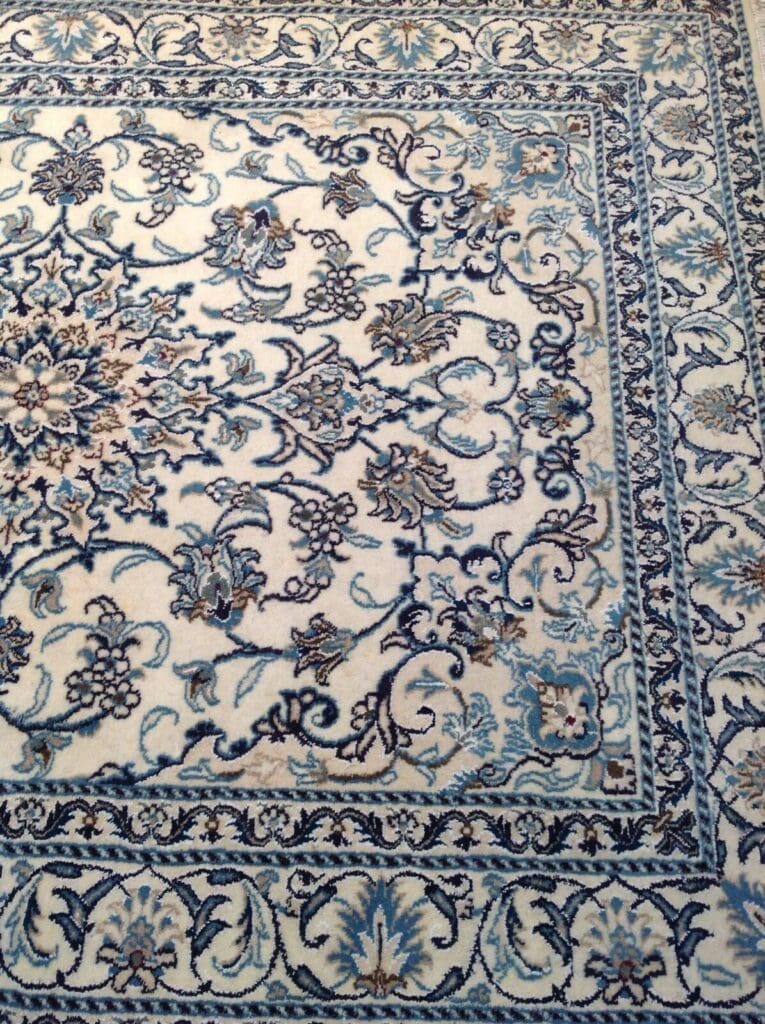
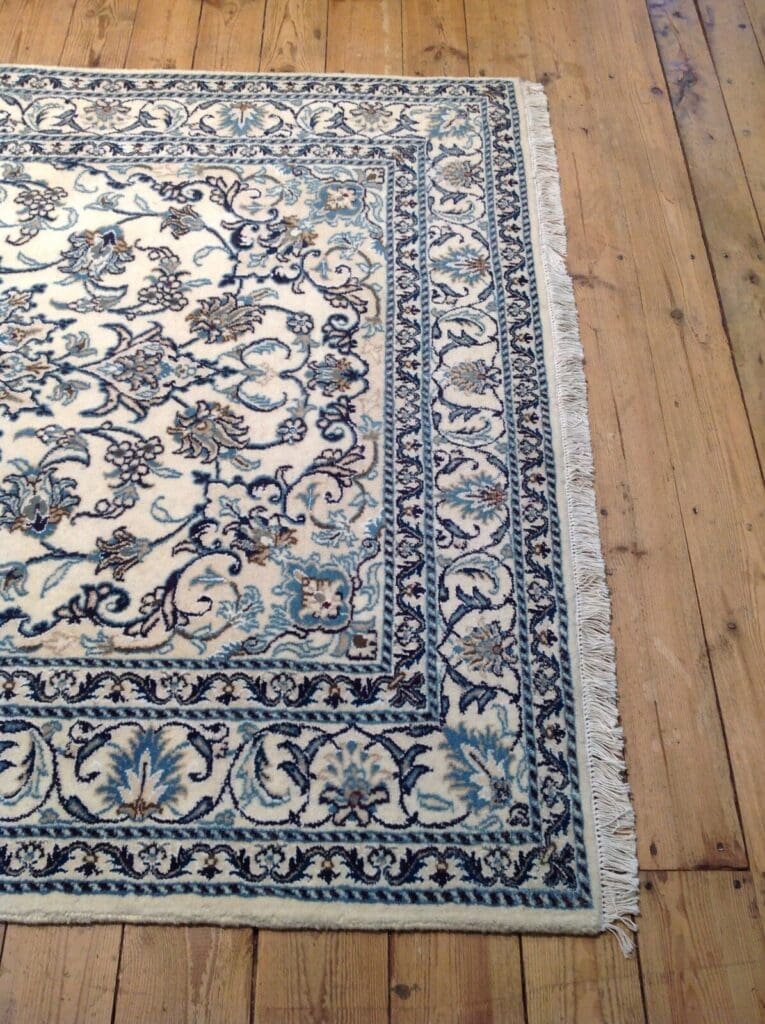
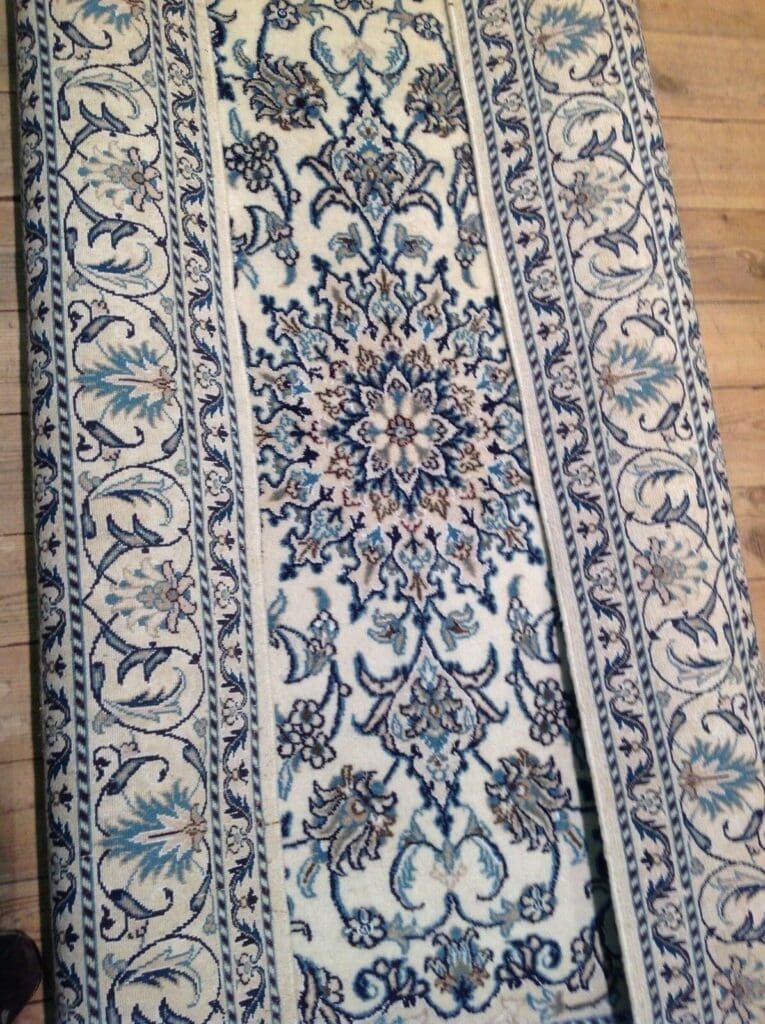
The design described for this Nain rug combines floral and geometric elements. These two forms of ornament work together in Persian carpet design: floral motifs introduce organic movement, while geometric structures provide order and rhythm. The result can create a composition that is decorative without becoming visually restless. Fine lines and repeated forms help connect the individual parts of the pattern across the field.
Nain designs are commonly recognised for their delicate patterns and quiet colours. Rather than relying on heavy contrasts, the visual effect is based on harmony between tones and on the careful distribution of ornament. Subtle colour relationships allow the floral details to remain legible while preserving an overall sense of calm. The silk in the pile can reinforce this effect by catching light differently from the wool and creating gentle changes in surface appearance.
Floral ornament in Persian carpets is often derived from a broad vocabulary of leaves, blossoms, vines, and scrolling branches. These elements need not imitate a single natural plant. They are arranged according to principles of balance, repetition, and proportion, turning botanical references into a formal decorative system. On a Nain rug, such motifs are typically handled with a fine, controlled line so that the composition retains its precise character.
Geometric elements provide a complementary framework. Repeated alignments, measured spacing, and structured borders can give the eye a clear route through the design. Geometry may appear in the organisation of the field, in the treatment of medallion-like forms, or in the rhythm of the border ornament. Even when floral details dominate the impression, these underlying structures help maintain coherence throughout the carpet.
The combination of floral and geometric pattern makes the rug adaptable to different interior approaches. In a traditional setting, its Persian design language can sit alongside other textiles and classic furniture. In a more contemporary room, the restrained palette and ordered ornament can provide definition without overwhelming the surrounding architecture. The pattern functions as a composed decorative surface, not merely as a background.
Its visual character also depends on the contrast between the matte warmth of wool and the finer reflection of silk. This interplay can make details appear slightly different as the viewing angle or light changes, while the underlying pattern remains stable. The high knot density supports the detailed drawing, and the hand-knotted construction gives the design the tactile presence of a woven object rather than a printed image.
Special Features
The rug combines a high knot density with a pile made from virgin wool and silk. Wool is naturally regarded as resistant to dirt and everyday wear, while silk supplies a refined sheen. These properties contribute to the rug’s practical character as well as its appearance. Regular care helps preserve the surface and keeps dust from settling into the pile.
Every hand-knotted Nain rug carries the trace of the individual making process. The knots are set with patience and attention, and the finished object reflects the technical skill of the weaver. Its individuality does not depend on a factory variation but on the fact that handwork produces a singular piece within a long-standing regional tradition.
For care, regular vacuuming can remove dust and loose particles. Spills should be dabbed promptly with a damp cloth rather than rubbed into the pile. Professional cleaning every few years is recommended in the source description. Direct sunlight should be avoided to help protect the colours from fading.
FAQ
How should a Nain Persian rug be cared for?
Vacuum the rug regularly to remove dust and dirt from the pile. If a spill occurs, dab the area promptly with a damp cloth and avoid rubbing. A professional cleaning every few years can help maintain the rug’s condition. Because the pile contains silk as well as wool, careful handling is appropriate when dealing with marks or heavier soiling. Keeping the rug away from direct sunlight also helps reduce the risk of colour fading over time.
Where can this rug be placed?
The rug can be used in a living room, dining room, or office as an elegant textile element. It can be placed on a parquet floor or over another carpet. The floral and geometric design, together with the delicate and harmonious colour character associated with Nain rugs, can work with both classic and modern furnishings. Direct sunlight should be avoided, since prolonged exposure may cause the colours to fade.
How can an authentic Nain rug be recognised?
Authentic Nain rugs are hand-knotted and generally have a fine knot density. They are traditionally associated with high-quality virgin wool and silk, as this rug is. The design and colours are also useful points of reference: Nain carpets are known for finely drawn patterns and colour combinations that are often quiet and harmonious rather than strongly intense. A certificate or expert appraisal can provide additional assistance when authenticity needs to be assessed.
To provide the best experiences, we use technologies like cookies to store and/or access device information. Consenting to these technologies will allow us to process data such as browsing behavior or unique IDs on this site. Not consenting or withdrawing consent, may adversely affect certain features and functions.
Functional Always active
The technical storage or access is strictly necessary for the legitimate purpose of enabling the use of a specific service explicitly requested by the subscriber or user, or for the sole purpose of carrying out the transmission of a communication over an electronic communications network.
Preferences
The technical storage or access is necessary for the legitimate purpose of storing preferences that are not requested by the subscriber or user.
Statistics
The technical storage or access that is used exclusively for statistical purposes.The technical storage or access that is used exclusively for anonymous statistical purposes. Without a subpoena, voluntary compliance on the part of your Internet Service Provider, or additional records from a third party, information stored or retrieved for this purpose alone cannot usually be used to identify you.
Marketing
The technical storage or access is required to create user profiles to send advertising, or to track the user on a website or across several websites for similar marketing purposes.

 SECURE PAYMENT
 SHIPPING PARTNERS


