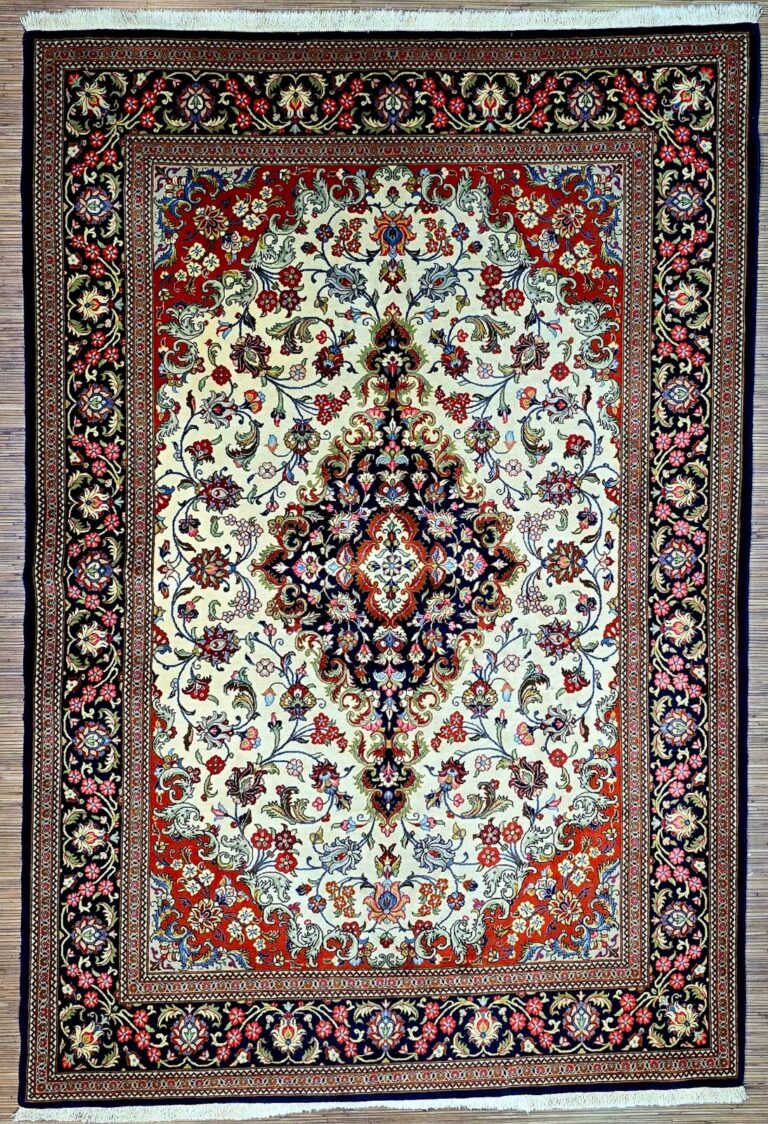
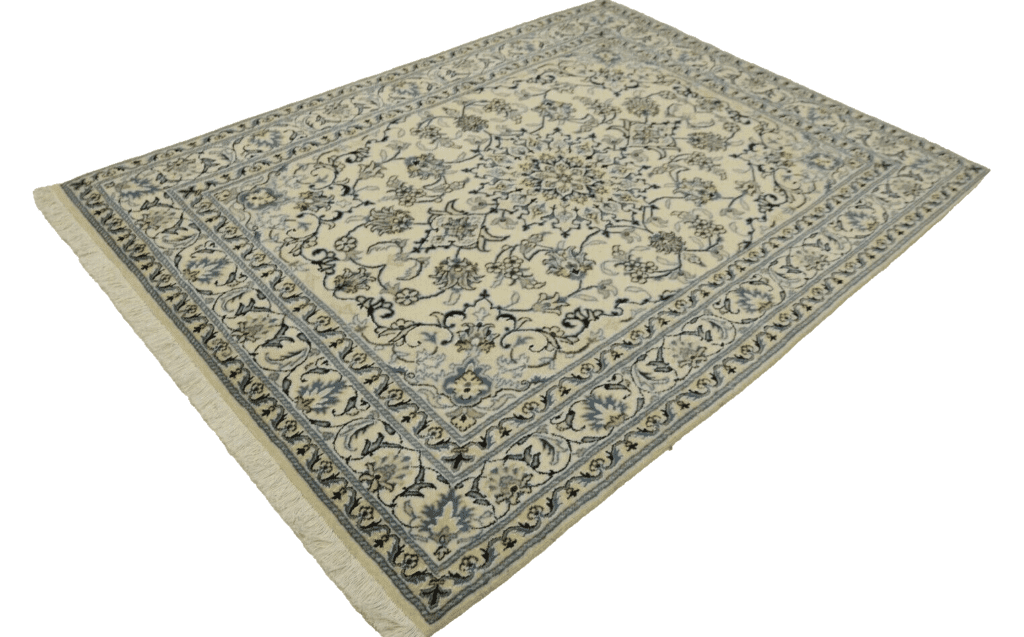
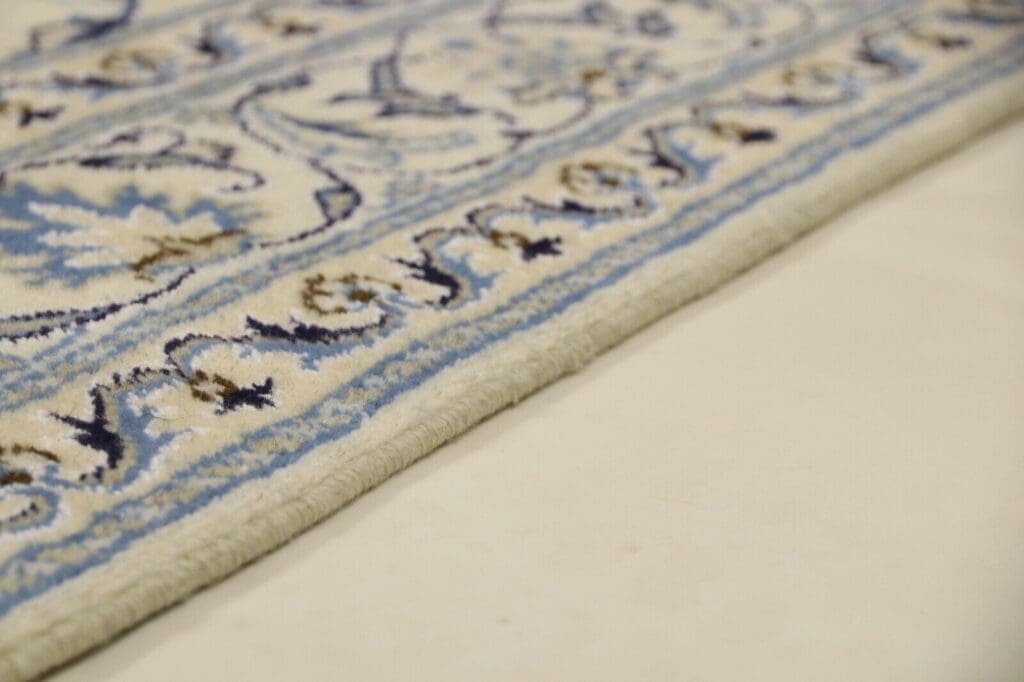
This Nain Persian rug is hand-knotted, with a pile made from virgin wool and silk and a warp made from cotton. Virgin wool forms the principal part of the pile and is valued in rug making for its resilient, tactile surface. Silk adds a smoother feel and a subtle sheen to the wool structure. Together, these fibres create a material combination in which the character of the pile is shaped by both the soft strength of wool and the finer reflective quality of silk.
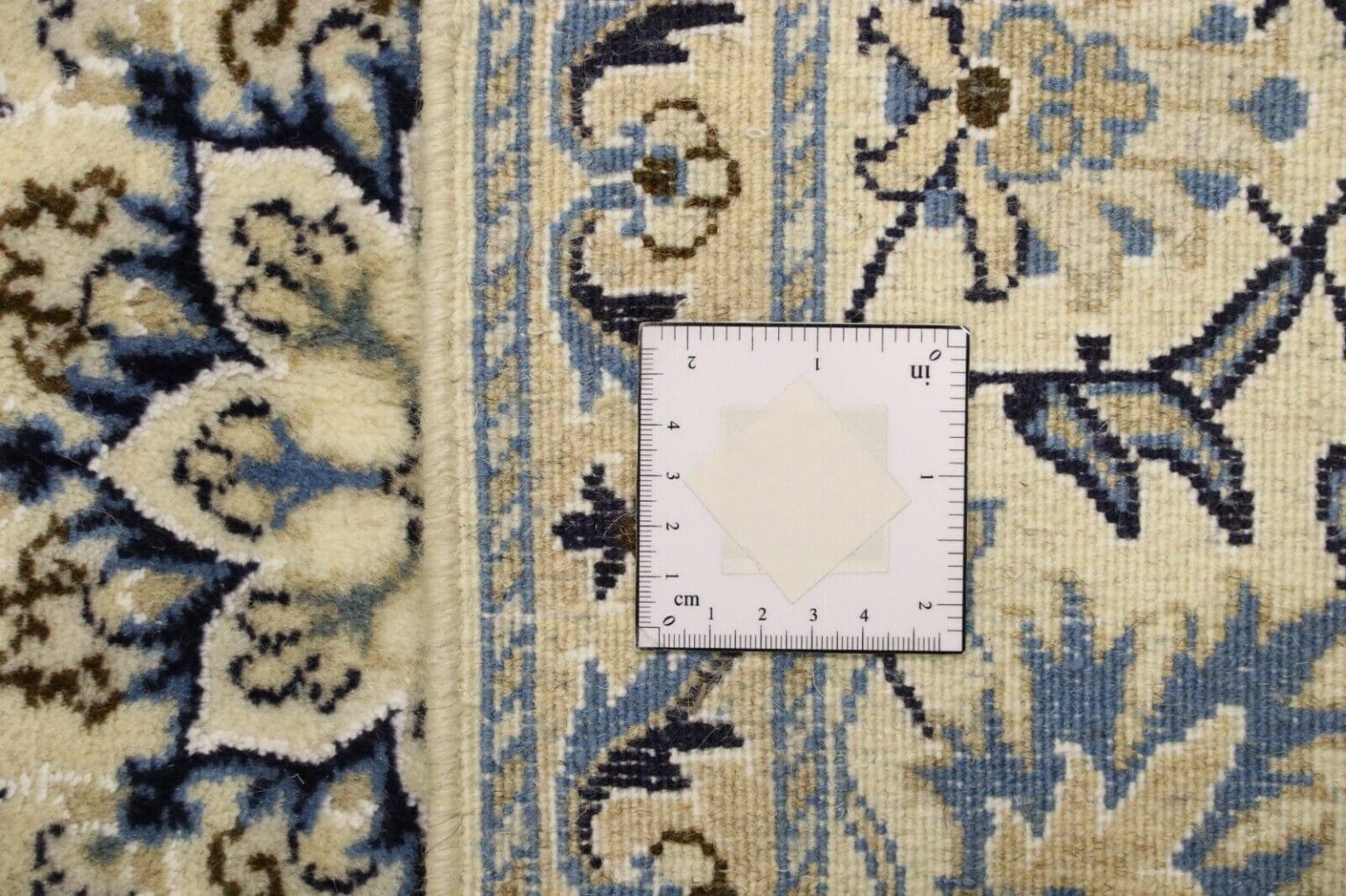
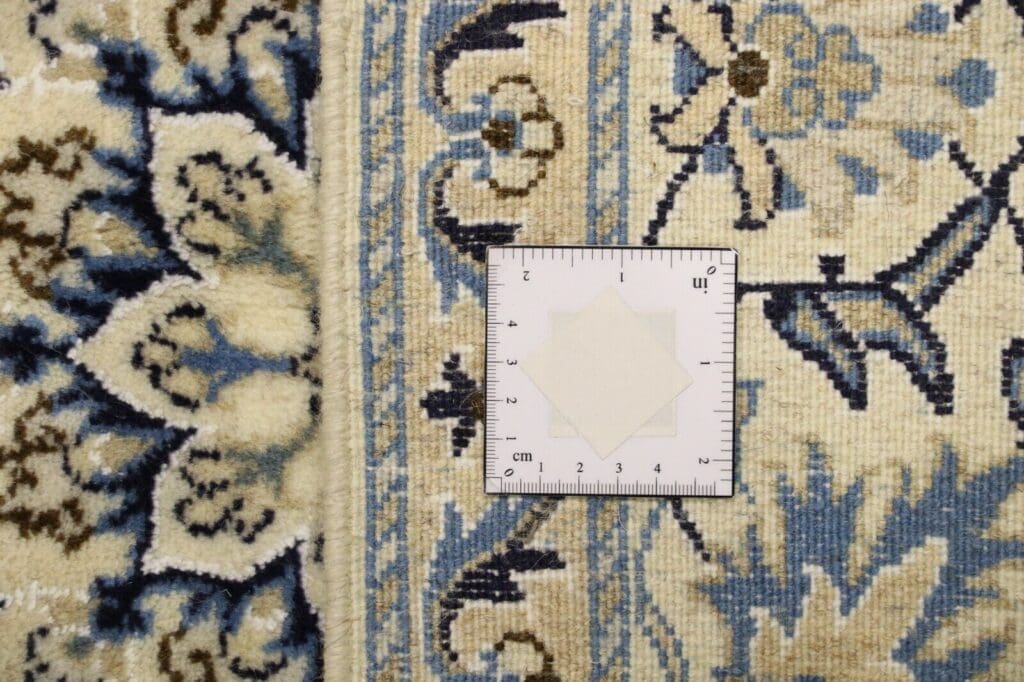
Hand-knotting builds the rug knot by knot. Rather than applying a pattern to a finished machine-made surface, the weaver incorporates the design directly into the structure during the making process. The knot density specified for this rug supports an exact and finely detailed interpretation of the traditional Nain design. It also reflects the careful, time-consuming work required to produce a tightly drawn hand-knotted textile.
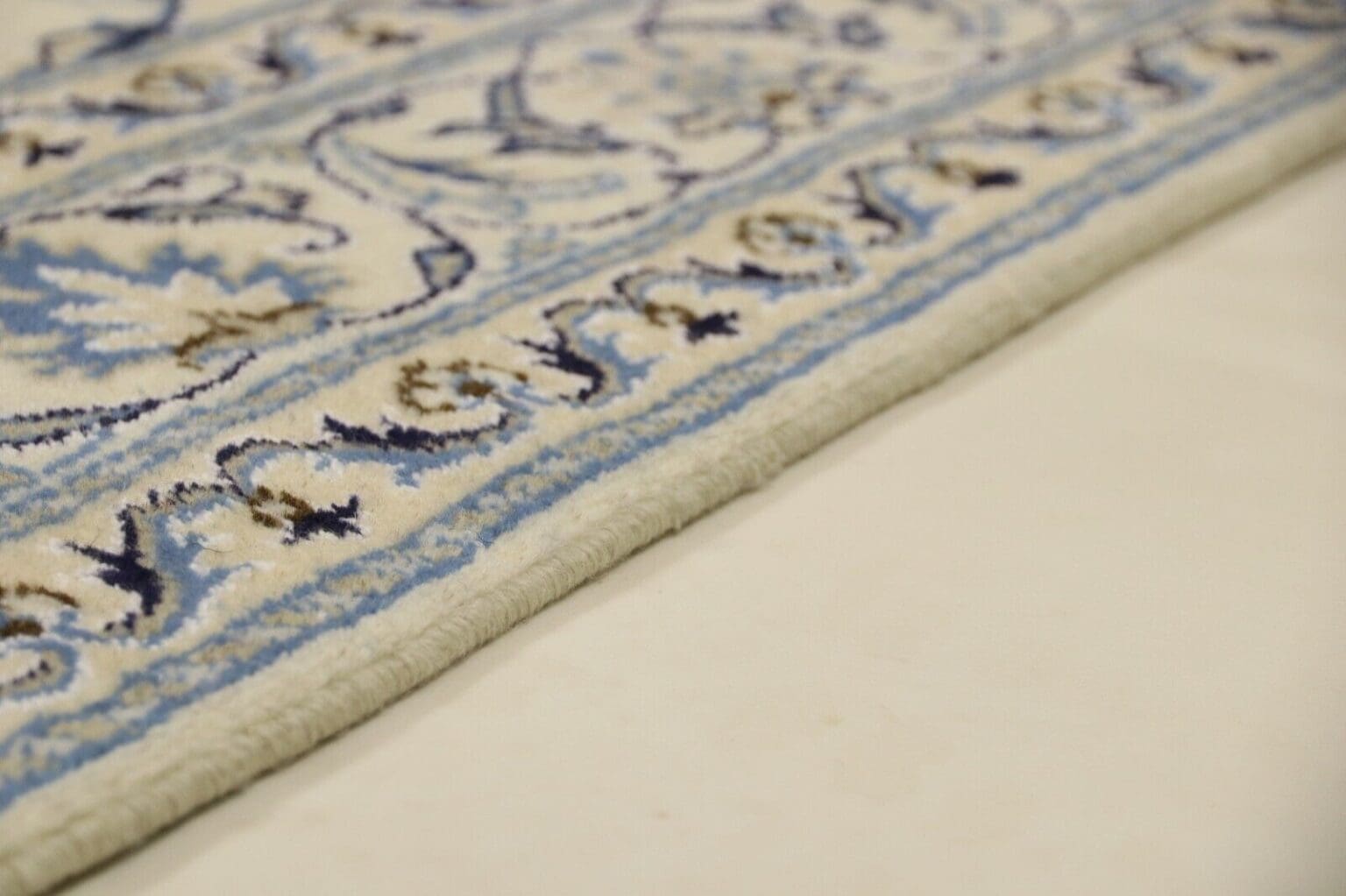
The cotton warp provides the supporting foundation for the knots. Combined with the wool-and-silk pile, it gives the rug a defined textile construction and a surface suited to use as a floor covering. The rug is new and unused. Its rectangular shape allows it to be placed in a range of living areas while retaining the formal character associated with Persian rugs.
Origin and Tradition
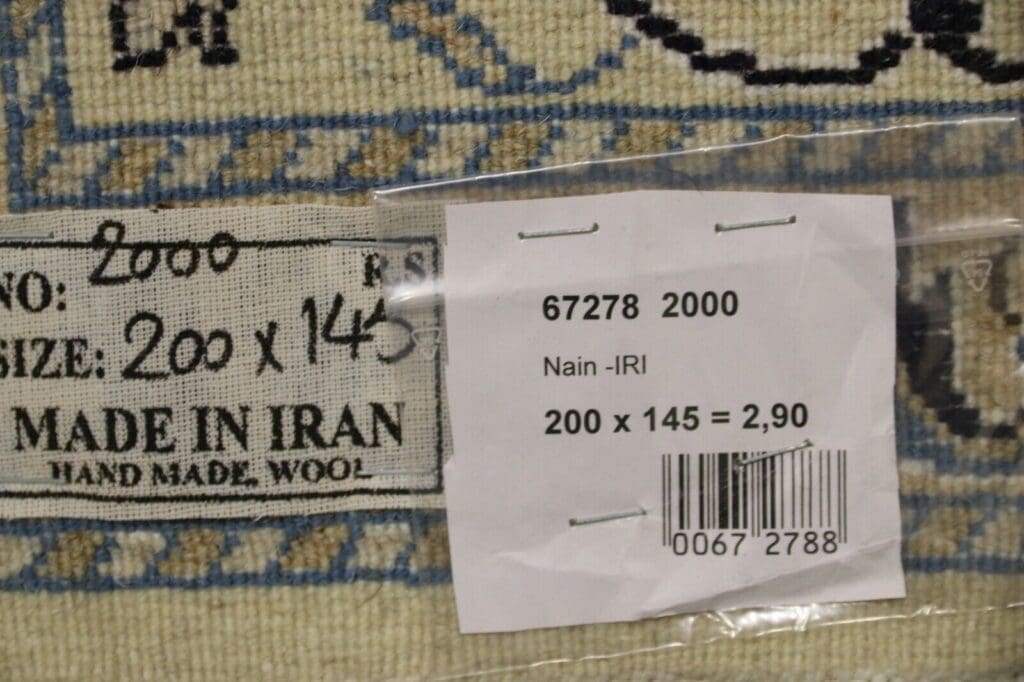
This rug comes from Persia and belongs to the Nain tradition. Nain is a city and weaving centre in central Iran, known for a refined approach to Persian rug production. Rugs associated with the area are recognised for careful knotting, fine materials and compositions in which the ornament is arranged with considerable control. Nain therefore refers not simply to a visual effect, but to a regional tradition with its own methods and design vocabulary.
The development of Nain rug weaving is generally placed within the modern history of Persian textiles. As other established textile industries changed, weavers in Nain increasingly focused on producing rugs. They combined knowledge of Persian ornament with an emphasis on precision and delicate drawing. Over time, this work became associated with light grounds, finely articulated floral elements and a balanced relationship between the field and its surrounding ornament.
Persian rug making is based on skills passed through generations. These skills include preparing the warp, selecting and handling wool, placing each knot, and finishing the pile so that the intended pattern remains clear. Nain weaving places particular emphasis on disciplined execution. Outlines, internal motifs and repeated details are worked so that small floral and geometric forms can be distinguished within the larger composition.
The Nain name consequently describes a recognisable Persian direction rather than a generic Oriental pattern. Its appearance results from the interaction of fibre, knotting and ornament. A carefully made surface can receive light in different ways, while repeated motifs establish order across the field. The pattern remains coherent at a distance and rewards closer viewing with the fine lines and smaller elements that are characteristic of a detailed Nain design.
Oriental rugs carry cultural and technical traditions from the regions in which they are made. They are functional textiles, but they also preserve methods of drawing, colour arrangement and construction. A hand-knotted rug records the work of its maker in the structure of the pile and in the organisation of its pattern. In a Nain, the Persian heritage is expressed through an exact approach to ornament and through the balance between restrained colour, floral detail and geometric control.
Design and Pattern
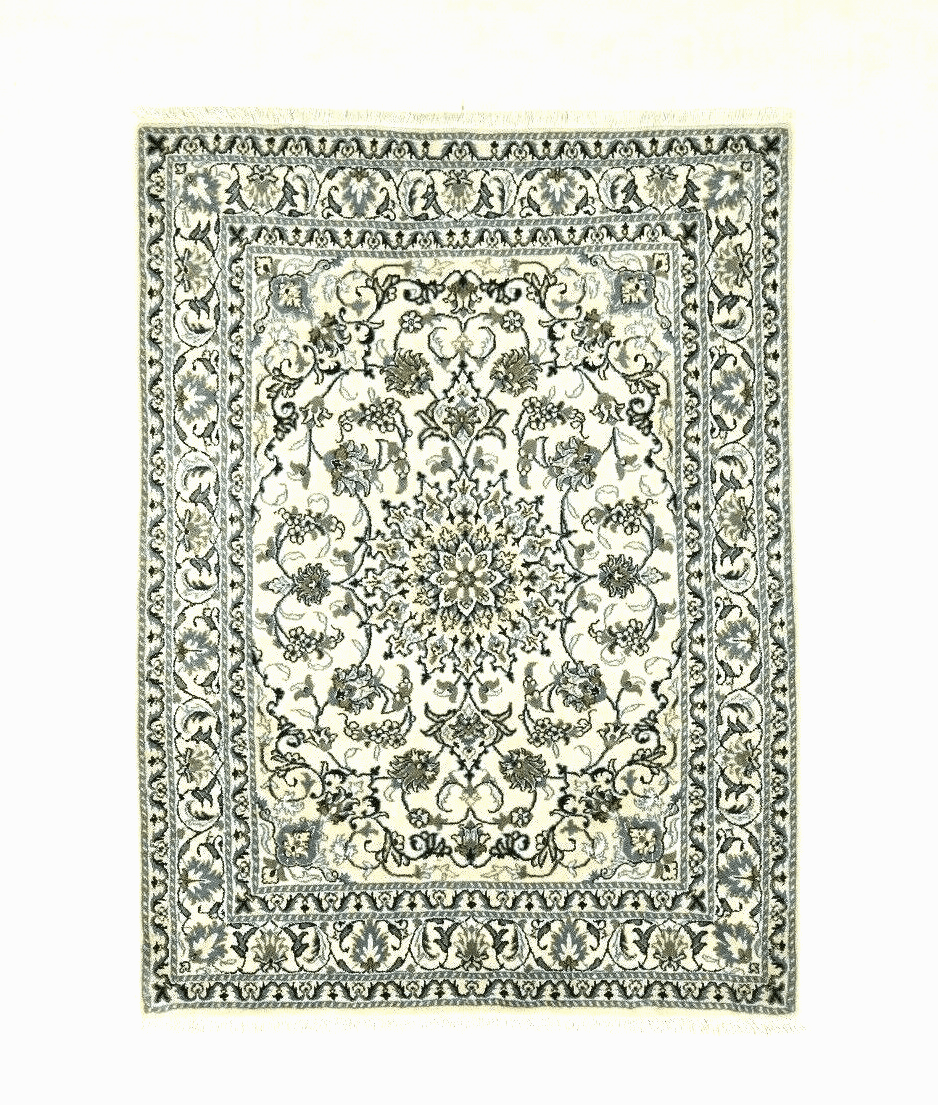
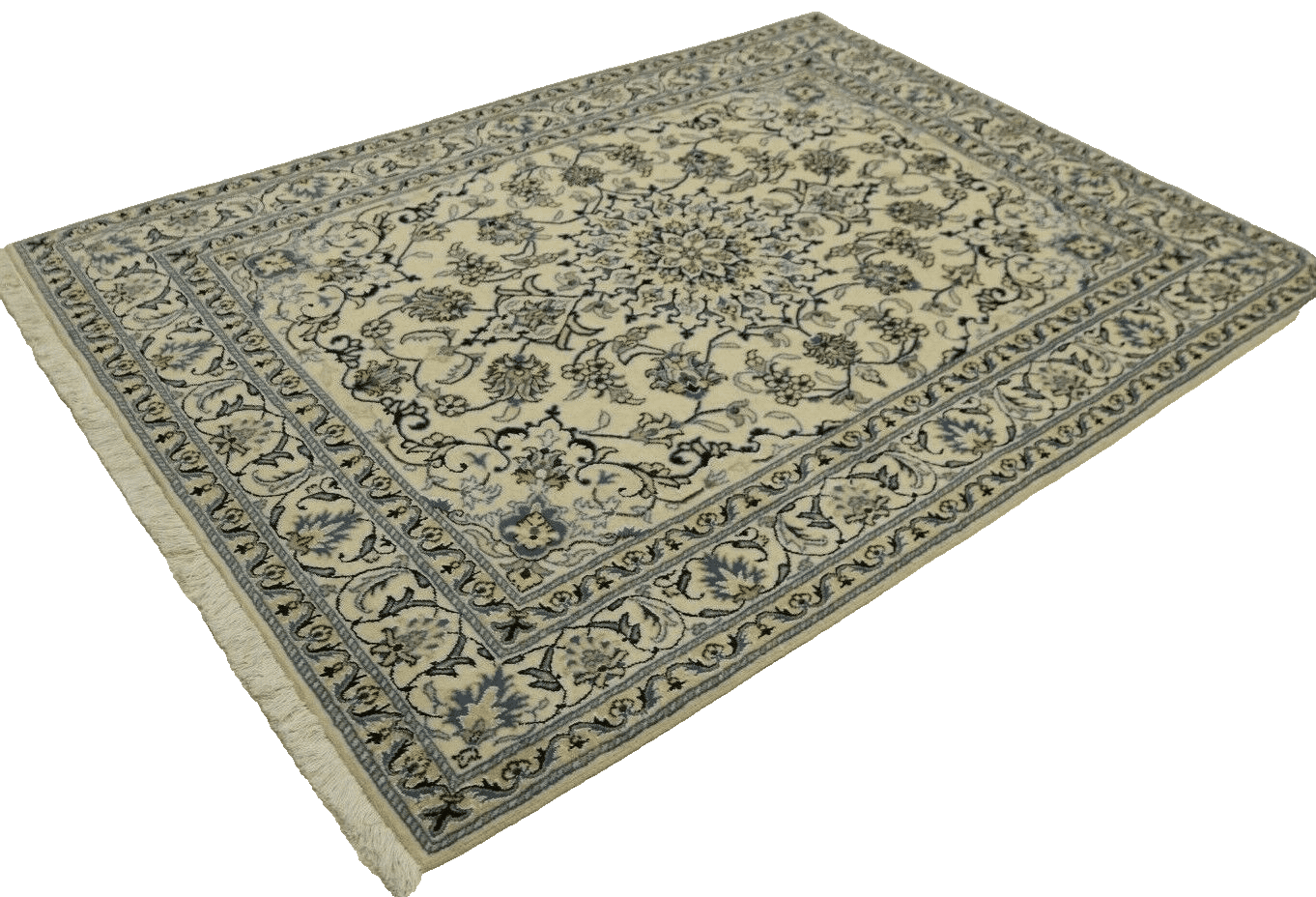
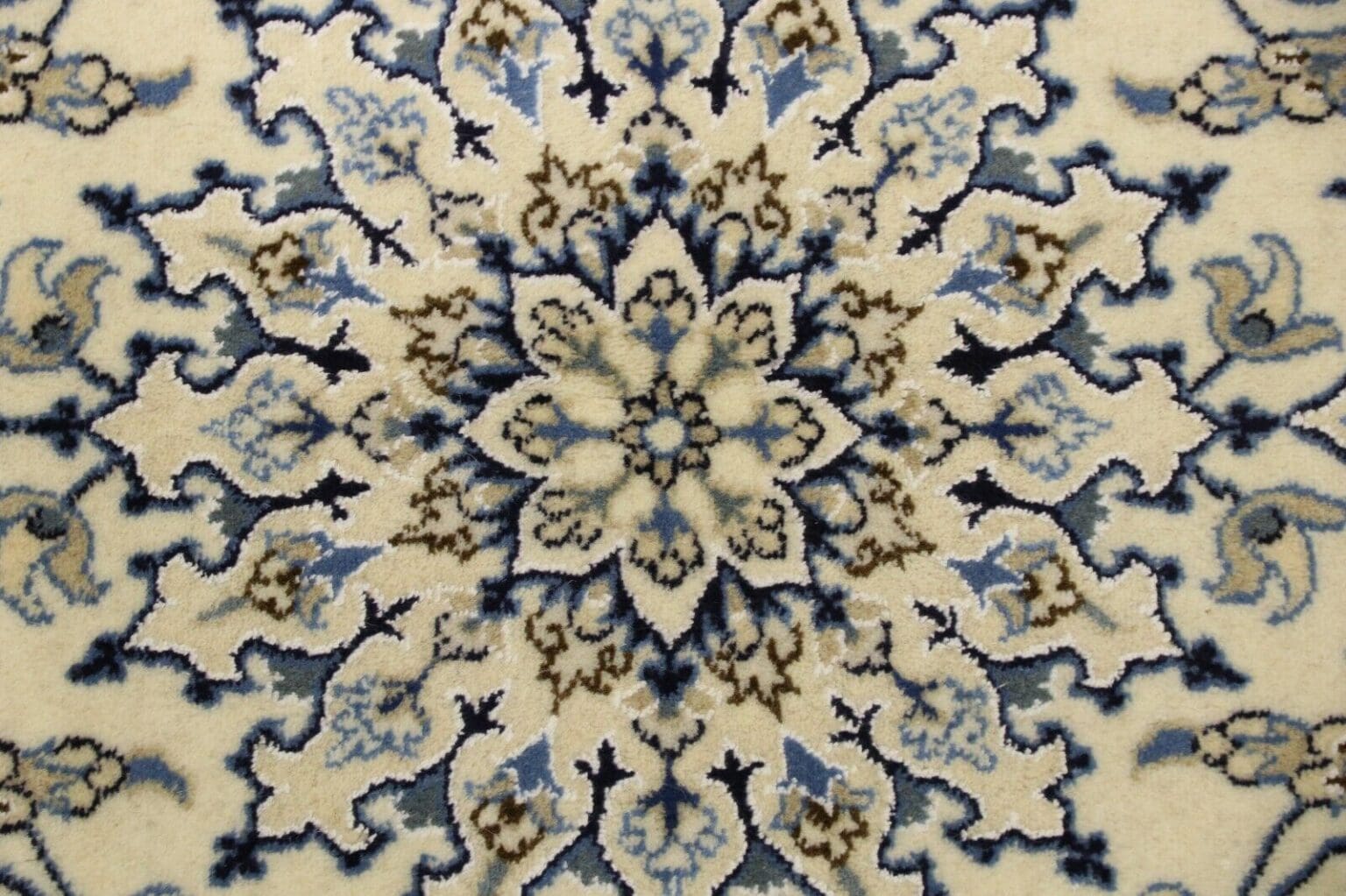
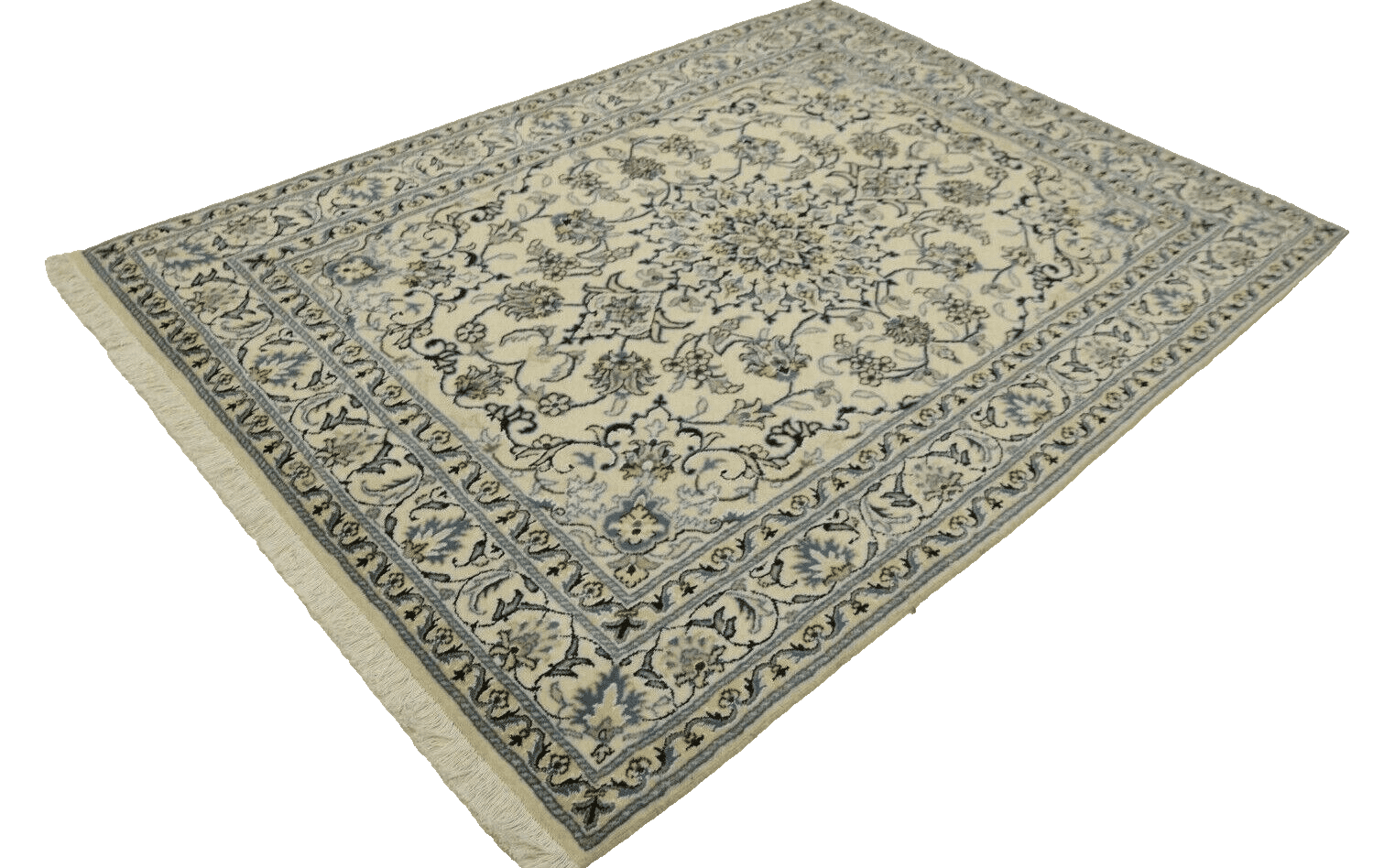
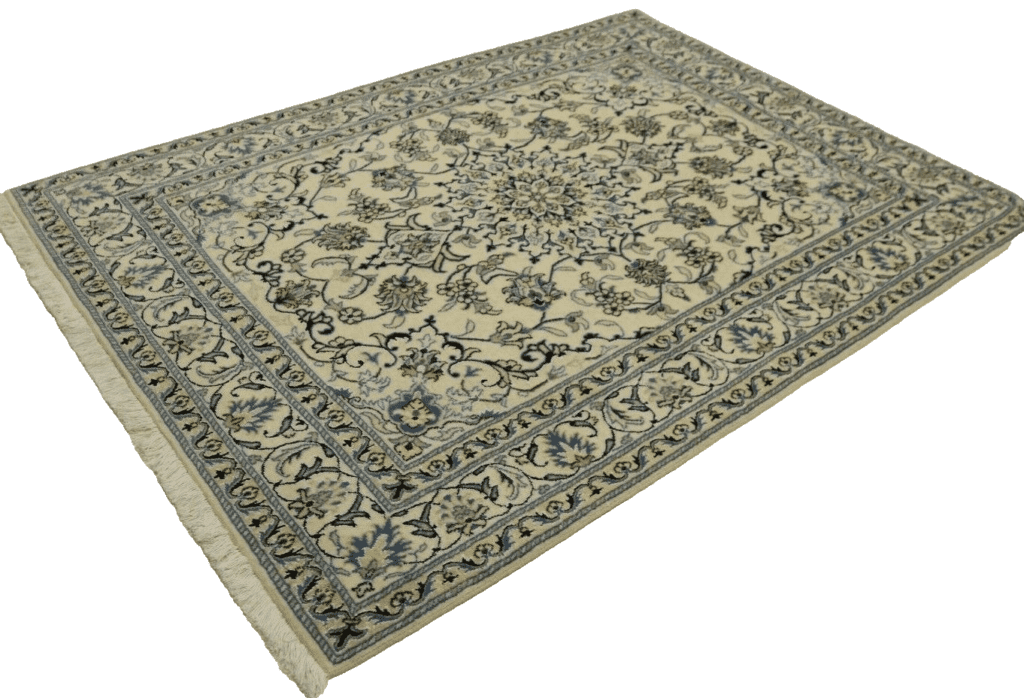
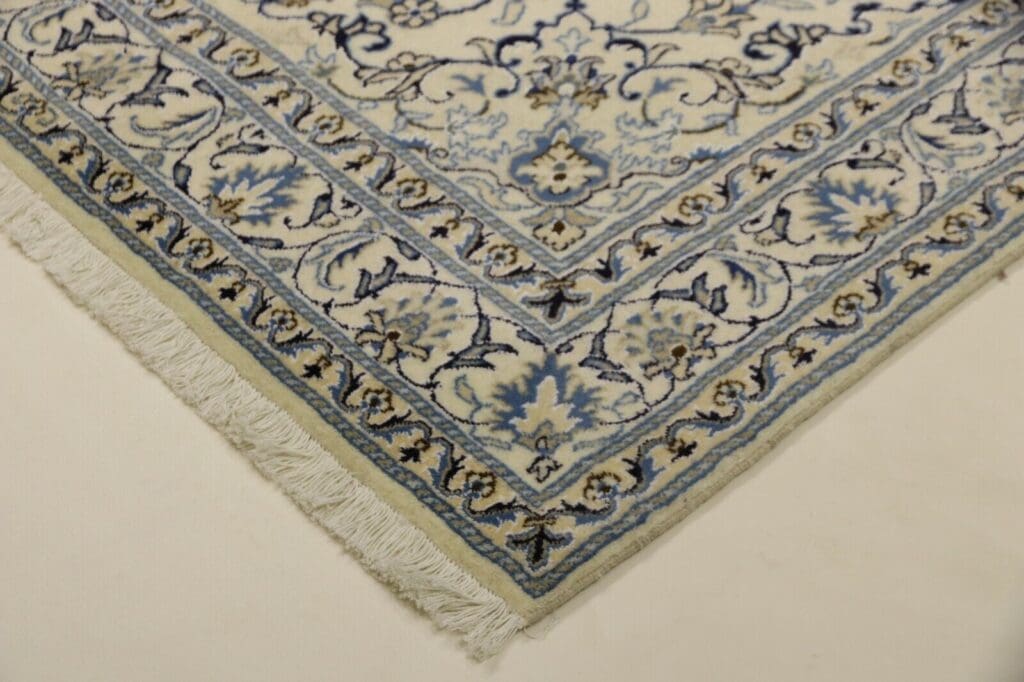
The Super Nain style is associated with delicate floral motifs and intricate geometric elements. Flowers, leaves and scrolling branches may be combined with ordered lines and measured shapes. The organic and geometric parts of the design are not treated as separate languages; they are arranged to support one another. This creates a composition in which natural forms are contained by a clear and carefully planned structure.
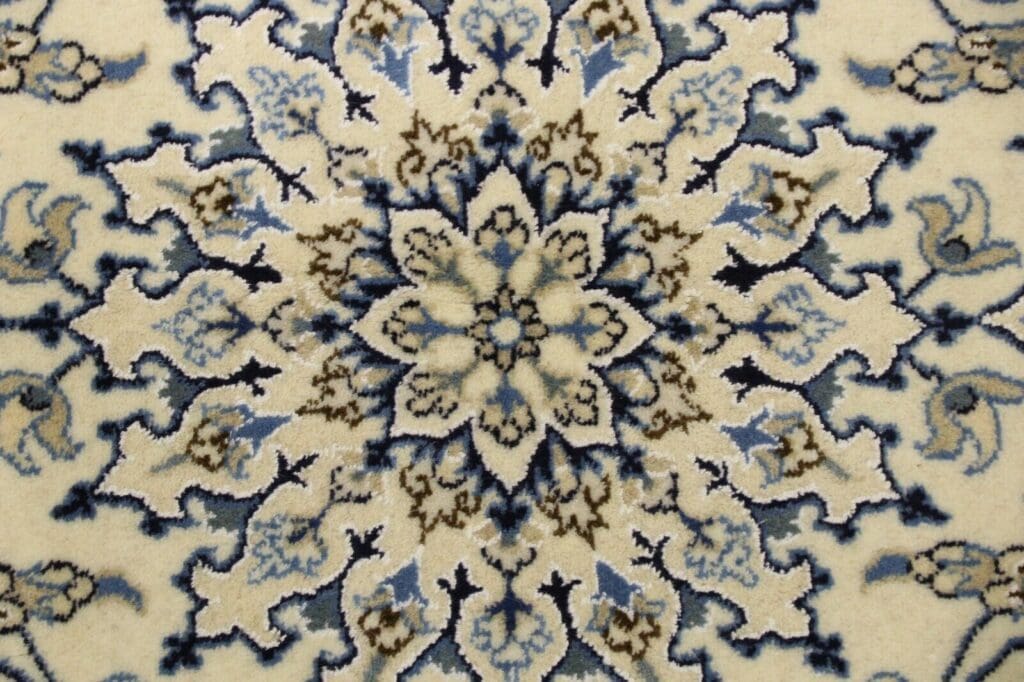
Nain patterns often use a central organisation. A medallion or another defined centre may be surrounded by vines, blossoms and secondary ornaments, while other compositions allow the drawing to continue across the field in a more even arrangement. The essential principle is balance. Motifs are distributed with enough space around them to remain legible, so the surface does not become visually congested.
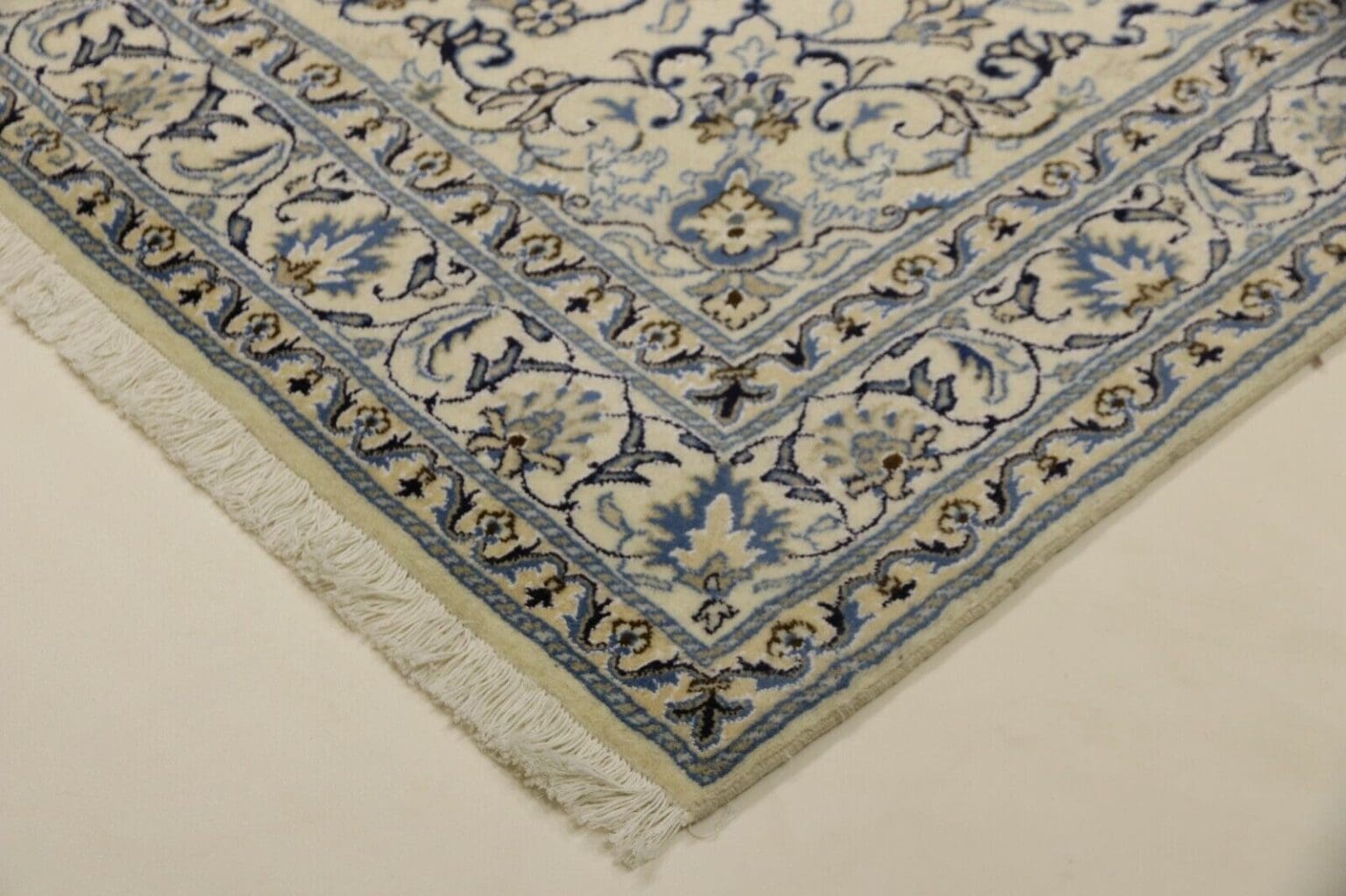
Fine contour work is a central feature of this design tradition. Small leaves, flowers and lines can be repeated inside larger forms or used to connect one ornament to the next. A dense knotting structure supports such work by allowing the weaver to reproduce subtle differences in line and shape. The result is a pattern that is not reduced to broad blocks, but built from a sequence of outlines, internal details and carefully managed transitions.
Harmonious colour palettes are used in the Nain tradition to clarify the hierarchy of the design. Light and restrained tones can allow floral details to remain visible without overpowering the composition. Contrasts help define borders, contours and central elements. Within the broader symbolism of Persian ornament, floral motifs may also be linked with ideas of growth, fertility and prosperity. These associations belong to the established visual language of Oriental textiles and explain the continuing presence of plant forms in rug design.
The combination of floral drawing and geometric order gives the Nain style a composed appearance. It can be read as traditionally Persian while also maintaining a clear, measured structure. Repetition, symmetry and controlled spacing guide the eye across the field. From a distance the rug presents a unified pattern, while closer inspection reveals the smaller botanical and geometric details created by the knotting.
Here the effect of the pattern is complemented by the use of wool and silk. Wool contributes visual depth and a substantial textile feel, while silk can catch the light along finer areas of the surface. This is a general effect of the fibre combination and supports the Nain design without changing its Persian regional identity. The rug remains a traditional Persian Nain in both its stated origin and its stylistic direction.
Special Features
The rug is new and unused and is suitable for use over underfloor heating. Its hand-knotted construction, fine knotting and combination of virgin wool with silk define its textile character. The rectangular format supports use as a floor covering in living and reception areas. Its traditional Oriental and Persian styling can be placed in classically furnished rooms or in calmer contemporary interiors where a clearly structured textile pattern is wanted.
The fibres contribute different qualities to the finished surface. Virgin wool is associated with a robust pile, while silk adds a smoother touch and a restrained lustre. The dense, detail-focused construction allows the floral and geometric drawing to be worked with precision. For routine care, regular vacuuming without a brush attachment is recommended. Spills should be dabbed immediately with a damp cloth, and professional cleaning every few years can refresh the colours while treating the material with care.
FAQ
How should I care for the Nain Persian rug?
Regular vacuuming without a brush attachment is recommended for everyday care. This removes loose dust while avoiding unnecessary mechanical stress on the pile. If a mark or spill occurs, dab the area immediately with a damp cloth rather than rubbing it. Rubbing can disturb the surface and affect the clarity of the design. Professional cleaning every few years can refresh the colours and give the wool-and-silk construction appropriate treatment. As the rug is new and unused, careful routine maintenance will help preserve its original surface as it enters service.
Can the rug be used over underfloor heating?
Yes. This Nain Persian rug is suitable for use over underfloor heating. Heat can pass through the rug into the room when the system is operated correctly, without impairing the rug structure. The temperature should not be set excessively high in order to protect the fibres and construction. Even heat distribution is also helpful in daily use. The stated suitability for underfloor heating makes the rug appropriate for living areas equipped with this type of heating system.
Where is the rug best used?
The rectangular rug is suitable for living rooms and bedrooms, and it can also be used as a decorative textile in reception areas. Its traditional Oriental and Persian design combines floral and geometric patterning with a harmonious colour effect. It can therefore work in a classically arranged room or provide a composed Persian accent in a more restrained interior. The hand-knotted construction and resilient virgin-wool pile support use as a floor covering, while the silk content gives the surface a finer touch and a subtle sheen.
To provide the best experiences, we use technologies like cookies to store and/or access device information. Consenting to these technologies will allow us to process data such as browsing behavior or unique IDs on this site. Not consenting or withdrawing consent, may adversely affect certain features and functions.
Functional Always active
The technical storage or access is strictly necessary for the legitimate purpose of enabling the use of a specific service explicitly requested by the subscriber or user, or for the sole purpose of carrying out the transmission of a communication over an electronic communications network.
Preferences
The technical storage or access is necessary for the legitimate purpose of storing preferences that are not requested by the subscriber or user.
Statistics
The technical storage or access that is used exclusively for statistical purposes.The technical storage or access that is used exclusively for anonymous statistical purposes. Without a subpoena, voluntary compliance on the part of your Internet Service Provider, or additional records from a third party, information stored or retrieved for this purpose alone cannot usually be used to identify you.
Marketing
The technical storage or access is required to create user profiles to send advertising, or to track the user on a website or across several websites for similar marketing purposes.
 SECURE PAYMENT
 SHIPPING PARTNERS