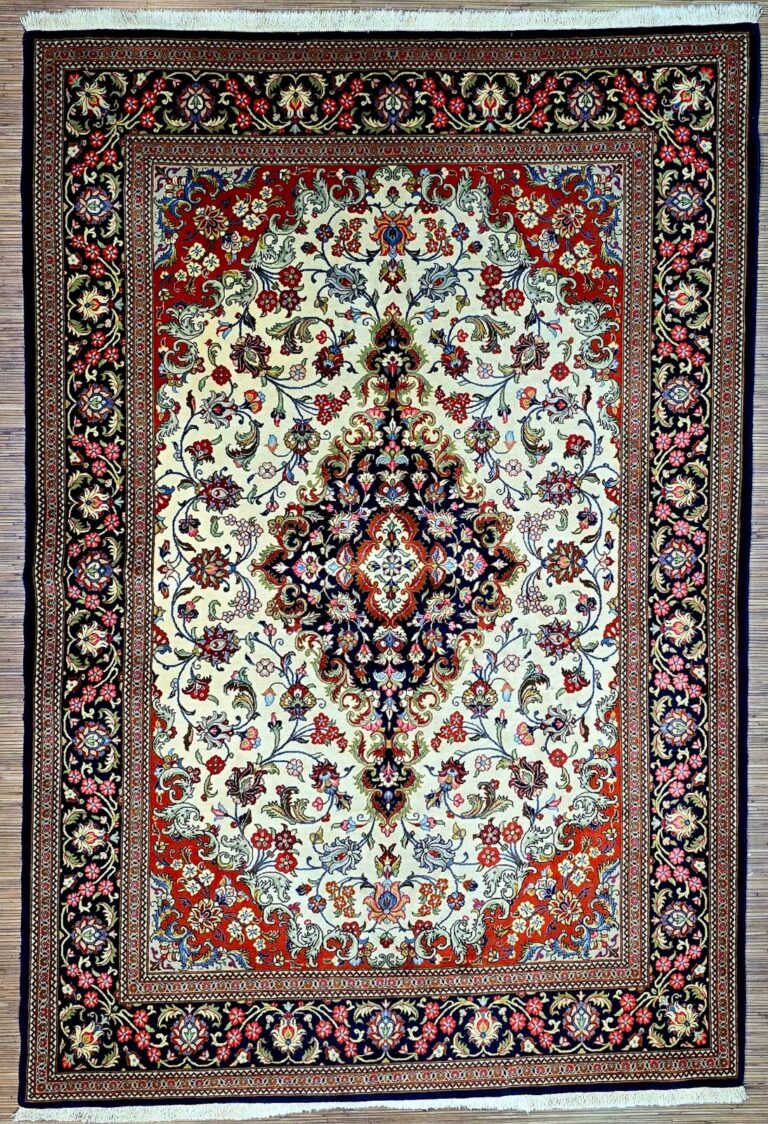
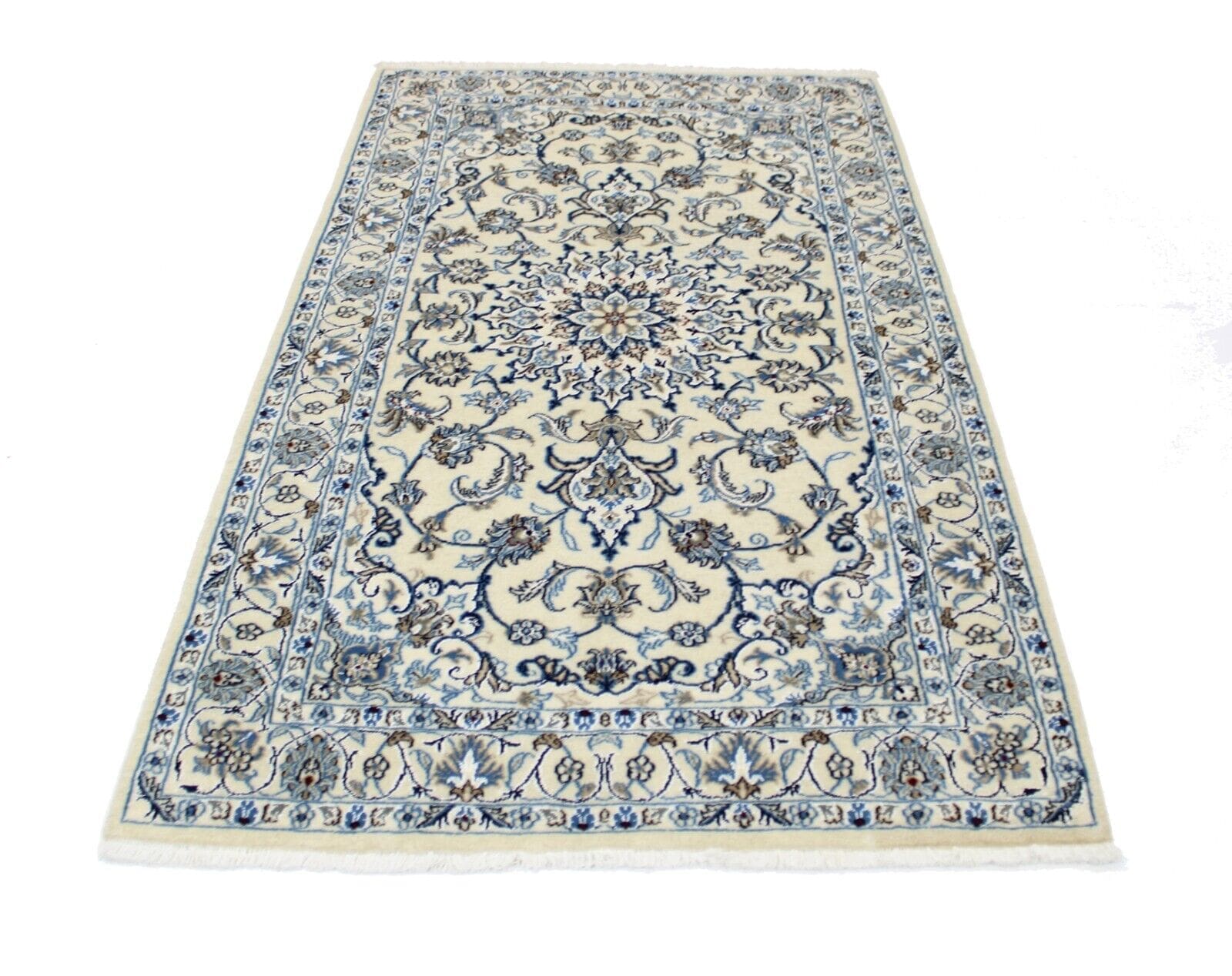
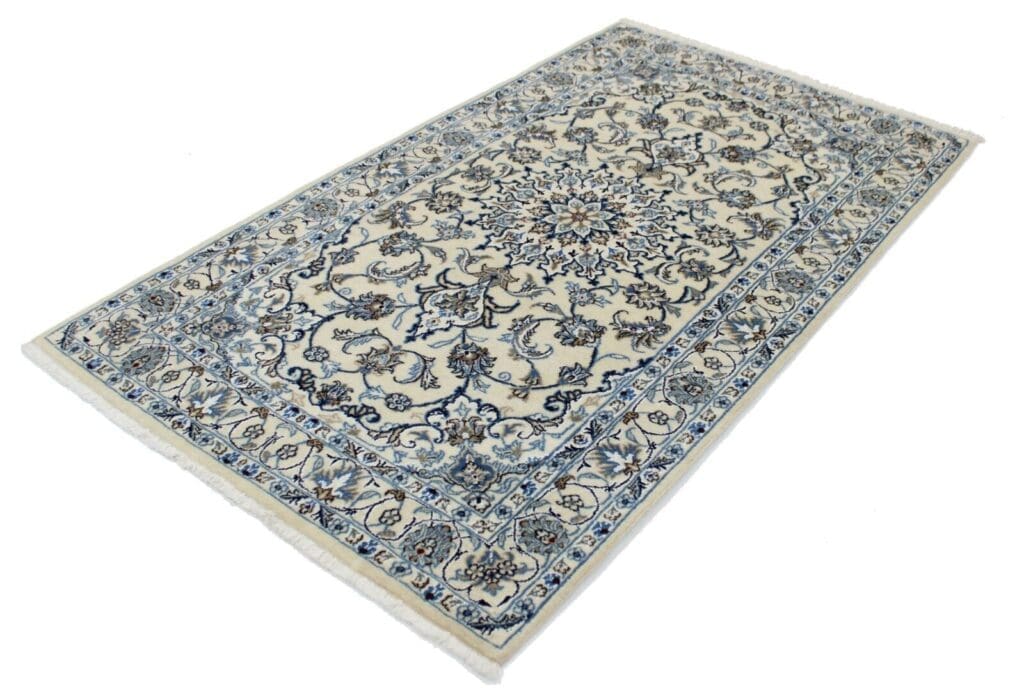
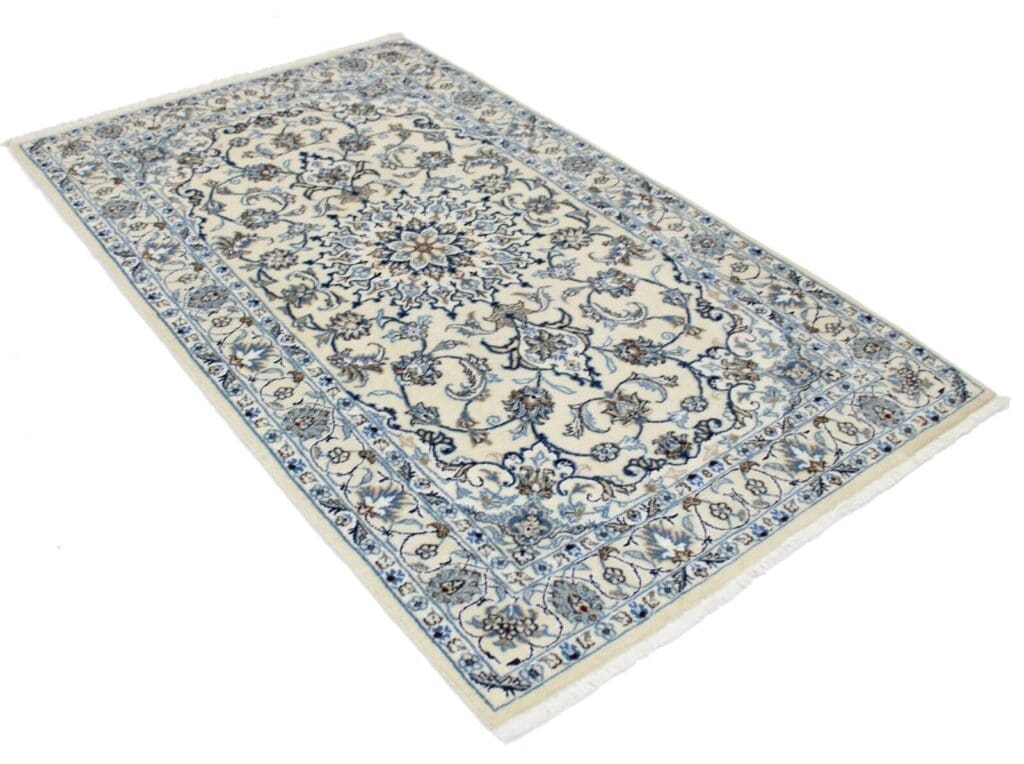
Persian Rug Nain 199 cm x 119 cm Wool Hand-knotted
€ 864
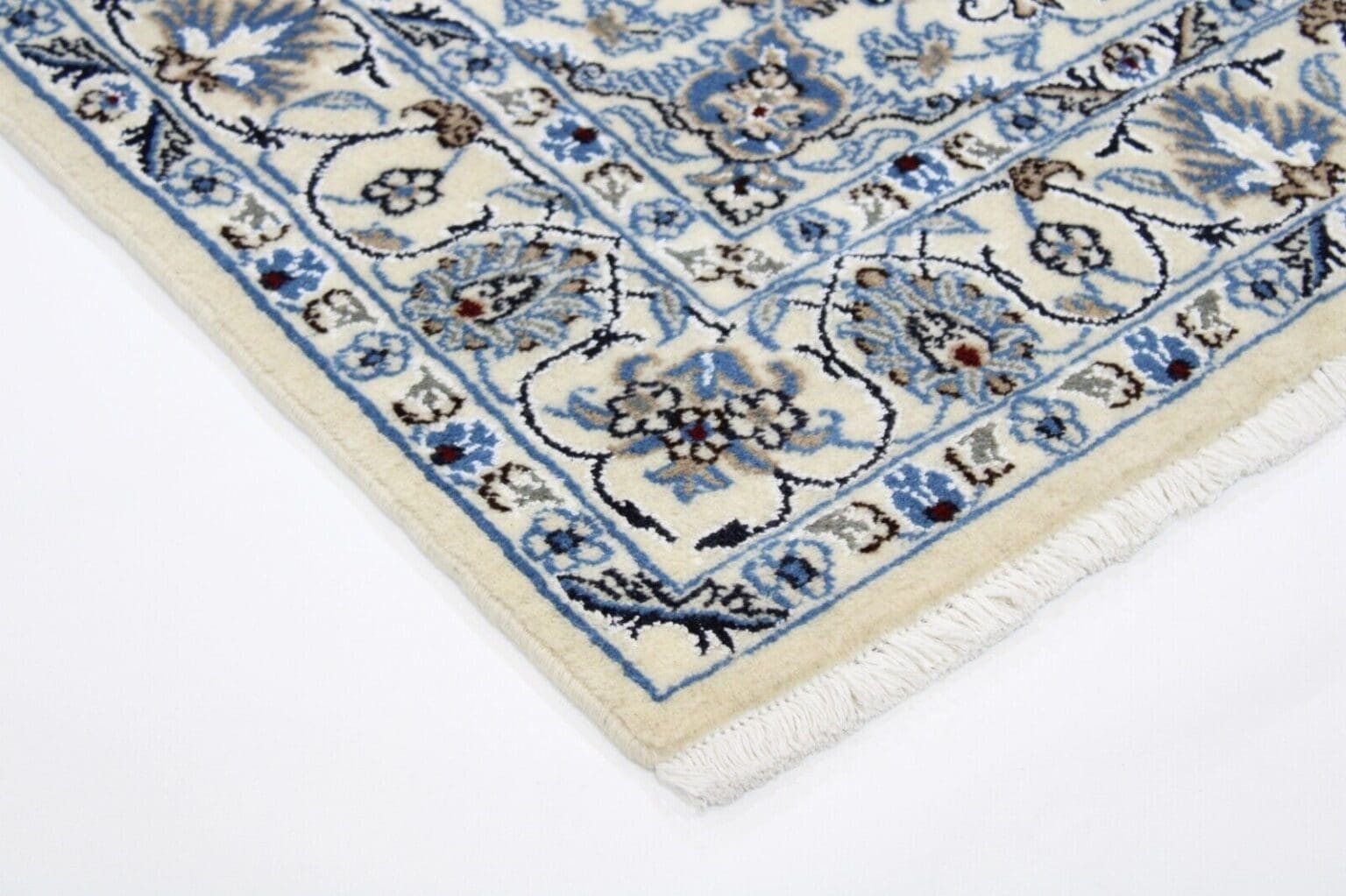
Hand-knotted Nain Persian Rug | Knot density: hand-knotted | Material: wool and cotton | Size: 199 cm x 119 cm | Pattern: Oriental with floral motifs | Condition: new with tag
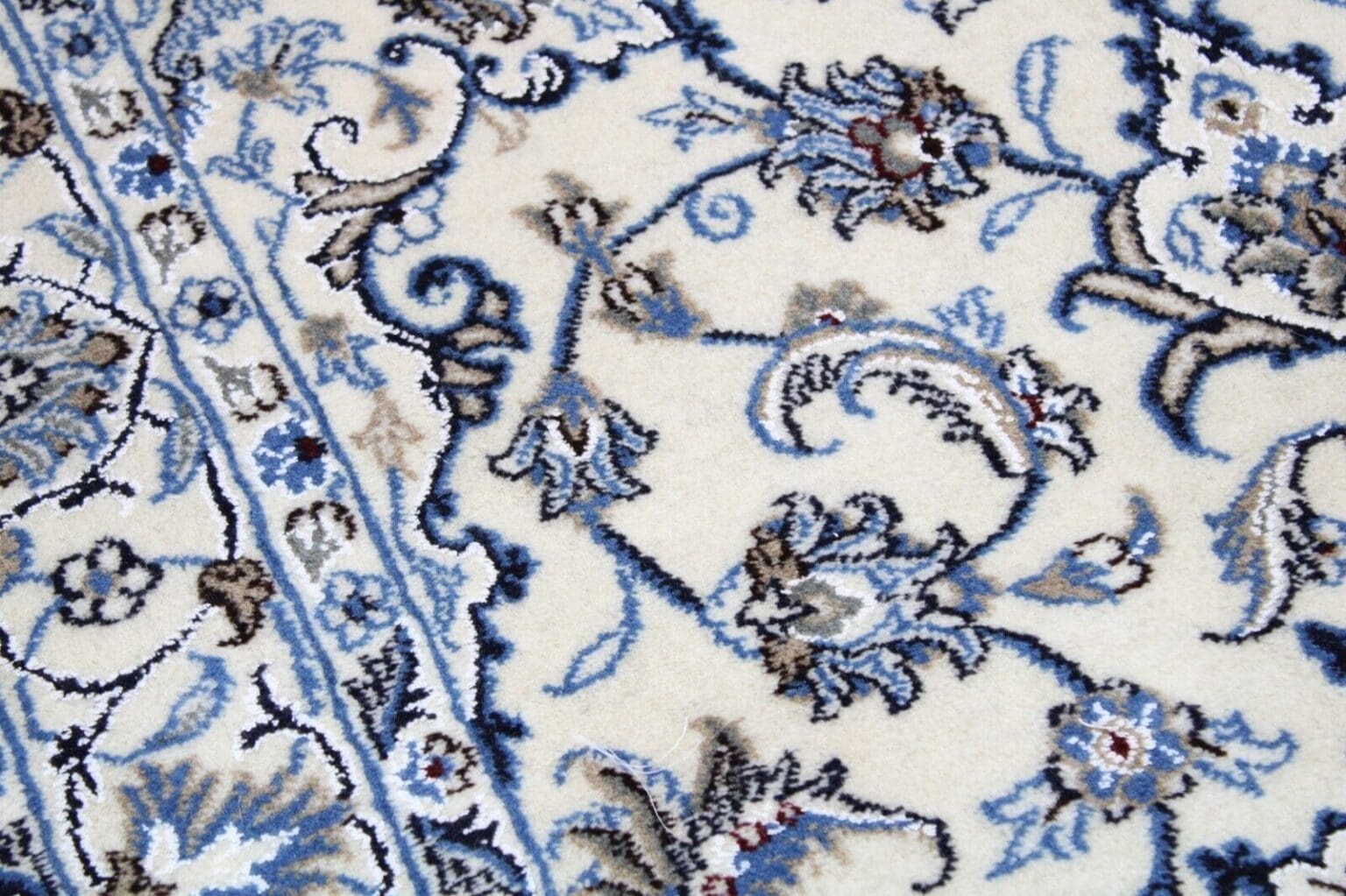
This Nain Persian rug is hand-knotted. With this method, each knot is inserted individually into the foundation. The surface is therefore built up through a sequence of manual working steps rather than through a machine-made process. The knotting technique gives the rug its textile structure and allows the design to emerge gradually across the field. Hand-knotting is part of the established craft tradition of Persian rugs and requires consistent handling of the yarn, the foundation and the pattern plan.
The materials listed for this rug are wool and cotton. Wool is widely used in rug making because its fibre is resilient and has a naturally comfortable handle. Cotton is traditionally used in rug construction as a stable textile component; the description of this piece names both materials but does not assign them more specifically to pile or warp. The pile height is described as high pile, indicating a visibly raised surface. No percentage breakdown or further fibre specification is given.
The combination of hand-knotting and high pile defines the construction described for this rug. Knots are placed in rows and secured within the woven foundation as the work progresses. The pattern depends on the careful repetition of these individual units, while the finishing of the surface makes the design readable as a whole. The rug is listed as new with tag. There is consequently no stated evidence of wear, repair or an established age-related patina for this particular piece.
Origin and Tradition
The rug comes from Iran and is identified with Nain. Nain is one of the recognised centres of Persian rug production. It is located in central Iran, a region with a long history of textile work and workshop-based craftsmanship. Nain rugs are treated in the international trade as a distinct group within Persian weaving. Their traditional visual language is associated with disciplined drawing, carefully organised ornament and compositions that can make use of light, restrained colours.
The development of Nain weaving is closely connected with changes in local craft during the twentieth century. Workshops in the area produced rugs that became known for their controlled designs and precise execution. Many Nain compositions place a medallion, scrolling branches and balanced floral details within a clearly ordered field. Other examples spread the ornament across the entire surface instead of giving one central form the strongest emphasis. Both approaches belong to the broader vocabulary of Persian rug design, although the description of this rug specifically identifies its pattern as Oriental with floral motifs.
Iranian weaving centres developed different regional emphases. Nain is often associated with finely organised drawings and pale grounds. Isfahan is known for intricate workshop designs, while Kashan has a long tradition of floral and medallion-based compositions. Kerman is recognised for detailed ornament and varied colour work. Tabriz is often associated with a broad range of layouts and clearly articulated patterns. These references explain the historical landscape of Persian rug production; they do not change the origin of this rug, which is identified as Iranian and associated with Nain.
Persian rug tradition is sustained through the transmission of patterns, knotting methods and workshop practices. A design may be adapted over time while retaining its principal structure. Weavers work from pattern plans and inherited ornamental forms, but manual production means that every individual rug develops its own small variations in contours, knot placement and transitions. This does not require a different stated origin. In this case, the regional tradition is Nain, the country of origin is Iran and the technique is hand-knotting.
Nain rugs are part of a wider history in which useful household textiles also became carriers of regional design. The craft combines a foundation, coloured yarns, repeated knots and finishing work into one coherent object. The region’s place in Persian weaving is understood through this combination of technical discipline and ornamental order. The rug offered here belongs to that context without requiring claims about a specific workshop, weaver, date or signature, none of which is provided.
Design and Pattern
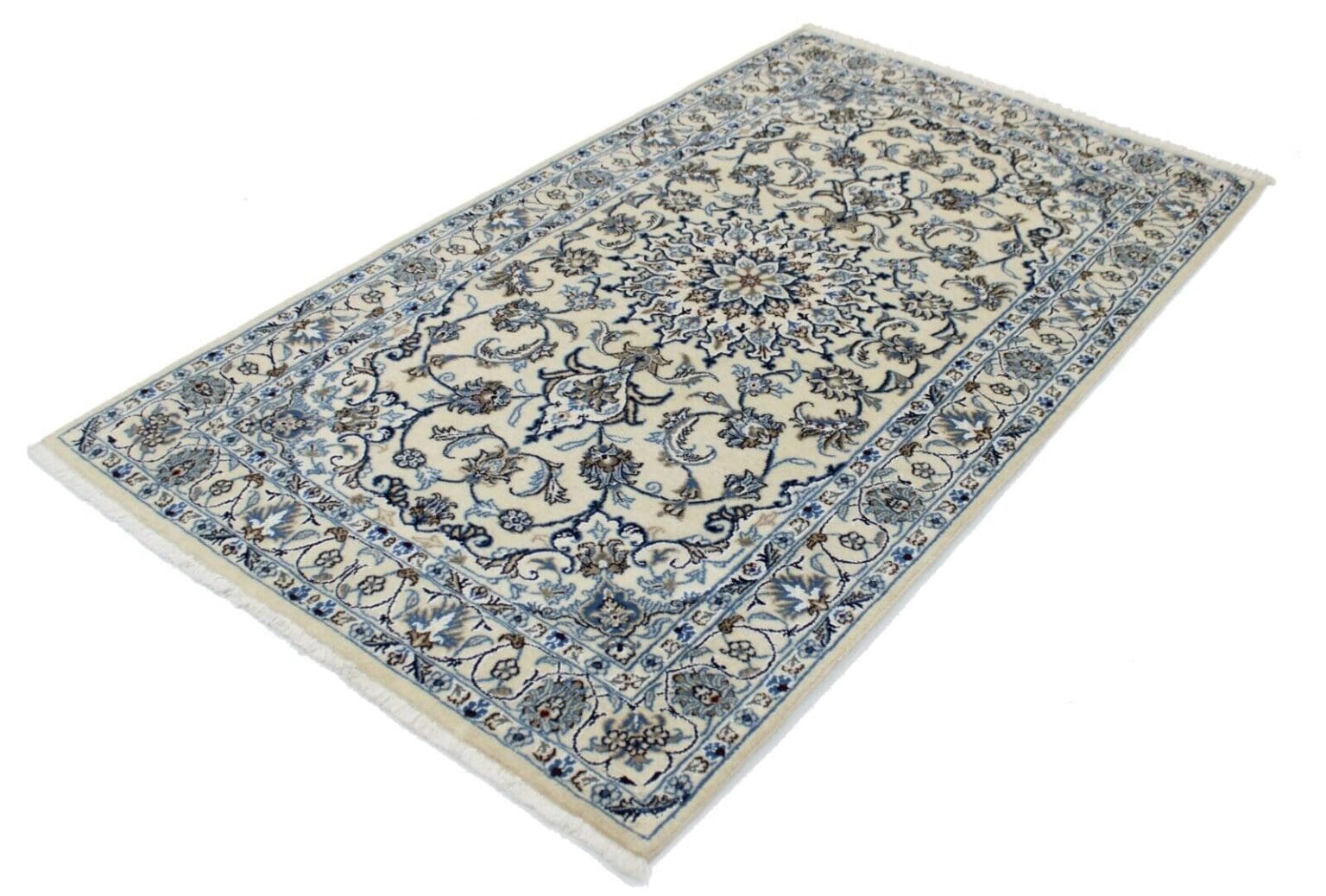
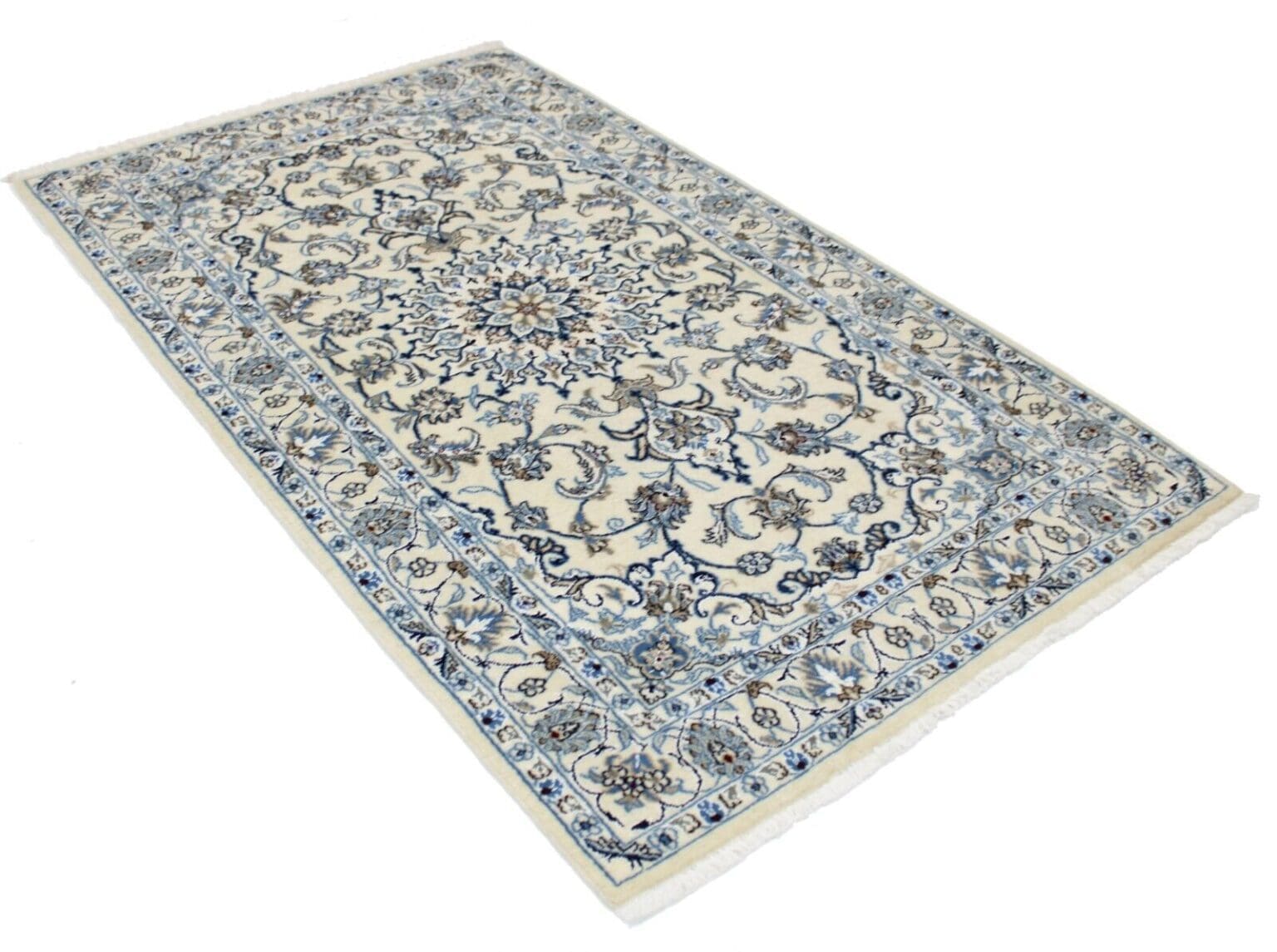
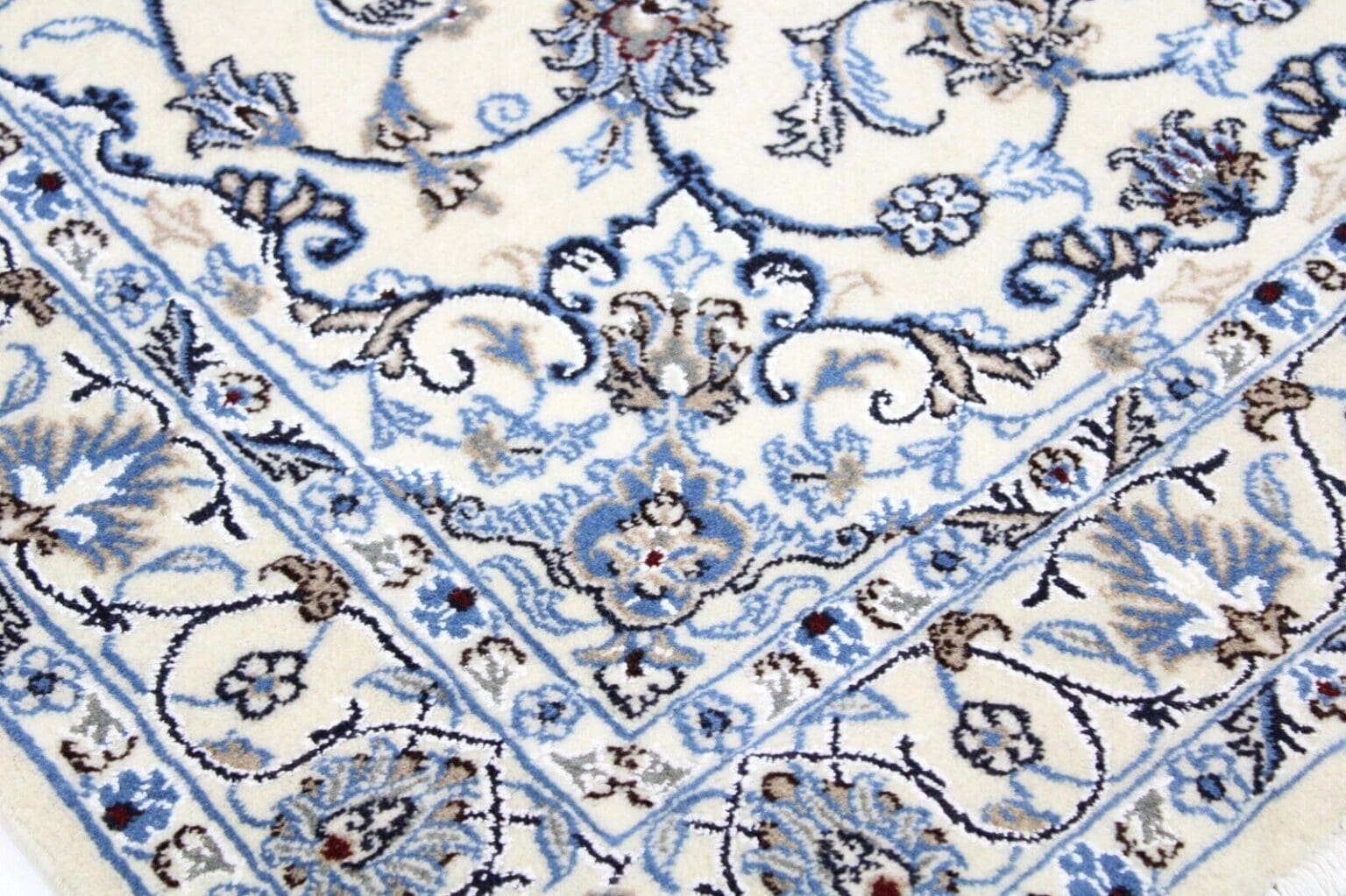
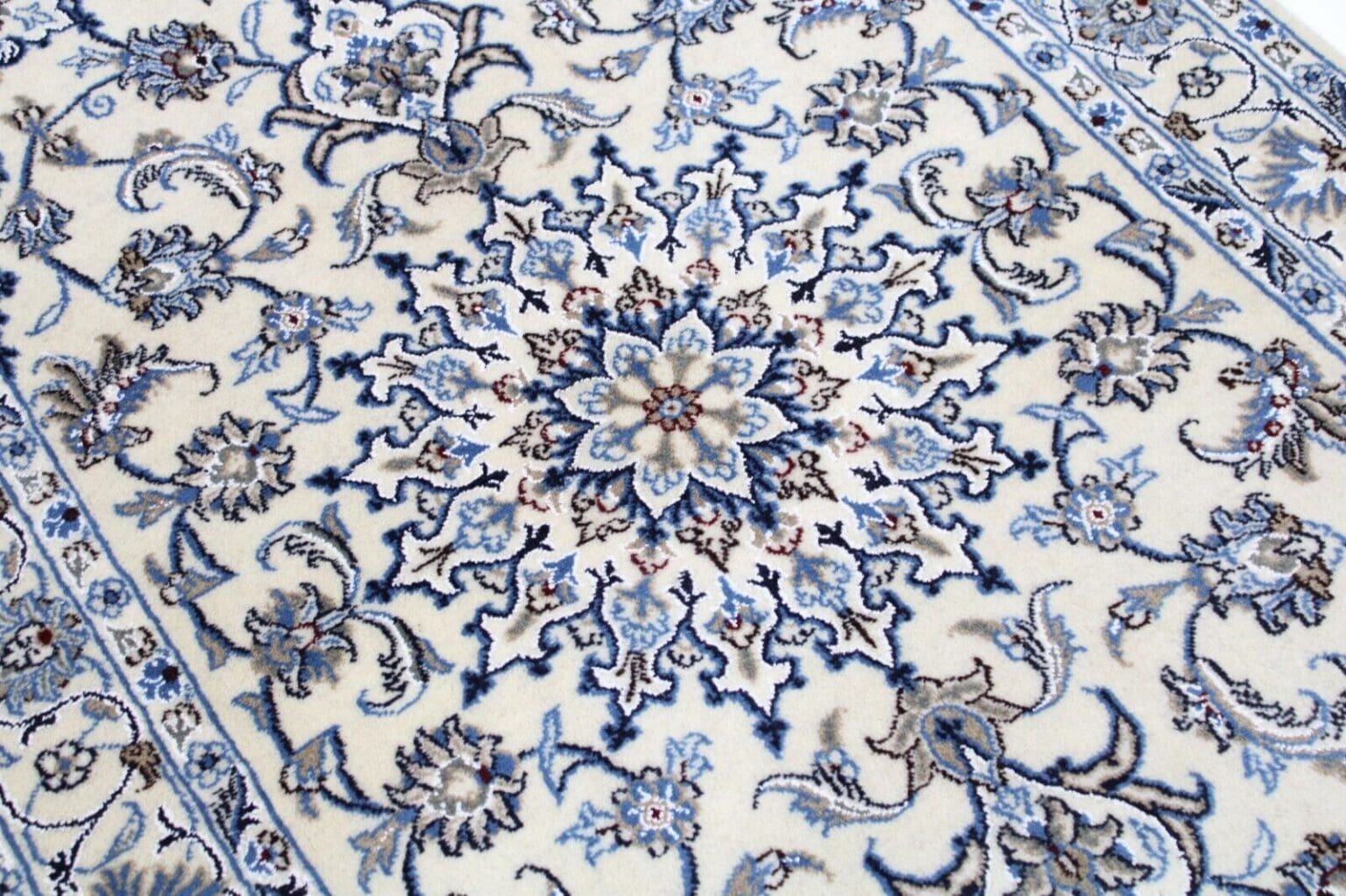
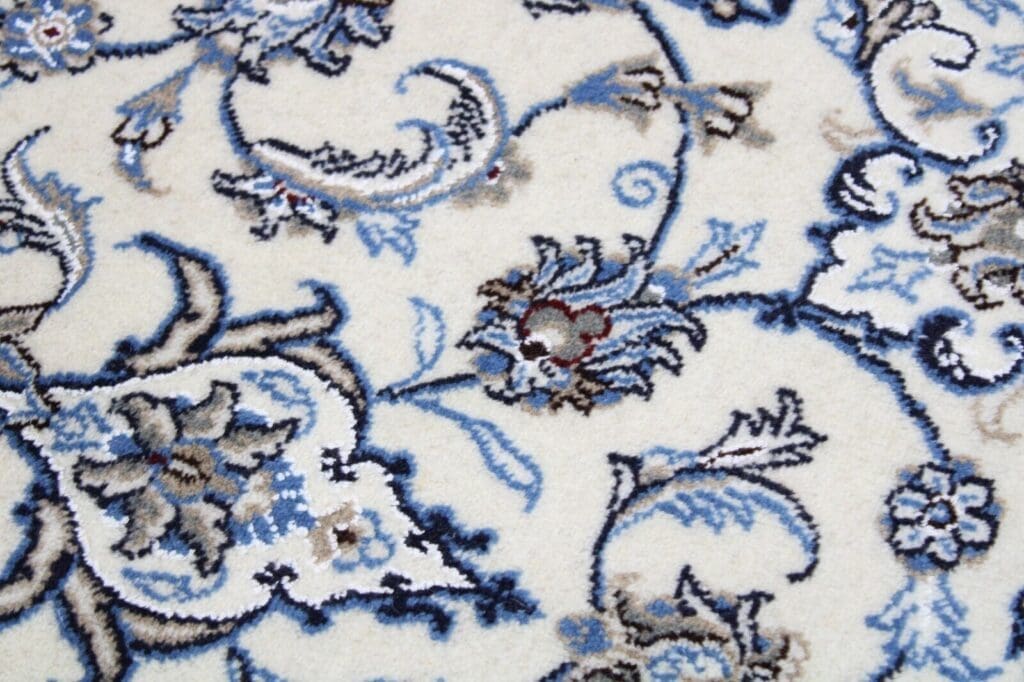
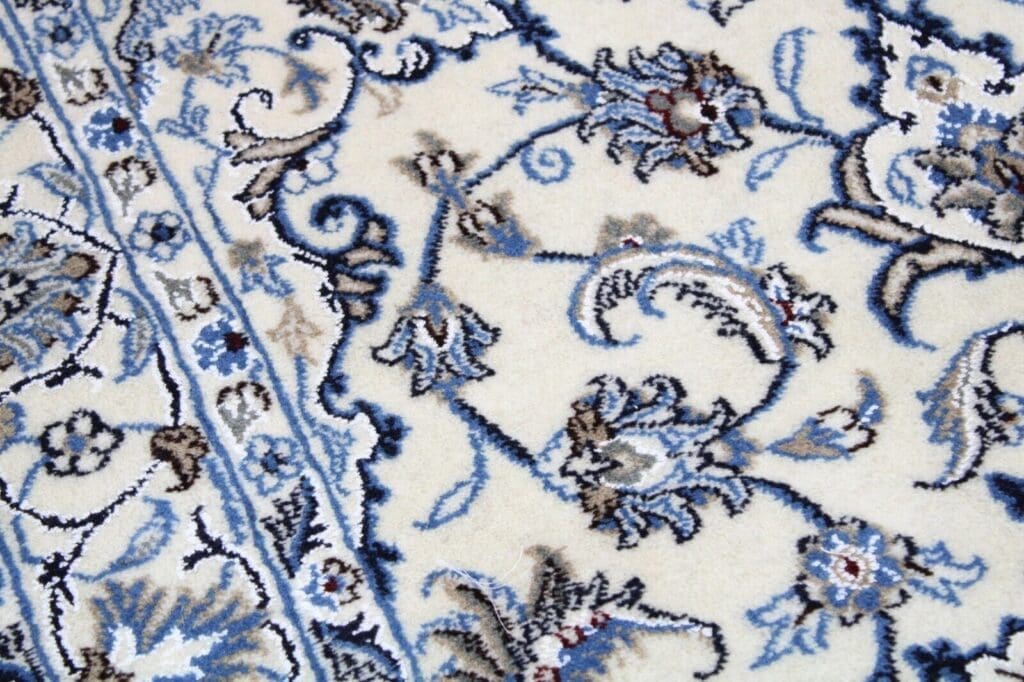
The pattern is described as Oriental with floral motifs. Flowers, leaves and scrolling vines are central elements in many Persian rug traditions. They can be arranged as repeated units, connected through branches or integrated into a larger field of ornament. Rather than reproducing a natural scene literally, Persian designs often stylise botanical forms so that they function as balanced decorative elements. Repetition and proportion allow separate motifs to work together across the surface.
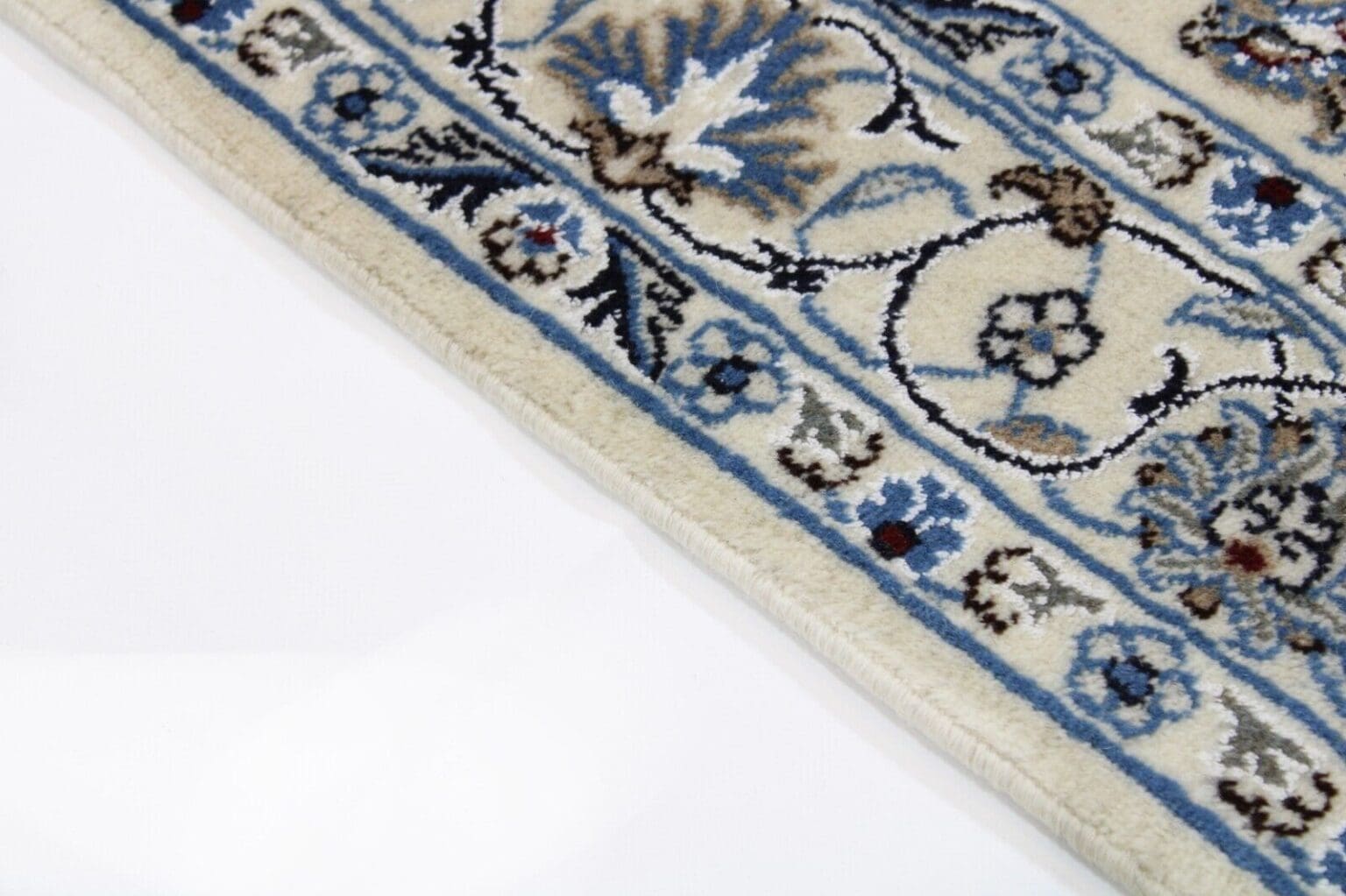
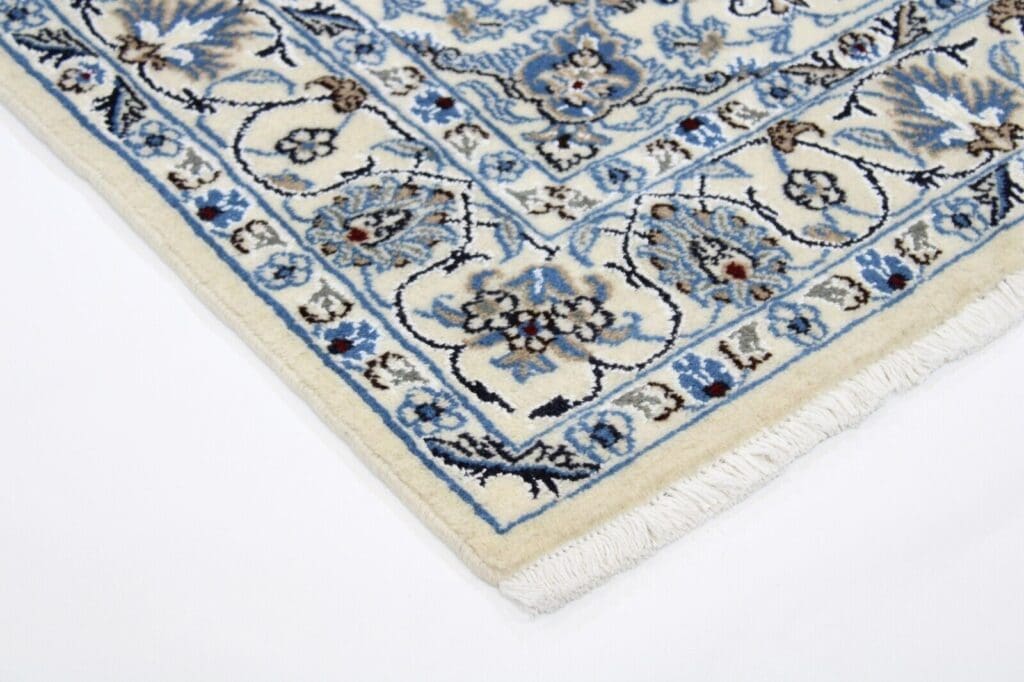
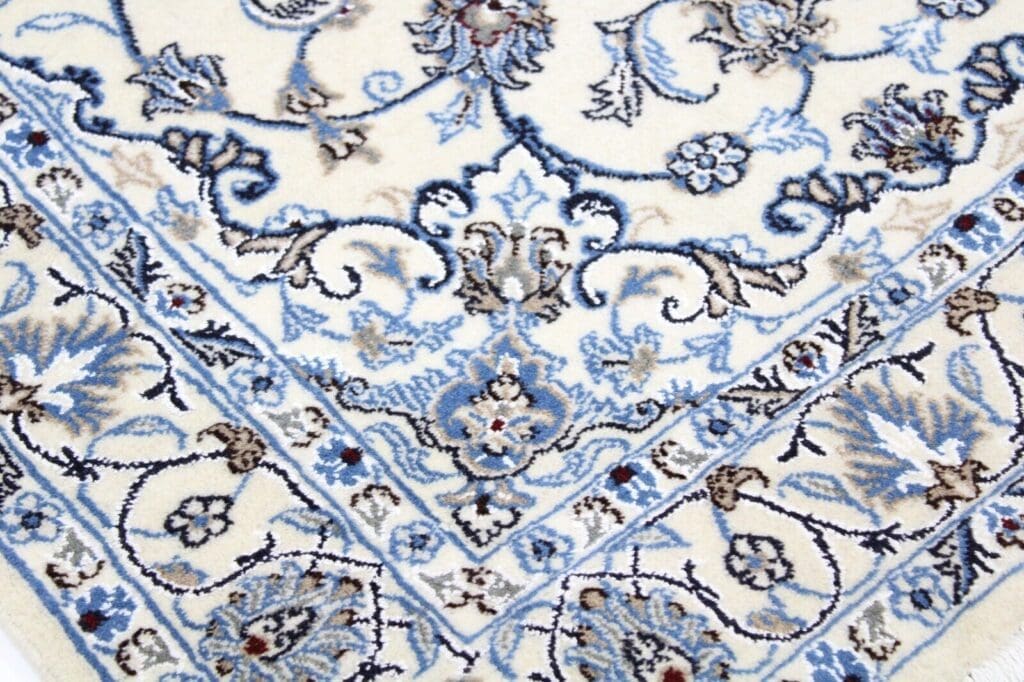
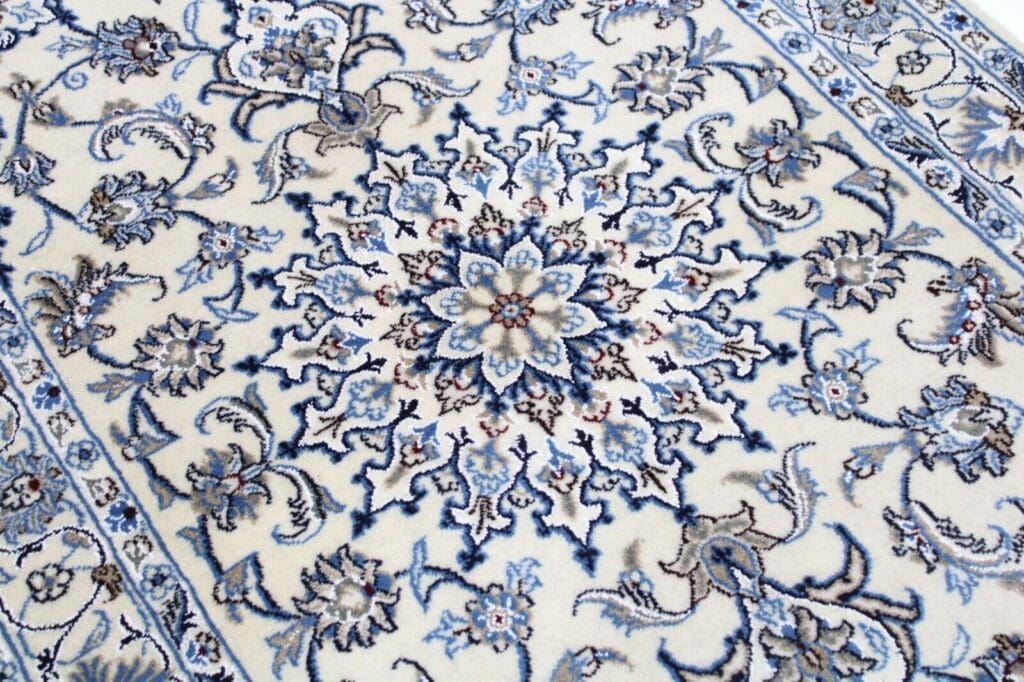
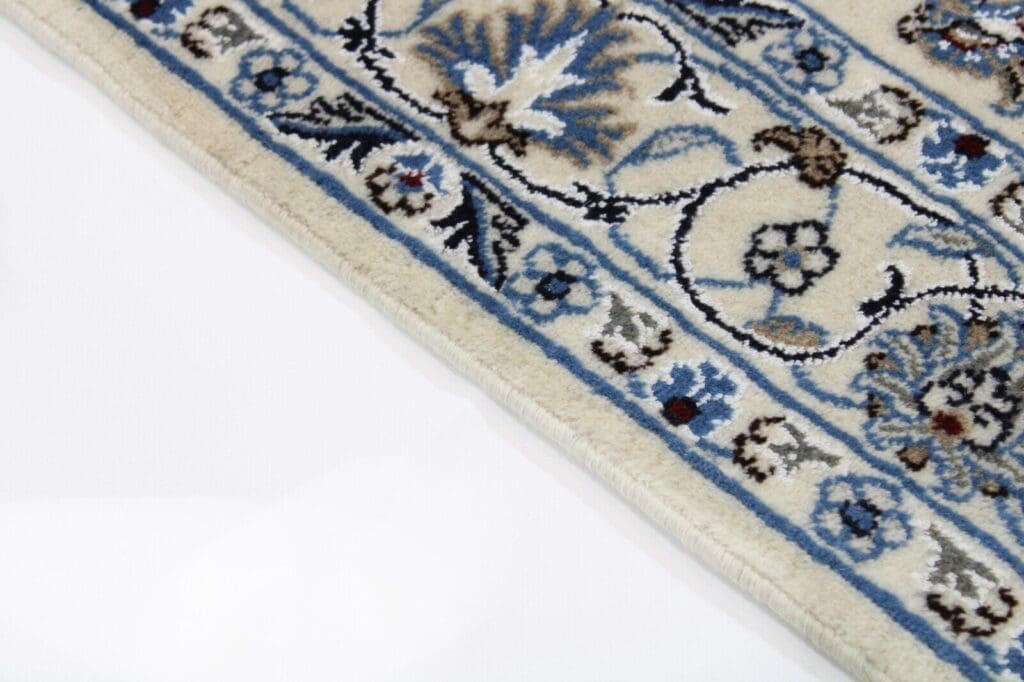
Traditional Nain compositions frequently use finely organised floral drawing. A border can frame the central field and create a visual transition between the interior and the outer edge. Within such a structure, flowers and leaves may be repeated along scrolling stems or placed in symmetrical relationships. A medallion, where present, provides a central focus; an all-over design distributes the ornament more evenly. The product information for this rug names floral motifs but does not specify whether it has a medallion, a particular border arrangement or an all-over layout.
The stated colour is beige. Beige belongs to the group of light neutral tones often used as a quiet ground in Persian designs. A pale ground can help floral outlines remain legible and can provide visual separation between individual ornaments. The source does not specify the other colours used in the pattern, nor does it identify dyes, pigments or particular colour gradations. Those details are therefore not added here.
The wider Persian design vocabulary includes floral ornament, geometric forms, scrolling vines and medallions. Historical compositions may refer to gardens, cultivated landscapes or symbolic ideas through stylised imagery. Nain workshops have used such elements in compositions that favour balance and clear organisation. The style of this rug is described as traditional Persian and Oriental, while its concrete pattern description remains the more specific statement: Oriental decoration with floral motifs. This distinction keeps the regional background separate from unsupported details about the exact layout.
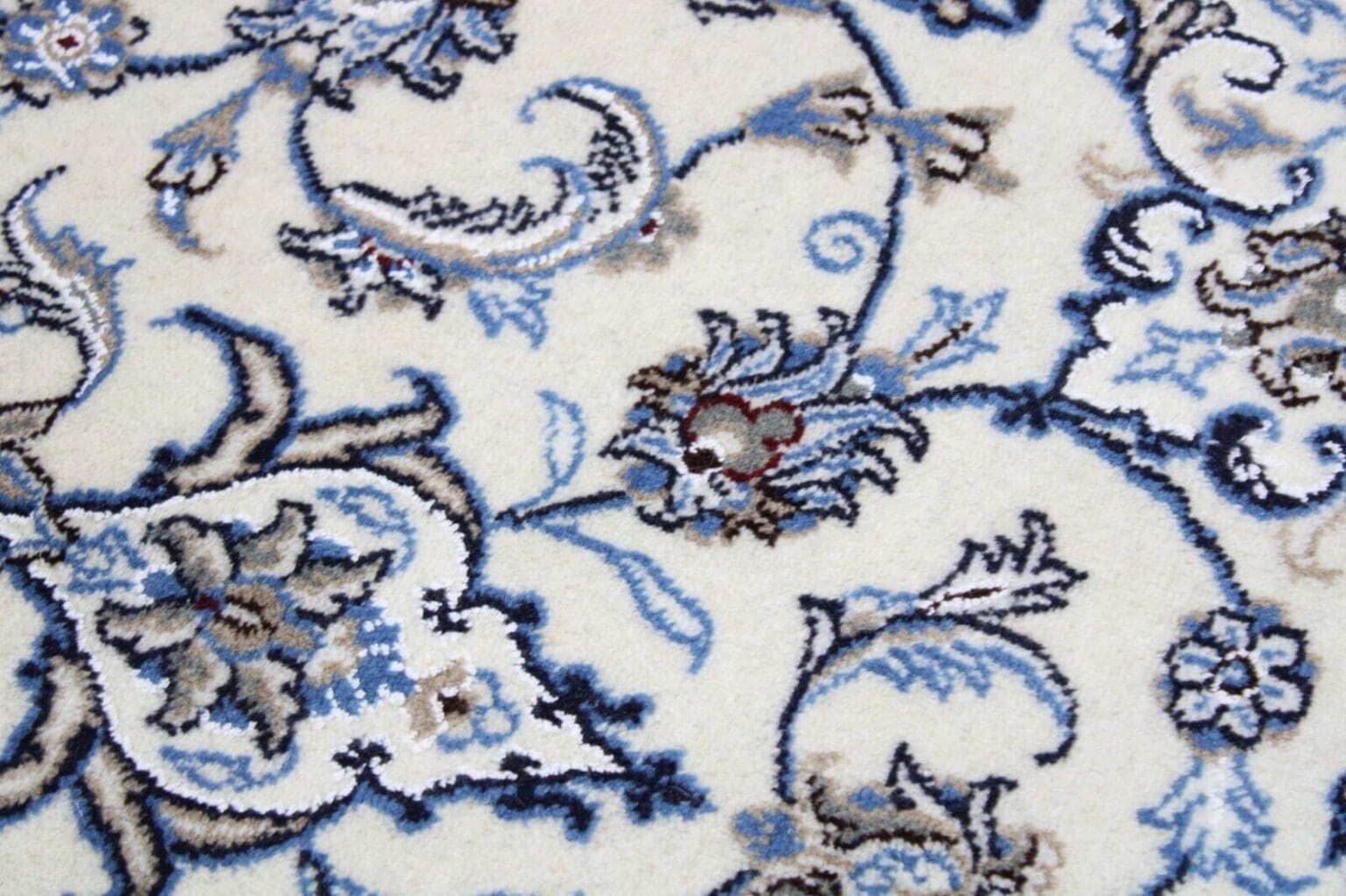
Because the rug is hand-knotted, the pattern is built from many individual knots. Fine changes in direction can be created through the controlled placement of these knots, allowing the outlines of leaves and flowers to be developed gradually. A weaver must follow the design plan closely to preserve the intended relationship between motifs, field and border. The combination of Nain association, floral Oriental ornament, beige colouring and hand-knotted construction establishes the design context of this one-off rug.
The high pile also affects how the design is encountered at the surface. Raised fibres give the textile a pronounced tactile presence, while the underlying knot structure carries the drawing. The description does not assign a particular pile fibre separately from the stated materials of wool and cotton, so no further technical division is made. What is established is the hand-knotted construction, the high pile, the beige colour and the floral Oriental pattern.
Special Features
The rug is listed as new with tag. It is also described as high pile and suitable for use with underfloor heating. These are specific product features concerning its condition, surface and intended compatibility. The beige colour, the floral Oriental pattern and the hand-knotted construction are further stated characteristics. No separate claim about age, restoration, previous use or a signature is made.
The combination of Iranian origin, Nain association and traditional Persian Oriental styling places the rug within an established regional craft tradition. Wool and cotton are the stated materials. Since no percentages or detailed allocation between pile and foundation are provided, the material description remains limited to those two fibres. The result is a clearly identified hand-knotted Nain rug without adding workshop history or technical details that are not supplied.
FAQ
How should I care for my Persian rug?
Regular vacuuming helps remove loose dust from the pile. The surface should be treated gently, especially because this rug is described as high pile. If more extensive cleaning is needed, professional rug cleaning is recommended so that moisture, drying and treatment can be handled appropriately for a hand-knotted textile. Direct strong sunlight should be avoided to reduce the risk of colour fading. Care should be carried out consistently rather than only when visible dirt has accumulated.
How can I recognise a genuine Persian rug?
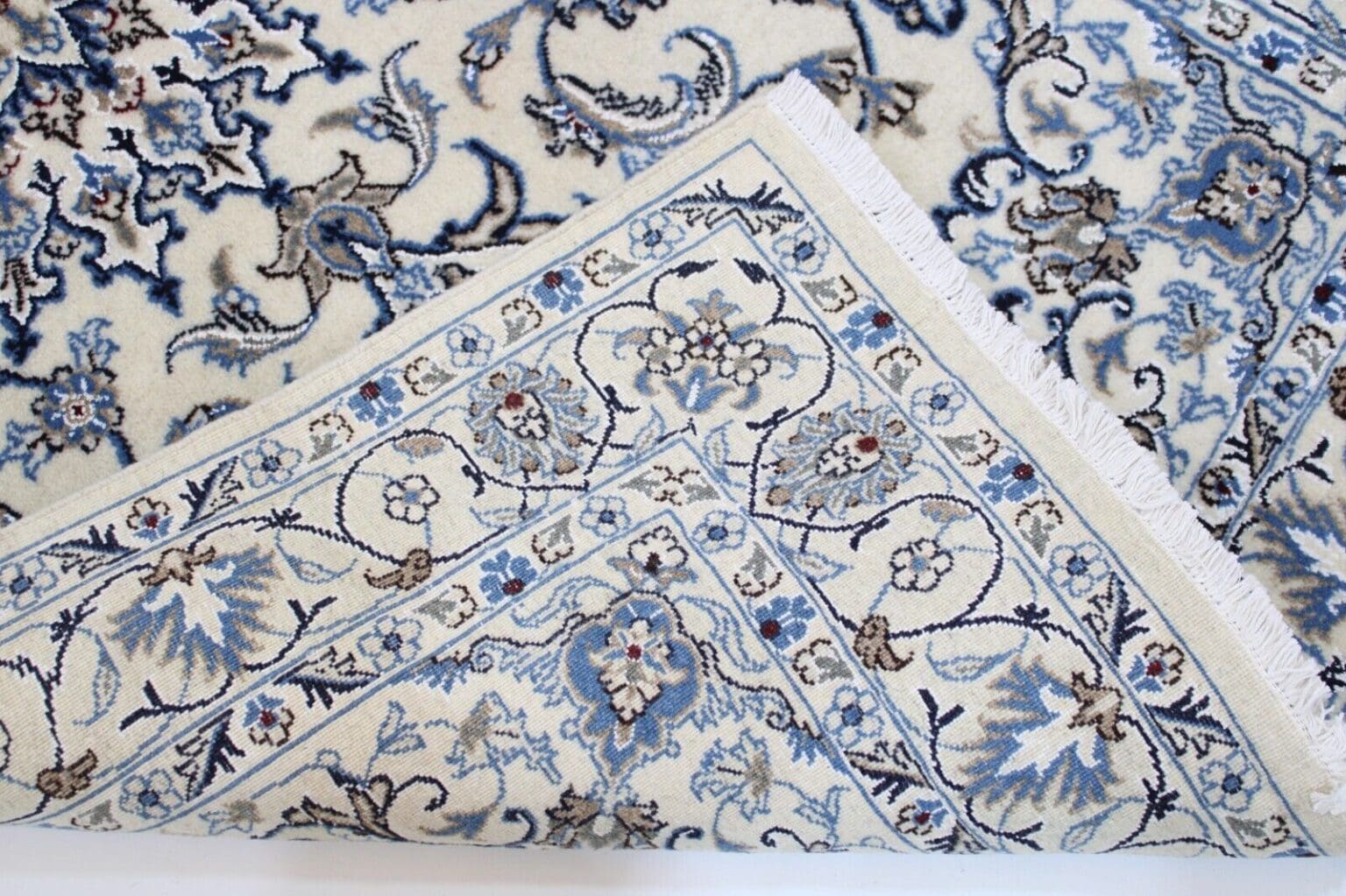
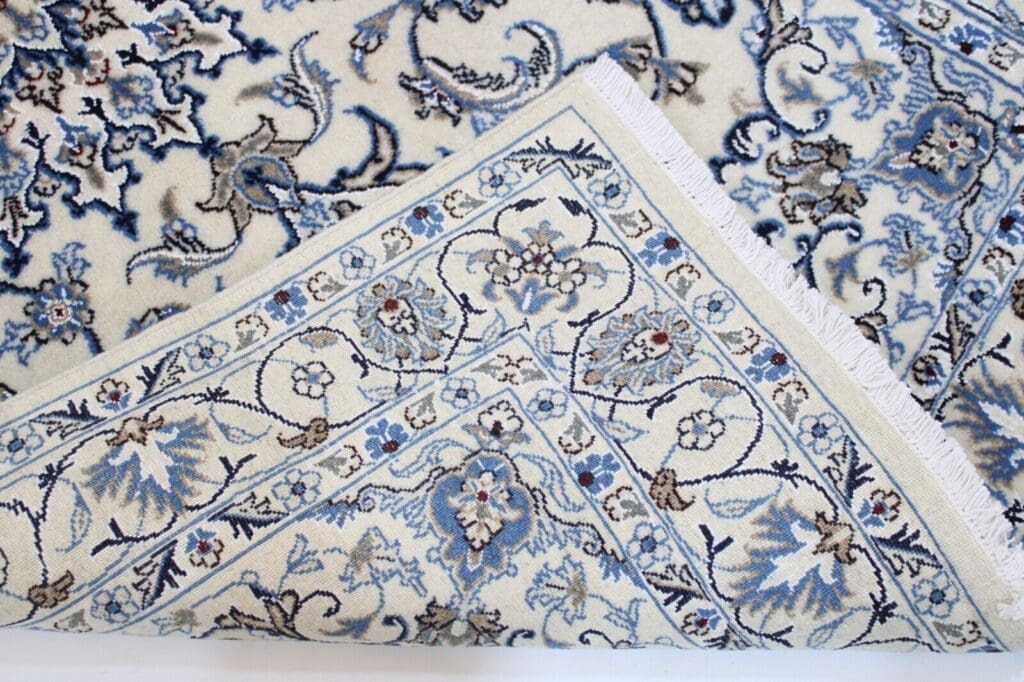
A genuine Persian rug is hand-knotted and has a discernible knot structure. The back is an important point of inspection: the pattern should remain clear and detailed, and there should not be loose threads projecting from the construction. Assessment also considers the material, workmanship, design and stated origin. For this rug, Iran is named as the country of origin, Nain as the regional designation, and wool and cotton as the materials. No single characteristic should be treated as conclusive on its own.
Can I use a Persian rug in a modern living space?
Yes. A traditionally styled Persian rug can be used in a modern interior. Its Oriental floral pattern can create a deliberate contrast with straight-lined furniture and restrained decoration. Beige functions as a neutral colour and can be combined with a range of interior palettes. The rug can add warmth and textile structure without requiring the rest of the room to follow a traditional style. Placement, the existing colour scheme and suitable care remain the practical considerations.
To provide the best experiences, we use technologies like cookies to store and/or access device information. Consenting to these technologies will allow us to process data such as browsing behavior or unique IDs on this site. Not consenting or withdrawing consent, may adversely affect certain features and functions.
Functional Always active
The technical storage or access is strictly necessary for the legitimate purpose of enabling the use of a specific service explicitly requested by the subscriber or user, or for the sole purpose of carrying out the transmission of a communication over an electronic communications network.
Preferences
The technical storage or access is necessary for the legitimate purpose of storing preferences that are not requested by the subscriber or user.
Statistics
The technical storage or access that is used exclusively for statistical purposes.The technical storage or access that is used exclusively for anonymous statistical purposes. Without a subpoena, voluntary compliance on the part of your Internet Service Provider, or additional records from a third party, information stored or retrieved for this purpose alone cannot usually be used to identify you.
Marketing
The technical storage or access is required to create user profiles to send advertising, or to track the user on a website or across several websites for similar marketing purposes.
 SECURE PAYMENT
 SHIPPING PARTNERS