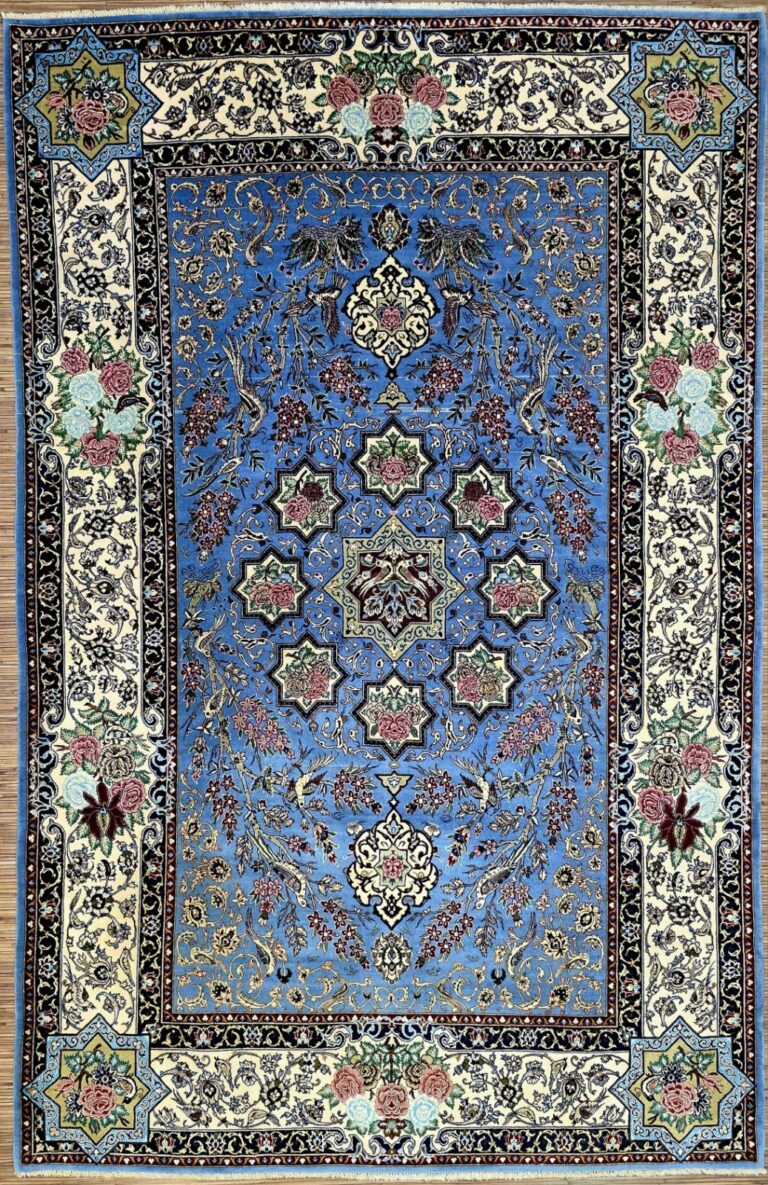
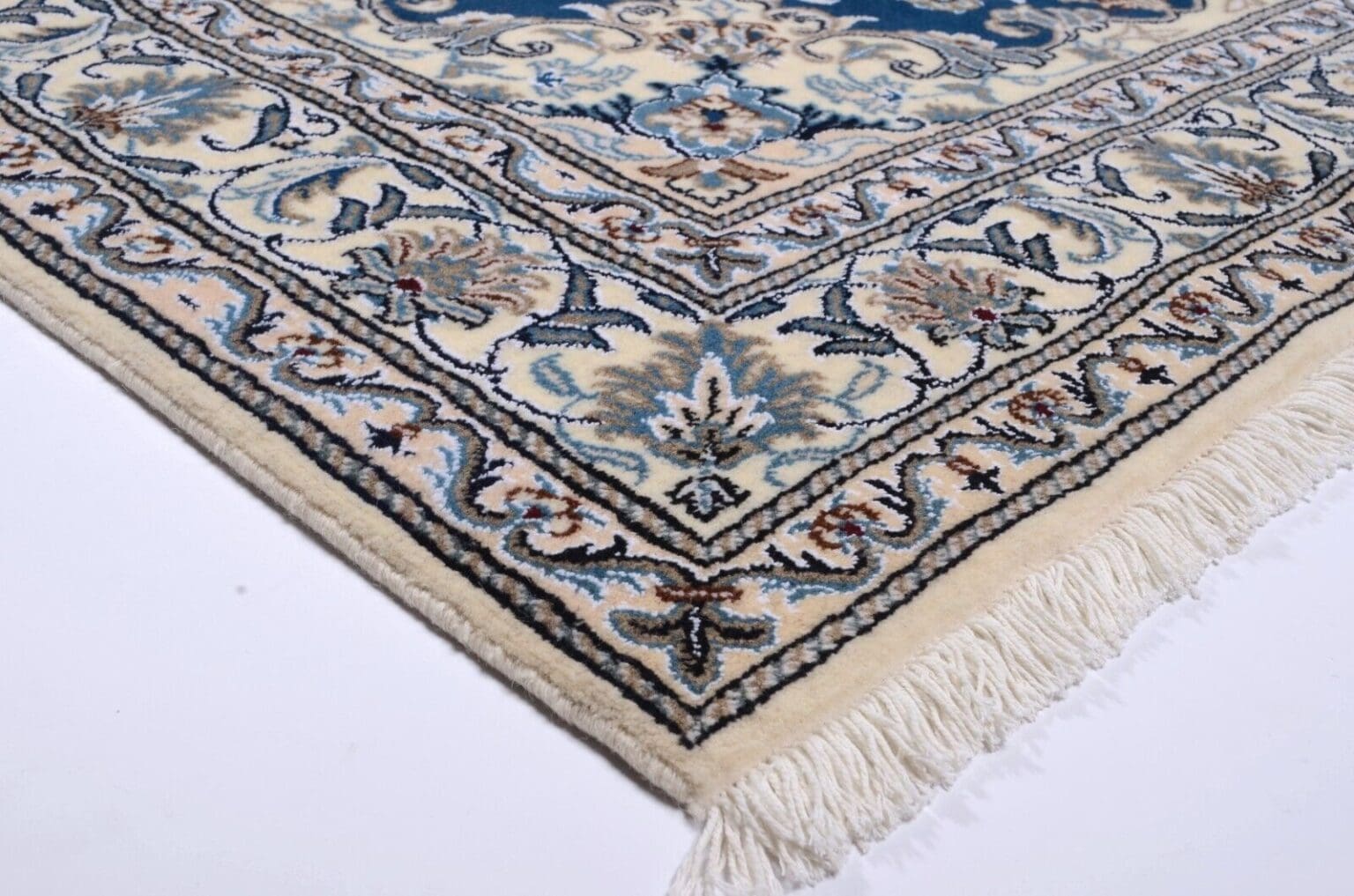
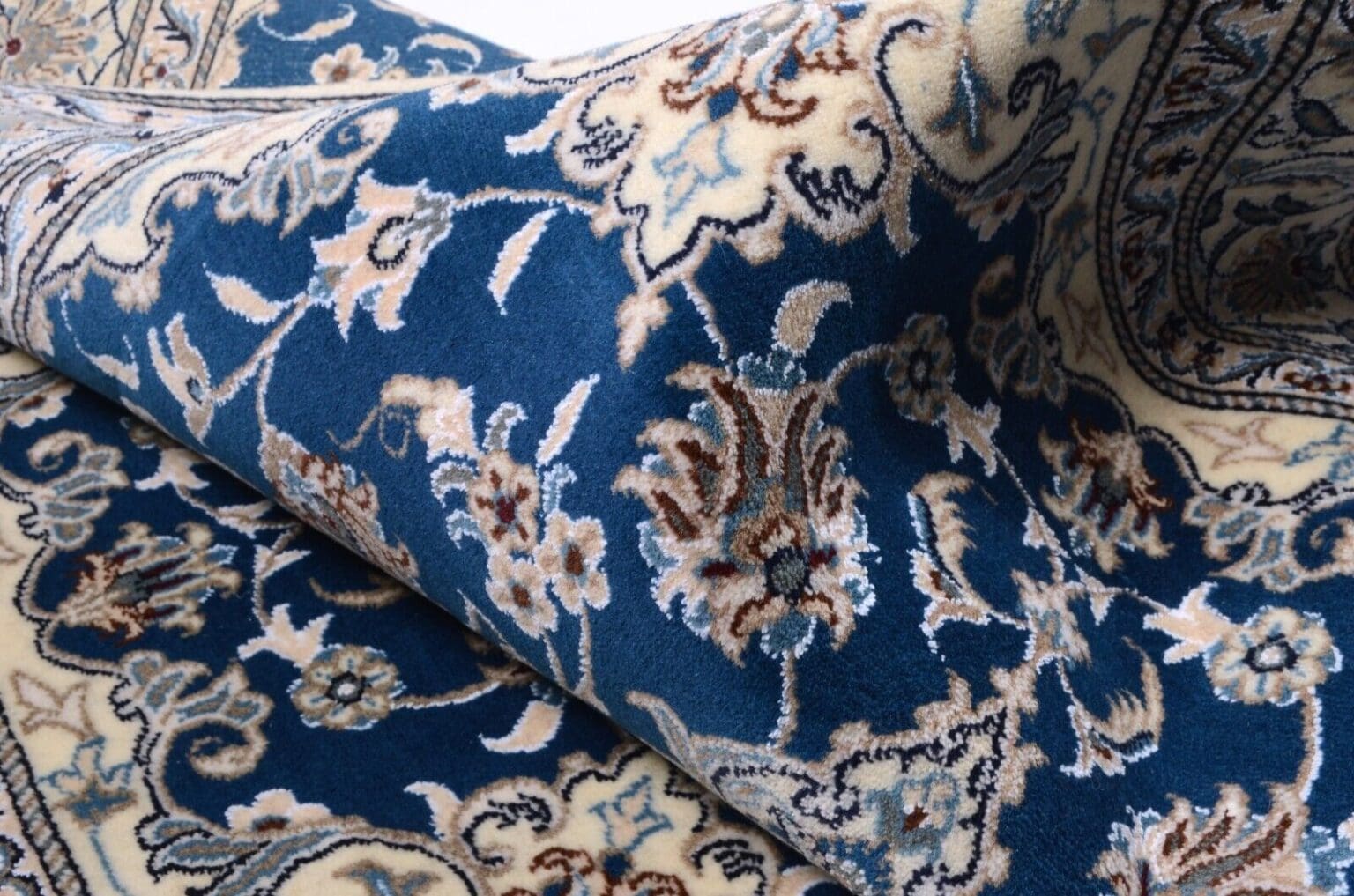
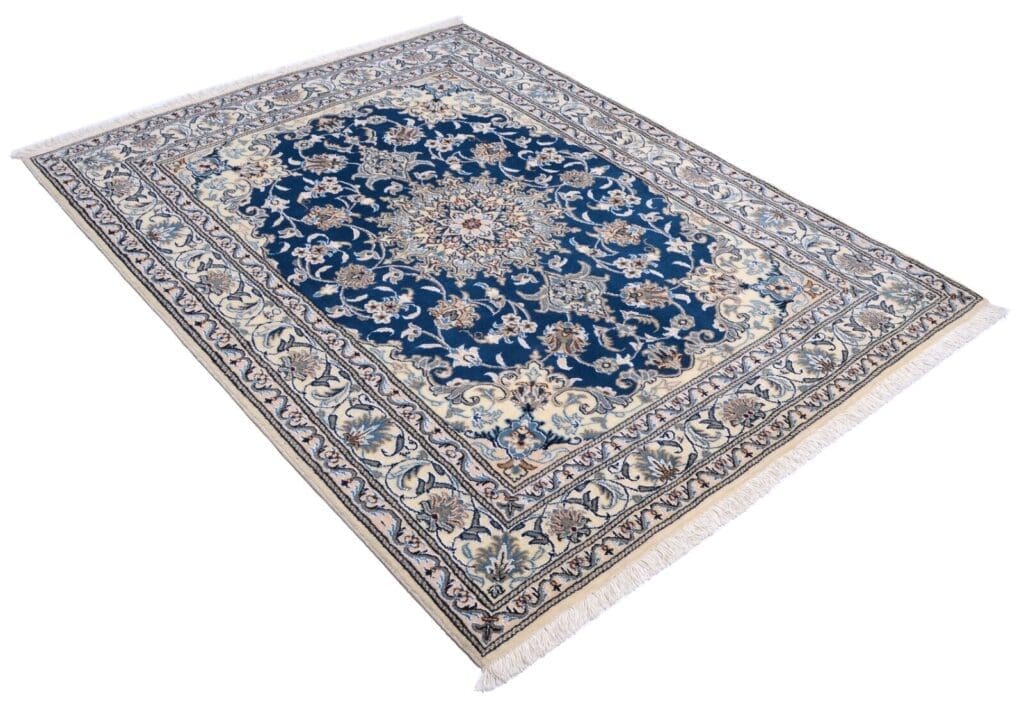
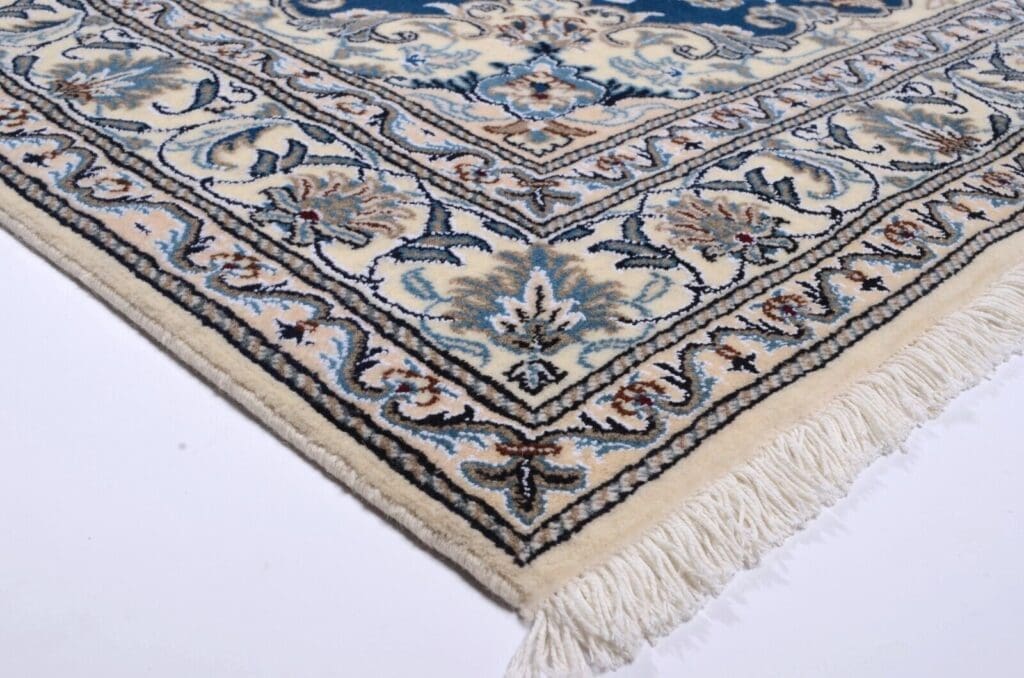
This Nain Persian rug is hand-knotted with a pile made from 100% virgin wool. Wool forms the visible surface of the rug and gives the pile its characteristic textile structure. Hand-knotting is one of the established techniques of Persian rug making. The design is not printed onto a finished surface; it is built knot by knot as the rug is made. This process brings the pile, colour and pattern together within a single woven object.
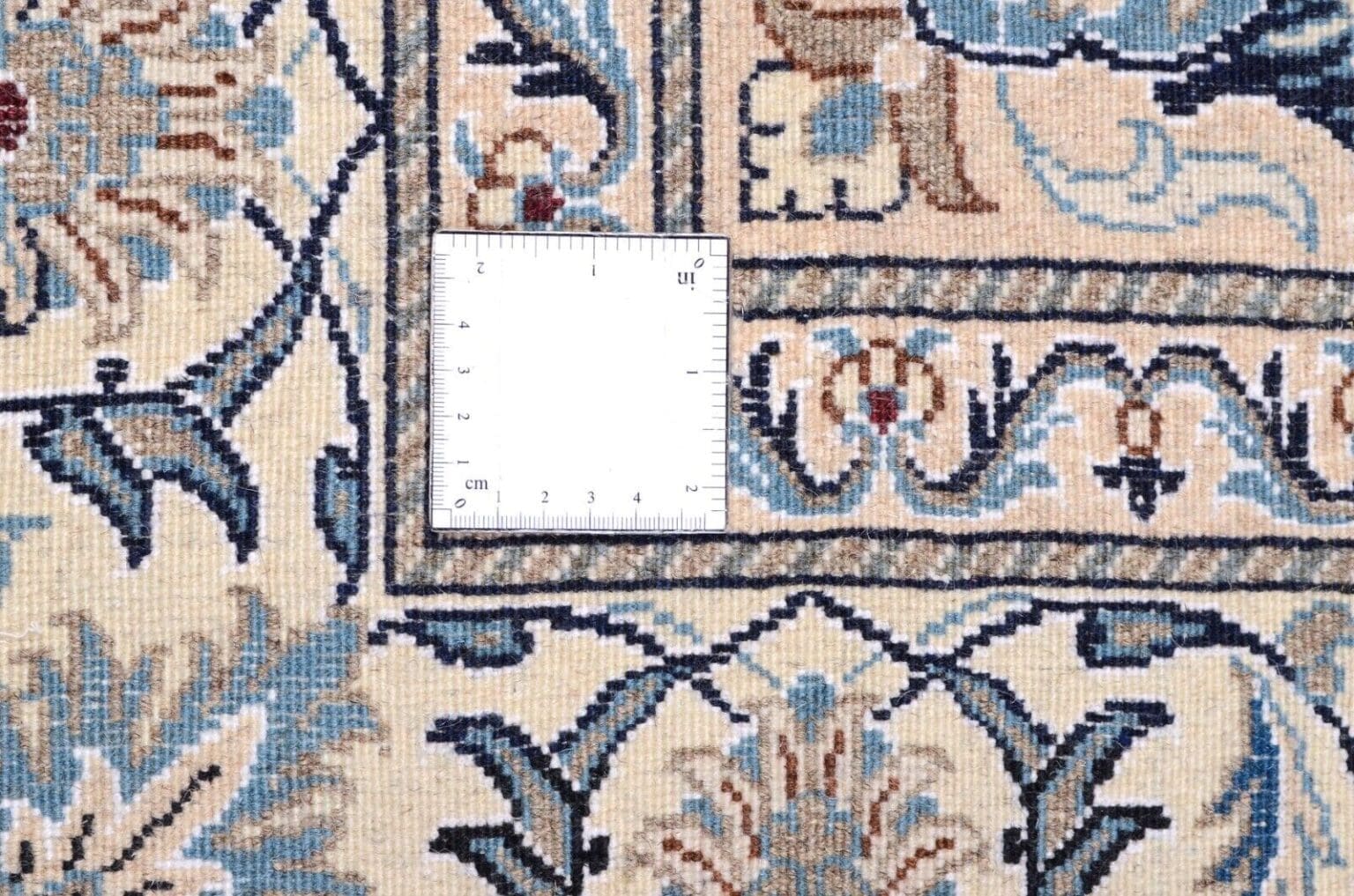
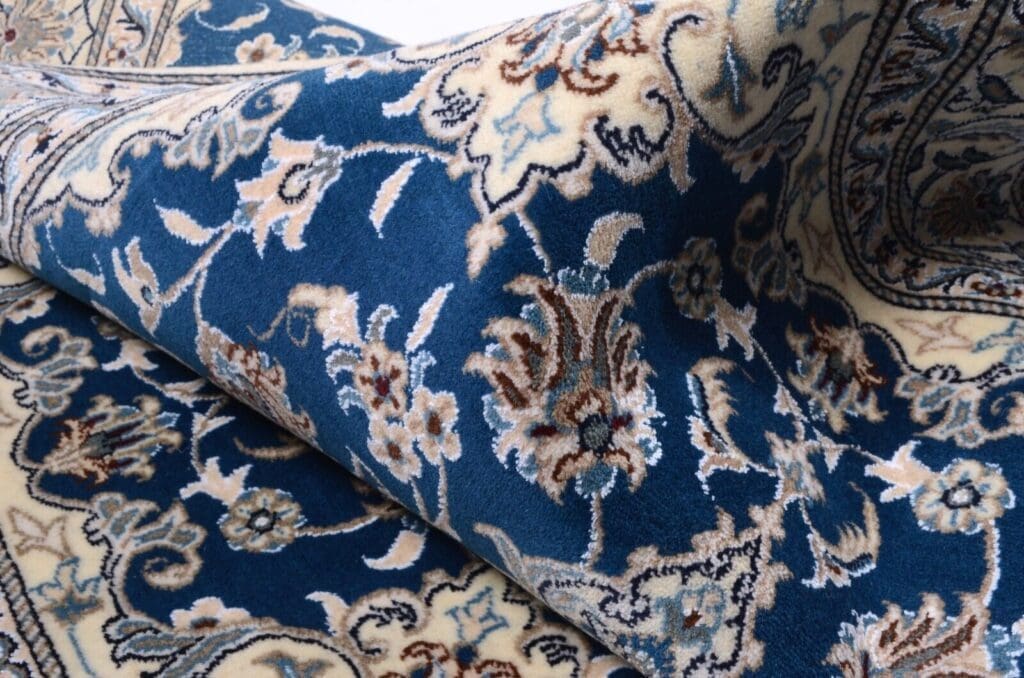
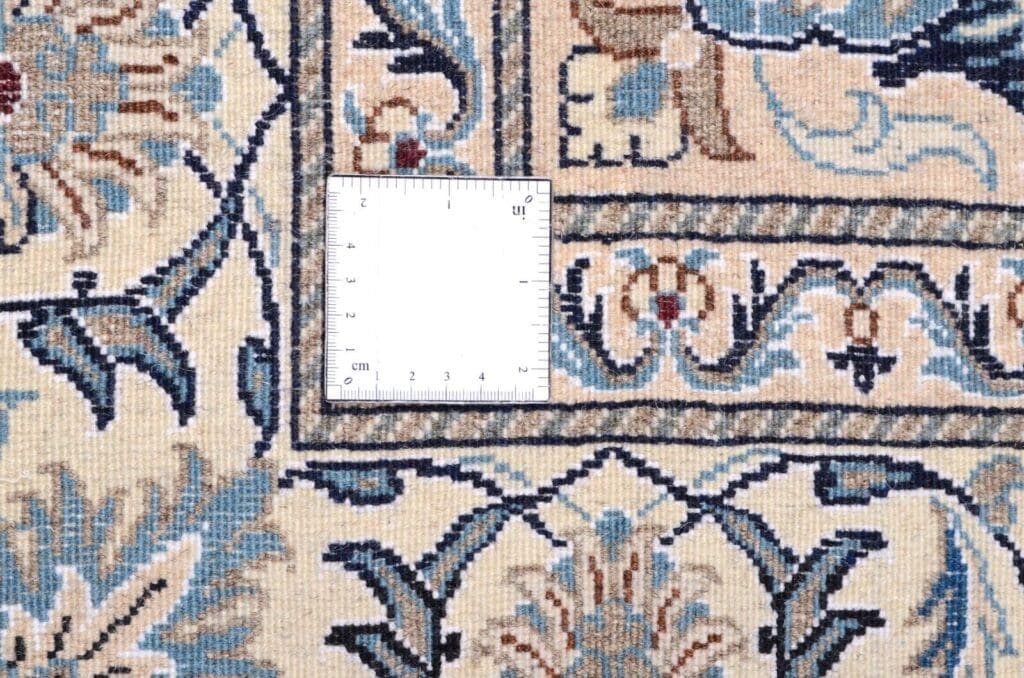
The stated knot density is 300,000 knots per square metre. A dense knot structure allows floral lines, contours and small ornamental details to be rendered with definition. In a hand-knotted rug, the pile is formed through repeated manual work, with each section contributing to the overall pattern. This rug has a pile height of 10 mm. It is new and unused.
Virgin wool has long been used in hand-knotted rugs because it accepts colour well and can be worked into both defined and softly connected areas. Its fibres provide the material basis for the visible pile. Here, the wool is combined with a hand-knotted construction and a floral medallion design. The result is a rug whose material and technique can be described directly through its pile, knotting method and recorded density.
Origin and Tradition
Nain is a city in central Iran and gives its name to an important Persian rug tradition. The city and its surrounding region are associated with a carefully ordered approach to rug design and with finely drawn ornament. Nain rugs are often recognised in the wider history of Persian weaving for compositions that combine floral elements with a clearly organised field. Medallions and balanced borders are recurring features within this tradition.
The name Nain therefore refers both to a place and to a distinct direction in Persian rug making. Its traditional visual language is associated with controlled outlines, repeated botanical forms and a measured relationship between the central field and the surrounding border. Flowers, leaves and scrolling branches may be transformed into stylised textile motifs rather than copied as literal images. Each hand-knotted rug gives these inherited forms its own material interpretation.
Persian rugs are traditionally produced on a loom. Warp and weft create the underlying structure, while pile knots are inserted and secured during the making of the rug. After successive rows, the structure is compacted and the developing design is checked. A pattern may be followed from a drawing or from a customary arrangement of motifs. In Nain weaving, this process is commonly associated with refined ornament, clear organisation and an attentive balance between field, medallion and border.
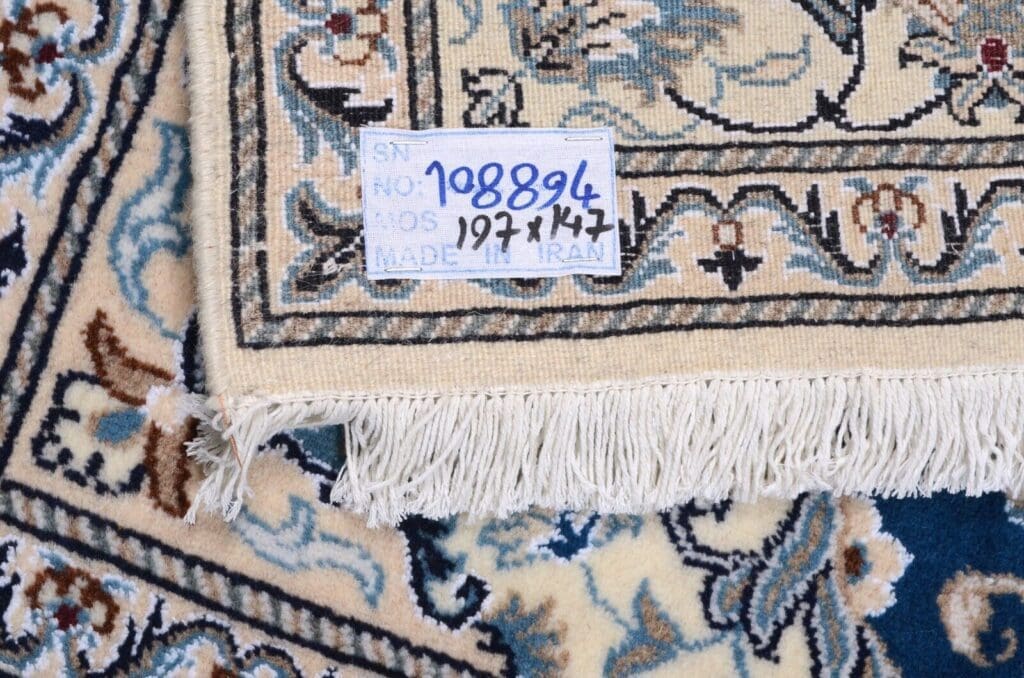
The rug tradition of Nain belongs to the broader craft history of Iran. Different Iranian weaving areas have developed their own combinations of colour, drawing and technique. Nain is particularly connected with elegant floral compositions and a disciplined treatment of detail. Calling this piece a Persian rug identifies its Iranian origin and places it within the cultural history of hand-knotting. The craft is both a method of making a useful textile and a way of preserving visual forms through repeated practice.
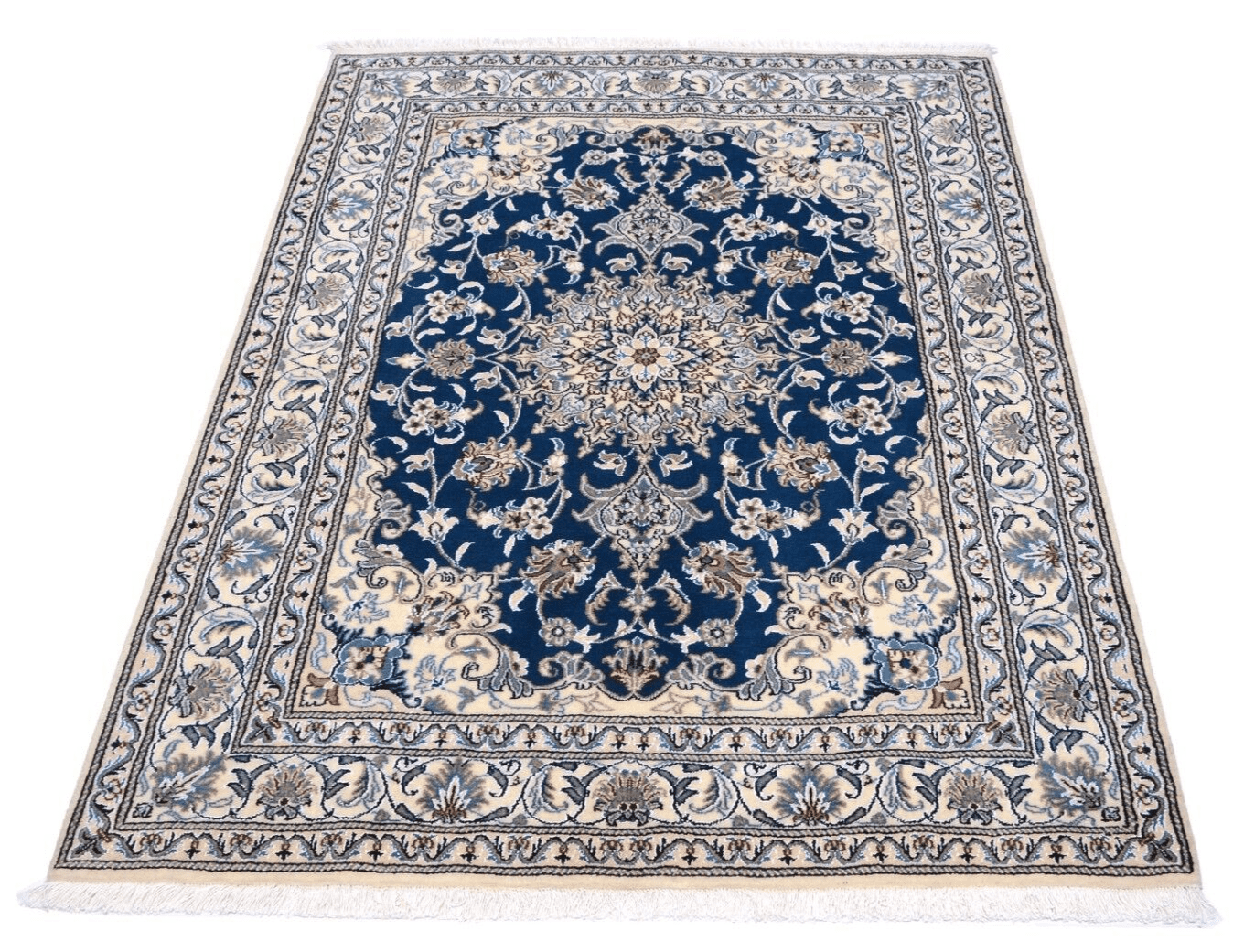
The royal blue used here gives the rug a distinct colour presence within the Nain tradition. Colour in a Persian rug does more than fill an area: it helps separate the field from the ornament, gives emphasis to the centre and sets the pace of repeated forms. A strong blue ground can provide contrast for floral outlines and help the medallion read as the organising point of the composition. The specific colour stated for this rug is royal blue.
Design and Pattern
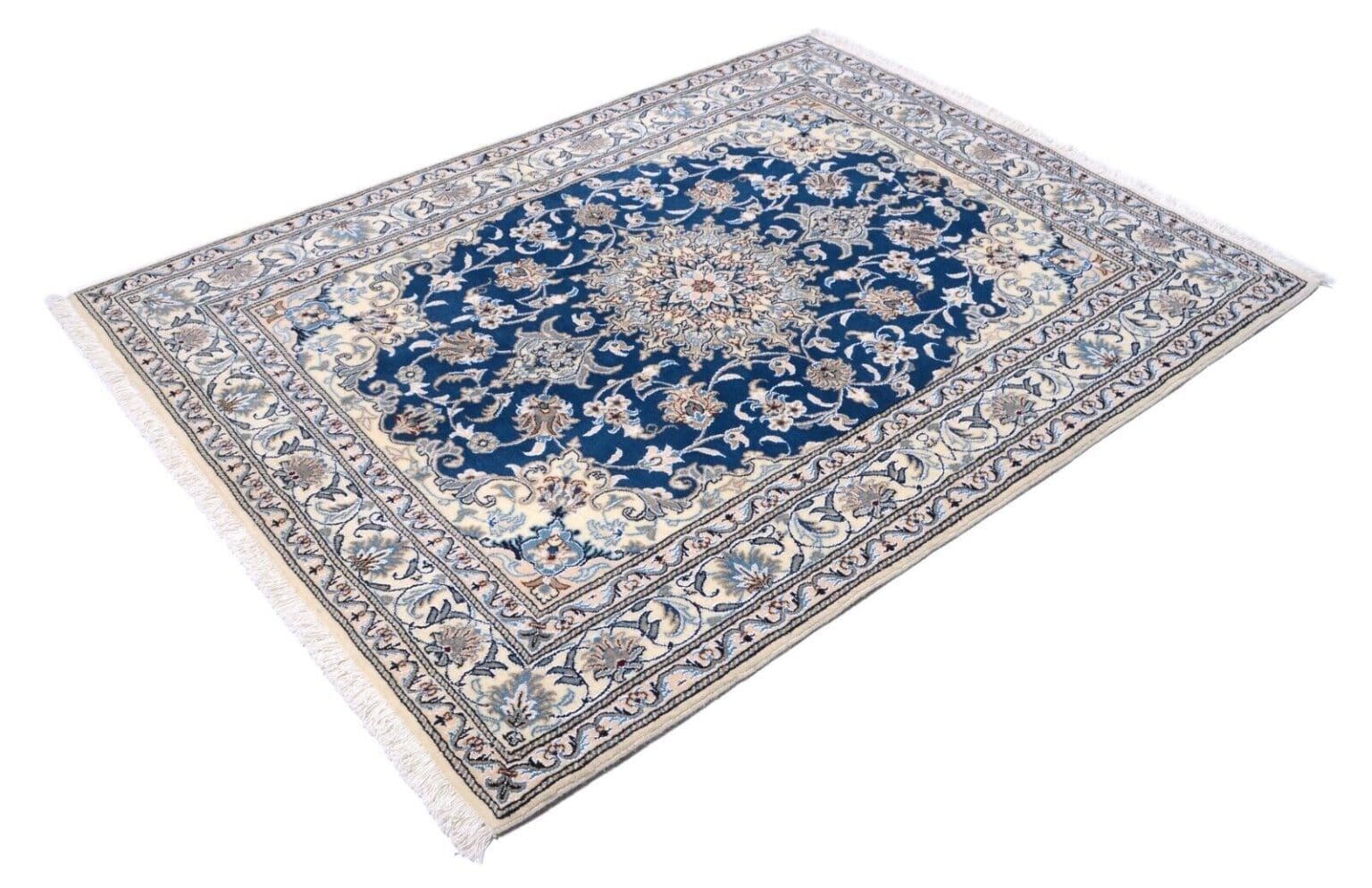
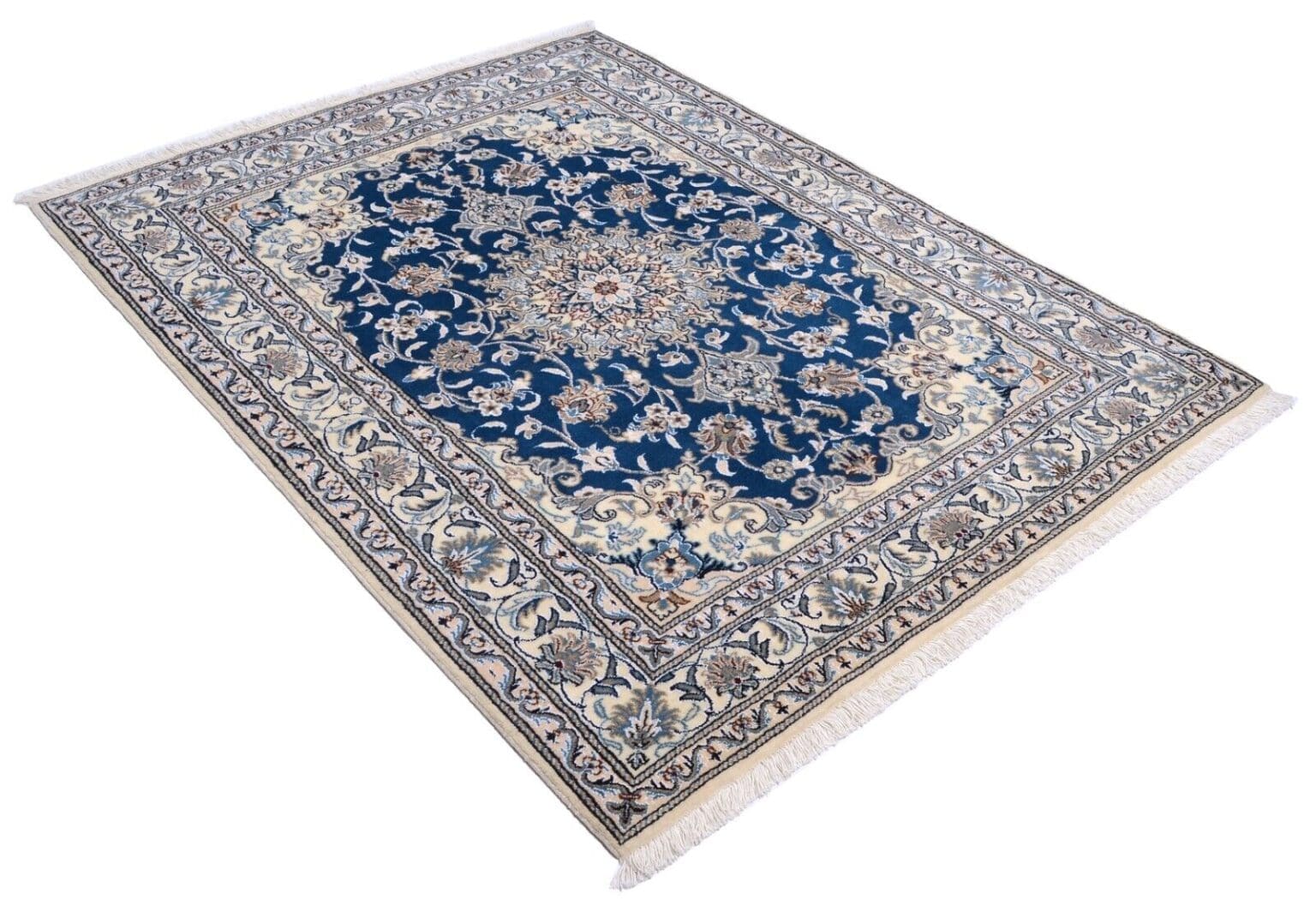
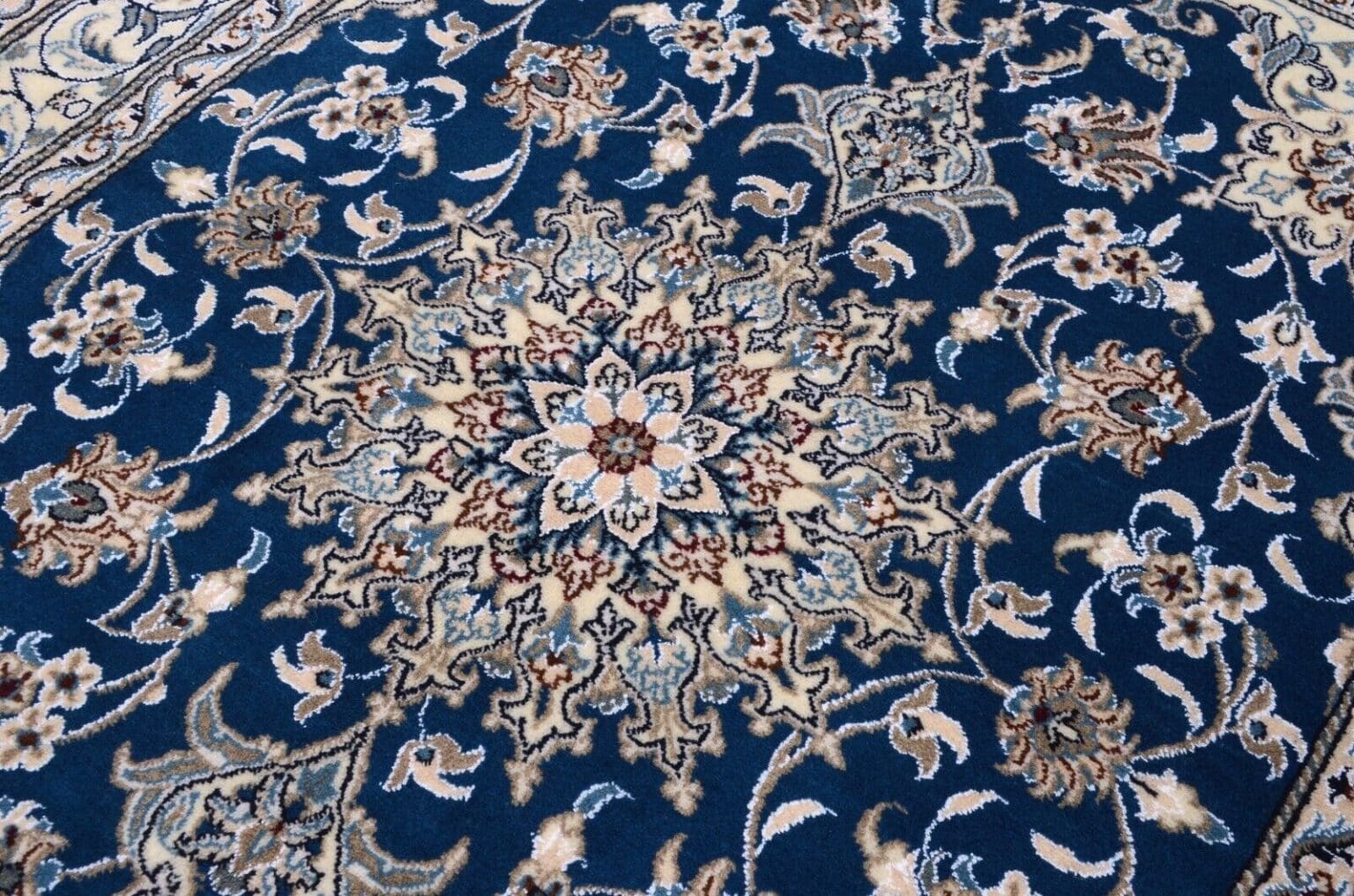
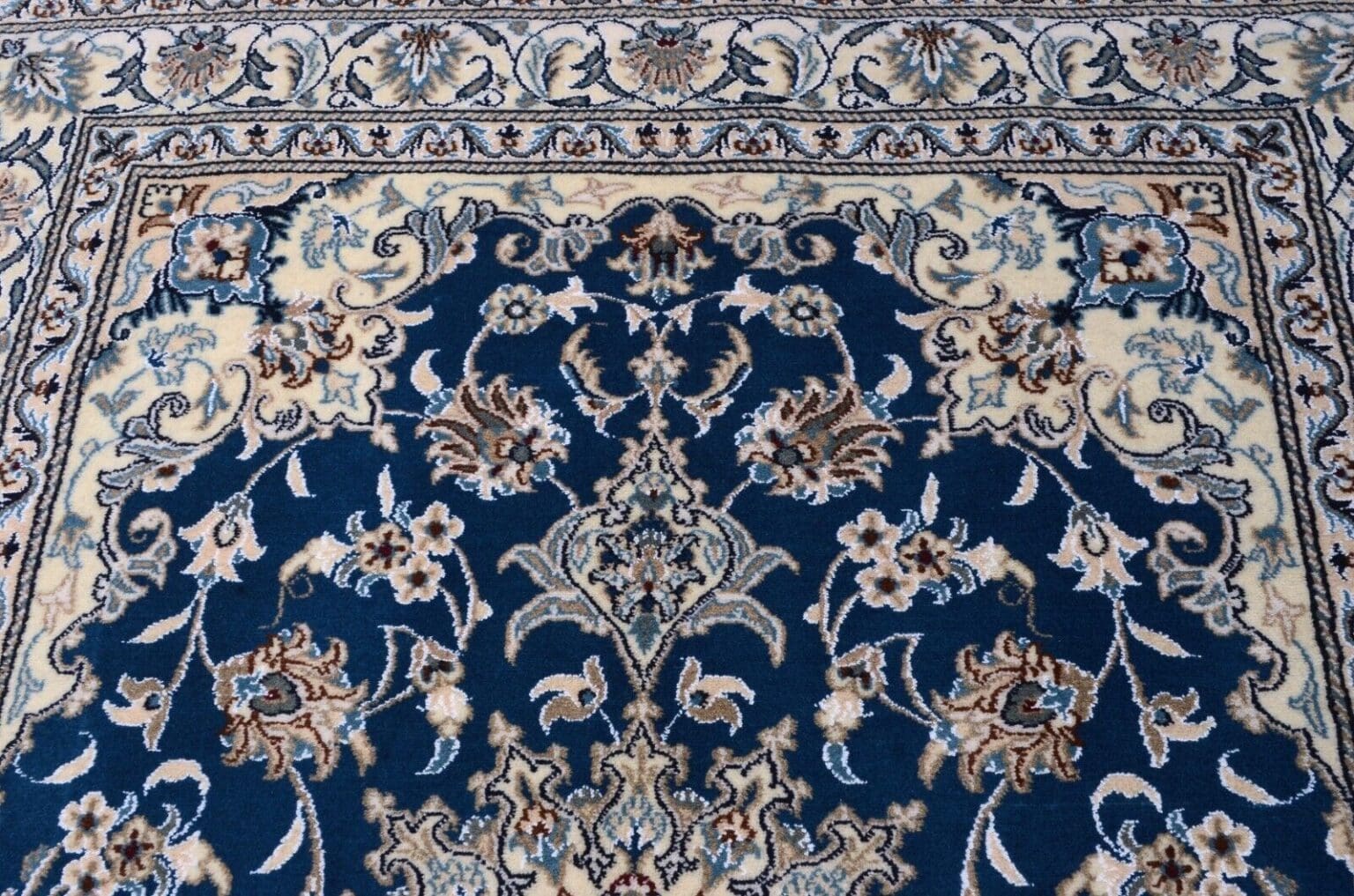
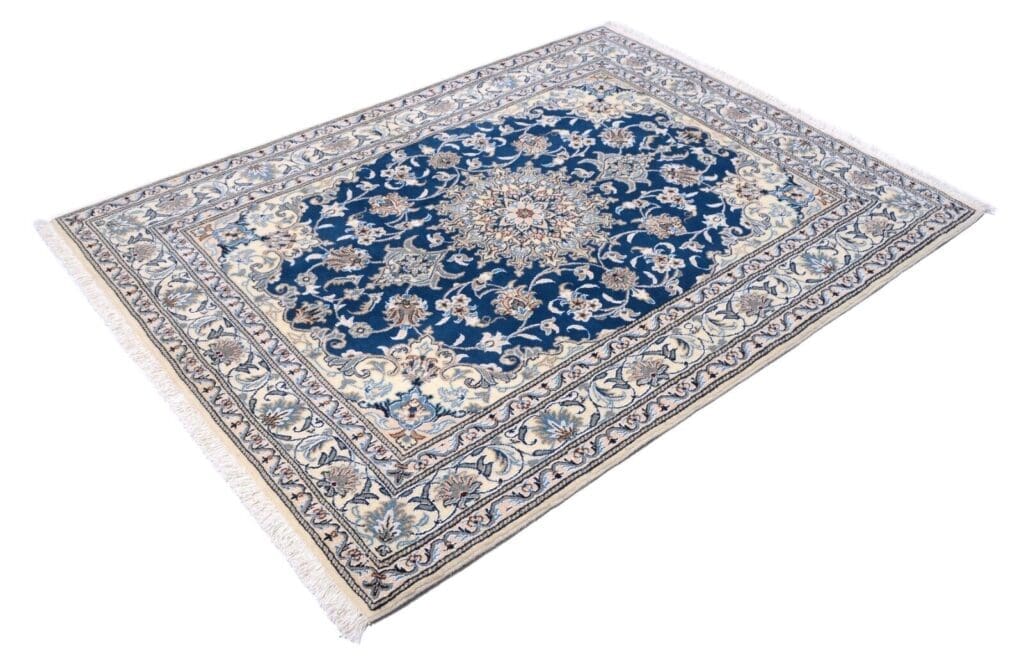
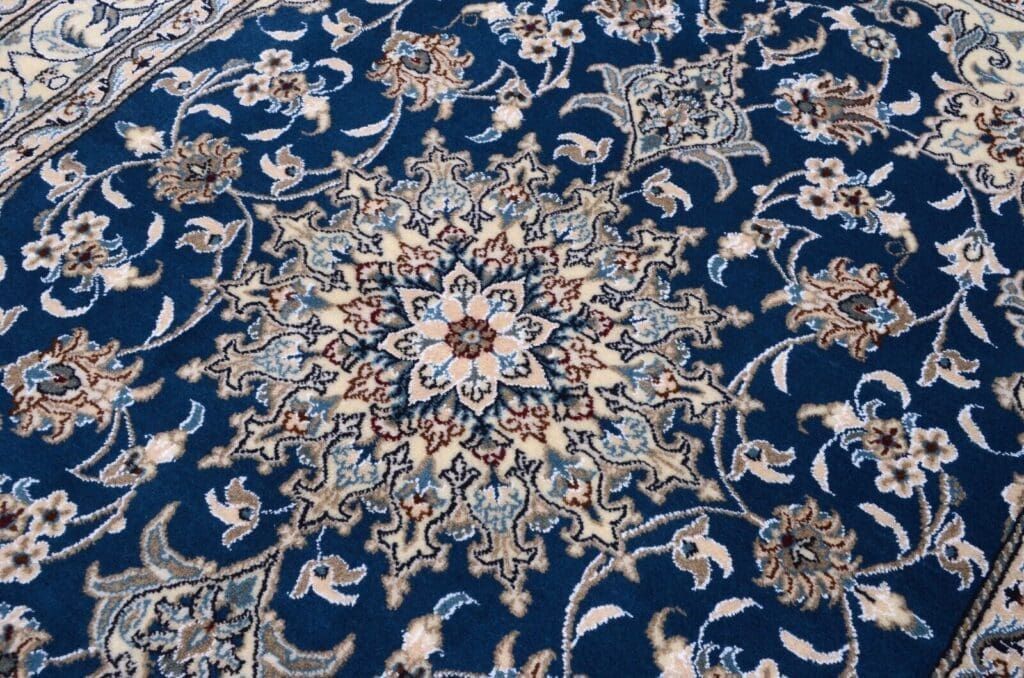
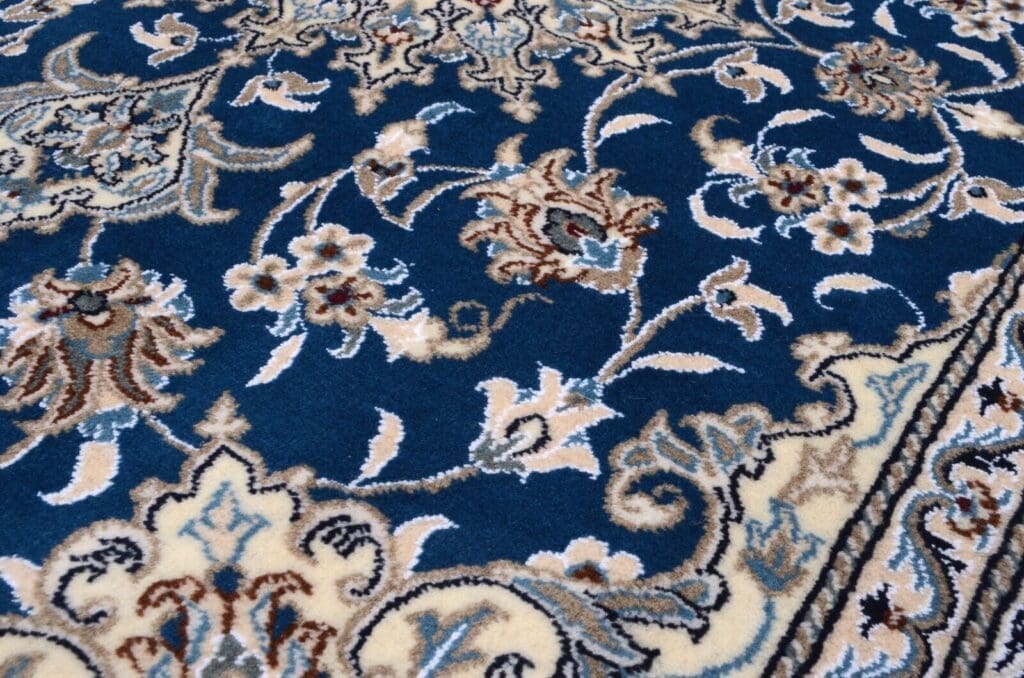
The pattern of this rug is a floral motif with a medallion. The medallion provides a central point around which the composition is arranged. Floral forms occupy and structure the field, directing the eye towards the centre while also creating a repeated rhythm across the surface. A medallion may be circular, oval or more geometric in outline; its role is to establish the visual centre of the rug. In this piece, that central device is combined with floral ornament.
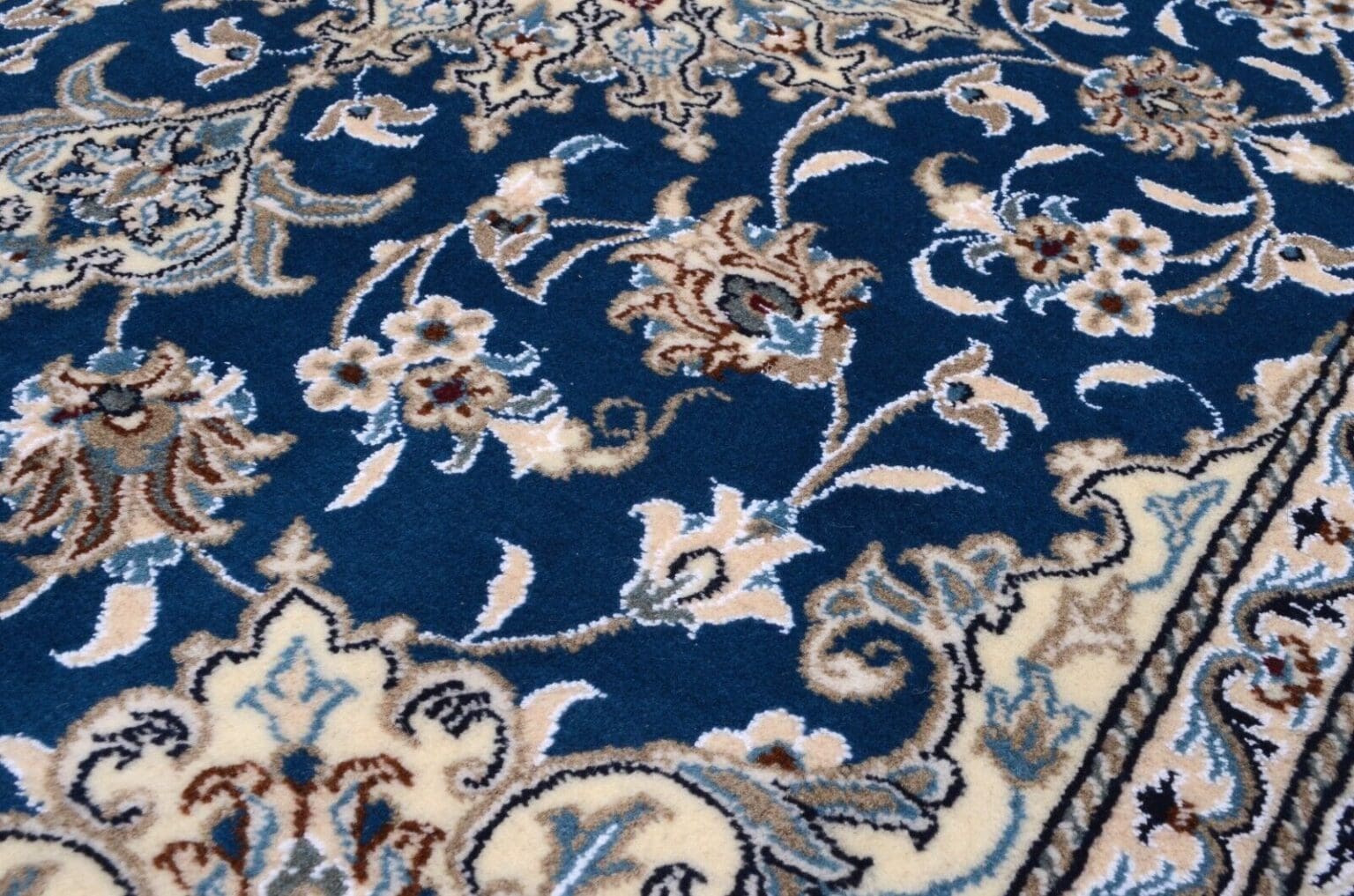
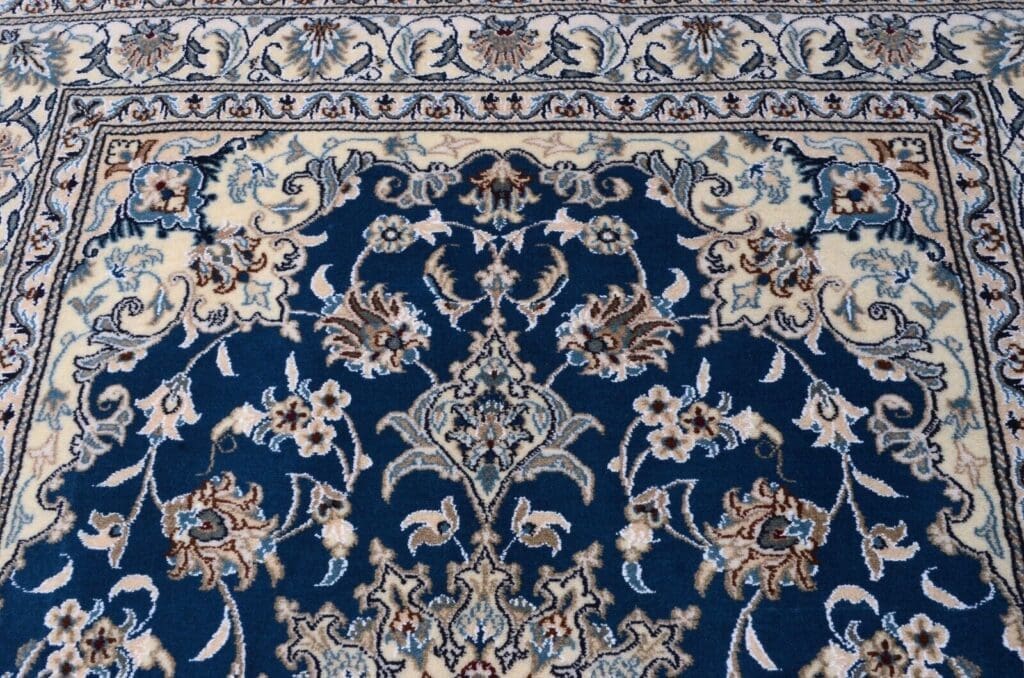
Floral design is one of the established vocabularies of Persian rug art. Blossoms, leaves, vines and arabesque lines are commonly stylised for use in woven and knotted textiles. They may be repeated, mirrored or linked by curving stems. This translation of natural forms into ornament allows a pattern to remain recognisable while fitting the ordered structure of a rug. The individual motifs support the composition, and the composition in turn gives the motifs a clear place within the field.
Royal blue determines much of the colour impression of this Nain rug. Blue grounds are frequently used in Persian design to create a setting in which floral drawing and central ornament can stand out. The effect depends on the relationship between the ground colour, the outlines and the lighter or darker areas of the pattern. Here, royal blue is the defining colour named for the rug and forms an important part of how the floral medallion design is read.
The medallion and the surrounding flowers work as connected elements rather than as separate decorations. The centre establishes an axis, while leaves, blossoms and scrolling forms extend the visual movement into the rest of the field. This type of arrangement can sit within a traditional interior with other patterned textiles, or it can act as a structured colour and pattern accent in a more contemporary room. Its placement does not change the stated origin or design; it changes only how the composition relates to its surroundings.
The recorded knot density supports the detailed drawing associated with the pattern. In a hand-knotted rug, the appearance of a floral motif is built from many separate colour areas and carefully placed contours. Repetition creates continuity, while the medallion prevents the composition from losing its central focus. The resulting design is clearly organised, floral in character and dominated by the royal blue named for this rug.
In the broader symbolism of Persian ornament, a floral medallion may be read in connection with nature, ordered growth and a balanced centre. Such interpretations belong to the general cultural background of the motif and do not add a separate provenance claim about this individual rug. The concrete design information for this piece is its royal blue colour and its floral motif with medallion.
Special Features
This rug is new and unused. Its pile is made from 100% virgin wool, and the rug is hand-knotted. It is also suitable for use with underfloor heating and has high colour fastness. These details are relevant to everyday placement: suitability for underfloor heating concerns use on an appropriately installed heated floor, while high colour fastness describes the stated resistance of the colours during use.
The 10 mm pile height and the density of 300,000 knots per square metre complete the technical profile of the rug. Combined with its royal blue floral design and central medallion, these details identify it as a hand-knotted Nain Persian rug with a clearly defined material, construction and pattern.
FAQ
How should I clean my hand-knotted Nain Persian rug?
For routine care, vacuum the rug carefully to remove loose dust and dirt from the pile. If a spill occurs, dab the affected area with a damp cloth rather than rubbing it, since vigorous rubbing can place unnecessary stress on the fibres and surface. A mild cleaning agent may be used sparingly. For stubborn marks or a complete cleaning, a professional rug cleaner is recommended. The cleaning method should be suitable for virgin wool and for the hand-knotted construction, so that the pile and its colours are treated appropriately.
Where is the best place to position the rug?
The Nain Persian rug is suitable for living rooms, dining rooms and bedrooms. Its royal blue colour and floral medallion can serve as the main textile accent in a room or complement an existing arrangement. The design can be combined with traditional as well as modern interiors. Avoiding direct, intense sunlight helps the colours remain as even as possible over time. Because the rug is stated to be suitable for underfloor heating, it can also be placed on a properly installed heated floor.
How can I extend the life of my rug?
Regular, gentle cleaning helps prevent dust and dirt from remaining in the pile. Arrange professional cleaning when it is needed rather than using an unsuitable intensive method. A room with controlled temperature and humidity supports consistent use of the wool. Direct sunlight should be avoided where possible. Heavy furniture should not remain in exactly the same position for long periods, as it can create pressure marks in the pile. Careful placement and maintenance suited to the material help preserve the hand-knotted structure over the long term.
To provide the best experiences, we use technologies like cookies to store and/or access device information. Consenting to these technologies will allow us to process data such as browsing behavior or unique IDs on this site. Not consenting or withdrawing consent, may adversely affect certain features and functions.
Functional Always active
The technical storage or access is strictly necessary for the legitimate purpose of enabling the use of a specific service explicitly requested by the subscriber or user, or for the sole purpose of carrying out the transmission of a communication over an electronic communications network.
Preferences
The technical storage or access is necessary for the legitimate purpose of storing preferences that are not requested by the subscriber or user.
Statistics
The technical storage or access that is used exclusively for statistical purposes.The technical storage or access that is used exclusively for anonymous statistical purposes. Without a subpoena, voluntary compliance on the part of your Internet Service Provider, or additional records from a third party, information stored or retrieved for this purpose alone cannot usually be used to identify you.
Marketing
The technical storage or access is required to create user profiles to send advertising, or to track the user on a website or across several websites for similar marketing purposes.
 SECURE PAYMENT
 SHIPPING PARTNERS