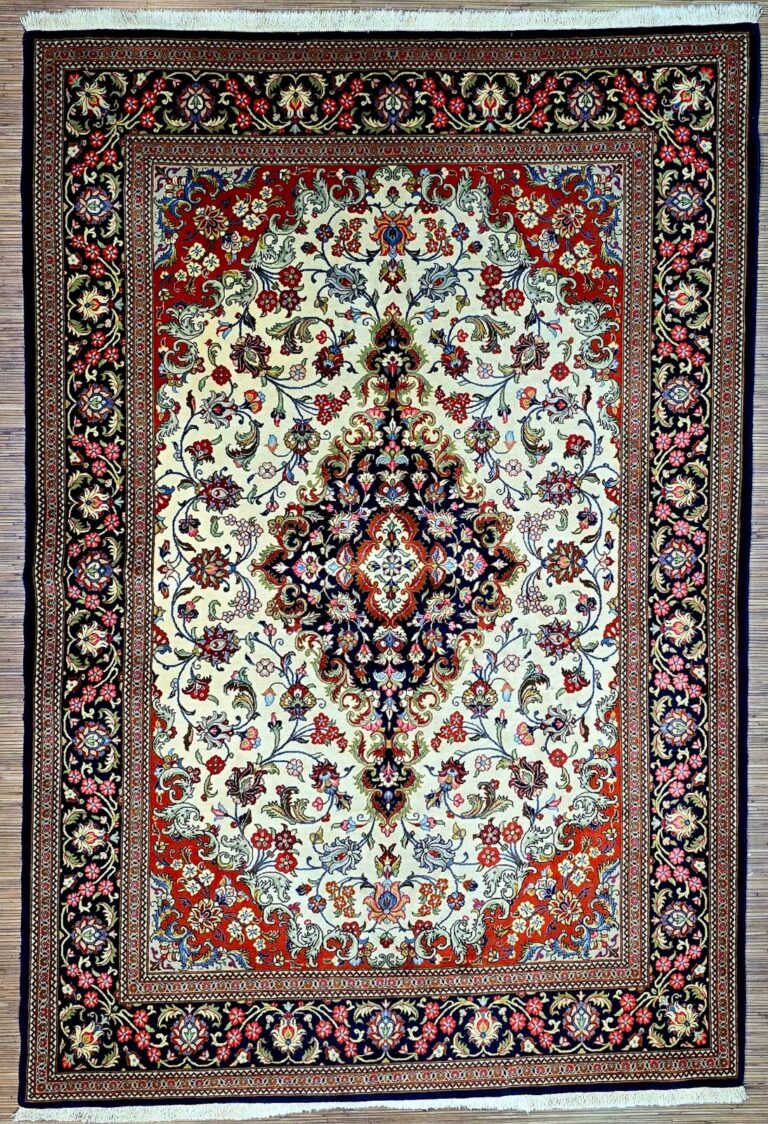
This Nain Persian Rug is made of 90% virgin wool and 10% silk. Wool accounts for the greater part of the material and gives the pile a substantial, resilient character. It has long been used in rug making because its natural fibre structure is suitable for a dense pile and receives colour with depth. The wool content provides the main textile foundation of this rug, while a smaller proportion of silk adds a finer element to the construction.
Silk has a delicate fibre and a restrained sheen. Combined with wool, it can make contours, tonal variation and small details in a design appear more distinct. This pairing is frequently associated with the refined character of Nain rugs. Here, the material composition is specifically given as 90% virgin wool and 10% silk, so both fibres form part of the rug’s stated identity.
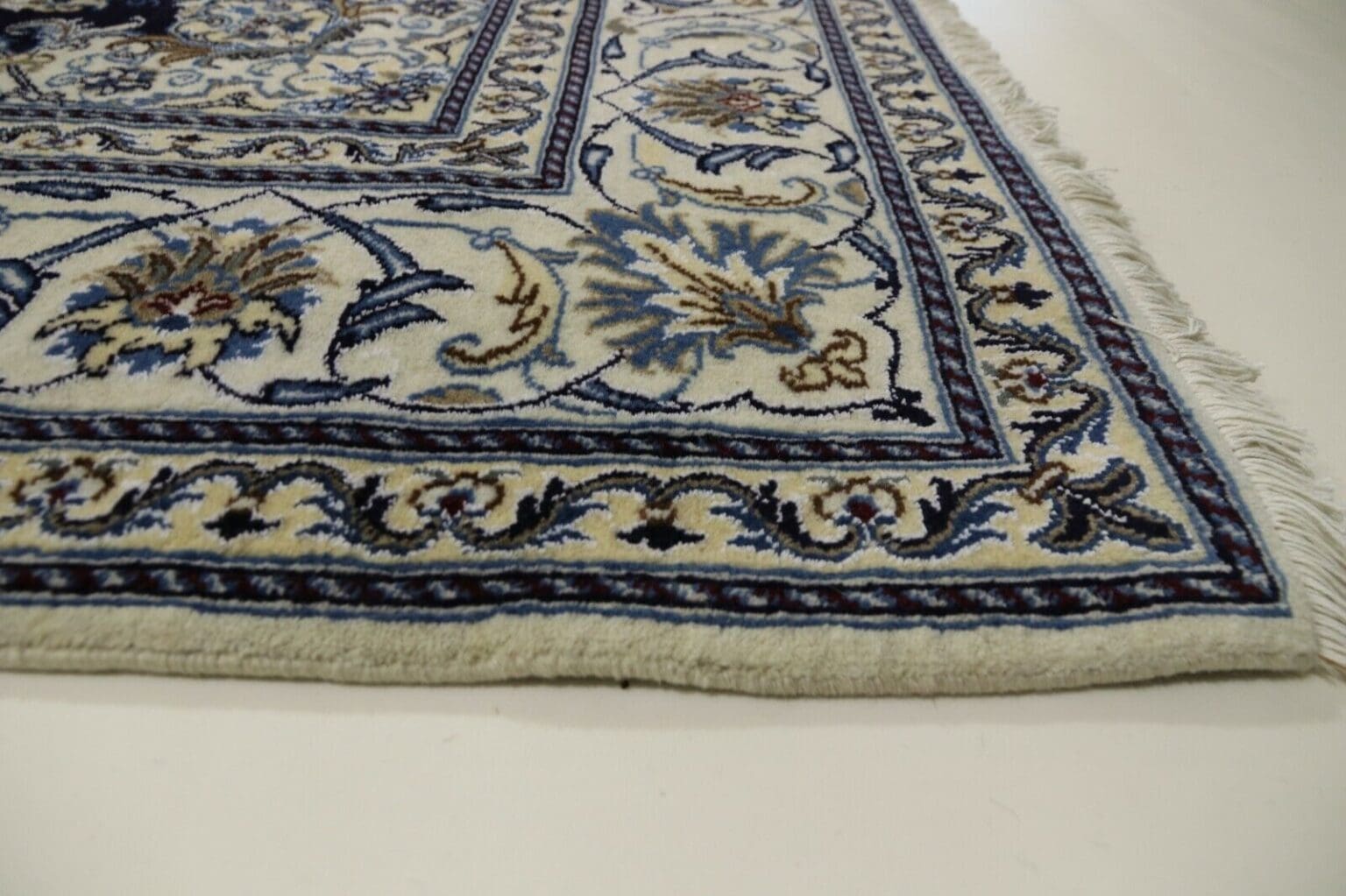
The rug is hand-knotted. In this technique, individual knots are placed by hand into the prepared structure, row after row. The pile and the design are built gradually rather than being printed or mechanically reproduced on a finished surface. The listed density of approximately 300,000 knots per square metre indicates a fine level of workmanship. A closely set knot structure allows narrow outlines, small motifs and subtle transitions to be represented with greater definition.
Hand knotting also means that the completed textile is not a perfectly identical piece of industrial series production. Small variations in tension, contour and colour response can result from the manual process. This rug is identified as a one-off, or single piece. Its production therefore combines an established weaving tradition with the specific use of virgin wool and silk.
Origin and Tradition
The Nain rug comes from Nain, a city in Isfahan Province in Iran. Nain is recognised as a distinct type within the Persian rug tradition. The city belongs to a region with a long history of carpet making. The tradition described for the area reaches back to the eighteenth century and is based on skills, methods and design knowledge passed through successive generations.
In this case, Nain names the place of origin and the regional weaving tradition; it is not merely the name of a decorative motif. Nain represents a Persian workshop culture in which precise drawing, balanced compositions and the use of wool and silk have an established role. The designation connects the rug with Nain itself and with the wider cultural setting of Isfahan Province.
Isfahan Province is one of the historic centres of Persian art and craftsmanship. Its rug traditions developed in an environment where floral ornament, symmetry and careful execution were brought together. Nain formed its own recognisable direction within that environment. Nain rugs are commonly associated with controlled drawing, fine detail and a quiet, balanced colour effect. These qualities help explain their use in both traditional rooms and more restrained contemporary interiors.
Hand-knotting involves a sequence of skilled tasks. The basic structure is prepared first. Knots are then placed according to a design, gradually building the pile and the pattern across the rug. The image is created by the position and colour of thousands of individual knots, not by a printed coating or a machine-applied surface. Once the knotting is complete, the pile is worked and finished so that the design can be read clearly and the surface has an even appearance.
Persian rugs bring together practical textile use and regional cultural knowledge. A Nain rug expresses that connection through its origin in Nain, its place within the Persian tradition and its hand-knotted construction. Persian rug making includes many local schools and visual languages. Nain is one of these identifiable regional traditions, with its own approach to fine line work, floral decoration and orderly composition.
The origin also relates to a method of production rather than to anonymous industrial manufacture. A hand-knotted Nain is made through many separate stages and depends on the experience and patience of the people carrying out the work. A high knot density supports the detailed drawing associated with the type. This example combines that regional practice with a stated composition of virgin wool and silk.
The history of a weaving centre is not the same thing as a claim about the age of an individual rug. The tradition of Nain reaches back to the eighteenth century, while this particular rug is described as new and in very good condition. The historical background explains the type and its methods; it does not assign an earlier date to this one-off piece.
Design and Pattern
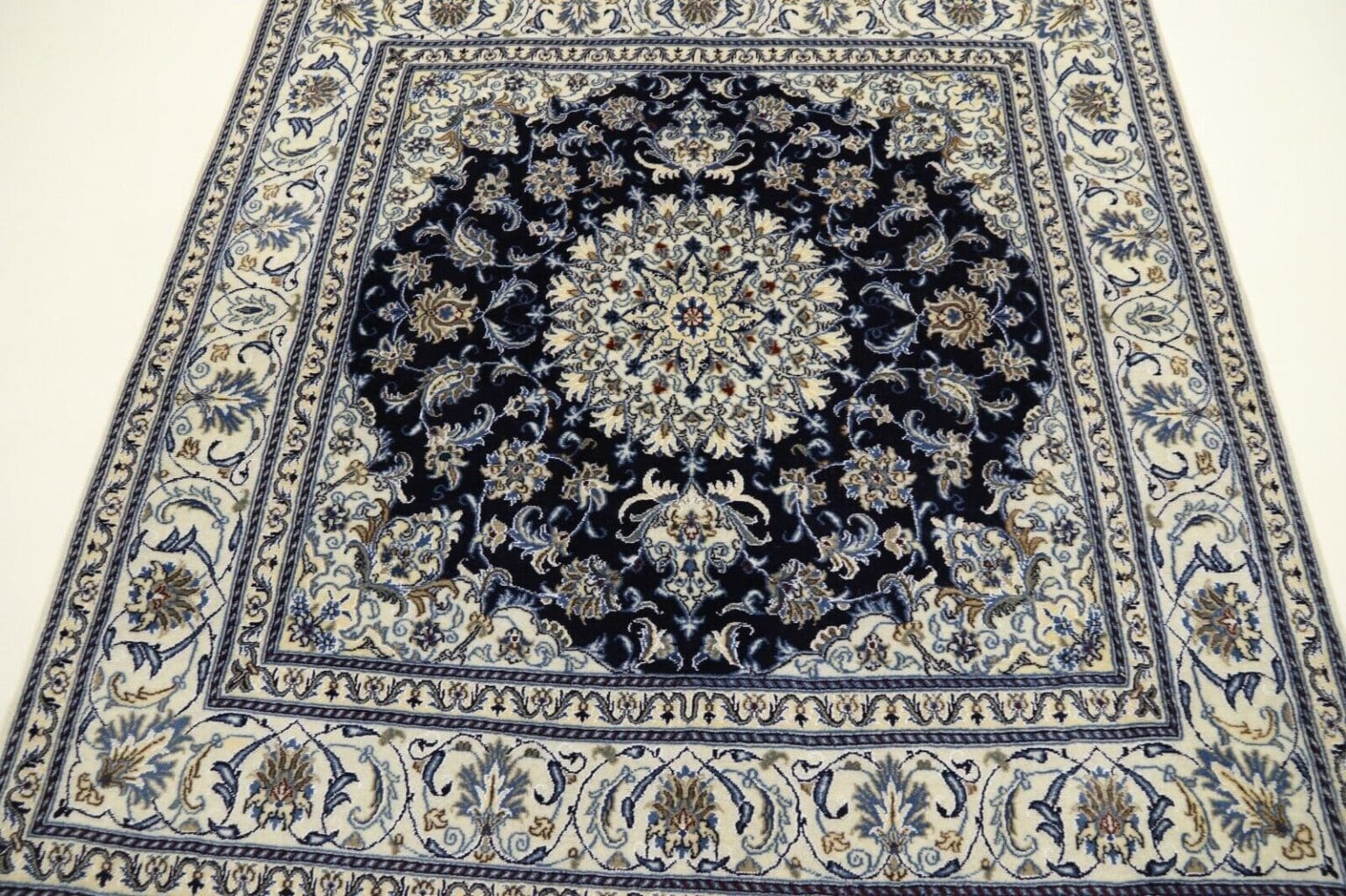
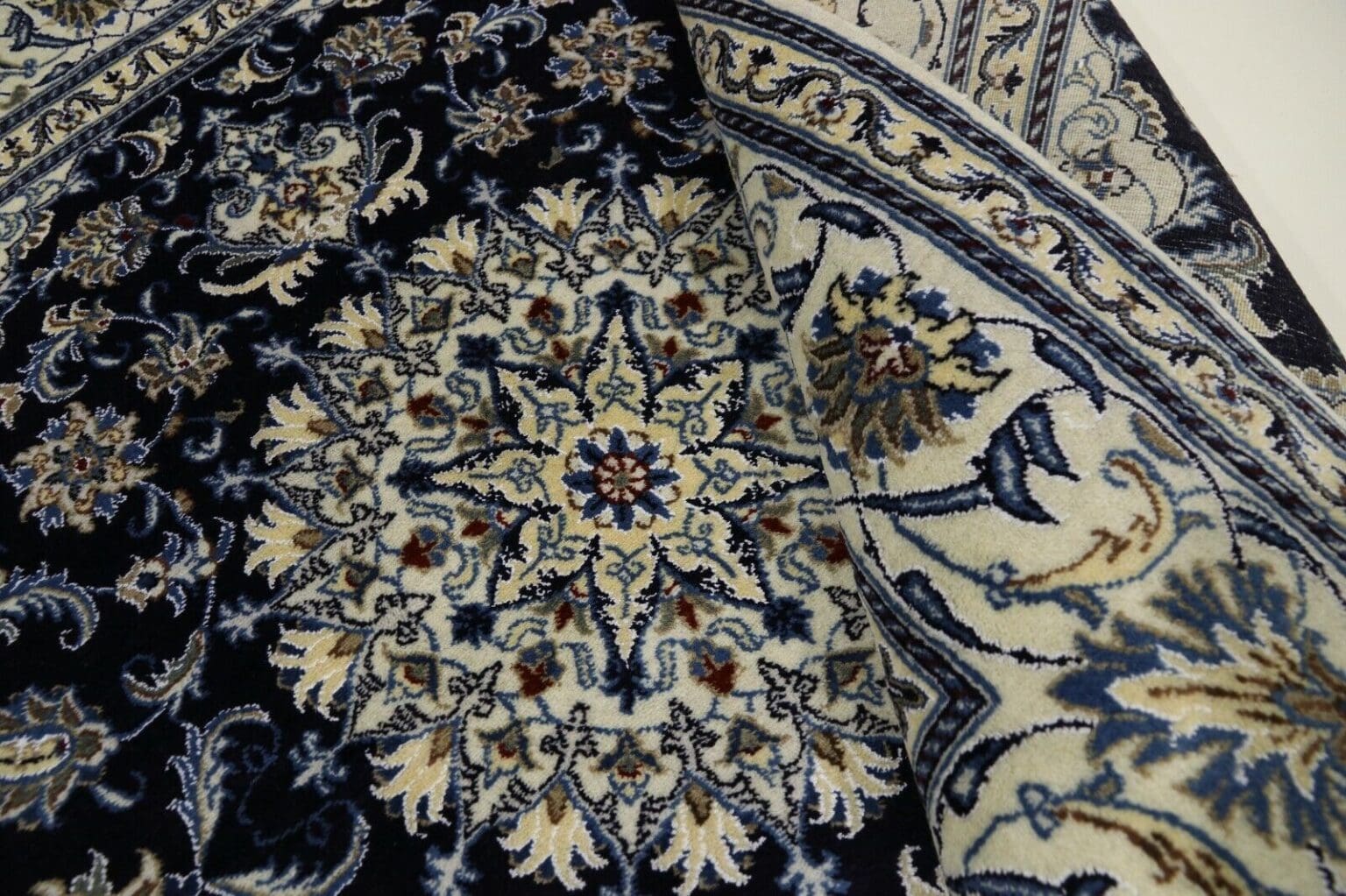
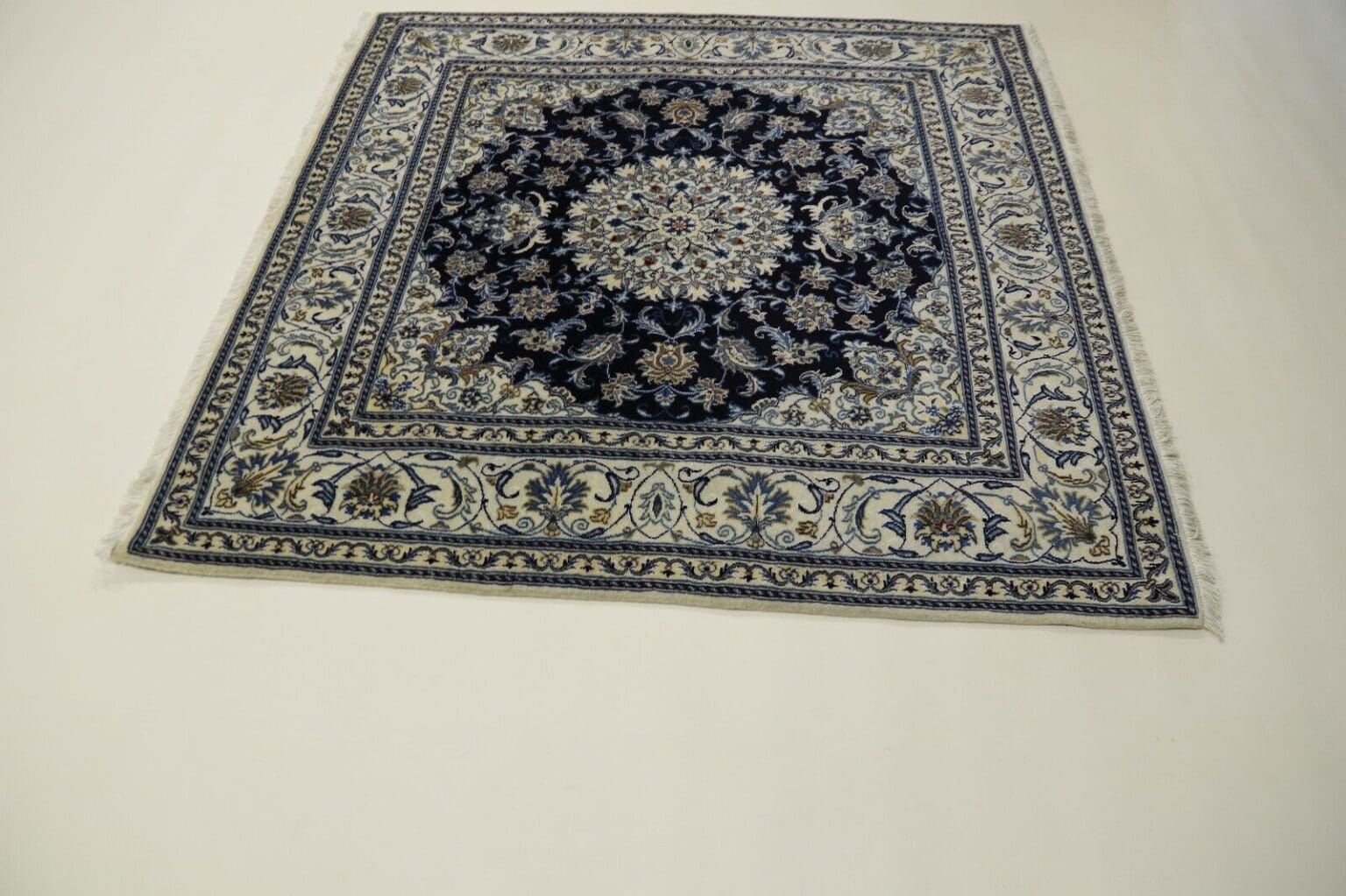
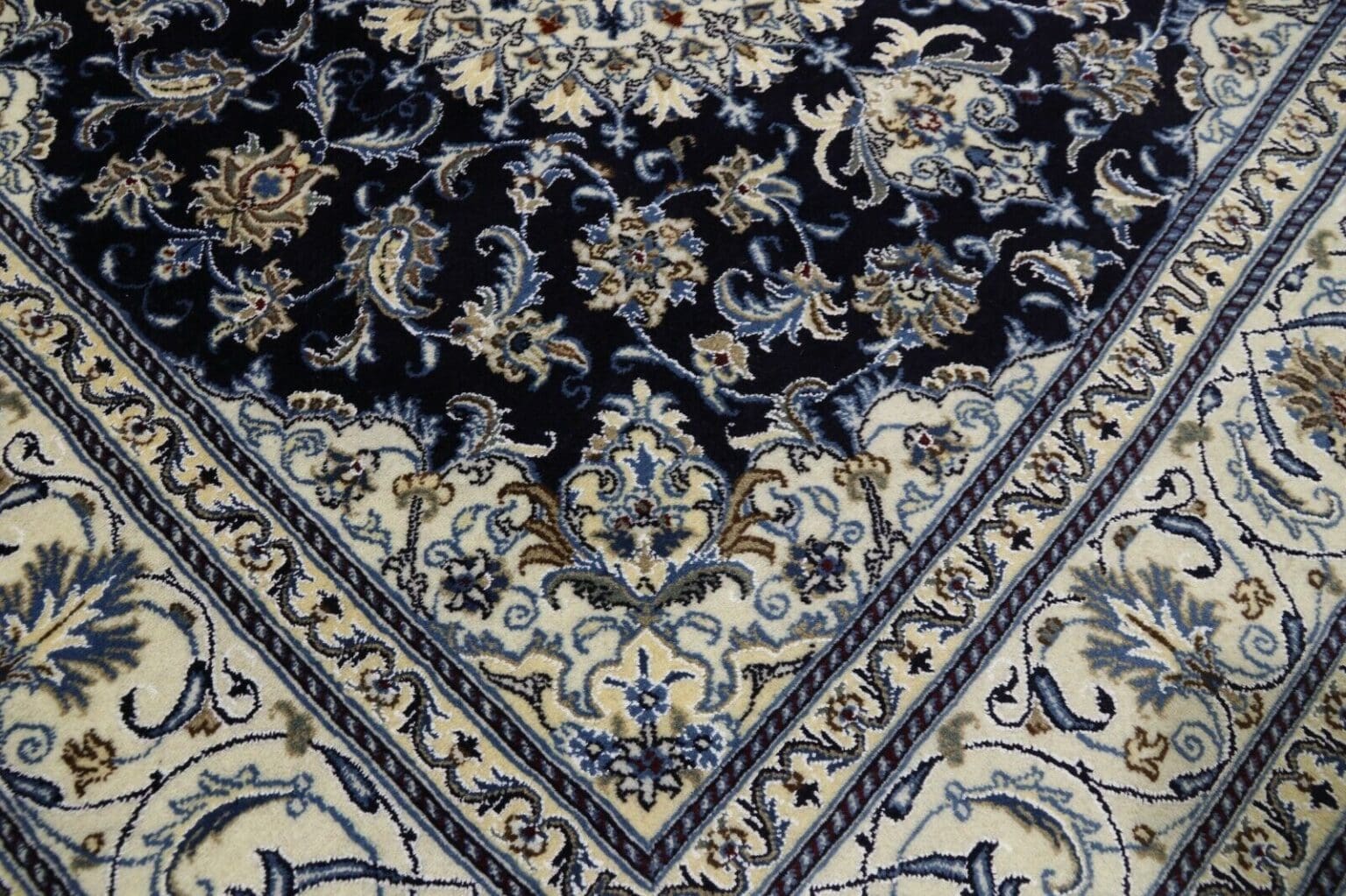
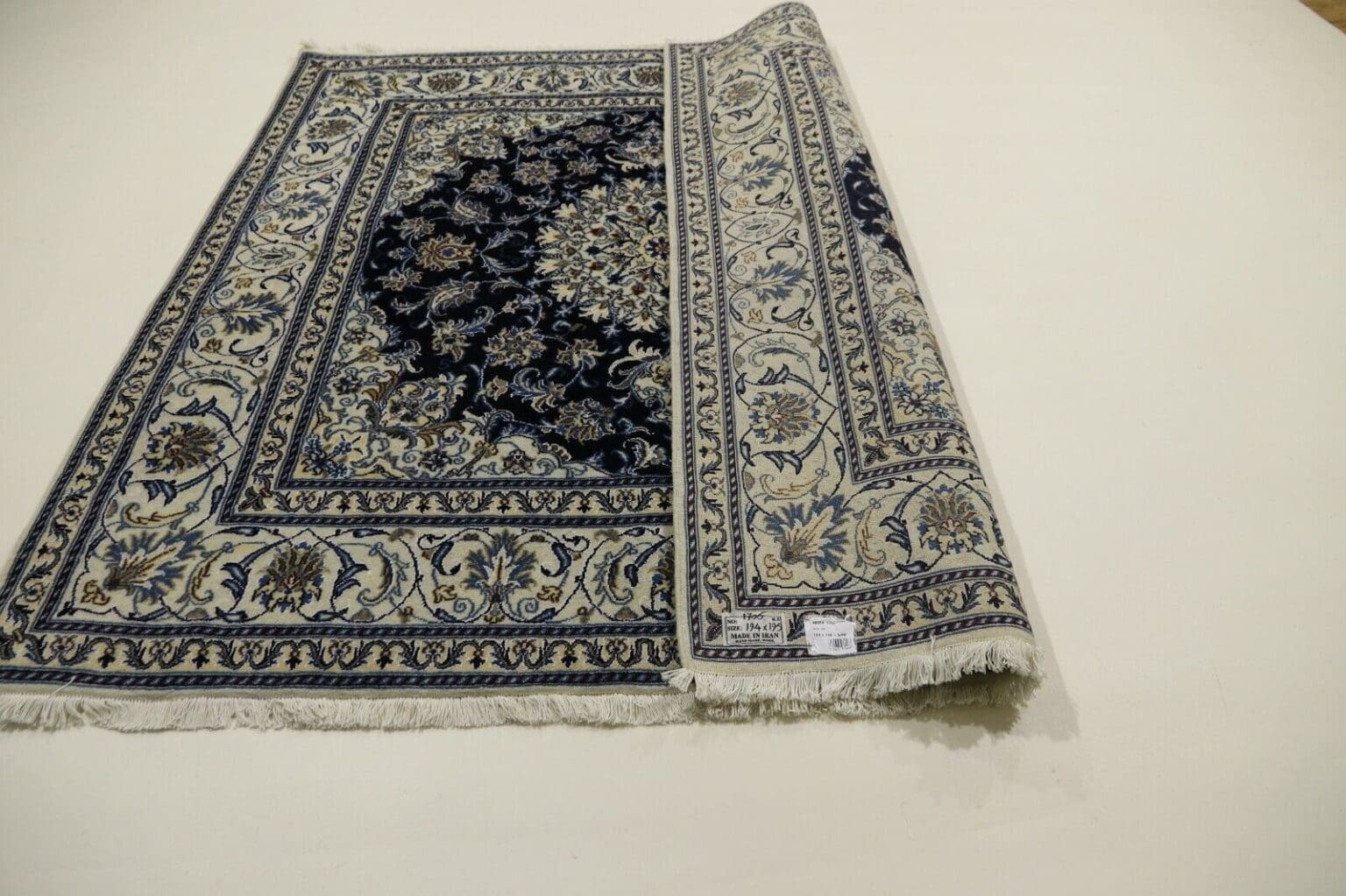
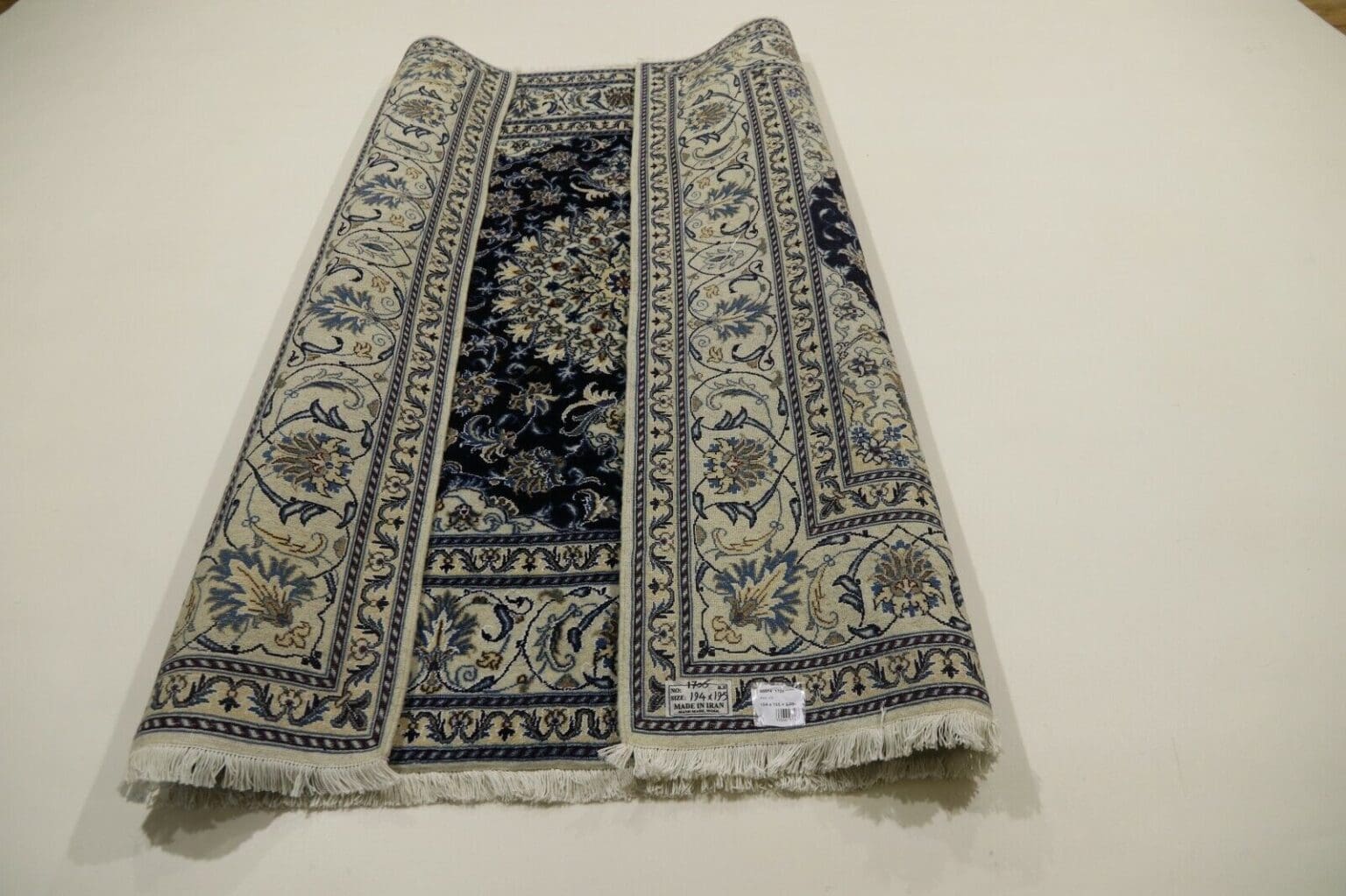
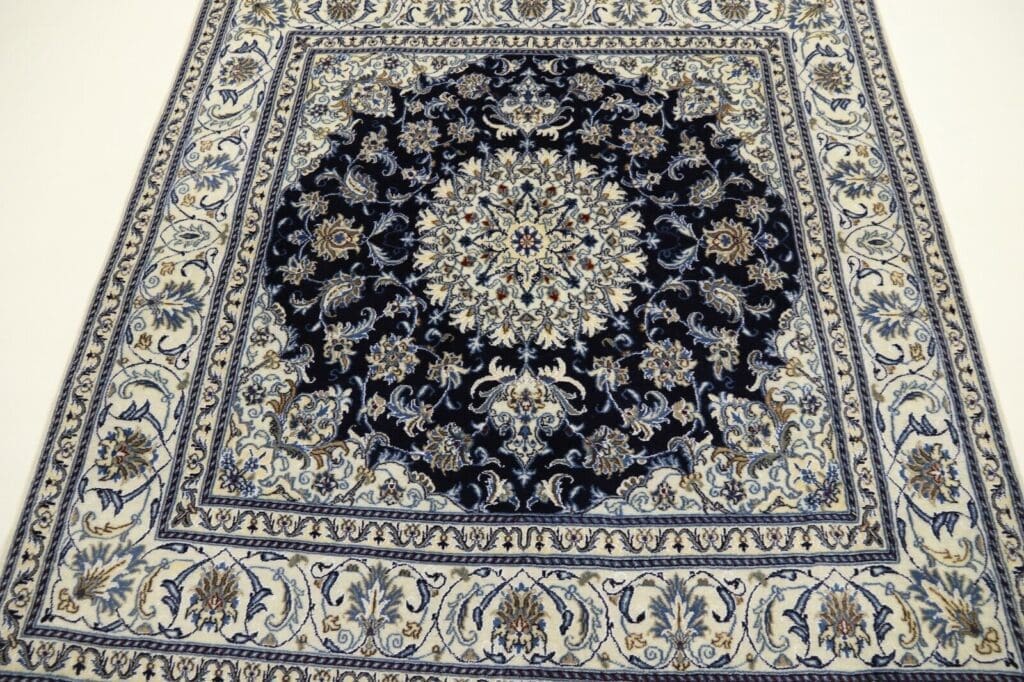
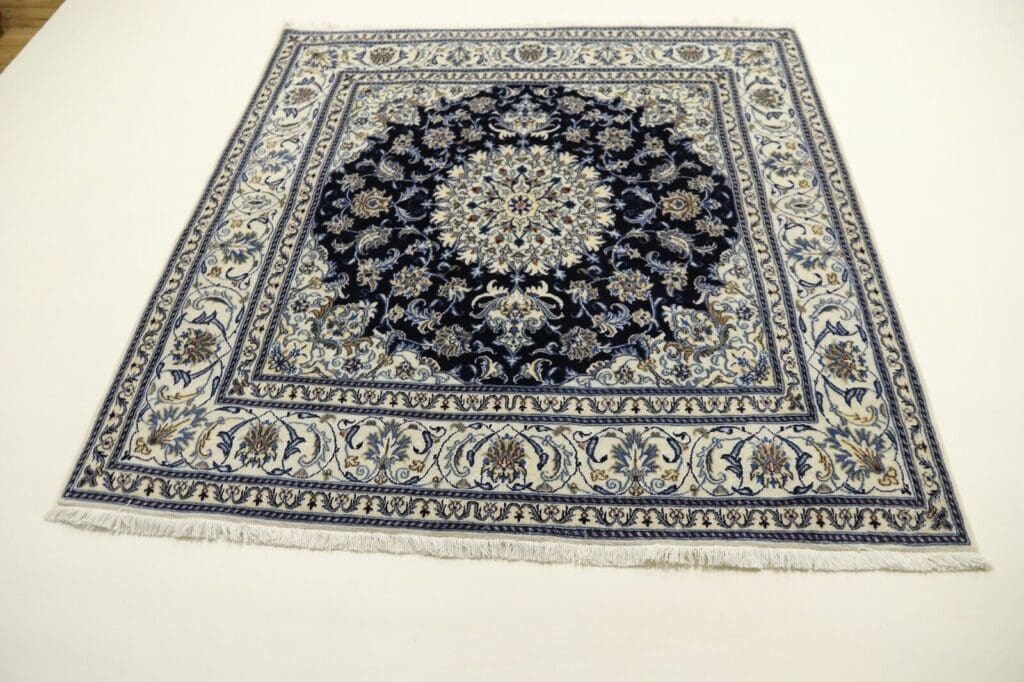
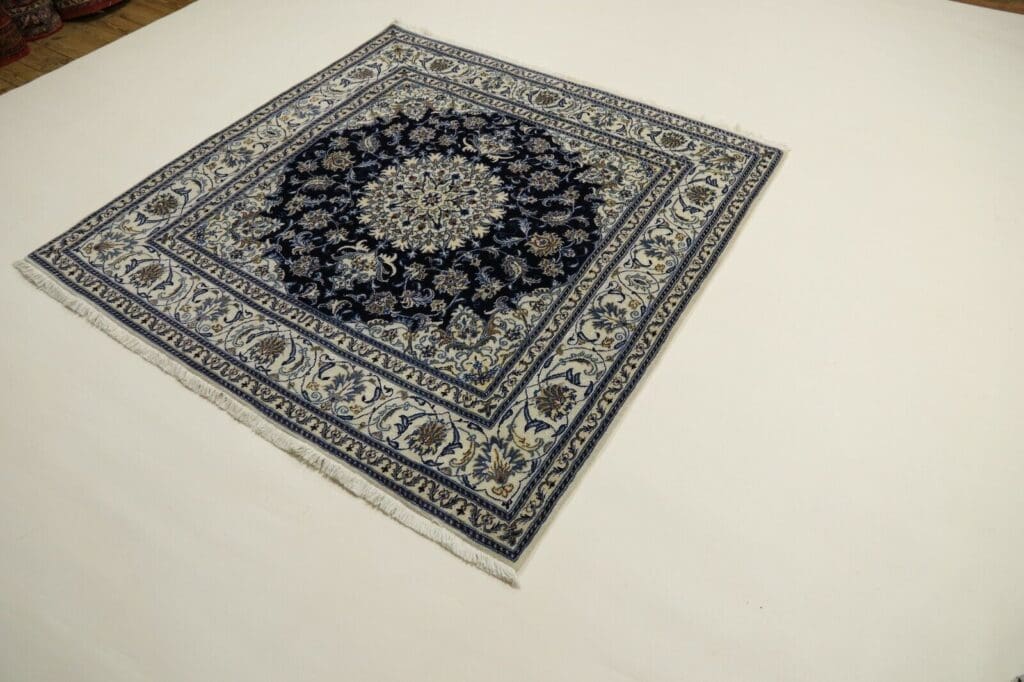
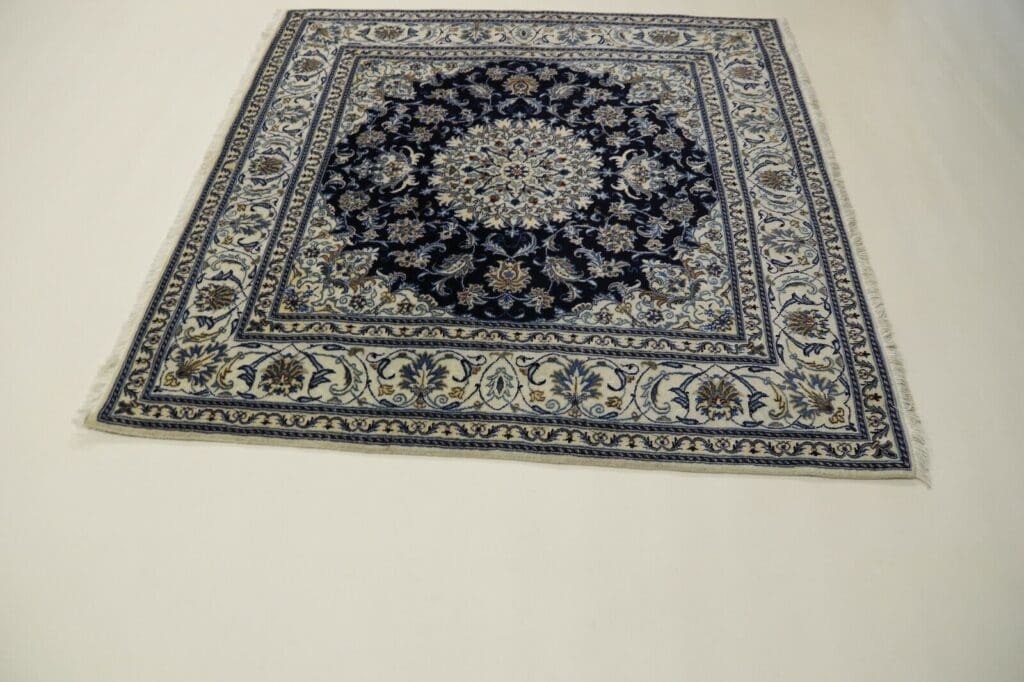
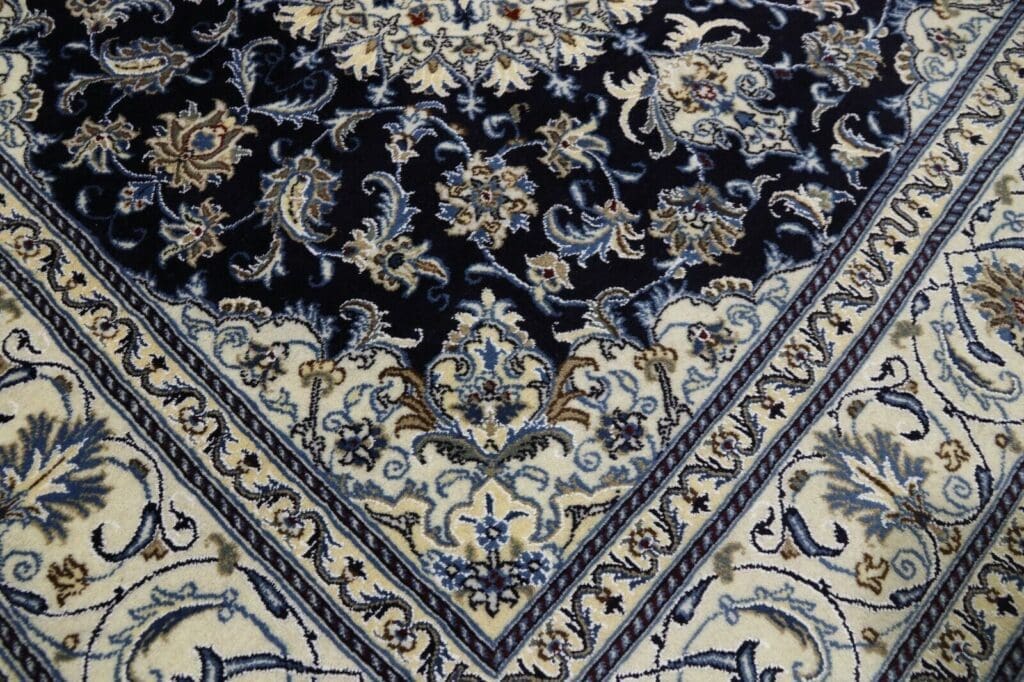
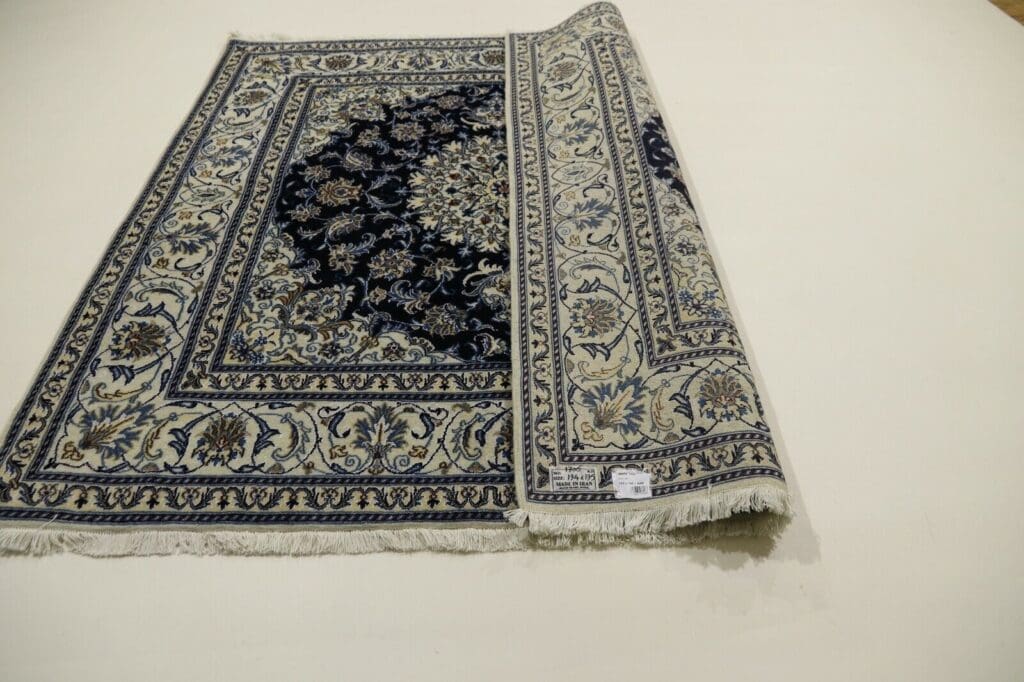
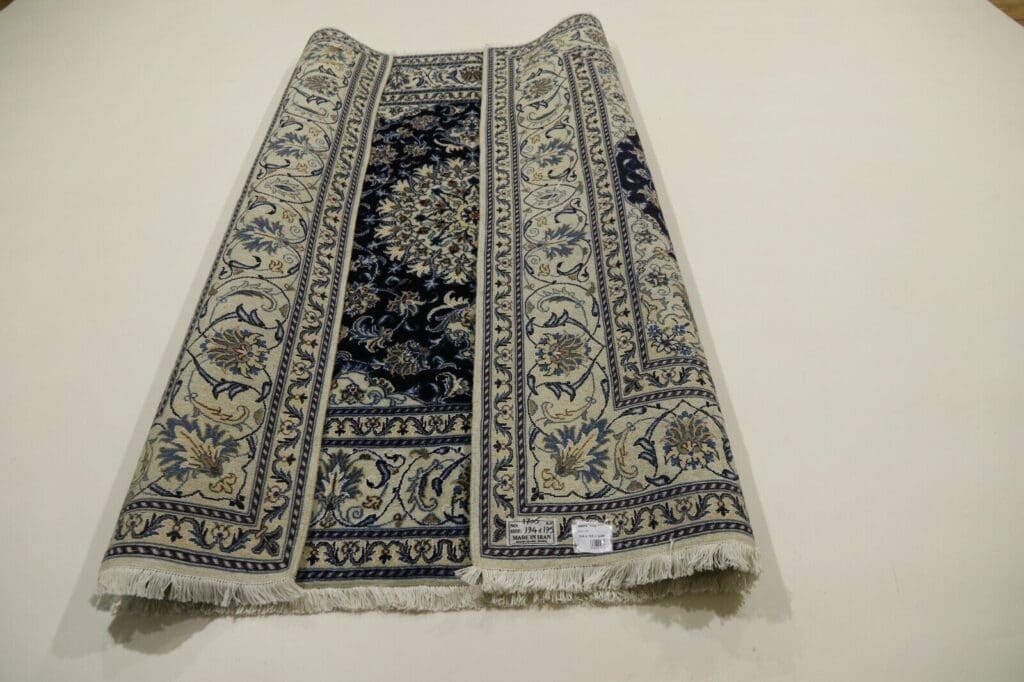
The rug is described as traditional Oriental in style. Nain rugs are known for finely drawn and detailed designs. Their compositions often use floral motifs arranged within a clear overall order. Flowers, leaves and curling branches may be combined with geometric organisation. The meeting of organic plant forms and structured lines is part of the broader visual vocabulary associated with Nain rugs.
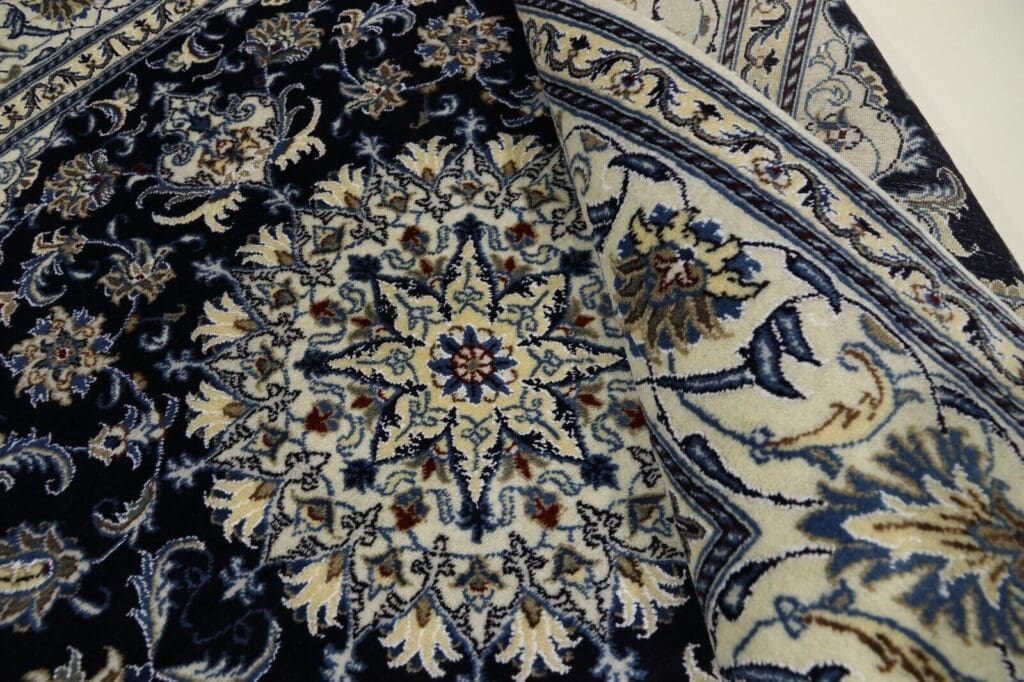
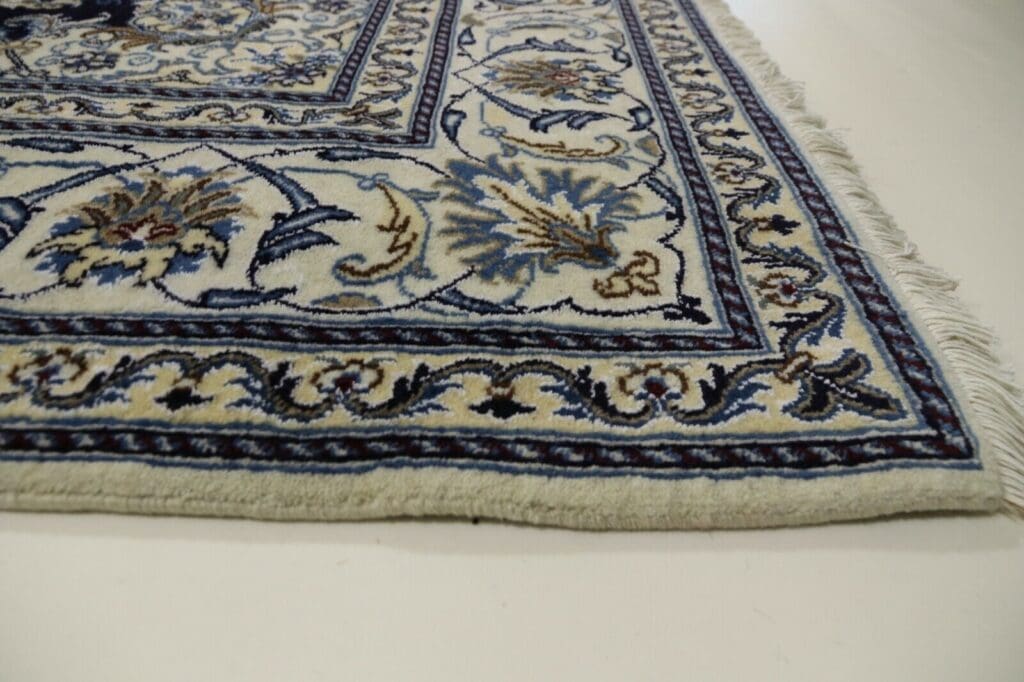
The appearance of a hand-knotted design is created through many small, individually placed knots. A contour is formed by a sequence of coloured knots, while larger areas gain structure through repeated motif elements. At a high knot density, narrow lines, small floral details and gradual changes can be rendered with greater precision. The effect therefore comes from the accumulated accuracy of the whole surface rather than from one isolated decorative feature.
Nain designs are often associated with soft and balanced colours. Such colours can allow floral drawing to remain legible while preserving the calm order of the composition. The traditional Oriental classification points to a decorative, established design language rather than an abstract or purely modern one. It does not replace the individual design of this particular single piece, which remains the result of its own hand-knotting process.
Floral motifs can serve several purposes in Persian rug design. They may establish the focus of a central field, connect separate areas or create rhythm along a border. Geometric elements provide structure and can support symmetry, repetition or a clearly organised relationship between motifs. In Nain traditions, these devices are commonly associated with fine outlines and a controlled amount of detail.
The silk content can contribute to the visual differentiation of the pattern. Its finer fibre and gentle sheen may make selected lines or areas stand out against the more textured effect of wool. Wool supplies the dominant textile body and gives the pile its substantial surface. The design is consequently perceived through both the drawn motifs and the way the two materials respond to light.
A traditional Oriental design can be placed in different interior settings. Classic furnishings can echo the floral and symmetrical vocabulary, while a restrained colour effect can provide structure in a more modern room. This flexibility belongs to the general character of Nain design and its ordered composition; it is not a claim that the motifs of this individual rug have been altered or adapted.
Every detailed hand-knotted pattern remains connected to the work of the knotters who made it. Minor variations and nuances are natural results of manual production. The surface should therefore not be understood as a mechanically repeated image. The stated knot density, the combination of virgin wool and silk and the traditional Oriental style together describe the technical and visual framework of this Nain Persian Rug.
Special Features
A central technical feature is the density of approximately 300,000 knots per square metre. This supports detailed drawing and is one of the characteristics considered when describing a hand-knotted rug. A dense knot structure can accommodate fine contours and differentiated motifs, while also requiring a considerable amount of manual work. The density is presented as approximately 300,000 knots per square metre and is not changed here into another figure.
The material combination of 90% virgin wool and 10% silk also defines the piece. Wool contributes structure and resilience, while silk contributes fineness and a restrained sheen. The rug is described as new and in very good condition. It is also identified as a one-off, or single piece, and is supplied with an authenticity certificate.
For routine care, gentle vacuuming with a soft brush is appropriate. Spills and stains should be addressed promptly with a clean, damp cloth and a mild cleaning product. Harsh chemicals should be avoided. Professional cleaning is recommended when a more thorough treatment is needed, because the combination of wool and silk and the hand-knotted structure call for a suitable method.
Direct sunlight should be avoided in order to protect the colours and textile surface over time. The rug should also not be placed in areas that remain wet or humid. These measures are relevant to the care of a hand-knotted textile made with wool and silk. They are care guidance, not a statement about any damage: the piece is described as new and in very good condition.
FAQ
How should I clean this Nain Persian Rug?
Use a vacuum cleaner with a gentle brush for regular maintenance, treating the pile carefully rather than using an aggressive setting. If something is spilled, remove it promptly with a clean, damp cloth. A mild cleaning product may be used cautiously, while harsh cleaning agents should be avoided. Professional cleaning is recommended for more substantial soiling. A specialist can take the wool-and-silk composition and the hand-knotted structure into account when selecting a method, helping to preserve the colour effect and surface structure.
How can I preserve the colours of the Nain rug?
Keep the rug away from direct sunlight, since prolonged strong exposure can place uneven stress on textile colours and the surface. Vacuum it regularly and gently so that dust is removed without unnecessary intensive treatment. Do not use aggressive cleaning products. The rug should also not be laid in a wet or persistently humid area. A clean, dry setting and careful maintenance help support the continued preservation of the colours and texture of this wool-and-silk hand-knotted rug.
What makes this Persian Rug a one-off?
The piece is hand-knotted and identified as a one-off, or single item. Its design is built from individual knots placed by hand over many rows, rather than from a completely identical machine-made surface. The particular combination of 90% virgin wool and 10% silk, the fine knotting and the individual pattern work are part of this example’s description. The authenticity certificate accompanies its identification as a single piece. Each hand-knotted rug therefore reflects the specific process through which it was made.
To provide the best experiences, we use technologies like cookies to store and/or access device information. Consenting to these technologies will allow us to process data such as browsing behavior or unique IDs on this site. Not consenting or withdrawing consent, may adversely affect certain features and functions.
Functional Always active
The technical storage or access is strictly necessary for the legitimate purpose of enabling the use of a specific service explicitly requested by the subscriber or user, or for the sole purpose of carrying out the transmission of a communication over an electronic communications network.
Preferences
The technical storage or access is necessary for the legitimate purpose of storing preferences that are not requested by the subscriber or user.
Statistics
The technical storage or access that is used exclusively for statistical purposes.The technical storage or access that is used exclusively for anonymous statistical purposes. Without a subpoena, voluntary compliance on the part of your Internet Service Provider, or additional records from a third party, information stored or retrieved for this purpose alone cannot usually be used to identify you.
Marketing
The technical storage or access is required to create user profiles to send advertising, or to track the user on a website or across several websites for similar marketing purposes.

 SECURE PAYMENT
 SHIPPING PARTNERS