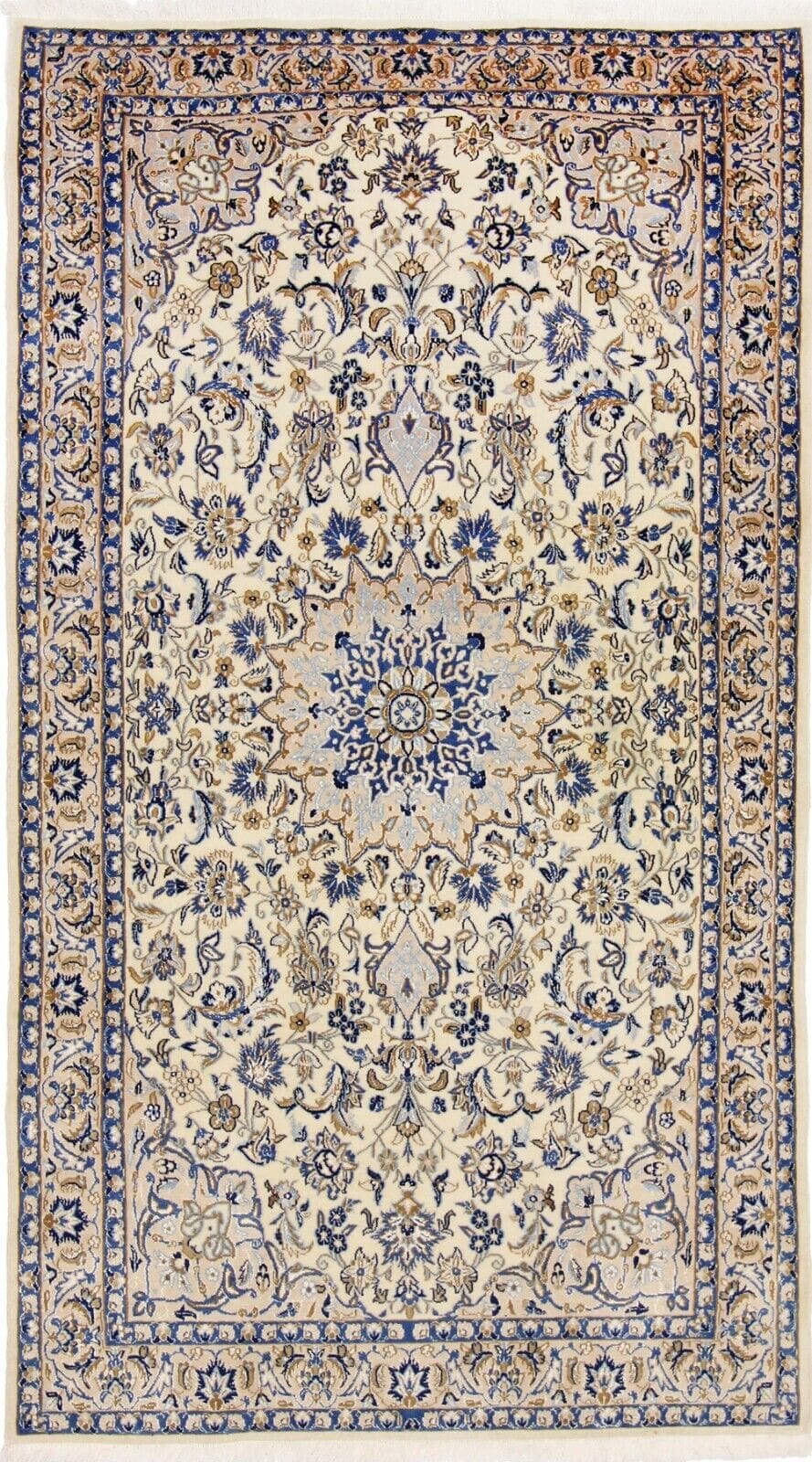
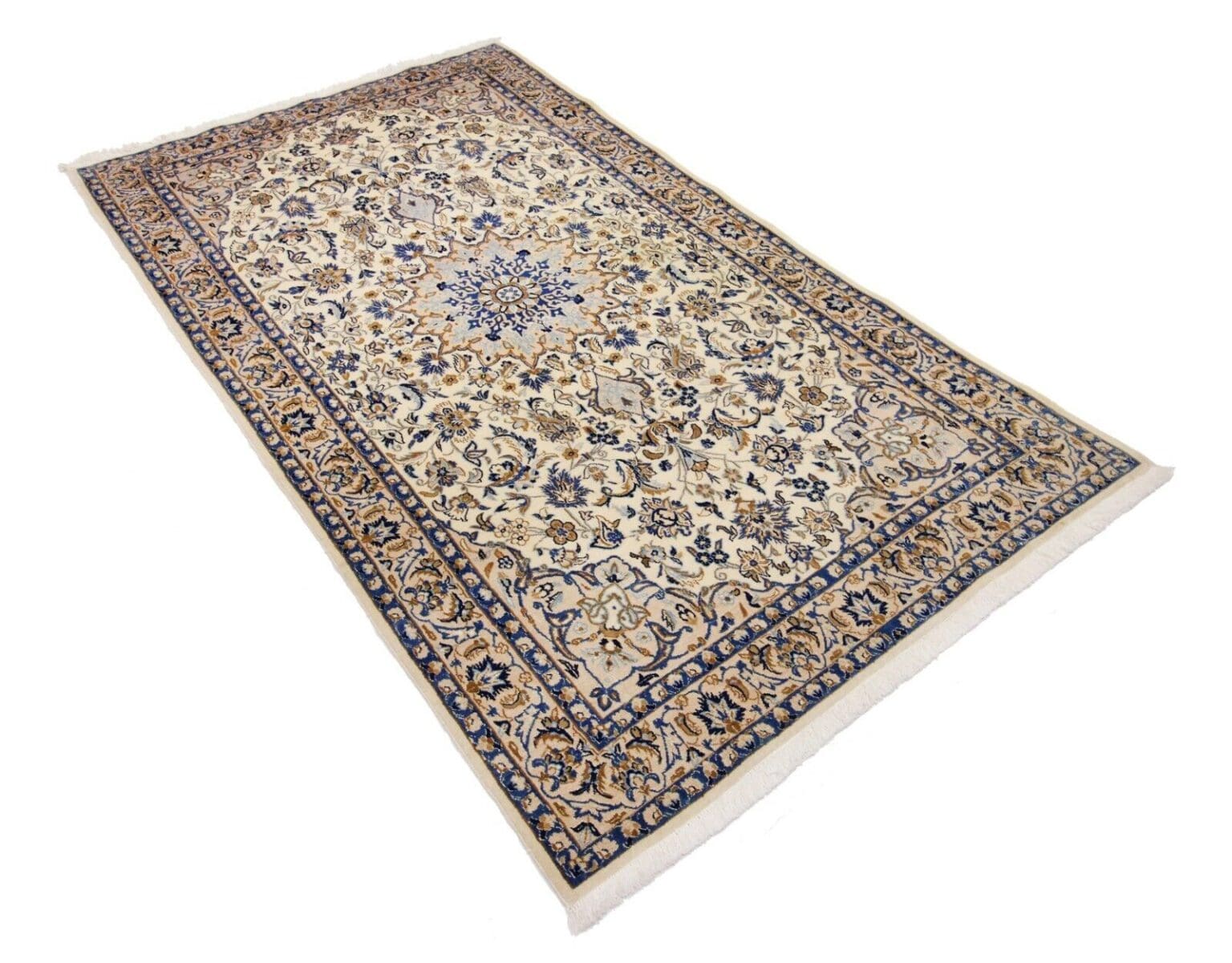
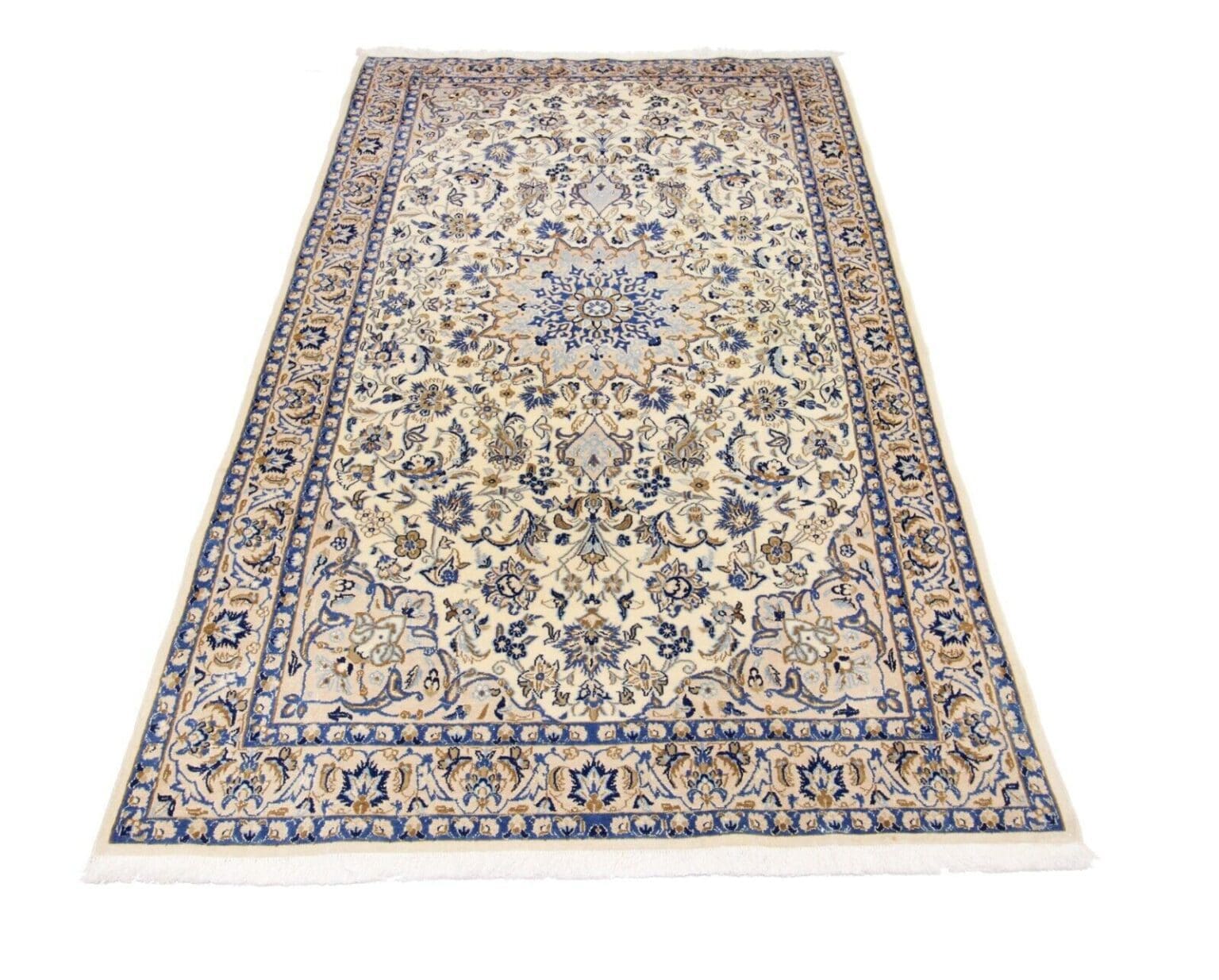
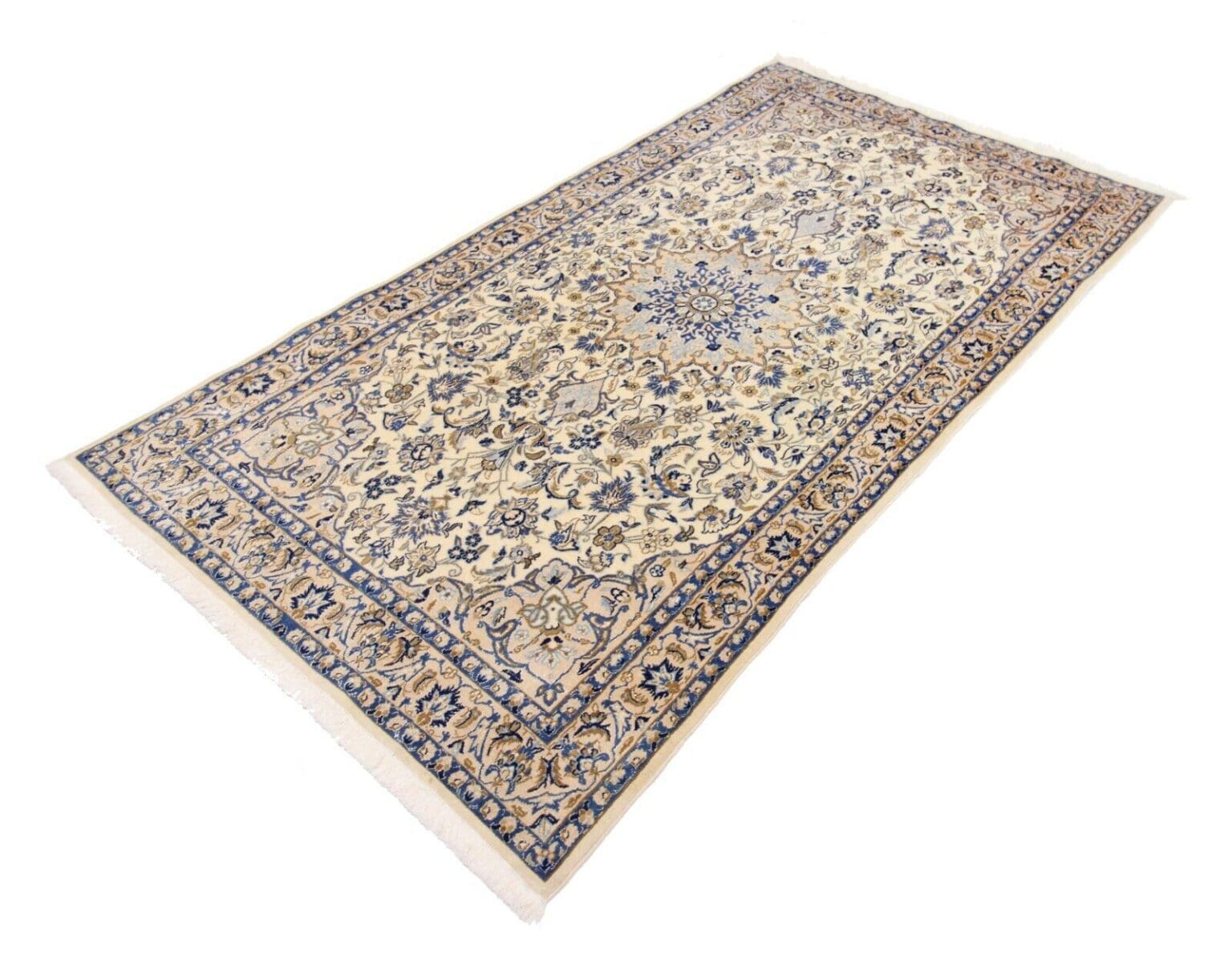
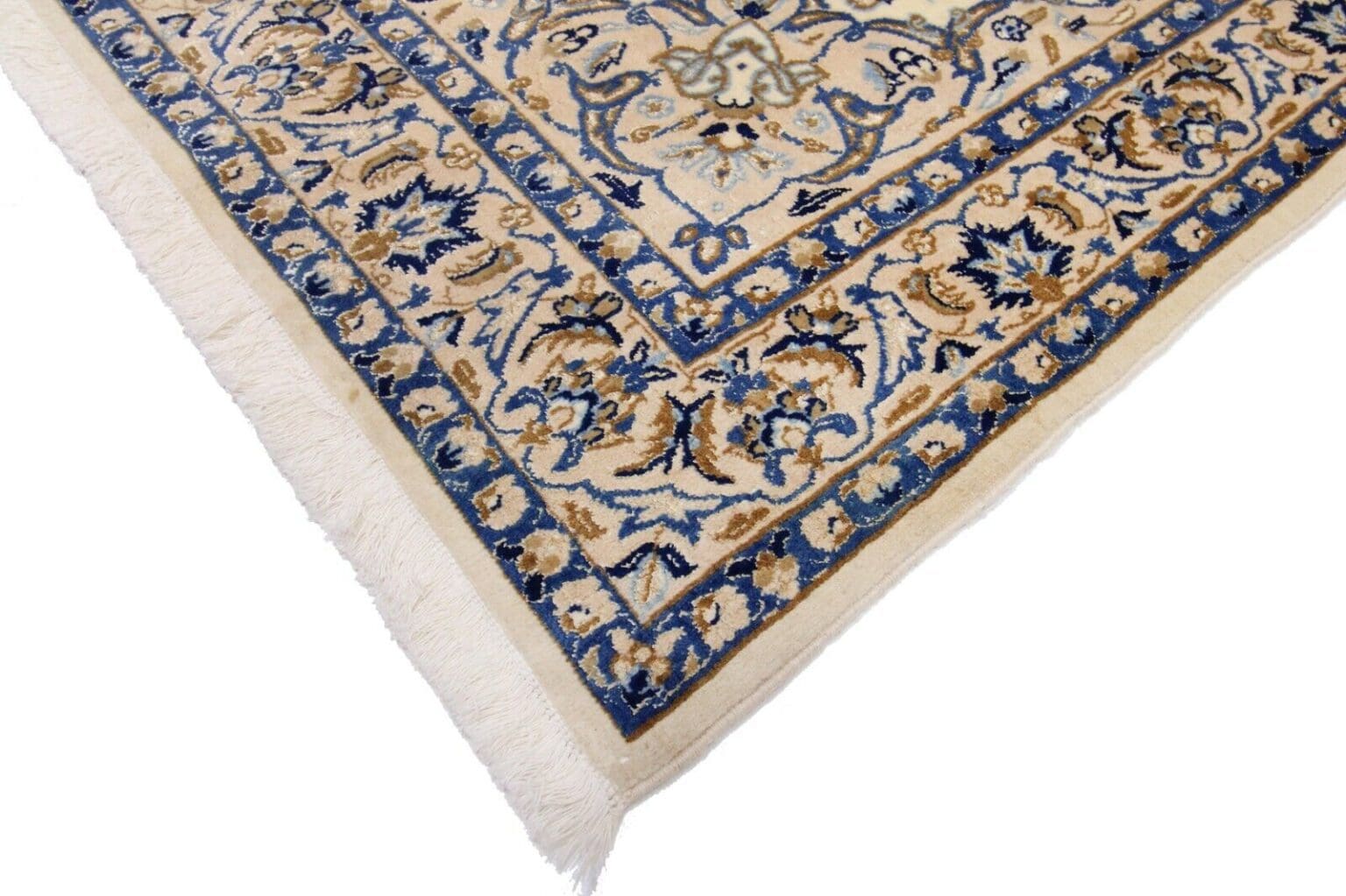
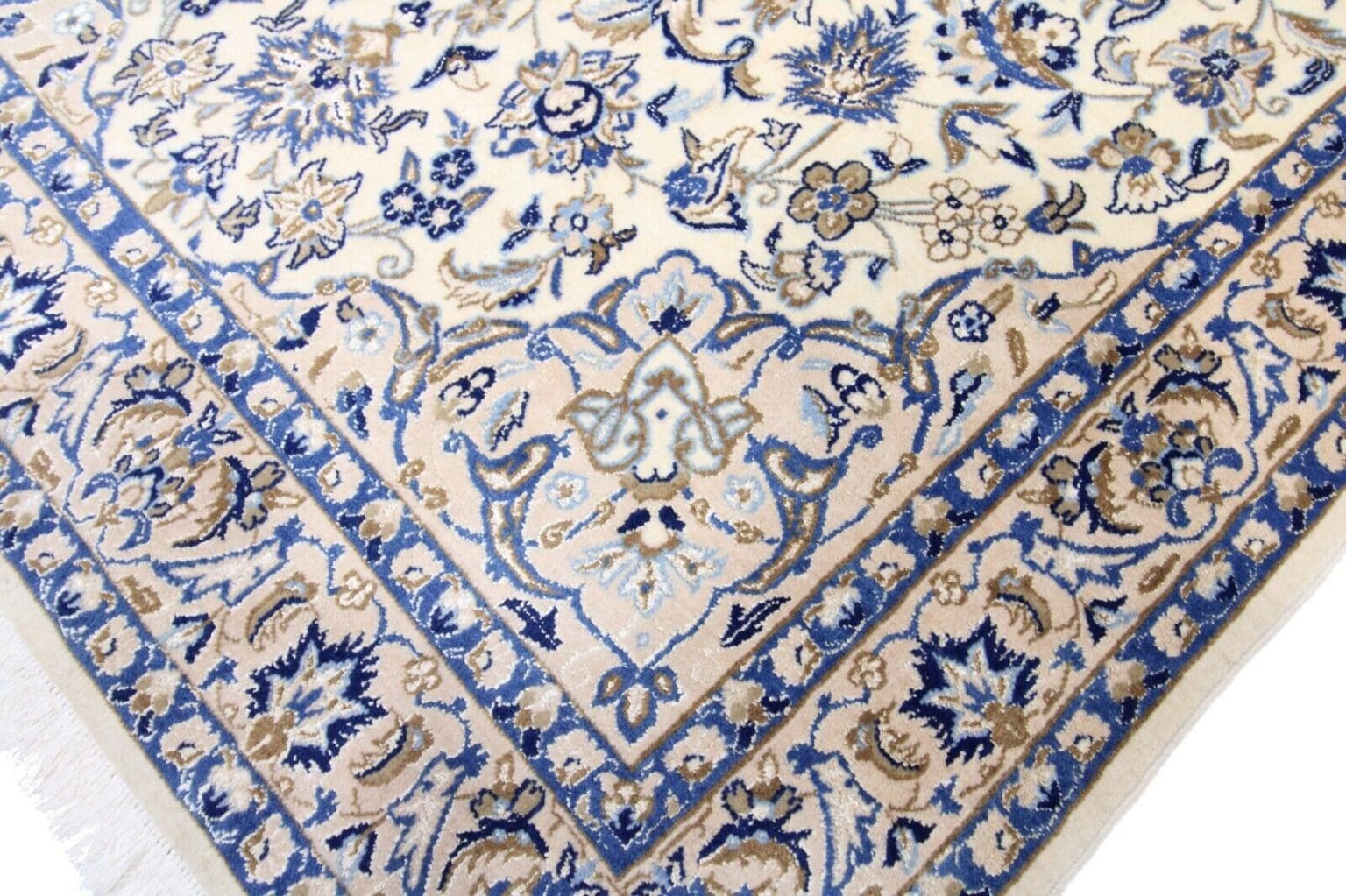
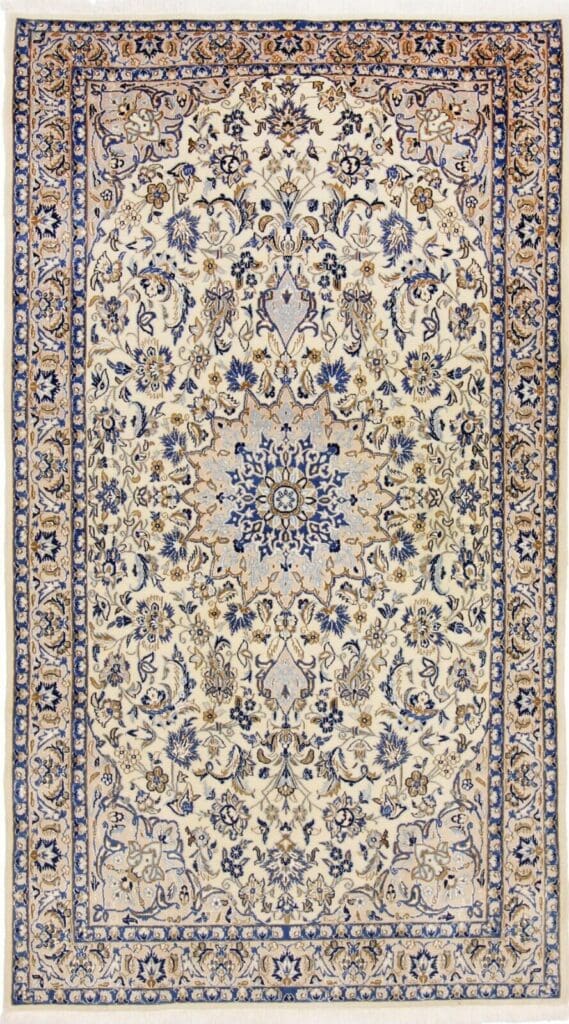
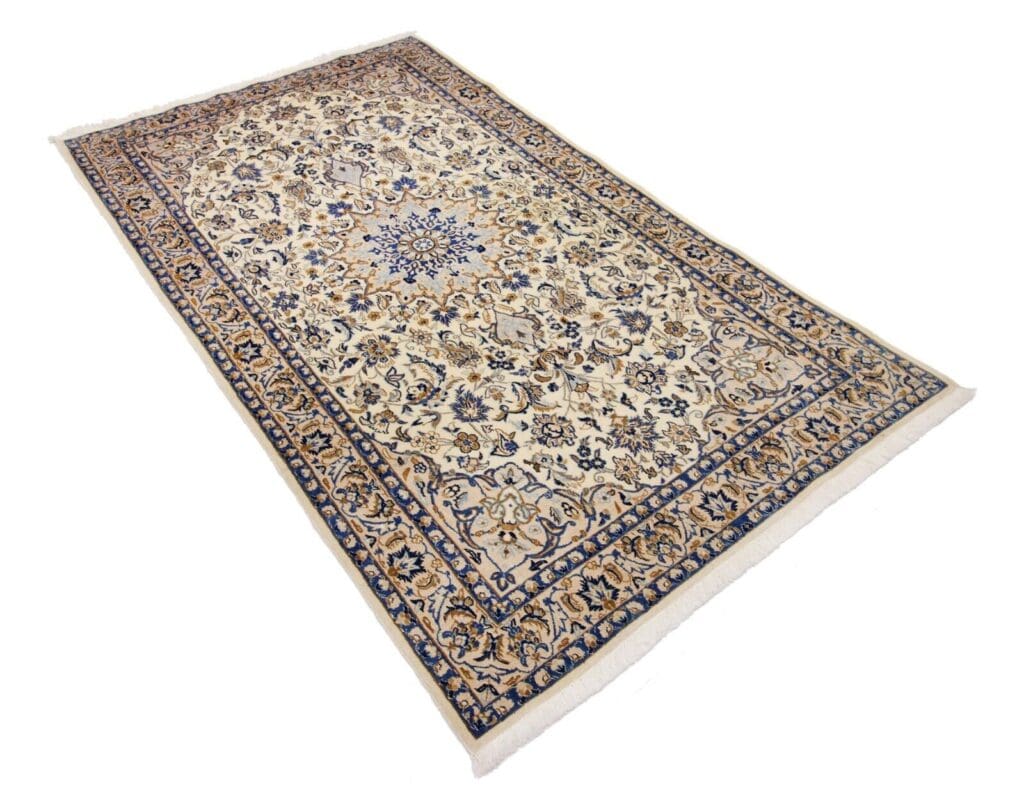
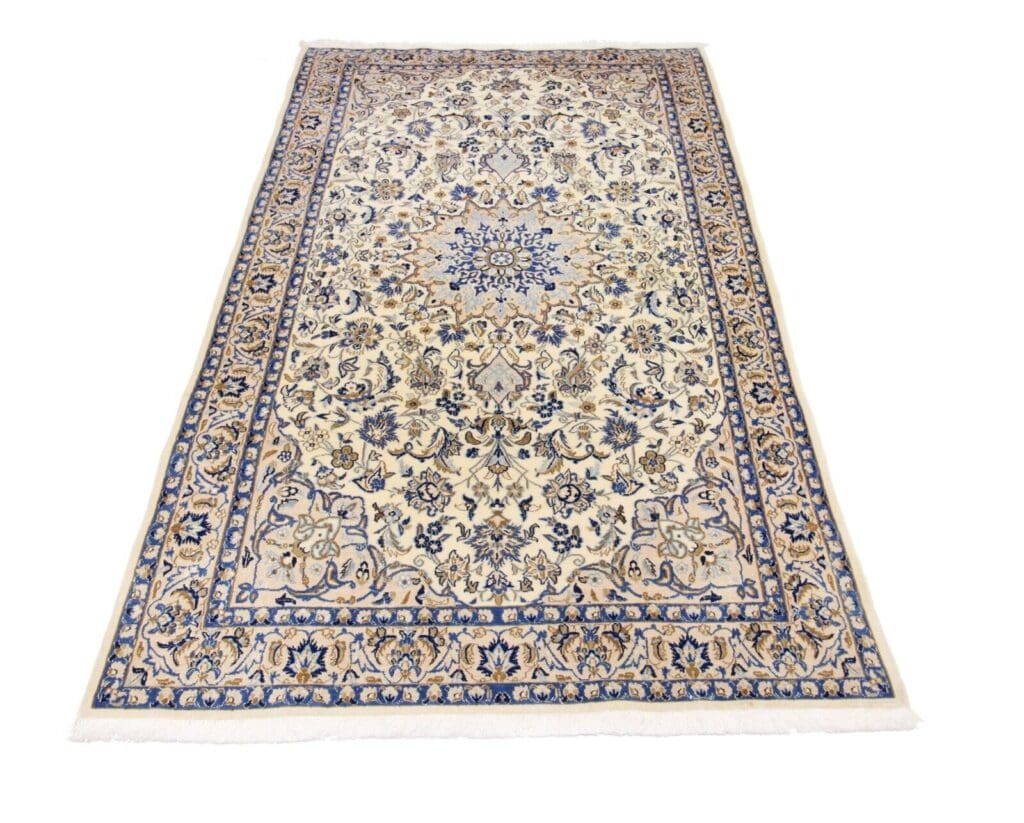
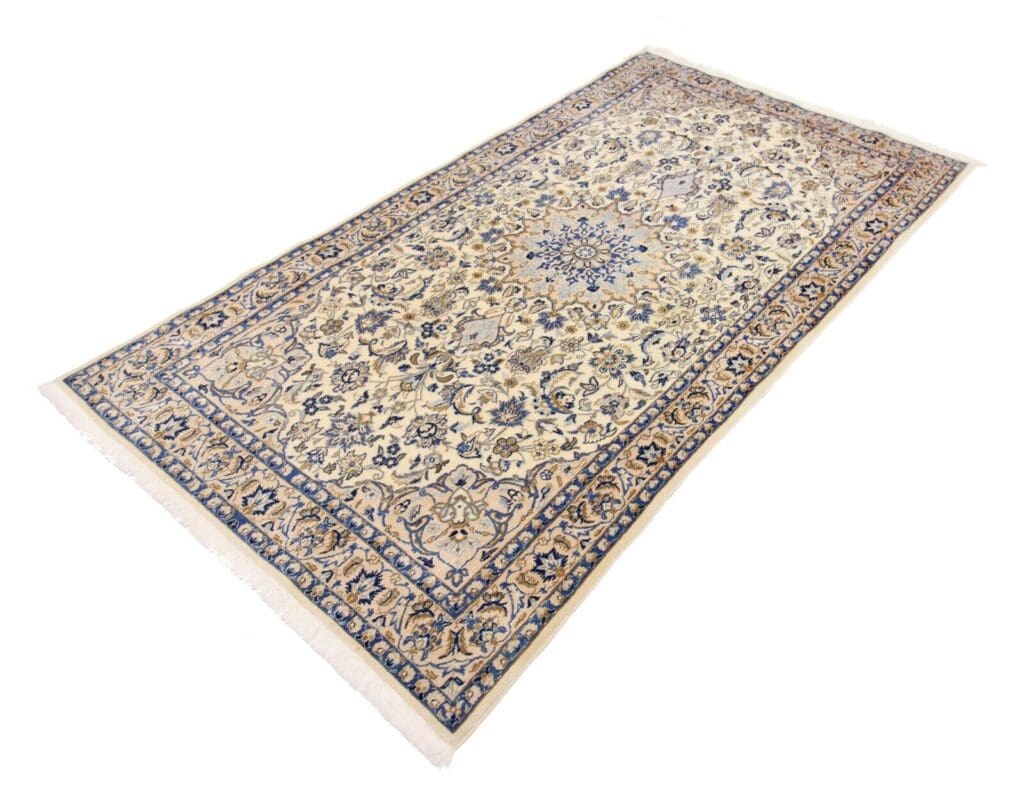
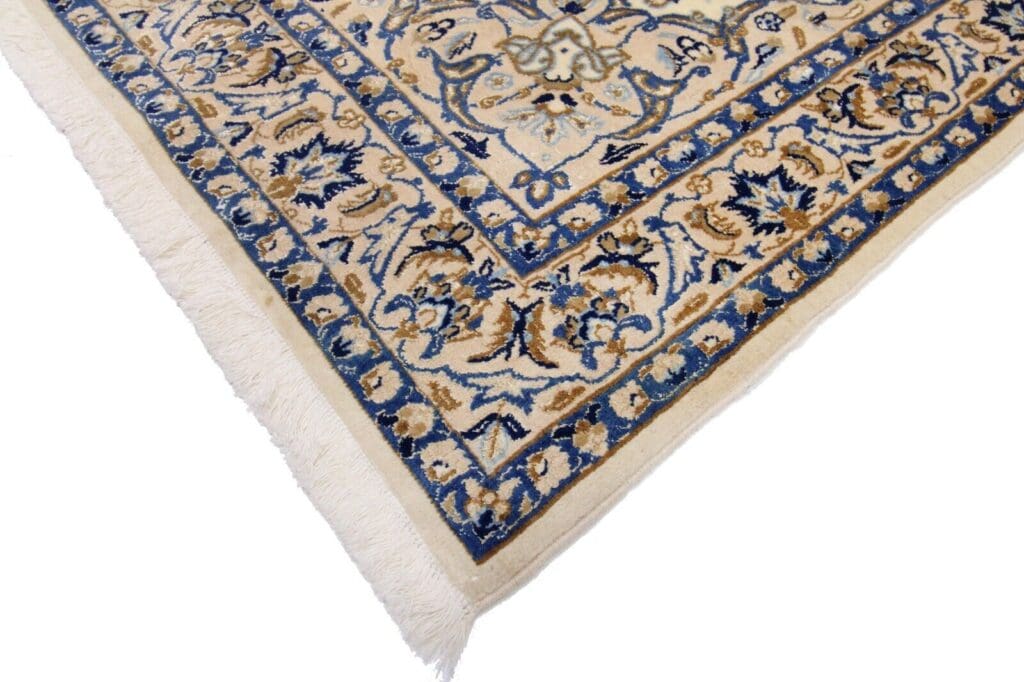
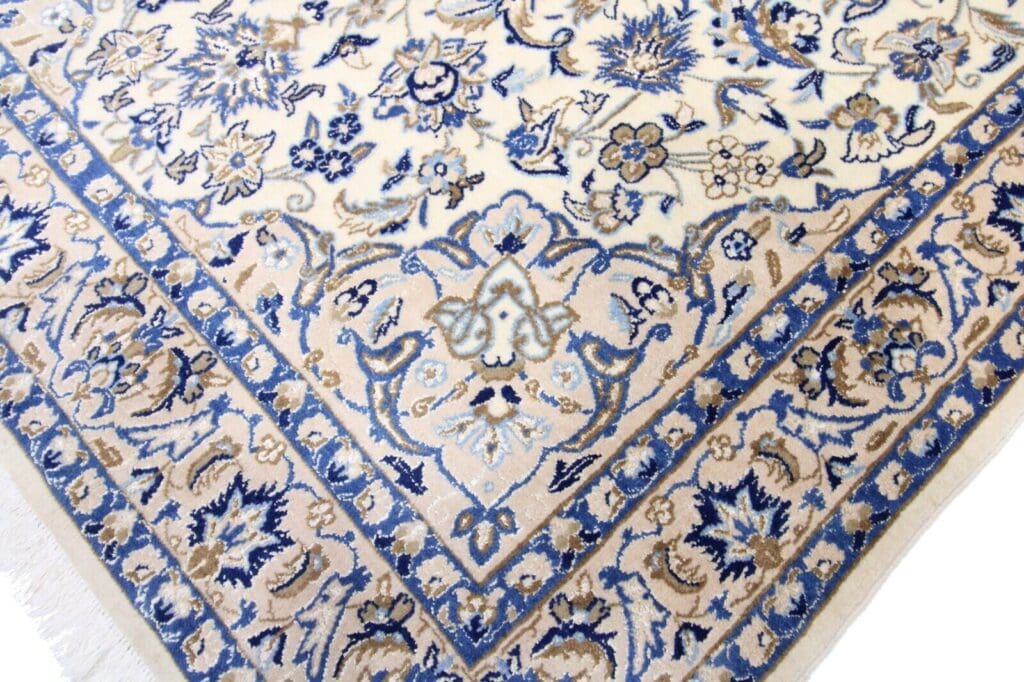
Persian Rug Nain 184 x 122 cm Wool Hand-knotted
€ 1845
Hand-knotted Nain Persian rug | Knot density: High | Material: Pile wool, warp cotton | Size: 220 x 120 cm | Pattern: Regional Persian design | Condition: Used, top condition, washed
Sold out
- ✓Free Shipping in EU
- ✓2-5 Business Days Delivery
- ✓14-Day Return Policy
- ✓Worldwide Shipping on request
 SECURE PAYMENT
 SHIPPING PARTNERS
Inventory number: 5DC98BDA
Description
Nain Persian Rug
Material and Craftsmanship
This Nain Persian rug is hand-knotted. Its pile is made of wool, while cotton is specified for the warp. These are the two materials given for its textile construction. Wool is widely used for pile because it forms a resilient and tactile surface. Cotton can provide a regular foundation for the rows of knots. Here, the material description is specifically wool pile with a cotton warp.
Hand-knotting begins by arranging the warp threads as the supporting lengthwise structure. Pile yarn is then tied into individual knots and secured with weft threads as the work progresses. The pile is subsequently trimmed and organized to create a continuous rug surface. This process differs from machine production because every knot is placed as part of a manual sequence. It requires time, concentration and consistent handling of the threads.
The rug is described as having a high knot density. In carpet terminology, knot density indicates how many knots are placed within a defined area. A higher density can allow outlines, transitions and smaller details to be rendered with greater technical precision. It is a measure of construction rather than a statement about a particular motif, color or degree of wear.
Hand-knotting gives each rug its own textile character. Minor variations in thread tension and in the execution of individual knots are part of this method. The documented features of this rug are its wool pile, cotton warp, high knot density and hand-knotted construction. No additional fiber or percentage is added to that description.
Origin and Tradition
The rug is identified as a Nain rug and as an original Persian rug. Nain is a recognized rug-producing region in Iran. The city is located in central Iran, in an area whose dry landscape and historic routes have influenced the development of local crafts. In rug terminology, the name Nain refers to a regional weaving and knotting tradition rather than merely to a decorative label.
Persian carpet making includes many regional schools, each with its own approaches to proportion, color organization, drawing and construction. Nain forms part of this wider Iranian tradition and is associated with carefully structured rugs and finely worked designs. Historically, knowledge of loom preparation, knotting and pattern construction was passed on through workshops and families. Regional features could therefore remain recognizable while individual designs continued to draw on older Persian models.
A hand-knotted rug is made through a sequence of skilled operations. Before the knots are tied, the loom must be prepared, the warp tension established and the yarns selected. During knotting, the rows must remain orderly and the outlines must be checked continuously. Later stages may include trimming and arranging the pile, securing the sides and washing the finished textile. This sequence shows why regional carpet tradition includes both visual design and practical knowledge of materials and technique.
Persian rugs have long been used in domestic, commercial and representative settings. They have served as floor coverings, furnishings and expressions of regional craft. Knowledge of wool, dyes, knots and layout was transmitted through practical work rather than through a single standardized process. Nain belongs to this larger history as an Iranian regional tradition whose rugs became known beyond their place of production.
The production period is given as starting in 2020. This places the making of the rug from that year onward; it is not a claim of historical age. Its classification as a Persian rug is supported by the description as an original Persian rug and by its Nain designation.
Design and Pattern
The listed pattern is a regional Persian design. This identifies the aesthetic context but does not name one specific central motif, border arrangement or color scheme. The rug is therefore not described here as a medallion, floral repeat or another design that is absent from the product information. Its documented pattern classification remains regional Persian design.
Persian carpet designs often use an organized relationship between a central field and surrounding borders. The field may be treated as one continuous composition or divided into repeating sections. Borders frame the design and establish a transition toward the outer edge. These are general principles of Persian pattern construction; they explain possible organization without assigning a particular layout to this individual rug.
Persian design traditions include floral ornament, geometric forms, stylized blossoms, scrolling vines and repeated motifs. Other compositions rely on axes, balanced areas or a central arrangement. A regional design may preserve traditional elements while presenting them in a more contemporary production. Which of these visual elements appear on this rug is not specified in the source and is therefore left open.
The character of a carpet pattern depends on more than the named motif. Border width, drawing density, spacing, repetition and the treatment of open areas all influence the composition. A high knot density can technically support the precise rendering of such distinctions. Knot density itself, however, is a construction detail and does not establish the presence of any particular pattern.
Regional Persian design is rooted in the interaction between drawing and handwork. Repetition, balance, symmetry and rhythm may organize the surface, while the knotting process translates the design into a durable textile structure. Nain rugs are traditionally discussed in connection with orderly drawing and careful execution. For this one-off piece, the specific pattern statement remains the regional Persian design named in the product details.
Special Features
The rug is used, in top condition and washed. These statements describe its documented condition. “Used” means that it is not classified as unused new merchandise. “Top condition” records the stated level of preservation, while “washed” records that cleaning has taken place. No further details about individual wear marks, repairs or edge condition are provided.
As a hand-knotted rug with wool pile and cotton warp, this piece combines a traditional technique with production beginning in 2020. Its high knot density adds a technical characteristic to the material and construction details. Together with the Nain designation and regional Persian pattern, these facts form the factual description of this individual rug.
FAQ
How should I care for a hand-knotted Nain Persian rug?
Regular, careful vacuuming helps remove dust and loose dirt before it settles into the pile. The vacuum should be used without an aggressive brush action. Prolonged direct sunlight should be avoided because textile colors can change under strong exposure. Spills and marks are best blotted immediately with a damp cloth rather than rubbed. If a mild cleaning product is used, it should be applied sparingly and cautiously. For a thorough cleaning, professional rug washing is the appropriate method. This rug has already been washed, but that fact does not establish a fixed schedule for future cleaning.
How long does a hand-knotted Persian rug last?
The service life of a hand-knotted rug depends on factors such as the quality of its construction, the amount of use, the type of traffic and the care it receives. Wool is used in rug making for its resilient qualities, while a hand-knotted structure creates a textile construction that can be repaired when necessary. High knot density describes the fineness of the construction but does not guarantee a specific lifespan. For this rug, production beginning in 2020, used status, top condition and washing are recorded. No exact remaining lifespan or investment value should be inferred from these details.
What characterizes a Nain Persian rug?
A Nain Persian rug is associated with an Iranian region and its regional knotting tradition. Its classification refers to the combination of Persian design practice, hand craftsmanship and an organized pattern tradition. For this rug, the additional documented features are hand-knotted construction, wool pile, cotton warp, high knot density and a regional Persian design. These details support its factual classification. No individual motif, precise color combination or historical dating is specified, so those details should not be added.
Additional information
| Color | |
|---|---|
| Size | |
| Shape | |
| Origin | |
| Material |
Related products

Persian Rug Isfahan 250 x 155 cm Silk Hand-knotted
€ 3600
Persian Rug Tabriz 293 x 203 cm Wool & Silk Hand-knotted
€ 3300
Persian Rug Tabriz 355 x 252 cm Wool Hand-knotted
€ 4890
Oriental Rug Kashmir 405 x 299 cm Silk Hand-knotted
€ 3300
Persian Rug Kashan 198 x 128 cm Silk Hand-knotted Antique
€ 7249
Persian Rug Kashan 345 x 253 cm Wool Hand-knotted
€ 2910
Persian Rug Tabriz 353 x 253 cm Wool & Silk Hand-knotted
€ 4200
Persian Rug Qom 216 x 142 cm Wool Hand-knotted
€ 990