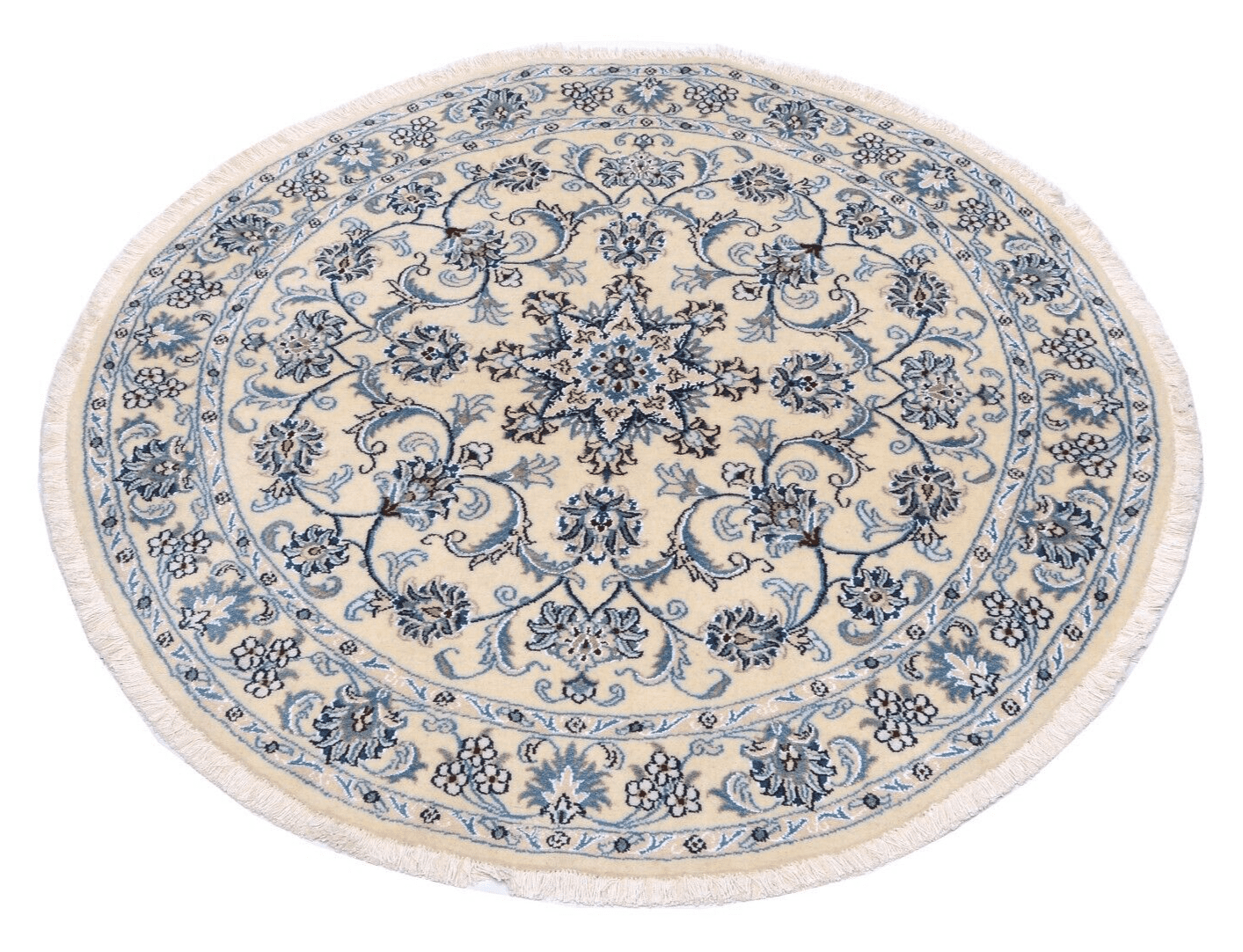
Persian Rug Nain 150 x 150 cm Wool Hand-knotted (Sold)
€ 1323
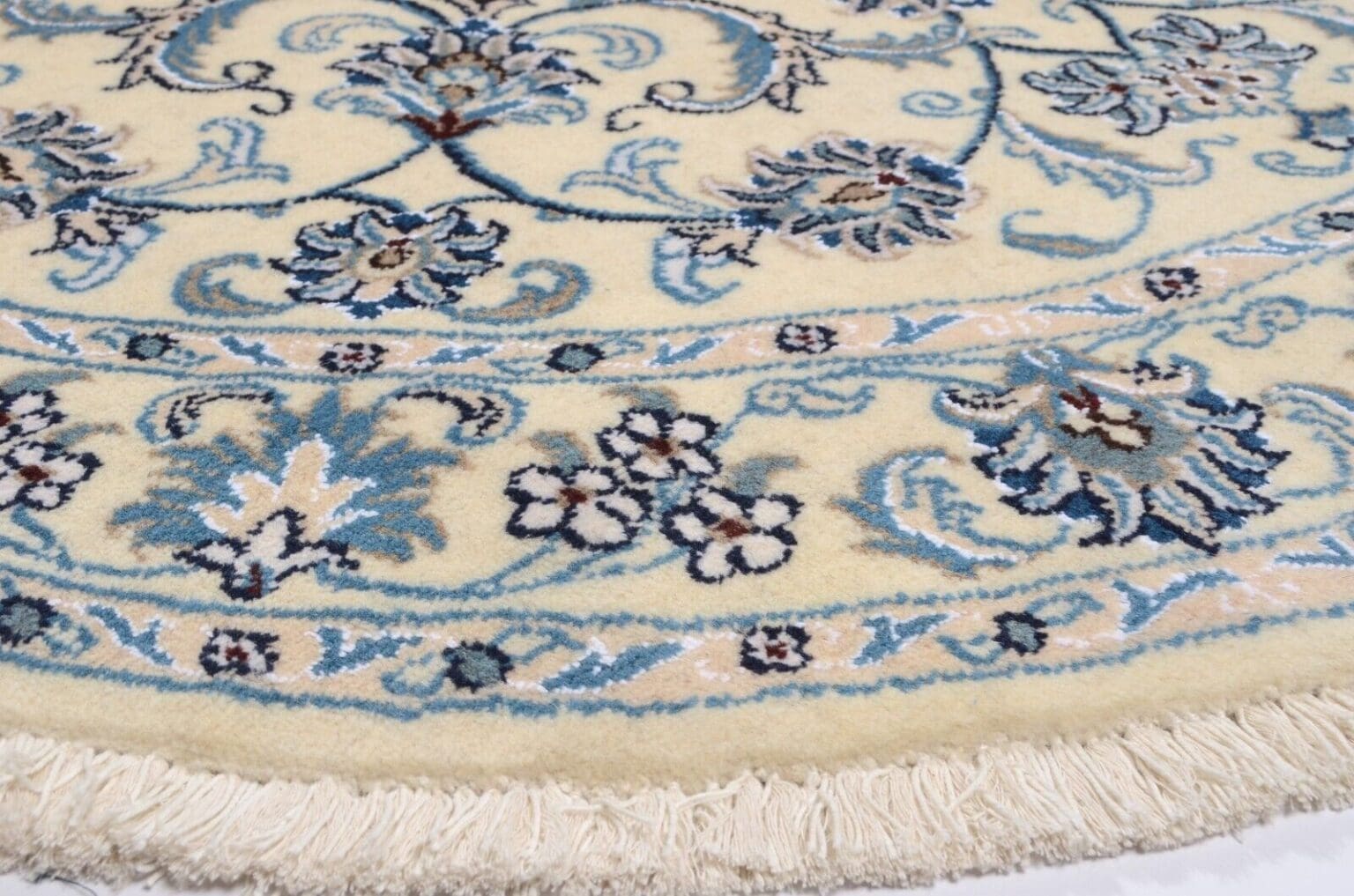
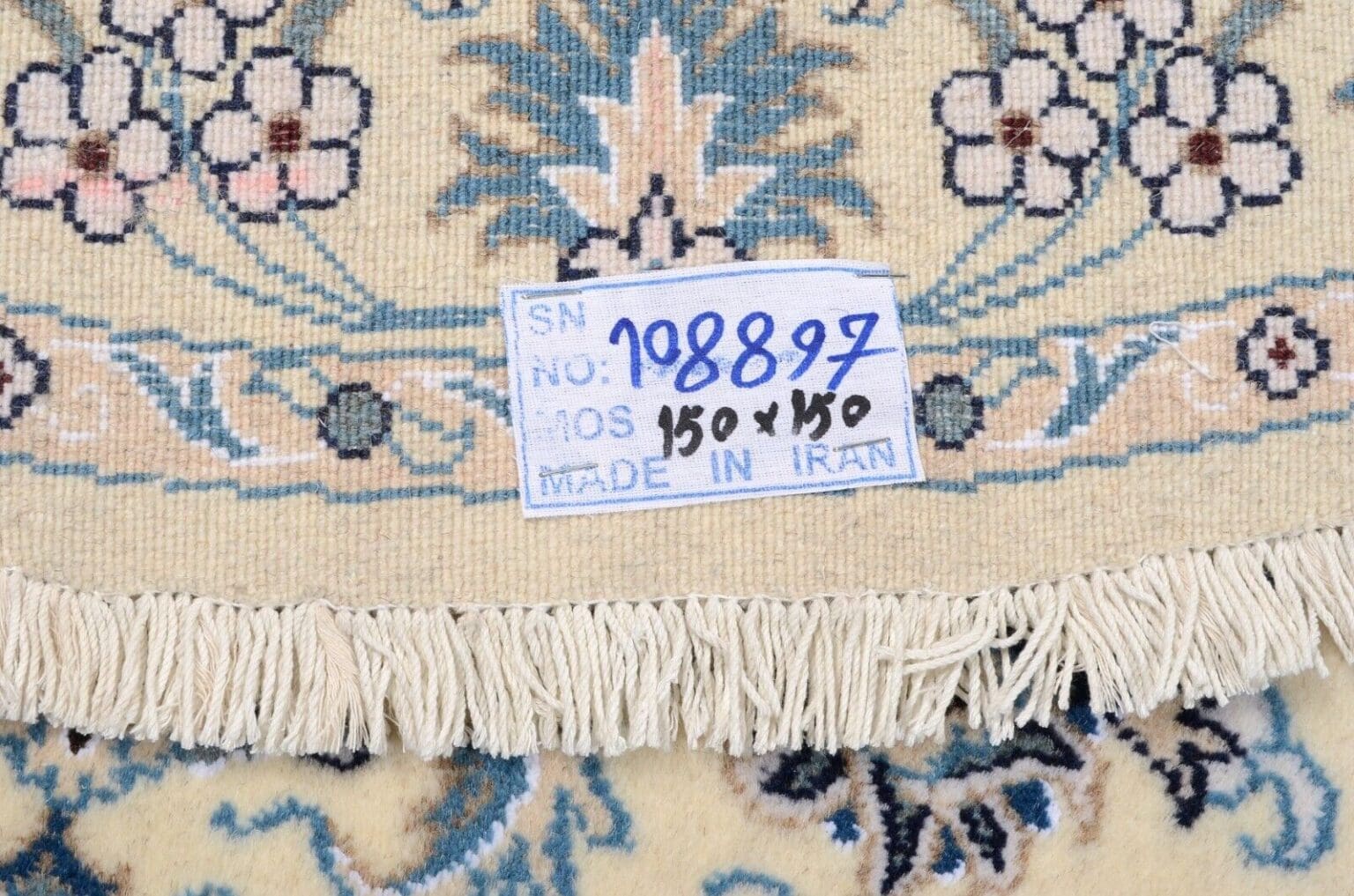
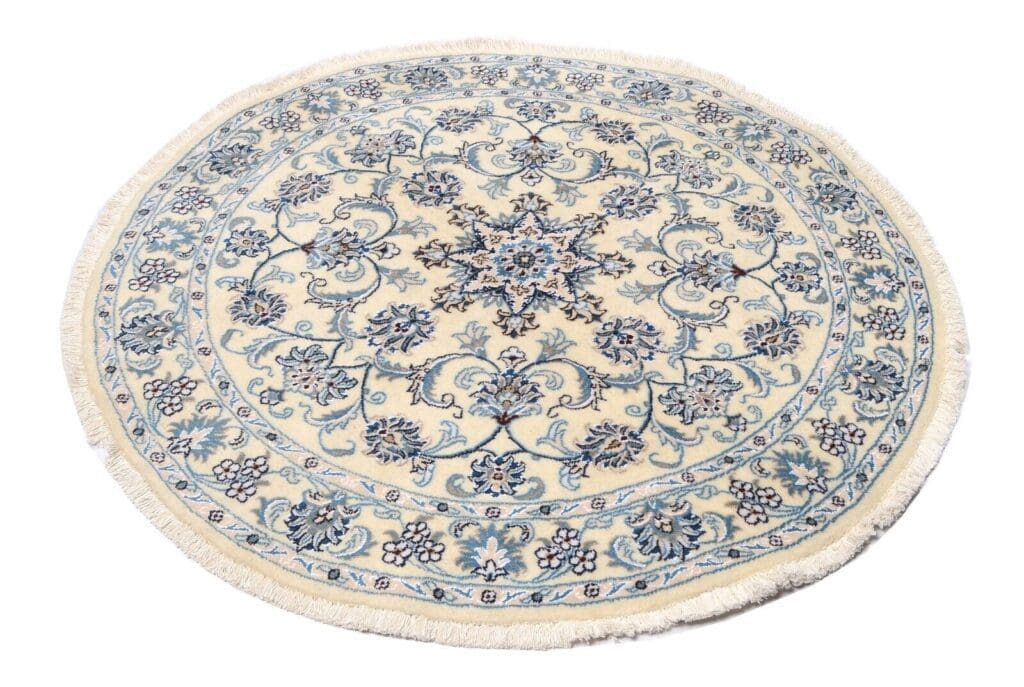
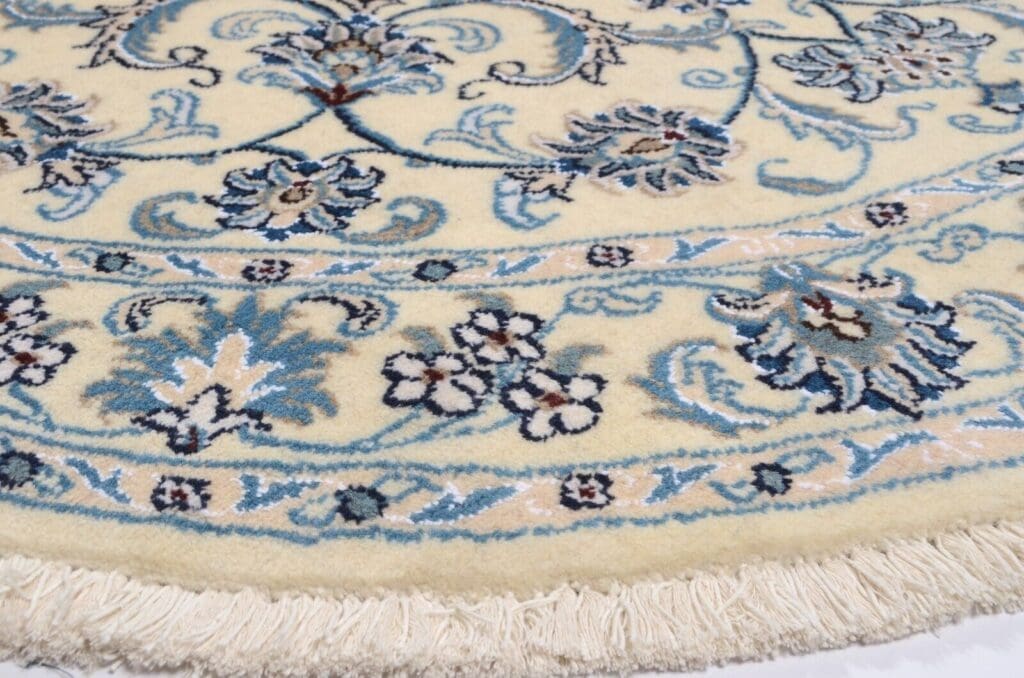
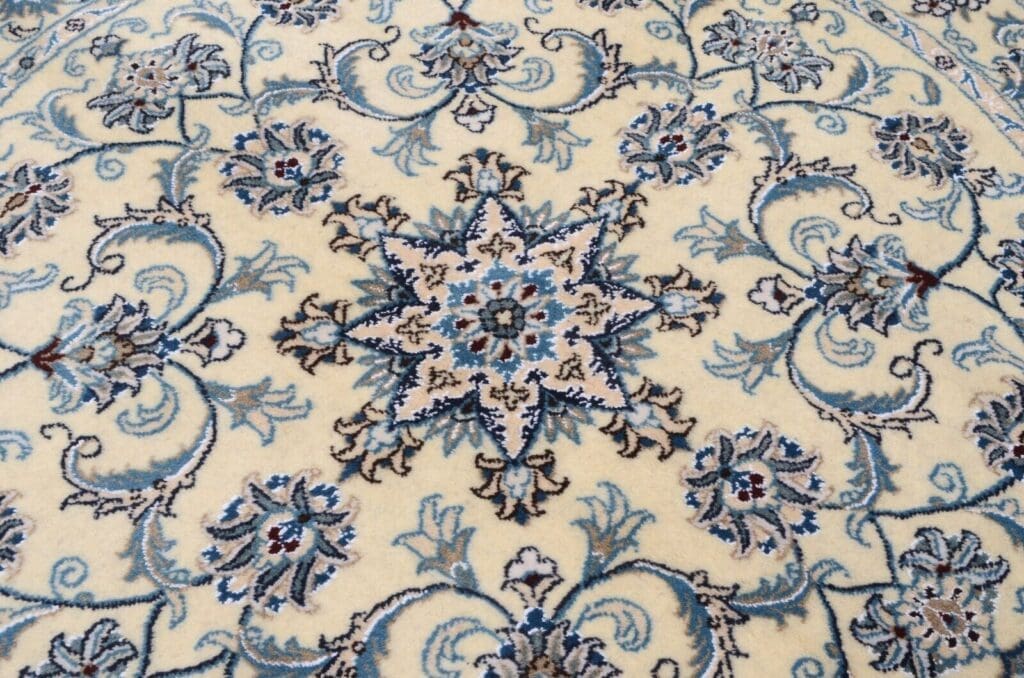
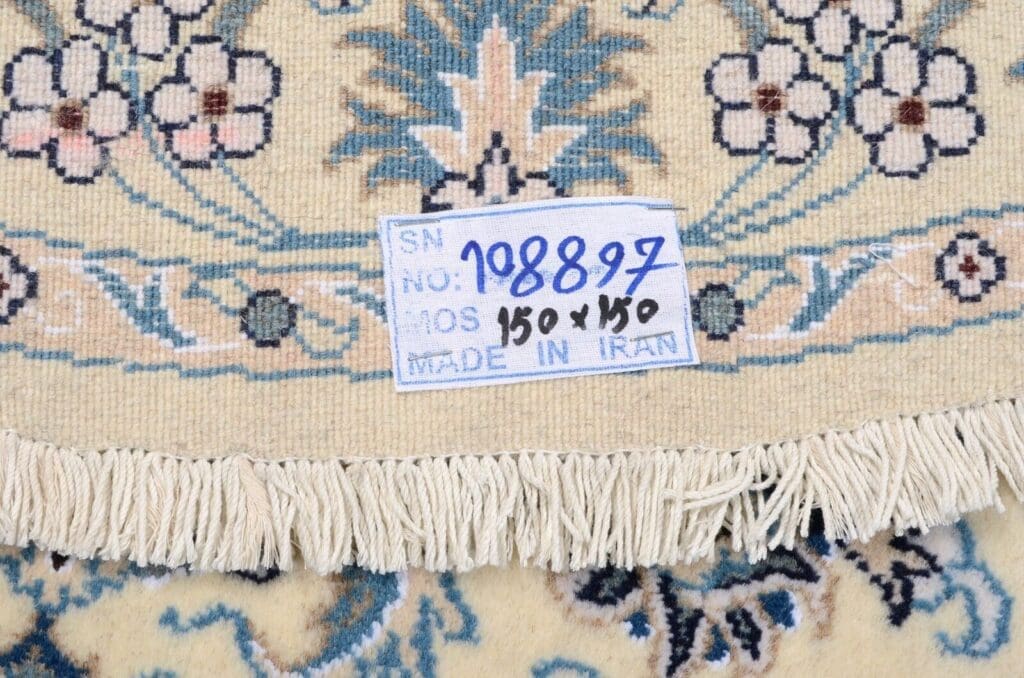
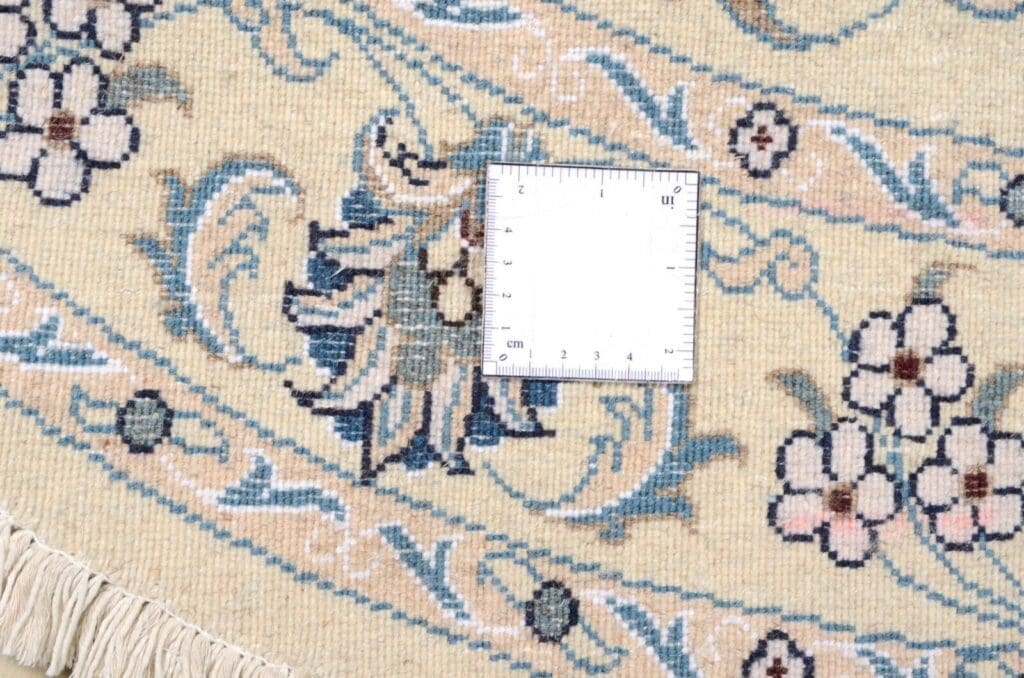
Hand-knotted Nain Persian Rug | Knot density: 300,000 knots/m² | Material: pile 100% new wool | Size: 150 x 150 cm | Pattern: floral design with medallion | Condition: New
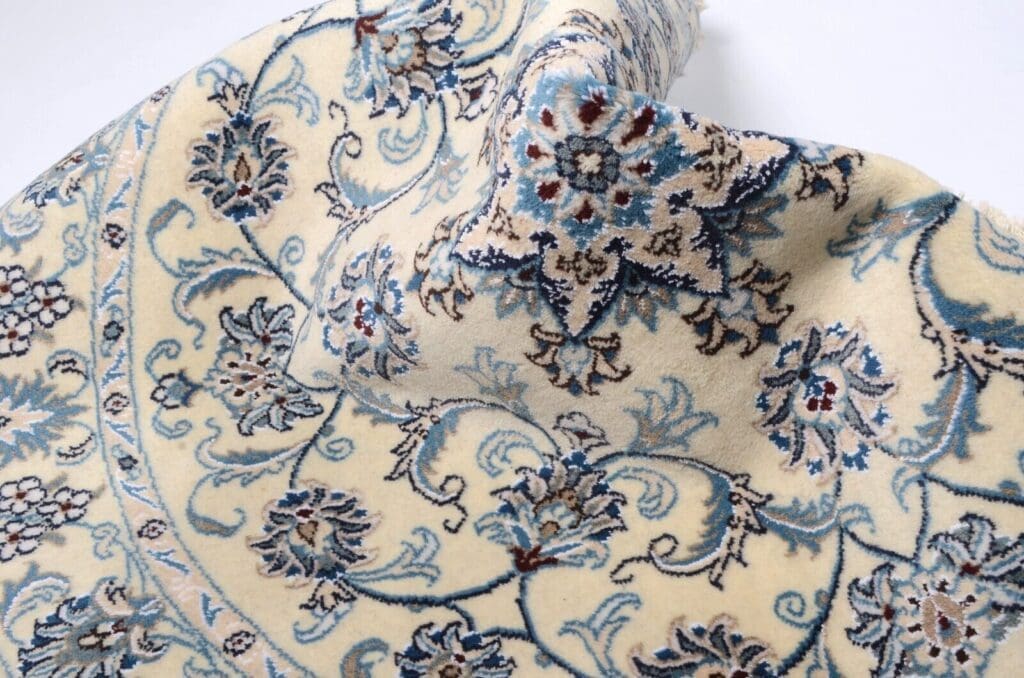
This round Nain Persian rug is hand-knotted with a pile made from 100% new wool. Its construction reflects a traditional making process in which individual knots are placed by hand rather than reproduced as a uniform industrial surface. The result is a textile floor covering whose structure is shaped by the work of the maker and whose appearance depends on the careful execution of the knotting.
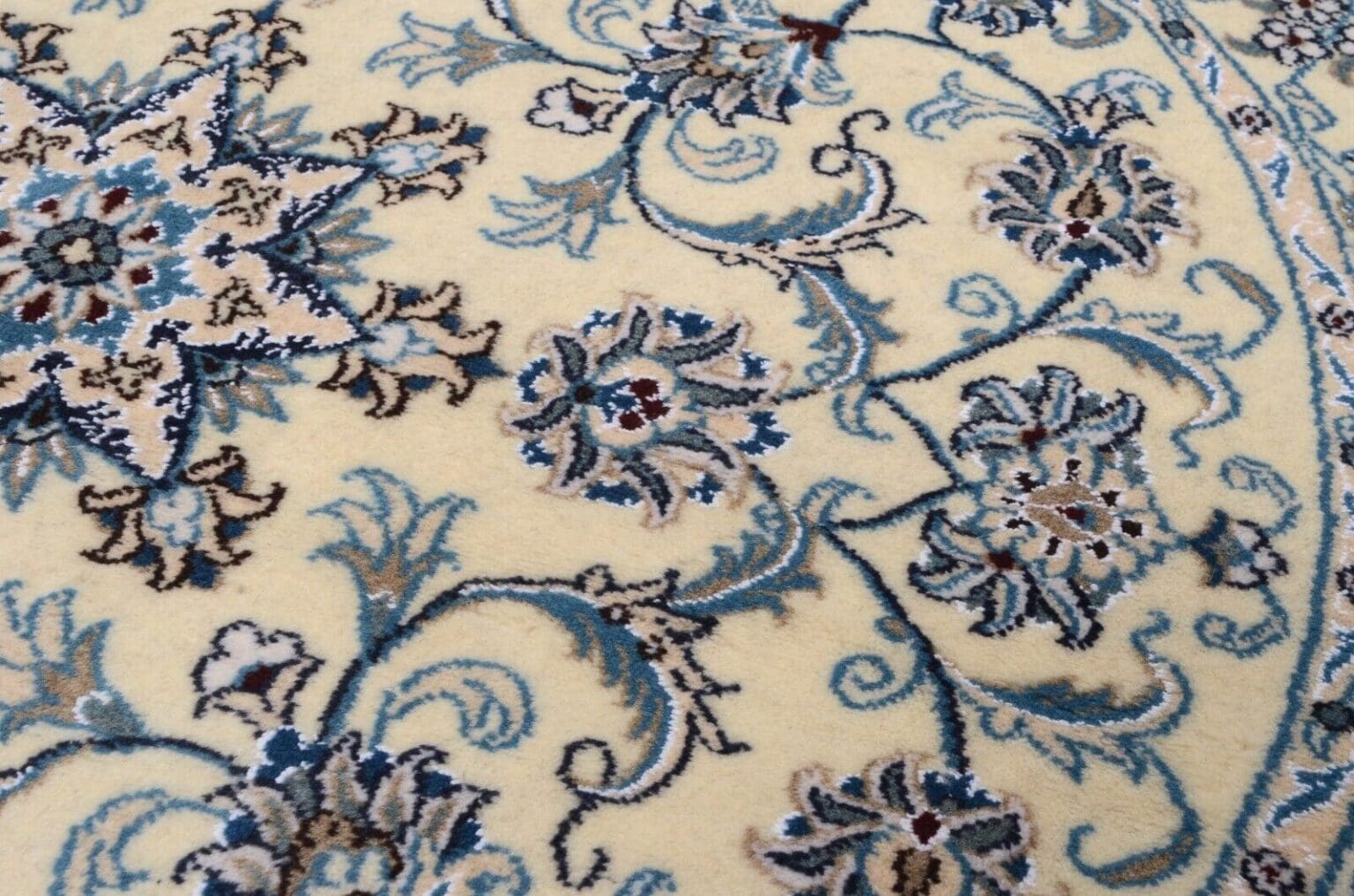
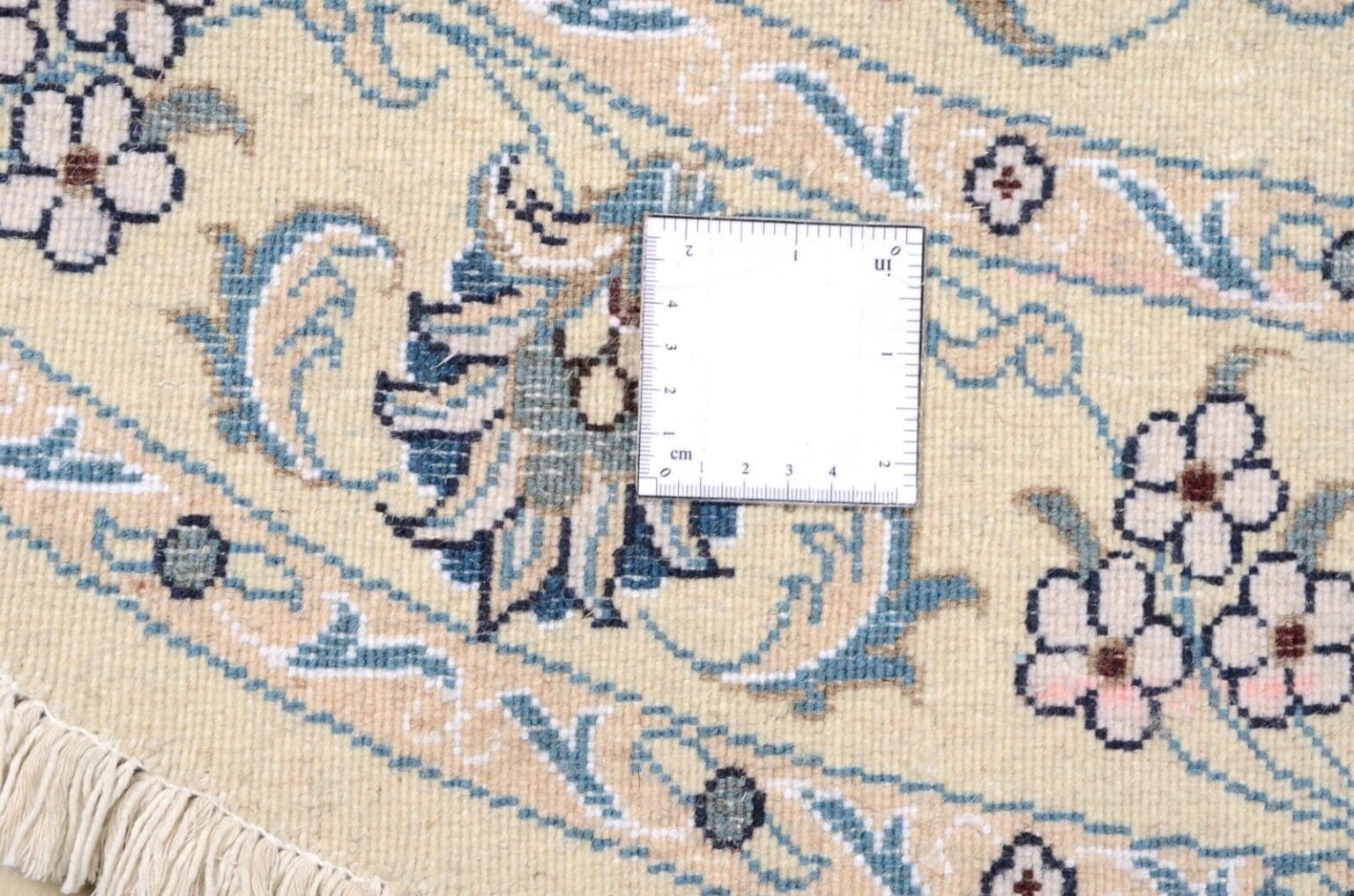
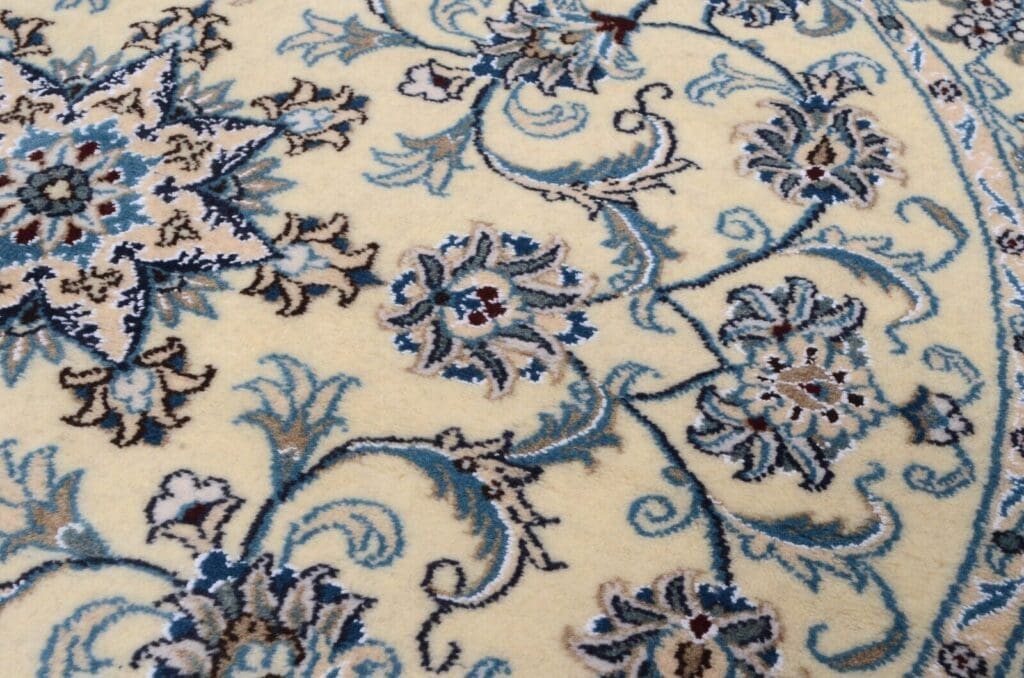
The listed knot density is high and supports the precise rendering of the floral design and central medallion. Dense knotting allows outlines, botanical forms and transitions to be arranged with control. New wool is traditionally used for its combination of a pleasant handle and practical resilience. Wool also accepts dyes well and gives the surface a naturally substantial textile character.
The rug is described as new. It is also suitable for use with underfloor heating. Even when a rug is suitable for this purpose, heat should be distributed evenly and the textile should be cared for gently. Its circular shape is another defining feature of this particular piece. It creates a different visual and spatial effect from a rectangular rug and places emphasis on a contained central composition.
Origin and Tradition
Nain is a city in central Iran known for its carpet production. The carpet-knotting tradition of Nain reaches back to the nineteenth century. Over time, the area became associated with finely worked rugs whose character is shaped by controlled drawing, balanced fields and careful hand craftsmanship. Nain therefore refers not only to a place, but also to a recognizable tradition of making and designing carpets.
The Nain tradition forms part of the wider history of Persian textile art. Persian rugs are valued not only as practical floor coverings, but also for the quality of their drawing, the balance of their composition and the precision of their construction. Nain is often associated with a refined and measured visual language. Designs may reflect influences from Islamic art and architecture, with a considered relationship between the centre, the surrounding field and the border structure.
This rug is identified as Persian and Nain in origin. Central Iran has a long history of skilled textile production, in which knowledge of knotting, pattern planning and colour arrangement is passed through craft traditions. Making a rug by hand requires sustained attention across the entire surface, because variations in knot placement can affect the edge of a motif and the balance of the overall design.
Nain rugs are commonly linked with elegant drawings and light, harmonious colour arrangements. This general regional tradition helps explain the importance of orderly pattern structure and restrained visual balance in Nain design. The rug presented here expresses that association through a floral composition and a medallion. Its identity rests on the combination of Persian origin, Nain tradition and hand-knotted construction.
Design and Pattern
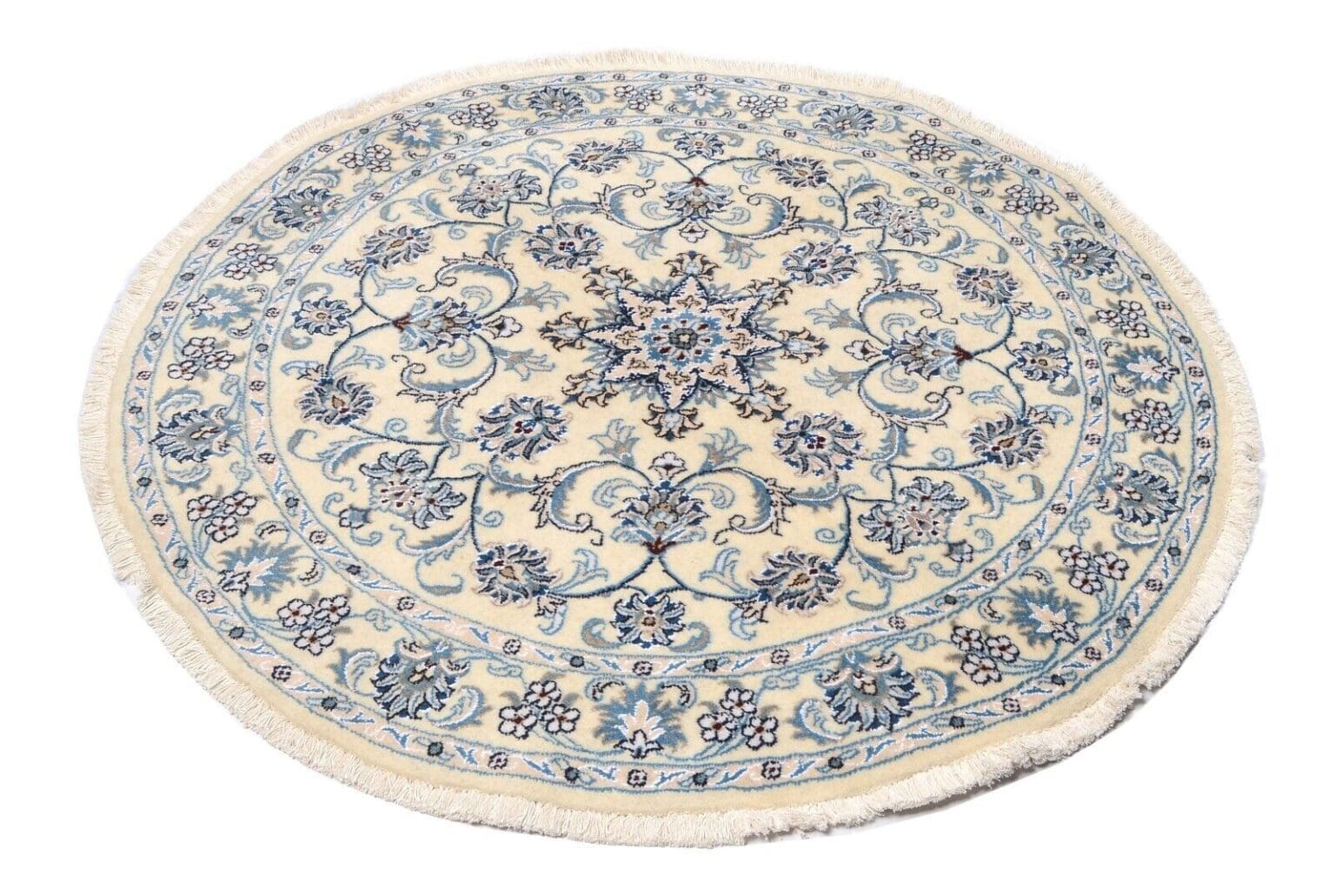
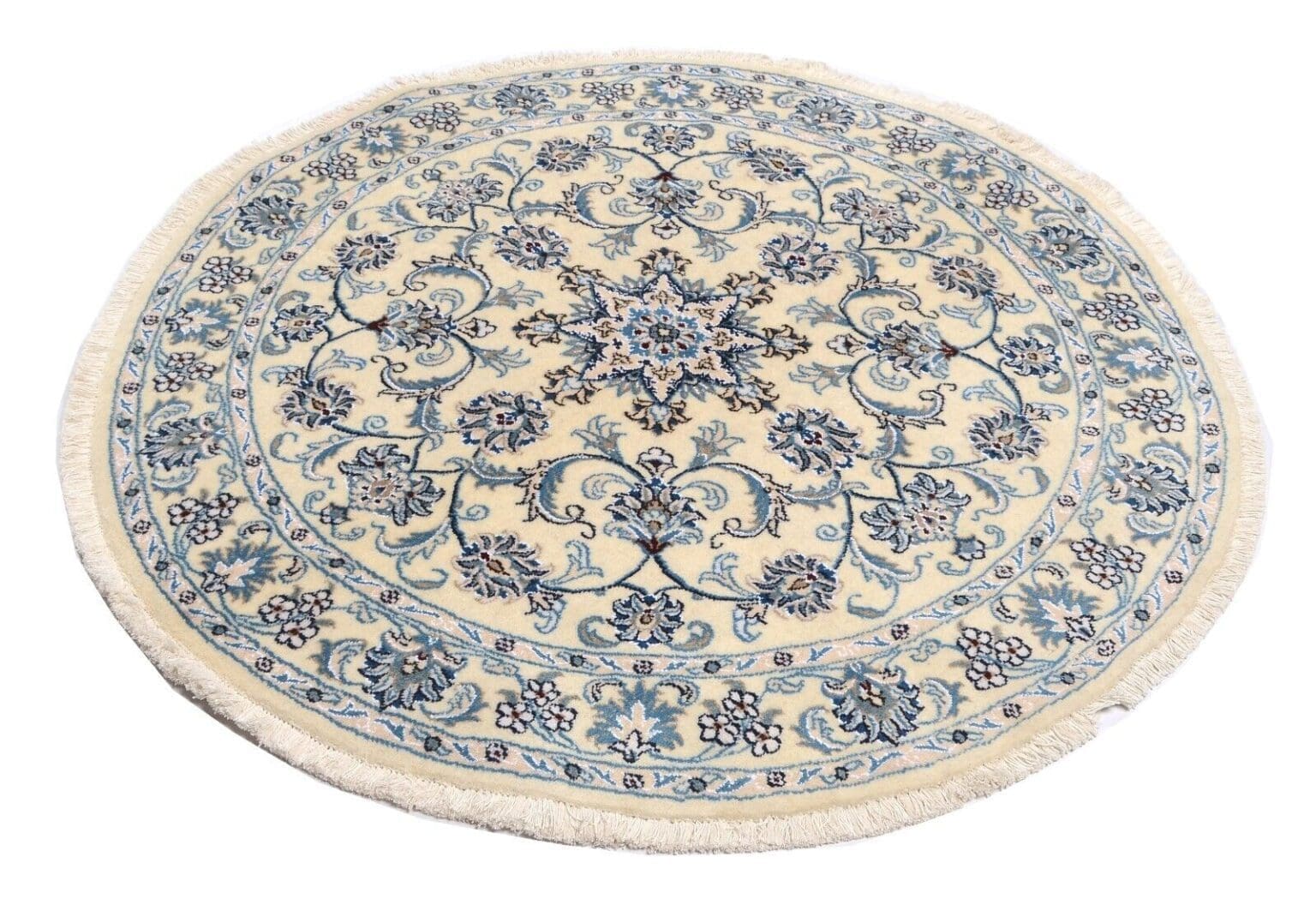
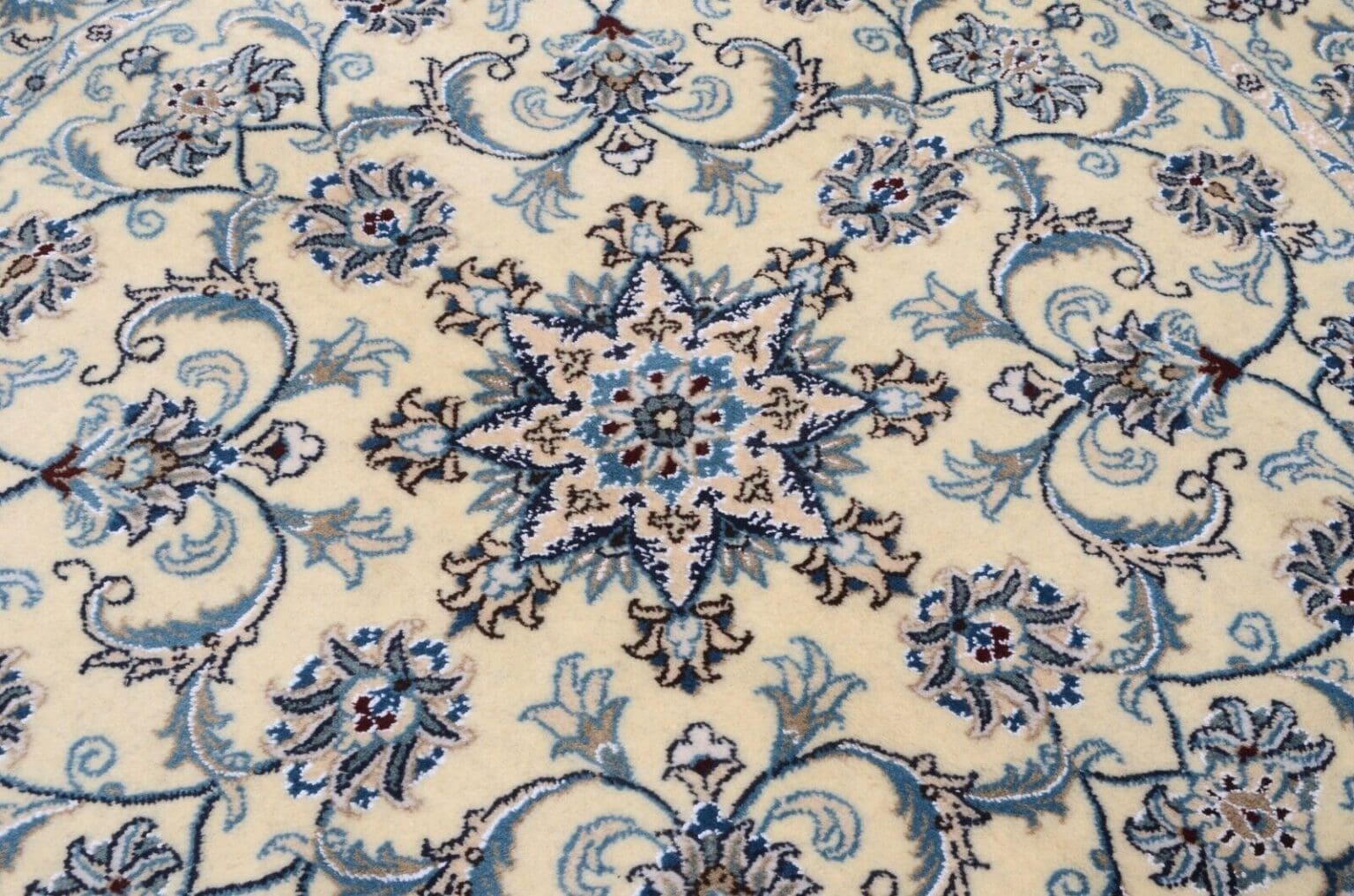
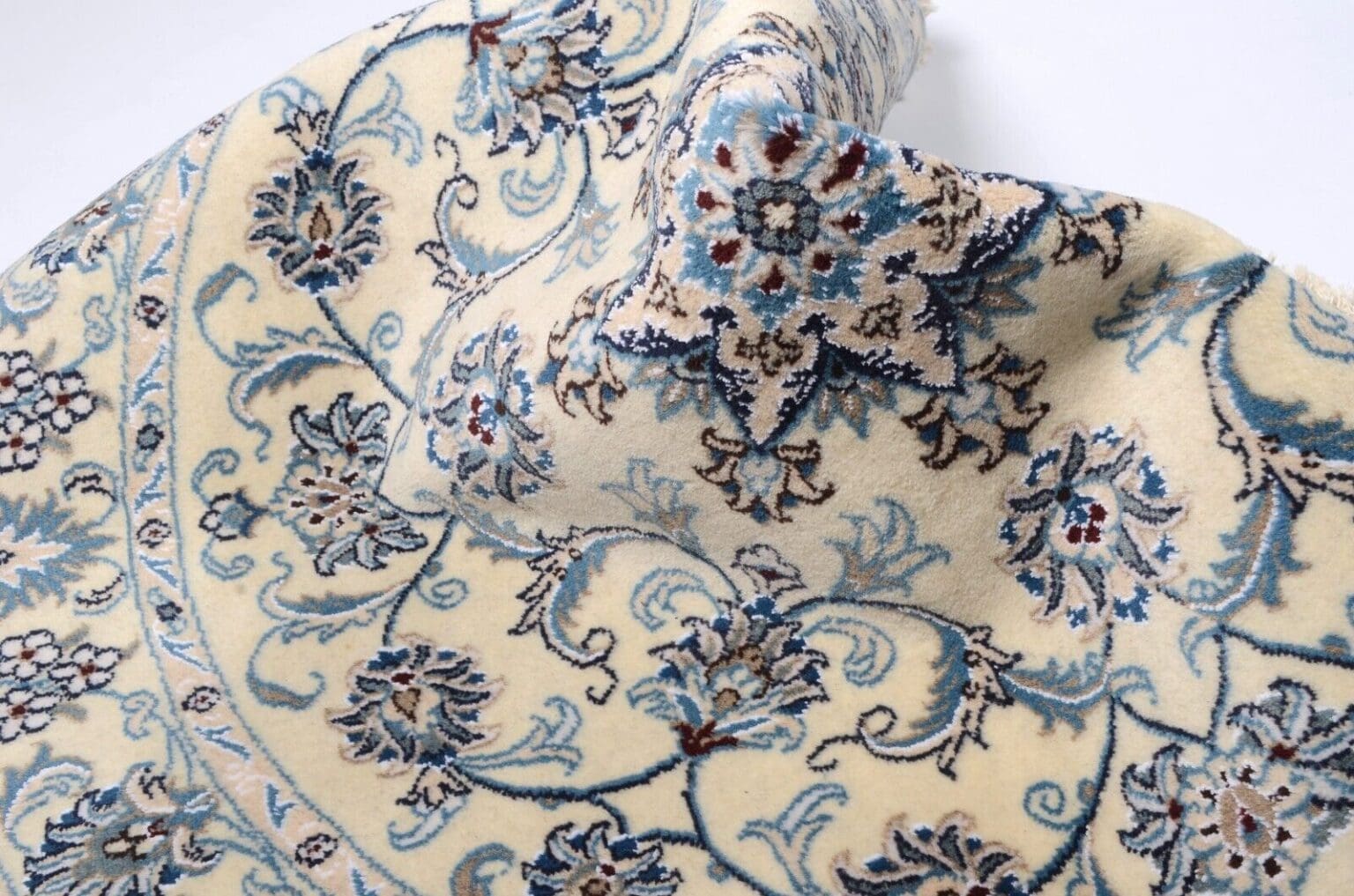
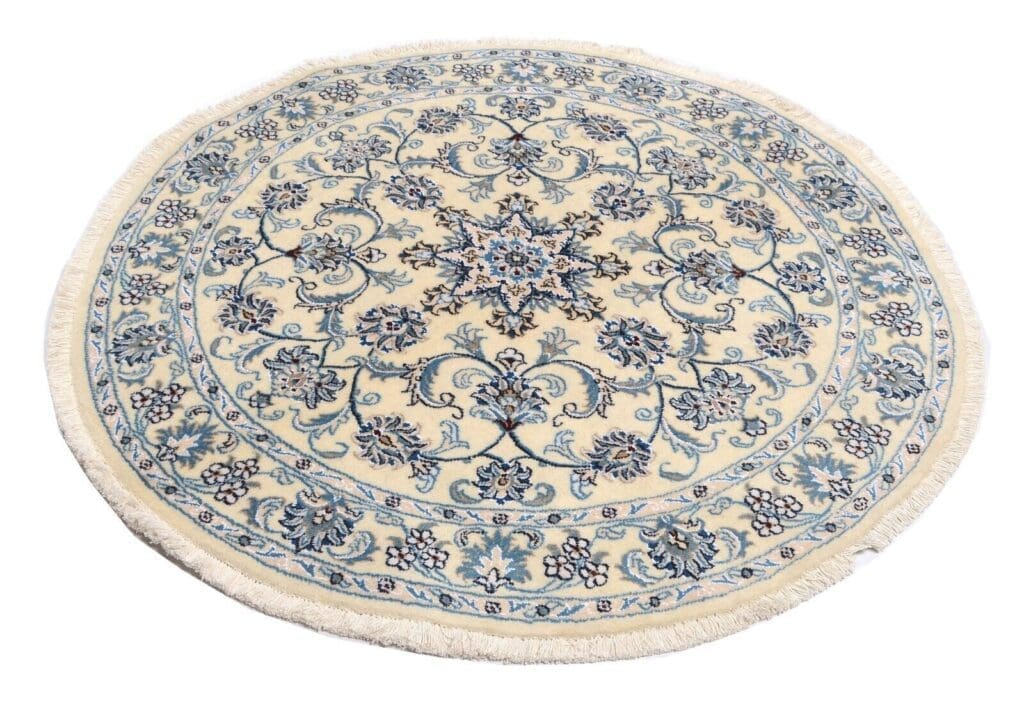
The design of this round rug combines a floral motif with a medallion. The medallion establishes the centre of the composition. From this focal point, floral forms can be read as an organised arrangement across the field. The circular outline reinforces the central structure because there is no elongated direction leading the eye toward one end. The centre remains visibly connected to the ornament surrounding it.
Floral imagery is a recurring element in Persian carpet design. Flowers, leaves and curved vines can translate the forms of nature into a disciplined ornamental language. Rather than presenting a single plant as a literal botanical illustration, the design tradition arranges such forms rhythmically across the textile. Repetition, symmetry and carefully drawn lines help the individual elements remain connected within the whole.
A medallion provides order to this type of composition. It gathers visual attention at the centre and creates a reference point for the surrounding ornaments. Within traditional pattern language, a central medallion may be understood as a focus of harmony and balance. The floral field complements that focus by introducing organic movement and flowing shapes into the more structured order of the overall layout.
Nain design is often associated with light, harmonious colour relationships and finely articulated patterns. Colour fields and ornamental forms can create visual depth while retaining a clear overall structure. For this individual rug, the documented design elements are the floral motif and the medallion. No additional colour names or specific secondary ornaments are stated, so they are not added here. The essential design remains the relationship between the central medallion and the floral decoration.
A medallion rug can act as a clearly organised floor surface within an interior. The centre establishes a visual anchor, while the floral forms lead the eye across the remaining area. With its circular outline, this rug creates a closed contour that can define a setting where a round focal area is preferred. The effect comes from the shape and pattern themselves and does not depend on one particular furnishing style.
Special Features
The notable features of this rug are its round shape, hand-knotted construction, pile of 100% new wool, high knot density and floral design with a central medallion. Its condition is new. It is also suitable for underfloor heating. Together, these details describe the piece through its material, construction, appearance and stated use.
Care for a hand-knotted wool rug should be gentle and consistent. Regular vacuuming without a brush attachment helps remove loose dust and surface dirt without placing unnecessary stress on the pile. Spilled liquids should be dealt with immediately so they do not remain in the fibres and form stains. Professional cleaning every few years is recommended for deeper maintenance. Because hand-knotted rugs are individually made and their patterns are arranged through manual work, each piece is a one-off.
FAQ
How should I care for my round Nain Persian rug?
Regular vacuuming without a brush attachment is suitable for everyday care. It removes dust and loose dirt while avoiding the additional abrasion that a rotating brush can cause on a wool pile. Spills should be absorbed promptly to reduce the risk of staining. Professional cleaning every few years is recommended for more thorough maintenance. Harsh cleaning products and unsuitable home treatments should be avoided, since hand-knotted wool benefits from a careful approach. Gentle, regular care helps preserve the surface and the clarity of the floral pattern.
What type of interior suits a round Nain Persian rug?
The circular shape and central medallion create a distinct focal point. The rug can therefore be used with both modern and traditional furniture. In an elegant living room, the floral design can complement an orderly arrangement; in a comfortable reading corner, the round field can visually gather a separate area. It can also be used wherever a contained, non-rectangular floor shape is wanted. The light and harmonious character associated with Nain design allows the rug to sit within different furnishing approaches without being tied to one specific style.
Why does a Nain rug require such careful workmanship?
The work involved relates to the hand-knotting, the knot density, the material and the drawing of the pattern. Each knot is placed individually, and a high knot density permits a finer rendering of floral lines and the medallion while requiring more time and concentration. The use of new wool, the careful execution and the established Nain tradition all form part of the making process. Since a hand-knotted rug is produced individually rather than as a repeated machine-made surface, every piece is a one-off.
To provide the best experiences, we use technologies like cookies to store and/or access device information. Consenting to these technologies will allow us to process data such as browsing behavior or unique IDs on this site. Not consenting or withdrawing consent, may adversely affect certain features and functions.
Functional Always active
The technical storage or access is strictly necessary for the legitimate purpose of enabling the use of a specific service explicitly requested by the subscriber or user, or for the sole purpose of carrying out the transmission of a communication over an electronic communications network.
Preferences
The technical storage or access is necessary for the legitimate purpose of storing preferences that are not requested by the subscriber or user.
Statistics
The technical storage or access that is used exclusively for statistical purposes.The technical storage or access that is used exclusively for anonymous statistical purposes. Without a subpoena, voluntary compliance on the part of your Internet Service Provider, or additional records from a third party, information stored or retrieved for this purpose alone cannot usually be used to identify you.
Marketing
The technical storage or access is required to create user profiles to send advertising, or to track the user on a website or across several websites for similar marketing purposes.
 SECURE PAYMENT
 SHIPPING PARTNERS