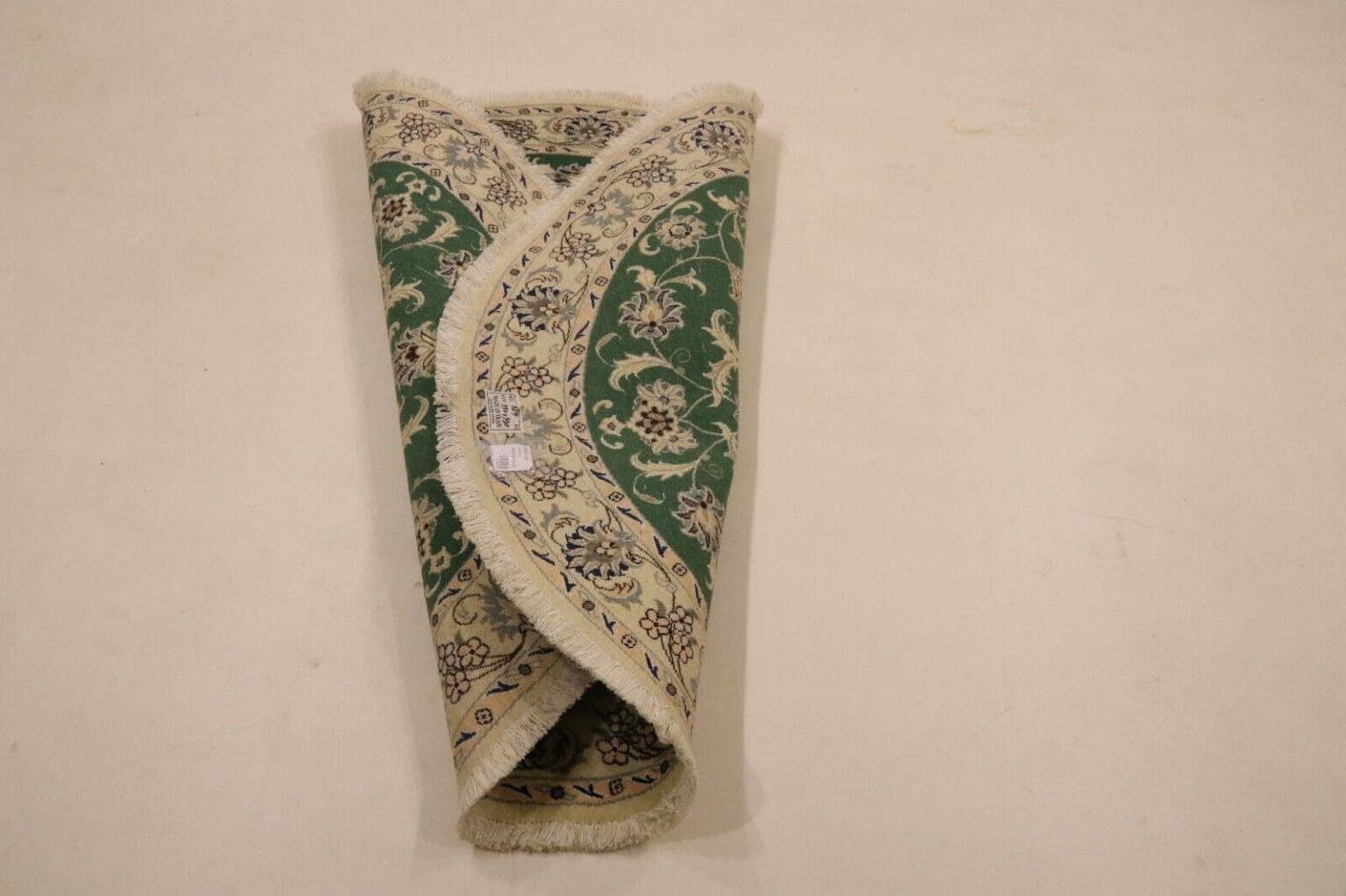
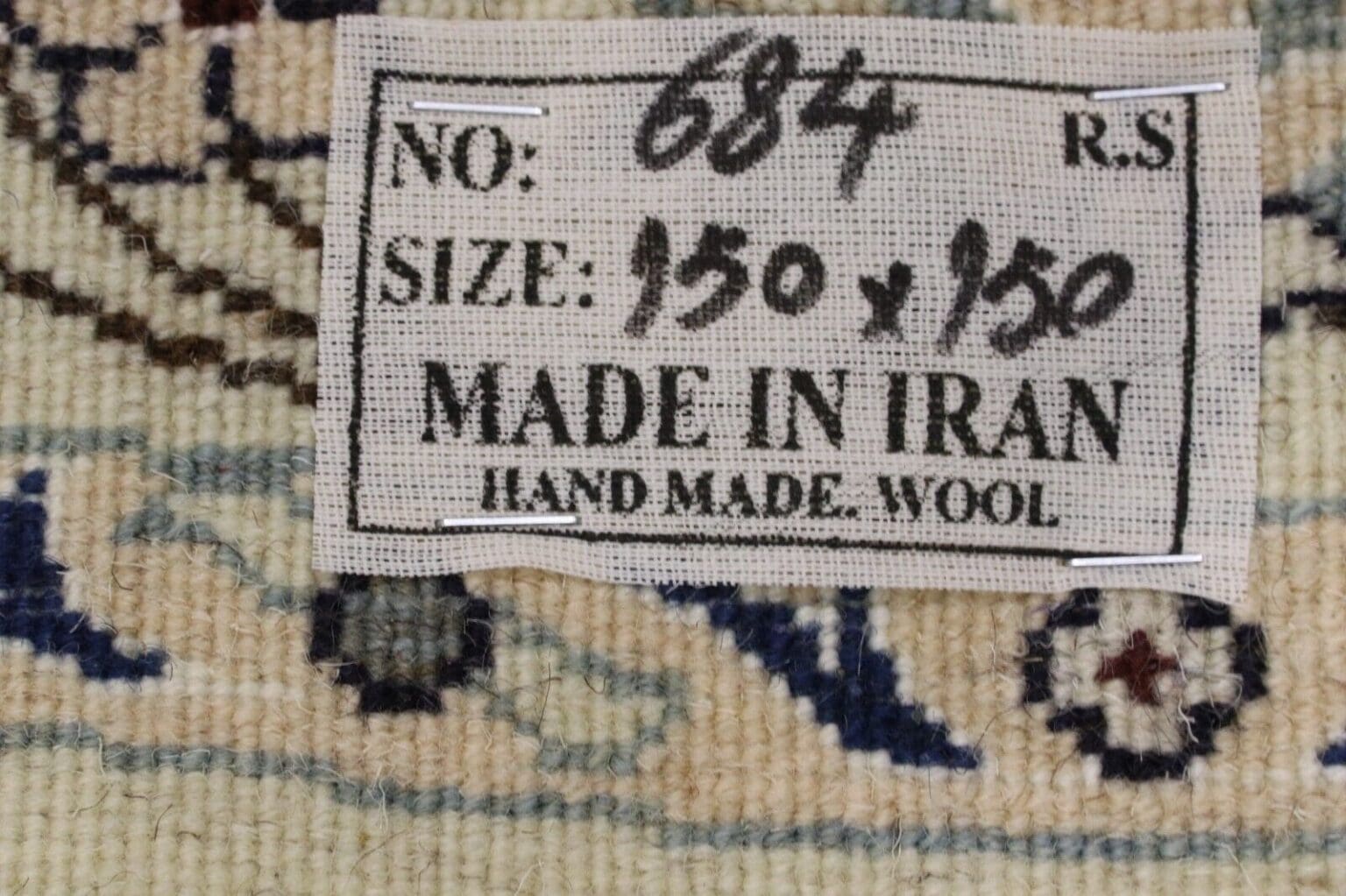
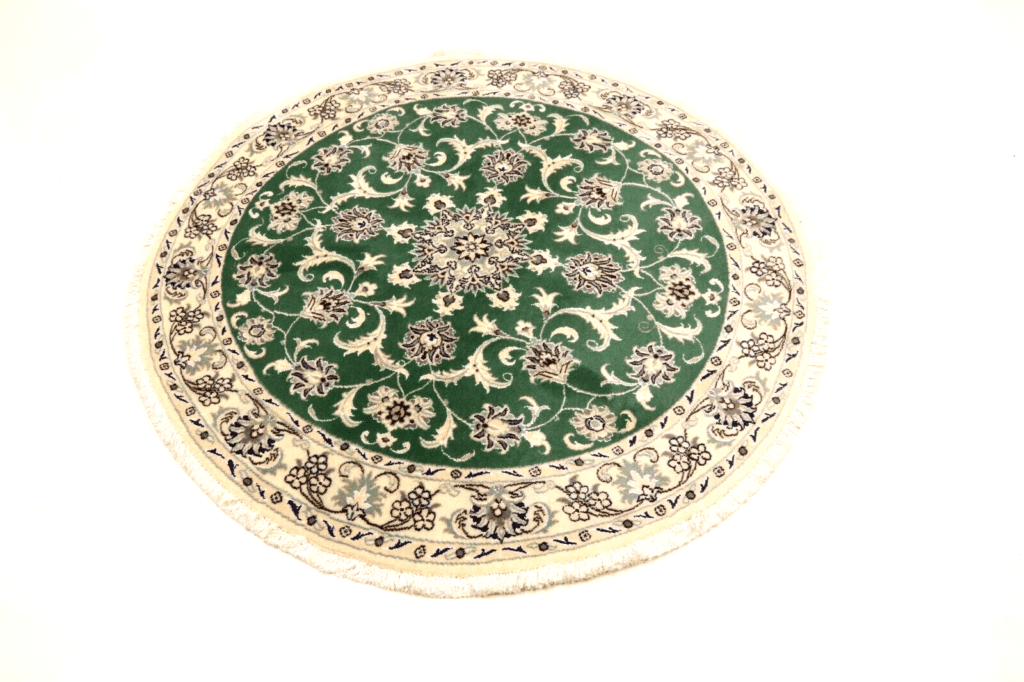
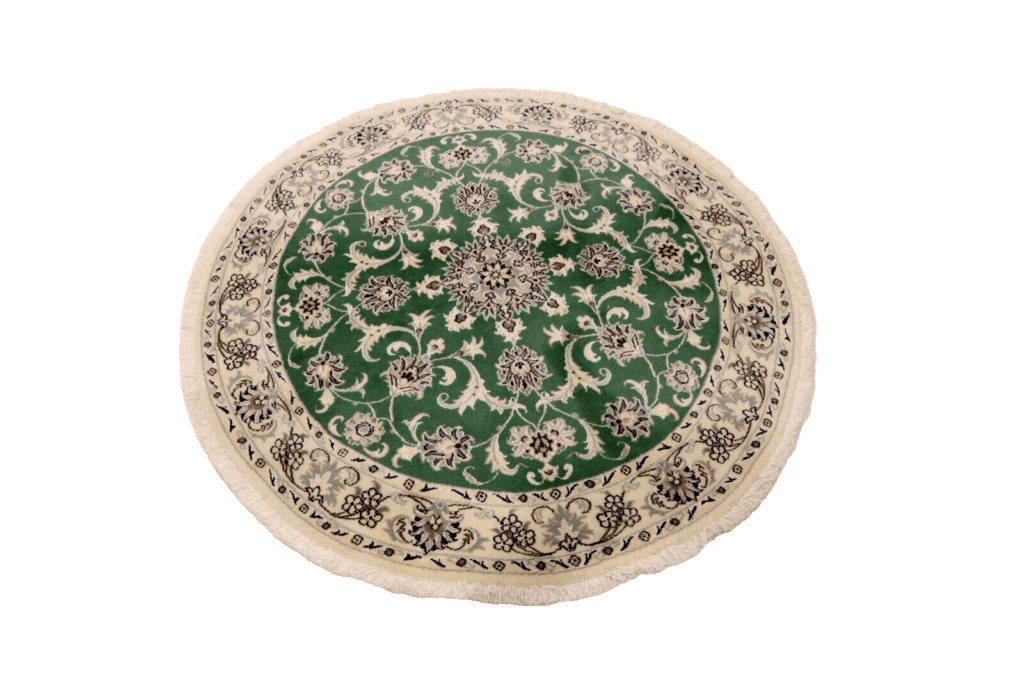
This round Nain Persian rug is hand-knotted. Its pile consists of 90% virgin wool and 10% silk, while the warp is made of 100% cotton. Virgin wool provides the main body of the pile and is valued in rug making for its resilient fibres, comfortable handle and natural warmth. It forms a substantial textile surface that can support everyday use while retaining a soft feel.
The silk component adds a smoother fibre and a restrained sheen to the wool pile. In a blended pile, the two materials can respond differently to light, with wool tending to look fuller and silk allowing selected areas to appear clearer or more lustrous. The combination brings together two established rug-making fibres with distinct properties. The cotton warp forms the supporting foundation of the structure and is joined to the pile yarns during the knotting process.
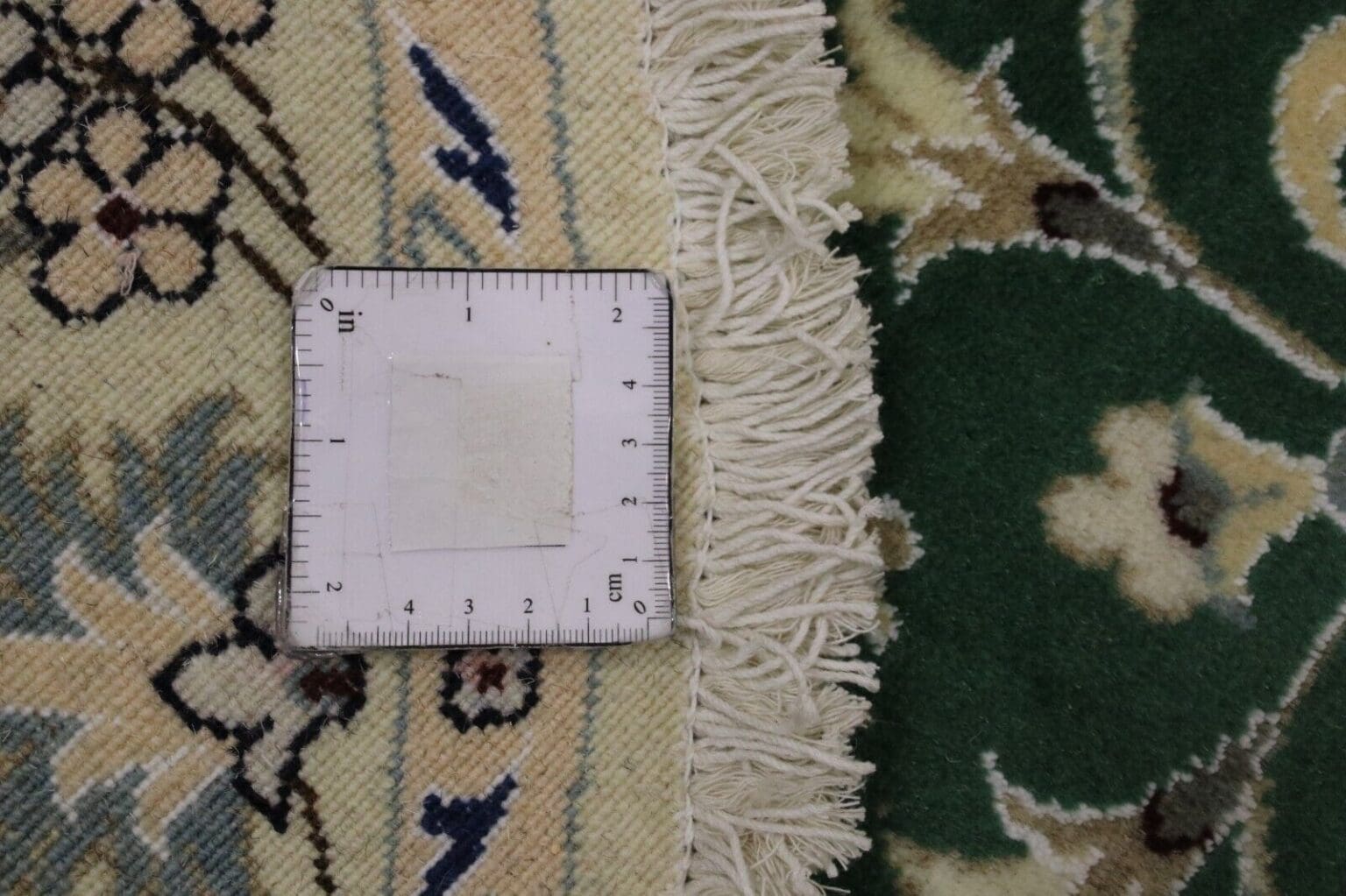
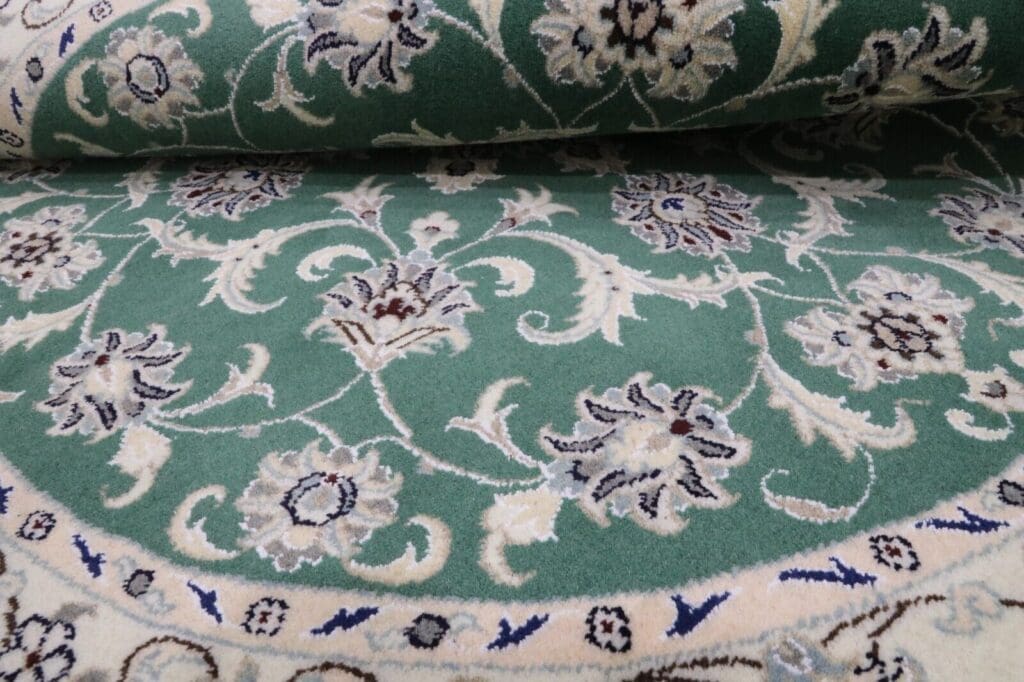
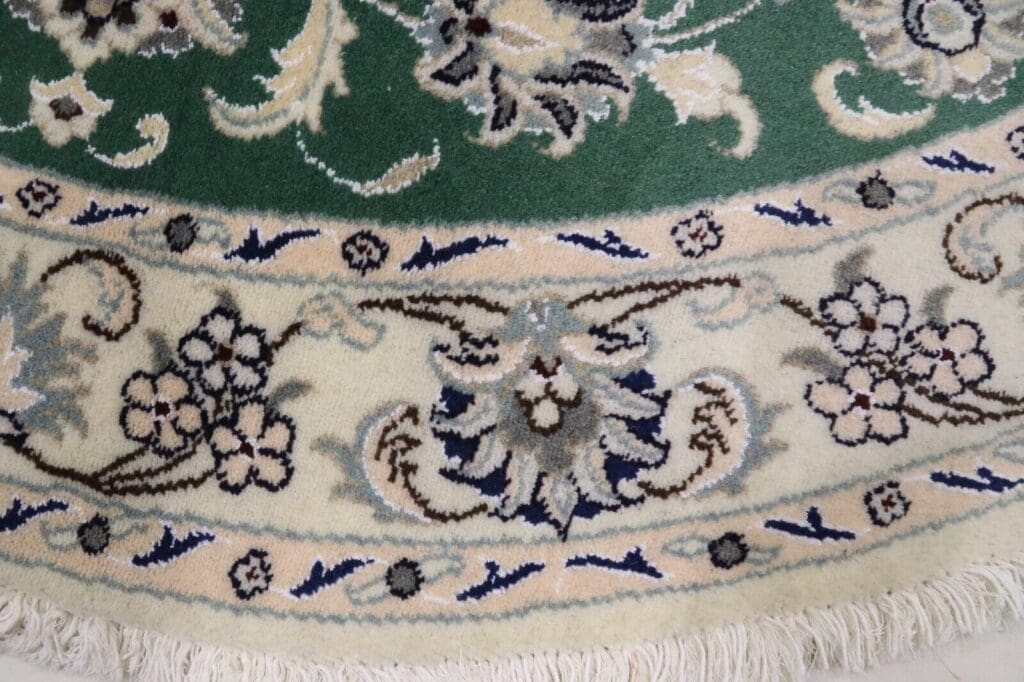
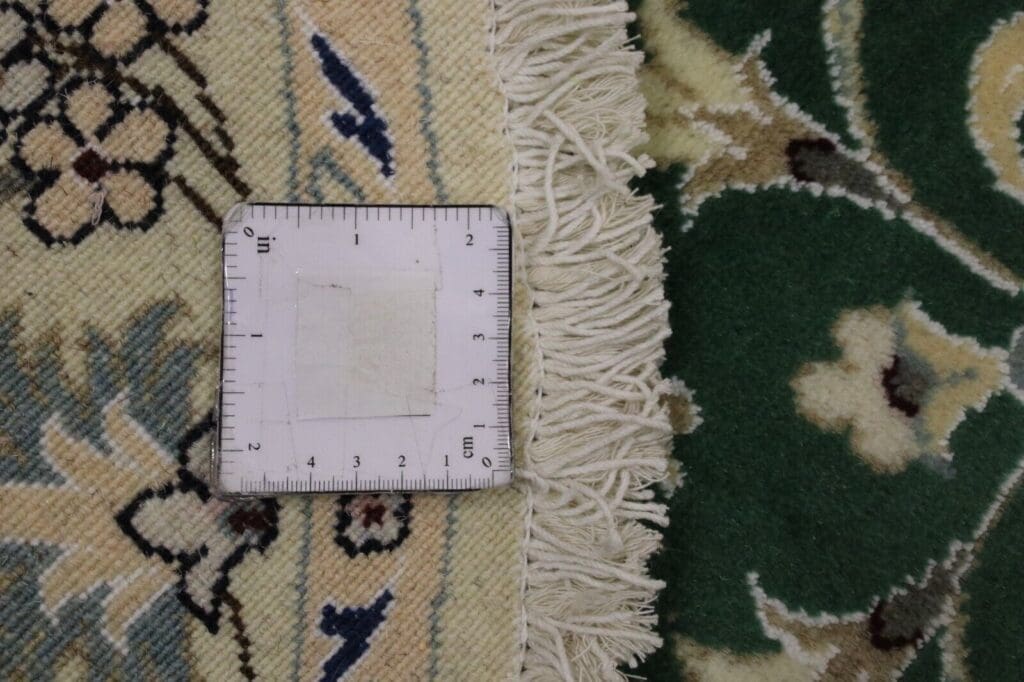
Hand-knotting is carried out knot by knot. Each pile thread is secured around the prepared warp and then compacted as the work advances. The density given for this rug, approximately 300,000 knots per square metre, indicates a fine construction. In general, a high knot density allows small shapes, narrow lines and controlled transitions to be rendered with precision. Together with the yarn and the care taken in execution, it is an important technical point when assessing a hand-knotted rug.
A hand-knotted rug develops gradually from the interaction of warp, weft and pile. The work requires steady tension and an even distribution of knots across the field. Rather than being printed onto a finished surface, the design is built into the textile as the knots are placed. This makes the making process part of the object’s character. This rug is described as new and perfect.
Origin and Tradition
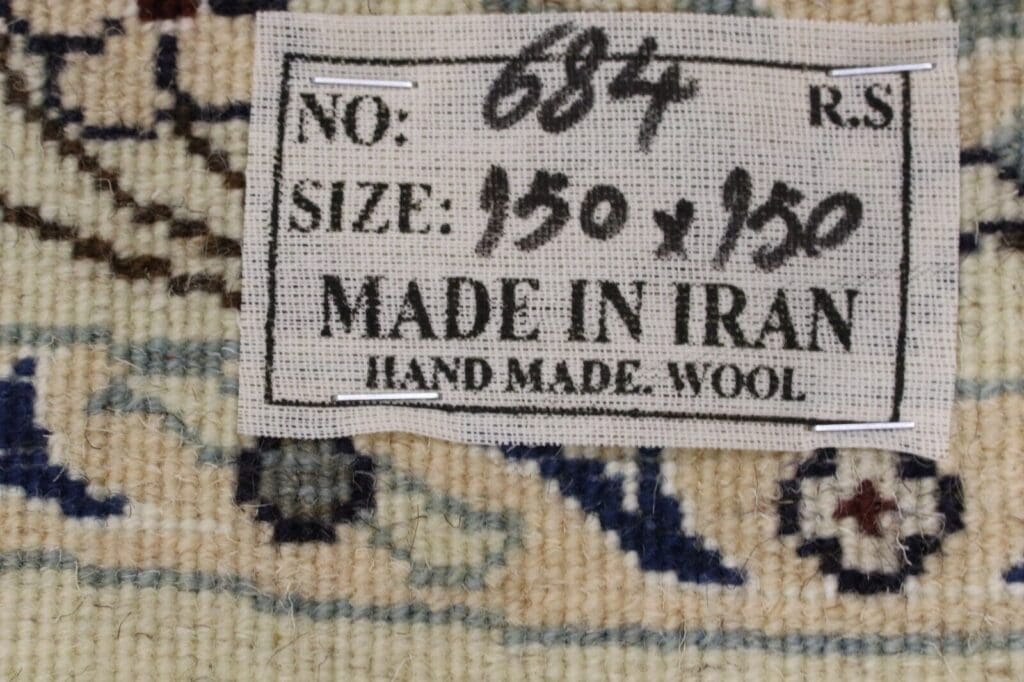
The rug comes from Persia, meaning Iran. Persian rug making is one of the established textile traditions of the region. For centuries, rugs have served as practical floor coverings, interior textiles and carriers of ornamental design. Their production brings together knowledge of fibre preparation, spinning, dyeing, loom construction, knotting and the arrangement of recurring motifs.
Nain is associated with an important rug-making tradition in central Iran. Nain rugs are generally known within the Persian tradition for controlled drawing, fine execution and carefully balanced compositions. Light grounds, delicate floral ornament and orderly layouts are common features of the broader Nain style; these are historical and stylistic background, not additional claims about an individual motif that is not specified here. The name Nain places this rug within that regional tradition.
The Nain tradition developed through the culture of workshops and the transmission of skills between generations. Such knowledge includes the choice of suitable fibres, the preparation of yarn, the arrangement of the foundation and the conversion of a design into rows of knots. The pattern is therefore not separate from the structure. It is produced through a sequence of manual decisions that connect technical discipline with visual composition.
Persian rugs vary from one region to another in proportion, palette, knotting practice and ornamental vocabulary. These differences have grown from local working methods, available materials and historical exchange. Nain represents one regional expression within the wider Iranian tradition. At the same time, a Nain Persian rug belongs to the larger history of Persian hand-knotting, where accurate drawing, an ordered composition and the quality of the fibres all have a central place.
The term Persian rug refers here to Iranian origin, not simply to an oriental appearance. The product information identifies Persia, or Iran, as the origin and names Nain in the product description. No further information is provided about a particular town workshop, designer or individual weaver. The responsible classification therefore remains with the named Nain tradition and Iranian origin rather than adding an unsupported production location.
Hand-knotting also explains why regional traditions can remain recognisable while individual rugs are still one-off pieces. A workshop may work from a customary design language, yet the arrangement, tension, colour handling and finishing develop through the actual making process. The regional name describes the tradition surrounding the rug; it does not turn every general Nain convention into a claim about a detail that has not been recorded for this piece.
Design and Pattern
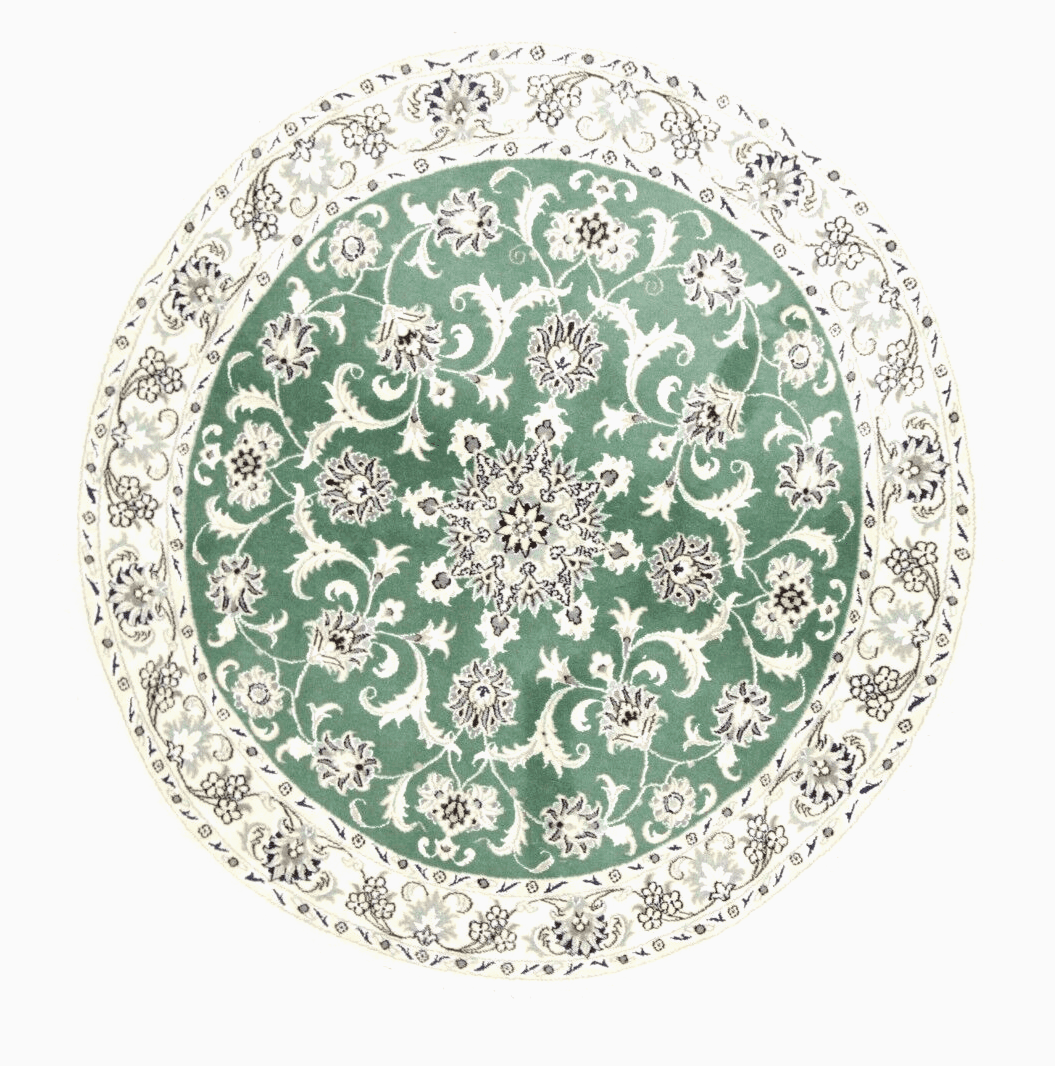
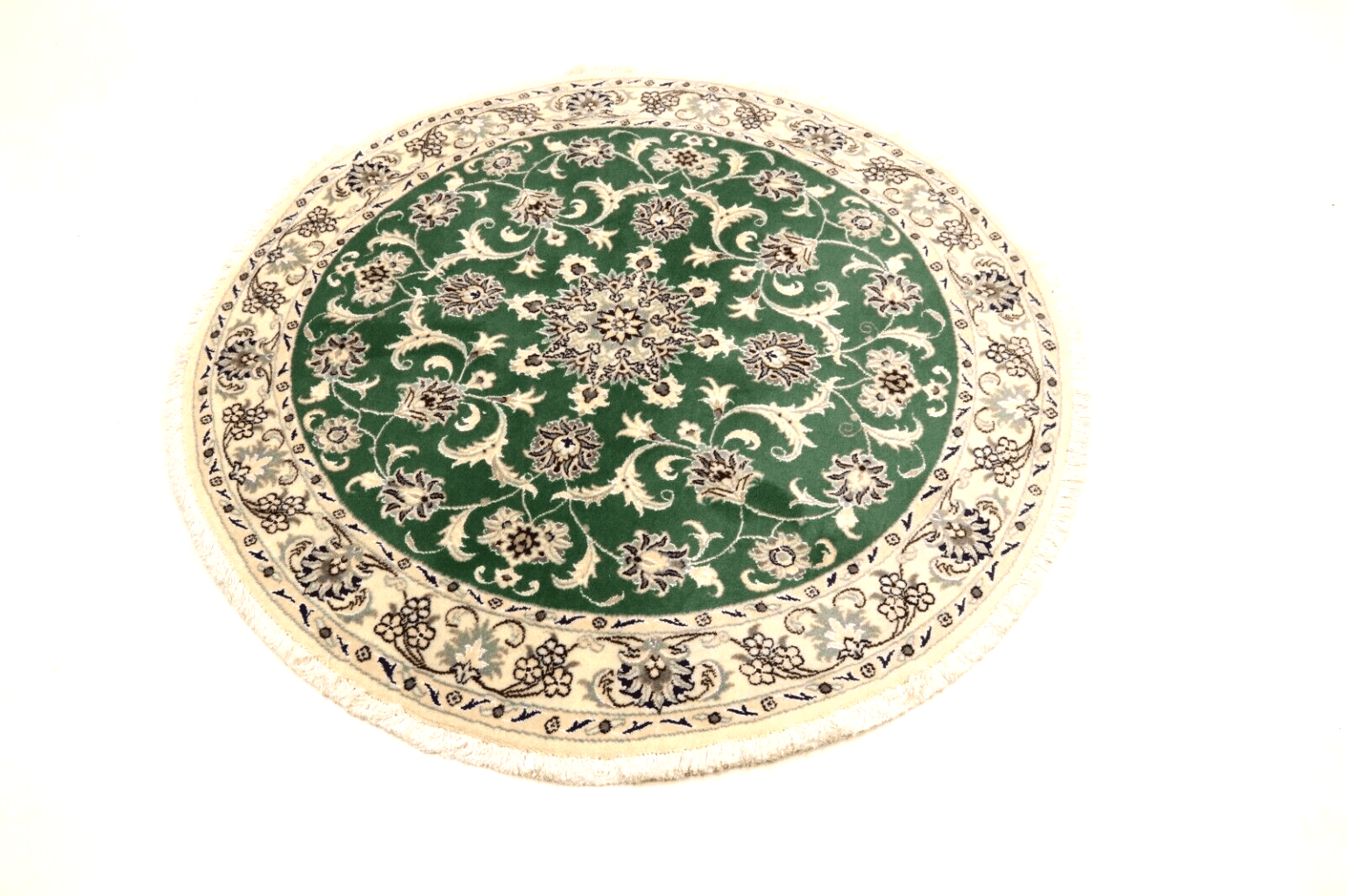
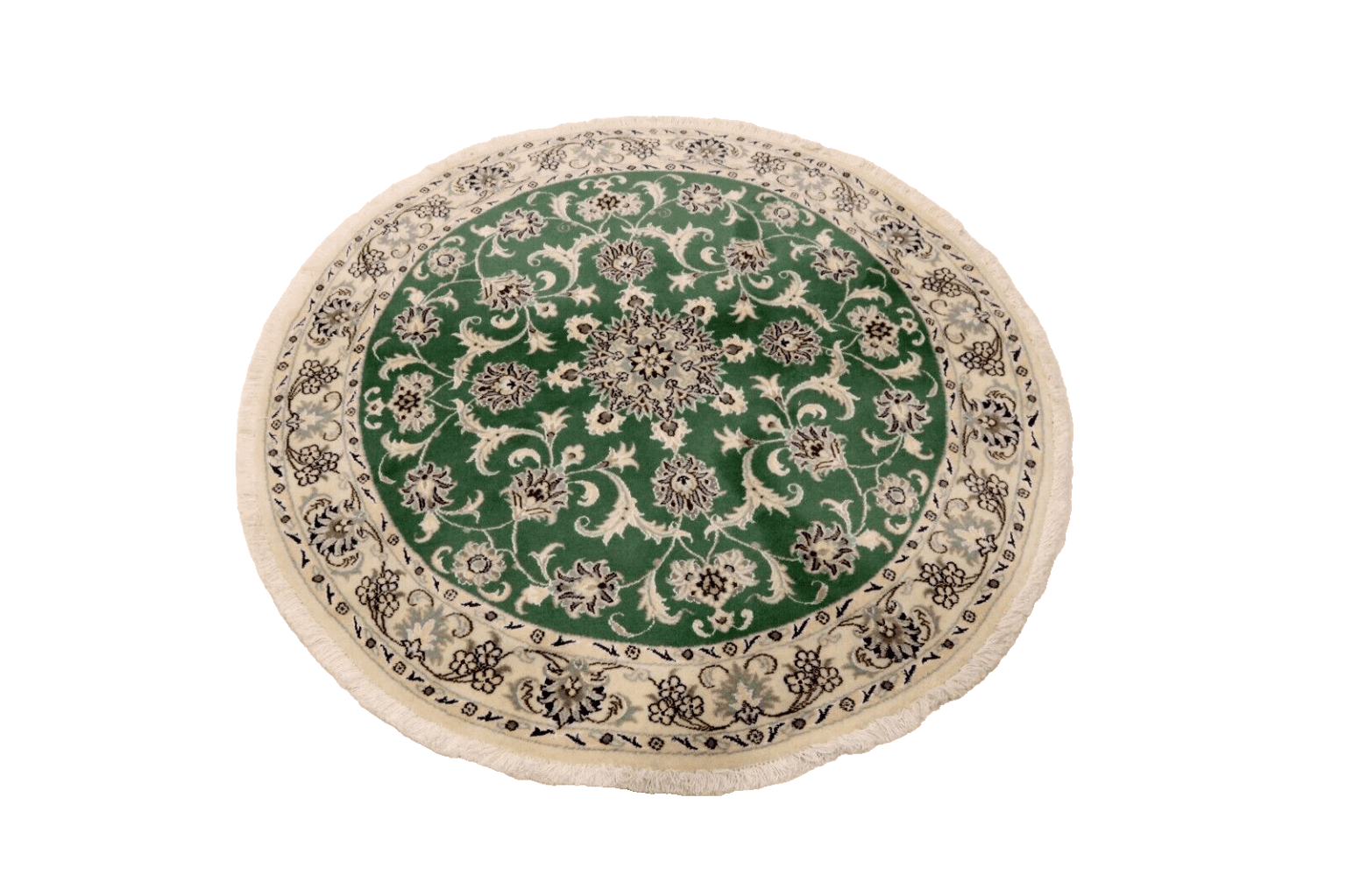
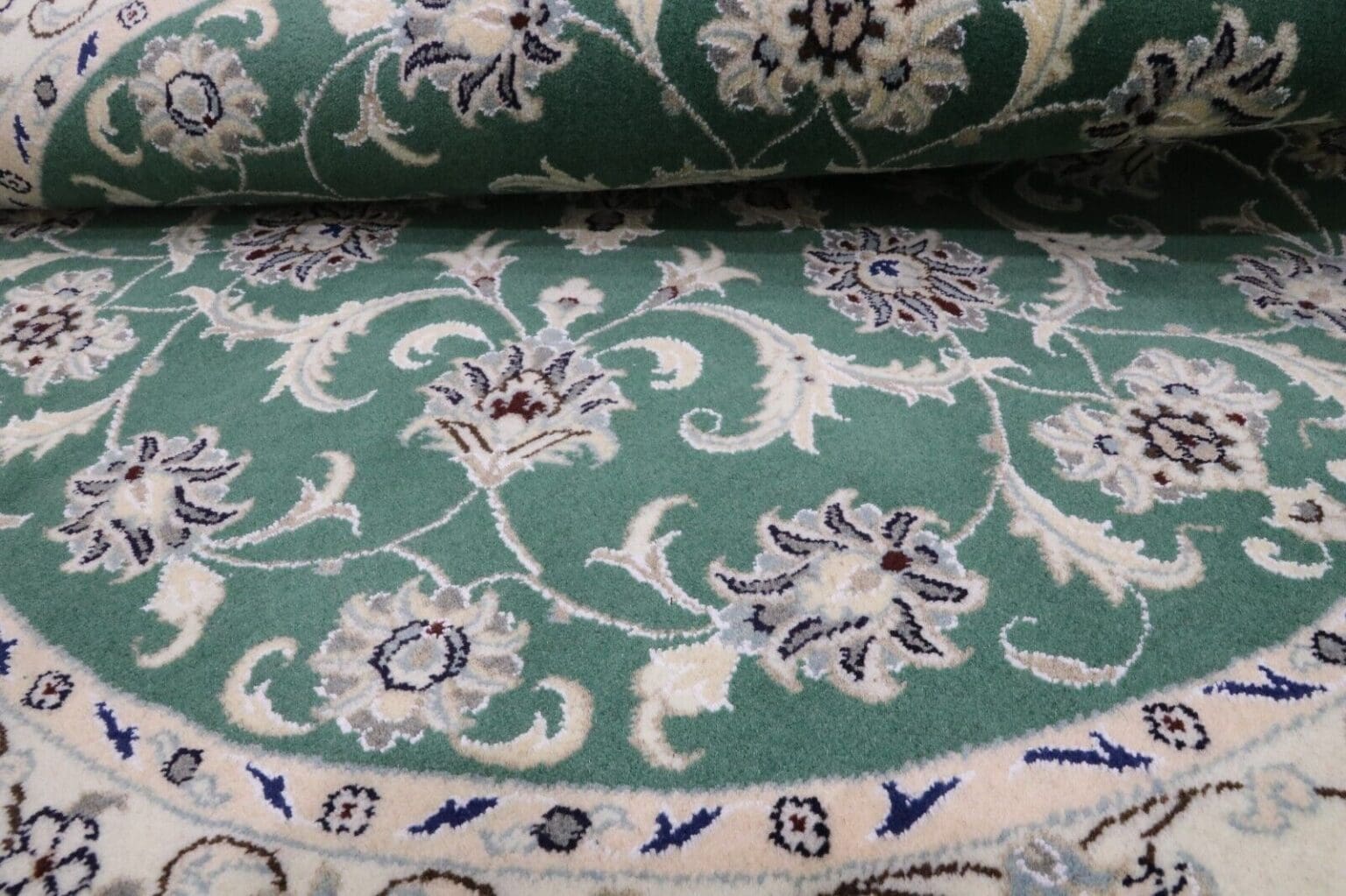
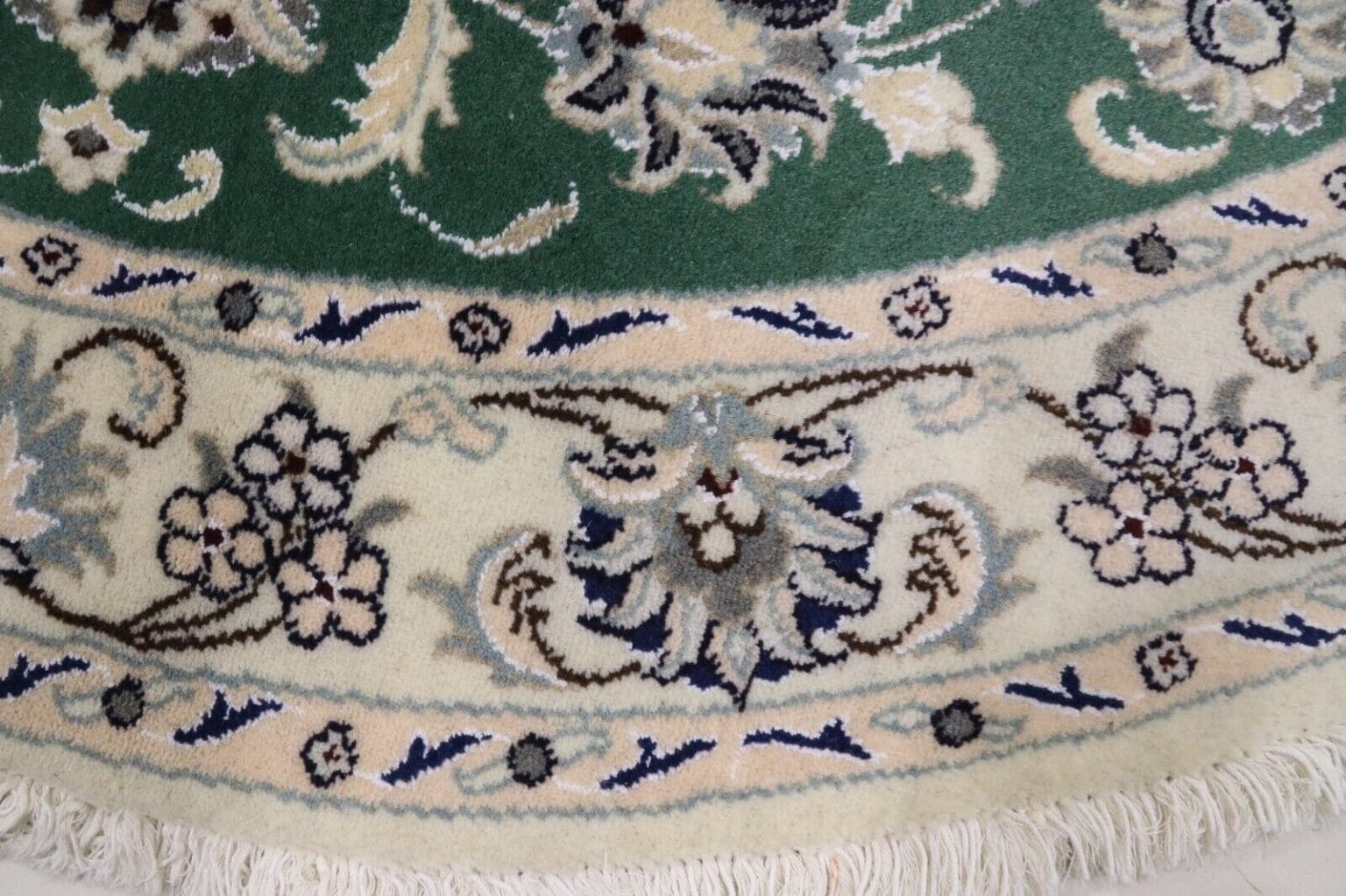
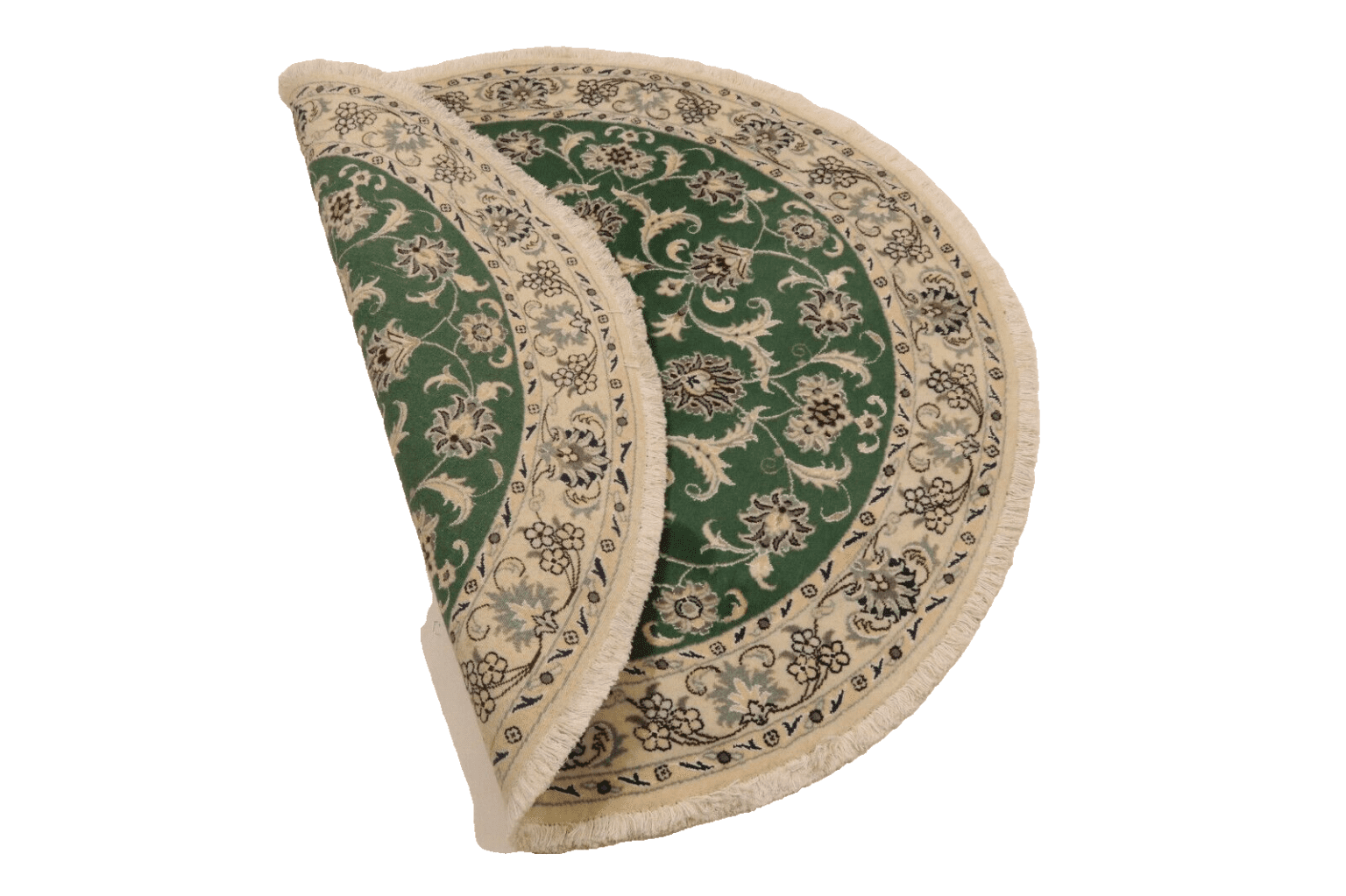
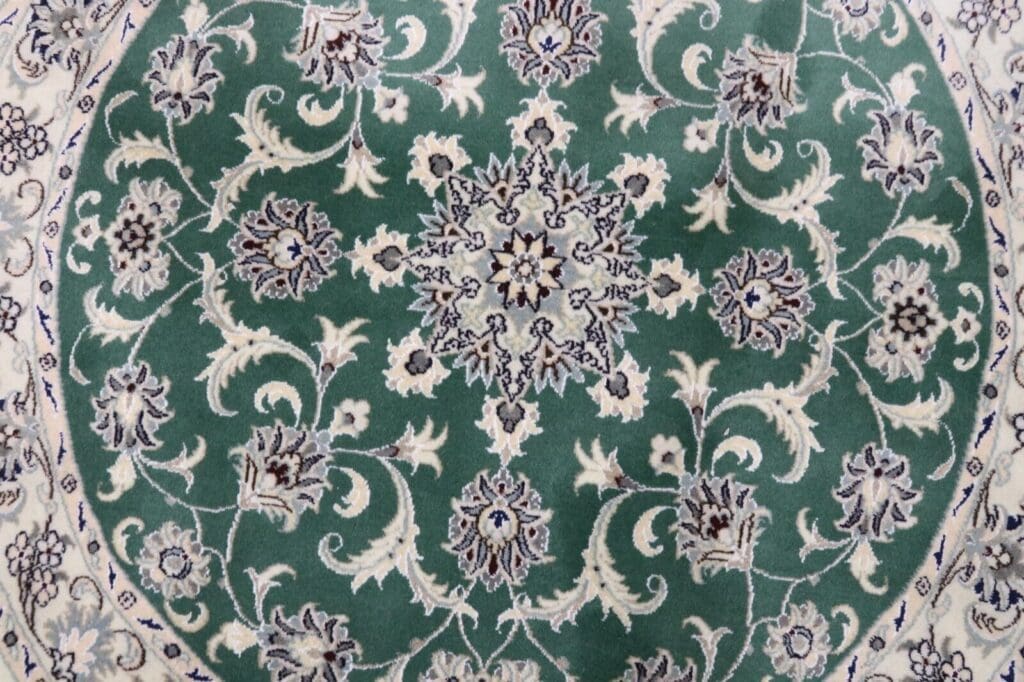
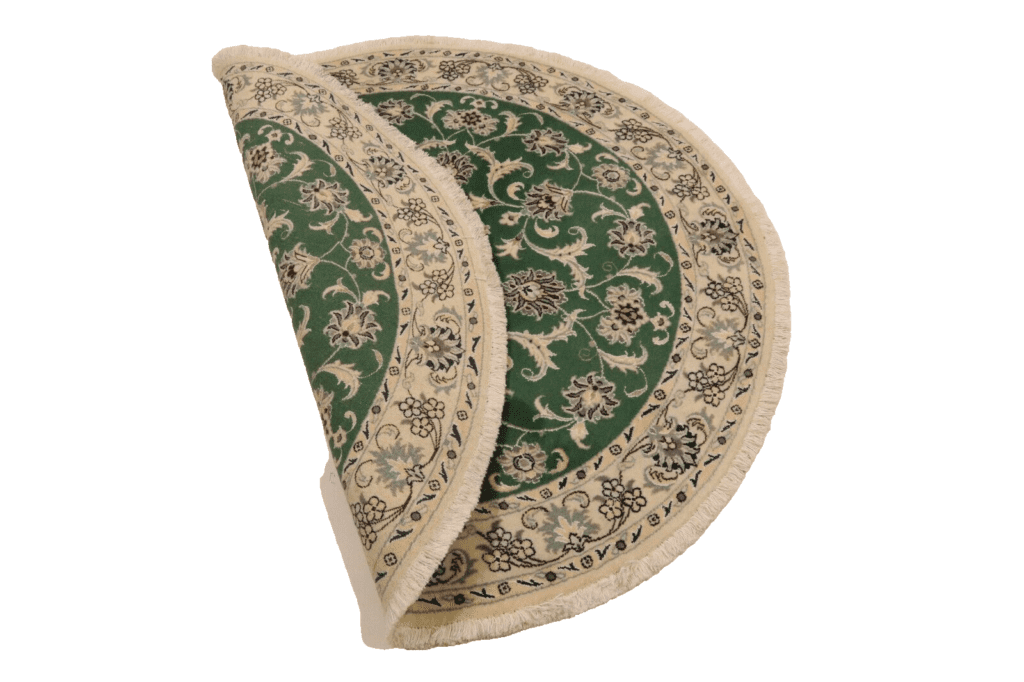
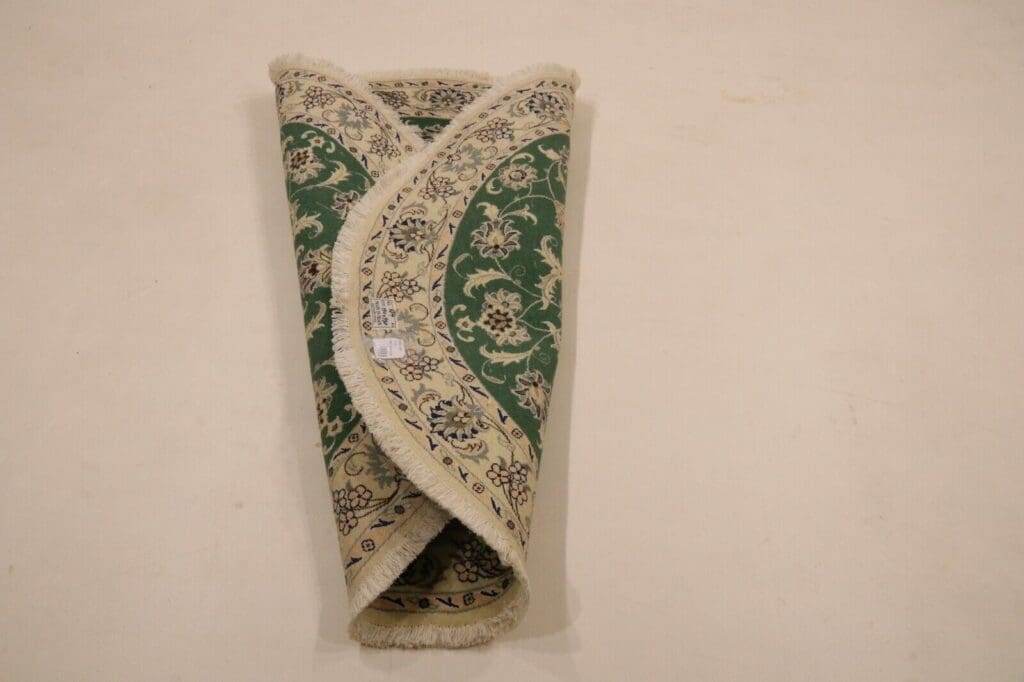
The rug is described as traditional oriental and Persian in style. It is round, and green is given as its colour. A circular format differs from the rectangular field found in many oriental rugs. Its outline can make the perimeter part of the visual composition and can support a reading that moves from the centre towards the edge. The product information does not specify a particular central field, border, medallion or symmetry.
Persian and oriental designs often organise ornament through relationships between a field, a surrounding border and smaller repeating elements. Depending on the regional tradition and the individual design, these elements may include floral forms, vines, geometric lines or stylised symbols. Nain design history is commonly associated with delicate drawing and carefully ordered ornament. That background explains the style classification without asserting that a particular flower, medallion or border appears on this rug.
Green has a broad place in oriental colour traditions, ranging from muted tones to stronger shades. In a rug it may function as a ground colour, an accent or part of a gradual tonal relationship. The visual result also depends on the fibre: wool generally gives colour a fuller, softer presence, while silk can make selected areas reflect light more sharply. This rug is identified as green and contains virgin wool and silk, but no exact shade or distribution of colour is stated.
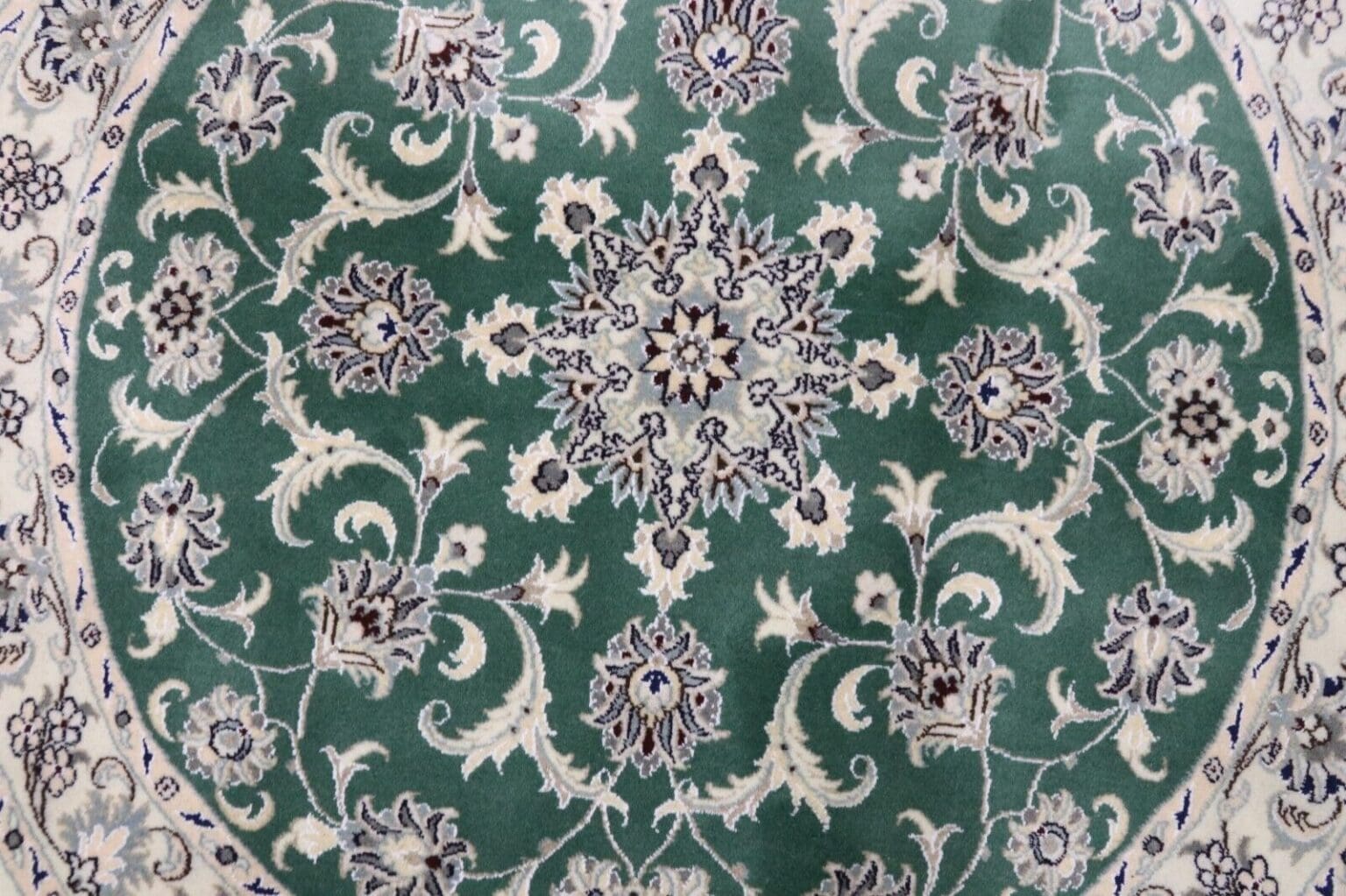
Fine hand-knotting can support the depiction of narrow lines, small ornaments and carefully controlled colour changes. The design is created row by row as individual knots are placed, so a complete image grows from many separate operations. Traditional Persian workshops may work from drawn plans or inherited pattern structures, while the final textile reflects the execution of the weaver. The listed knot density is relevant to the technical description, but it does not justify naming a specific motif that the source does not mention.
The description “traditional oriental/Persian” locates the design within the decorative language of Persian rug art rather than assigning it to a modern interior trend. The green colour and circular shape are the stated visual characteristics. Specific names such as medallion, boteh or Herati should not be added without a corresponding description. This distinction matters because a regional style, a colour and a shape identify broad design information, whereas an individual motif is a separate fact.
The balance between material and pattern is also part of the visual effect of a hand-knotted rug. Virgin wool can give the surface depth, while silk can introduce subtle highlights where it is visible. A carefully knotted structure allows transitions to remain legible and helps the design read as a textile rather than as a flat printed image. These are general effects of the stated materials and technique; the precise drawing of this Nain rug remains the design shown in the piece itself.
Special Features
The rug is new and is described as perfect. It is identified as pet-friendly and suitable for use with underfloor heating. Its thickness is approximately 8 mm. These details add practical information to the stated origin, materials, shape and method of production. The circular format can be relevant when planning a room, while compatibility with underfloor heating concerns a specific use condition.
Pet-friendly suitability means that the rug is intended for households with pets. Regular care and prompt removal of dirt remain sensible even when a rug is described this way. Its new and perfect condition refers to the condition at the time of sale and should be distinguished from marks that may arise through later use. Service life depends on placement, foot traffic and maintenance.
The combination of hand-knotting, virgin wool, silk and a cotton warp joins a traditional production method with a clearly stated fibre composition. The approximately 8 mm thickness describes the rug’s construction. It does not imply an unspecified underlay or additional padding. The listed suitability for underfloor heating and pet-friendly use provides the practical information supplied for this individual rug.
Because this is a one-off hand-knotted rug, its regional classification and material specification can be stated separately from details that are not recorded. Nain, Persian origin, the green colour, the round shape, the new condition and the stated construction describe the piece without requiring an invented workshop history or an unlisted motif.
FAQ
How should I care for this Nain Persian rug?
Vacuum it regularly without using a brush attachment. Treat spills as soon as possible with a clean, damp cloth. For heavier soiling, professional rug cleaning can be considered. A careful routine is appropriate for a hand-knotted pile made from virgin wool and silk and helps keep the textile in good condition during use.
Where can this rug be used?
The round Persian rug can be used in living rooms, dining rooms or as a focal point in an entrance hall. Its materials are described as robust enough for areas with higher foot traffic. It is also suitable for underfloor heating and is identified as pet-friendly. The final position should take account of the room layout, the level of use and the existing floor.
How can the quality of a Persian rug be assessed?
Knot density, the materials used and the precision of the knots are important points of assessment. A higher number of knots per square metre generally allows more detailed pattern work and can contribute to durability. This rug is specified as hand-knotted with approximately 300,000 knots per square metre, 90% virgin wool, 10% silk and a cotton warp. These details form the basis of its technical description.
To provide the best experiences, we use technologies like cookies to store and/or access device information. Consenting to these technologies will allow us to process data such as browsing behavior or unique IDs on this site. Not consenting or withdrawing consent, may adversely affect certain features and functions.
Functional Always active
The technical storage or access is strictly necessary for the legitimate purpose of enabling the use of a specific service explicitly requested by the subscriber or user, or for the sole purpose of carrying out the transmission of a communication over an electronic communications network.
Preferences
The technical storage or access is necessary for the legitimate purpose of storing preferences that are not requested by the subscriber or user.
Statistics
The technical storage or access that is used exclusively for statistical purposes.The technical storage or access that is used exclusively for anonymous statistical purposes. Without a subpoena, voluntary compliance on the part of your Internet Service Provider, or additional records from a third party, information stored or retrieved for this purpose alone cannot usually be used to identify you.
Marketing
The technical storage or access is required to create user profiles to send advertising, or to track the user on a website or across several websites for similar marketing purposes.
 SECURE PAYMENT
 SHIPPING PARTNERS


