This Nain Persian rug is hand-knotted, with a pile made from 100% virgin wool and a warp made from 100% cotton. The two materials therefore have distinct roles in the construction. Virgin wool forms the visible and tactile surface, while cotton provides the foundation on which the knots are tied. This combination creates a textile that brings together the natural character of wool and the firm structure required for a hand-knotted rug.
Virgin wool has long been used in rug making because it is resilient, naturally elastic and pleasant to the touch. Its fibres can recover after ordinary pressure, and its surface has a natural lustre. Wool also gives the pile a warm, substantial feel. In a hand-knotted rug, this material is not applied as a printed surface. It is built into the design through individual knots that are secured around the warp and held together by the weft.
The hand-knotting process allows lines, outlines and small ornaments to be worked out with care. The rug’s high knot density supports the finely drawn appearance of its design. Each knot contributes to the structure of the pile and to the separation of one colour area from another. The result is a surface in which the pattern is part of the textile itself. The tactile quality of the wool remains visible and perceptible alongside the precision of the drawing.
The rug is described as new and perfect, and the detailed description also identifies it as being in very good condition. It is a one-off piece. Because it is made by hand, its execution belongs to one particular weaving and finishing process rather than to a repeated industrial production. Small characteristics of the knotting are therefore part of the individual identity of this Oriental rug.
Hand-knotting involves several stages of skilled work. The warp is first arranged on the loom. Knots are then tied row by row, with coloured yarns following the intended design. Weft threads are inserted between rows and beaten into place to hold the structure together. Once the knotting is complete, the pile is trimmed so that the pattern can be read clearly. Finishing work and cleaning prepare the woven surface for use.
Origin and Tradition
This rug comes from Persia and is identified as Nain. Nain is a city and weaving region in Iran whose name is associated with finely made Persian rugs. The local tradition became particularly established as a distinct branch of Iranian rug making during the twentieth century. Nain lies in central Iran, an area where weaving, wool processing, workshop practice and the movement of goods have all contributed to the development of regional textile traditions.
Persian rugs are often named for the place where they were made or for the workshop tradition with which their designs are associated. In this case, Nain is the relevant regional designation. Nain rugs are commonly connected with precise drawing, refined knotting and an orderly arrangement of floral forms. Individual workshops may vary in their colours, proportions and details, but the regional identity remains visible through the relationship between the central field, the surrounding ornament and the border system.
The making of a hand-knotted rug requires practical knowledge of loom preparation, knotting, pattern transfer, pile trimming and finishing. Weavers work through the design one section at a time, translating a drawn plan or established workshop pattern into coloured knots. This process demands control of the yarn, the sequence of the motifs and the tension of the structure. The work is learned through practice and through the transmission of workshop knowledge from one generation to the next.
Nain’s contribution to Persian rug culture is connected with a preference for carefully organised compositions. Floral elements, branching forms and ornamental details are placed within a framework that provides balance and repetition. This does not mean that every Nain rug follows one fixed template. Rather, the region provides a recognisable vocabulary that can be adapted by individual workshops. The same tradition can therefore produce pieces with different arrangements while retaining a clear connection to Nain.
Persian weaving developed through the interaction of domestic production, specialist workshops and regional trade. Rugs served practical purposes in interiors, but they also carried the visual language of the communities that made them. The choice of wool, the treatment of colour and the construction of the pile all formed part of this local knowledge. Workshop rugs from Nain belong to that broader history of Iranian textiles, in which technical skill and decorative design are inseparable.
The name Super Nain describes the designation used for this offered piece. It does not change the stated origin. This is a Persian Nain rug, not a rug from another region simply because floral or geometric motifs can also occur elsewhere in Persian weaving. Origin and design are related but not identical: Nain identifies the regional tradition, while the floral and ornamental vocabulary describes the appearance of the individual rug.
The rug also reflects the continuity of hand production. Modern interiors may use Persian rugs in ways that differ from the settings for which they were first made, yet the underlying craft remains based on the same relationship between warp, weft, knots, pile and pattern. A Nain rug is therefore understood both as a functional textile and as a record of a regional weaving practice.
Design and Pattern
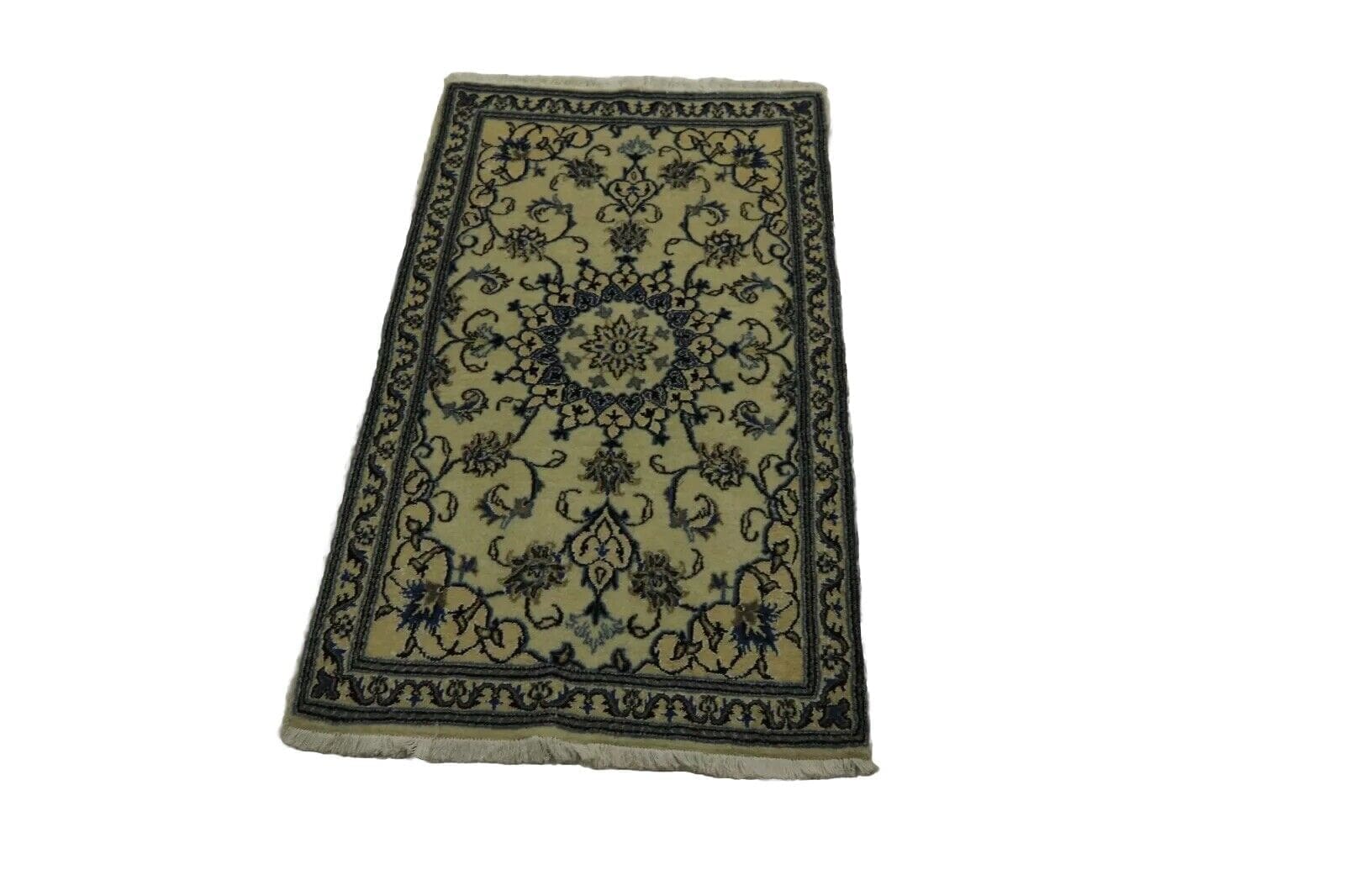
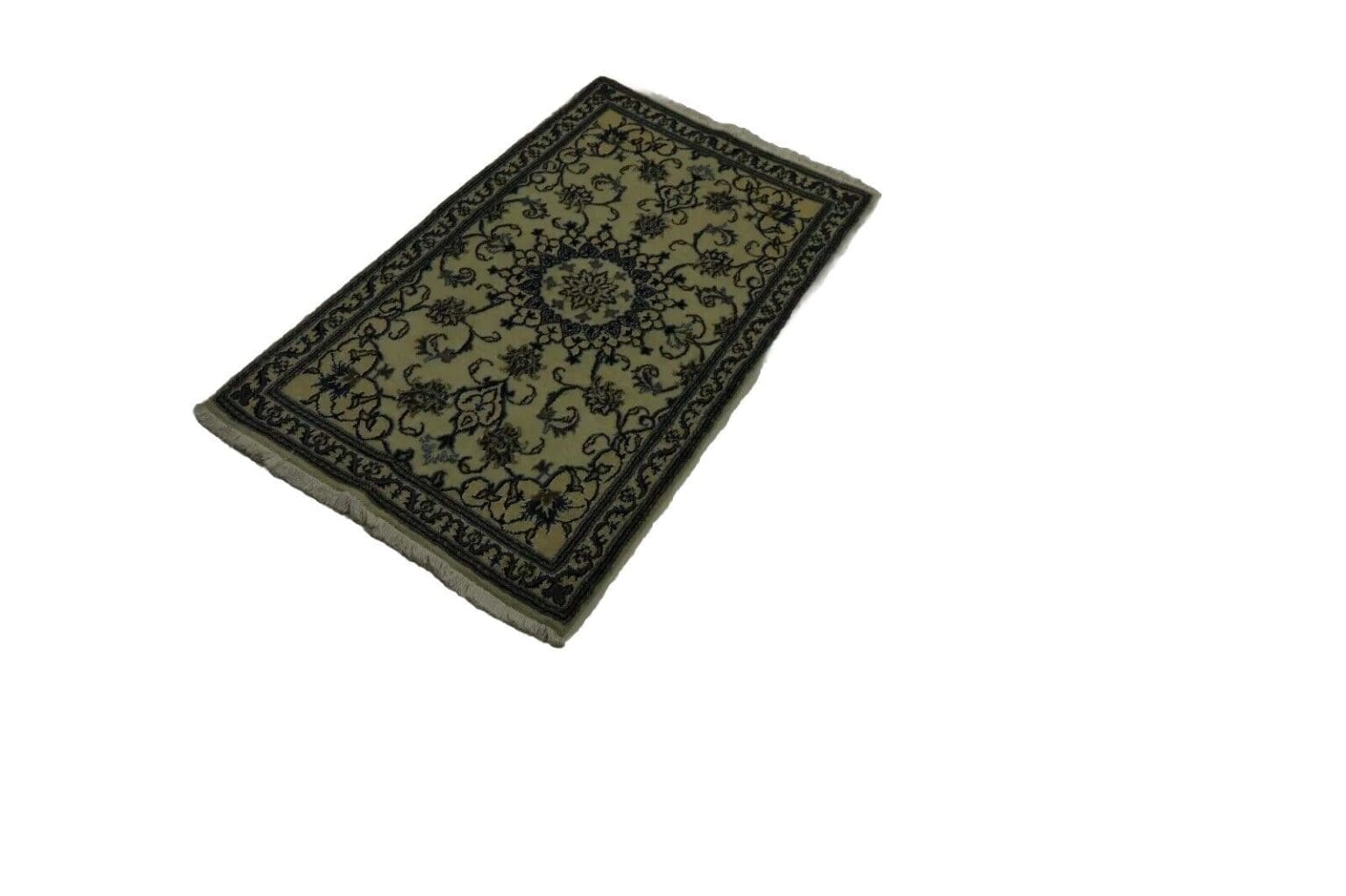
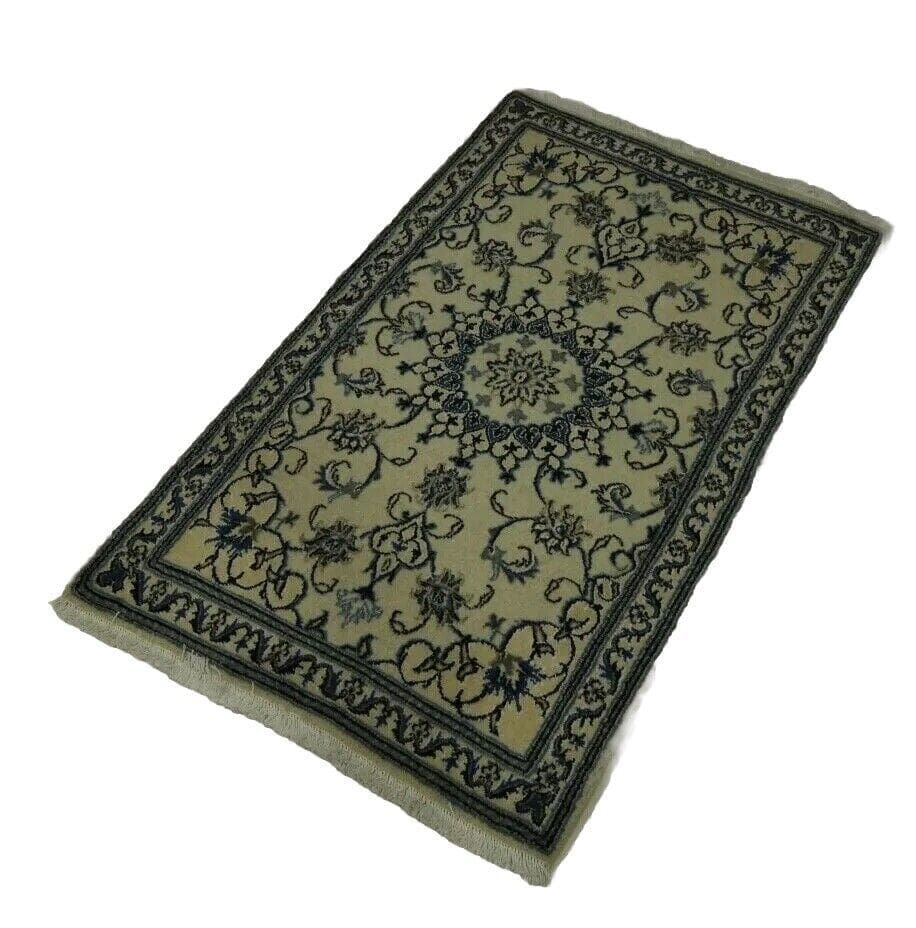
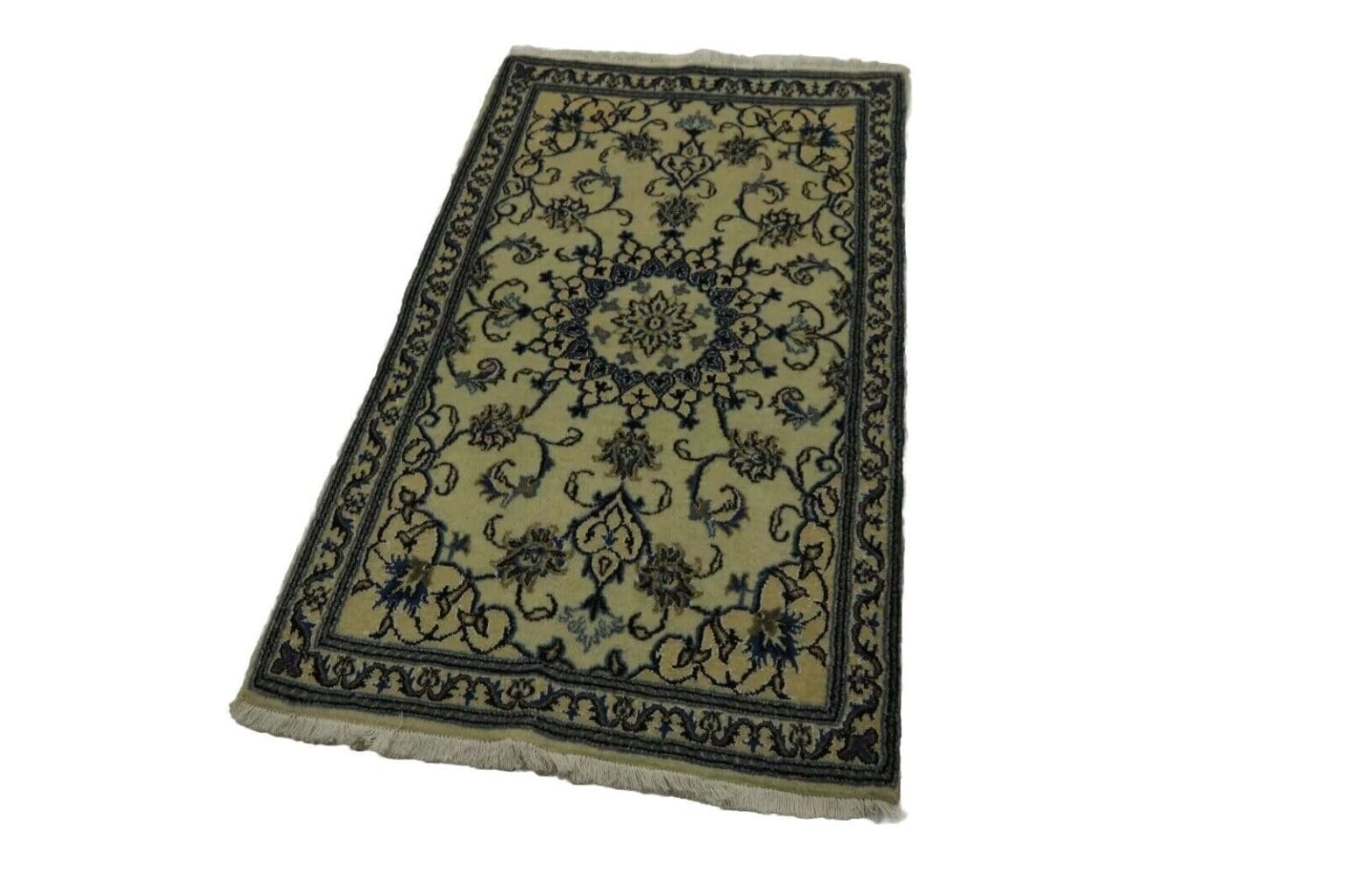
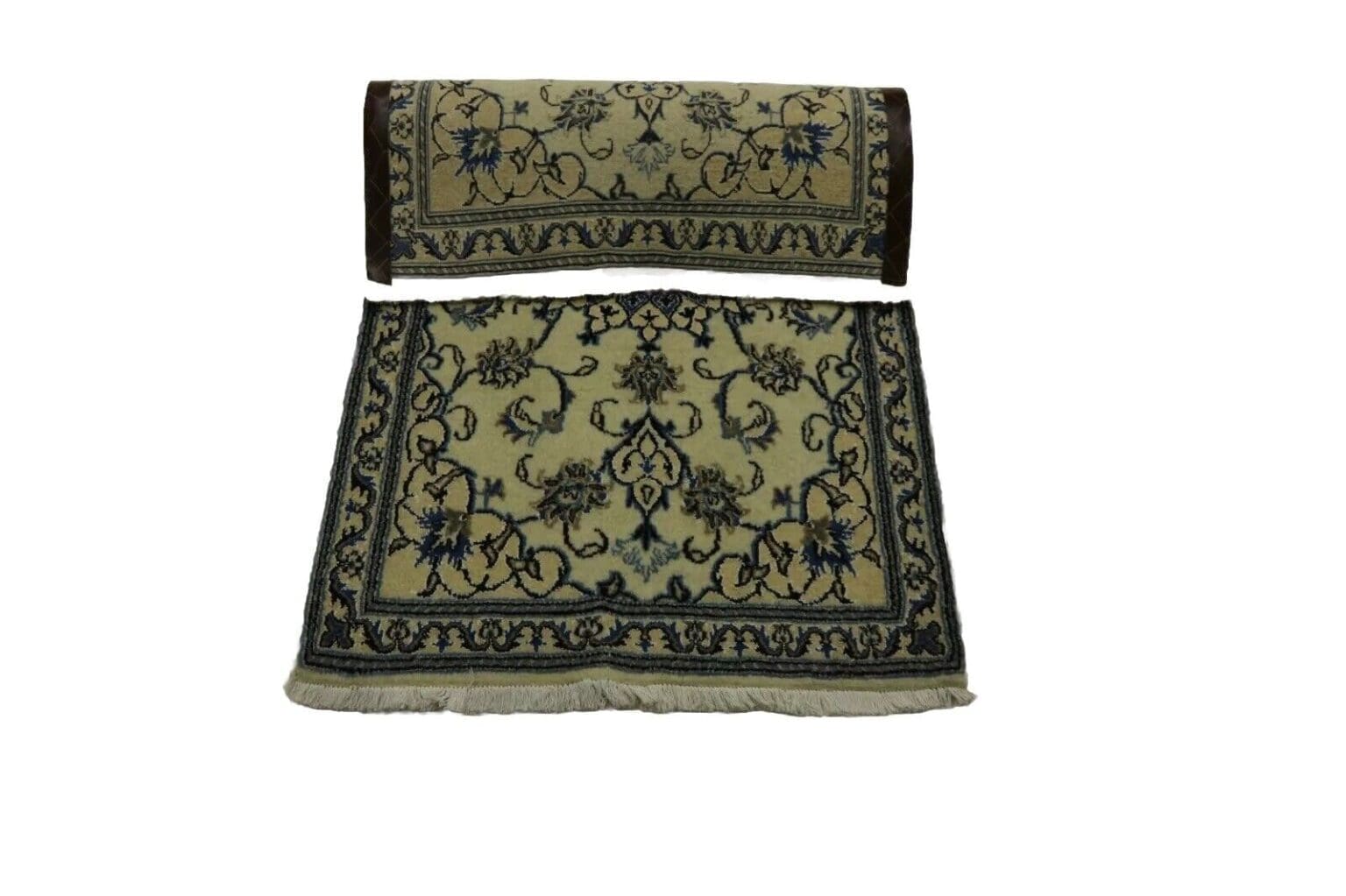
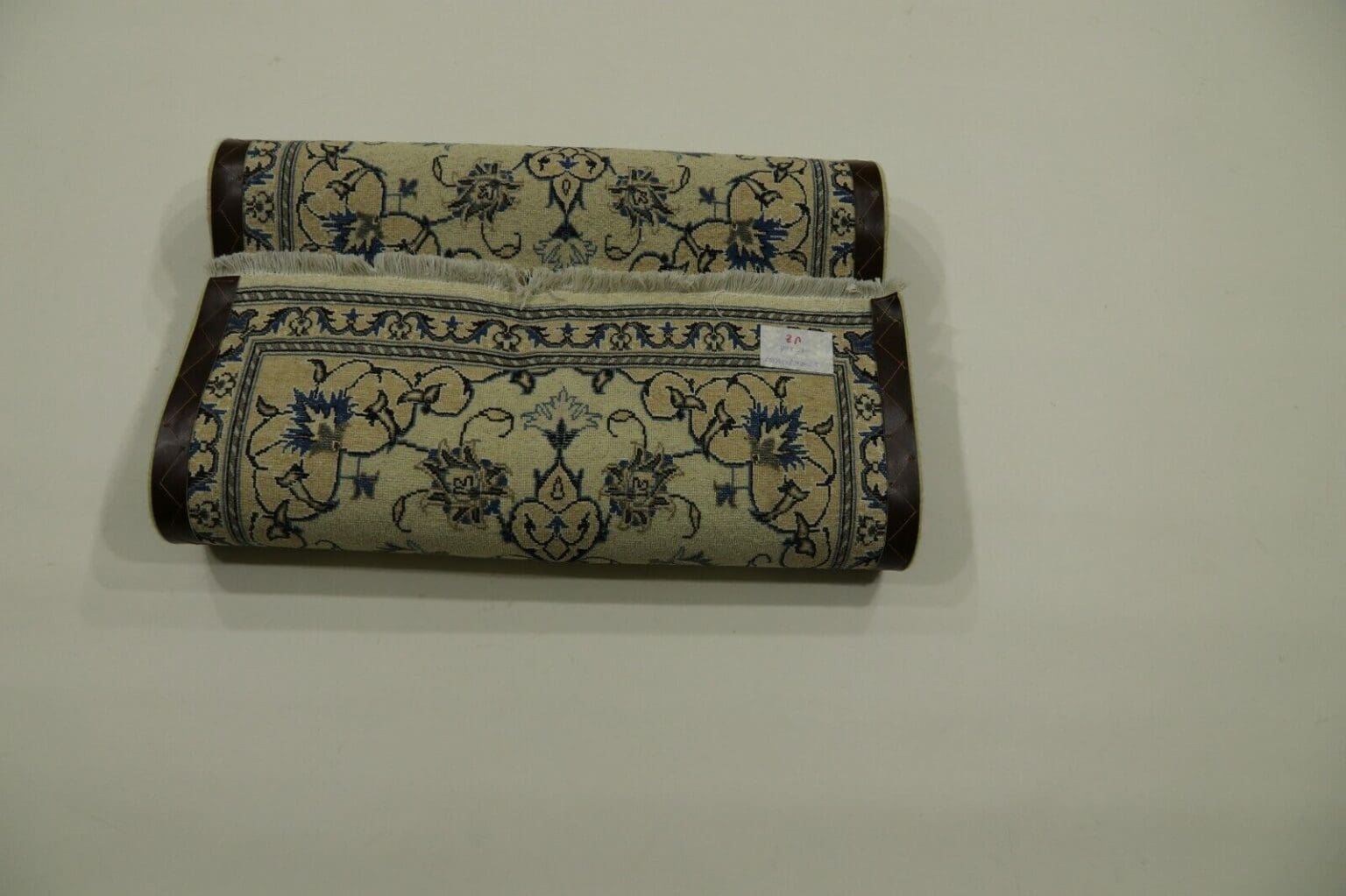
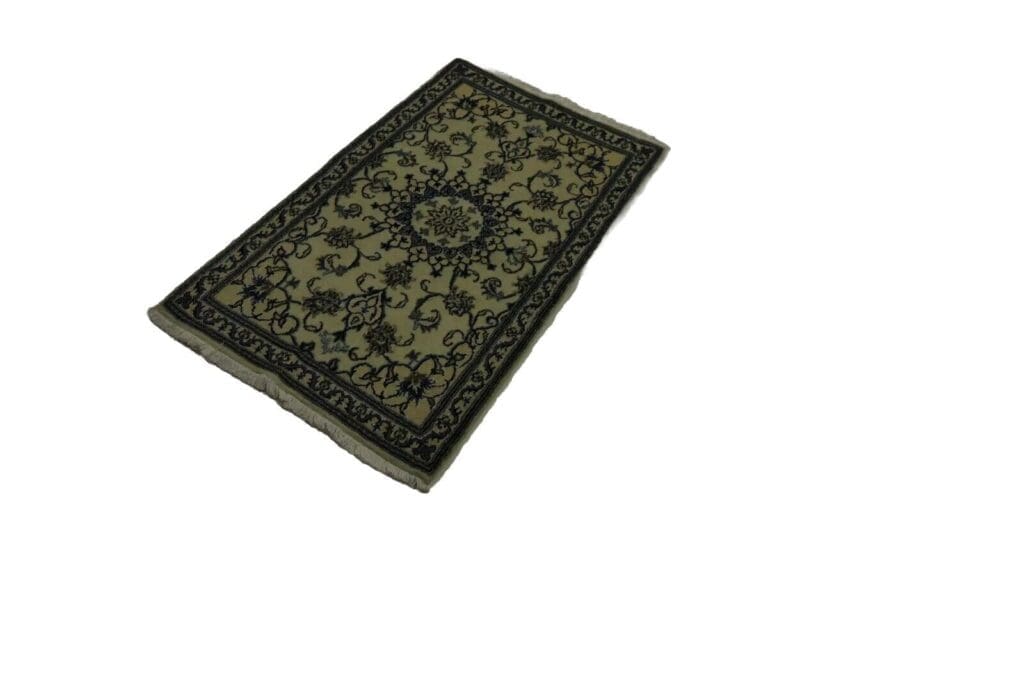
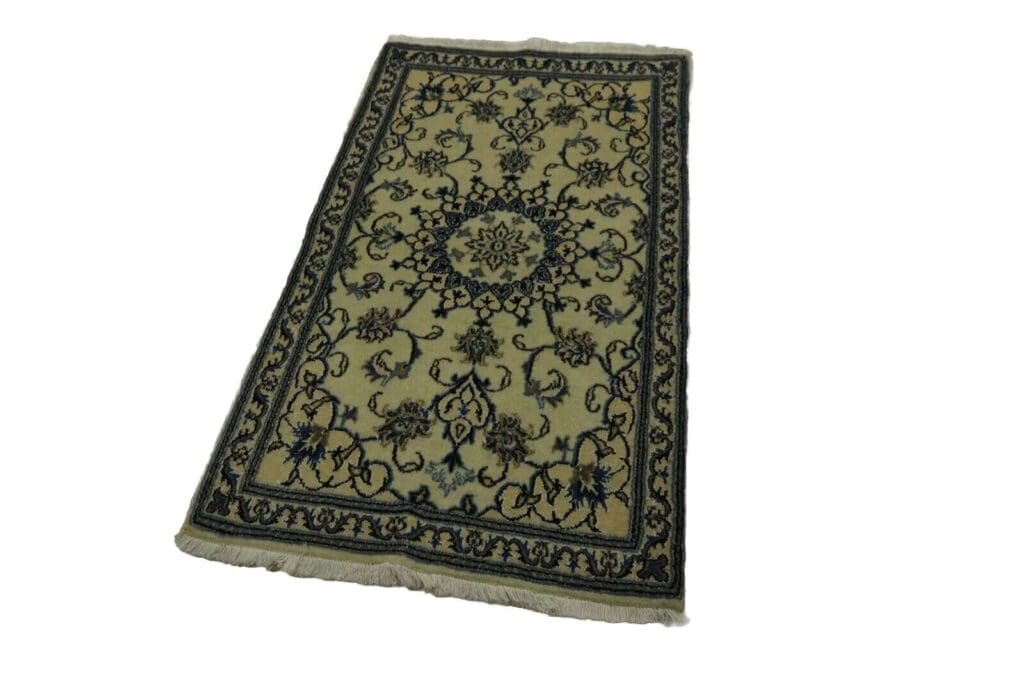
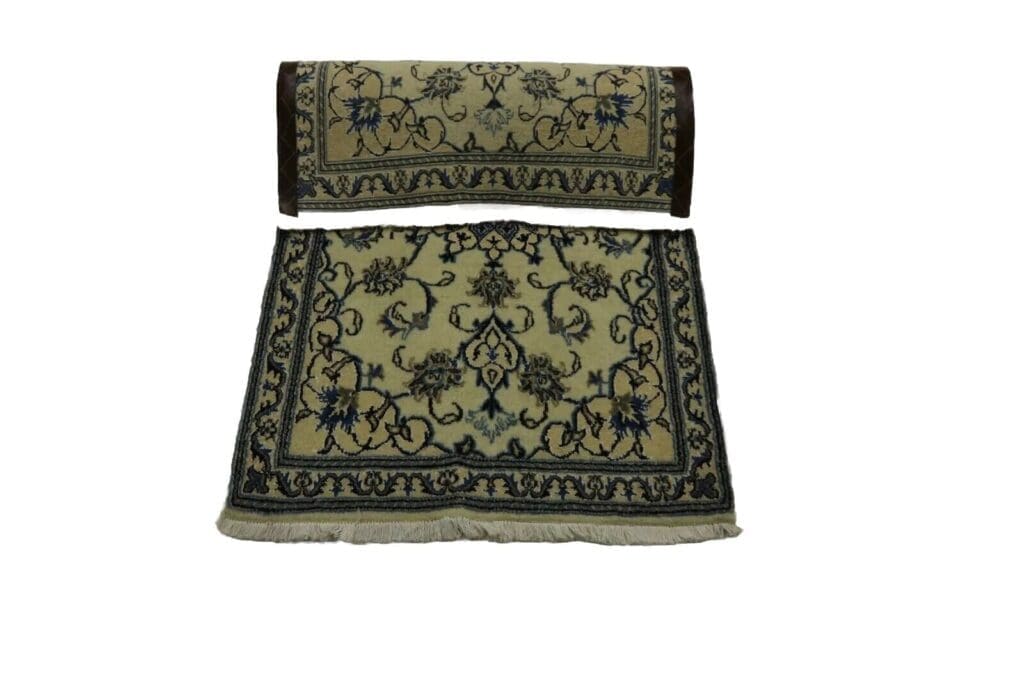
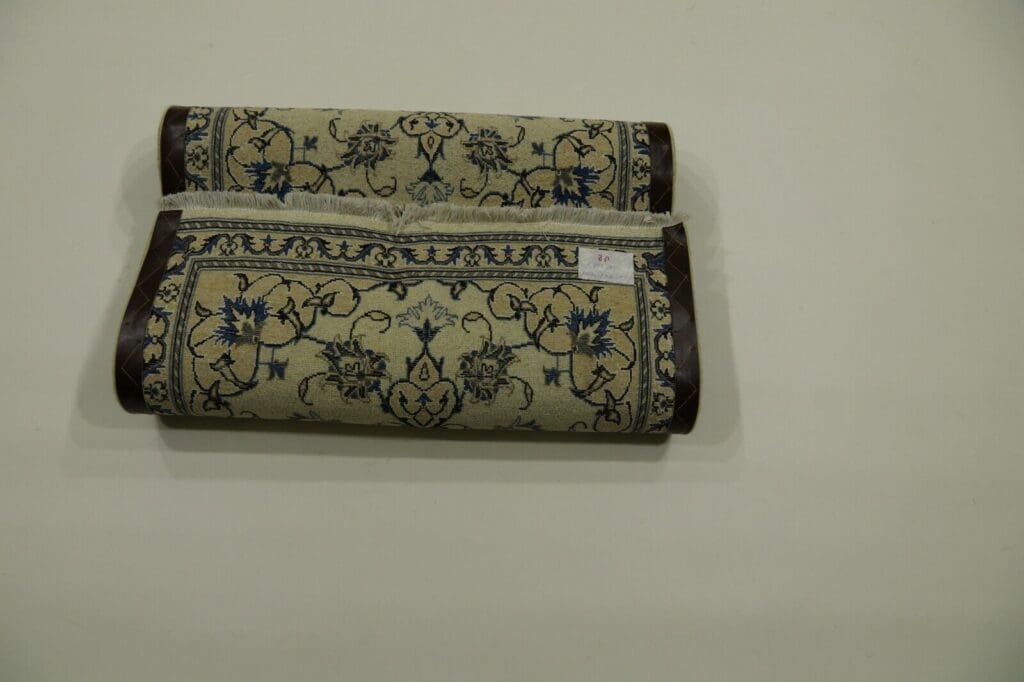
The design is described as traditional Oriental Persian. Its stated pattern language includes floral motifs, stylised plant forms and ornamental elements. In Persian rug design, these components are generally arranged as part of a coherent field rather than as unrelated symbols. Repetition, symmetry and framing help the eye follow the composition from the centre towards the surrounding borders.
Floral patterns may include blossoms, leaves, stems and curling branches interpreted in a deliberately stylised manner. Their woven form is not intended to reproduce a botanical image literally. Instead, the motifs are simplified and organised so that they can be repeated across a textile surface. Fine outlines distinguish one element from the next, while larger areas provide visual order. This relationship between detail and structure is characteristic of many Nain-inspired compositions.
Ornamental forms can define the edge of a field, connect separate motifs or fill the spaces between larger floral elements. Geometric organisation often appears in the arrangement of borders, axes and repeated units. Geometry and botanical ornament consequently work together: the first establishes rhythm and balance, while the second gives the drawing a more organic appearance. The pattern remains decorative, but it is also governed by a clear internal arrangement.
The colour impression is described as soft and earthy. Such a palette uses restrained, nature-related tones that support rather than overpower the ornamental drawing. Colour changes can separate petals, leaves, stems and surrounding outlines. Subtle variation gives individual forms definition and can suggest depth within a flat woven surface. The result is a calm colour relationship in which the fine pattern remains legible.
Floral ornament has a long history in Persian and wider Oriental textile art. Plant forms can evoke ideas of ordered nature, growth or the idealised garden. Their exact meaning is not identical in every design, however, and the motifs should first be understood as the visible elements stated for this particular rug. Here, the relevant characteristics are the floral, plant-based and ornamental forms, combined with the traditional Persian style and soft earthy colour impression.
Hand-knotting is especially suited to this kind of pattern because the design is formed through the placement of individual knots. The weaver can change colour, direction and contour gradually across the field. Once the pile is trimmed, these individual decisions appear as connected lines, small ornaments and broader floral structures. The pattern is therefore not printed onto the wool. It is created within the construction of the rug, which gives the design its woven character.
The traditional Persian arrangement can sit alongside both classical and contemporary furnishings because its visual language is based on balanced ornament and moderated colour. That is a description of the design’s character, not a claim about a particular room. The rug remains a one-off Nain piece whose pattern belongs to the wider regional tradition while retaining the specific execution of its own hand-knotting.
Special Features
The rug combines the Nain designation, Persian origin, hand-knotted construction and a knot density of approximately 300,000 knots per square metre. The dense knotting supports the detailed appearance of the floral and ornamental design. It is also a one-off piece. Its pile is made from 100% virgin wool, its warp from 100% cotton, and its condition is described as new, perfect and very good.
Routine care should consist of gentle, regular vacuuming to remove dust and everyday dirt from the wool pile. If heavier soiling occurs, professional cleaning is recommended. A specialist can take the wool, cotton foundation, colours and hand-knotted structure into account. Appropriate care helps preserve the surface and pattern without placing unnecessary stress on the woven construction.
FAQ
How should I clean this Oriental rug?
Regular, careful vacuuming is suitable for removing dust and ordinary loose dirt from the wool pile. For heavier soiling, the rug should be entrusted to a professional cleaner. Specialist cleaning can take account of the virgin wool, cotton warp, colours and hand-knotted structure. Strong household chemicals or an improvised wet wash should be avoided if they could affect the pile, the pattern or the colour balance. Gentle maintenance is the appropriate approach for preserving the textile.
Where can I use the Super Nain rug?
The traditional design with floral and ornamental motifs is suited to living spaces in which a Persian rug is intended to form part of the interior. The source specifically names living rooms and dining rooms, and also describes the rug as suitable for use as an accent in busier areas because of its robust materials. The final placement depends on the furnishing and the level of use. Its Nain pattern can be combined with both classic and modern interior styles.
What distinguishes a hand-knotted rug from a machine-made rug?
In a hand-knotted rug, individual knots are tied by hand around the warp. The design, colour areas and outlines are built up gradually as the weaving progresses. A machine-made rug is produced by an industrial process with a more standardised method of construction. This Nain is hand-knotted and is a one-off piece. Its knot density, detailed drawing and the small individual characteristics of handwork are features of its production, rather than the result of a repeated machine-made pattern.
To provide the best experiences, we use technologies like cookies to store and/or access device information. Consenting to these technologies will allow us to process data such as browsing behavior or unique IDs on this site. Not consenting or withdrawing consent, may adversely affect certain features and functions.
Functional Always active
The technical storage or access is strictly necessary for the legitimate purpose of enabling the use of a specific service explicitly requested by the subscriber or user, or for the sole purpose of carrying out the transmission of a communication over an electronic communications network.
Preferences
The technical storage or access is necessary for the legitimate purpose of storing preferences that are not requested by the subscriber or user.
Statistics
The technical storage or access that is used exclusively for statistical purposes.The technical storage or access that is used exclusively for anonymous statistical purposes. Without a subpoena, voluntary compliance on the part of your Internet Service Provider, or additional records from a third party, information stored or retrieved for this purpose alone cannot usually be used to identify you.
Marketing
The technical storage or access is required to create user profiles to send advertising, or to track the user on a website or across several websites for similar marketing purposes.
 SECURE PAYMENT
 SHIPPING PARTNERS


