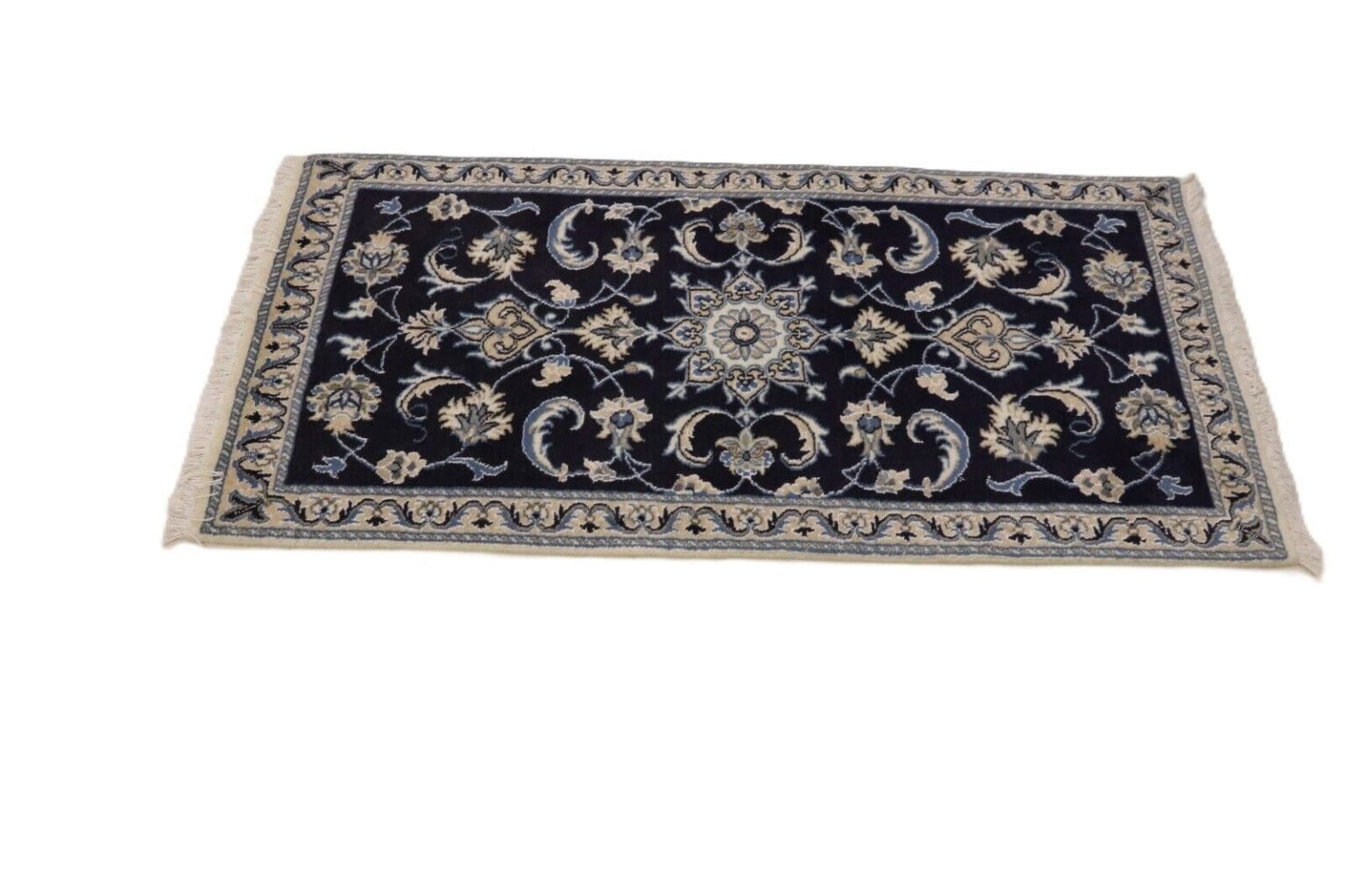
This Nain Persian rug is hand-knotted. Its pile consists of 90% virgin wool and 10% silk, while the warp is made from 100% cotton. The combination gives the rug a wool-based pile with a silk component that contributes a finer surface character and a restrained sheen. The hand-knotted construction means that the rug is built knot by knot rather than produced by machine.
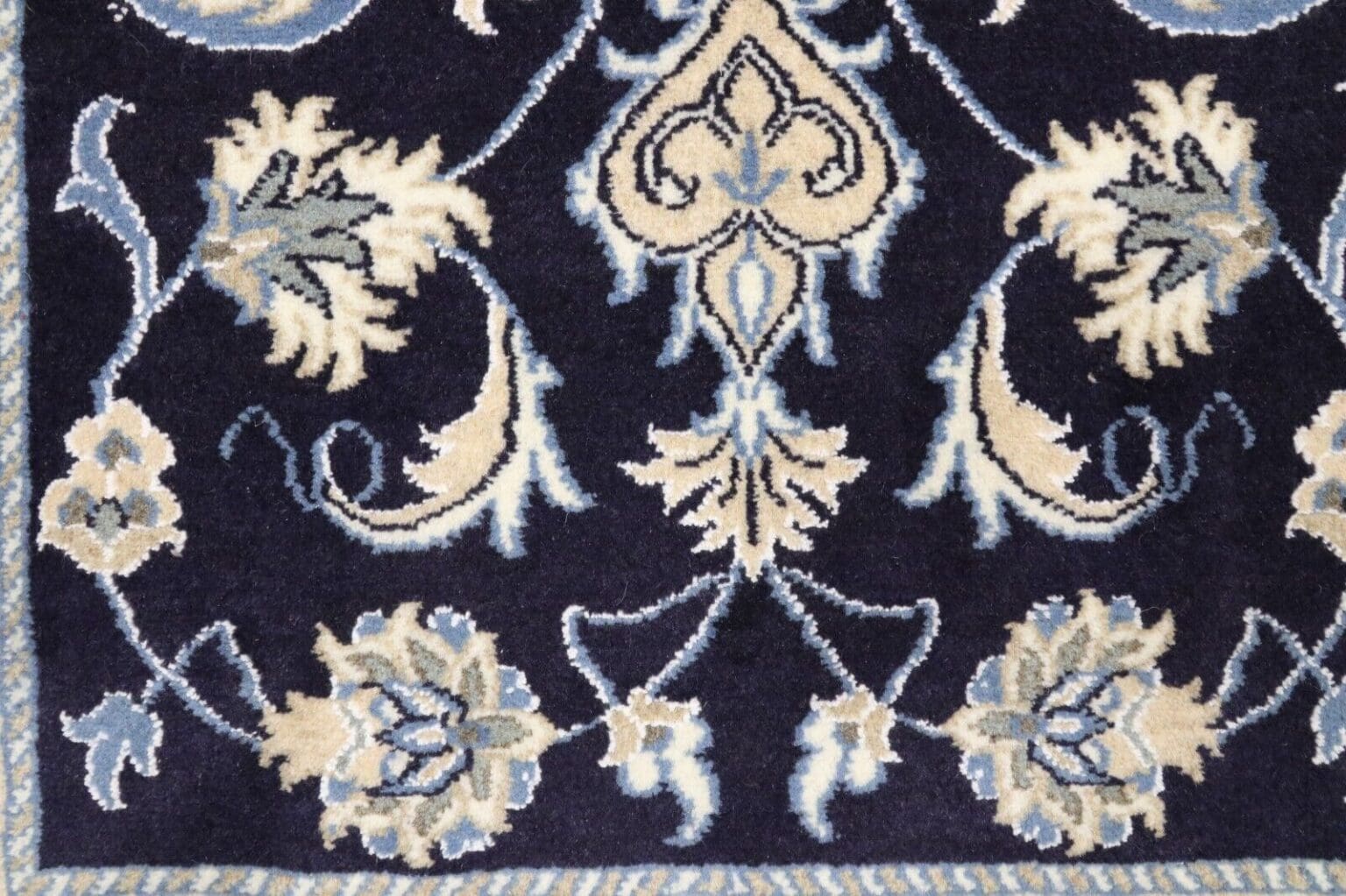
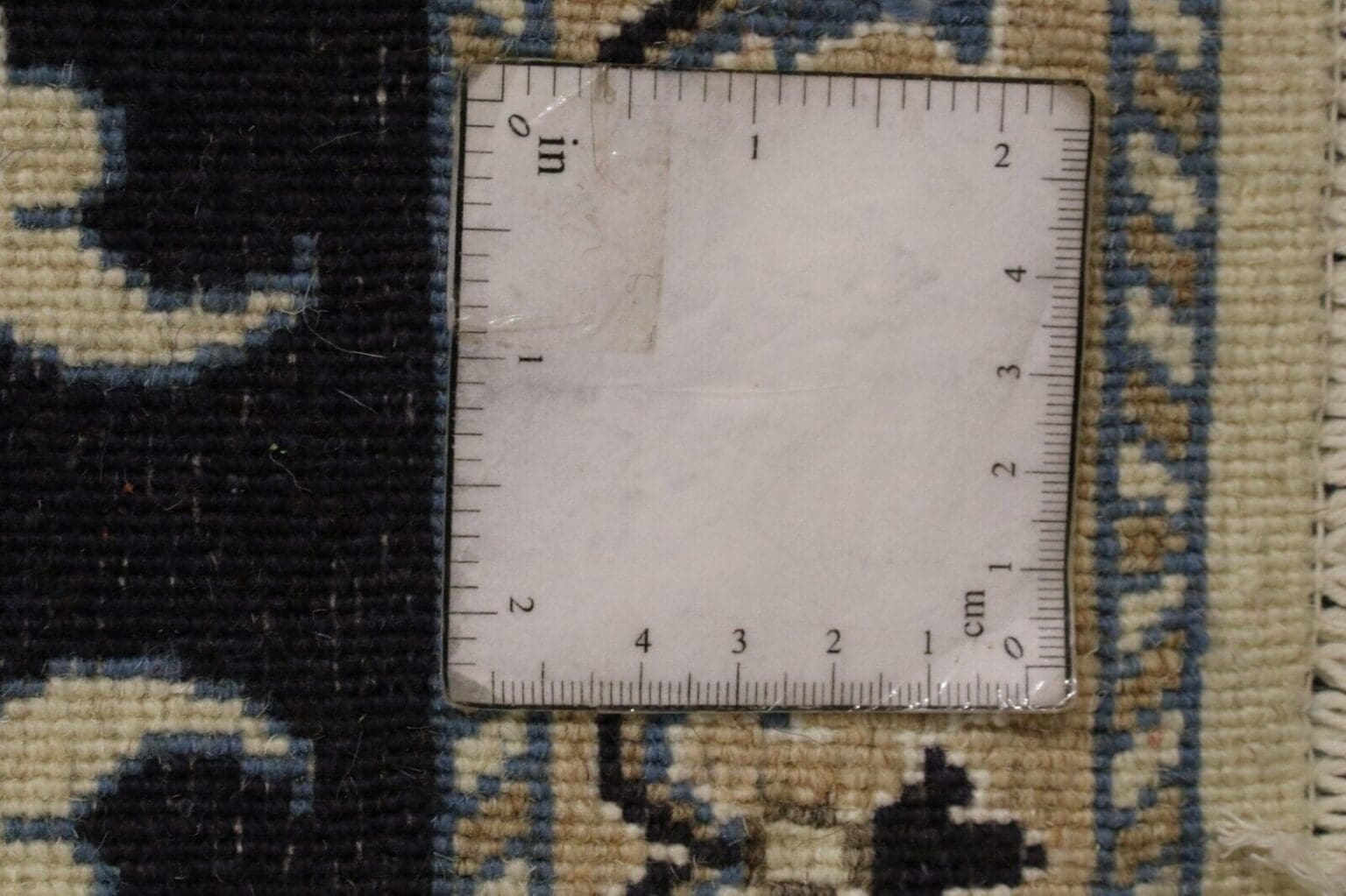
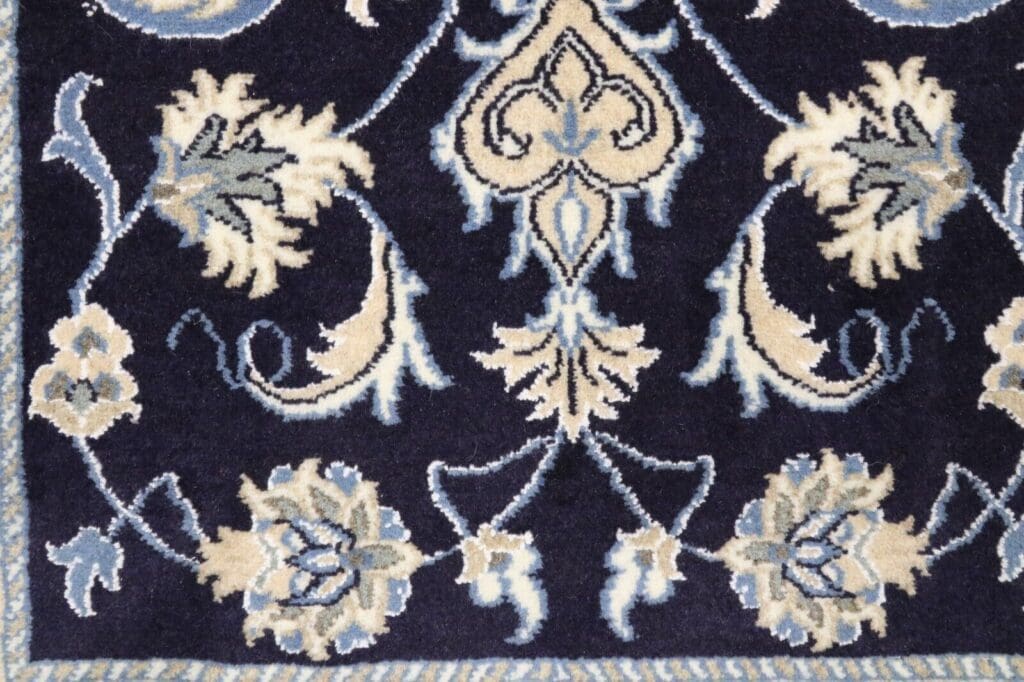
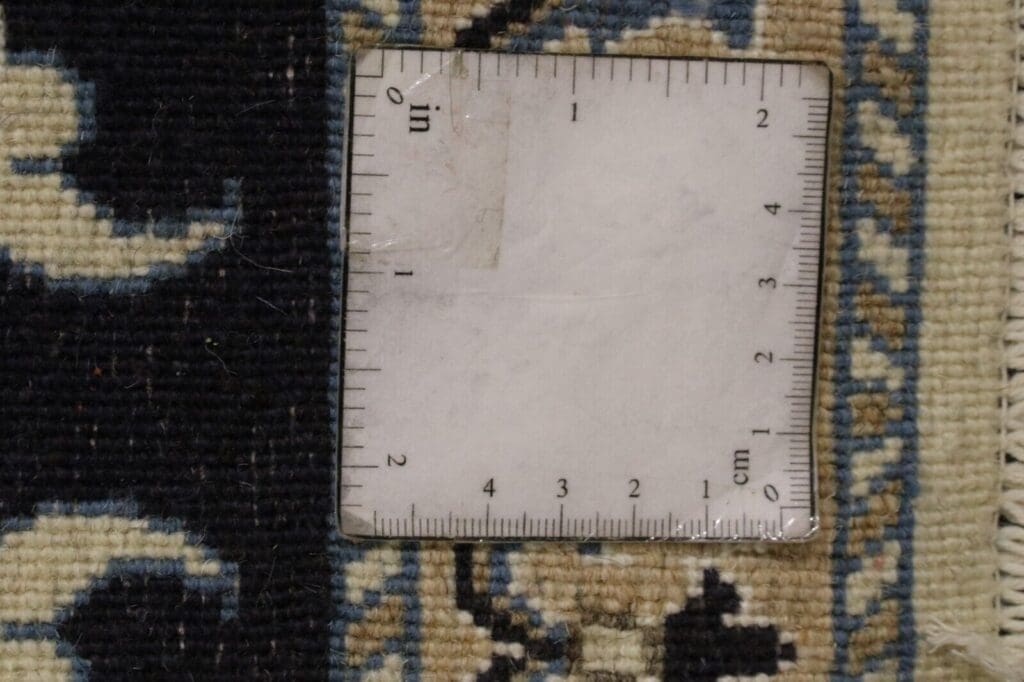
The listed knot density is approximately 300,000 knots per square metre. Such a density requires careful control of the warp, weft and pile during the weaving process. It allows the design to be articulated with fine lines and close transitions between floral or geometric details. The cotton warp provides the textile framework to which the pile knots are attached. Virgin wool and silk therefore perform different roles within the stated composition: wool forms the main pile material, while silk is used as a smaller, smoother fibre component.
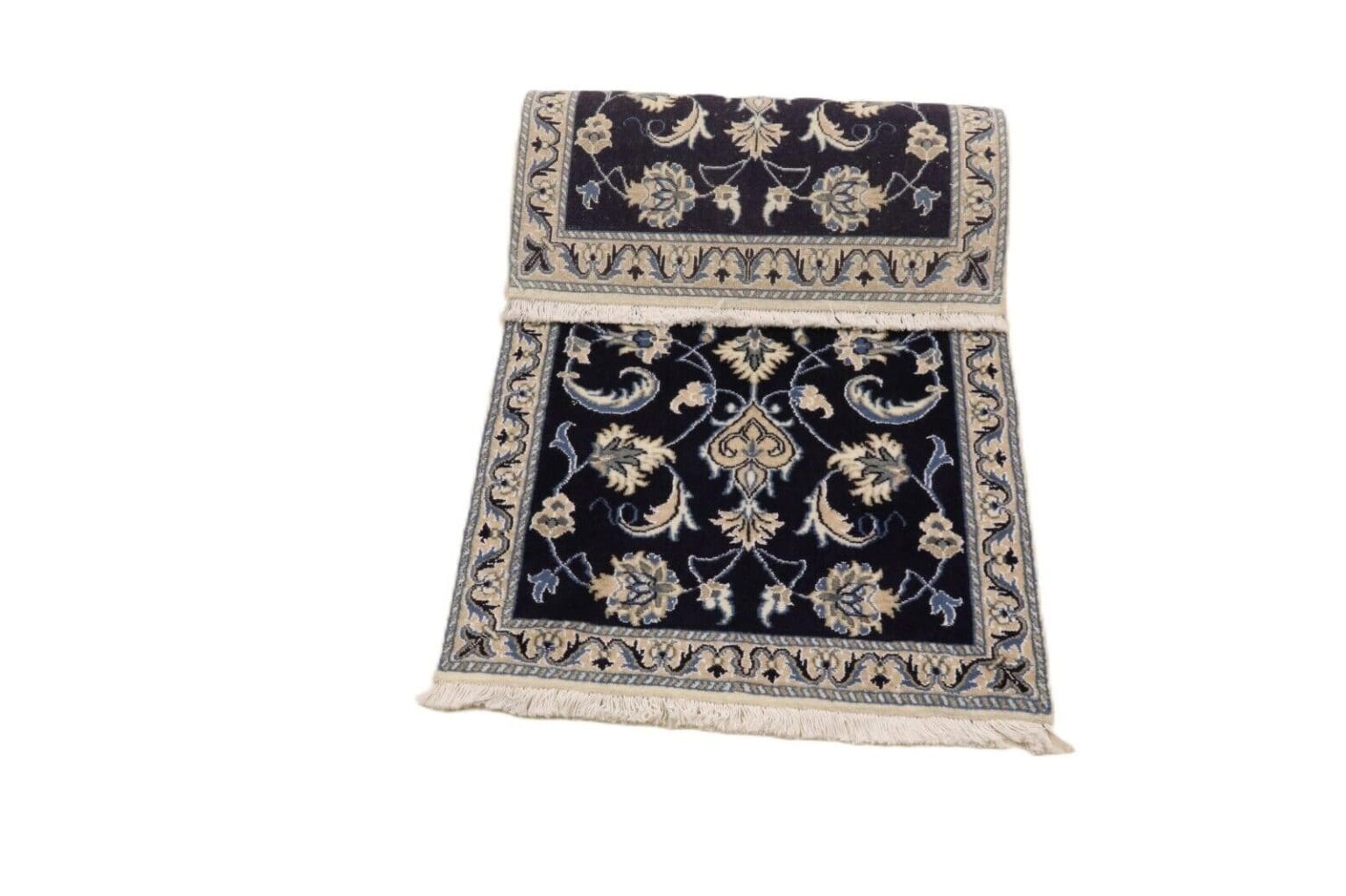
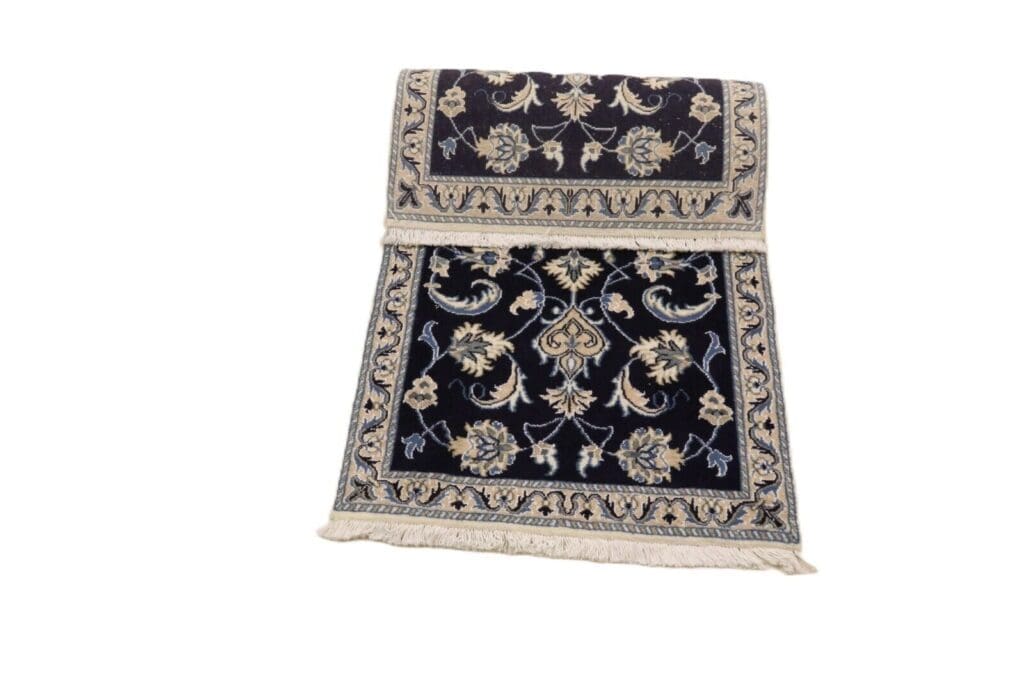
The rug is new and unused. Its thickness is approximately 8 mm. It is suitable for underfloor heating and is described as pet-friendly. These details define the stated material and usage characteristics of this individual piece. The rug combines the traditional Nain hand-knotting method with a pile made from wool and silk and a cotton warp.
Origin and Tradition
Nain is a city in Iran known for its carpet-making tradition. Nain rugs are associated with fine knotting and a carefully ordered, elegant design language. Their Persian origin places them within a long history of Iranian textile craftsmanship, where carpets developed as useful floor coverings as well as carriers of regional knowledge, ornament and inherited technical practice. In the Nain tradition, the accurate construction of the pile is considered alongside the balanced arrangement of the design.
The carpet tradition of Nain became established as a distinctive regional practice particularly during the nineteenth century. Workshops passed on knowledge of knotting methods, materials and pattern composition. Making a rug involves several connected stages: a design is translated into the structure of the textile, knots are placed in rows, and the pile is trimmed and finished to establish an even surface. The combination of a planned design and manual work is central to the traditional Nain type.
Iranian rugs vary by region in their construction, colours and ornament. Nain is commonly linked with a fine execution and a composed, readable layout. Historical influences, familiarity with classical Persian motifs and the transmission of workshop methods form the cultural background of this rug type. The tradition does not consist of one single drawing. Instead, it includes variations in which flowers, vines, medallion forms and geometric ordering can be combined in different ways.
The name Nain identifies the type stated for this rug and connects it with its Persian origin. It refers to a region where carpet-making skills have been maintained across generations. The importance of that tradition lies in the relationship between place, technique and inherited design vocabulary. A hand-knotted Nain rug makes this relationship visible through its structure and through the detailed organisation of its pattern. The regional name should therefore be read as an indication of type and origin, not as a claim that every Nain rug has an identical design.
Design and Pattern
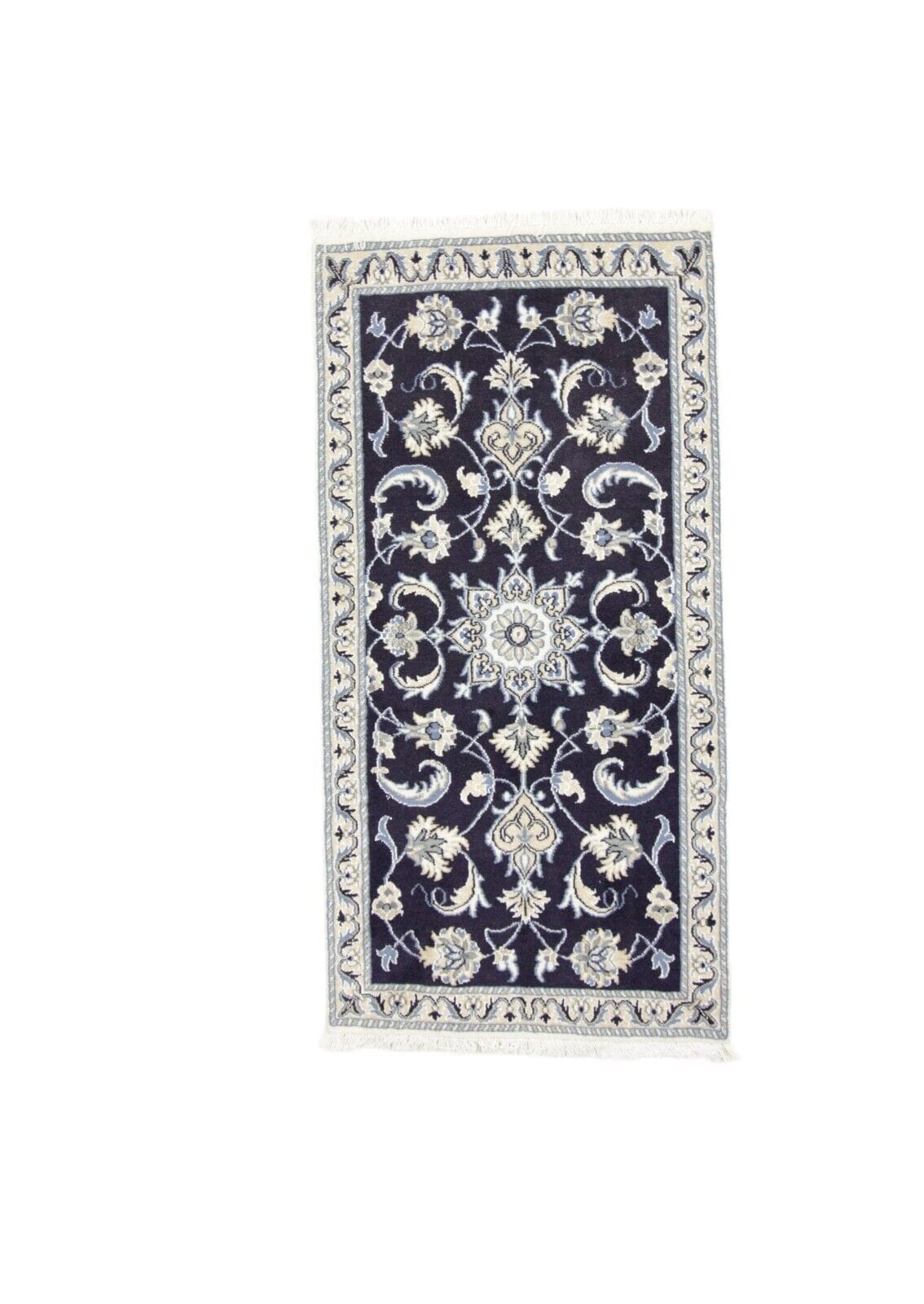
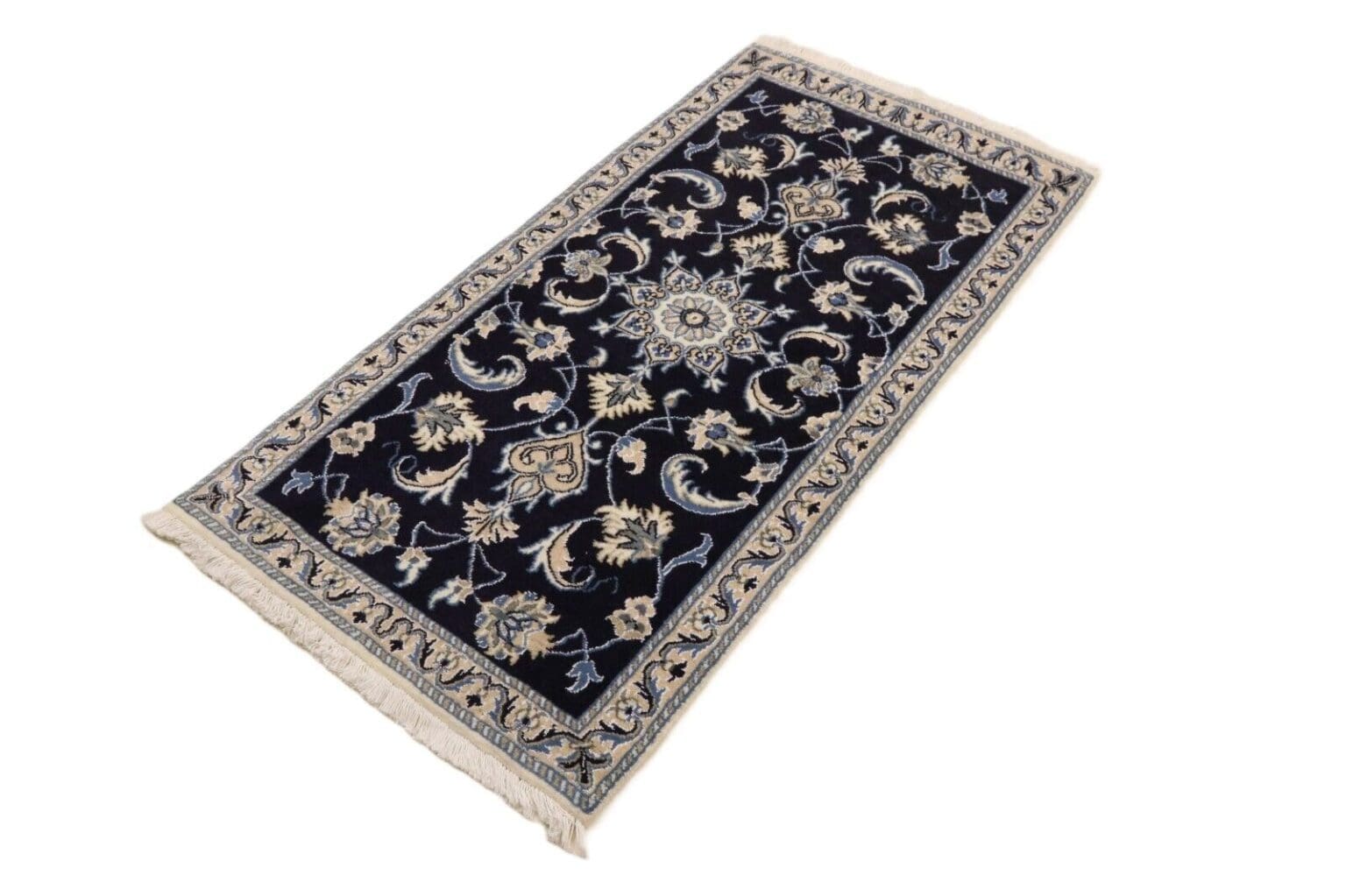
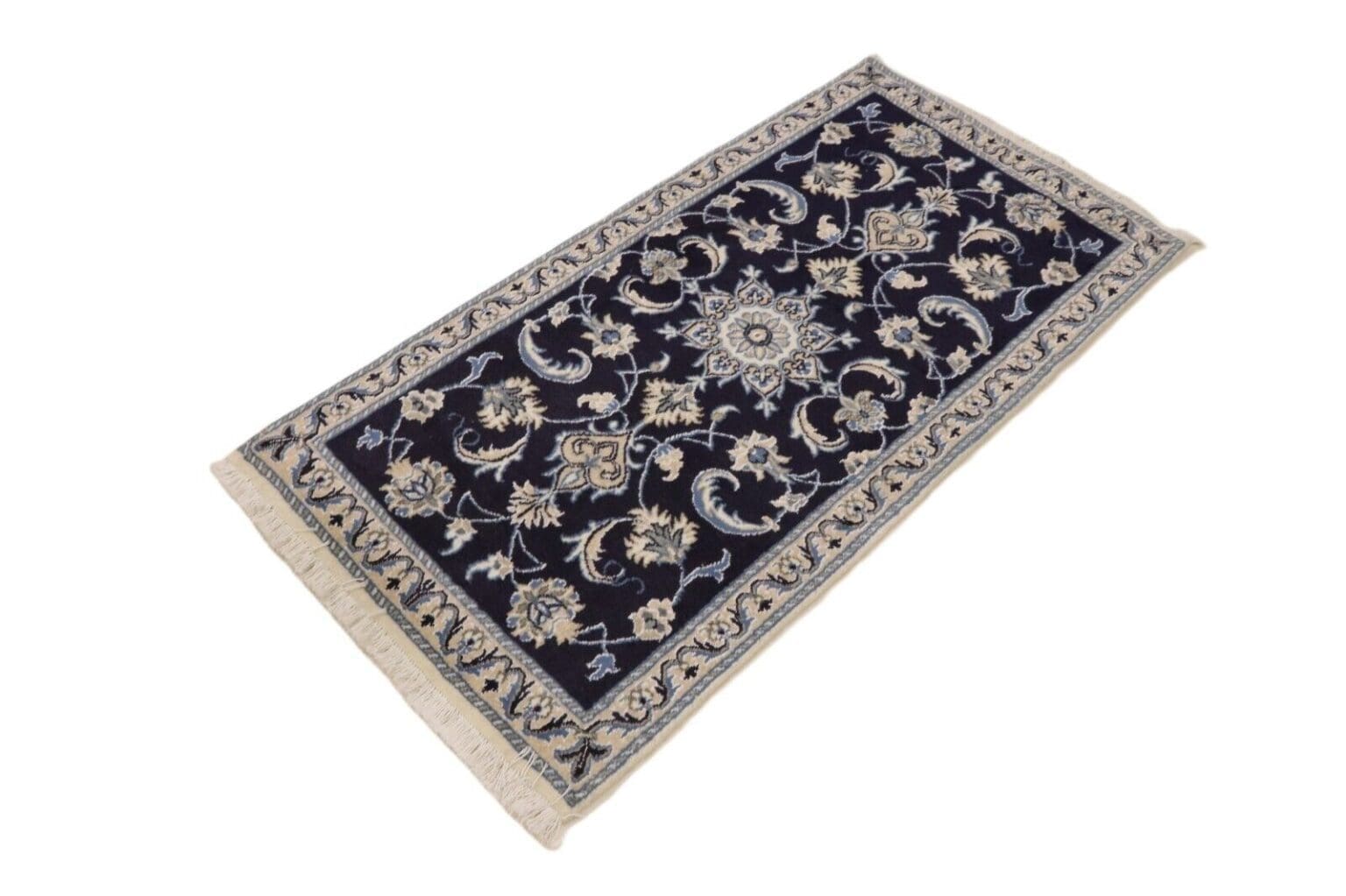
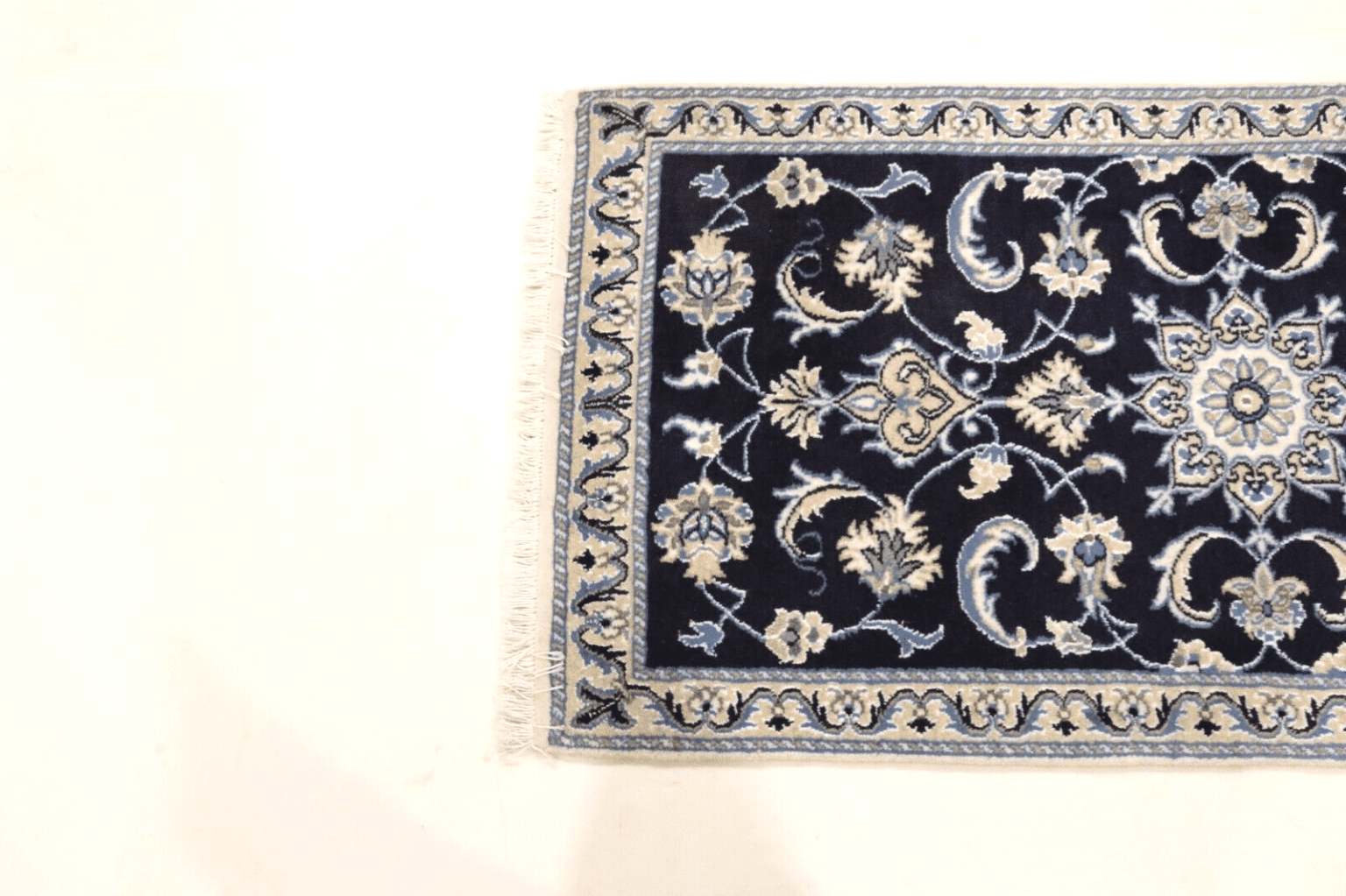
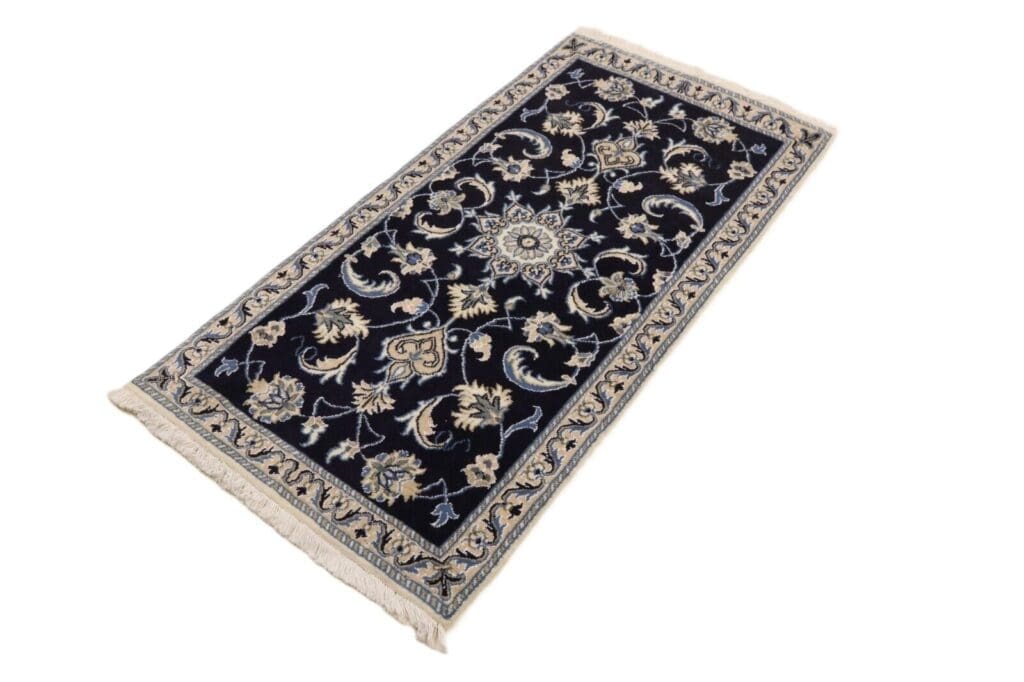
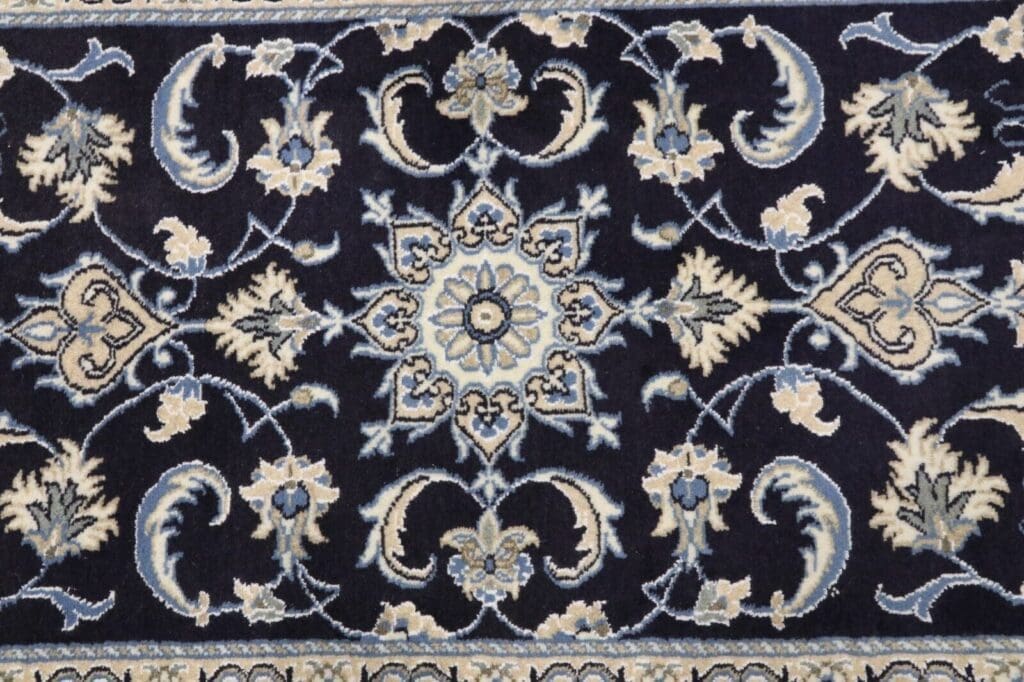
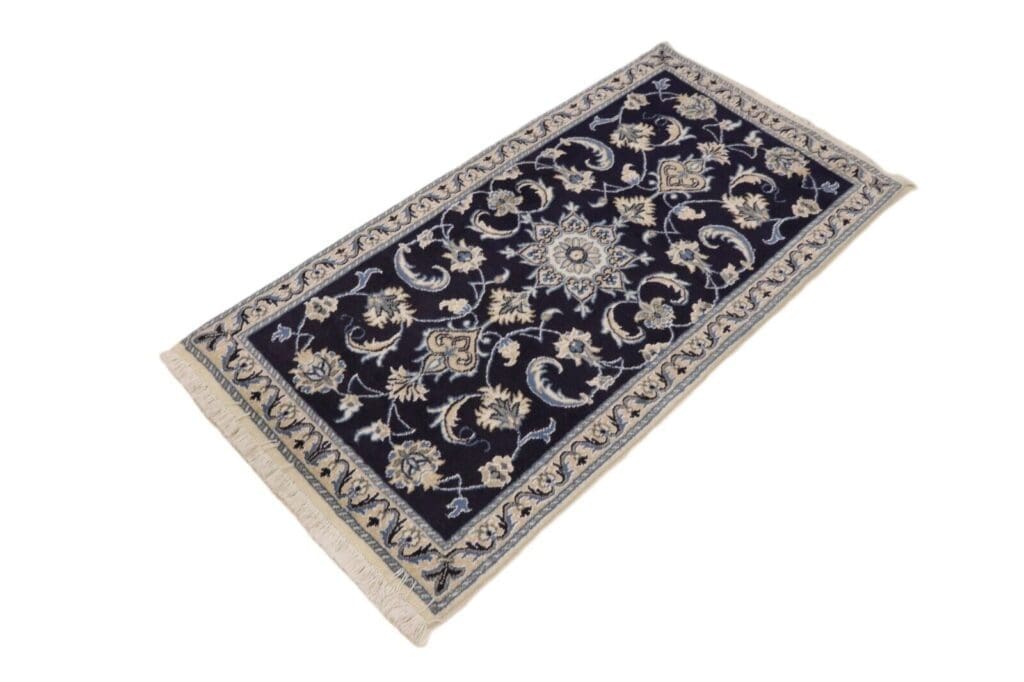
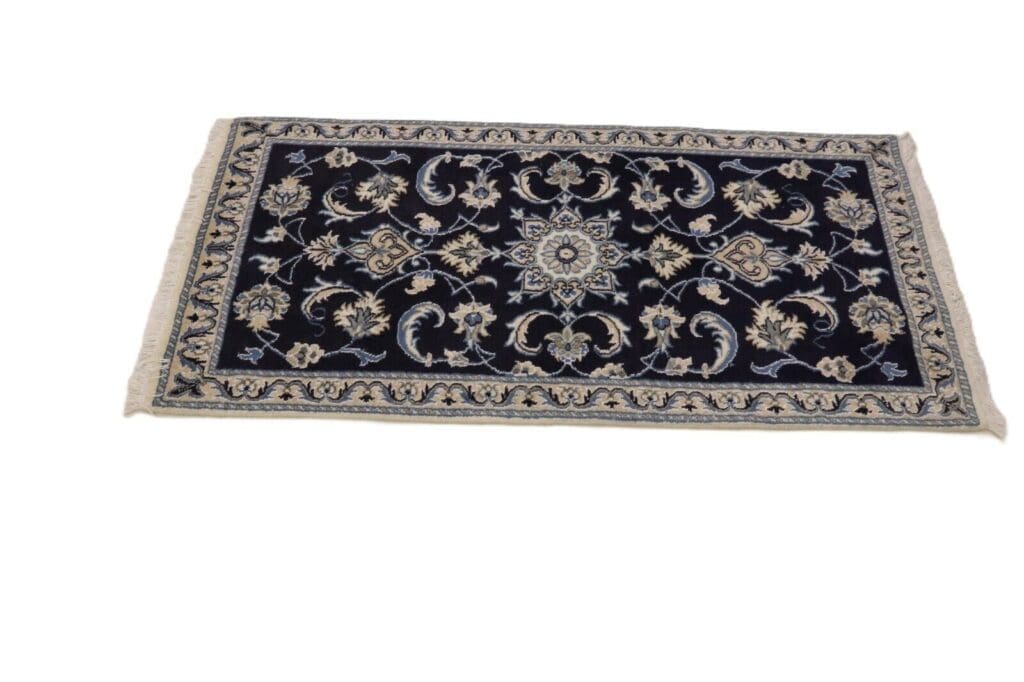
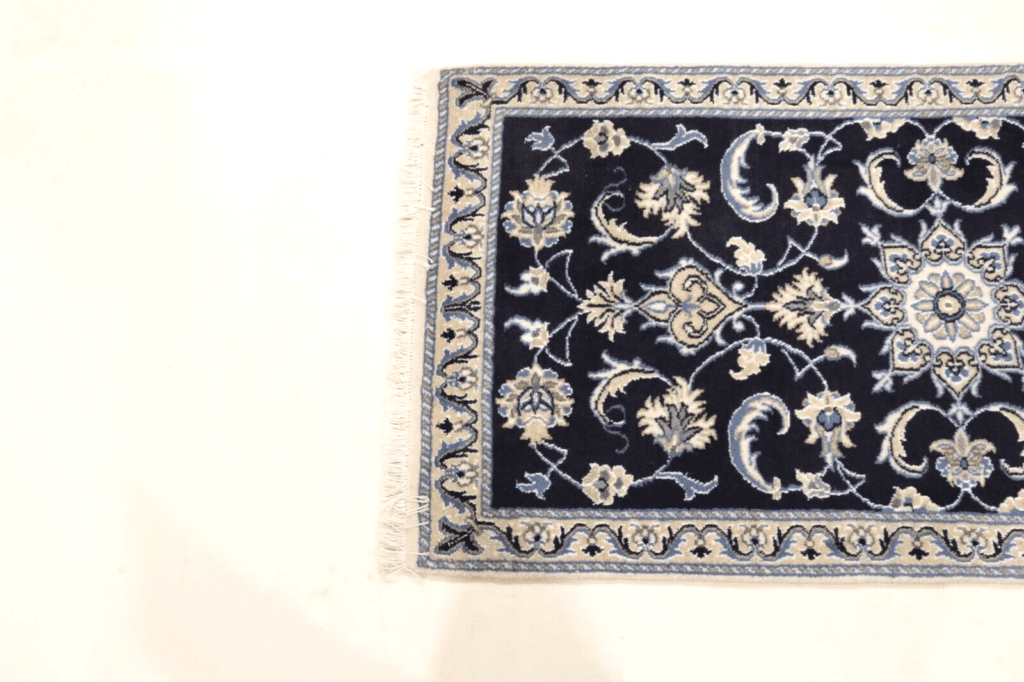
The pattern of this rug is listed as Oriental. Nain rugs are traditionally known for delicate designs in which floral motifs and geometric elements work together. Floral drawing may include blossoms, leaves and flowing vines. Geometric forms introduce a clear framework and connect separate areas of ornament. The overall effect depends on the relationship between the central field, secondary motifs and enclosing borders.
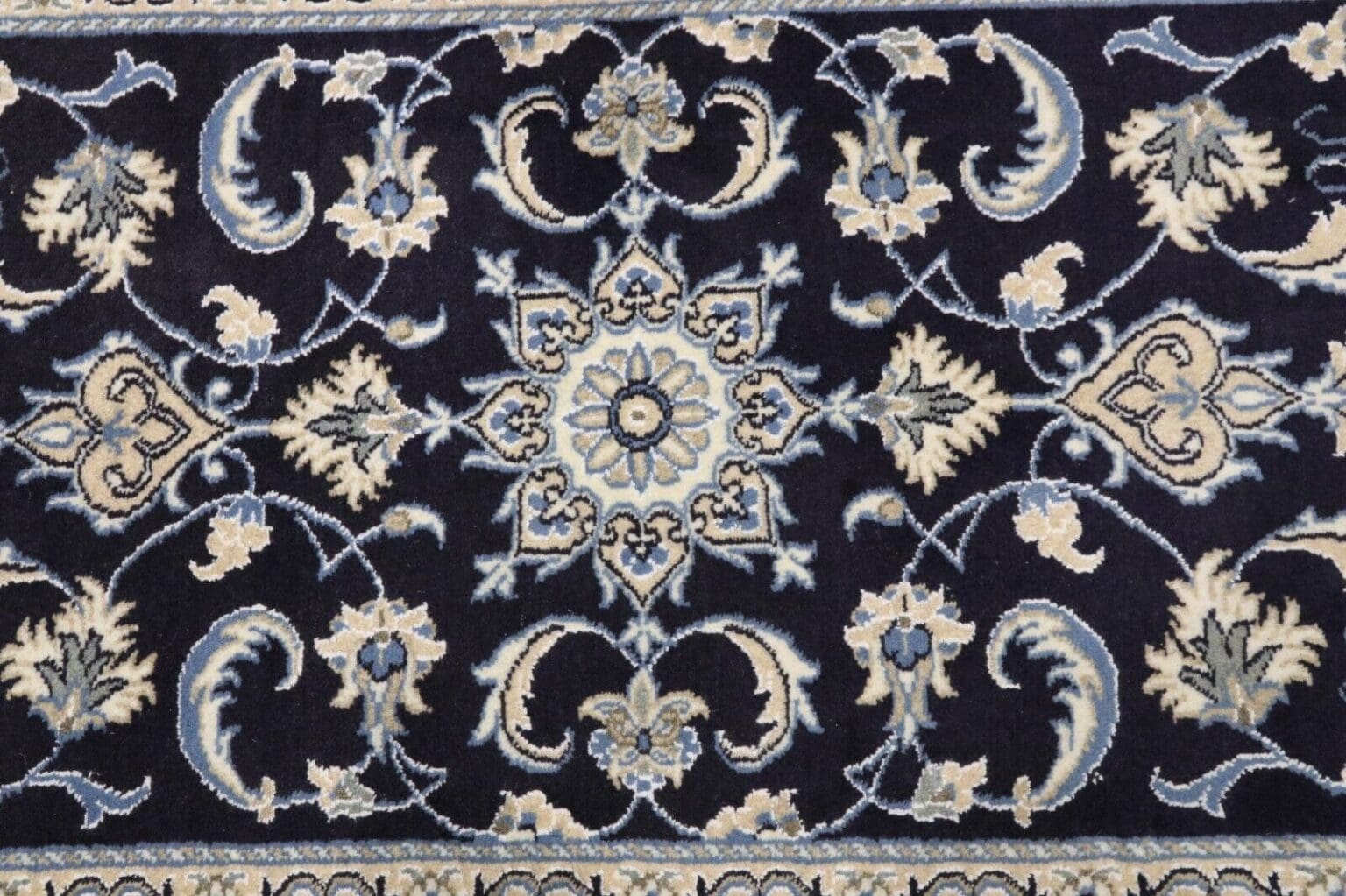
A medallion-like centre is a frequent device in Nain design. Such a centre may be accompanied by symmetrical vines or further floral ornament. Borders are also important because they frame the field and create a transition towards the outer edge. This describes the traditional Nain design vocabulary; it does not add an unlisted individual pattern designation to this rug. The specific pattern information supplied for this piece is Oriental.
Fine knotting supports detailed rendering. Small knots make it possible to place narrow lines, leaves and repeated motifs close together while keeping the composition ordered. In traditional Persian rugs, ornament is generally arranged through axes, repetition and framing rather than scattered without structure. These principles help explain how a field can contain many details while remaining visually coherent.
Nain designs are often associated with soft, coordinated shades. Light and restrained colour areas can make delicate contours more visible, while darker or contrasting lines clarify the divisions within the composition. Colour and pattern operate together: colour can separate motifs, emphasise a centre or guide the eye along a border. The design of an Oriental rug is consequently created not only by individual ornaments but also by their distribution across the whole surface.
Traditional Nain patterns may be understood through both their floral movement and their geometric order. Blossoms and vines introduce organic lines, while symmetry and repeated forms provide stability. This combination allows Nain rugs to be used with traditional as well as contemporary interiors without losing their regional identity. The rug is described as traditionally Oriental and Persian in style, while its stated pattern designation remains Oriental.
Special Features
The listed special features include a knot density of approximately 300,000 knots per square metre, a pile made from 90% virgin wool and 10% silk, and a warp made from 100% cotton. The rug is new and unused and has a thickness of approximately 8 mm. It is suitable for underfloor heating and is described as pet-friendly.
Handmade construction, fine knot density and the stated fibres together define the main technical characteristics of this piece. They are complemented by its Persian origin and Nain designation. Material, technique and regional type are therefore presented together, without requiring any additional statement about age, provenance or condition beyond the supplied information.
FAQ
How should I care for my Nain rug?
Regular, gentle vacuuming helps remove dust and loose dirt from the pile. The surface should not be subjected to unnecessarily forceful treatment. Direct sunlight should be avoided where possible so that the colours do not fade. If a spill occurs, blot it promptly with a damp cloth rather than rubbing it. Rubbing can put stress on the fibres and the patterned surface. Occasional professional cleaning is recommended for thorough care. With a hand-knotted pile containing virgin wool and silk, specialist treatment is useful because the two fibres can respond differently to moisture and cleaning processes.
Where is the best place to use a Nain rug?
This rug can be used in a living room, bedroom or dining room. Its Oriental and traditionally Persian appearance works with both classic and modern interiors. A Nain rug can also serve as an accent in an office or exhibition space. The final placement should take account of how the room is used, the amount of traffic and the desired relationship between the rug and the surrounding furnishings. This rug is suitable for underfloor heating and is described as pet-friendly, which defines the stated usage conditions. Those conditions do not remove the need for regular care and sensible protection of the pile.
How can I assess the quality of a Nain rug?
Knot density, materials and construction are important points when assessing a Nain rug. A higher knot density can support finer rendering of lines and ornaments. The character and suitability of the fibres, together with the care taken in hand-knotting, are also relevant. For this rug, the listed density is approximately 300,000 knots per square metre; the pile contains 90% virgin wool and 10% silk, and the warp is 100% cotton. The clarity of the design can be considered as an additional visual aspect. Density, material, technique and pattern should be assessed as connected features rather than as isolated figures.
To provide the best experiences, we use technologies like cookies to store and/or access device information. Consenting to these technologies will allow us to process data such as browsing behavior or unique IDs on this site. Not consenting or withdrawing consent, may adversely affect certain features and functions.
Functional Always active
The technical storage or access is strictly necessary for the legitimate purpose of enabling the use of a specific service explicitly requested by the subscriber or user, or for the sole purpose of carrying out the transmission of a communication over an electronic communications network.
Preferences
The technical storage or access is necessary for the legitimate purpose of storing preferences that are not requested by the subscriber or user.
Statistics
The technical storage or access that is used exclusively for statistical purposes.The technical storage or access that is used exclusively for anonymous statistical purposes. Without a subpoena, voluntary compliance on the part of your Internet Service Provider, or additional records from a third party, information stored or retrieved for this purpose alone cannot usually be used to identify you.
Marketing
The technical storage or access is required to create user profiles to send advertising, or to track the user on a website or across several websites for similar marketing purposes.
 SECURE PAYMENT
 SHIPPING PARTNERS


