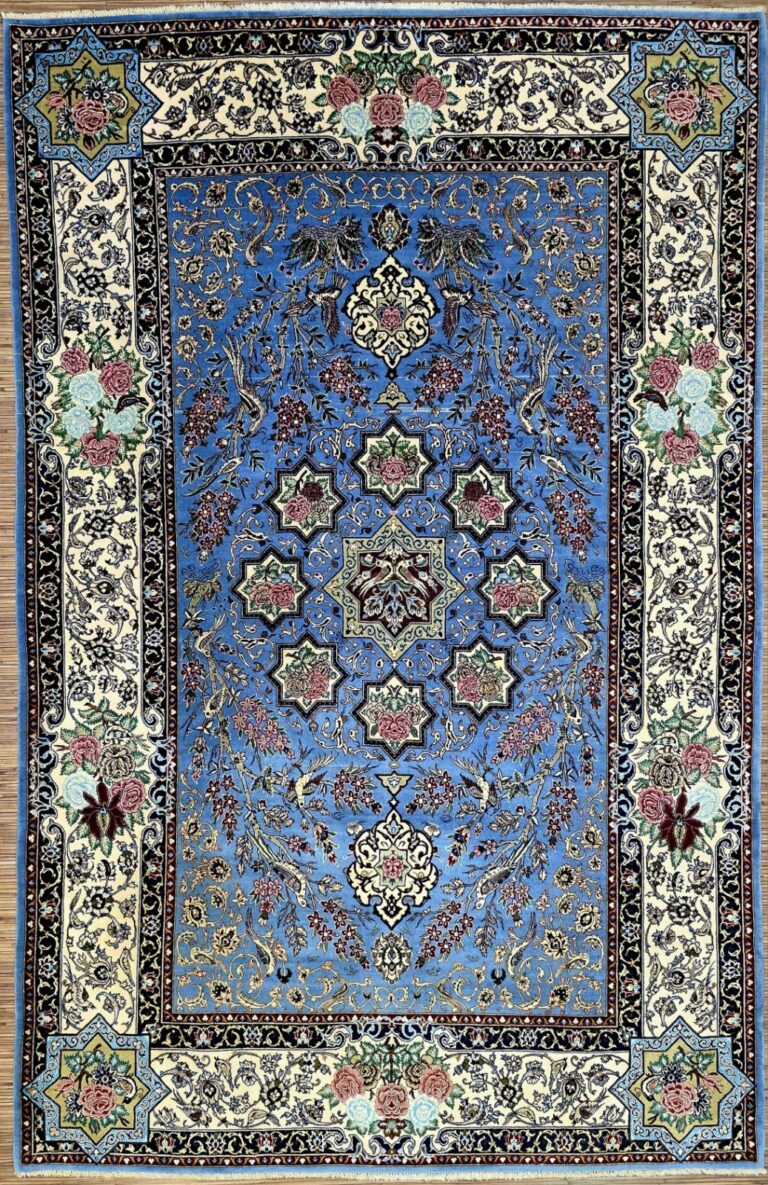
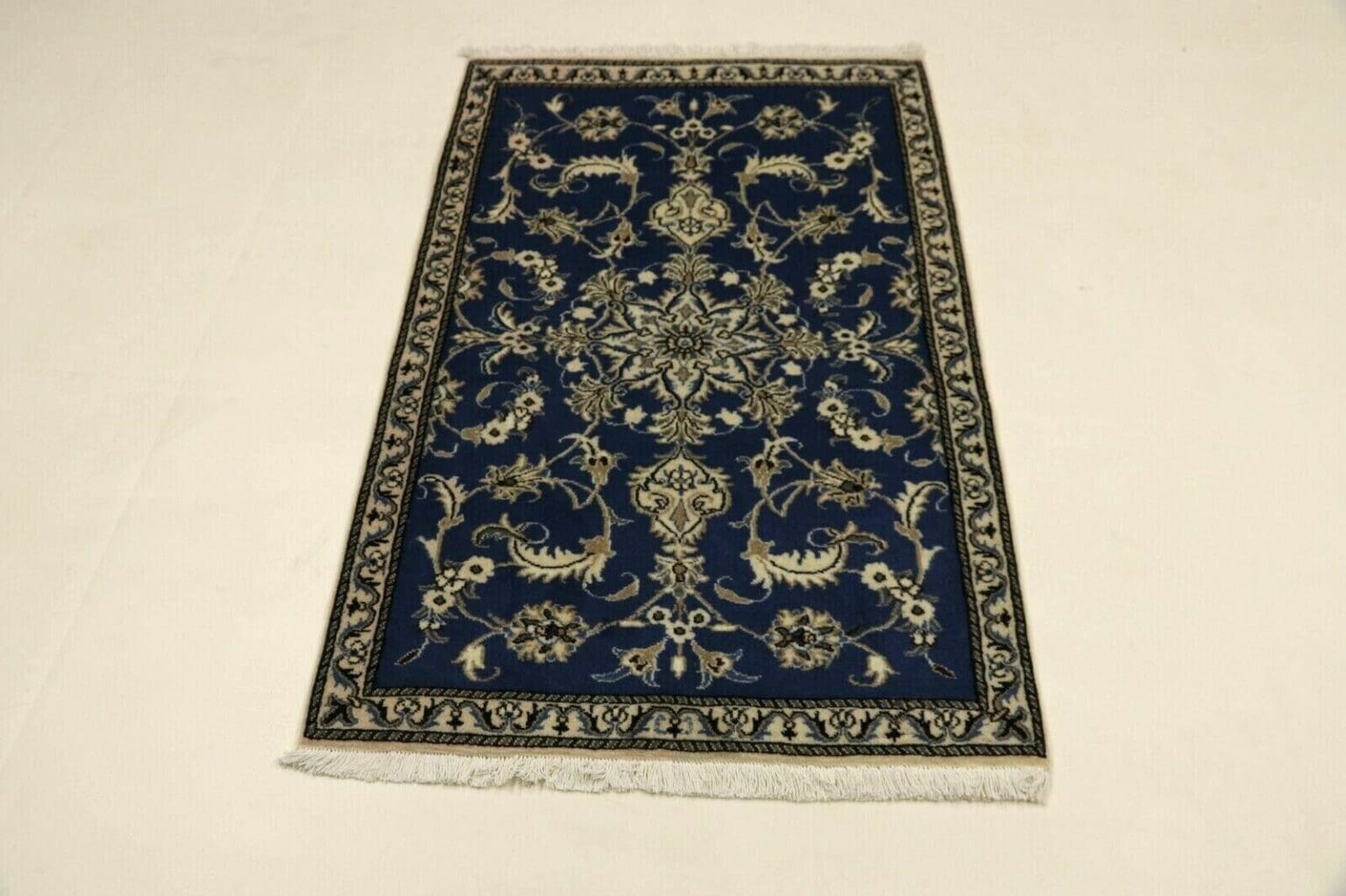
This Nain is a hand-knotted Persian rug made from 95% sheep wool and 5% silk. Sheep wool accounts for the principal part of the pile and is valued for natural warmth, resilience, and a soft feel. Silk adds a subtle sheen to the surface and helps bring selected details of the design into focus. The combination gives the rug a textile character that is both durable and pleasantly soft underfoot.
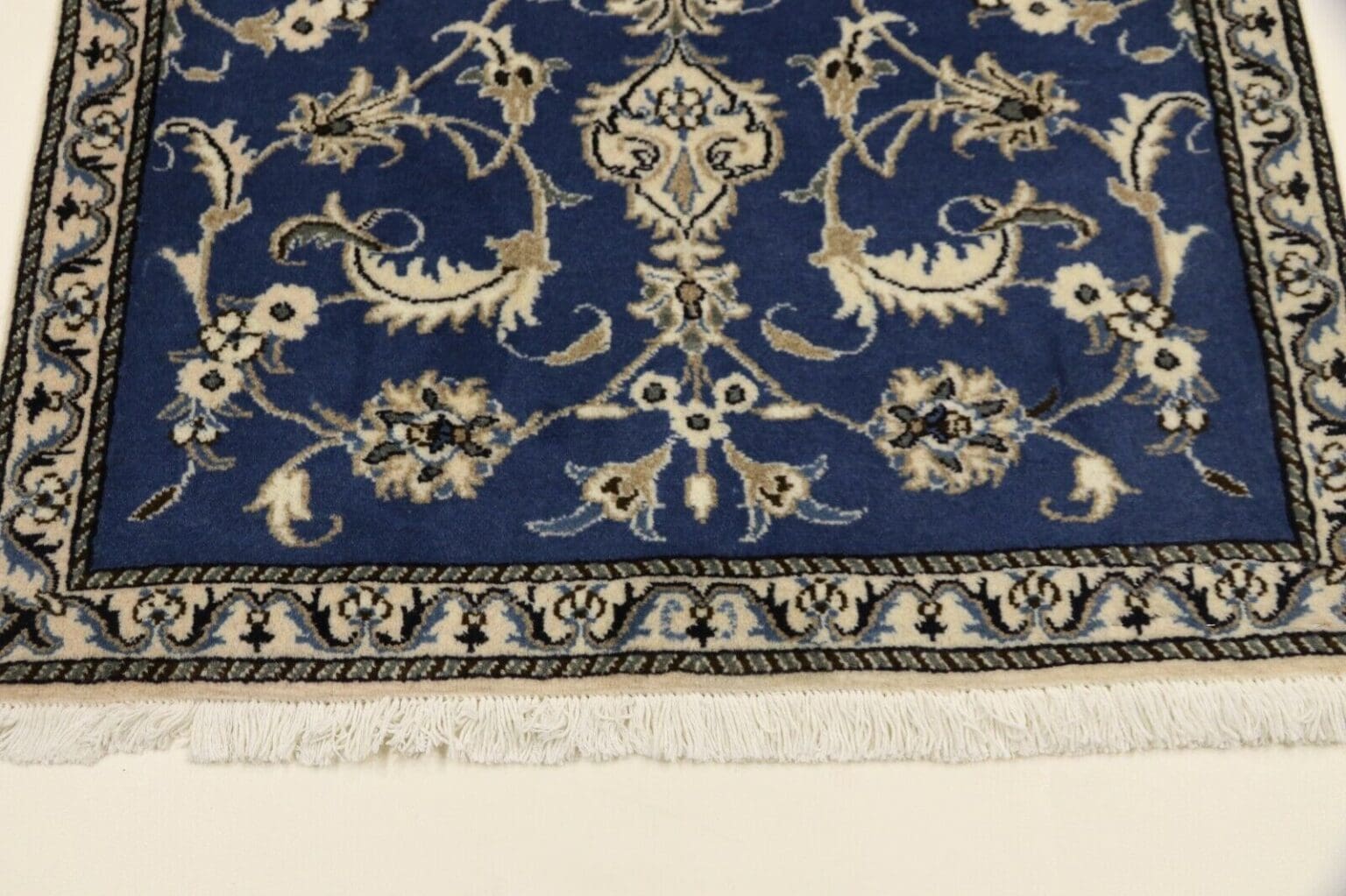
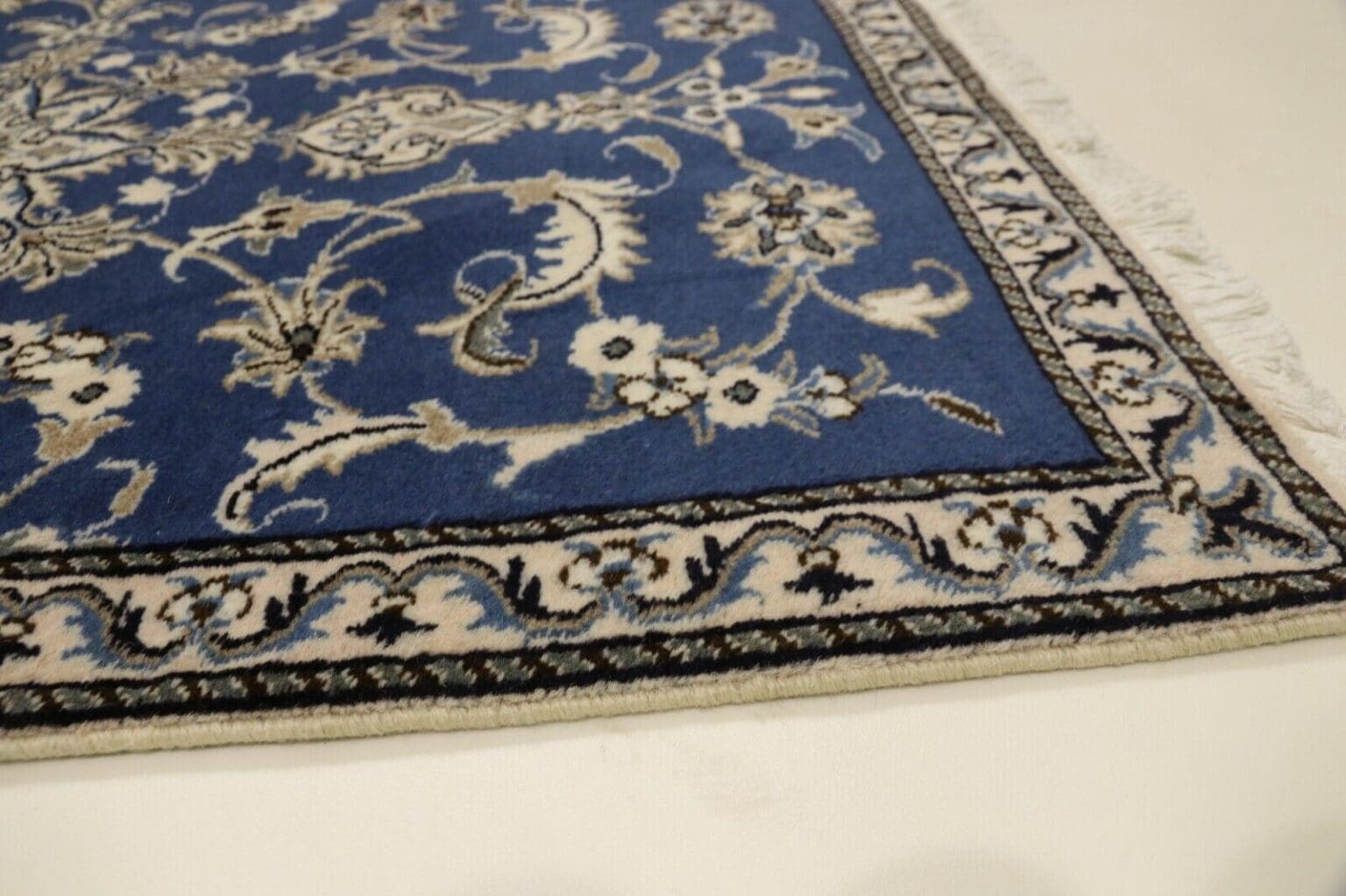
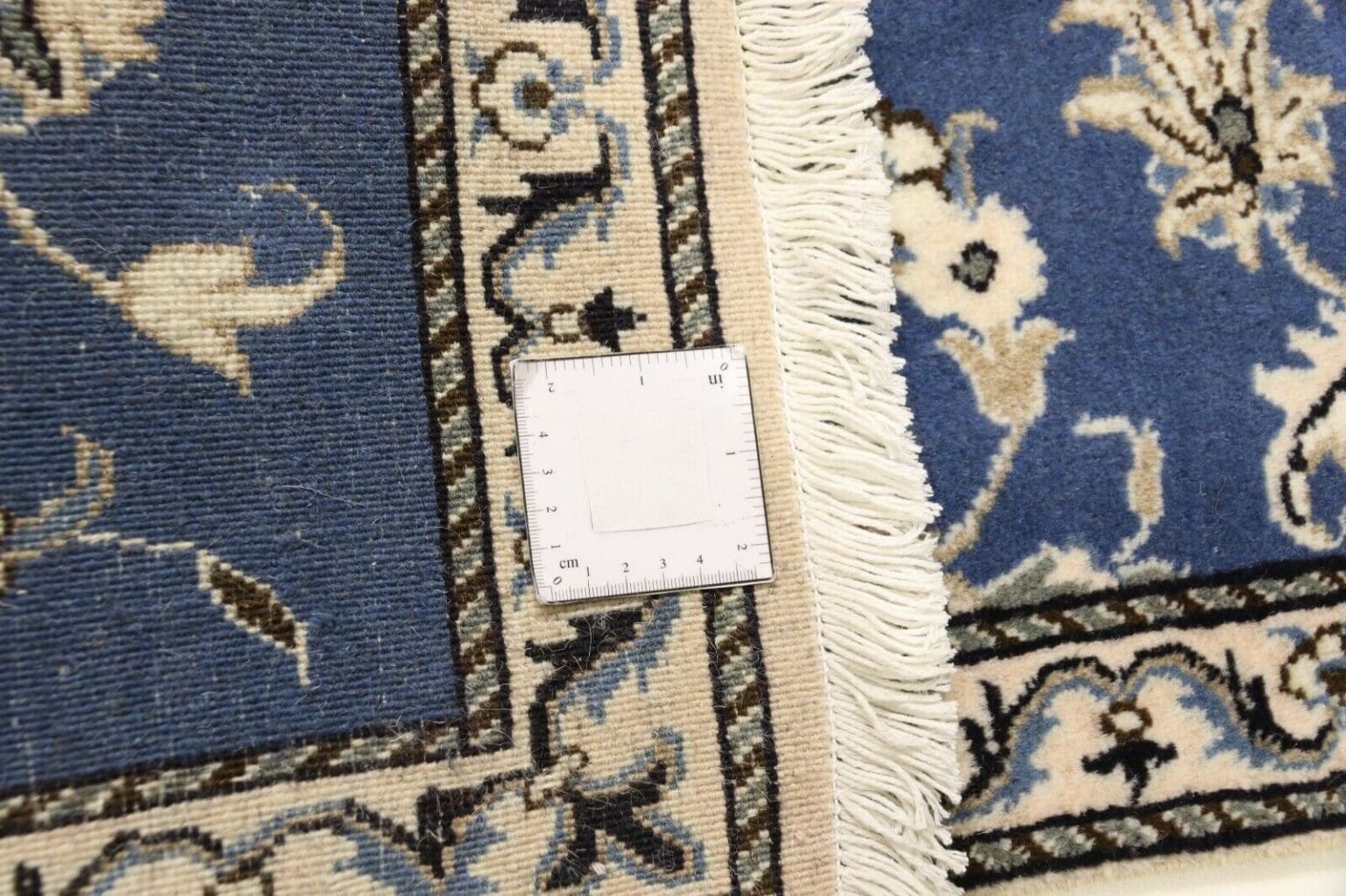
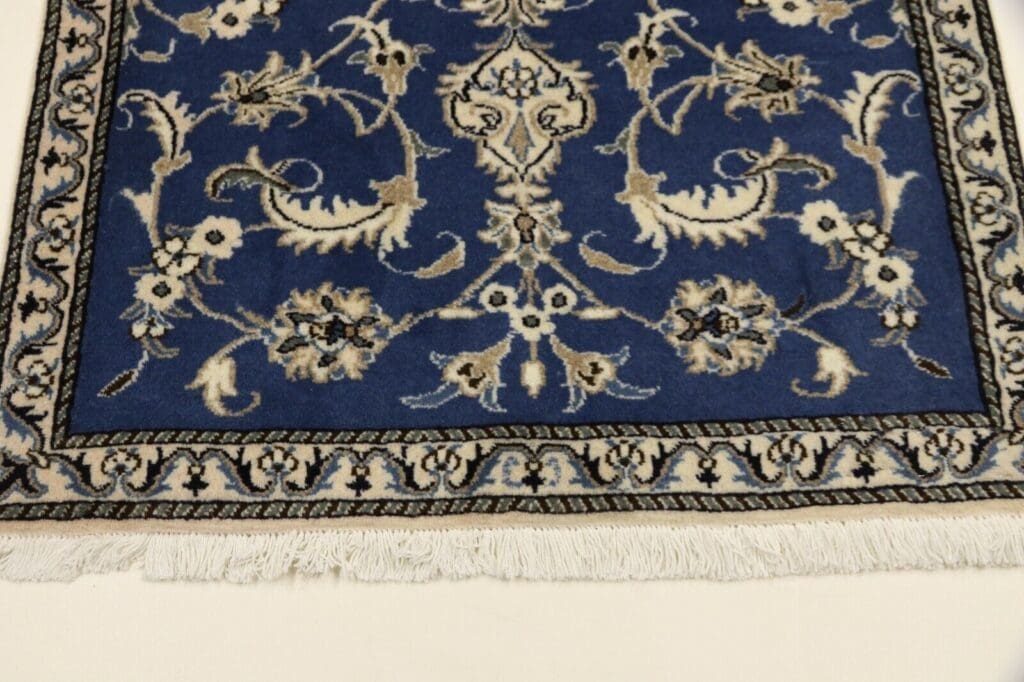
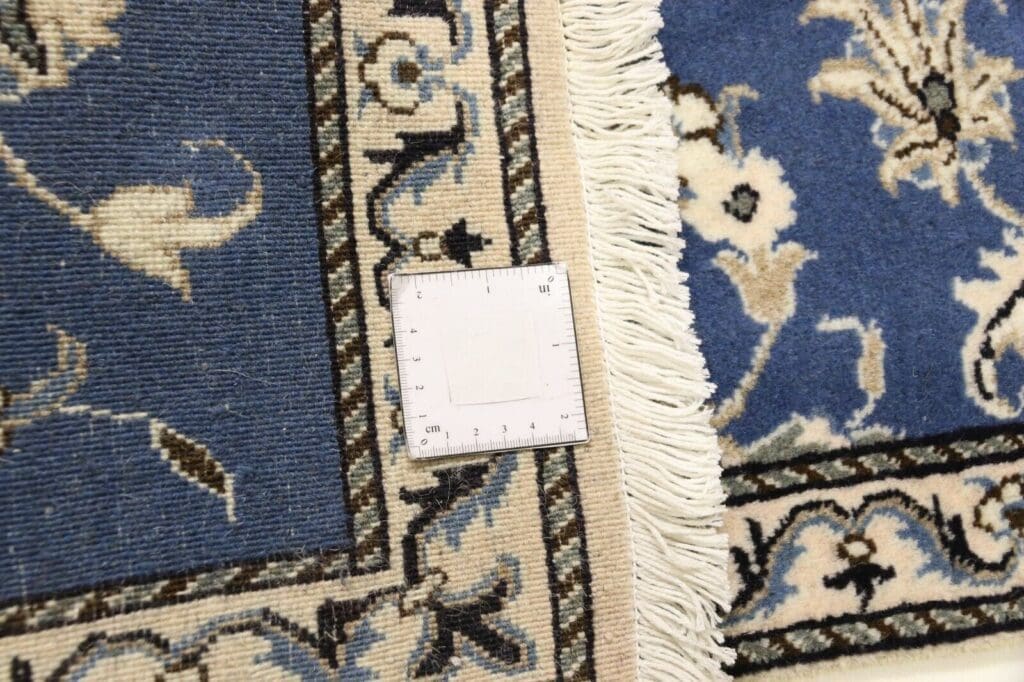
The rug is made by traditional hand-knotting. Each knot is placed individually, allowing the pattern to be built with careful control over its outlines and smaller areas. Its knot density of approximately 200,000 knots per square metre supports a finely detailed surface and a clearly articulated design. Hand-knotting is not the same as standardized machine production: the sequence of knotting, trimming, and finishing creates an individually made piece.
Wool and silk perform different functions within the rug. Wool gives the pile substance, warmth, and resistance for everyday use. Silk catches the light differently and can emphasize parts of the ornament through its finer, reflective appearance. The hand-knotted construction supports a stable textile structure and a precise visual effect. This rug is new and in perfect condition.
Origin and Tradition
The rug comes from Persia, present-day Iran, and is identified with the city of Nain. Nain is located in Isfahan Province and is one of the recognized centres of Persian carpet weaving. Its tradition is associated with fine materials, controlled knotting, and compositions in which ornament is arranged with considerable clarity. Nain rugs are therefore understood not only as floor coverings but also as products of a distinct regional craft culture.
The established history of Nain carpet making reaches back to the nineteenth century. Workshops in the area draw on older Persian methods while developing a recognizable approach to composition and finish. Producing a finely drawn rug requires attention at every stage. The design must be transferred from a plan to the foundation, colours must remain ordered, and the outlines of the motifs need to be checked as the work progresses. A fine knot density makes it possible to express this planning in greater detail.
Nain weaving combines inherited techniques with designs that can include both oriental and European influences. This has helped the rugs find a place in a wide range of interiors. The regional identity remains visible in the relationship between an ordered layout, delicate line work, and a restrained colour balance. The importance of Nain lies not only in its geographical name, but also in the way material selection, manual skill, and pattern tradition are brought together.
Persian carpet knowledge has traditionally been passed through workshops and families. Understanding wool, colour, knotting, trimming, and pattern structure develops through repeated practical work. In Nain, the aim is to keep the design legible while ensuring that individual ornaments belong to a coherent whole. The rug is consequently both functional and decorative. That combination has long been central to Persian carpet culture, where a woven surface can serve everyday use while also carrying a carefully ordered visual language.
Nain rugs are known internationally and are appreciated in many countries as examples of textile craftsmanship. Their wider presence is connected with the clarity of their designs, the use of fine materials, and the established reputation of the region. This rug combines that Nain designation with hand-knotting in sheep wool and silk. Its origin and construction therefore belong to the Persian tradition associated with Nain and Isfahan Province.
Design and Pattern
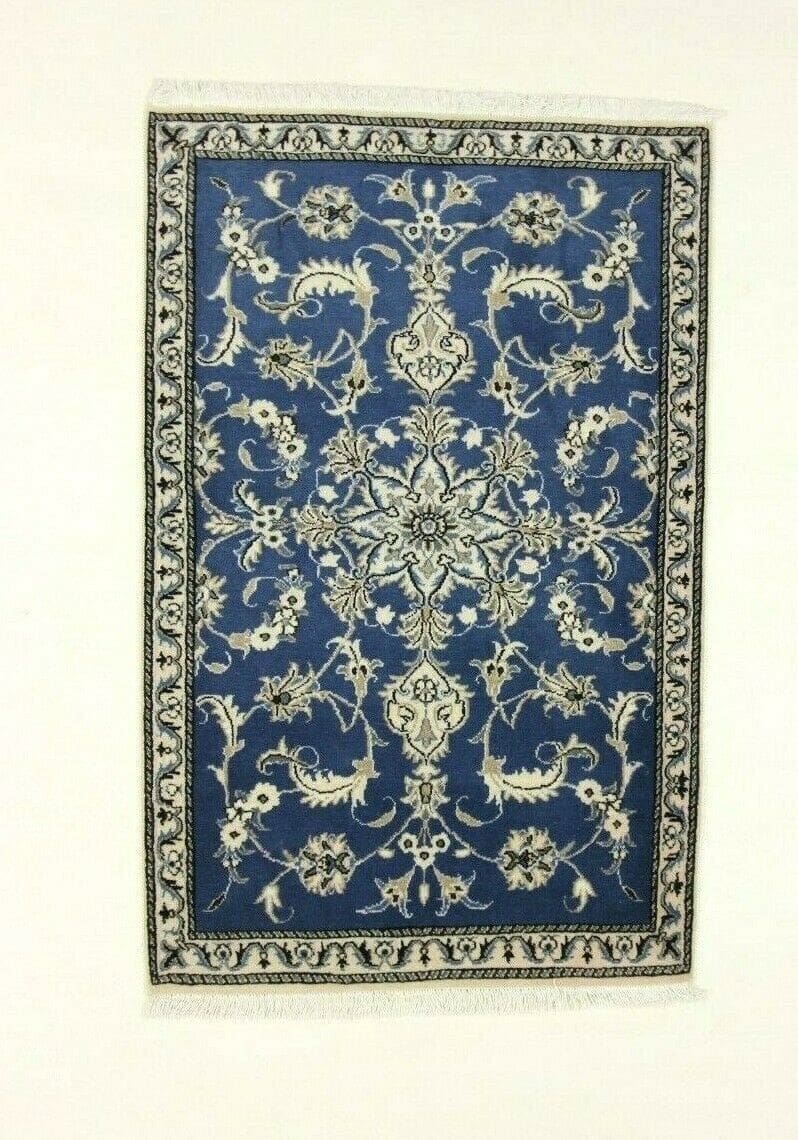
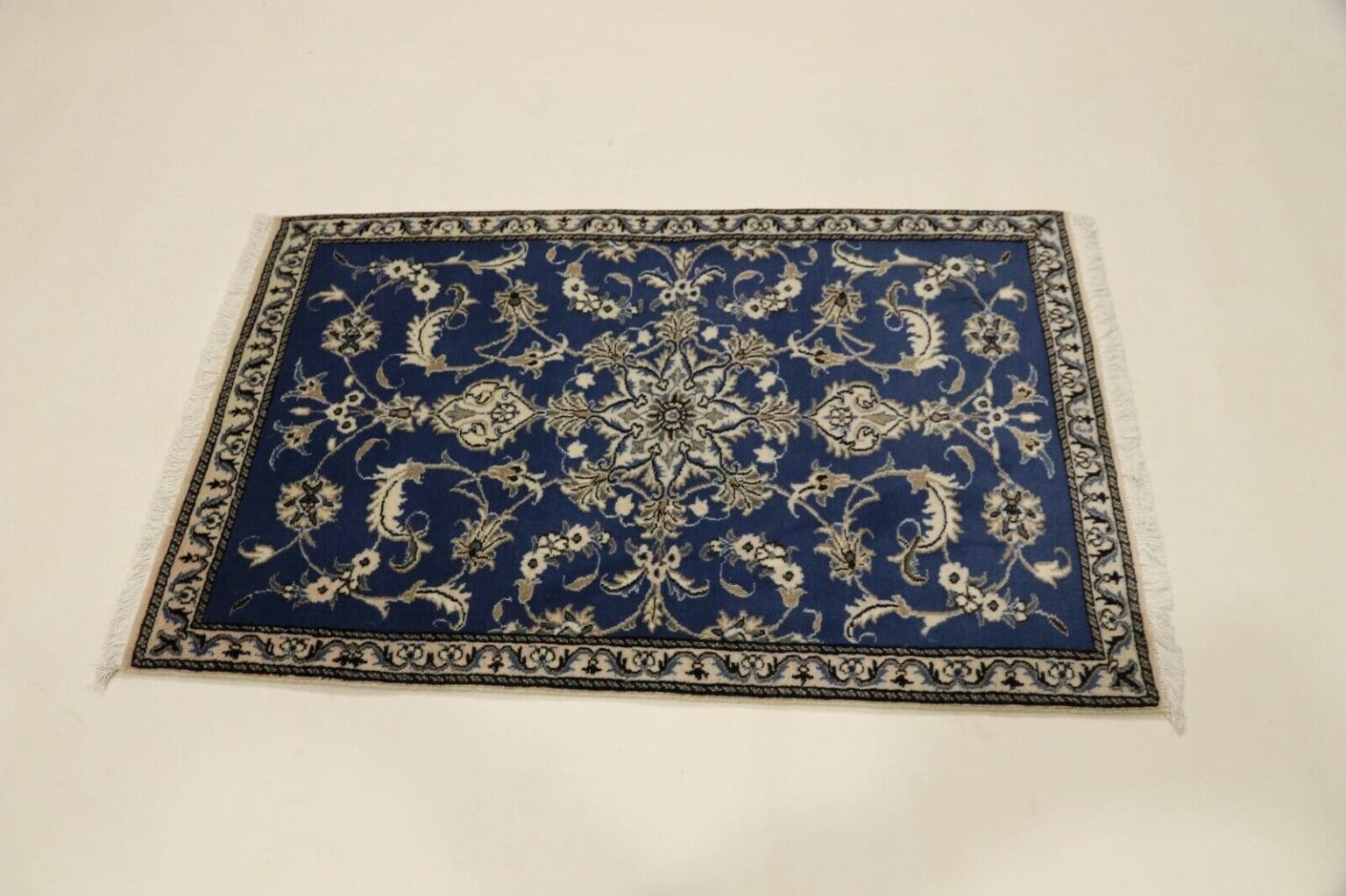
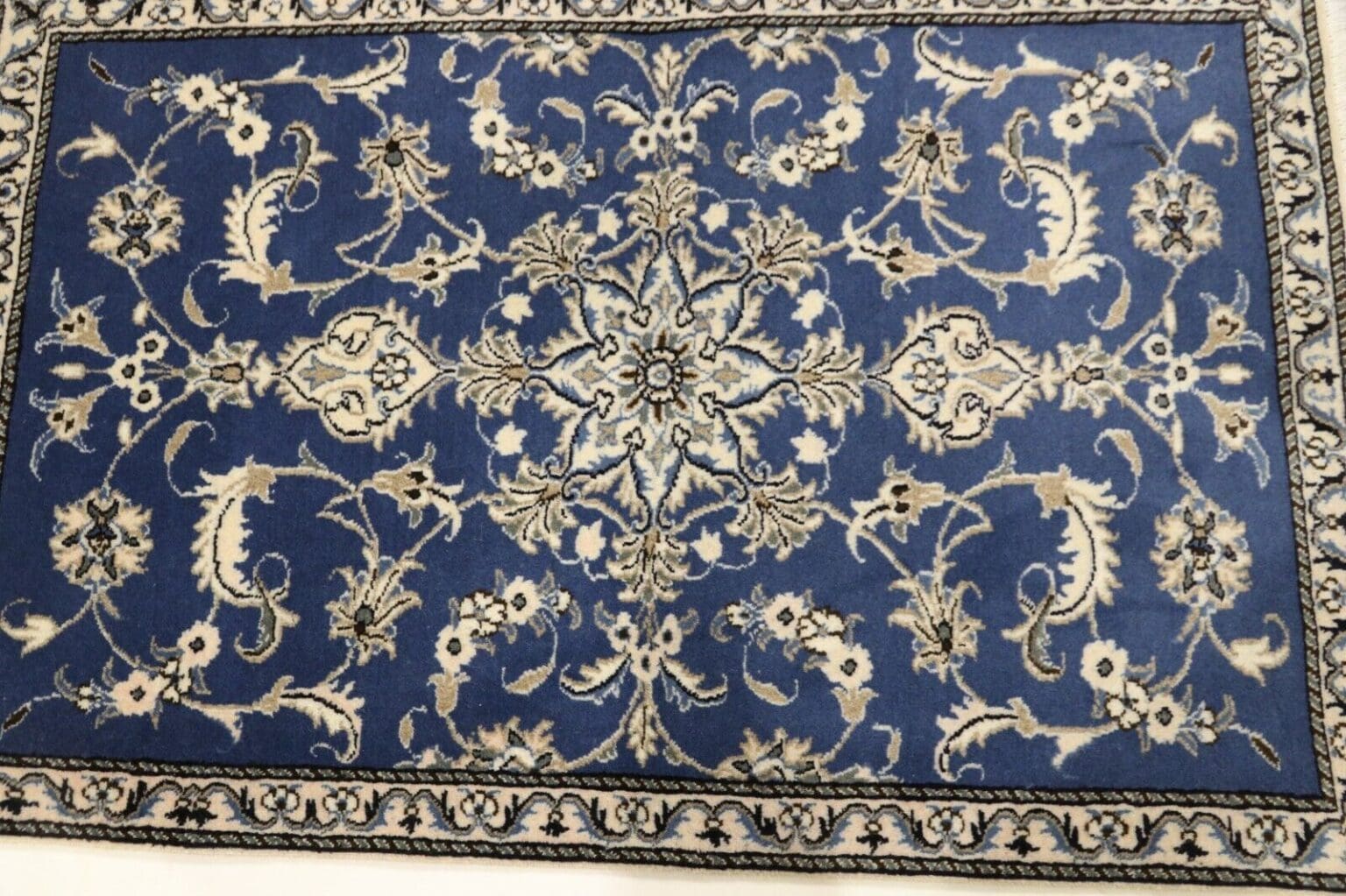
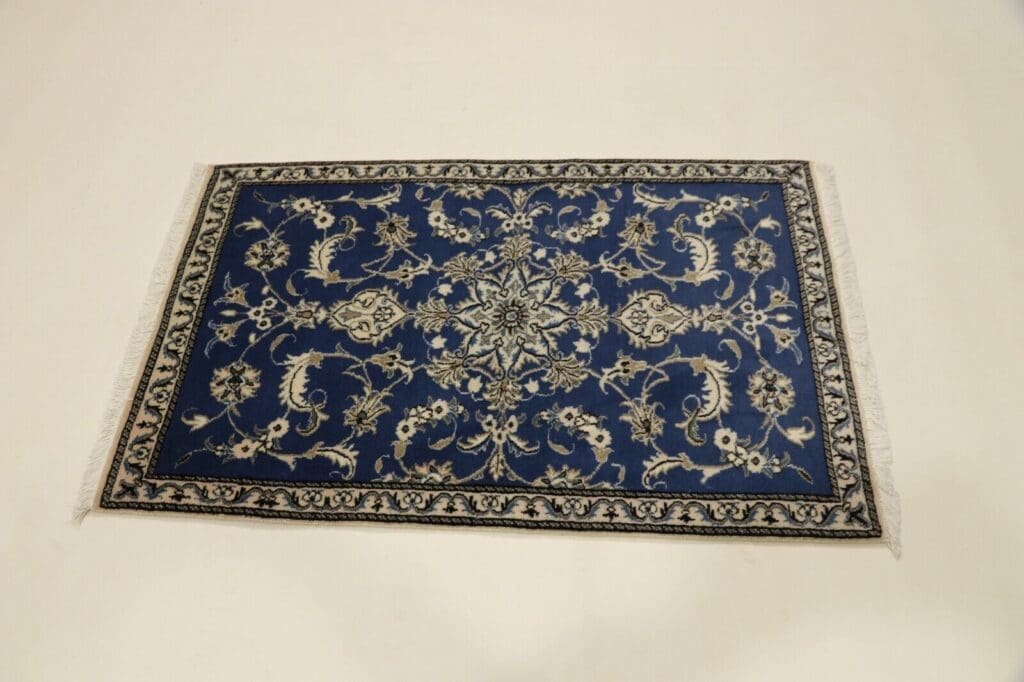
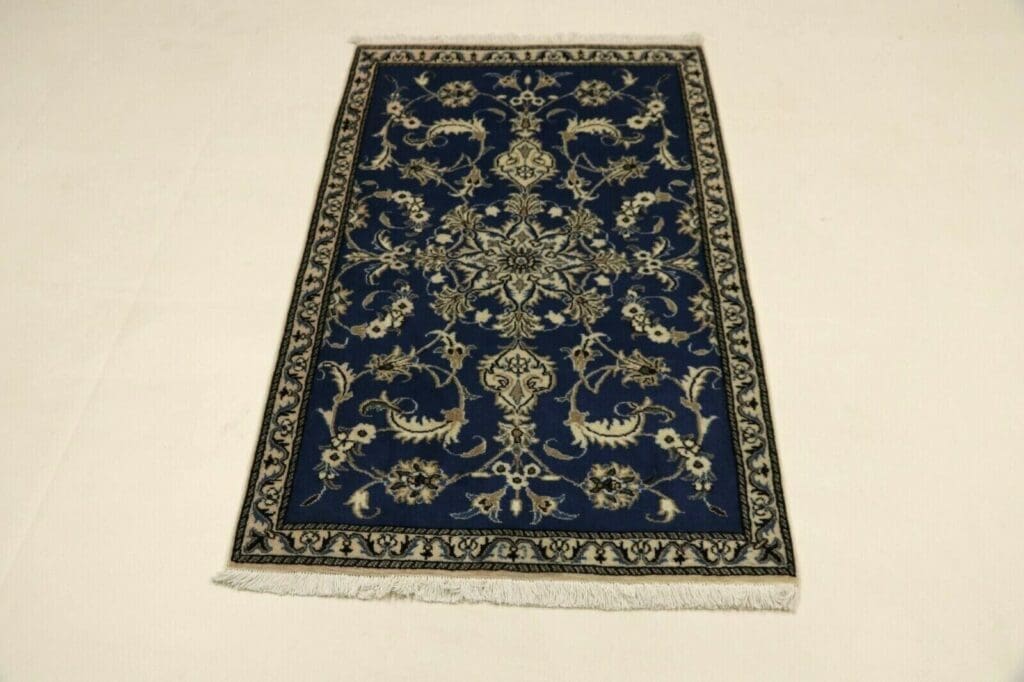
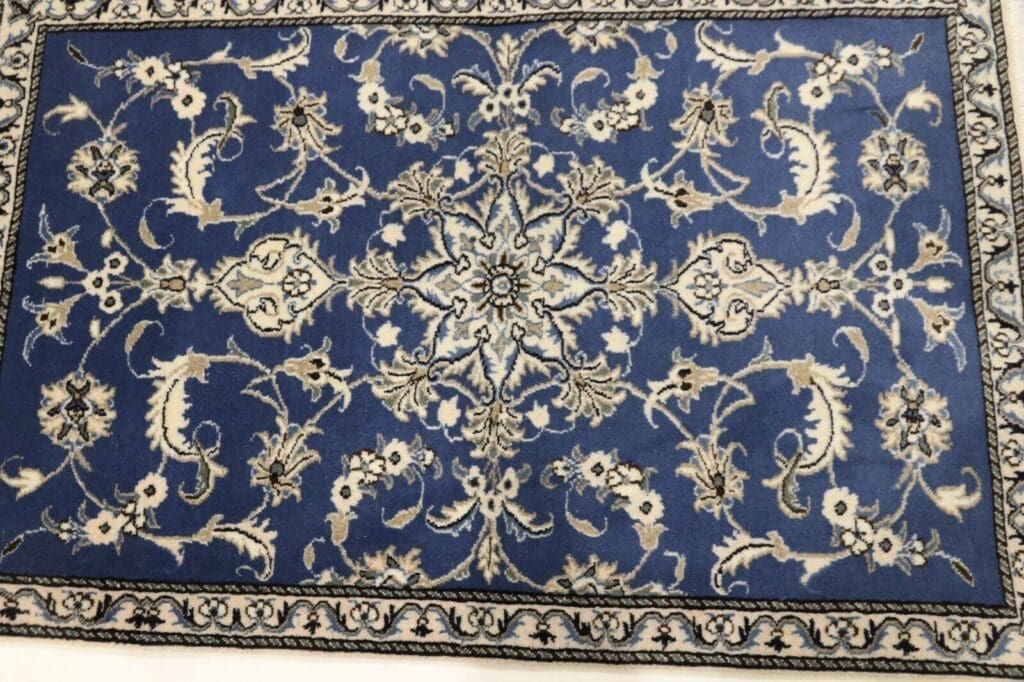
The specified pattern is a medallion design. A medallion creates a central point of focus within the composition. Surrounding lines, floral forms, and supporting motifs can be arranged in relation to that centre, giving the field a sense of order. In Nain designs, the central element is often balanced by the surrounding field and border rather than being treated as an isolated image. This creates a composition in which the different ornamental zones remain connected.
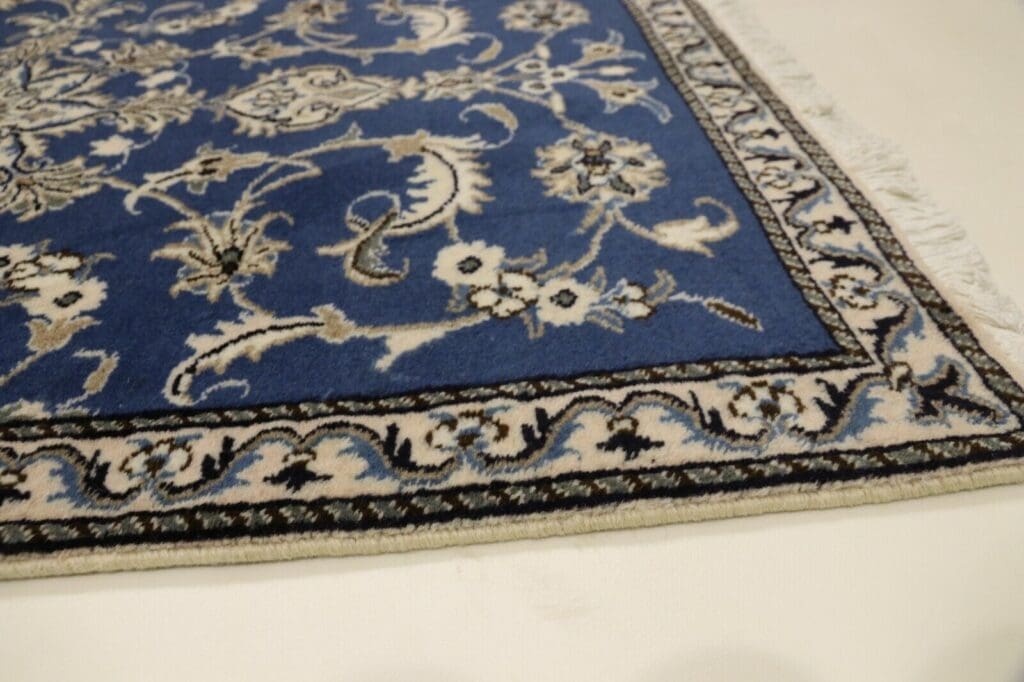
Nain rugs are often known for symmetrical arrangements that combine floral and geometric motifs. Leaves, blossoms, and scrolling forms may be set alongside measured lines and repeated shapes. The motifs are positioned according to a plan, with mirroring and repetition helping to maintain visual balance. The relatively fine knotting of this rug is suited to the clear rendering of smaller details and narrow contours within such a composition.
The designs of Nain reflect cultural and historical influences from the region. A pattern can therefore be decorative while also belonging to a broader Persian ornamental tradition. Floral forms are often associated with the ordered representation of nature, while geometric structure provides rhythm and stability. The interpretation of an individual symbol depends on its context. For this rug, the medallion is the specifically identified design feature, supported by the regional pattern language of Nain.
Soft, harmonious colour combinations are frequently associated with Nain carpets. Light blues, cream, beige, and gentle reds are commonly brought together in a restrained palette. Such colours can distinguish the central medallion from the surrounding field while creating a measured transition towards the border. The silk component contributes a reflective note to selected areas, whereas the wool provides a more subdued and tactile foundation for the overall image.
This controlled colour relationship allows a traditional Nain composition to work with both classic and contemporary furnishings. In a traditionally arranged room, the medallion and ornament can relate to other decorative elements. In a modern setting, the rug can provide a defined handcrafted surface without losing its regional character. The result is not a generic decorative pattern, but a Persian design language shaped by Nain’s preference for symmetry, fine detail, and tonal harmony.
Symbols and ornaments on Nain rugs are often connected with ideas of happiness, peace, and prosperity. These associations belong to the cultural interpretation of Persian carpet patterns and add a layer of meaning to their decorative function. They do not replace the visible description of the rug. Here, the central medallion, the ordered composition, and the combination of floral and geometric elements place the piece within a tradition where visual balance and symbolic reference can exist together.
Special Features
A notable feature of this rug is the combination of fine knotting with sheep wool and silk. Its knot density supports detailed drawing and a distinct pile texture. Wool contributes warmth and resistance, while silk provides lustre and can bring selected pattern areas forward visually. The hand-knotted construction makes the workmanship part of the rug’s character, linking its surface, material, and ornament rather than treating them as separate qualities.
The rug is new and in perfect condition. It is suitable for use over underfloor heating. The mixture of sheep wool and silk gives the surface a warm tactile quality while allowing heat to pass through appropriately. It is suitable for living rooms and bedrooms. The natural materials used in its construction are also presented in connection with the preservation of natural resources and a sustainable approach to materials.
Care should be gentle and consistent. Vacuuming without a brush is recommended for routine cleaning. If something is spilled, the affected area should be treated promptly with a damp cloth and a mild cleaning product. Professional cleaning is advisable when a deeper treatment is needed, helping preserve the colour intensity and structure of the fibres. In this way, the rug brings together traditional workmanship, practical use, and the recognizable design vocabulary of Nain.
FAQ
How should I care for this Nain rug?
Regular vacuuming without a brush is suitable for ordinary maintenance. A rotating or stiff brush can place unnecessary mechanical stress on the pile, so it should not be used. If a mark appears, respond promptly by carefully dabbing the area with a damp cloth and a mild cleaning product. Vigorous rubbing should be avoided because it may affect the surface and the appearance of the pattern. For more difficult soiling or a thorough refresh, professional carpet cleaning is recommended. Professional treatment can help retain the colour intensity and the structure of the sheep wool and silk fibres.
Is the rug suitable for underfloor heating?
Yes. This hand-knotted Nain rug is suitable for rooms with underfloor heating. Its composition of sheep wool and silk combines a comfortable textile surface with appropriate heat transmission. Wool also contributes a warm feel and helps create a pleasant room climate. As with any rug placed over a heated floor, the heating should be operated evenly. Suitability for underfloor heating is expressly specified for this rug.
How can I make sure that a Nain rug is genuine?
The high knot count, the quality of the materials, and the hand-knotted construction are important points when identifying a genuine Nain. The Nain origin designation and the region’s characteristic combination of fine ornament and orderly composition also provide useful context. Certificates and documented purchase records from a reputable dealer can offer additional reassurance. A specialist can examine the knotting, material structure, and relationship between the pattern and the stated origin. This rug is offered as a hand-knotted Nain from Persia, made with sheep wool and silk.
To provide the best experiences, we use technologies like cookies to store and/or access device information. Consenting to these technologies will allow us to process data such as browsing behavior or unique IDs on this site. Not consenting or withdrawing consent, may adversely affect certain features and functions.
Functional Always active
The technical storage or access is strictly necessary for the legitimate purpose of enabling the use of a specific service explicitly requested by the subscriber or user, or for the sole purpose of carrying out the transmission of a communication over an electronic communications network.
Preferences
The technical storage or access is necessary for the legitimate purpose of storing preferences that are not requested by the subscriber or user.
Statistics
The technical storage or access that is used exclusively for statistical purposes.The technical storage or access that is used exclusively for anonymous statistical purposes. Without a subpoena, voluntary compliance on the part of your Internet Service Provider, or additional records from a third party, information stored or retrieved for this purpose alone cannot usually be used to identify you.
Marketing
The technical storage or access is required to create user profiles to send advertising, or to track the user on a website or across several websites for similar marketing purposes.
 SECURE PAYMENT
 SHIPPING PARTNERS