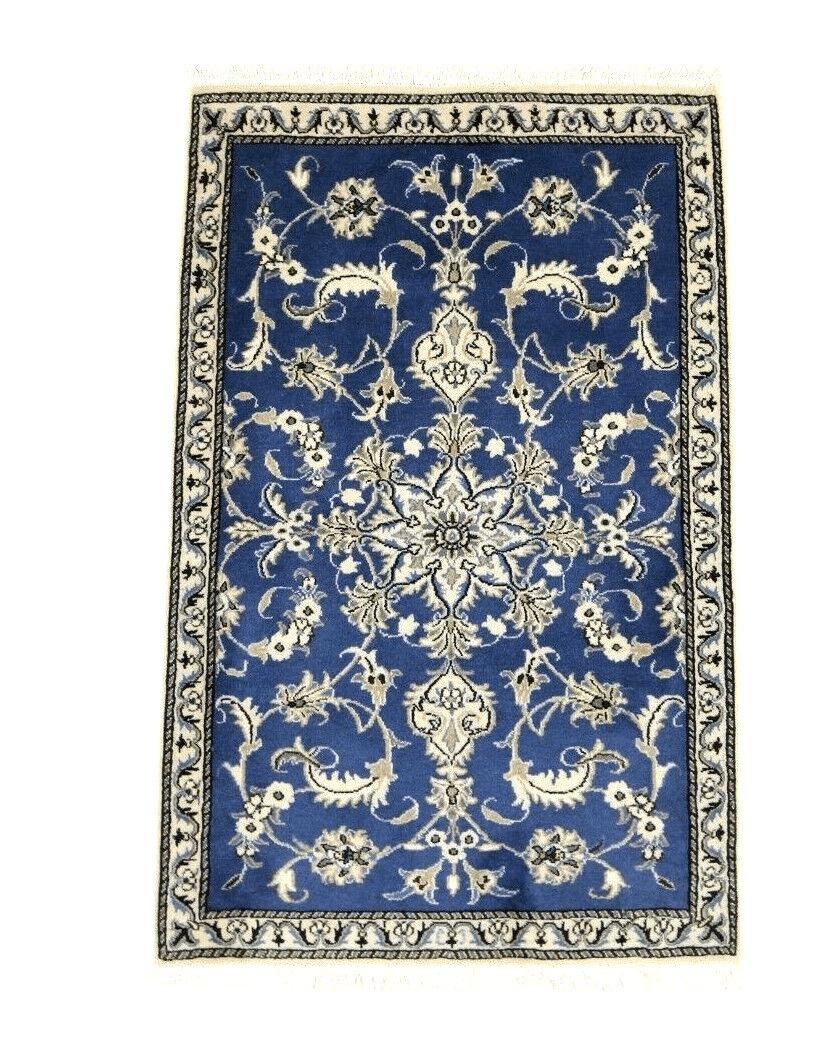
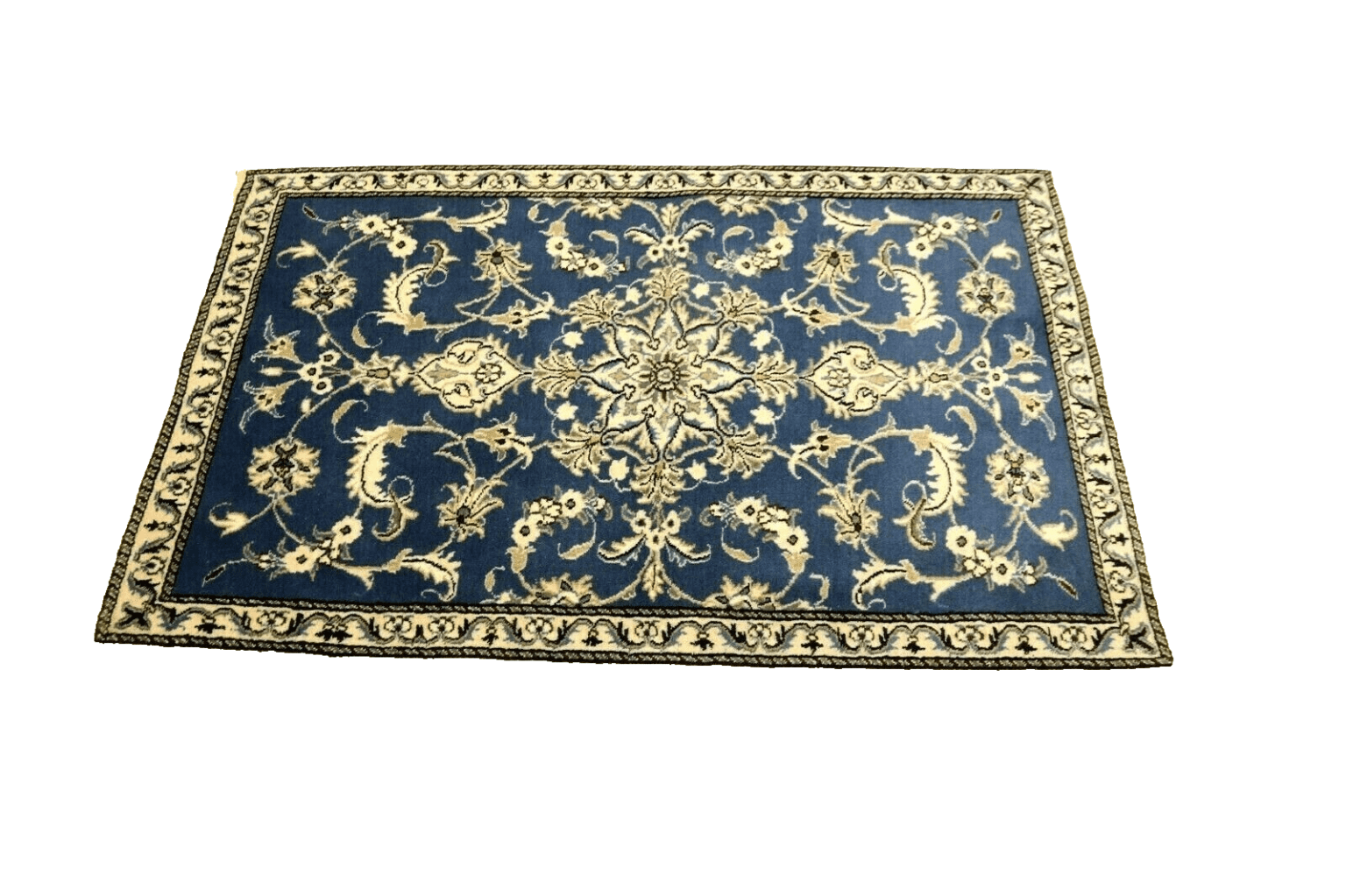
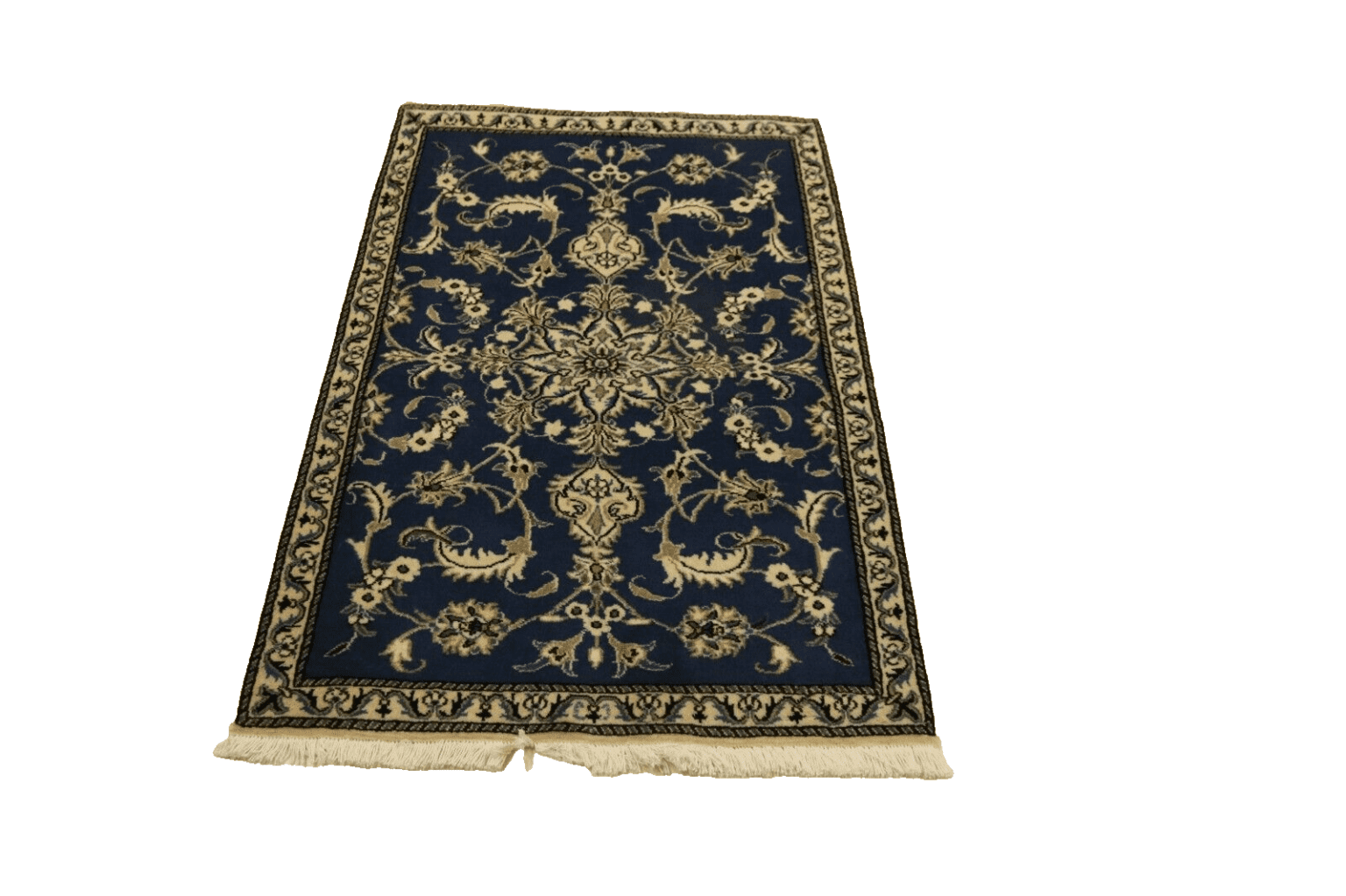
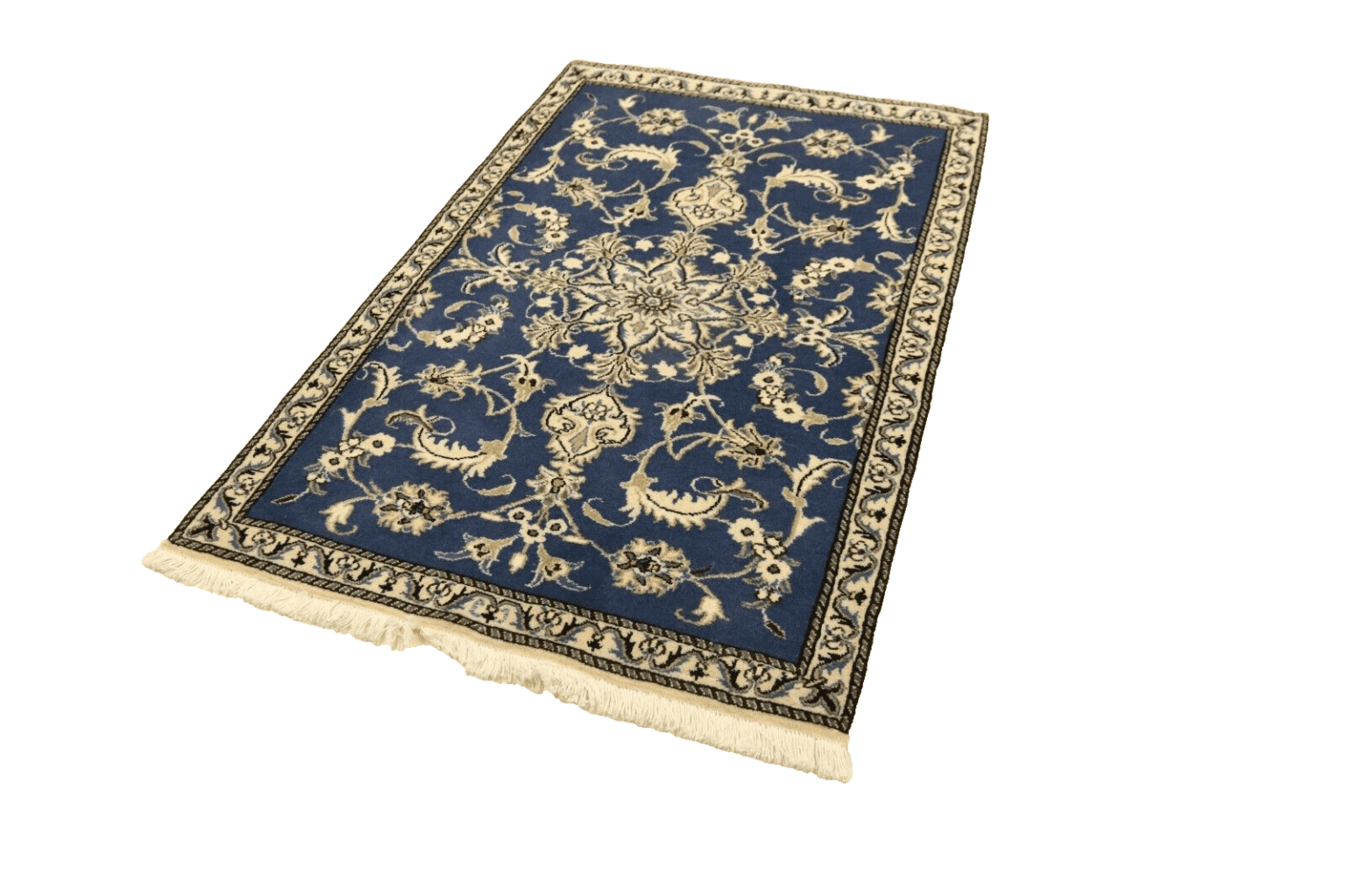
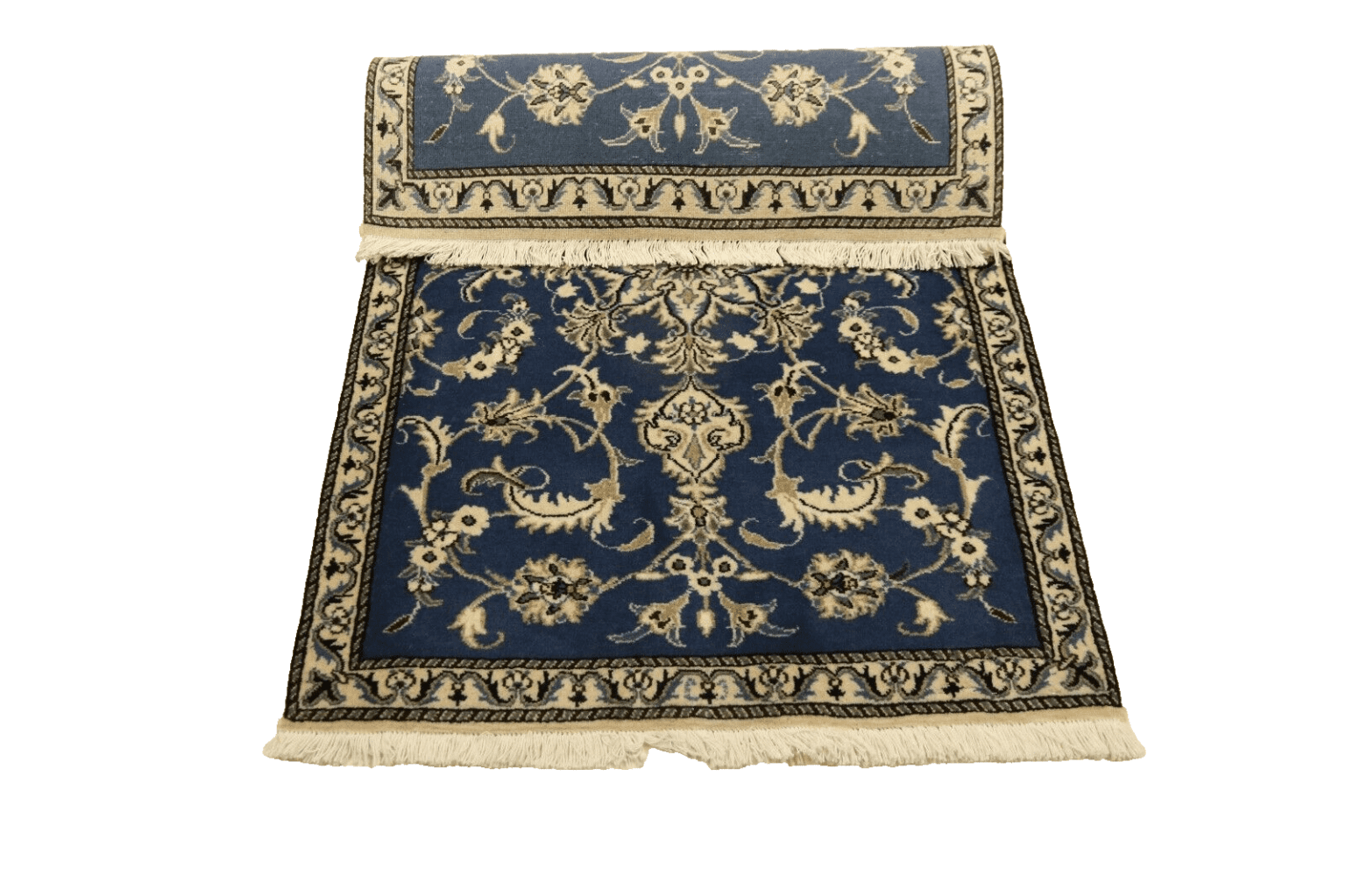
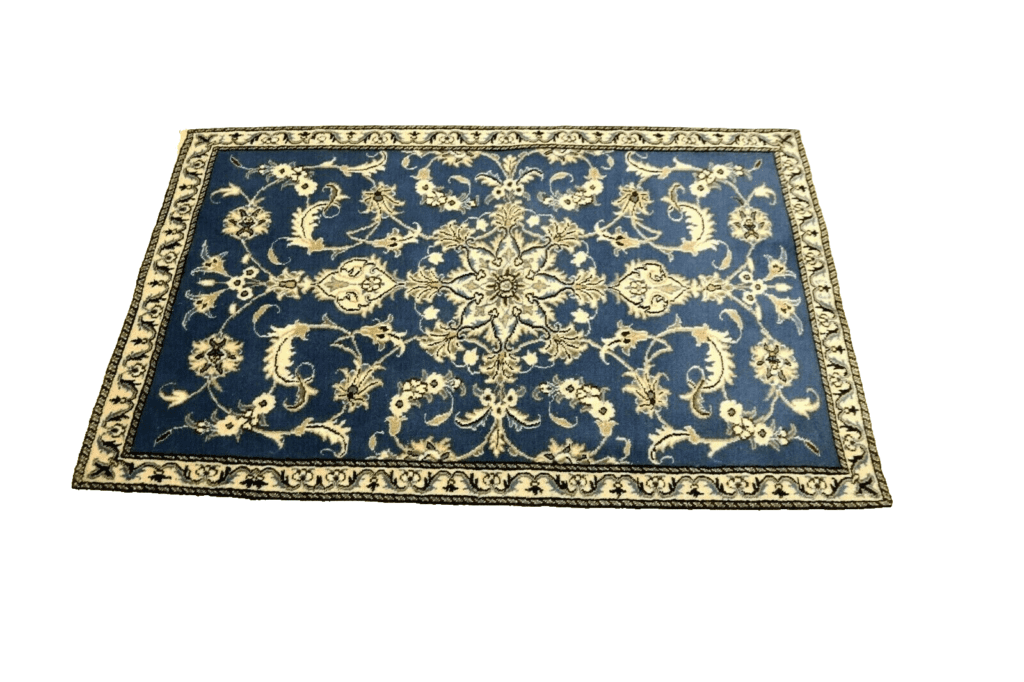
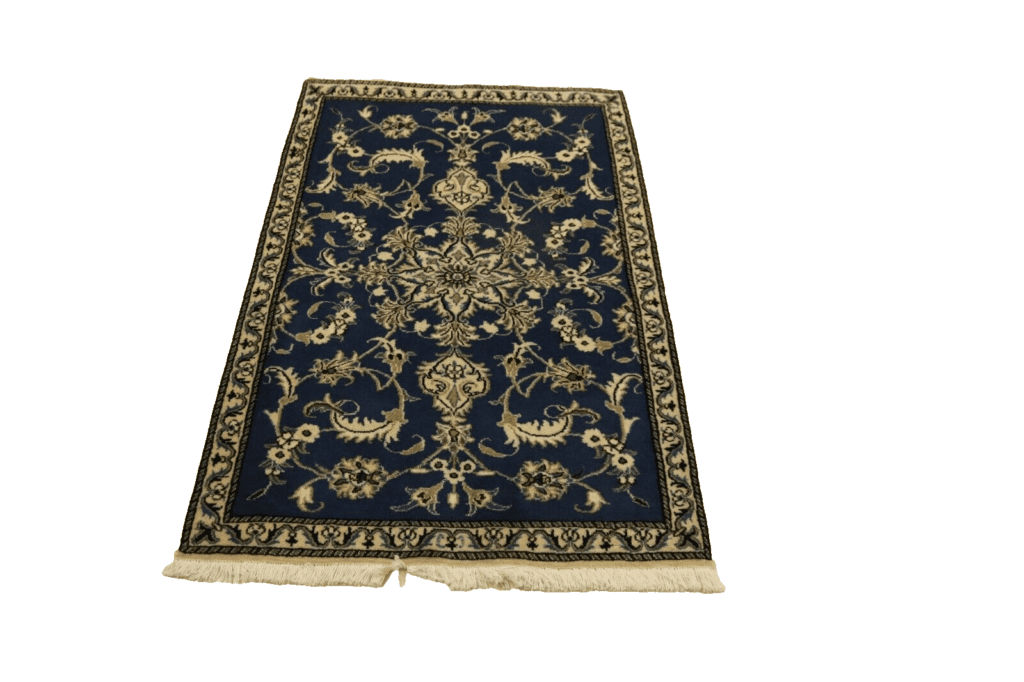
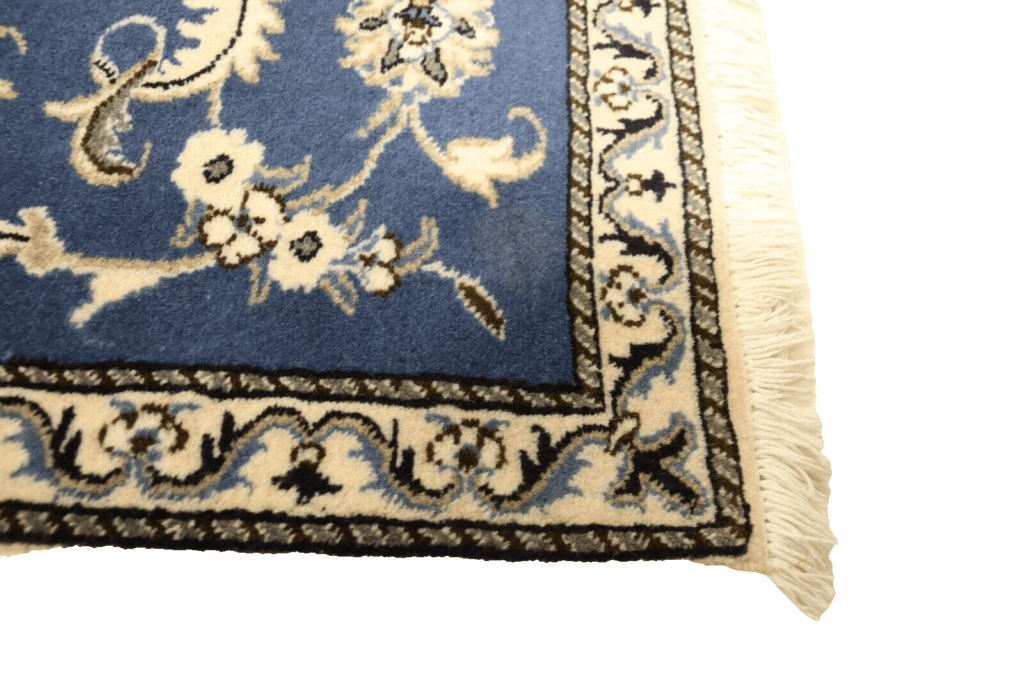
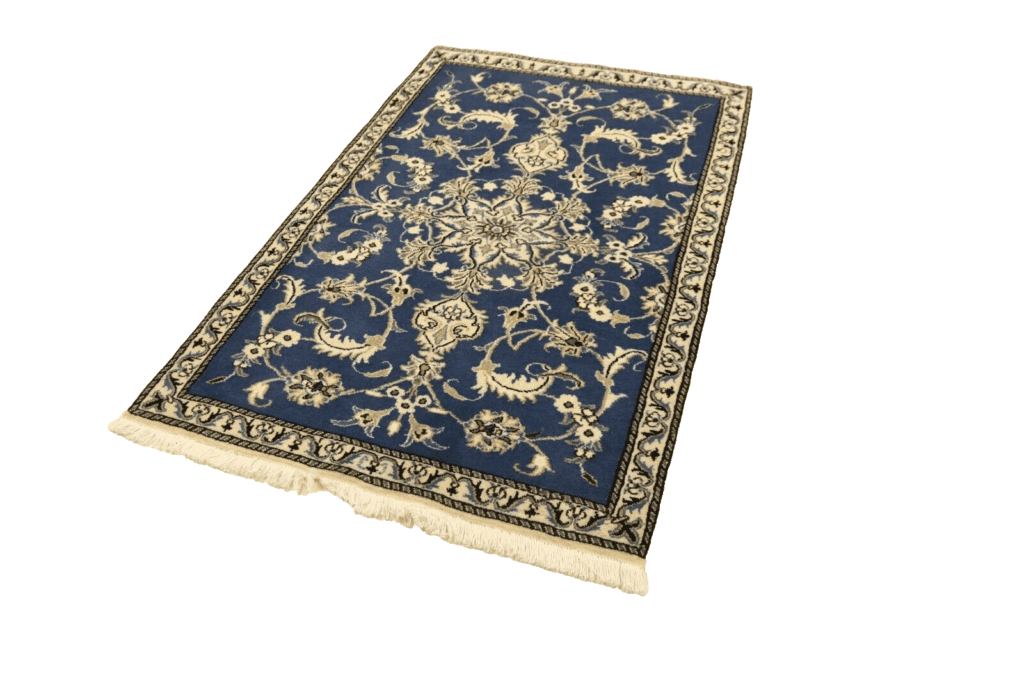
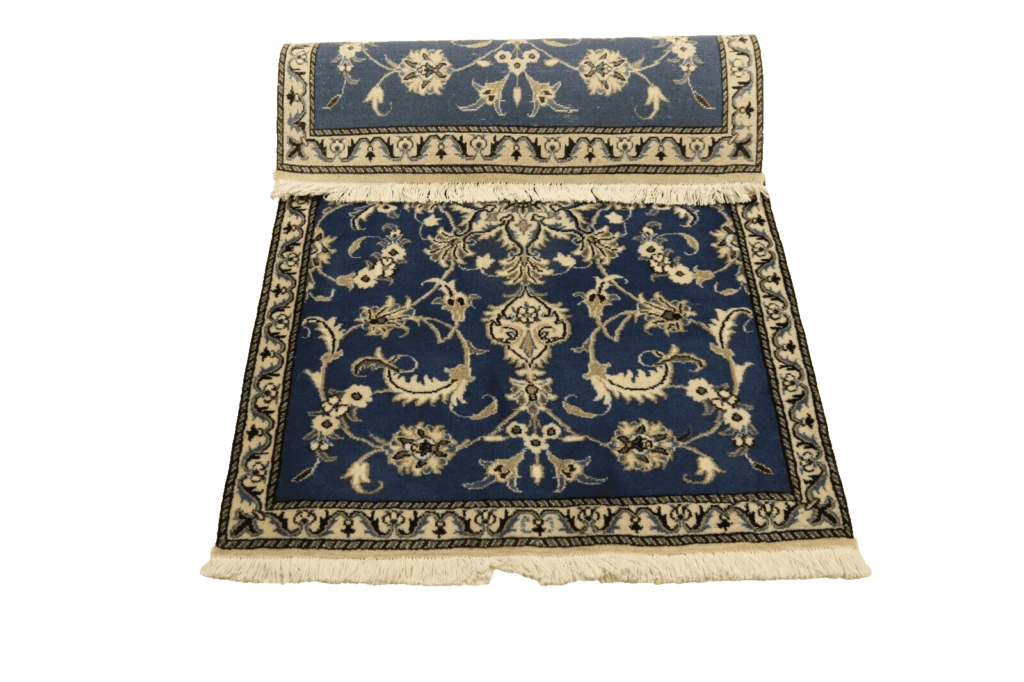
Hand-knotted Nain Persian Rug | Knot density: approx. 300,000 knots/m² | Material: pile virgin wool and silk | Size: 137 x 88 cm | Pattern: traditional Oriental and Persian | Condition: new, very good
This Nain Persian rug is hand-knotted and made from ninety percent virgin wool and ten percent silk. The blend brings together the substantial character of wool with the distinctive sheen of silk. Virgin wool is valued in Oriental rug making for its pleasant handle and resilient fibre. Silk can define delicate outlines and subtle colour changes with particular clarity, giving the surface a light that shifts as the viewing angle changes.
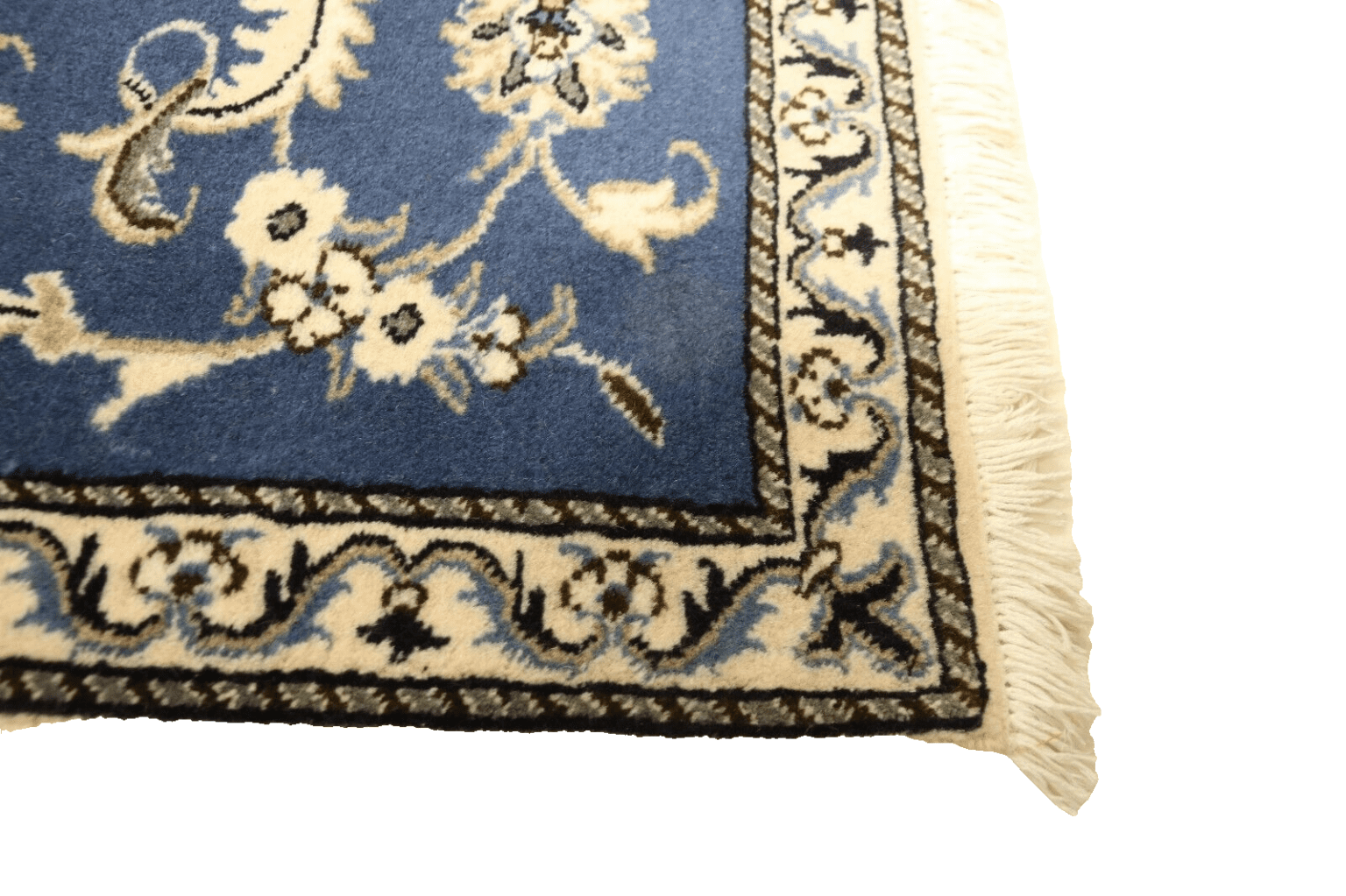
Hand-knotting is a traditional textile craft. Each knot is inserted individually into the foundation, building the pile gradually across the rug. This method creates a closely constructed surface in which small lines and carefully differentiated ornaments can be rendered. The stated density of approximately three hundred thousand knots per square metre indicates a fine level of execution. In a hand-knotted rug, the design is not produced as a mechanically repeated surface; it is formed knot by knot during the work.
The rug has a thickness of approximately nine millimetres. An authenticity certificate is present. Its condition is new and very good. It is also described as a unique one-off piece rather than an item made as one of many identical examples. The material, construction, knot density, condition and certificate are properties of this individual offering.
Origin and Tradition
Nain is a city in central Iran and is associated with a distinct Persian rug tradition. The city gave its name to this group of rugs. Its weaving developed into an important part of regional production, combining careful workmanship with clearly organised designs. Nain rugs therefore belong to the history of Persian Oriental rugs and are linked with Persia, or Iran, as their cultural origin.
The Nain tradition is commonly associated with finely worked rugs and a high knot density. Close knotting allows outlines to be controlled and ornaments to be developed in graduated detail. Knot count alone, however, does not define the craft. The tension of the foundation, the regularity of the rows and the handling of the fibres are also important. Handwork allows each stage of production to contribute to the final structure of the pile.
The history of rug making in Nain is traced back to the sixteenth century. Over the course of that development, inherited Persian techniques were combined with artistic influences from the region. This produced a style that joins traditional compositions with a controlled and finely drawn appearance. Nain consequently refers not only to a place name, but also to knowledge of design, colour work and knotting passed down over generations.
Within the regional weaving culture, skills are taught and maintained from one generation to the next. Making a rug requires patience, concentration and an understanding of proportion. A design has to be transferred into the knot structure while the relationship between field, borders and individual motifs remains coherent. The tradition preserves earlier ideas of composition while allowing different interpretations within the wider Nain style.
Persian rugs have long been regarded as more than practical floor coverings. They are textile forms in which knowledge of fibres, regional design and the experience of the makers come together. Nain is traditionally associated with precision and a refined visual effect. Wool and silk suit this approach because the two fibres create different surface and colour impressions within one woven and knotted composition.
Design and Pattern
The Nain tradition is known for floral and geometric designs. Common Persian image ideas include flowers, vines and stylised landscape elements. These forms are not copied from nature like a photograph; they are translated into ornament. Flowers may be arranged rhythmically, vines may follow symmetrical paths and landscape references may be simplified. The result is a decorative order that can extend across the field of a rug.
Floral motifs and geometric structures often work together in Persian rug design. A border may frame the central field, while medallions, vines or repeated ornaments organise the interior. The precise effect depends on the direction of the lines, the distribution of colour and the proportions of the separate elements. In finely knotted Nain rugs, small motifs and narrow contours can be expressed with considerable differentiation.
The pattern language draws on established Persian forms without being limited to one single arrangement. Plant motifs reflect the importance of nature imagery in Persian ornament. Geometric devices provide structure and can emphasise symmetry, repetition or a clear visual direction. Together, these devices form a traditional Oriental and Persian vocabulary of design.
A subtle and harmonious use of colour is frequently associated with Nain rugs. Light and restrained colour relationships can give the drawing a calm appearance, while silk catches the light and reflects it differently according to the angle of view. This does not alter the design; it makes selected contours and areas more noticeable. In combination with the knot structure, the colours can therefore appear lively while retaining the ordered character of the composition.
The patterns of a Persian rug are not purely decorative. Repeated flowers, vines and geometric forms show how observations of nature, symbolism and craft discipline can be brought together. The meaning of an individual motif may vary according to its cultural context. From a textile perspective, what matters is the way the signs are incorporated into a coherent composition. Many separate knots thus become one connected image.
The name Nain describes a regional style tradition rather than a generic decoration. It refers to a particular development in Persian rug art in which fine drawing, established ornament and careful knotting belong together. Describing this rug as traditional Oriental and Persian places it within that vocabulary without making claims about individual motifs beyond the information provided for this one-off piece.
Special Features
The documented special features include the combination of virgin wool and silk, the hand-knotted construction, the fine knot density and the sheen created by silk. Silk contributes a distinct play of light to the surface and can make finely drawn areas more visible. Virgin wool makes up the greater part of the material and contributes to the characteristic feel of the pile.
The rug is new and in very good condition. An authenticity certificate is present. It is also a unique one-off piece. These properties distinguish the offering from machine-made goods or a repeatedly identical production run. Its hand-knotted construction and fibre composition are the defining material features of this Nain Persian rug.
FAQ
What is the best way to clean a Nain Persian rug?
For regular care, use a vacuum cleaner without a brush attachment. This removes loose dirt while avoiding the additional agitation caused by rotating brushes. For a spot, use a damp cloth and mild soap, treating the area gently rather than rubbing it forcefully. A professional rug cleaning service is the best choice for a thorough clean. Specialists can take the wool and silk content, the hand-knotted construction and the type of soiling into account when selecting a suitable method.
Can the Nain Persian rug be used over underfloor heating?
Yes, the Nain Persian rug can be placed over underfloor heating. The wool used in the rug is described as a good conductor of heat. To protect the rug and its hand-knotted structure, the temperature should not be set too high. Moderate, even warmth supports careful use. The rug should also lie flat, and any underlay should be suitable so that it does not unnecessarily obstruct the movement of heat.
Where can I find information about the rug’s authenticity?
This rug is supplied with an authenticity certificate. Authentic Nain rugs may carry a label or certificate confirming information such as origin and knot density. If further questions arise concerning authenticity, classification or care, consult a specialist or a rug house experienced in Oriental rugs. A professional assessment considers more than one feature and can examine the material, knotting technique, pattern and overall workmanship together.
To provide the best experiences, we use technologies like cookies to store and/or access device information. Consenting to these technologies will allow us to process data such as browsing behavior or unique IDs on this site. Not consenting or withdrawing consent, may adversely affect certain features and functions.
Functional Always active
The technical storage or access is strictly necessary for the legitimate purpose of enabling the use of a specific service explicitly requested by the subscriber or user, or for the sole purpose of carrying out the transmission of a communication over an electronic communications network.
Preferences
The technical storage or access is necessary for the legitimate purpose of storing preferences that are not requested by the subscriber or user.
Statistics
The technical storage or access that is used exclusively for statistical purposes.The technical storage or access that is used exclusively for anonymous statistical purposes. Without a subpoena, voluntary compliance on the part of your Internet Service Provider, or additional records from a third party, information stored or retrieved for this purpose alone cannot usually be used to identify you.
Marketing
The technical storage or access is required to create user profiles to send advertising, or to track the user on a website or across several websites for similar marketing purposes.
 SECURE PAYMENT
 SHIPPING PARTNERS


