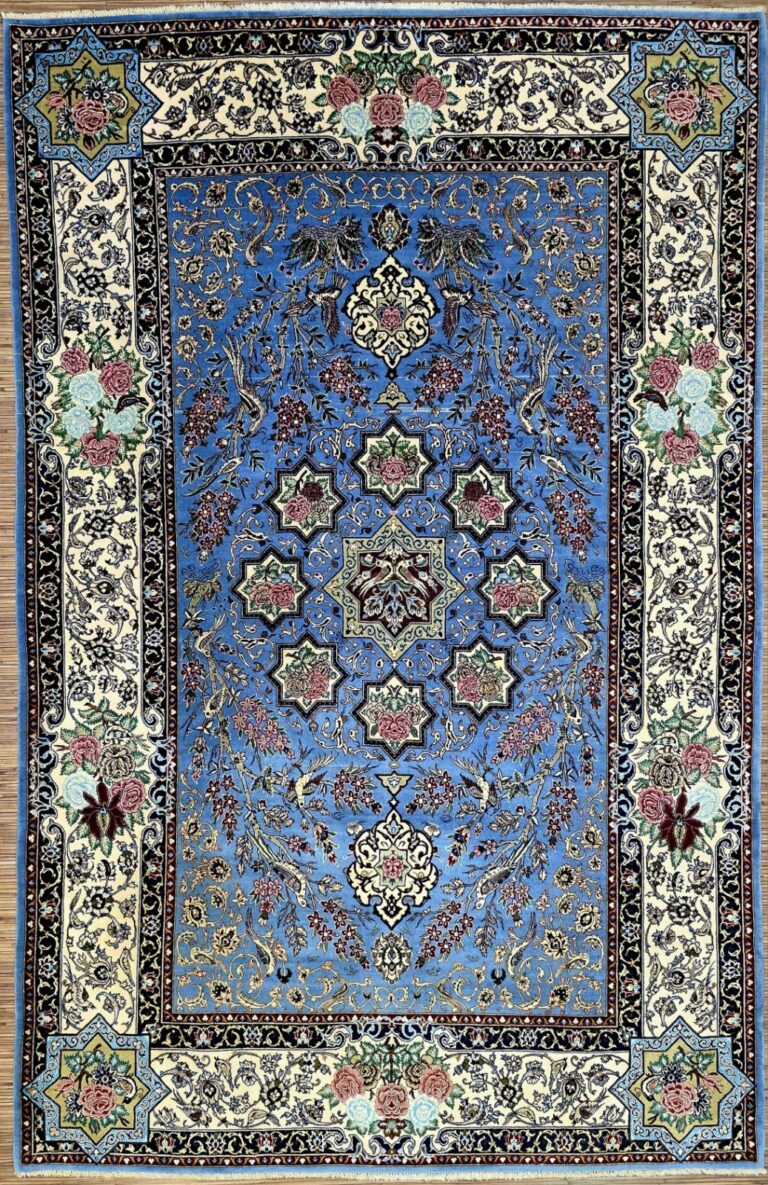
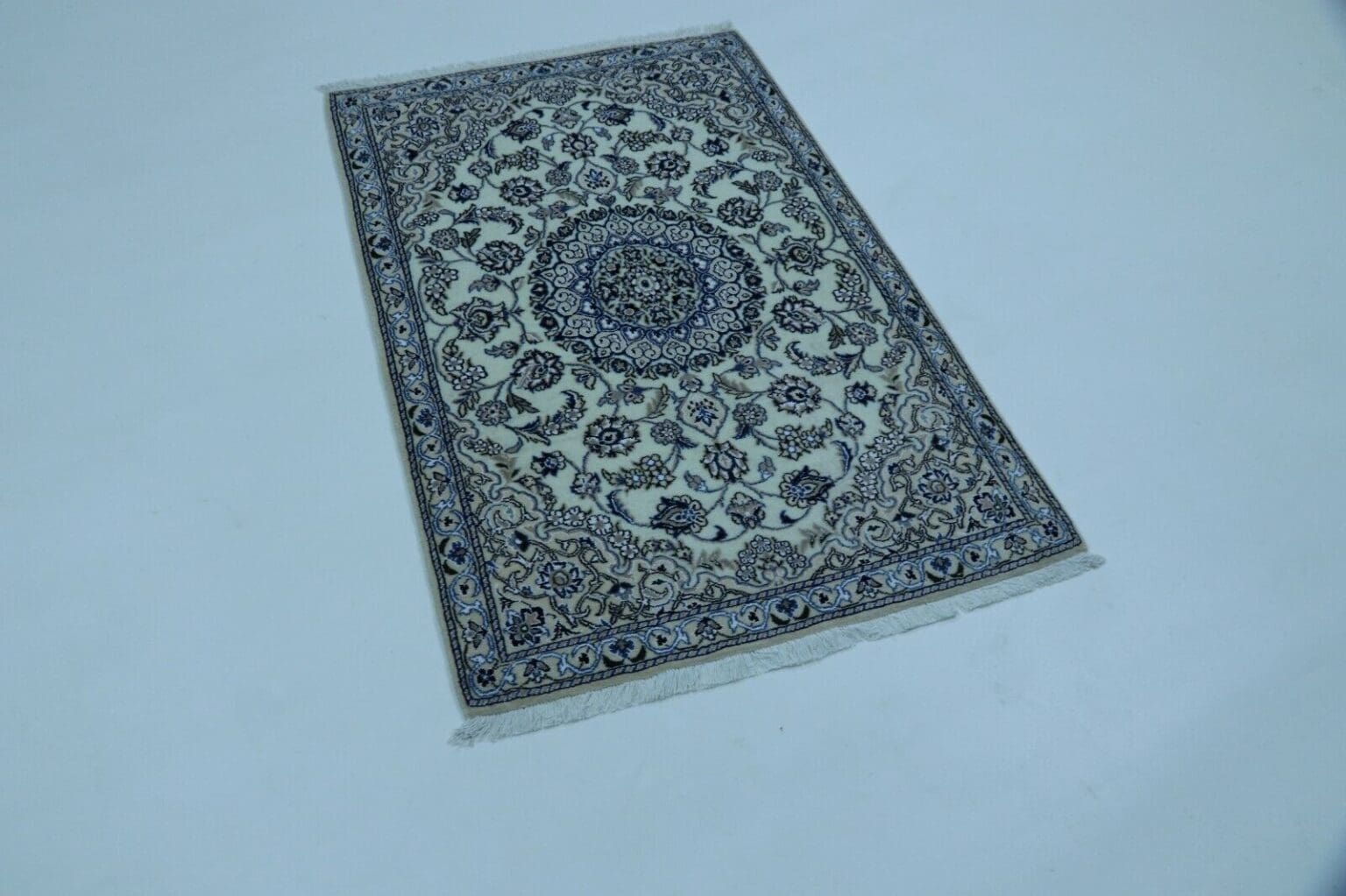
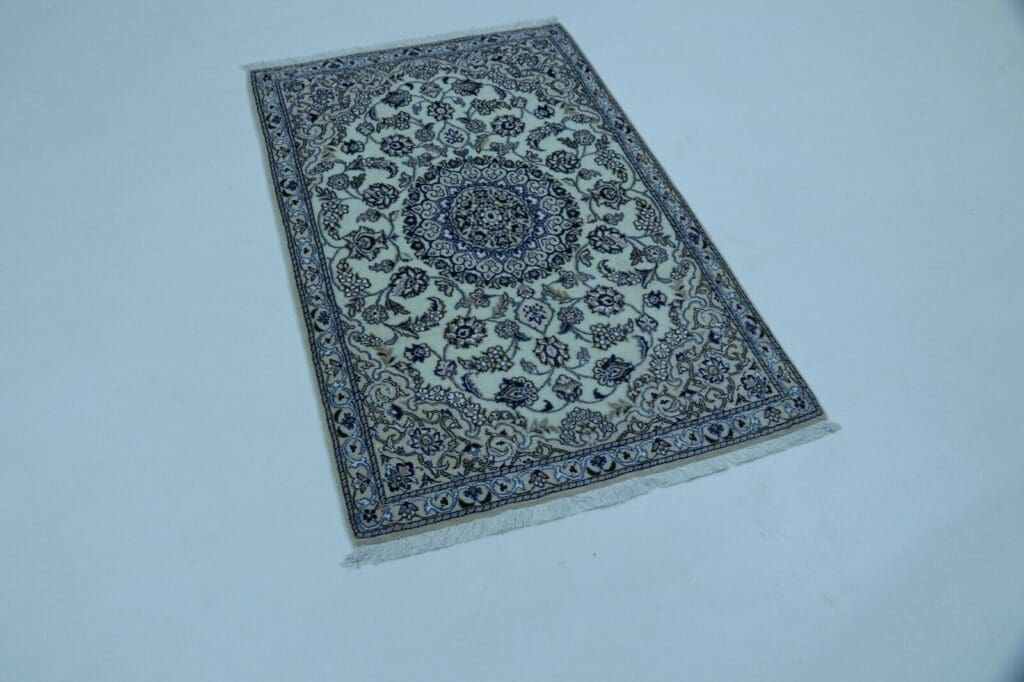
This Super Nain Persian rug is hand-knotted with a pile made of 90% virgin wool and 10% silk. Its warp is made entirely of cotton. The combination of these fibres shapes both the feel and the appearance of the surface. Virgin wool has long been used in oriental rug making because it is resilient, practical to care for and naturally insulating. Wool can absorb moisture from the air while remaining breathable, helping the pile retain a comfortable and pleasantly warm character underfoot.
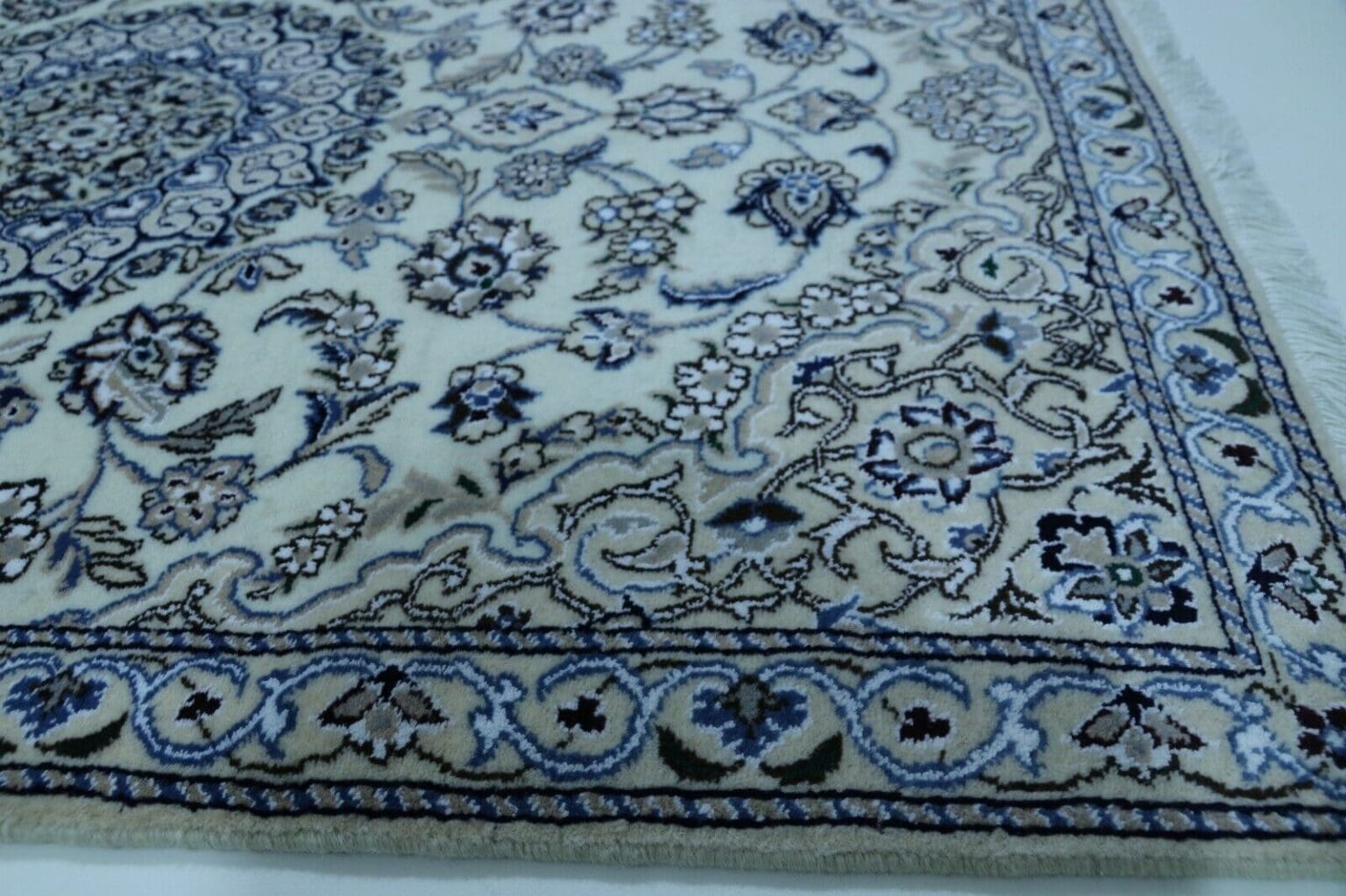
Silk brings a smoother touch and a restrained sheen to the wool foundation. Depending on the light and the viewing angle, the surface can show subtle variations between more muted wool areas and slightly brighter silk details. This contrast is one of the reasons wool and silk are used together in finely knotted rugs. The cotton warp provides the structural basis for the knotting process. Knots are built onto it row by row until the drawn design has been transferred into the pile.
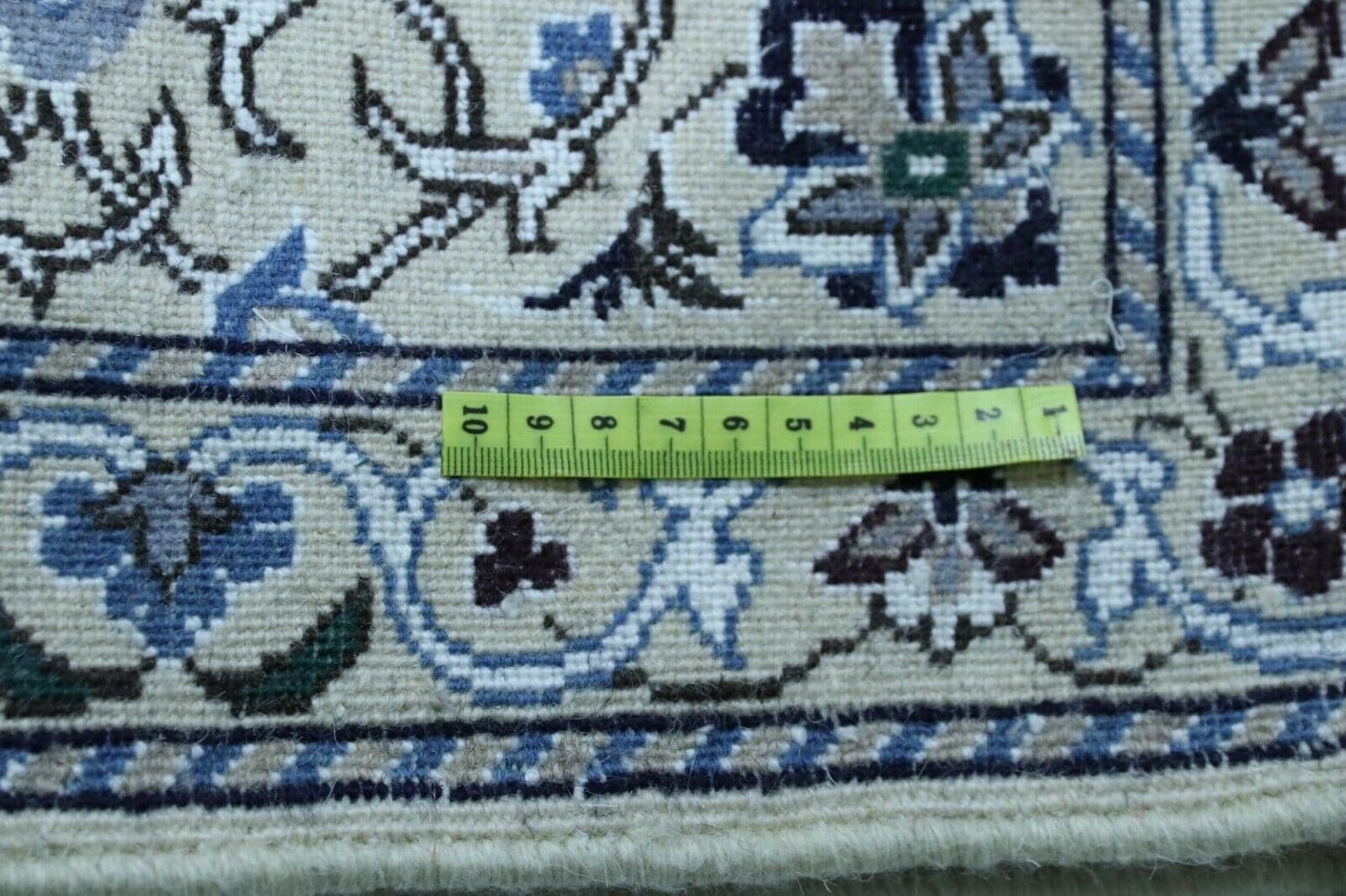
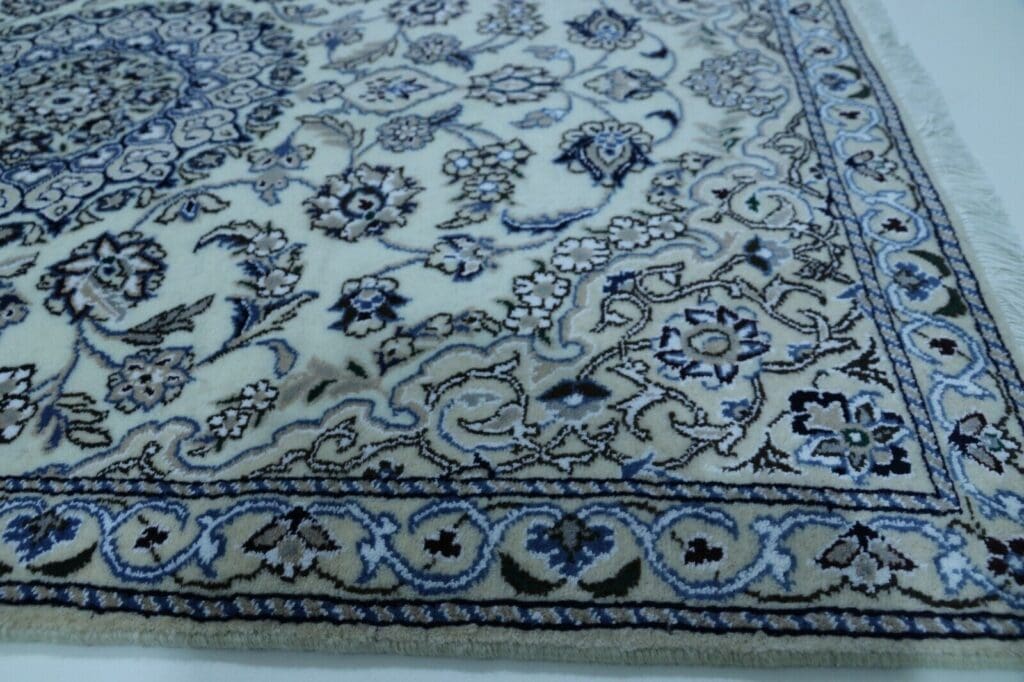
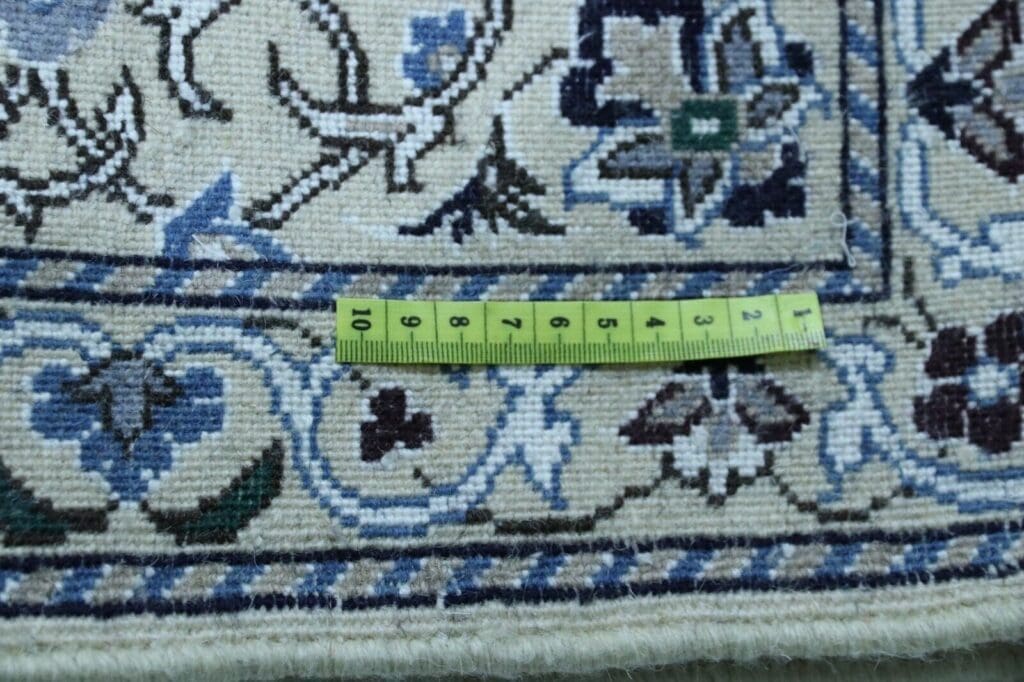
The rug has a knot density of approximately 500,000 knots per square metre. Fine knotting allows small motifs, narrow outlines and delicate transitions to be rendered with considerable precision. Hand-knotting is a manual process in which every knot is placed individually. After the knotting is complete, the pile is trimmed and finished so that the drawing can be read clearly. The result is a textile made through a sequence of skilled, repetitive operations rather than through industrial printing or machine production.
Origin and Tradition
This rug comes from Persia, or Iran, and is identified as a Super Nain. Nain is an Iranian city known for its Persian rugs. The local tradition is associated with precise knotting, carefully balanced compositions and a fine treatment of floral and geometric detail. Nain rugs are often recognised for the way numerous small design elements are brought together into an ordered whole.
The Nain tradition developed within the wider history of Persian weaving. Persian rugs are distinguished by more than their fibre content. Region, construction, drawing, colour arrangement and inherited workshop practice all contribute to a recognizable type. Nain developed its own interpretation of these elements, combining disciplined symmetry with delicate ornament and a controlled colour balance. The design language is rooted in Persian decorative art while remaining specific to the character associated with Nain.
Producing a finely knotted Nain rug requires a prepared design and sustained concentration. A weaver follows the intended arrangement of colours and forms, transferring it into the structure one knot at a time. The finer the construction, the more closely small contours and repeated motifs can be followed. Floral sprays, leaves, tendrils and geometric accents can be placed in compact relation to one another. The high knot density recorded for this rug therefore relates directly to the type of detailed drawing associated with Nain workmanship.
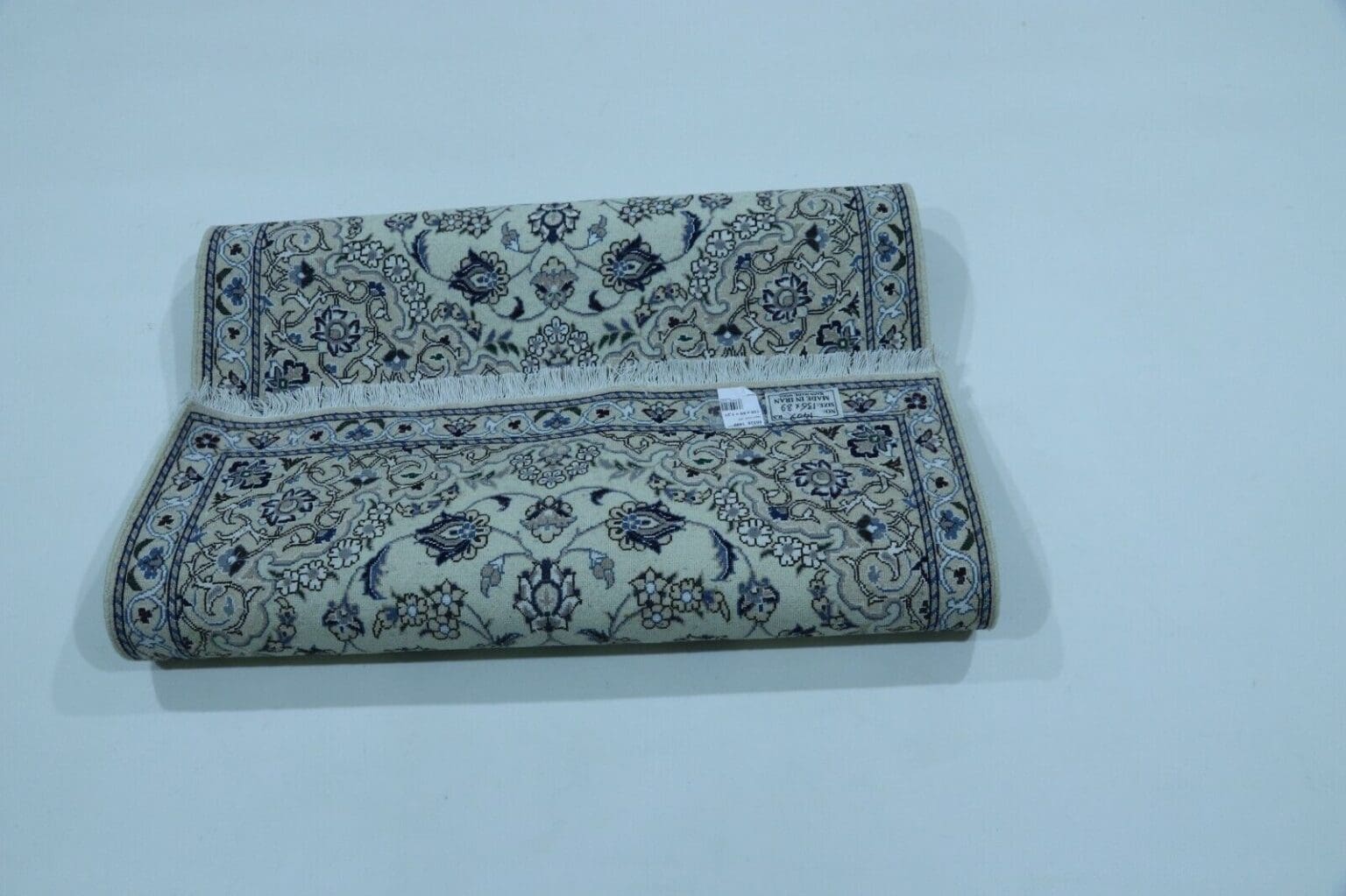
Persian rug making also depends on the relationship between the drawing and the construction. A pattern is not simply applied to an already finished textile; it is built into the pile during the knotting process. This gives the surface a woven depth and allows the direction of the pile to influence how the colours are perceived. Slight individual differences are part of the character of a hand-knotted object. This rug is described as a one-off piece and comes with a certificate of authenticity.
Design and Pattern
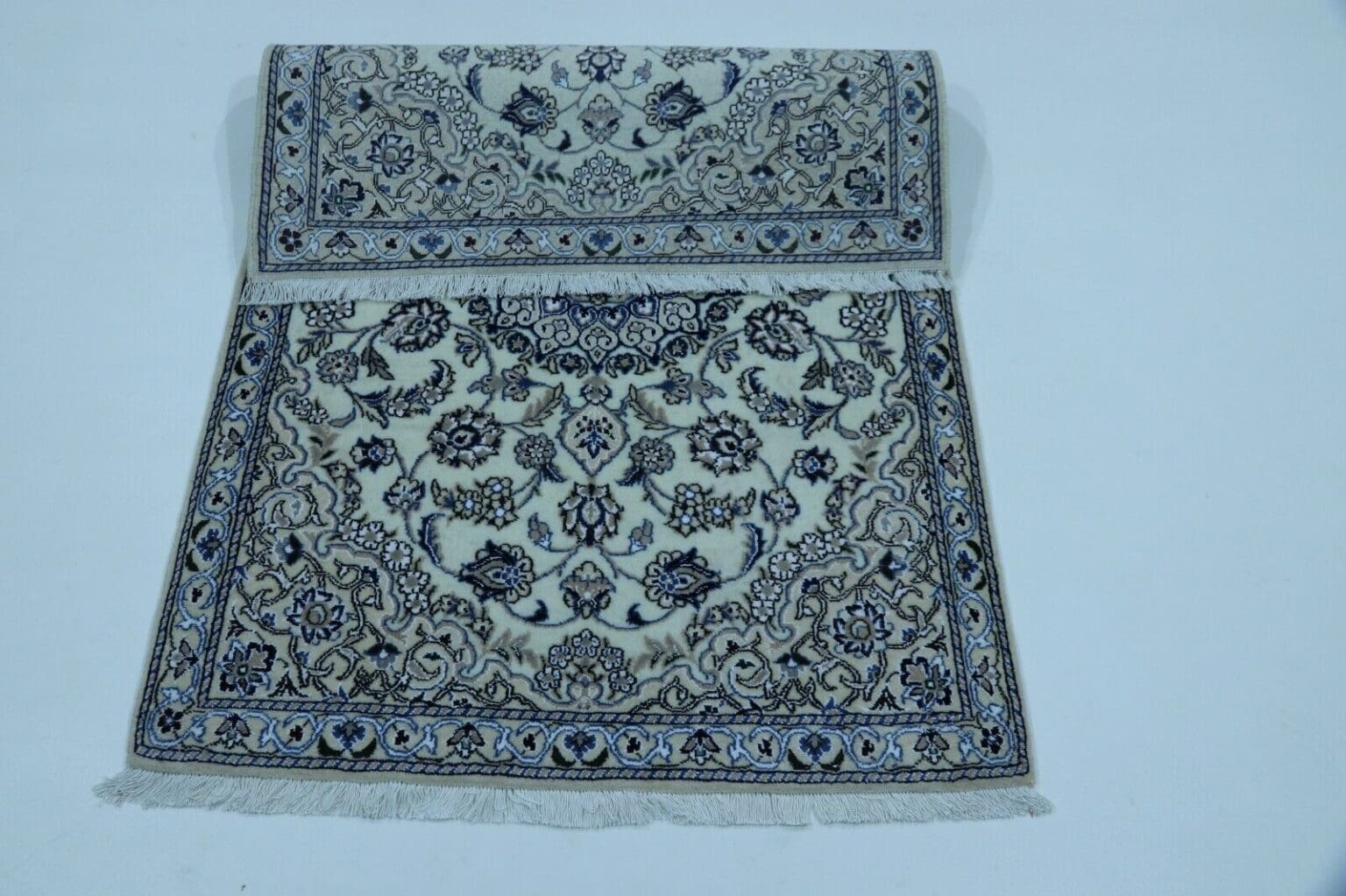
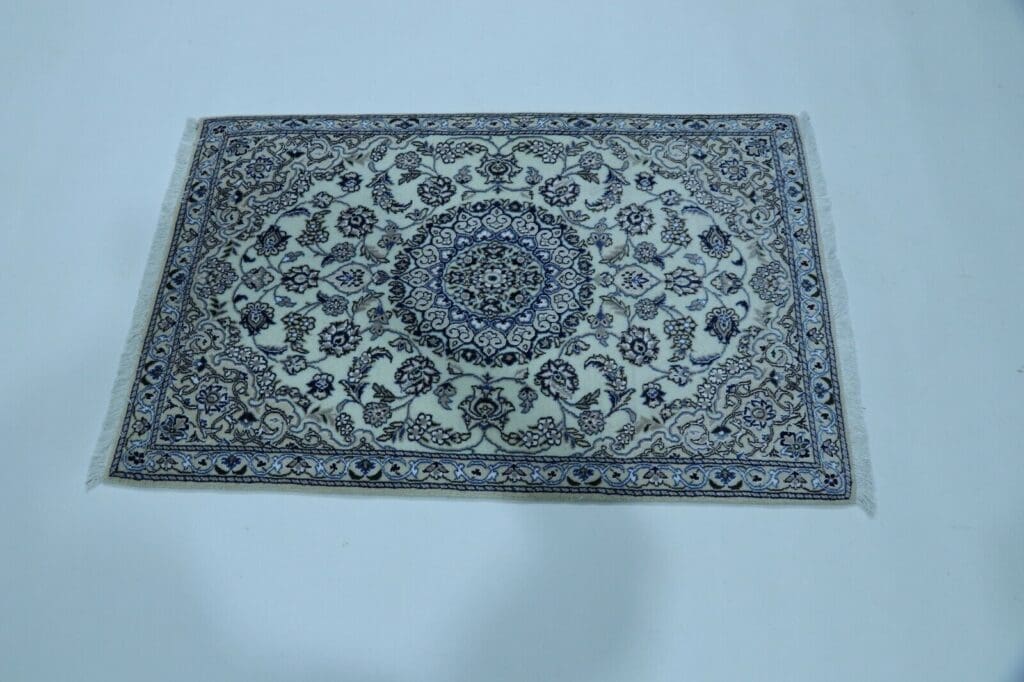
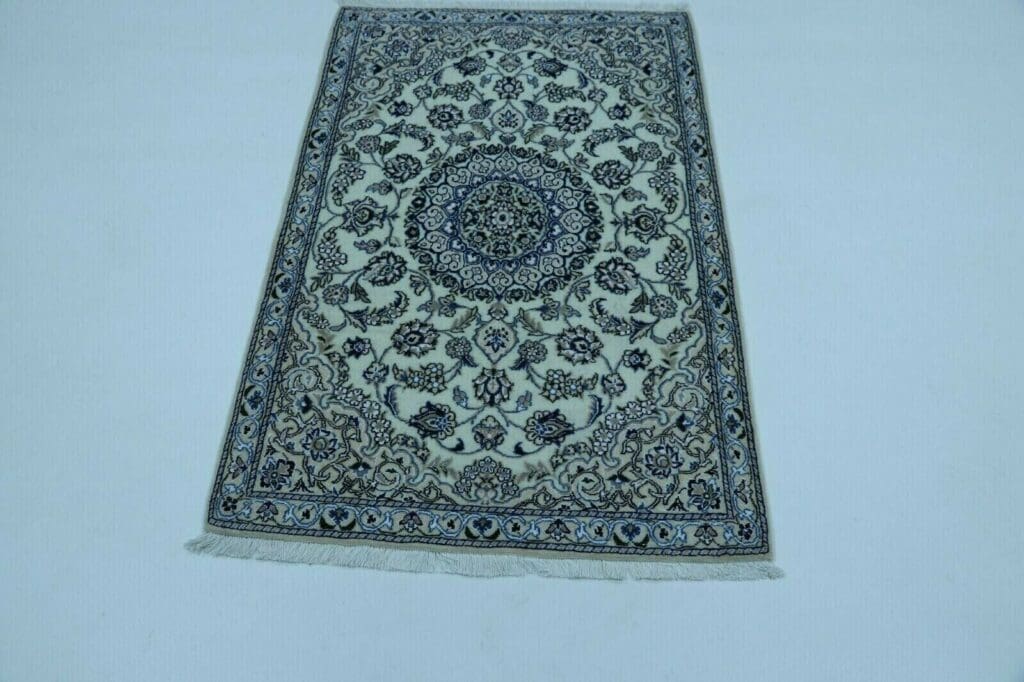
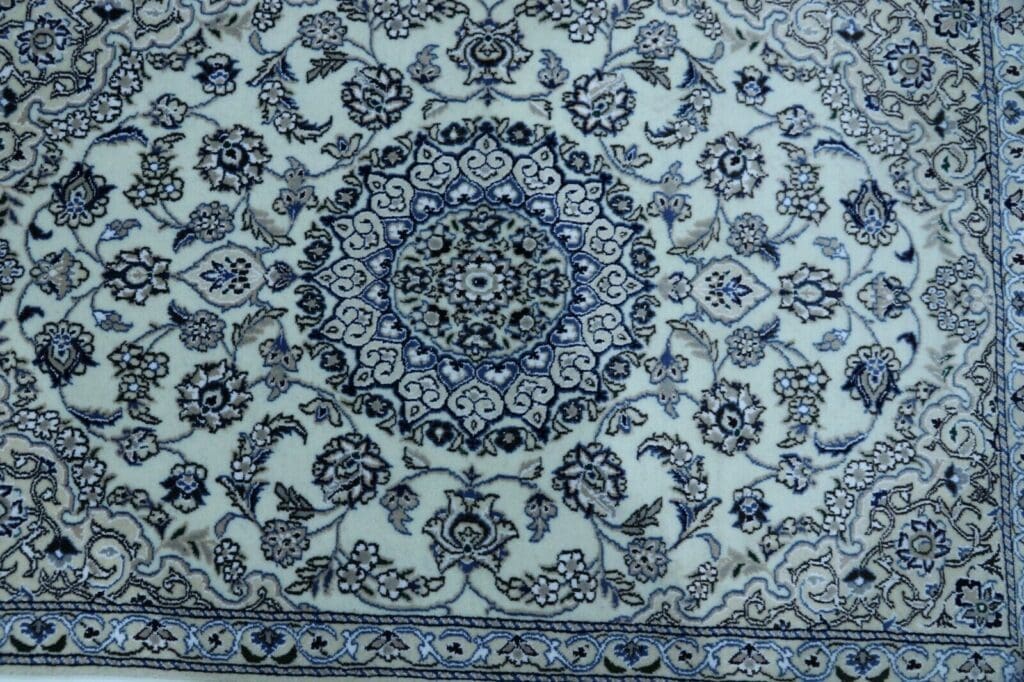
The pattern is described as Oriental. Nain designs are commonly associated with floral ornament combined with geometric organisation. Blossoms, leaves and scrolling vines may be arranged within a symmetrical framework, while straight or carefully curved lines provide structure. This meeting of natural forms and measured order is a recurring feature of Persian rug design. It enables a composition to look detailed without becoming visually disordered.
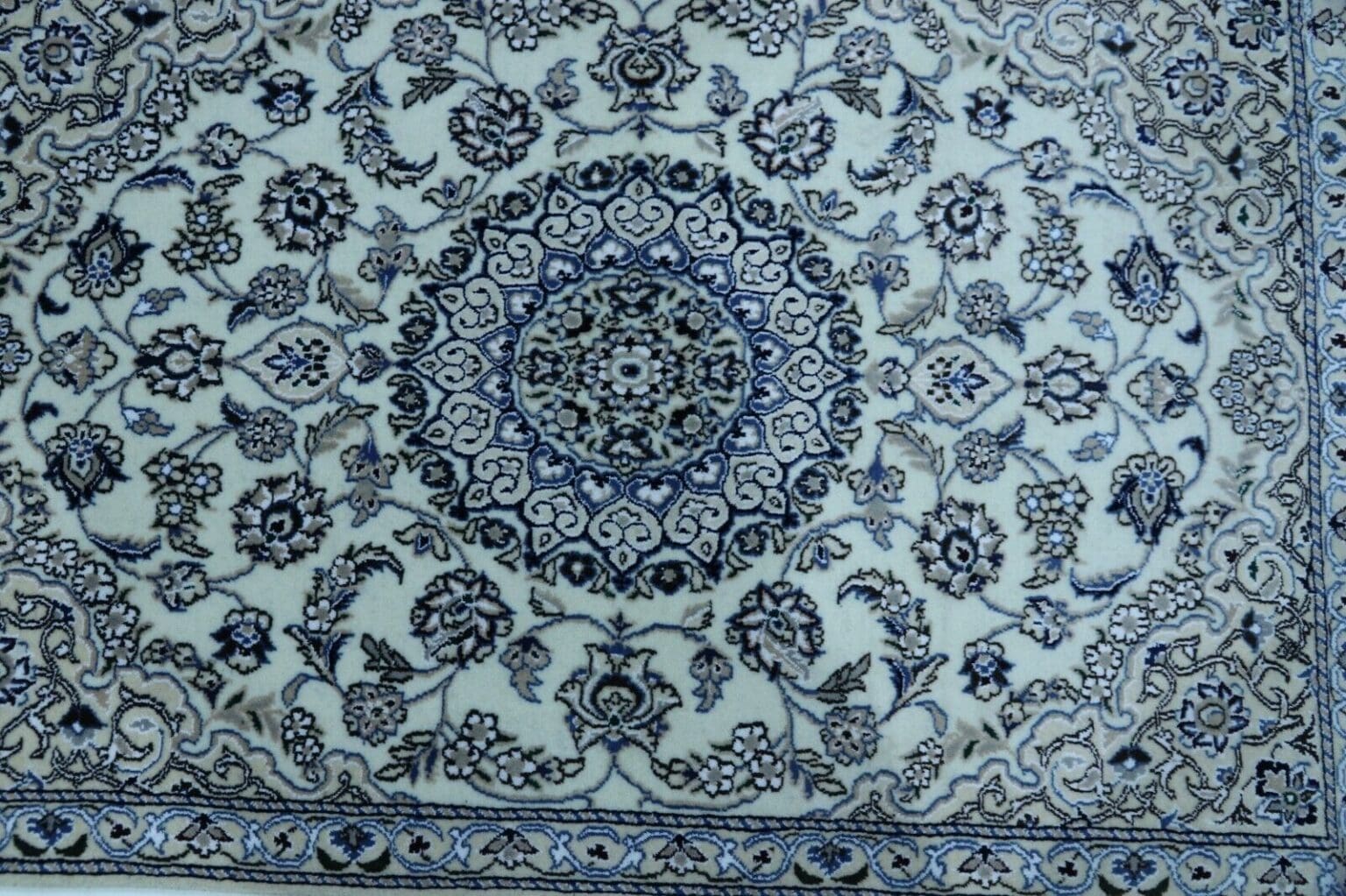
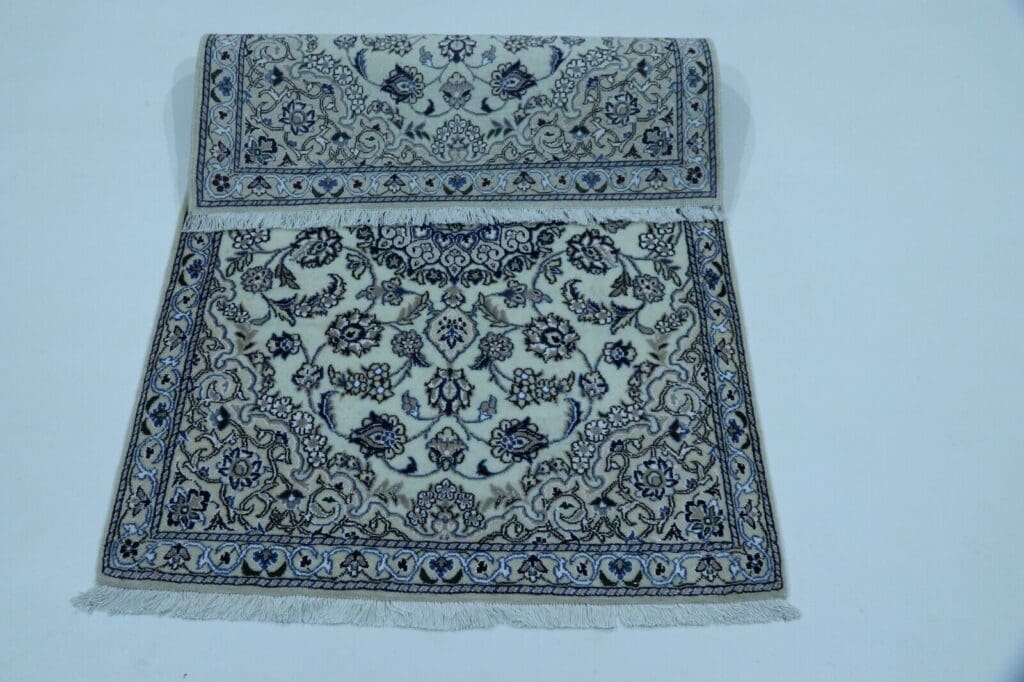
Many Nain compositions establish a relationship between a central field and surrounding borders. A medallion may provide a focal point, with smaller motifs and sweeping vines arranged around it. Other designs use an all-over pattern in which the ornament continues across the field. The exact arrangement depends on the individual drawing. In either case, balance is created through repetition, spacing, symmetry and the changing scale of the motifs.
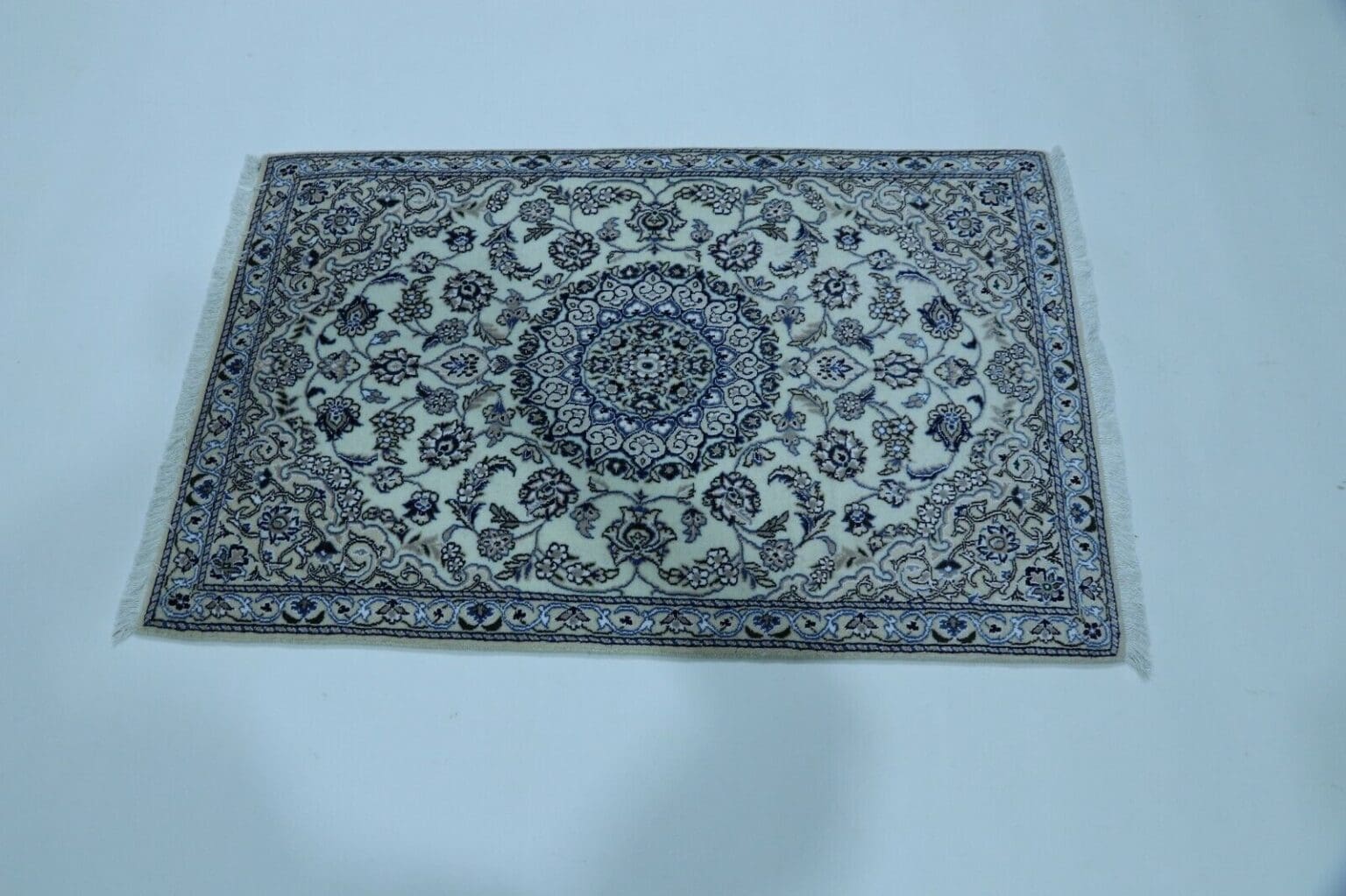
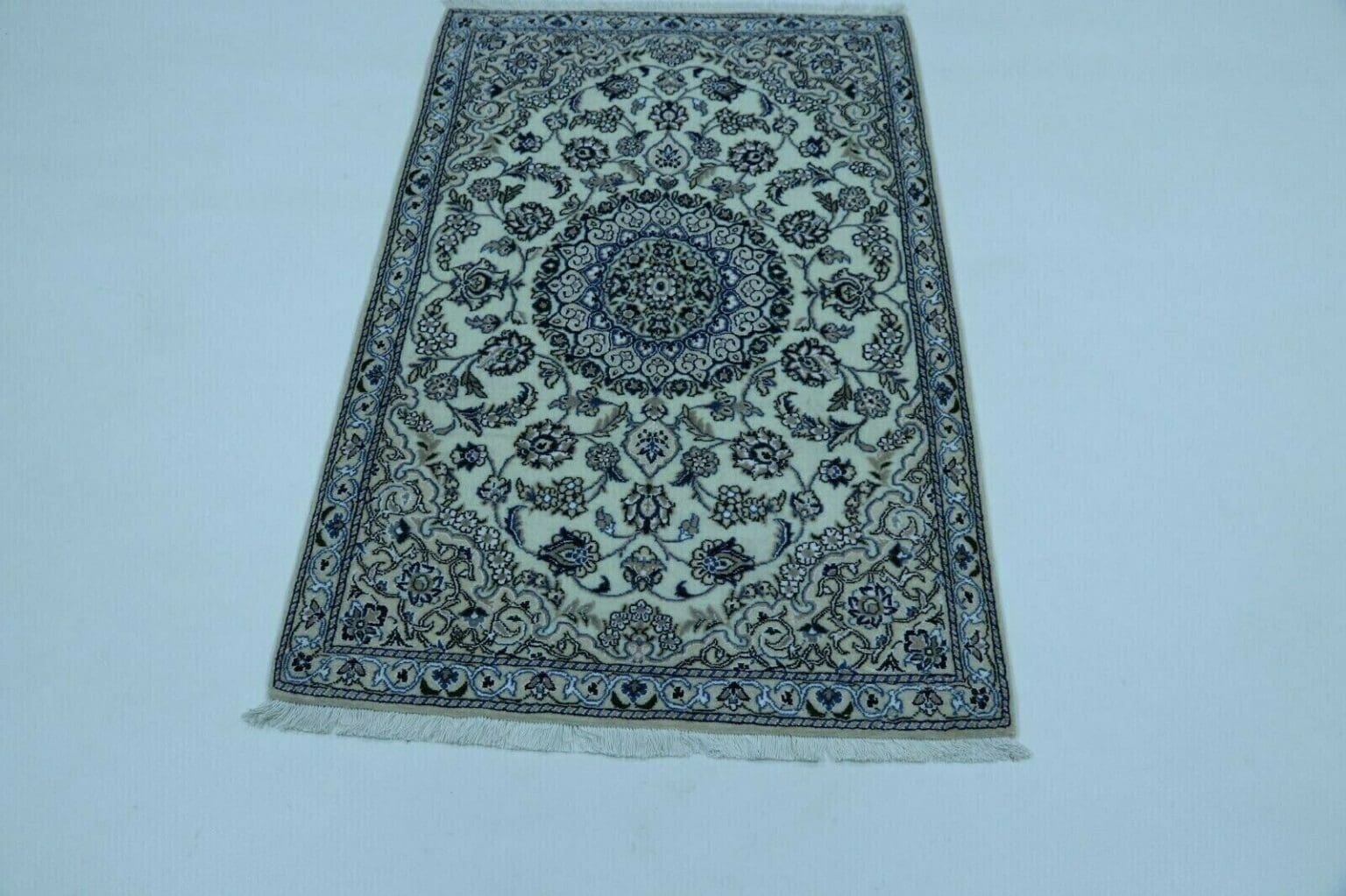
The recorded colour character includes soft blue and cream tones. Blue can give a design a cool sense of depth, while cream areas open the composition and clarify the relationship between ground and ornament. The effect comes from the interaction of several shades rather than from any single colour in isolation. Border lines, field motifs and smaller accents can therefore be distinguished while still belonging to one coherent pattern system.
The wool and silk pile adds another visual layer to the design. Wool tends to give the surface a softer, more subdued appearance, while silk can catch the light in selected areas. As the observer moves around the room, these differences may make some contours appear more defined and other sections more understated. This is a material effect of the fibre combination, not a separate printed finish. The result is a patterned surface whose character changes subtly with light and direction.
Special Features
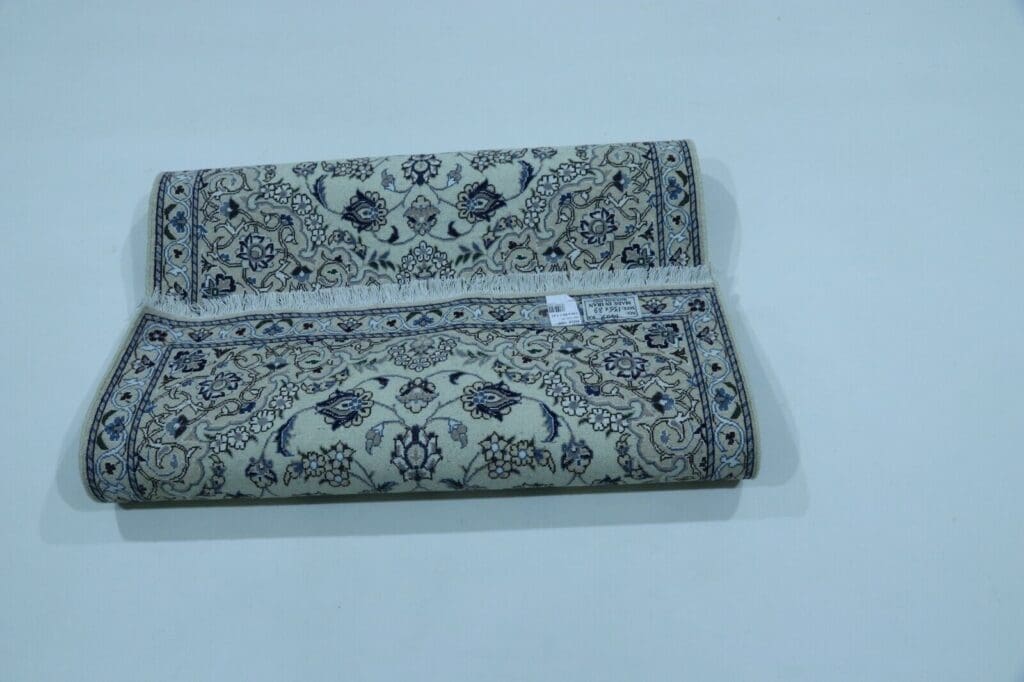
The rug is described as new and in very good condition. It is suitable for use over underfloor heating, making it possible to place it in a room with this type of heating system. Its thickness is given as approximately 8 mm. The rug is identified as a one-off piece and includes a certificate of authenticity. Its hand-knotted construction, fine knot density and wool-and-silk pile are the principal features specified for this individual rug.
Regular vacuuming is recommended as part of normal care. Direct sunlight should be avoided where possible so that the colours remain even over time. If a spill occurs, it is best to act promptly and treat the spot gently with a damp cloth and mild cleaning agent. Vigorous rubbing can place unnecessary stress on the pile. A professional cleaning every few years is also recommended. The high knot density is associated with a durable construction suitable for rooms that are used regularly.
FAQ
How should a Nain Persian rug be cared for?
Vacuum the rug regularly using a setting appropriate for a hand-knotted pile, so that dust and loose particles do not remain embedded. Keep it away from strong direct sunlight whenever possible, since prolonged exposure can affect colour balance. Spills should be addressed quickly by carefully lifting away the moisture rather than rubbing the surface. A damp cloth and mild cleaning agent can be used gently on a fresh mark. For more extensive treatment, professional cleaning every few years is recommended. This approach helps protect the wool and silk surface and preserves the legibility of the pattern.
Where can this rug be used?
The Super Nain Persian rug can be used in a living room, bedroom, hallway or home office. Its Oriental pattern can be combined with traditional furnishings as well as with a more contemporary interior. As a hand-knotted one-off, it can define a textile area on the floor and give a room a clearly structured centre. Because it is suitable for underfloor heating, it can also be considered for a heated living space. The final placement should take account of the room layout, the furniture and how much of the detailed design is intended to remain visible.
What distinguishes a Nain rug?
Nain rugs are associated with fine knotting, a high level of detail and carefully selected materials. A wool-and-silk pile combines the practical, warm and resilient qualities of virgin wool with the smoother touch and restrained lustre of silk. Nain designs are also known for balanced compositions in which floral motifs and geometric organisation work together. This rug brings together those regional design associations with hand-knotted construction and the recorded fine knot density. Its certificate of authenticity accompanies its identification as a one-off rug.
To provide the best experiences, we use technologies like cookies to store and/or access device information. Consenting to these technologies will allow us to process data such as browsing behavior or unique IDs on this site. Not consenting or withdrawing consent, may adversely affect certain features and functions.
Functional Always active
The technical storage or access is strictly necessary for the legitimate purpose of enabling the use of a specific service explicitly requested by the subscriber or user, or for the sole purpose of carrying out the transmission of a communication over an electronic communications network.
Preferences
The technical storage or access is necessary for the legitimate purpose of storing preferences that are not requested by the subscriber or user.
Statistics
The technical storage or access that is used exclusively for statistical purposes.The technical storage or access that is used exclusively for anonymous statistical purposes. Without a subpoena, voluntary compliance on the part of your Internet Service Provider, or additional records from a third party, information stored or retrieved for this purpose alone cannot usually be used to identify you.
Marketing
The technical storage or access is required to create user profiles to send advertising, or to track the user on a website or across several websites for similar marketing purposes.

 SECURE PAYMENT
 SHIPPING PARTNERS