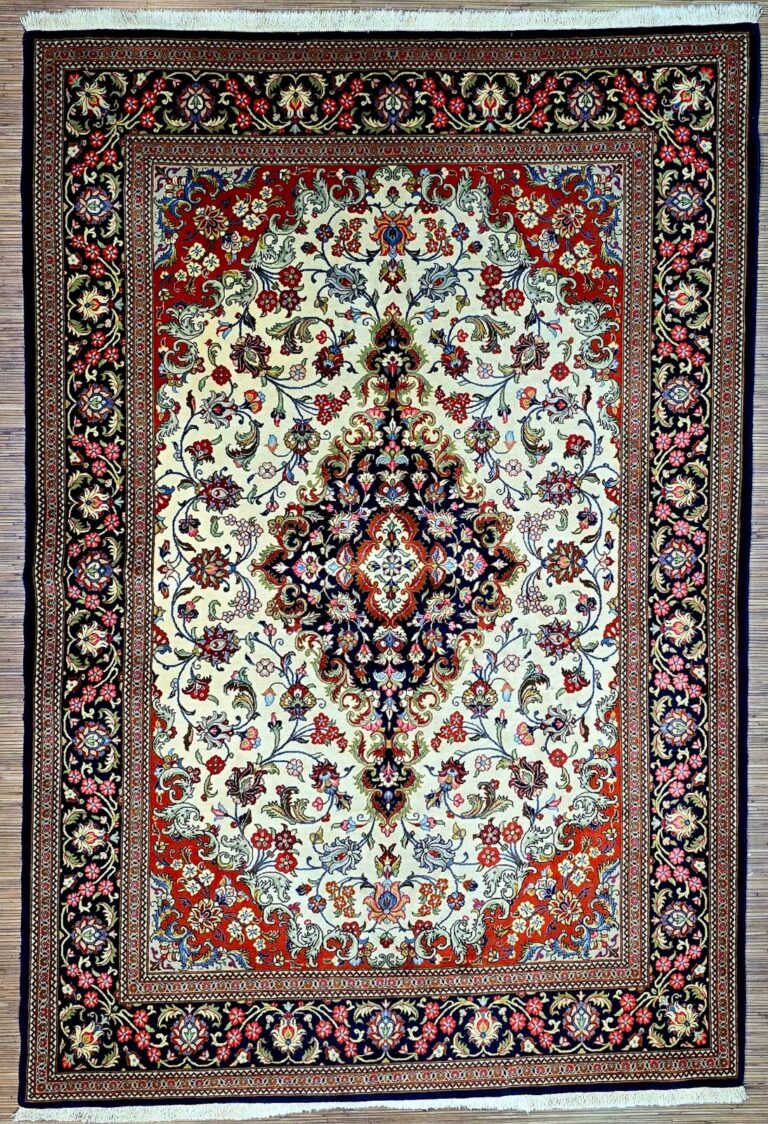
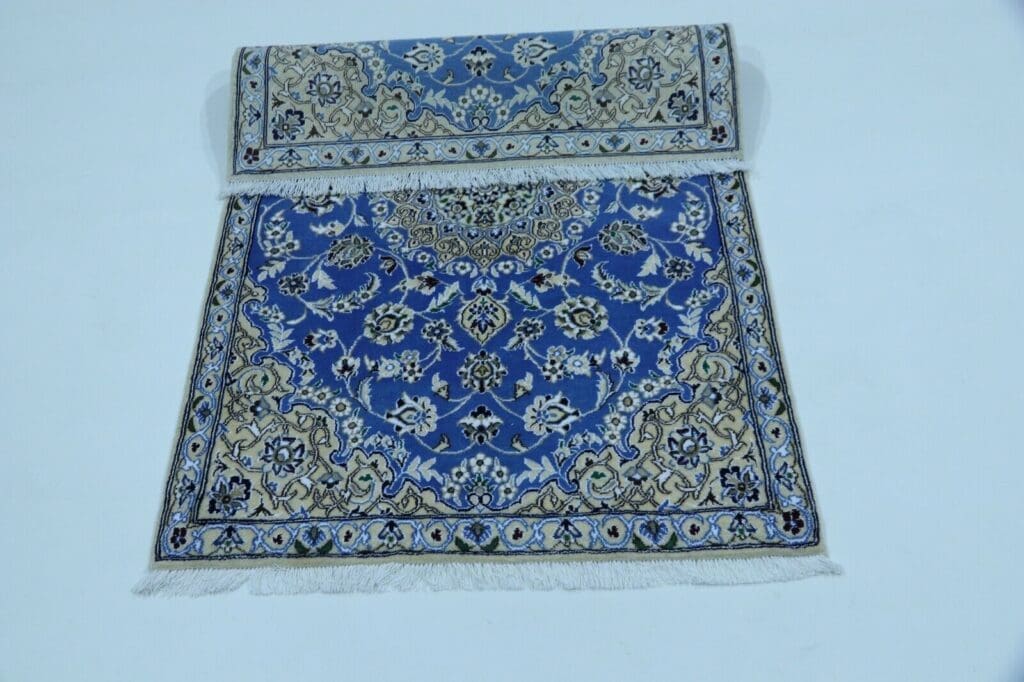
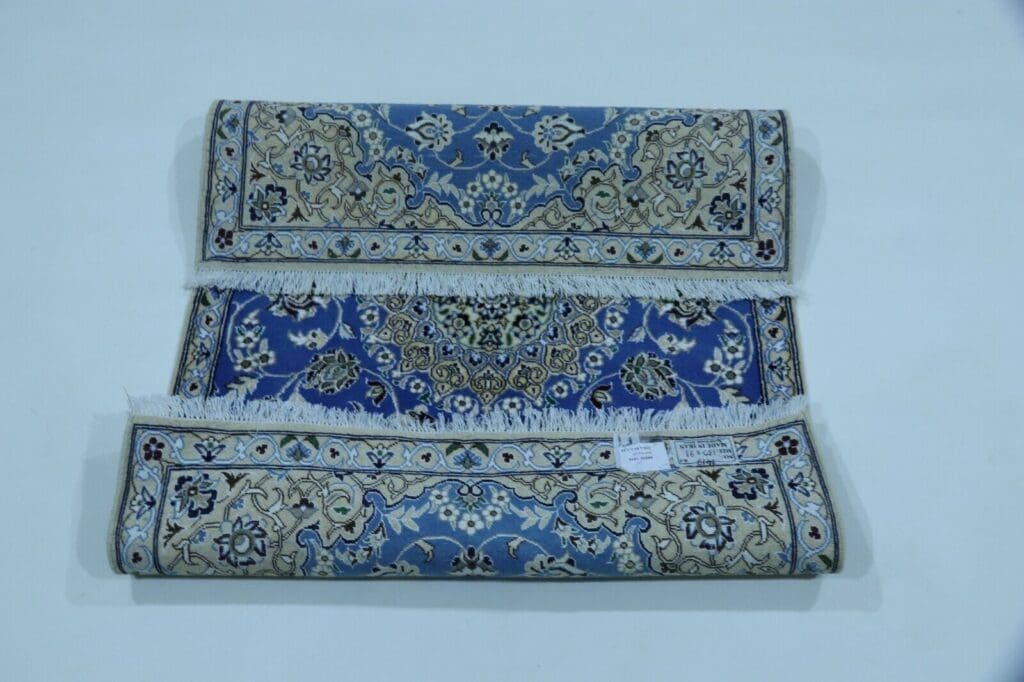
This Super Nain Persian rug is hand-knotted, with a pile made from 90% virgin wool and 10% silk. Its warp is 100% cotton. The combination places wool at the centre of the pile while adding the refined surface character associated with silk. Virgin wool gives the pile a naturally soft and resilient handle. The silk component contributes a subtle sheen and supports the finely worked appearance of the rug.
Hand-knotting means that individual knots are inserted into the foundation one by one. This process creates a closely built pile in which small ornaments, precise outlines and gradual visual transitions can be rendered with care. The cotton warp forms the supporting framework of the rug. It holds the rows of knots in place and contributes to the structure of the finished textile. Each stage requires repeated manual work, from preparing the foundation through knotting, compacting and finishing the pile.
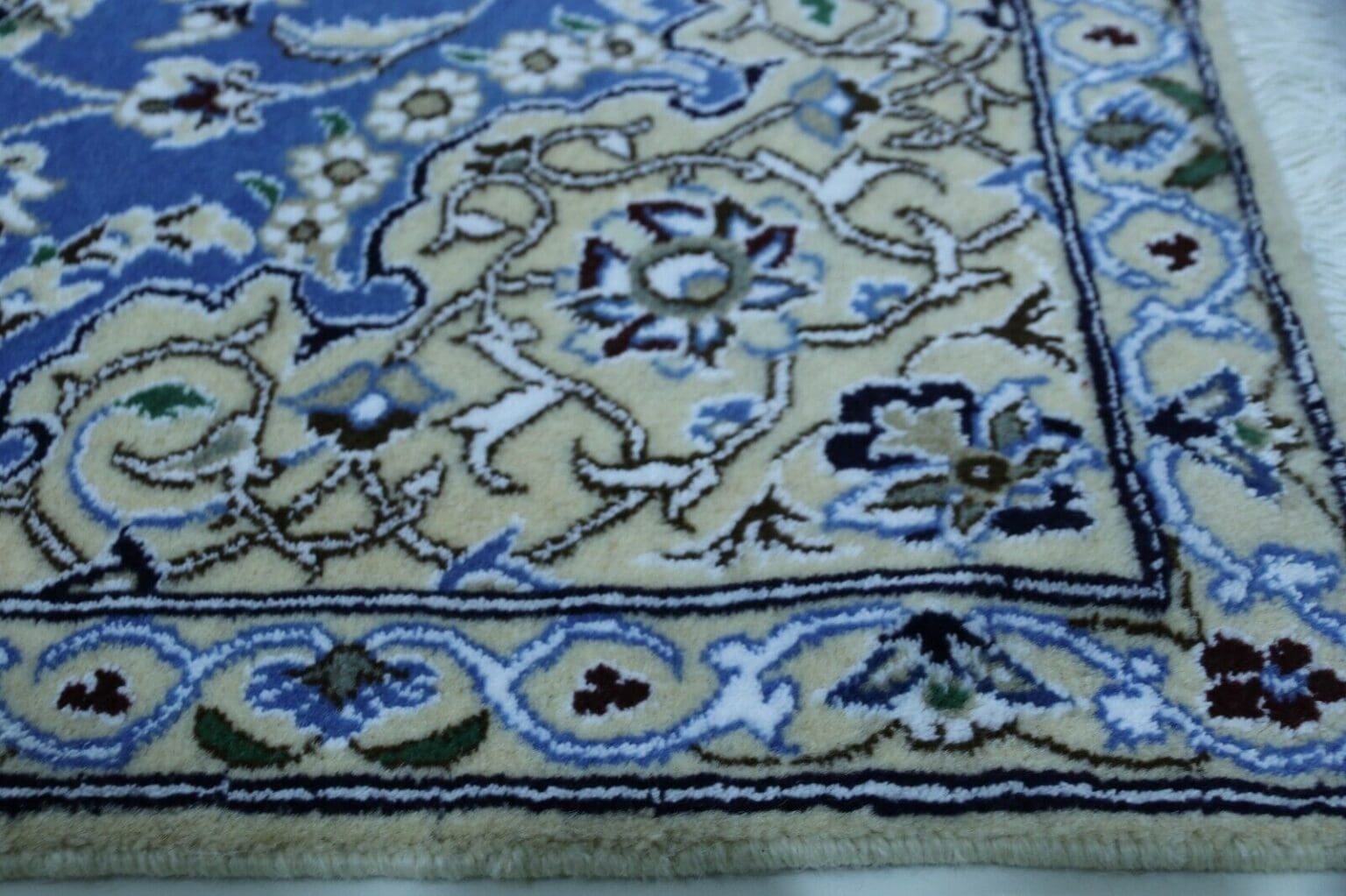
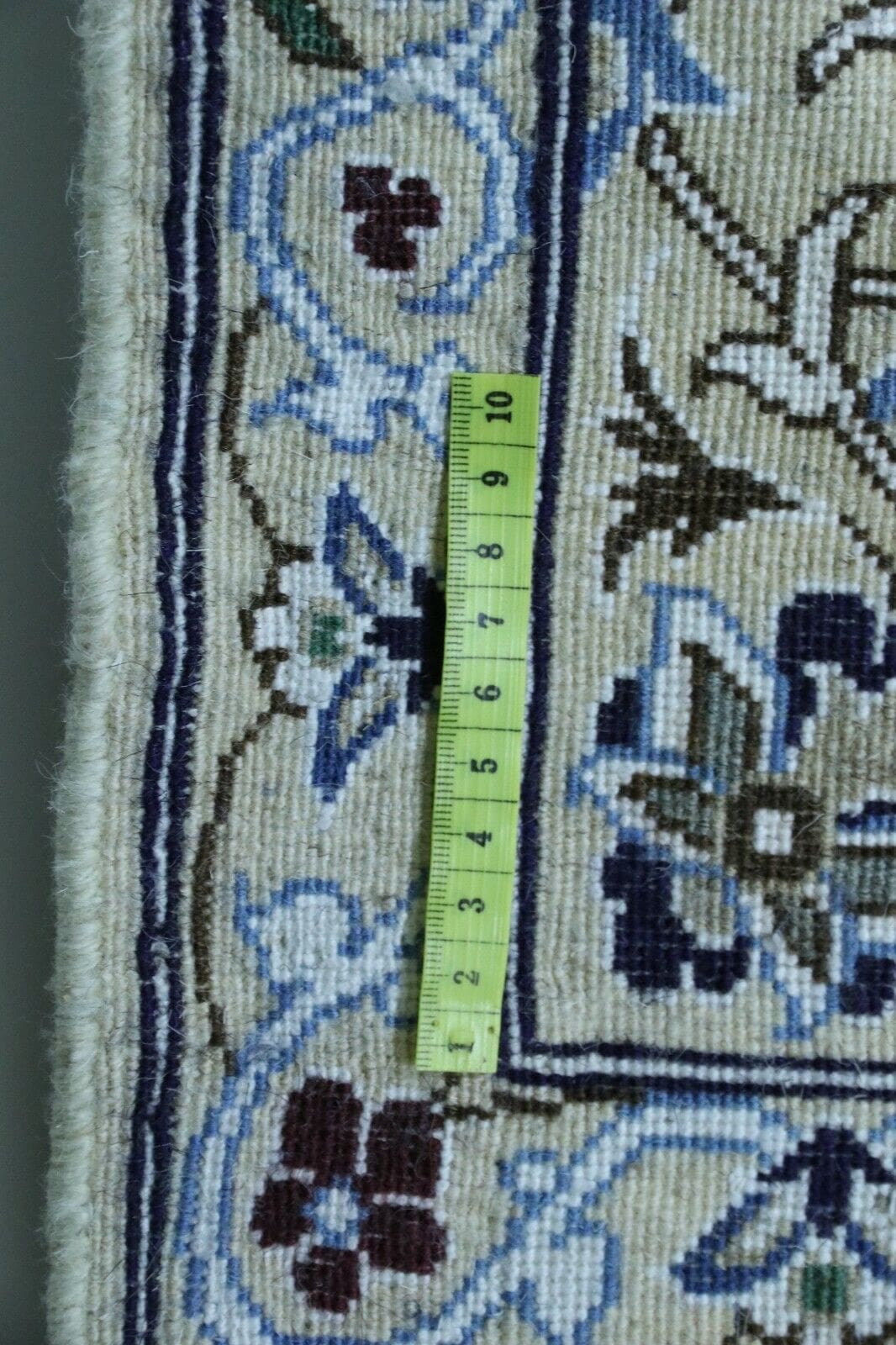
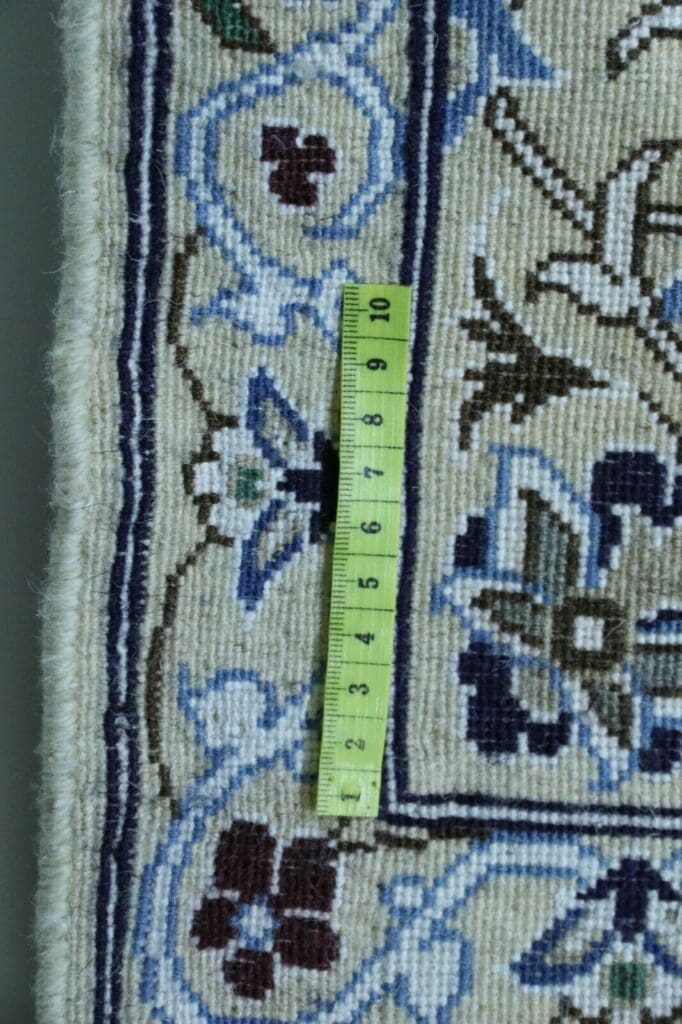
The listed density of approximately 500,000 knots per square metre indicates a very fine construction. A closely knotted surface allows the weaver to articulate narrow lines and small decorative elements with considerable precision. The stated pile thickness is approximately eight millimetres. Together, the wool and silk composition and the hand-knotted construction produce a surface described as both soft and durable. The material combination is also described as antistatic and dirt-repellent.
Origin and Tradition
The rug is identified as a Persian rug from Persia, or Iran, and belongs to the Nain tradition. Nain is a city in Isfahan Province. The area is recognised as one of the established centres of Persian rug making. Its tradition combines careful hand craftsmanship with finely organised ornament. Nain rugs are particularly associated with detailed designs, controlled drawing and the use of selected materials.
Nain has a long history of carpet making reaching back to the sixteenth century. Over time, local practice developed methods in which the technical construction and the decorative composition are closely connected. The work begins with a prepared foundation. Knots are then placed row by row, compacted and shaped into a continuous pile. This sequence explains why hand-knotted Nain rugs are understood both as useful floor textiles and as examples of textile craftsmanship.
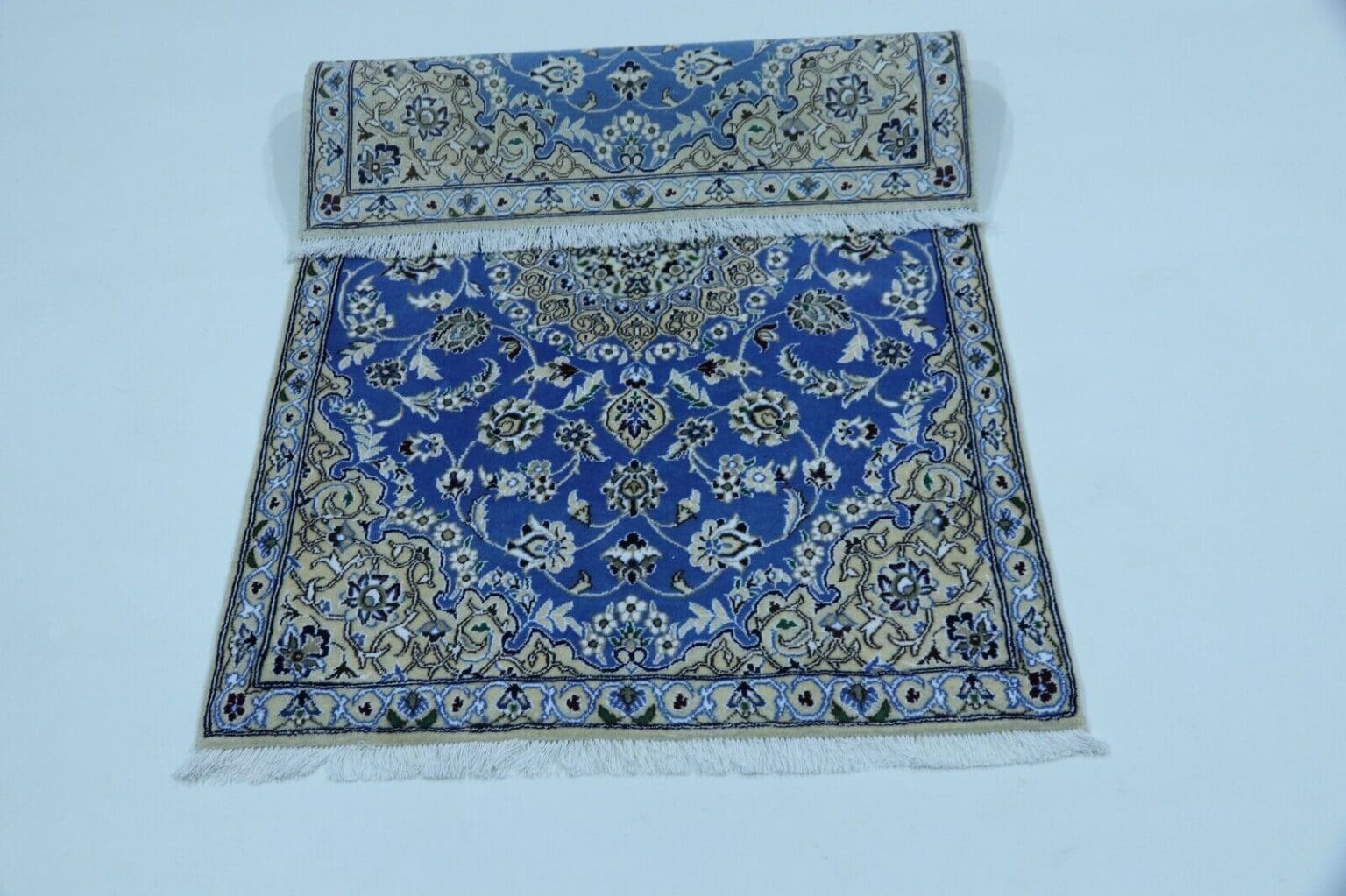
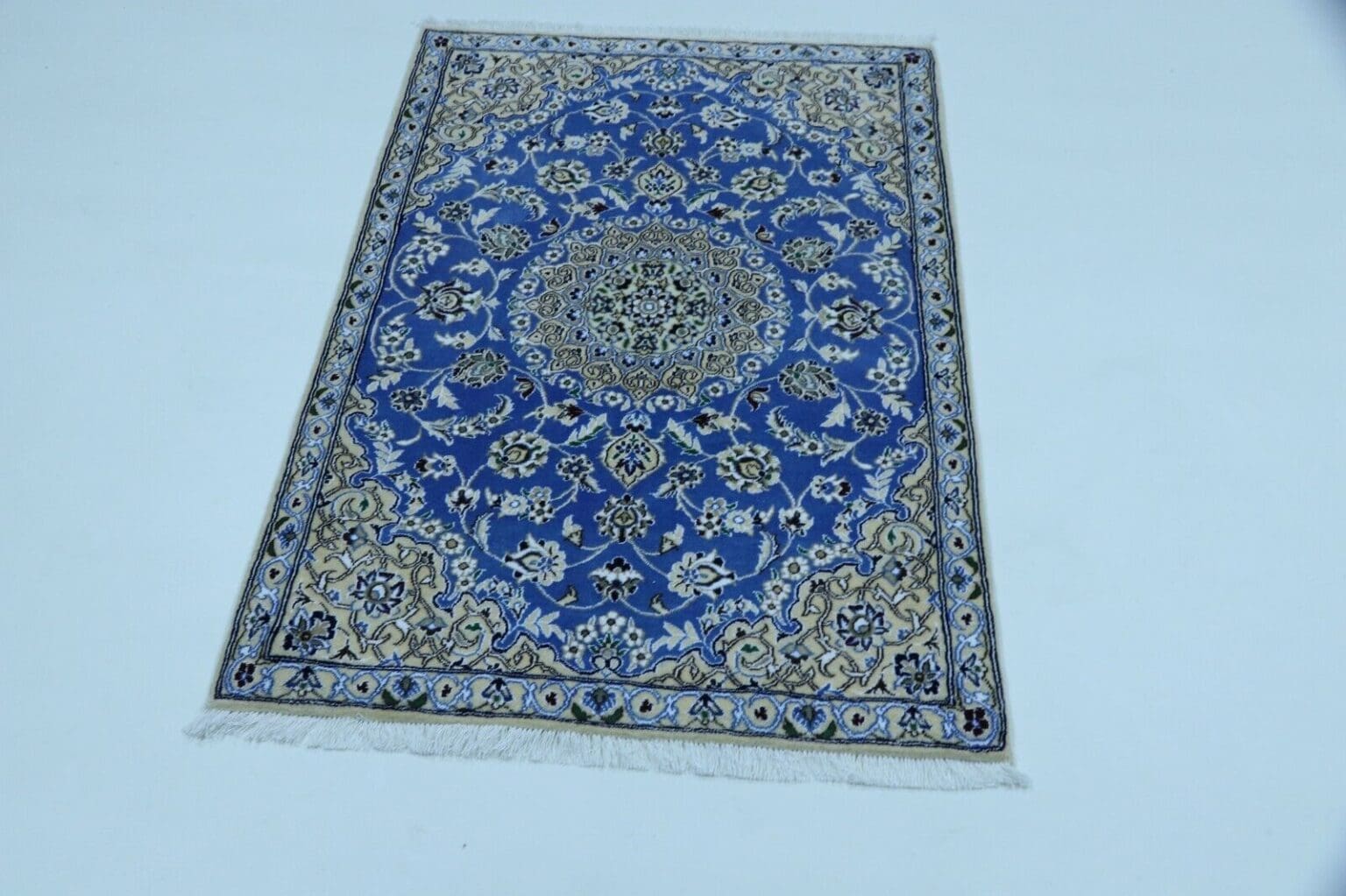
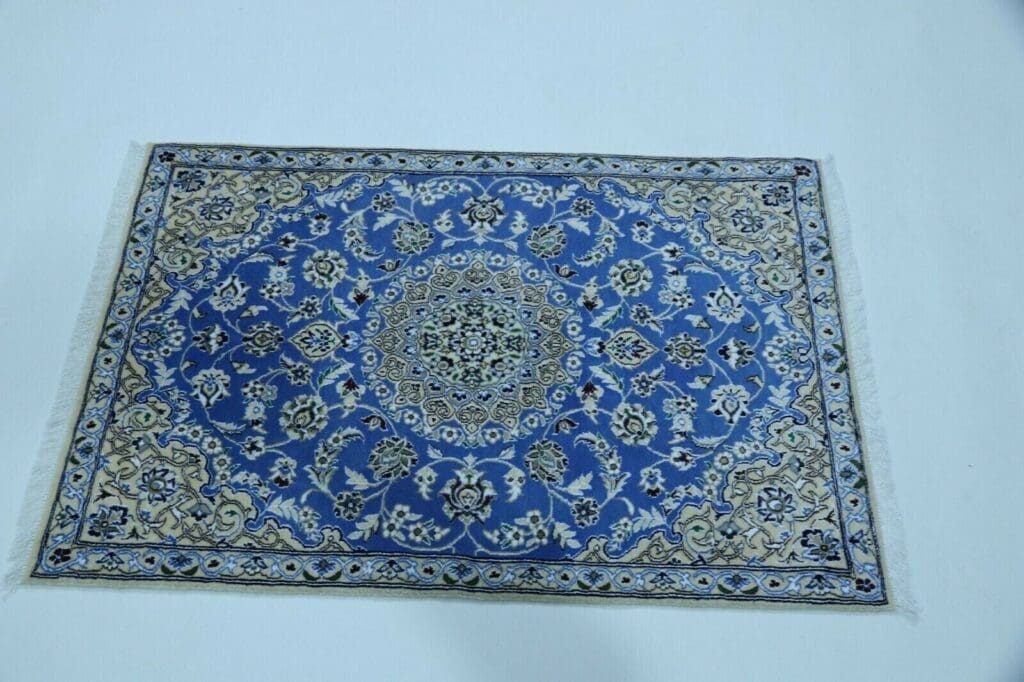
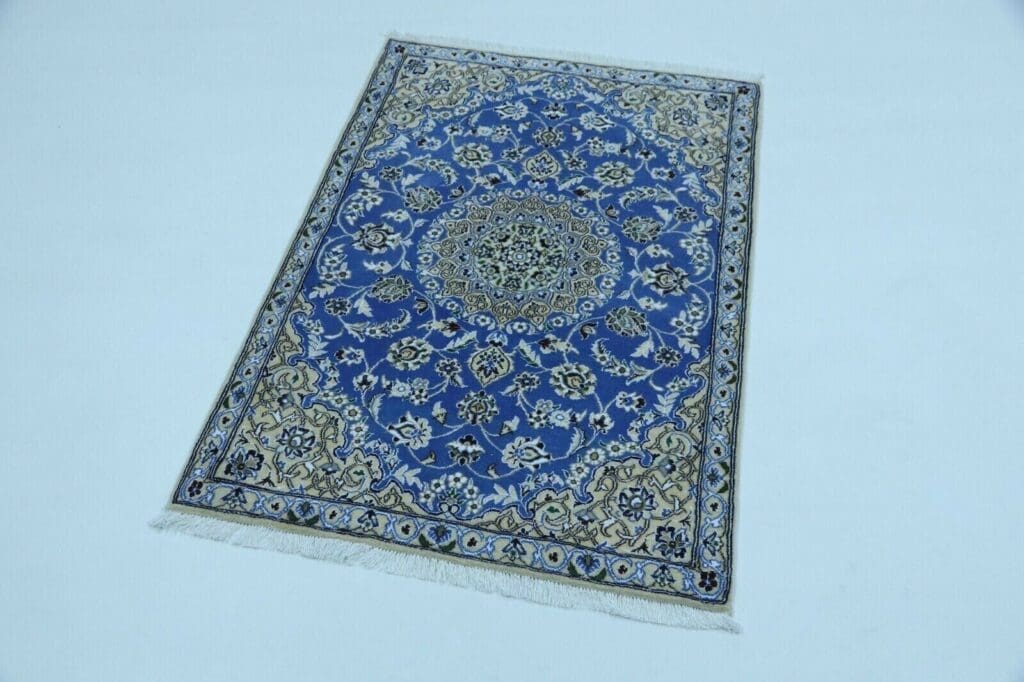
The name Nain therefore refers to more than a location. It also indicates a developed design language in which measured proportions, fine lines and carefully balanced fields play an important role. Regional designs may include floral forms, medallions and geometric devices. These features are arranged in relation to one another, often dividing the composition into a central field, surrounding details and a border. The arrangement gives the eye a clear path through the design while preserving the unity of the overall pattern.
Persian rugs from the Isfahan region are also associated with the continuation of inherited techniques alongside disciplined, detailed execution. Tradition is expressed not simply by repeating an old motif, but by bringing material, knotting method and ornament together in a coherent textile. In Nain work, the drawing is often fine and the surface carefully controlled. This makes the regional classification useful when describing the type of rug, while recognising that individual pieces may differ in their exact pattern.
This rug belongs to that Persian Nain tradition and is described as traditional Oriental and Persian in style. Its hand-knotted construction continues a regional way of working that depends on patience, experience and a strong understanding of proportion. The designation Super Nain accompanies the origin classification with a reference to the rug’s fine direction and high knot density. It describes the fineness of the construction rather than replacing the stated Iranian origin.
Design and Pattern
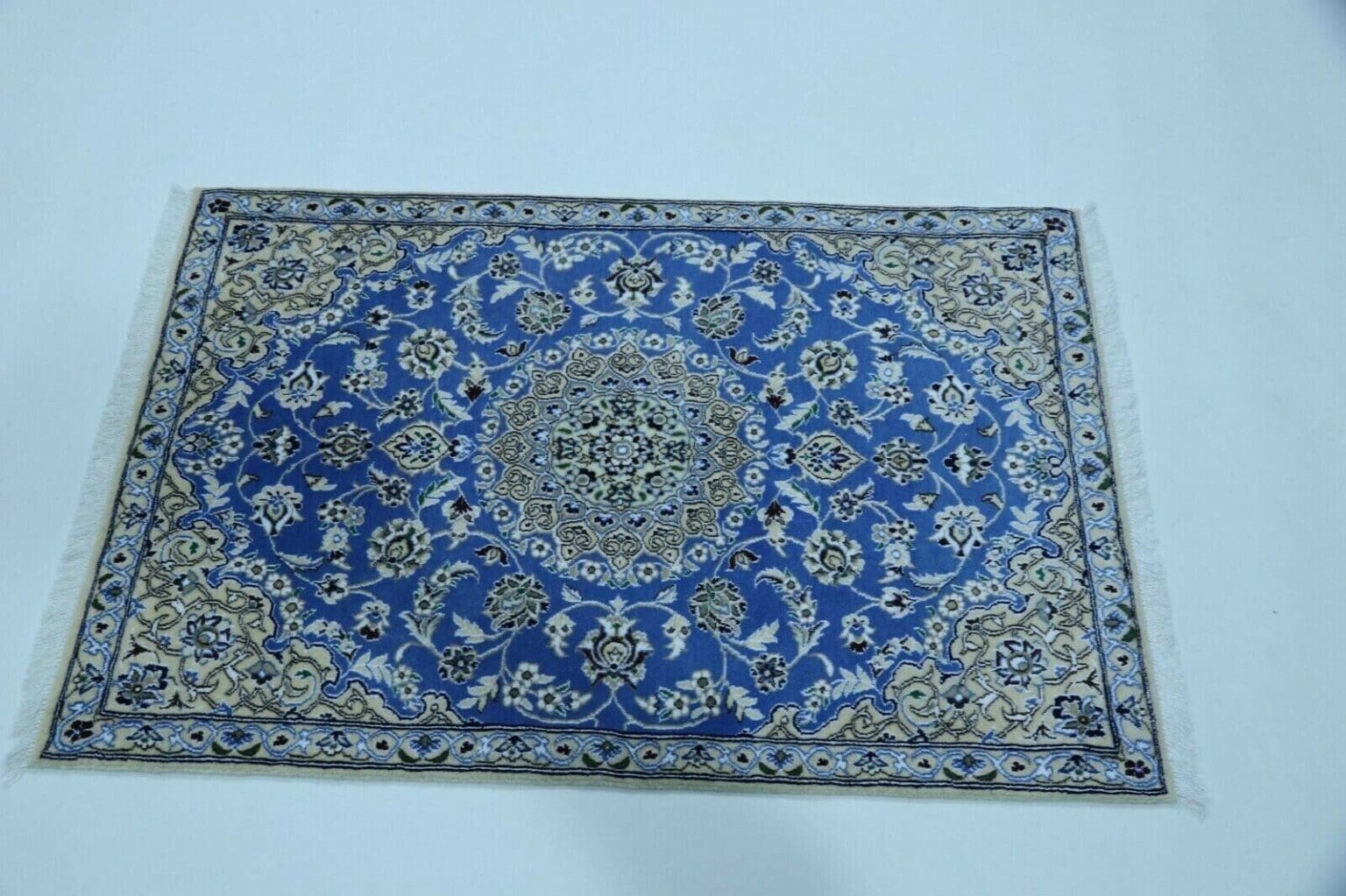
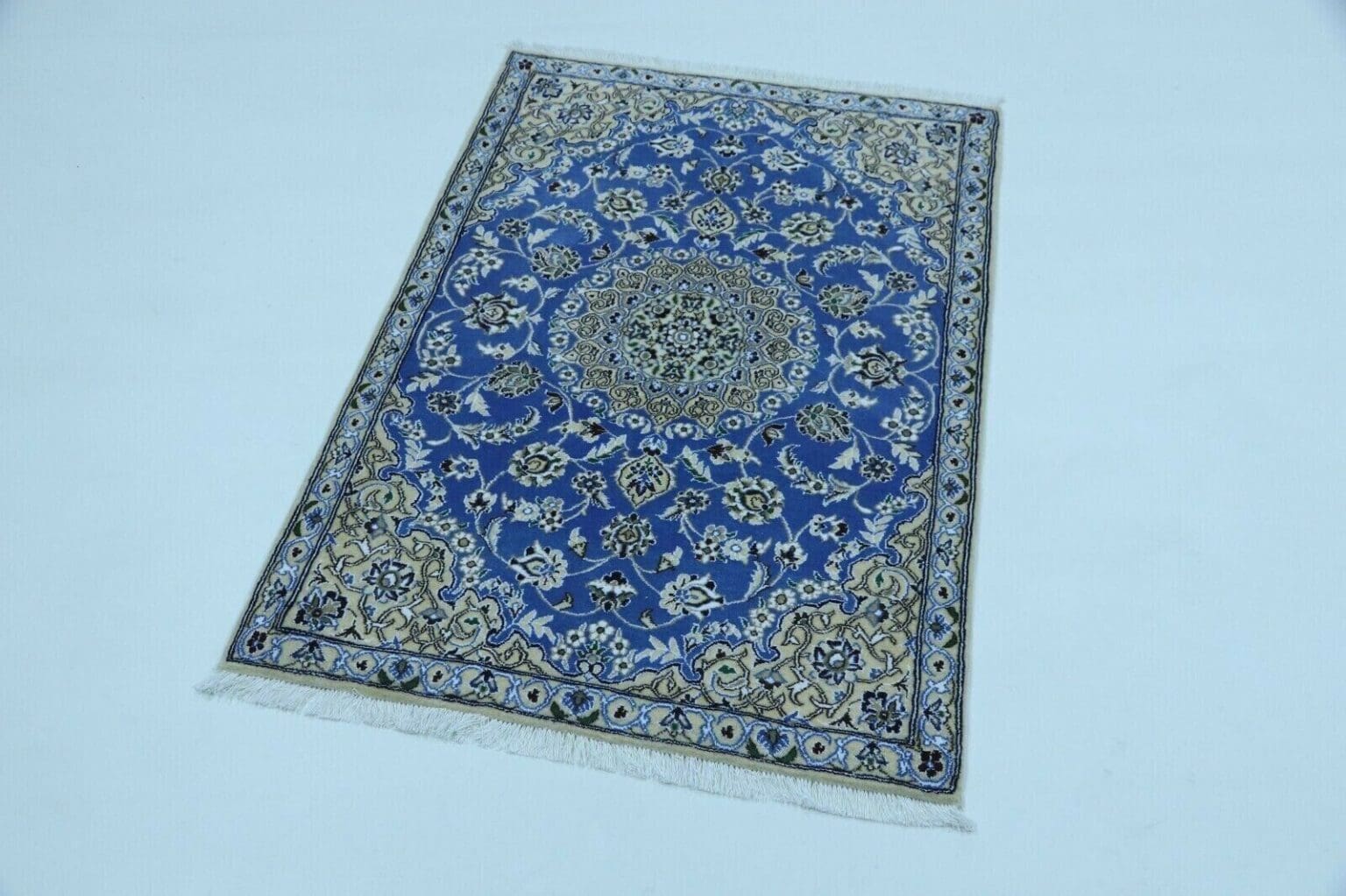
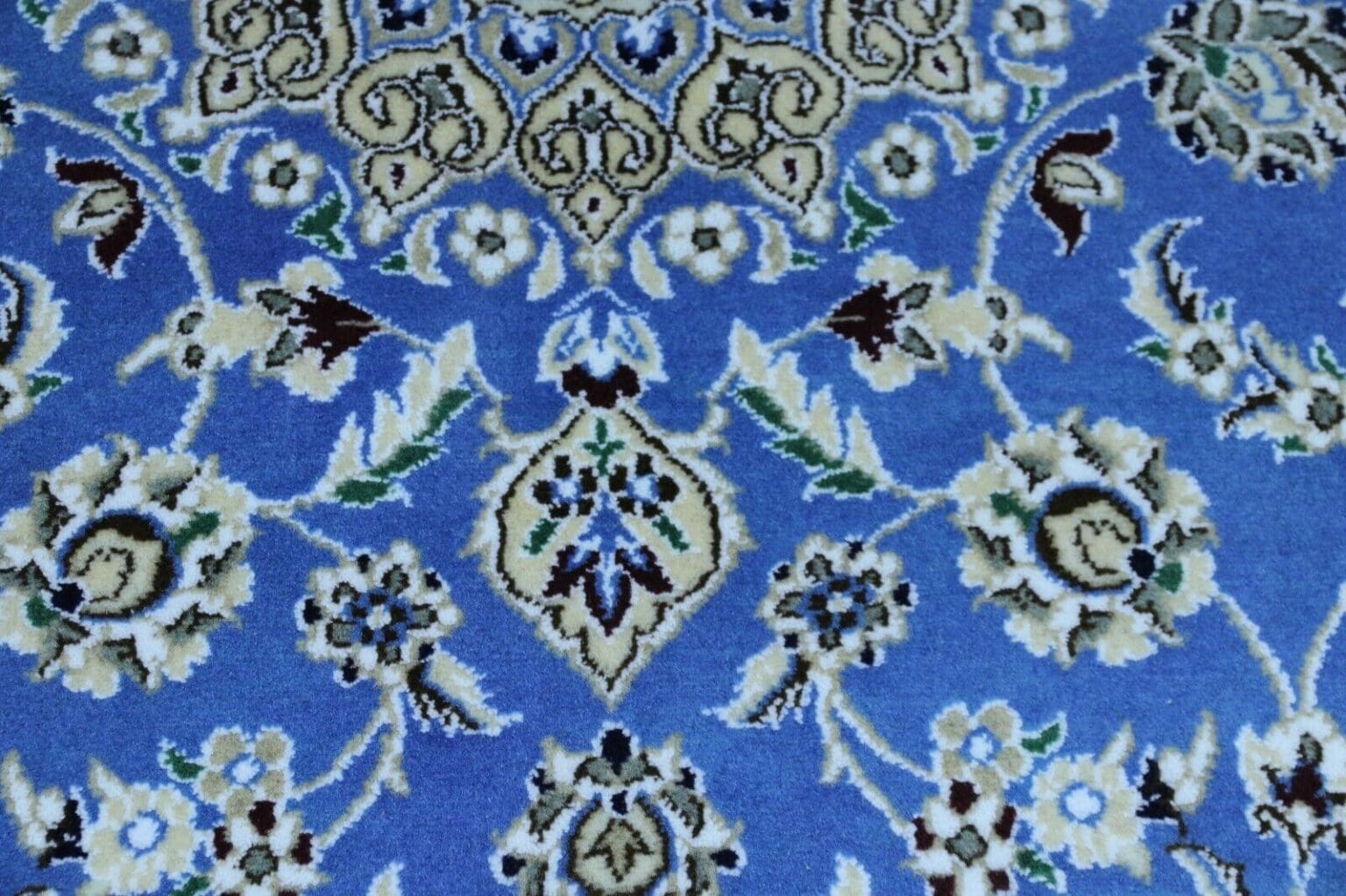
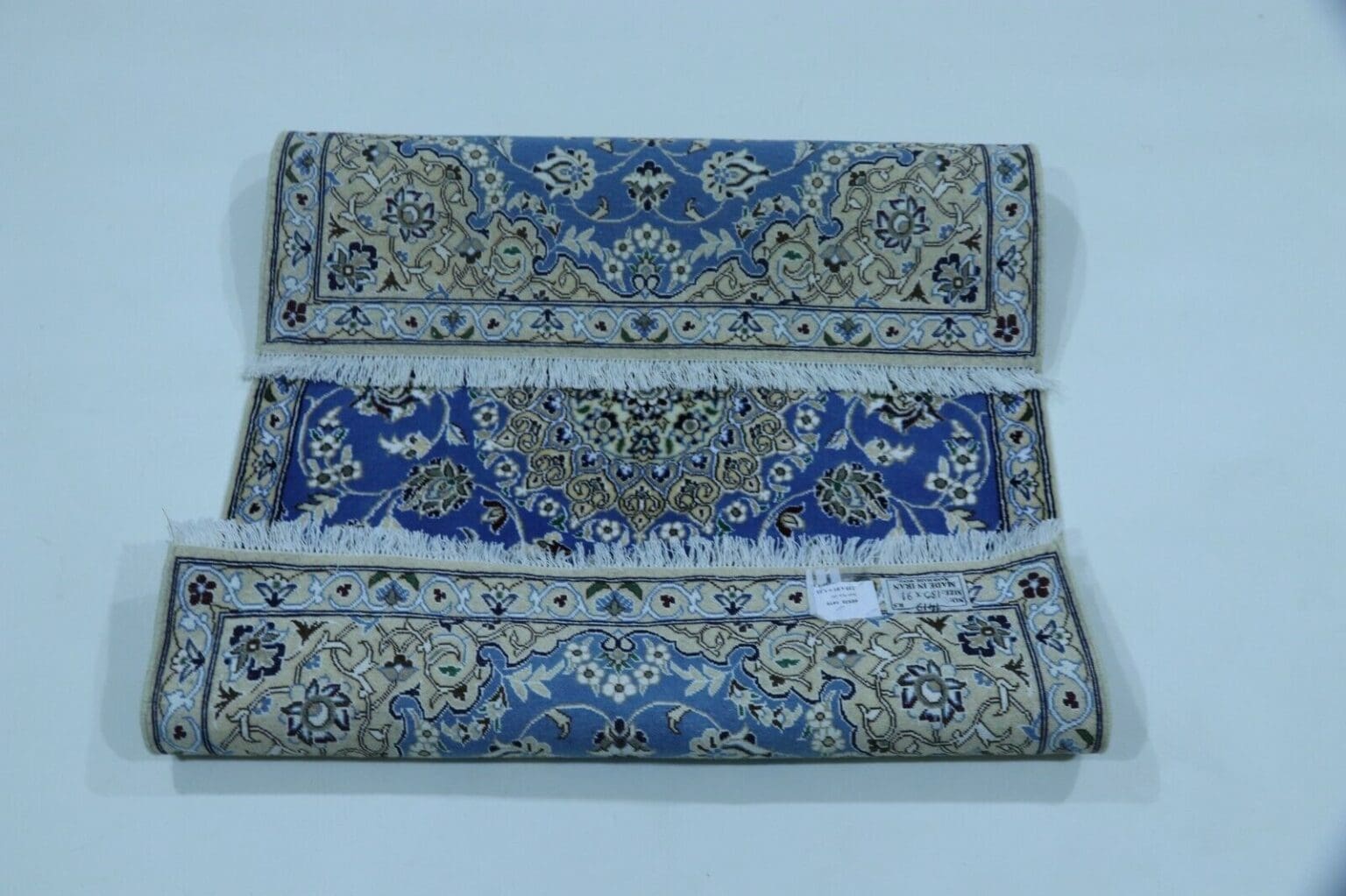
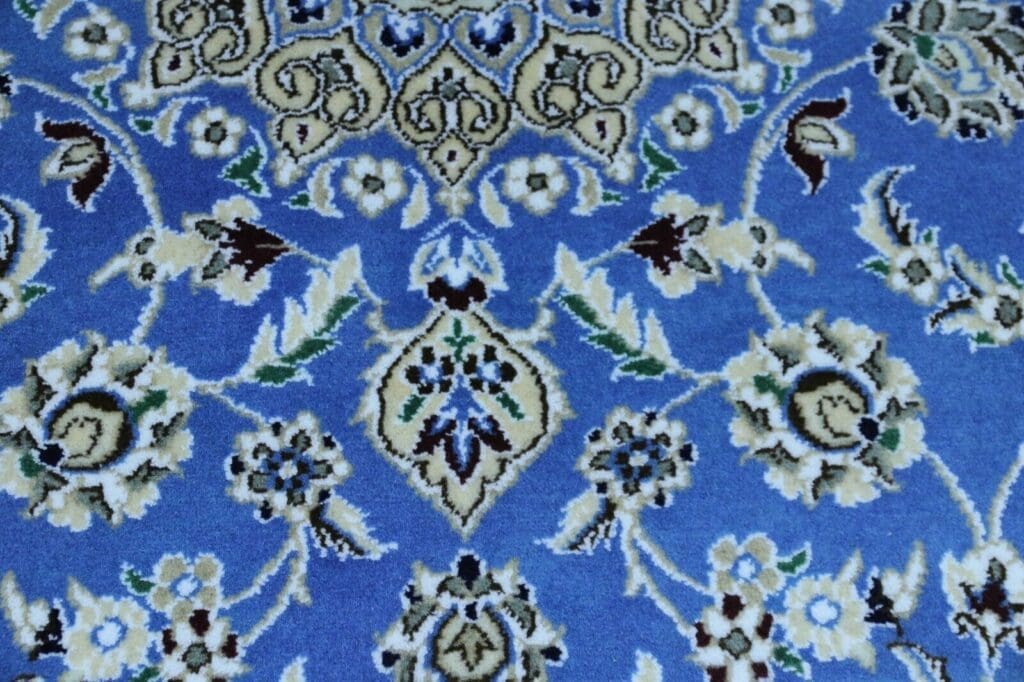
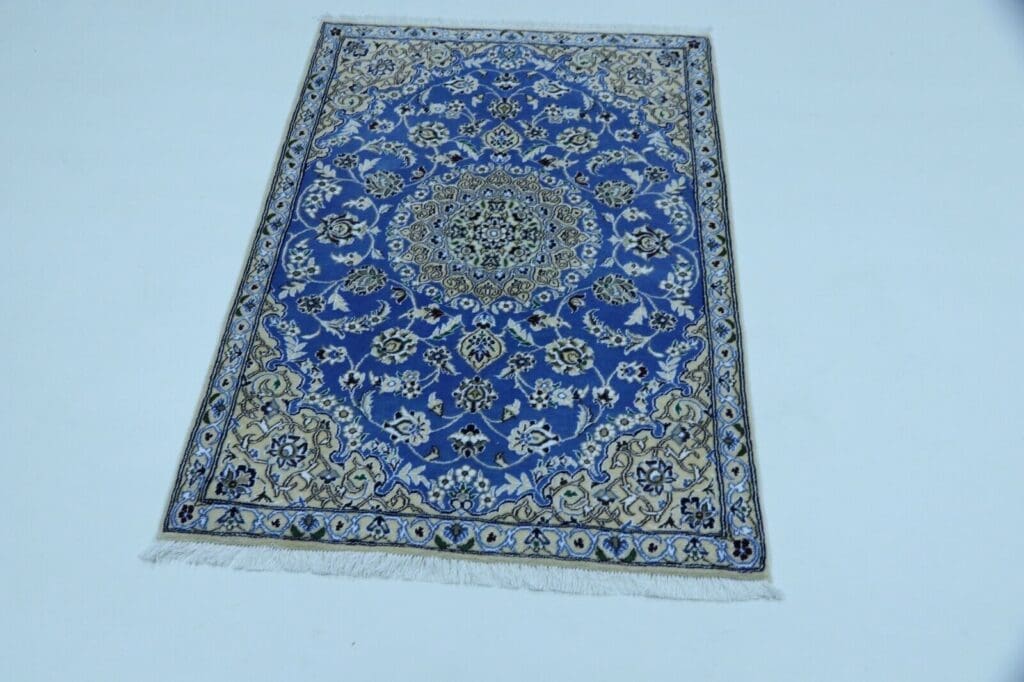
The pattern of this rug is described as Oriental. It belongs to a design tradition in which an ordered field, a framing border and recurring ornaments can be brought together as one composition. Persian rug design frequently draws on floral motifs, branching stems, medallions and geometric divisions. These elements may appear separately or in combination, with the knotting giving each part its textile depth and helping to distinguish one contour from another.
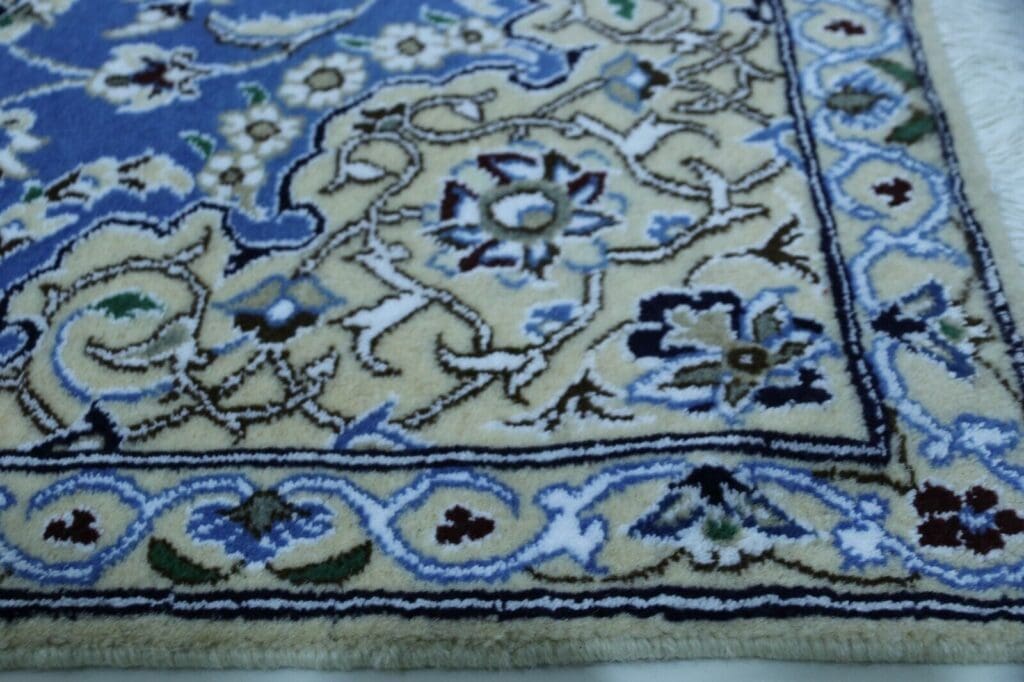
Fine drawing is a familiar feature of Nain design. Delicate branches and smaller ornaments can be placed close together while the composition remains structured and readable. A medallion may establish a centre, while surrounding motifs and a border guide the eye around the field. Geometric forms provide order, and floral lines add movement. In Persian decorative language, natural forms are often connected with ideas of growth, balance and harmony. These are general features of the tradition and do not assign an additional specific motif to this individual rug.
The rug’s high knot density supports the precise rendering of detailed work. Narrow contours, repeated leaf forms and subtle transitions can be executed more clearly in a dense construction than in a coarse one. This is a general technical quality of fine knotting and helps explain the detailed appearance associated with finely made Nain rugs. Wool and silk can also create a differentiated visual surface: wool tends to appear soft and restrained, while silk catches light with a more noticeable but still delicate reflection.
Nain rugs are often known for balanced colour arrangements. A carefully ordered palette helps the central field, secondary ornaments and border read as related parts of one design. This rug is classified as traditional Oriental and Persian, so its pattern belongs to a vocabulary that can sit within a classic setting as well as a more contemporary interior. The listed areas of use include living rooms and bedrooms, as well as entrances and stair areas. The textile character of the pattern remains present whether the rug is viewed as a floor covering or as a decorative woven object.
In an Oriental rug, design and technique are inseparable. The pattern is not printed onto a finished surface; it is built into the pile during the knotting process. Every line is formed through the sequence of knots. This gives the design a tactile depth and the irregularly living structure associated with hand-knotted rugs. Nain craftsmanship uses that structure to create compositions that are detailed, controlled and balanced rather than merely applied as surface decoration.
Special Features
A notable feature is the listed density of approximately 500,000 knots per square metre. It permits very fine rendering and supports the precise presentation of small pattern details. The rug is new and is described as being in very good condition. Its colours are described as stable and not prone to fading. The wool-and-silk composition is also described as antistatic and dirt-repellent.
The rug is suitable for use with underfloor heating and is described as pet-friendly. The wool and silk combination is characterised as insulating and breathable. For care, regular vacuuming on a low setting is recommended. Spills should be treated promptly with a damp cloth and mild soapy water. For professional cleaning, a qualified carpet cleaner is the appropriate specialist service.
FAQ
How should I clean the Super Nain rug?
Regular vacuuming on a low setting helps remove loose dirt from the pile without unnecessary stress on the surface. Spills should be dealt with promptly using a damp cloth and mild soapy water. The affected area should be treated carefully so that the wool-and-silk pile and its pattern are protected. For a thorough professional treatment, use a qualified carpet cleaner who can take the composition and hand-knotted construction into account.
Is the rug suitable for underfloor heating?
Yes. The Super Nain rug is suitable for use over an underfloor heating system. Its combination of virgin wool and silk is described as insulating and breathable. It can therefore be used in rooms where underfloor heating is installed. Suitability for this purpose is one of the practical properties listed for the rug, alongside its pet-friendly description.
How can I extend the life of my rug?
Regular, gentle care helps preserve the rug over time. Heavy furniture should not remain in exactly the same position on the pile for prolonged periods, as repeated pressure can create uneven wear. Turning the rug occasionally is recommended so that everyday use is distributed more evenly. Stronger soiling should be handled by a qualified carpet cleaner. Prompt attention to spills and low-setting vacuuming are also part of the recommended routine.
To provide the best experiences, we use technologies like cookies to store and/or access device information. Consenting to these technologies will allow us to process data such as browsing behavior or unique IDs on this site. Not consenting or withdrawing consent, may adversely affect certain features and functions.
Functional Always active
The technical storage or access is strictly necessary for the legitimate purpose of enabling the use of a specific service explicitly requested by the subscriber or user, or for the sole purpose of carrying out the transmission of a communication over an electronic communications network.
Preferences
The technical storage or access is necessary for the legitimate purpose of storing preferences that are not requested by the subscriber or user.
Statistics
The technical storage or access that is used exclusively for statistical purposes.The technical storage or access that is used exclusively for anonymous statistical purposes. Without a subpoena, voluntary compliance on the part of your Internet Service Provider, or additional records from a third party, information stored or retrieved for this purpose alone cannot usually be used to identify you.
Marketing
The technical storage or access is required to create user profiles to send advertising, or to track the user on a website or across several websites for similar marketing purposes.

 SECURE PAYMENT
 SHIPPING PARTNERS