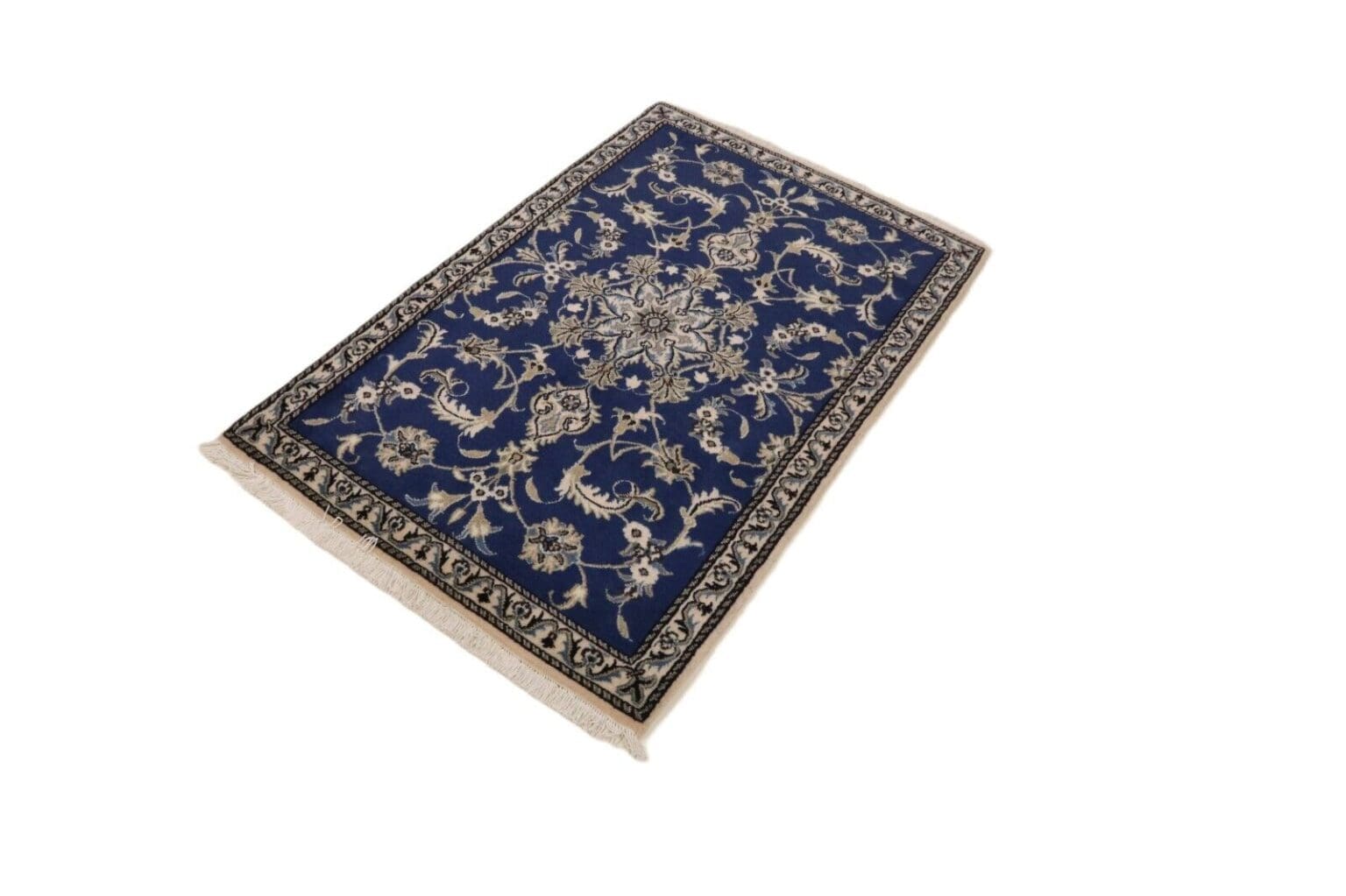
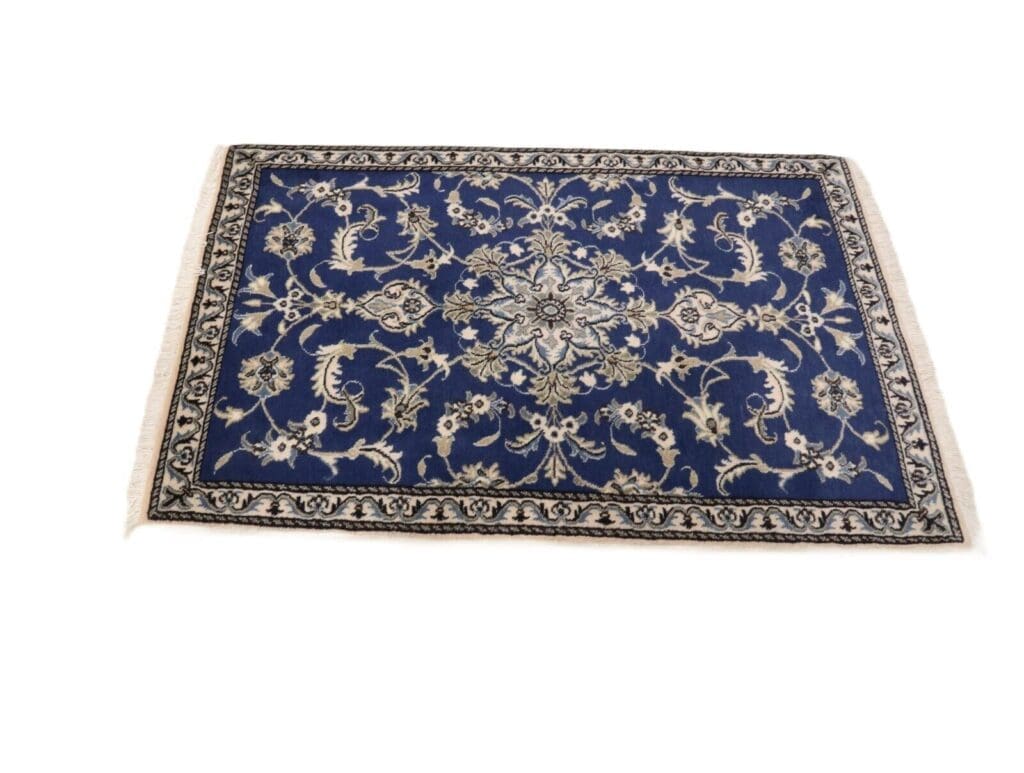
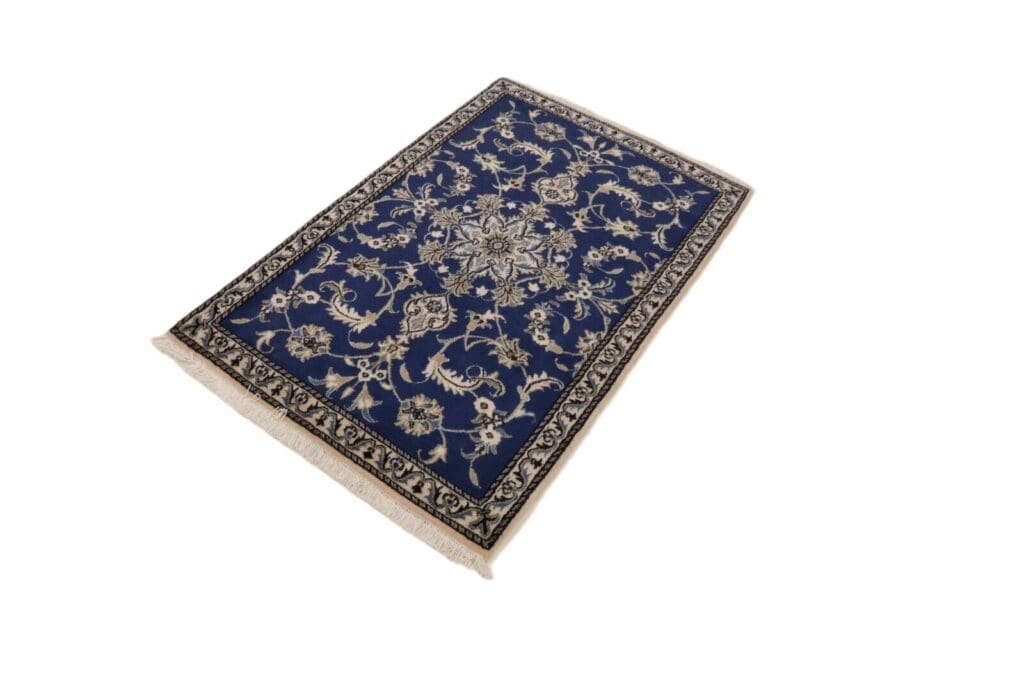
This Nain Persian rug is hand-knotted, with a pile made from virgin wool and silk and a cotton warp. Virgin wool is the principal pile fibre. It has long been used in rug making for its resilient structure, comfortable handle and suitability for a durable floor covering. In the pile, wool creates a substantial yet soft surface that can be used in everyday interiors.
The silk component adds a smoother fibre character and a subtle reflective quality. Depending on the light and the viewing angle, selected parts of the design may therefore appear more luminous than the woollen areas. The cotton warp provides the supporting foundation of the rug. During knotting, pile yarn is tied into this structure in successive rows and then finished to create a coherent surface.
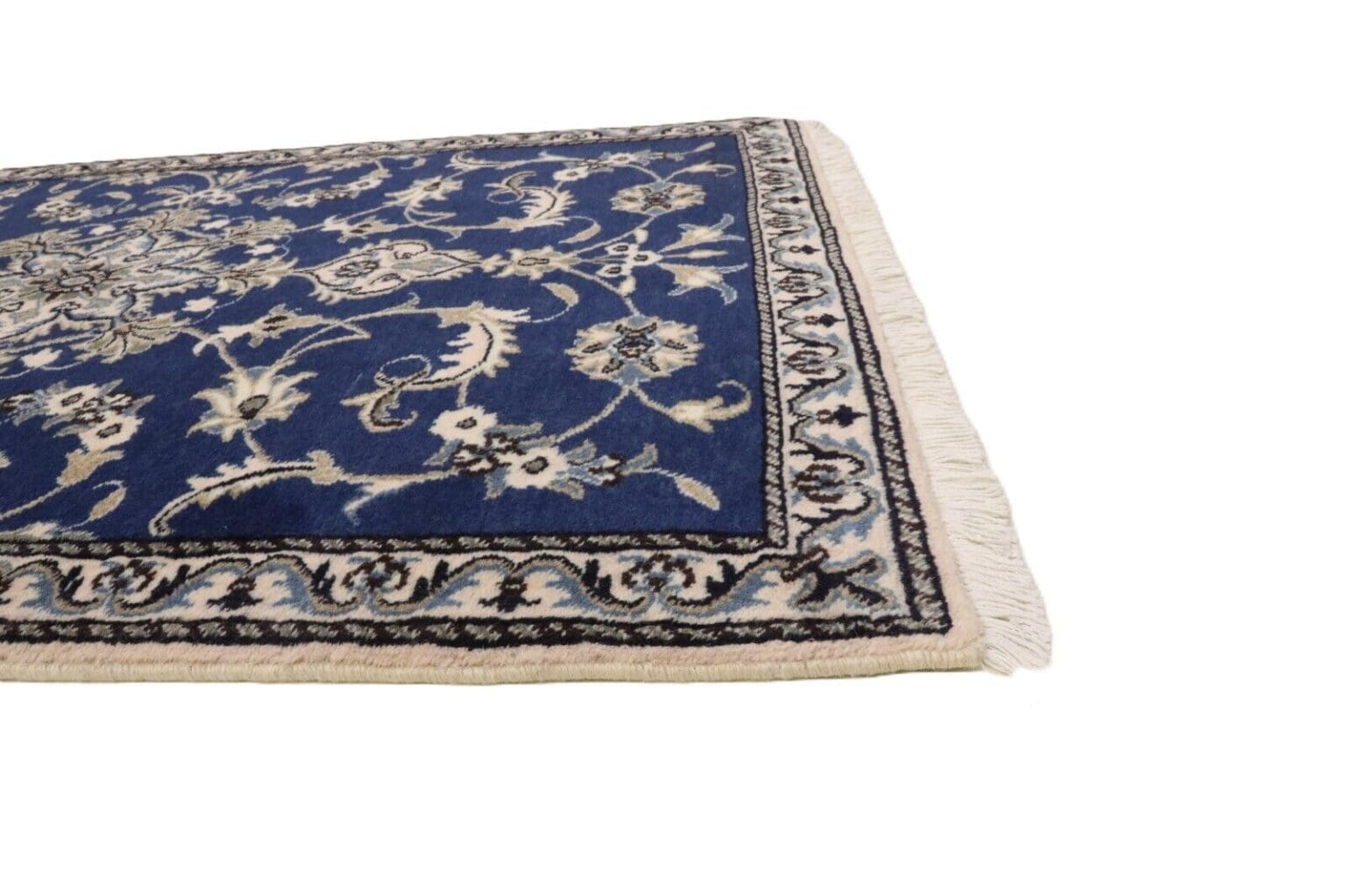
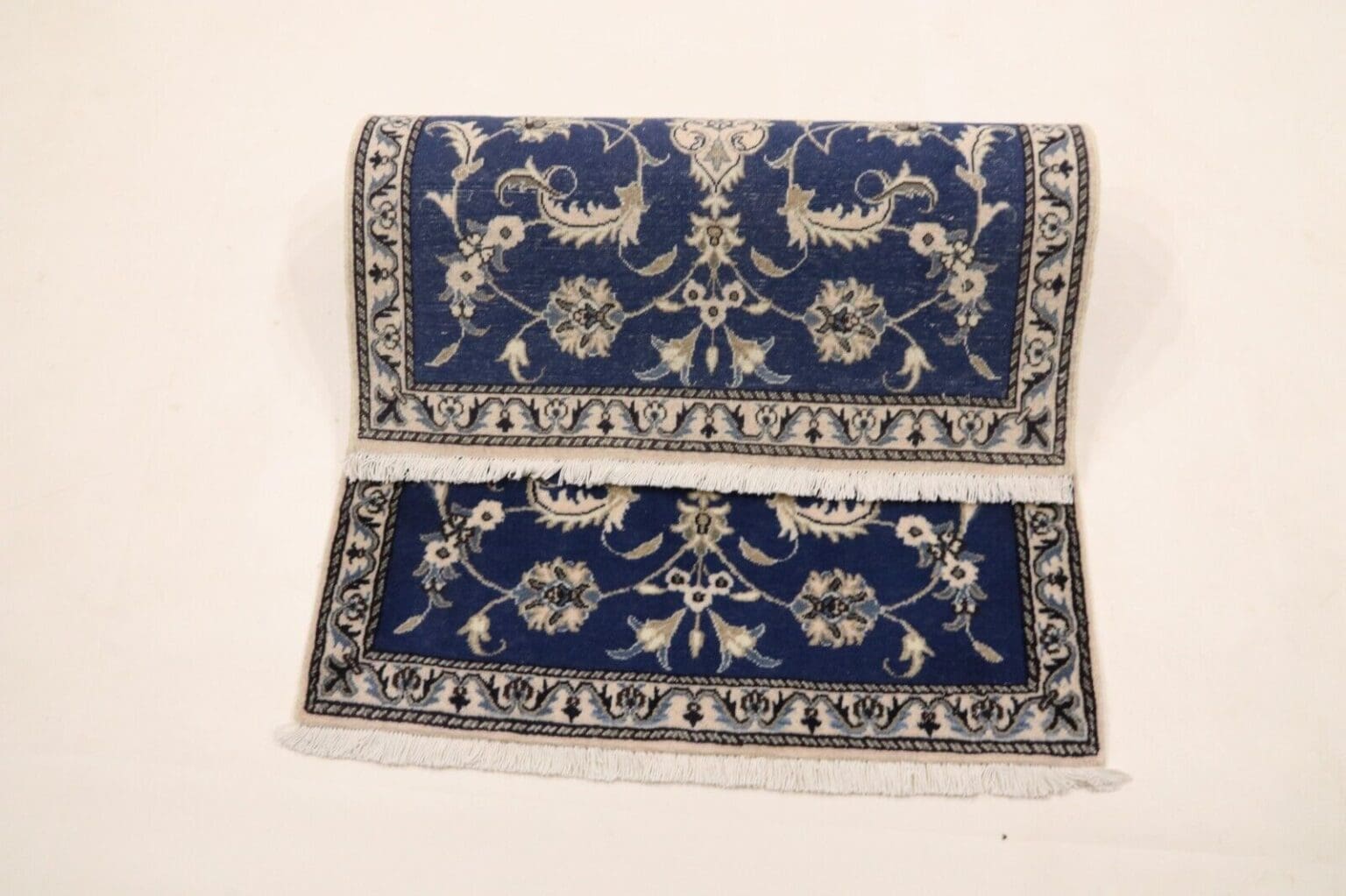
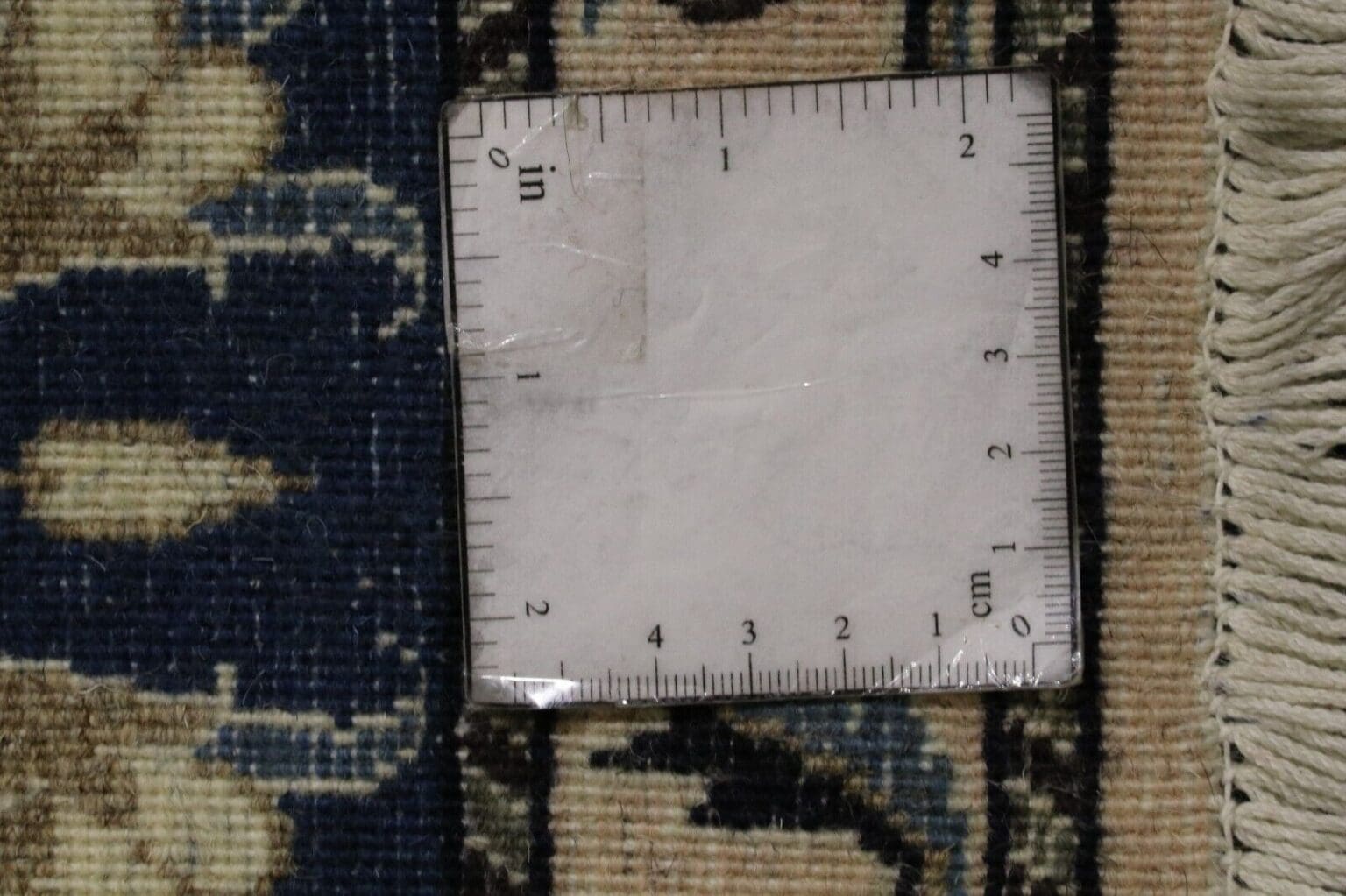
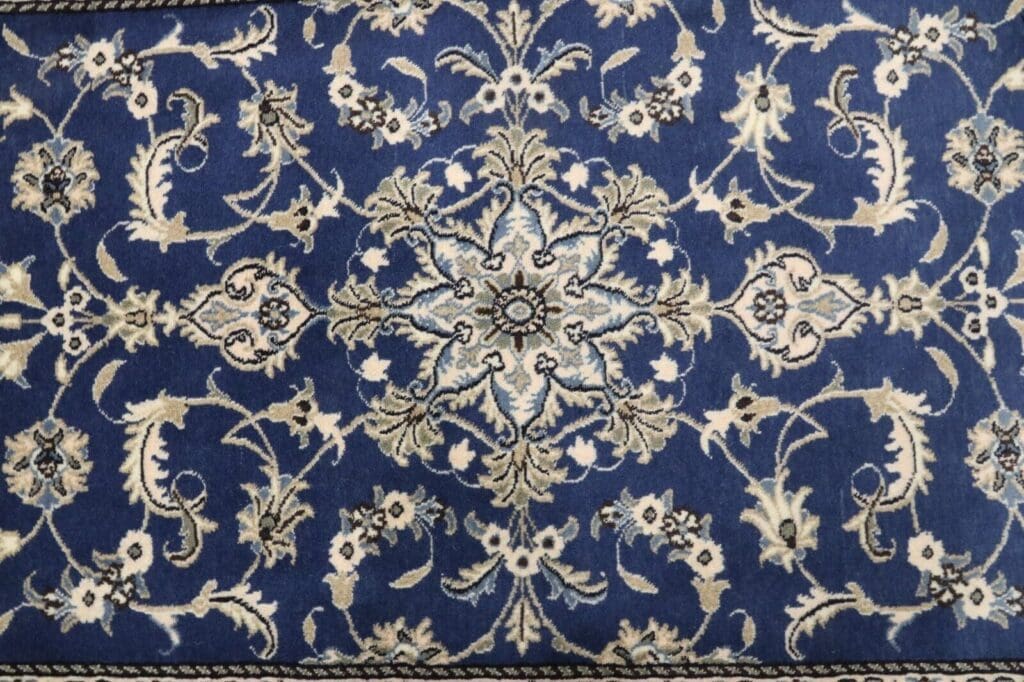
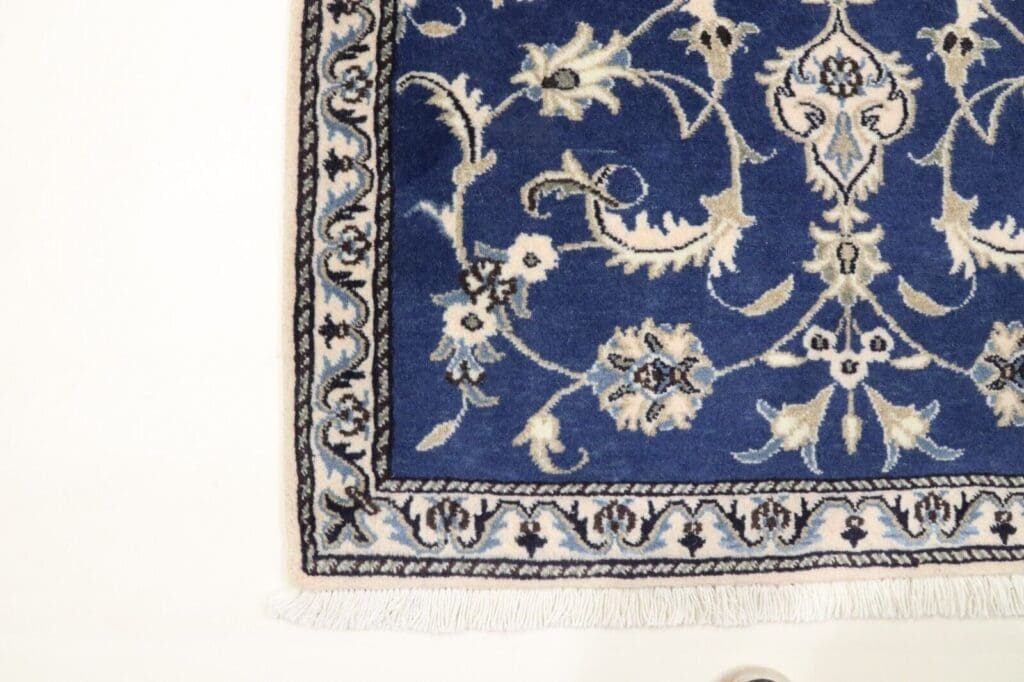
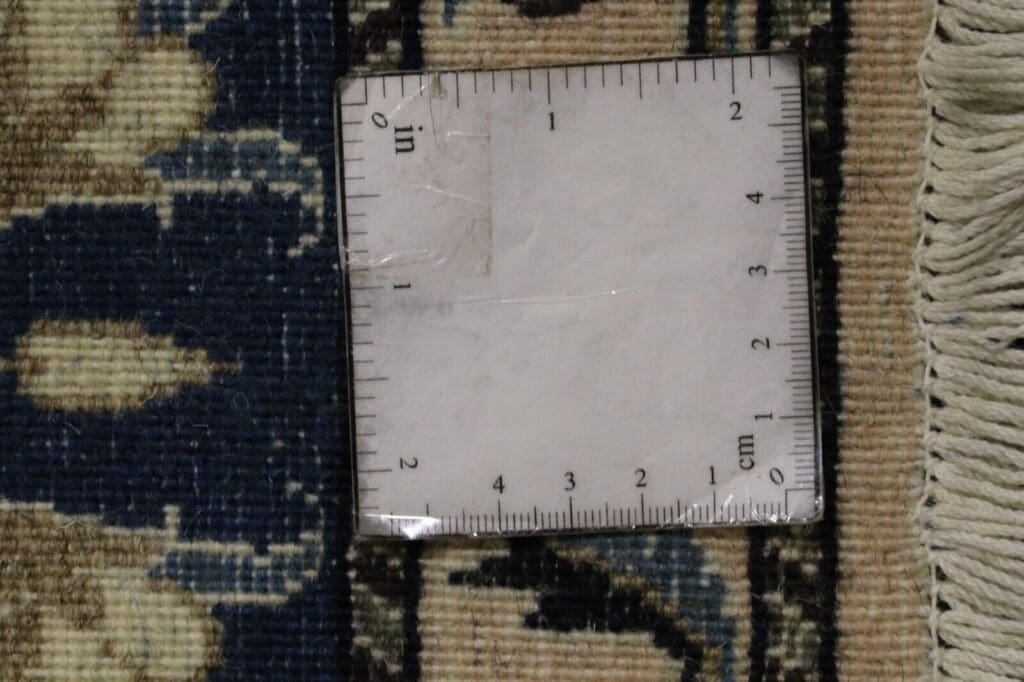
A knot density of approximately 300,000 knots per square metre indicates a fine construction. This level of knotting allows floral outlines, narrow contours and small transitions to be rendered with considerable precision. Since the rug is made by hand, it is an individual piece. Minor variations in the knot arrangement are characteristic of the manual process and distinguish hand-knotted work from uniform machine production.
Virgin wool is also valued for its natural resilience and relatively straightforward care. The material combination described for this rug brings those properties together with the sheen of silk. The rug is new and in perfect condition. It is suitable for underfloor heating and is described as pet-friendly.
Origin and Tradition
Nain is a city in Iran, in Isfahan Province. The name therefore refers to a distinct Persian rug-making tradition rather than to a general decorative style. Weaving in the region developed as a craft in which precise workmanship, fine construction and carefully selected materials play an important role. Nain is associated with a long history of Persian carpet production reaching back to the sixteenth century.
Persian rugs are defined by more than a single motif. Their character comes from the relationship between knotting technique, foundation, fibres and regional design language. Within this context, Nain is associated with controlled drawing and detailed execution. Knotters work individual knots in continuous rows, then finish the pile so that the lines and ornamental structure remain clearly legible.
The regional tradition grew in a cultural setting where rugs served both practical and decorative purposes. A Nain rug can consequently function as a floor covering while also representing a carefully composed textile work. Hand production preserves the connection with inherited craft knowledge, while the individual colour arrangement and pattern plan give each rug its own appearance.
Nain designs are often linked with light, gentle and pastel-like colour schemes. Such a restrained palette can make the composition feel ordered and allows the drawing to remain easy to read. Individual designs may be more classical or more freely interpreted, but the regional identity is commonly associated with refined detail and balanced composition.
The history of Persian rug making is closely connected with the transmission of skills. Knowledge of fibres, knotting, finishing and ornament is refined from one generation to the next. Every hand-knotted rug remains an individual result because the final surface depends on manual work, knot tension and the handling of the design. Nain is one of the places whose name continues to be associated with this careful form of rug production.
This rug brings together its Persian origin, its Nain attribution and traditional hand knotting. The term Persian rug identifies its Iranian origin, not merely a pattern borrowed from a Persian region. It is presented as a Nain rug from Persia, with a finely worked surface made from virgin wool and silk and supported by a cotton warp.
Design and Pattern
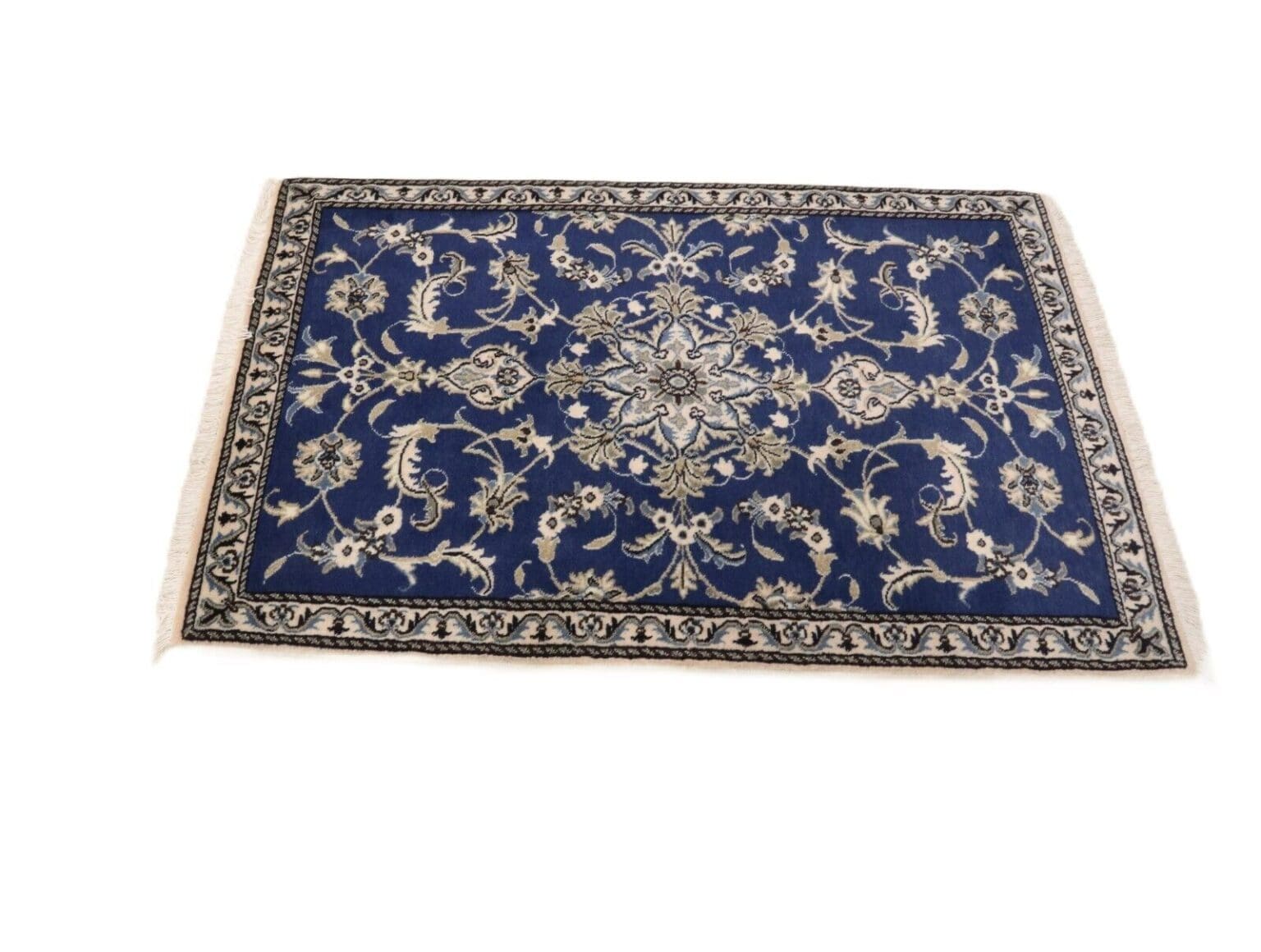
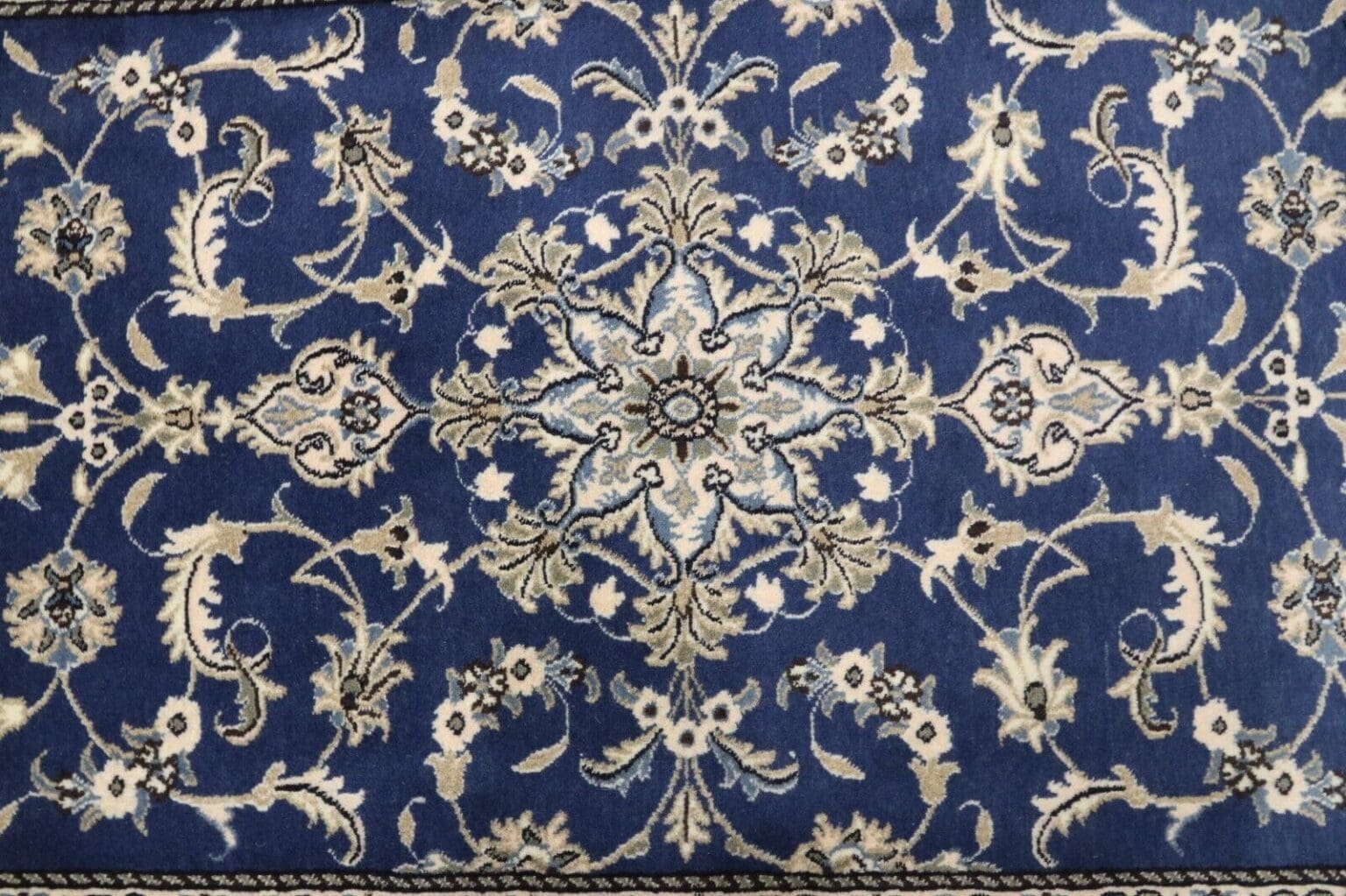
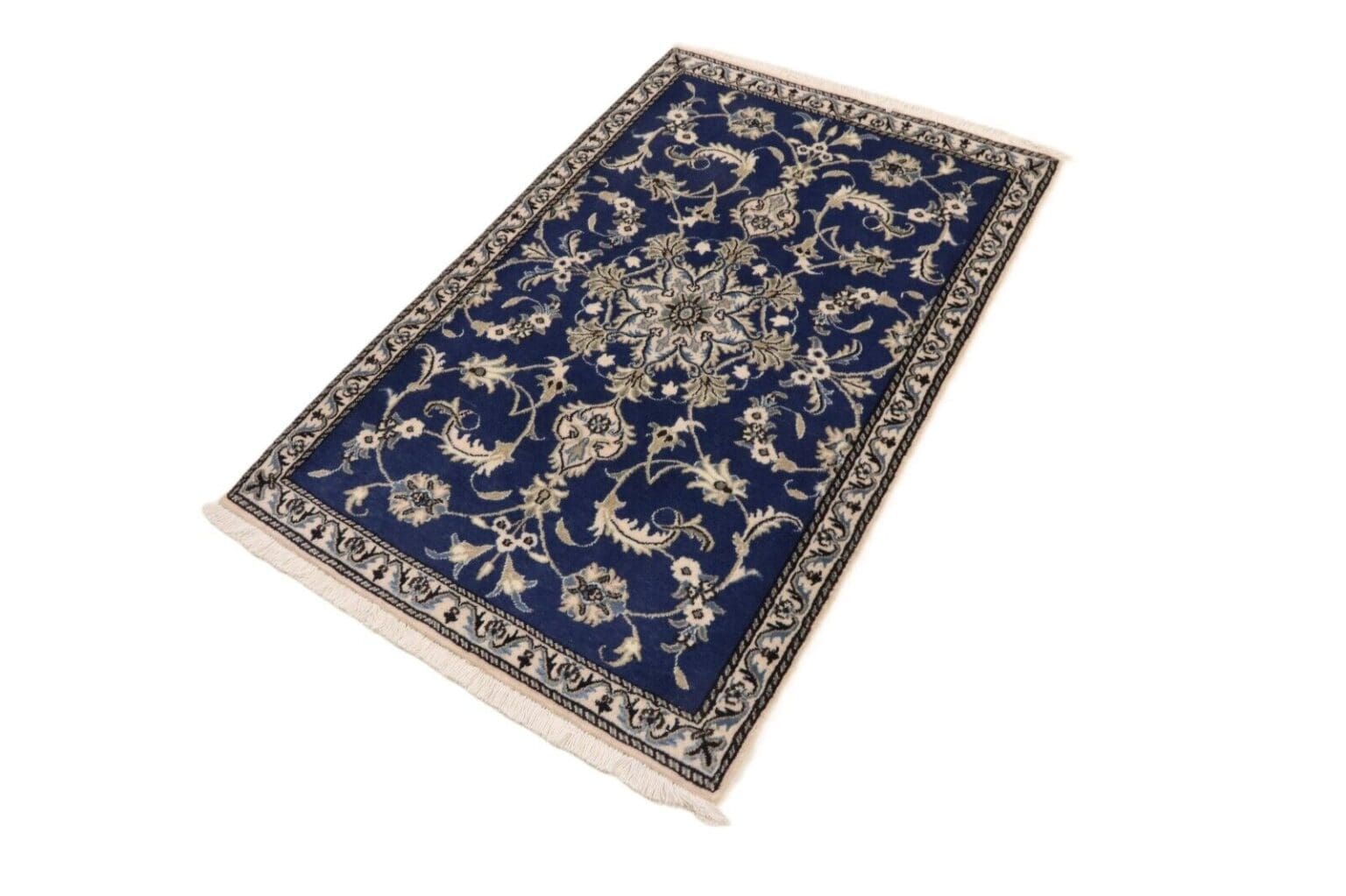
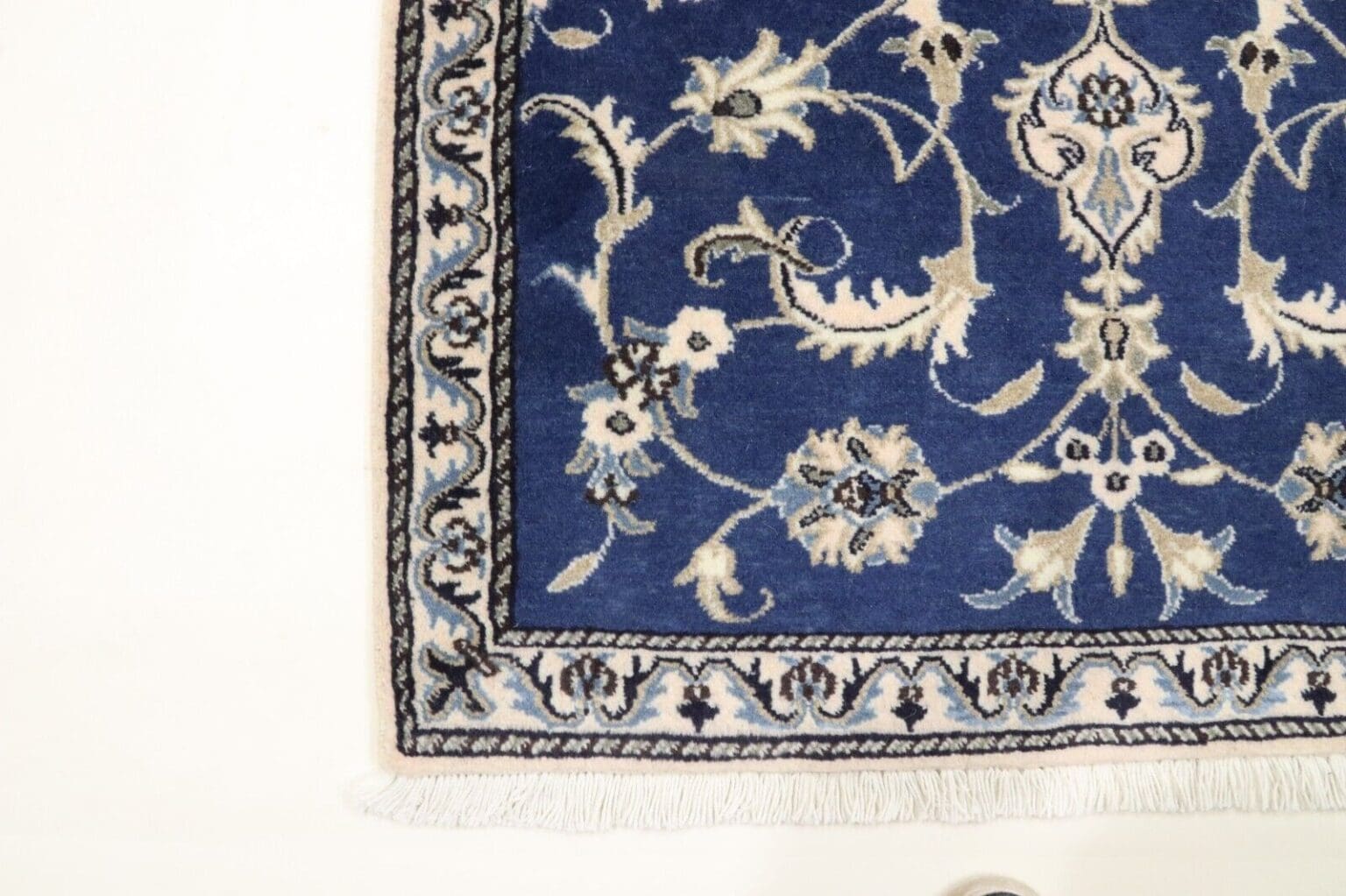
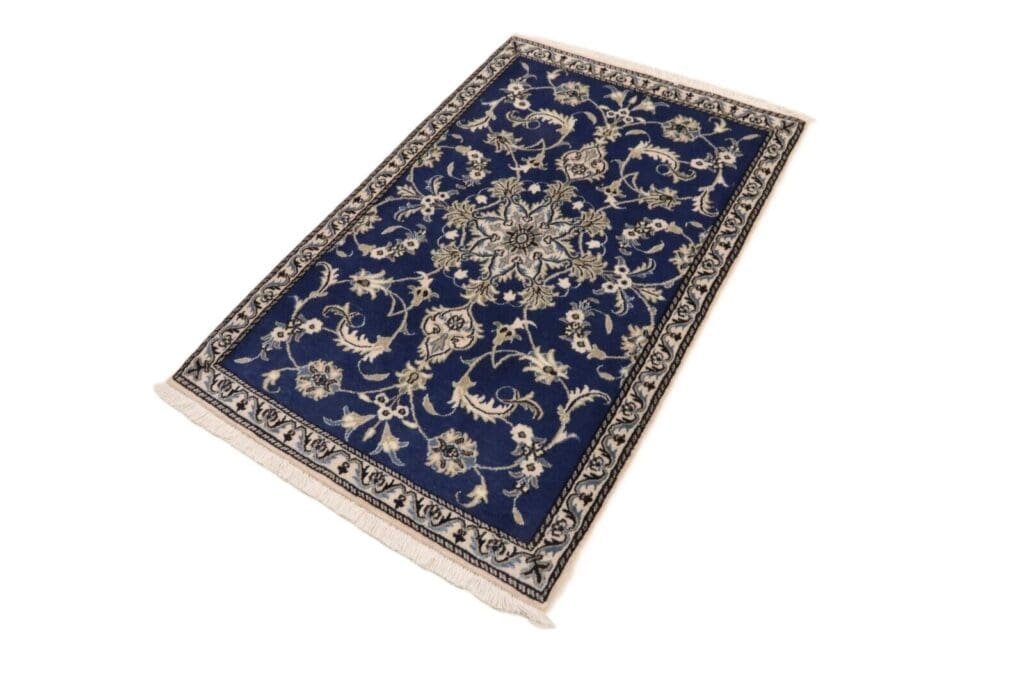
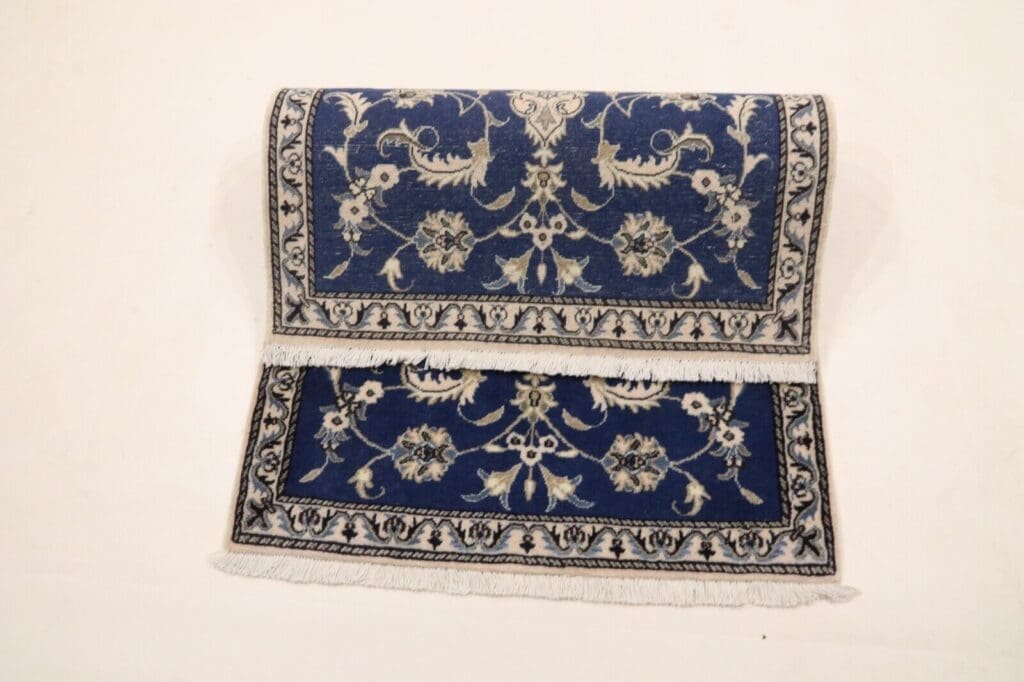
The pattern of this Nain rug is floral. Floral rug designs use stylised flowers, leaves, vines and connecting lines. In Persian art, these elements are generally transformed into an organised ornamental language rather than copied as literal botanical illustrations. Forms may be repeated, mirrored or arranged along an axis, giving the composition rhythm and visual continuity.
Nain tradition is often associated with clear, fine-lined and balanced pattern layouts. A floral design may be organised around a central medallion, spread as an all-over composition or developed through a more arabesque arrangement. The precise layout belongs to the individual design. The shared principle is the combination of plant-derived forms with carefully controlled distribution across the field.
Soft pastel tones are frequently associated with Nain rugs. Light grounds and closely related contrasts allow the ornament to appear calm and well structured. Silk can reflect more light in particular lines or floral details than wool does. The surface may consequently change in appearance as illumination or viewing position changes, while the actual design remains the same.
Floral ornament has a long history in Persian carpet design. Flowers and vines can suggest order, growth and an idealised garden, although a rug communicates these ideas through rhythm and arrangement rather than through a written narrative. Repetition, symmetry and the movement of lines guide the eye across the surface and connect the central field with its surrounding borders.
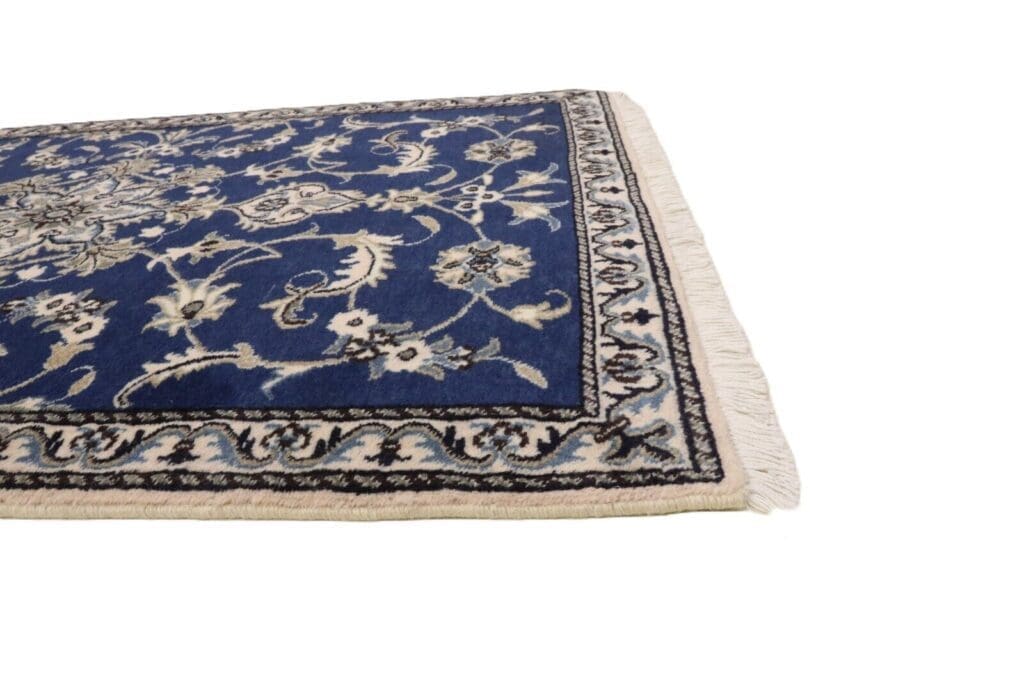
In many Persian compositions, the border frames the field and gives the design a defined outer boundary. Additional guard stripes may create several ornamental zones and establish a measured transition between the centre and the edge. Nain rugs are often worked with fine contours and a carefully balanced level of detail. This enables the composition to remain coherent when viewed close up or from farther away.
The restrained floral vocabulary can be combined with traditional as well as contemporary interiors. This concerns the form and colour effect of the design, not a change in origin. The rug remains a Persian Nain with a regional foundation in Iranian weaving. Its pattern can serve as a textile element in a living room, bedroom, dining room or hallway without losing its traditional identity.
The high knot density supports the precise rendering of the floral lines. Small details can be placed close together while the overall composition remains orderly. At the same time, the slight individuality of hand knotting is part of the rug’s character. It gives the surface the evidence of manual work and separates the piece from a completely regular machine-made product.
Special Features
The rug is new and in perfect condition. Its listed special features include suitability for underfloor heating and a pet-friendly designation. It is also described as hypoallergenic. These points complement the information about its fibres and construction and indicate that the rug is intended for use in a variety of domestic settings.
Virgin wool has natural properties that can contribute to manageable care. The fibre is described as naturally resistant to dirt and is suitable for regular, gentle cleaning. The fine knotting also provides a resilient surface. Even so, loose dirt should be removed promptly and the pile should not be subjected to unnecessary rough treatment if the appearance and structure are to be preserved.
The combination of wool pile, silk and cotton warp gives the rug three clearly distinct textile components. Wool forms the main pile, silk adds a fine reflective accent and cotton supports the foundation. Together with the hand-knotted technique, these materials define the construction recorded for this individual Nain rug.
FAQ
How should I care for my Nain rug?
Vacuum the rug regularly to remove dust and loose dirt. For local cleaning, a damp cloth may be used when needed. Avoid aggressive cleaning products, as they can affect the fibres and the appearance of the colours. Strong direct sunlight should also be avoided to reduce the risk of fading. Gentle treatment is appropriate for a hand-knotted surface and helps preserve the wool, silk and cotton components.
How can I assess the quality of a Nain rug?
A high knot density allows a fine and detailed drawing. This rug is listed with a density of approximately 300,000 knots per square metre. The materials are also relevant: the pile combines virgin wool and silk, while the warp is cotton. Even, clean knotting and clearly defined floral motifs are further characteristics that can be considered when examining the quality of a Nain rug.
Where is the best place to put my Nain rug?
A Nain rug can be used in a living room, dining room, bedroom or hallway. Its floral Persian design works with a range of interior styles. This rug is suitable for underfloor heating and is described as pet-friendly. To support its appearance and service life, it should not be placed permanently in an area subject to especially heavy traffic. Regular gentle care is appropriate for everyday use.
To provide the best experiences, we use technologies like cookies to store and/or access device information. Consenting to these technologies will allow us to process data such as browsing behavior or unique IDs on this site. Not consenting or withdrawing consent, may adversely affect certain features and functions.
Functional Always active
The technical storage or access is strictly necessary for the legitimate purpose of enabling the use of a specific service explicitly requested by the subscriber or user, or for the sole purpose of carrying out the transmission of a communication over an electronic communications network.
Preferences
The technical storage or access is necessary for the legitimate purpose of storing preferences that are not requested by the subscriber or user.
Statistics
The technical storage or access that is used exclusively for statistical purposes.The technical storage or access that is used exclusively for anonymous statistical purposes. Without a subpoena, voluntary compliance on the part of your Internet Service Provider, or additional records from a third party, information stored or retrieved for this purpose alone cannot usually be used to identify you.
Marketing
The technical storage or access is required to create user profiles to send advertising, or to track the user on a website or across several websites for similar marketing purposes.

 SECURE PAYMENT
 SHIPPING PARTNERS


