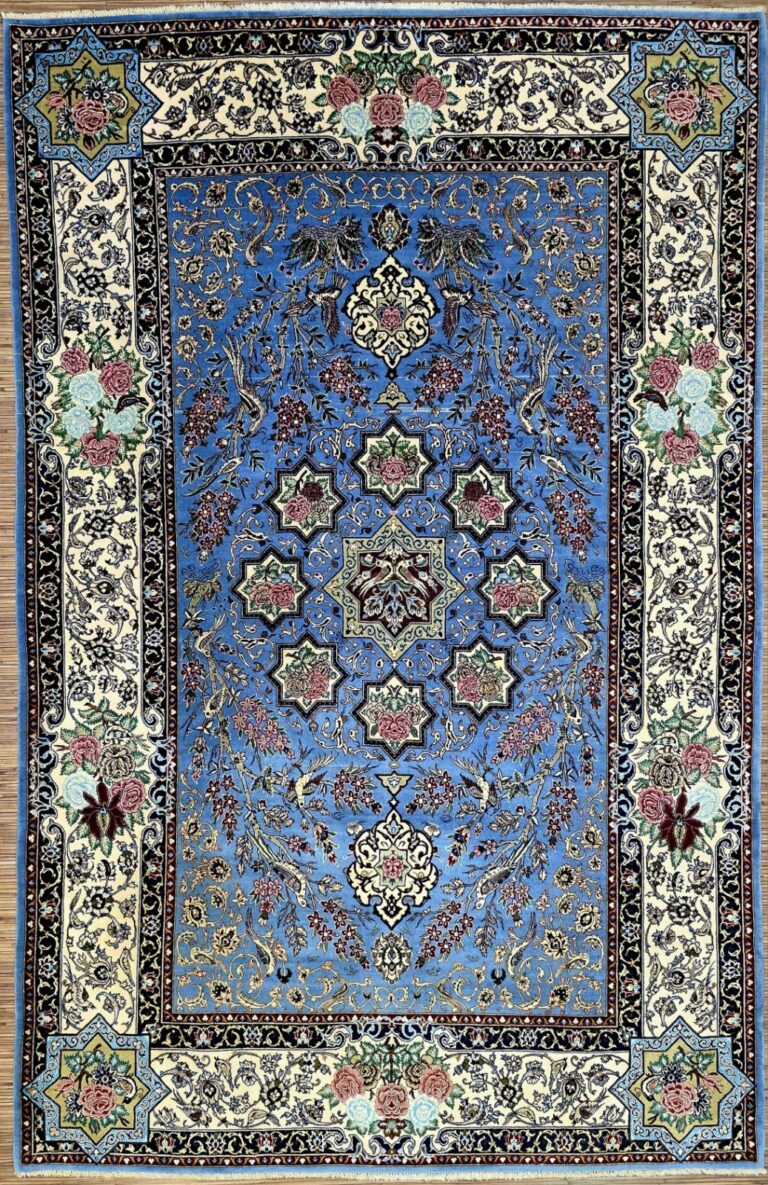
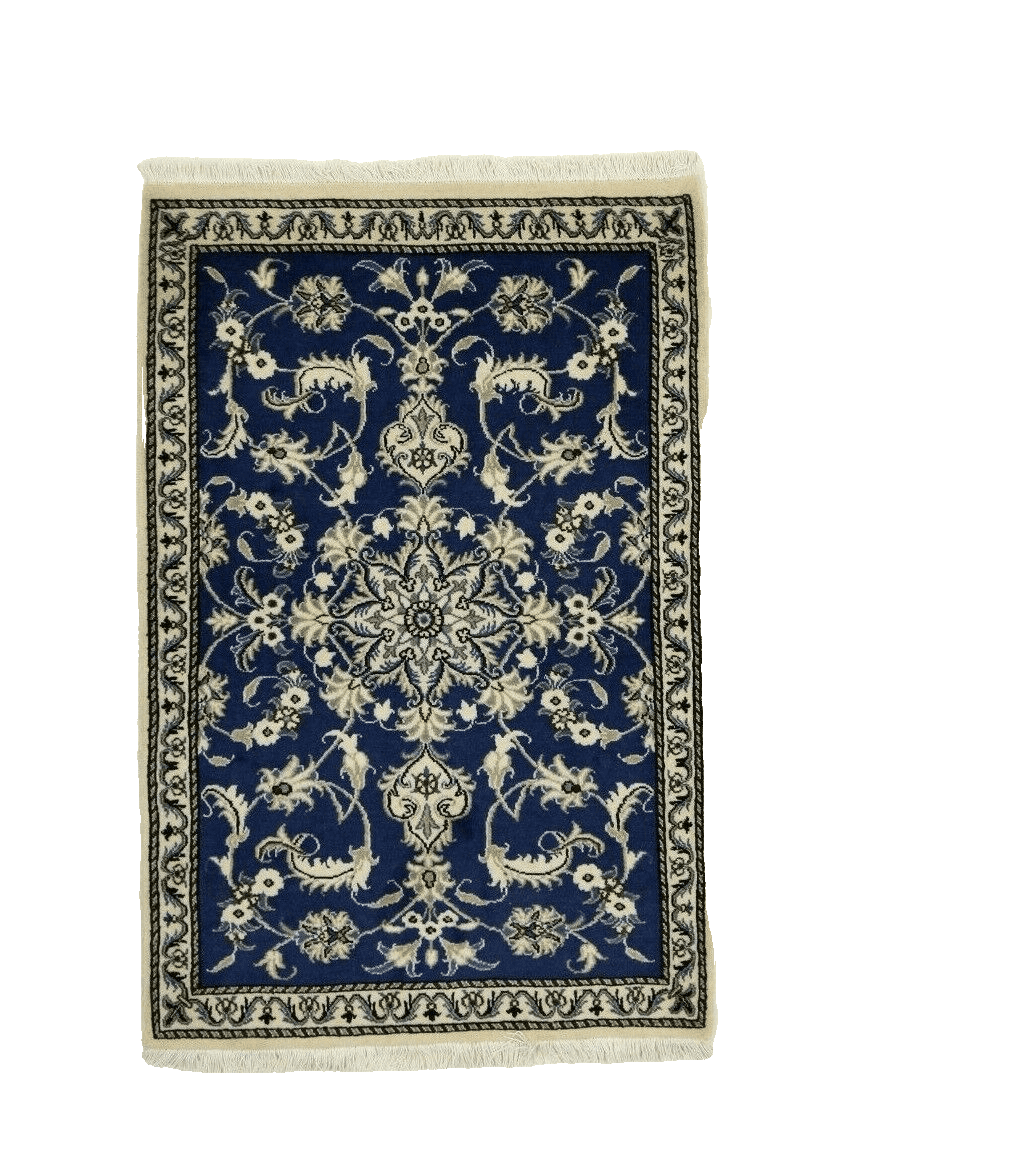
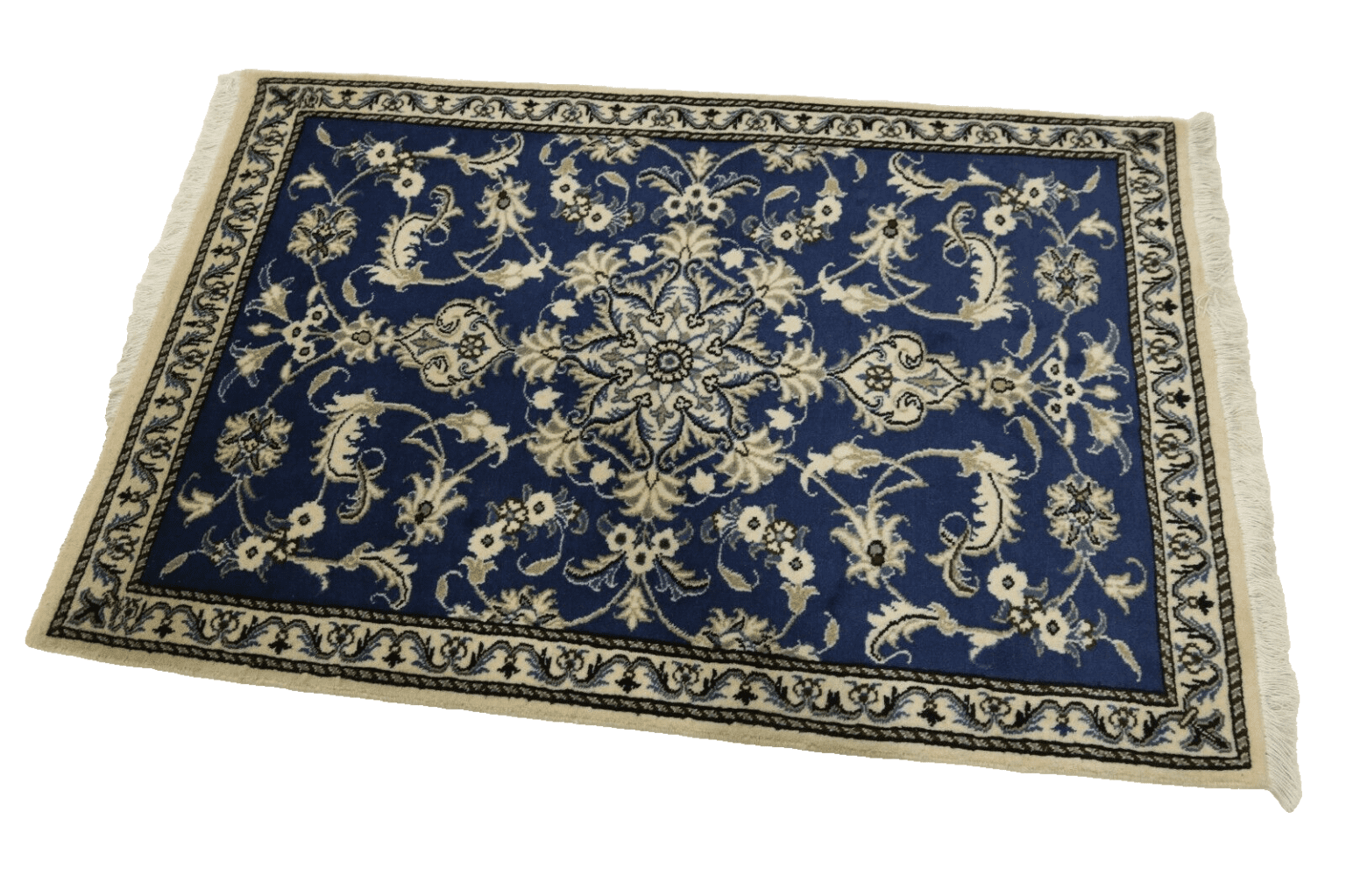
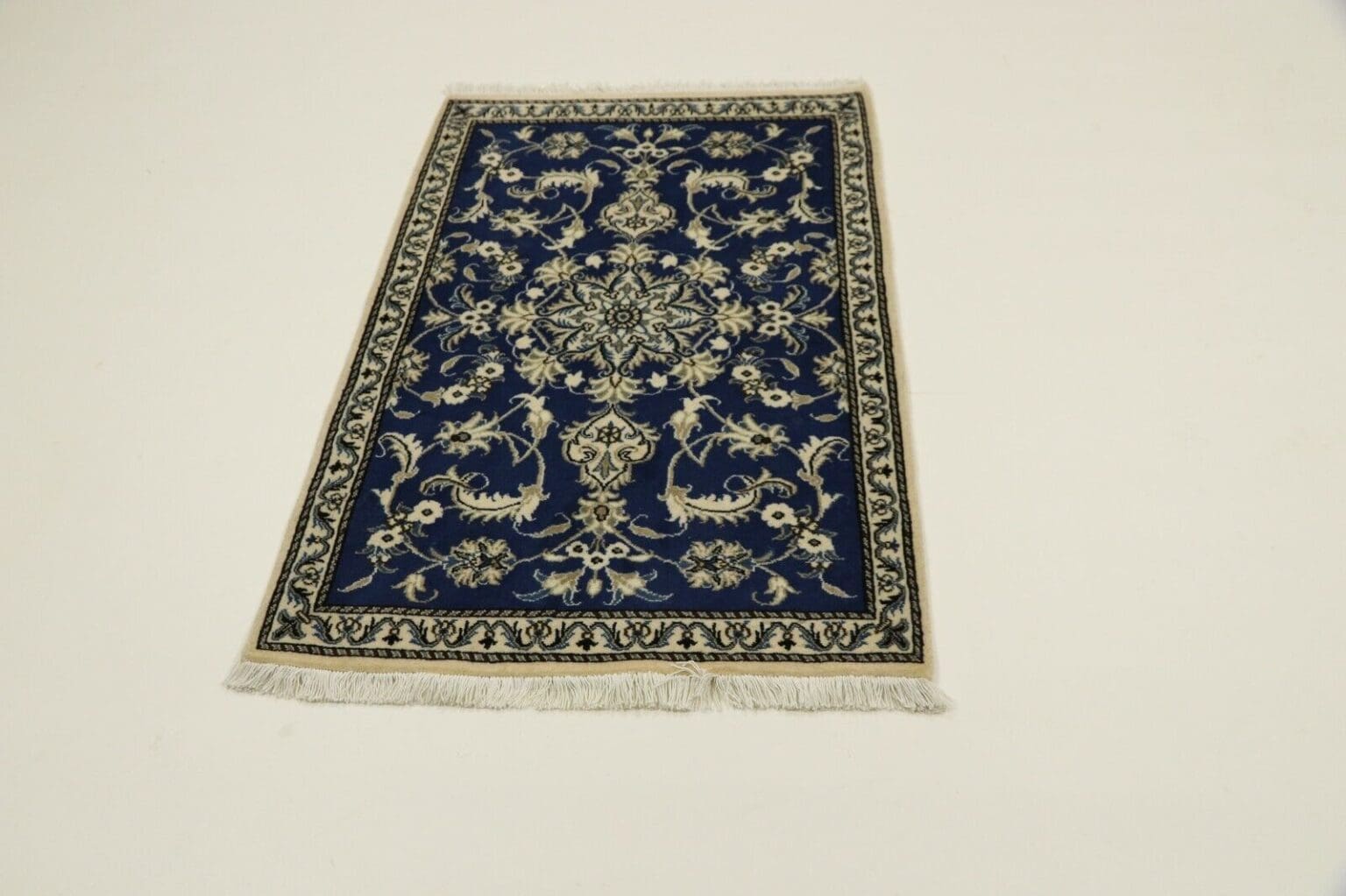
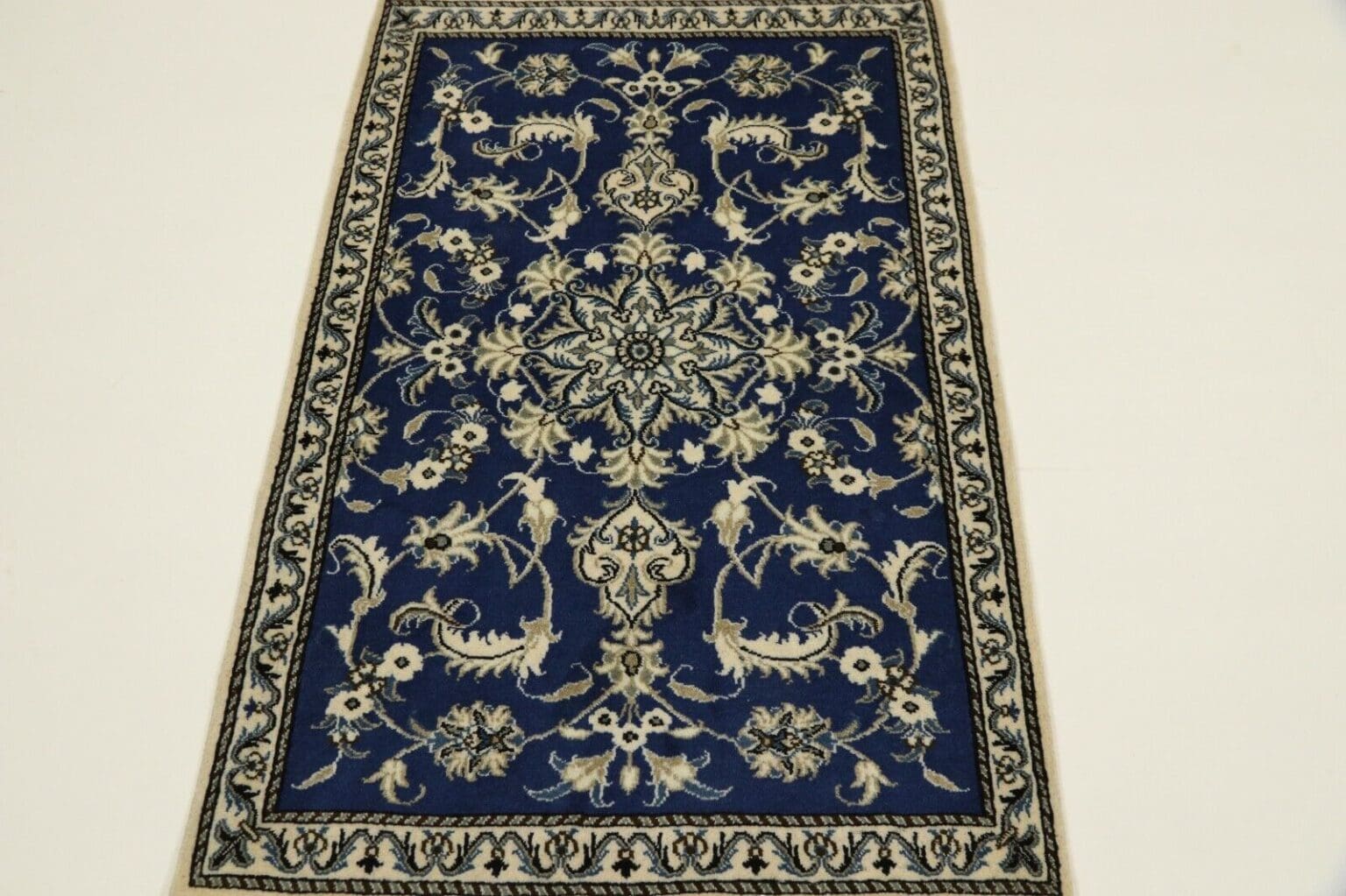
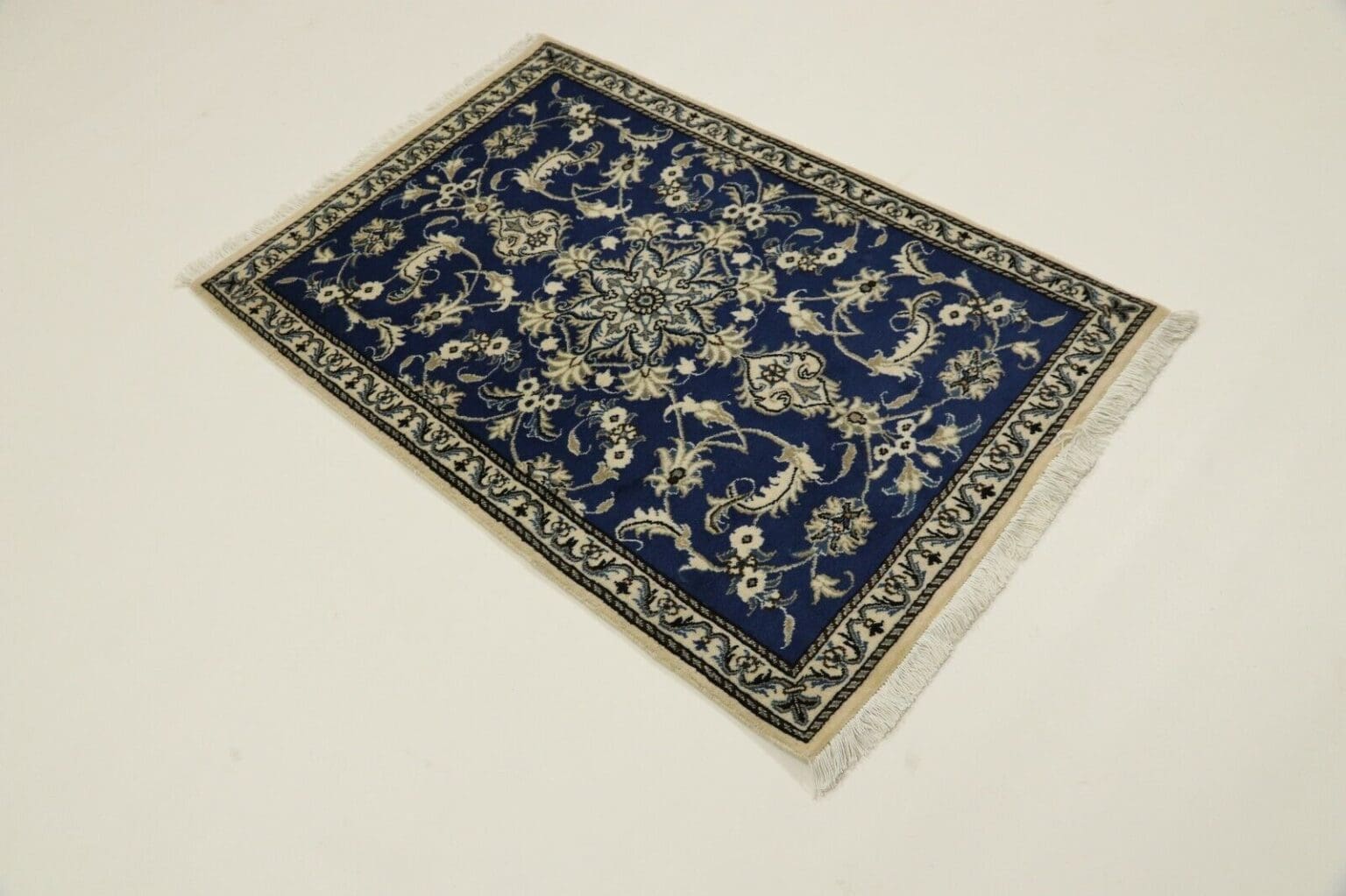
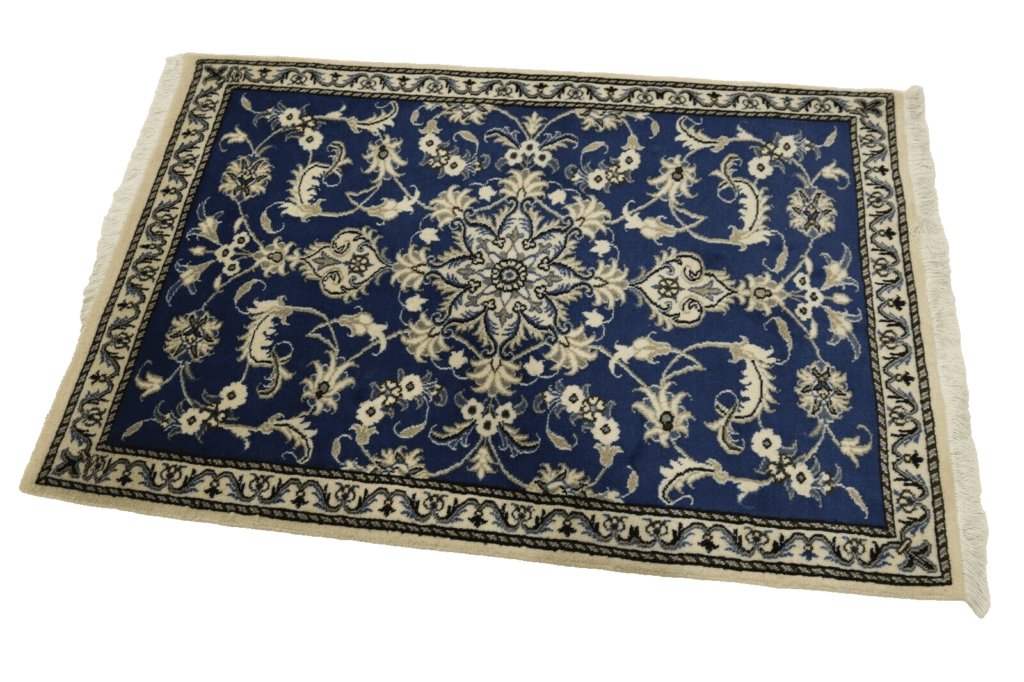
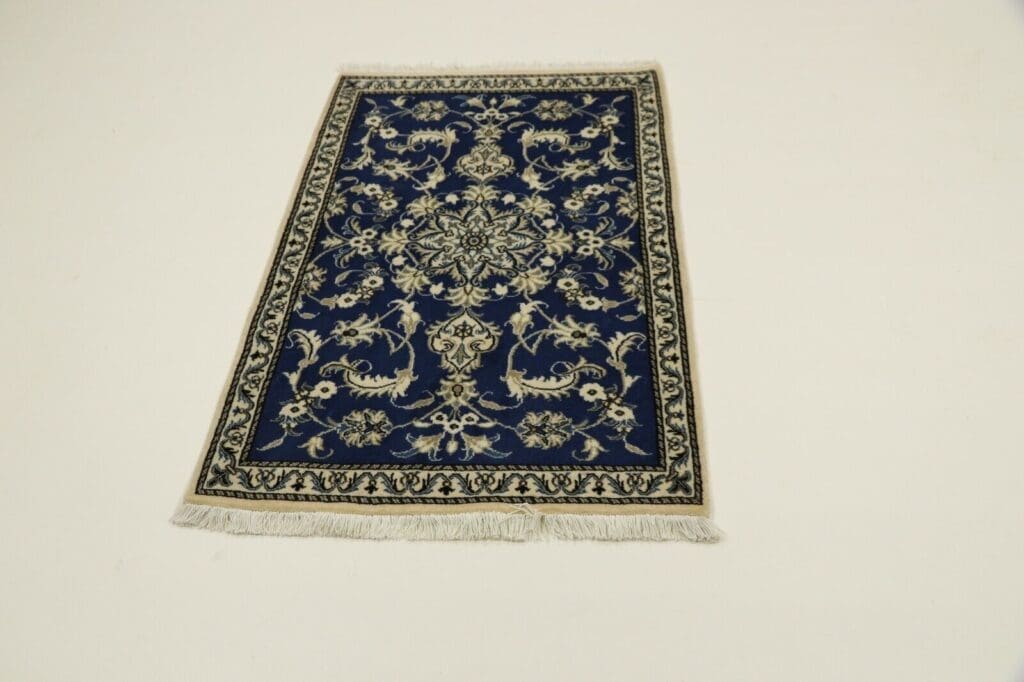
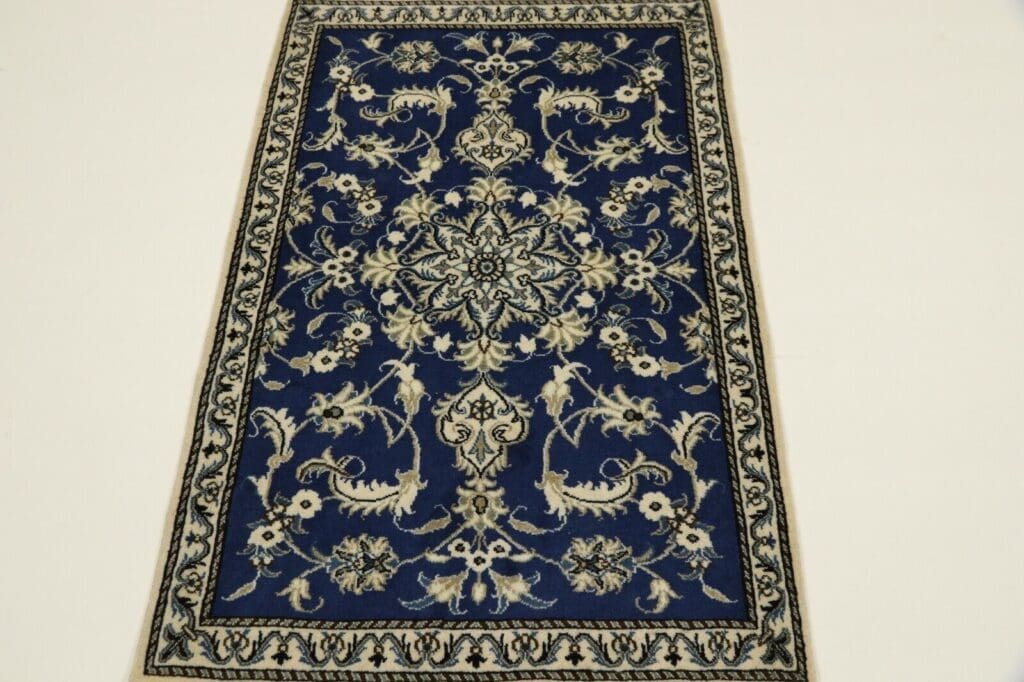
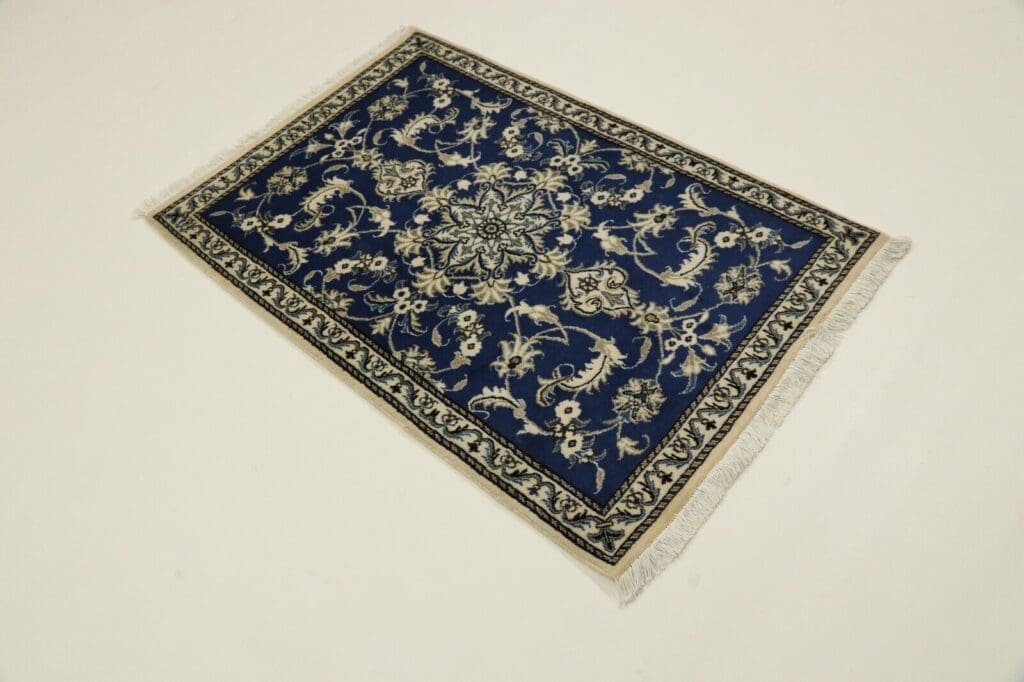
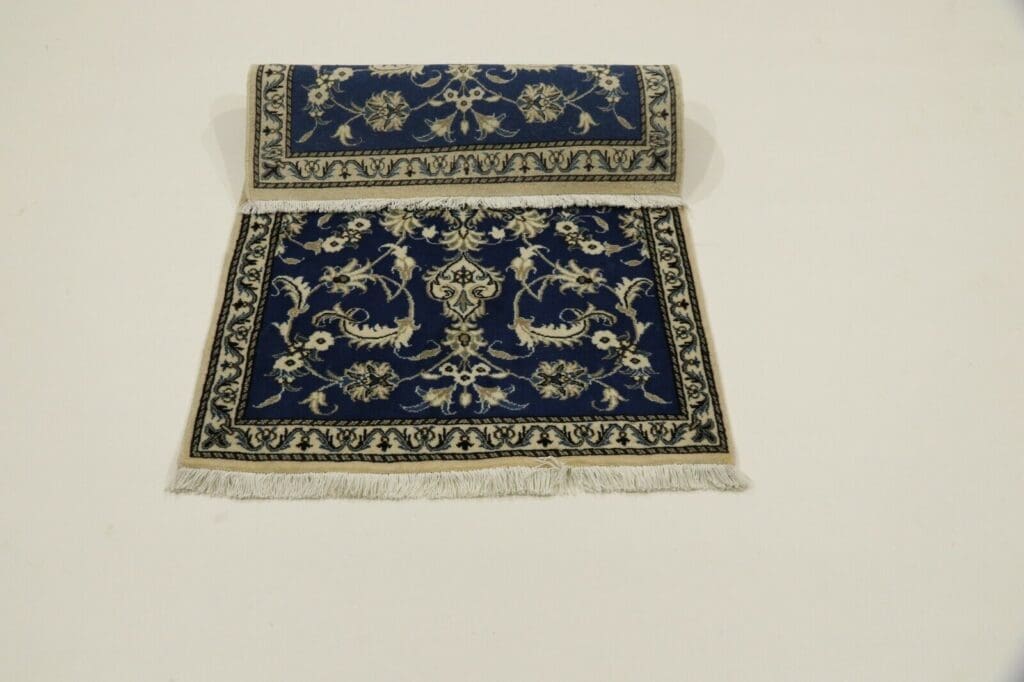
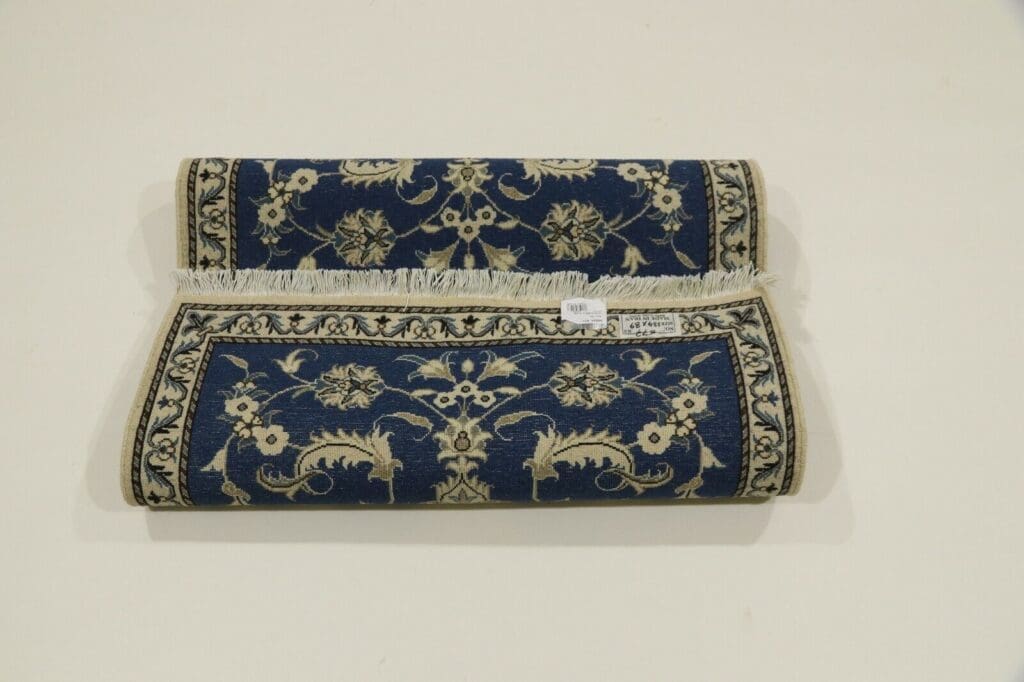
Hand-knotted Nain Persian Rug | Knot density: approx. 300,000 knots/m² | Material: pile 100% virgin wool, warp 100% cotton | Size: 134 x 89 cm | Pattern: traditional Oriental and Persian | Condition: new, very good
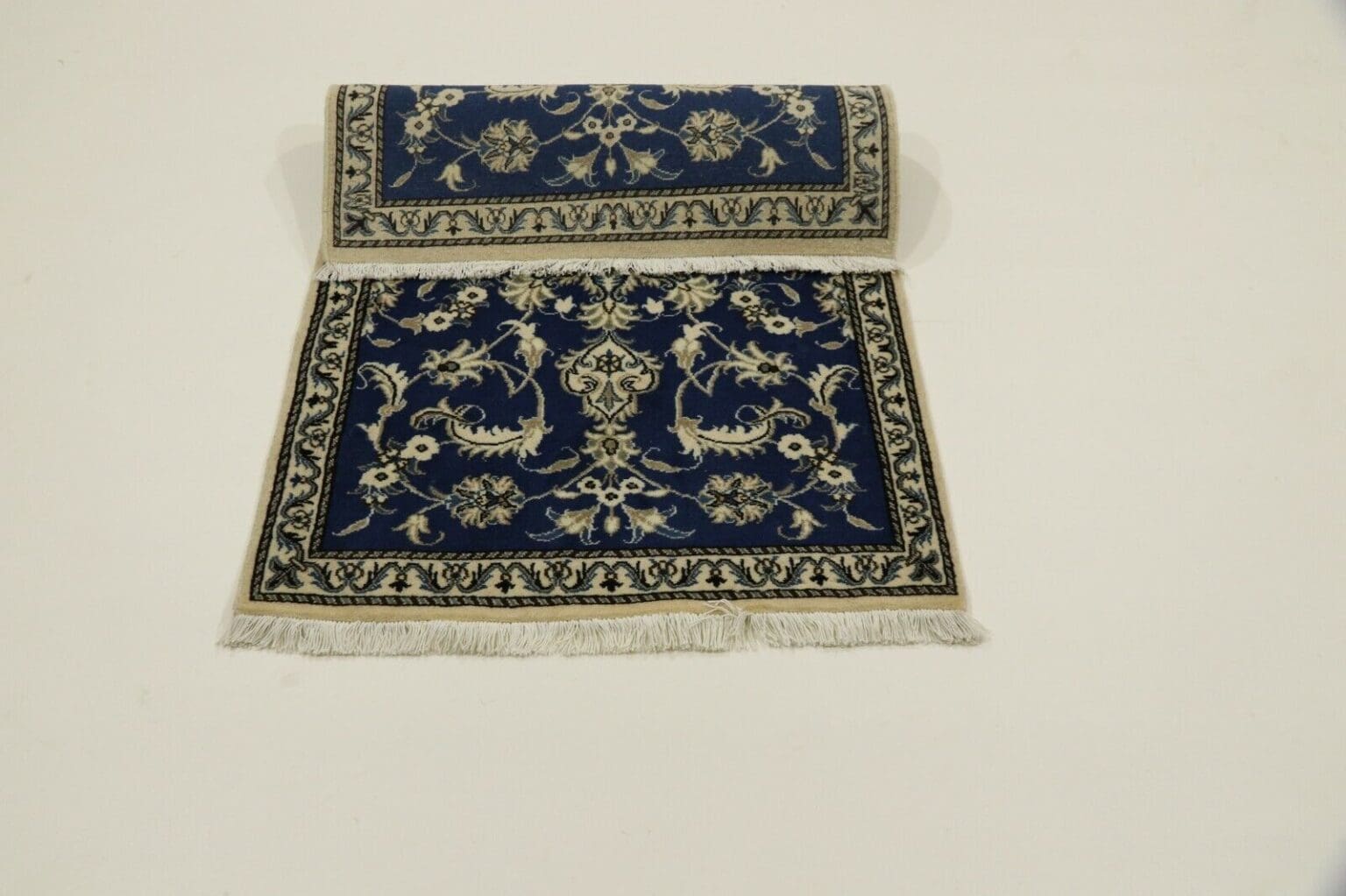
This Nain Persian rug is hand-knotted, with a pile made from 100% virgin wool and a warp made from 100% cotton. The two materials therefore have distinct roles in its construction: the wool forms the visible, tactile surface, while the cotton provides the foundation into which the knots are worked. The pile height is 8 mm. The rug has been made with approximately 300,000 knots per square metre, giving its construction a fine and closely worked character.
In a hand-knotted rug, each knot is formed and inserted by hand into the underlying structure. Knotting proceeds row by row, with weft threads and other construction steps securing the work as it develops. This differs from machine production, where the structure is reproduced mechanically. Hand knotting makes each finished rug an individual piece whose appearance is connected to the work of the knotters. Knot density indicates how closely the knots are placed and, in Nain weaving, relates to the ability to render fine outlines and carefully differentiated ornament.
Virgin wool is used in rug making for its distinctive natural texture and comfortable handle. As a natural fibre, it gives the pile a particular surface character and a balanced tactile quality. The cotton warp forms a stable base for the knotting process. Both materials are used here in the composition stated for this rug. Its hand-knotted construction, close knot structure and documented pile height together define the technical basis of this individual Nain rug.
Origin and Tradition
Nain is a city and weaving centre in Iran, known for a recognised tradition of Persian rug making. Nain rugs are associated with careful workmanship, controlled drawing and finely organised decoration. The region has a long history of carpet production, reaching back to the 16th century. Across generations, knowledge of materials, construction, knotting methods and ornament has been passed on and adapted within the local craft tradition.
The name Nain refers not only to a place of origin but also to a regional approach to textile design. Nain weavers are traditionally associated with precise lines and a fine division of the pattern. This allows the design to appear measured and clearly articulated. In Persian rug culture, craftsmanship and design are closely connected: the drawing is not separate from the woven object, but is translated into textile form through knots, outlines, colour relationships and the arrangement of the field.
Persian rugs from Nain are often linked with a restrained, elegant appearance and carefully balanced ornament. Floral elements are commonly combined with geometric order. Curving vines, blossoms and leaves can be organised within a clearly structured field and border system. The regional tradition also places importance on durability and exact execution. As a hand-knotted rug from Persia, this piece belongs to the Persian weaving tradition associated with Nain.
The history of Nain weaving forms part of the broader development of Persian textile art alongside other regional weaving centres. Each centre developed its own preferences in construction, ornament and colour. Nain became particularly associated with fine patterns and an ordered visual language. This explains the traditional classification of Nain rugs without assigning any unrecorded detail to this individual piece. Its origin is given as Persia, or Iran.
Design and Pattern
Nain rugs often feature floral designs together with finely developed geometric forms. The regional language of design is based on a relationship between organic and structured elements. Vines, blossoms and leaves may move through the field, while geometric lines, borders or symmetrical arrangements give the composition a clear framework. Individual motifs are arranged so that they form a coherent whole rather than a collection of unrelated symbols.
Within Persian design traditions, floral ornament is often associated with purity and beauty. Geometric forms may suggest stability and harmony. These interpretations belong to the cultural background of the motifs and should not be confused with a personal narrative attached to this particular rug. In a Nain design, the impression of balance is created through repetition, symmetry, fine contours and the measured distribution of decorative elements.
The colour tradition of Nain rugs is often associated with gentle blues, cream tones and earthy shades. Such a palette can give the ornament a calm and orderly appearance and allows the regional style to work in both classic and more contemporary interiors. These colours describe a characteristic palette connected with Nain weaving. No additional claim is made here about individual colour fields that are not specifically documented for this rug.
A finely knotted design depends on the legibility of its details. Small floral elements, narrow lines and repeated borders can be differentiated through a closely worked knot structure. The result is a design in which the motifs relate to one another through order and repetition. For Nain rugs, the combination of floral drawing and geometric clarity is an important part of the regional identity.
The design tradition also reflects the wider history of Persian rugs, in which ornament is more than surface decoration. Motifs are inherited, reinterpreted and arranged within new compositions. Floral forms can evoke growth and beauty, while regular geometry supports an impression of balance and order. These symbolic associations explain the cultural context of Nain patterns without attributing motifs to this one-of-a-kind rug that have not been stated.
Special Features
This rug is described as a unique piece, or one-off. It is hand-knotted and has a knot density of approximately 300,000 knots per square metre. The pile is 100% virgin wool, the warp is 100% cotton and the pile height is 8 mm. Its condition is described as new and very good. An authenticity certificate is included with the rug.
The fine knot structure, the connection with Nain and the traditional Oriental and Persian style bring together technical workmanship and classic design language. The source description associates the high knot density with pronounced durability and presents the rug as suitable for more frequently used areas in a home or office. This is a description of the documented construction and does not replace an individual assessment of placement, care or traffic conditions.
As a hand-knotted one-off, the rug differs from an industrially reproduced series product. The included authenticity certificate provides additional documentation. Its very good, newly described condition completes the record of the piece. The principal special features are therefore its handmade construction, close knotting, stated material composition, documented condition and certificate.
FAQ
How should I clean my Nain Persian rug?
For routine care, vacuum the rug gently using a low setting. This removes dust and loose dirt while limiting unnecessary stress on the pile. For deeper stains, a professional rug cleaner is recommended. If a product is used at home, it should be specifically suitable for wool rugs. Harsh chemicals, vigorous rubbing and excessive moisture can affect natural fibres and the hand-knotted structure. Cleaning should therefore take the wool pile and the construction method into account.
How can I check whether my rug is authentic?
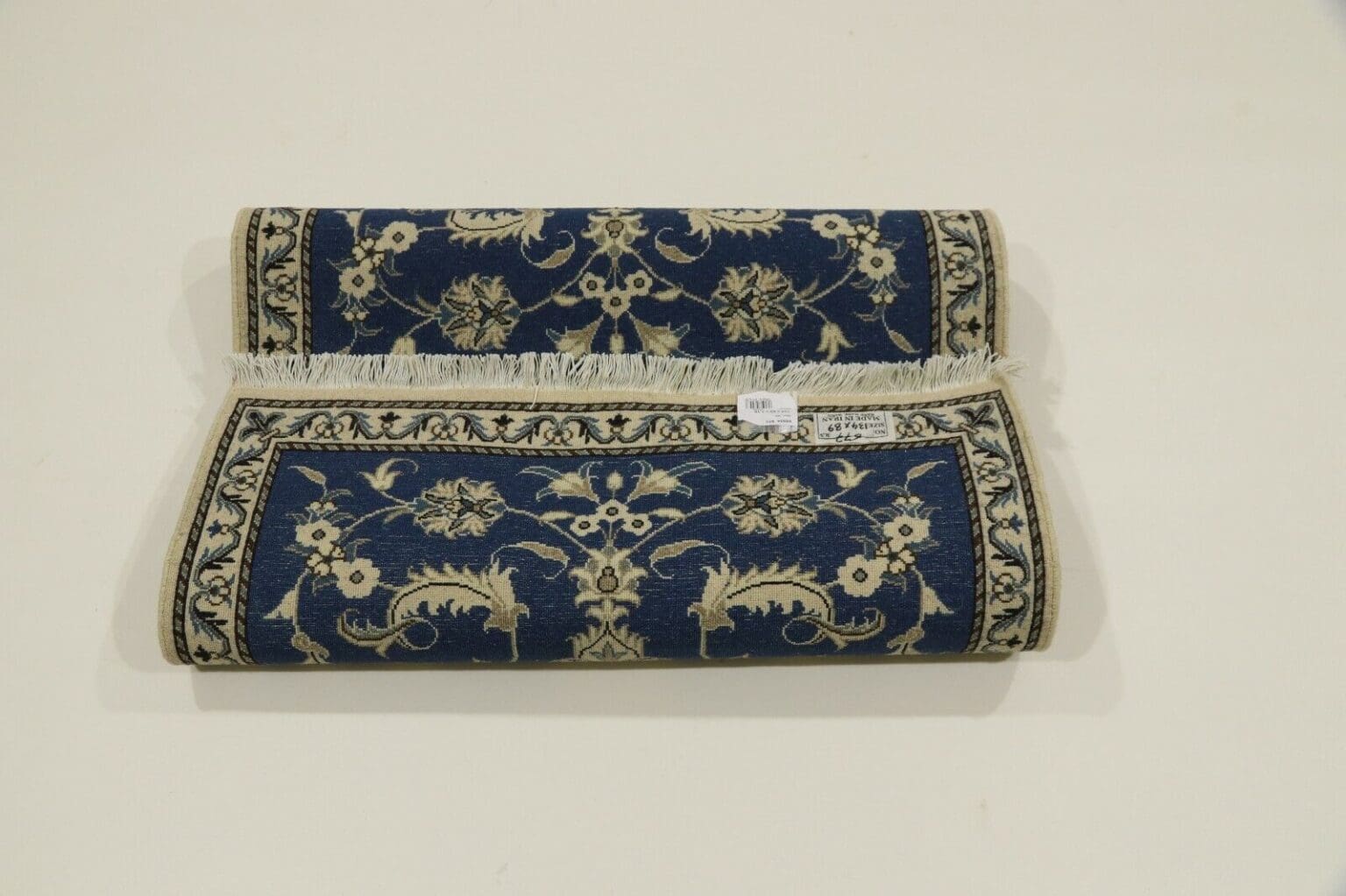
An authentic Nain rug is hand-knotted and has a high knot density. The back of the rug can offer useful visual evidence because, in a hand-knotted piece, the pattern structure can be seen within the foundation. This feature is often not visible in the same way on a machine-made rug. An authenticity certificate can provide further documentation. This one-off rug includes such a certificate. For a binding professional assessment, an independent rug expert can also examine the construction and design.
Can the rug be used with underfloor heating?
Wool Oriental rugs are generally suitable for use with underfloor heating. Wool can retain warmth while maintaining a soft and comfortable surface. The heating temperature should not be set excessively high, so that the wool fibres are protected. Heat should be allowed to distribute evenly, and the rug should lie correctly on the floor. For a particular heating system, the recommendations of the heating and rug manufacturers should also be followed.
To provide the best experiences, we use technologies like cookies to store and/or access device information. Consenting to these technologies will allow us to process data such as browsing behavior or unique IDs on this site. Not consenting or withdrawing consent, may adversely affect certain features and functions.
Functional Always active
The technical storage or access is strictly necessary for the legitimate purpose of enabling the use of a specific service explicitly requested by the subscriber or user, or for the sole purpose of carrying out the transmission of a communication over an electronic communications network.
Preferences
The technical storage or access is necessary for the legitimate purpose of storing preferences that are not requested by the subscriber or user.
Statistics
The technical storage or access that is used exclusively for statistical purposes.The technical storage or access that is used exclusively for anonymous statistical purposes. Without a subpoena, voluntary compliance on the part of your Internet Service Provider, or additional records from a third party, information stored or retrieved for this purpose alone cannot usually be used to identify you.
Marketing
The technical storage or access is required to create user profiles to send advertising, or to track the user on a website or across several websites for similar marketing purposes.
 SECURE PAYMENT
 SHIPPING PARTNERS