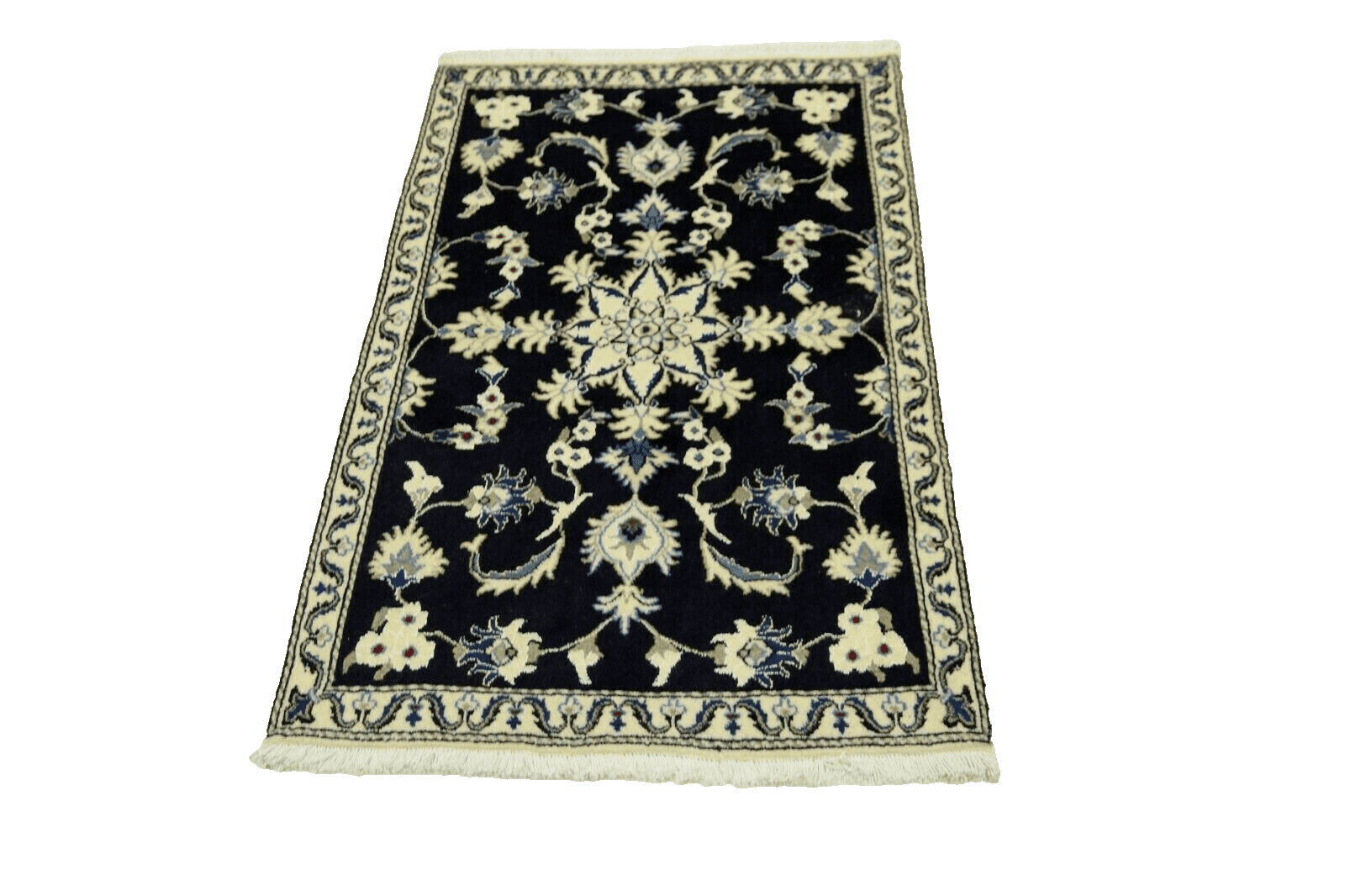
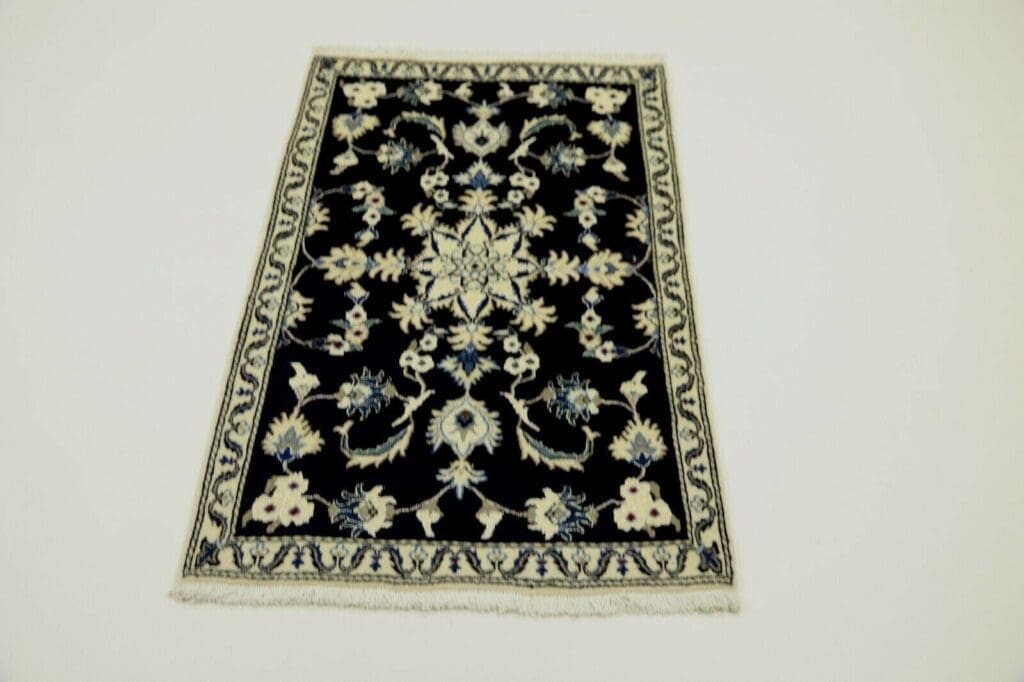
This Super Nain Persian rug is hand-knotted with a pile made from 90% virgin wool and 10% silk. Its warp is made from 100% cotton. The two pile fibres contribute different qualities to the surface: virgin wool provides a soft, resilient pile, while silk adds a finer appearance and a restrained sheen. The cotton warp forms the foundation to which the knots are secured.
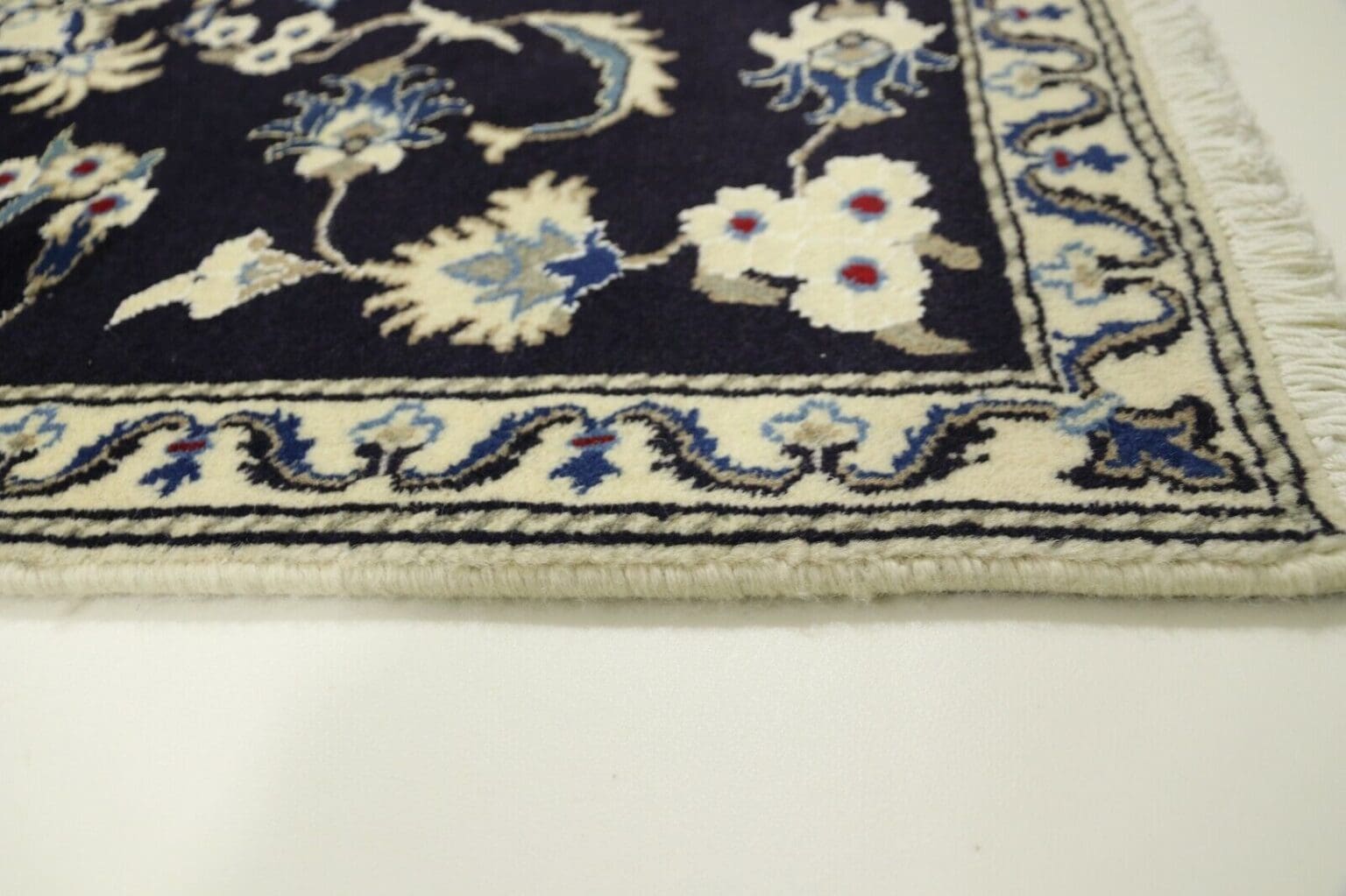
Hand-knotting is carried out one knot at a time on a loom. Unlike a machine-made floor covering, the design is built through the individual work of the knotter, row by row. The density of approximately 300,000 knots per square metre supports the detailed drawing of the motifs and the definition of the borders. In Nain weaving, a fine knot structure is associated with carefully articulated patterns and precise contours.
The mixture of virgin wool and silk affects both the tactile character and the way the pile receives light. Wool generally presents a softer, more subdued surface, whereas silk can reflect light in selected areas. As the pile is viewed from different directions, parts of the pattern may therefore appear lighter or deeper. The hand-knotted construction makes this an individual textile object rather than an identical piece of series-produced floor covering.
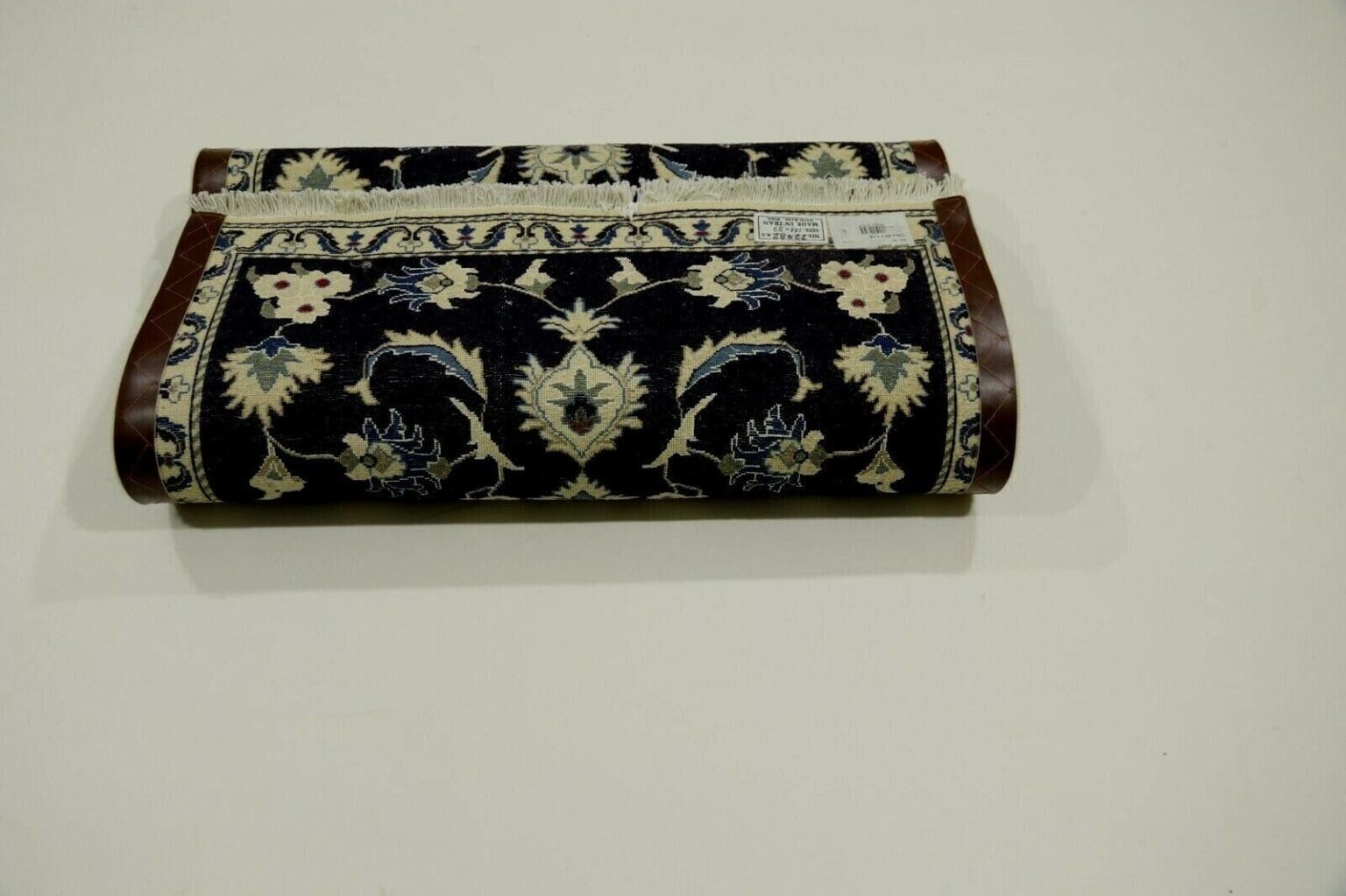
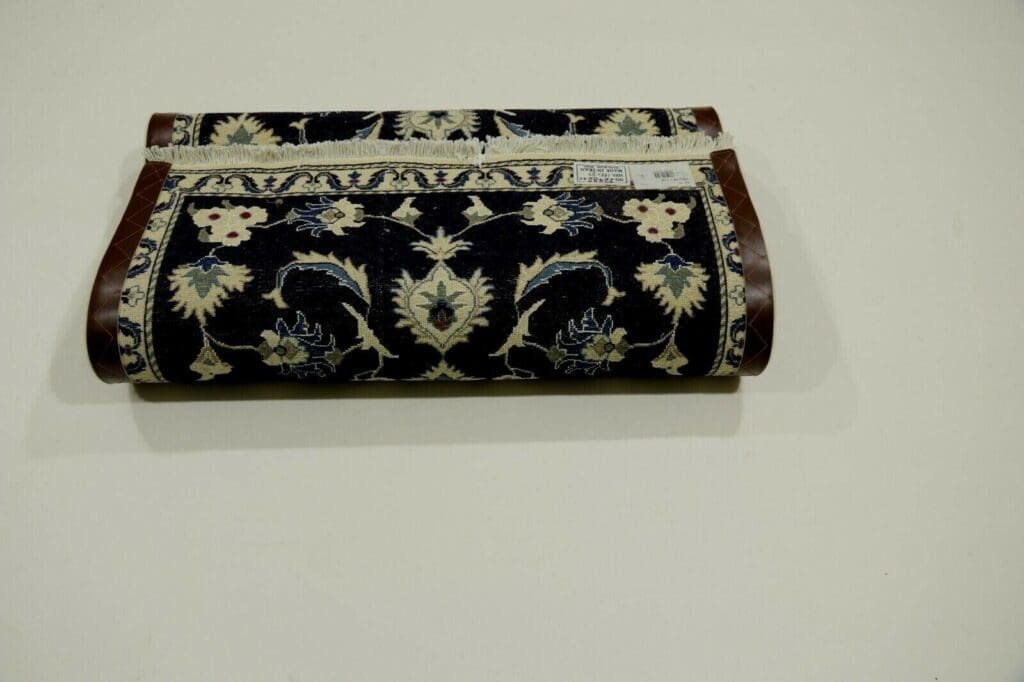
The rug is described as new and in very good condition. Its rectangular form allows it to be placed clearly in front of seating, beneath a table, or within another defined area. Its thickness is given as approximately 9 mm. It is also described as pet-friendly and suitable for use with underfloor heating.
Origin and Tradition
Nain is a city in central Iran with an established place in Persian rug production. Nain rugs are associated with fine knotting, controlled drawing, and a balanced classical arrangement of ornaments. The region’s weaving tradition forms part of Iran’s wider textile culture. In this tradition, technical precision and the disciplined organization of the design are considered together rather than as separate qualities.
The history of rug weaving in Nain reaches back to the 16th century. Knowledge of knotting, materials, colour use, and pattern construction has been passed from one generation to the next. This transmission takes place through practical work as well as through established conventions. At the loom, weavers learn how the tension of the warp, the scale of the knots, and the sequence of colours influence the final appearance of a rug.
A Nain rug belongs to a cultural setting in which a carpet is both a useful household object and an expression of regional design. Persian rug making developed a wide range of local forms over the centuries. Nain became known for a particularly fine and classically oriented approach. Floral elements, geometric divisions, and carefully arranged borders are combined to create a surface that feels ordered and complete.
Natural dyes are part of the traditional image of Nain production. In traditional dyeing, colour is not treated simply as an isolated shade but as part of a coordinated palette. Its appearance is affected by the wool, the silk, the structure of the fibre, and the available light. The direction of the pile also changes how a colour is perceived. These characteristics help explain why a Nain design can remain formally clear while still showing nuanced tonal effects.
The designation Super Nain points to the fine direction of this rug type. It does not describe an industrial grading system; rather, it is understood in connection with dense knotting, detailed drawing, and the established visual language of Nain. This rug is presented as a Persian rug from Persia or Iran. That origin should be kept distinct from the motifs themselves: Nain here identifies the regional tradition behind the construction and design.
Design and Pattern
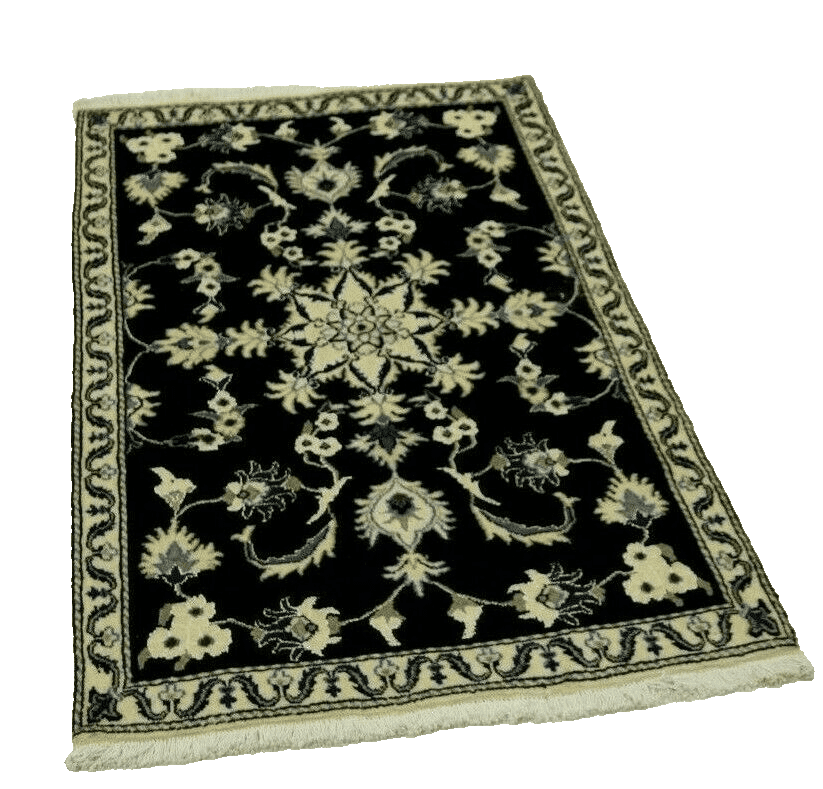
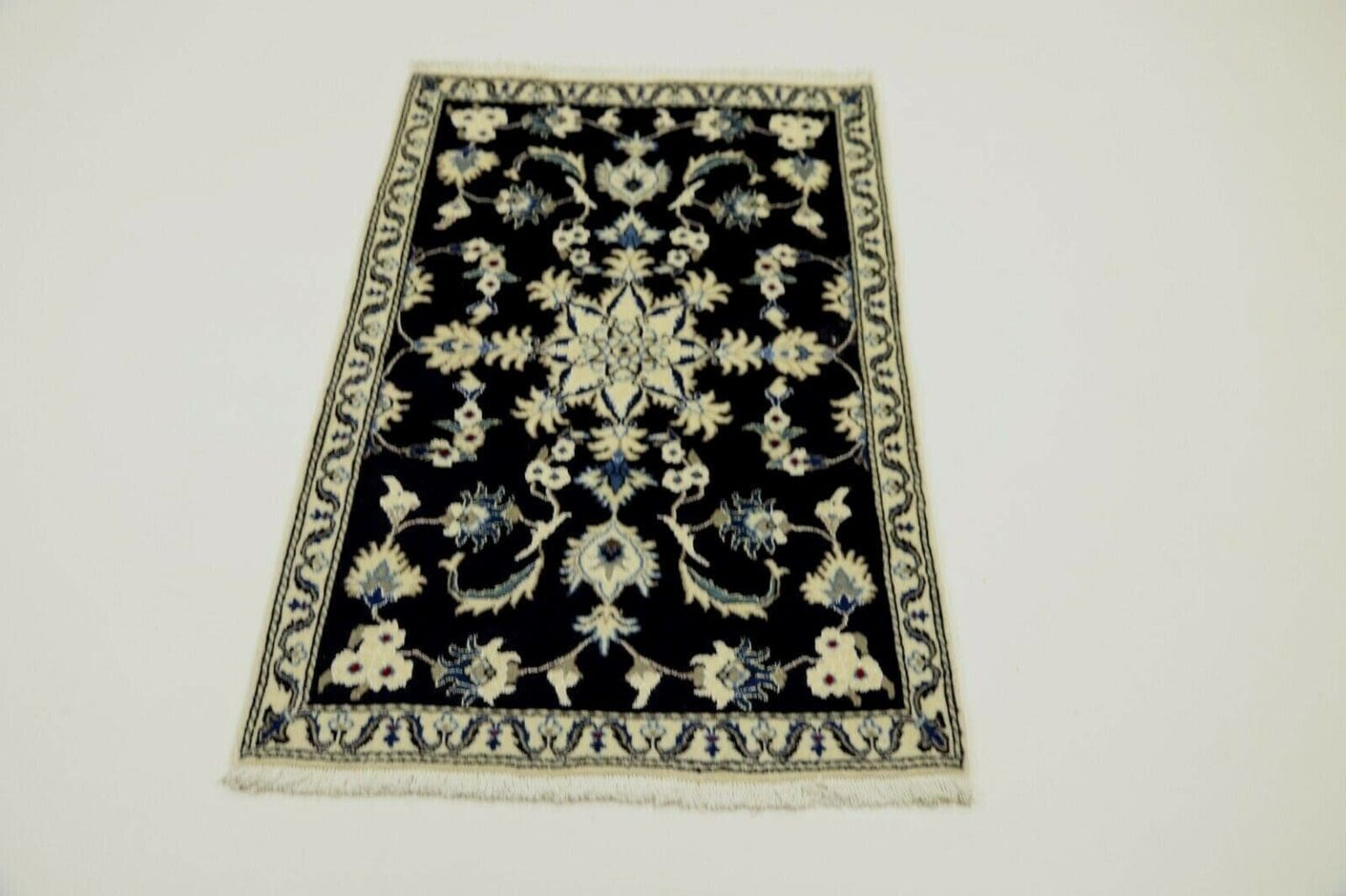
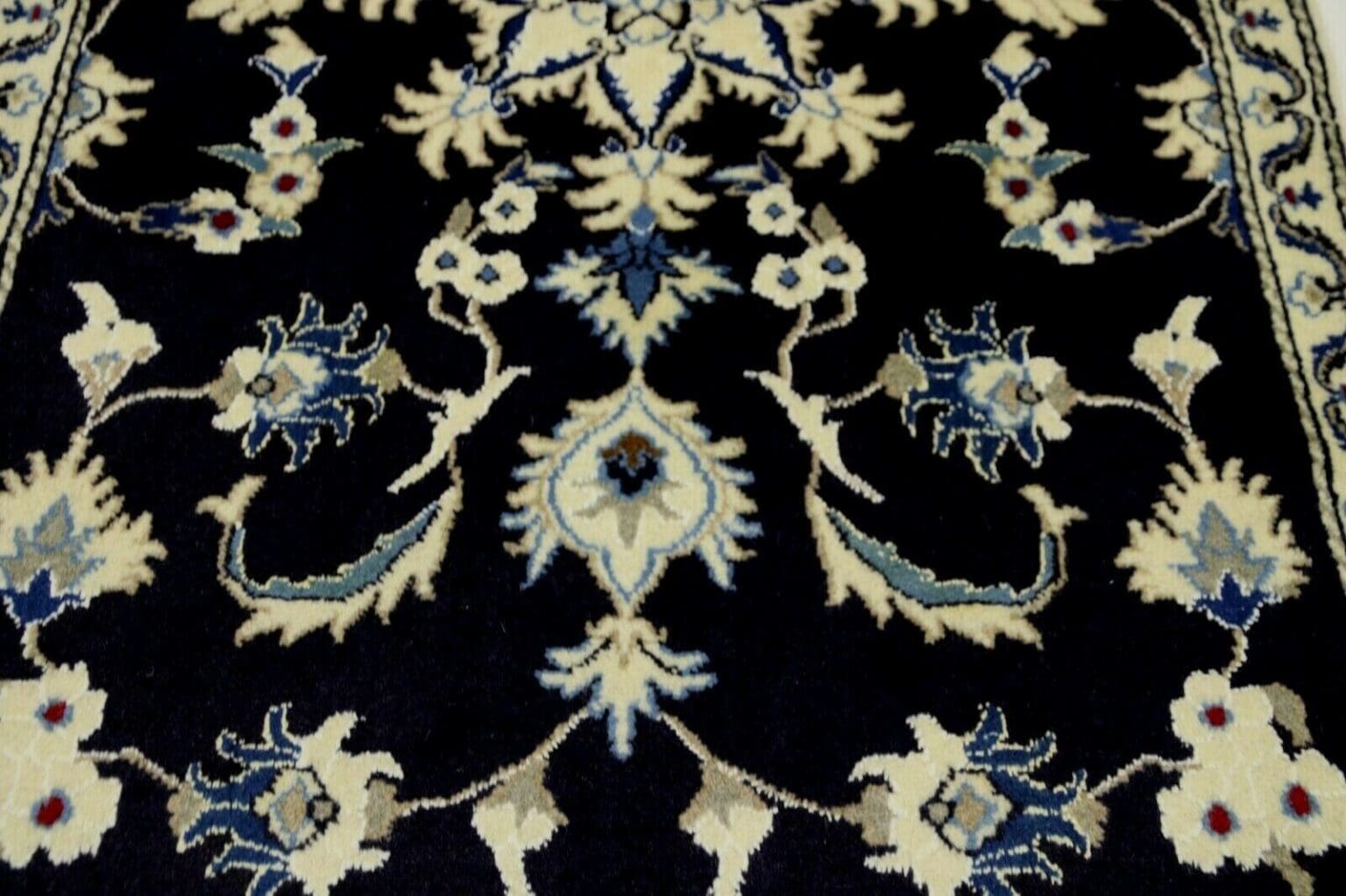
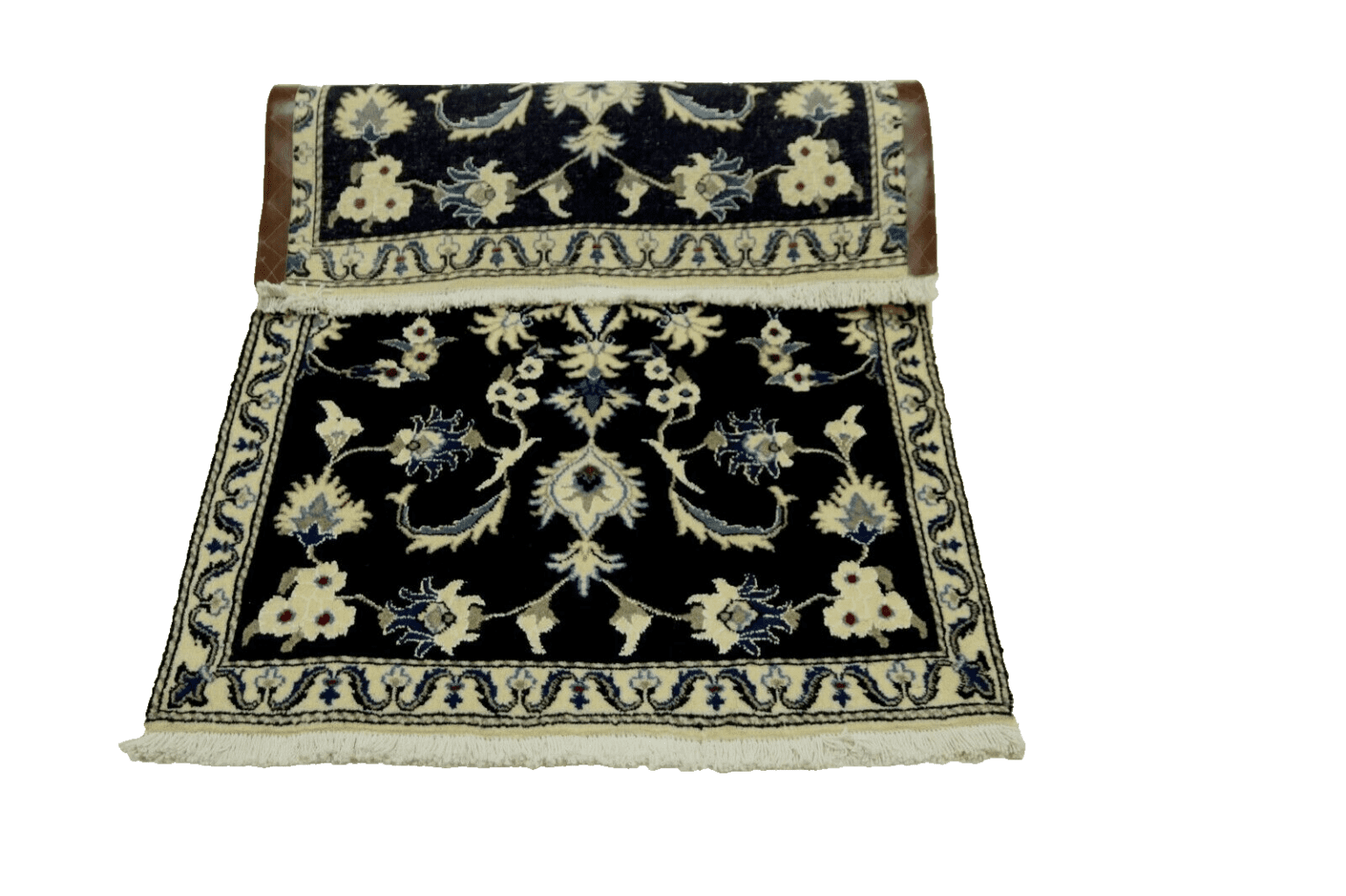
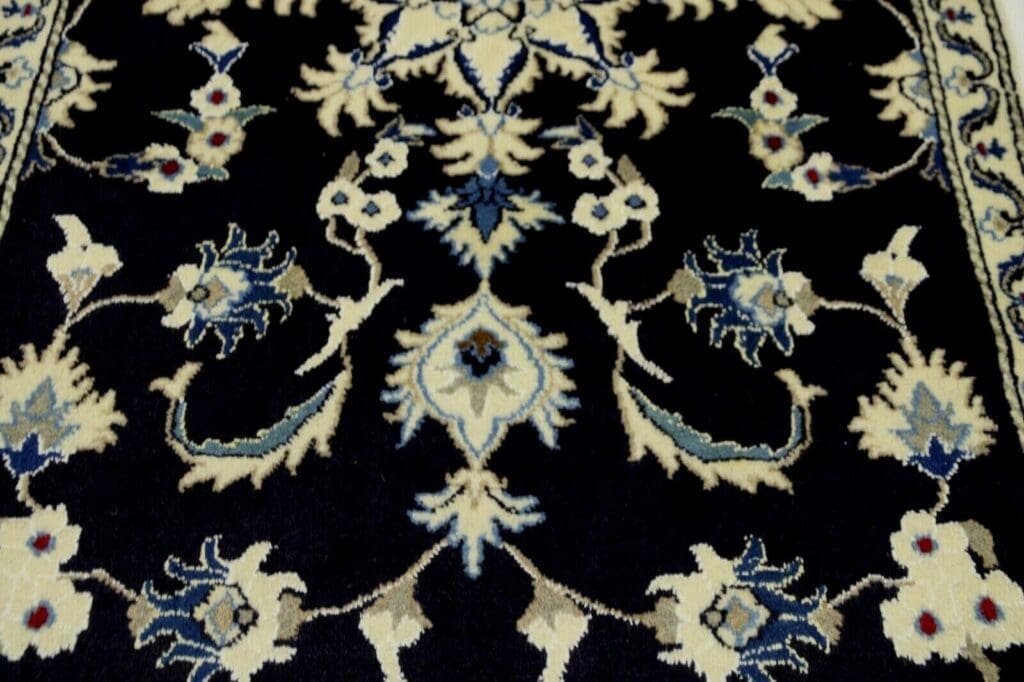
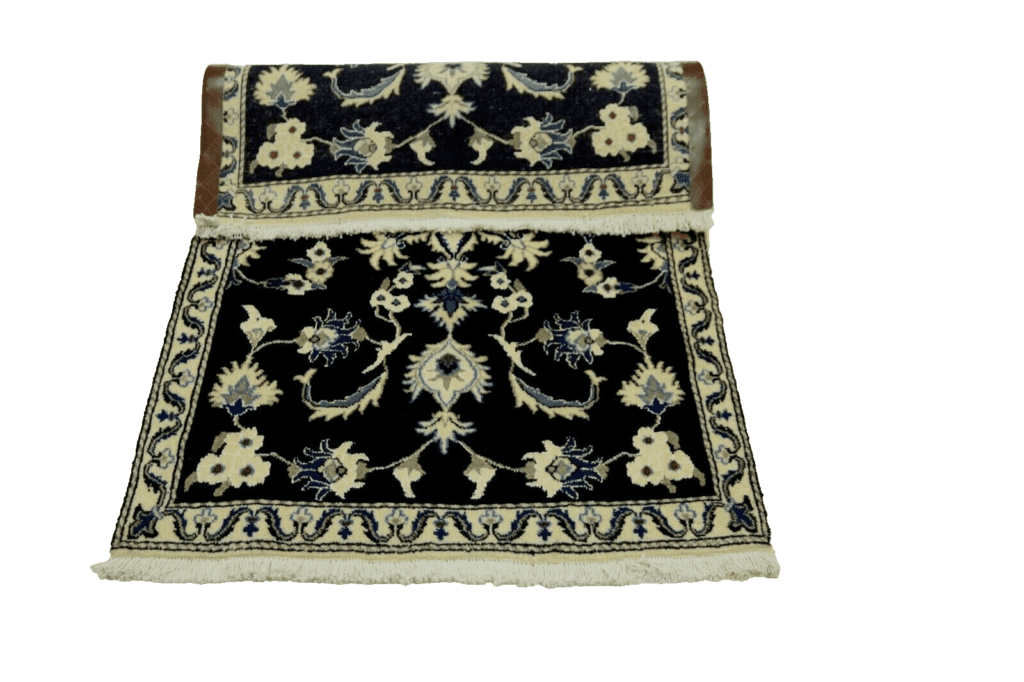
The design of this Super Nain Persian rug is described as traditional Oriental Persian. It combines floral motifs with geometric forms. This relationship is characteristic of Nain rugs. Plant-based ornaments introduce curved lines, leaves, blossoms, and repeated movement, while geometric elements organize the field and create visible boundaries. Together they produce a pattern that is decorative without losing its structural clarity.
Floral ornament in Persian rug design may include blossoms, leaves, and stylized vines. These forms are not normally intended as literal botanical pictures. They are simplified, mirrored, repeated, and fitted into a controlled system of fields and borders. The result is an arrangement that feels natural in its lines but ordered in its repetition. Fine knotting allows small flowers, narrow stems, and delicate changes in direction to be represented with greater definition.
Geometric shapes provide another level of organization. They may divide an inner field, mark transitions between ornaments, or separate the main border from narrower secondary borders. In Nain design, floral and geometric components are often used together rather than treated as opposing ideas. The flowing movement of plant motifs is balanced by the clearer limits of geometric drawing. This creates visual rhythm and gives the eye recurring points of orientation.
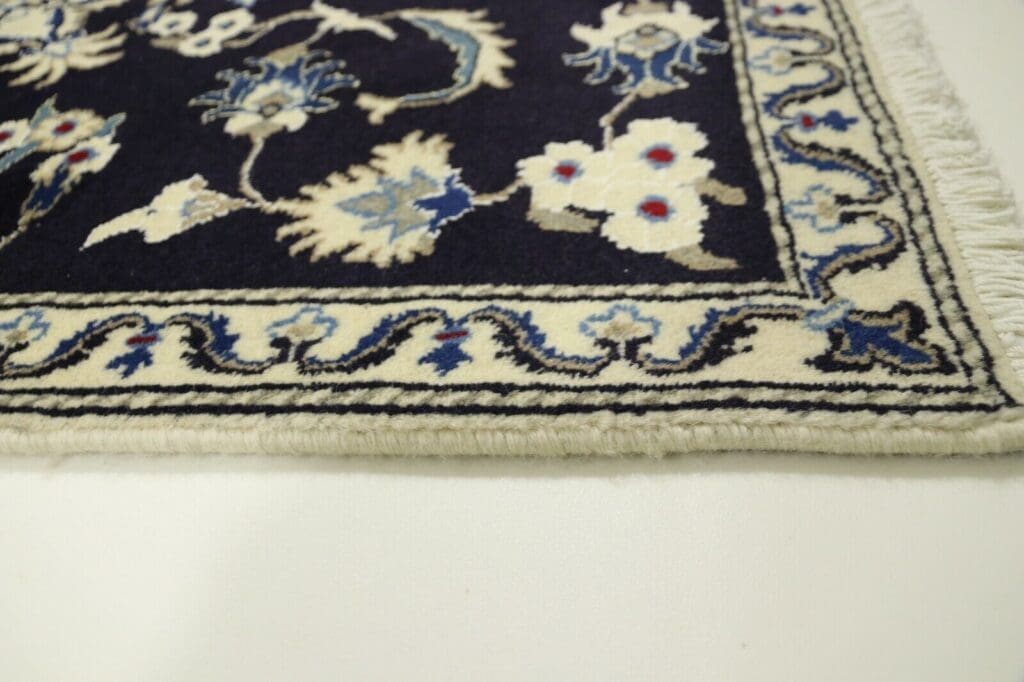
The ornate borders are an important part of the composition. A border frames the central design and provides a defined finish toward the outer edge. Narrower guard borders may accompany a wider main border, creating a gradual transition between the central field and the perimeter. This arrangement is widespread in Persian rug design. It holds the pattern together and distinguishes the centre from the surrounding frame.
The effect of the pattern also depends on the accuracy of the handwork. Each knot contributes to a contour, a line, or a colour area. A high knot density allows small intervals and subtle changes of direction to be rendered with greater differentiation. Silk can give selected parts of the ornament a restrained reflective quality, while virgin wool contributes a softer surface to the pile as a whole. Depending on the light and the direction from which it is viewed, the pattern can therefore show slight changes in emphasis.
The traditional vocabulary of the design can be placed alongside different interior styles because it is not tied to one short-lived trend. In a classical room it can relate to existing ornament and formal furniture. In a simpler setting it can define a textile focal area. This describes the adaptable character of the Nain pattern; it does not add another statement about the rug’s place of manufacture.
Special Features
The notable features of this rug are its fine knot density, its combination of virgin wool and silk, and its hand-knotted construction. The dense knotting supports detailed pattern work. The two pile materials create differing surface effects, with wool contributing its soft character and silk adding a controlled sheen. Together they give the rug a varied texture and a changing response to light.
The rug is new and in very good condition. It has a rectangular shape and a thickness of approximately 9 mm. It is described as pet-friendly and suitable for underfloor heating. These practical details are relevant when choosing a hand-knotted rug for a room where a heated floor is already installed. Actual use should still take account of the room and of correct placement.
The combination of a traditional Nain design with careful hand-knotting is central to this piece. It is not presented as an arbitrary printed decoration, but as an individual rug whose knotting, materials, and surface appearance belong to one particular handmade work.
FAQ
How can the quality of a Persian rug be assessed?
Important factors include knot density, the materials used, age, and method of manufacture. This Super Nain Persian rug combines approximately 300,000 knots per square metre with a pile of virgin wool and silk and a hand-knotted construction. Its cotton warp is also part of the stated structure. These details provide a factual basis for understanding its workmanship and distinguish it from a machine-made series product.
How should a Persian rug be cared for?
Regular vacuuming helps remove dust and loose dirt from the pile. Prolonged direct sunlight should be avoided so that the colours do not fade. Professional rug cleaning can be used for stains or more extensive cleaning. The rug is described as pet-friendly, but spills and soiling should still be dealt with promptly so that the surface made from virgin wool and silk remains well maintained.
Where can the rug be used?
The rectangular Nain Persian rug is suitable for living rooms and dining rooms and can also be used in an office or bedroom. Its traditional Oriental Persian pattern can be combined with a range of interior styles. As a hand-knotted rug, it can define a seating area, sit beneath a table, or structure another clearly delineated part of a room. It is also described as suitable for underfloor heating and as pet-friendly.
To provide the best experiences, we use technologies like cookies to store and/or access device information. Consenting to these technologies will allow us to process data such as browsing behavior or unique IDs on this site. Not consenting or withdrawing consent, may adversely affect certain features and functions.
Functional Always active
The technical storage or access is strictly necessary for the legitimate purpose of enabling the use of a specific service explicitly requested by the subscriber or user, or for the sole purpose of carrying out the transmission of a communication over an electronic communications network.
Preferences
The technical storage or access is necessary for the legitimate purpose of storing preferences that are not requested by the subscriber or user.
Statistics
The technical storage or access that is used exclusively for statistical purposes.The technical storage or access that is used exclusively for anonymous statistical purposes. Without a subpoena, voluntary compliance on the part of your Internet Service Provider, or additional records from a third party, information stored or retrieved for this purpose alone cannot usually be used to identify you.
Marketing
The technical storage or access is required to create user profiles to send advertising, or to track the user on a website or across several websites for similar marketing purposes.
 SECURE PAYMENT
 SHIPPING PARTNERS


