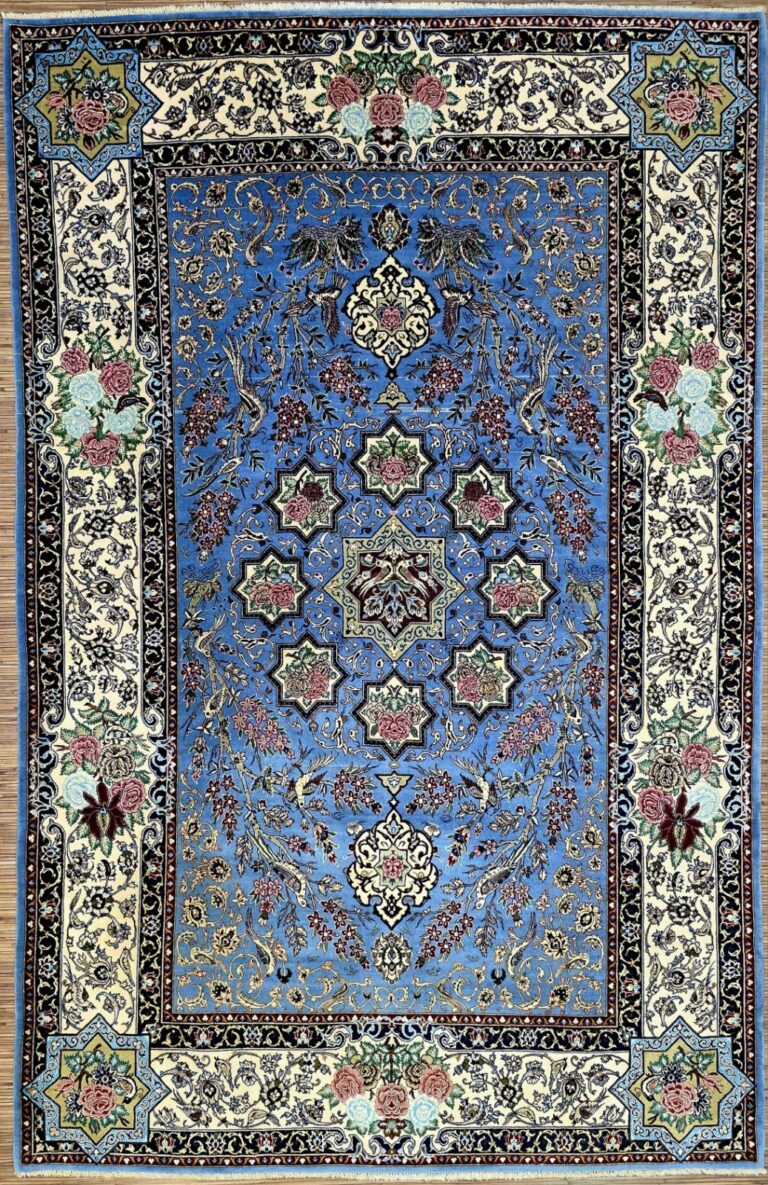
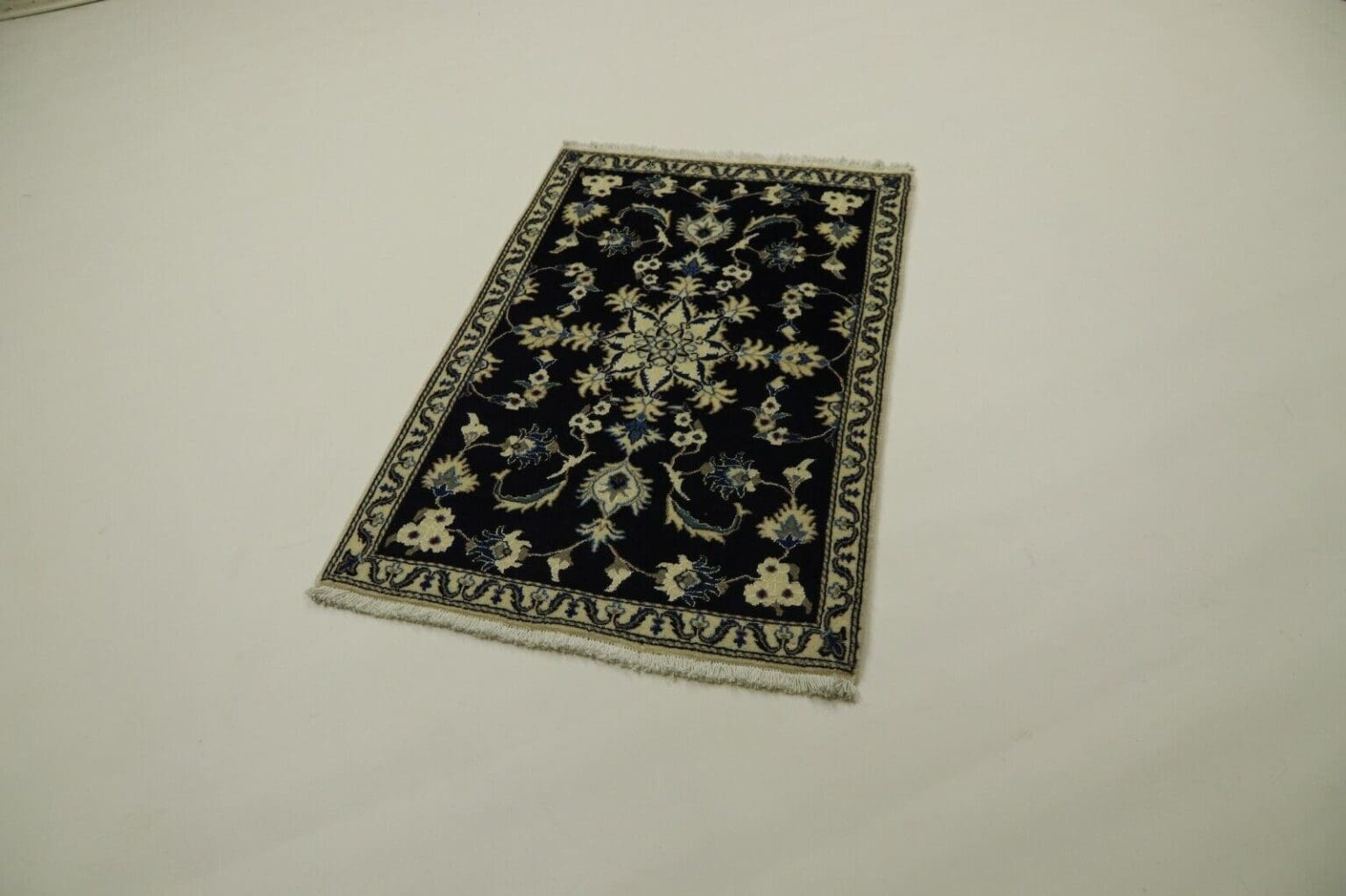
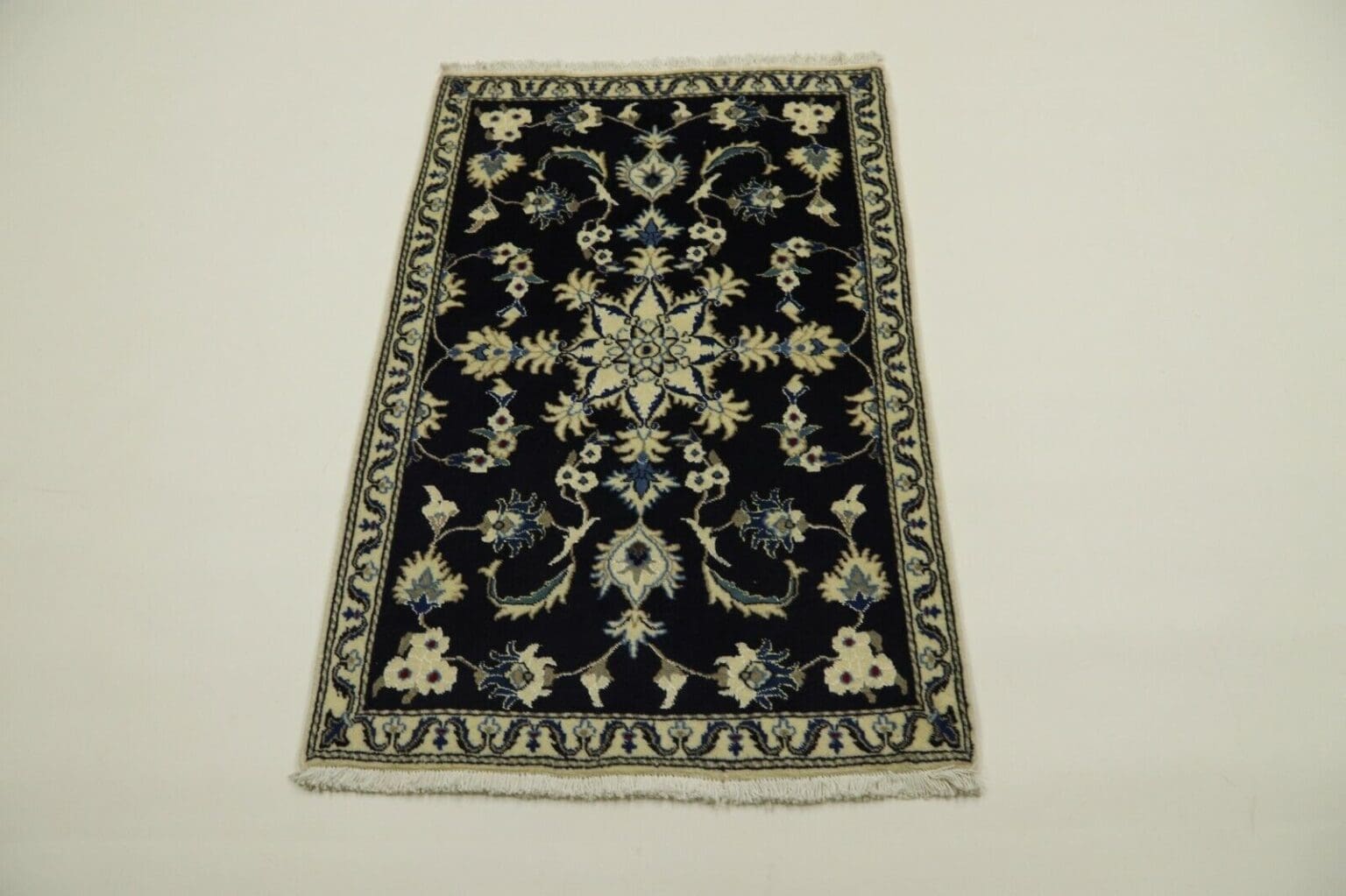
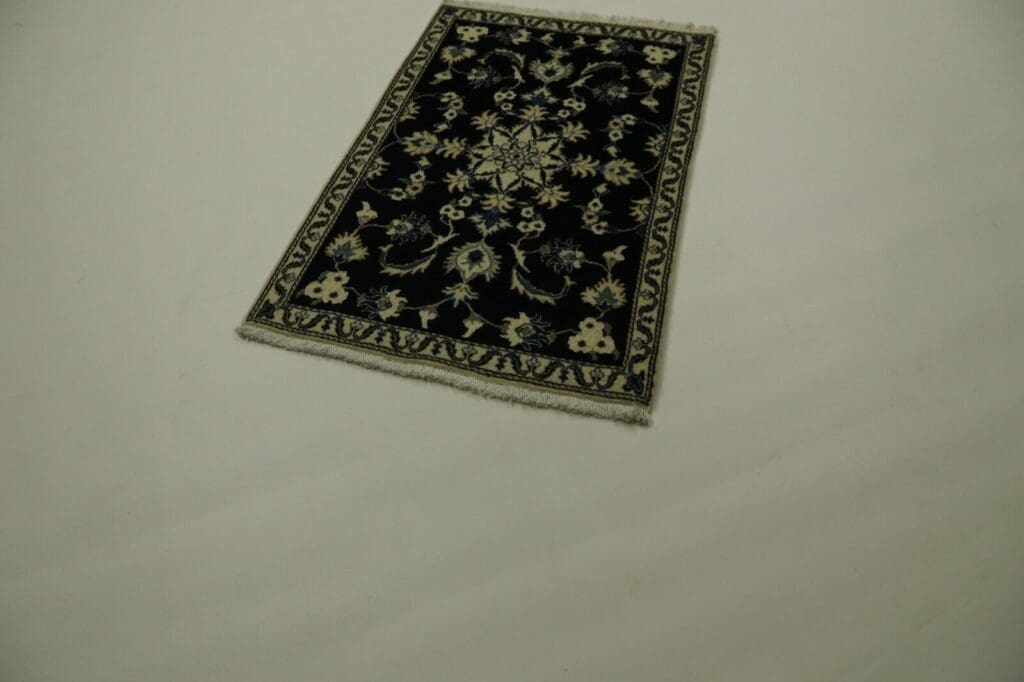
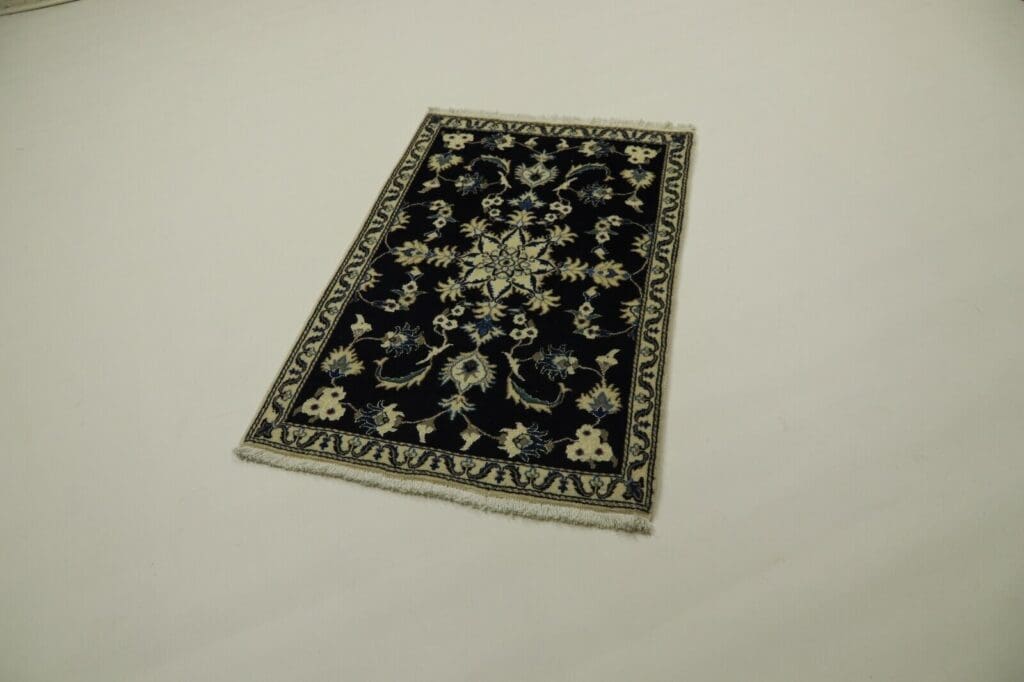
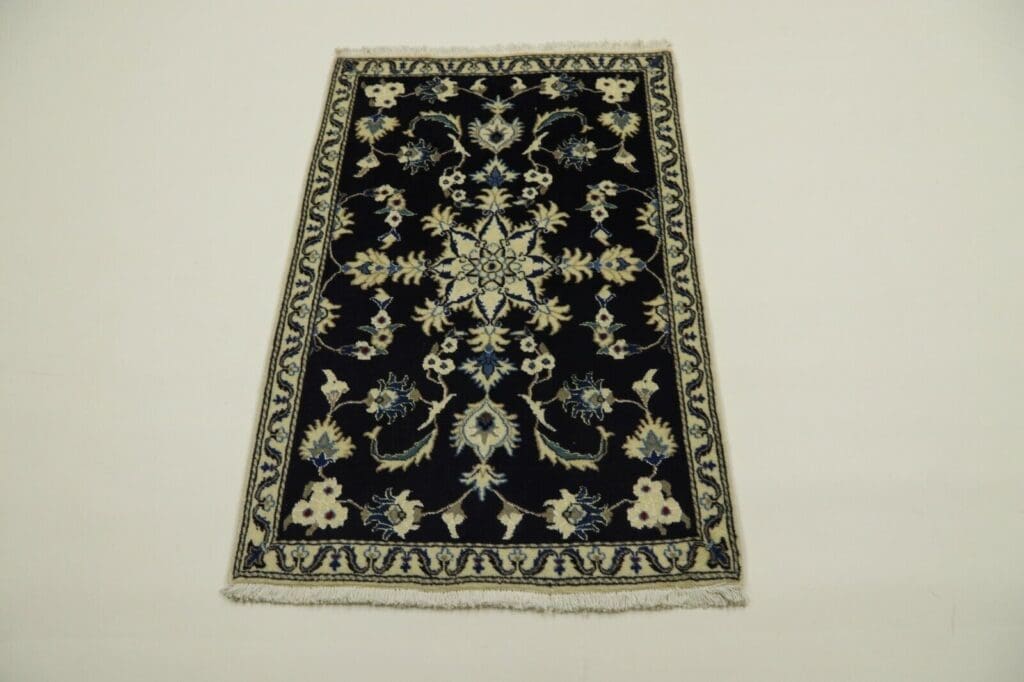
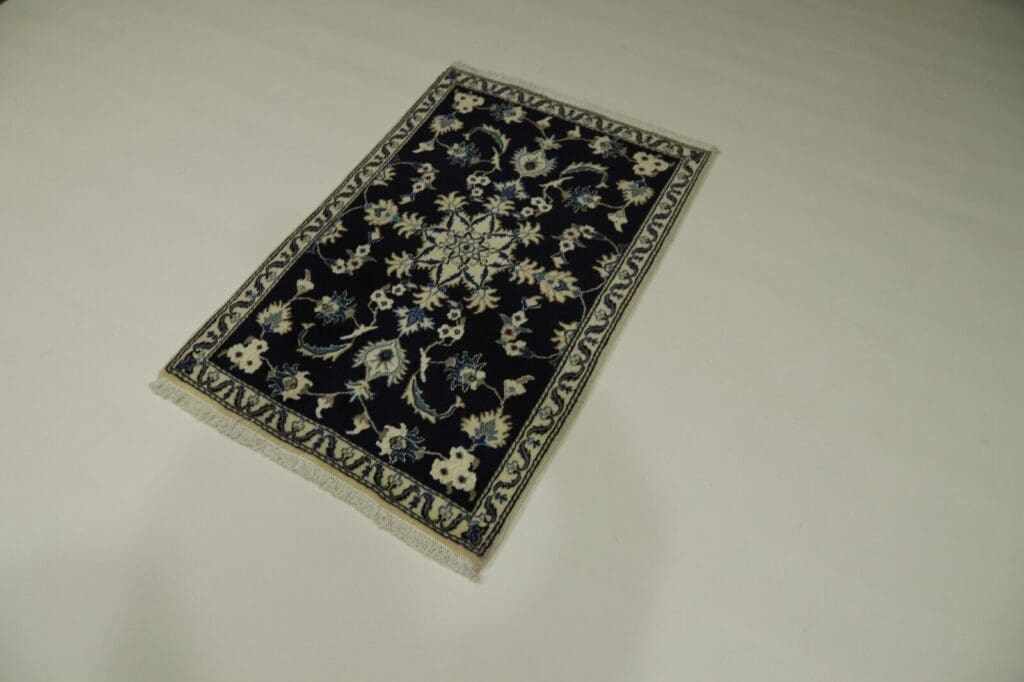
This Nain Persian rug is hand-knotted, with virgin wool specified for the pile. Cotton and silk are also listed among its materials. Virgin wool gives the surface the character of a natural fibre with a soft handle, warmth and good resilience. Wool has long been used in rug making because it can withstand regular use while retaining a comfortable feel underfoot. Its natural structure can also help moderate humidity and temperature in an interior.
Hand knotting connects the visual design with the physical work of making the rug. Individual knots are inserted into the foundation one after another, then compacted and finished so that the intended lines and colour areas can be developed. The high knot density given for this rug allows small contours and detailed ornament to be rendered with precision. Cotton and silk are part of the listed material composition, while virgin wool forms the named pile material.
A hand-knotted rug is not produced through one uniform machine process. The maker follows a design and builds the composition progressively, working through colours, outlines and repeated motifs section by section. This requires knowledge of the knotting method, the behaviour of the yarns and the relationship between the foundation and the pile. Such skills belong to the inherited craft of Oriental rug making. The rug has a rectangular form and is described as new and in perfect condition.
Origin and Tradition
The rug comes from Nain in Iran. Nain is a city in central Iran with a recognised tradition of Persian rug production. Its weaving identity is associated with carefully ordered compositions, refined drawing and the use of fine materials. Within the wider history of Persian rugs, Nain represents a regional approach in which symmetry, controlled ornament and a measured relationship between field and border are important parts of the design language.
The rug-making tradition of Nain is linked with a history reaching back to the nineteenth century. Its development is part of Iran’s broader culture of textile craftsmanship, where knowledge of knots, foundations, colour and pattern has often been passed from one generation to the next. A rug therefore carries more than a practical function. Its layout and ornament preserve ways of organising space that belong to a particular regional tradition. The central field, secondary borders and repeating motifs all contribute to that visual structure.
Nain rugs are known for combining a fine material approach with disciplined pattern arrangements. Traditional designs from the region draw on influences from Islamic ornament. These influences can be seen in scrolling plant forms, repeated axes, balanced divisions and geometric framing. The motifs are placed within a coordinated system rather than scattered independently. A border can establish the outer rhythm, while a central field provides the main area in which the pattern develops.
Persian rugs from different regions are not interchangeable in their drawing or construction. Nain has its own established vocabulary, although individual rugs may vary according to the workshop, the design and the period of production. Regional tradition does not mean that every Nain rug has an identical appearance. It describes a body of methods and visual principles that can be interpreted in different ways. This particular piece is identified as a Nain rug from Iran and is presented with the designation Super Nain.
Natural, restrained colours are commonly associated with the balanced appearance of Nain designs. In Persian rug design, colour is used to clarify the relationship between ground, ornament and outline. Contrasts can make a medallion or border easier to read, while related shades can create a quieter transition between vines and open areas. The actual impression depends on the selected yarns and the individual design. This rug is described as having an oriental and traditional design.
Design and Pattern
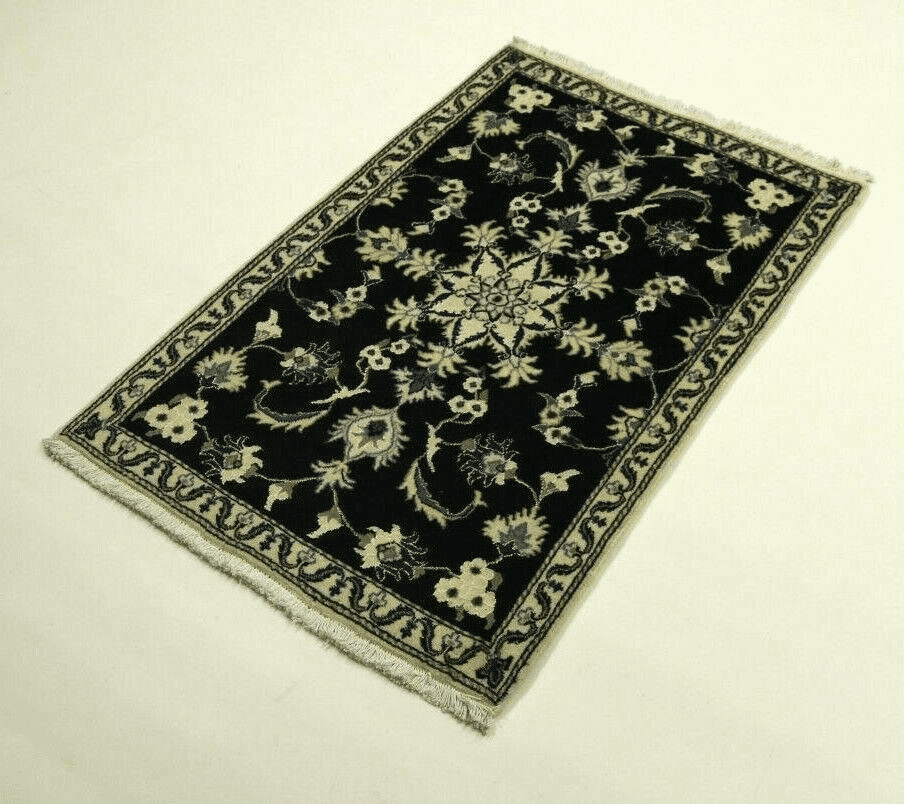
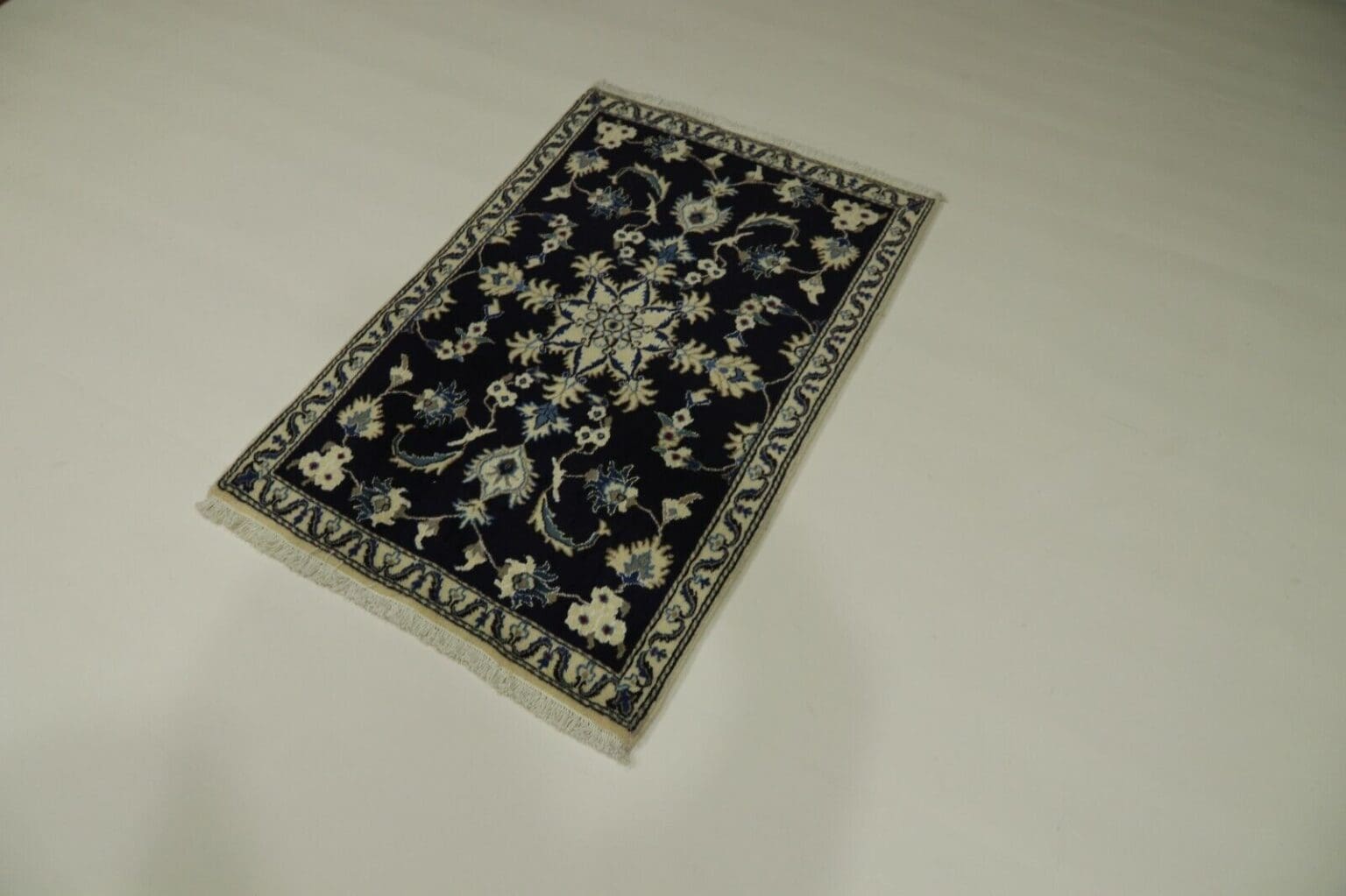
The pattern of this Super Nain is described as oriental and traditional. That description places it within a design tradition where floral details, scrolling forms and geometric structures may be brought together in a balanced composition. Such motifs usually work as parts of a complete arrangement rather than as isolated decoration. A medallion may organise the centre, while smaller forms distribute visual weight through the surrounding field. Other traditional layouts use an all-over pattern in which repeated plants and ornaments cover the field without one dominant centre.
Floral motifs are central to many Oriental rugs. Flowers, leaves and vines are stylised so that their characteristic lines remain clear within a woven or knotted surface. They are not intended as botanical illustrations. Instead, the maker adapts them to the rhythm of the design, repeating or mirroring them to maintain balance. Geometric shapes add another layer of structure. They may frame a medallion, separate sections of a border or provide a firm outline around more fluid plant forms.
Traditional rug design depends on repetition, proportion and visual equilibrium. The main border frames the field and establishes a direction around the edge. Narrower guard bands may sit beside it and create a transition between the outer border and the central area. Within the field, motifs can be arranged symmetrically, along an axis or at recurring intervals. A dense knotting structure generally supports the drawing of fine details, but the supplied description does not assign a single specific symbol or named motif to this rug.
The colours are described as soft and natural. In the Nain tradition, a restrained palette can keep the drawing legible and allow fine ornament to remain visible. Colour areas distinguish the ground from the pattern and help define the hierarchy between main and secondary elements. Related tones create continuity, while darker outlines can give individual forms a clear edge. The effect is also influenced by the wool itself, whose surface gives colour a textile rather than a flat printed appearance.
Oriental patterns often reflect the cultural and religious influences of the regions in which they developed. Scrolling plants may suggest continuity and growth, while the enclosure of a medallion or border gives the composition a sense of order. These are general aspects of pattern history, not a claim that one particular symbol on this rug has a fixed meaning. For this piece, the documented design information is its traditional Oriental character and its Super Nain designation. Its rectangular shape follows the familiar format of a flat floor covering.
A hand-knotted pattern can be read at more than one distance. Close viewing reveals the individual transitions, outlines and small areas created by the knots. From farther away, the separate details merge into a unified arrangement of field, border and colour. This is one reason knot density matters to the appearance of finely drawn rugs: it affects the space available for small changes in contour. The pattern remains connected to the regional Nain tradition while retaining the individual character of a single hand-made piece.
Special Features
The listed features include hand knotting, a virgin-wool pile and a high knot density. The rug is new and in perfect condition. Virgin wool is described as naturally resistant to dirt and therefore relatively easy to maintain with gentle routine care. It can also help regulate the indoor climate, providing a comfortable environment in both winter and summer. These properties arise from the material identified for the pile and do not change the rug’s documented composition.
The rectangular format and traditional Oriental design allow the rug to be used in several types of room. The living room, bedroom and study are specifically named as possible settings. Its formal pattern can be combined with both classic and modern interiors. This versatility refers to the character of the design rather than to a particular furnishing scheme. The rug remains a new, hand-knotted Nain piece with the materials and condition stated in the description.
FAQ
How should I care for the Nain Persian rug?
Vacuum regularly without using a brush attachment to remove dust and loose dirt while treating the pile gently. If a spill occurs, dab it promptly with a damp cloth rather than rubbing the area. Avoid harsh cleaning products, as they may affect the wool and the appearance of the colours. For a more thorough cleaning, professional rug cleaning every few years is recommended. The naturally dirt-resistant character of virgin wool helps with everyday care, but it does not remove the need for careful handling of stains.
Can the rug be used over underfloor heating?
Yes. The Nain Persian rug is suitable for a room with underfloor heating. The natural properties of virgin wool can help moderate warmth and contribute to a comfortable indoor climate. The heating should not be set excessively high, so that the wool is not subjected to unnecessary stress. Moderate, even heat is preferable to intense heat when using a wool rug in this way.
Where can the rug be used?
The rectangular Oriental rug can be placed in a living room, bedroom or study. Its traditional Oriental design works with both classic and contemporary furnishing styles. In a living room it can define the area around seating; in a bedroom it can add a textile surface beside or beneath the furniture; in a study it can provide a patterned foundation for the room. The chosen location should have a suitable, reasonably level surface and support use consistent with the rug’s new and perfect condition.
To provide the best experiences, we use technologies like cookies to store and/or access device information. Consenting to these technologies will allow us to process data such as browsing behavior or unique IDs on this site. Not consenting or withdrawing consent, may adversely affect certain features and functions.
Functional Always active
The technical storage or access is strictly necessary for the legitimate purpose of enabling the use of a specific service explicitly requested by the subscriber or user, or for the sole purpose of carrying out the transmission of a communication over an electronic communications network.
Preferences
The technical storage or access is necessary for the legitimate purpose of storing preferences that are not requested by the subscriber or user.
Statistics
The technical storage or access that is used exclusively for statistical purposes.The technical storage or access that is used exclusively for anonymous statistical purposes. Without a subpoena, voluntary compliance on the part of your Internet Service Provider, or additional records from a third party, information stored or retrieved for this purpose alone cannot usually be used to identify you.
Marketing
The technical storage or access is required to create user profiles to send advertising, or to track the user on a website or across several websites for similar marketing purposes.
 SECURE PAYMENT
 SHIPPING PARTNERS