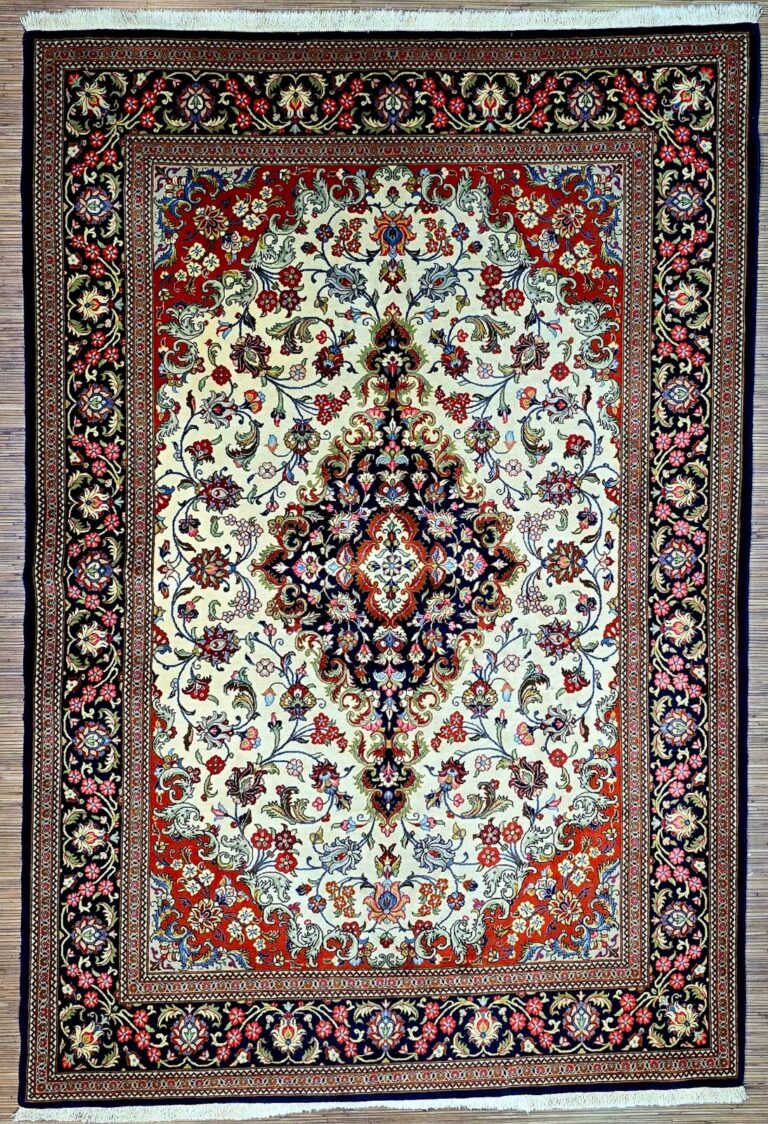
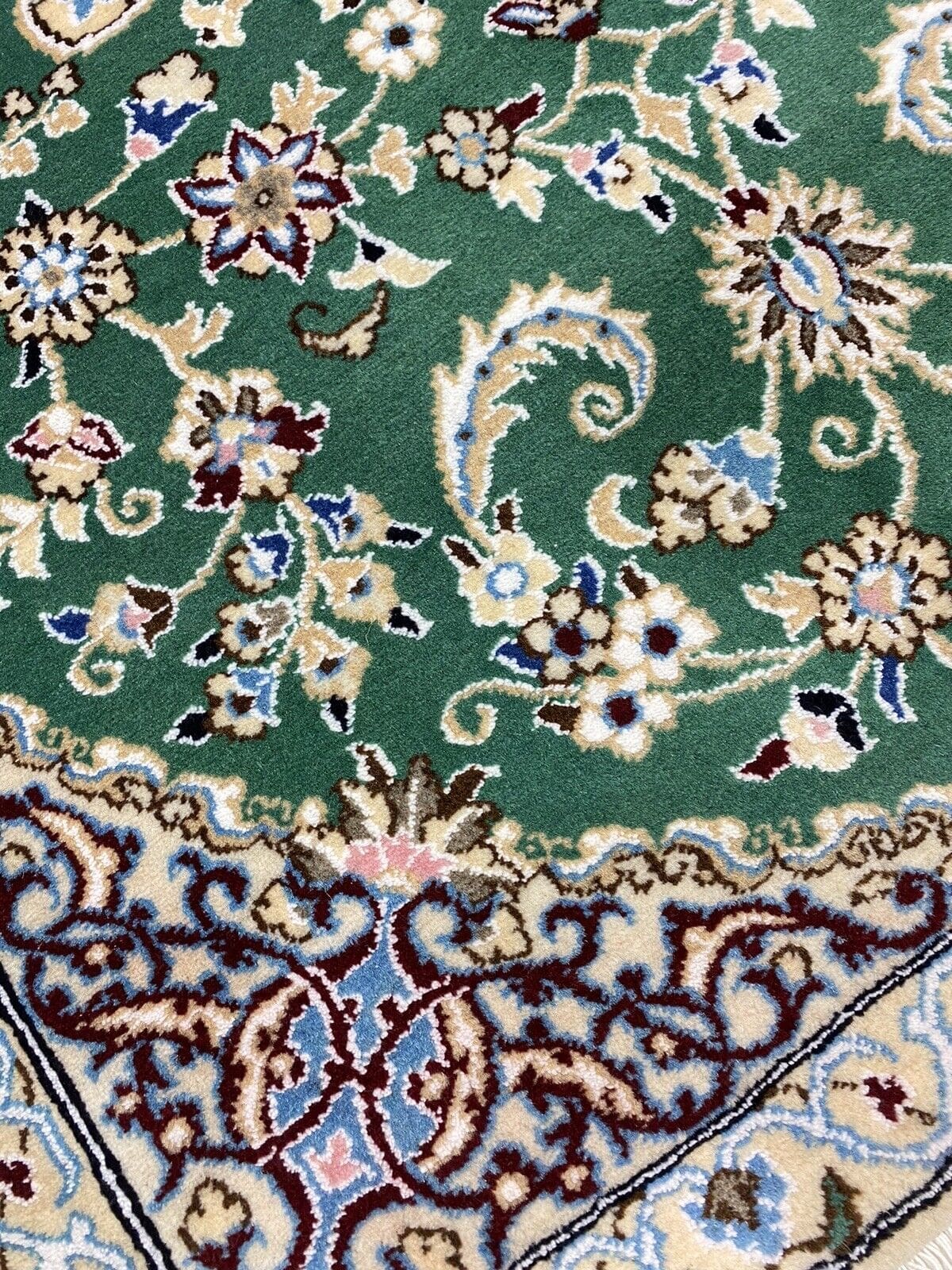
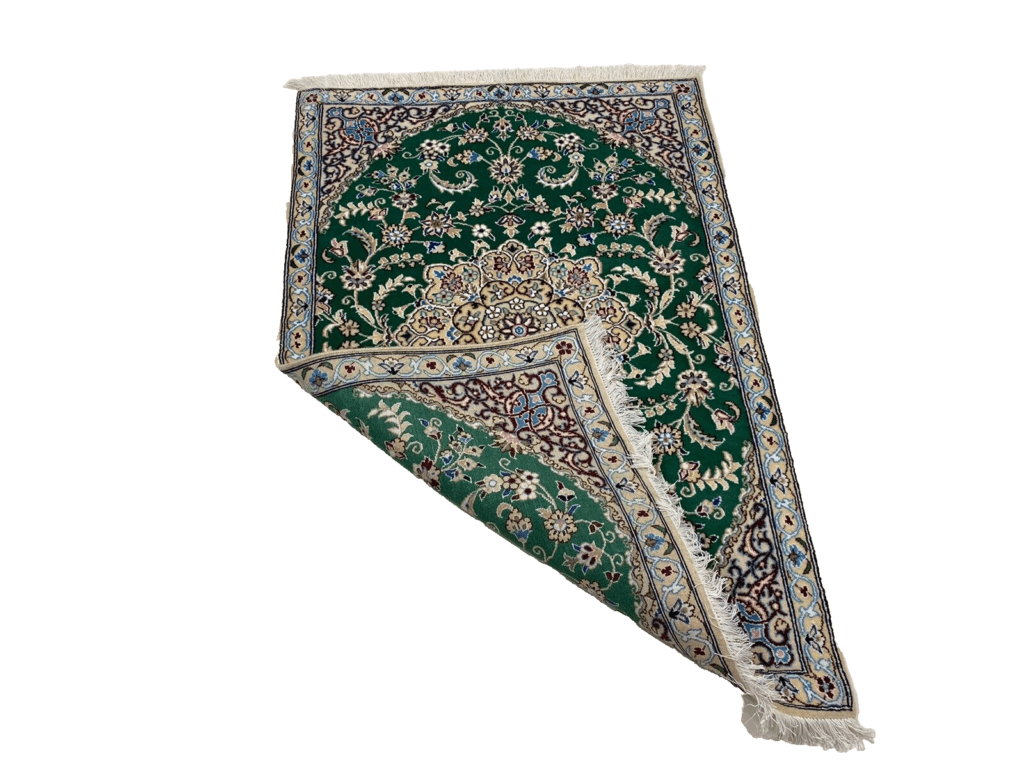
This Nain Persian Rug is hand-knotted and comes from Persia. Its pile consists of 90% virgin wool and 10% silk, while the warp is made from 100% cotton. The materials for both the visible pile and the underlying structure are therefore specified. Wool makes up the greater part of the pile, with silk providing a finer component and a distinct response to light. Cotton forms the warp on which the knots are secured.
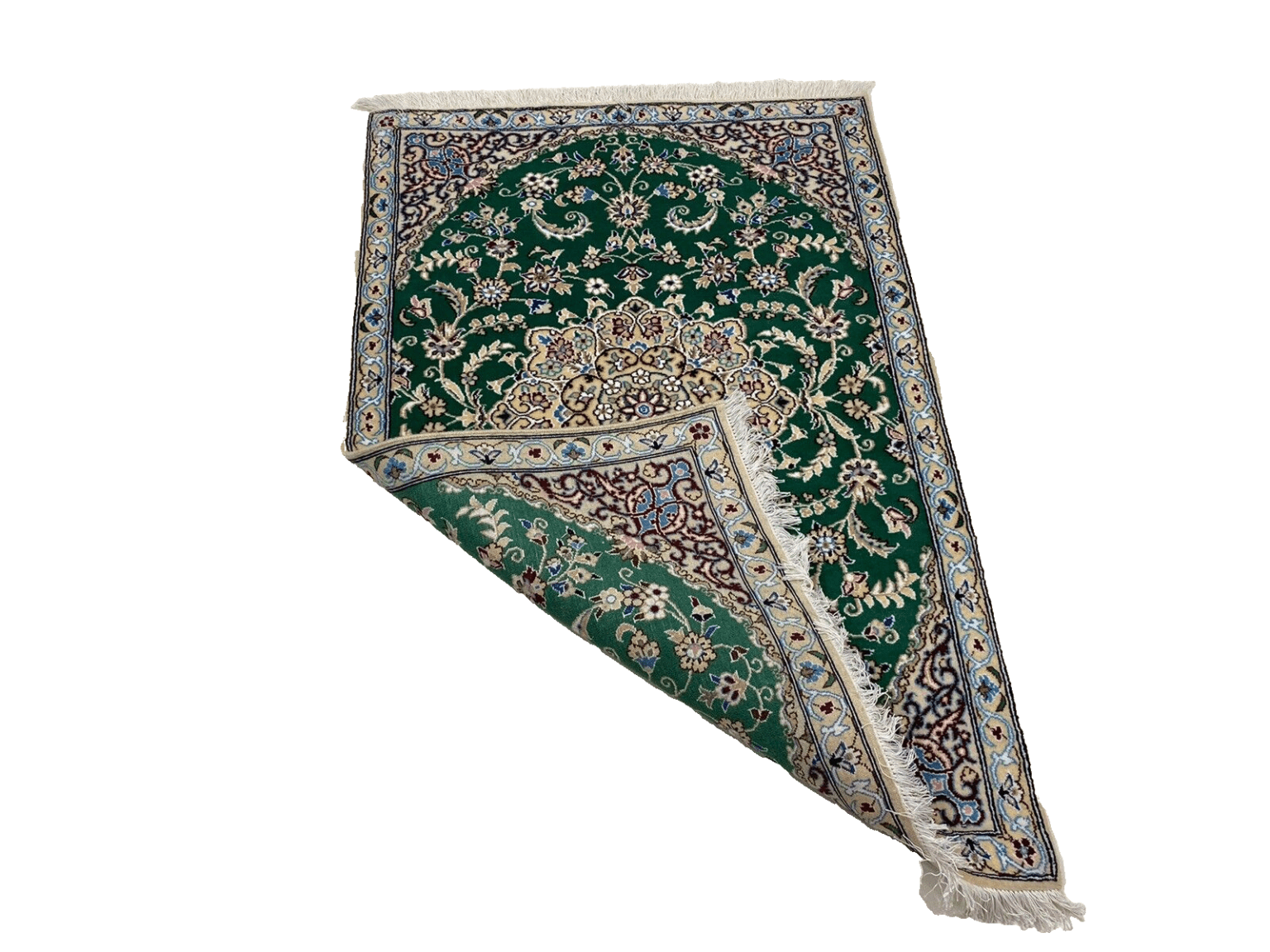
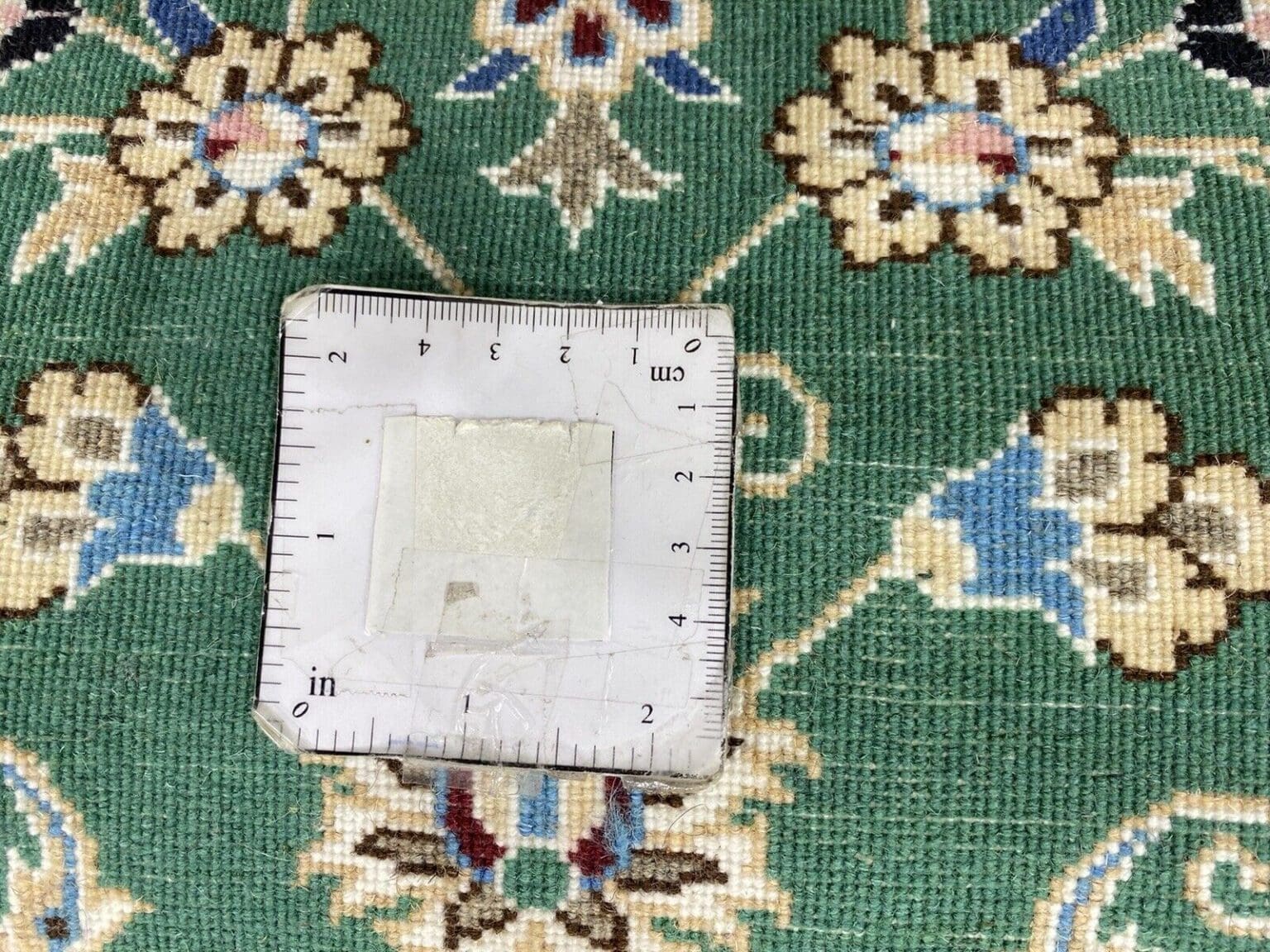
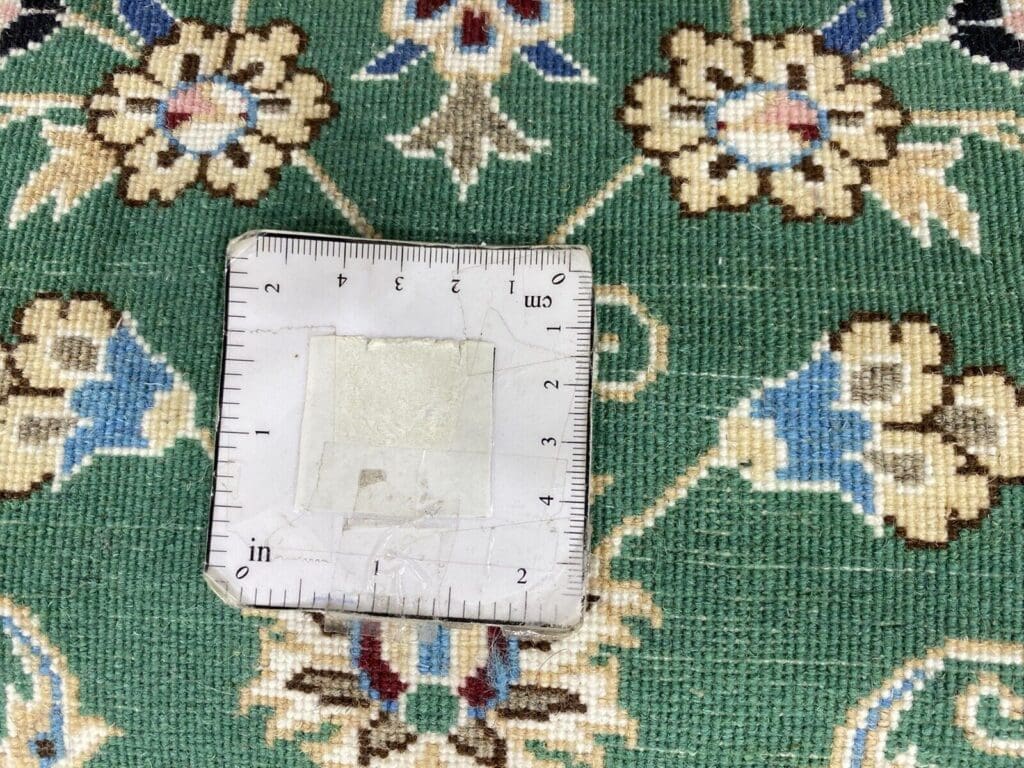
Hand-knotting builds the surface one knot at a time. Individual pile threads are tied around the warp and held in place by the weft. The design is consequently created through a sequence of separate knots rather than printed or produced as a machine-made surface. The stated density is approximately 500,000 knots per square metre. Nain 9 La is the quality designation used for this rug in the product description.
Virgin wool is widely used in traditional rug making because its fibre is resilient and has a soft handle. Silk can introduce a finer texture, subtle sheen and a different interaction with colour. Cotton is used here for the warp, the structural foundation that receives the knots. These materials should be understood separately: the cotton is not part of the pile, while wool and silk make up the pile composition identified for this rug.
The craftsmanship of a hand-knotted rug depends on the orderly progression of knots, the tension of the foundation and the accuracy with which the design is followed. A fine knot count can support detailed drawing, although the appearance also depends on the materials and the pattern itself. In this case, the hand-knotted construction, the Nain 9 La designation and the approximate density belong together as the recorded characteristics of the piece.
Origin and Tradition
The rug comes from Persia and is identified as a Nain Persian Rug. Nain is part of the Persian rug tradition and is associated with finely organised compositions and careful knotting. In this tradition, the pattern is built directly into the structure of the rug. Each small contour, repeated element and border relationship depends on the placement of individual knots. The craft is therefore both technical and pictorial: the foundation supports the textile, while the knot sequence creates the visible design.
Persian rugs are commonly considered through a combination of origin, construction, materials, quality designation and pattern language. The name Nain 9 La links the regional tradition with the quality term used in the listing. Fine knotting is generally suited to the precise rendering of small ornaments. This rug is described with an approximate density of 500,000 knots per square metre, a figure that indicates the fineness of its construction without changing its stated origin.
Persian weaving developed a range of regional approaches rather than one single national style. Nain is often associated with controlled layouts, delicate line work and balanced floral arrangements. Isfahan and Tabriz are also established names in Persian rug history. Isfahan rugs are frequently discussed in connection with elaborate floral compositions and the use of silk. Tabriz rugs are often recognised for medallion arrangements, detailed drawing and distinctive colour groupings. These comparisons place Nain within a wider Persian tradition; they do not identify this rug as an Isfahan or Tabriz rug.
Kashan is another important name in Persian weaving. Kashan rugs are commonly associated with deep colour schemes, fine wool and traditional symbols or narrative references. The different regional vocabularies show how Persian workshops developed their own approaches to field, border, colour and ornament. The rug offered here remains identified as Nain from Persia. References to Isfahan, Tabriz and Kashan provide context for Persian rug design only and are not additional provenance claims.
Hand-knotting is central to the history of these rugs. A weaver follows a design plan while tying the pile into the foundation, row by row. The density, fibre selection and consistency of the work influence how clearly the pattern can be rendered. In this rug, the recorded technical points are the hand-knotted construction, the Nain 9 La designation, the approximate knot density and the combination of virgin wool, silk and cotton. They describe this particular piece without extending its provenance beyond Persia and Nain.
The use of natural fibres also reflects long-standing Persian textile practice. Wool, silk and cotton each serve different functions within a rug. Wool provides the main pile, silk contributes a refined pile element, and cotton forms the warp. The way these fibres are combined is part of the technical character of the rug. The product description also refers to natural dyes in connection with the lively colours associated with these patterns.
Design and Pattern
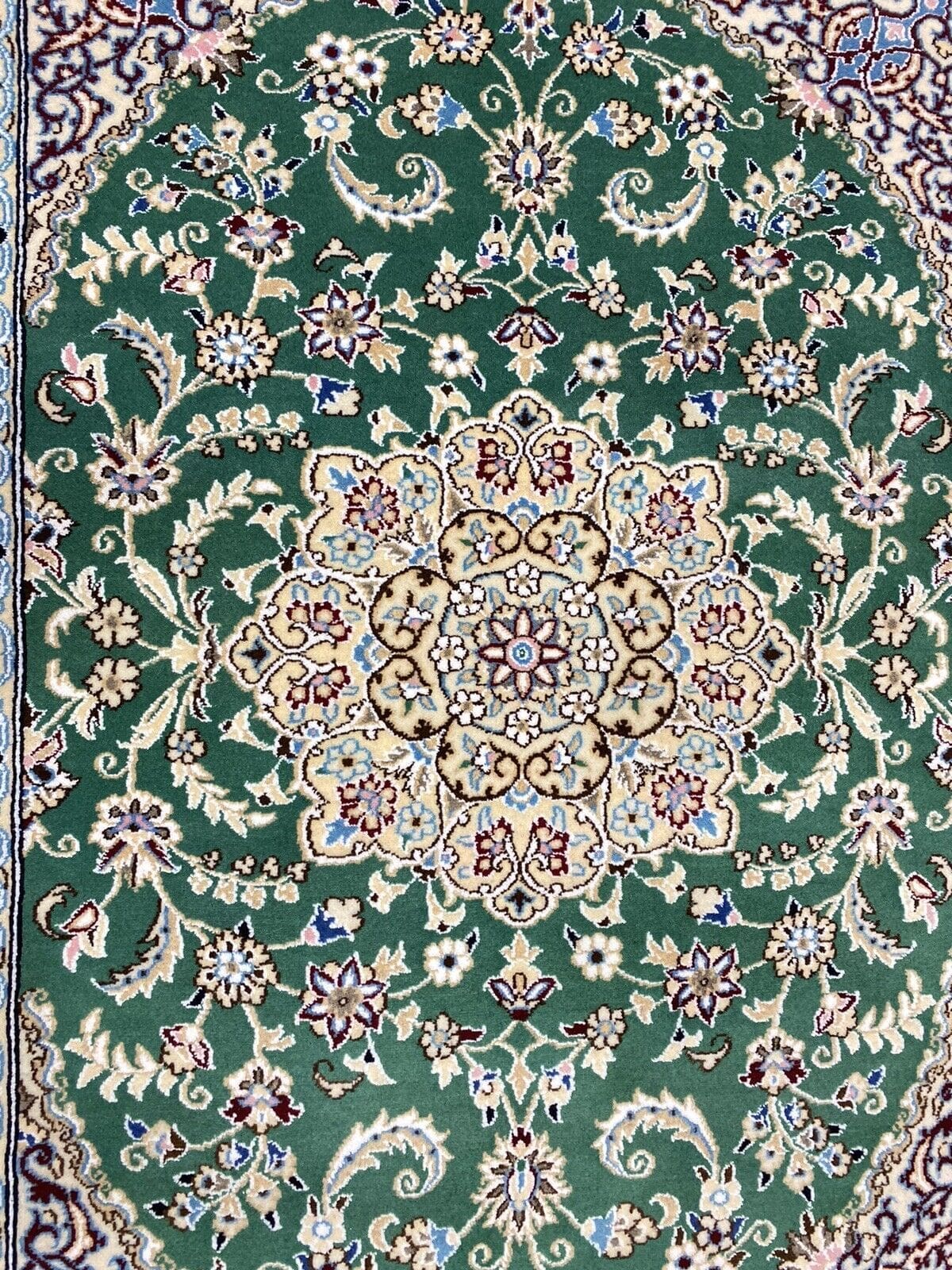
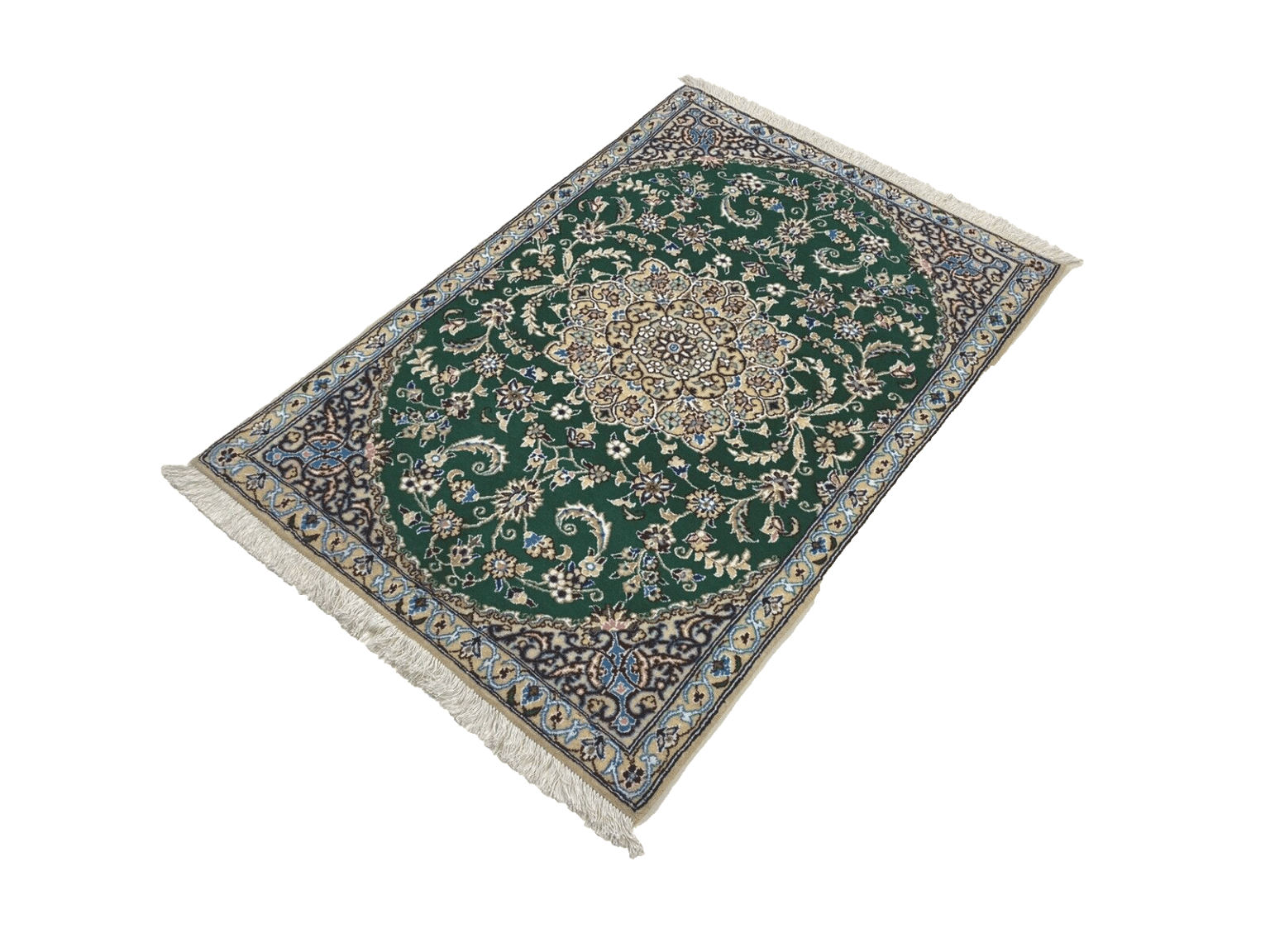
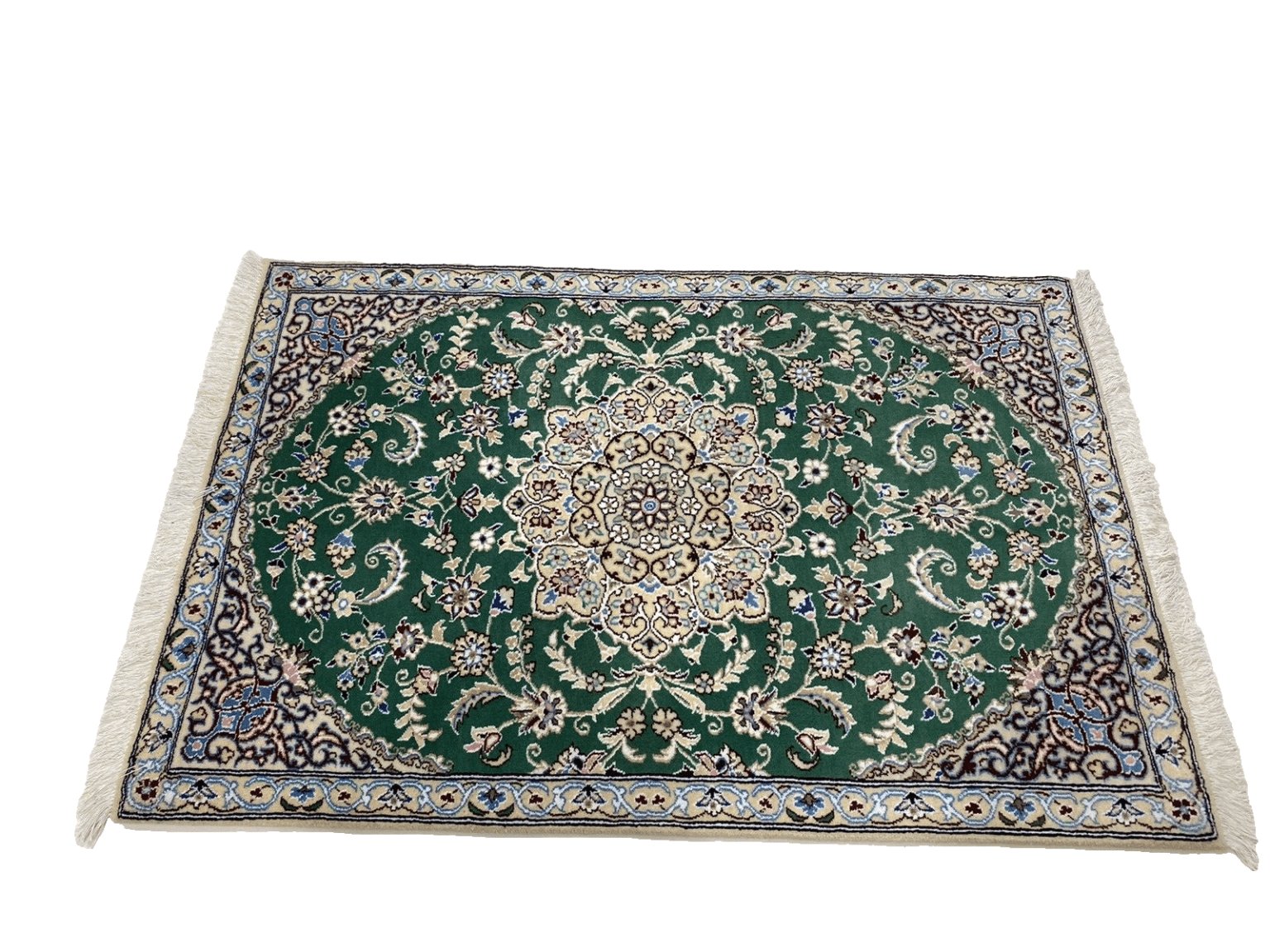
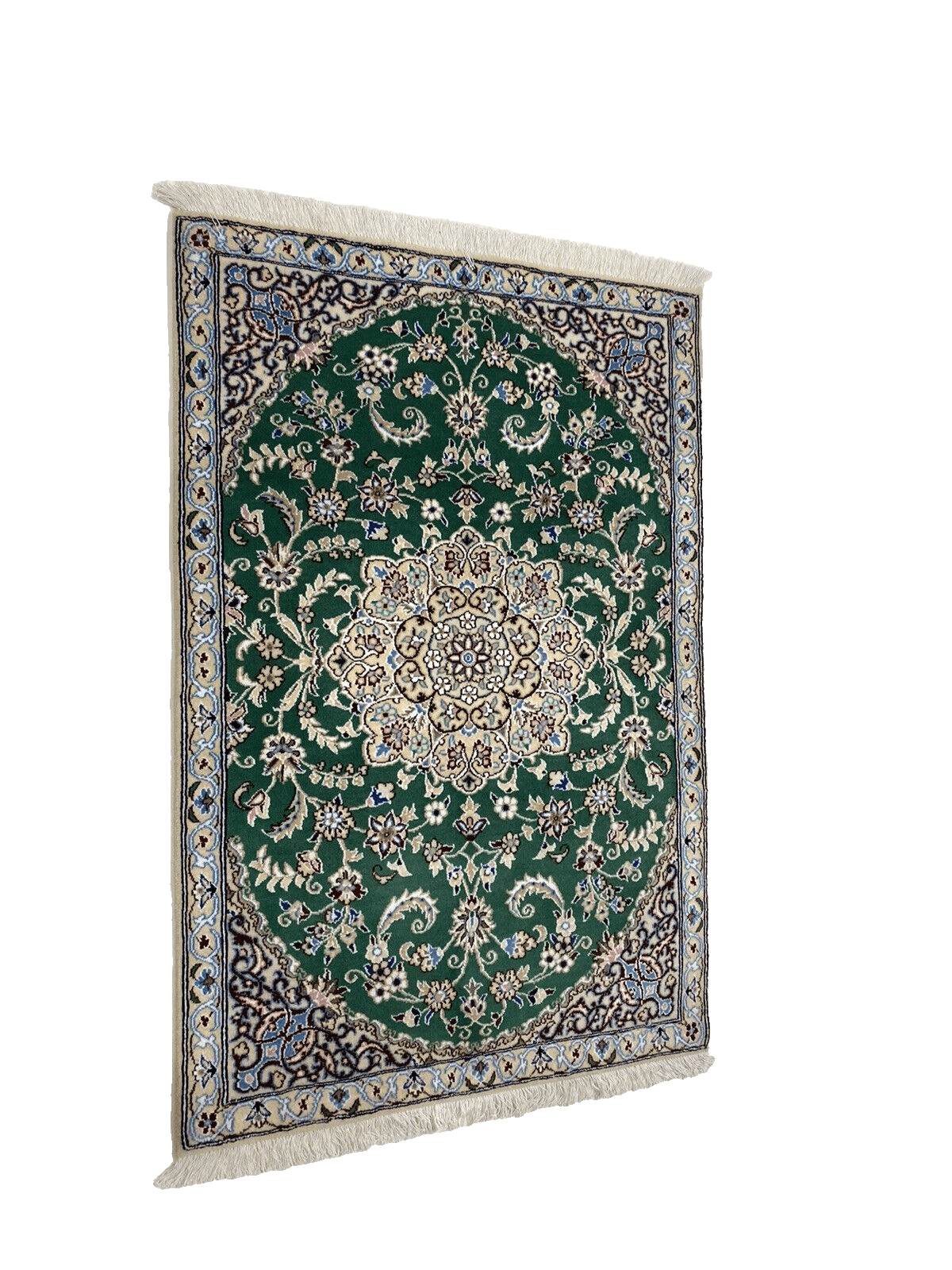
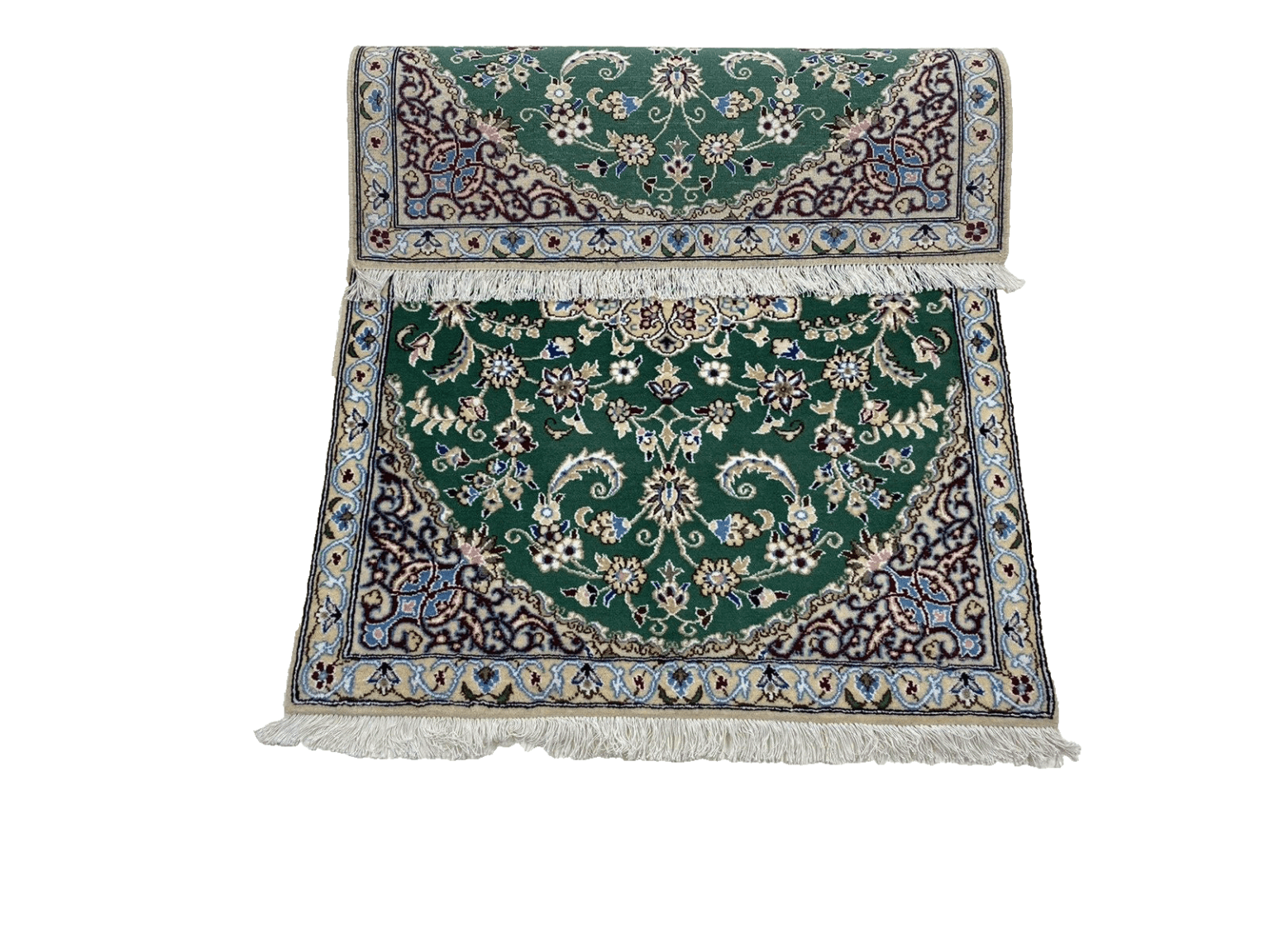
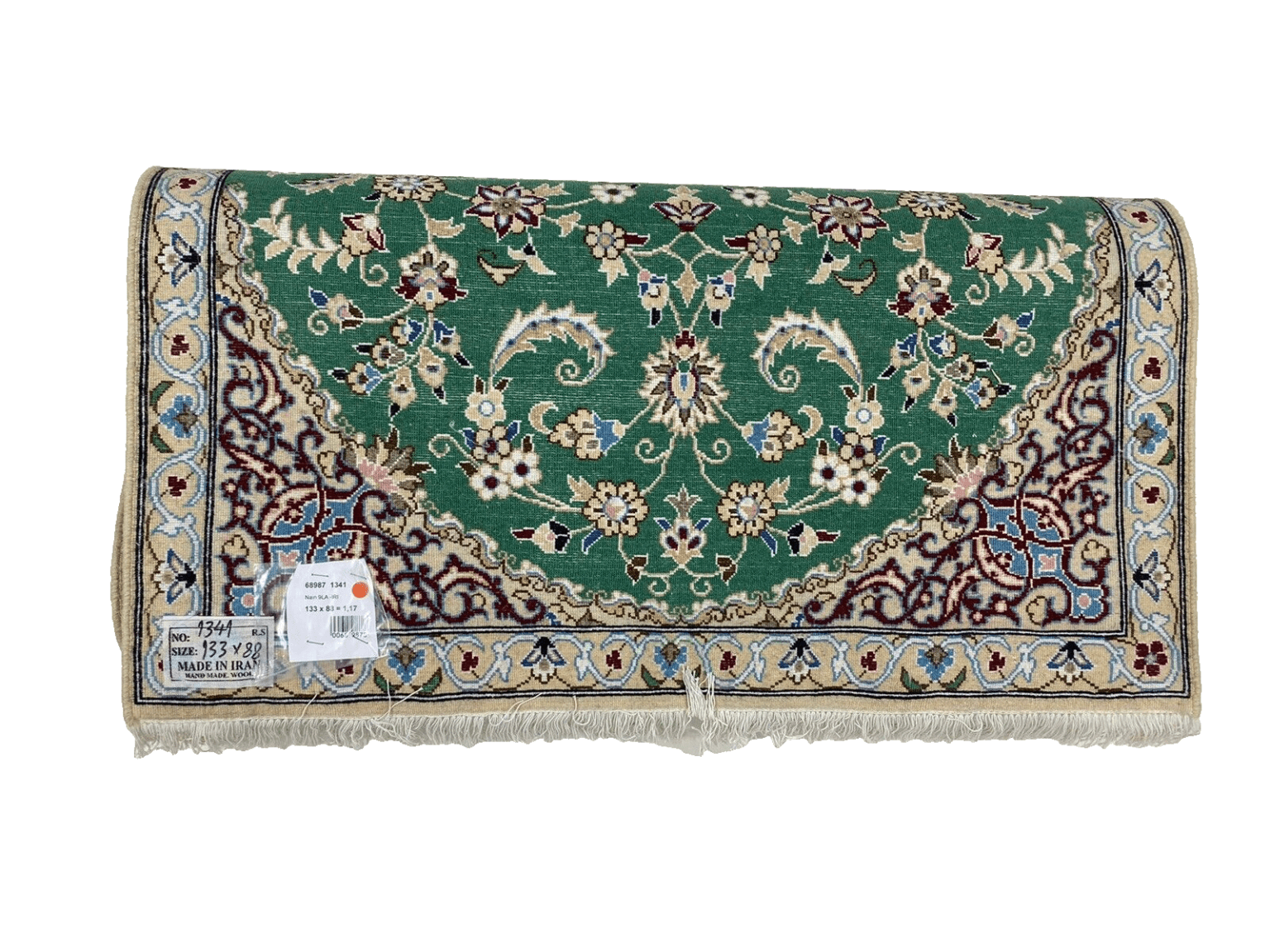
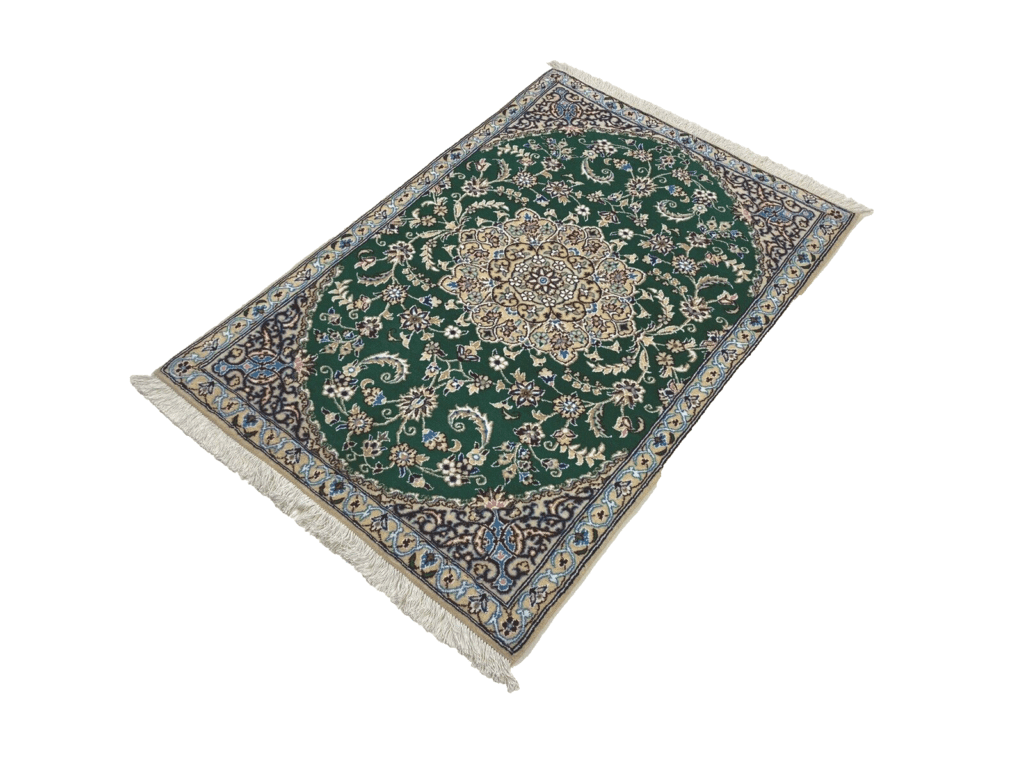
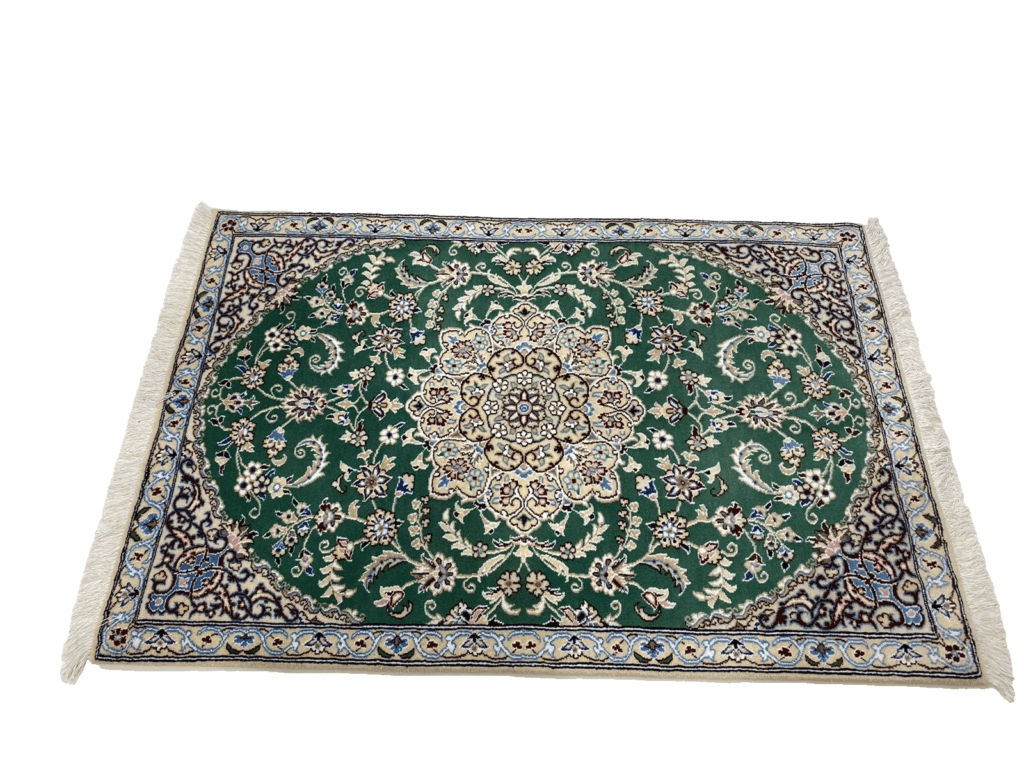
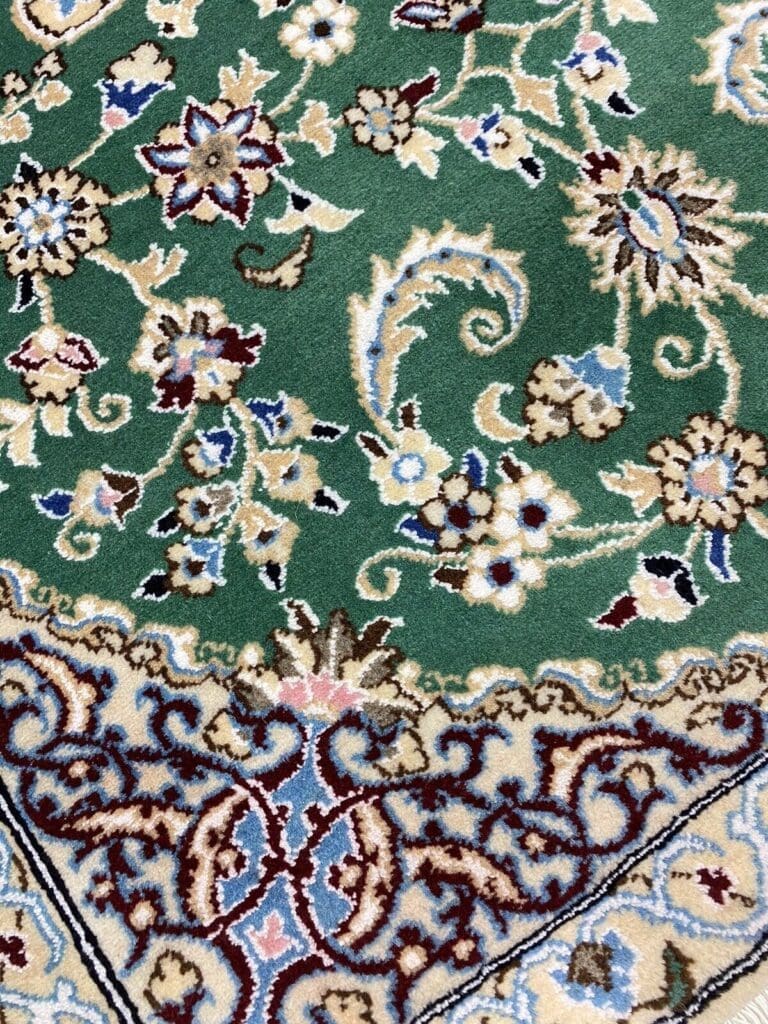
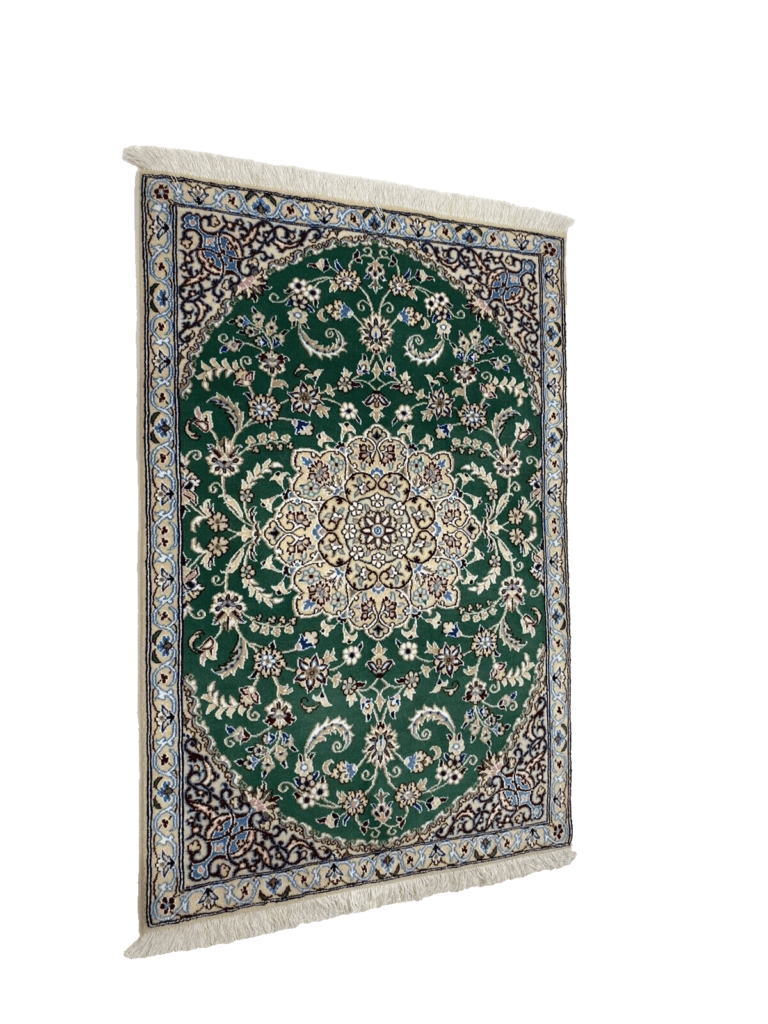
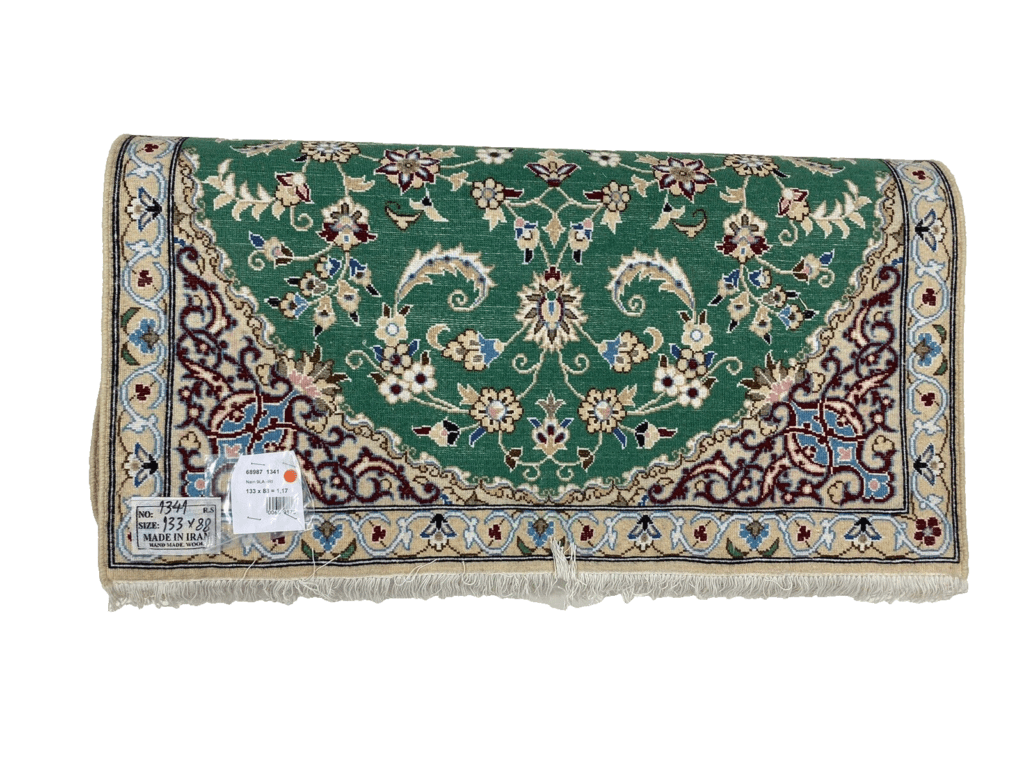
The design is described as traditional Oriental and Persian. It combines floral and geometric motifs. Floral forms can include blossoms, leaves, vines and curved stems, while geometric elements establish rhythm, repetition and defined areas. Persian rug design often places these two visual languages together: flowing plant forms soften the composition, and geometric structure gives it order.
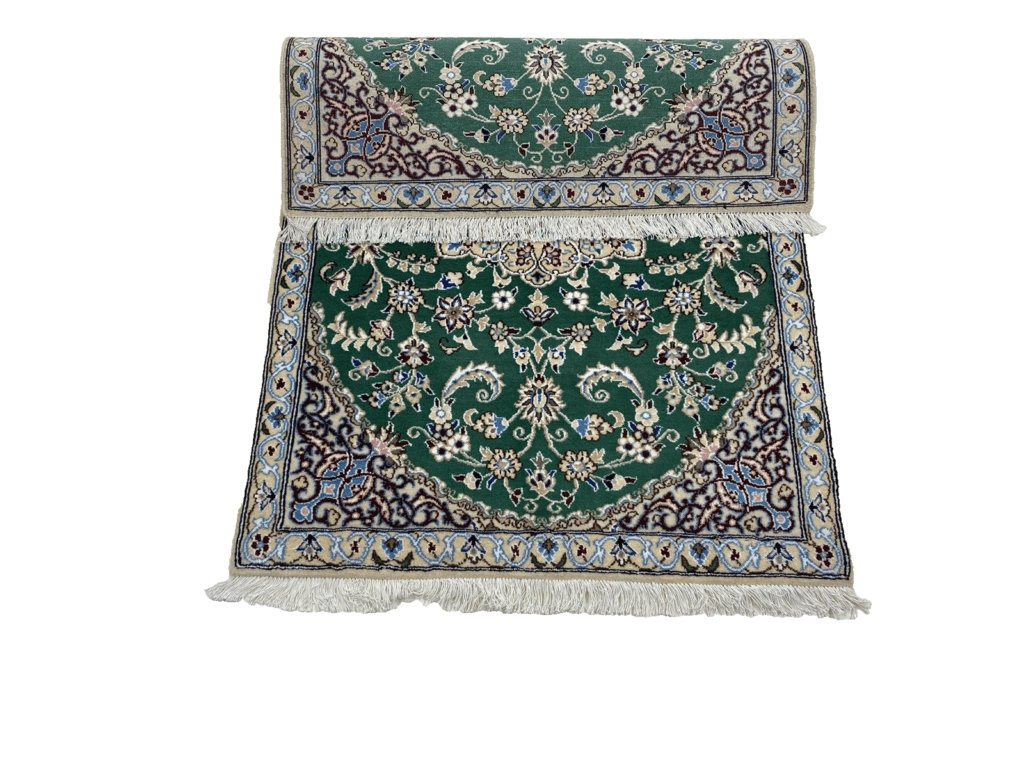
Nain compositions are often discussed in terms of careful detail and balanced organisation. A central medallion may anchor a field, or a continuous arrangement of vines may lead the eye across the surface. Borders can frame the field and clarify the transition between its centre and edge. Not every Nain follows the same arrangement. For this rug, the confirmed pattern description is the combination of floral and geometric motifs within a traditional Oriental and Persian style; no narrower ornament name is added.
The pattern tradition is based on repeated signs, symmetry and the relationship between field and border. Floral elements may be mirrored, arranged in sequences or connected through scrolling vines. Geometric details can define the outline of a flower, separate sections of a border or reinforce a medallion. The high level of knotting associated with the product description allows such details to be rendered through the woven structure rather than applied afterwards.
Lively colours are mentioned in the description, together with the use of natural dyes. In the wider Persian tradition, natural dyeing may involve plant, mineral or other naturally derived sources. Colour is not separate from the textile: wool and silk can reflect and absorb the same dye differently, producing variations in surface response. Here, the silk content of the pile is described as giving a subtle sheen and helping the colours appear vivid.
Comparisons with Isfahan, Tabriz and Kashan help explain the broader design family. Isfahan is often linked with complex floral compositions and silk, Tabriz with medallions and distinctive palettes, and Kashan with deep tones and traditional symbols. These are recognised Persian design traditions, but they should not be read as alternative names for this rug. Its stated design remains Nain, traditional Oriental and Persian, with floral and geometric elements.
The combination of a fine hand-knotted structure and an organised motif system is typical of the way Persian rugs unite utility with textile design. A pattern is not simply placed on the surface; it is encoded in the sequence of knots and colour changes. This relationship between construction and ornament is one reason regional rug traditions can be identified through both technique and visual language. For the present rug, the relevant visual facts are the traditional Persian and Oriental character, the floral and geometric pattern, and the lively colours described in the source.
Special Features
The rug is described as new and in very good condition. It is supplied with a certificate of authenticity, which accompanies the piece as documentation of the authenticity stated in the product description. The rug is also suitable for use over underfloor heating. These points complement the information about its Persian origin, hand-knotted construction and materials.
The Nain 9 La designation, the wool-and-silk pile and the cotton warp summarise the main identifying features. The approximate knot density of 500,000 knots per square metre describes the fineness of the construction. The product description also gives an approximate thickness of six millimetres. This is a product characteristic and is not used here as a size statement.
For everyday use, the care instructions given for this rug are relevant: vacuum regularly without a brush attachment, arrange professional rug cleaning from time to time and avoid prolonged direct sunlight to reduce the risk of fading. Care should take account of the wool and silk pile as well as the cotton warp. The underfloor-heating suitability is an additional practical feature specifically stated for this rug.
FAQ
How should this Nain Persian Rug be cared for?
Regular vacuuming without a brush attachment is recommended for this hand-knotted rug. It removes loose dust while avoiding unnecessary mechanical stress on the pile. Professional rug cleaning from time to time is also advised. Direct sunlight should be avoided because it can cause colours to fade. Since the pile contains both virgin wool and silk, and the warp is cotton, cleaning should be carried out with methods appropriate for these fibres.
Where does this Persian Rug come from?
This rug comes from Persia and is identified as a Nain Persian Rug. Nain is a regional designation within the Persian rug tradition, associated with carefully structured designs and fine hand-knotting. Isfahan, Tabriz and Kashan are mentioned as comparable Persian traditions, but they are not additional origins for this piece. The stated provenance is therefore Persia, with Nain as the rug designation.
What are the benefits of a hand-knotted rug?
A hand-knotted rug is formed from individual knots rather than a machine-made surface. This method allows the design to be developed through the actual textile structure, with detailed ornaments built into the pile. Hand-knotted rugs are traditionally valued for their craftsmanship and potential durability. In this case, the construction is combined with the stated fine knot density, a pile of virgin wool and silk, a cotton warp and a traditional Persian pattern. The rug is also described as new and in very good condition.
To provide the best experiences, we use technologies like cookies to store and/or access device information. Consenting to these technologies will allow us to process data such as browsing behavior or unique IDs on this site. Not consenting or withdrawing consent, may adversely affect certain features and functions.
Functional Always active
The technical storage or access is strictly necessary for the legitimate purpose of enabling the use of a specific service explicitly requested by the subscriber or user, or for the sole purpose of carrying out the transmission of a communication over an electronic communications network.
Preferences
The technical storage or access is necessary for the legitimate purpose of storing preferences that are not requested by the subscriber or user.
Statistics
The technical storage or access that is used exclusively for statistical purposes.The technical storage or access that is used exclusively for anonymous statistical purposes. Without a subpoena, voluntary compliance on the part of your Internet Service Provider, or additional records from a third party, information stored or retrieved for this purpose alone cannot usually be used to identify you.
Marketing
The technical storage or access is required to create user profiles to send advertising, or to track the user on a website or across several websites for similar marketing purposes.
 SECURE PAYMENT
 SHIPPING PARTNERS