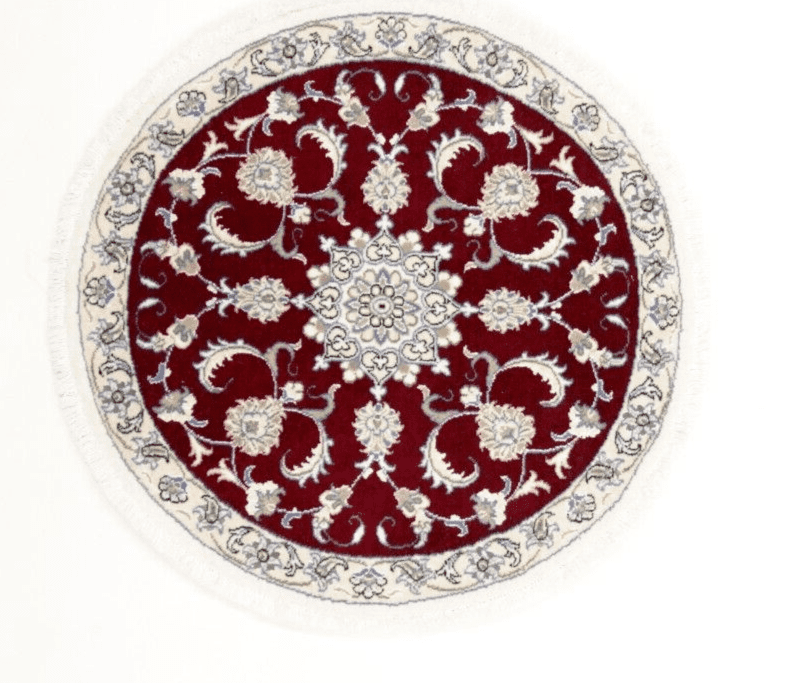
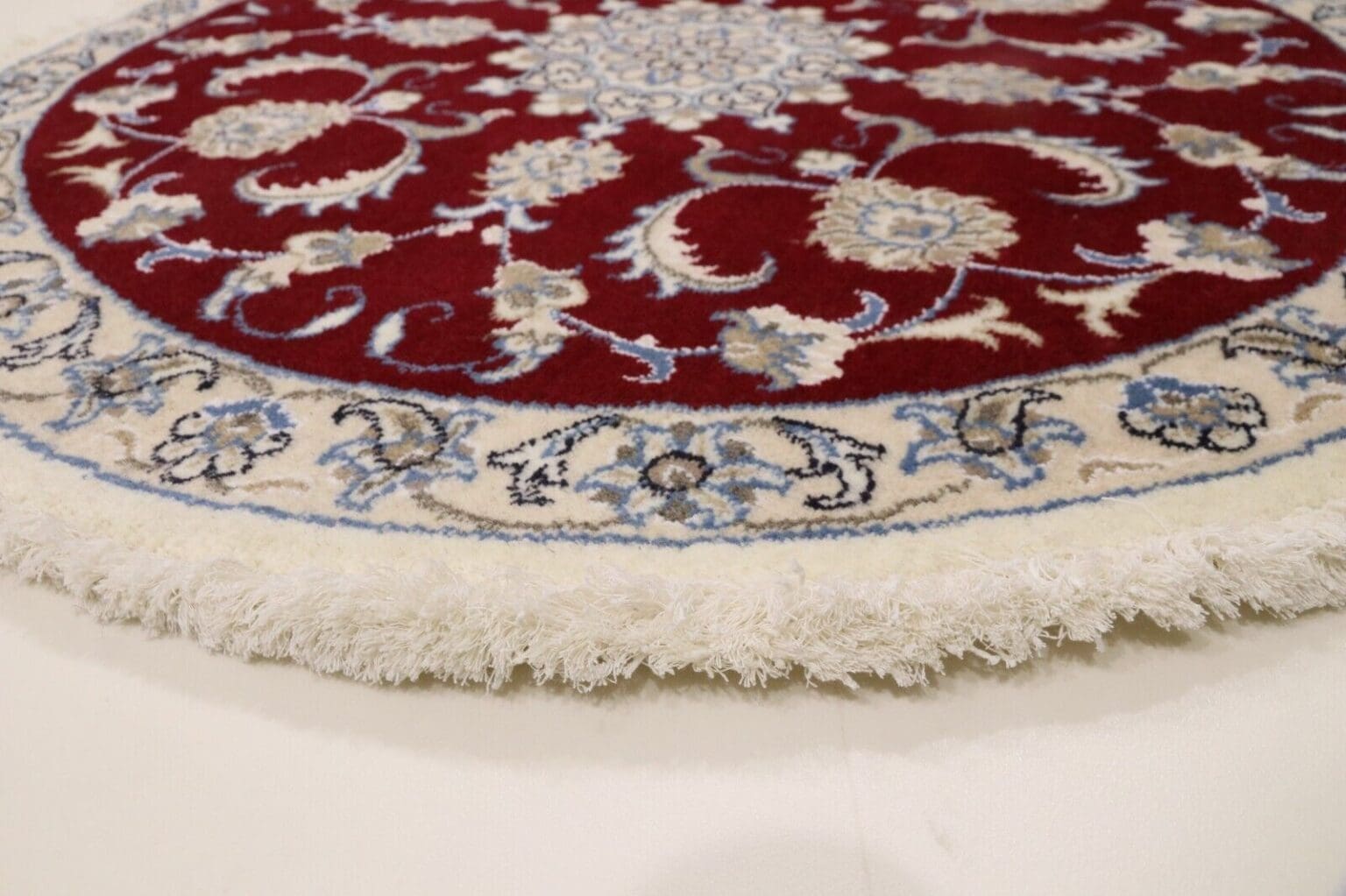
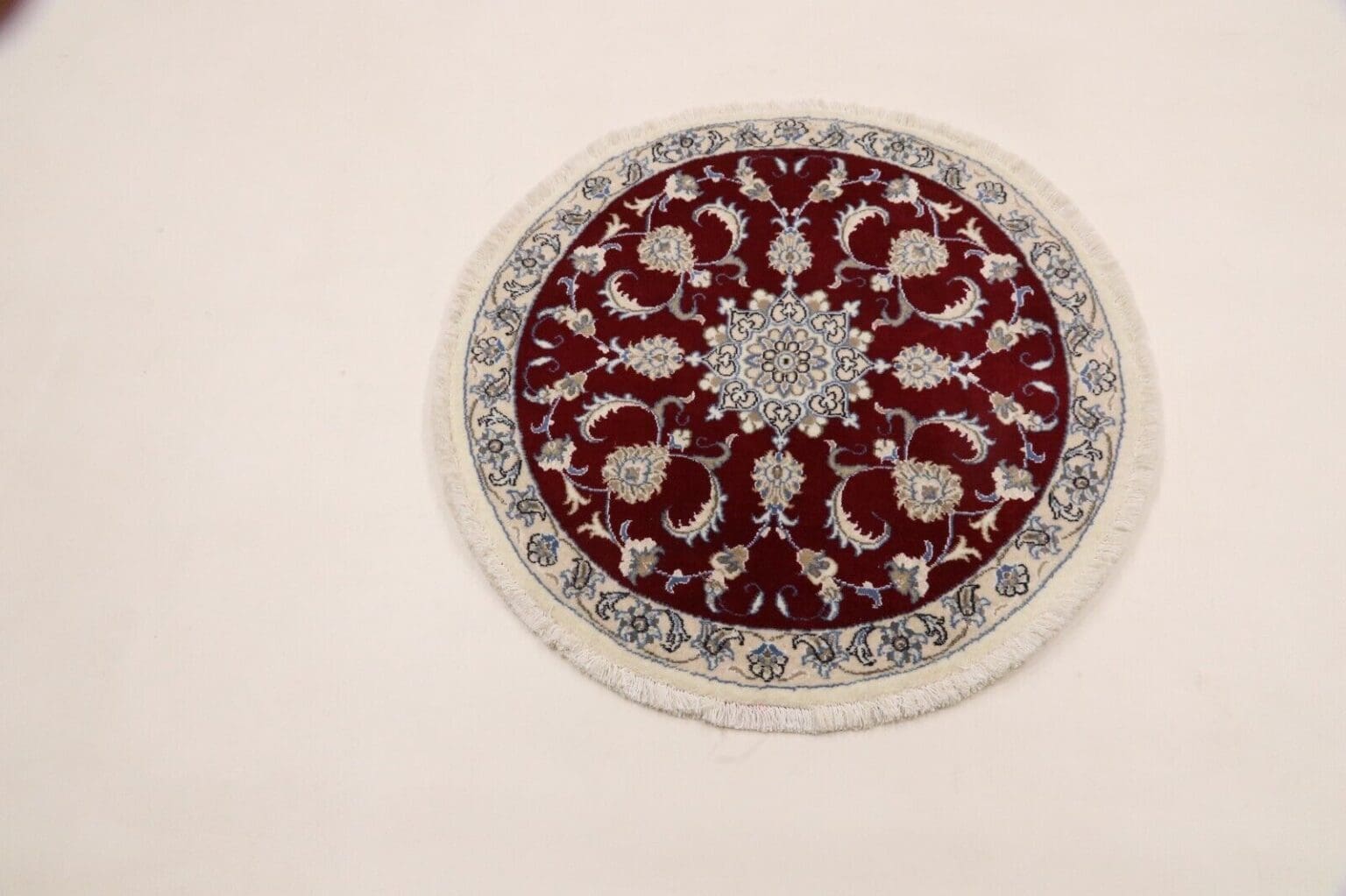
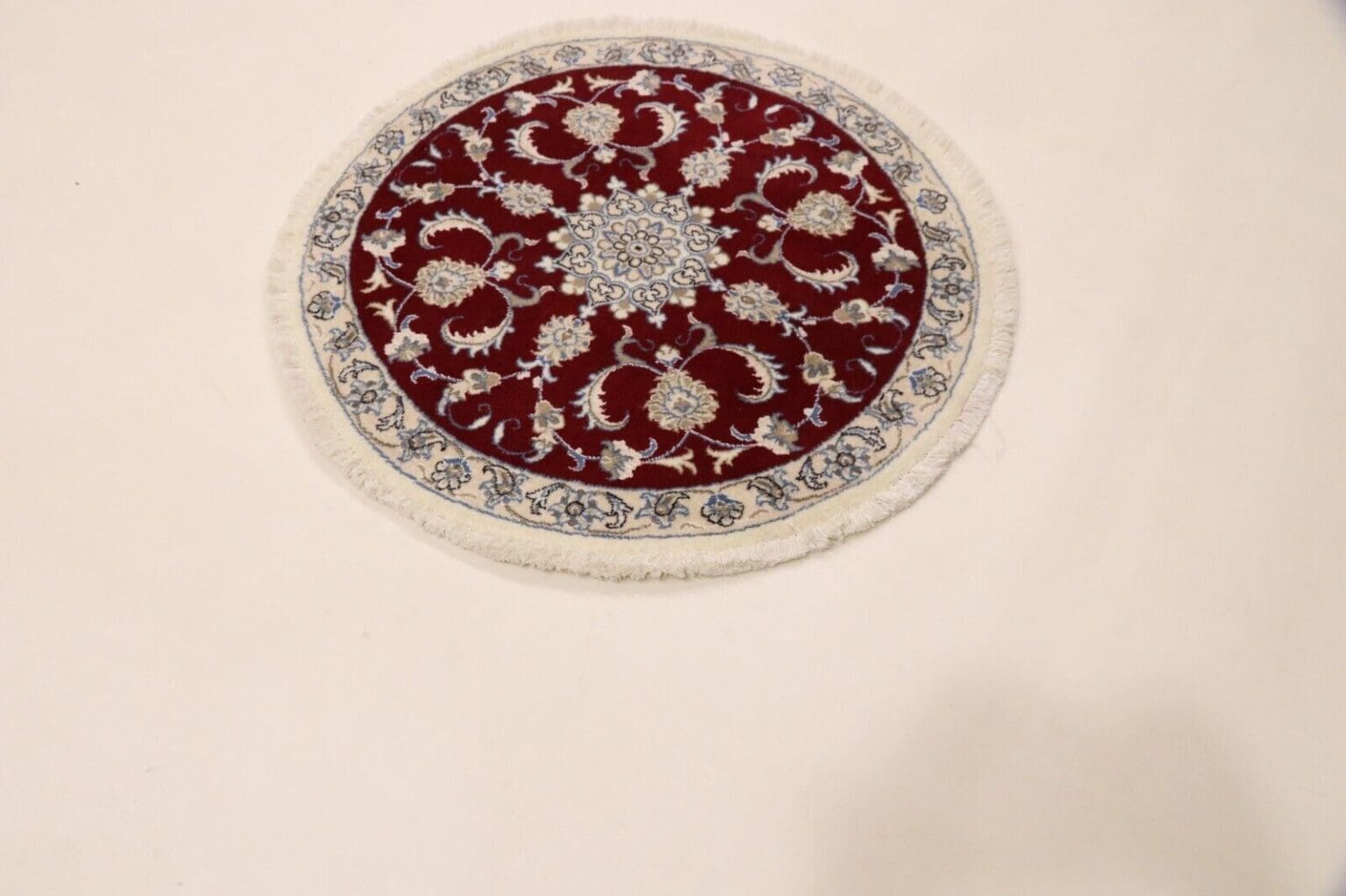
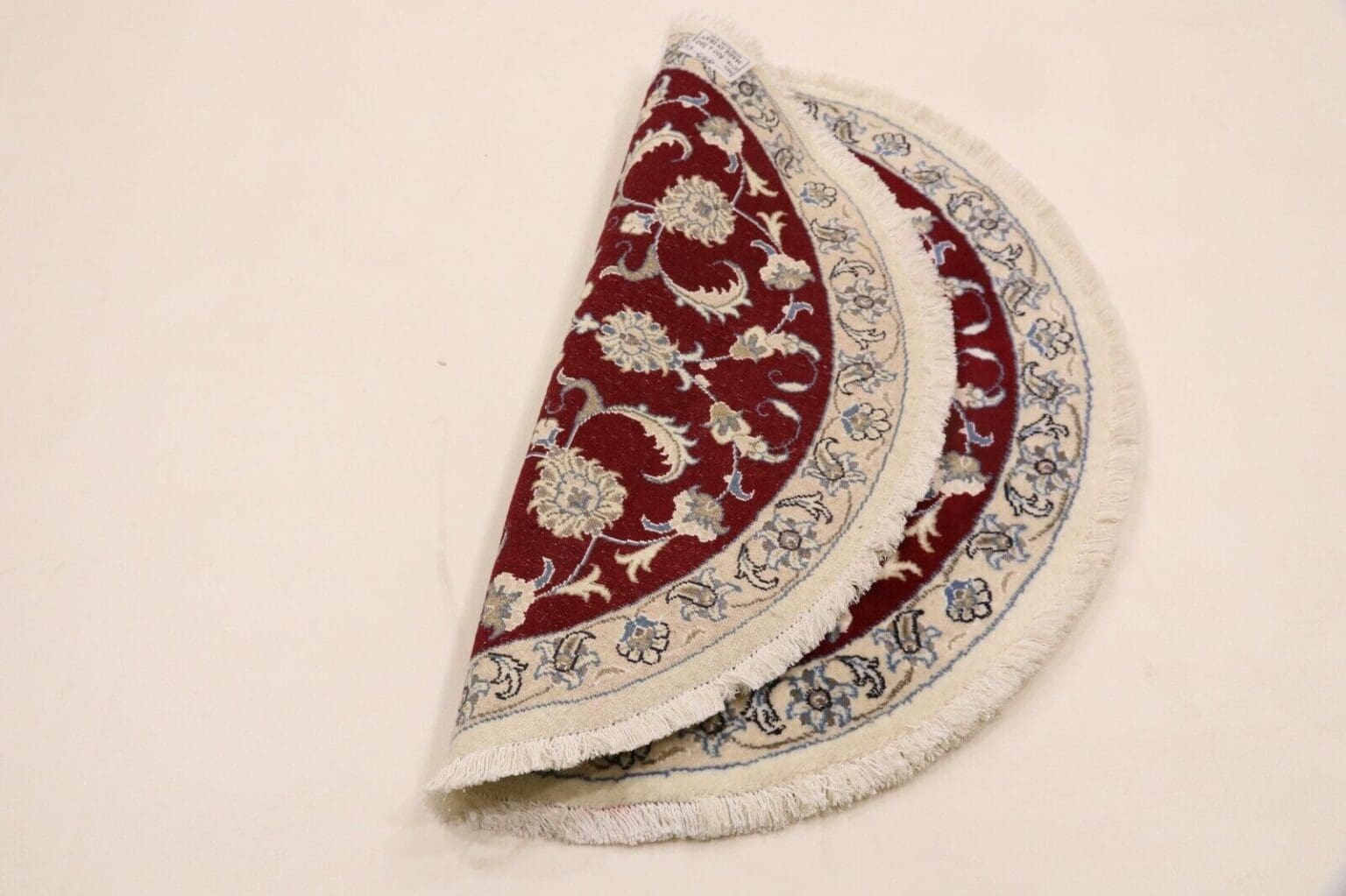
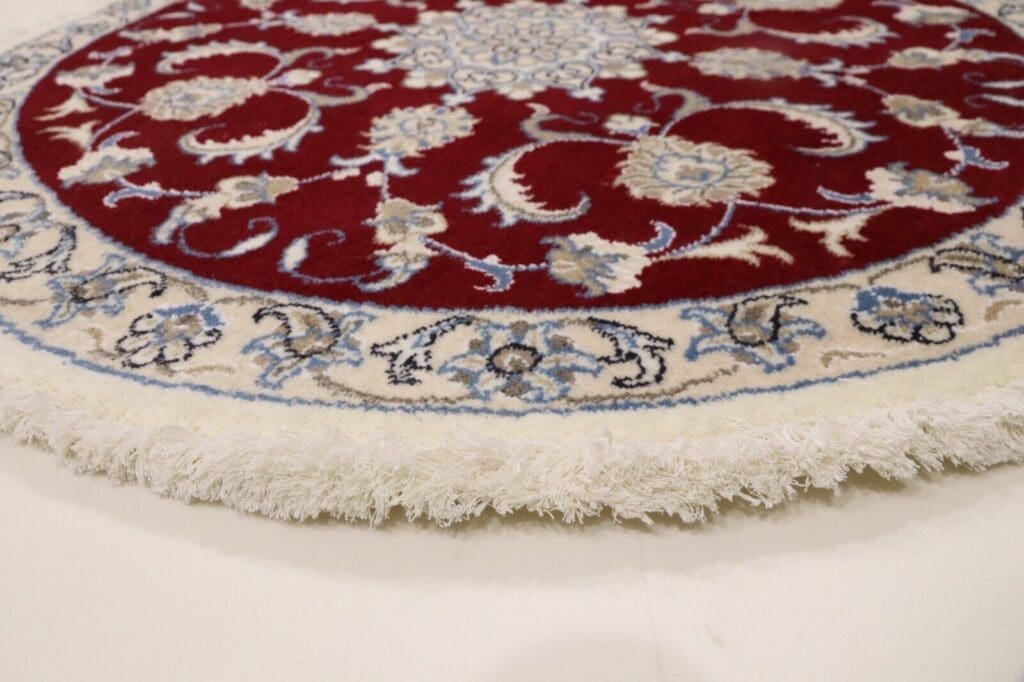
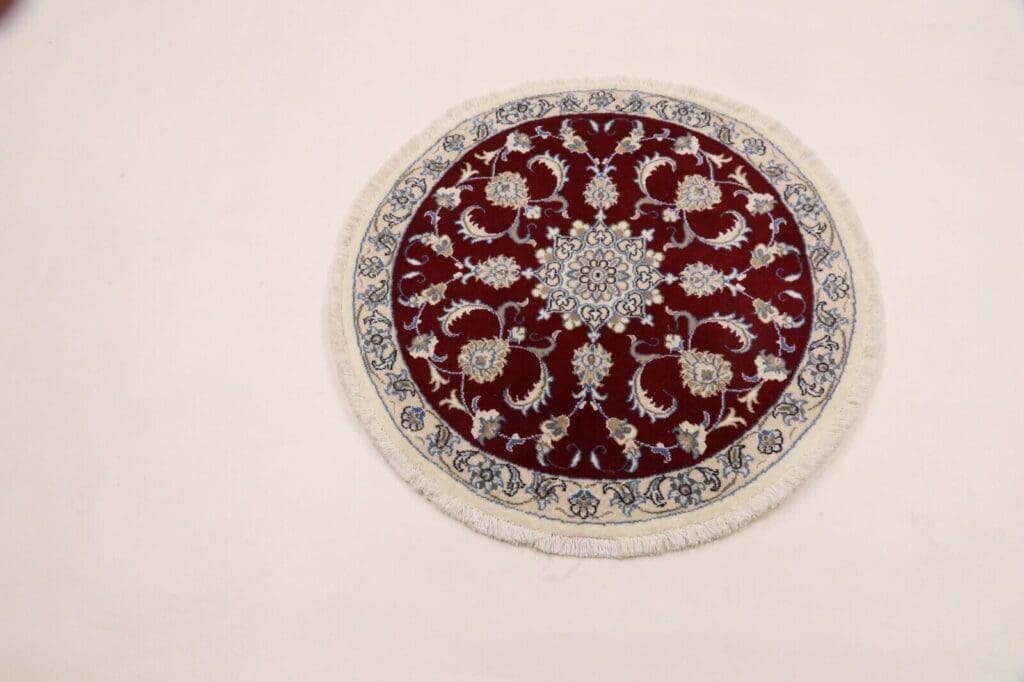
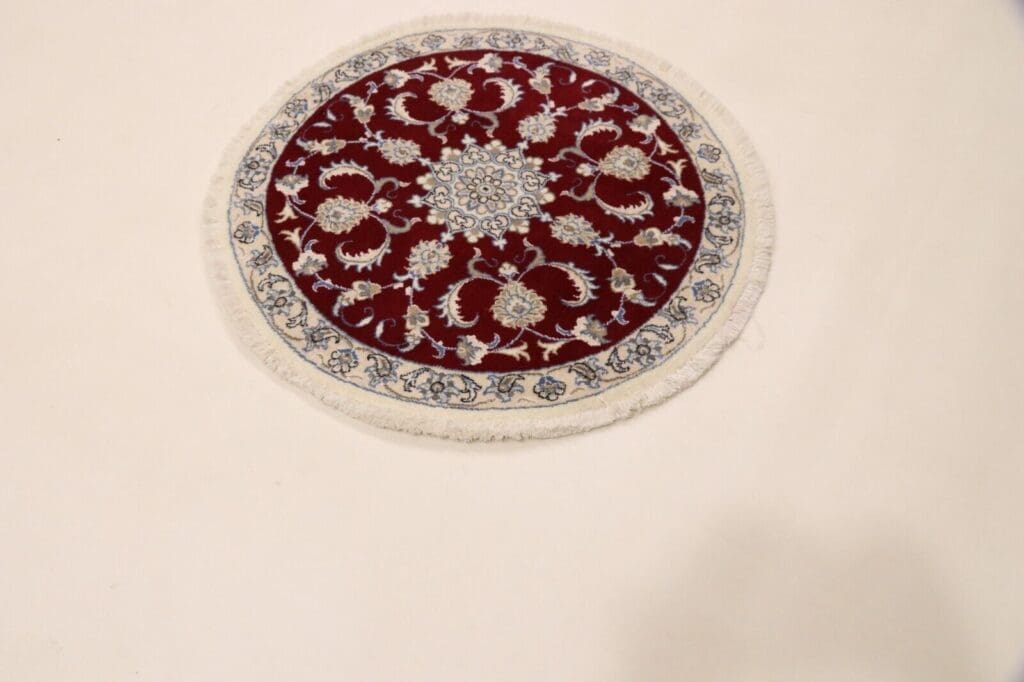
This Persian rug is hand-knotted and made as a one-of-a-kind piece. Its pile combines virgin wool with silk. Wool makes up the larger part of the composition and is associated with a durable, warm surface. The silk content adds a fine sheen and a smooth visual quality. Together, the two fibres give the rug a tactile surface that combines the fuller character of wool with the more lustrous appearance of silk.
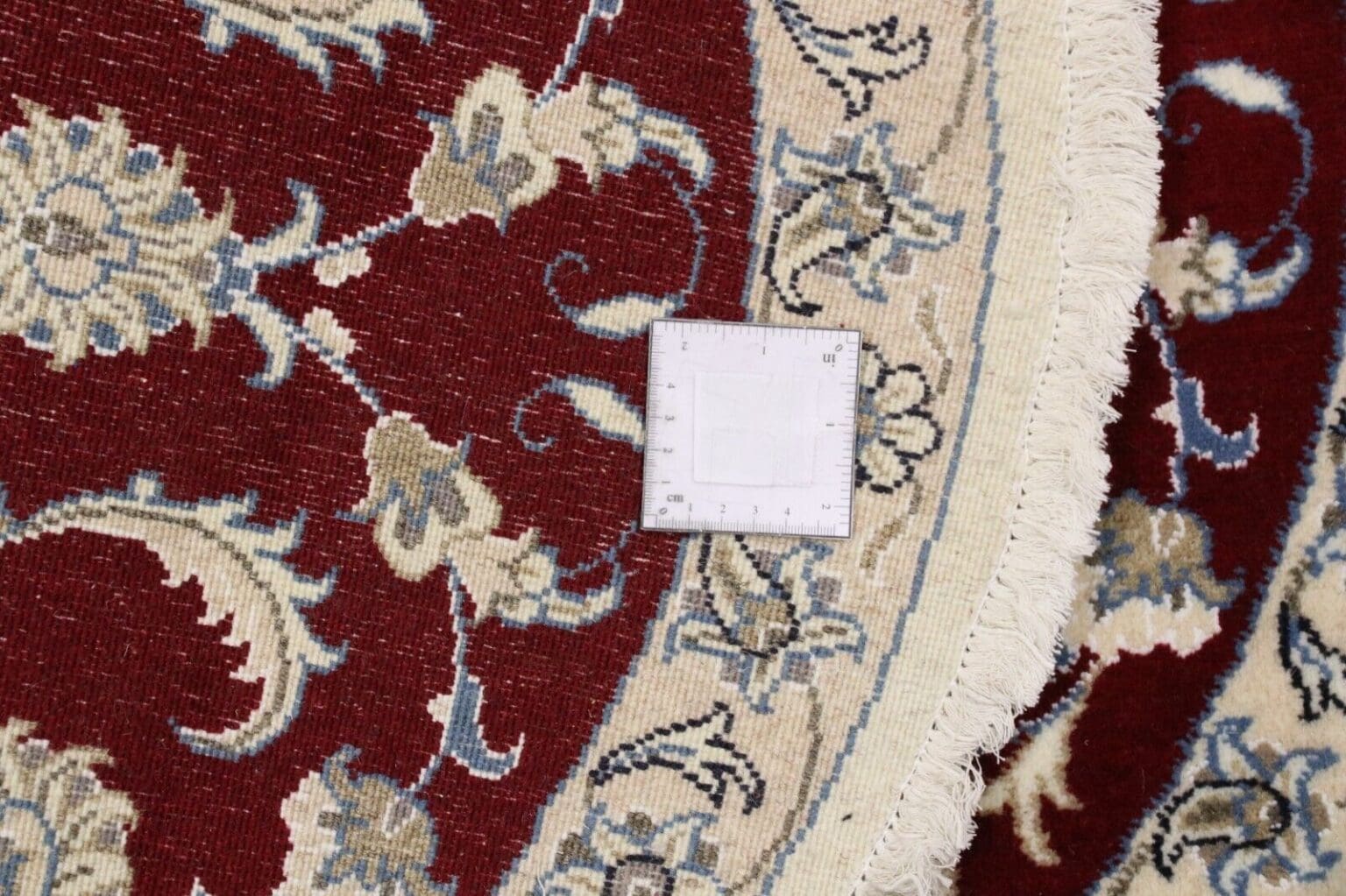
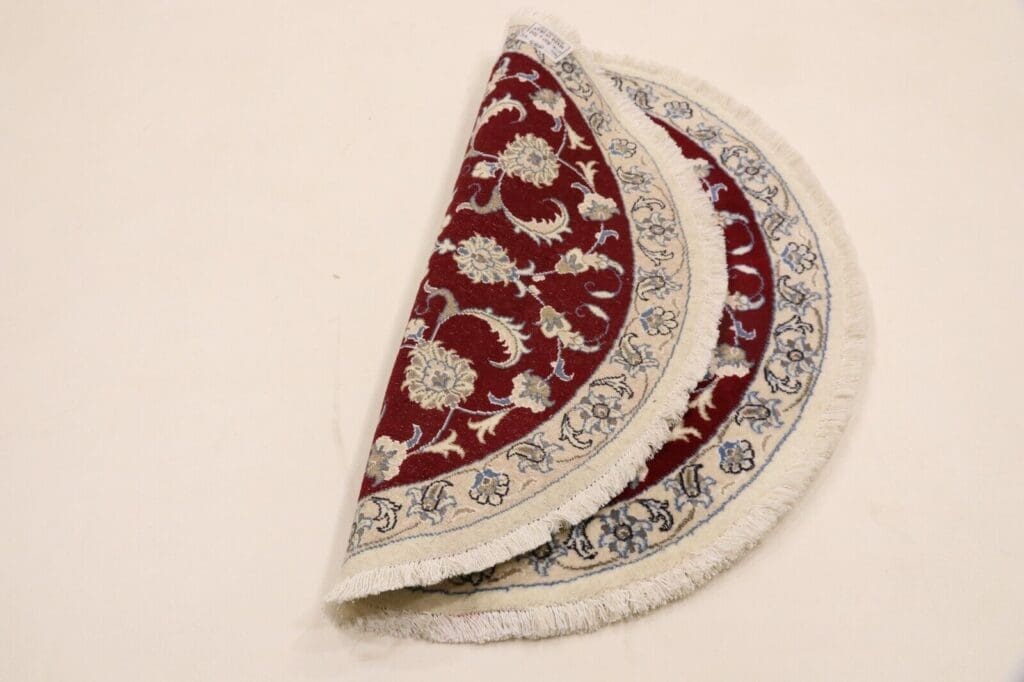
Hand-knotting means that the pile is built knot by knot by hand. The process requires control, patience and careful attention to the drawing being transferred into the rug. The rug’s high knot density allows small details and fine contours to be rendered with precision. Unlike a mechanically produced floor covering, a hand-knotted rug develops through a sequence of manual working steps, with the individual character of the finished piece remaining connected to that process.
The two materials contribute different qualities. Virgin wool provides warmth, handle and resilience, while silk can catch the light with a restrained shimmer. Regular and gentle care helps preserve this combination in everyday use. The rug is offered as new and in perfect condition.
Origin and Tradition
The rug comes from Persia and belongs to the long tradition of Iranian Oriental rug weaving. This craft developed over many centuries in a range of regions and urban centres. Rugs served as useful floor coverings, but they also carried design knowledge, inherited techniques and expressions of regional identity. Patterns, colour arrangements and methods of construction were passed through workshops and families, then adapted in the making of each new piece.
The name Nain refers to an established Persian rug tradition. Nain rugs are generally associated with carefully organised compositions, fine drawing and a precise approach to hand craftsmanship. Their visual language is often linked with light grounds and detailed ornamentation. Here, Nain is the classification used for this rug in the product description; it is not an additional claim about a material or construction detail.
Isfahan is another important centre in the history of Persian carpet art. The city and its cultural surroundings are known for detailed designs, floral ornament and geometric organisation. In this tradition, design and execution work together. A composition is arranged as a coherent whole and then transferred into the pile knot by knot. This allows delicate lines, repeated scrolling forms and clearly defined ornamental areas to be developed across the field.
Persian rugs are often identified through a place name, a workshop tradition or a recognisable design vocabulary. Such terms help explain the artistic and technical context of a rug, but they do not replace the specific information attached to the individual piece. For this rug, Persia is given as the origin, Nain as the classification, and the style as traditional Oriental and Persian. Its patterns and designs also reflect features typical of Isfahan.
The transmission of weaving knowledge involves more than tying the knots themselves. It includes the handling of proportion, borders, ornament and transitions between areas of colour. In a hand-knotted rug, these elements are not simply printed onto a finished surface; they are built gradually during the weaving process. Regional tradition can therefore appear in the overall arrangement as well as in small details of the drawing.
Design and Pattern
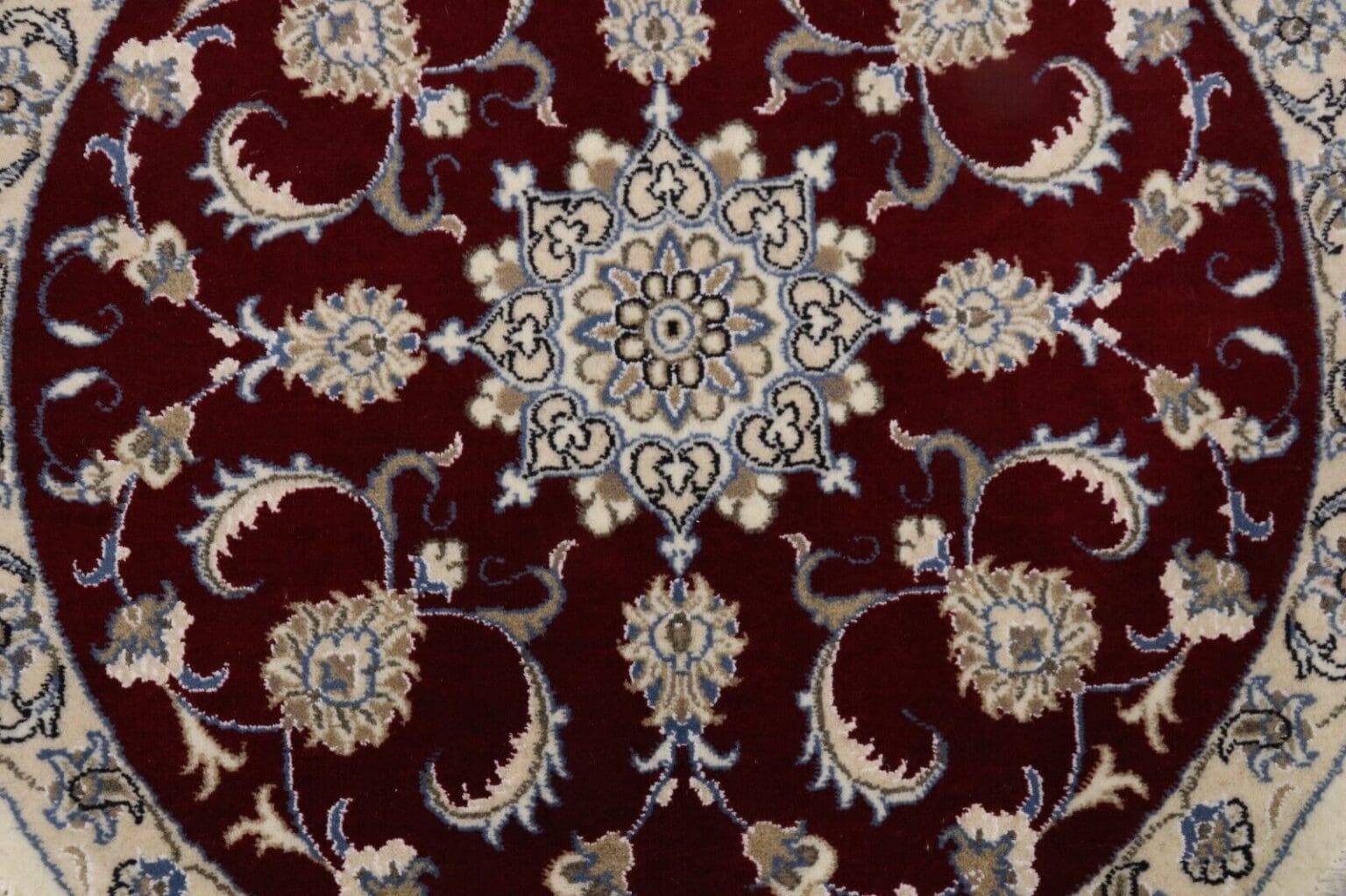
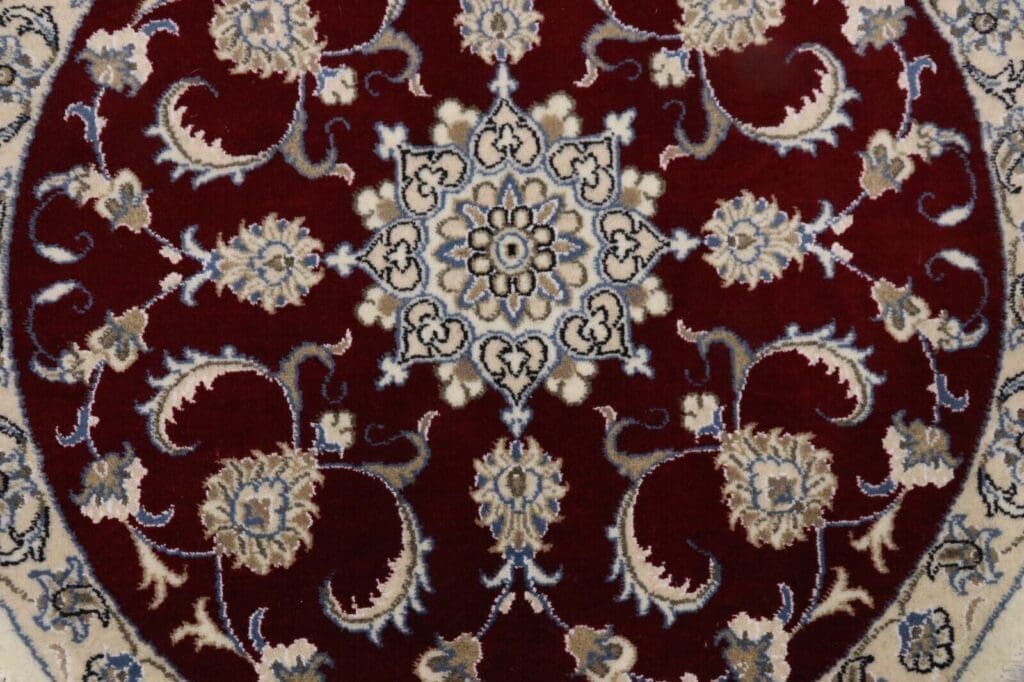
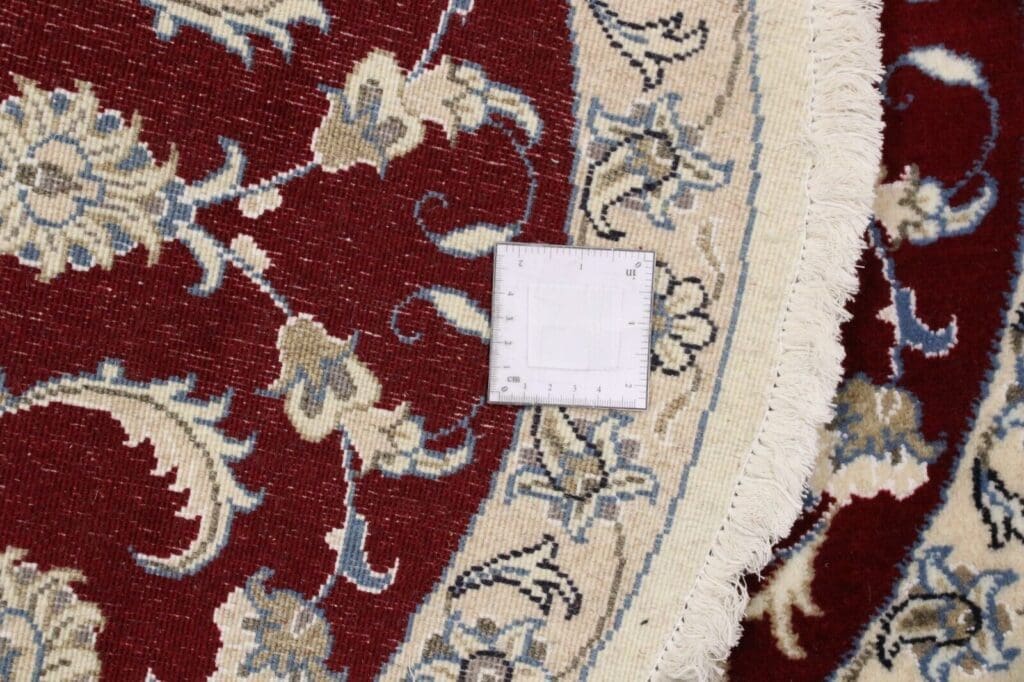
The design follows a traditional Oriental and Persian direction. The rug is classified as Nain and combines that designation with a finely structured, detail-focused composition. Oriental rug designs often rely on the relationship between a central field, framing borders and repeated ornament. This organisation allows individual motifs to function as parts of a continuous visual system rather than as isolated decorations.
Floral and geometric forms frequently appear together in Persian pattern traditions. Scrolling stems, blossoms and leaves can link different parts of a field, while measured lines and geometric shapes give the composition order. In traditional symbolism, floral forms are often associated with nature, growth and fertility. Geometric signs may suggest order, faith or the individual design language of the person who made the rug. These are general meanings within the tradition and do not assign a fixed interpretation to every detail of this particular piece.
Isfahan is known for designs in which delicate floral drawing and geometric structure are balanced with care. The patterns of this rug reflect features that are typical of Isfahan. Their effect comes not only from separate symbols, but also from the spacing and relationship between them. Repetition creates rhythm, borders establish a visual boundary, and fine lines can guide the eye across the composition.
A dense knot structure supports the rendering of small forms and controlled outlines. It can distinguish transitions, repeated details and narrow ornamental lines with greater clarity. Silk may give selected areas a subtle change in light, while wool contributes a softer and warmer surface impression. These observations describe the design resources named for the rug without adding a specific motif that has not been identified.
Traditional Persian rugs occupy a place between practical furnishing and decorative image. Their patterns may draw on nature, culture and faith, although they do not have to be read according to one single explanation. In a hand-knotted work, the design is formed through the sequence of the knots: each row contributes to the next until the complete drawing appears. The Nain classification and the Isfahan-related characteristics therefore sit within a broader Persian vocabulary of ordered ornament and skilled manual execution.
The traditional approach allows the rug to be used alongside both classical and contemporary interiors. Its visual language remains connected to Persian ornament rather than to a short-lived decorative trend. The principal features are the ordered composition, fine forms and the interplay of wool and silk within a hand-knotted surface.
Special Features
The rug is new, in perfect condition and hand-knotted as a one-of-a-kind piece. It can be used in a living room, bedroom or office, bringing traditional Oriental and Persian design into the setting. The combination of virgin wool and silk is described as easy to care for and durable. Regular vacuuming and gentle cleaning are recommended. Direct sunlight should be avoided, and spills should be treated promptly with a damp cloth and mild soap.
The rug is also suitable for rooms with underfloor heating. The temperature should not be set too high in order to protect the fibres. As a hand-knotted individual piece, it combines this practical suitability with a separately executed pattern surface.
FAQ
How should I care for the Persian rug?
Vacuum the rug regularly and protect it from direct sunlight. Treat stains as soon as possible. A damp cloth and mild soap are recommended for this purpose. Ongoing care should remain gentle so that the surface made from virgin wool and silk retains its feel and appearance during normal use.
Can the rug be used over underfloor heating?
Yes. The rug is suitable for rooms with underfloor heating. Keep the temperature from becoming too high so that the fibres are treated gently. A moderate setting supports appropriate everyday use and helps preserve the surface of the hand-knotted rug.
Where does the rug come from?
The rug comes from Persia and is offered as a Nain Persian rug. Its patterns and designs reflect features typical of Isfahan. It therefore belongs to the Persian weaving tradition, with its inherited handcraft, detailed ornament and combination of floral and geometric forms.
To provide the best experiences, we use technologies like cookies to store and/or access device information. Consenting to these technologies will allow us to process data such as browsing behavior or unique IDs on this site. Not consenting or withdrawing consent, may adversely affect certain features and functions.
Functional Always active
The technical storage or access is strictly necessary for the legitimate purpose of enabling the use of a specific service explicitly requested by the subscriber or user, or for the sole purpose of carrying out the transmission of a communication over an electronic communications network.
Preferences
The technical storage or access is necessary for the legitimate purpose of storing preferences that are not requested by the subscriber or user.
Statistics
The technical storage or access that is used exclusively for statistical purposes.The technical storage or access that is used exclusively for anonymous statistical purposes. Without a subpoena, voluntary compliance on the part of your Internet Service Provider, or additional records from a third party, information stored or retrieved for this purpose alone cannot usually be used to identify you.
Marketing
The technical storage or access is required to create user profiles to send advertising, or to track the user on a website or across several websites for similar marketing purposes.
 SECURE PAYMENT
 SHIPPING PARTNERS


