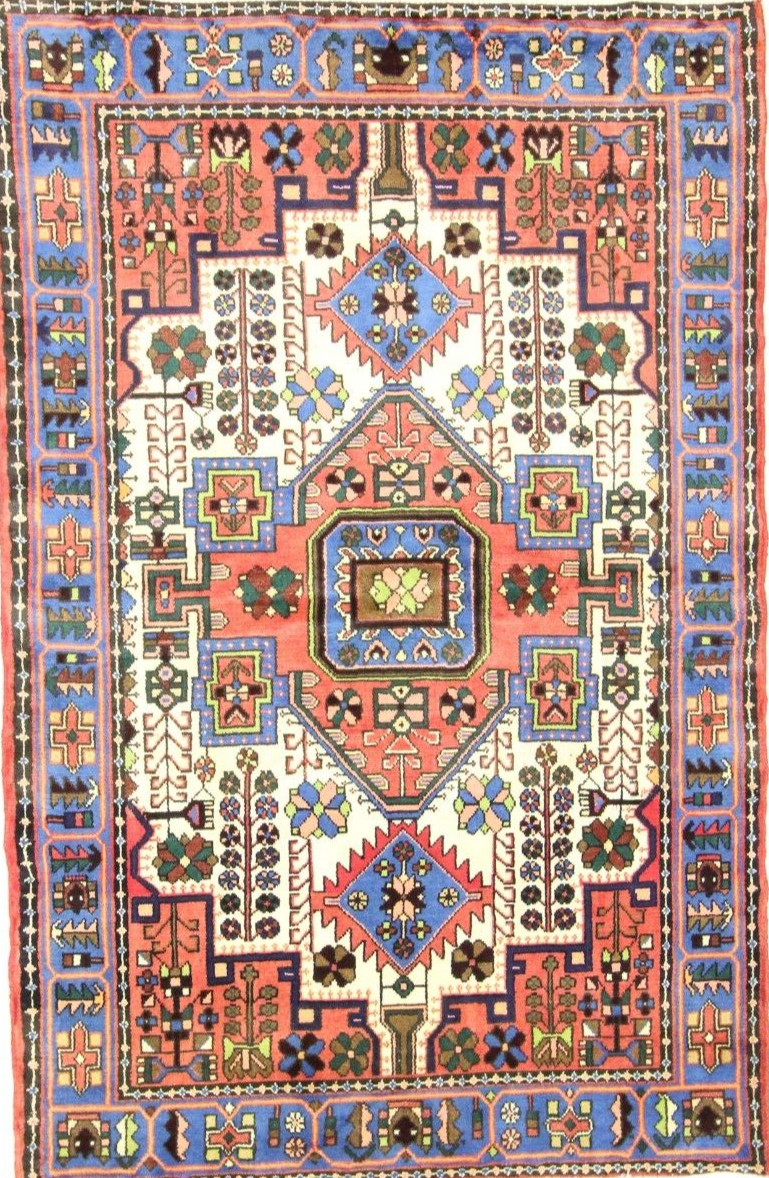
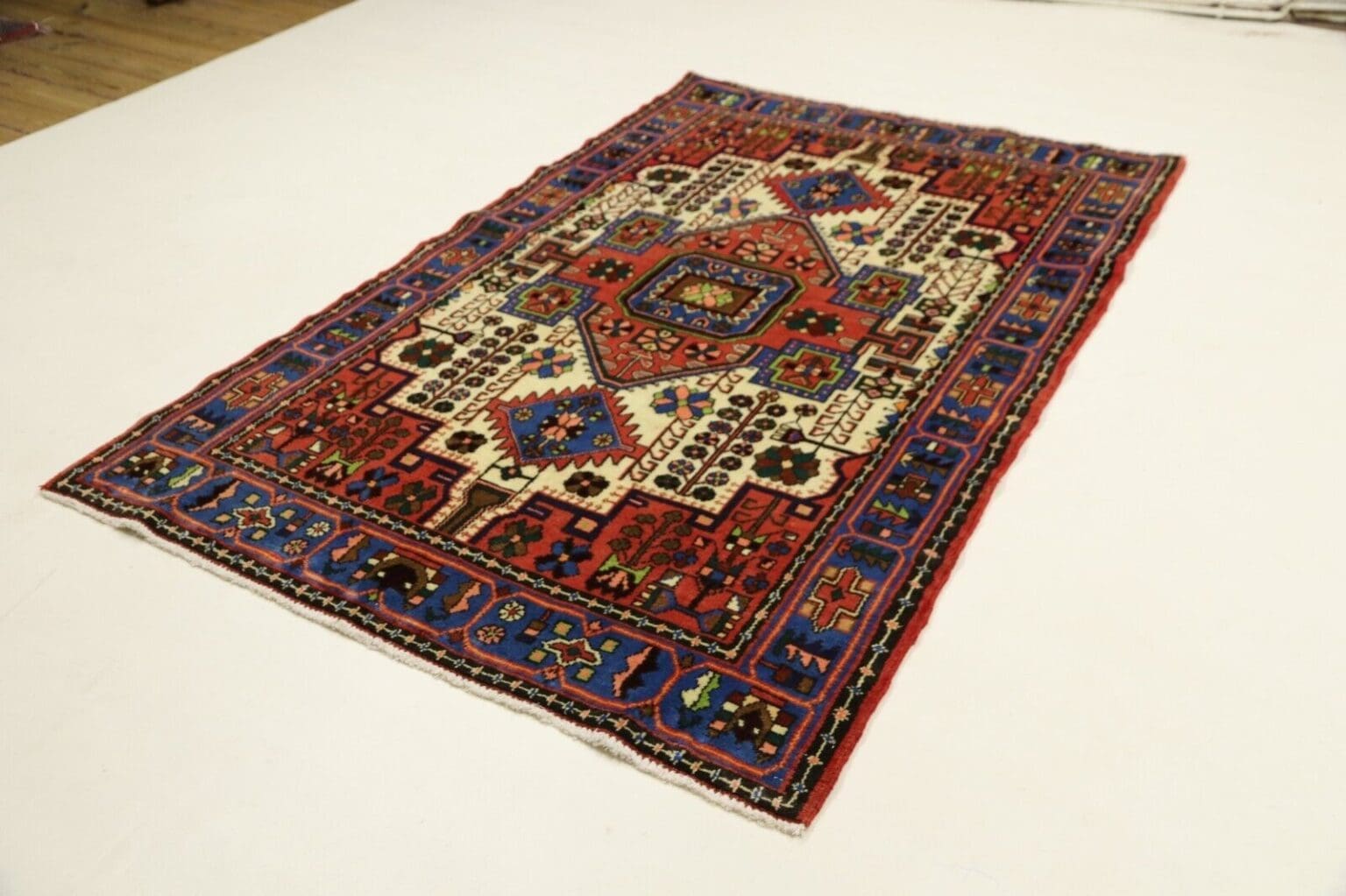
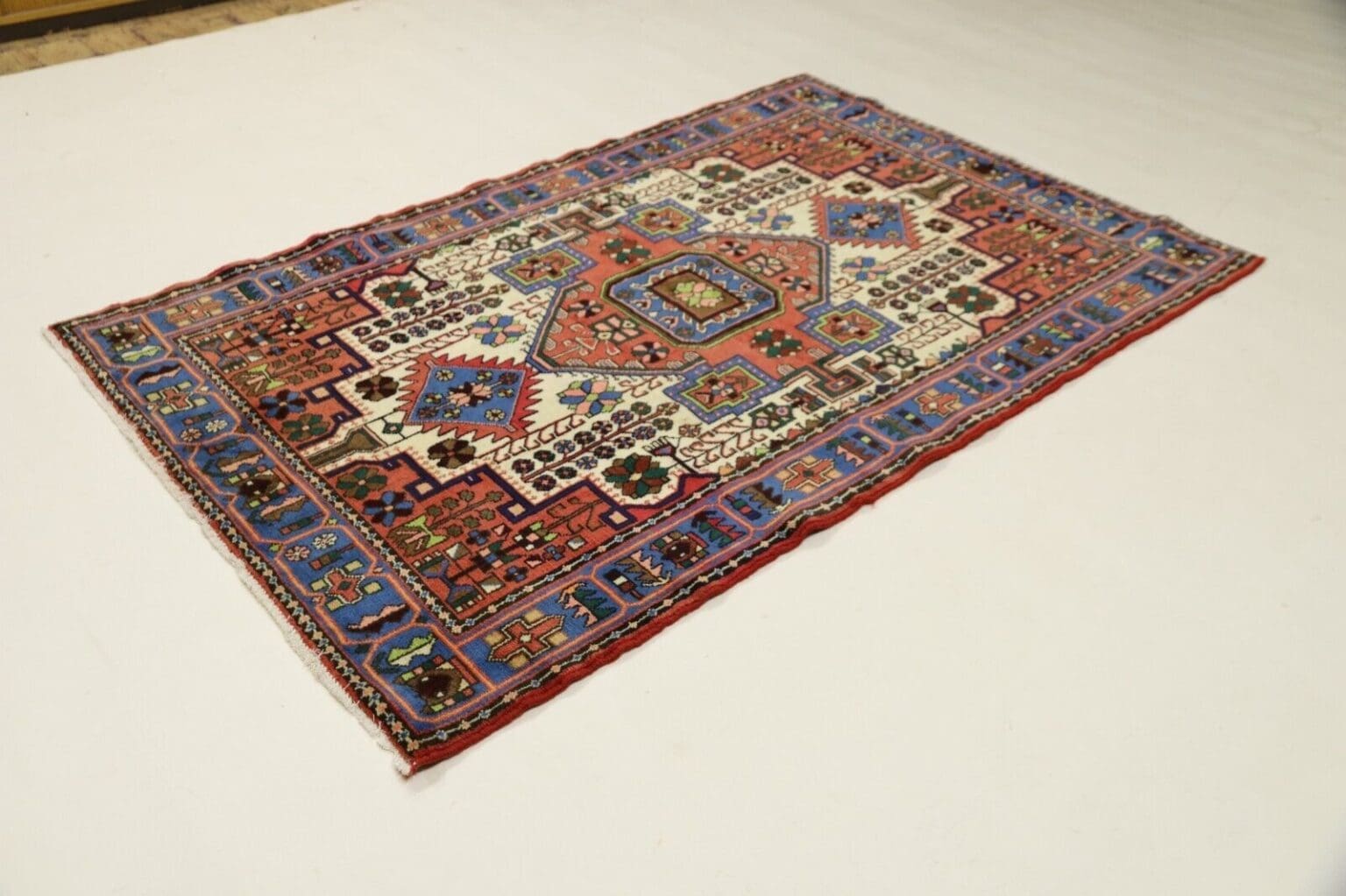
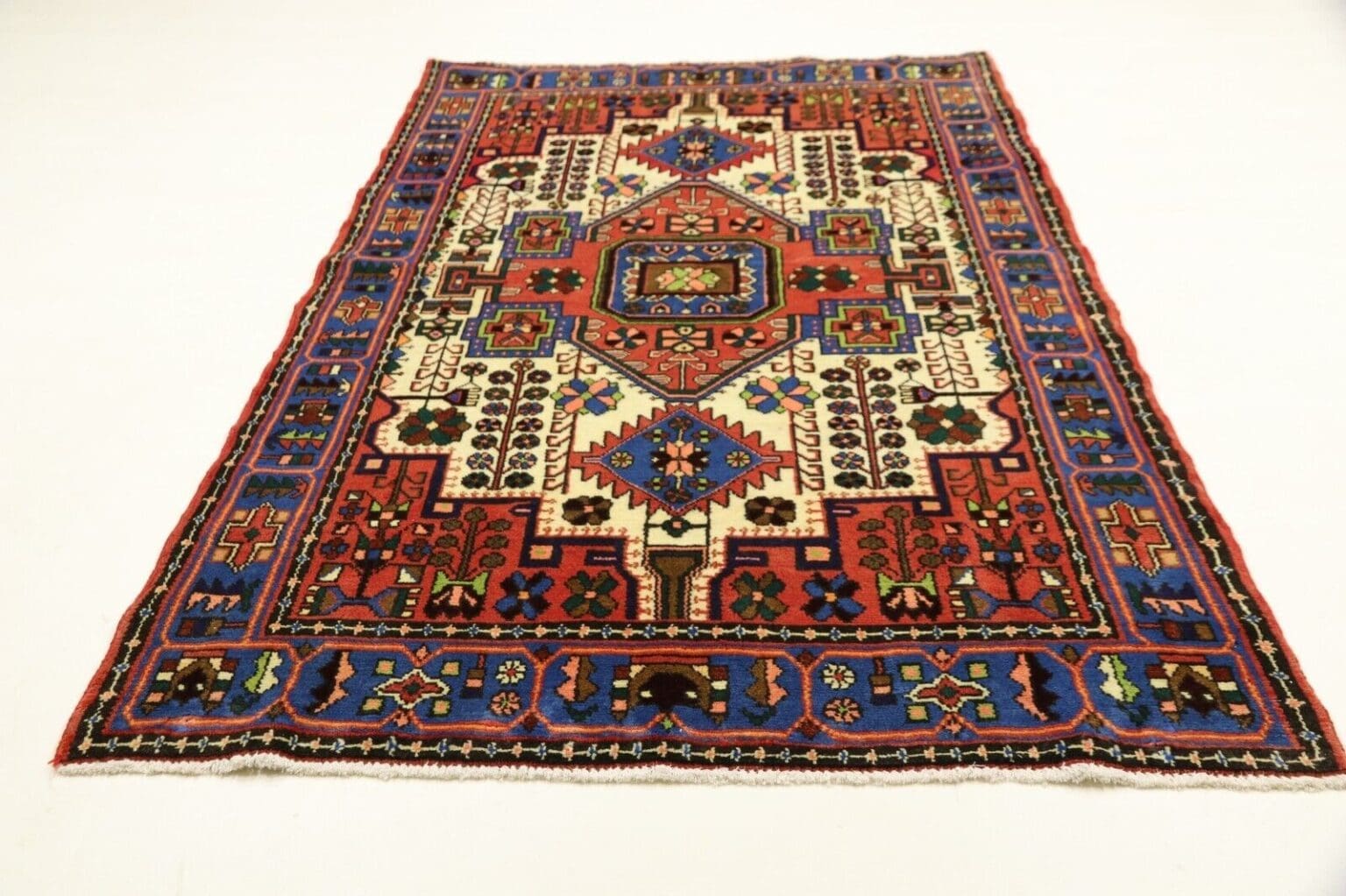
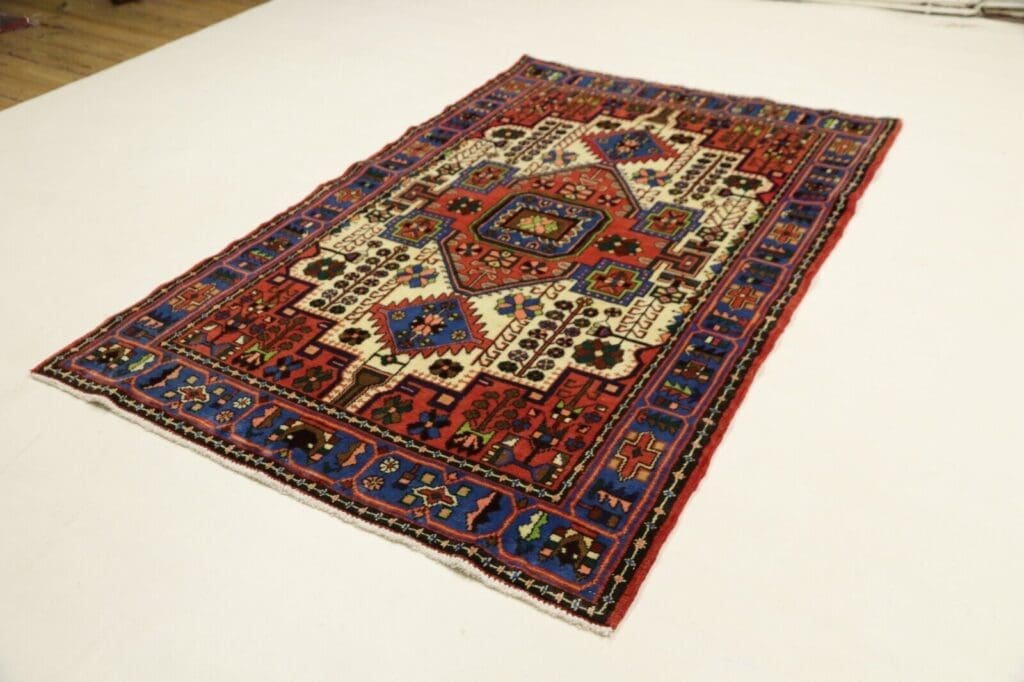
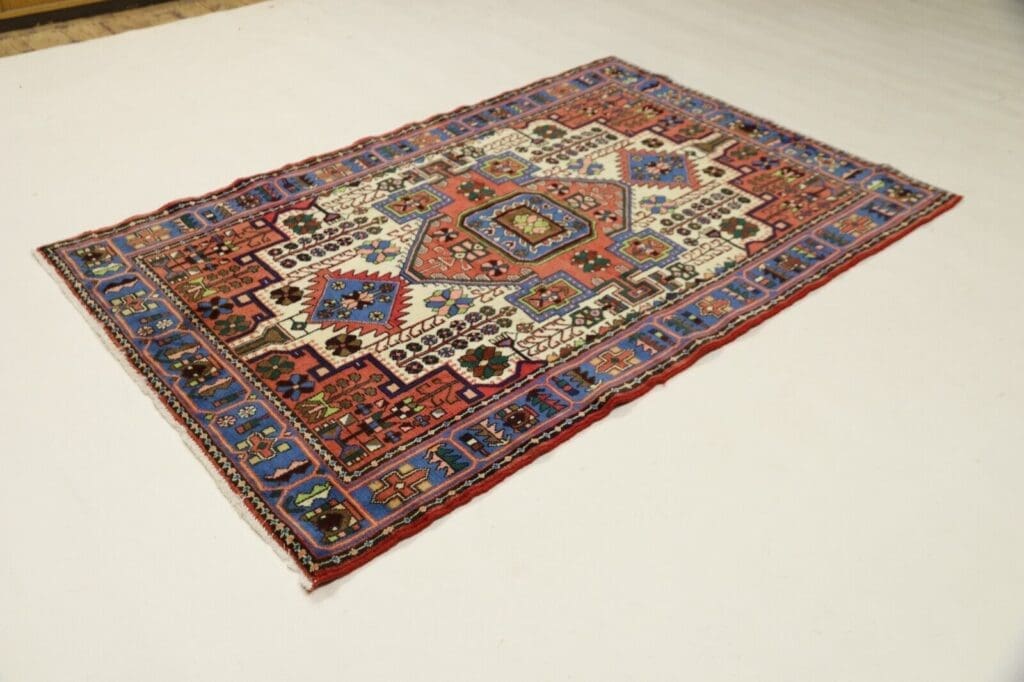
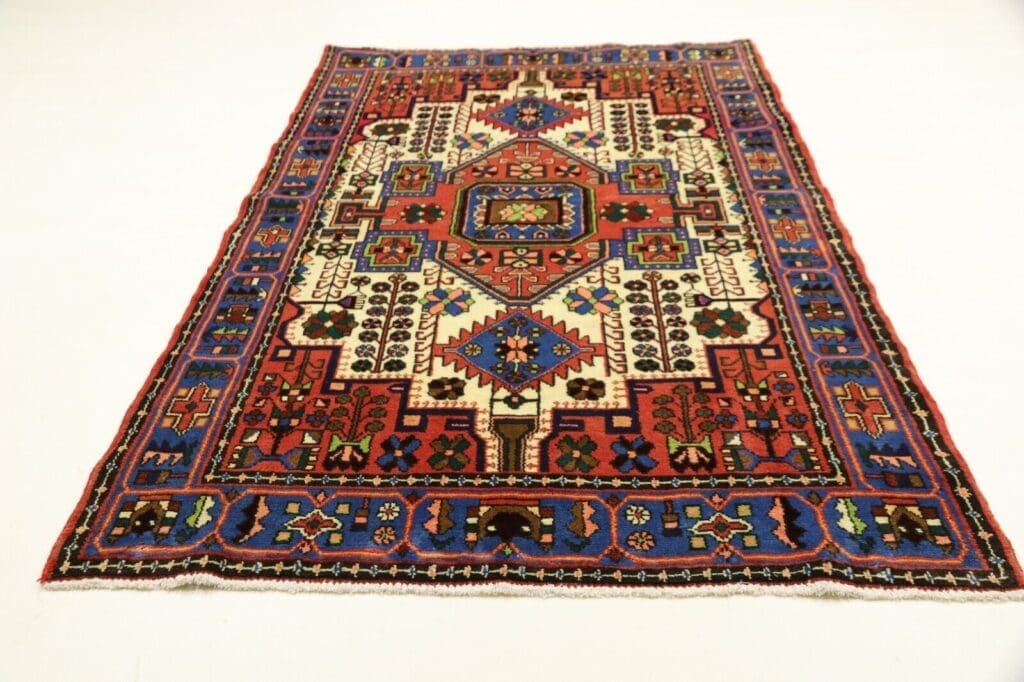
This Nahavand Persian rug is hand-knotted. Its structure was made knot by knot rather than through machine production, so each piece remains an individual one-off. Hand knotting is one of the established techniques of Persian rug making, combining the preparation of the foundation with the careful placement and finishing of the pile.
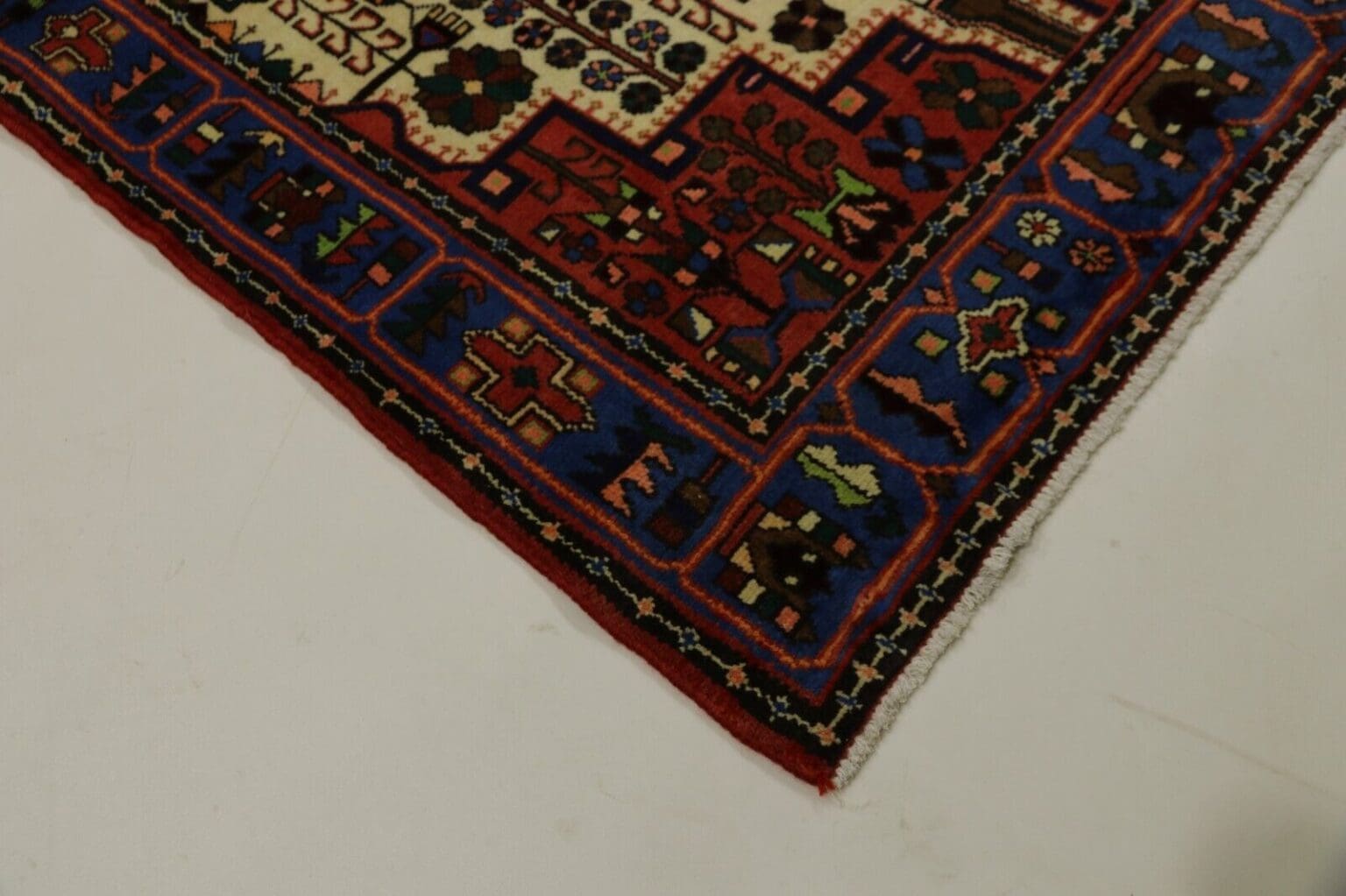
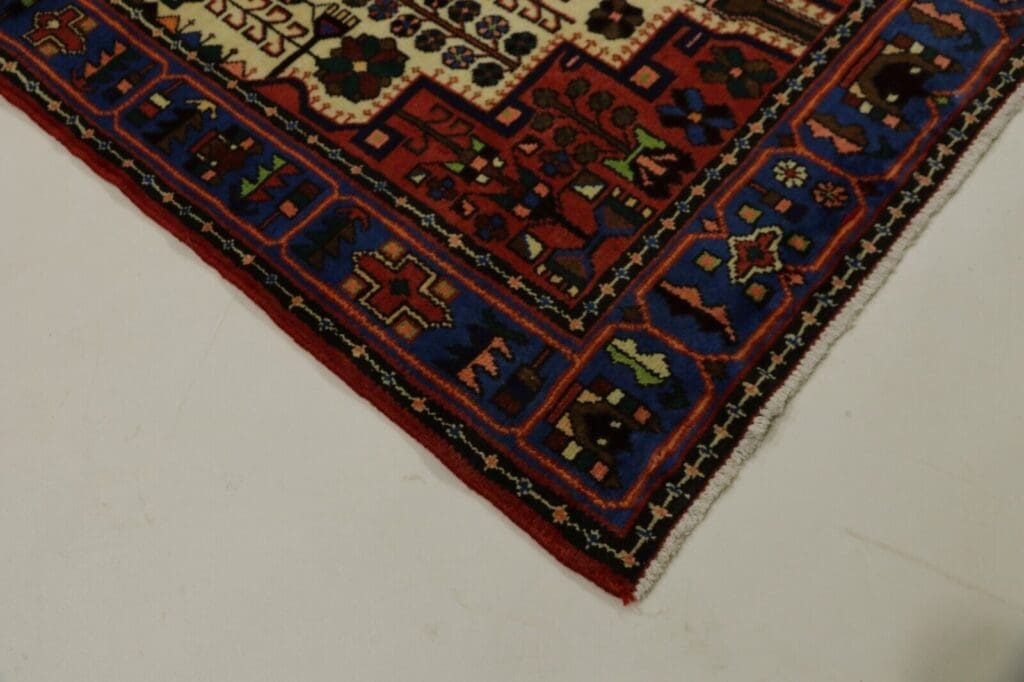
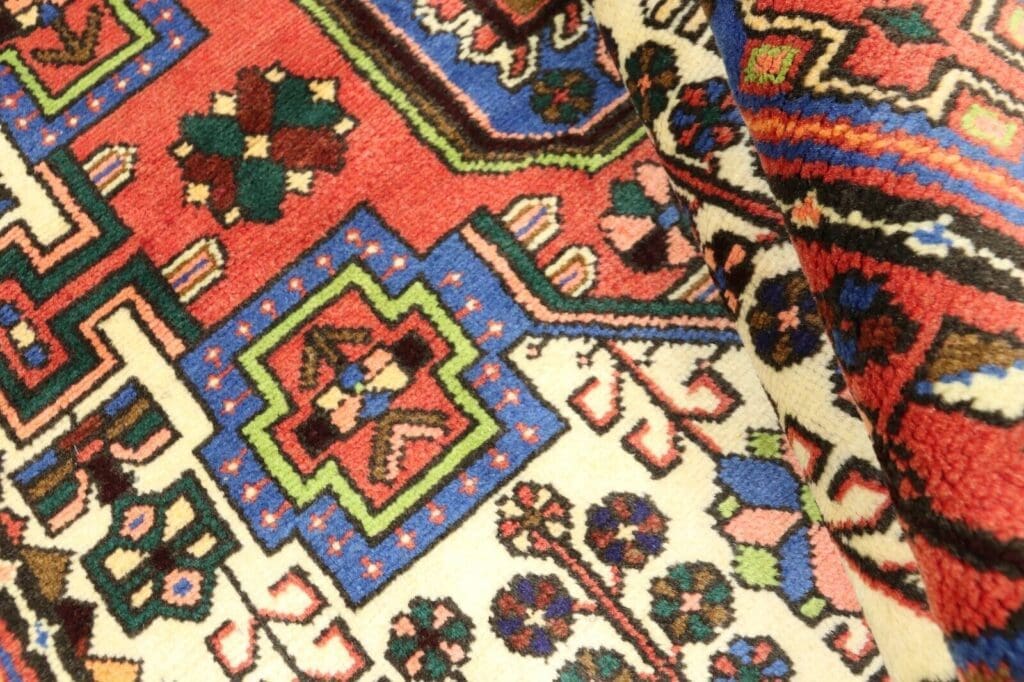
The pile is made from wool, while the warp is cotton. Wool gives a rug a naturally warm appearance and a comfortable feel underfoot. It is also known for its natural resistance to dirt and its long service life. Cotton in the warp provides a firm foundation for the knots and helps support the shape of the finished textile.
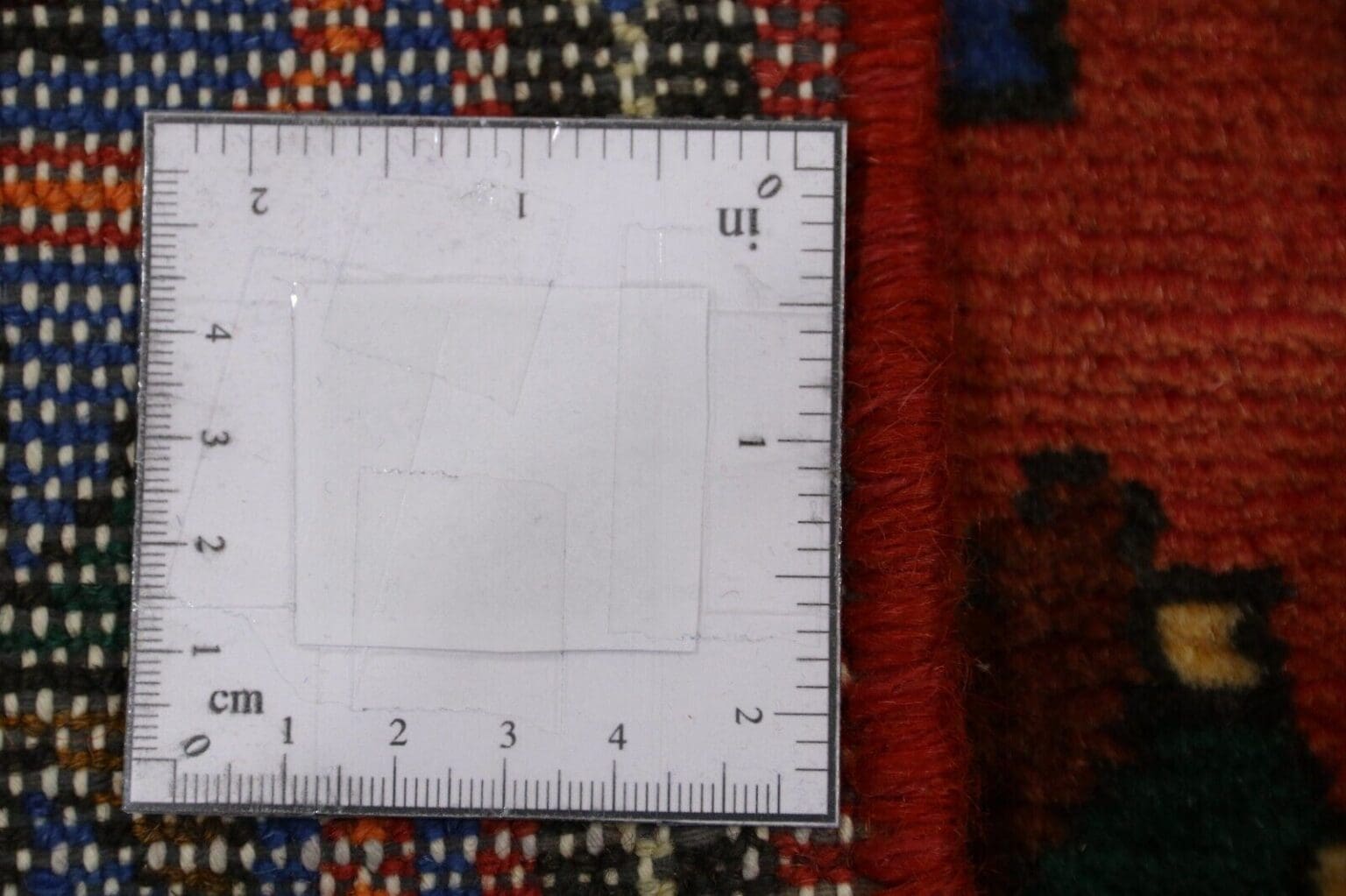
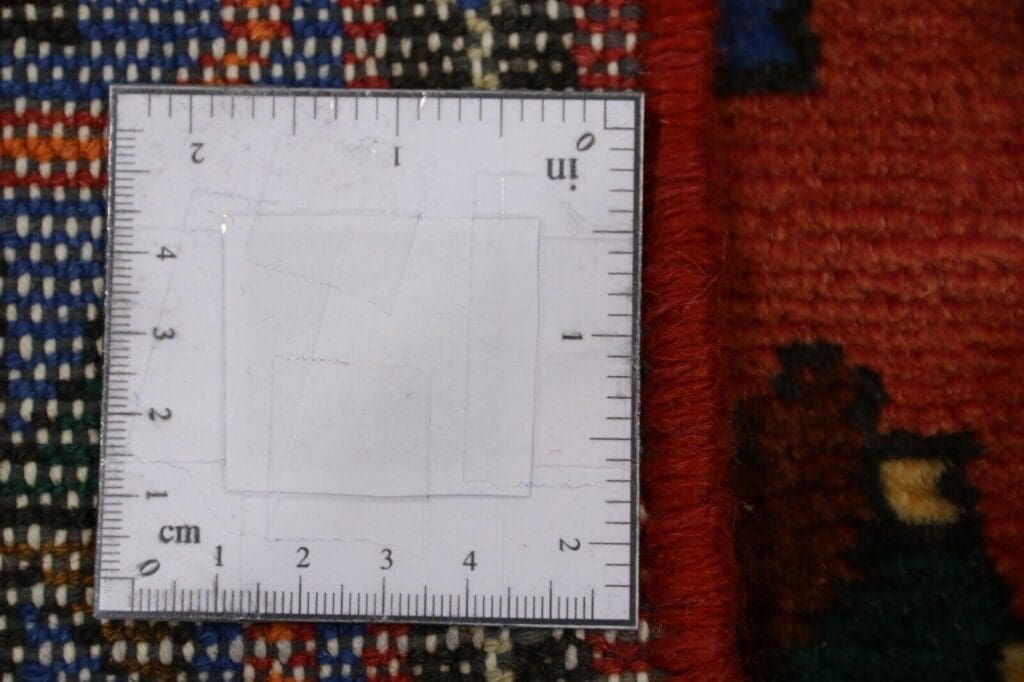
This rug has a knot density of approximately 100,000 knots per square metre. Such a hand-worked density allows the surface to be made with fine definition and contributes to the stability of the construction. Its stated thickness is approximately 10 mm. The rug is new and described as being in very good condition. It is also suitable for rooms with underfloor heating.
Wool rugs benefit from regular, gentle vacuuming at low suction. Spilled liquids should not be rubbed into the pile; they should be dabbed promptly with a damp cloth. A professional cleaning at intervals of several years can provide more thorough care and help preserve the freshness of the colours. These measures suit the wool pile and support the condition of the hand-knotted surface.
Origin and Tradition
Nahavand is a rug-making region in Iran. The town and its surrounding area belong to the parts of the country where Persian knotting traditions have been maintained over many generations. Persian rugs are both useful textiles and products of inherited craftsmanship. Knowledge of stretching the warp, tying the knots, compacting the structure, trimming the pile and finishing the edges has traditionally been passed through families and workshops.
A hand-knotted rug begins with a carefully aligned warp. Knots are then inserted row by row across this foundation. After sections of knots have been completed, the structure is compacted so that the individual knots remain secure. The pile is later trimmed to an even surface. These stages require patience, practical experience and consistent control. They also explain why two rugs from the same region can share a tradition without being completely identical.
Nahavand rugs are associated with a regional tradition capable of producing vivid, colourful and clearly organised compositions. Regional identity does not mean that every rug follows one fixed drawing. Designs vary with the workshop, the plan of the composition and the interpretation of the maker. Floral forms may refer to plants and gardens, while geometric elements create a more ordered arrangement across the field.
Iranian rug culture developed through the interaction of nomadic groups, rural households and specialised workshops. Each setting contributed its own working methods and visual vocabulary. Rugs connected with the Nahavand area therefore combine practical knowledge with decorative design. The construction has to withstand use, while the visible surface is organised through a recognisable regional approach to ornament, colour and rhythm.
Material selection is part of that tradition as well. Wool has long been used for Persian pile rugs because it is resilient, warm and suitable for forming a durable surface. A cotton warp can provide a regular base for the knots. Together with manual workmanship, these materials create a textile in which the visible pattern and the underlying construction are directly linked.
The name Nahavand identifies this rug as a Persian rug associated with the Iranian region of the same name. It refers to a regional weaving tradition rather than to machine-made reproduction. The cultural significance of such rugs lies in the connection between place, knowledge of materials and inherited working methods. This particular piece is offered as a new, very well-preserved hand-knotted one-off.
Design and Pattern
Nahavand’s traditional design vocabulary is associated with floral and geometric ideas. These approaches may appear separately or may be combined within one composition. Floral motifs bring curved lines, leaves and blossom forms to the surface. Geometric elements use clear outlines, repetition and an ordered division of space. The contrast between organic and structured forms is an important part of the visual language associated with many rugs from the region.
Floral design has a long history in Persian rug making. Plant forms are not simply copied from nature; they are transformed into textile ornament. Blossoms and vines can be repeated rhythmically, mirrored across a field or placed within a continuous border. This arrangement links individual signs to the composition as a whole. A single botanical detail can therefore become part of a larger pattern that guides the eye across the rug.
Geometric motifs perform a different compositional role. They can emphasise a central area, separate fields or frame the edge through a repeated border. Lines, angles and symmetrical relationships give the drawing structure. In regional Persian rugs, these forms are often accompanied by smaller ornaments, creating a relationship between an overall order and many individual details.
The Nahavand tradition is often connected with a lively, colourful approach to design as well as with established Persian ornament. The effect depends not only on the individual motifs but also on their scale, spacing and repetition. A form may act as a large focal element or may appear in a smaller version to enliven an intermediate area. Repetition creates visual unity, while minor variations retain the character of a design made and knotted by hand.
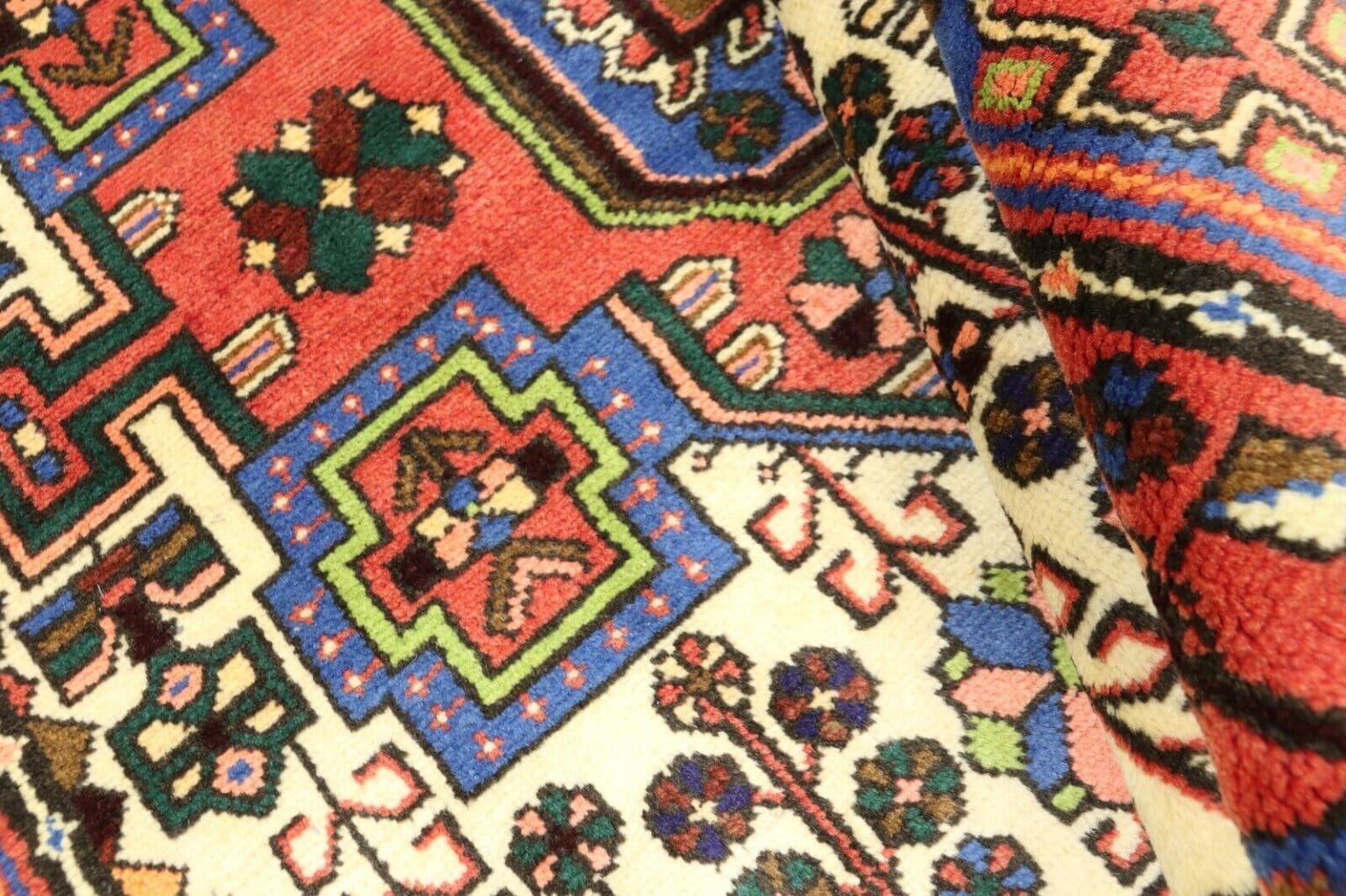
In a hand-knotted rug, the pattern is not printed onto a finished textile. It develops from the sequence of knots and from the subsequent trimming and finishing of the pile. Lines and contours are therefore part of the textile construction itself. Knot density supports the rendering of detail, while the wool pile contributes its own surface character. The design is consequently inseparable from the way the rug was made.
Regional patterns can also carry associations with the natural world and with ideas of order and movement. Plant forms may recall gardens, vegetation or the wider landscape. Geometric signs can express structure, rhythm or a clear division of space. Such interpretations belong to the broader background of Persian ornament; they do not prescribe one single reading for every individual motif. The essential design relationship is between field, border, ornament and colour.
The Nahavand design tradition thus joins decorative composition with practical textile construction. Its floral and geometric vocabulary allows rugs from the region to fit different interiors while retaining their Persian regional identity. The rug is both a floor covering and a hand-made textile object. Its appearance is supported by the knotting technique, the wool pile and the deliberate organisation of the pattern.
Special Features
The listed features of this one-off include hand knotting, a wool pile and a cotton warp. The knot density is approximately 100,000 knots per square metre. It indicates a finely worked knot structure and supports the stability of the rug. The stated thickness is approximately 10 mm. The rug is new, its condition is described as very good, and it is suitable for use with underfloor heating.
The terms one-off and unique piece are literal in the context of a hand-knotted rug: this example is not offered as identical repeated stock. Small characteristics of hand production belong to the making process. At the same time, the rug combines its individual execution with the regional character of the Nahavand tradition and with the material pairing of wool and cotton.
FAQ
How should I care for my hand-knotted Persian rug?
Regular vacuuming with low suction removes loose dirt gently from the pile. If a spill occurs, dab it promptly with a damp cloth rather than rubbing it into the fibres. Rubbing can place unnecessary stress on the pile and colour surface. Professional cleaning every few years can provide deeper care and help keep the colours fresh. Because the pile is wool, treatment should be suitable for that material so that its pleasant surface and natural resistance are maintained.
Where does the Nahavand rug come from?
This rug comes from Persia, or Iran, and is associated with the Nahavand region of the same name. Nahavand is known for its established tradition of rug making. Floral and geometric motifs are often associated with the regional design vocabulary and can be arranged in different compositions. The origin therefore places the rug within an Iranian knotting tradition shaped by local history, knowledge of materials and manual craftsmanship.
Is the rug suitable for underfloor heating?
Yes. This hand-knotted Nahavand Persian rug is suitable for rooms with underfloor heating. Its listed materials and hand-made construction allow it to be used in such a living space. It provides a comfortable warmth underfoot while also offering the durability associated with its construction. For continued good condition, the heating system should be operated correctly and the rug should receive regular gentle care.
To provide the best experiences, we use technologies like cookies to store and/or access device information. Consenting to these technologies will allow us to process data such as browsing behavior or unique IDs on this site. Not consenting or withdrawing consent, may adversely affect certain features and functions.
Functional Always active
The technical storage or access is strictly necessary for the legitimate purpose of enabling the use of a specific service explicitly requested by the subscriber or user, or for the sole purpose of carrying out the transmission of a communication over an electronic communications network.
Preferences
The technical storage or access is necessary for the legitimate purpose of storing preferences that are not requested by the subscriber or user.
Statistics
The technical storage or access that is used exclusively for statistical purposes.The technical storage or access that is used exclusively for anonymous statistical purposes. Without a subpoena, voluntary compliance on the part of your Internet Service Provider, or additional records from a third party, information stored or retrieved for this purpose alone cannot usually be used to identify you.
Marketing
The technical storage or access is required to create user profiles to send advertising, or to track the user on a website or across several websites for similar marketing purposes.
 SECURE PAYMENT
 SHIPPING PARTNERS


