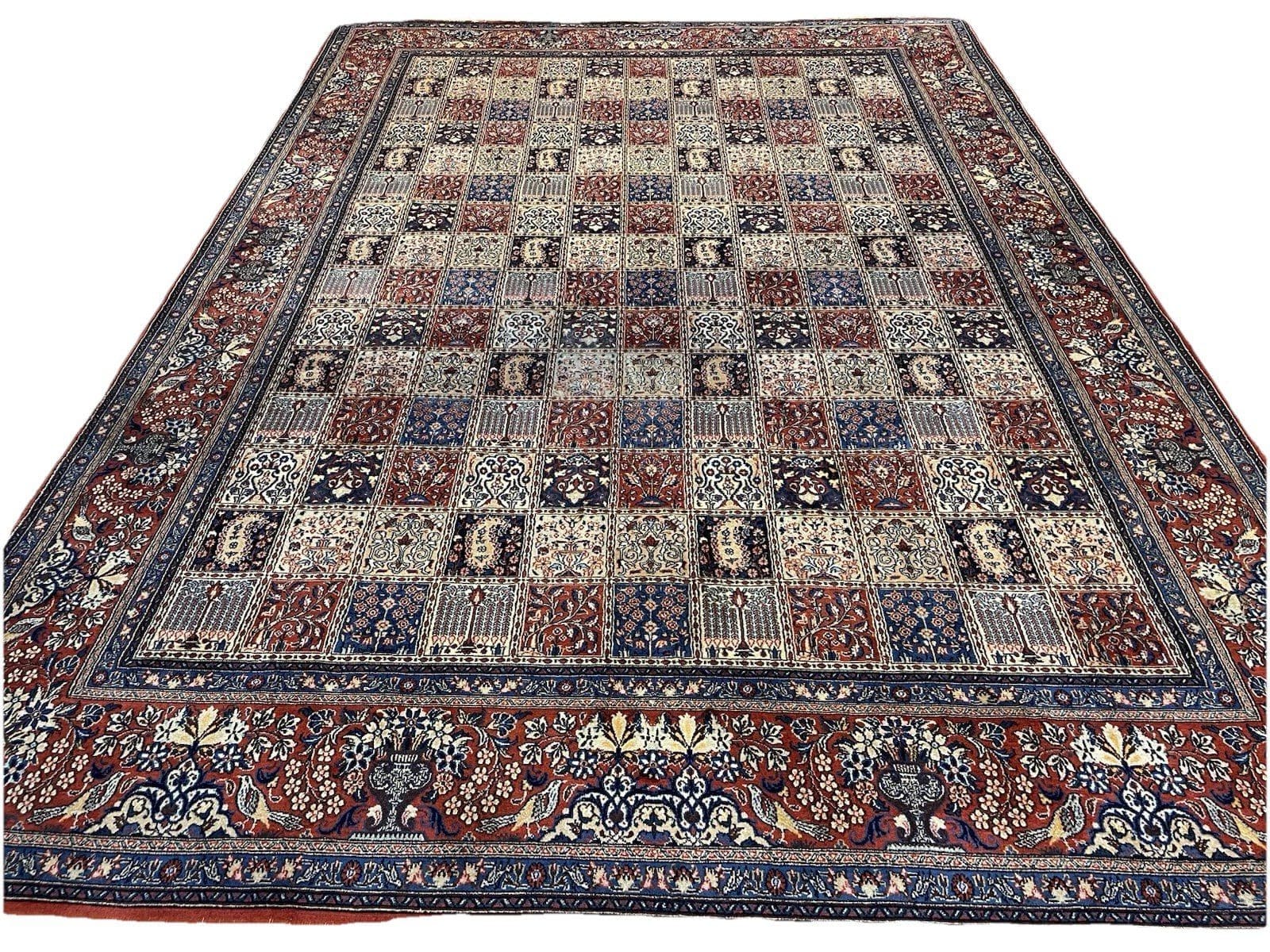
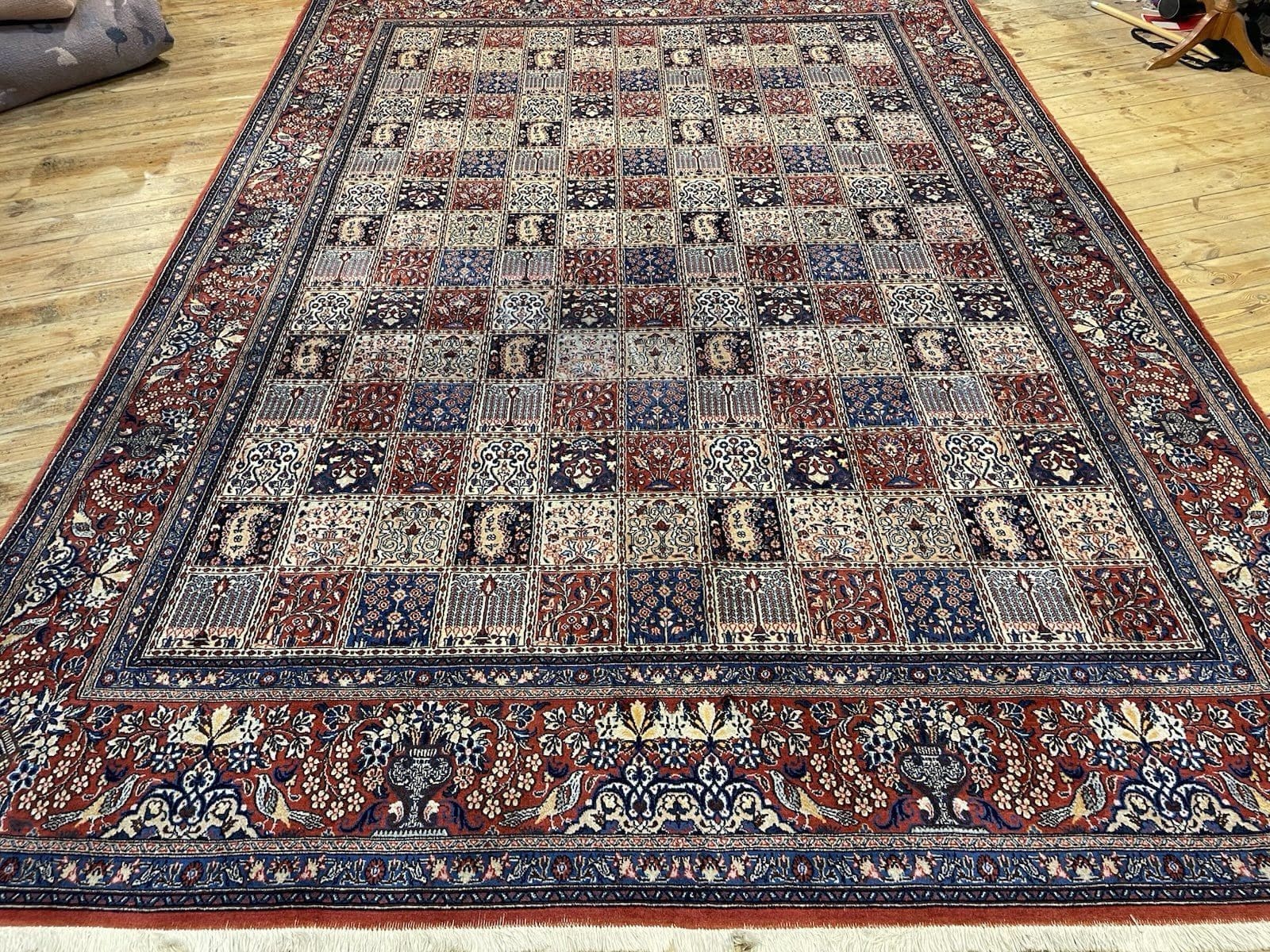
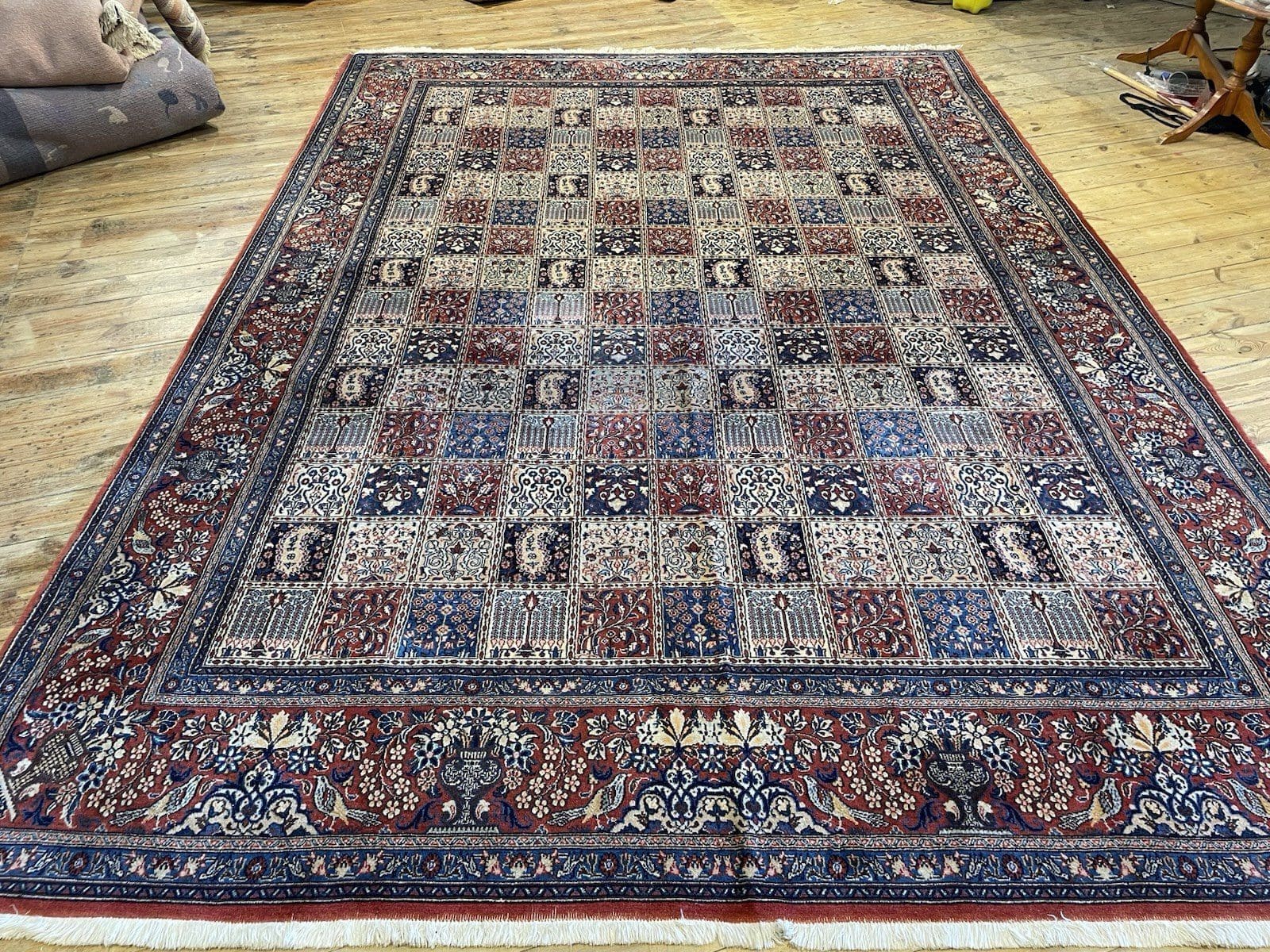
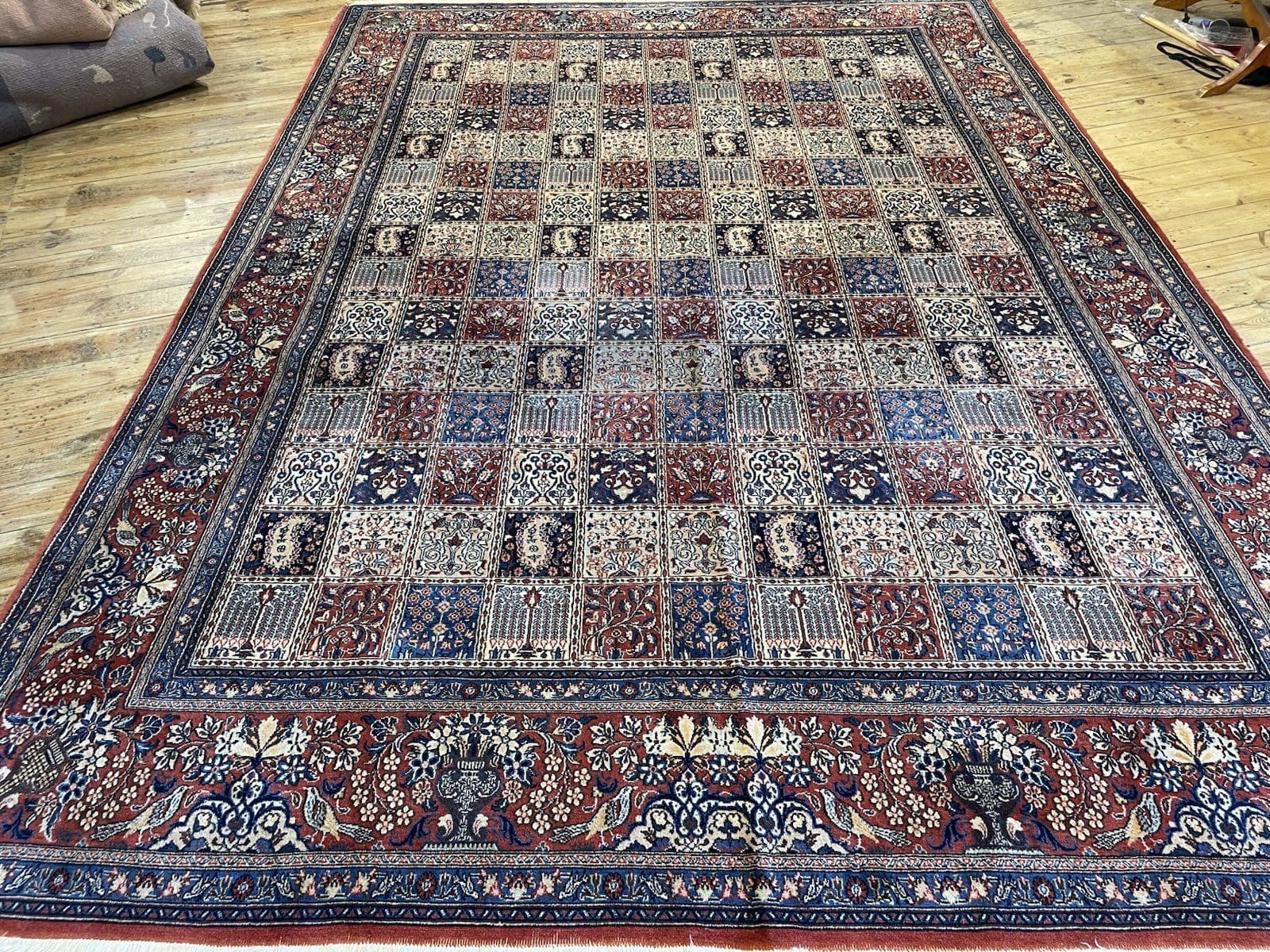
Hand-knotted Moud Persian Rug | Knot density: high | Material: wool and silk pile, 8 mm pile height | Size: 250 x 350 cm | Pattern: Lively field pattern | Condition: Used, well preserved
This Moud Persian rug is hand-knotted and has a pile made from wool and silk. The combination gives the surface two distinct textile qualities. Wool contributes a firm, resilient and tactile structure, while silk adds a smoother feel and a fine sheen. The rug is described as Moud with silk, making the material combination part of its specific character.
Hand-knotting means that the individual knots are worked into the foundation by hand. The field design is therefore built up through a sequence of manual steps rather than printed onto a finished surface. The designation Moud Extrem Fein identifies the rug as an extremely fine Moud execution. Its lively field pattern and fine details belong to the woven structure created during the knotting process.
The pile is specified as eight millimetres high and is described as normal pile. This gives the rug a clearly defined surface suited to everyday use. It is suitable for rooms with underfloor heating. The hand-knotted construction, the wool and silk pile, the high knot density and the fine execution are the stated characteristics of its workmanship.
The rug is used and well preserved. Regular vacuuming on a low setting with a suitable attachment is recommended for care. Direct sunlight should be avoided so that the colours do not fade. If a thorough cleaning is needed, it should be carried out by a professional cleaning service. This approach protects the wool and silk surface from unsuitable treatment.
Origin and Tradition
The Moud rug comes from Iran. Moud is located in Khorasan, a province with a centuries-old tradition of carpet making. Persian carpets from this wider cultural region unite manual production with a design vocabulary developed over generations. That tradition includes more than the visible pattern: it also encompasses fibre preparation, the arrangement of the foundation, knotting methods, surface finishing and the transmission of workshop knowledge.
Khorasan is known for carpets in which carefully organised fields and ornamental detail play an important role. In the region, craft knowledge has traditionally been passed from one generation to the next. Weavers learn how to prepare the materials, set up the foundation, place the knots and finish the pile so that the pattern remains legible. Each stage affects the structure and the visual balance of the completed carpet.
Moud represents a regional expression within Iranian carpet making. The name identifies the Iranian origin and places the rug within a particular historical craft tradition. It does not describe a machine-made category or a purely decorative print. The character of a hand-knotted Moud rug results from the interaction of regional practice, workshop decisions and the design selected for the individual piece.
Persian carpet making developed over long periods in many different towns and landscapes. Khorasan occupied an important position within this history because cultural exchange and trade allowed techniques and design ideas to circulate. Motifs could be preserved, adapted and combined with local preferences. This explains why rugs associated with one region can share a traditional language while still differing in their field arrangement, colour balance and level of detail.
When a Persian rug is classified, its origin, construction and pattern should be considered together. Moud identifies the Iranian regional context, while the lively field pattern describes the visual organisation of this particular rug. Silk in the pile and the extremely fine execution describe its specific workmanship. These details place the piece within the Moud tradition without turning the pattern description into a separate statement about origin.
The work of making an Oriental rug depends on patience and repeated manual operations. Unlike a machine-produced textile, a hand-knotted surface is formed knot by knot and then secured within the foundation. The weaver must follow the intended design while maintaining the structure of the field. A high knot density can support a more differentiated rendering of forms, but it remains inseparable from the skill and method of the craft itself.
Regional carpet traditions also preserve a relationship between useful household textiles and cultural expression. A rug must function as a floor covering, yet its pattern carries conventions developed through historical use. In Moud and elsewhere in Khorasan, this balance between practical textile production and ornamental design forms part of the broader Persian tradition. The present rug is identified as a Persian carpet from Iran and as a hand-knotted Moud with silk.
Design and Pattern
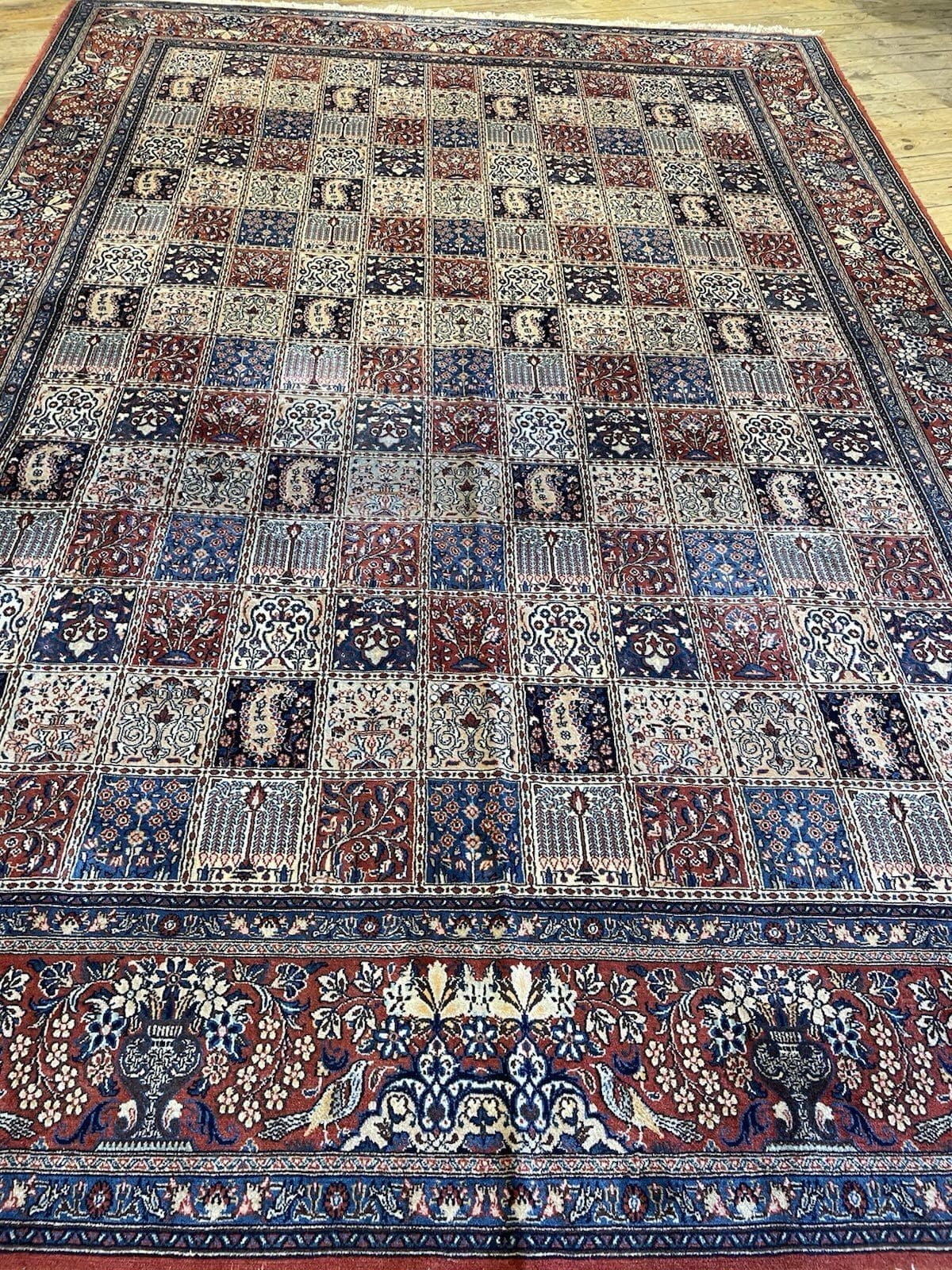
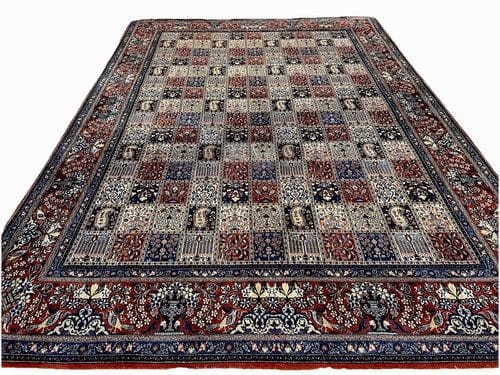
The pattern of this rug is described as a lively field pattern. The main focus is therefore the organised interior area, where motifs and colour relationships create the overall impression. A field pattern can structure a carpet through repeated forms, varied details and a balanced distribution across the surface. In this Moud rug, the field is specifically characterised by a lively and active visual effect.
The design is inspired by traditional motifs rooted in Persian art. Persian pattern language often combines references to nature with geometric order. Curving lines, floral suggestions, controlled repetitions and clearly divided shapes may work together within a single composition. For this rug, the available description identifies the lively field pattern as the defining design feature; it does not assign individual named motifs to particular areas.
Rich colours are stated as part of the design. Colour in a Persian field pattern can separate forms, establish visual rhythm and connect otherwise distinct sections. A carefully balanced palette helps the ornament remain readable while giving the field a coherent appearance. The described harmony of the colours supports the traditional character of the rug without requiring a specific list of shades.
Fine details and decorative elements are closely linked to the hand-knotted technique. A high knot density allows forms to be worked out with greater differentiation, while silk can give selected areas a smoother appearance and a subtle sheen. The design and the material are consequently connected: the visible detail is not separate from the textile construction that produces it.
The rectangular form provides a defined frame for the composition. Within that frame, the field can be read as a continuous arrangement of shapes, colour relationships and ornament. Traditional carpet design often aims to make the whole surface feel considered and balanced rather than leaving the centre as an isolated image. A lively field pattern creates movement through variation while retaining the coherence of the complete rug.
Many Persian patterns reward viewing from different distances. Close observation reveals small details in the knotting and ornament, while a more distant view presents the field as a unified textile surface. This dual reading is a characteristic way of experiencing hand-knotted carpets. In this Moud, the lively field, the Persian design vocabulary and the fine workmanship form one connected visual statement.
The pattern is suitable for a traditional Oriental or Persian interior style, as stated in the description. Its ornamental organisation can work with furnishings that value an established Persian visual language. At the same time, the field design remains the defining statement of the rug itself. The description does not claim a particular border arrangement, medallion or named motif, so those elements are not assigned to this piece.
Special Features
This is a hand-knotted Moud Persian rug from Iran with silk and an extremely fine execution. It is offered in used, well-preserved condition. Its stated features include a lively field pattern, normal pile and suitability for underfloor heating. The rectangular shape allows it to be placed in different room layouts.
The living room, bedroom and dining room are named as possible areas of use. Its hand-knotted construction and wool and silk pile determine the way the surface should be treated. Regular vacuuming, protection from direct sunlight and professional cleaning when necessary are recommended. These measures help preserve the pile and the colour impression of the rug.
FAQ
How can I assess the quality of a Persian rug?
Knot density, material and the precision of the pattern are important points of assessment. A high knot density can permit a more finely differentiated design. Wool and silk are traditionally valued for different reasons: wool provides structure and resilience, while silk contributes a smoother surface and a fine sheen. In this Moud, the hand-knotted technique, the wool and silk pile, the high knot density and the fine pattern execution are the stated quality-related features.
Can I use this rug over underfloor heating?
Yes. This hand-knotted Moud Persian rug is suitable for underfloor heating. The textile surface can allow warmth to pass into the room while also providing a defined floor covering. Correct placement and regular care remain advisable during use. Compatibility with underfloor heating is expressly given as a feature of this rug.
What is the best way to care for my Persian rug?
Vacuum the rug regularly on a low setting and use a suitable attachment. Avoid direct sunlight to reduce the risk of colour fading. If a thorough cleaning becomes necessary, use a professional cleaning service. Professional treatment is particularly appropriate for a wool and silk pile, since unsuitable cleaning can affect the surface and the structure of the pile.
To provide the best experiences, we use technologies like cookies to store and/or access device information. Consenting to these technologies will allow us to process data such as browsing behavior or unique IDs on this site. Not consenting or withdrawing consent, may adversely affect certain features and functions.
Functional Always active
The technical storage or access is strictly necessary for the legitimate purpose of enabling the use of a specific service explicitly requested by the subscriber or user, or for the sole purpose of carrying out the transmission of a communication over an electronic communications network.
Preferences
The technical storage or access is necessary for the legitimate purpose of storing preferences that are not requested by the subscriber or user.
Statistics
The technical storage or access that is used exclusively for statistical purposes.The technical storage or access that is used exclusively for anonymous statistical purposes. Without a subpoena, voluntary compliance on the part of your Internet Service Provider, or additional records from a third party, information stored or retrieved for this purpose alone cannot usually be used to identify you.
Marketing
The technical storage or access is required to create user profiles to send advertising, or to track the user on a website or across several websites for similar marketing purposes.

 SECURE PAYMENT
 SHIPPING PARTNERS


