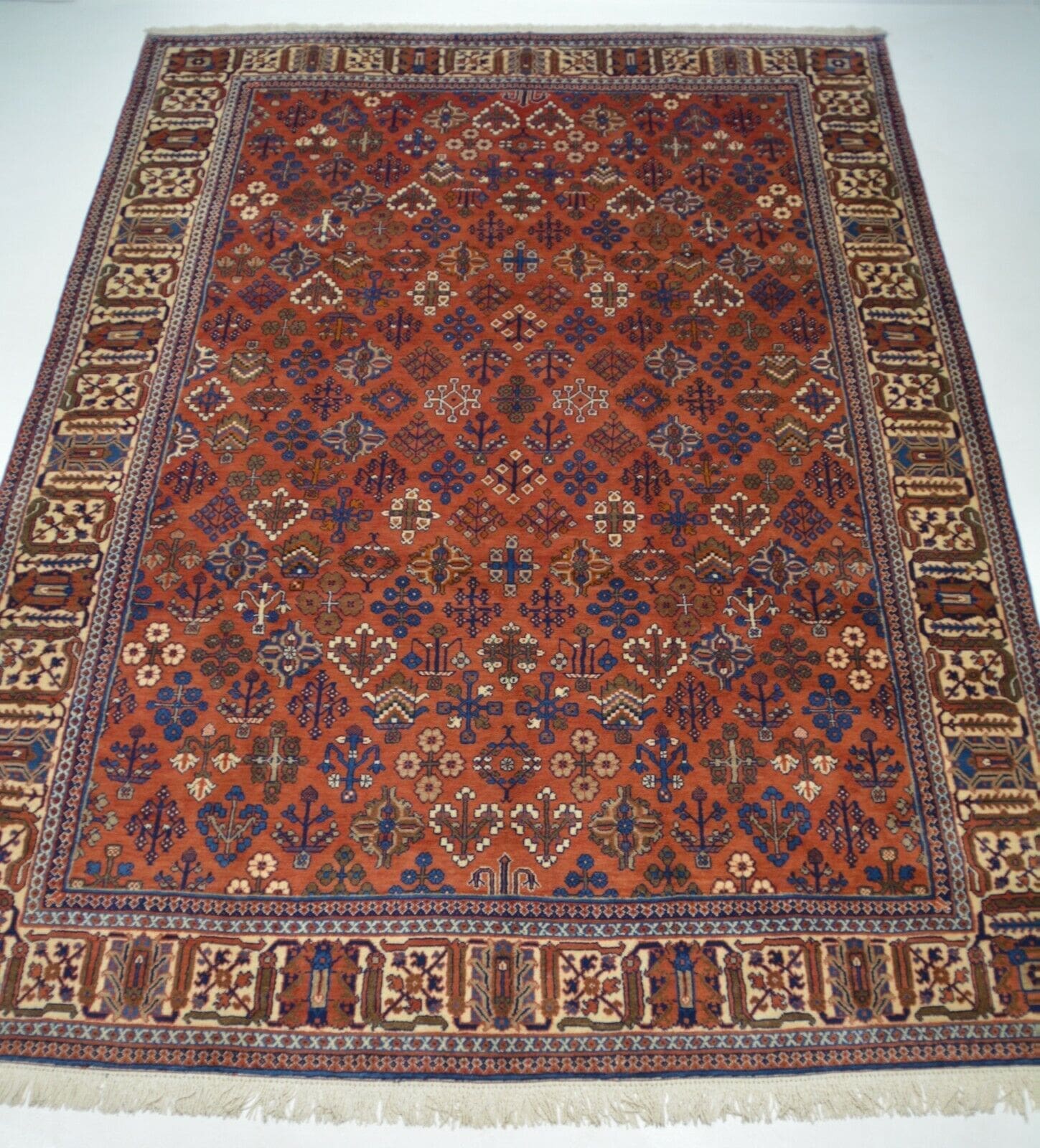
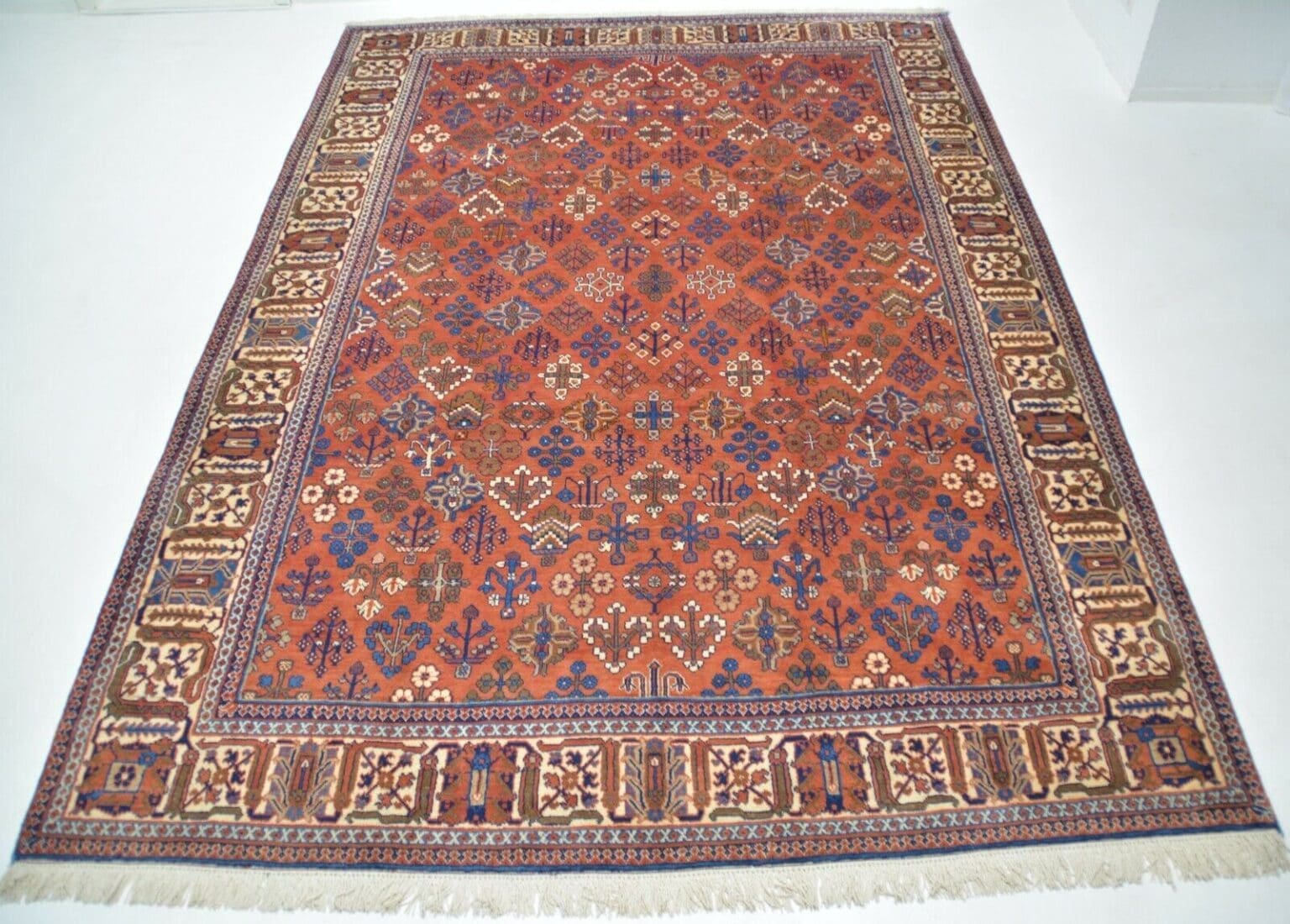
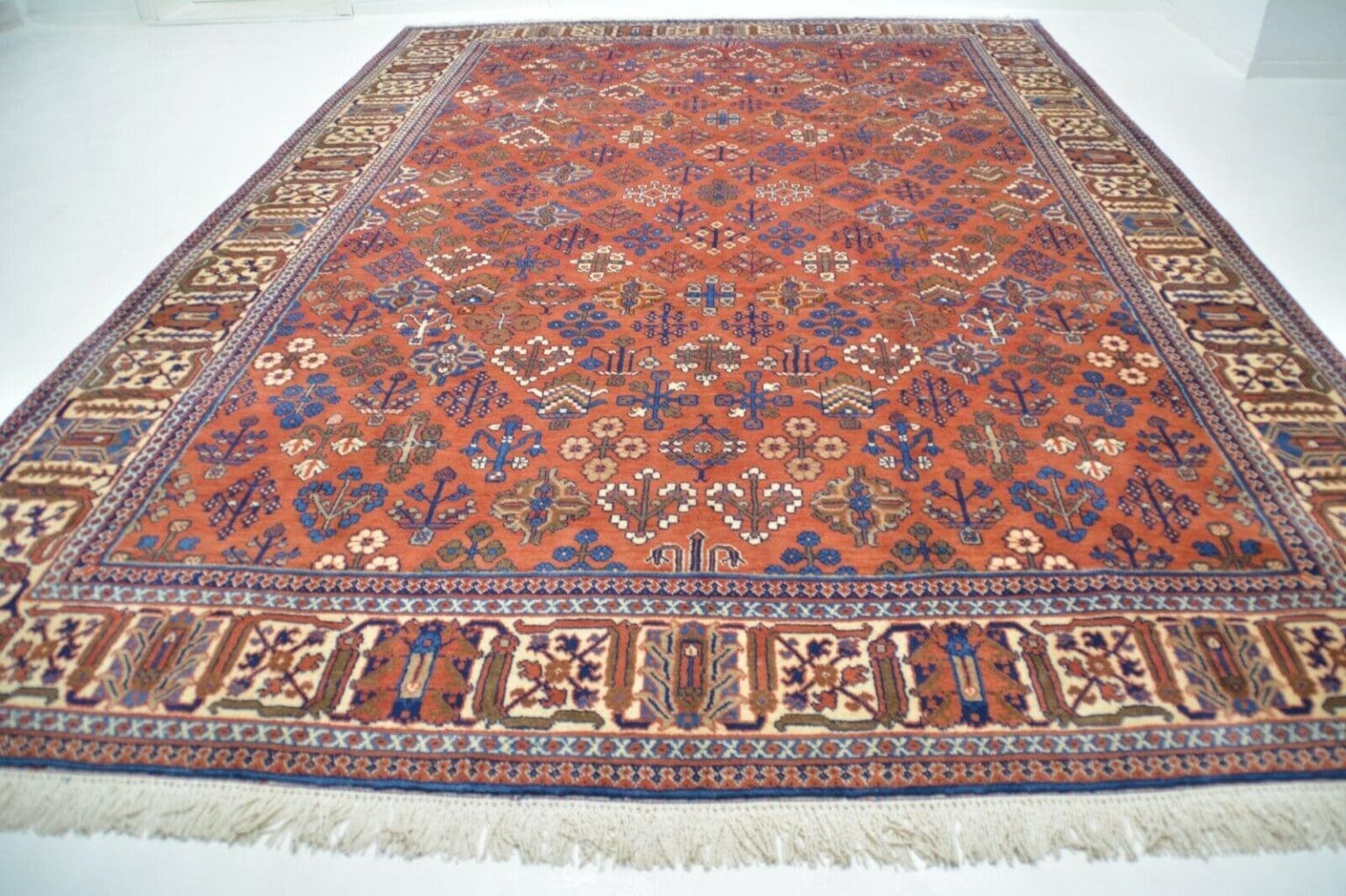
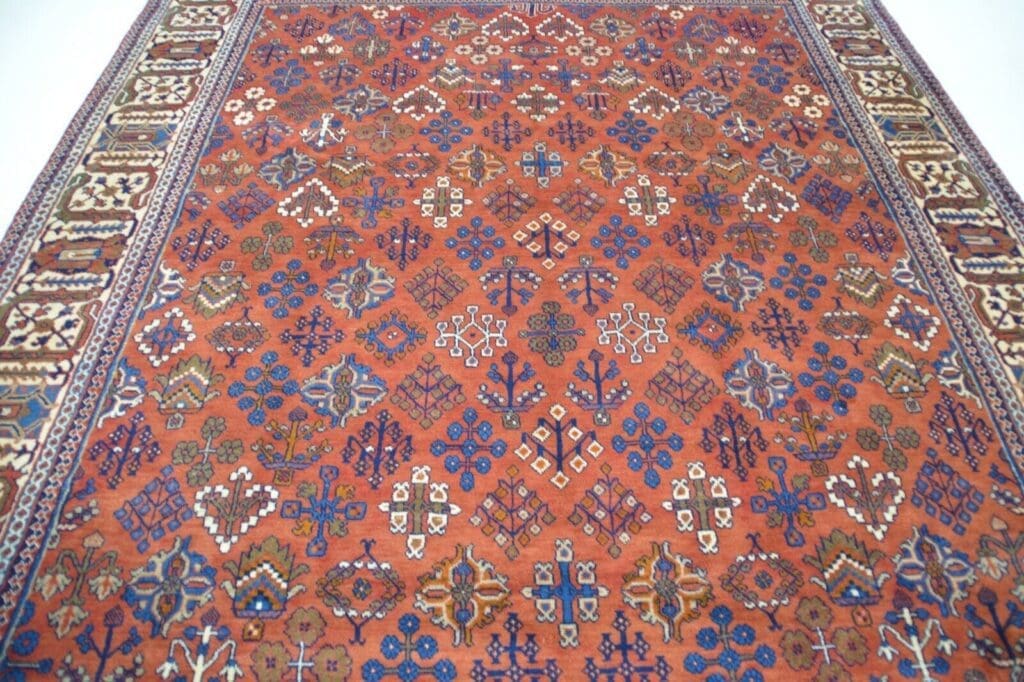
Persian Rug Meymeh approx. 352 x 250 cm Wool Hand-knotted
€ 1800
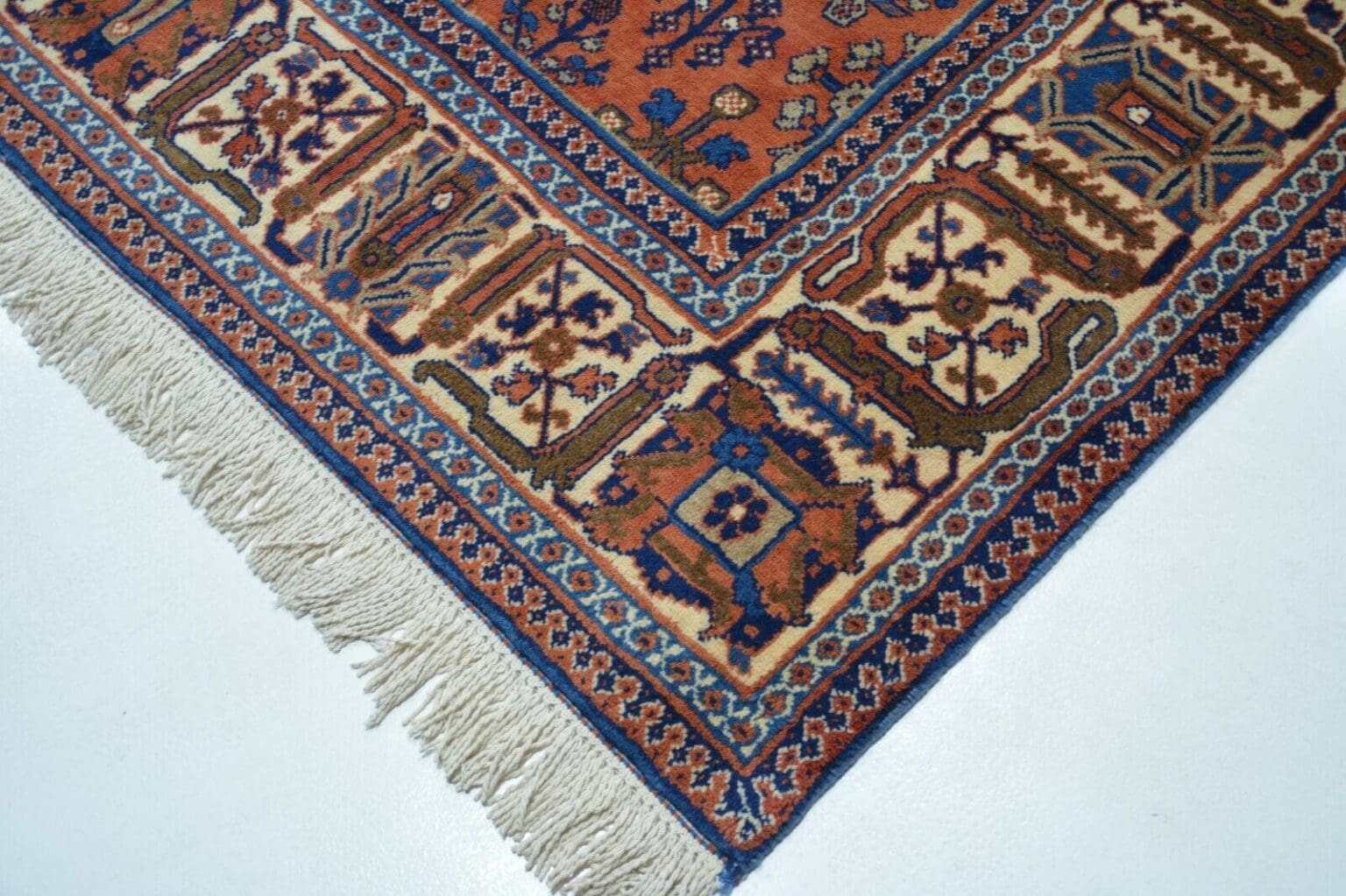
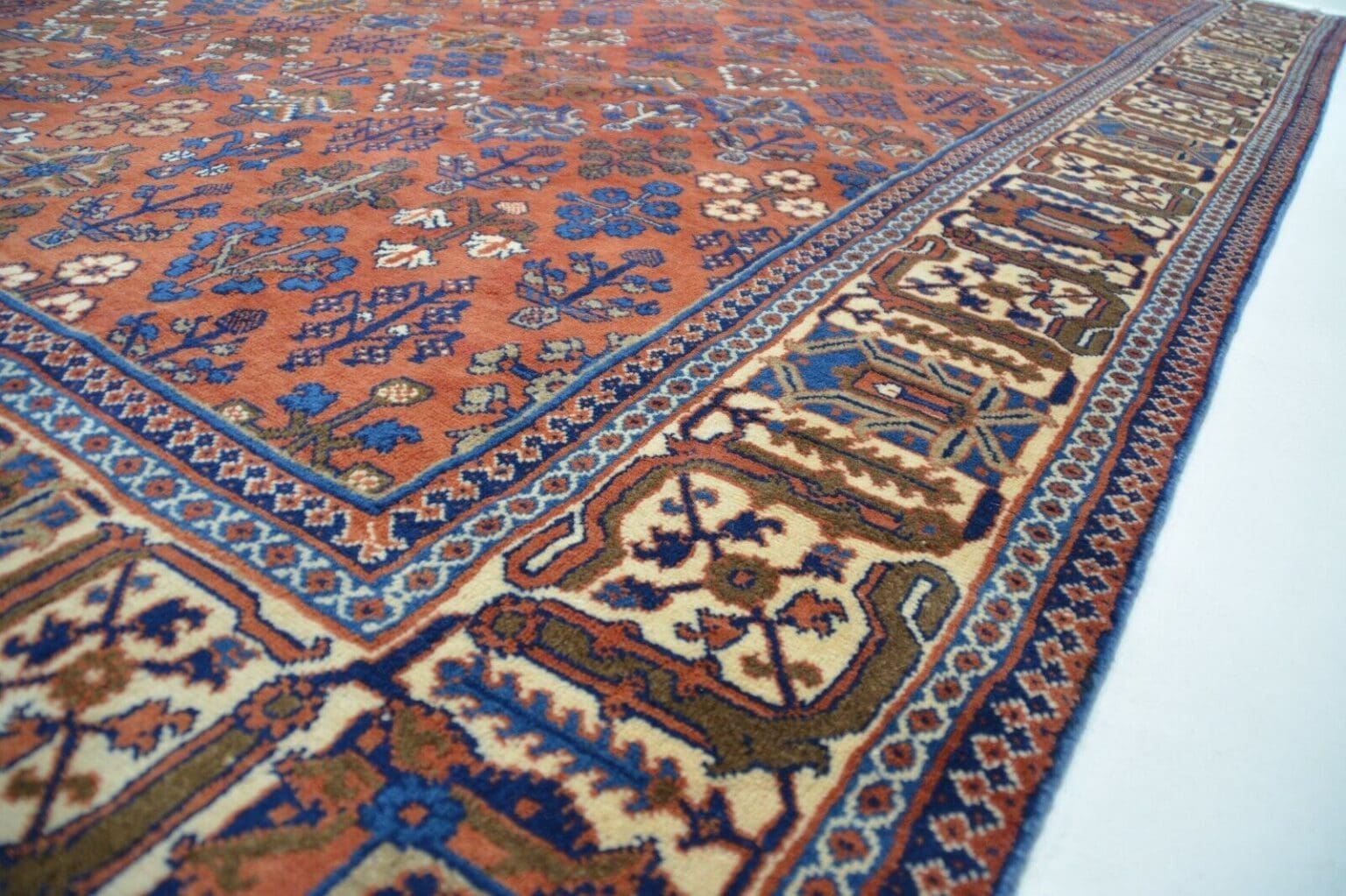
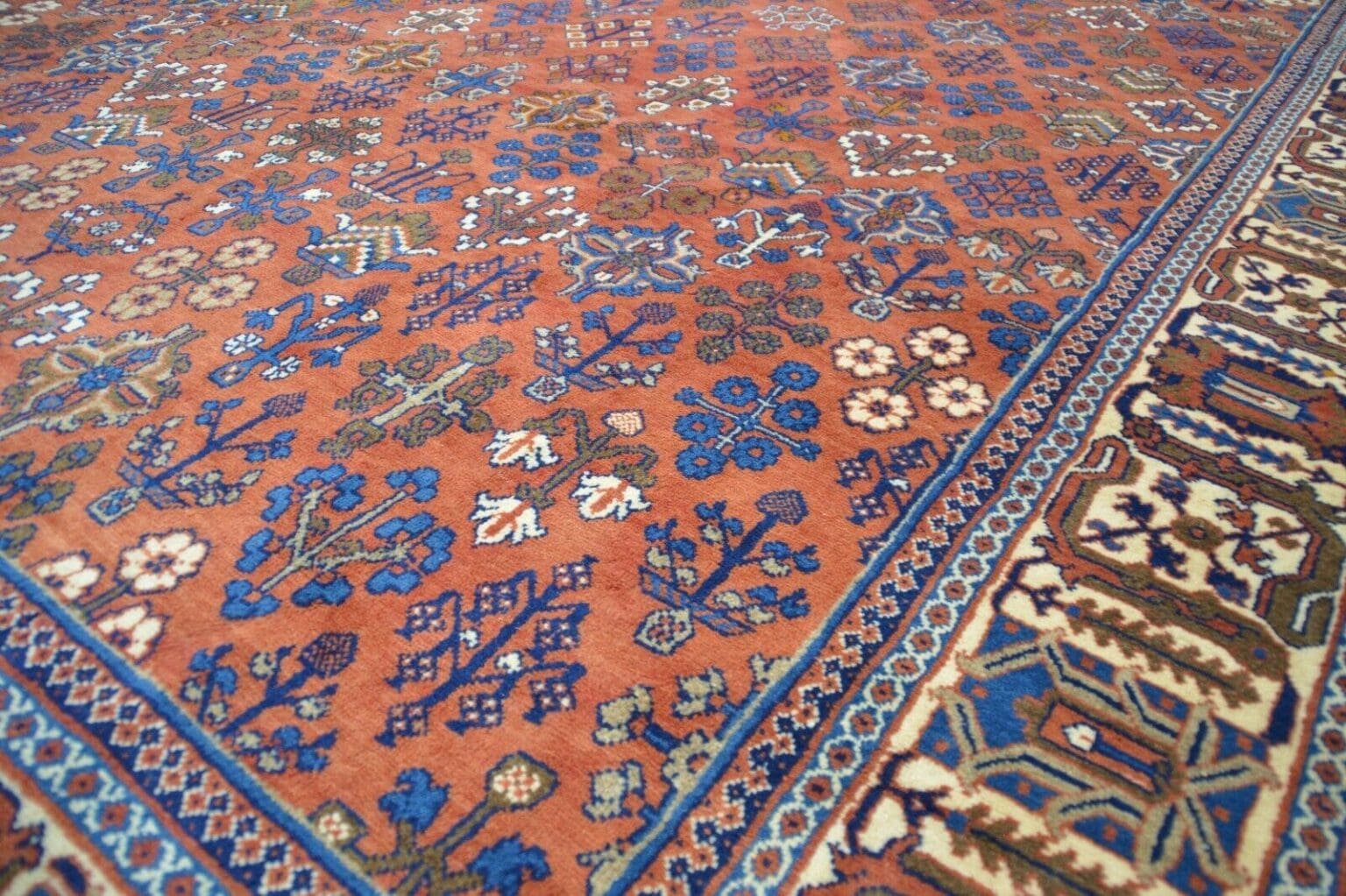
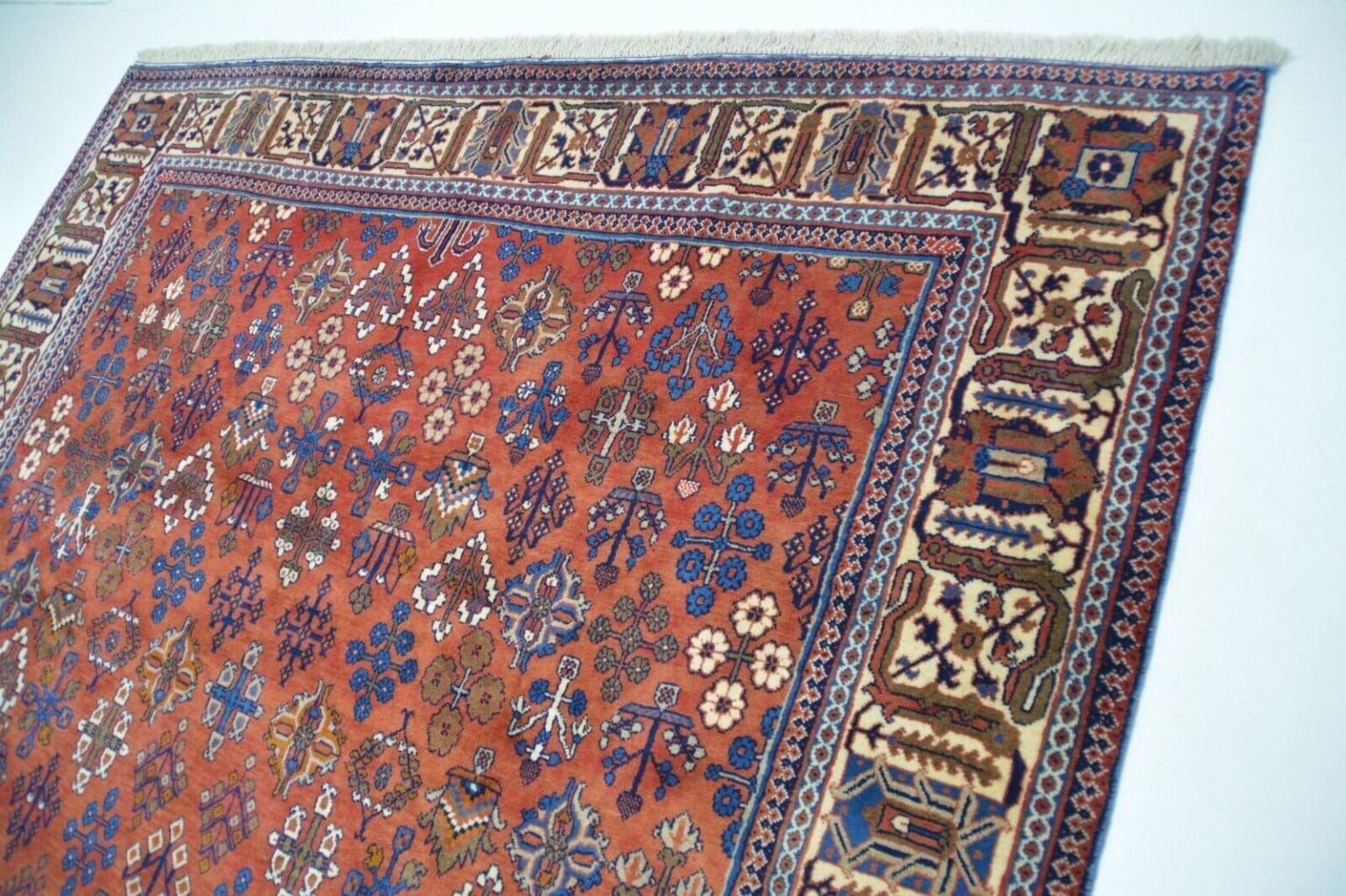
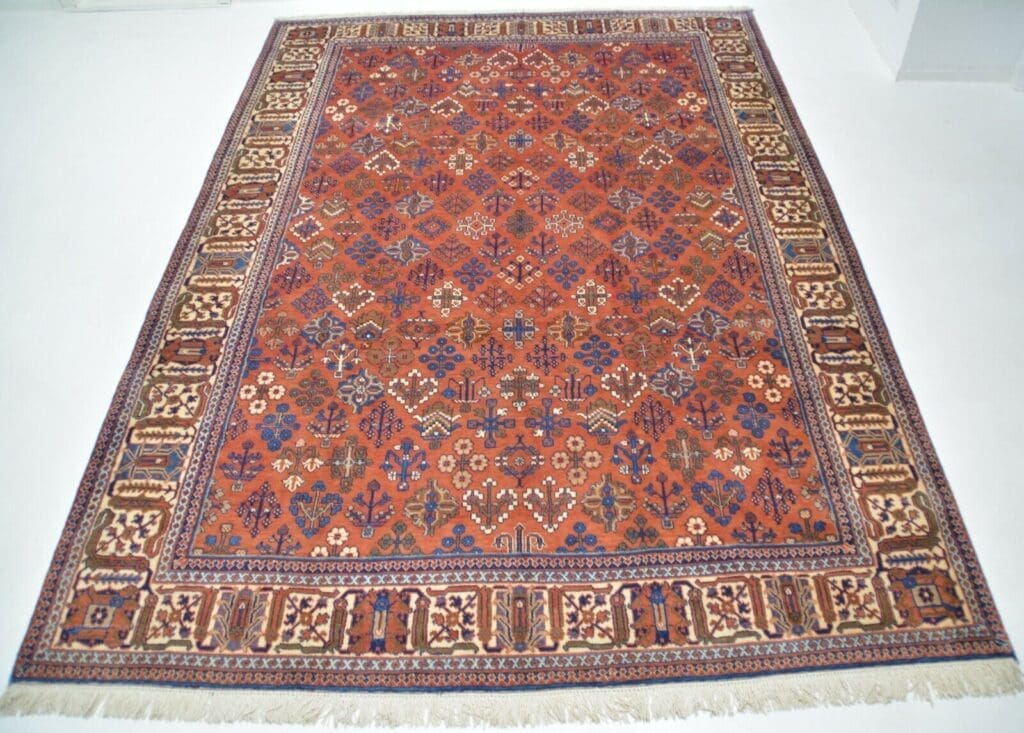
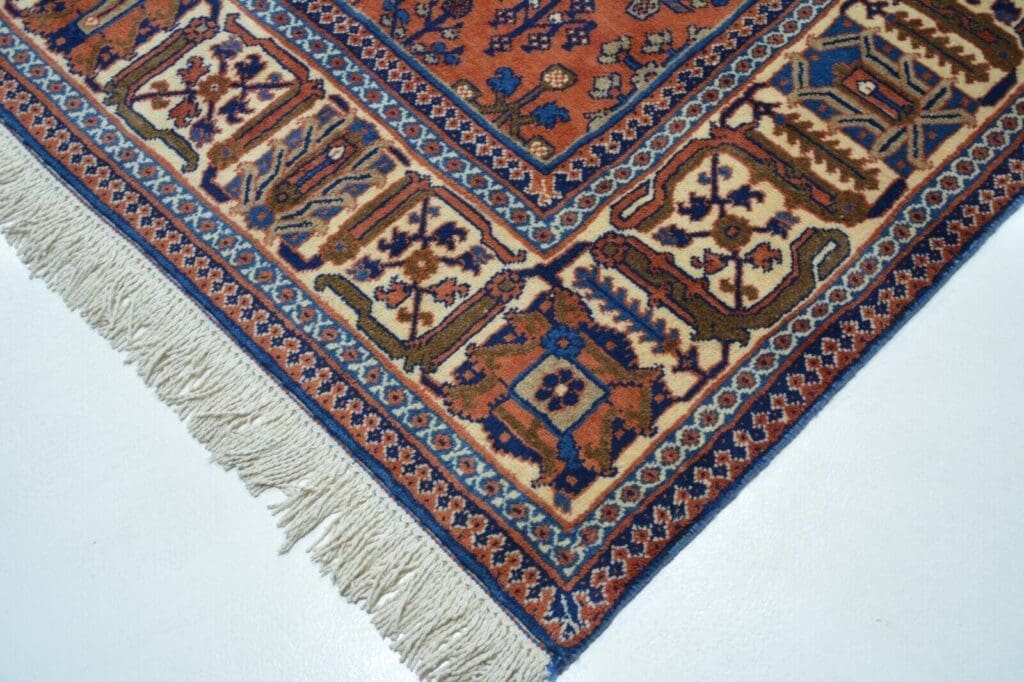
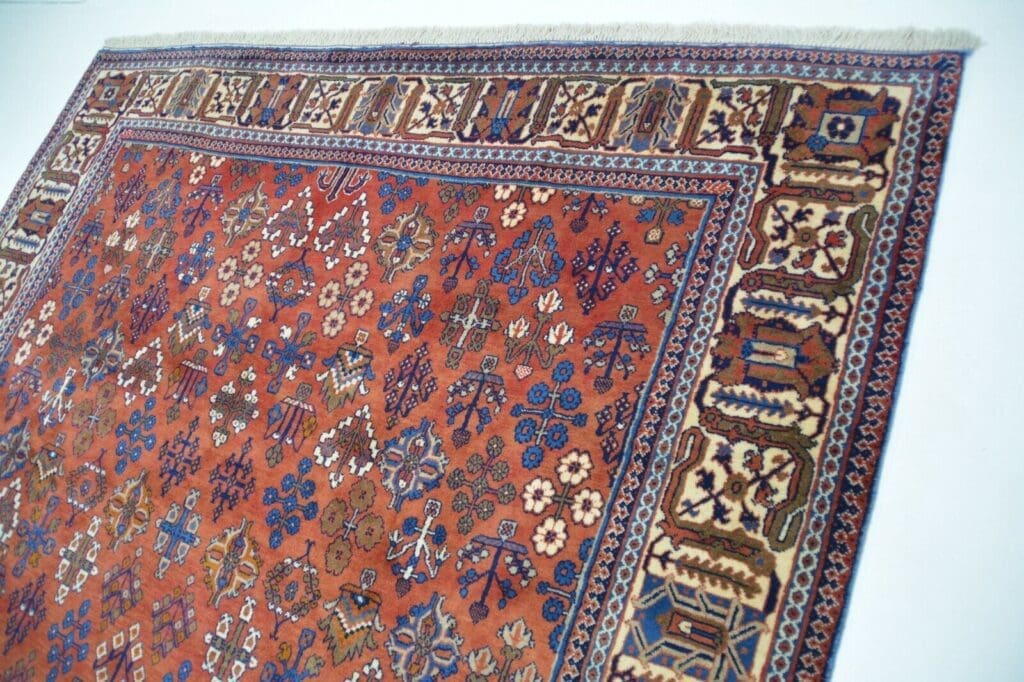
Hand-knotted Meymeh Persian Rug | Material: pile wool, warp cotton | Size: ca. 352 x 250 cm | Pattern: traditional Oriental, floral | Condition: New | Shape: rectangular
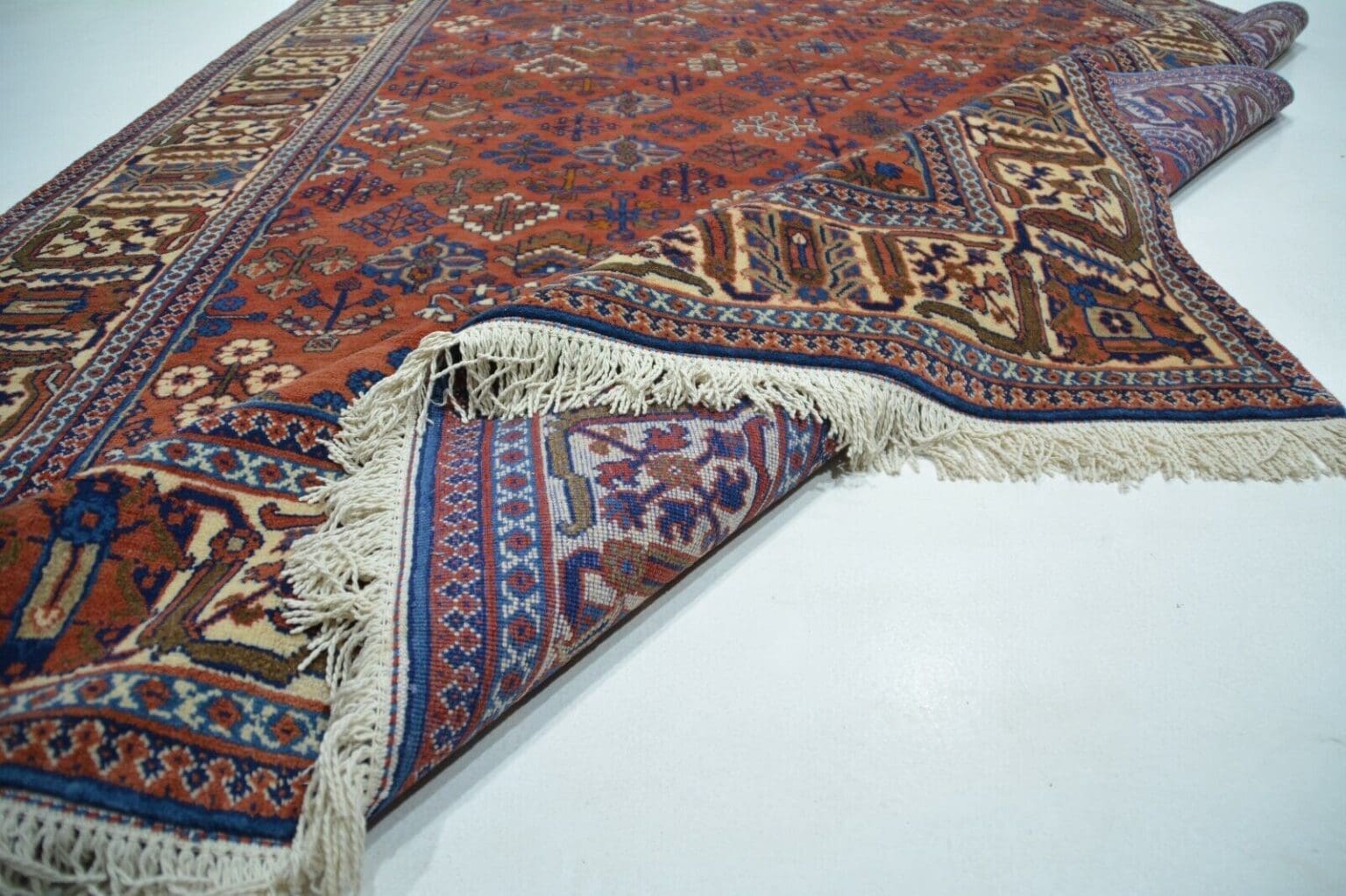
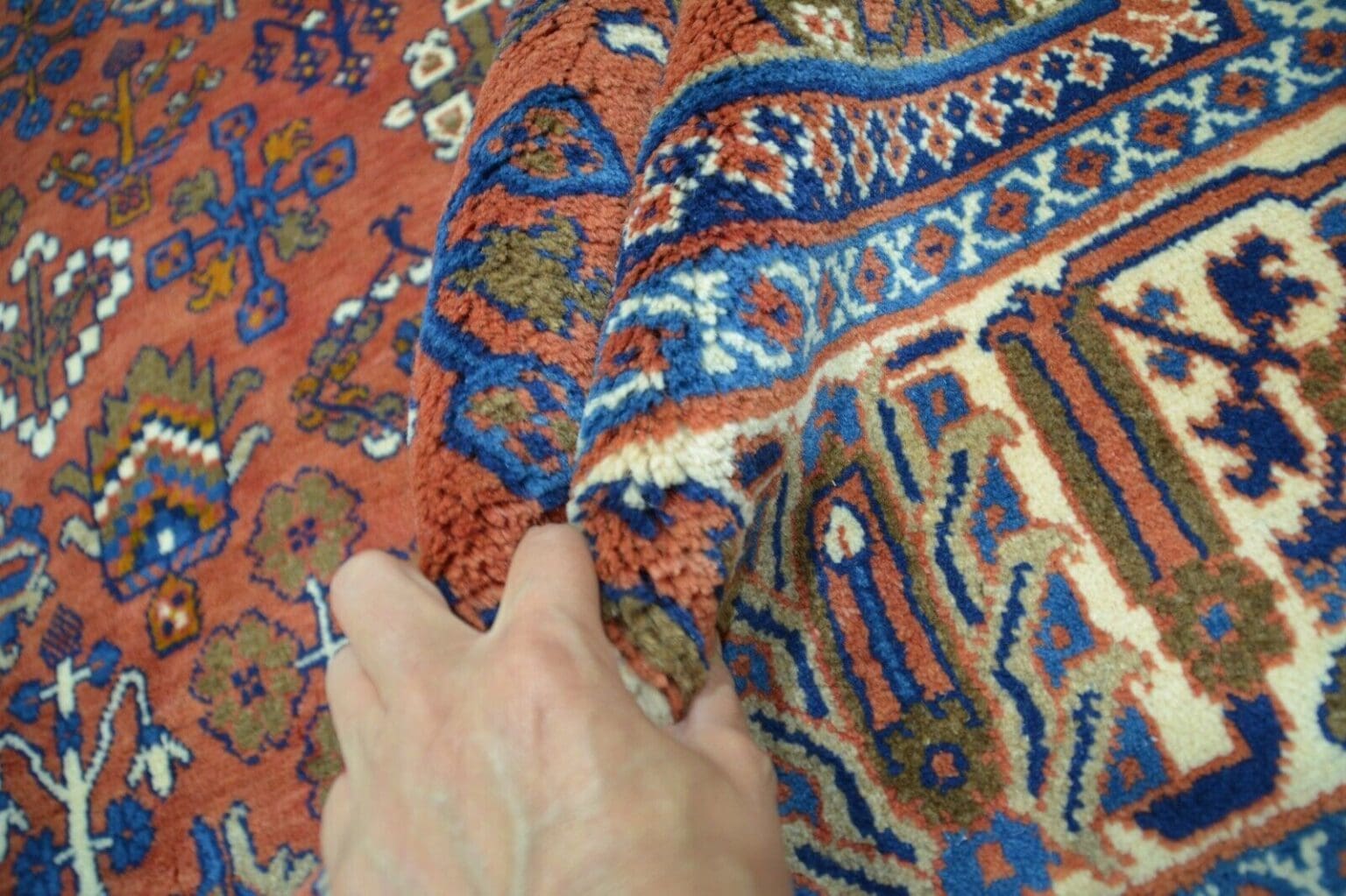
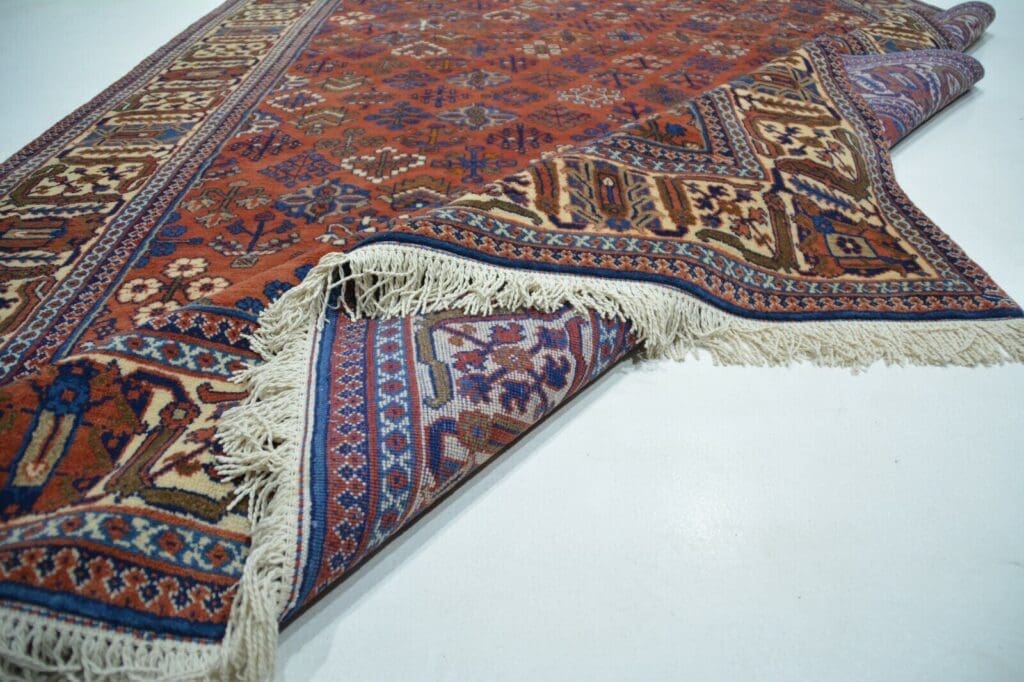
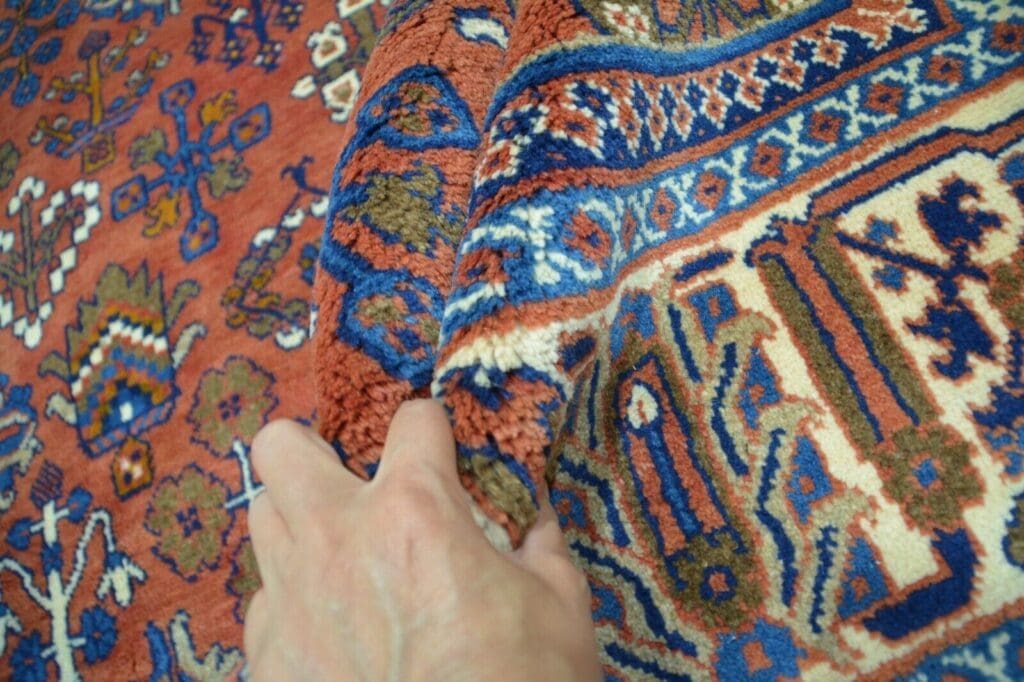
This Meymeh Persian rug is hand-knotted, with wool used for the pile and cotton used for the warp. The material information gives a composition of 90 percent wool and 10 percent cotton. Wool is valued in rug making for its resilient nature and its comfortable feel underfoot. It gives the pile a substantial yet pleasant surface and makes the rug suitable for regular use in living spaces.
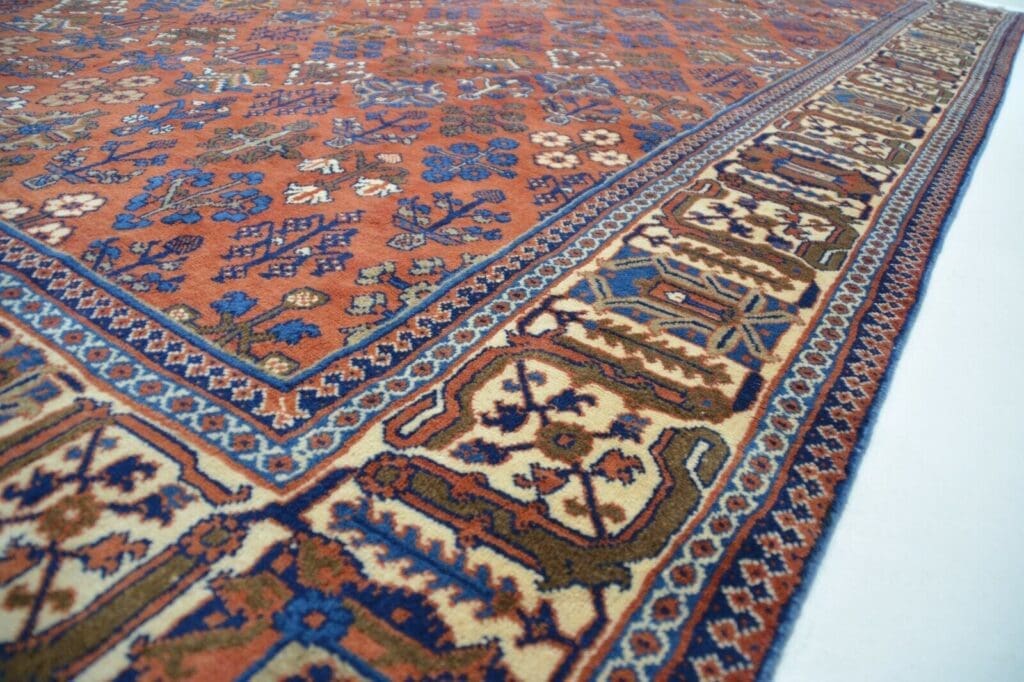
The pile height is 1 cm. The rug has a particularly high knot density, creating a fine and detailed surface structure. In hand-knotting, individual knots are worked into the prepared warp one by one. This is a time-intensive process that requires consistent manual care. Rather than being produced as an industrial floor covering, the rug therefore reflects a traditional textile method in which the construction is closely connected with the character of the finished surface.
The wool combines softness with the durability expected from a practical floor textile. The colours are made with environmentally friendly dyes. They are described as exceptionally vivid and as resistant to fading even in direct sunlight. The rug is suitable for use with underfloor heating. Its rectangular shape provides a straightforward basis for arranging it within a range of room layouts.
Origin and Tradition
Meymeh is a city in Iran’s Isfahan Province. It is known for its rugs and belongs to a region with a long-standing tradition of carpet production. This tradition reaches back to the fifteenth century. Iranian rug making brings together knowledge of fibres, colour, pattern planning and knotting methods that has been passed through generations. A hand-knotted rug from Meymeh represents this inherited way of working while remaining a functional textile for contemporary interiors.
Meymeh rugs are associated with careful craftsmanship, fine patterning and the use of lively colours. The surrounding natural landscape often provides inspiration for the designs. Floral forms are not simply scattered decorations; they are arranged within an ordered composition. The relationship between natural imagery, colour and structure is an important part of the regional design language. It allows a rug to carry a decorative image while retaining the disciplined organisation characteristic of woven and knotted textiles.
In earlier periods, rugs from Meymeh served both the local population and the export trade. They could therefore have significance beyond their practical role as household textiles. In different cultures, rugs from the region were also valued as status symbols. Their imagery may express ideas of a harmonious life and a connection with nature. These meanings belong to the cultural context of the regional tradition and do not prescribe how this particular rug must be used in a home.
Isfahan Province is one of Iran’s recognised carpet-producing areas. Its textile culture includes regional forms in which technical precision and ornament work together. The Meymeh designation places a rug within this local tradition. It refers not only to a geographical setting but also to an established body of knowledge in which knotting is treated as inherited craftsmanship and as part of cultural life. The hand-knotted construction keeps that connection visible in the object itself.
Design and Pattern
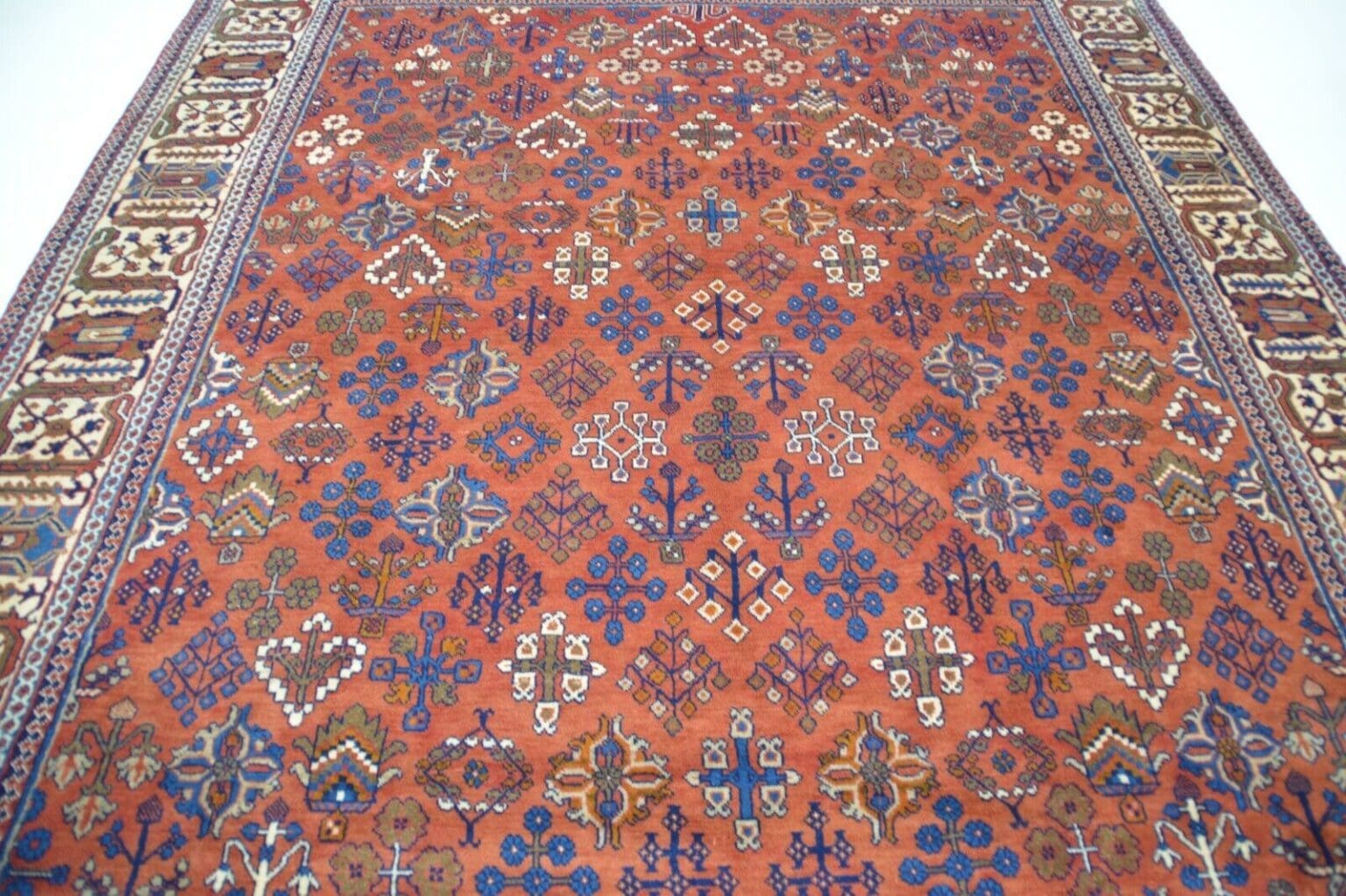
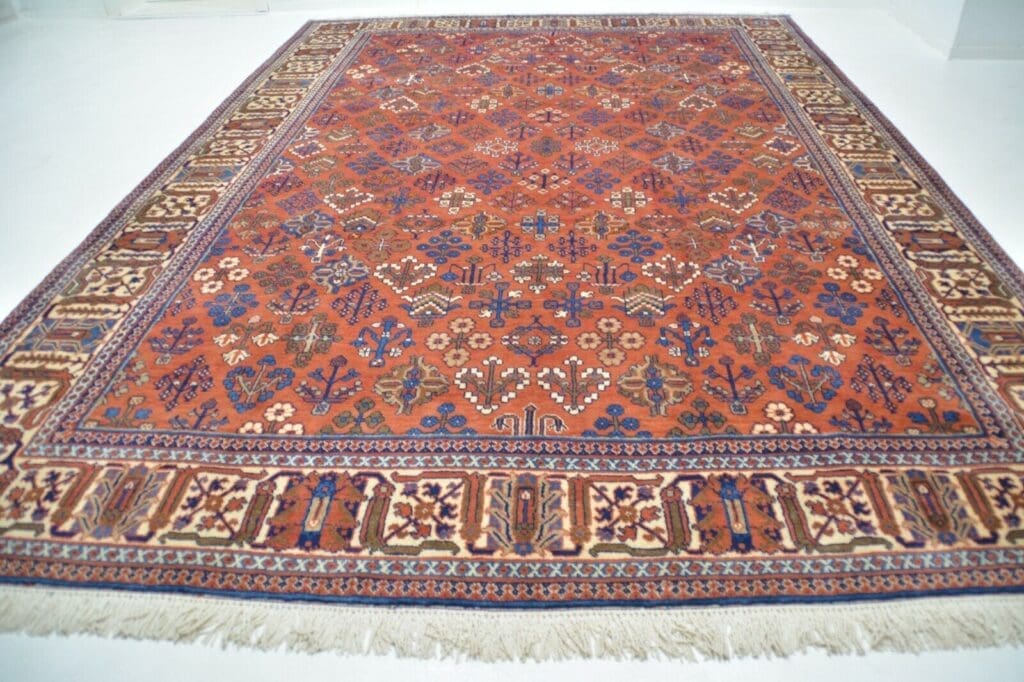
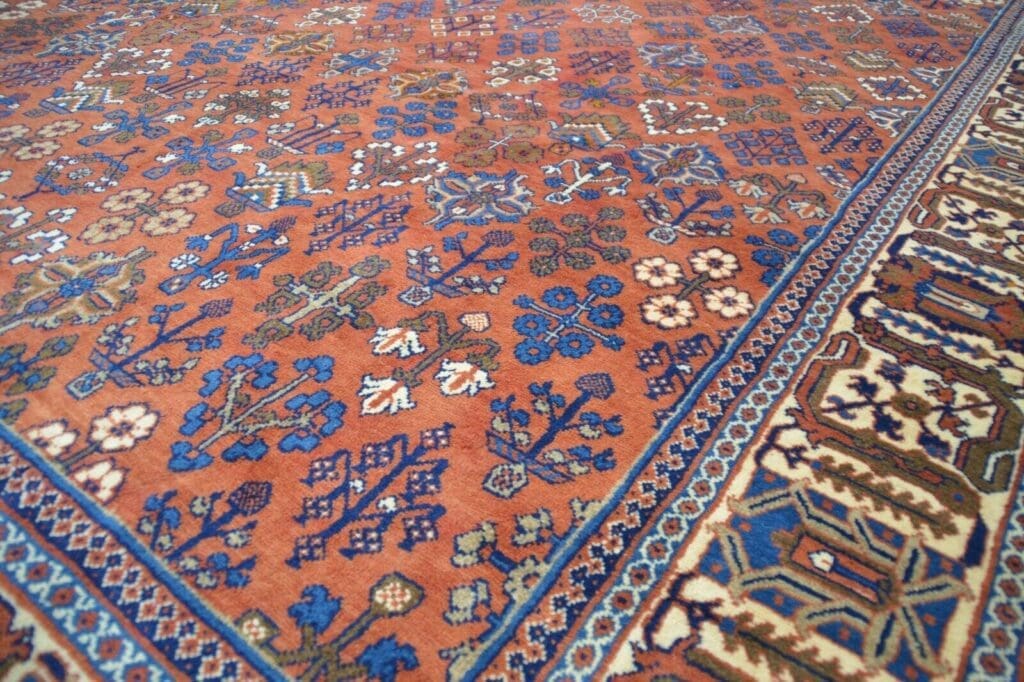
The pattern of this hand-knotted Meymeh rug is traditional Oriental and floral. It combines classical and modern elements. The result is not limited to a single historical vocabulary: traditional floral imagery is presented with a contemporary sense of balance. Organic flower forms give the surface a natural character, while their planned arrangement maintains visual order and makes the composition easy to read across the rectangular field.
Regional designs are often influenced by the geometric forms of Islamic art. Geometry may appear through borders, divisions, repeated shapes or a measured rhythm across the design. When it is combined with floral ornament, straight lines and curving forms create a controlled contrast. This relationship between geometry and nature is a recurring principle in Oriental carpet design, allowing the pattern to appear structured without becoming purely linear.
The palette is multicoloured and includes earthy tones together with vivid colours. Earthy shades create a foundation associated with soil, landscape and natural materials. Brighter tones provide accents and give individual ornaments clearer definition. Their coordinated use is important to the overall pattern. It enables the floral details, geometric influences and surrounding field to read as a unified composition rather than as unrelated decorative fragments.
This type of design can be placed alongside traditional furniture as well as more contemporary interiors. The source description names living rooms, bedrooms and elegant study areas as possible settings. It also identifies rustic country-house interiors and modern minimalist rooms as suitable stylistic contexts. In each case, the rug remains an Iranian Oriental textile whose appearance is shaped by Meymeh’s regional tradition, its floral design and its hand-knotted construction.
The floral imagery and geometric influence can be understood as two connected levels of the composition. Flowers introduce a reference to the natural world, while geometry contributes repetition, balance and order. The multicoloured palette links the two. Together, these elements form a harmonious visual field and reflect a regional approach in which ornament, colour and symbolism are considered as parts of one design rather than separate features.
Special Features
The rug is new and suitable for rooms with underfloor heating. Its wool is described as durable, allowing use in more frequently walked areas such as hallways and living rooms. Wool also gives the pile a warm and comfortable character. The rug is easy to maintain and can be cleaned relatively easily when required. These practical qualities accompany its traditional appearance without changing its classification as a hand-knotted Meymeh Persian rug.
Other stated features include the particularly high knot density, the traditional hand-knotting technique and the use of wool in the pile with cotton in the warp. Together, these details describe both the textile construction and the visible character of the rug. Its rectangular format and multicoloured floral pattern allow it to work in several interior settings, from a rustic country-house scheme to a modern minimalist room.
FAQ
How should I care for a hand-knotted Meymeh rug?
Regular vacuuming helps remove loose dust and everyday dirt from the wool pile while preserving its appearance. If a more thorough treatment is needed, professional rug cleaning is recommended. Aggressive chemicals should not be used because they can damage both the wool and the colours. Gentle care is appropriate for a hand-knotted textile and helps maintain the fine surface structure created by the high knot density.
Where is the rug best used?
The Meymeh rug is suitable for living rooms, bedrooms and offices. It can also be used in a hallway or a living room with more frequent foot traffic because the wool is described as durable. Its rectangular shape and traditional Oriental floral design allow it to fit into a variety of interior schemes. The description specifically mentions rustic country-house interiors and modern minimalist rooms. The rug is also suitable for rooms equipped with underfloor heating.
What makes this rug distinctive?
Its distinctive character comes from the combination of hand-knotted production, particularly high knot density and the traditional designs and colours associated with the Isfahan region. The pile is wool, the warp is cotton, and the pattern brings together floral motifs with classical, modern and geometric influences. Earthy shades and vivid colours create the multicoloured palette. As an original Meymeh rug, this one-off piece represents an individual execution within an established Iranian knotting tradition.
To provide the best experiences, we use technologies like cookies to store and/or access device information. Consenting to these technologies will allow us to process data such as browsing behavior or unique IDs on this site. Not consenting or withdrawing consent, may adversely affect certain features and functions.
Functional Always active
The technical storage or access is strictly necessary for the legitimate purpose of enabling the use of a specific service explicitly requested by the subscriber or user, or for the sole purpose of carrying out the transmission of a communication over an electronic communications network.
Preferences
The technical storage or access is necessary for the legitimate purpose of storing preferences that are not requested by the subscriber or user.
Statistics
The technical storage or access that is used exclusively for statistical purposes.The technical storage or access that is used exclusively for anonymous statistical purposes. Without a subpoena, voluntary compliance on the part of your Internet Service Provider, or additional records from a third party, information stored or retrieved for this purpose alone cannot usually be used to identify you.
Marketing
The technical storage or access is required to create user profiles to send advertising, or to track the user on a website or across several websites for similar marketing purposes.
 SECURE PAYMENT
 SHIPPING PARTNERS


