
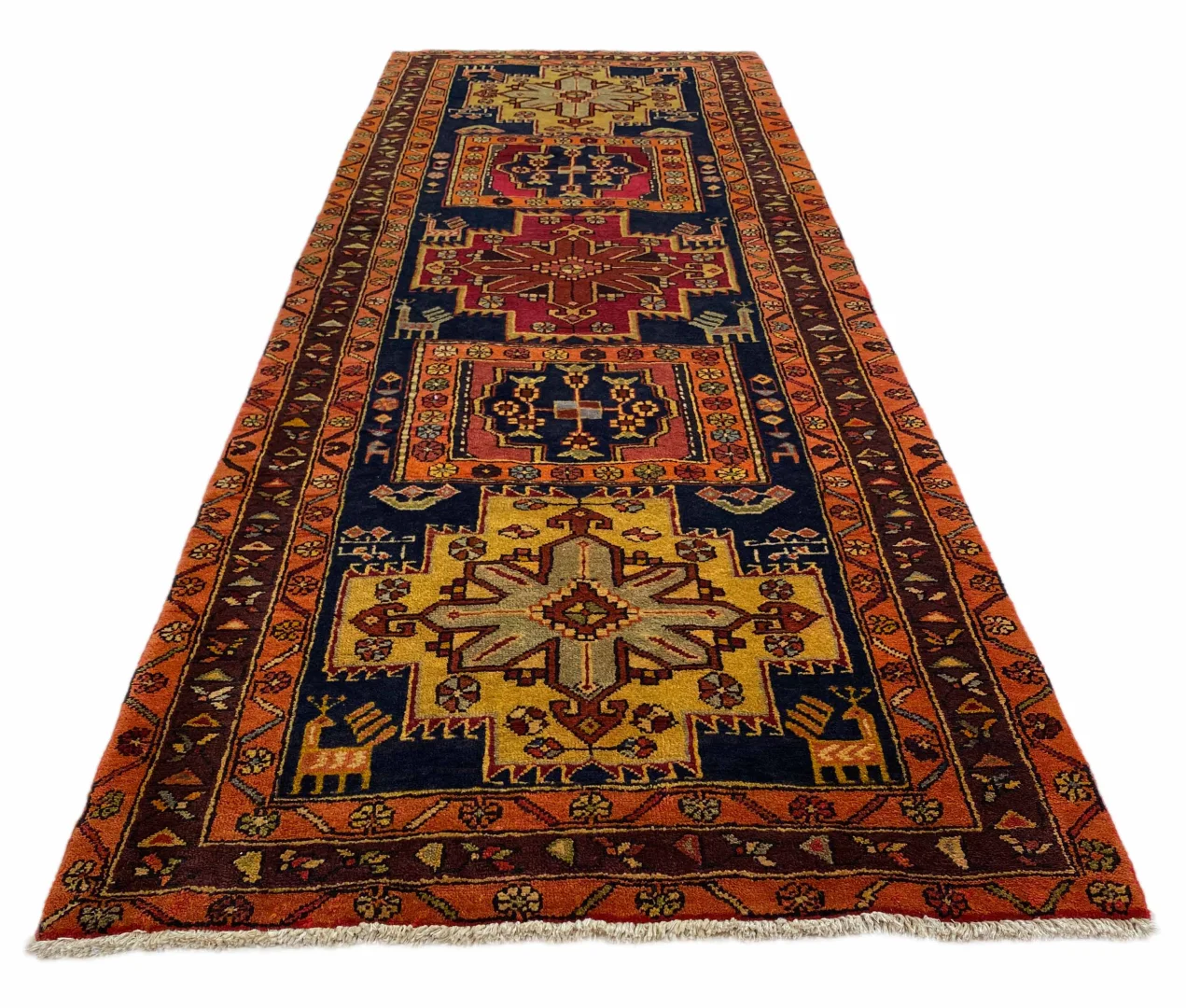
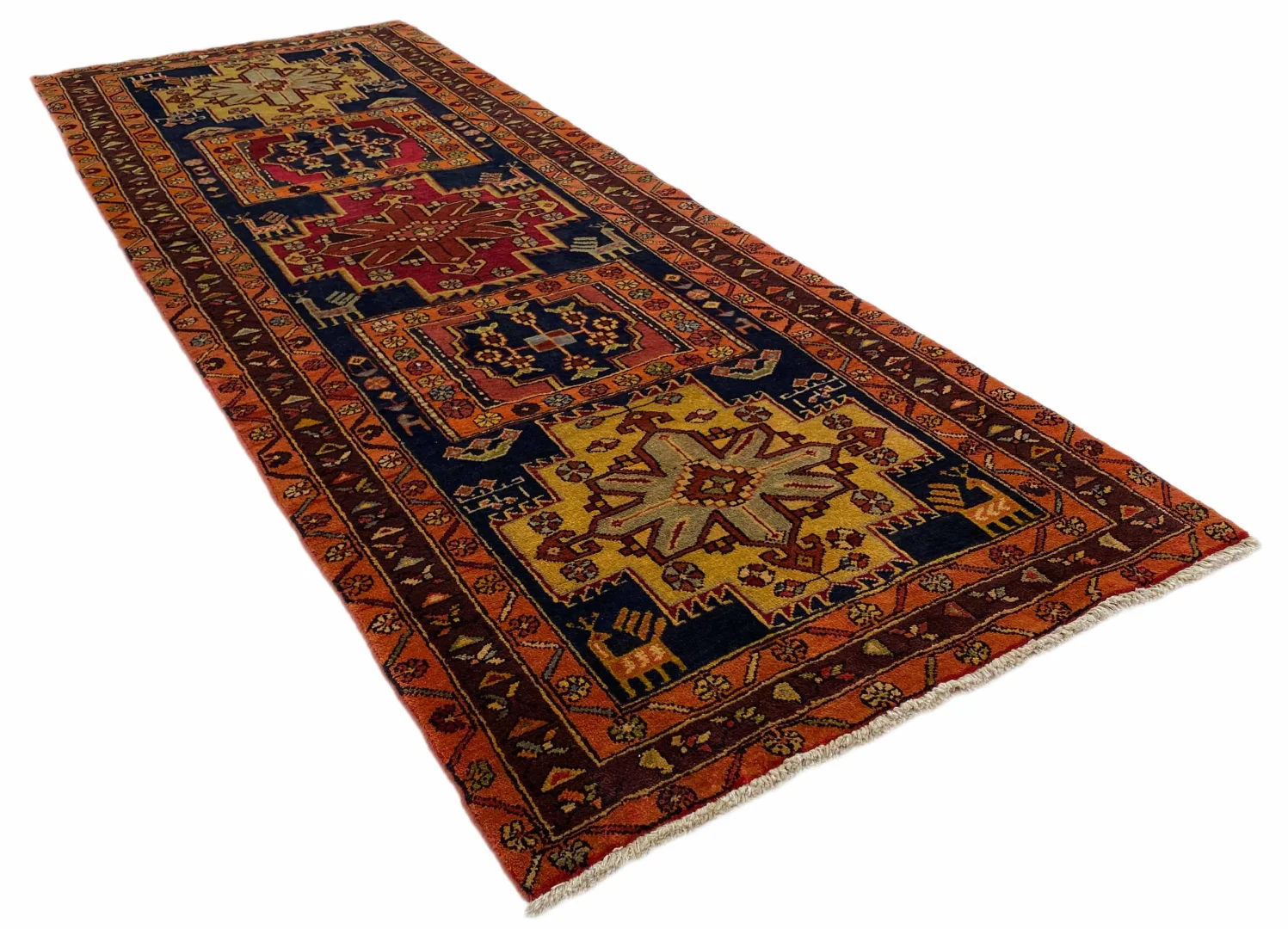
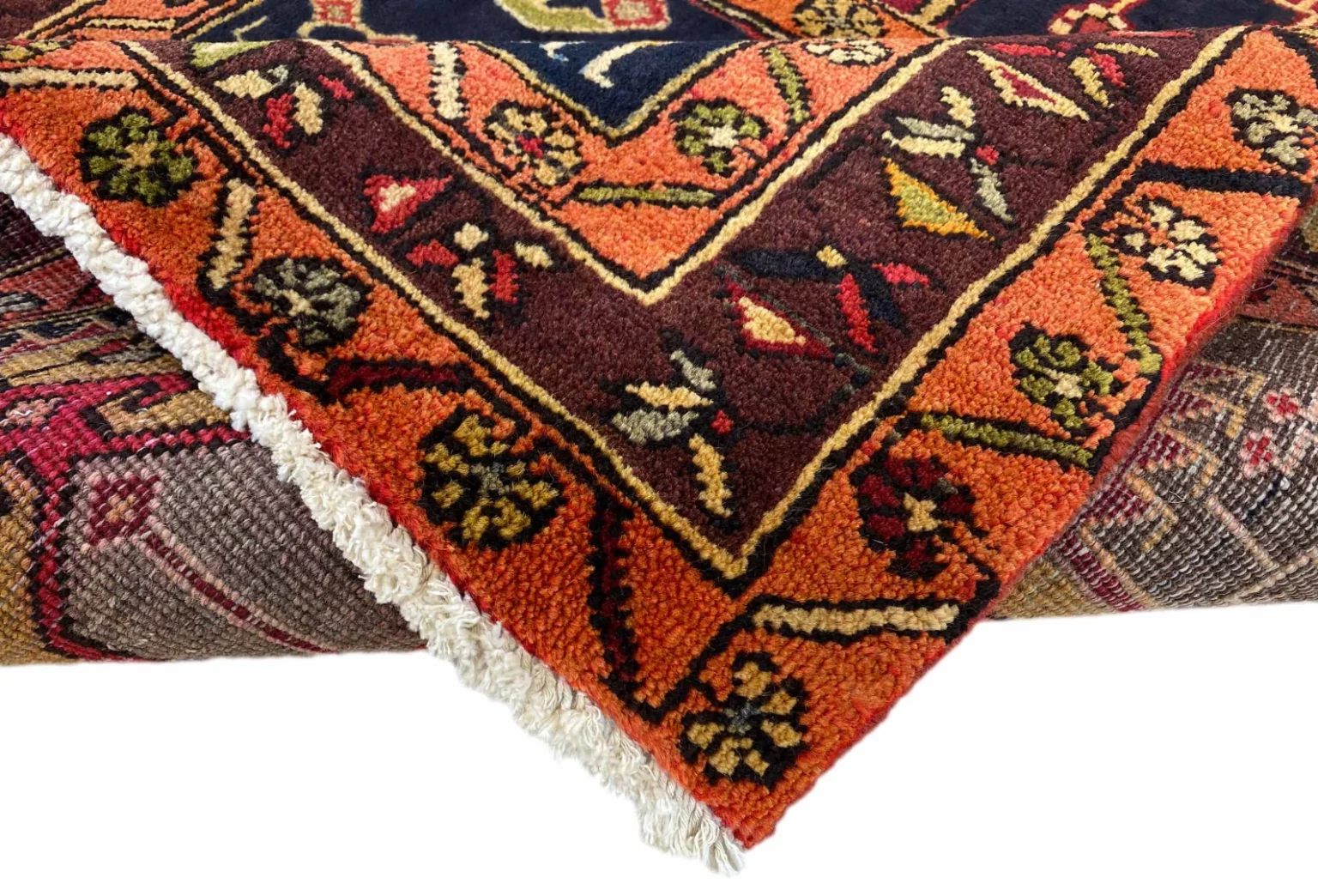
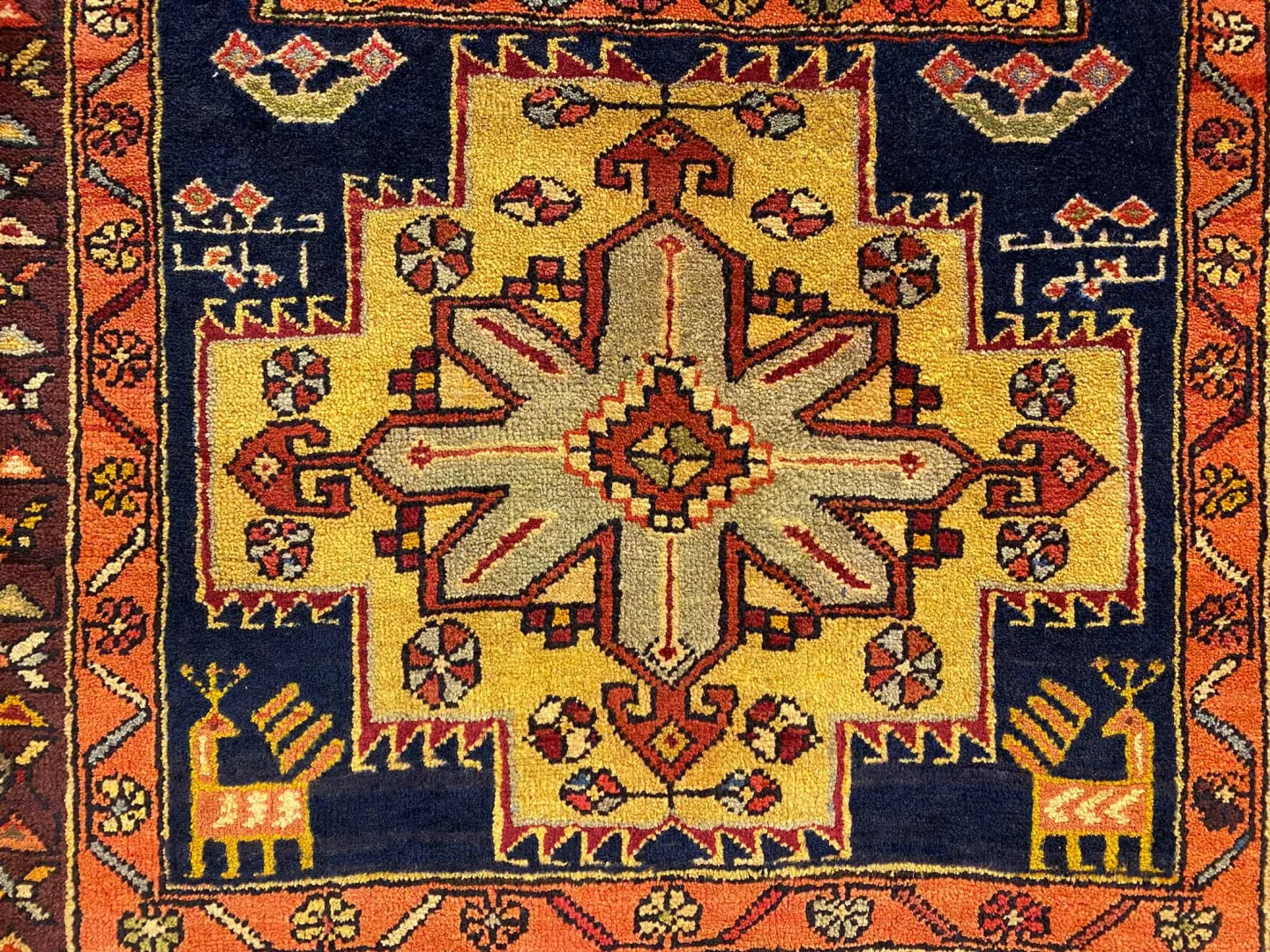
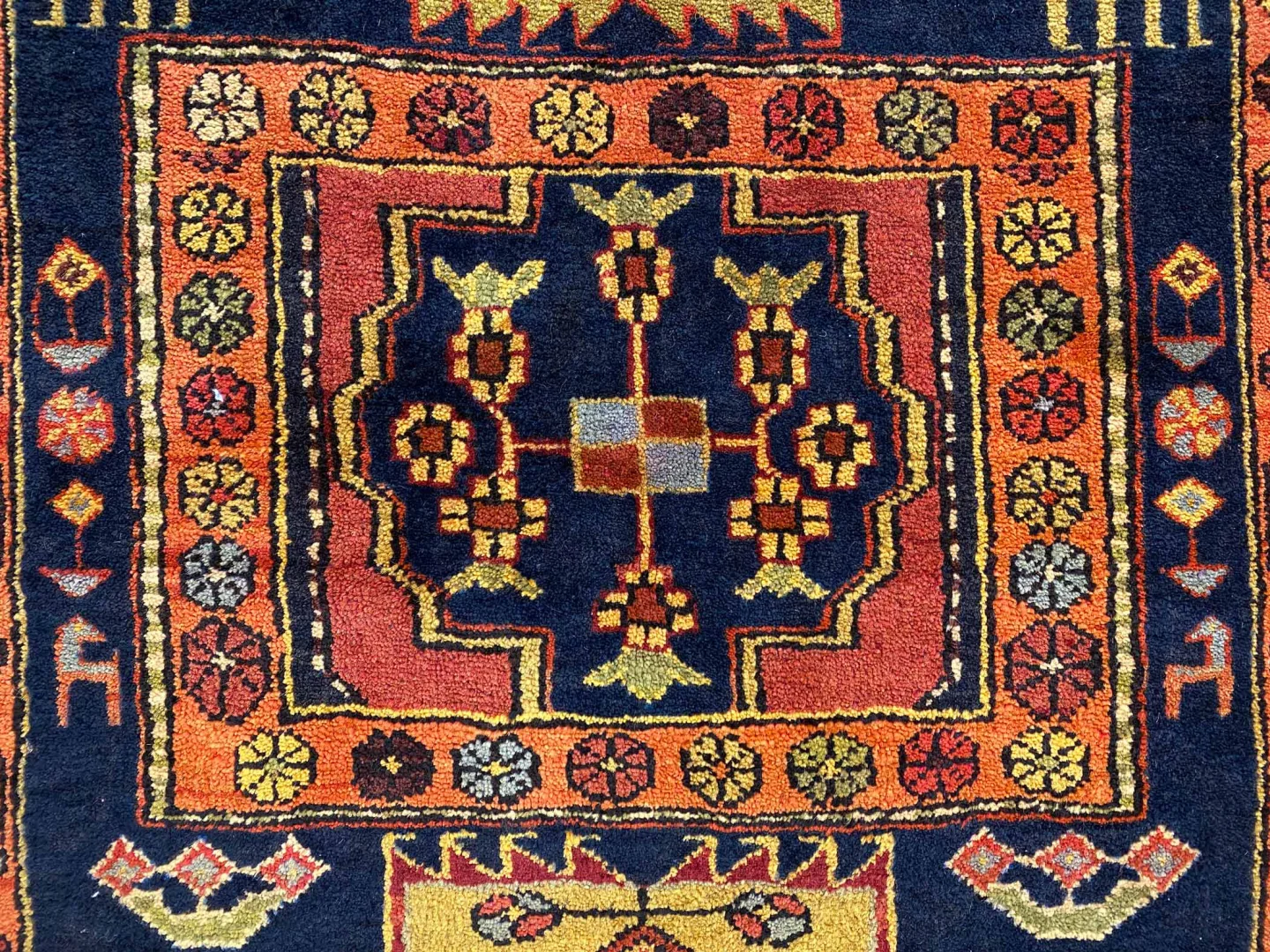
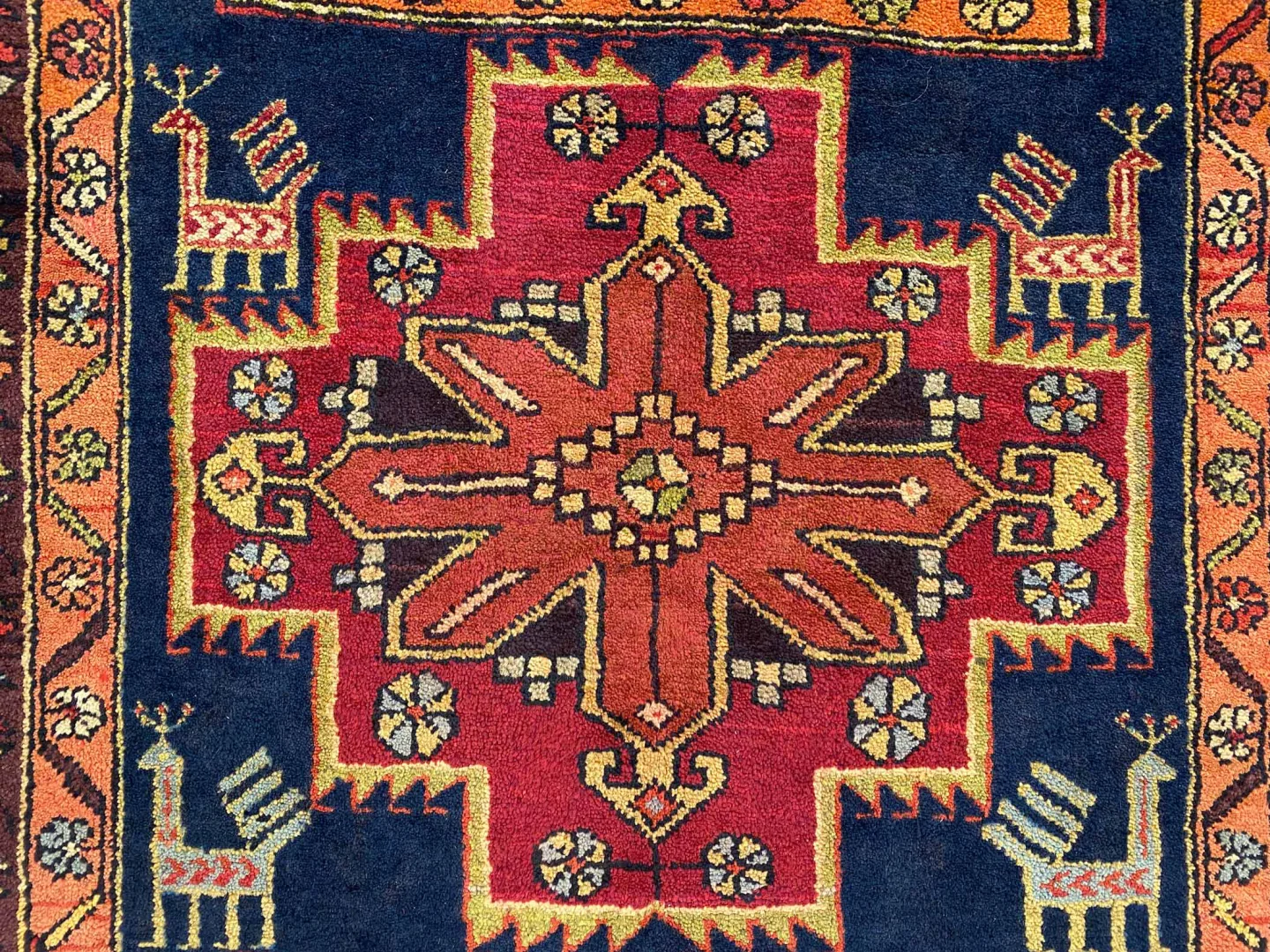
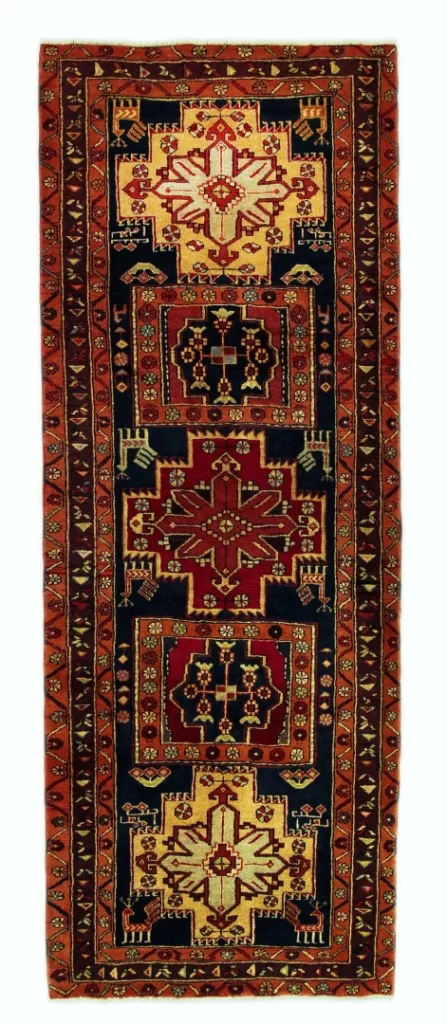
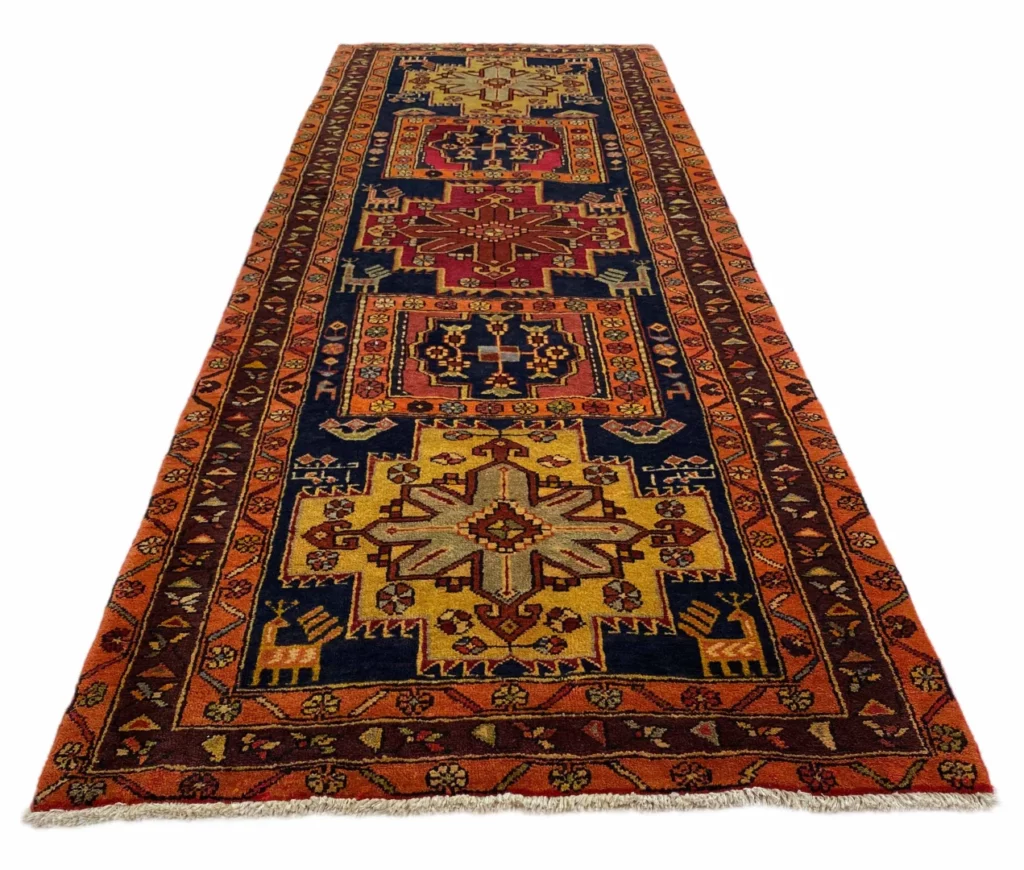
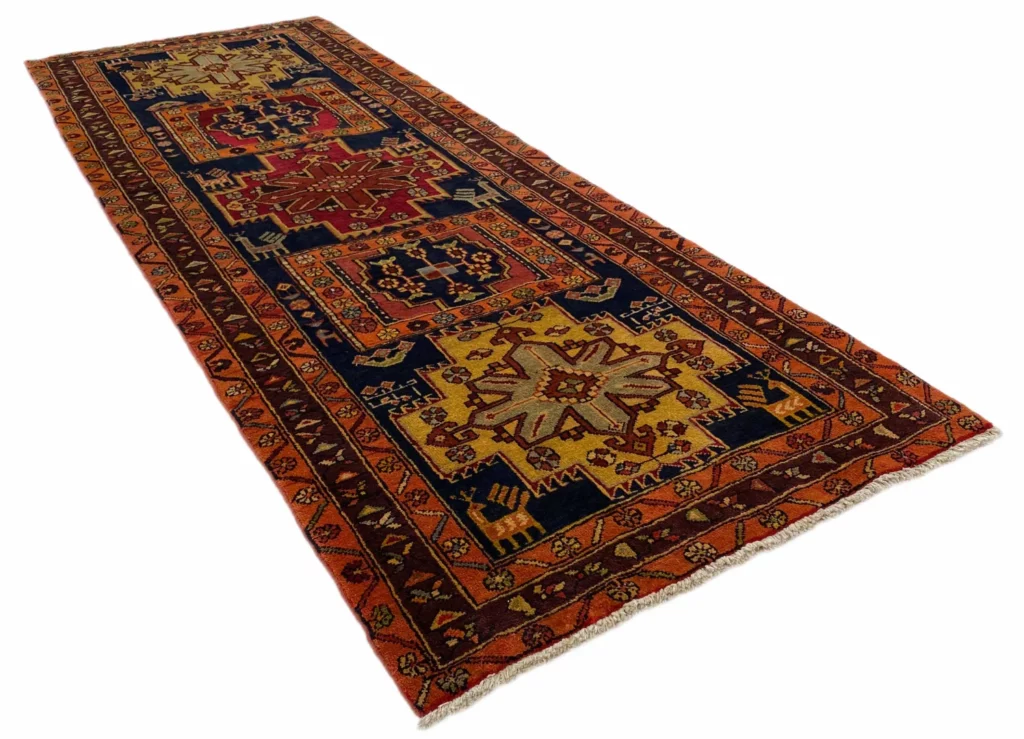
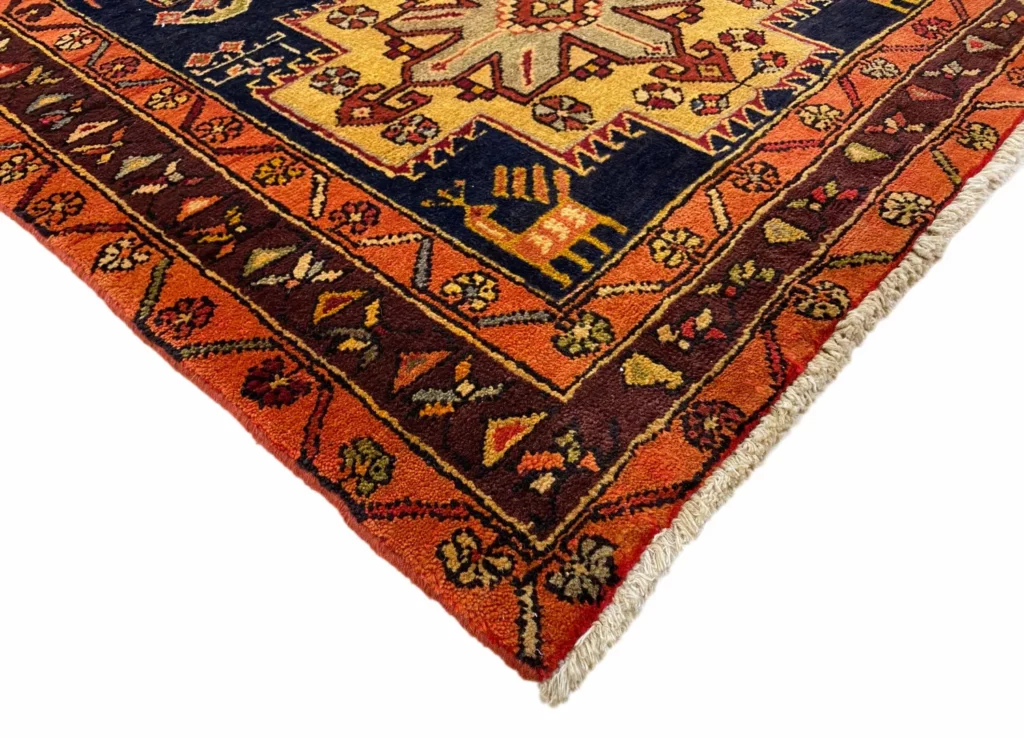
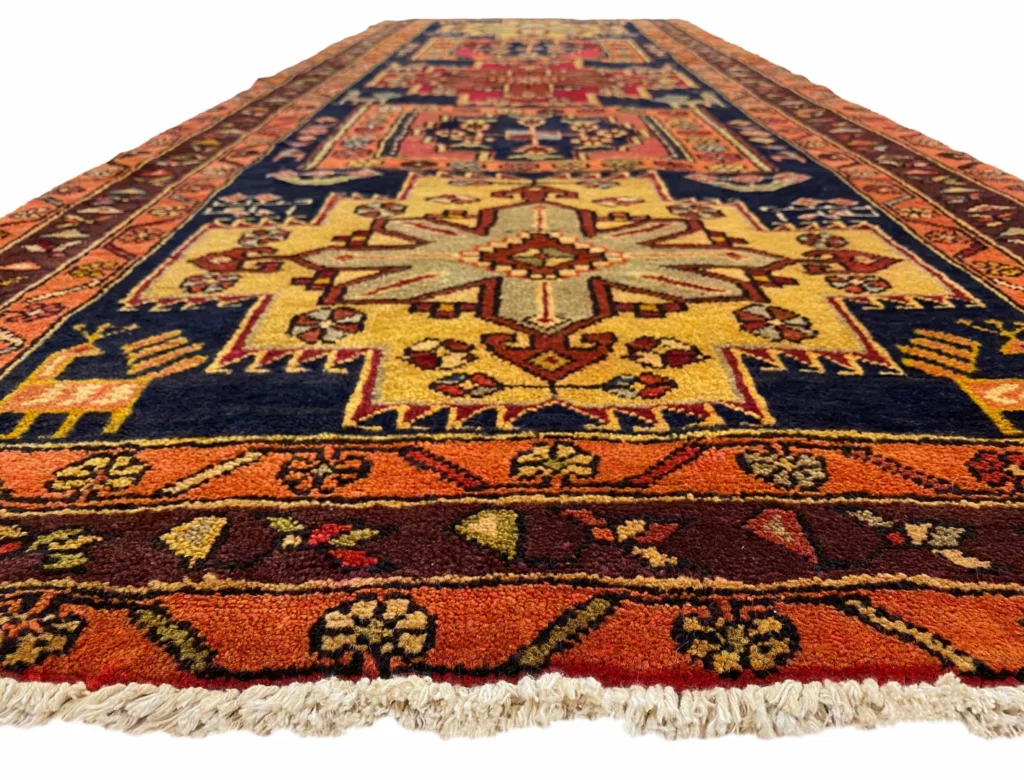
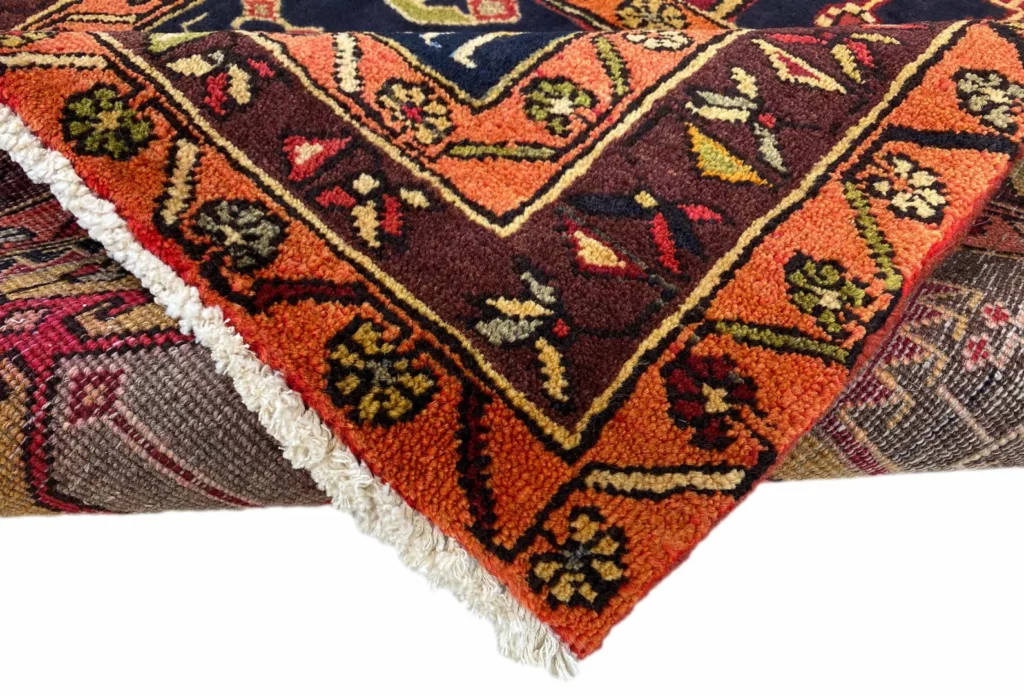
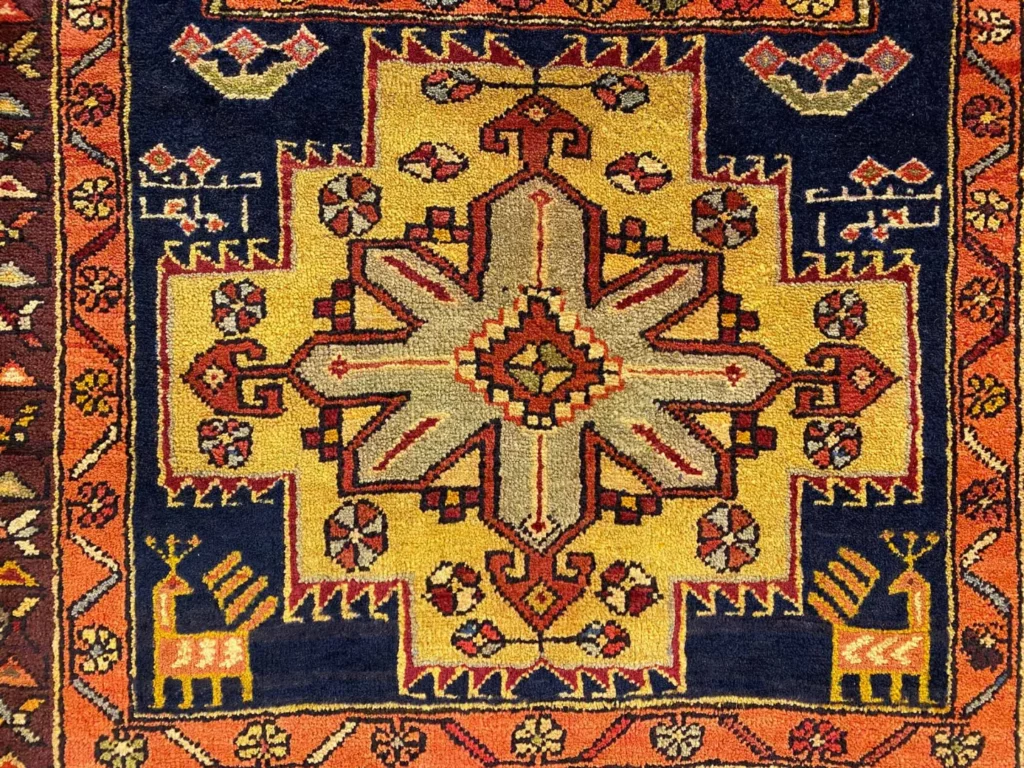
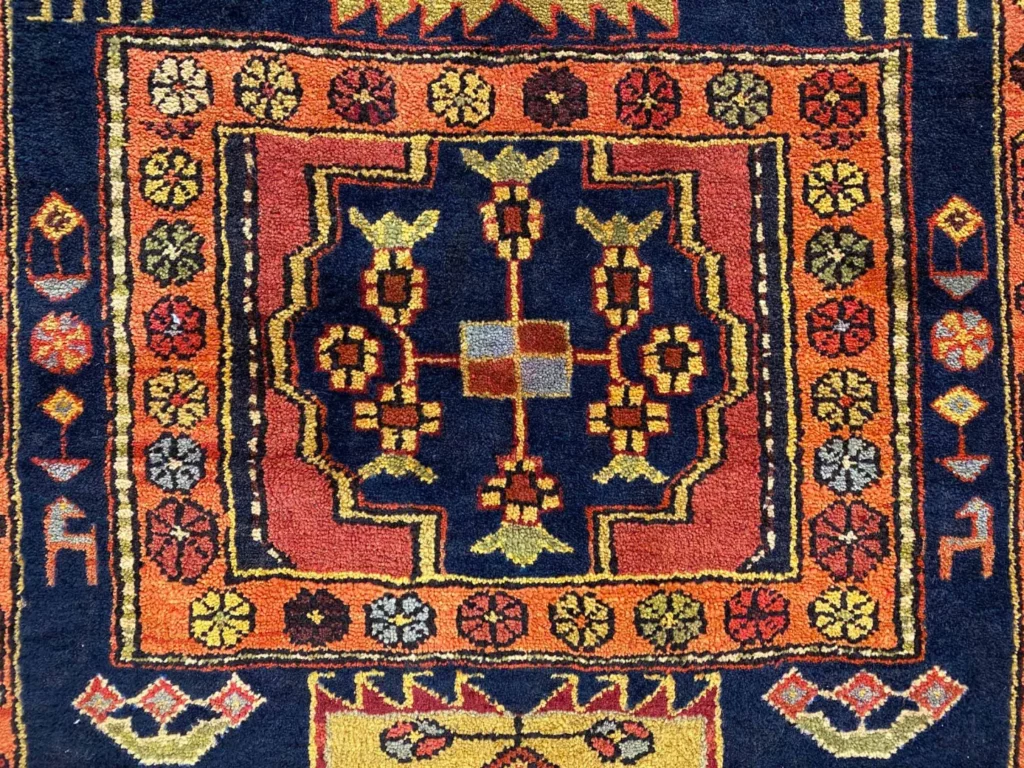
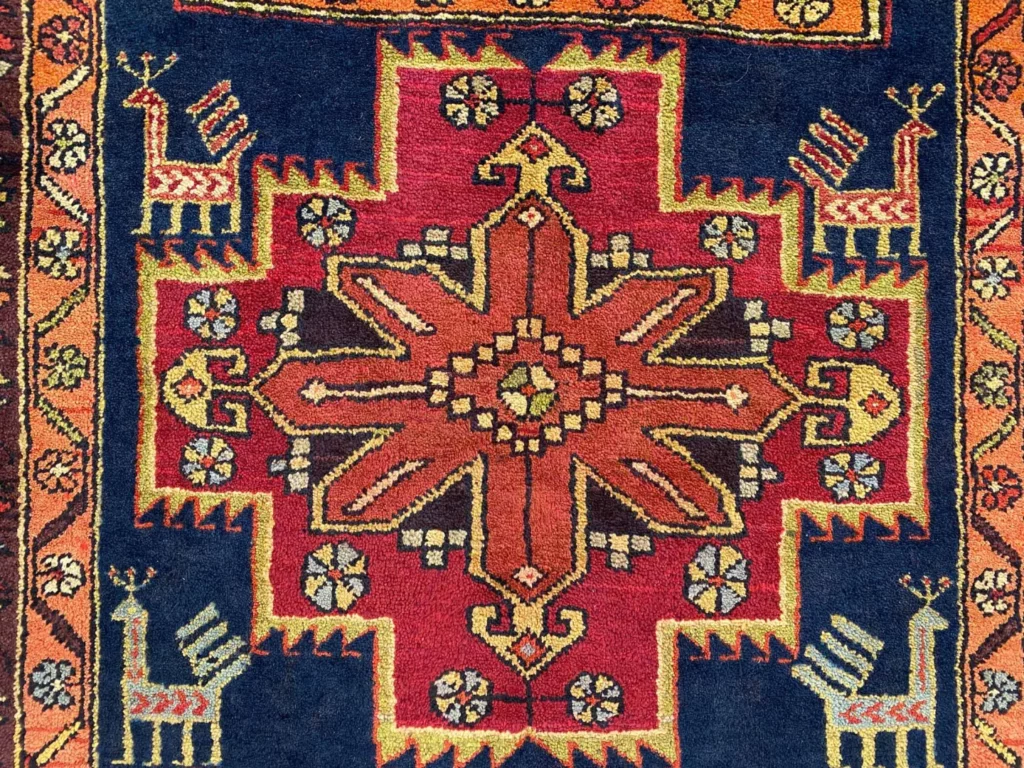
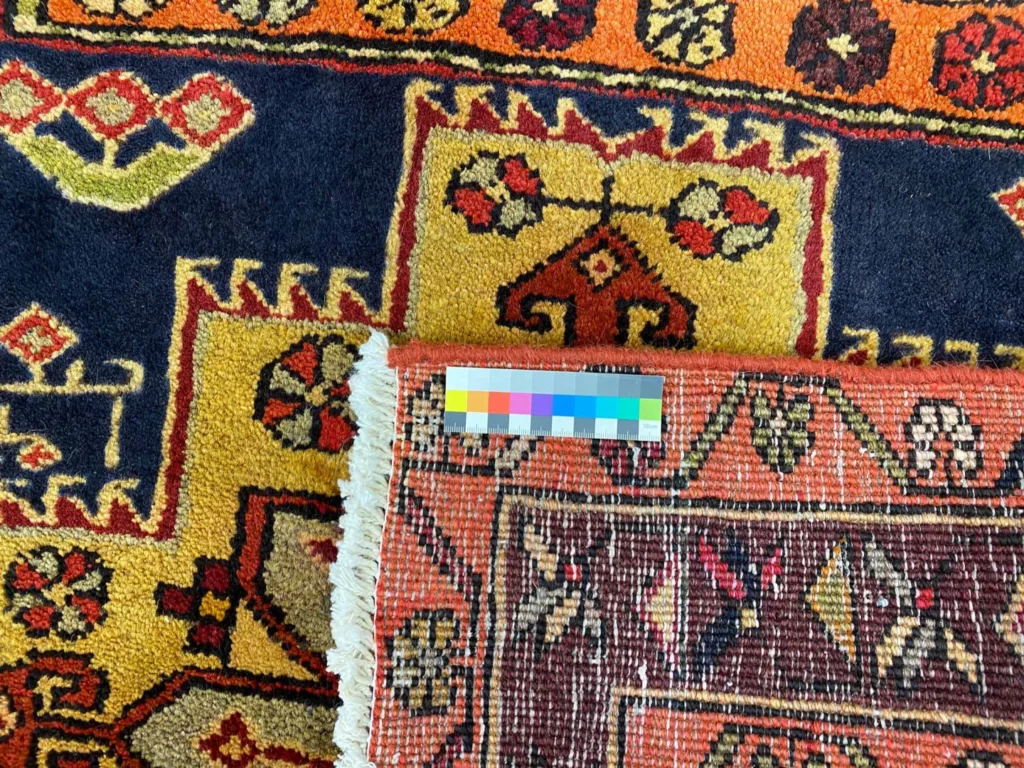
Persian Rug Meshkin 315 x 120 cm Wool Hand-knotted
€ 750
Hand-knotted Meshkin Persian rug from northwestern Persia (Ardabil) | Knot density: 120,000 – 200,000 knots/m² | Material: Pile sheep wool | Size: 315 x 120 cm | Pattern: Geometric Caucasian design | Condition: Very good
1 available
- ✓Free Shipping in EU
- ✓2-5 Business Days Delivery
- ✓14-Day Return Policy
- ✓Worldwide Shipping on request
 SECURE PAYMENT
 SHIPPING PARTNERS
Inventory number: 0D5AD369
Description
Meshkin Persian Rug
Material and Craftsmanship
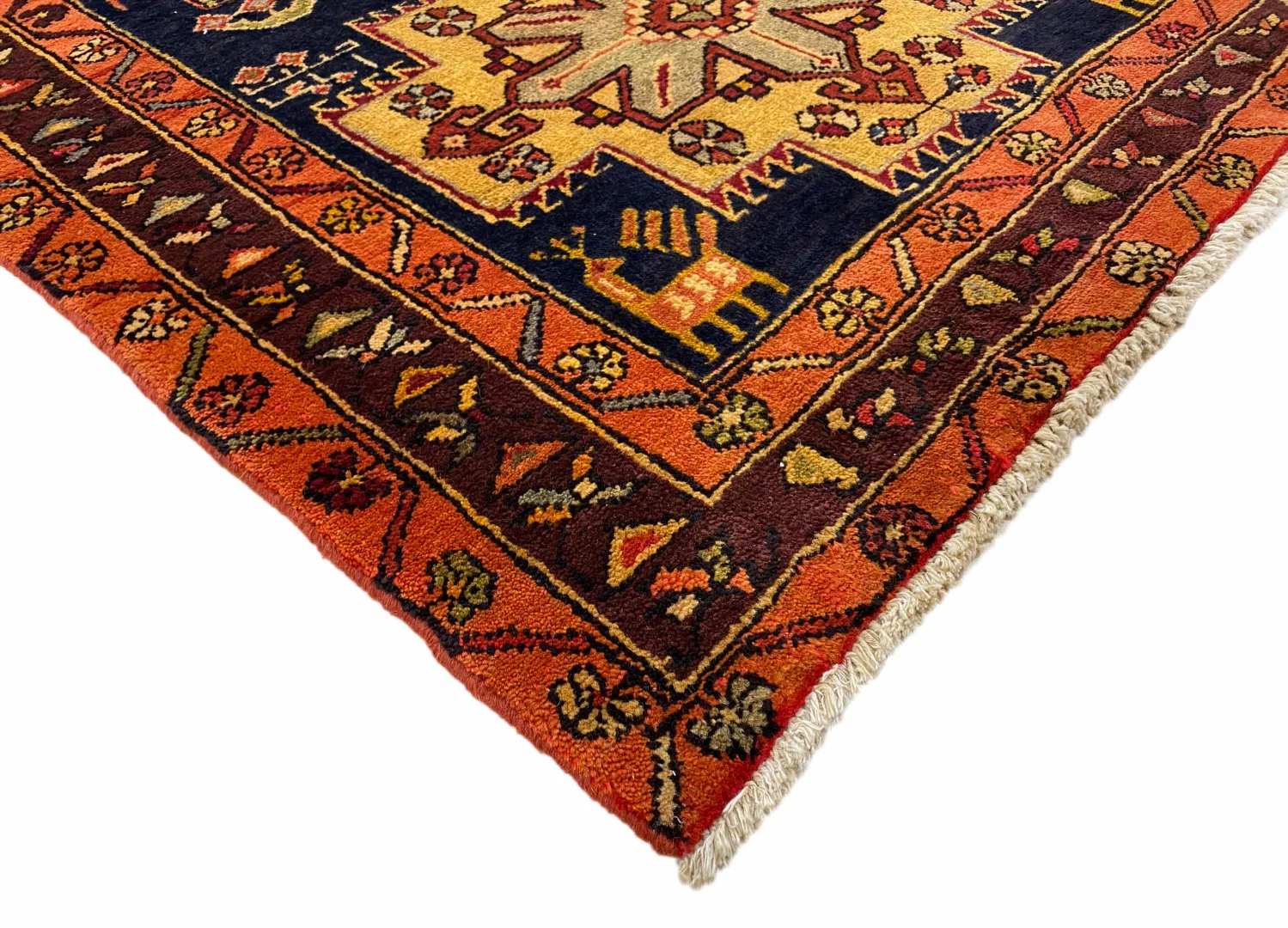
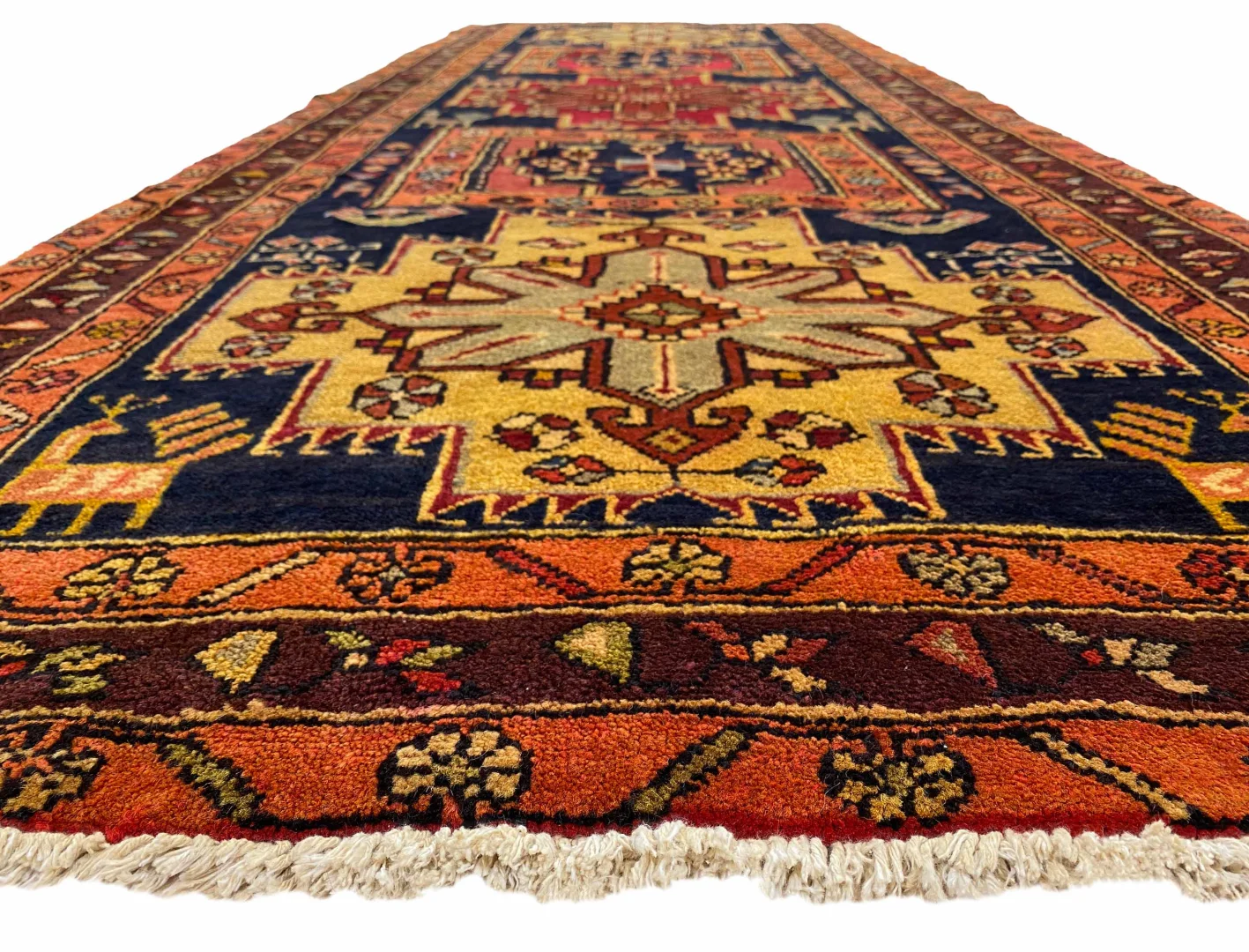
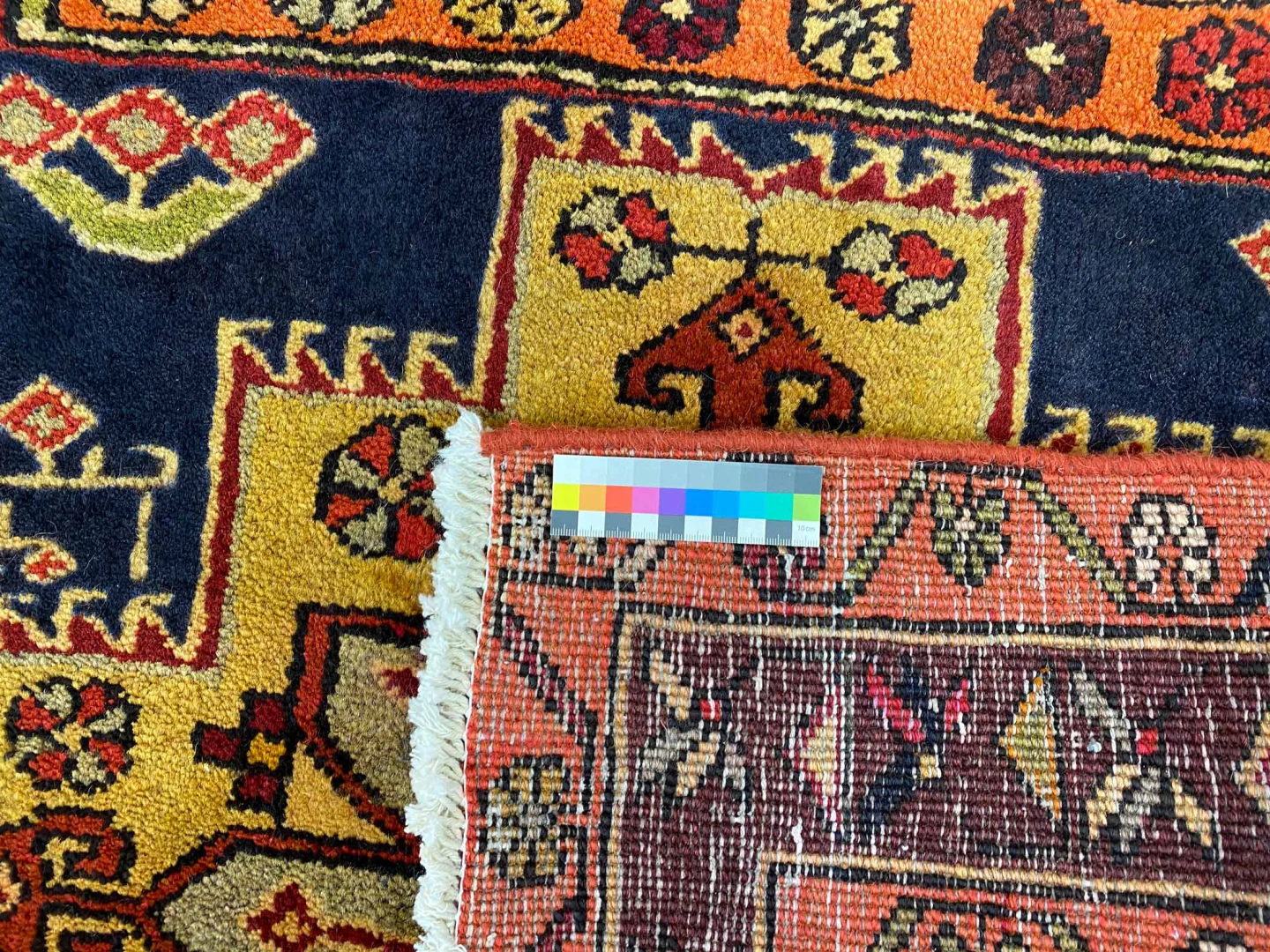
This Meshkin Persian rug is hand-knotted with a pile made from high-quality sheep wool. Wool is one of the defining materials named for this piece. Its resilient natural fibre has long been used for rugs intended for everyday interiors, while its tactile surface gives a hand-knotted rug a distinct textile character. In hand knotting, the design is built knot by knot rather than printed or mechanically applied. Each row therefore requires careful handling of the foundation, the coloured yarn and the developing pattern.
The stated knot density ranges from 120,000 to 200,000 knots per square metre. Knot density indicates how closely the individual knots are placed within the woven structure. In general, a closer structure can support finer lines and smaller pattern details, although the appearance of a rug also depends on its design, pile and workmanship. Here, hand knotting and the clearly geometric Meshkin design form part of the same regional craft tradition.
Sheep wool is valued for its practical strength and comfortable handle. It can take colour distinctly and helps give the surface a defined, structured appearance. Handwork also means that each rug remains an individual textile, even when it follows an established regional pattern language. The condition of this rug is described as very good. Its material, construction and state of preservation are therefore central features of the object.
Origin and Tradition
Meshkin, also known as Meshgin Shahr, is located in northwestern Iran in Ardabil Province. This places the rug within the Persian tradition of hand-knotted weaving. Northwestern Persia is an important area of rug production, shaped by regional knowledge, the use of locally familiar materials and contact with neighbouring weaving cultures. The name Meshkin refers to this origin as well as to a recognizable group of designs.
Iranian rug culture is not a single uniform style. Different towns and regions developed their own approaches to layout, colour, ornament and proportion. Meshkin belongs to a cultural landscape influenced by the Caucasus and by exchange among several weaving areas. This helps explain the presence of strong geometric forms in Meshkin rugs, while the method of production and the broader craft setting remain Persian.
A hand-knotted rug is made through a sequence of deliberate textile operations. Knots are inserted into the prepared foundation, rows are secured, and the pile is worked so that the composition gradually appears. The maker must maintain the relationship between the foundation and the planned design throughout the process. Such work depends on experience and close attention. It also means that regional patterns are not mechanical templates: familiar motifs can be interpreted differently by individual workshops and weavers.
Ardabil is associated with several well-known Persian rug traditions. Tabriz and Heriz rugs are also found in the region, although their patterns and colour systems differ from those associated with Meshkin. Tabriz rugs are known for complex floral and medallion compositions, while Heriz rugs often use bold colours and geometric drawing. Nain and Kashan are likewise recognised names within Persian rug culture and are associated with refined workmanship and valuable materials. These comparisons illustrate the variety of the wider region; they do not change the origin of this particular rug, which is Meshkin in northwestern Persia, Ardabil.
The tradition behind Meshkin weaving includes more than a place name. It involves knowledge passed through working communities, familiarity with wool, decisions about colour and the ability to translate a drawn or remembered design into a durable textile surface. The Caucasian influence adds a strong geometric vocabulary to this Persian foundation. Meshkin therefore represents a meeting of regional design exchange and established Persian hand-knotting practice.
Design and Pattern
The pattern of this rug is geometric and described as Caucasian in design. Geometric compositions use clearly bounded areas, straight or stepped lines, diamonds, hooked forms and repeated ornaments. These elements can be built with precision through knotting, allowing the structure of the rug to carry the drawing. Instead of relying primarily on flowing floral vines, the design creates its rhythm through edges, intervals, repetition and the relationship between separate fields.
The Caucasian influence often associated with Meshkin gives the pattern a direct and well-defined character. Motifs may be placed in rows, mirrored across an axis or distributed as small repeated units. At the same time, hand production allows subtle variations in spacing and execution. Geometry provides the framework, while the choice of colours and the handling of the pile determine how strongly the individual forms stand out.
The described Meshkin colour range is dominated by warm reds, soft browns and beige shades. These colours can create an earthy palette in which the different parts of the design remain connected. Red introduces stronger areas of emphasis, brown creates transitions between vivid and restrained passages, and beige provides lighter contrast. Colour in a geometric rug is not separate from the ornament: it helps define borders, fields and repeated shapes.
Meshkin design consequently combines regional continuity with the possibility of variation. A Caucasian-inspired pattern does not make the rug Caucasian in origin. It shows how neighbouring cultural areas influenced one another and how Persian workshops incorporated selected forms into their own weaving practice. The result is a design language with pronounced contours that remains part of Persian rug culture.
Geometric rugs can work with both traditional and contemporary interiors because their visual vocabulary is not tied to one furnishing period. Clear forms can sit beside classic furniture, while the same structural quality can complement a more restrained modern setting. This is a general characteristic of the Meshkin design tradition, not a claim about one particular room. The actual effect depends on the rug’s colours, the arrangement of its motifs and the quality of its handwork.
Special Features
The defining features of this rug are its Meshkin origin in northwestern Persia, its hand-knotted construction, its high-quality sheep-wool pile and its geometric pattern in a Caucasian design. The knot density is given as 120,000 to 200,000 knots per square metre. The condition is described as very good.
The combination of Persian origin and Caucasian-influenced geometry gives Meshkin rugs a distinct position within the regional weaving tradition. Warm reds, browns and beige shades belong to the colour world described for this type. Since the rug is hand-knotted, it is an individual piece rather than an identical industrial product. It can be used in a range of living areas, including a living room, dining room, hallway or bedroom. That versatility describes possible use, not a prescribed placement.
FAQ
How should I care for a Meshkin Persian rug?
Regular, gentle vacuuming helps remove loose dust and everyday debris from the wool pile. The surface should not be subjected to unnecessary aggressive treatment. For a deeper clean, professional rug cleaning is advisable, preferably through a specialist familiar with hand-knotted wool rugs. Strong direct sunlight should be avoided because prolonged exposure can encourage changes in colour. Care should always take account of the actual soiling and the condition of the textile. This rug is described as being in very good condition, and careful handling helps preserve that state.
What distinguishes Meshkin rugs from other Persian rugs?
Meshkin rugs are identified by geometric patterns and a strong influence from Caucasian design. They belong to the Persian weaving tradition and originate from Meshkin in Ardabil Province in northwestern Iran. The use of high-quality sheep wool is another feature named for this type. Its listed knot density is 120,000 to 200,000 knots per square metre. Compared with traditions centred on floral or medallion compositions, Meshkin places greater emphasis on clear shapes, repeated units and pronounced linear structure. These characteristics describe its regional design language without removing it from the wider Persian tradition.
Which rooms suit a Meshkin Persian rug?
A Meshkin Persian rug can be used in several domestic settings. The living room, dining room, bedroom and hallway are named as suitable areas. Its geometric design can be combined with traditional furnishings as well as with modern interiors. Warm red, brown and beige tones may provide a visual link to furniture and textiles, although no specific room arrangement is required. The most suitable placement depends on the existing interior, the way the room is used and the protection given to the rug. Its flexibility comes from the design and colour range rather than from one fixed function.
Additional information
| Size | |
|---|---|
| Shape | |
| Origin | |
| Knot Density | |
| Material |
Related products

Persian Rug Isfahan 250 x 155 cm Silk Hand-knotted
€ 3600
Persian Rug Kashan 345 x 253 cm Wool Hand-knotted
€ 2910
Persian Rug Qom 216 x 142 cm Wool Hand-knotted
€ 990
Persian Rug Rosenbidjar 222 x 131 cm Wool Hand-knotted
€ 1530
Persian Rug Tabriz 355 x 252 cm Wool Hand-knotted
€ 4890
Oriental Rug Kashmir 405 x 299 cm Silk Hand-knotted
€ 3300
Oriental Rug Kashmir 285 x 185 cm Silk Hand-knotted
€ 1230
Persian Rug Kashan 211 x 140 cm Wool Hand-knotted
€ 900