
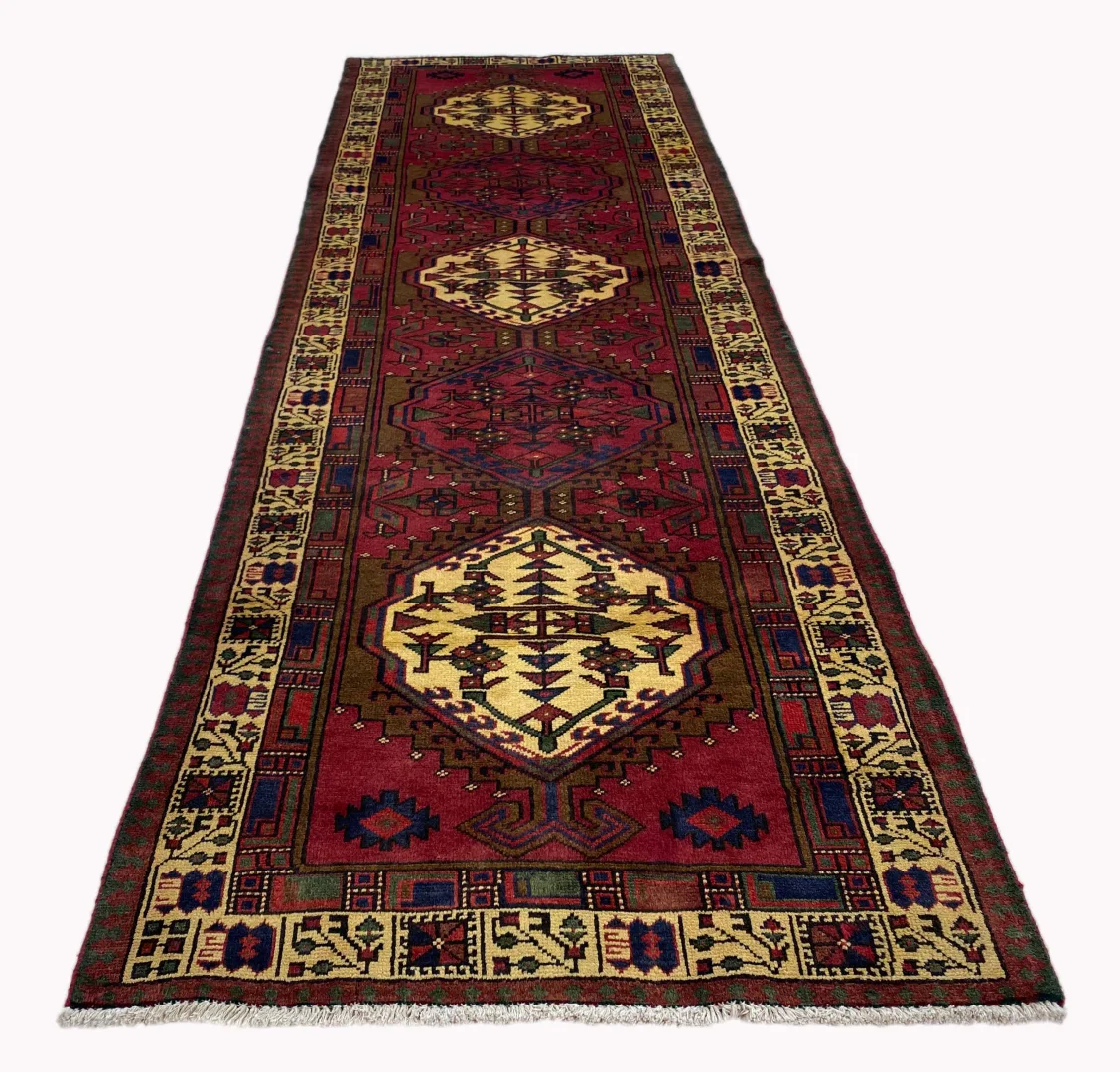
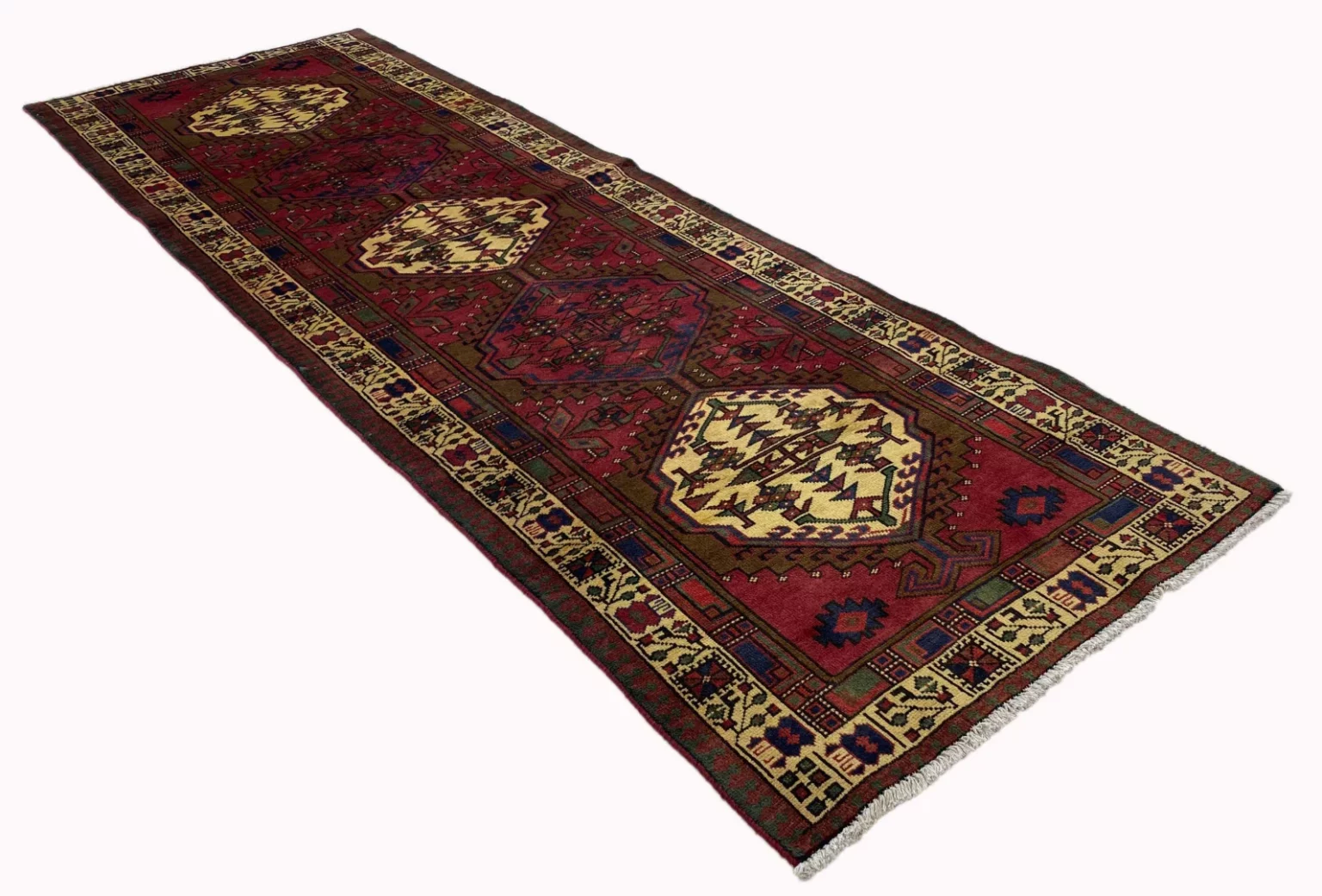
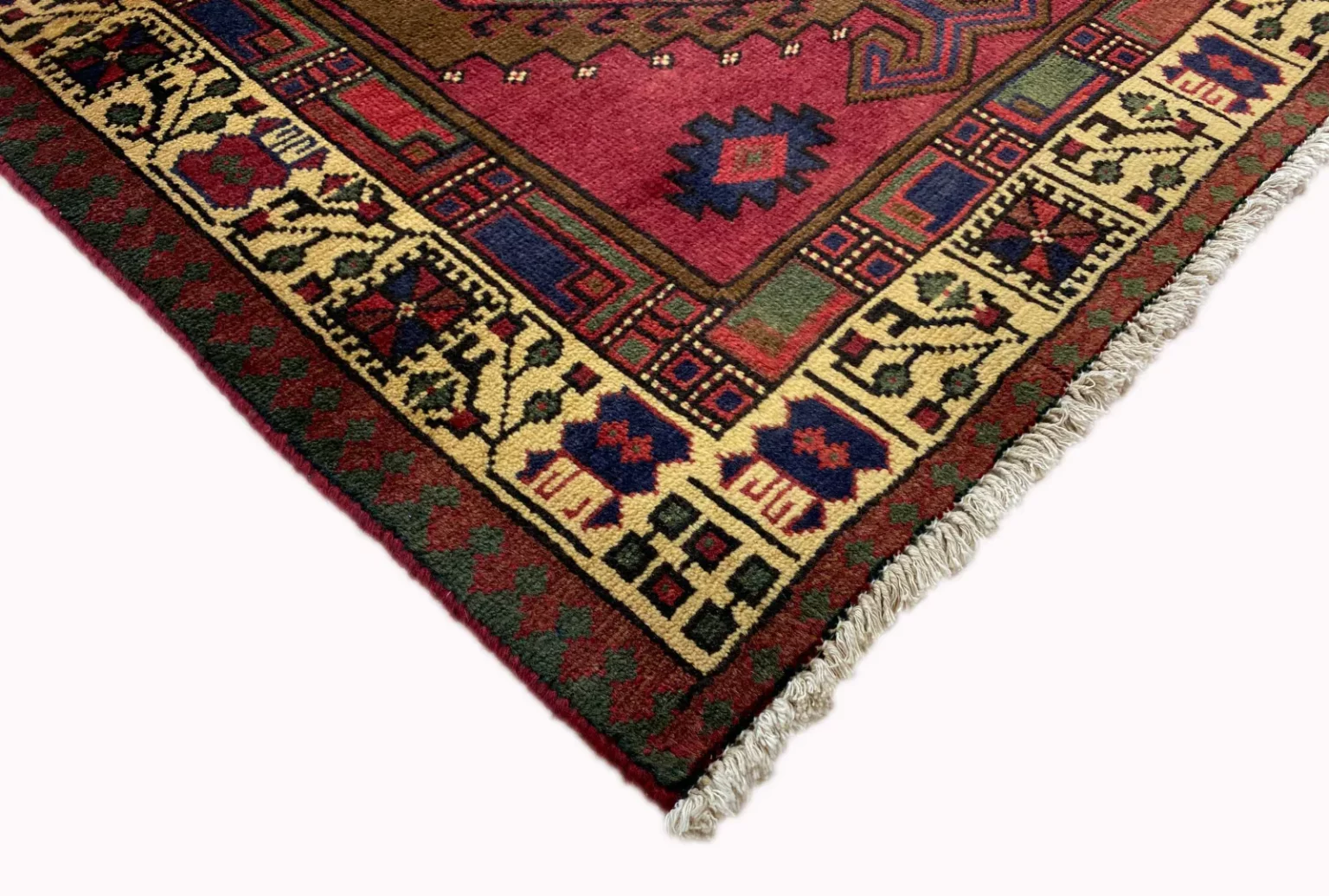
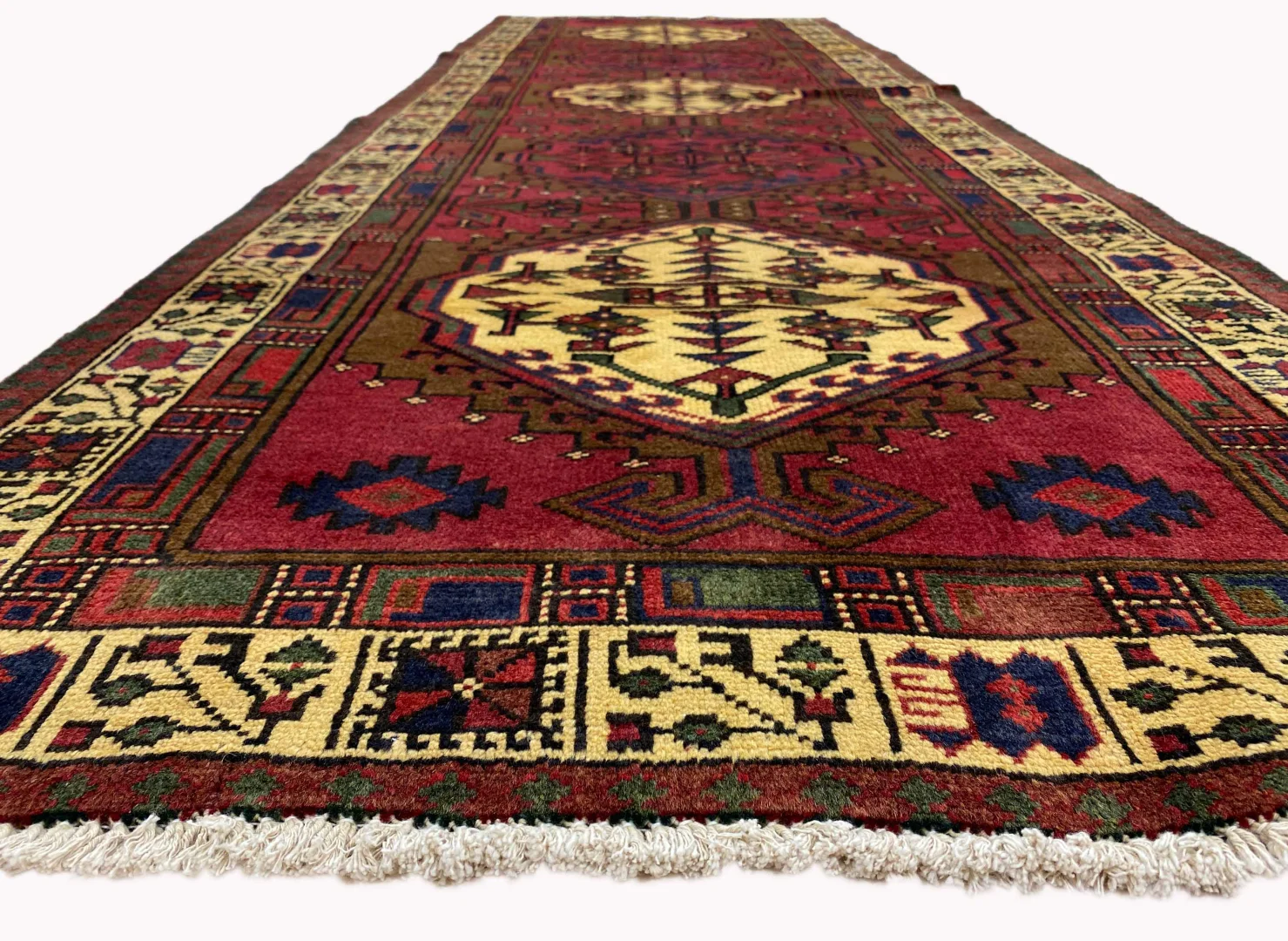
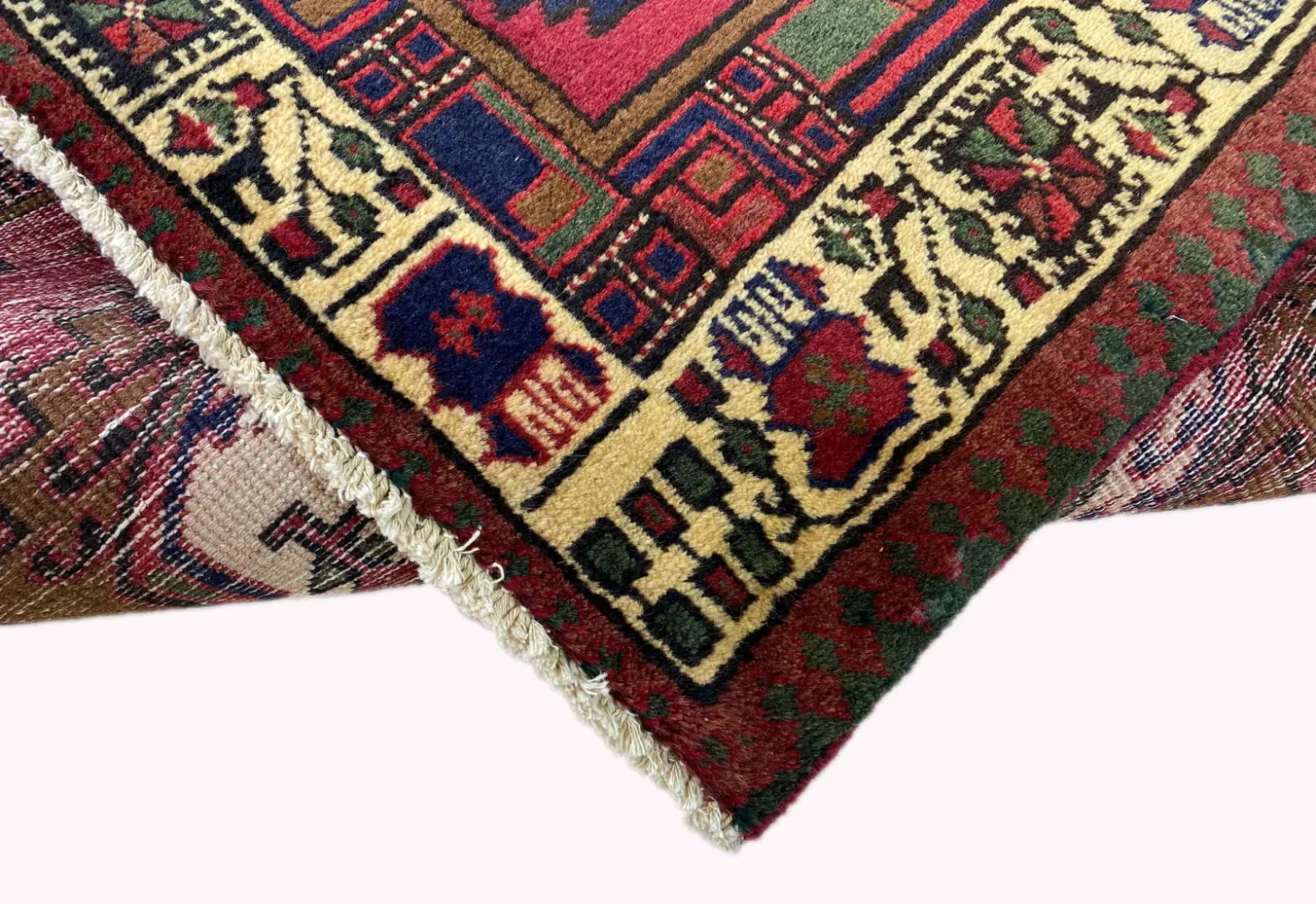
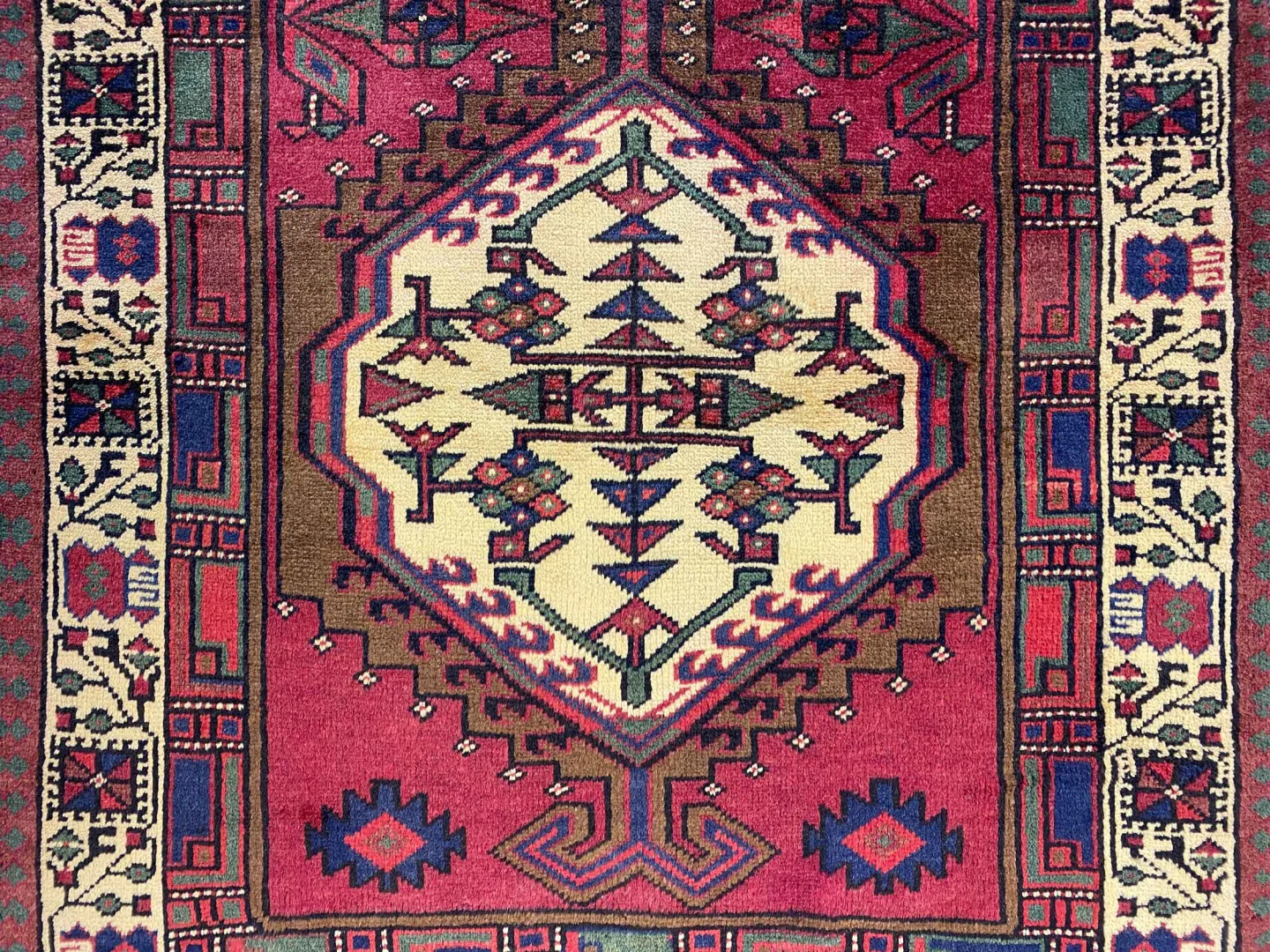
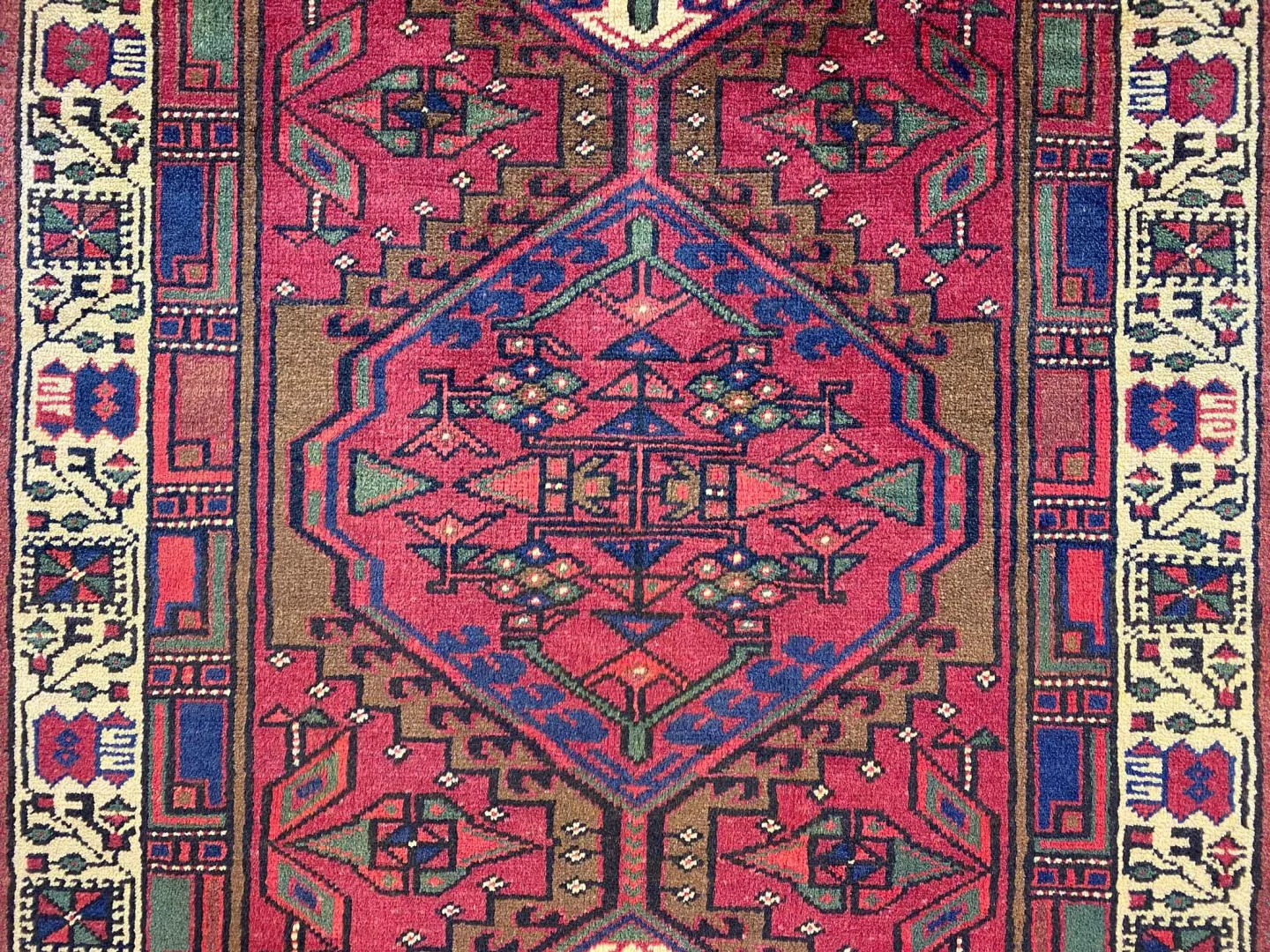
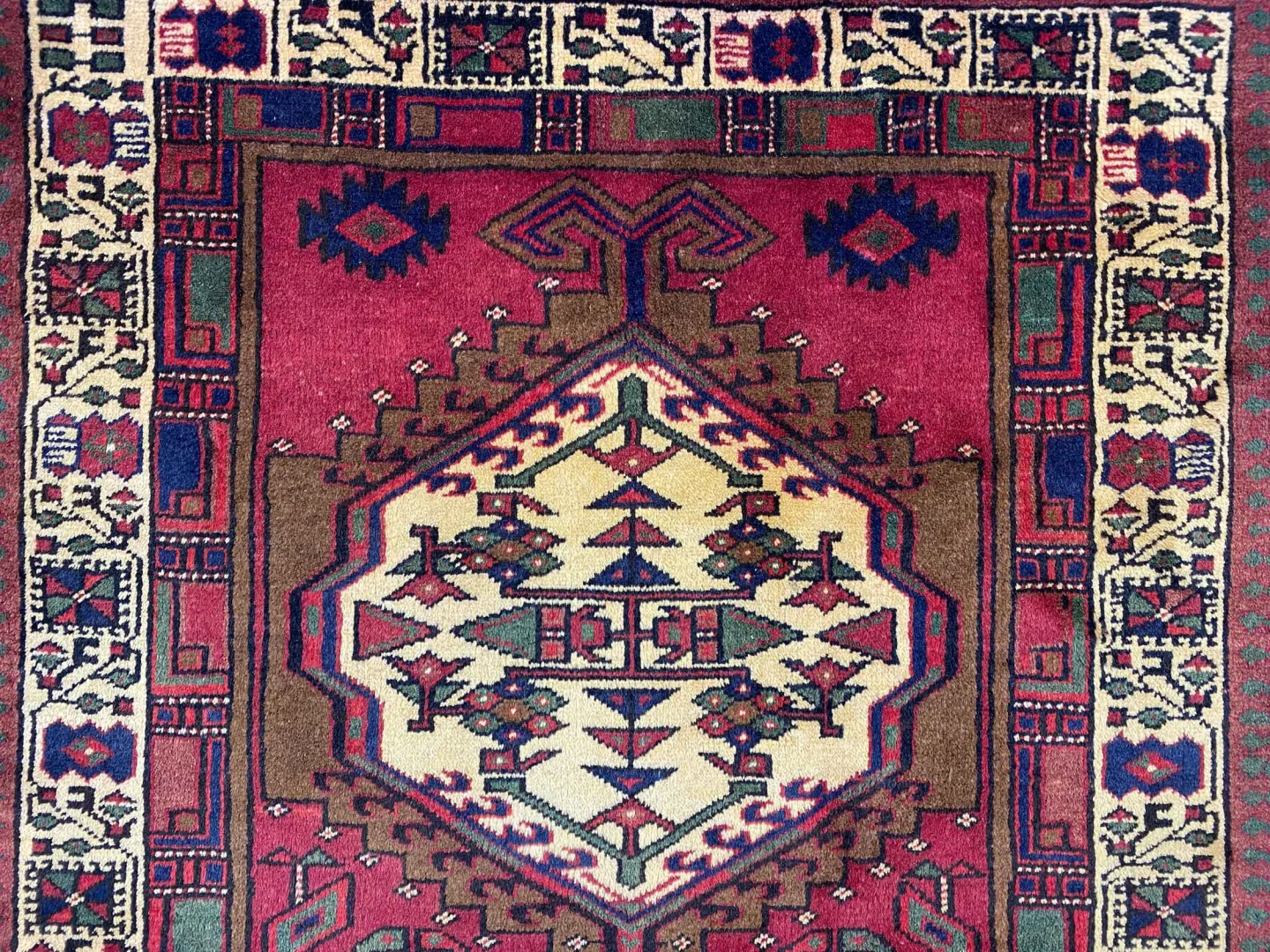
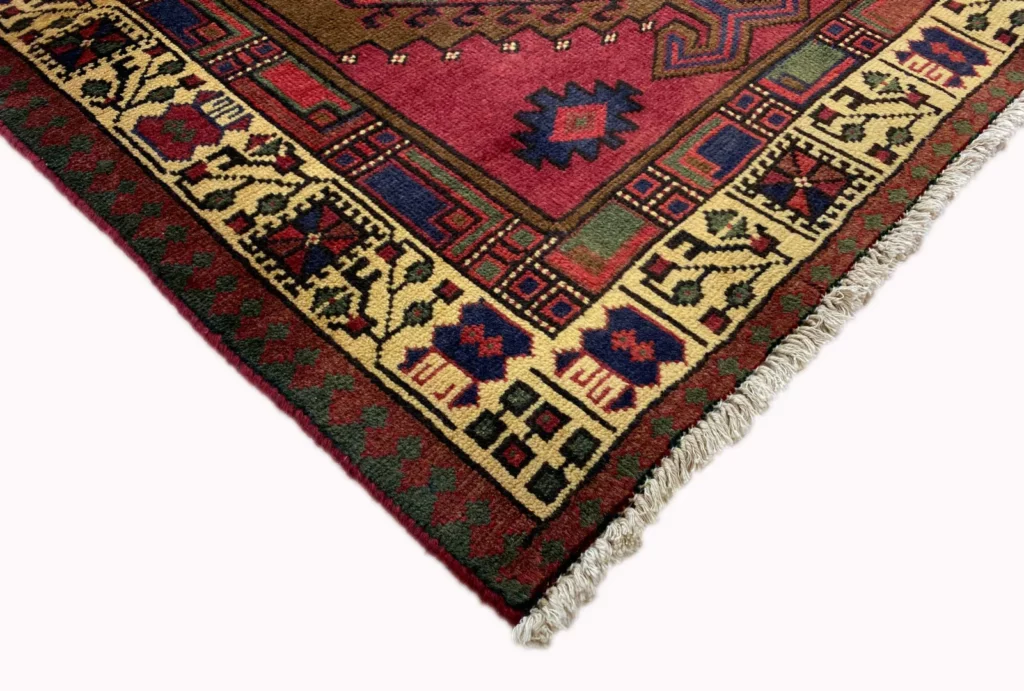
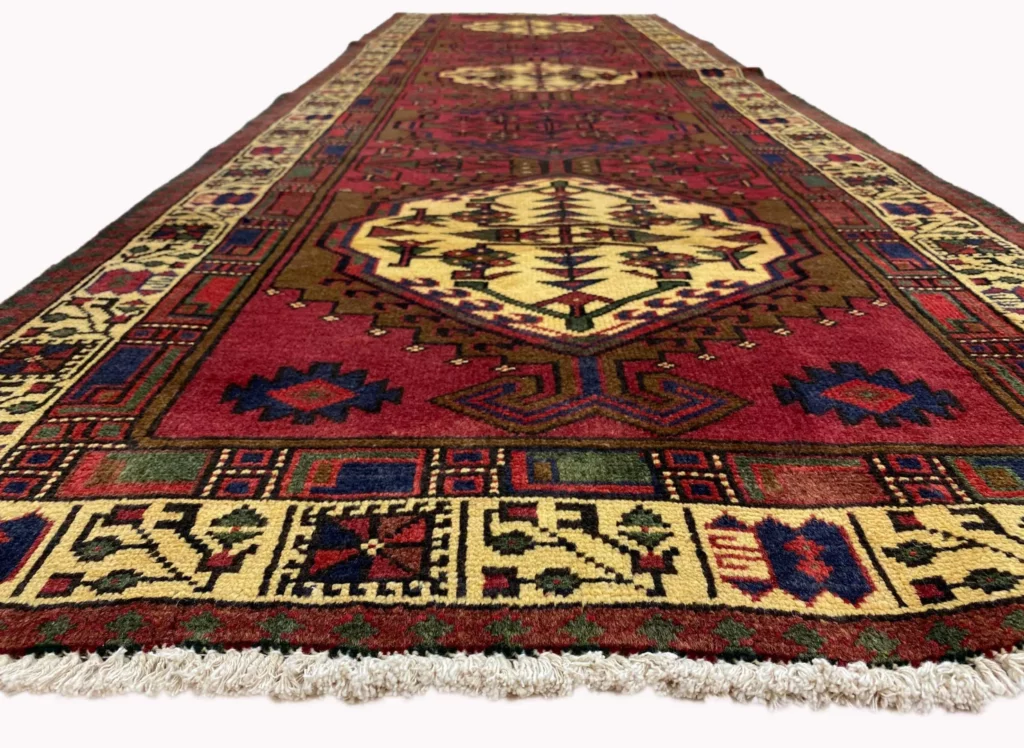
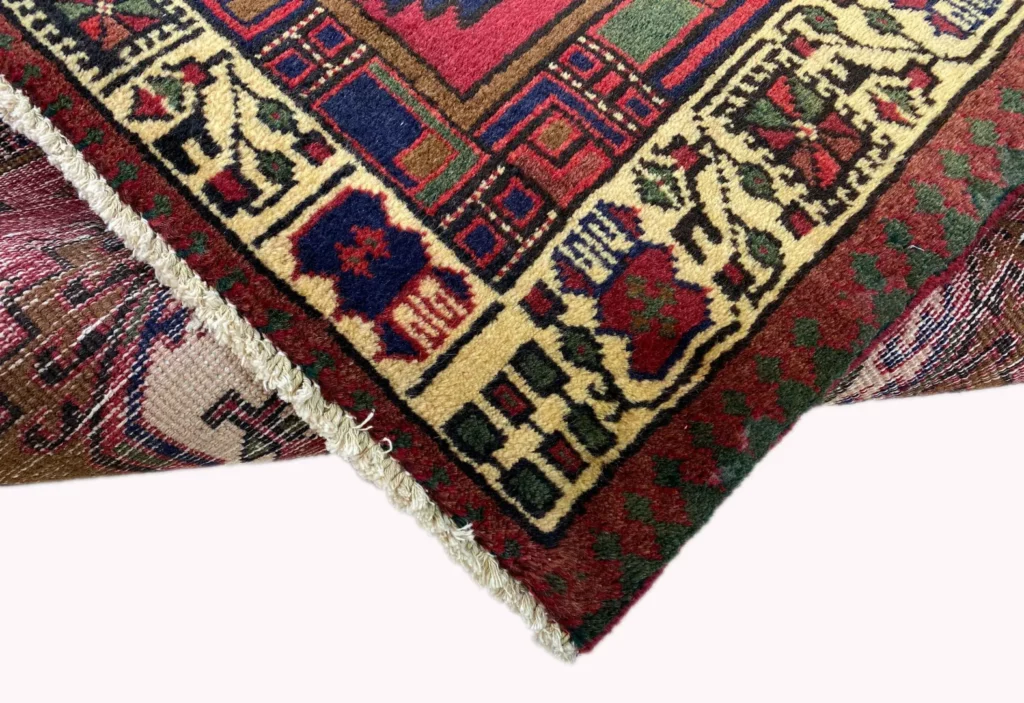
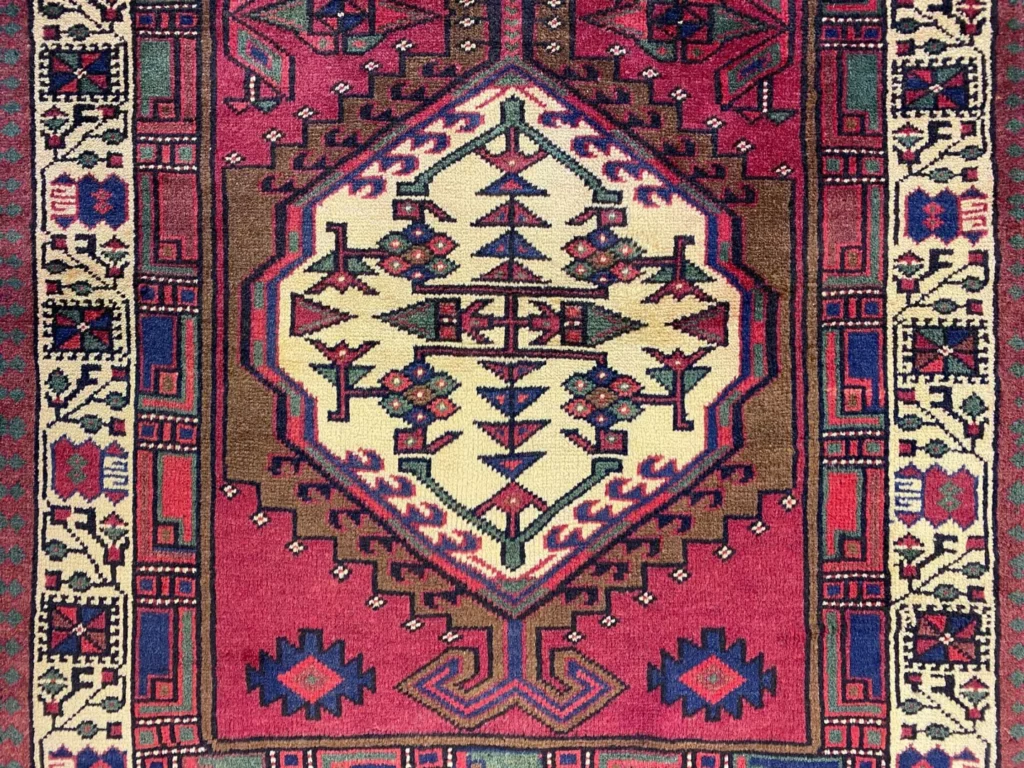
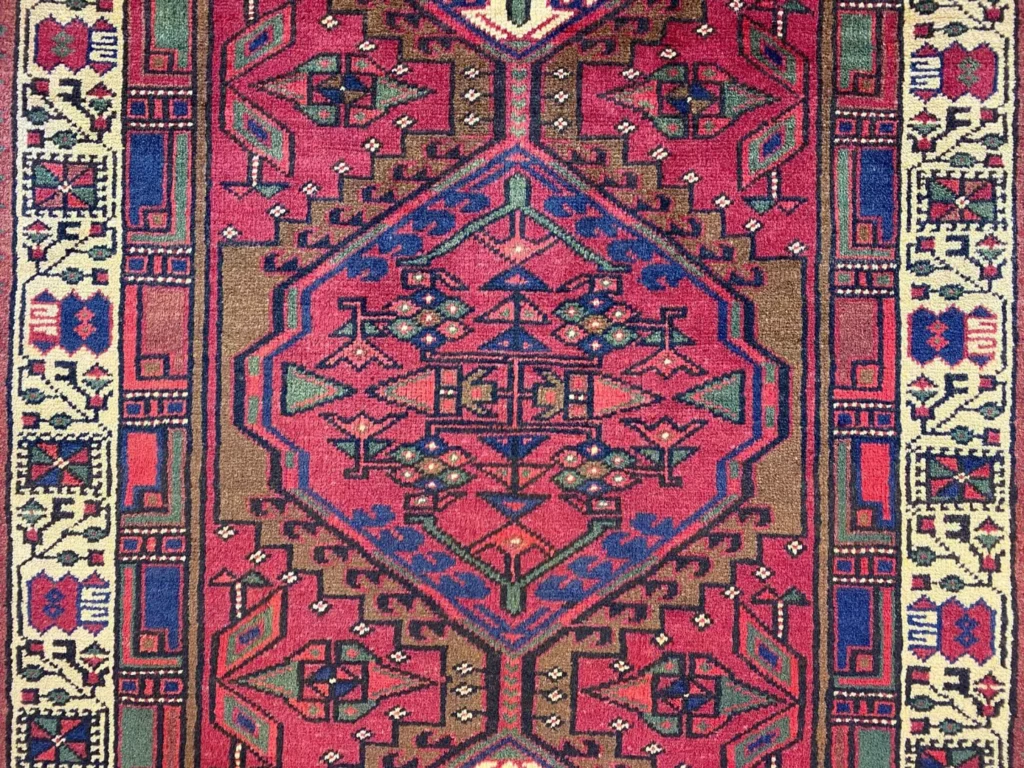
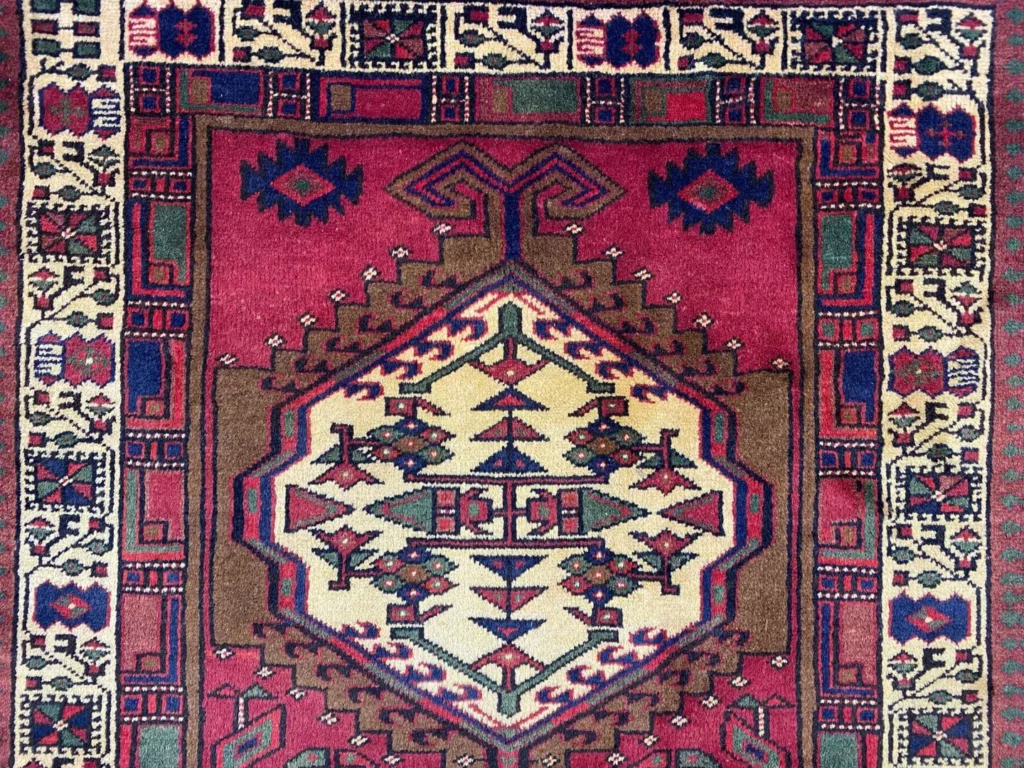
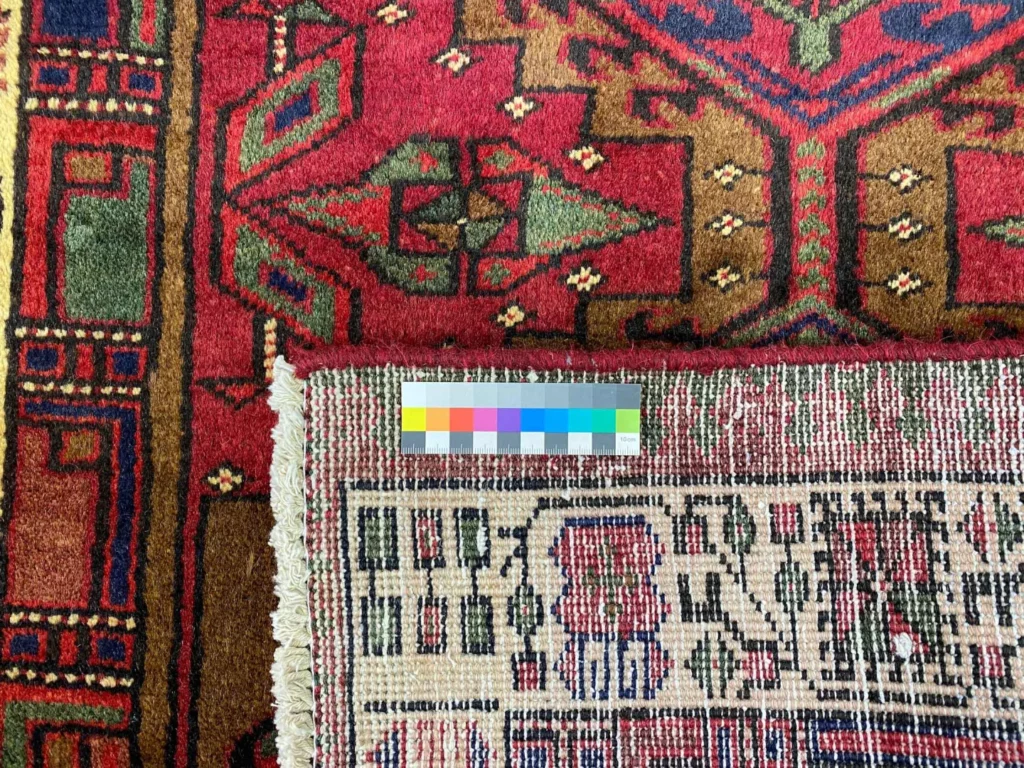
Persian Rug Meshkin 315 x 100 cm Wool Hand-knotted
€ 719
Hand-knotted Meshkin Persian Rug | Knot density: 120,000 – 200,000 knots/m² | Material: Pile sheep wool | Size: 315 x 100 cm | Pattern: Geometric, Caucasian design | Condition: Well preserved
1 available
- ✓Free Shipping in EU
- ✓2-5 Business Days Delivery
- ✓14-Day Return Policy
- ✓Worldwide Shipping on request
 SECURE PAYMENT
 SHIPPING PARTNERS
Inventory number: 47DC6988
Description
Meshkin Persian Rug
Material and Craftsmanship
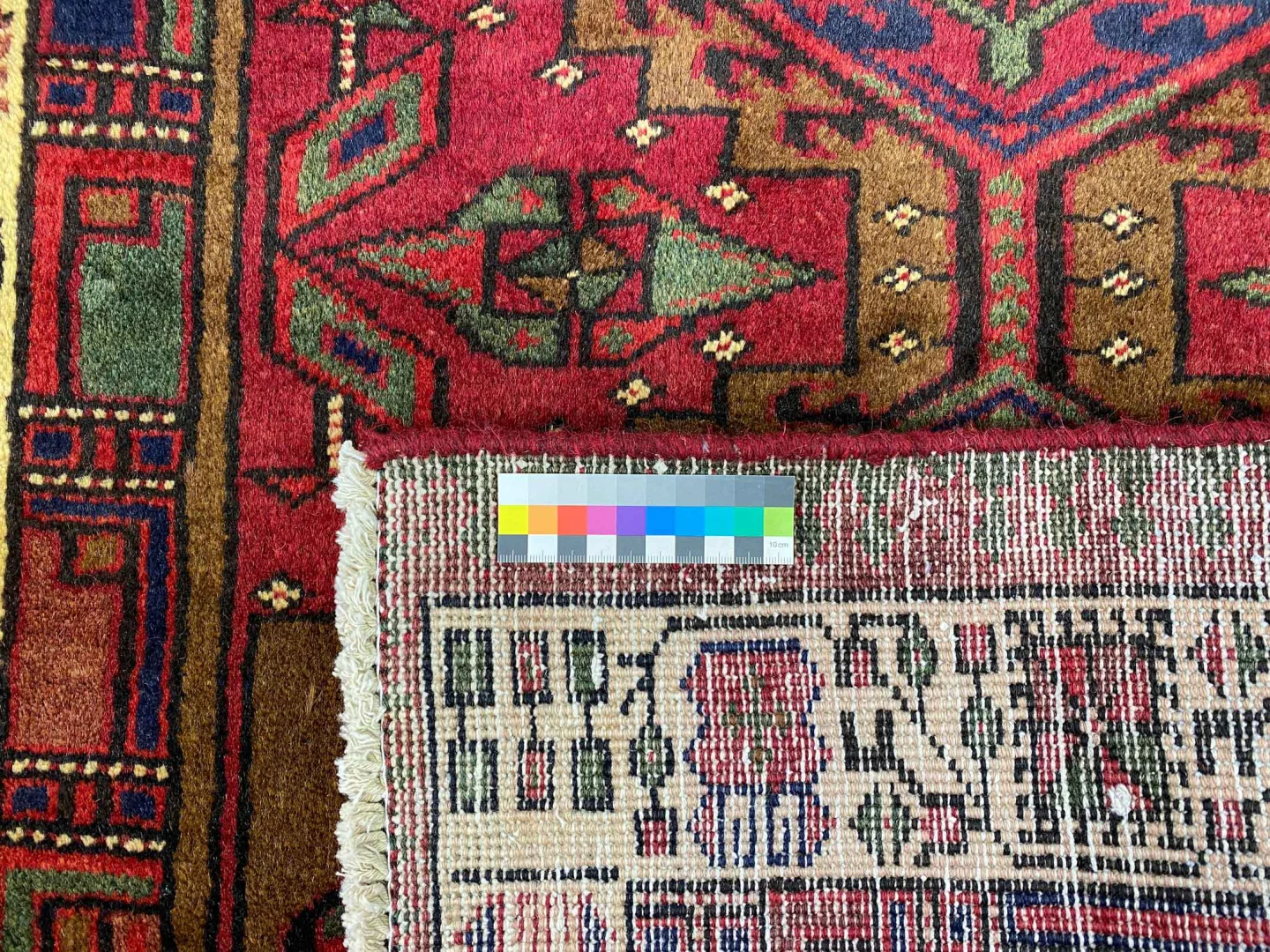
This Persian rug from Meshkin is hand-knotted, with a pile made from high-quality sheep wool. Wool is one of the defining materials associated with Meshkin rugs. In this piece, the material is combined with a form of craftsmanship in which the individual knots are made by hand. The pattern is therefore created through traditional knotting rather than through a printed or industrially produced surface.
The wool is described as both robust and soft. This combination gives it a practical role in a rug that is intended to have a durable surface while remaining pleasant to the touch. The pile is short, allowing the geometric drawing to remain clearly visible. The high knot density is identified as one of the quality characteristics of Meshkin rugs and supports the detailed presentation of their designs.
The wool used for Meshkin rugs comes from the fertile steppes of the Ardabil region in Iran, which is known for sheep farming. This connects the material with the traditions of the surrounding region. Hand-knotting, a short pile, and sheep wool together shape the character of this rug. Its condition is described as well preserved.
Origin and Tradition
This rug comes from Meshkin in Iran. Meshkin is also associated with Meshgin Shahr in the north-west of the country. The area belongs to a cultural region where Persian weaving traditions meet influences from the Caucasus. Meshkin rugs are particularly associated with a clear geometric language, strong colours, and a craft-based method of production.
The location in north-western Iran helps explain the close relationship with Caucasian design traditions. In rugs from this area, the focus is often less on naturalistic floral scenes and more on clearly organised lines, angles, diamonds, and other geometric forms. Patterns may appear strictly ordered while remaining lively through variations in colour and small details. This rug is explicitly described as having a Caucasian design.
Meshkin weaving forms part of the broad and varied tradition of Persian rug making. Different regions of Iran have developed their own visual languages and working methods. In Meshkin, regional wool, hand production, and ornament influenced by Caucasian examples come together. The techniques are passed from one generation to the next. They therefore represent not only a way of producing a rug, but also the continuation of regional knowledge.
The sheep wool from the steppes of the Ardabil region reflects the connection between landscape, animal husbandry, and rug making. The material is associated with the region and is used for a pile characterised by softness and durability. This relationship between a regional raw material and inherited knotting practices is an important part of the Meshkin tradition.
Meshkin rugs are often regarded as a distinct group within the Persian rug landscape because their designs show a recognisable closeness to Caucasian patterns. Other Persian centres are traditionally associated with different emphases: Tabriz is known for floral designs and balanced colour palettes, Isfahan is often connected with complex subjects and medallions, and Kashan is associated with rich colouring and fine knotting. Nain and Qom also represent established forms of Persian rug art. These comparisons help place Meshkin in context, but they do not change this rug’s origin in Meshkin.
Design and Pattern
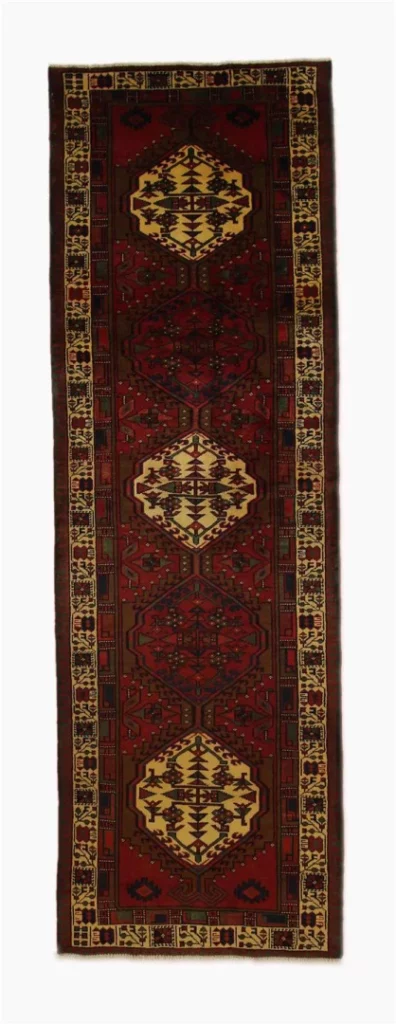
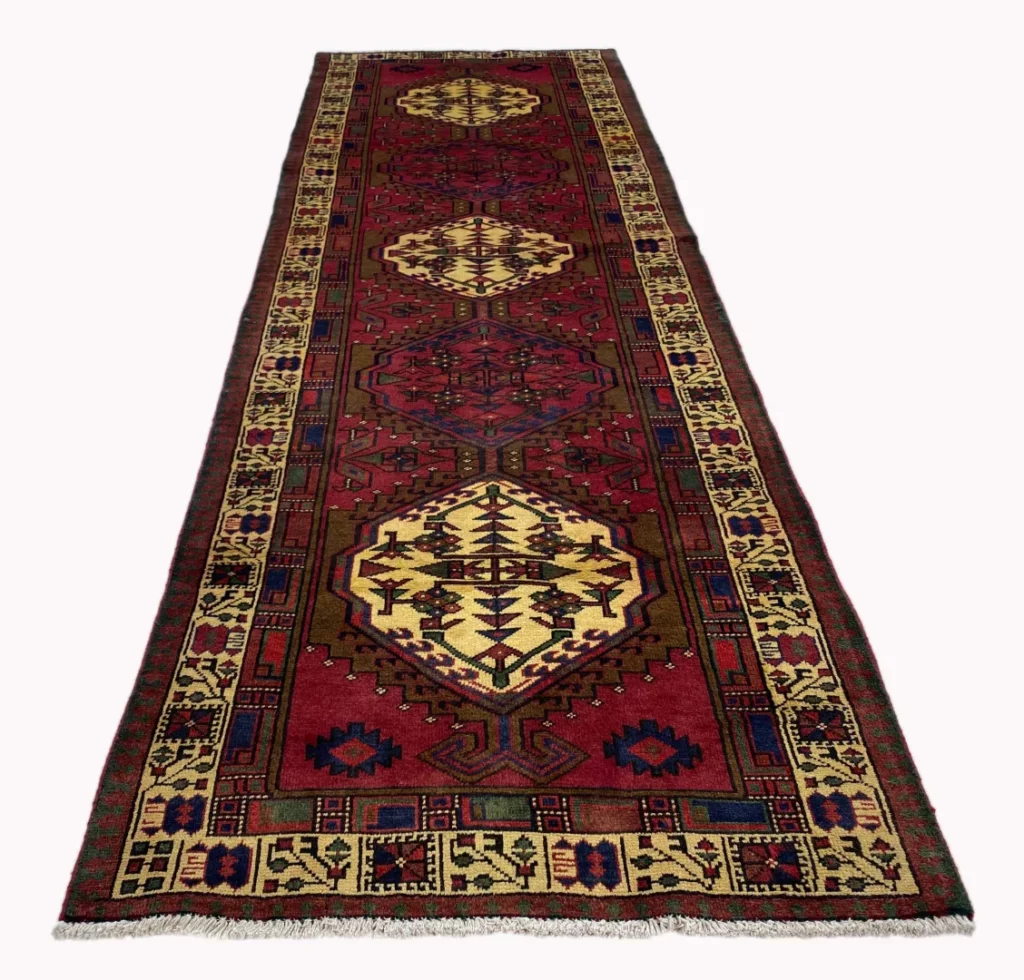
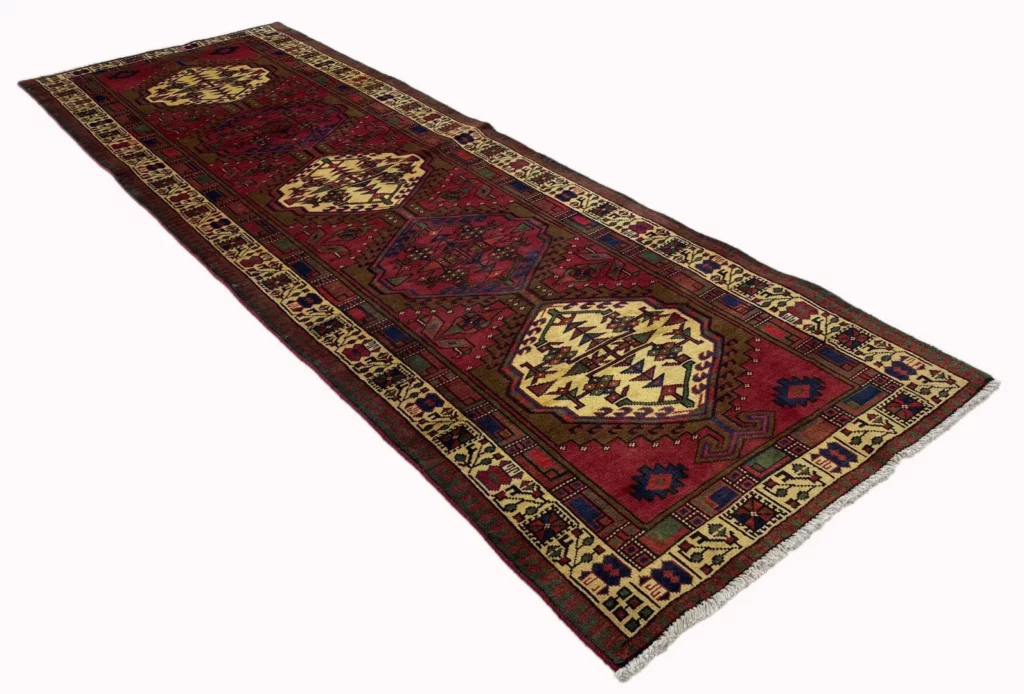
The pattern of this rug is geometric and is described as Caucasian in design. Geometric rug patterns use forms, repetition, and clearly defined boundaries. Instead of depicting nature in a literal way, they create an ornament built from lines, angles, and areas of colour. Caucasian-influenced designs may use diamonds, stepped outlines, hooked forms, and symmetrical arrangements as part of their broader visual vocabulary. These are general characteristics of the design tradition, not claims about individual motifs not named for this rug.
The stated palette consists of red, brown, and beige. In Persian and Caucasian-influenced designs, red may serve as a strong ground or accent colour, while brown and beige create an earthy balance. Together, the colours form a palette that is distinct yet measured. They are arranged across the short pile, helping the contours of the geometric design remain legible.
In a geometric composition, much of the visual effect comes from the relationship between line and surface. Repeated forms provide structure, while changes in colour and drawing create movement. The high knot density associated with Meshkin rugs is linked to detailed pattern work. It supports precision in the rendering of the design while preserving the handmade character of the rug.
The Caucasian orientation of the design is one of this rug’s main visual characteristics. It distinguishes the piece from the often floral compositions associated with other Persian regions. Tabriz rugs, for example, are frequently linked with floral forms and balanced colour schemes, while Isfahan rugs often present complex subjects and medallions. In this comparison, Meshkin represents a more strongly geometric and Caucasian-influenced visual language. This rug is not attributed to Tabriz, Isfahan, or another region.
The combination of red, brown, and beige gives the design a coherent overall appearance. Its forms and colours can be read in both traditionally furnished rooms and more restrained contemporary settings. This describes the general adaptability of the visual language rather than a particular interior. The rug remains clearly identifiable through its Meshkin origin, hand-knotted construction, and geometric Caucasian design.
Special Features
The specific features of this piece include its origin in Meshkin, Iran, its hand-knotted construction, its pile of high-quality sheep wool, and its geometric design with Caucasian influence. The colours are red, brown, and beige, and the rug is described as having a high knot density. Its condition is well preserved. Together, these details provide the factual basis for identifying and describing the rug.
The sheep wool is described as robust and soft. Meshkin rugs are also described in the source as hypoallergenic. The rug is suited to settings where a hard-wearing wool pile with a pleasant handle is desired, including living rooms, bedrooms, and offices. Its hand-knotted construction makes it an individual example within the regional tradition rather than a repeated industrial product.
For care, regular vacuuming without a brush attachment is recommended. Professional rug cleaning may be carried out every few years. Direct sunlight should be avoided because it can contribute to fading. This is particularly relevant to the red, brown, and beige palette. These recommendations relate to the stated care requirements and complement the information about the rug’s material and well-preserved condition.
FAQ
How should I care for my Meshkin Persian rug?
Regular vacuuming without a brush attachment helps keep the rug clean during everyday use without placing unnecessary strain on the pile. Professional rug cleaning is recommended every few years for more thorough care. Direct sunlight should be avoided because it can contribute to colour fading. A suitable position is therefore helpful, especially with a palette of red, brown, and beige. These care instructions apply to this hand-knotted wool rug and support the preservation of its design and well-preserved condition.
What are the typical features of a Meshkin rug?
Meshkin rugs are associated with geometric patterns and a Caucasian-influenced design. A palette of red, brown, and beige is another stated characteristic. They are also described as having a high knot density of 120,000 to 200,000 knots per square metre and as being made with sheep wool. The wool is characterised as both robust and soft. In this piece, those typical features occur together with Meshkin origin, hand-knotted construction, a short pile, and a well-preserved condition.
Where do the materials for Meshkin rugs come from?
The wool used for Meshkin rugs comes from the fertile steppes of the Ardabil region in Iran. The region is known for sheep farming. The sheep wool obtained there is described as robust as well as soft and is used for the pile. In this rug, the regional material is combined with hand-knotting and a design influenced by Caucasian patterns. The origin of the raw material, the local rug tradition, and the finished piece are therefore connected in a clear way.
Additional information
| Color | |
|---|---|
| Size | |
| Shape | |
| Origin | |
| Knot Density | |
| Material |
Related products

Oriental Rug Kashmir 285 x 185 cm Silk Hand-knotted
€ 1230
Persian Rug Kashan 198 x 128 cm Silk Hand-knotted Antique
€ 7249
Persian Rug Farahan 235 x 154 cm Wool Hand-knotted
€ 990
Persian Rug Isfahan 250 x 155 cm Silk Hand-knotted
€ 3600
Persian Rug Kashan 345 x 253 cm Wool Hand-knotted
€ 2910
Persian Rug Nain 200 x 129 cm Wool Hand-knotted
€ 2100
Persian Rug Tabriz 206 x 150 cm Wool Hand-knotted
€ 1830
Persian Rug Tabriz 353 x 253 cm Wool & Silk Hand-knotted
€ 4200