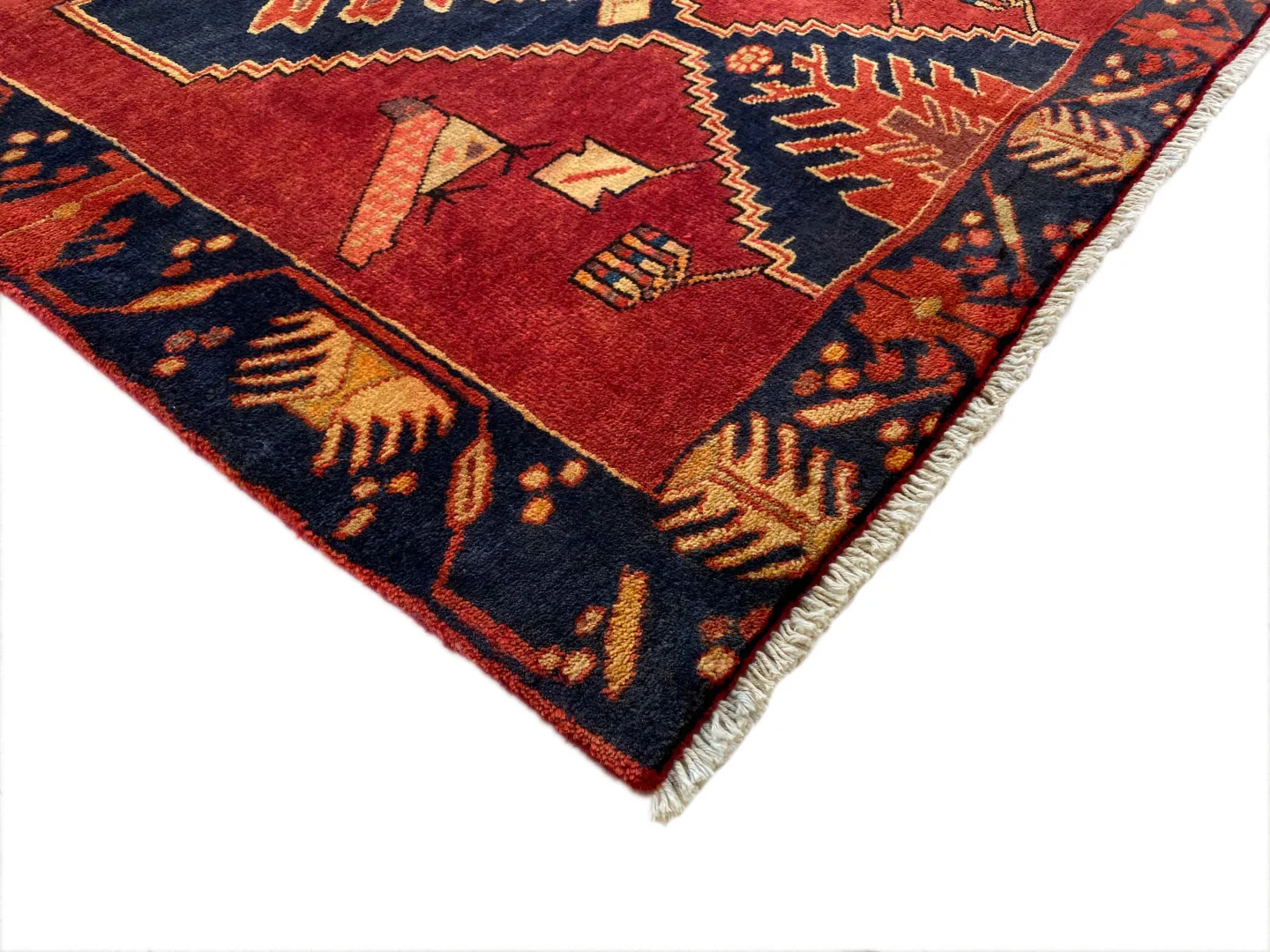
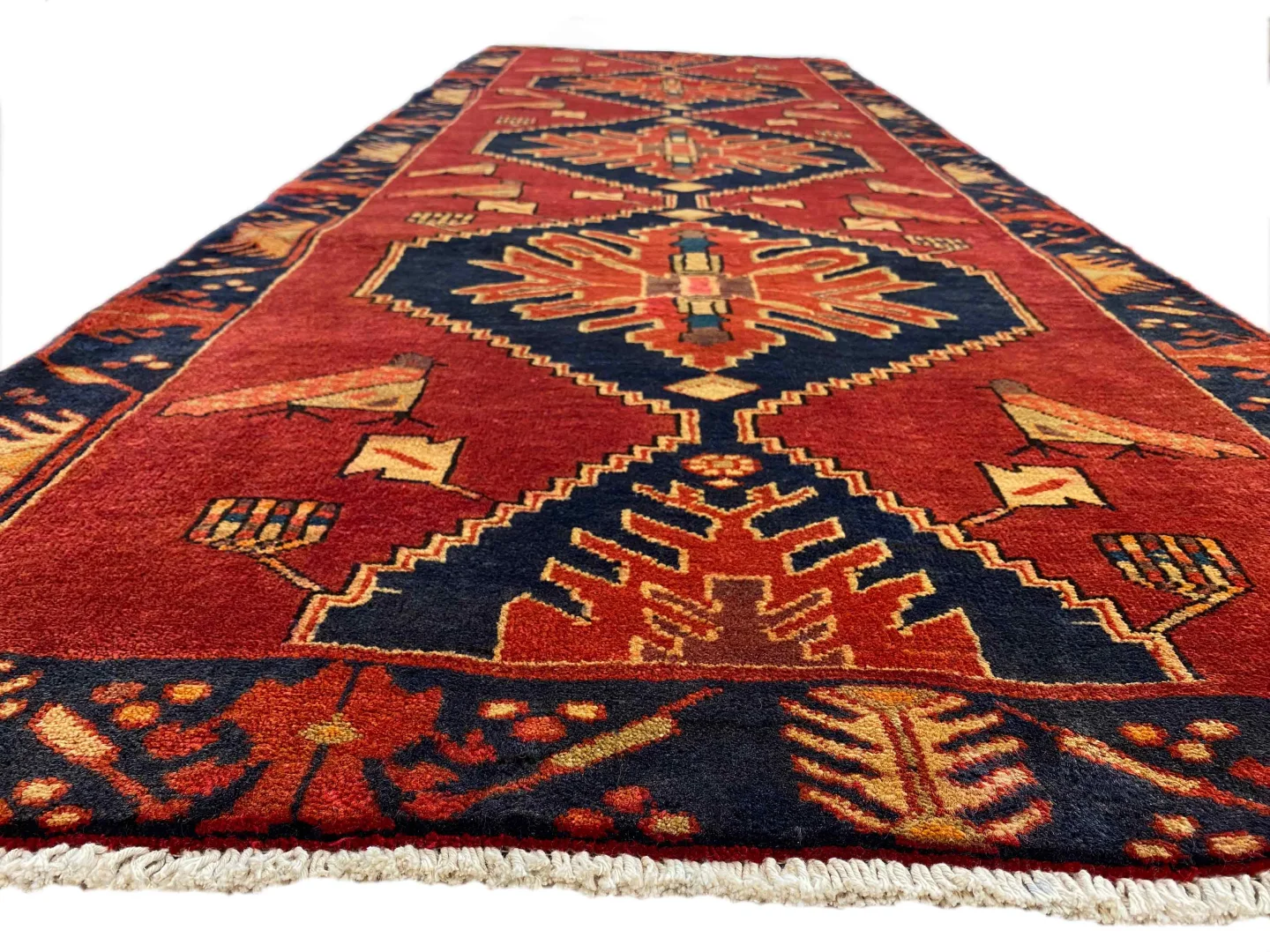
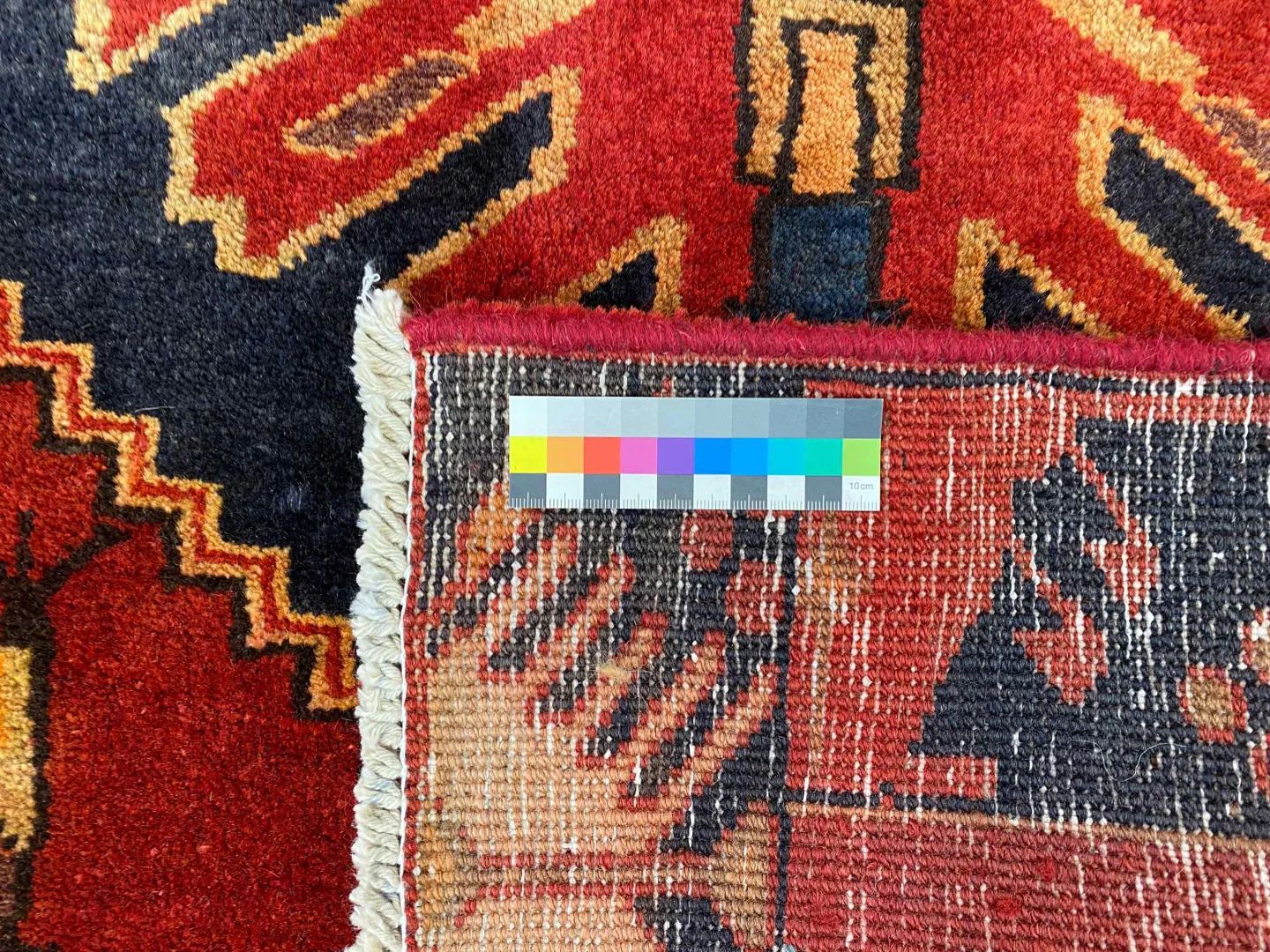
This Meshkin Persian rug is hand-knotted and made with high-quality sheep wool. The wool forms the pile and gives the rug its characteristic textile surface. Sheep wool has long been used in traditional rug making because it is resilient, hard-wearing and durable. Its natural structure is suited to a pile that can be used in everyday interiors while retaining the tactile character of a hand-made rug.
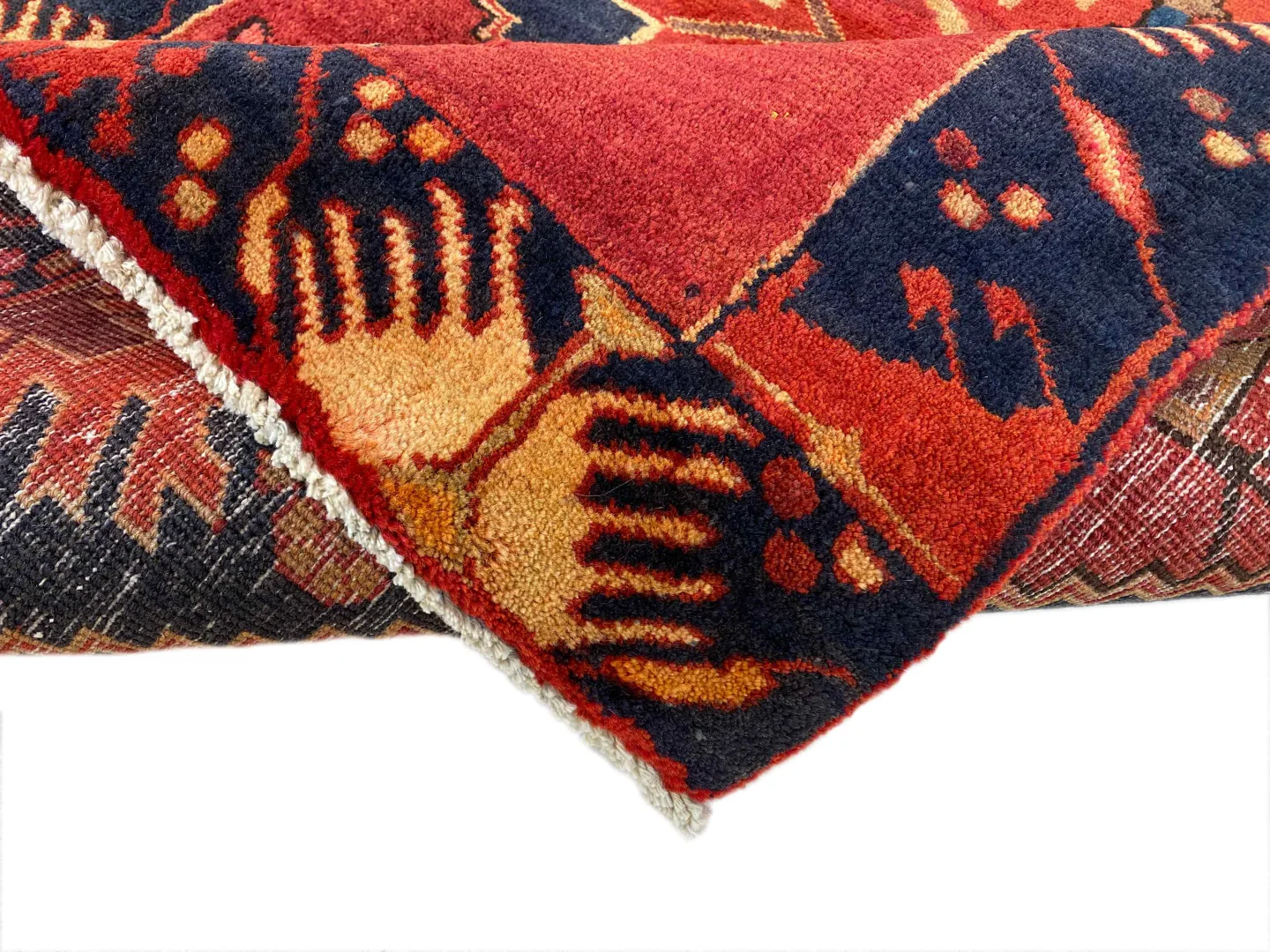
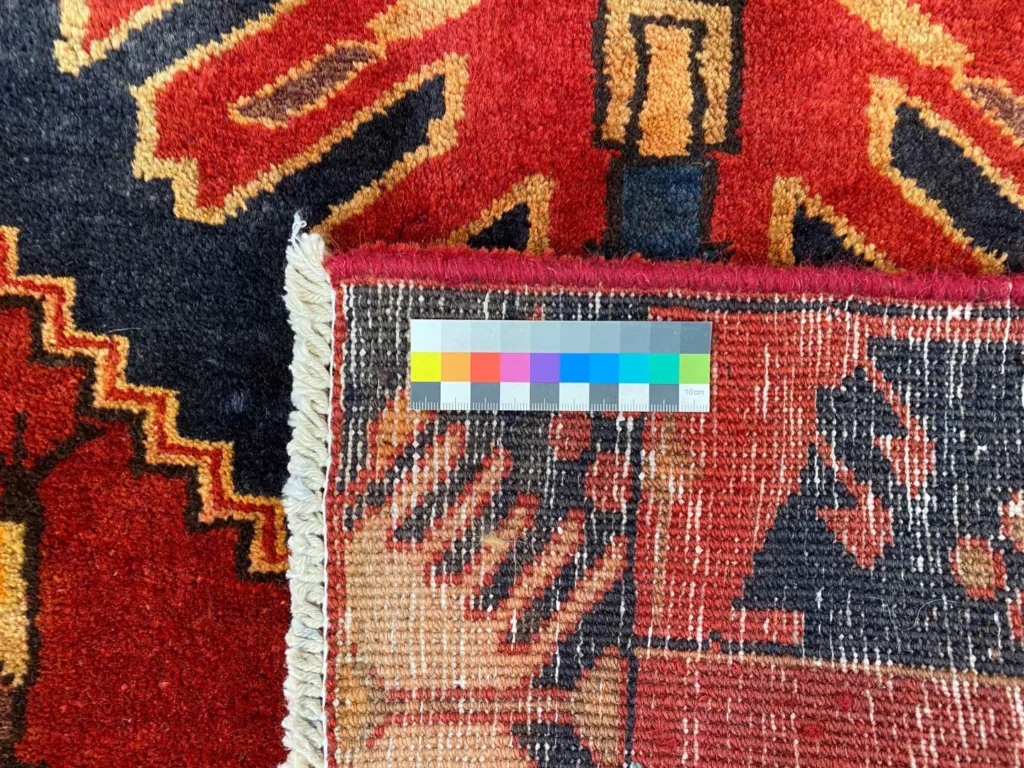
The knot density of this rug is between 120,000 and 200,000 knots per square metre. A density in this range allows geometric outlines and smaller design elements to be worked with a differentiated appearance. In a hand-knotted rug, the pattern is built knot by knot rather than printed onto a finished surface. The making process therefore connects the quality of the wool, the structure of the pile and the visual definition of the design.
The source describes the sheep wool as high quality. Regular, gentle cleaning helps preserve the condition of the pile and keeps the surface free from loose dust. For more substantial soiling, a carpet cleaner intended for this kind of textile should be used so that the wool and the colours are treated carefully. These maintenance principles support the practical character associated with a durable hand-knotted rug.
Origin and Tradition
This rug comes from Meshkin, also known as Meshgin Shahr, in north-western Persia. Meshgin Shahr is located in Ardabil Province. The name Meshkin therefore identifies the stated place of origin, while the design reference to Caucasian patterns describes its visual language. Keeping these two aspects separate is important: this is a Persian rug from Meshkin, even though its pattern draws on a Caucasian design tradition.
Ardabil is one of the recognised rug-producing areas of north-western Persia. Its textile traditions developed within a region where Persian craft practices meet influences from the wider Caucasian cultural sphere. Meshkin rugs are associated with a direct, geometric approach to pattern design. Lines, angular forms and clearly divided fields are used to create structure across the woven surface.
Persian rug making depends on practical knowledge passed through generations: preparing wool, building a knot sequence, maintaining the proportions of a design and finishing the textile surface. A hand-knotted rug is assembled progressively, with each knot contributing to the pattern. This gives the maker control over the placement of motifs and the balance of the composition. The process also explains why the finished piece is a textile object rather than a mechanically reproduced image.
The regional identity of a Meshkin rug lies in the relationship between material, technique and design. The wool provides a durable pile, while the hand-knotting gives the pattern its structured surface. The geometric vocabulary reflects the northern Persian environment and its connection with Caucasian design ideas. The result is a tradition that can be recognised through its firm shapes without requiring a floral or pictorial composition.
Other important Persian rug traditions are found in the broader cultural landscape of Ardabil and the surrounding regions. Tabriz rugs are known for intricate compositions and refined workmanship. Nain rugs are often associated with floral designs and a lighter palette. Sarough and Isfahan represent further established Persian approaches to materials, pattern and craftsmanship. These regional examples illustrate the range of Persian weaving; they do not alter the stated Meshkin origin of this particular rug.
Design and Pattern
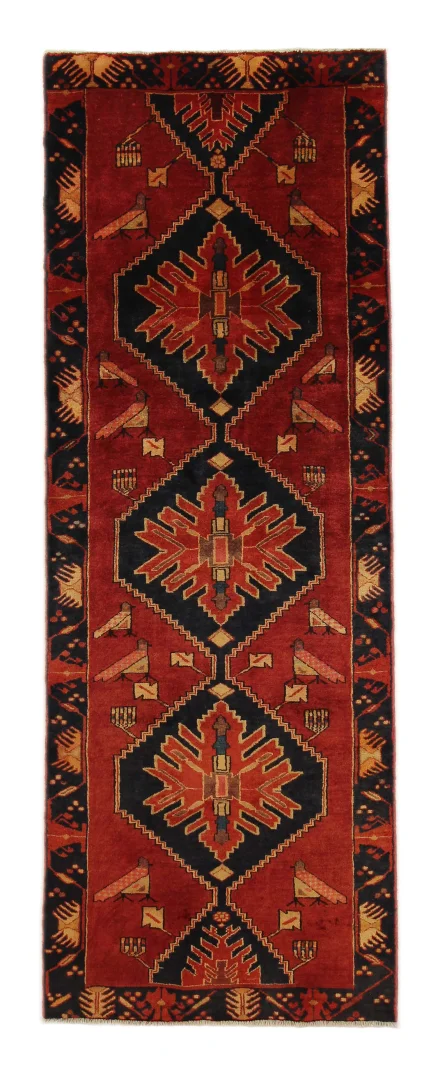
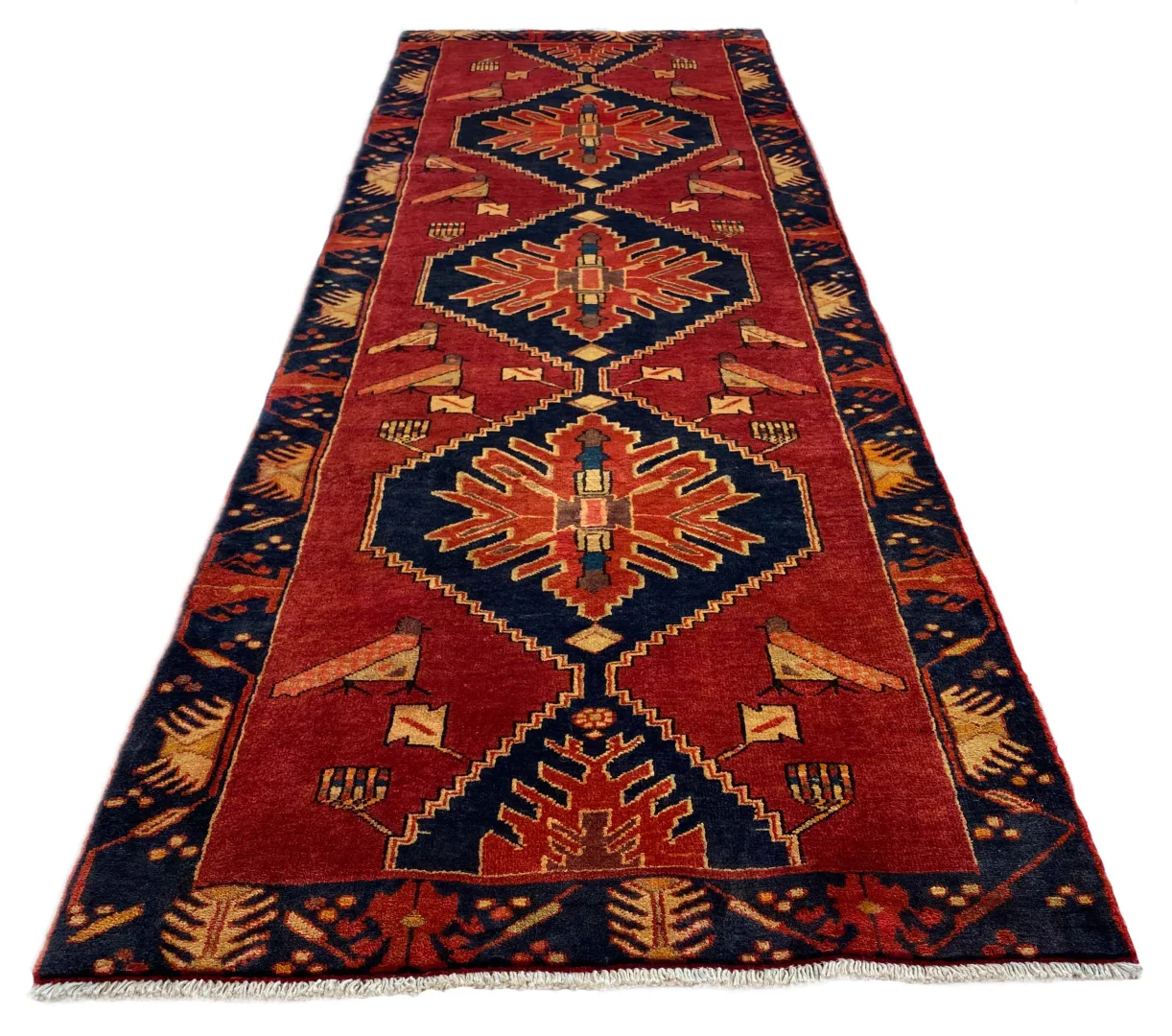
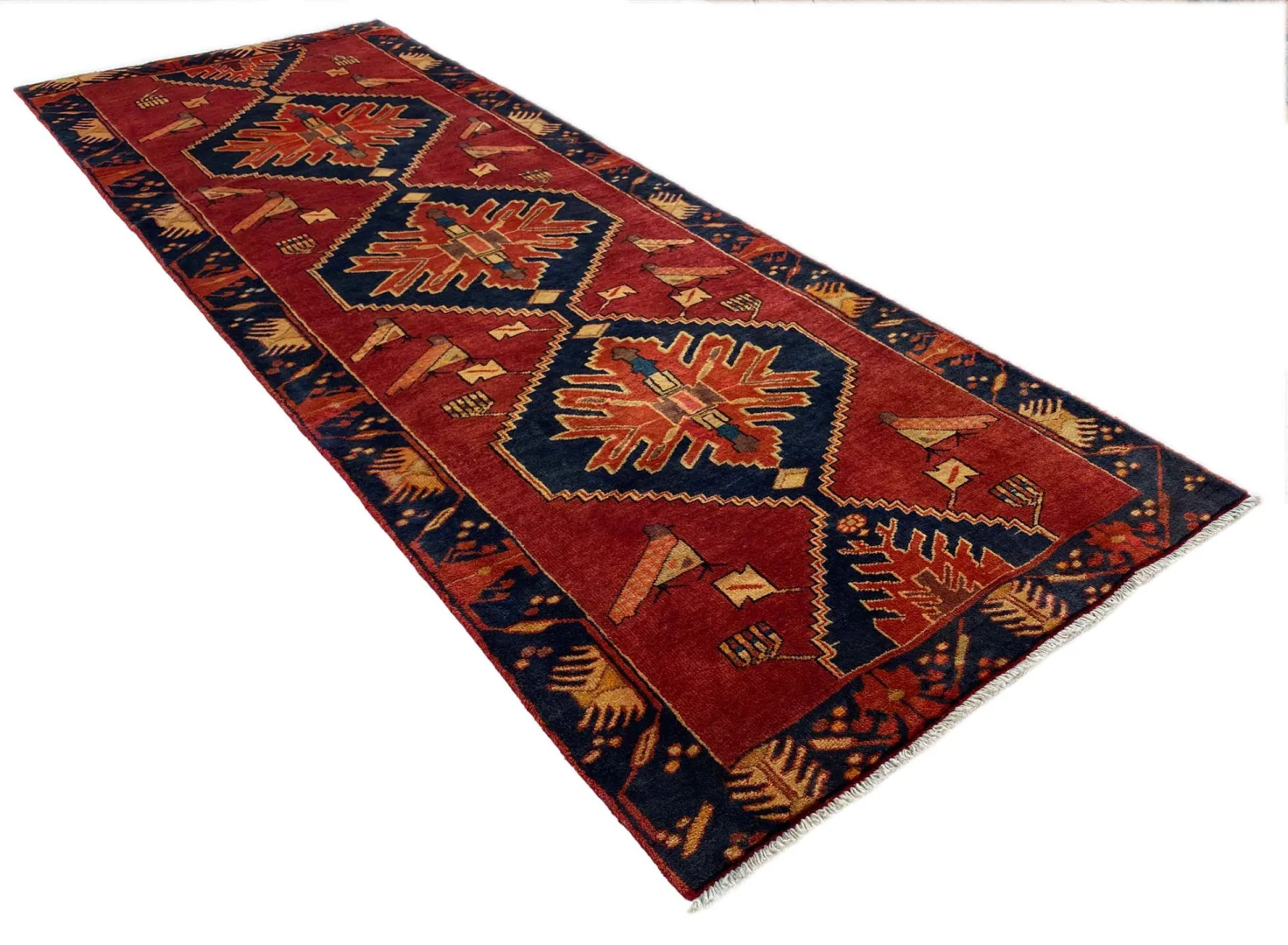
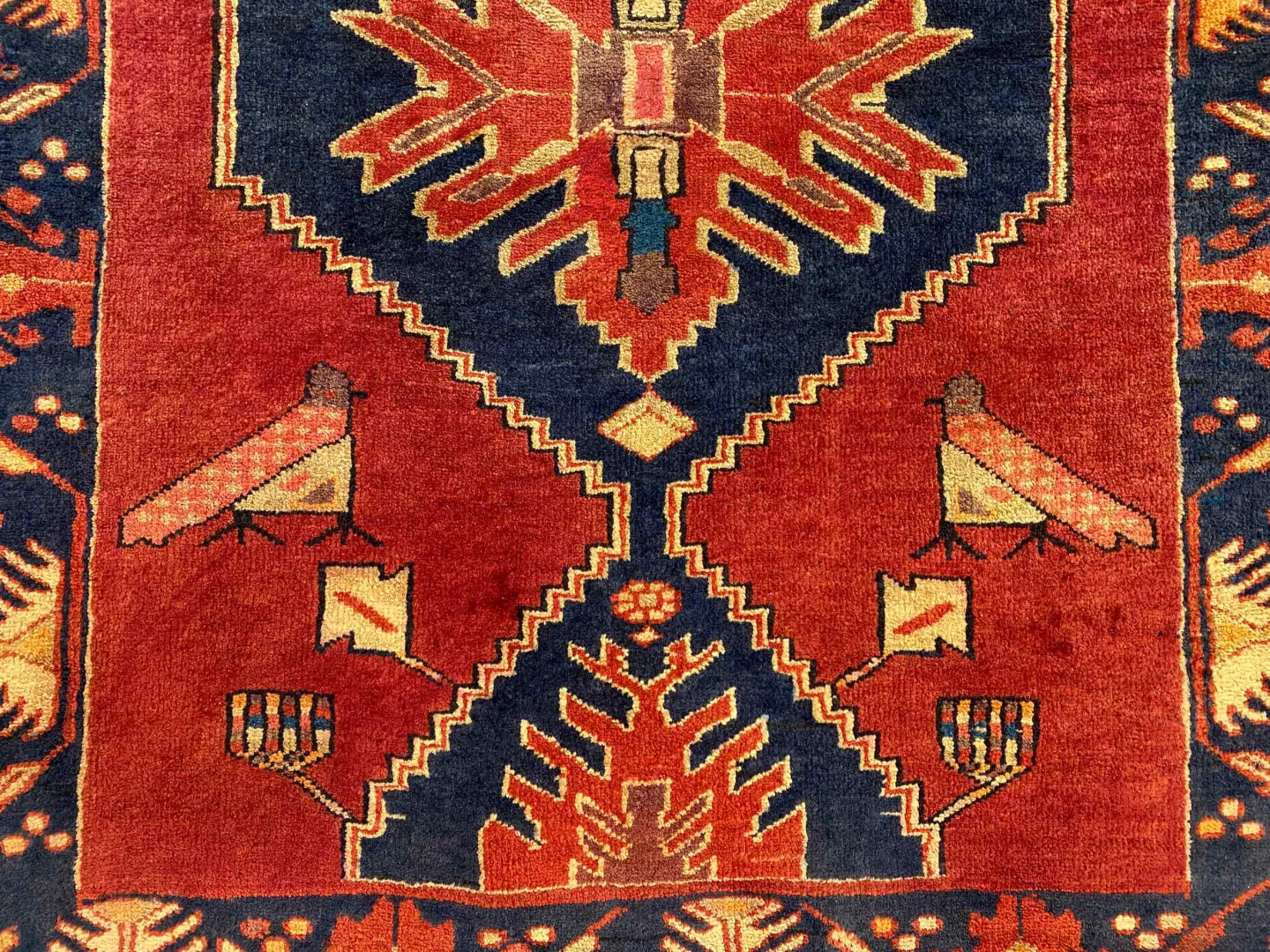
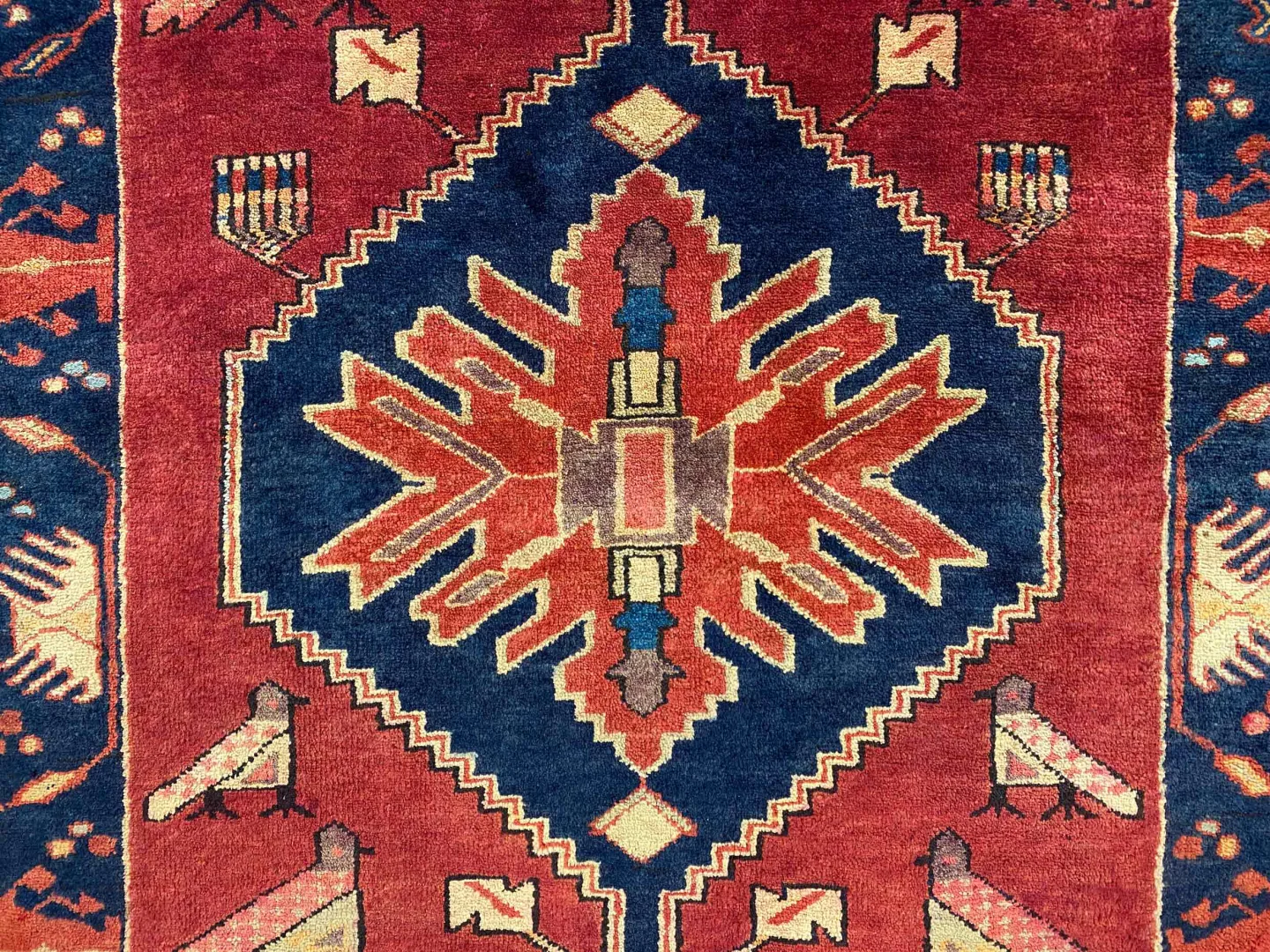
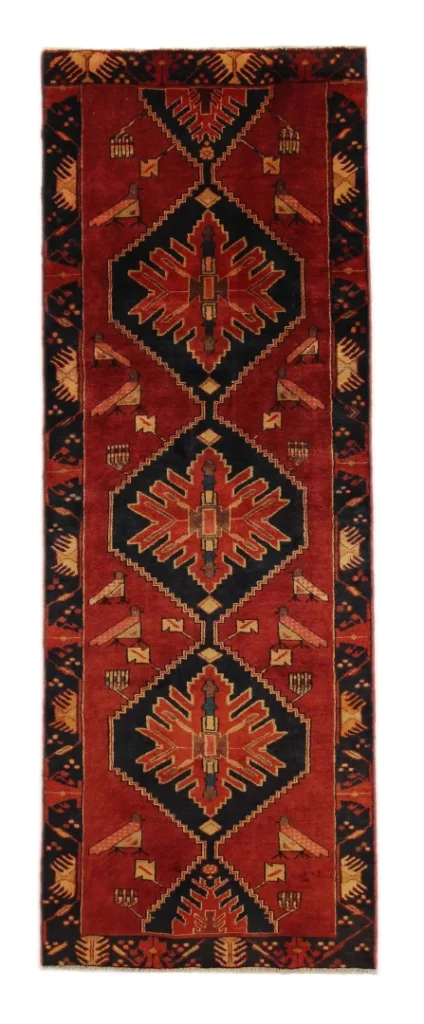
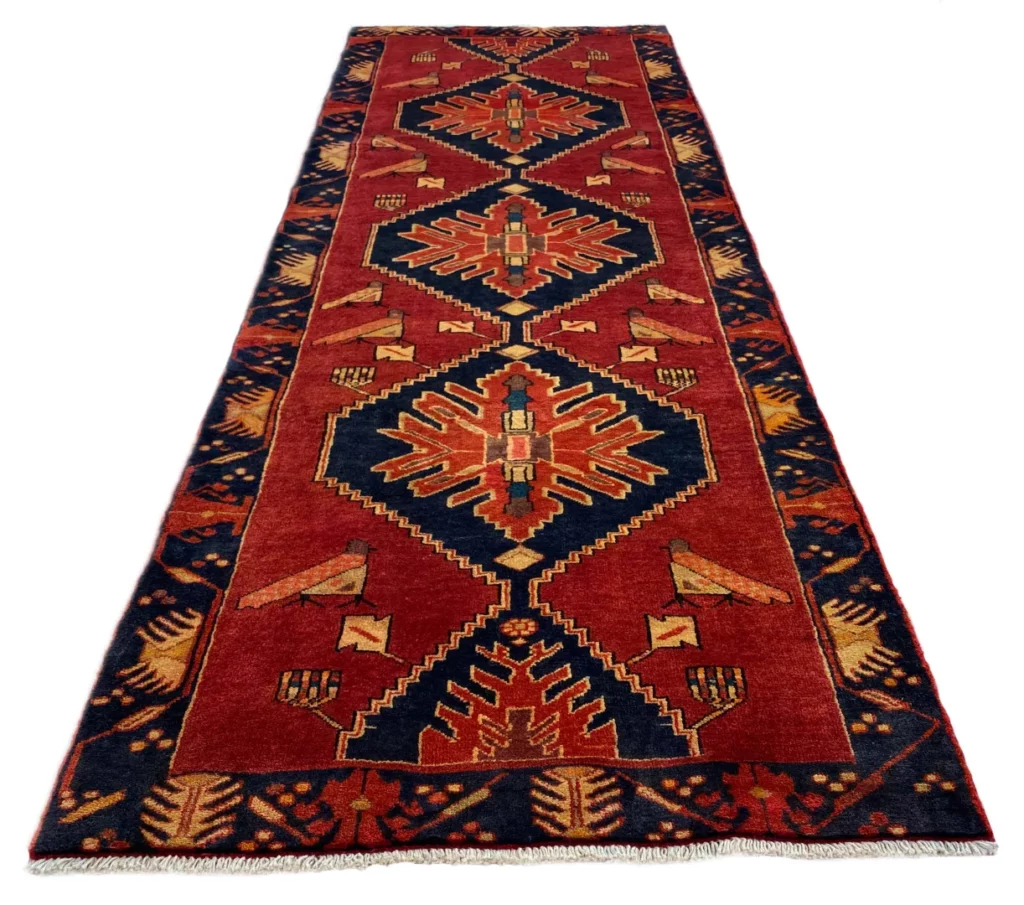
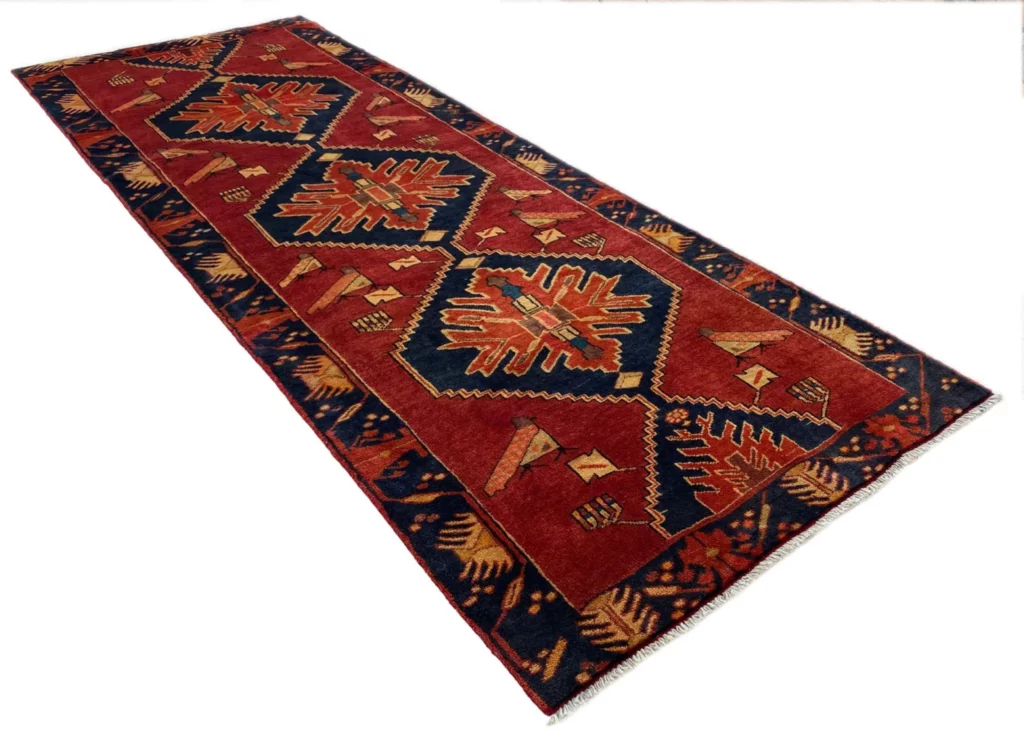
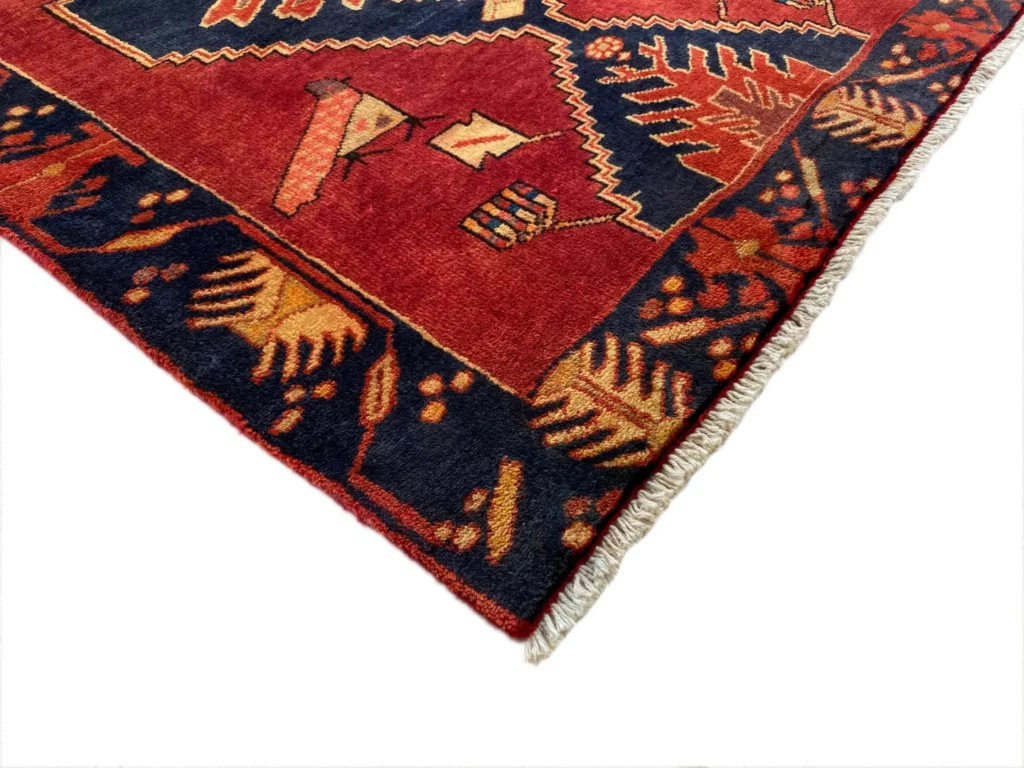
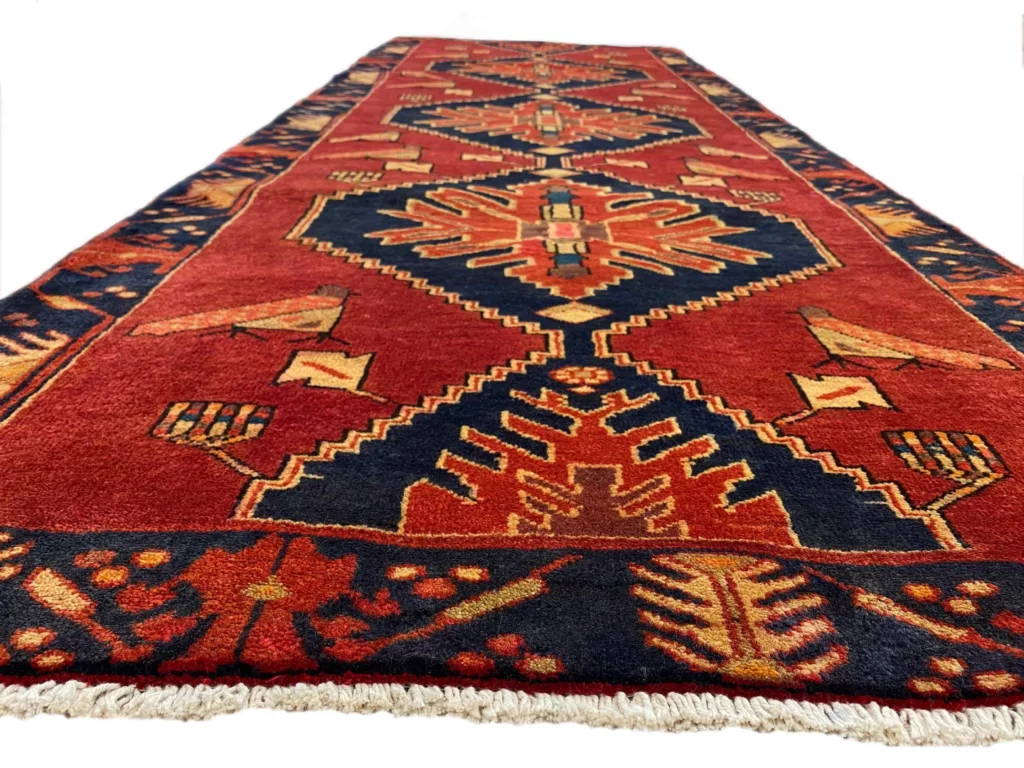
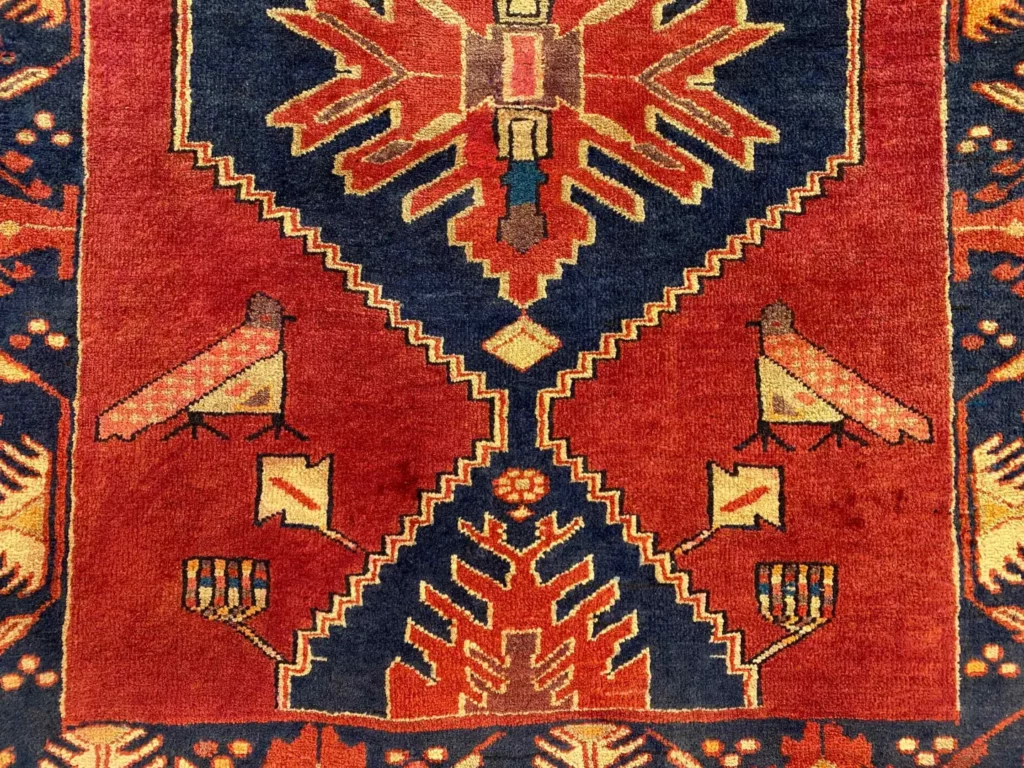
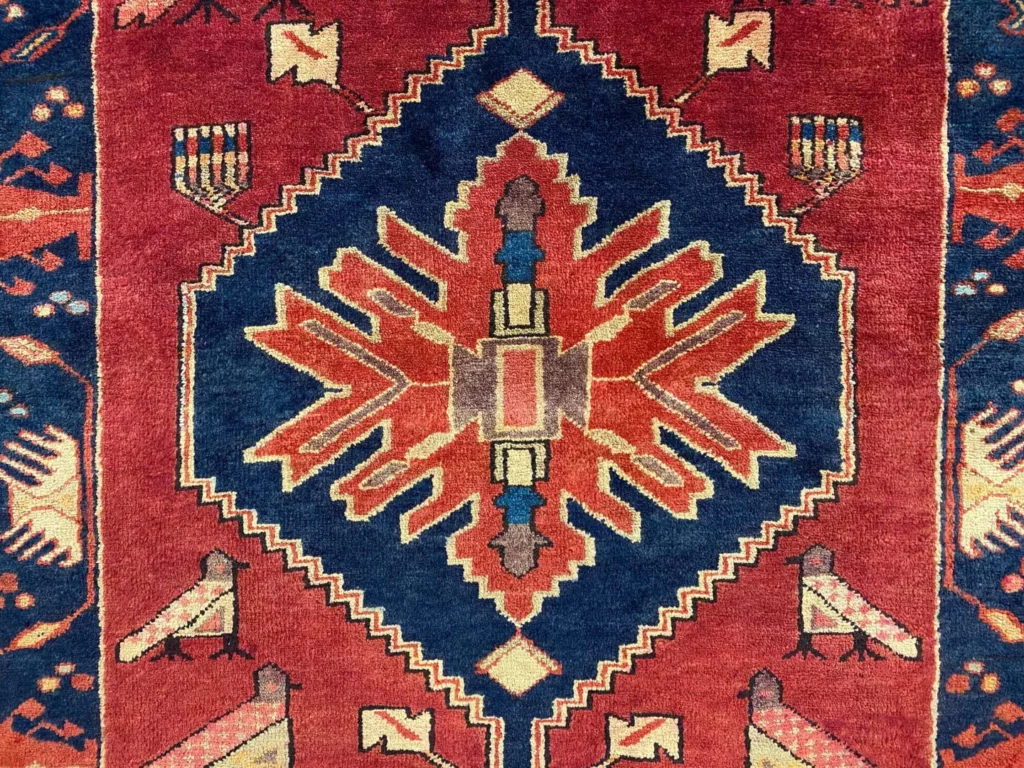
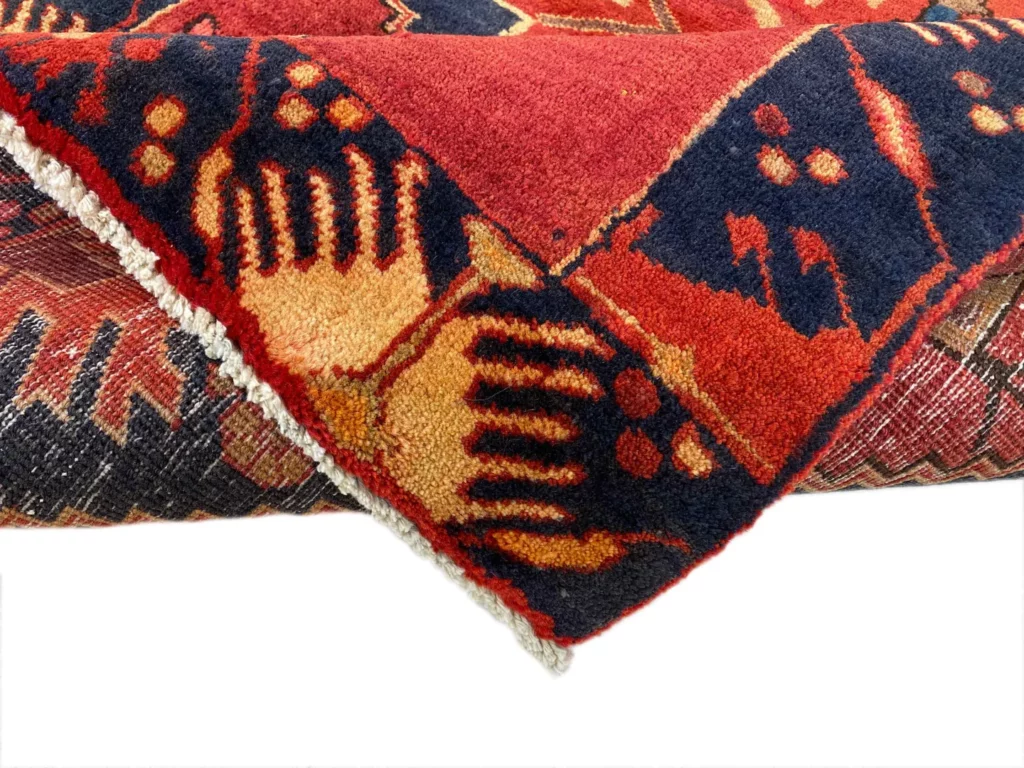
The pattern of this rug is geometric and described as a Caucasian design. Its appearance is therefore based on the arrangement of lines, angles, compartments and repeated forms rather than on a naturalistic scene. Geometric compositions give the surface a readable rhythm. On a hand-knotted rug, those shapes are formed directly through the placement of knots, so the design remains connected to the construction of the textile.
Meshkin rugs are described with a harmonious palette that includes deep red together with earthy brown and beige tones. These colours establish a warm and grounded visual field for the angular ornament. Red may act as a dominant field or as an accent within the composition, while brown and beige provide softer transitions and an earthy balance. The overall effect depends on the relationship between the colours rather than on any isolated shade.
A Caucasian-oriented geometric design is generally recognised through strong contours and an orderly arrangement of motifs. Repetition, contrast between fields and the controlled use of angular shapes give the pattern its character. The relatively high knot density specified for this rug supports a detailed rendering of these elements. At the same time, the hand-knotted construction keeps the surface visibly textile and preserves the individual quality of the piece.
Geometric compositions can organise a rug around a central structure or create a steady rhythm across the whole field. In Meshkin design, the shape language is the main point of reference: each form belongs to a larger pattern relationship. This allows the rug to work with traditional interiors as well as more contemporary settings. The red, brown and beige palette further helps the design sit within different furnishing schemes without losing its regional identity.
The phrase Caucasian design identifies the pattern influence, not the place where this rug was made. Its origin is Meshkin, or Meshgin Shahr, in Ardabil Province in north-western Persia. The distinction makes the description precise: the rug is Persian in origin and Meshkin in regional attribution, while its geometric arrangement reflects the visual traditions of the Caucasus.
Special Features
The specifically stated features are the hand-knotted technique, a pile of high-quality sheep wool, a knot density of between 120,000 and 200,000 knots per square metre, and a geometric Caucasian design. The condition is described as very good. Together these details identify the individual rug through its material, construction, pattern and recorded condition.
Meshkin rugs can be used in living areas and business spaces and can be combined with a range of furnishing styles. The palette of red, brown and beige supports this versatility. Regular vacuuming is recommended for routine care, and occasional beating can help release loose dust. If the rug becomes soiled, a suitable carpet cleaner should be used to protect the wool pile and the colours.
FAQ
What are the defining features of a Meshkin Persian rug?
Meshkin Persian rugs come from Meshkin, also called Meshgin Shahr, in Ardabil Province in north-western Persia. The rug described here is hand-knotted, has a pile made from high-quality sheep wool and carries a geometric pattern with a Caucasian design influence. Its colour range is described through deep red, earthy brown and beige tones. The specified knot density supports a carefully articulated pattern. This particular rug is recorded as being in very good condition.
How should a Meshkin Persian rug be cared for?
Routine care consists of regular vacuuming carried out gently across the wool pile. Occasional beating can help remove loose dust from the rug. For marks or heavier soiling, use a carpet cleaner suitable for wool and textile rugs, applying it carefully to protect both the material and the colours. Harsh products and unsuitable cleaning methods may affect the pile or the colour surface. If a stain is difficult to treat, professional rug cleaning is the safer approach.
Where do the materials for Meshkin Persian rugs come from?
High-quality sheep wool is specified as the pile material for this rug. The description associates the wool with the fertile steppes of the Ardabil region. Sheep wool is valued in Persian rug making for its robust and durable qualities. Combined with hand-knotting, it forms a resilient textile pile. No information about the warp or other additional materials is provided for this rug, so no further material claim is made.
To provide the best experiences, we use technologies like cookies to store and/or access device information. Consenting to these technologies will allow us to process data such as browsing behavior or unique IDs on this site. Not consenting or withdrawing consent, may adversely affect certain features and functions.
Functional Always active
The technical storage or access is strictly necessary for the legitimate purpose of enabling the use of a specific service explicitly requested by the subscriber or user, or for the sole purpose of carrying out the transmission of a communication over an electronic communications network.
Preferences
The technical storage or access is necessary for the legitimate purpose of storing preferences that are not requested by the subscriber or user.
Statistics
The technical storage or access that is used exclusively for statistical purposes.The technical storage or access that is used exclusively for anonymous statistical purposes. Without a subpoena, voluntary compliance on the part of your Internet Service Provider, or additional records from a third party, information stored or retrieved for this purpose alone cannot usually be used to identify you.
Marketing
The technical storage or access is required to create user profiles to send advertising, or to track the user on a website or across several websites for similar marketing purposes.
 SECURE PAYMENT
 SHIPPING PARTNERS


