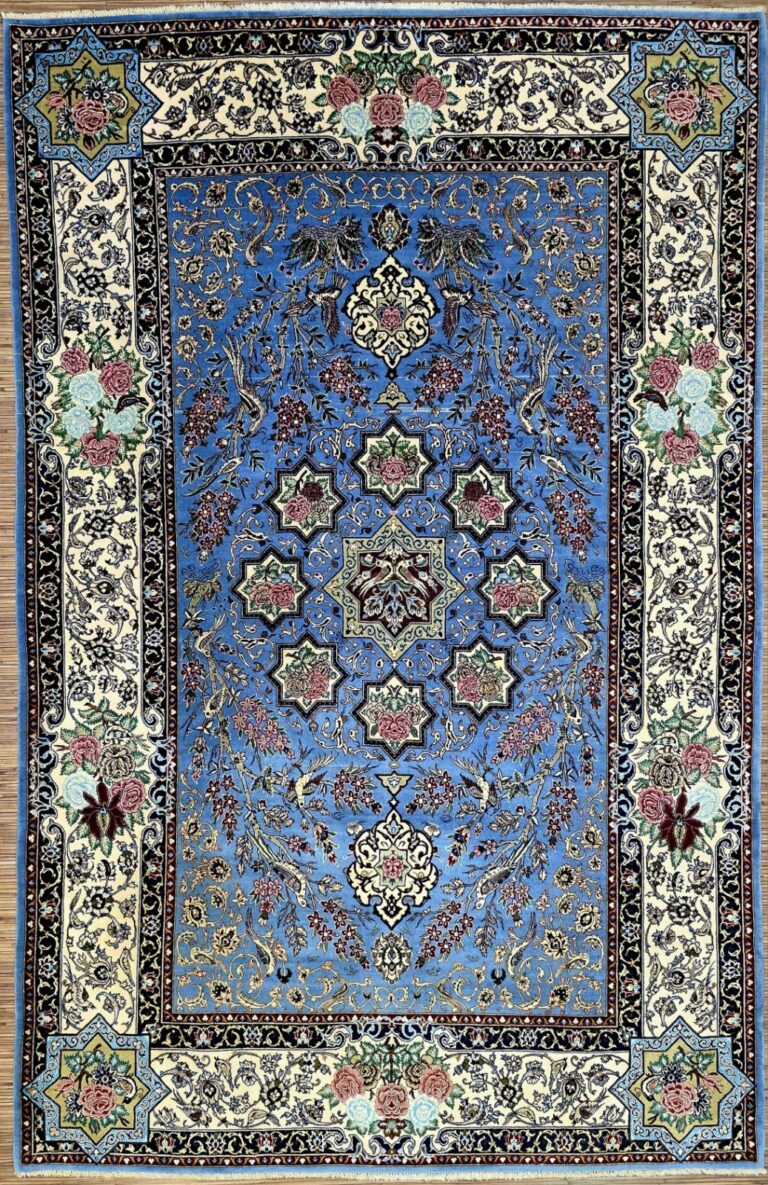
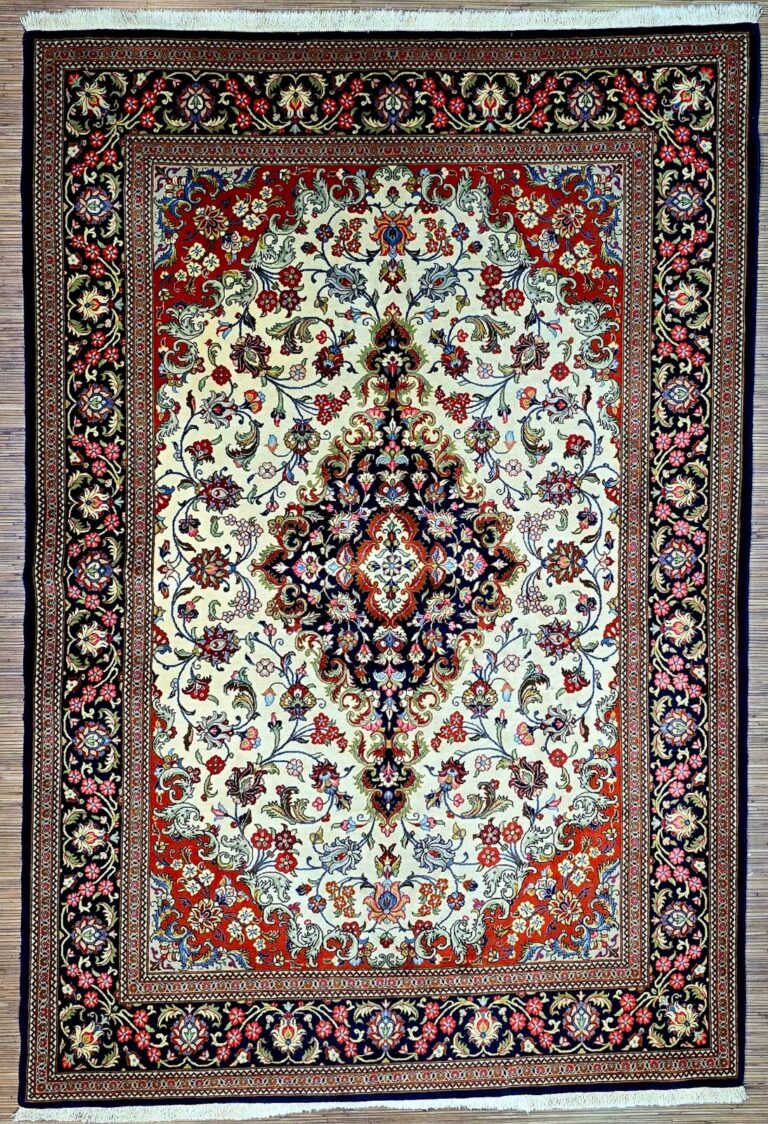
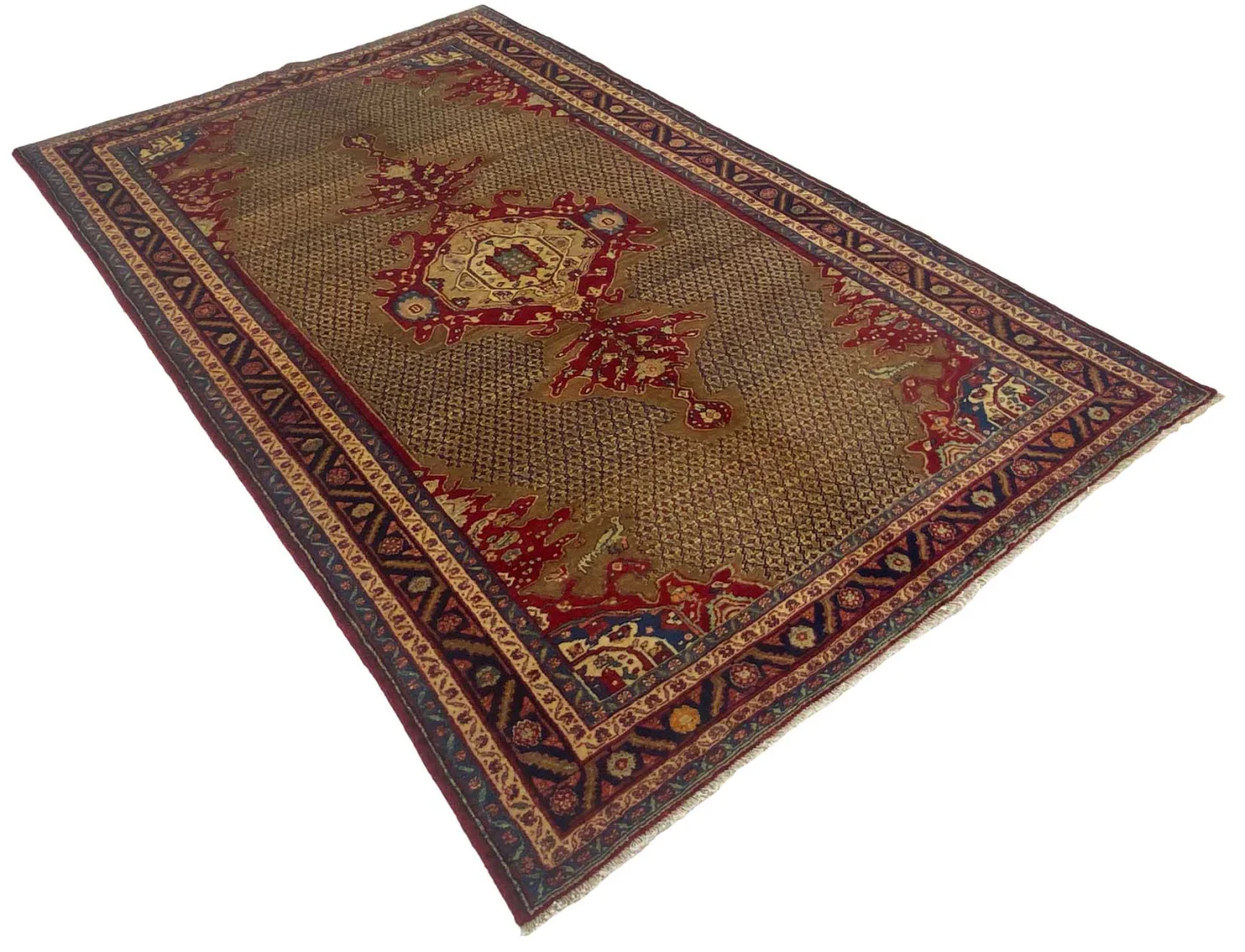
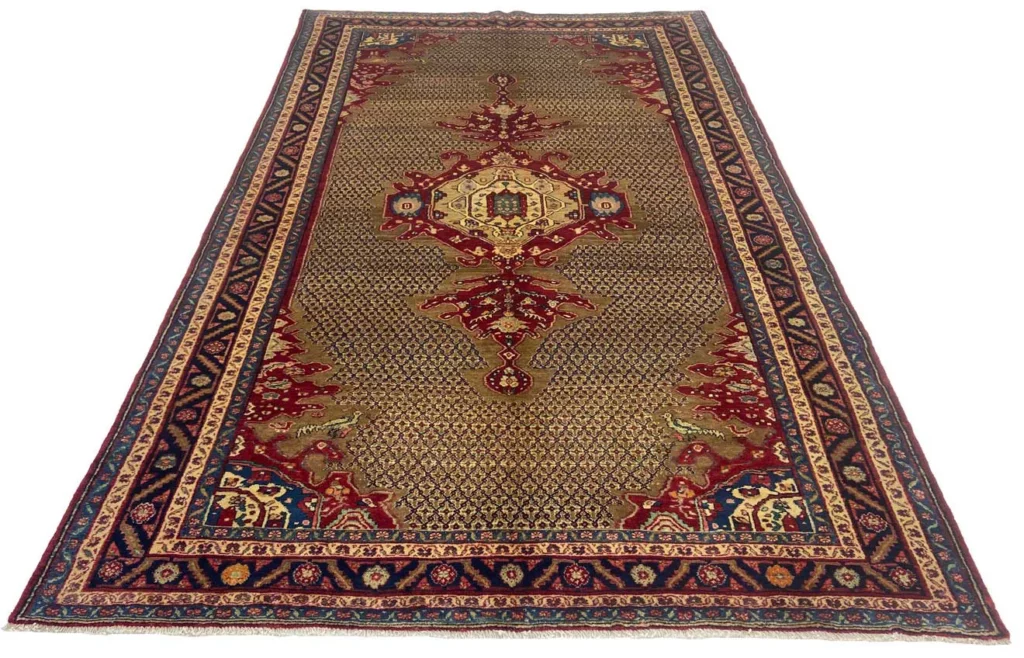
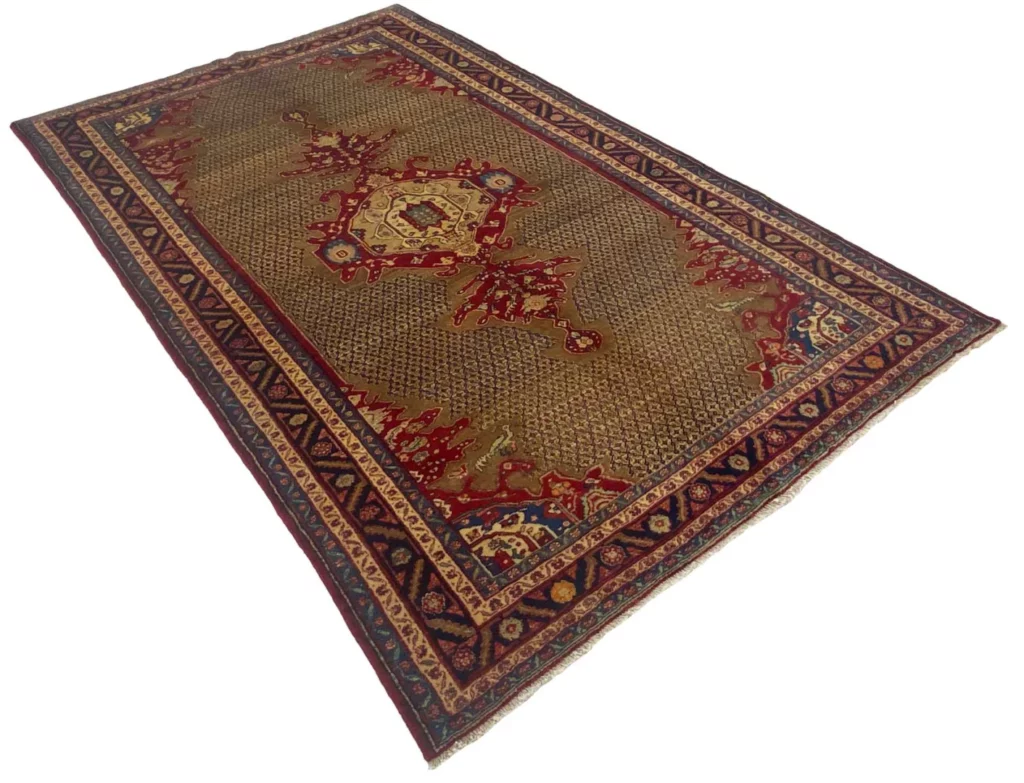
This Lilyan Persian rug is hand-knotted and has a pile made of soft wool. Its construction represents the traditional Persian knotting technique, in which the surface is built by placing individual knots into a prepared foundation. Wool has long been used for hand-knotted rugs because it combines a pleasant touch with natural resilience and practical versatility. Its soft surface gives the rug a comfortable feel, while the fibre provides a durable basis for everyday use.
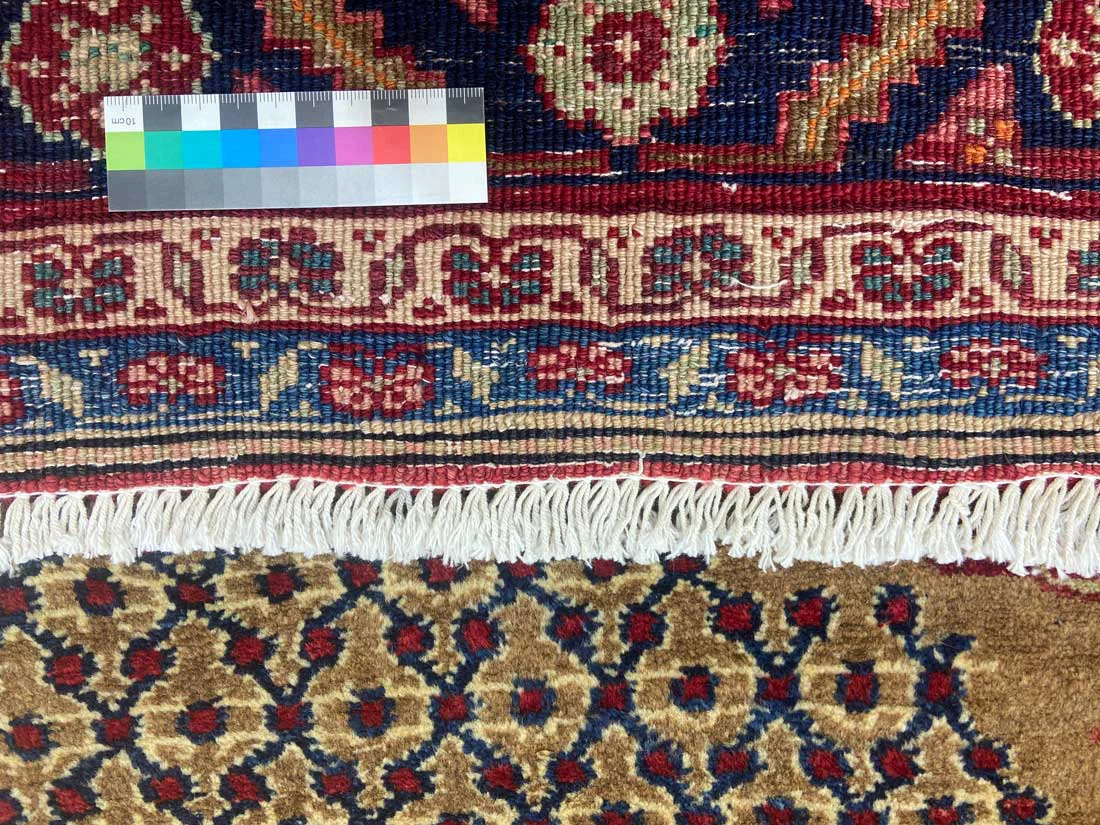
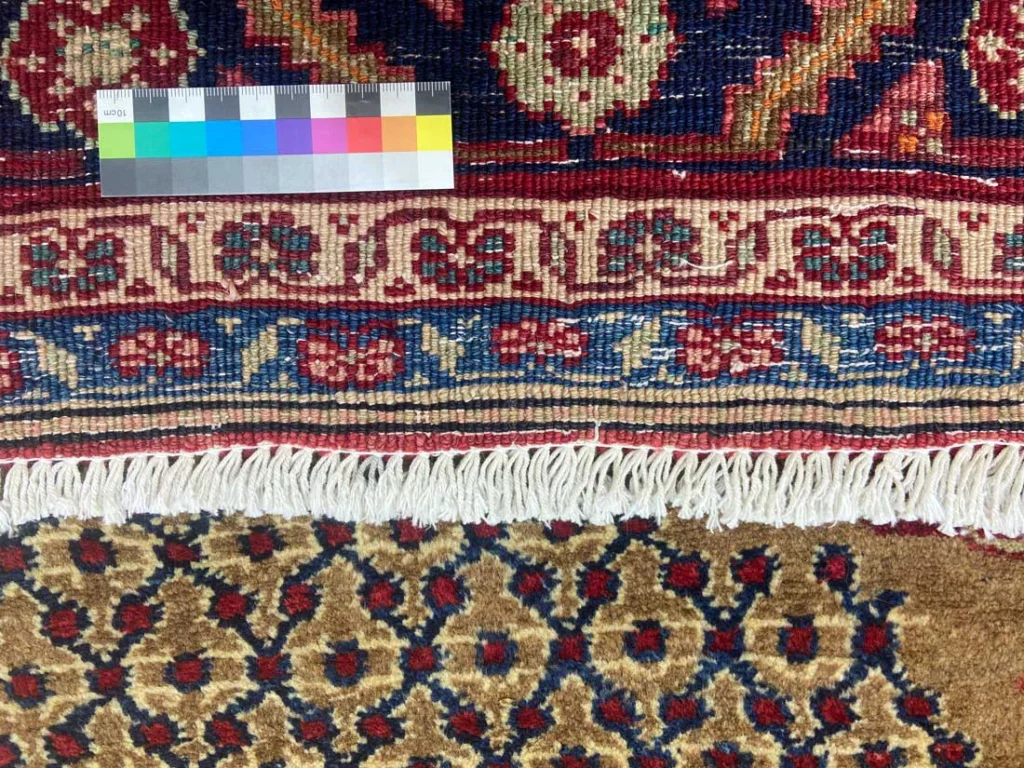
The knot density of this rug is 120,000 knots per square metre. A density of this kind supports the detailed rendering of lines, fields and ornamental elements. Hand-knotting also means that the rug is not a mechanically identical series product. Each piece is produced through a separate sequence of manual work, giving hand-knotted rugs their individual character and their particular interpretation of a design.
The wool described for this rug is soft, lightweight and hard-wearing. These qualities make it suitable for living rooms as well as bedrooms. Its light construction makes it practical to use within a room, while the wool offers the resilience required for regular domestic use. The description of excellent quality is part of the information for this piece and summarises its stated condition and workmanship.
Origin and Tradition
Lilyan is located in northwestern Persia, near Hamadan. The provenance is known for hand-knotted rugs made within a long-established regional craft tradition. Hamadan and the surrounding area form one of the important rug-producing landscapes of Persia. In this region, knowledge of preparing the warp, placing knots, inserting wefts and finishing a rug has been passed down through generations. Workshops and families preserve techniques while allowing individual weavers to interpret a design in their own way.
Lilyan rugs are made with different knot densities. In the broader regional context, densities of approximately 100,000 to 350,000 knots per square metre are cited. Knot density affects how finely a pattern can be drawn and how closely the surface appears to be structured. It is only one aspect of craftsmanship, however. The quality of the wool, the regularity of the knotting, the treatment of the edges and the care taken with the ends all contribute to the finished textile.
The location near Hamadan reflects a setting where urban and village rug traditions exist alongside one another. Persian rugs are not made according to one universal scheme. Colours, borders, field arrangements and the balance between floral and geometric forms can vary from one place, workshop or inherited design language to another. This relationship between regional continuity and individual execution is central to the variety found among rugs from northwestern Persia.
Other Persian centres demonstrate the breadth of the country’s rug tradition. Tabriz is associated with elaborate designs and a wide range of colours. Isfahan is often connected with intricate compositions and floral elements. Nain and Kashan also represent established Persian weaving traditions. These places are not the origin of this rug; they provide points of comparison within Iranian rug history and show how Lilyan belongs to a wider, regionally differentiated craft culture.
Design and Pattern
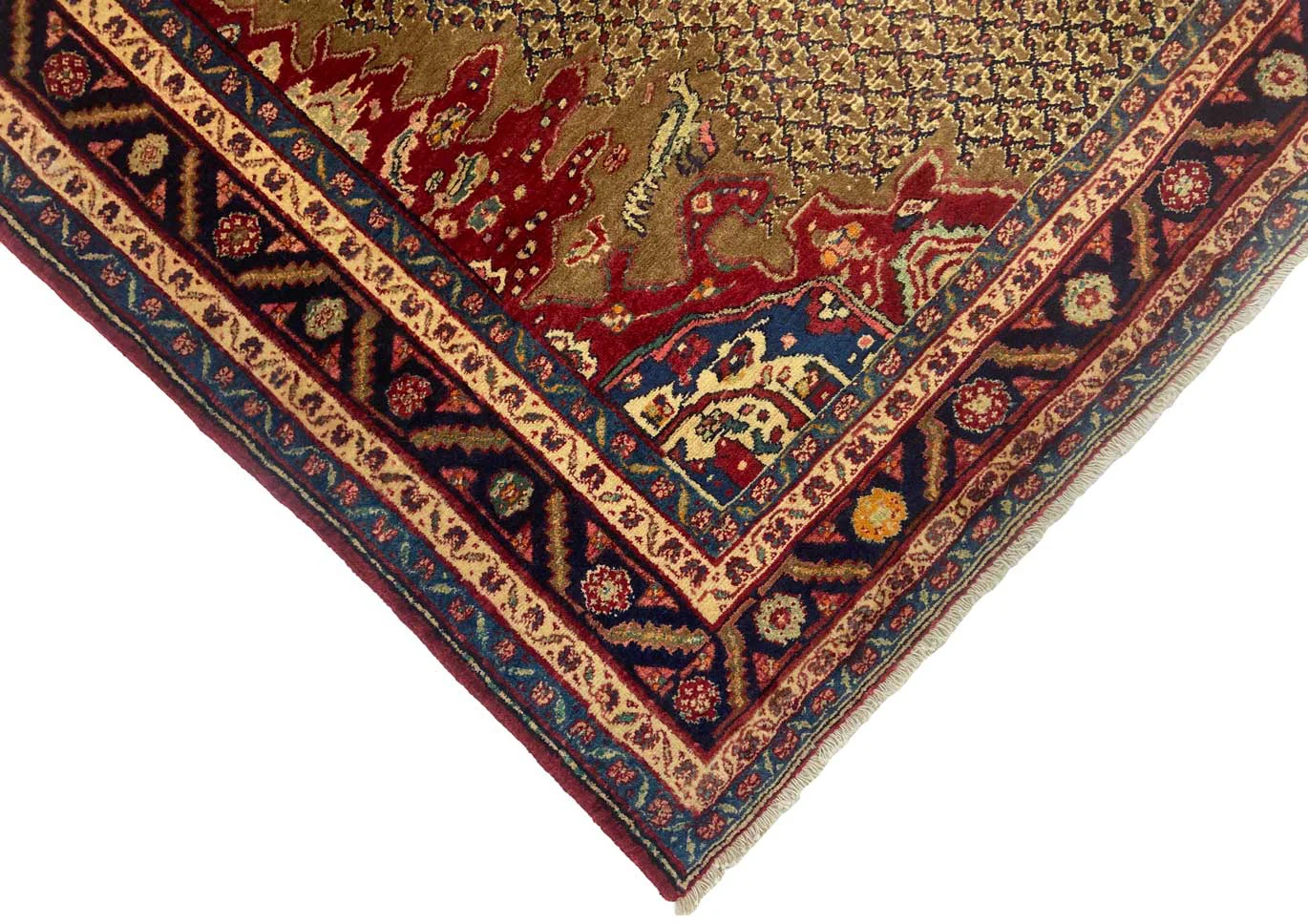
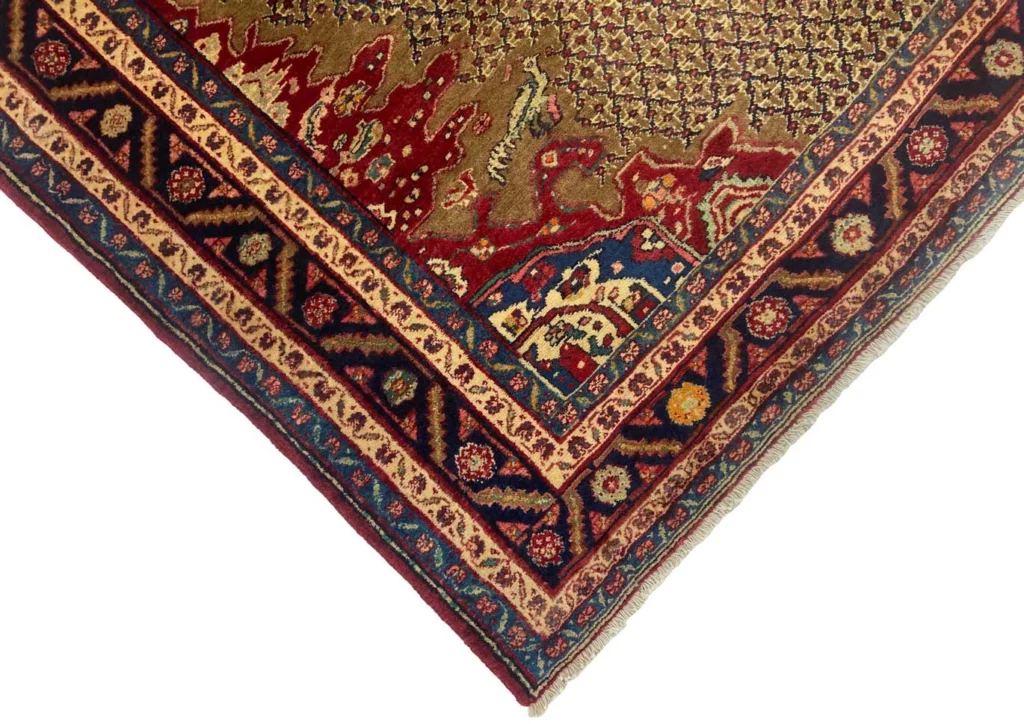
The design vocabulary associated with Lilyan rugs includes floral and geometric patterns. Floral compositions may incorporate blossoms, leaf scrolls and stylised plant forms. Geometric designs rely on clear lines, angles, structured fields or repeated shapes. Both approaches belong to the Persian ornamental tradition and can be used in borders, central fields or smaller details according to the individual design.
Persian rug patterns are often organised as a carefully ordered composition. A central field may be enclosed by one or more borders, while smaller ornaments define transitions and create rhythm. In a floral design, the relationship between vines, blossoms and open space establishes the visual balance. In a geometric design, repetition, symmetry and the deliberate division of the field create structure. The emphasis placed on each element depends on the particular design and the weaver’s execution.
The pattern tradition reflects the culture and history of Persia without being limited to one fixed motif. Designs are handed down through workshops and can change in proportion, colour and detail as they are reinterpreted. This is why one provenance can include several different visual expressions. Hand production also means that lines and ornaments need not appear as mechanically uniform as they would in an industrially printed surface.
A high knot density supports the depiction of small-scale motifs because more individual knots are available to form contours and ornamental details. This helps explain why finely knotted rugs can display a differentiated drawing. Knot density alone does not determine the design language. The final effect depends on the interaction of the design, wool, colour arrangement and manual execution. Within Lilyan tradition, floral and geometric possibilities stand beside each other as established forms of regional expression.
Comparisons with Tabriz, Isfahan, Nain and Kashan make the diversity of Persian rug design easier to understand. Tabriz is linked with complex layouts and varied colour schemes, while Isfahan is associated with refined floral compositions. Nain and Kashan likewise have their own inherited design vocabularies. Such comparisons provide historical context but do not change the origin of this piece, which is identified as a Lilyan Persian rug from the northwestern Persian tradition.
Special Features
The stated special features of this rug are its soft wool, lightweight construction, hand-knotted workmanship and knot density of 120,000 knots per square metre. The soft wool combines a pleasant surface with the durability described for the material. Its light weight makes it suitable for living and sleeping areas. The classification as excellent quality adds to these material and workmanship characteristics.
Regular vacuuming is recommended to remove dust and dirt from the surface. Professional cleaning every few years helps preserve the rug’s condition and appearance. Care should be carried out appropriately so that the wool and knotting are treated gently. For a hand-knotted rug, steady and careful maintenance is more suitable than harsh treatment, and supports continued practical use.
FAQ
How should a Lilyan Persian rug be cared for?
Regular vacuuming removes dust and dirt from the surface. Professional cleaning every few years is also recommended and helps keep the rug in the best possible condition. Care should take account of the soft wool pile and the hand-knotted construction. A consistent, gentle routine is therefore preferable to aggressive treatment and supports the rug’s appearance and usability over the long term.
How long can a hand-knotted Persian rug last?
With proper care, a hand-knotted Persian rug, particularly one from Lilyan, can last for many decades. Its longevity is connected with the hand-knotted construction, the wool used and suitable handling in everyday use. Many rugs of this type are passed from one generation to the next. Regular vacuuming and occasional professional cleaning help preserve the surface and the quality of the rug over an extended period.
What distinguishes Lilyan rugs from other Persian rugs?
Lilyan rugs are known for a high knot density, softer wool and lightweight materials. These characteristics set them apart from other rugs made in Persia. Their designs also often include floral and geometric patterns that reflect the culture and regional tradition. In this piece, the hand-knotted construction, soft wool, lightweight quality and stated knot density form the features highlighted in its description.
To provide the best experiences, we use technologies like cookies to store and/or access device information. Consenting to these technologies will allow us to process data such as browsing behavior or unique IDs on this site. Not consenting or withdrawing consent, may adversely affect certain features and functions.
Functional Always active
The technical storage or access is strictly necessary for the legitimate purpose of enabling the use of a specific service explicitly requested by the subscriber or user, or for the sole purpose of carrying out the transmission of a communication over an electronic communications network.
Preferences
The technical storage or access is necessary for the legitimate purpose of storing preferences that are not requested by the subscriber or user.
Statistics
The technical storage or access that is used exclusively for statistical purposes.The technical storage or access that is used exclusively for anonymous statistical purposes. Without a subpoena, voluntary compliance on the part of your Internet Service Provider, or additional records from a third party, information stored or retrieved for this purpose alone cannot usually be used to identify you.
Marketing
The technical storage or access is required to create user profiles to send advertising, or to track the user on a website or across several websites for similar marketing purposes.
 SECURE PAYMENT
 SHIPPING PARTNERS