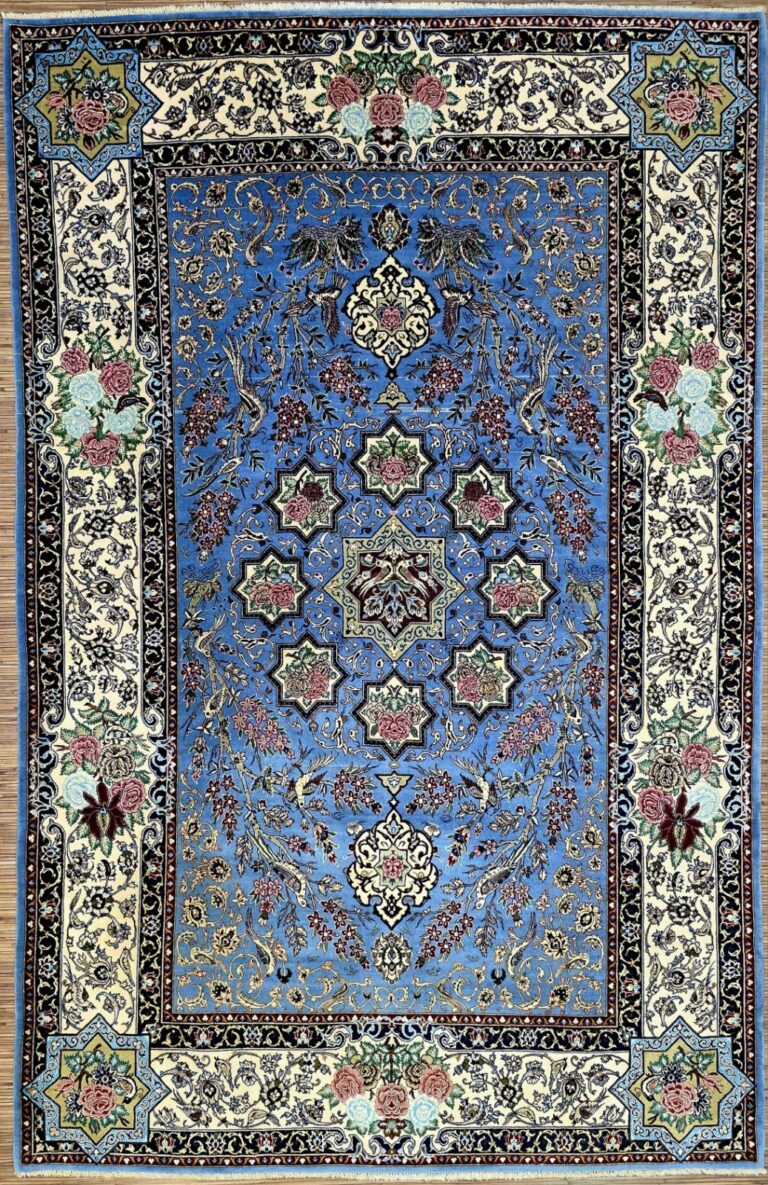
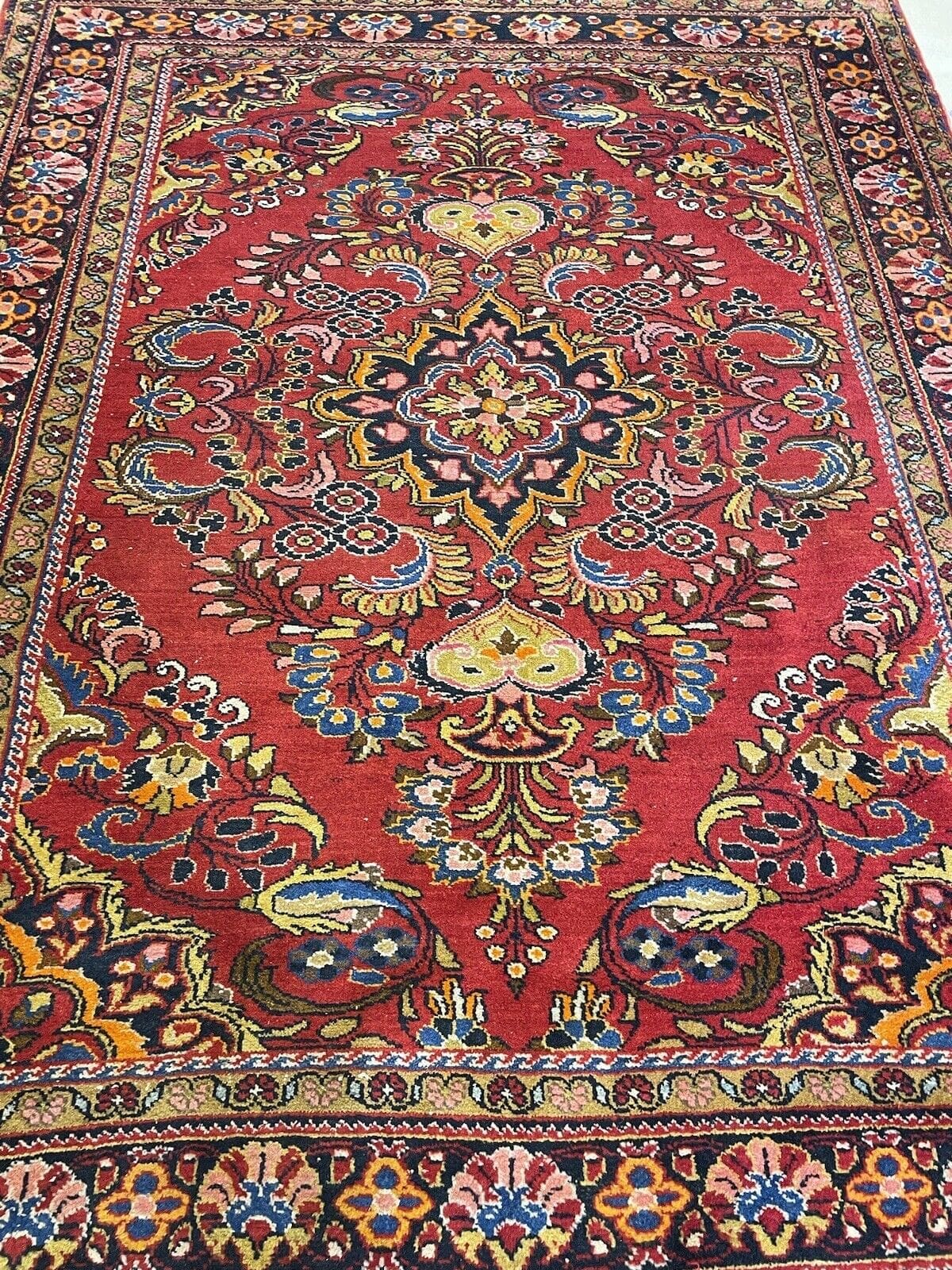
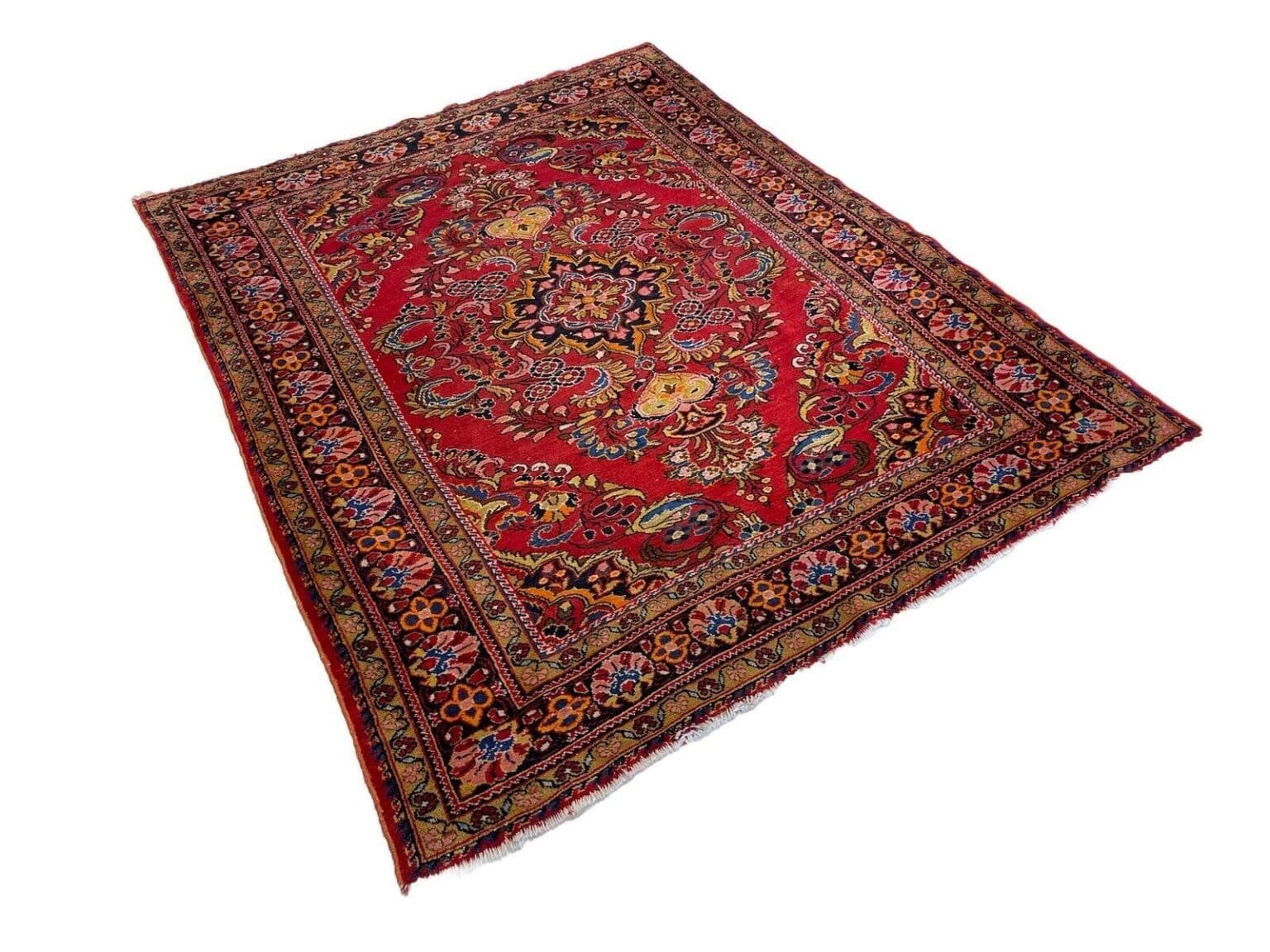
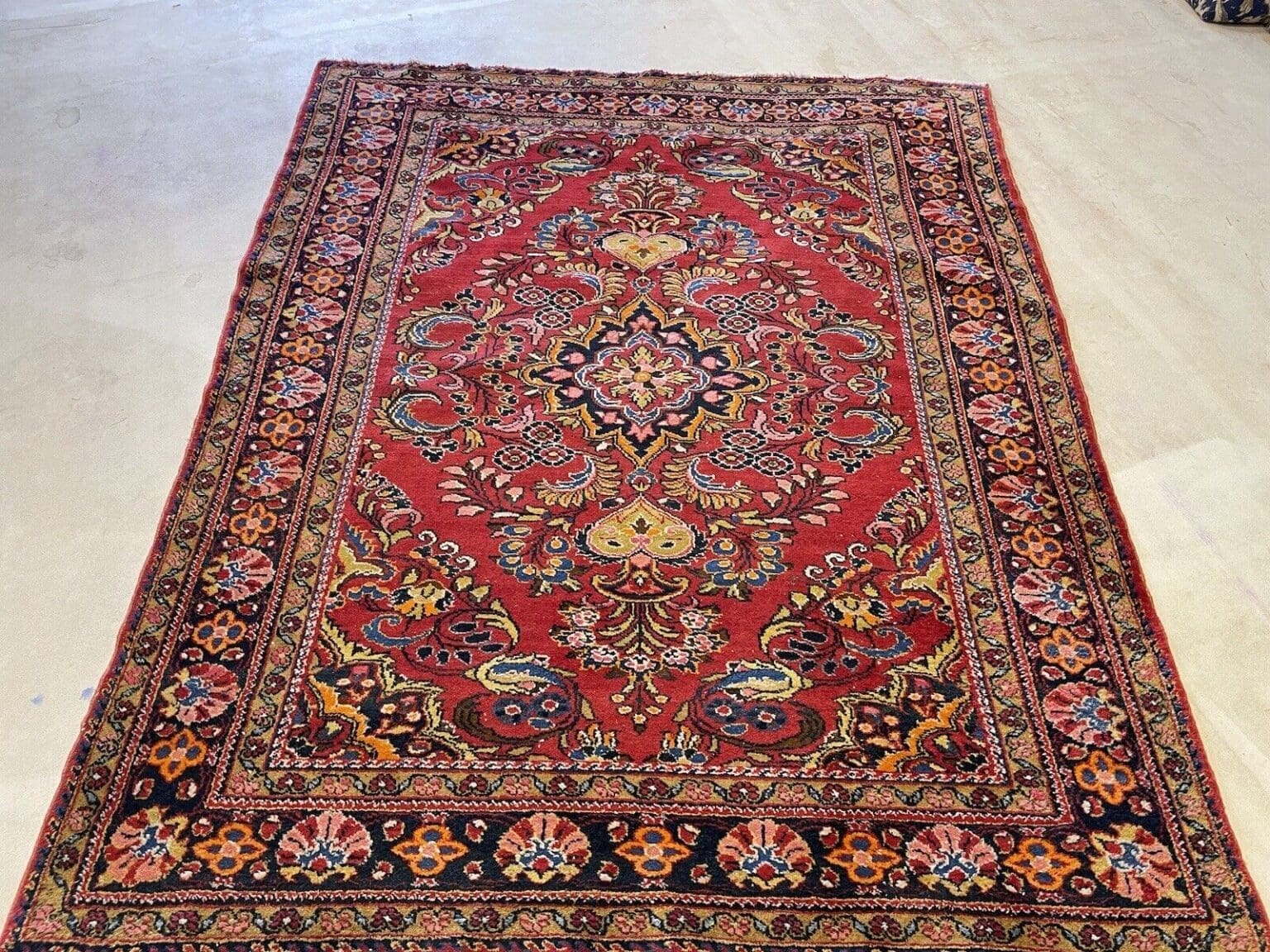
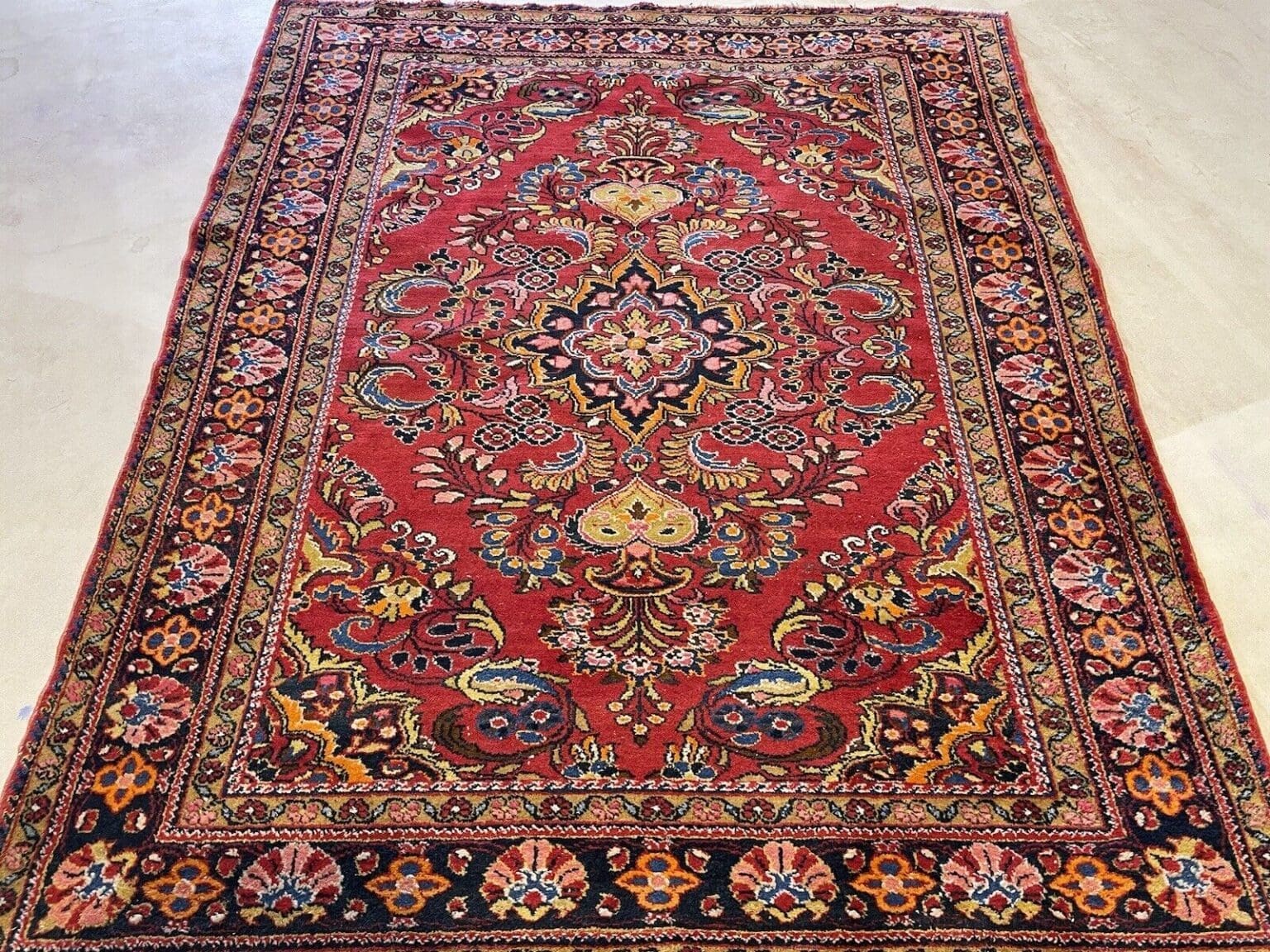
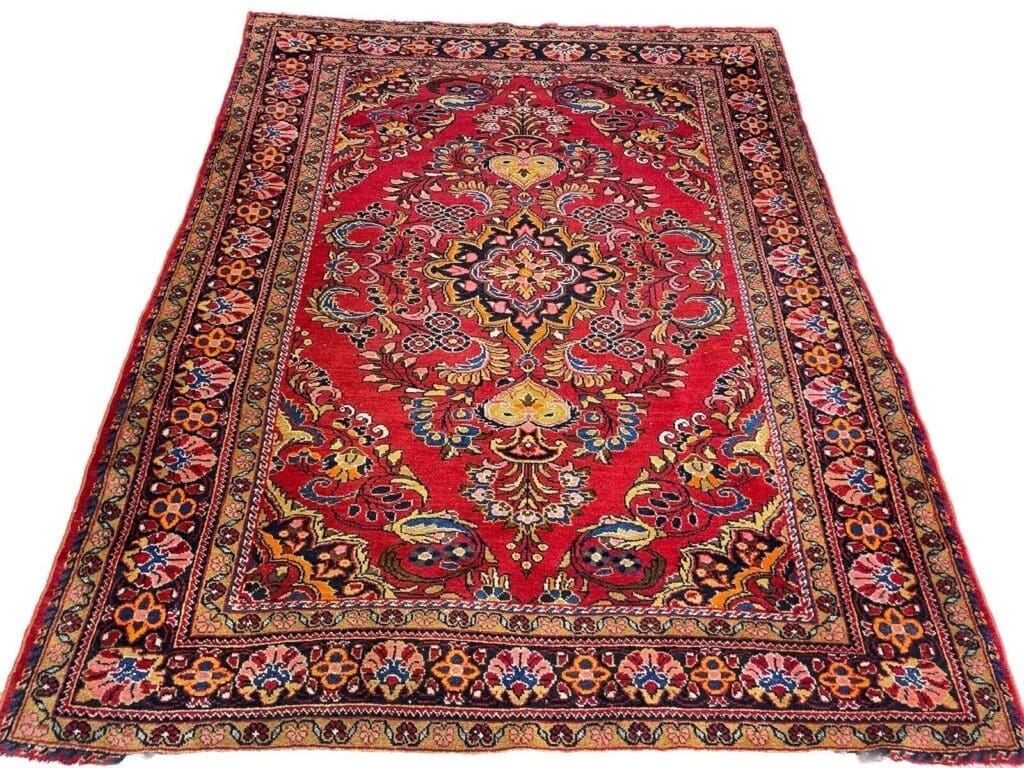
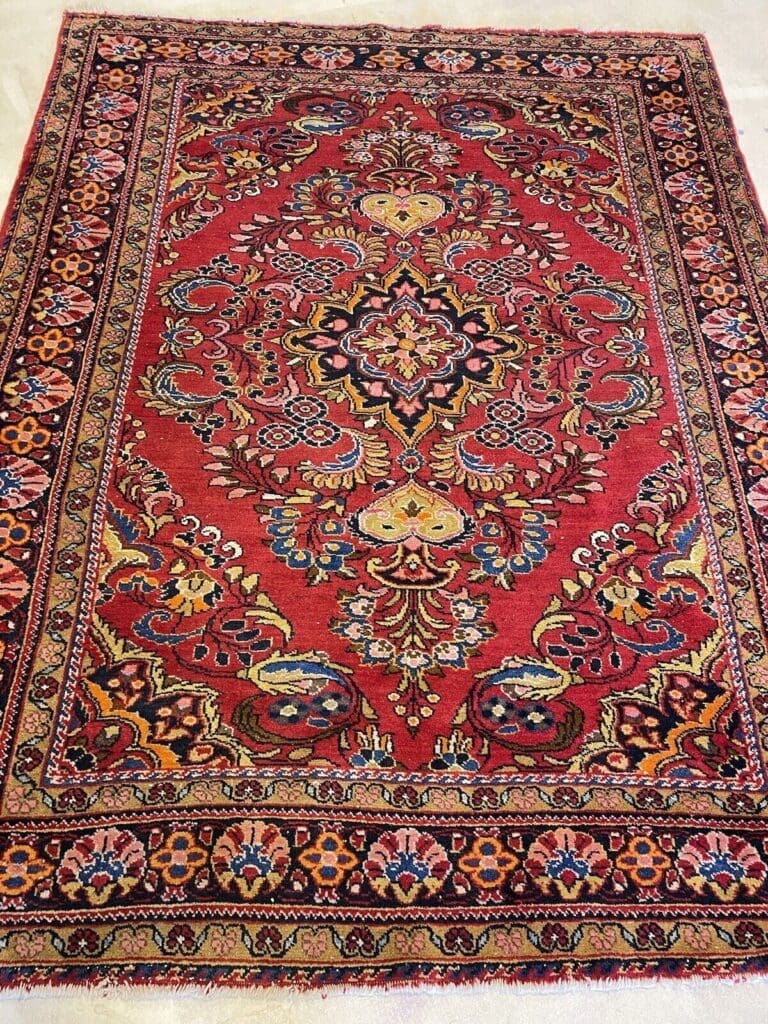
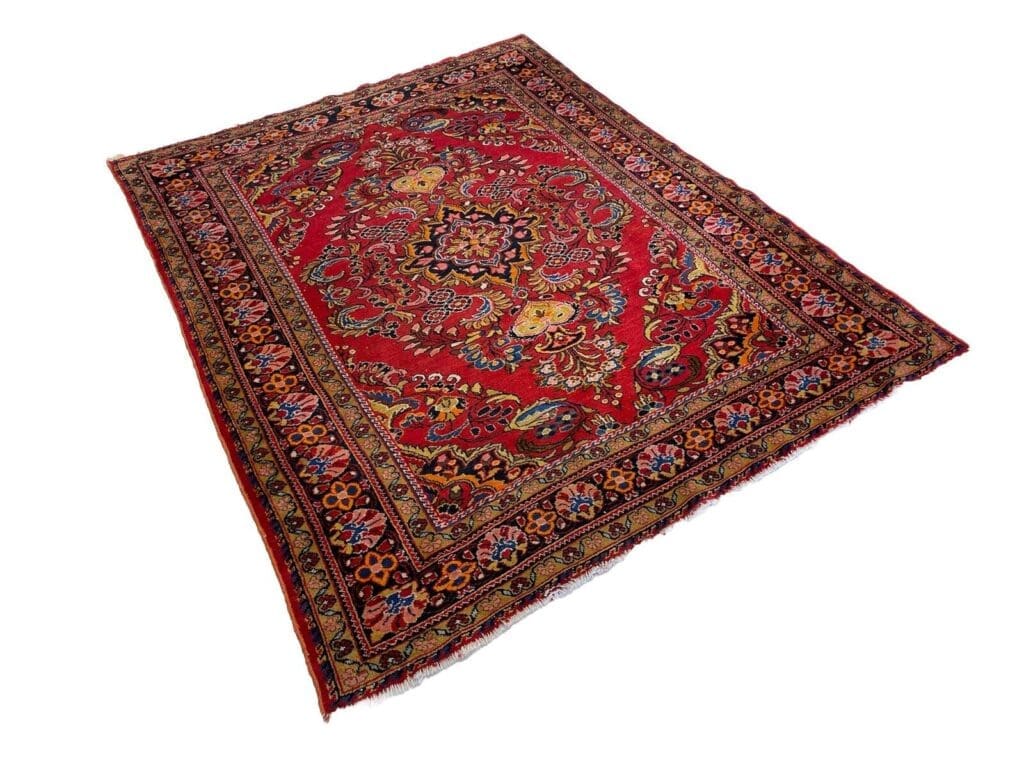
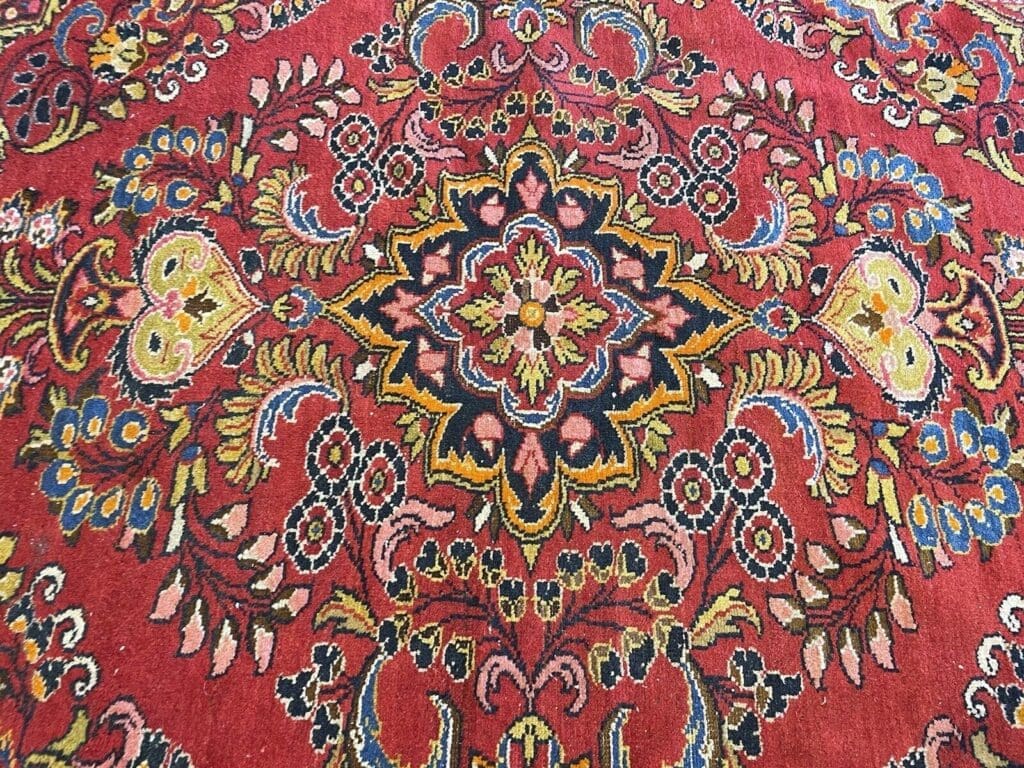
This Lilian Persian rug is hand-knotted and made from 100% wool. Its construction reflects a process in which the pile is formed knot by knot rather than printed or mechanically applied. The workmanship is described as exceptionally fine and as having a high knot density. This combination places the rug within the established tradition of Persian hand craftsmanship, where the structure of the textile and the visible design are created together.
Wool has long been used in rug making because it can be spun, dyed and formed into a resilient pile. Its natural character gives a wool rug a pleasant handle while providing a surface suited to regular use. The pile of this particular rug is wool and has a height of 5 mm. The product description also identifies the rug as robust, so its natural material and solid construction are both part of its stated character.
Hand knotting requires the weaver to maintain the structure of the foundation while placing the coloured yarns in the sequence needed for the design. A floral composition demands careful control of outlines, petals, leaves and connecting areas. The fine workmanship named for this rug therefore concerns more than its surface appearance: it also describes the precision involved in building the pile and coordinating the pattern. The rug is classified as antique and belongs to the early twentieth century.
Origin and Tradition
The rug originates in Iran and is therefore a Persian rug. Iranian rug making is rooted in a tradition that extends back over many centuries. In this tradition, rugs serve as practical textiles while also carrying regional approaches to colour, drawing and construction. Skills such as preparing the foundation, handling wool, creating dyes, tying knots and finishing the woven structure have been passed through generations.
Lilian is the regional name given for this rug. Lilian is known for fine, detailed rugs. The region’s weaving tradition brings inherited design principles together with the particular skills of its makers. Producing a hand-knotted rug involves a sequence of connected tasks, from preparing the base and selecting the yarn to building the pile and completing the drawing. The consistency of these tasks determines how clearly the final pattern can be read.
Iranian rugs are often associated with individual towns and weaving regions, each of which has developed recognizable practices. Isfahan, Tabriz and Shiraz are among the well-known centres of Persian rug production. Those names describe broader traditions and are not alternative origins for this rug. The stated regional designation is Lilian, while Iran is the country of origin.
Transmission of practical knowledge is central to Persian rug making. A weaver must understand knot structure, foundation tension, colour relationships and the placement of motifs. Fine knotting adds further demands because small variations can affect the clarity of a floral outline or the balance of a field. In this way, the rug’s visual order is inseparable from the manual process that produced it.
As an antique rug from the early twentieth century, this piece is placed within a historical period of Persian weaving. That period is an age classification, not merely a reference to a decorative look. The rug is also described as used, which forms part of its product profile. Its Iranian origin, Lilian designation, antique classification and hand-knotted construction together identify the type of object offered here without adding any unrecorded provenance.
Design and Pattern
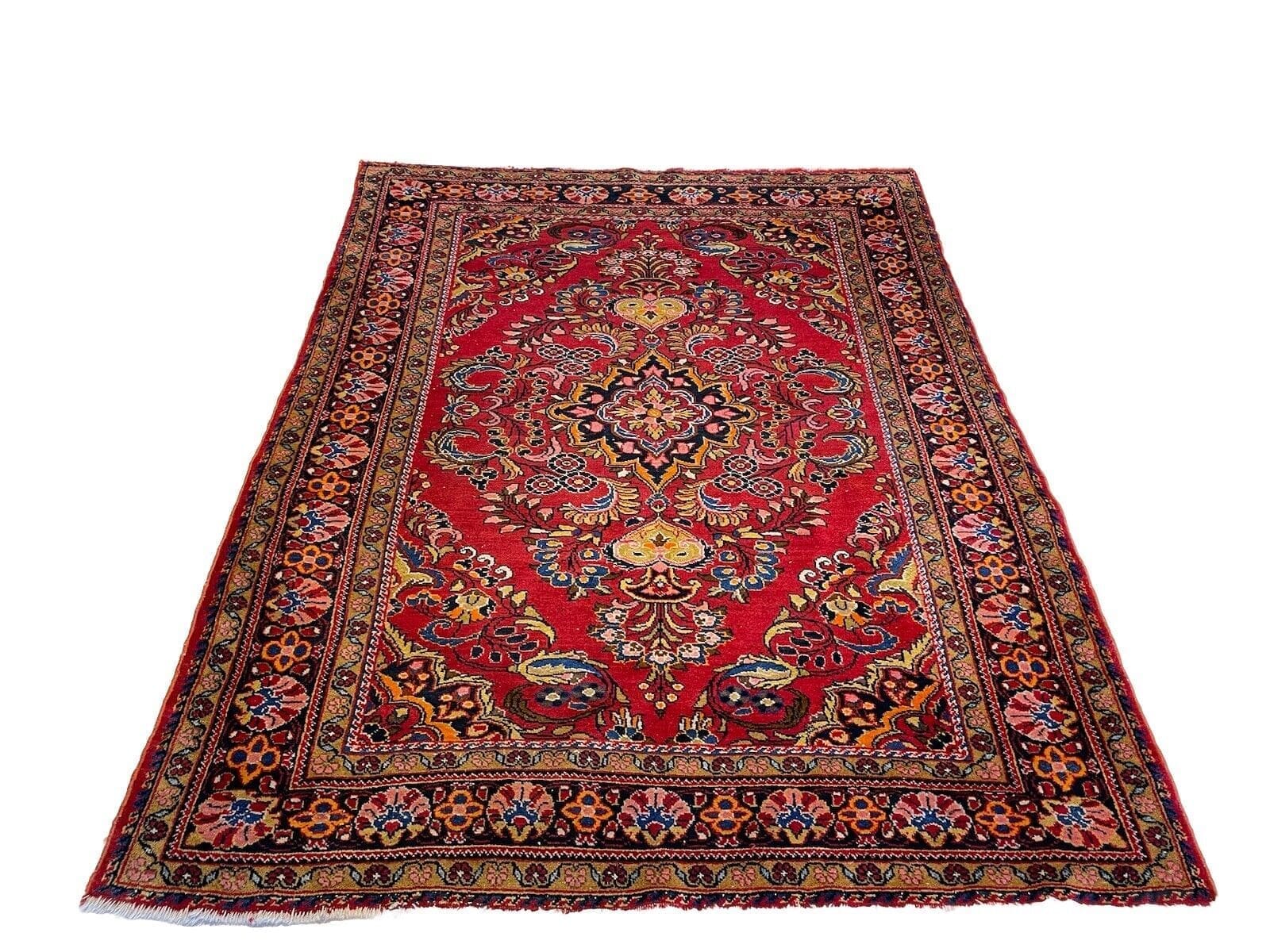
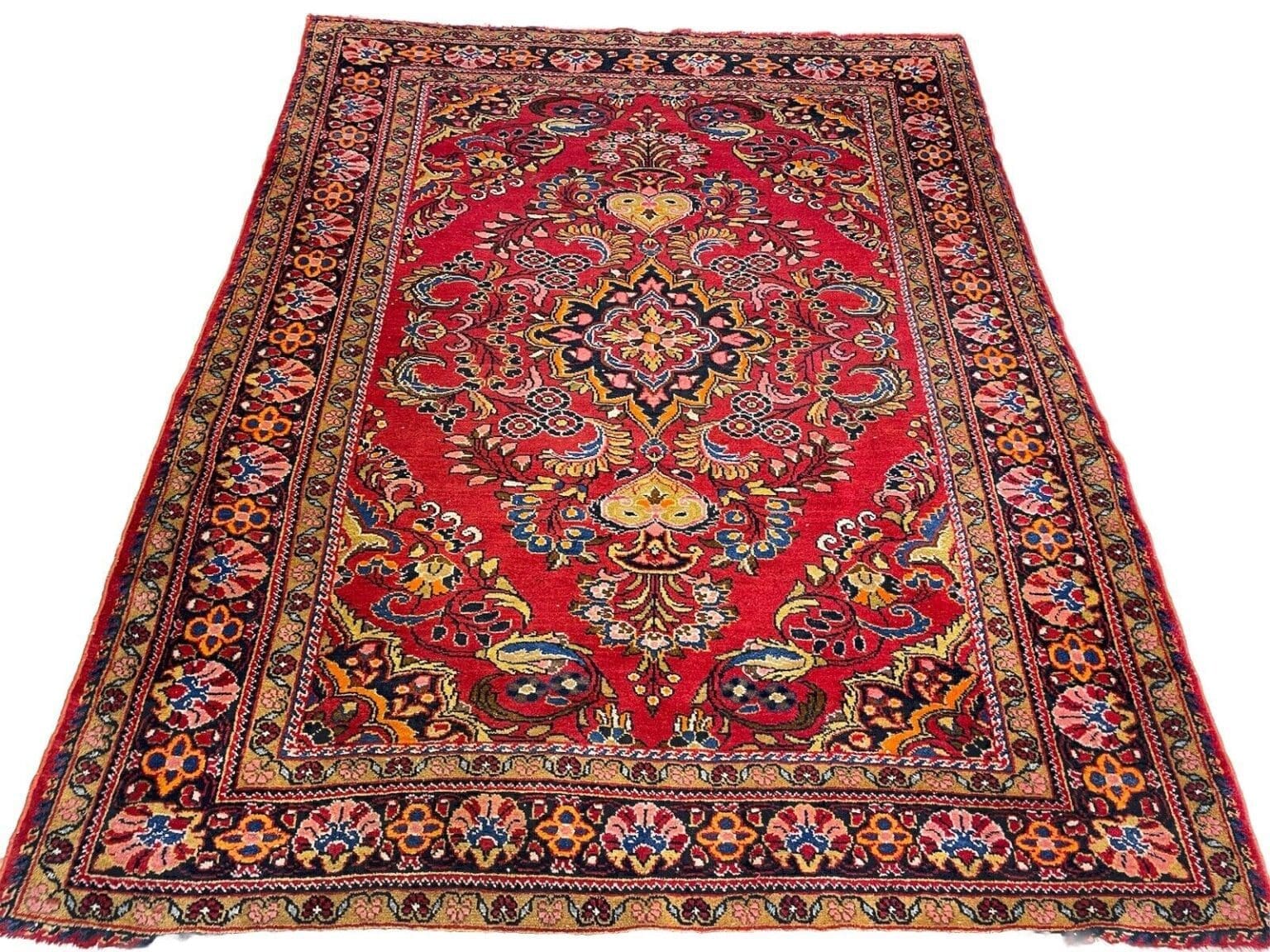
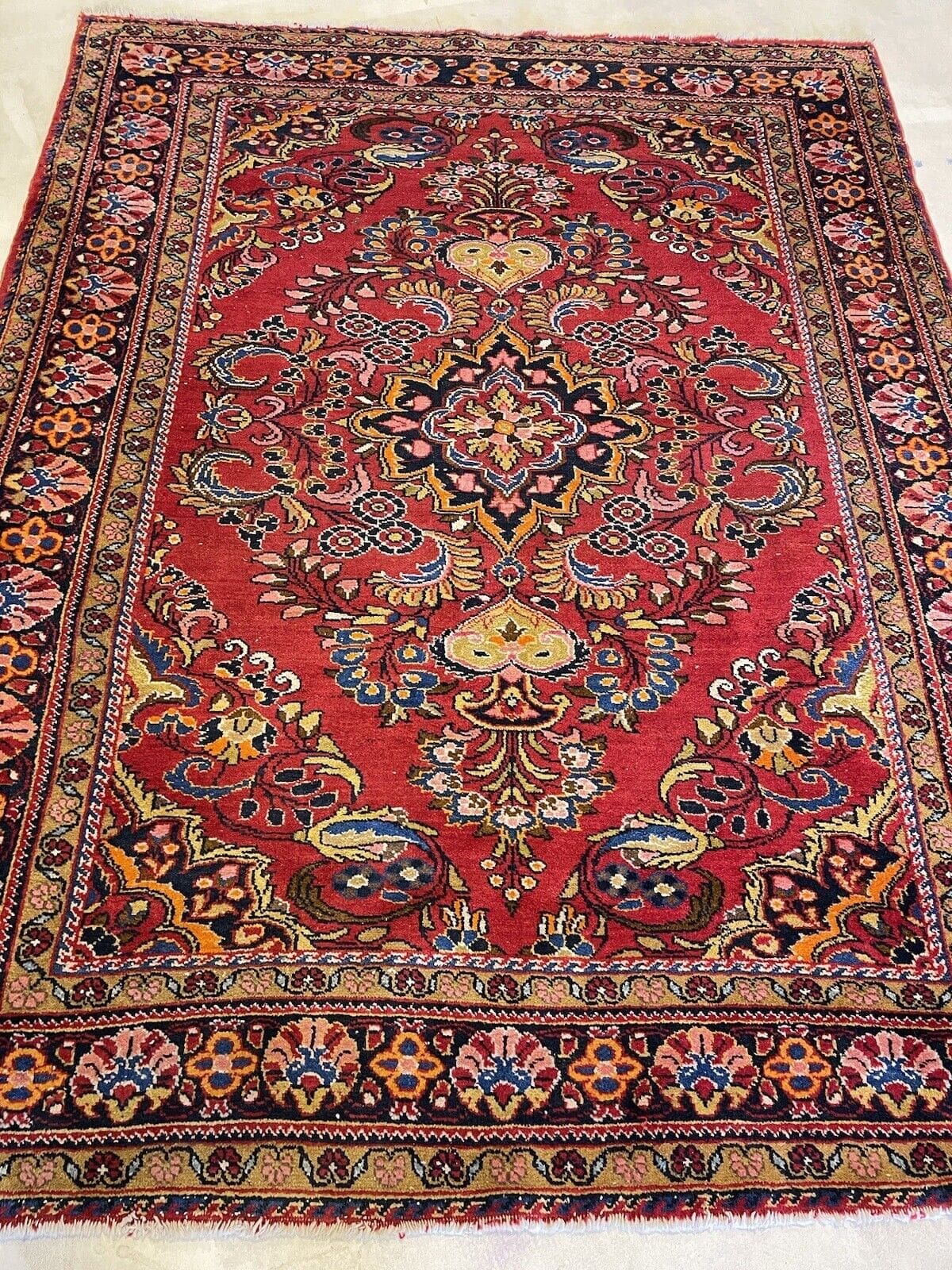
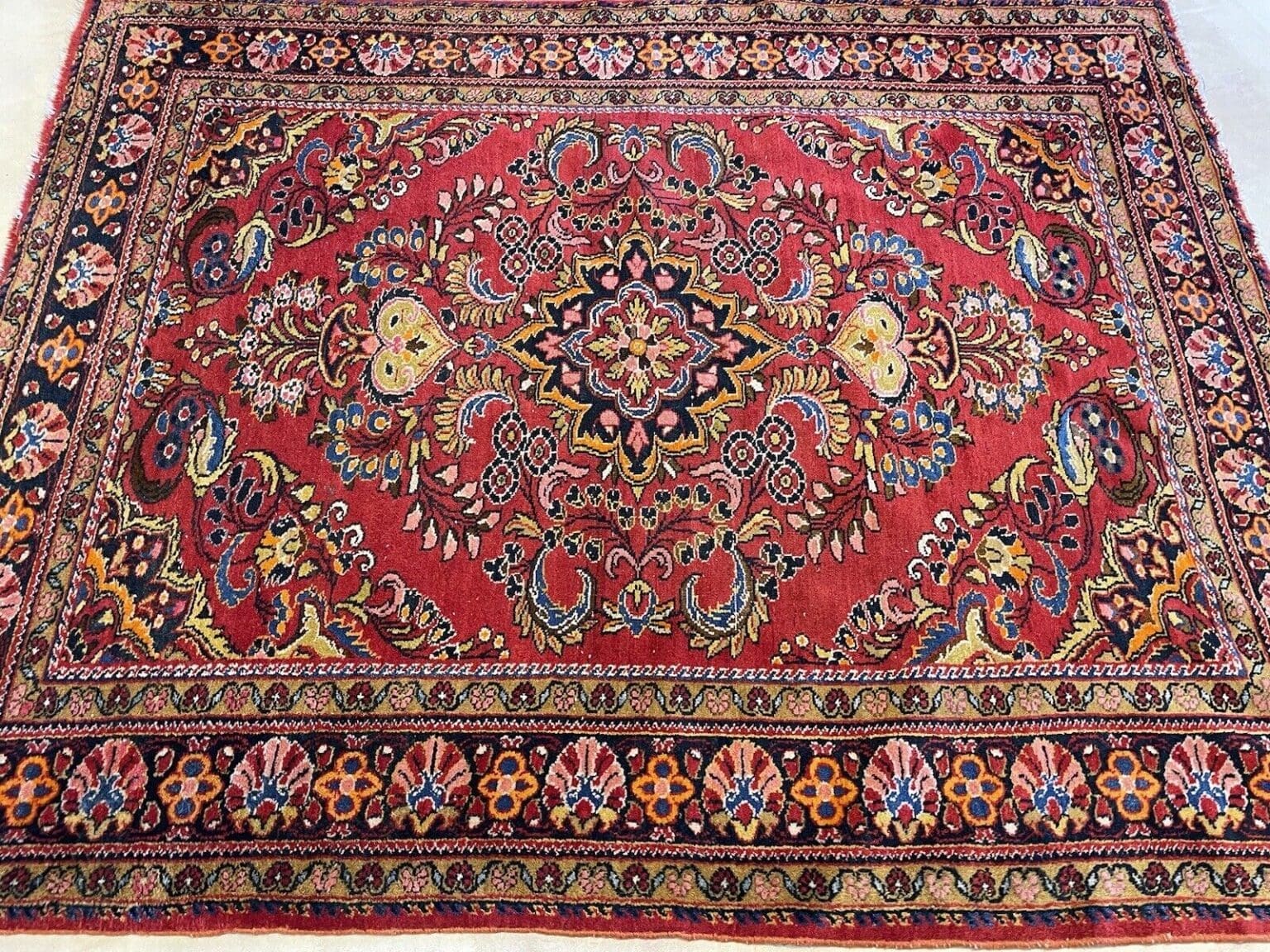
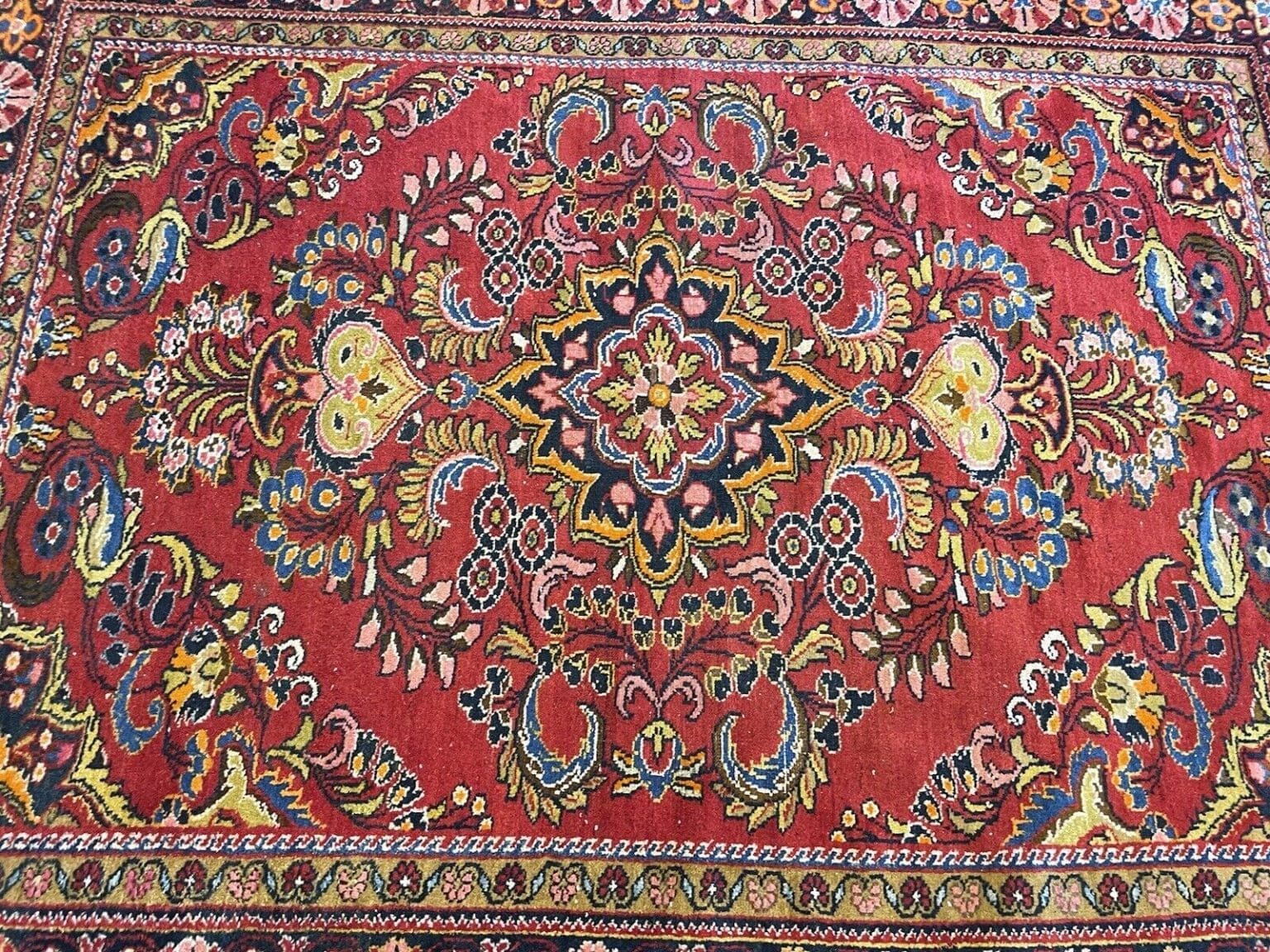
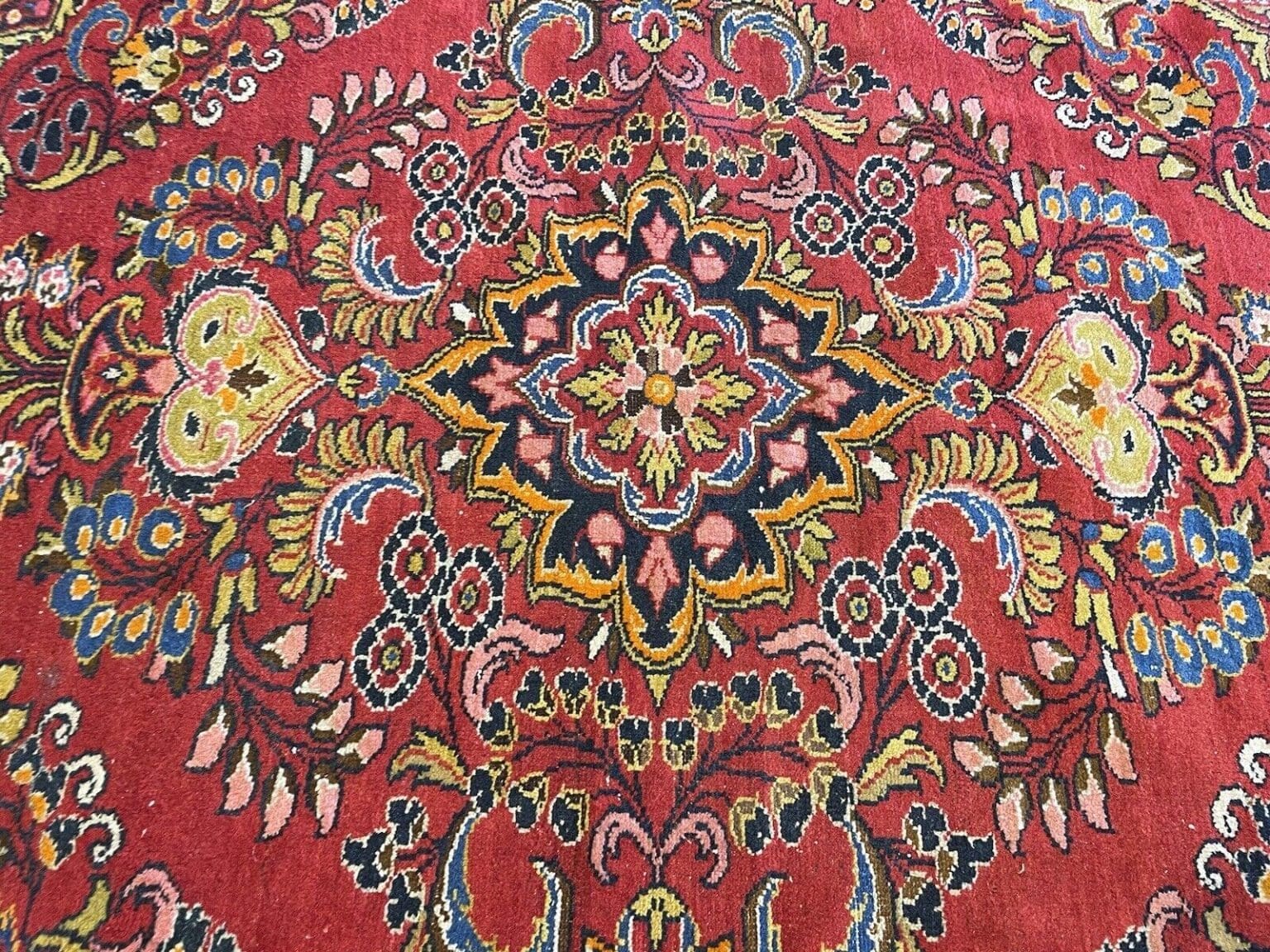
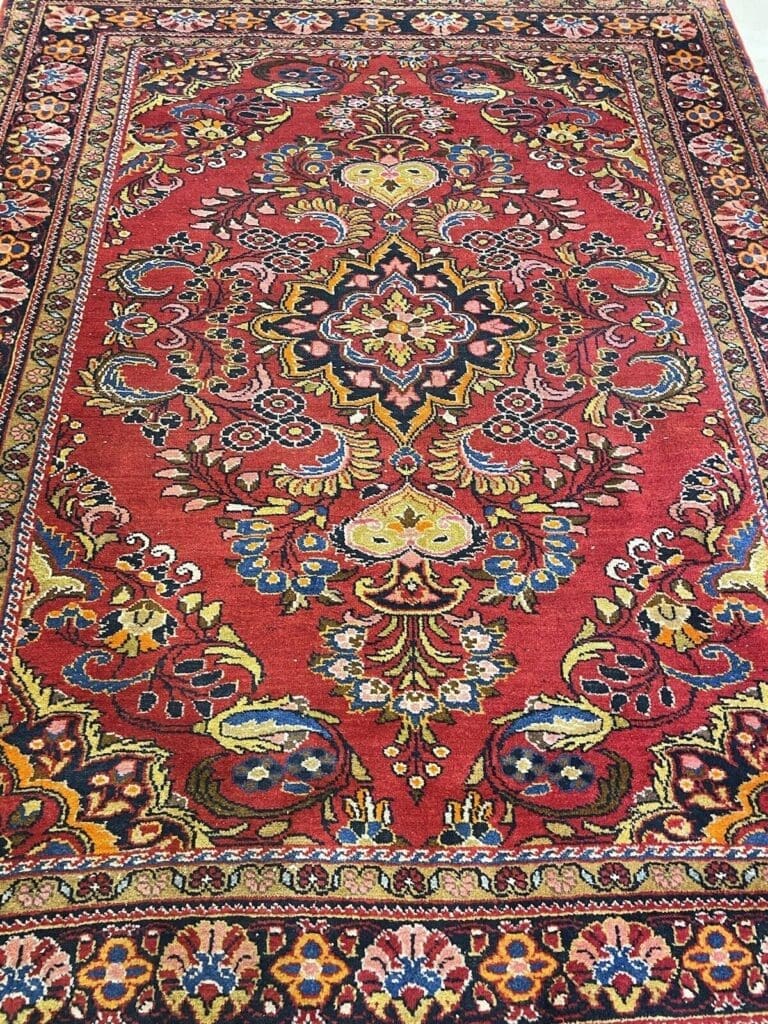
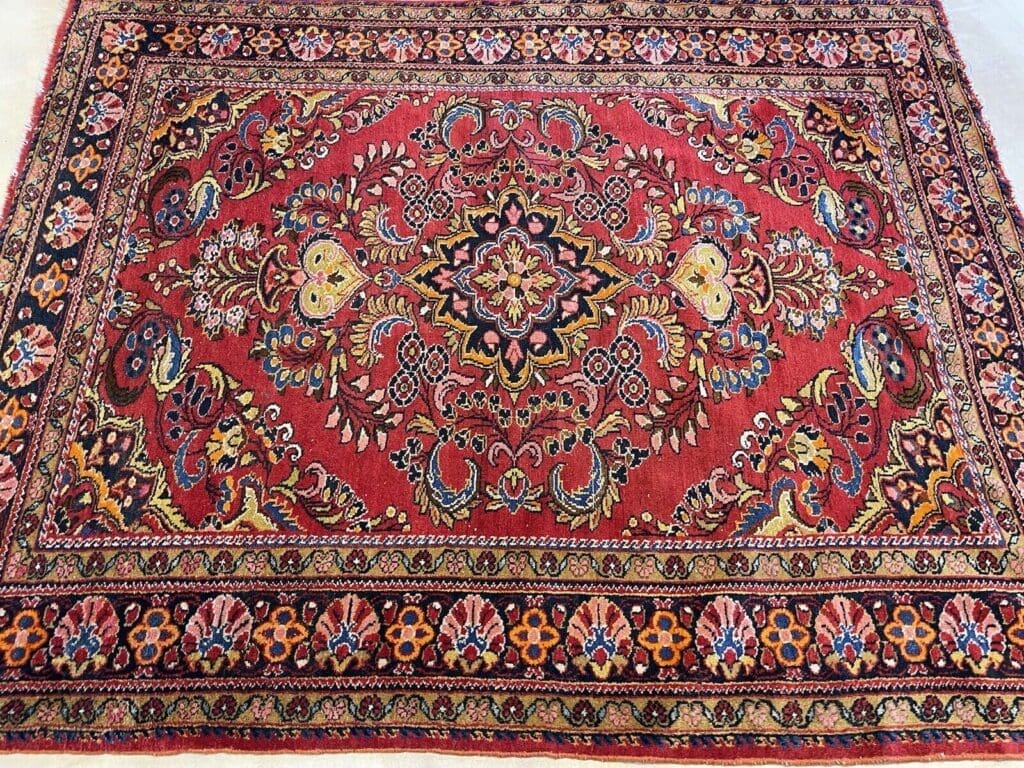
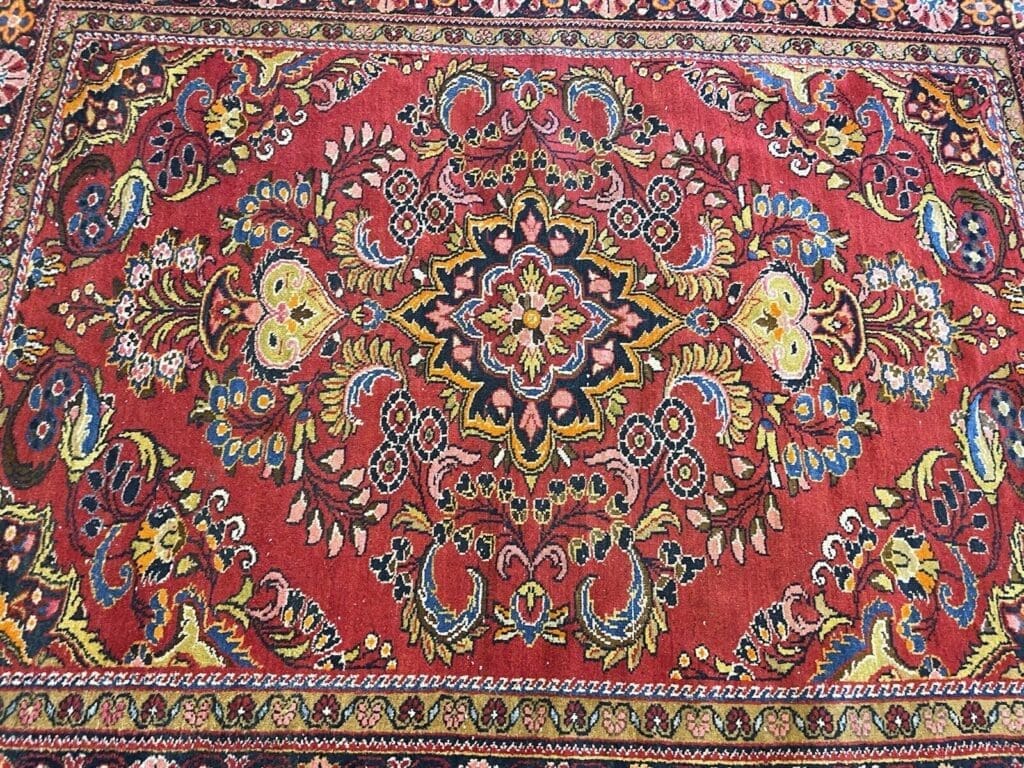
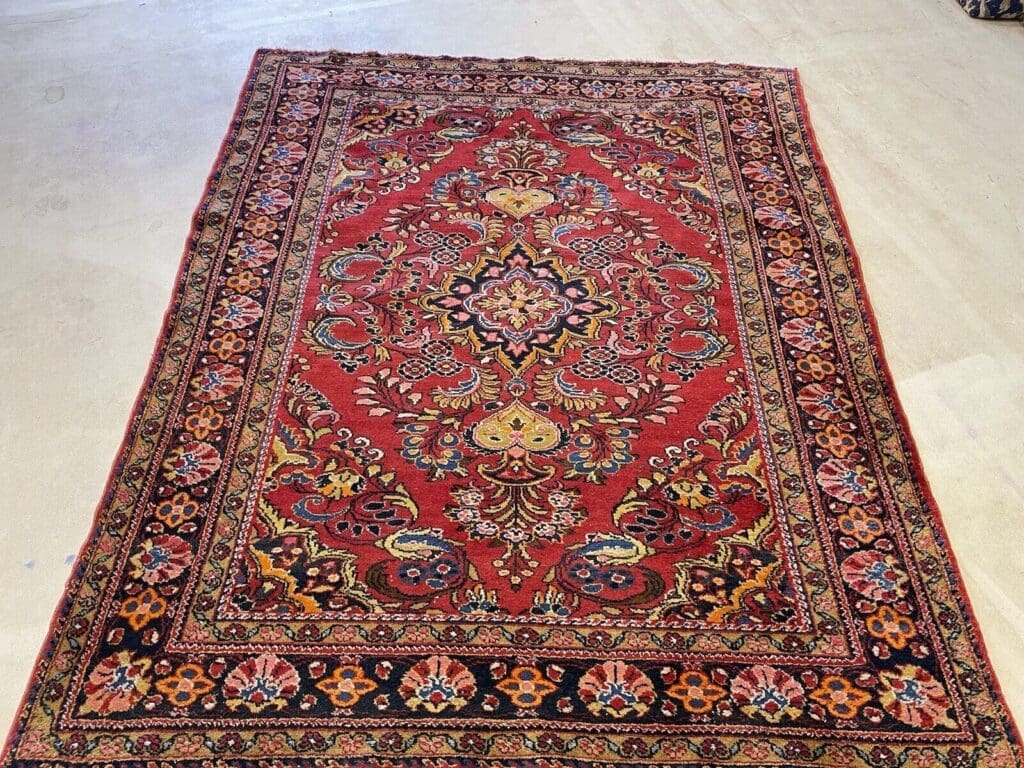
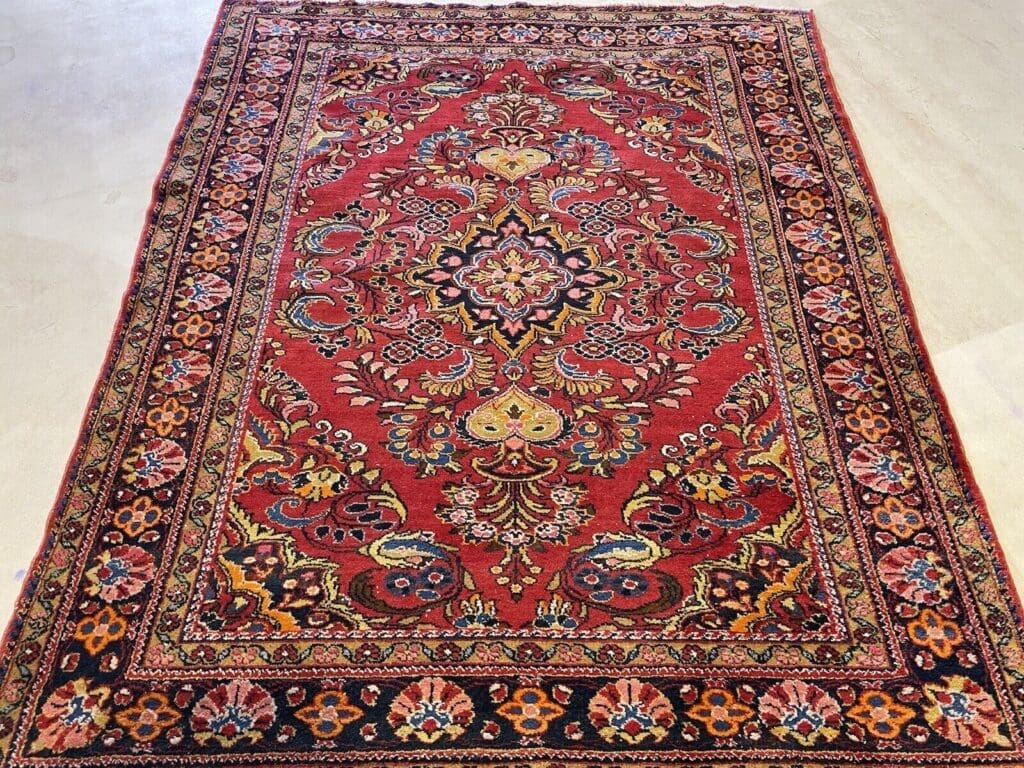
The pattern is floral. Flowers, leaves and scrolling botanical forms have a long-established role in Persian rug design. They can organise a field, guide the eye across the composition and create a rhythm between filled and open areas. A floral pattern is therefore more than a collection of isolated blossoms: it is a method of arranging the surface through repeated natural forms and carefully related contours.
The dominant colour is described as deep wine red. This rich tone gives the design a warm and substantial ground. Against it, the floral elements and their outlines can be read as parts of a coordinated composition. Colour is an important design element in Persian rugs because it influences the relationship between the field, the motifs and the overall visual balance. Here, the wine-red colouring is specifically part of the rug’s description.
Floral motifs in Persian culture are often connected with life, nature and harmony. They may express an idea of continuity between the human environment and the natural world while also supporting a balanced arrangement of forms. These are general meanings associated with floral Persian designs. For this Lilian rug, the specific stated features are its floral pattern and its deep wine-red colouring.
A successful floral composition depends on the relation between its small components. Petals need clear outlines, leaves must sit naturally within the surrounding drawing, and stems or scrolling elements have to connect the separate forms. In a hand-knotted rug, this visual order is built through the placement of individual knots. The result is a design whose character comes from both its image and its textile construction.
The design is described as timeless and suitable as a decorative element in different rooms. This does not assign the rug to a particular modern furnishing style. It indicates that the floral drawing and warm wine-red palette can work alongside varied interiors. The rug may be used in a living room, dining room or entrance area while retaining the visual language of Iranian hand-knotted rug making.
Special Features
The stated special features are its hand-knotted construction, 100% wool, fine workmanship and robust character. This rug is a one-off piece. Its floral drawing and deep wine-red colour give it an individual decorative presence, while its classification as an antique, used rug from the early twentieth century places it within a clearly described historical context.
Regular vacuuming is recommended to remove dust and loose dirt from the pile. Direct sunlight should be avoided to help prevent the colours from fading. If more extensive care is needed, professional cleaning can be arranged. These recommendations are intended to support the preservation of the surface and colour appearance of a hand-knotted wool rug.
The combination of natural wool, robust construction and manual workmanship connects practical use with Persian textile tradition. The rug is therefore a floor covering as well as a piece of Iranian craft with a floral design. No additional provenance or condition detail is assigned beyond its stated used condition.
FAQ
How should I care for my Persian rug?
Vacuum the rug regularly to remove dust and dirt particles from the pile. Avoid direct sunlight, since prolonged exposure can cause the colours to fade. When deeper cleaning is necessary, professional cleaning is recommended. A hand-knotted wool rug benefits from careful treatment so that its pile, floral pattern and wine-red colour remain well preserved.
Where do Persian rugs come from?
Persian rugs come from Iran and are part of a rug-making tradition that has developed over many centuries. Isfahan, Tabriz and Shiraz are well-known regions of Persian rug production. This particular rug is identified as a Lilian Persian rug and originates in Iran. Lilian names the stated regional rug tradition; Iran is the stated country of origin.
How can I recognise the quality of a Persian rug?
Relevant criteria include knot density, yarn thickness, the materials used and the execution of the pattern. Hand knotting and a high knot density are generally associated with carefully made Persian rugs. The evenness of the drawing, the quality of the wool and the strength of the construction also matter. For this rug, the described fine workmanship, high knot density, wool pile and floral design are its named quality-related characteristics.
To provide the best experiences, we use technologies like cookies to store and/or access device information. Consenting to these technologies will allow us to process data such as browsing behavior or unique IDs on this site. Not consenting or withdrawing consent, may adversely affect certain features and functions.
Functional Always active
The technical storage or access is strictly necessary for the legitimate purpose of enabling the use of a specific service explicitly requested by the subscriber or user, or for the sole purpose of carrying out the transmission of a communication over an electronic communications network.
Preferences
The technical storage or access is necessary for the legitimate purpose of storing preferences that are not requested by the subscriber or user.
Statistics
The technical storage or access that is used exclusively for statistical purposes.The technical storage or access that is used exclusively for anonymous statistical purposes. Without a subpoena, voluntary compliance on the part of your Internet Service Provider, or additional records from a third party, information stored or retrieved for this purpose alone cannot usually be used to identify you.
Marketing
The technical storage or access is required to create user profiles to send advertising, or to track the user on a website or across several websites for similar marketing purposes.
 SECURE PAYMENT
 SHIPPING PARTNERS