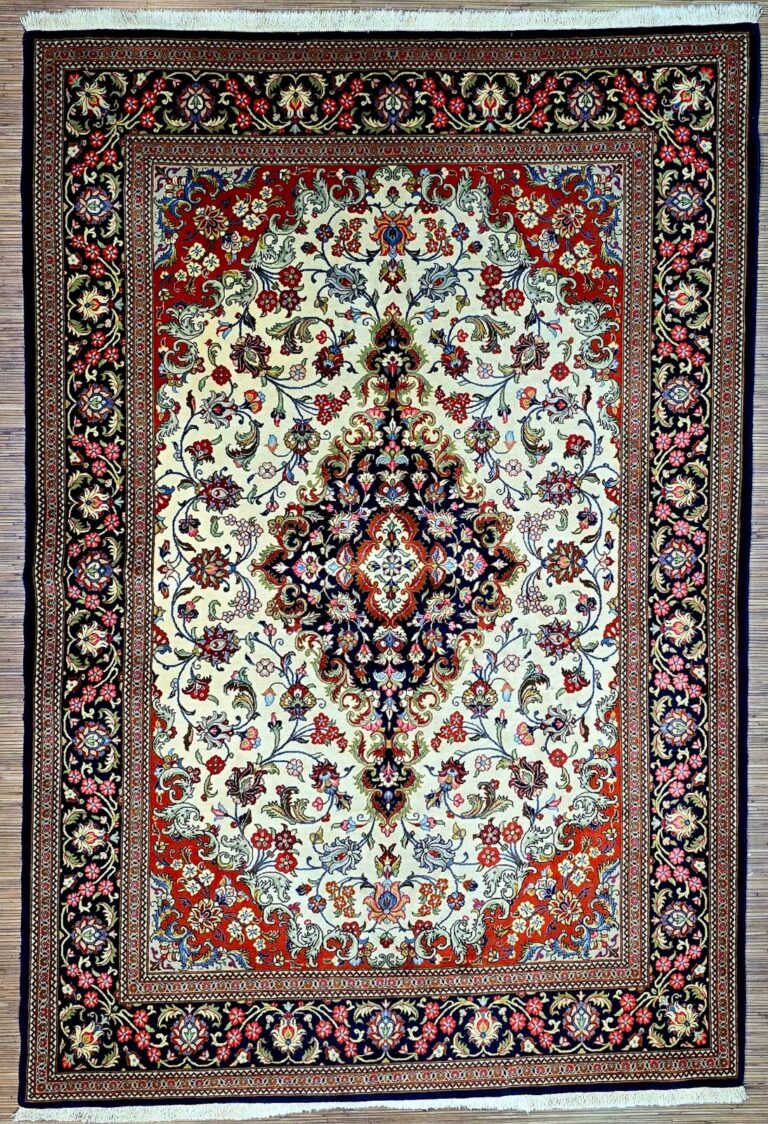
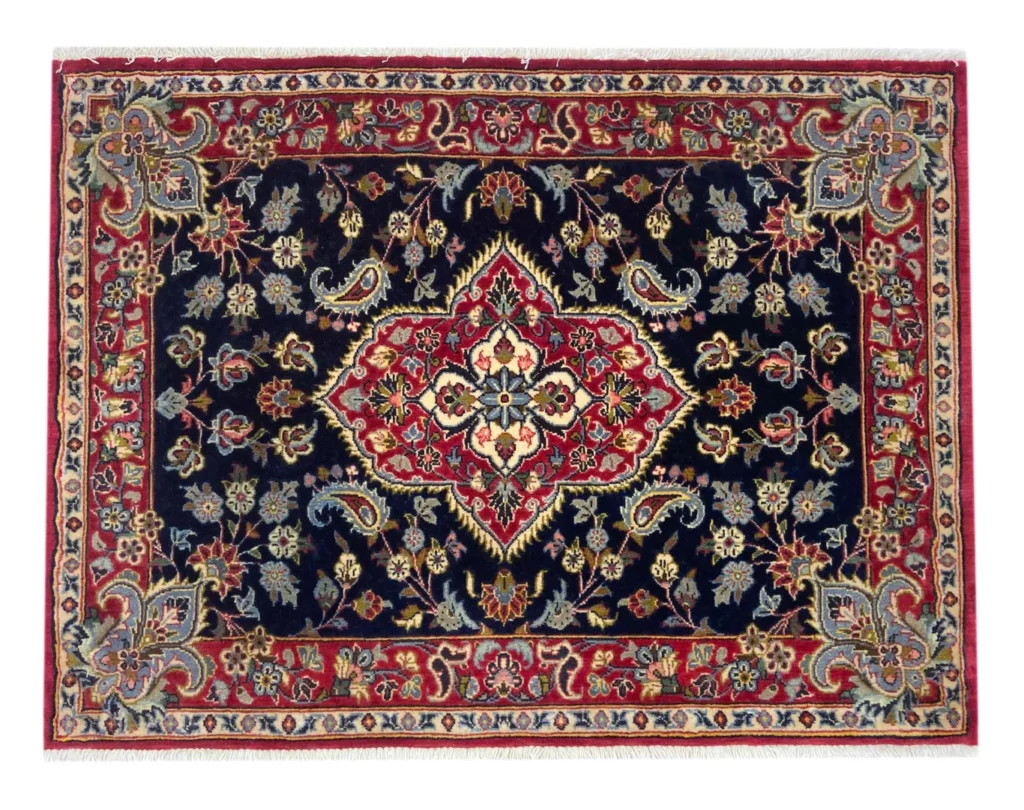
Hand-knotted Keshan Persian rug | Knot density: 150.000 – 300.000 knots/m² | Material: Pile sheep wool, warp cotton | Size: 75 x 100 cm | Pattern: Floral and geometric designs | Condition: High quality, durable and sought after by collectors
This Keshan Persian rug is hand-knotted, with a pile made from high-quality sheep wool and a sturdy cotton foundation. The cotton is used for the warp and weft, providing the textile structure into which the wool knots are worked. The pile is described as short and hard-wearing. Regional sheep wool gives the surface a pleasant handle while also supporting the durable character stated for this rug.
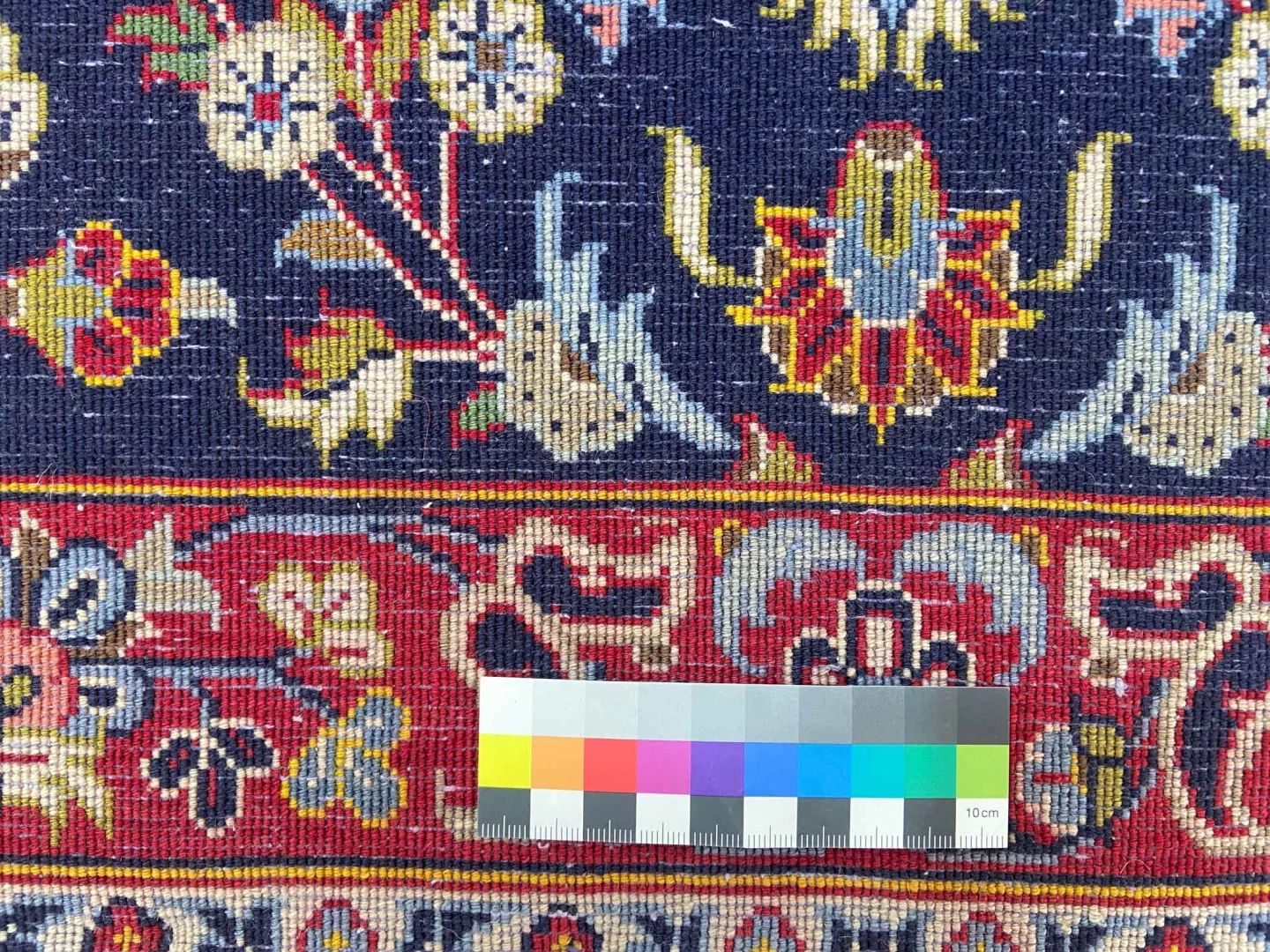
The knot density associated with this rug is between 150.000 and 300.000 knots per square metre. A dense construction allows intricate designs to be rendered with greater definition and contributes to a resilient textile surface. In hand-knotting, the pattern is formed knot by knot rather than printed or applied after the rug has been completed. Even tension, practical experience and careful execution are required throughout the process.
Making a Keshan rug calls for extensive skills developed over years. The relevant techniques are passed down through generations and refined by the makers who use them. High-quality sheep wool, cotton and hand-knotting are the material and production features given for this piece. Together they explain the combination of a detailed surface, a short pile and the long-lasting use described in the product information.
Origin and Tradition
Keshan Persian rugs belong to the tradition of classical hand-knotted rugs from Persia. Their origin is described as the city of the same name in Kerman province, Iran. The regional tradition forms part of Persian textile history, where weaving and knotting preserved established approaches to colour, ornament and construction while also serving practical purposes in the home.
The name Keshan identifies a regionally defined rug tradition. Its character comes from the interaction of materials, technique and design rather than from a single decorative feature. The craft includes selecting and preparing the wool, arranging the cotton foundation, planning the pattern and placing the knots with consistent care. These stages require knowledge that is acquired gradually and transmitted from one generation to the next.
Persian rugs have long been used in a range of domestic and social settings. They can define a room, provide a durable textile surface and remain in use over extended periods. Keshan rugs are also described as collectors’ pieces with historical value. Some examples from this rug tradition are more than one hundred years old; that general statement does not assign an age to this individual rug.
Isfahan and Tabriz rugs are also knotted in the same broader region. Isfahan rugs are associated with fine, detailed motifs and are sometimes decorated with complex inscriptions. Tabriz rugs are known for a wide range of designs and colours. These names represent different expressions within a Persian tradition rooted deeply in Iranian history and continuing to influence rug production in the modern era.
The importance of inherited knowledge is especially clear in hand-knotting. Each knot is inserted into an existing structure, and the surface develops gradually as the work proceeds. This makes the tradition a combination of manual skill, material understanding and pattern planning. The Keshan name therefore refers not merely to a visual style but also to a method of making rugs whose techniques have been maintained across generations.
Design and Pattern
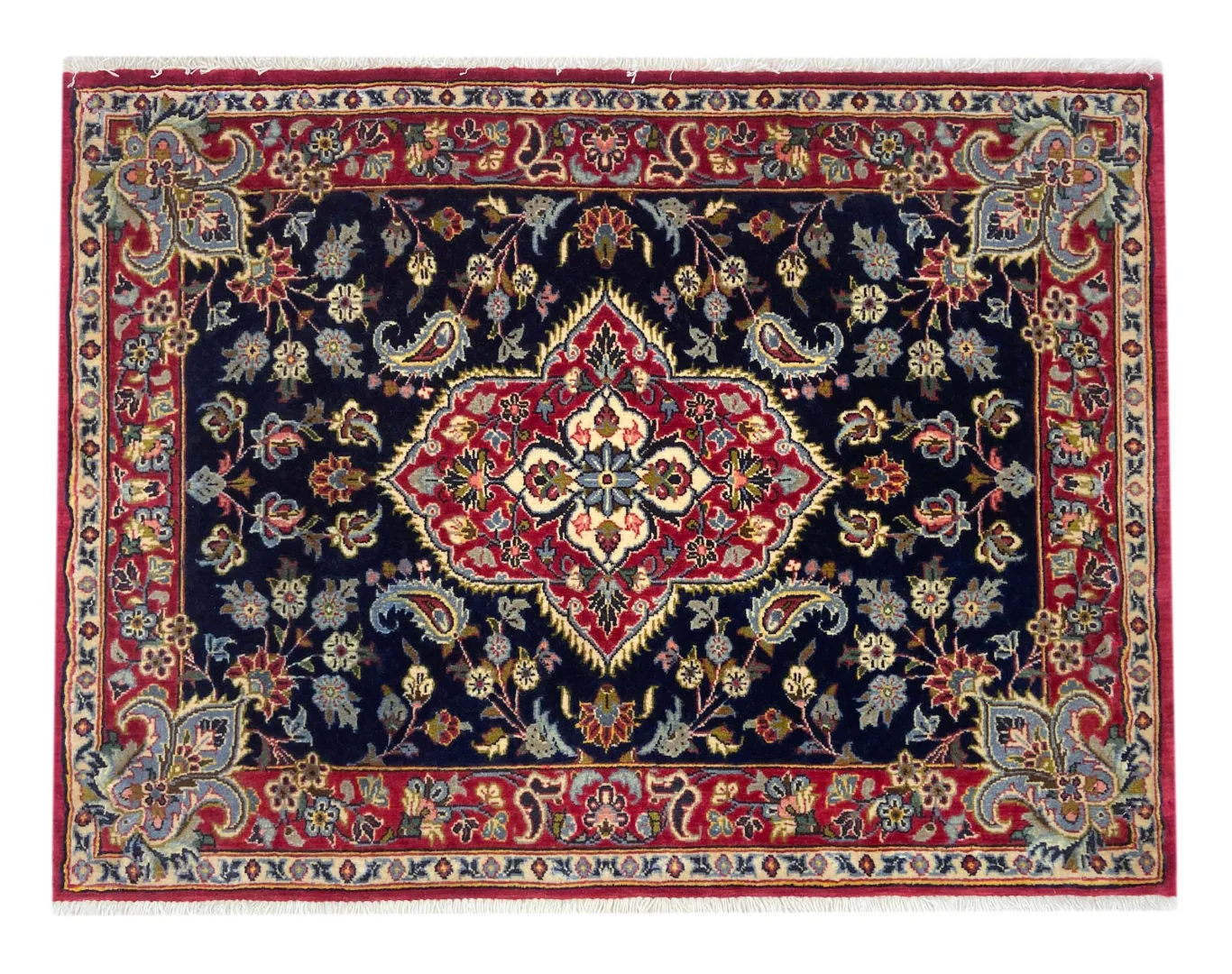
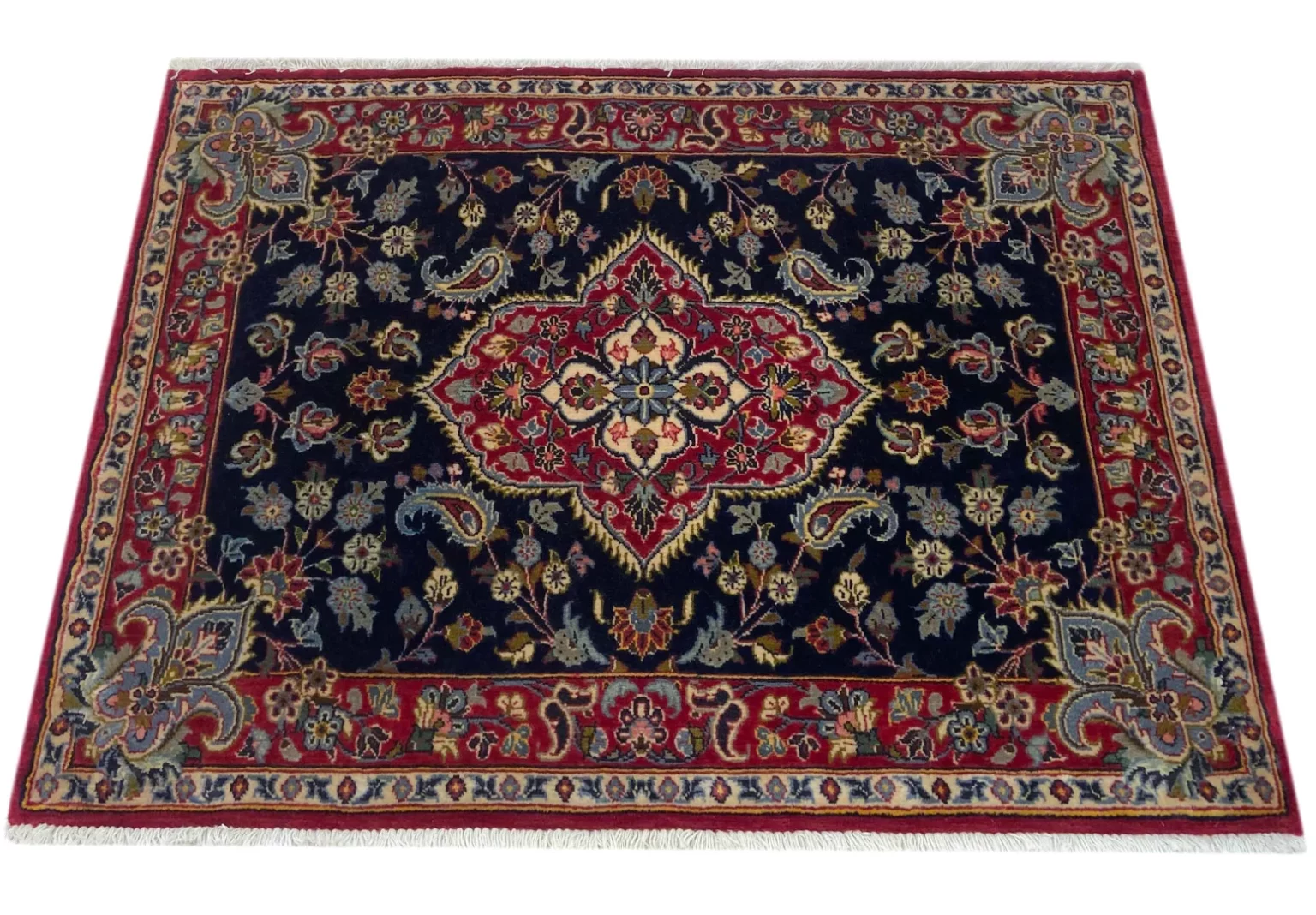
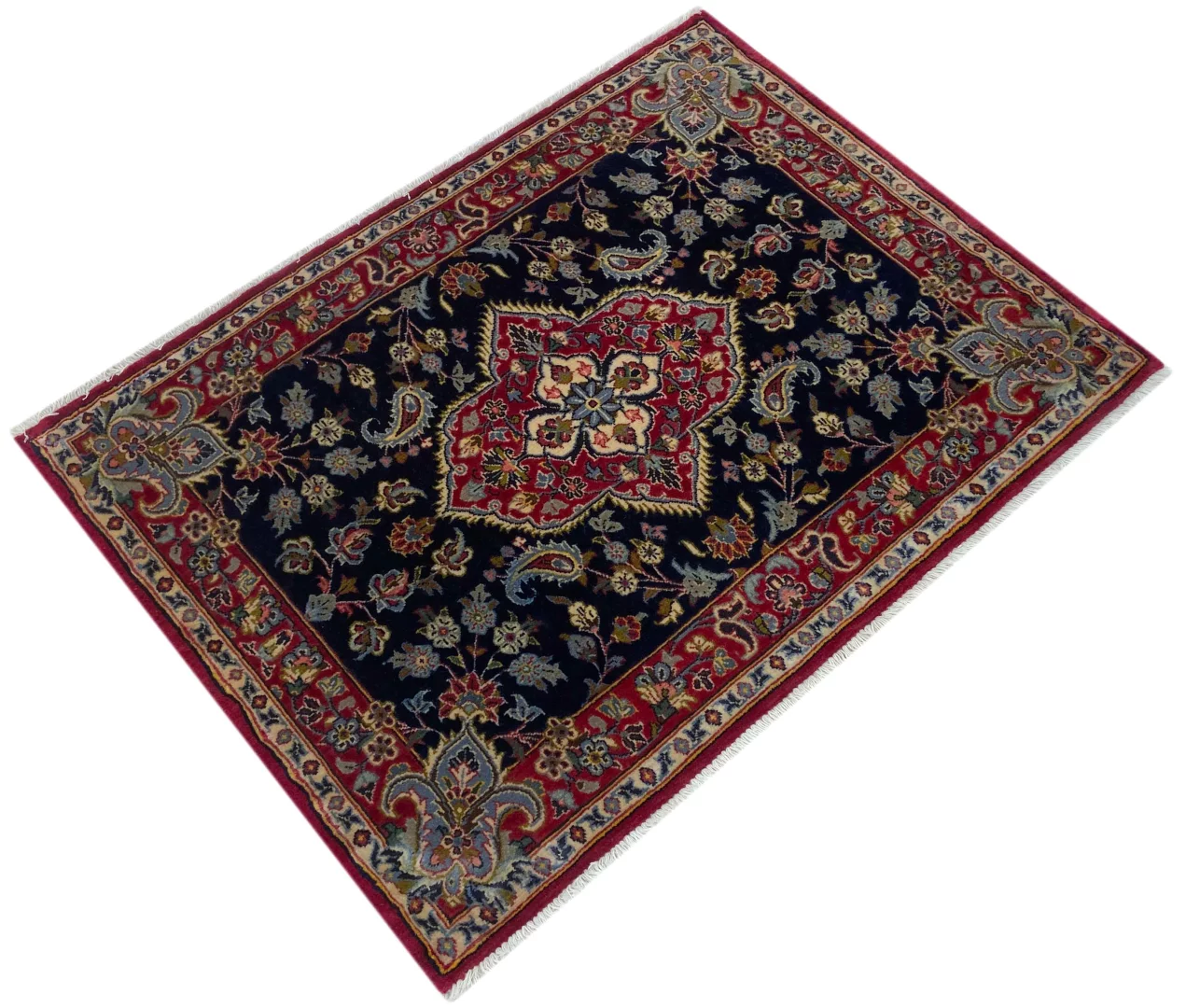
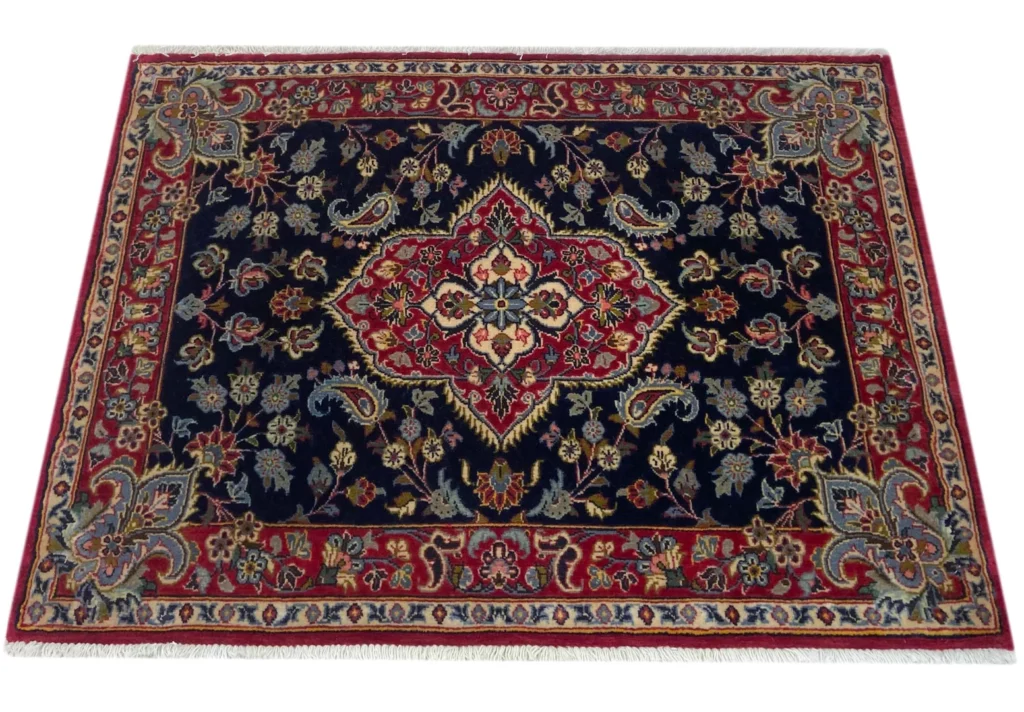
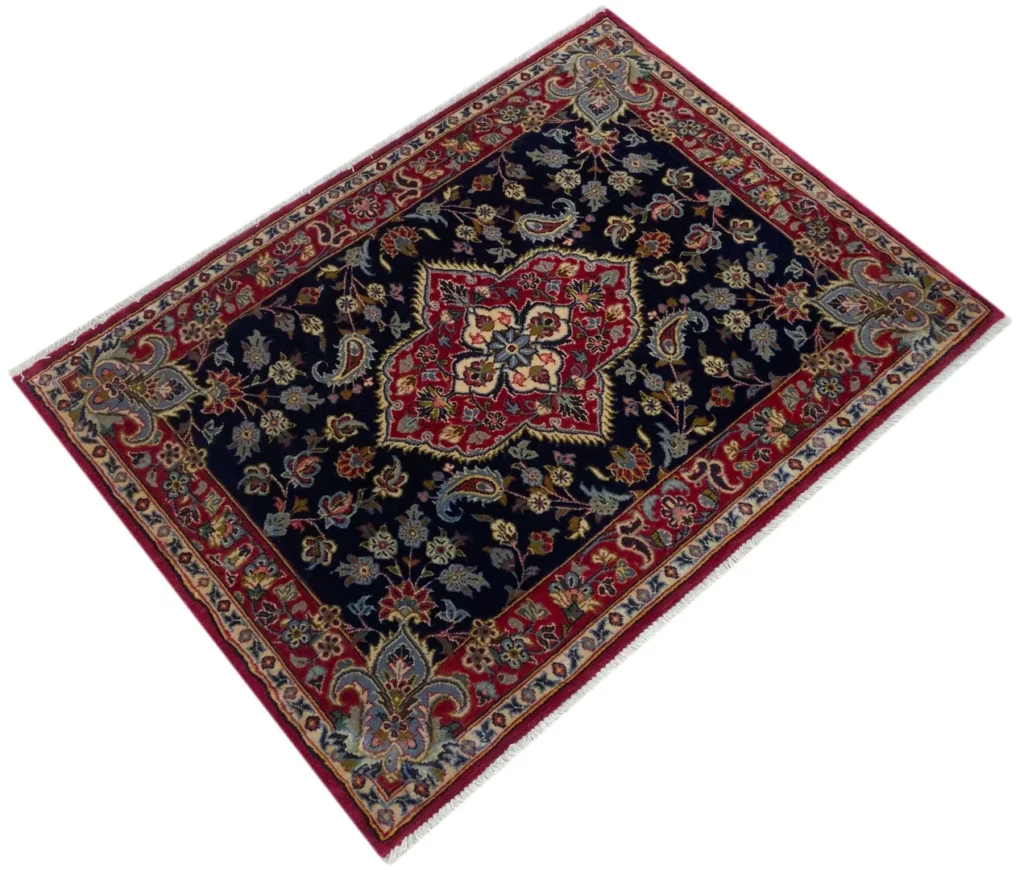
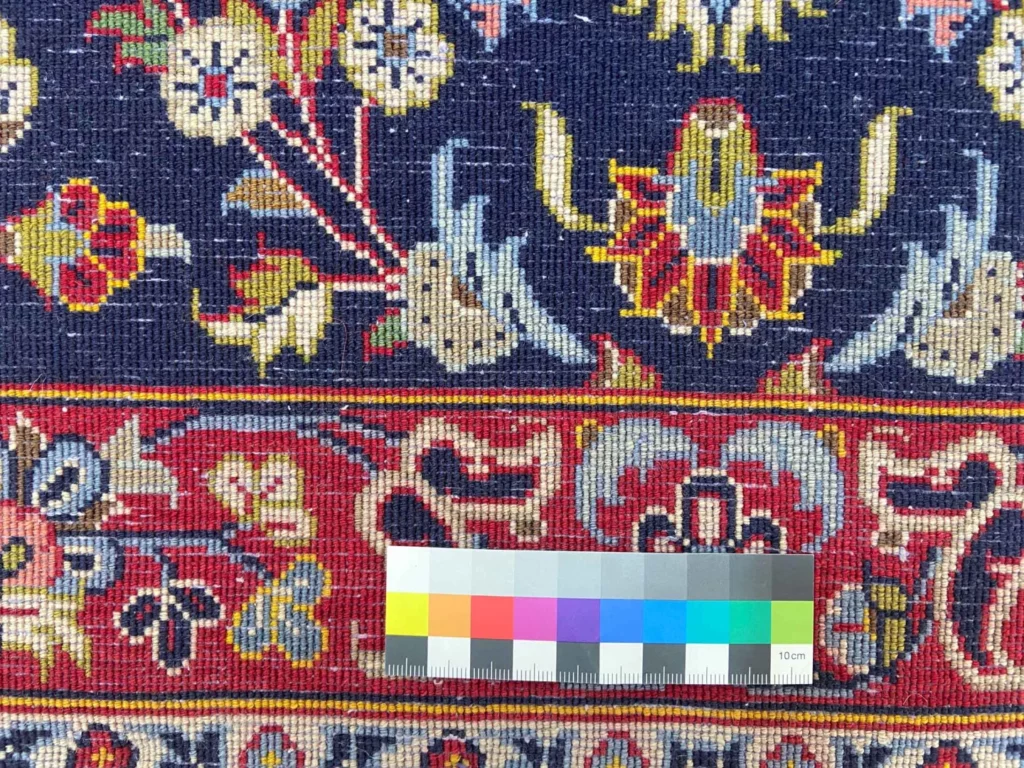
Keshan rugs are distinguished by complex patterns that may include both floral and geometric designs. Floral elements introduce curved lines and plant-based forms, while geometric elements create clearer outlines, intervals and a more ordered visual framework. The two approaches can be combined within one composition. The resulting design language is detailed without depending on a single isolated motif.
The stated colour range extends from deep reds to soft blues and rich earth tones. Each group of colours can play a different role in the composition. Red may establish visual emphasis, blue may create contrast and earthy shades may connect the surrounding elements. The pattern is described as detailed and the colours as harmonious, giving the design a structured appearance that can work with a variety of furnishing styles.
In a hand-knotted rug, the pattern is created as the coloured knots are placed. It is not added as a finished image on top of a completed textile. The density and precision of the knotting help define lines, floral details and geometric boundaries. The stated knot density therefore has a technical connection with the ability to execute elaborate designs, as well as with the durability of the finished surface.
Within classical Persian compositions, floral and geometric ornaments can appear as repeated details, organised fields or interconnected forms. The visual effect depends on the relationship between colour, line and repetition. A Keshan design can consequently be read as a carefully arranged whole rather than as a collection of unrelated decorative marks. This combination of intricate drawing and lively colour is a central part of the way Keshan rugs are described.
Design cannot be separated entirely from construction. The cotton warp and weft create the foundation, while the wool pile carries the visible colours and ornament. Dense knotting allows the maker to build a differentiated surface, and the short pile supports a clear presentation of the pattern. The Keshan tradition thus joins a practical textile structure with an established Persian decorative vocabulary.
Special Features
The stated special features of this Keshan Persian rug are its high knot density, high-quality sheep-wool pile and cotton construction. The pile is short and hard-wearing, and the rug is hand-knotted. These features describe a textile made for durability while retaining the detailed surface associated with the Keshan tradition.
The rug is described as high quality, long-lasting and sought after by collectors. Its complex floral and geometric designs, together with deep reds, soft blues and rich earth tones, give the construction a defined decorative character. These statements concern the documented qualities of the rug and its type; no additional age or individual provenance is assigned to this piece.
FAQ
What makes a Keshan Persian rug distinctive?
A Keshan Persian rug is distinguished by its high knot density, the use of high-quality sheep wool and its complex patterns. Floral and geometric designs are combined with a lively palette that includes deep reds, soft blues and rich earth tones. Hand-knotting and the cotton foundation support a durable construction, while the wool pile provides the visible patterned surface.
How should I care for my Keshan Persian rug?
Vacuum the Keshan Persian rug regularly as part of routine care. Avoid direct sunlight so that the colours can be preserved. When more thorough cleaning is needed, professional rug cleaning is recommended. Gentle, consistent maintenance helps retain the appearance and long-lasting qualities of the hand-knotted wool pile without replacing the careful construction of the rug itself.
Which rooms suit a Keshan Persian rug best?
Keshan Persian rugs are well suited to living rooms, bedrooms and offices. Their classical pattern tradition, harmonious colours and detailed surface can be combined with different furnishing styles. In a living room, the rug can define a central seating area; in a bedroom, it can provide a textile accent; and in an office, it can introduce the history and craftsmanship of the Persian rug tradition.
To provide the best experiences, we use technologies like cookies to store and/or access device information. Consenting to these technologies will allow us to process data such as browsing behavior or unique IDs on this site. Not consenting or withdrawing consent, may adversely affect certain features and functions.
Functional Always active
The technical storage or access is strictly necessary for the legitimate purpose of enabling the use of a specific service explicitly requested by the subscriber or user, or for the sole purpose of carrying out the transmission of a communication over an electronic communications network.
Preferences
The technical storage or access is necessary for the legitimate purpose of storing preferences that are not requested by the subscriber or user.
Statistics
The technical storage or access that is used exclusively for statistical purposes.The technical storage or access that is used exclusively for anonymous statistical purposes. Without a subpoena, voluntary compliance on the part of your Internet Service Provider, or additional records from a third party, information stored or retrieved for this purpose alone cannot usually be used to identify you.
Marketing
The technical storage or access is required to create user profiles to send advertising, or to track the user on a website or across several websites for similar marketing purposes.
 SECURE PAYMENT
 SHIPPING PARTNERS