This Keshan Persian rug is hand-knotted. Its pile is made from high-quality sheep wool, while cotton is used for both the warp and the weft. This combination belongs to the established construction of traditional Persian rugs. Sheep wool is valued for its durability and long service life. As a natural fibre, it gives the pile a substantial feel and can be worked into a closely made surface.
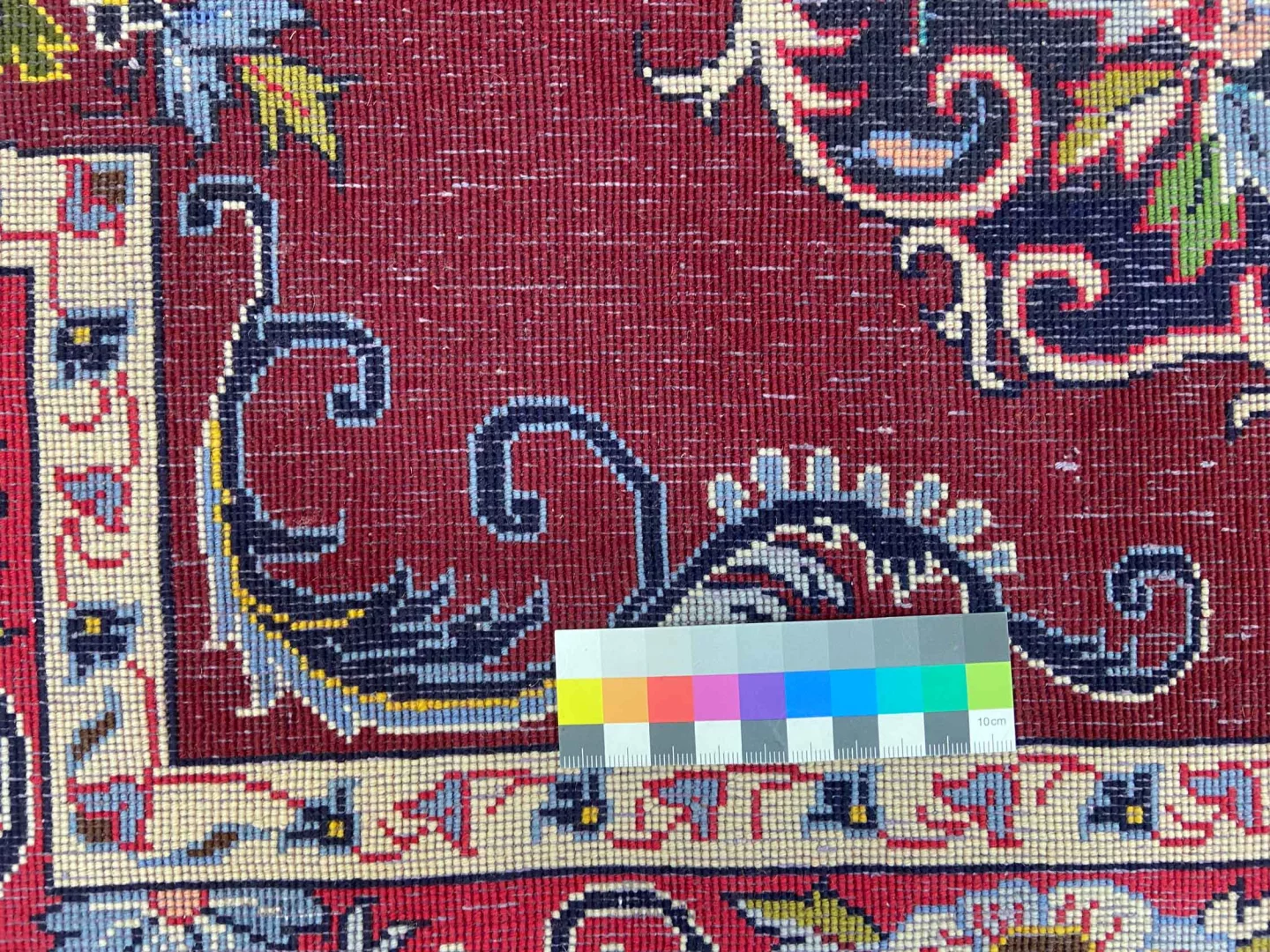
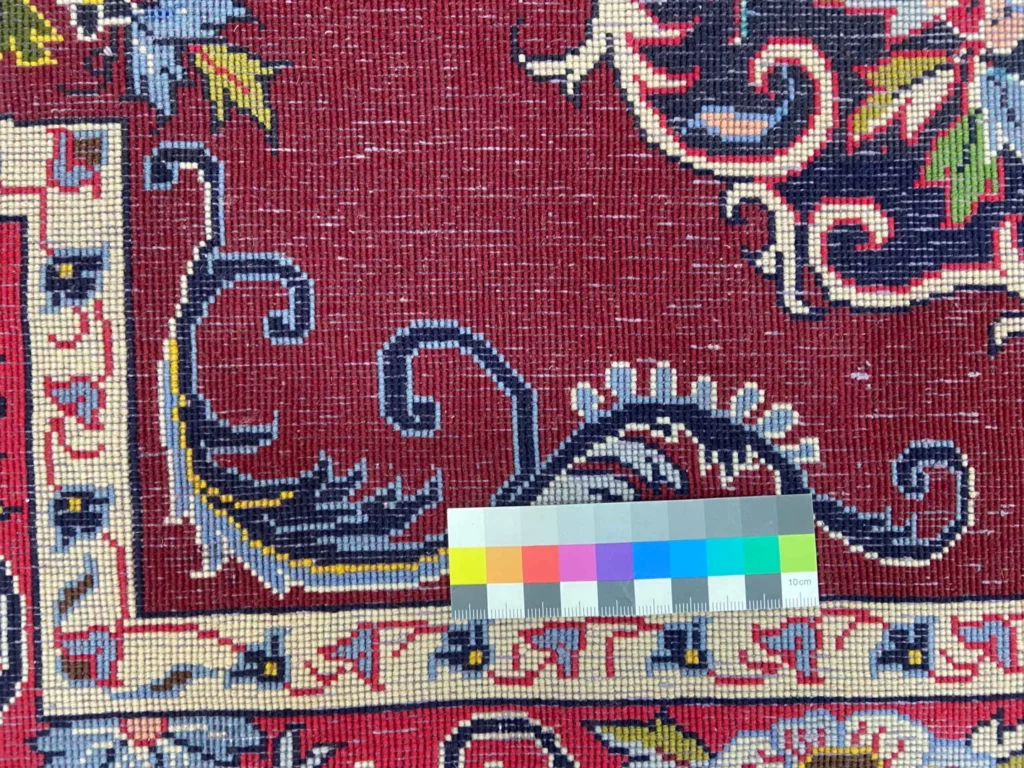
The rug has a short, dense wool pile. This creates a surface that is pleasant to the touch while also offering good insulation against cool floors. The cotton warp and weft support the stability of the textile and help it retain its shape. In hand-knotting, each knot is placed individually into the prepared foundation. The visible design therefore develops gradually through the repeated work of the knotter.
Its knot density is between 150.000 and 300.000 knots per square metre. This close construction supports a differentiated rendering of lines, fields and ornamental details. The materials and the technique work together: wool forms the visible pile, cotton provides the foundation, and the individual knots connect the two into a durable rug. The result reflects both the practical qualities of the fibres and the precision required by traditional rug making.
Origin and Tradition
The Keshan Persian rug comes from Keshan in Iran. The historic city and its surrounding area have long been associated with Persian rug weaving. Keshan is known for a strong craft tradition in which carefully selected materials and deliberate pattern design are central. The name Keshan therefore identifies more than a geographical location; it also describes a recognised tradition within Persian textile culture.
Weaving in Keshan forms part of a wider history of Persian craftsmanship. For centuries, rugs were made in workshops and family settings, with knowledge of wool preparation, dyes, knotting methods and ornament passed from one generation to the next. Trading routes encouraged the exchange of goods, visual ideas and technical knowledge. The Silk Road and commercial links played an important role in the history of the region and helped establish Keshan as a place associated with skilled textile work.
Traditional Persian rugs combine practical use with textile artistry. Their production requires patience, a steady hand and a clear understanding of the pattern as it develops across the foundation. In the Keshan tradition, hand-knotting is paired with a carefully structured decorative design. A relatively close knotting structure permits an articulate presentation of the pattern, while the use of wool and cotton gives the rug a practical and stable construction.
Keshan occupies a distinct place among the major Persian weaving centres. Isfahan is known for intricate designs and the use of silk. Tabriz is often associated with large floral compositions. Workshops in Kashan and Nain are also recognised for fine, detailed Persian rugs. These names refer to different regional traditions; the rug presented here belongs to the Keshan tradition.
Design and Pattern
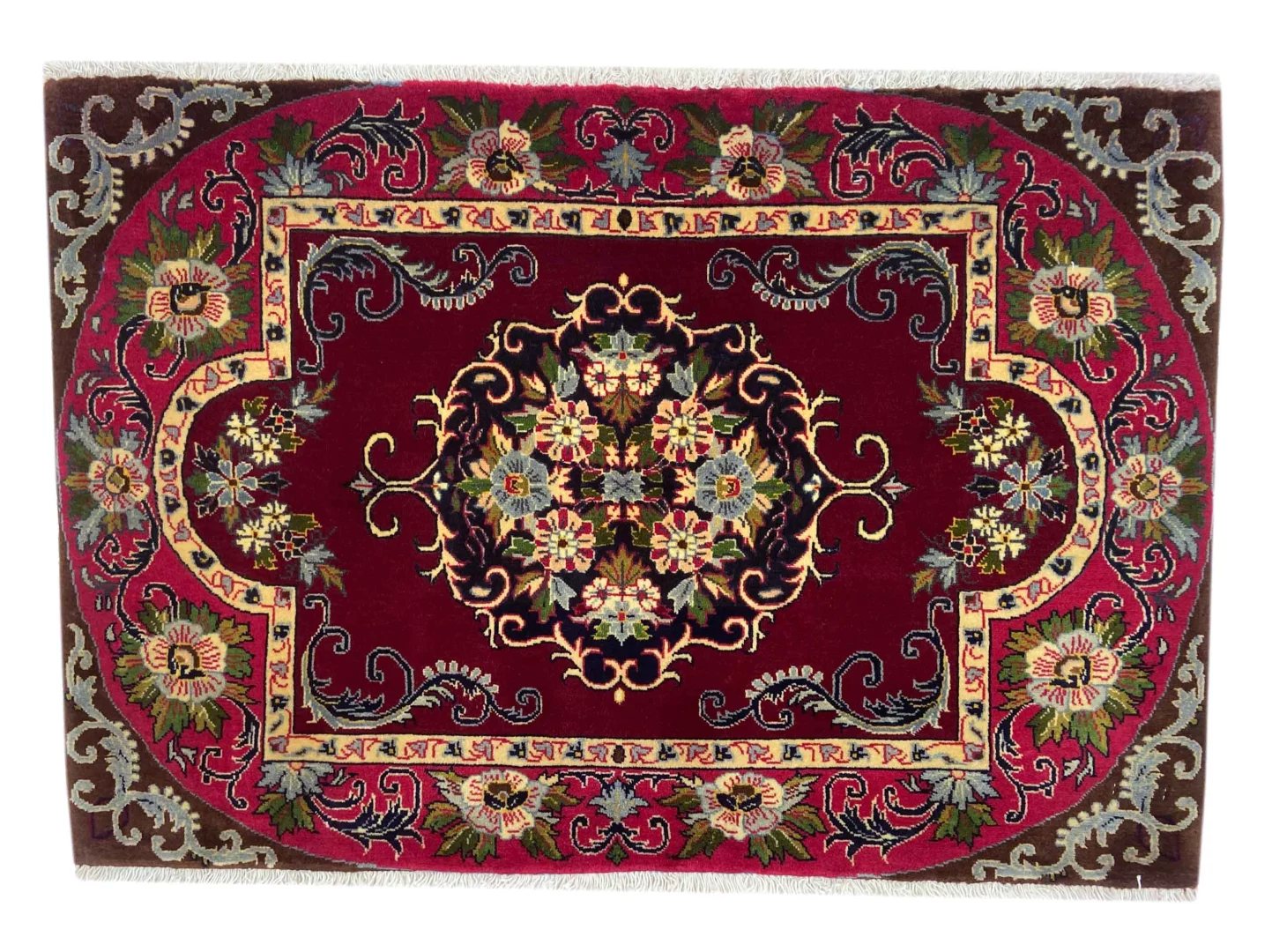
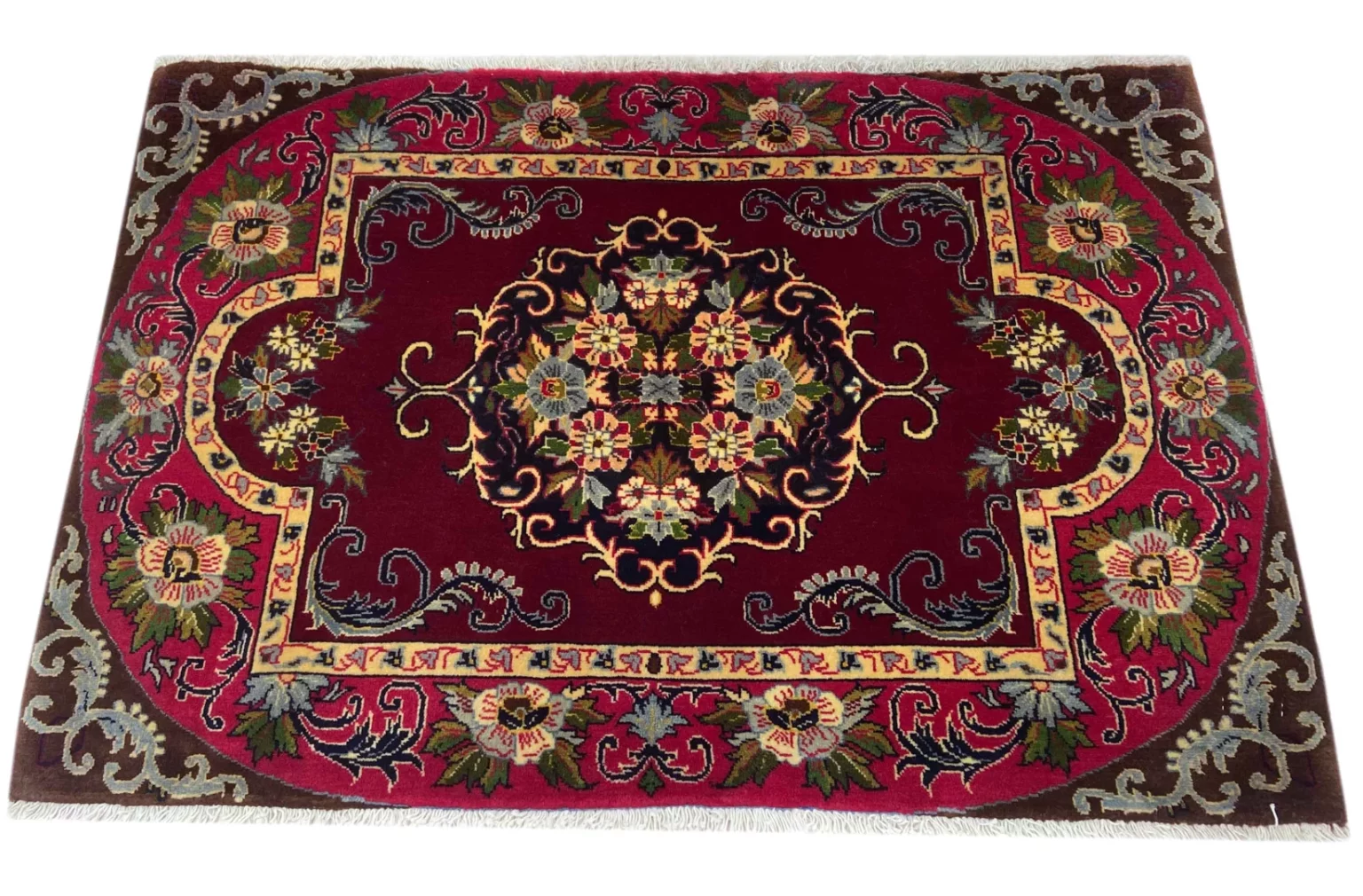
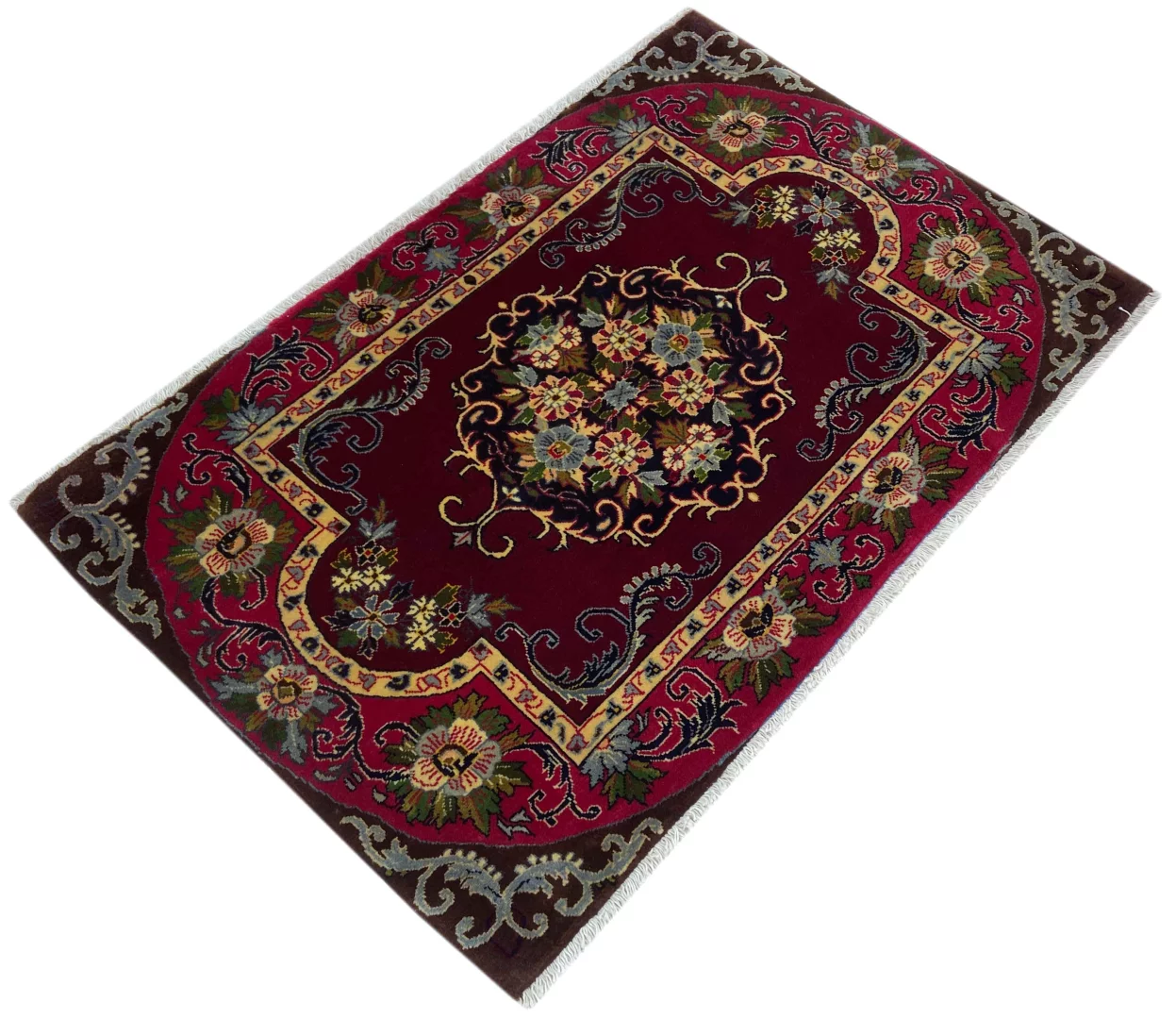
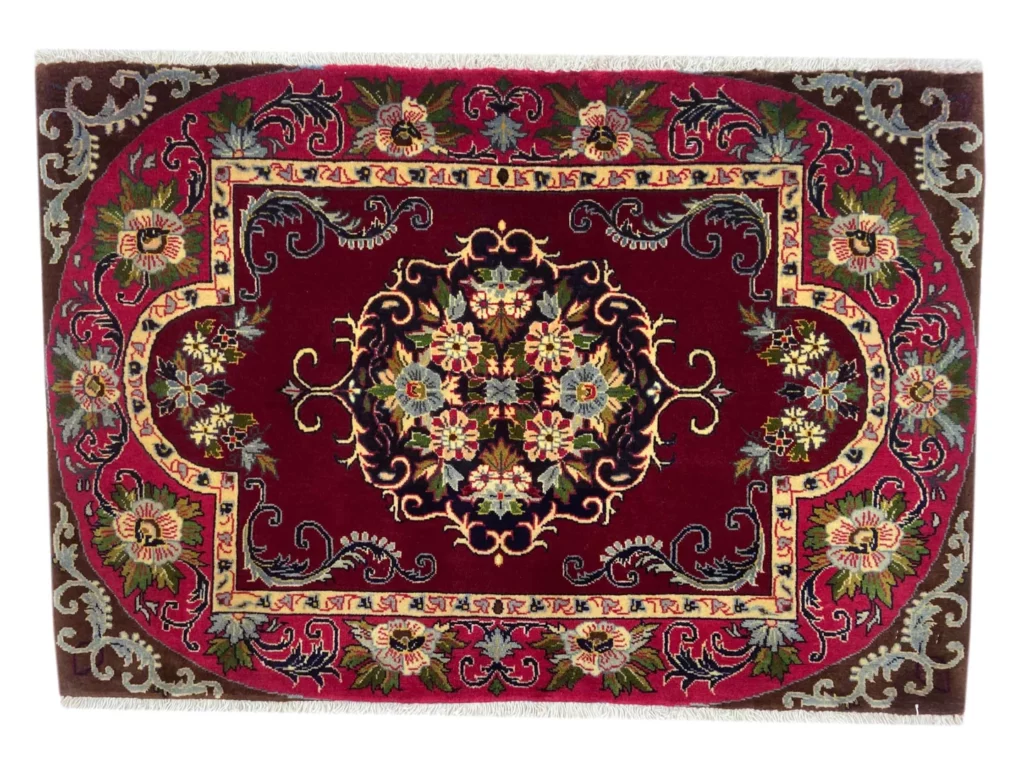
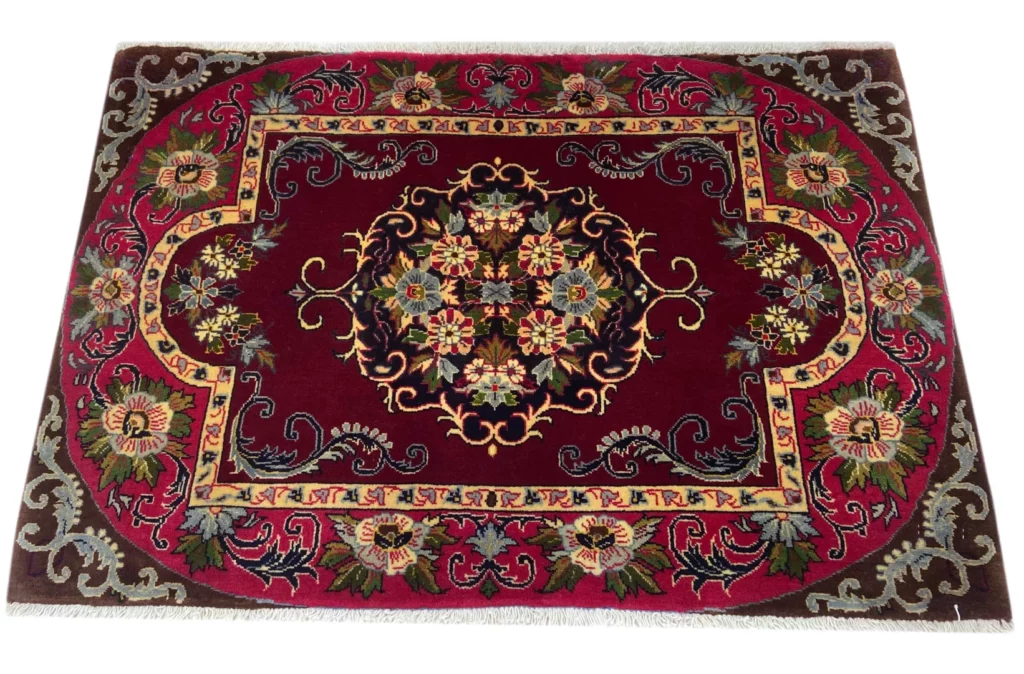
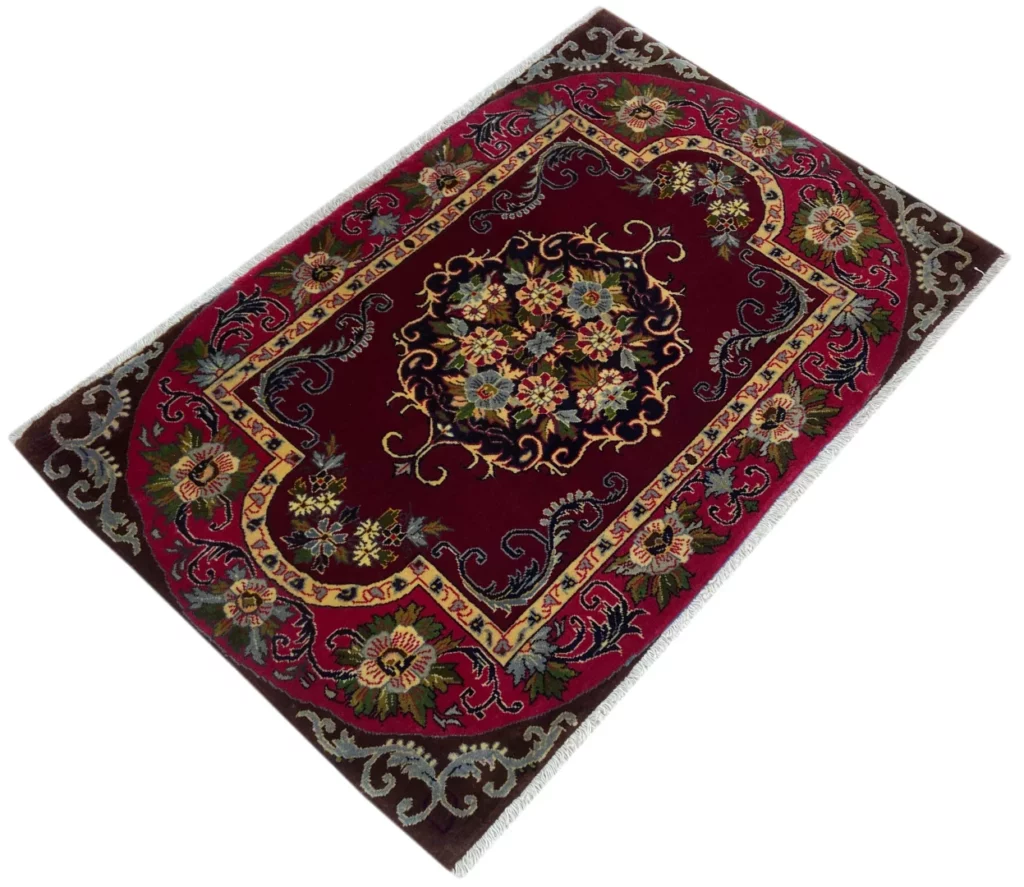
The design of this Keshan Persian rug combines floral and geometric motifs. Both are recurring forms in Persian rug design. Floral elements introduce organic shapes, while geometric lines, angles and repetitions provide structure. In a hand-knotted rug, these elements are not printed onto the surface. They are built knot by knot and become part of the textile itself as the composition progresses.
The colour impression is lively and varied. Red and blue tones frequently dominate Keshan Persian rugs and are characteristic of the established palette associated with this type. In Persian textile practice, natural dyes may be obtained from plants and minerals. Dyeing the wool is an important part of the process, because the relationship between fibre, colour and ornament influences the final appearance of the rug.
Floral ornament in Persian rugs is not necessarily a literal depiction of nature. Flowers, leaves and curling forms may be arranged, stylised and repeated to create rhythm across the field. Geometric elements can frame these forms, divide the composition or connect separate areas. Through balance, repetition and variation, the motifs become a unified design rather than a collection of unrelated details.
The combination of pattern and colour gives a Keshan rug a clearly recognisable visual language. Red and blue tones, floral references and geometric order can sit comfortably within both traditional and contemporary interiors. At the same time, the design remains rooted in Persian weaving culture. Its decorative effect comes from an inherited system of motifs and from the disciplined work required to translate that system into a hand-knotted textile.
Special Features
This is a high-quality Keshan Persian rug in very good condition. Its identity is defined by hand-knotting, a dense sheep-wool pile and a cotton warp and weft. The knot density of 150.000 to 300.000 knots per square metre is one of the specifically stated characteristics of this rug.
The material combination is both traditional and functional. Sheep wool forms the pile, while cotton is used in the warp and weft. Together with the hand-knotting technique, these materials create a construction intended to be stable and durable. The floral and geometric pattern and the lively colour world, in which red and blue tones often predominate, complete the rug’s regional character.
A Keshan Persian rug represents more than a decorative furnishing. Rugs from this area are also connected with an inherited craft history that remains visible in their materials, colours and patterns. Their quality and design can make them relevant to collectors and rug enthusiasts. This piece brings that regional tradition together with a practical construction made from wool and cotton.
FAQ
How should I care for my Keshan Persian rug?
Regular vacuuming helps remove dust and loose dirt from the pile and keeps the surface clean. If something is spilled, treat the spot immediately with a clean, damp cloth. A hand-knotted wool rug should not be scrubbed aggressively or treated with harsh cleaning agents, as this can put stress on the pile and colours. For a deeper clean, consult a professional rug cleaner. Proper professional care takes account of the sheep-wool pile, the cotton foundation and the hand-knotted construction.
Where does the Keshan Persian rug come from?
The Keshan Persian rug comes from Keshan in Iran. Keshan is a historic city whose rug-weaving tradition has been known for centuries. The area’s craft history is closely connected with trade and with the wider history of the Silk Road. Workshop knowledge concerning fibres, dyes, patterns and knotting methods was passed down over time. Keshan consequently refers both to Iranian origin and to a distinct Persian design tradition.
Which colours are typical of Keshan Persian rugs?
Keshan Persian rugs are associated with a lively palette in which red and blue tones often dominate. The effect of the colours depends on their interaction with the wool pile, the floral and geometric motifs and the overall arrangement of the design. Traditional rug making can use natural dyes derived from plants and minerals. Colour is therefore not separate from the pattern, but one of the central elements of the regional craft tradition.
To provide the best experiences, we use technologies like cookies to store and/or access device information. Consenting to these technologies will allow us to process data such as browsing behavior or unique IDs on this site. Not consenting or withdrawing consent, may adversely affect certain features and functions.
Functional Always active
The technical storage or access is strictly necessary for the legitimate purpose of enabling the use of a specific service explicitly requested by the subscriber or user, or for the sole purpose of carrying out the transmission of a communication over an electronic communications network.
Preferences
The technical storage or access is necessary for the legitimate purpose of storing preferences that are not requested by the subscriber or user.
Statistics
The technical storage or access that is used exclusively for statistical purposes.The technical storage or access that is used exclusively for anonymous statistical purposes. Without a subpoena, voluntary compliance on the part of your Internet Service Provider, or additional records from a third party, information stored or retrieved for this purpose alone cannot usually be used to identify you.
Marketing
The technical storage or access is required to create user profiles to send advertising, or to track the user on a website or across several websites for similar marketing purposes.
 SECURE PAYMENT
 SHIPPING PARTNERS


