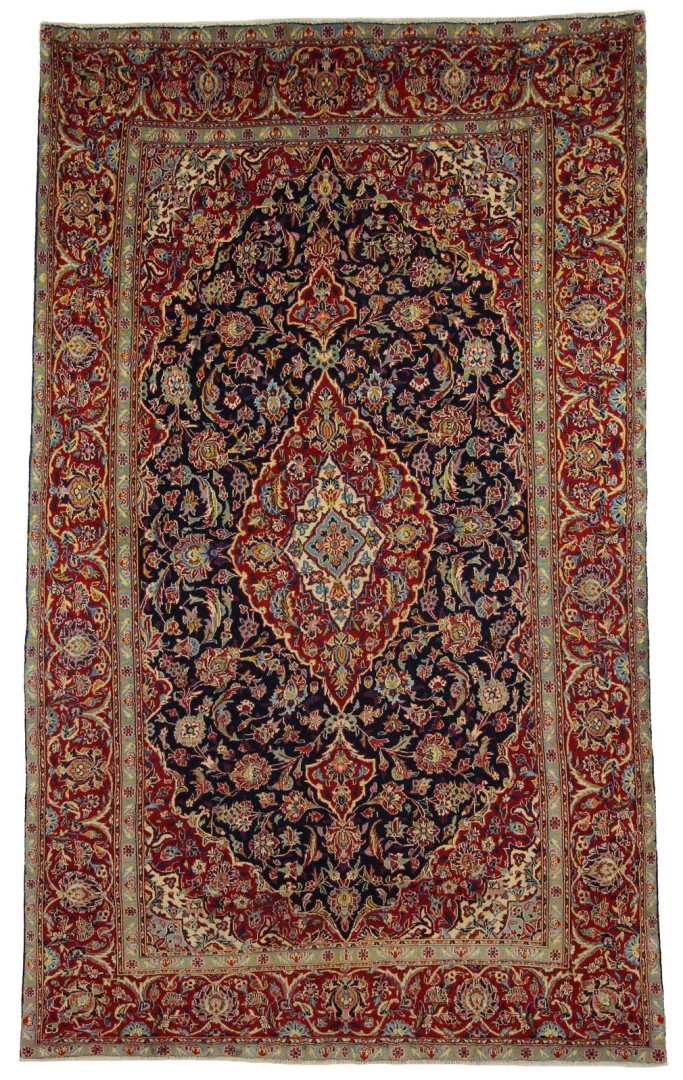
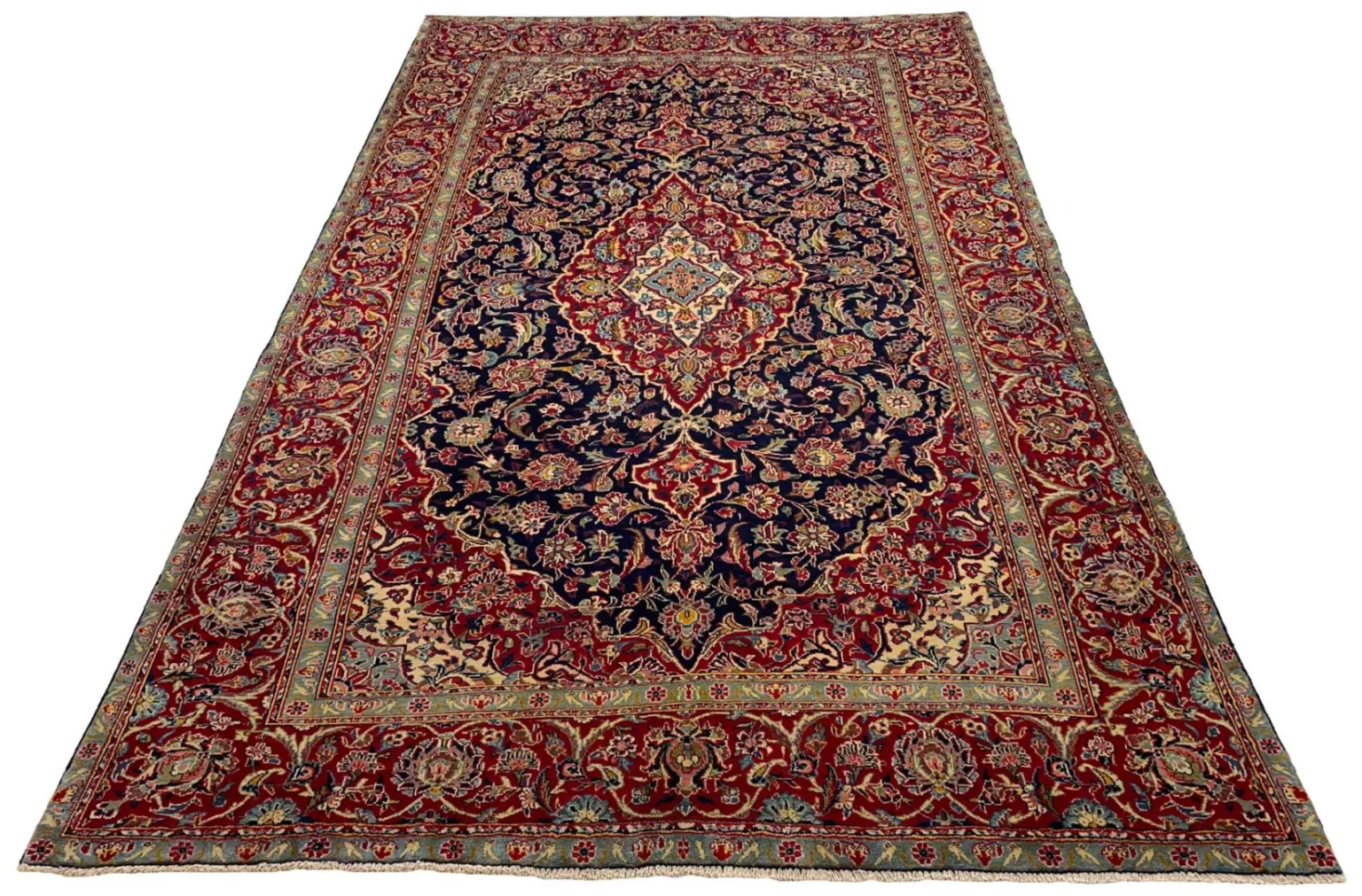
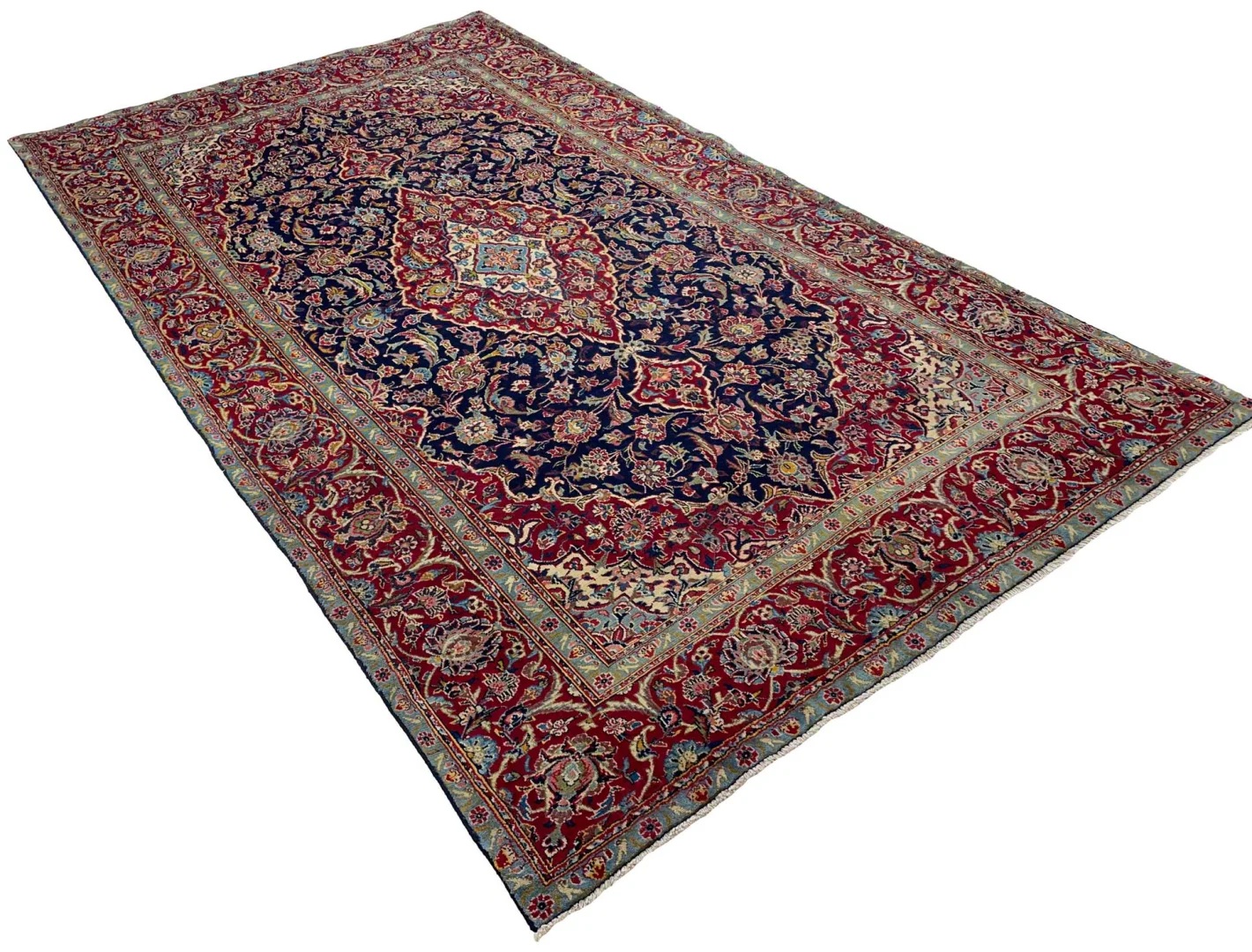
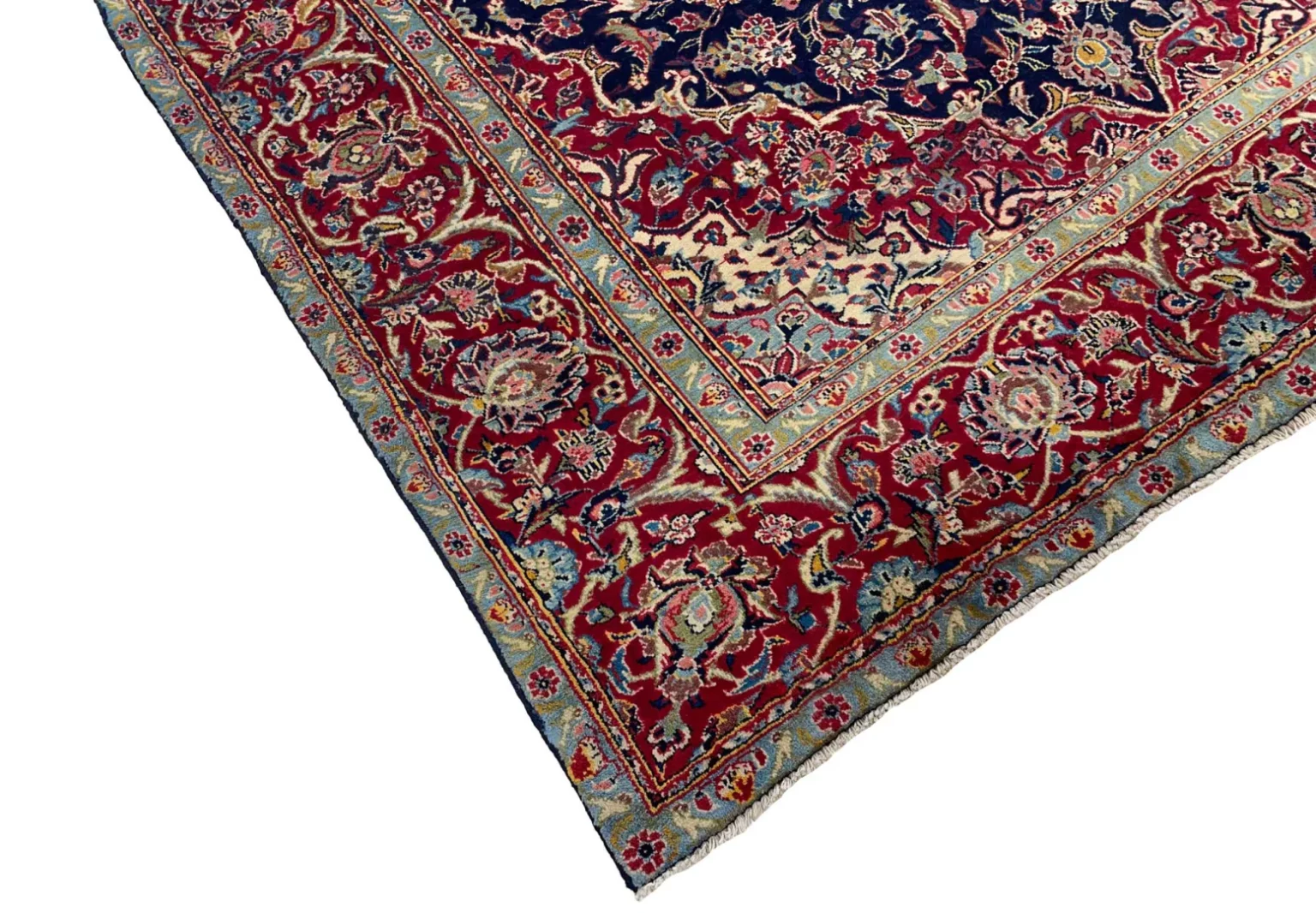
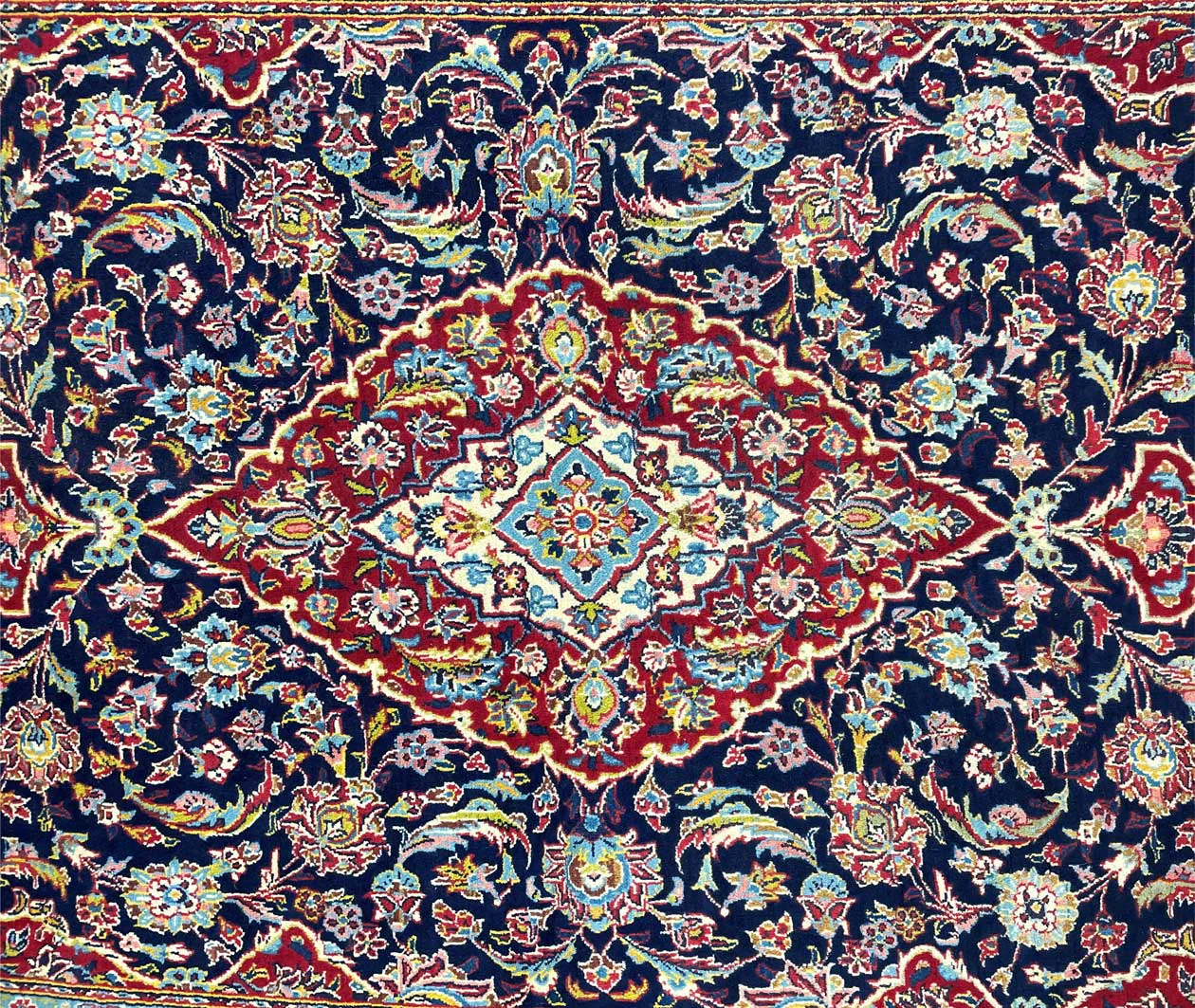
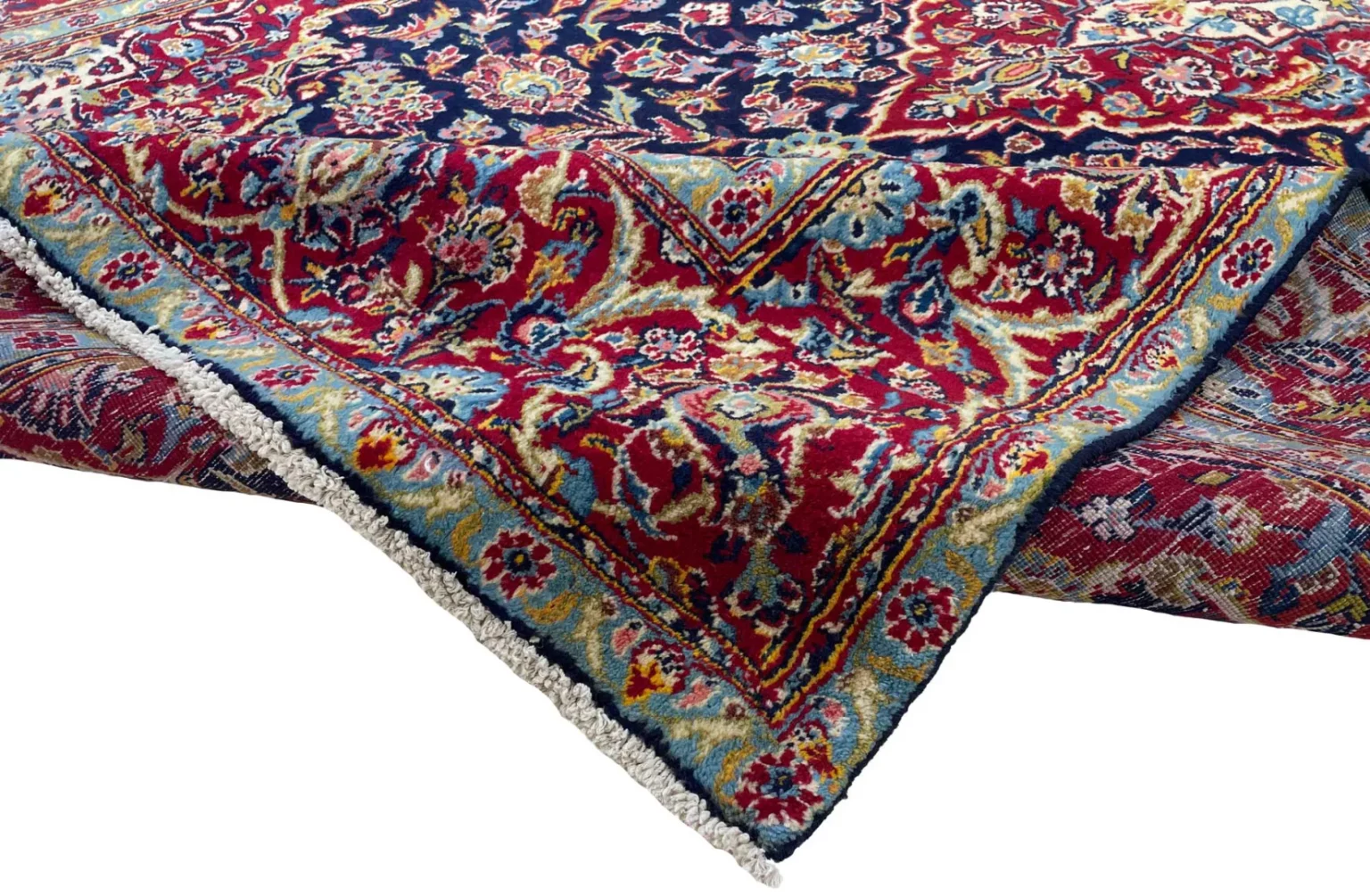
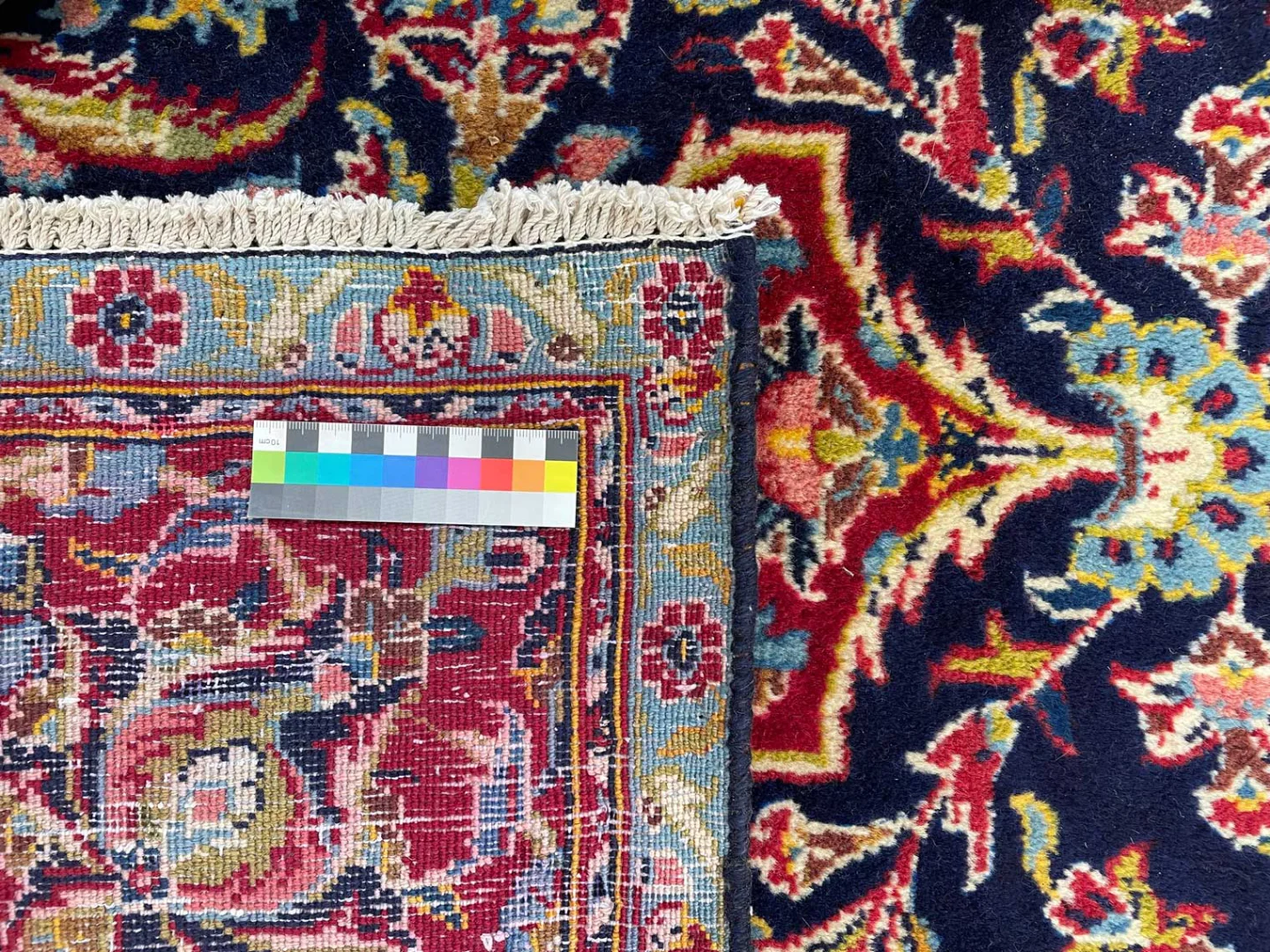
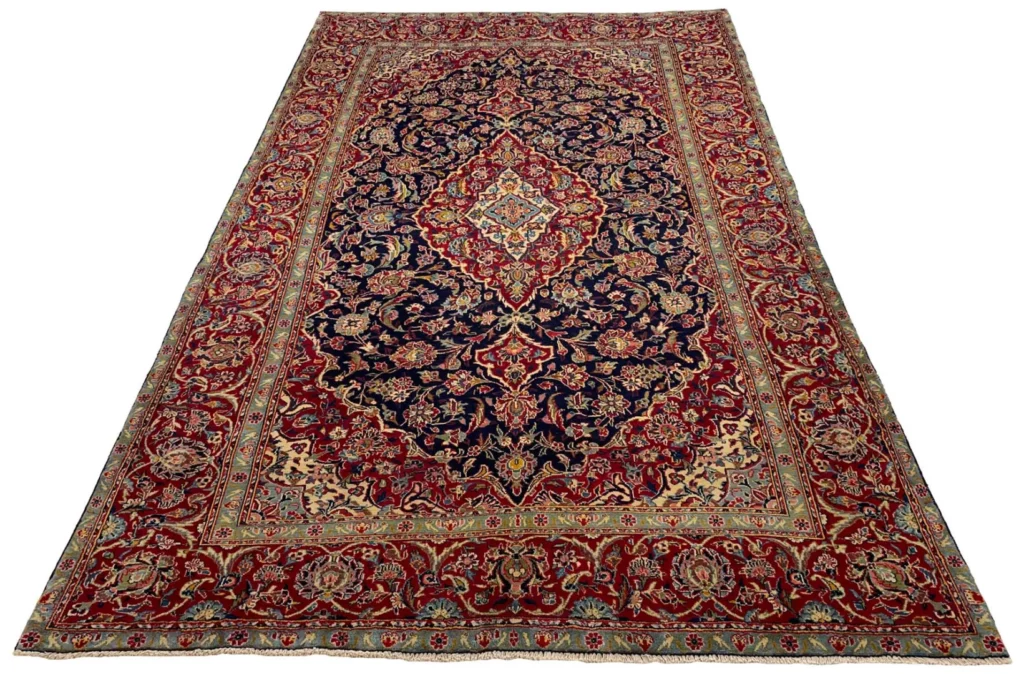
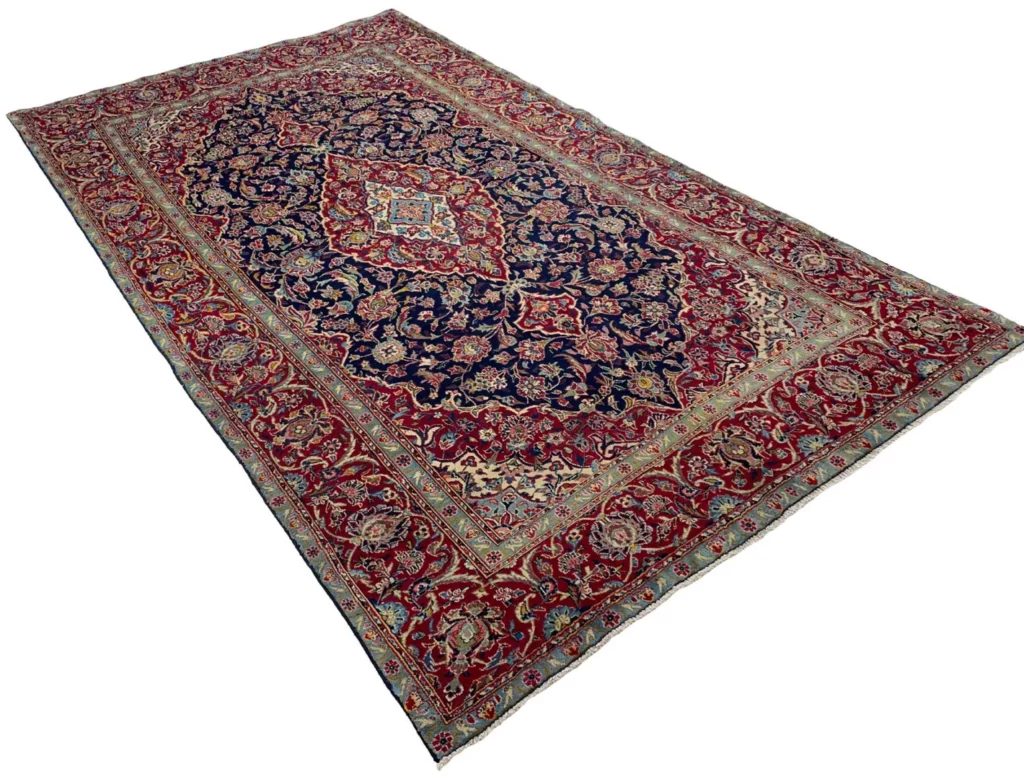
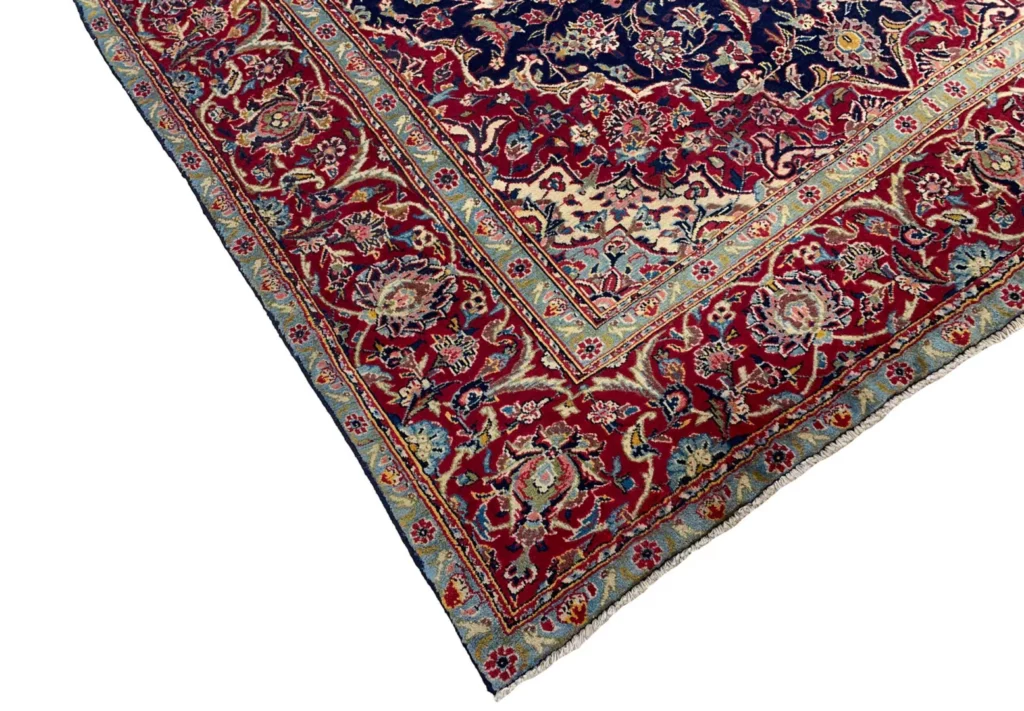
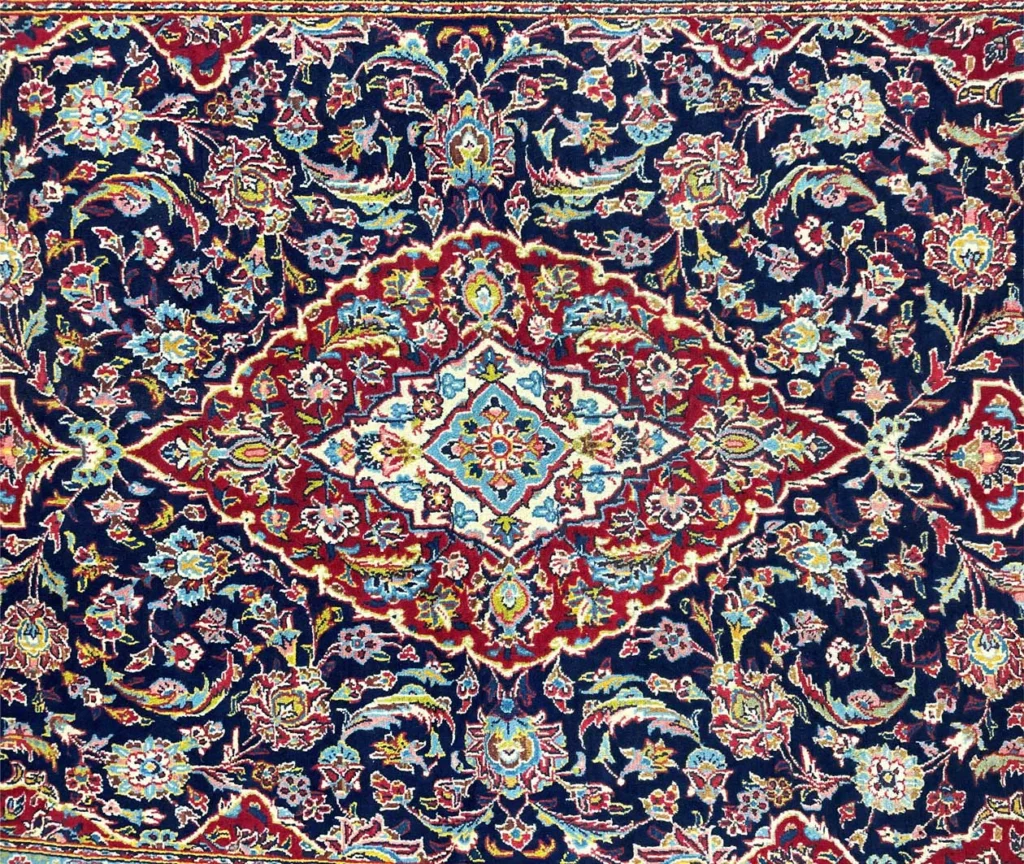
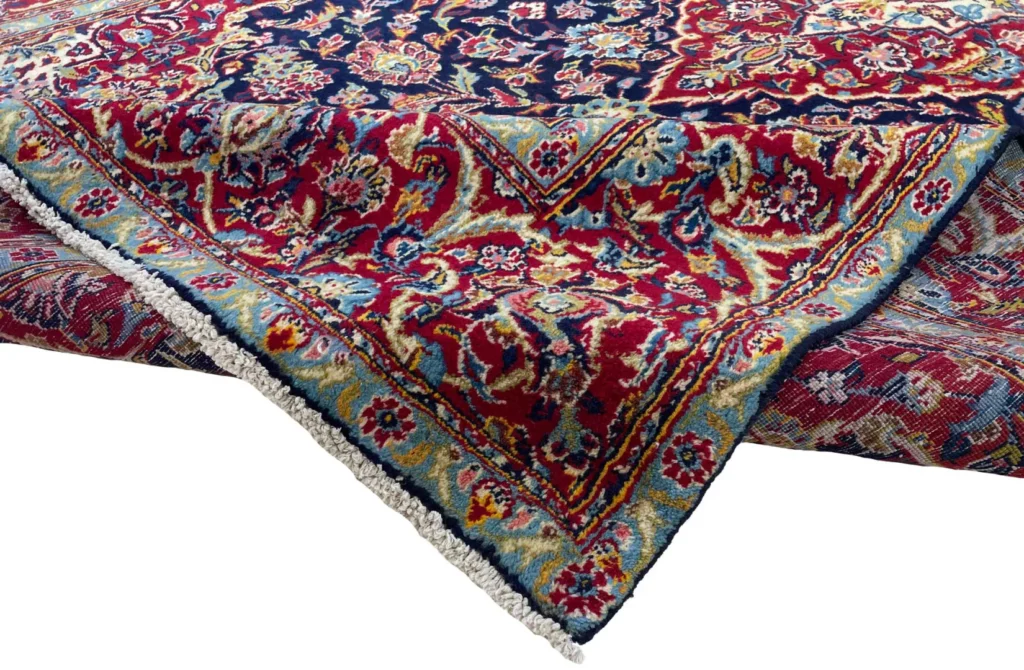
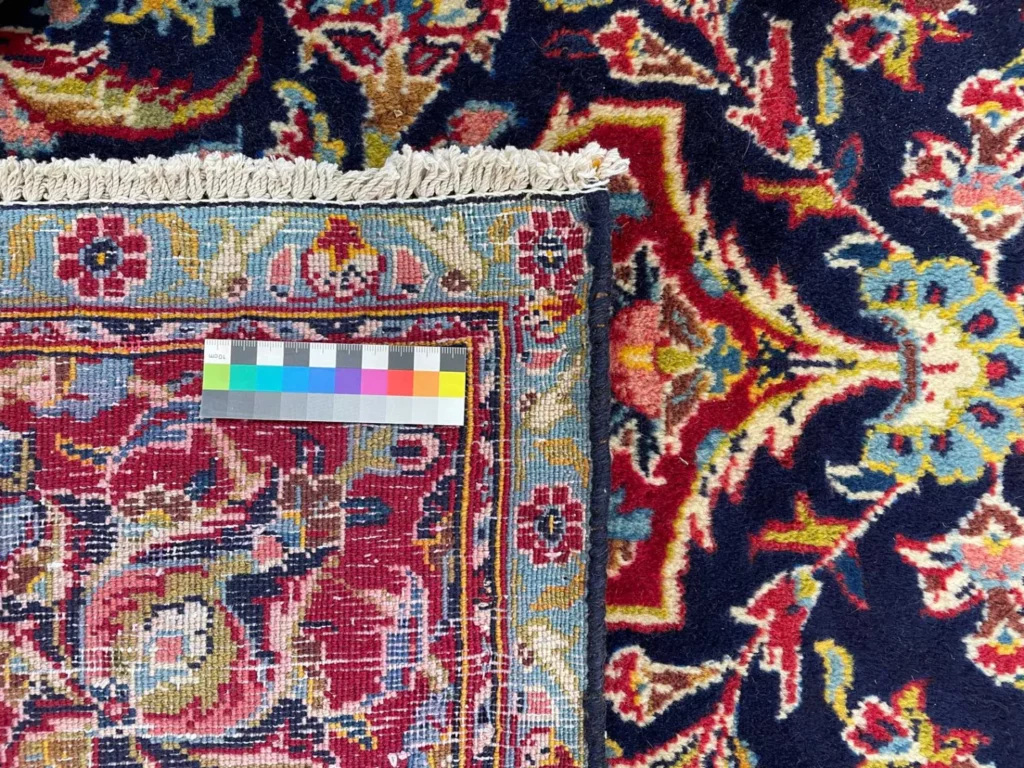
Persian Rug Kashan 310 x 186 cm Wool Hand-knotted
€ 1248
Hand-knotted Keshan Persian rug | Knot density: 180000 knots/m² | Material: Sheep wool and cotton pile | Size: 310 x 186 cm | Pattern: Classic and detailed | Condition: Very good
1 available
- ✓Free Shipping in EU
- ✓2-5 Business Days Delivery
- ✓14-Day Return Policy
- ✓Worldwide Shipping on request
 SECURE PAYMENT
 SHIPPING PARTNERS
Inventory number: CE331EC5
Description
Keshan Persian Rug
Material and Craftsmanship
This Keshan Persian rug is hand-knotted and made from high-quality sheep wool and cotton. Its knot density is 180000 knots per square metre. That density belongs to the fine range associated with traditional Keshan weaving and permits a design to be rendered with clear contours and many small details. Because the rug is made by hand, each knot is placed individually and the composition is built row by row. The result is a distinct woven piece rather than a mechanically repeated surface.
Sheep wool has long been used in Keshan weaving for the pile. It gives the surface a natural handle and is known for its durability. Wool also accepts colour evenly, which helps maintain the distinction between field, border and ornament. Cotton forms part of this rug’s stated material composition. In Persian carpet making, cotton is commonly used in structural parts because it offers an even and firm basis for the rows of knots. Wool and cotton therefore represent an established material combination in the region’s craft.
The rug is described as hard-wearing. In Keshan carpets, this quality is connected with dense construction and the resilient nature of wool. Closely placed knots keep the design elements together and support a stable surface under regular use. At the same time, the handwork remains visible in the character of the pile and the drawing of the pattern. This individual rug is in very good condition, giving its material, workmanship and appearance a well-maintained overall character.
Origin and Tradition
Keshan rugs originate in Keshan, Iran, the city that gave this carpet type its name. Keshan developed a strong weaving tradition based on expertise in design, materials and fine knotting. The knowledge of local weaving masters was passed from one generation to the next. This continuity made Keshan an important centre of Persian carpet production and established a recognizable approach to proportion, ornament and workmanship.
The history of Keshan carpets reaches far back into the culture of Persia. Carpets in Iran served practical purposes while also expressing regional craft, artistic convention and patterns of trade. In Keshan, these roles came together in a distinctive tradition. Designs evolved over time without losing their connection to classical hand-knotting. For that reason, Keshan rugs are associated with a form of Persian carpet in which technical precision and ordered decoration are treated as complementary qualities.
Making a hand-knotted rug begins with planning the design and preparing the foundation. Knots are then inserted one row at a time. Once the weaving is complete, the pile is brought to an even height, the surface is finished and the rug is shaped. Fine Keshan work requires concentration throughout these stages, since small variations can affect the alignment of lines, the balance of motifs and the relationship between the central field and its borders.
Knot density is an important part of Keshan tradition. Typical Keshan rugs are often made with approximately 150000 to 300000 knots per square metre. The density of 180000 knots per square metre in this rug falls within that traditional range. It provides a basis for differentiated drawing and for transitions in which floral or geometric details remain clearly connected. Knot count is not the only consideration in a carpet. Material, the weaver’s skill, careful finishing and the coherence of the design are equally relevant to the character of the finished work.
Keshan is often discussed alongside other Iranian weaving centres. Heriz and Tabriz are known for strong colour effects and assertive patterns, while Isfahan is associated with detailed designs and fine knotting. Such comparisons illustrate the range of Persian carpet traditions without changing the origin of a Keshan rug. Each region has its own preferences in ornament, structure and colour arrangement. Keshan remains identifiable through its classical visual language, refined execution and long-established weaving culture.
Design and Pattern
The pattern of this rug is described as classic and detailed. Traditional Keshan compositions are generally carefully organised. A central field is often framed by a border, giving the eye a measured path through the design. The interior may be developed with flowers, leaves, vines and other floral forms, while geometric elements help organise the sections and maintain a regular rhythm. The pattern language is decorative, but its structure keeps the many details connected.
Floral and geometric forms are frequently combined in Keshan design. A flower may lead into a scrolling vine, while measured lines define the edges of individual areas. Fine knotting makes it possible to distinguish leaves, petals and small linking elements. Detail does not have to mean visual disorder. Repetition, symmetry and differences in scale create a hierarchy in which numerous individual motifs can be read as one coherent composition.
The traditional Keshan palette may range from restrained natural shades to strong, vivid colours. The exact colour arrangement depends on the individual design and execution. In general, the field, border and ornaments are planned in relation to one another. Contrasting tones can clarify outlines, while related shades create softer transitions. This balance between definition and continuity is part of the classical Persian carpet vocabulary and allows an intricate pattern to remain legible across the surface.
A Keshan design is more than a collection of isolated symbols. Its character comes from the relationship between centre, border, intervals and repeated motifs. The border encloses the field and provides a visual finish. Vines and flowers introduce movement, while axes of symmetry provide balance. A relatively fine knot density allows these structures to be drawn with precision. Hand-knotting also preserves the individual working character of the weaver, so the finished rug retains a crafted rather than industrial appearance.
The classical design makes Keshan rugs suitable for a range of interiors. In a living room, a floral composition can provide a framework for the surrounding furnishings. In a dining room, the defined border can help organise an area, and in an office the regular structure can support a composed setting. The result always depends on the room’s light, furniture and colours. The rug contributes its own traditional ornamental language without being limited to one particular type of room.
Special Features
This one-off piece combines several stated characteristics: it comes from Keshan in Iran, is hand-knotted, has a knot density of 180000 knots per square metre, and uses sheep wool and cotton. Its pattern is classic and detailed. The rug is also described as hard-wearing and in very good condition. Together, these points identify it as a traditional Keshan Persian rug with a fine, carefully worked construction.
The size of a Keshan rug is a practical consideration when planning a room. Keshan carpets are produced in different formats, allowing them to be used in both spacious living areas and smaller settings. The particular format does not remove the underlying principles of the design: a balanced field, a surrounding border and a coherent arrangement of ornament. Comparable Keshan pieces are also studied and collected because their handwork records the techniques of a major Persian weaving tradition.
Care should focus on regular vacuuming and restrained treatment of the surface. A damp cloth may be used when necessary, while excessive moisture should be avoided. Direct sunlight should also be kept away from the rug to reduce the risk of colour changes. These measures are general care guidance for Keshan Persian rugs and help preserve the wool, the colours and the finished surface over time.
FAQ
How should I care for a Keshan Persian rug?
Vacuum the rug regularly so that dust and loose particles do not remain in the pile. If a light wipe is needed, use a damp cloth and work carefully. Excessive moisture is unsuitable for the materials and should be avoided. Direct sunlight should also be limited because it can lead to changes in colour. Gentle, consistent care helps preserve the appearance of the sheep-wool pile and supports the continued use of the hand-knotted surface.
Which room is suitable for a Keshan Persian rug?
A Keshan Persian rug can be used in several types of room. Living rooms and dining rooms are particularly suitable because the classical ornament can be combined with different furnishing styles. A detailed pattern can also provide structure in an office. The choice depends on the available floor area, the surrounding colours, the furniture and the light. Keshan tradition does not prescribe a single room function; its design can work in different interior settings.
How can I identify an authentic Keshan Persian rug?
An authentic Keshan Persian rug is hand-knotted and has a high knot density. The quality of the wool and the complexity of the pattern are further points to examine. Look for carefully executed floral or geometric details and for a coherent relationship between the field and the borders. A certificate or provenance document can provide additional assistance when assessing authenticity. The name Keshan refers to the Iranian carpet tradition of the city of Keshan, not simply to any rug with a classical pattern.
Additional information
| Design Style | |
|---|---|
| Color | |
| Size | |
| Shape | |
| Origin | |
| Knot Density | |
| Material |
Related products

Persian Rug Tabriz 353 x 253 cm Wool & Silk Hand-knotted
€ 4200
Persian Rug Kashan 198 x 128 cm Silk Hand-knotted Antique
€ 7249
Persian Rug Nain 330 x 215 cm Wool Hand-knotted
€ 3600
Persian Rug Tabriz 293 x 203 cm Wool & Silk Hand-knotted
€ 3300
Persian Rug Isfahan 250 x 155 cm Silk Hand-knotted
€ 3600
Persian Rug Rosenbidjar 222 x 131 cm Wool Hand-knotted
€ 1530
Persian Rug Qom 216 x 142 cm Wool Hand-knotted
€ 990
Persian Rug Tabriz 290 x 205 cm Wool Hand-knotted
€ 5850